
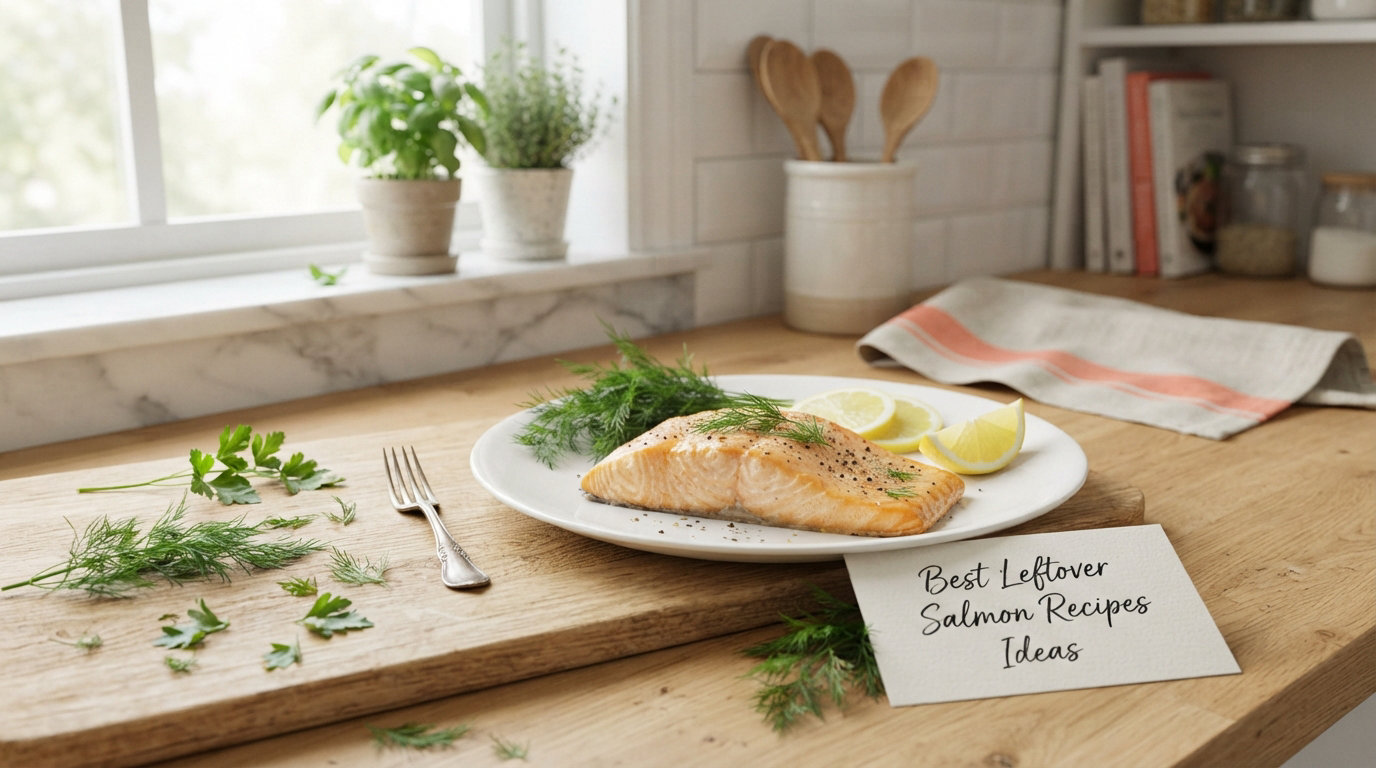
A second meal works best when I treat the leftover as an ingredient, not a finished plate. I use ideas for leftover salmon that change its shape and add contrast.
For this guide, the best leftover salmon recipes ideas cover cakes, salads, breakfast, pasta, and grain bowls while protecting the texture that remains.
Start with the quick chooser below, then use lemon, herbs, yogurt, crisp greens, or rice to make the new dish feel balanced.
Table of Contents
Best Leftover Salmon Recipes Ideas
Keep Salmon Flaky, Not Mushy
-
Large flakes for salads, grain bowls, and pasta
-
Fine flakes for salmon cakes and spreads
-
Cold pieces for sandwiches and lettuce cups
-
Rich salmon for lemony greens or pickled vegetables
-
Small portions for eggs, rice, or potato cakes
Short on time? Here are my five favorite ways to use leftover cooked salmon, ranked by how quickly they come together and how reliably delicious they turn out.
-
Crispy Salmon Cakes – Pan-fried patties with herbs and breadcrumbs. Ready in 20 minutes.
-
Creamy Salmon Salad – No-cook option with celery, dill, and a light mayo dressing. Ready in 10 minutes.
-
Salmon Fried Rice – A wok recipe that uses day-old rice and flaked salmon. Ready in 15 minutes.
-
Lemon Garlic Salmon Pasta – Flaked salmon tossed with pasta in a light cream sauce. Ready in 20 minutes.
-
Salmon Tacos with Avocado Salsa – Flaked salmon in warm tortillas with fresh toppings. Ready in 15 minutes.
All five of these work with cold, room-temperature, or gently warmed salmon. You do not need to reheat the fish separately for any of them.
useful recipes for cooked salmon for Every Meal
This collection covers breakfast, lunch, dinner, and appetizers. Each recipe includes the ingredients you need, a step-by-step method, and a pro tip from my own kitchen testing. I have organized them by meal type so you can jump straight to whatever you are cooking right now.
1. Crispy Salmon Cakes (Dinner)
Salmon cakes are the undisputed king of leftover salmon recipes. They are crispy on the outside, tender on the inside, and they use ingredients you already have in your pantry.
Ingredients: 2 cups flaked leftover salmon, 1 large egg, 1/3 cup panko breadcrumbs, 2 tablespoons mayonnaise, 1 tablespoon Dijon mustard, 2 tablespoons finely chopped green onions, 1 tablespoon fresh lemon juice, 1/2 teaspoon garlic powder, salt and pepper to taste, 3 tablespoons olive oil for pan-frying.
Step 1: Flake your leftover salmon into a large bowl, removing any skin and bones. The pieces should be bite-sized but not mashed into paste.
Step 2: Add the egg, mayonnaise, Dijon mustard, green onions, lemon juice, garlic powder, salt, and pepper. Mix gently until just combined. Overmixing makes the cakes dense.
Step 3: Fold in the panko breadcrumbs. If the mixture feels too wet to hold its shape, add another tablespoon of panko at a time.
Step 4: Form the mixture into 6 equal patties, about 3 inches wide. Press them firmly so they hold together during cooking.
Step 5: Heat the olive oil in a large skillet over medium heat. Cook the patties for 3 to 4 minutes per side until golden brown and crispy.
Pro Tip: Let the formed patties rest in the refrigerator for 15 minutes before frying. This helps them hold their shape and get crispier in the pan.
2. Creamy Salmon Salad (Lunch)
Ingredients: 2 cups flaked leftover salmon, 2 stalks celery finely diced, 1/4 cup red onion finely chopped, 1 tablespoon fresh dill chopped, 2 tablespoons capers, 1/3 cup mayonnaise, 1 tablespoon Greek yogurt, 1 tablespoon lemon juice, 1 teaspoon Dijon mustard, salt and pepper to taste.
Step 1: Flake the salmon into a large bowl. Keep the pieces chunky for better texture.
Step 2: In a separate small bowl, whisk together the mayonnaise, Greek yogurt, lemon juice, Dijon mustard, salt, and pepper. The yogurt lightens the dressing without sacrificing creaminess.
Step 3: Add the celery, red onion, dill, and capers to the salmon. Pour the dressing over the top and fold everything together gently.
Step 4: Serve immediately on toasted bread, over greens, or with crackers. The salad also improves after 30 minutes in the fridge as the flavors meld.
Pro Tip: Swap half the mayonnaise for mashed avocado if you want a healthier version. It adds creaminess and healthy fats while reducing the overall mayo content.
3. Salmon Fried Rice (Dinner)
Fried rice was practically invented for leftovers. The key is using day-old cold rice, which fries up fluffy instead of turning gummy.
Ingredients: 3 cups cooked day-old jasmine rice (cold), 1.5 cups flaked leftover salmon, 2 eggs lightly beaten, 1 cup frozen peas and carrots thawed, 3 green onions sliced, 2 cloves garlic minced, 2 tablespoons soy sauce, 1 tablespoon oyster sauce, 1 tablespoon sesame oil, 2 tablespoons vegetable oil.
Step 1: Break up the cold rice with your fingers so there are no clumps. This step is important for even cooking.
Step 2: Heat 1 tablespoon of vegetable oil in a large wok or skillet over high heat. Scramble the eggs quickly, then remove them from the pan and set aside.
Step 3: Add the remaining tablespoon of oil to the same pan. Add the garlic and cook for 30 seconds until fragrant.
Step 4: Add the peas and carrots and stir-fry for 2 minutes. Then add the cold rice and break it apart with a spatula, pressing it against the hot pan to get some crispy edges.
Step 5: Pour the soy sauce and oyster sauce over the rice. Toss everything together for 2 minutes. Fold in the flaked salmon and scrambled eggs, cooking just until the salmon is warmed through.
Step 6: Remove from heat, drizzle with sesame oil, and top with sliced green onions.
Pro Tip: Add the salmon at the very end and stir gently. Overcooking leftover salmon in fried rice is the fastest way to make it dry and rubbery.
4. Lemon Garlic Salmon Pasta (Dinner)
This pasta feels like something you would order at a nice restaurant, but it comes together in about 20 minutes. The cream sauce coats the flaked salmon beautifully without overpowering it.
Ingredients: 8 oz linguine or spaghetti, 1.5 cups flaked leftover salmon, 3 tablespoons butter, 3 cloves garlic minced, 1/2 cup heavy cream, 1/4 cup reserved pasta water, 2 tablespoons lemon juice, 1 teaspoon lemon zest, 1/4 cup grated Parmesan cheese, 2 tablespoons capers, 2 tablespoons fresh parsley chopped, salt and pepper to taste.
Step 1: Cook the pasta according to package directions. Save 1/4 cup of the starchy pasta water before draining.
Step 2: While the pasta cooks, melt the butter in a large skillet over medium heat. Add the garlic and cook for 1 minute until fragrant but not browned.
Step 3: Pour in the heavy cream and bring it to a gentle simmer. Add the lemon juice, lemon zest, salt, and pepper. Let it bubble for 2 minutes to thicken slightly.
Step 4: Add the drained pasta directly to the skillet. Toss to coat it in the sauce, adding splashes of pasta water if the sauce seems too thick.
Step 5: Gently fold in the flaked salmon, capers, and Parmesan cheese. The residual heat will warm the salmon without overcooking it.
Step 6: Garnish with fresh parsley and serve immediately.
Pro Tip: Never let the salmon sit in the hot cream sauce for more than 30 seconds. The gentle warmth from the pasta and sauce is all it needs.
5. Salmon Tacos with Avocado Salsa (Dinner)
These tacos are fresh, bright, and come together in under 15 minutes. The avocado salsa adds creaminess that balances the salmon perfectly.
Ingredients for tacos: 1.5 cups flaked leftover salmon, 6 small corn tortillas, 1 cup purple cabbage shredded, 1/4 cup fresh cilantro chopped, 2 limes cut into wedges.
Ingredients for avocado salsa: 1 ripe avocado diced, 1/2 mango diced, 1/4 red onion finely chopped, 1 jalapeno seeded and minced, 2 tablespoons lime juice, 1 tablespoon olive oil, salt to taste.
Step 1: In a small bowl, combine the avocado, mango, red onion, jalapeno, lime juice, olive oil, and salt. Toss gently and set aside so the flavors can meld.
Step 2: Warm the corn tortillas in a dry skillet over medium heat for about 30 seconds per side. Keep them wrapped in a clean towel to stay warm.
Step 3: If you prefer warm salmon, gently heat the flaked fish in the same skillet for 1 to 2 minutes over low heat. Do not overcook it.
Step 4: Build each taco with a layer of shredded cabbage, a scoop of flaked salmon, and a generous spoonful of avocado salsa. Top with fresh cilantro and a squeeze of lime.
Pro Tip: For a creamy drizzle, mix 2 tablespoons of sour cream with 1 teaspoon of prepared horseradish and a pinch of dill. It adds a tangy kick that pairs beautifully with salmon.
6. Salmon Omelette with Cream Cheese and Chives (Breakfast)
This is the breakfast that converted me to loving leftover salmon. The combination of cream cheese, chives, and capers inside a fluffy omelette is incredible.
Ingredients: 3 large eggs, 1 tablespoon milk, 1 tablespoon butter, 1/2 cup flaked leftover salmon, 2 tablespoons cream cheese, 1 tablespoon fresh chives chopped, 1 teaspoon capers chopped, salt and pepper to taste.
Step 1: In a bowl, whisk the eggs with the milk, salt, and pepper until fully combined and slightly frothy.
Step 2: Heat the butter in a non-stick skillet over medium-low heat. Pour in the eggs and let them set for about 30 seconds without stirring.
Step 3: Using a spatula, gently push the cooked edges toward the center, letting the raw egg flow to the edges. Repeat until the eggs are mostly set but still slightly glossy on top.
Step 4: Spread the cream cheese on one half of the omelette. Top with flaked salmon, chives, and capers.
Step 5: Fold the other half over the filling and slide onto a plate. The residual heat will warm the salmon and soften the cream cheese.
Pro Tip: Cook the omelette over medium-low heat. High heat makes eggs tough and rubbery, which clashes with the delicate texture of salmon.
7. Salmon Nioise Salad (Lunch)
This classic French salad is one of the most elegant ways to serve leftover salmon. It looks impressive but comes together in about 25 minutes.
Ingredients: 4 cups mixed greens, 1.5 cups flaked leftover salmon, 1 cup green beans blanched, 2 medium potatoes boiled and halved, 1 cup cherry tomatoes halved, 1/3 cup niçoise olives or kalamata olives, 2 hard-boiled eggs quartered, 2 tablespoons fresh parsley.
For the vinaigrette: 3 tablespoons olive oil, 1 tablespoon red wine vinegar, 1 teaspoon Dijon mustard, 1 small shallot minced, salt and pepper to taste.
Step 1: Whisk together the olive oil, red wine vinegar, Dijon mustard, shallot, salt, and pepper in a small jar. Shake well until emulsified.
Step 2: Arrange the mixed greens on a large platter. Artfully arrange the green beans, potatoes, tomatoes, olives, and hard-boiled eggs in sections over the greens.
Step 3: Place the flaked salmon in the center of the platter. The salmon can be cold or gently warmed.
Step 4: Drizzle the vinaigrette over everything just before serving. Garnish with fresh parsley.
Pro Tip: Blanch the green beans in boiling water for 3 minutes, then immediately plunge them into ice water. This keeps them bright green and crisp-tender.
8. Hearty Salmon Chowder (Dinner)
A leftover salmon fillet chowder is warm, comforting, and perfect for cooler evenings. The salmon adds richness without needing to start from scratch with raw fish.
Ingredients: 2 tablespoons butter, 1 medium onion diced, 2 stalks celery diced, 2 medium potatoes peeled and cubed, 1 cup corn kernels, 2 tablespoons all-purpose flour, 3 cups fish or vegetable stock, 1 cup whole milk, 1.5 cups flaked leftover salmon, 1 tablespoon fresh dill, 1 bay leaf, salt and pepper to taste.
Step 1: Melt the butter in a large pot over medium heat. Add the onion and celery, cooking for 4 minutes until softened.
Step 2: Sprinkle the flour over the vegetables and stir for 1 minute to form a roux. This thickens the chowder.
Step 3: Gradually whisk in the stock, then add the potatoes, corn, bay leaf, salt, and pepper. Bring to a boil, then reduce heat and simmer for 15 minutes until the potatoes are tender.
Step 4: Remove the bay leaf. Stir in the milk and flaked salmon. Cook for 2 more minutes just until the salmon is warmed through.
Step 5: Ladle into bowls and top with fresh dill.
Pro Tip: Add the salmon right at the end and keep the soup at a gentle simmer, never a rolling boil. Boiling will make the salmon tough and stringy.
9. Salmon Dip with Crackers (Appetizer)
This creamy salmon dip is my secret weapon for gatherings. It takes 10 minutes to make and disappears just as fast.
Ingredients: 1.5 cups flaked leftover salmon, 8 oz cream cheese softened, 1/4 cup sour cream, 2 tablespoons mayonnaise, 1 tablespoon lemon juice, 1 teaspoon Worcestershire sauce, 1 tablespoon fresh dill chopped, 1 tablespoon capers, 1/4 teaspoon garlic powder, salt and pepper to taste.
Step 1: In a medium bowl, use a hand mixer to blend the cream cheese, sour cream, and mayonnaise until smooth and creamy.
Step 2: Fold in the flaked salmon, lemon juice, Worcestershire sauce, dill, capers, garlic powder, salt, and pepper. Mix until just combined, leaving some texture.
Step 3: Transfer to a serving bowl and garnish with extra dill and a few capers. Serve with crackers, crostini, celery sticks, and cucumber slices.
Pro Tip: Make this dip a day ahead. The flavors deepen overnight in the refrigerator, and the texture becomes even creamier.
10. Salmon Toast with Avocado (Breakfast)
This is the easiest recipe on the list, and it still feels special. Toast, avocado, salmon, done.
Ingredients: 2 slices thick sourdough bread toasted, 1 ripe avocado, 1 cup flaked leftover salmon, 1 tablespoon lemon juice, 1/4 teaspoon red pepper flakes, microgreens or sprouts optional, salt and pepper to taste, olive oil for drizzling.
Step 1: Toast the sourdough slices until golden and crisp.
Step 2: Mash the avocado with lemon juice, salt, and pepper in a small bowl until it reaches your desired consistency.
Step 3: Spread the mashed avocado generously on each slice of toast.
Step 4: Top with flaked salmon, a sprinkle of red pepper flakes, and microgreens if using. Finish with a drizzle of olive oil.
Pro Tip: Use cold salmon straight from the fridge for this recipe. It contrasts beautifully with the warm toast and adds a refreshing quality to the dish.
11. Salmon Poke Bowl (Lunch)
Poke bowls are endlessly customizable and perfect for leftover salmon since the fish is served cold or at room temperature.
Ingredients: 1.5 cups flaked leftover salmon (cold), 2 cups cooked sushi rice cooled, 1/2 cup edamame thawed, 1/2 cucumber sliced, 1/2 avocado sliced, 1/2 mango diced, 2 tablespoons shredded nori, 1 tablespoon sesame seeds, 1 tablespoon soy sauce, 1 teaspoon sesame oil.
For the dressing: 2 tablespoons soy sauce, 1 teaspoon sesame oil, 1 teaspoon rice vinegar, 1/2 teaspoon honey, 1/4 teaspoon grated fresh ginger.
Step 1: Whisk together the soy sauce, sesame oil, rice vinegar, honey, and ginger in a small bowl. Toss the flaked salmon in this dressing and let it marinate for 5 minutes.
Step 2: Divide the rice between two bowls. Arrange the edamame, cucumber, avocado, and mango in sections over the rice.
Step 3: Add the marinated salmon to the center of each bowl. Top with shredded nori and sesame seeds.
Pro Tip: Press the rice into a small bowl first, then invert it onto your serving plate for a restaurant-style dome presentation.
12. Sheet Pan Salmon Hash (Breakfast)
This is a hearty breakfast hash that uses your leftover salmon alongside diced potatoes and vegetables. Everything roasts on one pan. For more ideas like this, check out our sheet pan dinner recipes.
Ingredients: 3 medium Yukon gold potatoes diced into 1/2-inch cubes, 1 red bell pepper diced, 1/2 red onion diced, 2 tablespoons olive oil, 1 teaspoon paprika, 1 teaspoon garlic powder, 1.5 cups flaked leftover salmon, 4 eggs, 2 tablespoons fresh parsley chopped, salt and pepper to taste.
Step 1: Preheat your oven to 425 degrees Fahrenheit. Line a large baking sheet with parchment paper.
Step 2: Toss the diced potatoes, bell pepper, and onion with olive oil, paprika, garlic powder, salt, and pepper on the baking sheet. Spread everything in an even layer.
Step 3: Roast for 25 minutes, stirring once halfway through, until the potatoes are golden and crispy.
Step 4: Remove the pan from the oven and gently fold in the flaked salmon. Create 4 small wells in the hash and crack an egg into each one.
Step 5: Return to the oven for 6 to 8 minutes until the egg whites are set but the yolks are still runny. Garnish with fresh parsley.
Pro Tip: Soak the diced potatoes in cold water for 10 minutes before roasting. This removes excess starch and helps them get extra crispy on the sheet pan.
Storage, Reheating, and Safety Guidelines
Before you start cooking with leftover salmon, you need to know how to store it properly and how to tell if it is still safe to eat. Food safety matters, especially with fish.
How Long Is Leftover Salmon Good For?
Cooked salmon lasts 3 to 4 days in the refrigerator when stored properly. Place it in an airtight container within 2 hours of cooking. If your salmon has been sitting at room temperature for longer than 2 hours, the FDA safe food handling guidelines recommend discarding it.
The countdown starts from the moment the salmon was originally cooked, not from when you put it in the fridge. If you cooked salmon on Sunday night, it should be eaten by Thursday at the latest.
Can You Freeze Cooked Salmon?
Yes, you can freeze cooked salmon. Wrap it tightly in plastic wrap, then place it in a freezer-safe bag with the air pressed out. Frozen cooked salmon lasts up to 3 months. Thaw it overnight in the refrigerator, never at room temperature.
Frozen salmon works best in recipes where it will be flaked or mixed into other ingredients, like salmon cakes, fried rice, or dip. It is not ideal for recipes where you want the fish to stand alone, because freezing changes the texture slightly.
How to Reheat Salmon Without Drying It Out
The golden rule of reheating salmon is low and slow. High heat is what makes leftover salmon dry, tough, and unpleasant.
Method 1 – Oven: Place the salmon on a baking sheet, add a tablespoon of water or broth to the pan, cover loosely with foil, and warm at 275 degrees Fahrenheit for 15 minutes. The moisture and low temperature keep the fish tender.
Method 2 – Stovetop: Place the salmon in a skillet with a splash of water or broth over medium-low heat. Cover the pan and let it steam gently for 5 minutes.
Method 3 – Microwave (last resort): If you must use a microwave, place the salmon on a plate, cover it with a damp paper towel, and heat in 30-second intervals at 50% power. Check after each interval to avoid overcooking.
Signs Your Leftover Salmon Has Gone Bad
Trust your senses. Here are the clear warning signs that leftover salmon is no longer safe to eat.
Smell: Fresh cooked salmon should smell mildly like the sea. If it has a strong, sour, or ammonia-like odor, throw it away.
Texture: The surface should feel firm and slightly moist. If it feels slimy, sticky, or has a milky residue, it has gone bad.
Color: The pink or red color should look consistent. Any gray, brown, or dull patches that were not there when you originally cooked it are a warning sign.
Taste: If the salmon passes the smell and texture test but tastes sour or off when you take a small bite, spit it out and discard the rest.
Pro Tips for Perfect Leftover Salmon
For a dependable second meal, the best leftover salmon recipes ideas use lemon, herbs, yogurt, crisp greens, or rice to protect texture and create a clear contrast.
I narrow ideas for leftover salmon by deciding whether cooked salmon should stay in pieces, be shredded, or become part of a sauce.
After years of cooking with leftover salmon, I have learned a few tricks that make every recipe better. These tips address the most common complaints people have about leftover fish.
How to Flake Salmon Properly
Use a fork to gently pull the salmon apart along its natural lines. Start from one end and work your way across. If you are making salmon cakes or patties, flake it into pea-sized pieces. For salads and bowls, slightly larger chunks give better texture and bite.
Always remove the skin before flaking, and run your fingers through the flakes to check for pin bones. Even fillets that were deboned can have a stray bone or two.
How to Reduce Fishy Taste in Leftover Salmon
This is the number one complaint I hear. The fishy taste in leftover salmon comes from oxidized fats, and it gets stronger over time. Here is how to tame it.
Lemon or lime juice: A squeeze of fresh citrus brightens the flavor and masks fishiness. Add it to whatever dish you are making.
Fresh herbs: Dill, chives, parsley, and cilantro all cut through fishiness. Use them generously.
Acidic ingredients: Capers, pickled red onions, vinegar-based dressings, and Dijon mustard all add acidity that balances the flavor of leftover salmon.
Strong seasonings: Garlic, ginger, soy sauce, and smoked paprika can all mask residual fishiness when used in recipes like fried rice, tacos, or salmon cakes.
Budget-Friendly Leftover Salmon Tips
Leftover salmon is already a money-saver because you are stretching one meal into two or three. Here is how to maximize that value even further. This same approach to repurposing proteins works well with our pork chop recipes too.
Buy a larger fillet than you need for dinner. A whole side of salmon costs less per pound than individual fillets, and the leftovers give you 2 to 3 more meals. Cook half for dinner and save the rest for recipes throughout the week.
Stretch flaked salmon by mixing it with rice, pasta, potatoes, or breadcrumbs. A single cup of flaked salmon can feed four people when turned into salmon cakes or fried rice.
Save salmon skin and any trimmings in a freezer bag. When you have enough, simmer them with water, onion, and celery for 20 minutes to make a quick salmon stock for chowder.
FAQ schema block· locked
Edit rawRemove
Final Thoughts
The most useful best leftover salmon recipes ideas also scale to the quantity available, so a small portion can flavor a larger base without feeling sparse.
Among these ideas for leftover salmon, I favor the method that adds the least extra heat while still giving the dish a fresh finish.
The useful recipes for cooked salmon are the ones that transform yesterday’s dinner into something that feels completely new. From crispy salmon cakes to creamy salmon dip to a hearty breakfast hash, that leftover fillet in your fridge has at least a dozen second acts waiting for it.
I hope these 12 recipes and tips give you the confidence to never waste leftover salmon again. Keep the storage guidelines handy, reheat low and slow, and always have fresh lemons and dill on standby. Your leftovers are about to become the best part of your week.
Frequently Asked Questions
How long can I keep cooked salmon in the refrigerator?
Refrigerate it promptly in a shallow, airtight container and use it within the safe window in the USDA leftovers guidance.
How do I keep cooked salmon from drying out?
Use low heat and add moisture only where the new dish needs it. Sauces, broth, yogurt, eggs, or crisp vegetables can restore balance without overcooking the main ingredient.
Can I freeze cooked salmon for another meal?
Yes. Portion it, remove excess air, label it, and thaw it in the refrigerator. Recipes with sauce or a crisp finish usually handle frozen leftovers especially well.
Which recipe works with a small amount of cooked salmon?
A small portion can season a larger base such as rice, pasta, potatoes, beans, eggs, greens, or tortillas. Choose the base that best matches the leftover’s texture.
What flavors make cooked salmon taste new?
Add contrast rather than more of the same seasoning. Acid, herbs, crunchy vegetables, mild dairy, or a neutral starch can make the second meal feel complete.
Keep the Salmon in Large Tender Flakes
The best leftover salmon recipes ideas succeed when the second dish has its own texture, seasoning, and purpose.
My practical approach to ideas for leftover salmon is simple: store it safely, match the recipe to its condition, and use lemon, herbs, yogurt, crisp greens, or rice only where it improves the result.