
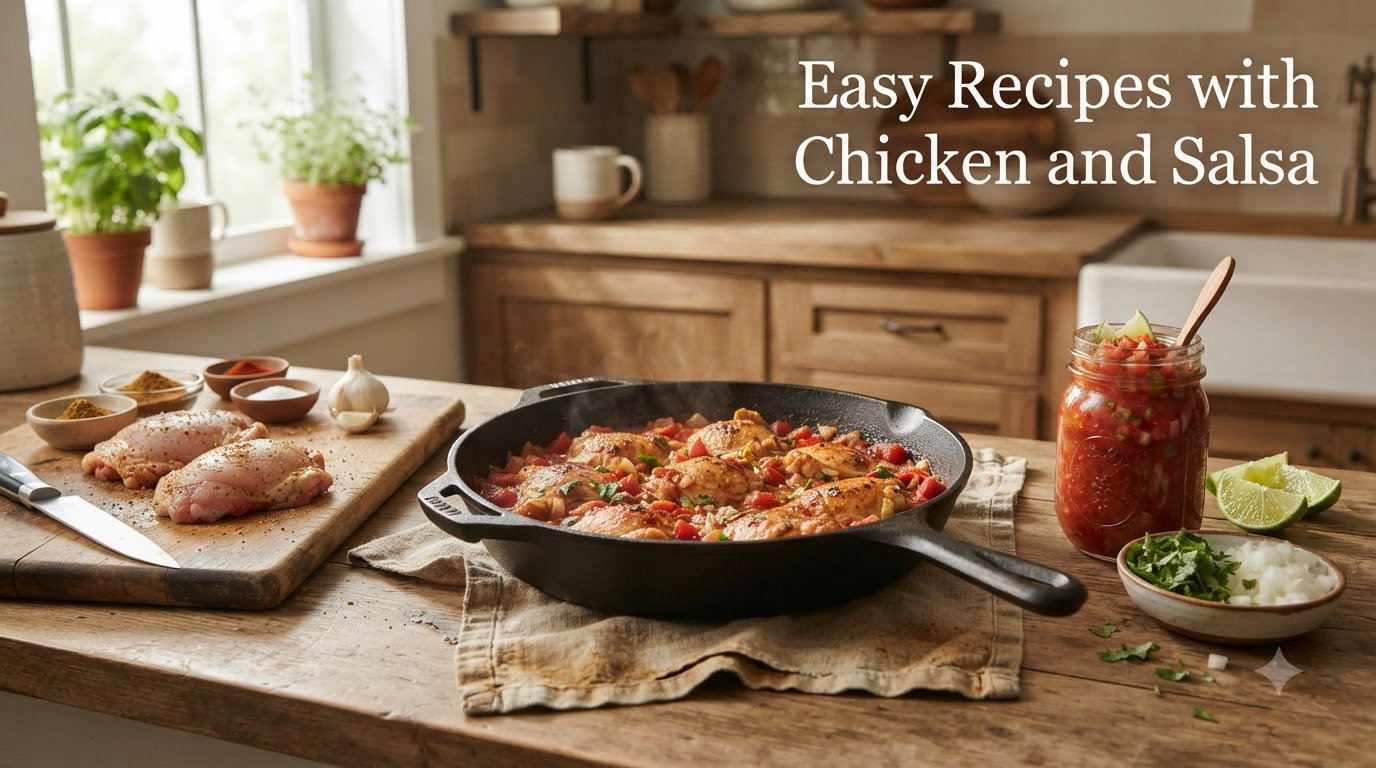
You can turn chicken and salsa into a genuinely easy meal when the cooking order is right. I’ve made the chicken and salsa recipes below specific enough to follow without guesswork, and the easy salsa chicken notes cover timing, substitutions, and serving.
Read the quick method notes first, then jump to the version that matches your equipment. I’ve linked a closely related kitchen resource for the prep question most likely to come next.
Table of Contents
Easy recipes with chicken and salsa for any cooking method
The best chicken and salsa recipes state exactly when each ingredient enters the pan. That same discipline keeps easy salsa chicken practical without relying on vague instructions.
Two useful follow-ups are this weeknight recipe resource and this serving or cooking reference. Use only the one that matches your next decision.
Why Chicken and Salsa Is the Ultimate Weeknight Dinner
Chicken and salsa is the kind of meal that works when you have zero energy and 30 minutes to spare. The salsa does the heavy lifting, adding acidity, heat, and flavor without requiring a long list of spices or a complicated sauce. You get tender, flavorful chicken with almost no active cooking.
It is also endlessly adaptable. You can serve the same batch of salsa chicken three different ways across the week: in tacos on Monday, over rice on Wednesday, and stuffed in a quesadilla on Friday. That versatility is exactly why so many home cooks keep coming back to it.
Budget-wise, it is hard to beat. Boneless skinless chicken breasts or thighs plus a jar of salsa runs you very little money, especially if you buy in bulk. If you are looking for more easy chicken breast recipes, this one should be at the top of your list.
Choosing the Right Salsa for Your Chicken
Not all salsa is created equal, and the one you pick changes the entire dish. Most competitors skip this step, but choosing the right salsa is the single biggest factor in how your chicken turns out.
Chunky Red Salsa (Restaurant Style)
The chunks of tomato and onion break down during cooking, creating a rich sauce that coats the chicken. Look for a medium heat level if you are feeding kids, or go hot if your family likes a kick. A thicker salsa works better than a watery one because it stays on the chicken instead of pooling at the bottom of the pan.
Salsa Verde (Green Salsa)
Salsa verde is made from tomatillos and has a tangier, brighter flavor than red salsa. It pairs beautifully with chicken thighs, which stay juicier during long cooking times. If you are using a slow cooker, salsa verde is an excellent choice because it holds up well and does not get bitter over hours of cooking.
Pico de Gallo (Fresh Salsa)
Fresh pico de gallo works better as a topping than a cooking sauce. Its raw, bright flavors are best added after the chicken is cooked. If you want the best of both worlds, cook your chicken with jarred red salsa and spoon fresh pico de gallo on top before serving.
Homemade Salsa
If you have the time, homemade salsa takes this dish to another level. Roasted tomato salsa, charred jalapeno salsa, or even a blended salsa made from canned fire-roasted tomatoes all work great. Homemade salsa tends to be thicker and more flavorful, which means less liquid in the pan and more concentrated taste on your chicken.
Ingredients You Need for Easy Recipes with Chicken and Salsa
Here is what you need to make classic baked salsa chicken. The beauty of this recipe is that the ingredient list is short, and almost everything is substitutable.
Main ingredients:
-
4 boneless skinless chicken breasts (about 1.5 to 2 pounds) or an equal amount of chicken thighs
-
1 cup thick chunky salsa (red, green, or your favorite variety)
-
1 tablespoon taco seasoning (store-bought or homemade)
-
1 cup shredded cheese (cheddar, Monterey Jack, or a Mexican blend)
-
1 tablespoon olive oil
-
Salt and pepper to taste
Optional garnishes:
-
Fresh chopped cilantro
-
Lime wedges
-
Diced avocado or guacamole
-
Sour cream
-
Sliced jalapenos (fresh or pickled)
Substitutions: If you do not have taco seasoning, use 1 teaspoon each of cumin and chili powder plus half a teaspoon of garlic powder. Thighs work just as well as breasts and stay juicier, though they take a few extra minutes to cook. For a dairy-free version, skip the cheese or use a plant-based alternative. If you want it spicier, add a diced jalapeno or a splash of hot sauce to the salsa.
How to Make Salsa Chicken: Step-by-Step (Oven Method)
The oven method is reliable because it is almost entirely hands-off. You season the chicken, add the salsa, and let the oven do the work. Here is exactly how I do it.
-
Preheat and prep. Preheat your oven to 375F. Lightly oil a baking dish or cast iron skillet so the chicken does not stick.
-
Season the chicken. Pat the chicken breasts dry with paper towels. This helps the seasoning stick and gives you a better sear if you choose to brown them first. Rub both sides with olive oil, then sprinkle evenly with taco seasoning, salt, and pepper.
-
Add the salsa. Pour the salsa evenly over the seasoned chicken. Use a spoon to spread it around so each piece is well covered. If you are using thick, chunky salsa, make sure the chunks are distributed across all the chicken.
-
Bake. Cover the dish with foil and bake for 25 minutes. Remove the foil and bake for another 5 to 10 minutes, until the chicken reaches a safe minimum internal temperature of 165F when measured with a probe thermometer in the thickest part. Total cooking time is usually 30 to 35 minutes depending on the thickness of your chicken.
-
Add cheese and finish. Sprinkle the shredded cheese over the chicken and return to the oven for 2 to 3 minutes, just until the cheese is melted and bubbly. Do not leave it too long or the cheese will overcook and become rubbery.
-
Rest and serve. Let the chicken rest for 5 minutes before serving. This keeps the juices inside the meat instead of running out onto the plate. Garnish with fresh cilantro and a squeeze of lime juice.
Cooking time: 30 to 35 minutes. Prep time: 5 minutes. Servings: 4.
Alternative Cooking Methods for Salsa Chicken
The oven is great, but sometimes you want a different method. Here are three other ways to cook salsa chicken, each with its own advantages.
Slow Cooker Salsa Chicken
The slow cooker is perfect for busy days when you want dinner ready when you walk in the door. Place 4 chicken breasts in the slow cooker, season with taco seasoning, and pour 1 cup of salsa on top. Cook on low for 4 to 6 hours or on high for 2 to 3 hours.
The chicken comes out so tender it shreds easily with two forks. This method is ideal for meal prep because shredded salsa chicken works in tacos, burritos, bowls, and salads all week long. If you want more ideas along these lines, check out these slow cooker chicken recipes.
Tip to prevent burning: If your slow cooker runs hot, add 2 tablespoons of water or chicken broth along with the salsa. This prevents the salsa from drying out and burning on the edges, which is a common complaint among slow cooker users.
Frozen chicken: You can put frozen chicken directly into the slow cooker with salsa. Add an extra hour to the cooking time and make sure the internal temperature reaches 165F before serving.
Stovetop Salsa Chicken
For a fast weeknight meal, the stovetop method gets dinner on the table in under 25 minutes. Heat a tablespoon of oil in a large skillet over medium-high heat. Season the chicken and sear for 3 to 4 minutes per side until golden brown.
Reduce the heat to medium, pour the salsa over the chicken, and cover the skillet. Simmer for 10 to 12 minutes until the chicken is cooked through. Add cheese, cover for 1 minute to melt, and serve. This method gives you a nice sear on the chicken while keeping it juicy inside.
Instant Pot Salsa Chicken
Pressure cooking is the fastest method. Place the chicken, salsa, and taco seasoning in the Instant Pot. Cook on high pressure for 12 minutes (15 minutes if using frozen chicken), then allow a 10-minute natural pressure release.
The Instant Pot locks in moisture, so the chicken comes out incredibly tender. Quick-release versions tend to dry out the chicken, so stick with the natural release for best results. This method is great when you forgot to thaw the chicken because it works perfectly from frozen.
Serving Suggestions: What to Pair with Salsa Chicken
Salsa chicken is versatile, and there are plenty of ways to serve it beyond a simple plate. Here are reliable ways to use it.
-
Tacos: Shred the chicken and serve in warm tortillas with avocado, lime, and extra salsa.
-
Rice bowls: Serve over white or brown rice with black beans, corn, and a dollop of sour cream.
-
Burritos: Wrap shredded chicken in large tortillas with rice, beans, and cheese.
-
Quesadillas: Place shredded chicken and cheese between two tortillas and cook until crispy.
-
Taco salad: Serve over chopped romaine with tomatoes, avocado, and a creamy dressing.
-
Over nachos: Spread tortilla chips on a baking sheet, top with shredded chicken and cheese, and bake until melted.
-
With roasted vegetables: Serve alongside roasted sweet potatoes or Brussels sprouts for a hearty dinner.
For side dishes, cilantro-lime rice, refried beans, or a simple green salad all work well. Mexican street corn (elote) is another excellent pairing if you want to go all out.
Recipe Tips for the Best Salsa Chicken
These tips address the most common problems home cooks run into.
Prevent dry chicken. The number one complaint about salsa chicken is that the chicken comes out dry. Two things fix this: do not overcook it, and use a meat thermometer. Pull the chicken out of the oven or slow cooker the moment it hits 165F. If you are baking chicken breasts, pounding them to an even thickness helps them cook uniformly so the thin end does not dry out while the thick end finishes.
Use a thermometer. A probe thermometer is the single best investment for cooking chicken. Guessing leads to either dry chicken or unsafe chicken. The moment the thickest part reads 165F, it is done.
Do not skimp on the salsa. The salsa is both the flavor and the sauce. If you use too little, the chicken will be bland and the pan will be dry. Use at least 1 cup for 4 chicken breasts, and feel free to add more if you want extra sauce for serving.
Let it rest. Resting the chicken for 5 minutes after cooking is not optional. It lets the juices redistribute so every bite is moist instead of dry. This applies to oven-baked, stovetop, and even slow cooker chicken (let it rest after shredding).
Salt the salsa before cooking if it tastes flat. Some jarred salsas are under-seasoned. Taste it before you pour it on the chicken. If it needs more salt, a pinch stirred in before cooking makes a big difference.
For more flavor, sear first. If you have an extra 5 minutes, sear the seasoned chicken in a hot skillet for 2 minutes per side before baking. The browning adds depth of flavor that you cannot get from baking alone.
Delicious Variations to Try
Once you master the basic recipe, these variations keep things interesting.
Creamy Salsa Chicken (Cream Cheese Variation)
This is one of the most popular variations in slow cooker communities. Add a block of cream cheese during the last 30 minutes of slow cooking. When the cream cheese melts, stir it into the salsa to create a rich, creamy sauce that coats every piece of chicken. It turns plain salsa chicken into something that tastes like a restaurant dish.
Salsa Chicken with Black Beans and Corn
Add a can of drained black beans and a cup of frozen corn to the baking dish or slow cooker. This makes the meal heartier and stretches it further, which is great for feeding a crowd or meal prepping for the week. The beans and corn absorb the salsa flavor and add texture.
Low-Carb and Keto Salsa Chicken
Salsa chicken is naturally low in carbs, making it a great option for keto diets. Skip the rice and tortillas and serve over cauliflower rice, in lettuce wraps, or alongside roasted vegetables. Use a salsa with no added sugar, and check the label since some brands sneak sugar in.
Spicy Salsa Chicken
If you want more heat, use a hot salsa, add diced jalapenos, or stir in a teaspoon of chipotle powder. A dash of hot sauce at the end also works. For a smoky variation, use a chipotle salsa or add a spoonful of adobo sauce from a can of chipotle peppers.
Cheesy Salsa Chicken Casserole
Turn it into a casserole by layering the chicken and salsa over a bed of rice, topping with cheese, and baking until bubbly. Add a layer of black beans between the rice and chicken for a complete one-dish meal.
As you choose among chicken and salsa recipes, match the method to the time you actually have. The easy salsa chicken version should still give you a concrete texture target, not just a clock time.
Appliance power and ingredient thickness can change timing, so confirm doneness against the current federal food-safety reference.
Storage, Freezing, and Meal Prep
Salsa chicken is one of the best meal prep recipes because it stores well and reheats beautifully. Here is how to handle leftovers and freezer prep.
Refrigerator storage: Store cooled salsa chicken in an airtight container for up to 4 days. The flavors actually improve overnight as the salsa soaks into the chicken, making it a great make-ahead option for easy lunch recipes for work.
Reheating: Reheat in the microwave in 30-second intervals, or warm gently in a covered skillet over low heat. Add a splash of water or extra salsa if it seems dry.
Freezing: Salsa chicken freezes beautifully. Let it cool completely, then store in freezer-safe containers or bags for up to 3 months. Thaw overnight in the refrigerator before reheating. This makes it a staple among freezer meal recipes for busy families.
Meal prep tip: Cook a large batch of slow cooker salsa chicken on Sunday. Portion it into 4 containers with rice and beans for grab-and-go lunches all week. Shredded salsa chicken also freezes well in individual portions, so you can pull out exactly what you need.
Frequently Asked Questions
What pairs well with salsa chicken?
Salsa chicken pairs well with rice, black beans, corn, tortillas, avocado, sour cream, and fresh cilantro. You can serve it in tacos, burrito bowls, quesadillas, taco salads, or over nachos. Roasted vegetables and cilantro-lime rice are also excellent side dishes.
Can you bake chicken with salsa?
Yes, you can bake chicken with salsa. Season the chicken, place it in a baking dish, pour salsa over the top, cover with foil, and bake at 375F for 25 minutes. Remove the foil and bake for another 5 to 10 minutes until the chicken reaches 165F internally. Add cheese for the last 2 to 3 minutes.
What meals can I make with salsa?
Salsa is incredibly versatile. You can use it in tacos, burritos, quesadillas, nachos, enchiladas, rice bowls, soups, egg dishes, and as a marinade for chicken or pork. It also works as a topping for grilled meats, baked potatoes, and scrambled eggs.
Can you eat chicken with salsa?
Yes, chicken and salsa make an excellent combination. The acidity and heat of the salsa complement the mild flavor of the chicken. This pairing works with baked, grilled, slow cooked, or pan-fried chicken and is a staple in Mexican and Tex-Mex cooking.
What can I do with chicken and salsa?
You can bake it, slow cook it, cook it in a skillet, or pressure cook it. Serve the result in tacos, burritos, rice bowls, quesadillas, salads, or over nachos. You can also add cream cheese for a creamy variation, or mix in black beans and corn for a heartier meal.
How long do you cook salsa chicken in the slow cooker?
Cook salsa chicken in a slow cooker on low for 4 to 6 hours or on high for 2 to 3 hours. The chicken is done when it reaches 165F internally and shreds easily with a fork. Frozen chicken adds about 1 extra hour to the cooking time.
Conclusion: choose the method that fits
Keep this guide for chicken and salsa recipes nearby when you want juicy chicken, the right salsa texture, and flexible heat levels. The easy salsa chicken approach is flexible enough for substitutions, but the order and doneness cues are worth keeping intact.
The most useful starting point is the version that fits your cookware and available time; the other options can wait.