
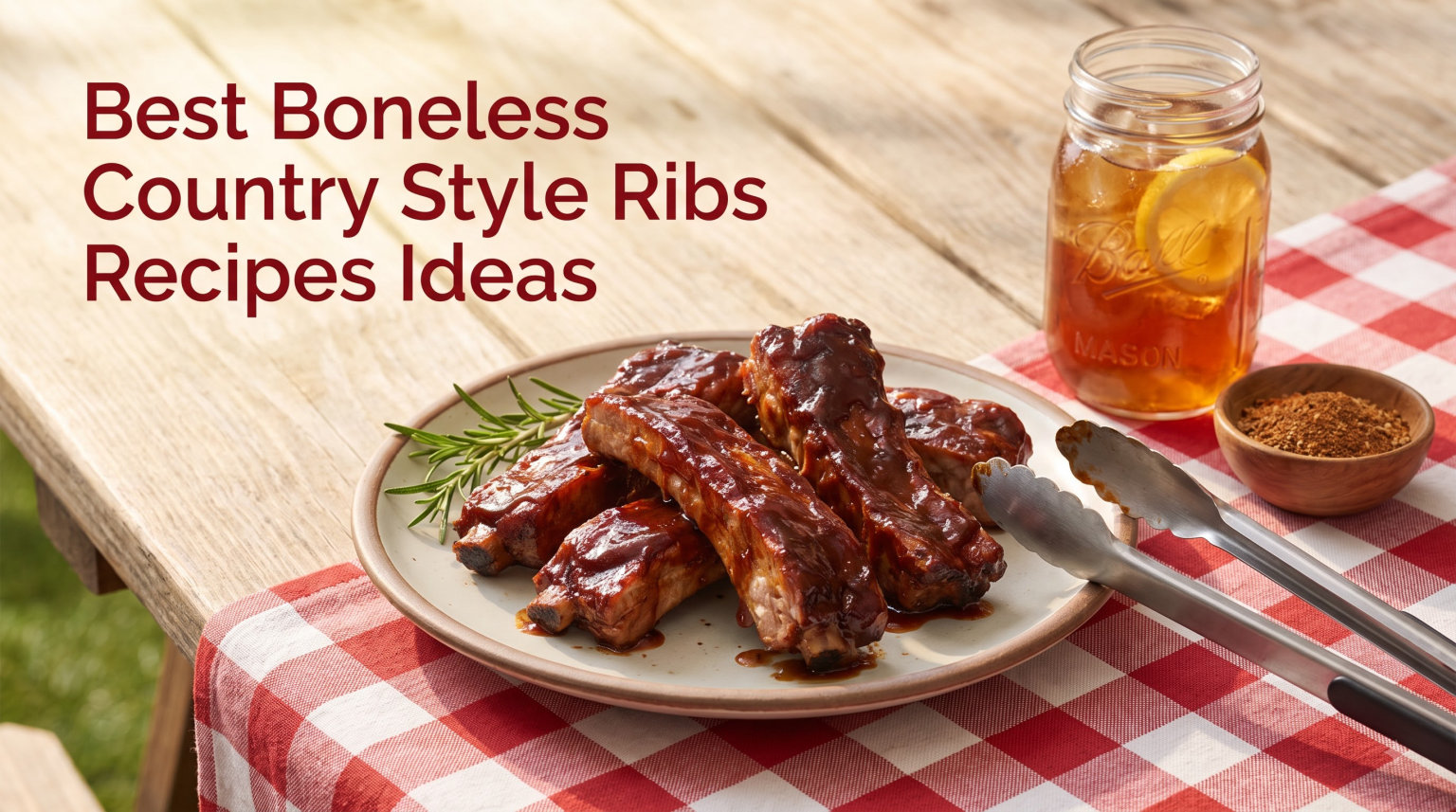
For boneless country style ribs recipes, my quickest answer is simple: the dependable result comes from one practical choice: identify whether the cut comes from shoulder or loin, then match it to low-and-slow or faster cooking. The guide below explains the texture, timing, substitutions, serving options, and storage without guesswork. The method stays reliable when you identify whether the cut comes from shoulder or loin, then match it to low-and-slow or faster cooking.
I have also included country-style pork rib ideas guidance for the exact moments that decide the result, from prep and doneness to storage. For another practical dinner, browse these best pork chop recipes ideas.
Table of Contents
A reliable plan for Best boneless country style ribs recipes ideas
What Are Boneless Country-Style Ribs (And Why They Are Not Actually Ribs)
Boneless country style ribs are cuts of pork shoulder, usually from the pork butt or Boston butt area, sliced into rib-shaped strips. They are not actually ribs at all, even though they are sold that way at the butcher counter.
Because they come from the shoulder, these “ribs” contain a mix of light and dark meat with plenty of marbling and connective tissue. That marbling is exactly what makes them taste rich and become fork-tender when cooked low and slow.
Understanding the cut matters for two big reasons. First, boneless country style ribs cook more like pork shoulder than like traditional baby back or spare ribs. Second, they are budget-friendly, usually running around $2 to $3 per pound, and they yield far more meat per pound than bone-in rib cuts.
One quick note on boneless versus bone-in: boneless country style ribs cook slightly faster and are easier to eat, while bone-in versions hold a bit more moisture during long cooks. You can use them interchangeably in most recipes, just adjust the cooking time by about 10 minutes.
If you have ever wondered, “are country style ribs actually ribs,” the honest answer is no, and that is a good thing. Their pork shoulder origin is what makes them so forgiving and flavorful.
Best Cooking Methods for boneless country style ribs
For food-safety temperatures and handling limits, I follow the USDA food-safety guidance and use an instant-read thermometer whenever doneness is uncertain.
For dependable boneless country style ribs recipes, identify whether the cut comes from shoulder or loin, then match it to low-and-slow or faster cooking. The same rule keeps country-style pork rib ideas focused and balanced instead of tough meat or a dry lean cut. You may also want to save these what to serve with pork chops best side dishes for your next meal plan.
Here is a quick overview of the best cooking methods for boneless country style ribs, ranked by the texture they produce. Pick the one that matches your schedule.
-
Oven baked (fast method): 350F for 40 to 50 minutes. Yields tender ribs with a caramelized BBQ crust. Best for weeknights.
-
Oven baked (low and slow): 275F covered in foil for 2 to 3 hours. Produces fall-apart, fork-shreddable meat. Best for weekends.
-
Slow cooker: 6 to 8 hours on low. Set it and forget it. Yields the softest, most shreddable texture.
-
Grill or smoker: 250 to 275F for 2 to 3 hours with indirect heat. Adds smoky flavor and a firm bark on the outside.
-
Air fryer: 380F for 18 to 22 minutes. Best for small batches and crispy edges, but less tender than slow methods.
Each method shines for a different reason.
Three Ways to Cook Country-Style Ribs
Three complete country-style rib methods
Recipe 1: Classic Oven-Baked BBQ Boneless Country Style Ribs
The ribs come out sticky, caramelized, and tender without needing a slow cooker.
Serves: 4 | Time: 40 to 50 minutesServes: 4 | Method: Oven
Ingredients
-
2 pounds boneless country style pork ribs
-
2 tablespoons brown sugar
-
1 tablespoon smoked paprika
-
1 teaspoon garlic powder
-
1 teaspoon onion powder
-
1 teaspoon kosher salt
-
1/2 teaspoon black pepper
-
1/2 teaspoon cayenne pepper (optional)
-
1 cup of your favorite BBQ sauce, divided
Instructions
-
Preheat your oven to 350F. Line a 9×13-inch baking dish or casserole dish with foil and lightly grease it.
-
In a small bowl, mix together the brown sugar, smoked paprika, garlic powder, onion powder, salt, pepper, and cayenne to make your dry rub.
-
Pat the ribs dry with paper towels. This step matters because wet meat will not hold the rub well. Coat each rib generously on all sides with the spice mixture.
-
Place the ribs in a single layer in the prepared dish. Pour half of the BBQ sauce over the top and use a brush to coat them evenly.
-
Cover the dish tightly with foil. Bake for 30 minutes covered, then remove the foil and brush with the remaining BBQ sauce.
-
Bake uncovered for another 10 to 15 minutes, or until the internal temperature reaches 145F for slicing or 195F for fall-apart tenderness.
Step 7 (optional): Broil on high for 2 to 3 minutes to get sticky, caramelized edges. Watch closely because the sugar can burn fast.
Pro tip: Let the ribs rest for 5 to 10 minutes before serving. This lets the juices redistribute so each bite stays moist.
For an even deeper flavor, you can swap half the BBQ sauce for a splash of apple cider vinegar or a tablespoon of Dijon mustard. Both balance the sweetness beautifully.
Recipe 2: Slow Cooker Fall-Apart Boneless Country Style Ribs
The slow cooker turns boneless country style ribs into something you can shred with a fork.
Serves: 4 to 6 | Time: 6 to 8 hours on lowServes: 4 to 6 | Method: Slow Cooker
Ingredients
-
3 pounds boneless country style pork ribs
-
1 large yellow onion, sliced
-
3 cloves garlic, minced
-
1 cup BBQ sauce
-
1/2 cup apple cider vinegar
-
1/4 cup brown sugar
-
1 tablespoon Worcestershire sauce
-
1 teaspoon smoked paprika
-
1 teaspoon kosher salt
-
1/2 teaspoon black pepper
Instructions
-
Spray your slow cooker insert with nonstick spray or line it with a slow cooker liner for easy cleanup.
-
Layer the sliced onions and minced garlic in the bottom of the slow cooker.
-
Season the ribs on all sides with paprika, salt, and pepper. Place them on top of the onion mixture.
-
In a separate bowl, whisk together the BBQ sauce, apple cider vinegar, brown sugar, and Worcestershire sauce. Pour this mixture evenly over the ribs.
-
Cover and cook on low for 6 to 8 hours, or on high for 4 hours. The low setting gives the most tender result.
-
Check for doneness at the 6-hour mark. The ribs should pull apart easily with a fork when ready.
-
Remove the ribs to a cutting board and shred them, or serve them whole over the onions and sauce.
Pepper or a pale ale beer. Both create a rich, slightly sweet braising liquid that breaks down the meat beautifully.
If the sauce is too thin at the end, transfer it to a saucepan and simmer for 5 minutes until it reduces. Pour it back over the ribs before serving.
Recipe 3: Dry Rub Grilled Boneless Country Style Ribs
This method skips the sauce and lets a bold dry rub do the talking. It works on a gas grill, charcoal grill, or smoker, and it gives you a firm bark with a juicy, smoky interior.
Serves: 4 to 6 | Time: 2 to 3 hoursServes: 4 to 6 | Method: Grill
Ingredients
-
1/4 cup brown sugar
-
2 tablespoons smoked paprika
-
1 tablespoon kosher salt
-
1 tablespoon black pepper
-
1 tablespoon garlic powder
-
1 tablespoon onion powder
-
1 tablespoon chili powder
-
1 teaspoon cayenne pepper
-
1 teaspoon dry mustard
Instructions
-
Mix all the dry rub ingredients together in a jar. This recipe makes extra, so you can store the leftover rub in an airtight container for up to 3 months.
-
Pat the ribs dry, then coat them generously with the rub on all sides. Press the spices into the meat with your hands.
-
Let the ribs sit at room temperature for 30 minutes, or refrigerate for up to 24 hours. This lets the salt penetrate the meat.
-
Set up your grill for indirect heat. Aim for a cooking temperature of 250 to 275F. If using a smoker, add your favorite wood chunks, like apple or hickory.
-
Place the ribs on the cooler side of the grill, away from the direct flame. Close the lid.
-
Cook for 2 to 3 hours, flipping once halfway through. The ribs are done when the internal temperature reaches 195F for tender slicing or 205F for pull-apart texture.
-
Rest the ribs loosely tented with foil for 15 minutes before serving. This step is non-negotiable for grilled meats.
If you want a glazed finish, brush on a thin layer of BBQ sauce during the last 15 minutes of cooking. The heat will tack it down into a sticky coating.
Best Dry Rubs and Seasonings for Boneless Country Style Ribs
I judge boneless country style ribs recipes by the finished texture and temperature, not by the clock alone. With country-style pork rib ideas, shoulder-style pieces should become fork-tender, while lean loin-style pieces need closer temperature control to stay juicy. For a useful companion guide, see these easy slow cooker dinner recipes ideas.
A good dry rub is what separates forgettable ribs from ones people ask about later. Here are three blends I rotate through.
Classic BBQ Rub: Brown sugar, smoked paprika, garlic powder, onion powder, salt, and pepper. Sweet, smoky, and crowd-pleasing. This is the blend I use in Recipe 1.
Cajun-Inspired Rub: Paprika, cayenne, dried thyme, dried oregano, garlic powder, onion powder, salt, and black pepper. Spicy and savory, perfect if you want to skip the BBQ sauce entirely.
Brown Sugar and Coffee Rub: Brown sugar, finely ground coffee, smoked paprika, chili powder, salt, and a pinch of cinnamon. Deep and earthy, with a crust that turns almost black and glossy on the grill.
For a brined option, soak the ribs in a simple salt and sugar solution for 2 to 4 hours before applying your rub. Brining helps leaner cuts stay moist, but it is less noticeable on well-marbled ribs cooked low and slow.
Marinades also work well with boneless country style ribs. Try a mix of soy sauce, honey, garlic, ginger, and rice vinegar for an Asian-inspired twist. Marinate for at least 4 hours, or overnight for the deepest flavor.
Internal Temperature Guide for Tender Country Style Ribs
Temperature is the single most important detail for getting the texture you want. According to USDA pork safety guidelines, pork is safe to eat at 145F, but country style ribs need higher temperatures for tenderness.
Here is how the texture changes at different temperatures.
-
145F: Safe to eat, firm and sliceable. Texture is similar to a pork chop.
-
170F: Starting to soften, but still has some chew.
-
185F: Tender and sliceable, juices stay locked in.
-
195F to 205F: Fall-apart tender, fork-shreddable, melting texture.
For the fall-apart texture most people associate with great ribs, aim for 195F to 205F. This is the range where the connective tissue fully breaks down into gelatin.
Always use an instant-read meat thermometer. Checking by time alone is unreliable because rib thickness and fat content vary a lot. Rest the meat for at least 5 minutes after cooking so the juices can settle back into the muscle fibers.
Why Your Boneless Country Style Ribs Are Tough (And How to Fix It)
This is the number one complaint I hear, and there are a few clear reasons it happens. The good news is every one of them is fixable.
Cause 1: Cooking too hot and too fast. Pork shoulder cuts need time to break down their connective tissue. If you cook them above 350F for under an hour, the muscle fibers seize up before they have a chance to soften.
Fix: Drop the temperature to 275F or lower and cook covered for at least 2 hours. The low heat gives the collagen time to melt.
Cause 2: Undercooking. Country style ribs cooked to only 145F will be safe but firm. They need to push past 185F to become truly tender.
Fix: Keep cooking until your thermometer reads 195F to 205F. This higher temperature is what creates the melt-in-your-mouth texture.
Cause 3: Skipping the foil cover. An uncovered pan lets moisture escape, drying out the surface of the meat before the inside has time to soften.
Fix: Cover your baking dish tightly with foil for the first two-thirds of the cooking time. Uncover only at the end if you want caramelized edges.
Cause 4: Not resting the meat. Cutting into ribs immediately after they come out of the oven lets all the juices run onto the cutting board.
Fix: Rest the ribs for 10 to 15 minutes under a loose tent of foil before slicing or shredding.
How to rescue tough ribs: If your ribs are already cooked and they are still chewy, chop them into bite-sized pieces and return them to a covered dish with a splash of broth, apple juice, or BBQ sauce. Bake at 300F for another 45 to 60 minutes until they soften. You can also shred them and simmer in sauce on the stovetop for 20 minutes.
What to Serve With Boneless Country Style Ribs
The right sides make a plate of ribs feel like a complete meal.
Classic BBQ sides: Coleslaw, macaroni salad, potato salad, baked beans, cornbread, and potato chips. These work with any of the three recipes above.
Comfort sides: Mashed potatoes, macaroni and cheese, roasted green beans, creamed corn, and dinner rolls. These pair especially well with slow cooker ribs because the sauce acts like gravy.
Lighter sides: A simple green salad with vinaigrette, grilled corn on the cob, cucumber salad, or roasted Brussels sprouts. These balance the richness of the pork.
Leftover ideas: Shredded country style ribs make excellent tacos with quick pickled onions and cotija cheese. You can also pile them on a bun with extra BBQ sauce for a pulled pork-style sandwich, or fold them into macaroni and cheese for a loaded bake.
Make-ahead and storage: Cooked ribs will keep in an airtight container in the fridge for up to 4 days. They freeze well for up to 3 months. Reheat them gently in a covered dish with a splash of broth or sauce at 300F until warmed through.
Time to Get Cooking
Boneless country style ribs are one of the most forgiving and flavorful cuts of pork you can keep in your regular dinner rotation. They come from pork shoulder, not actual ribs, which is why they are so rich, budget-friendly, and easy to cook low and slow.
Once you understand the temperature targets (145F for slicing, 195F to 205F for fall-apart tenderness) and the importance of covering your dish with foil, the rest is just choosing your favorite seasoning and cooking method.
I hope this collection of boneless country style ribs ideas gives you a few new options to try. Start with the oven-baked BBQ recipe if you want something fast, the slow cooker version if you want zero hands-on time, or the grilled dry rub recipe if you want to show off a little.
Whichever you pick, use a meat thermometer and let the meat rest before serving. Those two habits alone will put you ahead of most home cooks. Happy cooking, and I hope your ribs come out perfectly tender every time.
Frequently Asked Questions
How do I know when boneless country style ribs is ready?
Shoulder-style pieces should become fork-tender, while lean loin-style pieces need closer temperature control to stay juicy.
How do I prevent tough meat or a dry lean cut?
Identify whether the cut comes from shoulder or loin, then match it to low-and-slow or faster cooking.
Can I substitute bone-in country-style ribs?
Yes, though they may need extra time and temperature should be checked in the meat away from the bone.
What should I serve with boneless country style ribs?
Serve them with slaw, baked beans, cornbread, potato salad, cucumber salad, or roasted corn.
Can I make boneless country style ribs ahead?
Refrigerate with cooking juices and reheat covered so the meat stays moist.
Can I freeze boneless country style ribs?
Freeze cooled portions with sauce or juices, thaw overnight, and reheat slowly.
Conclusion
For boneless country style ribs recipes, the most important move is to identify whether the cut comes from shoulder or loin, then match it to low-and-slow or faster cooking. That same discipline makes country-style pork rib ideas useful on a busy day without sacrificing flavor or texture.
I recommend reading the method once, preparing every ingredient, and using the doneness cues above as the final authority. The dependable result comes from one practical choice: identify whether the cut comes from shoulder or loin, then match it to low-and-slow or faster cooking. The guide below explains the texture, timing, substitutions, serving options, and storage without guesswork.