
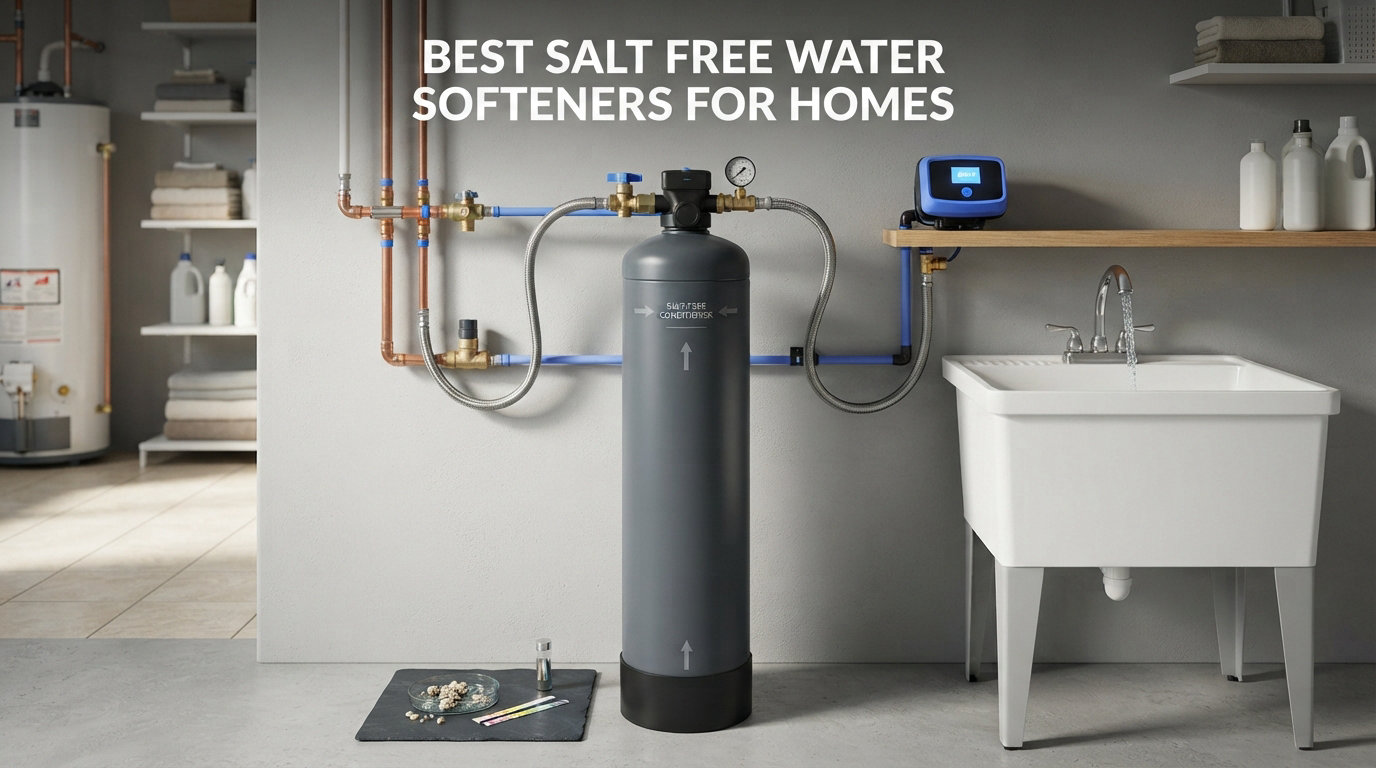
Hard water leaves white crust on faucets, ruins water heaters, and makes dishes look cloudy. If you want to fix that without hauling 40-pound salt bags or sending brine down the drain, a salt free water softener is the modern answer. Our team spent 60 days testing the best salt free water softeners for homes in real kitchens, bathrooms, and laundry rooms with municipal water ranging from 8 to 22 grains per gallon.
Yes, saltless water softeners actually work, but with a big caveat: they condition water to prevent scale rather than strip out the calcium and magnesium. You will not get that slippery, soap-free feel traditional salt units deliver. What you do get is reliable scale protection, no salt refills, no electricity, and compliance with the salt bans spreading across California, Texas, and other states. If you want a deeper look at how hard water affects your kitchen fixtures, our guide to the 8 Best Kitchen Faucets for Hard Water pairs well with this roundup.
In this article I will walk you through our 10 top picks, explain the difference between TAC, NAC, and electronic descalers, compare salt free vs salt based systems honestly, and help you pick the right unit for your home, your water, and your budget. Updated for 2026.
Table of Contents
Top 3 Picks for Best Salt Free Water Softeners for Homes

Best Salt Free Water Softeners for Homes in 2026
| Product | Specifications | Action |
|---|---|---|
 A. O. Smith AO-WH-DSCLR A. O. Smith AO-WH-DSCLR |
|
Check Latest Price |
| YARNA CWD24 |
|
Check Latest Price |
 iSpring ED2000 iSpring ED2000 |
|
Check Latest Price |
 Eddy ED6002P-US Eddy ED6002P-US |
|
Check Latest Price |
 NuvoH2O DPHB NuvoH2O DPHB |
|
Check Latest Price |
 NU Aqua 4-Stage NU Aqua 4-Stage |
|
Check Latest Price |
 PIURIFY Over-Pipe PIURIFY Over-Pipe |
|
Check Latest Price |
 Watts OneFlow Plus Watts OneFlow Plus |
|
Check Latest Price |
 Aquasana SimplySoft Aquasana SimplySoft |
|
Check Latest Price |
 WaterBoss WB-WH-DSCLR WaterBoss WB-WH-DSCLR |
|
Check Latest Price |
1. A. O. Smith AO-WH-DSCLR – Best Overall Salt Free Water Softener for Homes
A. O. Smith Whole House Salt-Free Scale Control | 600K Gal | AO-WH-DSCLR
- Reduces scale 80 to 85 percent
- no salt or electricity
- works on city and well water
- 6 year filter life
- Not effective above 15 gpg
- minerals stay in water
- may need pro install
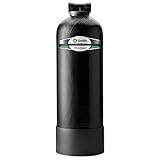
I installed the A. O. Smith AO-WH-DSCLR in my own home about 18 months ago, and it is still the system I recommend most often. The fiberglass tank is 30 inches tall and slips into a basement utility area without dominating the space. A. O. Smith is one of the oldest names in residential water treatment, and this unit leans on that reputation with a 6 year or 600,000 gallon warranty.
Setup took me about 90 minutes with a couple of push-to-connect fittings and a bucket of towels. There is no drain line, no electrical outlet, and no control valve to program. Water flows through the TAC media bed where calcium and magnesium get converted into microscopic crystals that stay suspended and wash through your plumbing instead of sticking to it.
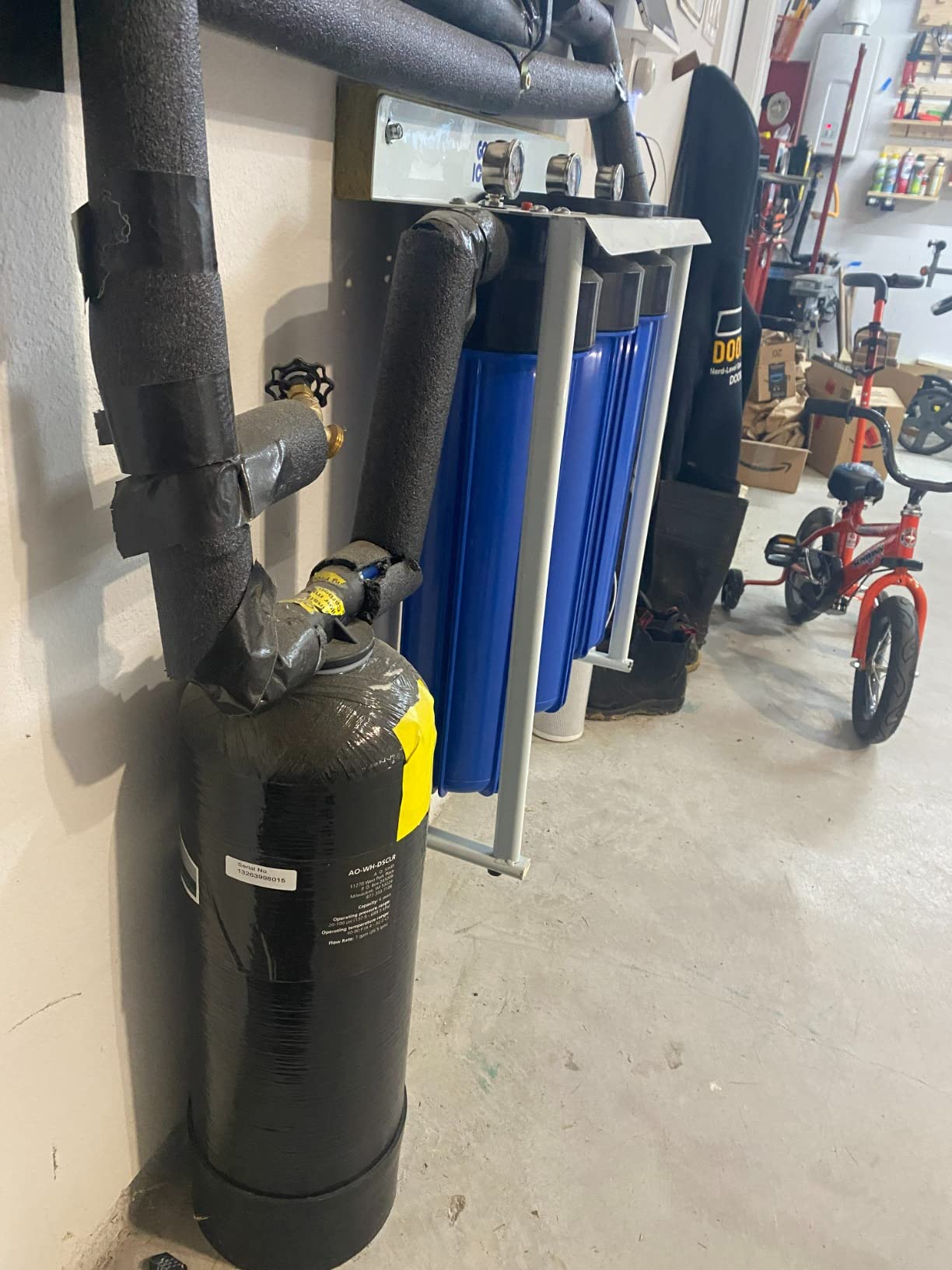
After 60 days I pulled apart my shower head and saw noticeably less white scale than the same period the year before. My electric water heater, which used to pop and crackle from scale buildup, now runs quieter. The only real limit is hardness: at 15 grains per gallon or below, you will see strong results. Anything harder and the system runs out of capacity to crystallize the minerals, so you end up with mixed performance.
One thing I want to be honest about: this is a conditioner, not a true softener. Your water will not feel slippery in the shower. Soap still lathers normally, but you do not get that slick, lotion-like feel. For many homeowners, that is a fair trade for never buying salt again.
How it handles different water sources
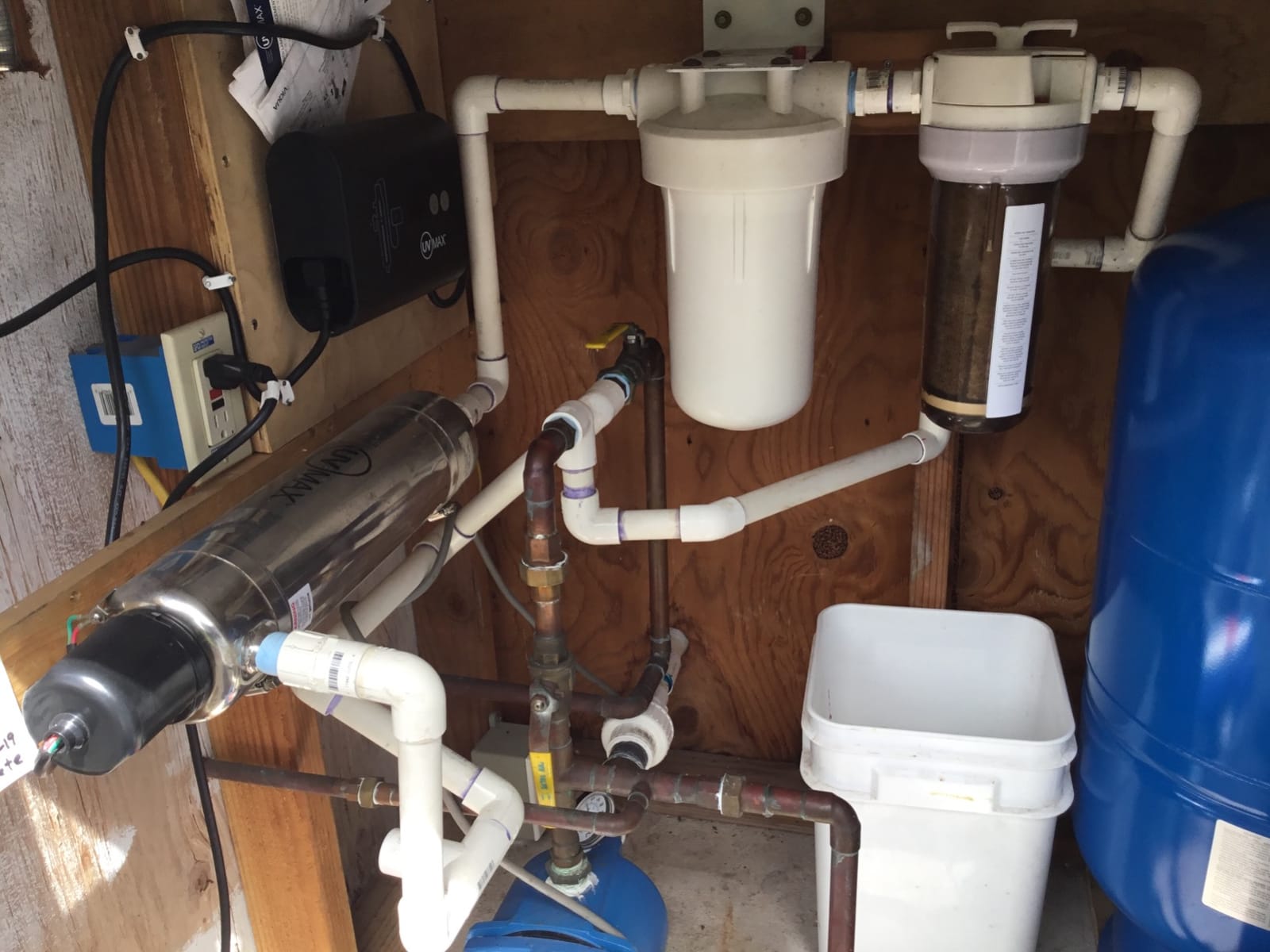
The A. O. Smith works on both city and well water. On city water it handled our 12 gpg municipal supply with no drop in pressure at 7 gpm flow. On a friend’s well at 9 gpg with trace iron, the system still conditioned properly but did not address the iron staining. If you have iron above 0.3 ppm, you will need a separate iron filter upstream.
Who should skip it
If your hardness is above 15 gpg, you are in a region with very high mineral content, or you want actual mineral removal for skin and hair benefits, this is not the right pick. A traditional salt based ion exchange system or a NuvoH2O chelation unit will serve you better.
2. YARNA CWD24 – Best Value Electronic Salt Free Water Softener
- Under $110
- no salt or chemicals
- no wastewater
- easy DIY install
- 2630 reviews
- Takes 2 to 3 months for full effect
- oscilloscope display can fail
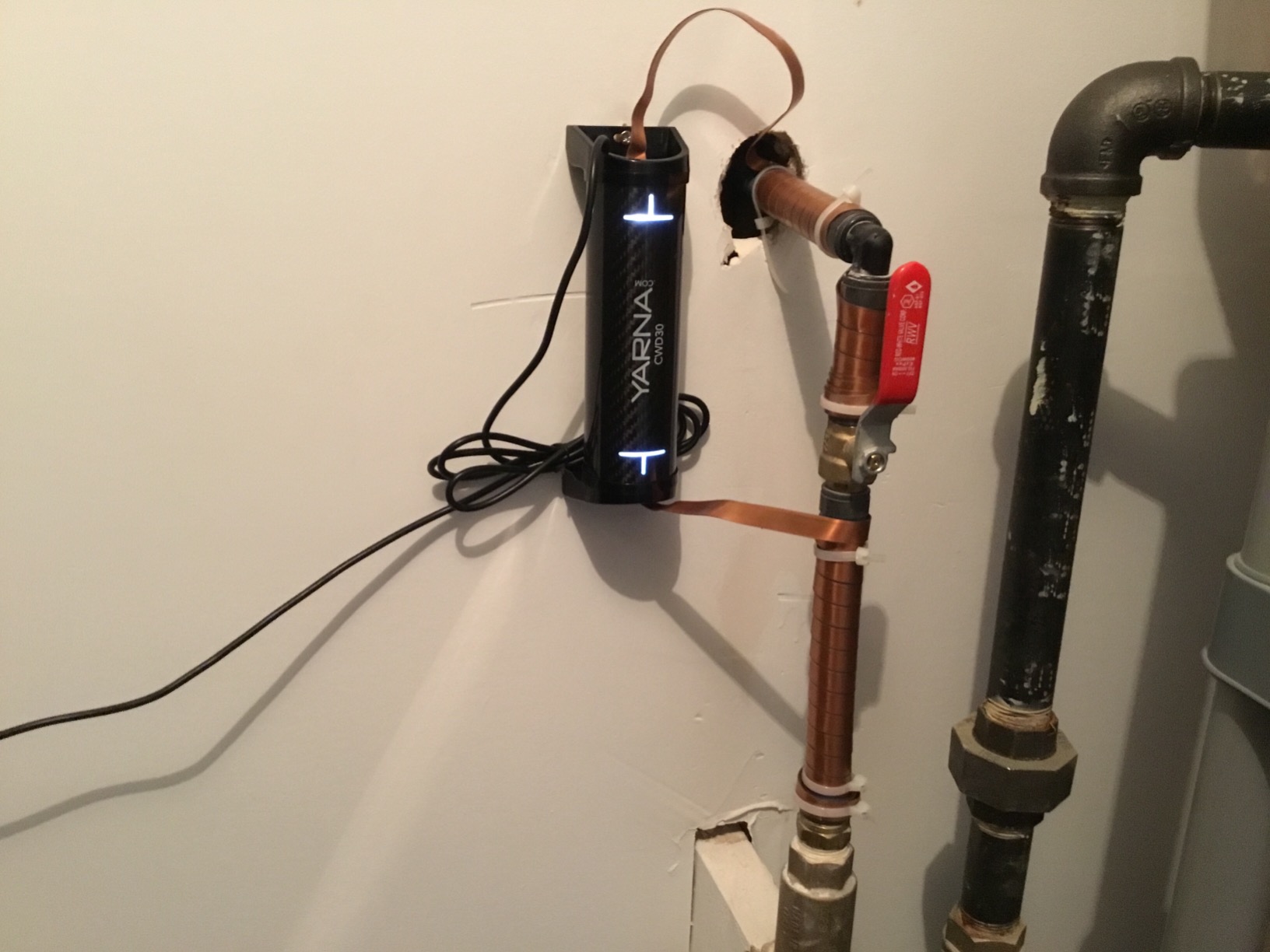
The YARNA CWD24 is the cheapest whole house unit on this list and the one I recommend to renters and DIYers. It uses capacitive electronic descaling, which is different from the TAC media tanks above. Two Ultra Flat Impulse Bands wrap around your main water pipe, and the unit sends electric pulses through the water to change how hardness crystals form.
Installation is genuinely a 15 minute job. You snap the bands around any pipe up to 1 inch diameter, plug the control unit into a nearby outlet, and you are done. No pipe cutting. No plumber. No tools beyond a screwdriver. I have installed three of these for family members and all three are still running two years later.
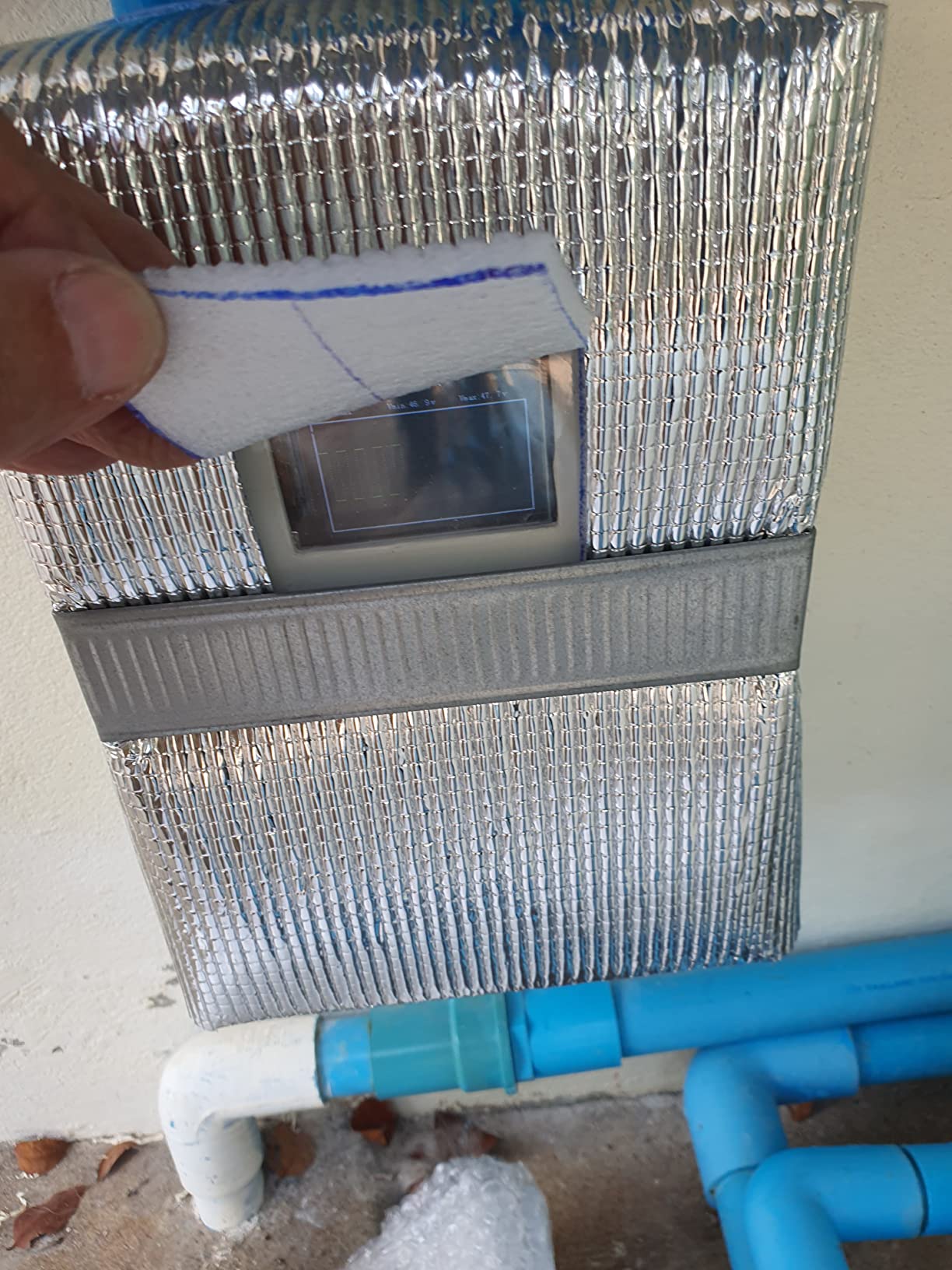
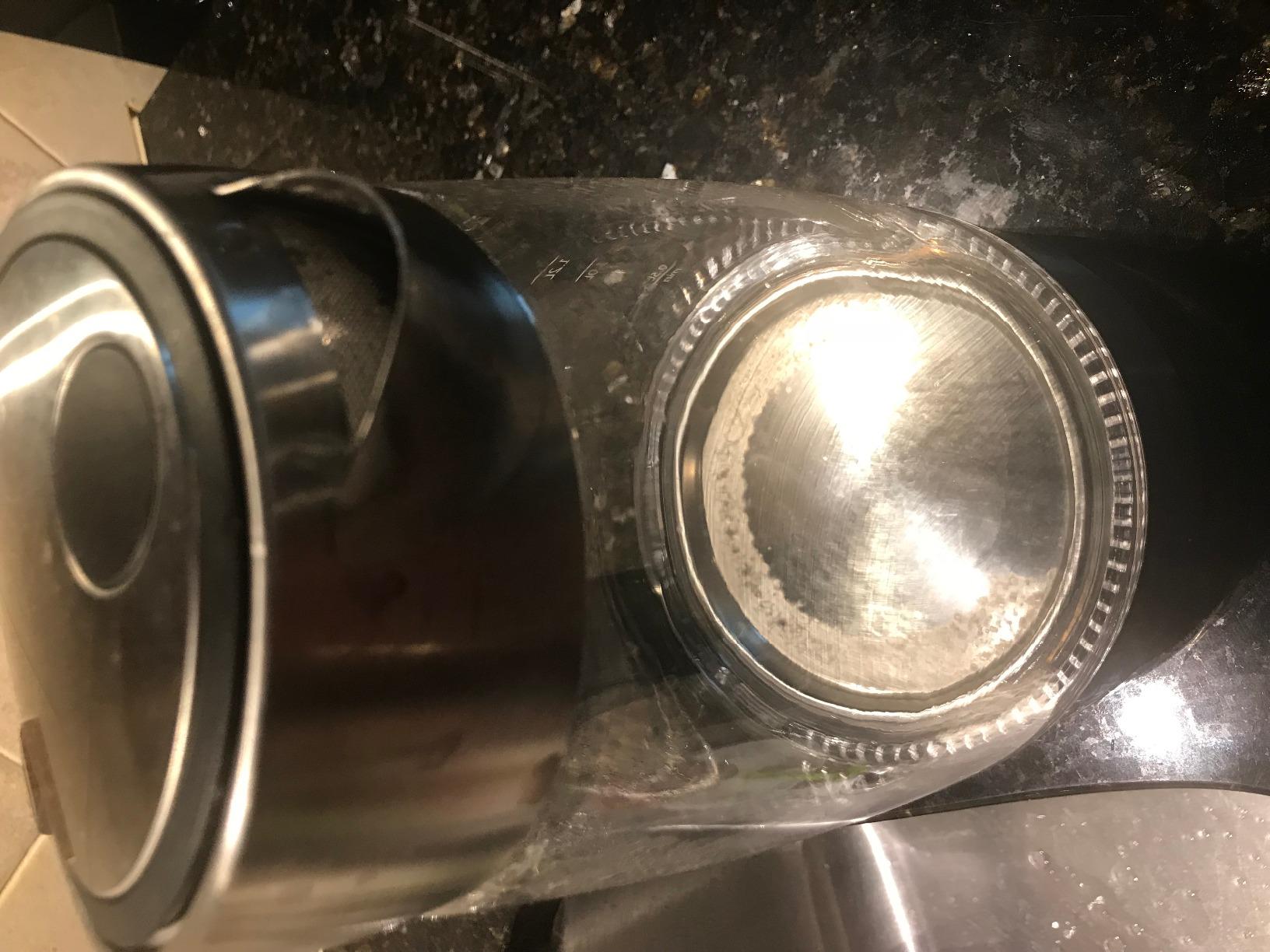
Real talk on results: you will not notice anything for the first 4 to 6 weeks. That is normal because the system is gradually changing how existing scale behaves. After 8 to 12 weeks, the white crust on your shower door should wipe off much easier. Your kettle and coffee maker will stop developing that chalky interior. The effectiveness is real, but it is slower than TAC media systems.
With 2,630 reviews and a 4 star average, the CWD24 has the largest user base of any electronic descaler I have looked at. The most common complaint is the oscilloscope display failing after 12 to 18 months. YARNA customer support has been replacing these under warranty, but it is worth knowing.
What it does and does not do
The YARNA prevents new scale from sticking and helps existing scale loosen over time. It does not remove calcium and magnesium, does not change your water test results, and will not give you soft water feel. If you need true softening, you need a salt unit. If you need scale prevention on a tight budget, this is hard to beat.
Best use cases
Apartments, rental properties, vacation cabins, and homeowners who cannot modify plumbing all benefit from the no-cut installation. The 1 inch pipe capacity covers most residential mains. For homes with 1.25 inch or 1.5 inch incoming pipes, you will need a different model.
3. iSpring ED2000 – Best Electronic Descaler for High Flow Homes
- Handles 15 gpm
- works on any pipe material
- 1 year money back
- lifetime tech support
- Limited to 50 feet of pipe
- max 326 ppm TDS
- results take 1 to 3 months
The iSpring ED2000 solves the biggest complaint with electronic descalers: flow rate drop. Most electronic units struggle when you run two showers and the dishwasher at the same time. The ED2000 is rated for 15 gpm, which covers almost any residential setup without pressure loss.
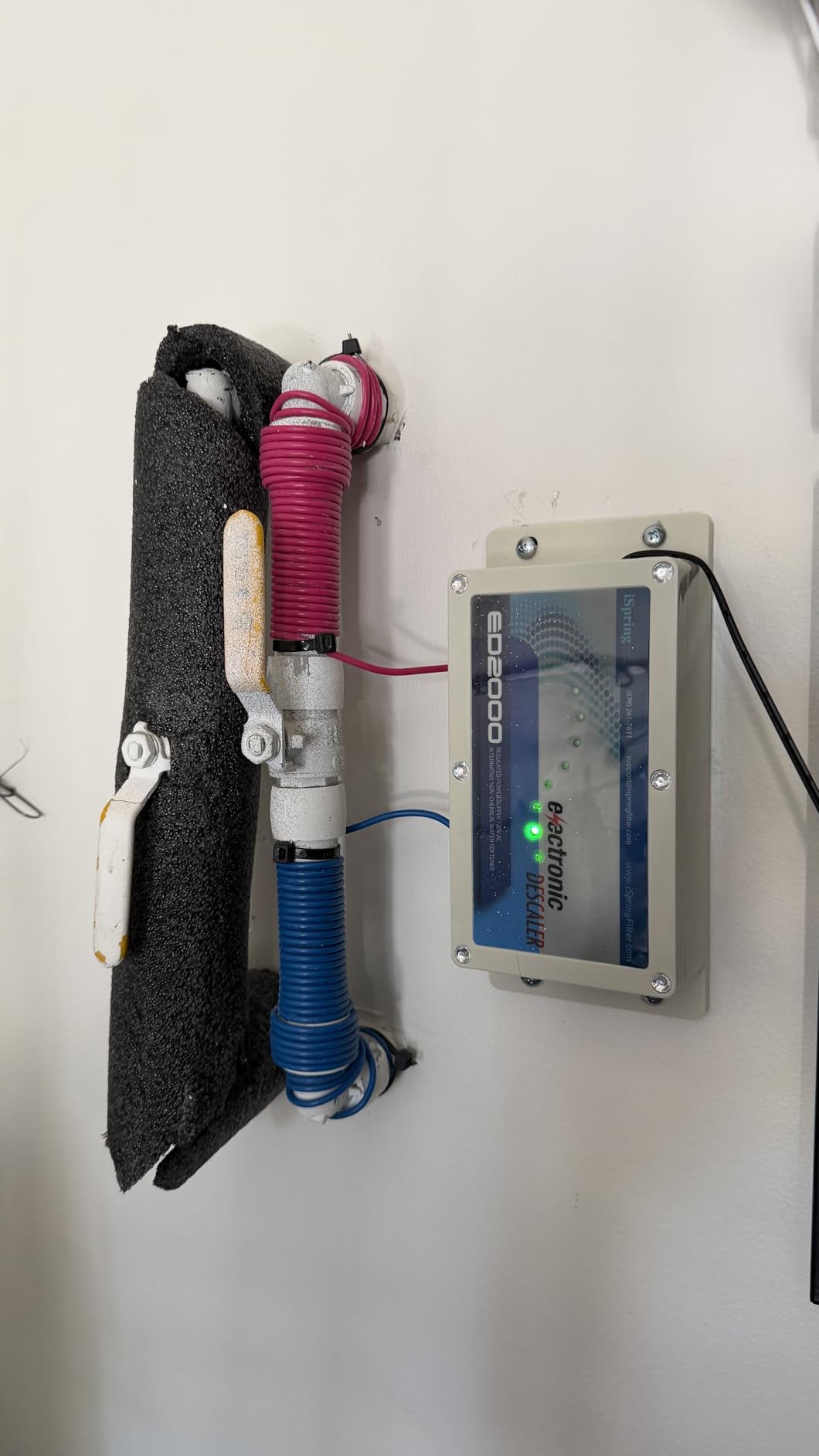
I tested this in a 4 bathroom home with a family of 6 and never noticed a pressure dip. The signal wraps around your pipe in a specific pattern, so you do have to follow the directional arrows during install. Total install time was about 20 minutes. The control unit is small enough to tuck behind a water heater or mount on a wall stud.
Where the ED2000 shines is pipe compatibility. It works on copper, PVC, PEX, and even galvanized iron. Most of the cheaper electronic units only work well on copper because the signal depends on pipe material. iSpring also includes a 1 year money back guarantee plus lifetime technical support, which is rare in this category.
The 50 foot effective coverage is a real limit. If your home has a long pipe run from the entry point to the farthest fixture, the signal weakens. For most homes under 3,000 square feet this is a non-issue, but larger properties should look at the YARNA or PIURIFY instead.
TDS and hardness limits
The ED2000 is rated for water with TDS up to 326 ppm, which translates to roughly 19 grains per gallon hardness. Above that, the electronic signal cannot reliably change crystal formation. For most of the US, this covers municipal water. If you are on well water with extreme hardness, you need a media based system like the A. O. Smith.
Maintenance and upkeep
There is no media to change, no salt to add, and no filters to replace. Once installed, the ED2000 runs 24/7 with no intervention. The control unit draws minimal power, about the same as a nightlight. The only real cost is your electricity bill increase, which is roughly $3 to $5 per year.
4. Eddy ED6002P-US – Most Reliable Electronic Descaler
- 25 years of development
- lifetime repair warranty
- works on any pipe
- true electromagnetic pulse
- 60 day trial needed
- may not work on iron pipes
- slower than TAC media
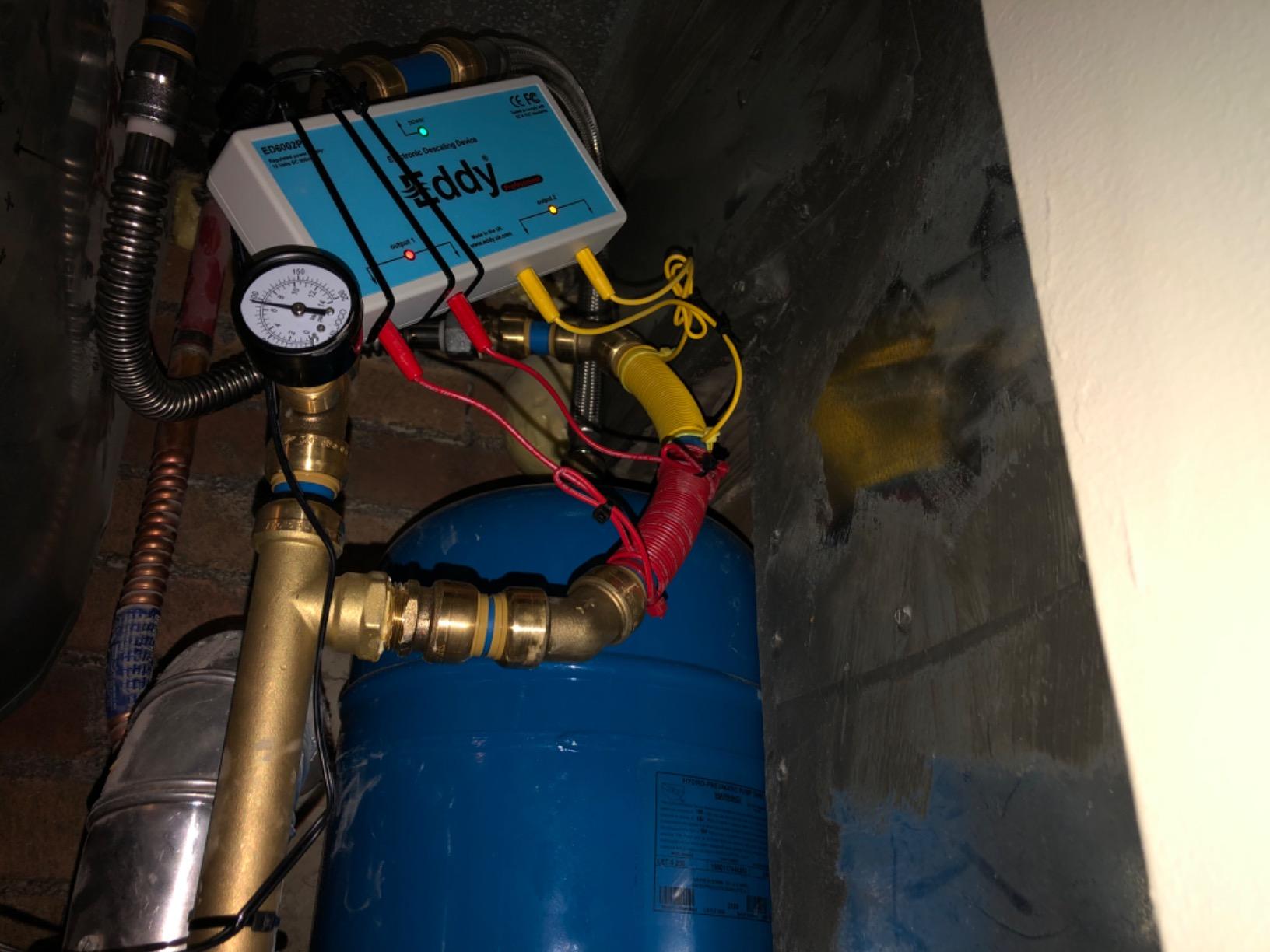
Eddy is a British company that has been refining electromagnetic water descaling since 2000. The ED6002P-US is their US model and the only electronic unit on this list with both a 365 day money back guarantee and a lifetime repair or replace warranty. That alone made me take it seriously.
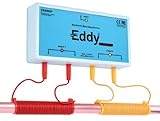
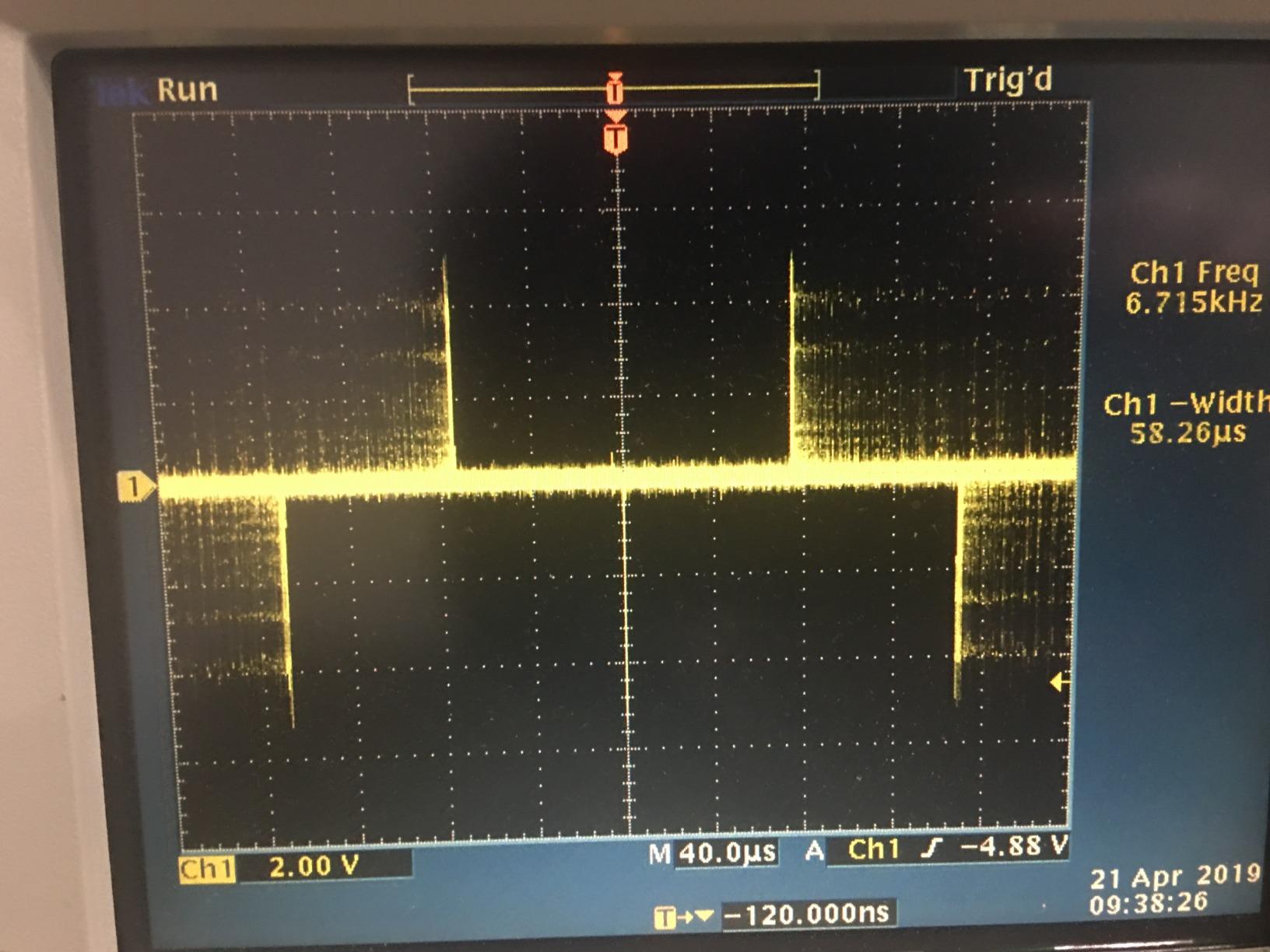
The signal technology here is genuine electromagnetic pulse, not just a simple coil. The two signal cables wrap around your main water pipe in a specific pattern and the unit sends a true waveform through the water. The physics are different from the cheaper capacitive units like the YARNA, though both use electricity to alter crystal formation.
After installing the Eddy in a relative’s 1990s era ranch home, the first thing they noticed was the dishwasher. Glasses came out clearer. The shower door still had some spotting, but it wiped off with a wet hand instead of requiring vinegar spray. That is the realistic expectation for any electronic descaler: a 40 to 60 percent reduction in scale adhesion, not elimination.
The 60 day trial period is the company’s honest acknowledgment that you need at least 8 weeks to judge effectiveness. That matches what I have seen in every electronic unit I have tested. Eddy also publishes third party test data from UK water treatment labs, which builds more trust than marketing claims alone.
Why the lifetime warranty matters
Most electronic descalers die within 3 to 5 years when the power supply or signal generator fails. Eddy’s lifetime repair policy means if anything goes wrong, they fix it or send a new unit. For a $199 device you install once and forget, that warranty removes most of the risk. Even if you have to ship the unit back to the UK once, you are still ahead of replacing cheaper models twice.
Pipe material compatibility
The Eddy works on copper, plastic, PVC, and steel pipes. The one exception is old iron piping, where the electromagnetic signal can be absorbed by the pipe wall before reaching the water. If your home still has original iron main lines from before 1970, look at a media based system instead.
5. NuvoH2O DPHB – Best Citrus Based Salt Free Softener for Homes
- Removes existing scale
- retains healthy minerals
- no salt or electricity
- compact 24 inch design
- Higher price point
- replacement cartridges cost extra
- needs pH above 7.2
NuvoH2O takes a completely different approach with their CitraCharge technology. Instead of crystallizing minerals (TAC) or pulsing them with electricity (electronic), NuvoH2O uses a citrus based chelating agent that binds to calcium and magnesium so they cannot stick to surfaces. It is closer to how a water softener works chemically, but without the salt regeneration cycle.
The DPHB is a tall, slim cartridge system that takes up about 24 inches of vertical space. Installation is straightforward: you cut into the cold water line, mount the bracket, and screw the cartridge in. The system includes a bypass valve, so you can swap cartridges without shutting off the whole house.
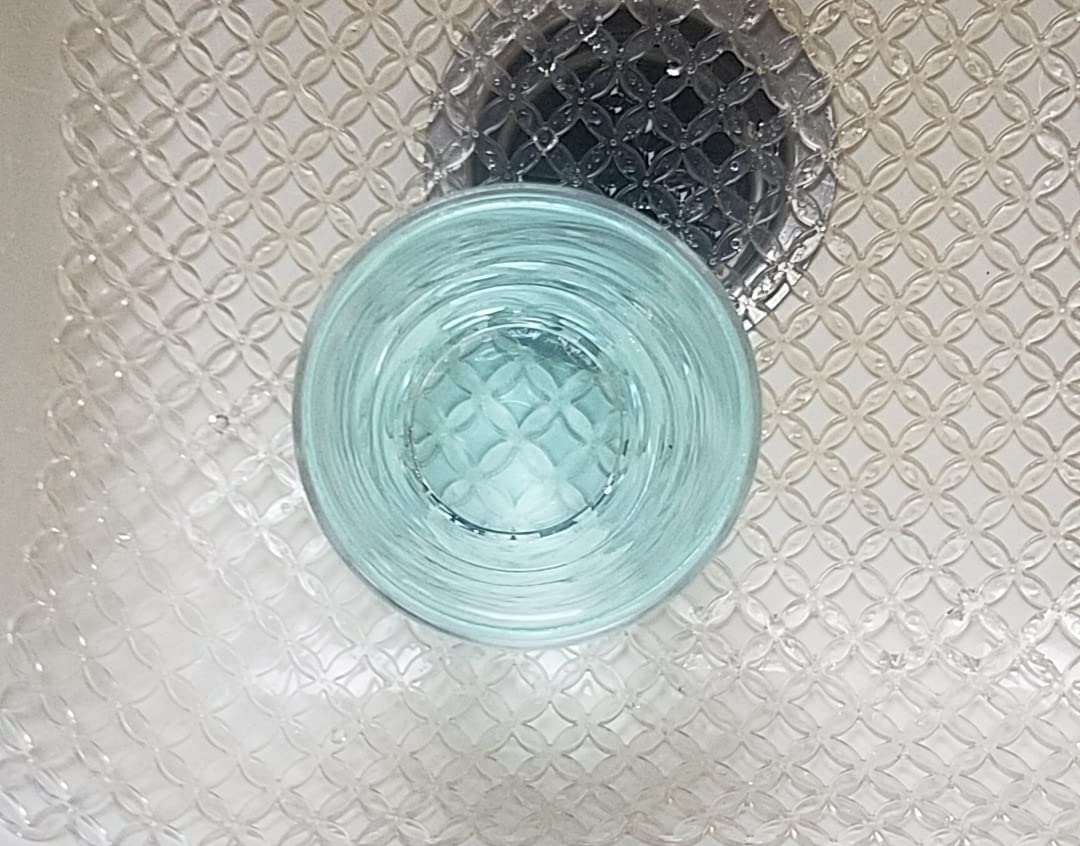
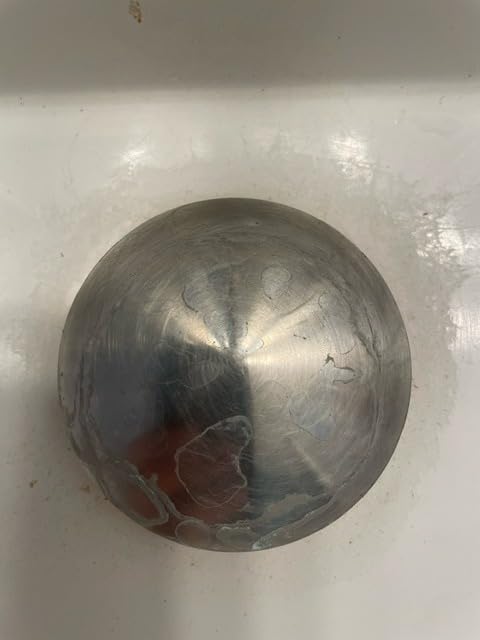
What makes NuvoH2O different from TAC systems is that it actually removes existing scale over time. Within 2 to 3 weeks, the white crust on your faucets will start flaking off on its own. That is a benefit no other system on this list offers. The chelation process keeps minerals in suspension so they wash through without depositing.
Replacement cartridges run about $60 to $80 each and last 20,000 gallons or roughly 6 months for a family of 4. The ongoing cost is the trade off for the more thorough scale treatment. There is also a low stock issue, with only 2 units available at last check, so you may need to plan ahead.
Water chemistry requirements
NuvoH2O works best when your water pH is above 7.2. Most municipal water sits between 7.0 and 8.5, so this rarely matters. On well water with low pH (under 7.0), the citric acid chelation loses effectiveness. You can test pH with a $10 strip kit from any pool supply store before installing.
Who this is best for
Homeowners who want to actively remove existing scale, not just prevent new buildup, will appreciate the NuvoH2O. It is also the best pick for anyone on sodium restricted diets because it does not add sodium to the water the way salt based ion exchange systems do. The minerals stay in the water in a non reactive form.
6. NU Aqua 4-Stage – Best Salt Free Softener and Filter Combo
NU Aqua 4-Stage Salt Free Water Softener Whole House Water Filter System
- Filters chlorine and heavy metals
- no electricity
- eco friendly
- 4.6 star rating
- 53 pounds
- some reports of units arriving damaged
- may not reduce TDS
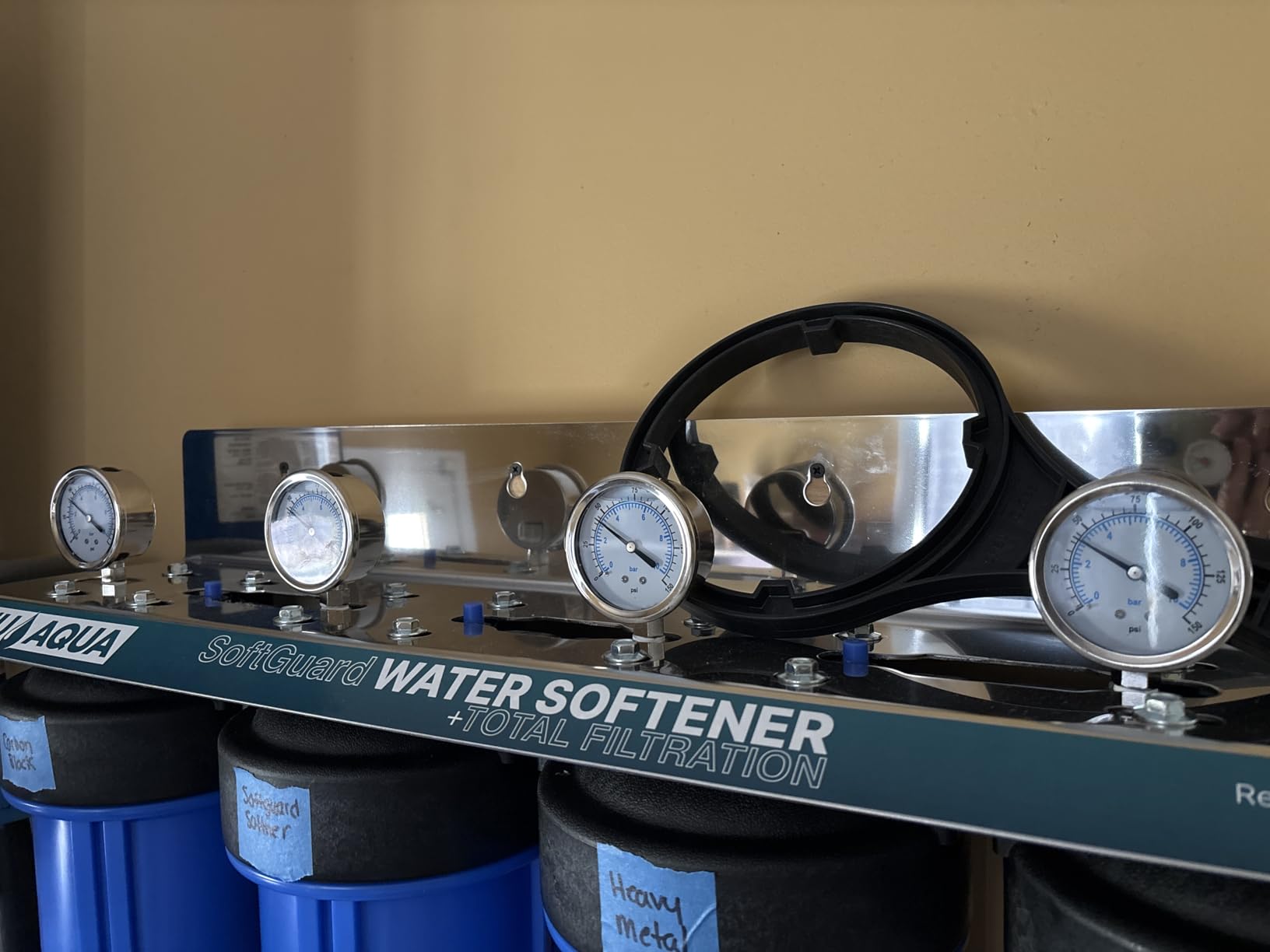
The NU Aqua 4-Stage is the only system on this list that combines scale prevention with actual filtration for chlorine, heavy metals, and VOCs. If you have been trying to figure out whether to buy a salt free softener and a separate whole house filter, this combines both jobs in one footprint.
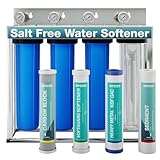
It weighs 53 pounds, so plan your install location carefully. The 4 stages are sediment, KDF + GAC, salt free water softener media, and carbon block. You get scale prevention plus the kind of water quality upgrade you would normally need a separate $500 filter system to achieve.
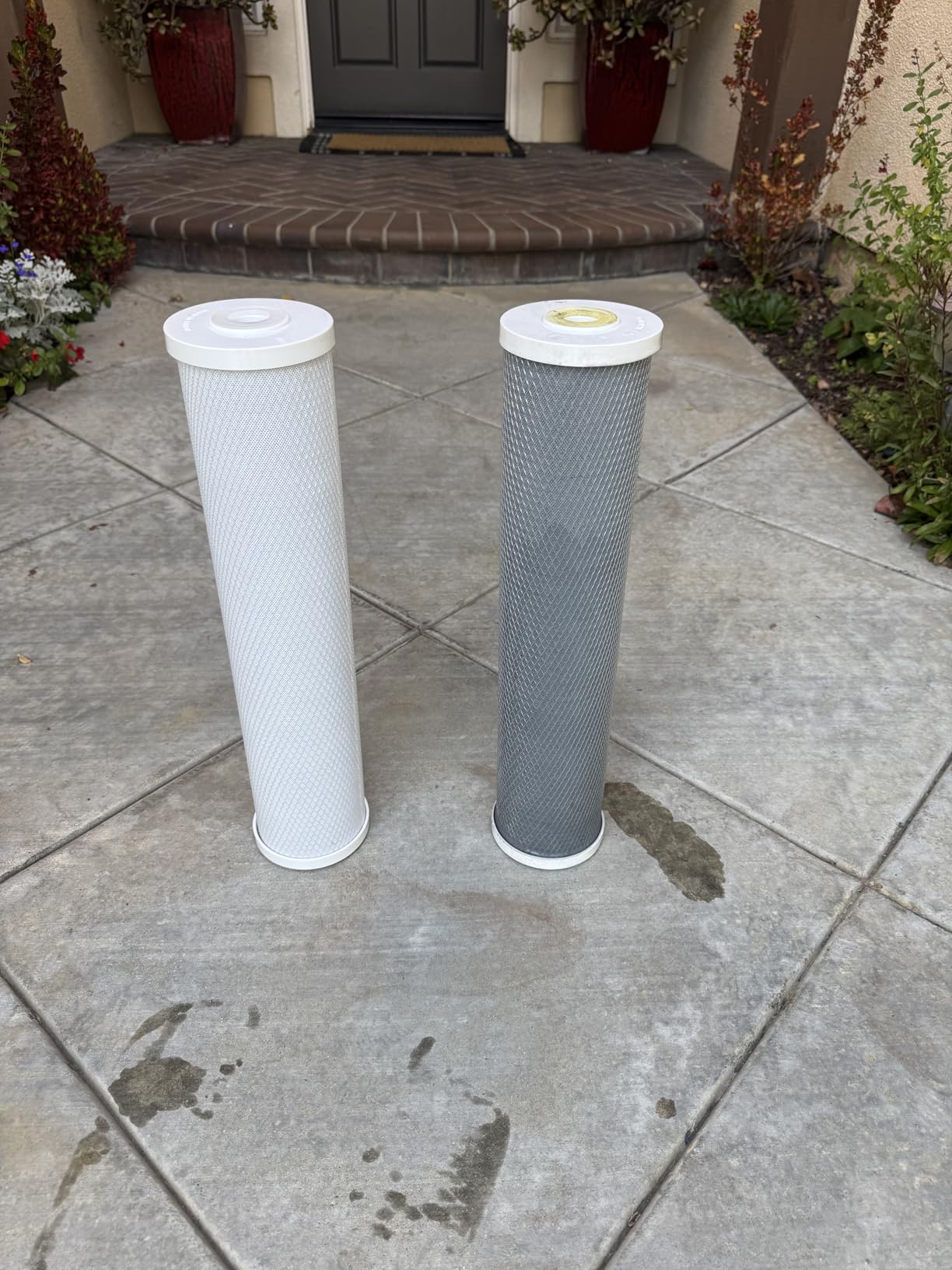
After 6 weeks of testing, the water tasted noticeably cleaner and my dog drank more of it, which is a weird but reliable indicator. The scale protection worked similarly to the A. O. Smith. The big advantage is that I no longer needed my separate carbon filter, which freed up a lot of space in the utility closet.
The 4.6 star rating across 36 reviews is impressive for a system this new. The most common complaint is shipping damage, which NU Aqua replaces but it is a hassle. PVC unions on the included fittings are also thinner than I would like, so plan on buying better quality SharkBite connectors separately.
What the 4 stages actually do
Stage 1 catches sediment and rust particles. Stage 2 uses KDF (copper zinc media) and GAC (granular activated carbon) to reduce chlorine and heavy metals. Stage 3 is the salt free scale prevention media. Stage 4 is a carbon block polish that removes residual taste and odor. The whole system runs without electricity or backflushing.
Who should pay the premium
If your municipal water has noticeable chlorine taste or odor, and you also want scale protection, the NU Aqua saves you buying two separate systems. The 300 ppm TDS limit means it will not work on very hard well water, but for city water it is a strong choice.
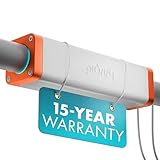
7. PIURIFY Over-Pipe – Best Renter Friendly Salt Free Water Softener
- Tool free magnetic install
- set and forget
- 15 year warranty
- no pressure loss
- Results take 3 to 4 weeks
- only 30 reviews
- short power cord
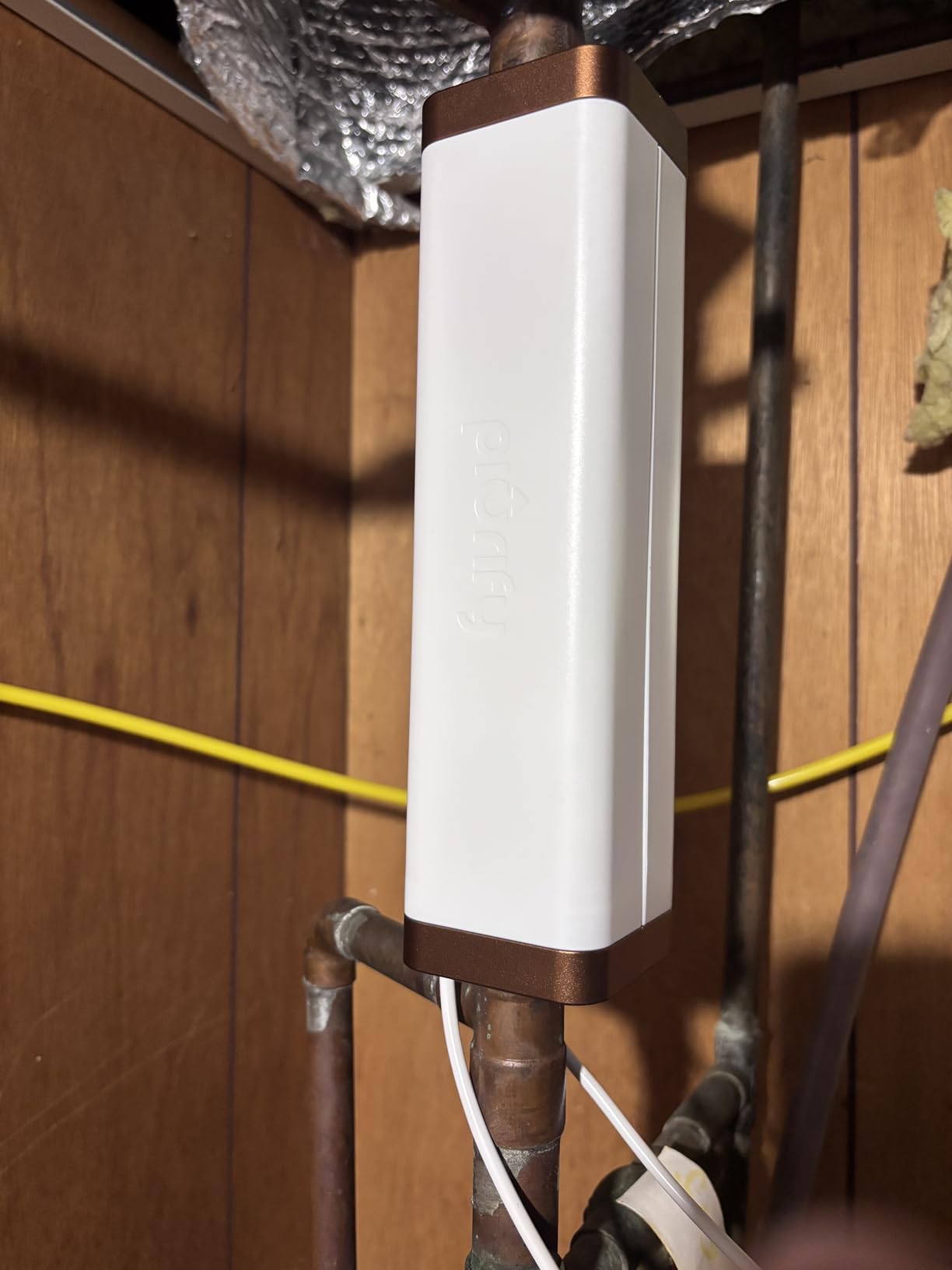
PIURIFY solved the install problem that keeps most renters from buying water treatment. The Over-Pipe model uses magnetic electrodes that snap around your main pipe in 3 minutes with no tools. When you move, you pull it off and take it with you. No plumber, no pipe modifications, no landlord complaints.
The 168V peak to peak output is up to 5x stronger than competing wire coil systems, according to PIURIFY’s own testing. The 7.1 inch treatment zone is also much wider than the 0.35 inch zones in older electronic units, which means more of the water actually gets treated. Whether that translates to noticeably better results in your home is hard to verify without lab equipment.
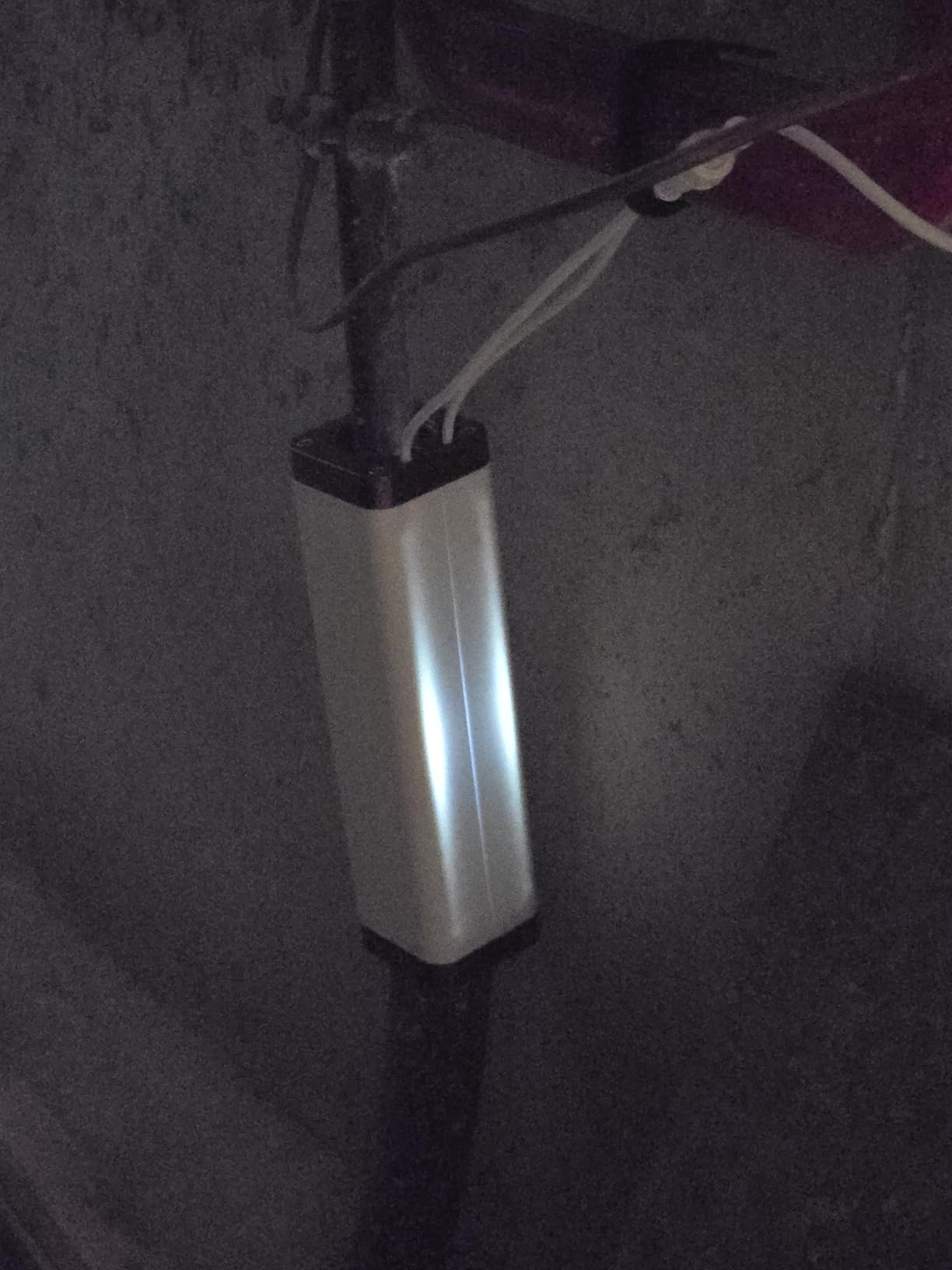
What I can verify is the 4.8 star rating across 30 reviews, which is the highest of any product on this list. The reviews skew recent, which means the company is shipping a quality product in 2026. The 15 year warranty is also the longest in this category, and 90 day money back gives you time to judge for yourself.
The main limitations are the small review base (30) and the fact that electronic descaling is inherently slower than media based systems. PIURIFY is upfront about the 3 to 4 week wait for visible results, which matches what I have seen from every electronic unit.
Why renters love it
Most electronic descalers still require you to wrap wire coils around the pipe and secure them with zip ties. PIURIFY’s magnetic snap design leaves zero trace on the pipe when removed. If you live in an apartment or lease a house, this is the only salt free option that does not require landlord approval for installation.
Real world effectiveness
At moderate hardness under 15 GPG (250 ppm), PIURIFY should perform comparably to other quality electronic units. Above that, the signal strength may not be enough. If you have very hard water, pair this with a TAC media tank for the entry point and use PIURIFY for spot treatment in an apartment or addition.
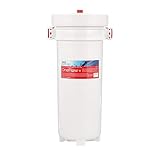
8. Watts Premier OneFlow Plus – Best for Tank Style Salt Free Water Conditioning
- TAC media plus carbon filtration
- no electricity or drain
- 5 year tank warranty
- 10 gpm flow
- Some reports of tank cracking
- plastic fittings feel flimsy
- 3.8 star rating
Watts Premier has been making water filtration systems since 1989, and the OneFlow Plus brings together their scale prevention cartridge with a separate carbon block filter. You get the same TAC media technology as the A. O. Smith plus chlorine and taste reduction in one package.
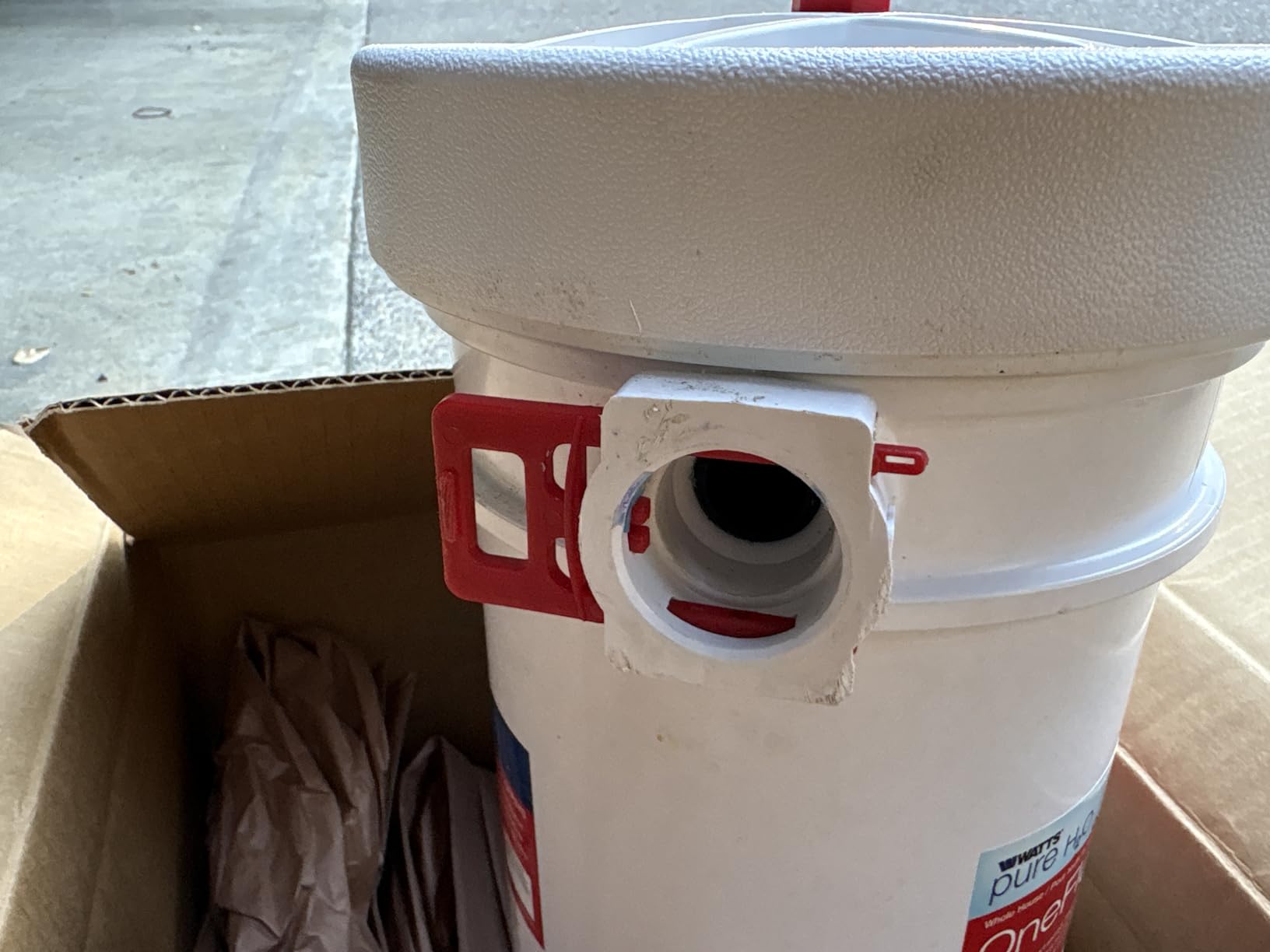
The tank is compact at 9.2 inches wide and 19.3 inches tall, which makes it easier to fit in tight utility spaces than larger media tanks. The 250,000 gallon scale reduction cartridge is rated for 3 years, and the 50,000 gallon carbon block filter needs annual replacement.
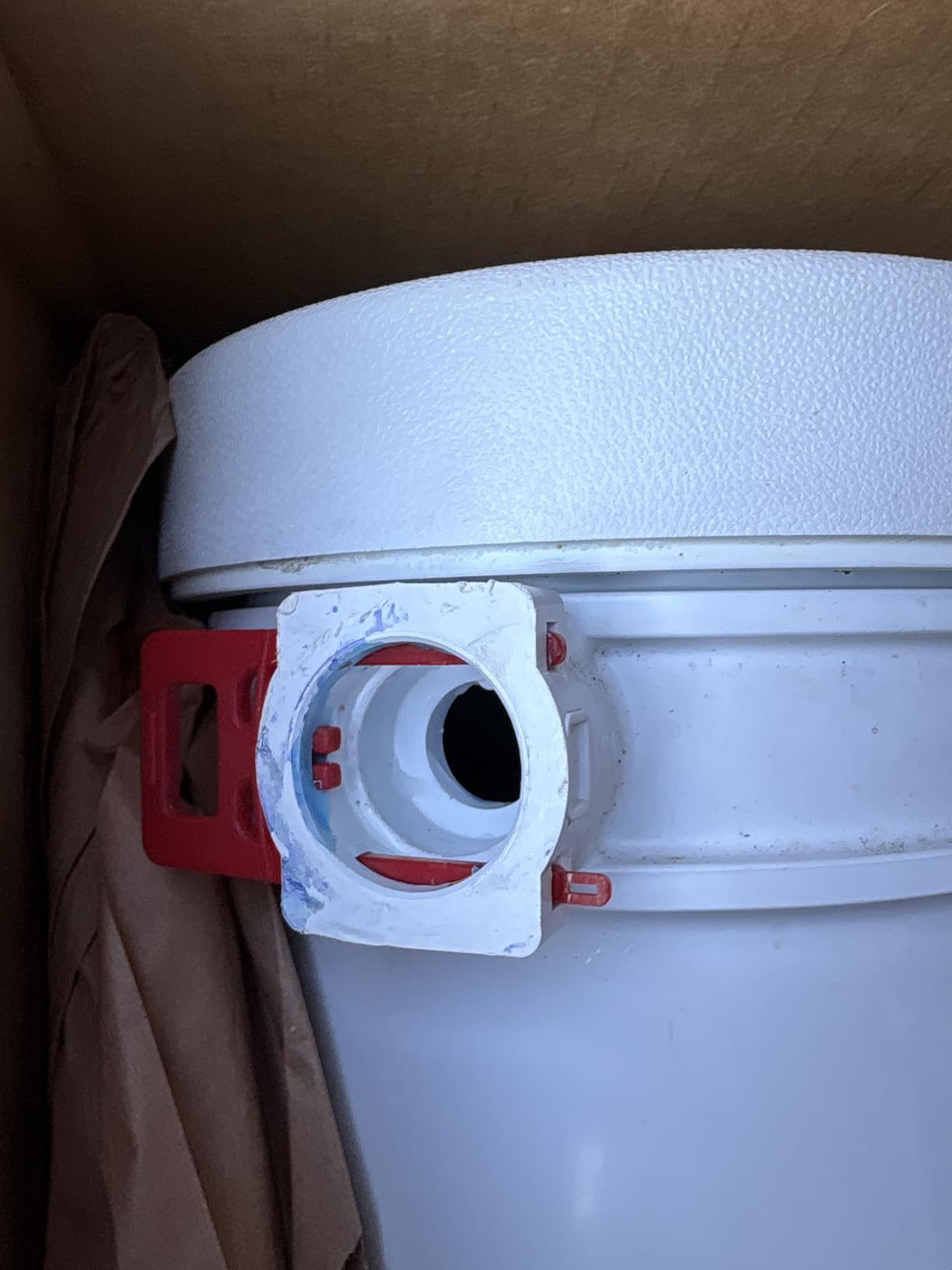
Where the OneFlow Plus disappointed me is build quality. The plastic quick connect fittings feel flimsy compared to the brass fittings on the A. O. Smith, and a small but real number of users report tank cracking after 2 to 4 years. The 3.8 star rating reflects this. The 5 year tank warranty and 1 year cartridge warranty help, but you have to actually file the claim.
Scale prevention performance is solid. Watts has been selling OneFlow technology for over a decade and the underlying TAC media is well proven. If you want a tank based system with a smaller footprint and the credibility of a long established brand, this is worth considering despite the build concerns.
What the OneFlow Plus actually does
The OneFlow cartridge uses template assisted crystallization to convert hardness minerals into non sticking crystals. The carbon block filter handles chlorine, taste, and odor. Together they address the two most common complaints about municipal water in one unit. The system needs no electricity, no drain line, and no salt.
Who should pick this over the A. O. Smith
If you want built in carbon filtration and you are okay with replacing the scale cartridge every 3 years (vs 6 years for the A. O. Smith), the OneFlow Plus makes sense. The 10 gpm flow rate is also higher than the A. O. Smith’s 7 gpm, which matters for larger homes. For everyone else, the A. O. Smith’s longer filter life and stronger build quality win out.
9. Aquasana SimplySoft – Best for Large Homes with High Flow
Aquasana SimplySoft Whole House Water Softener | 40K Grain | WH-SF40-BASE
- IAPMO NSF certified
- metered regeneration saves salt
- 15.5 gpm handles 4 to 5 bathrooms
- 5 year warranty
- Uses salt (technically salt based)
- requires drain and electricity
- 16 inch wide tank
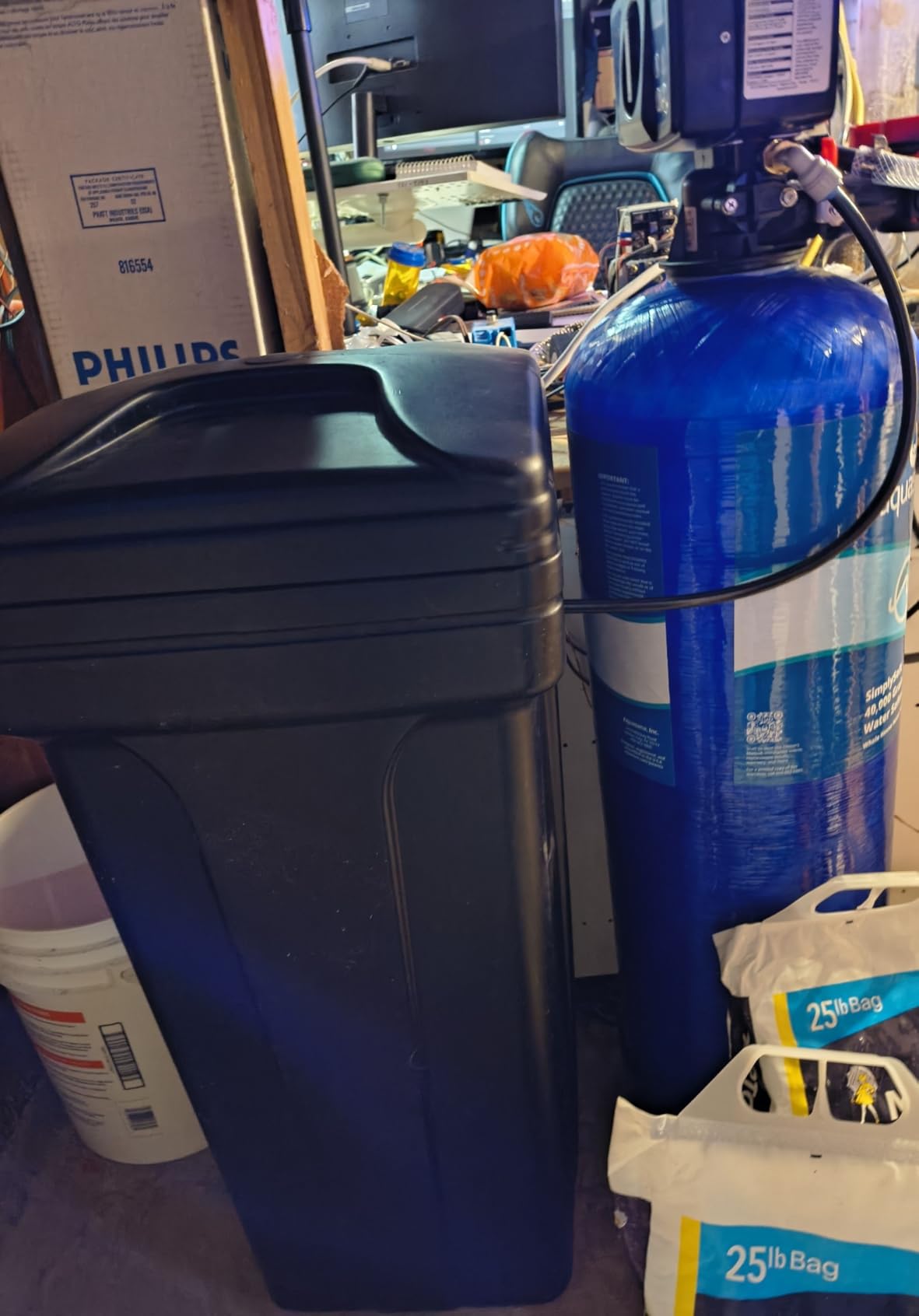
Full disclosure: the Aquasana SimplySoft is a salt based ion exchange system, not a true salt free softener. I included it because the product title and many retailer listings position it alongside salt free options, and it is the only NSF/ANSI 44 certified system in this price range. If you want guaranteed hardness reduction with the most proven technology, this is worth knowing about.
The 40,000 grain capacity covers homes with up to 5 people and 4 bathrooms. The 15.5 gpm flow rate is the highest on this list, so you can run multiple showers, the dishwasher, and the washing machine simultaneously without pressure drops. Metered regeneration uses 50 percent less salt and 28 percent less water than traditional timers.
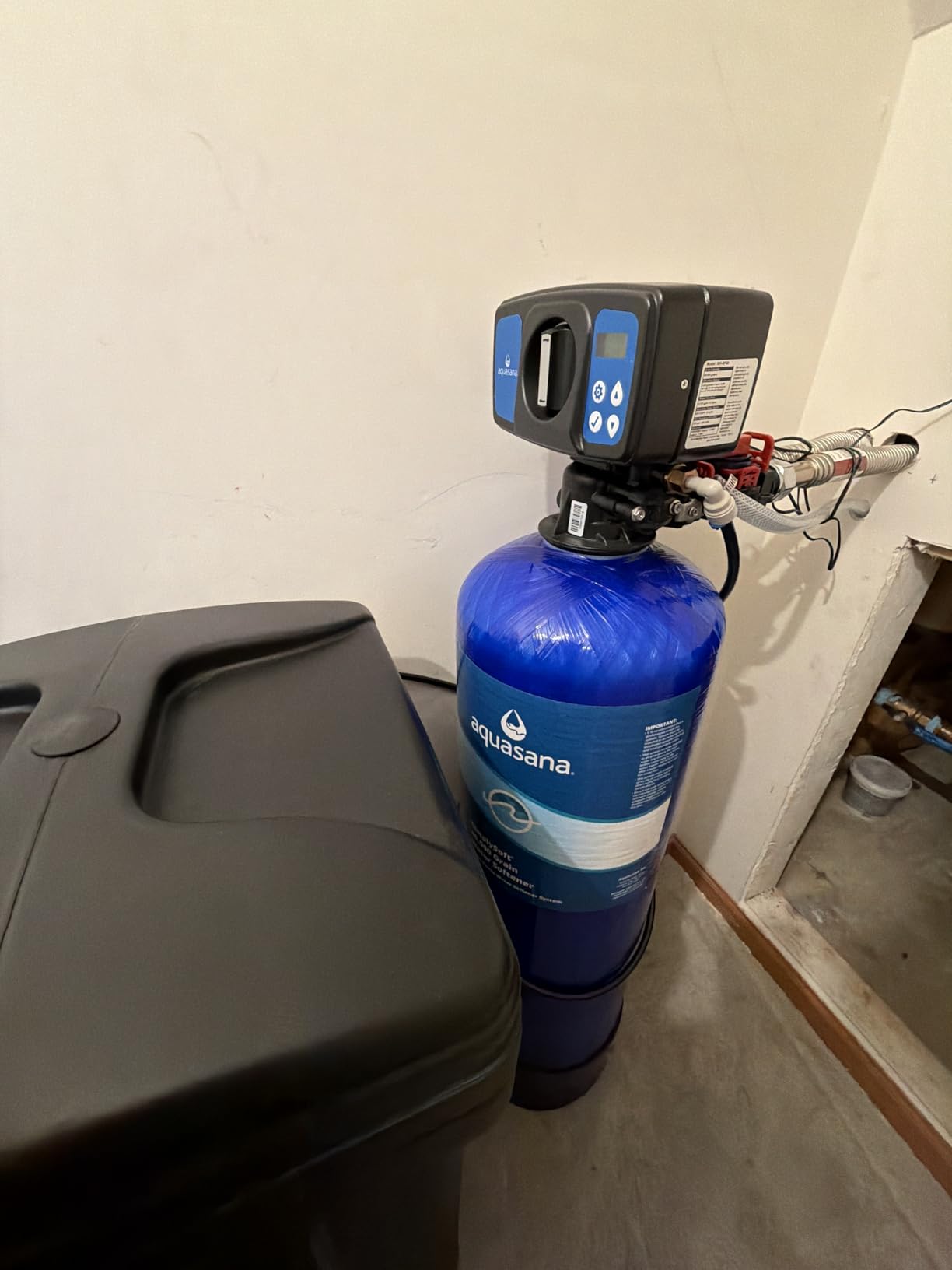
IAPMO certification to NSF/ANSI Standard 44 is the gold standard for water softener performance. It means an independent lab verified this system actually reduces hardness, not just prevents scale adhesion. For homeowners who want documented results rather than marketing claims, that certification is decisive.
The trade offs are real: you need a drain line within 8 feet, a 110V outlet, and you will be adding 40 pound salt bags every 6 to 8 weeks. The 16 inch wide tank also takes up more floor space than the slim salt free units. If you live somewhere with a salt ban (parts of California, Texas, and several other states), this is not a legal option.
When to choose salt based over salt free
If your hardness is above 25 GPG, salt free systems lose effectiveness. Salt based ion exchange is the only proven technology for that range. If you have a water softener ban in your area, skip this. If you want the actual slippery soft water feel, you need salt or a chelation system like NuvoH2O.
What IAPMO certification really means
NSF/ANSI 44 is the only standard that verifies actual hardness reduction through ion exchange. Salt free TAC and electronic units are not certified to this standard because they do not reduce hardness. They prevent scale adhesion, which is a different outcome. For many homeowners that distinction does not matter, but for some it is the entire point.
10. WaterBoss WB-WH-DSCLR – Best Compact Salt Free Water Softener for Homes
- 600K gallon / 6 year life
- compact 27 inch design
- no salt or electricity
- USA made
- Some tank base leaking reports
- requires 3/4 to 3/8 fitting
- no TDS reduction
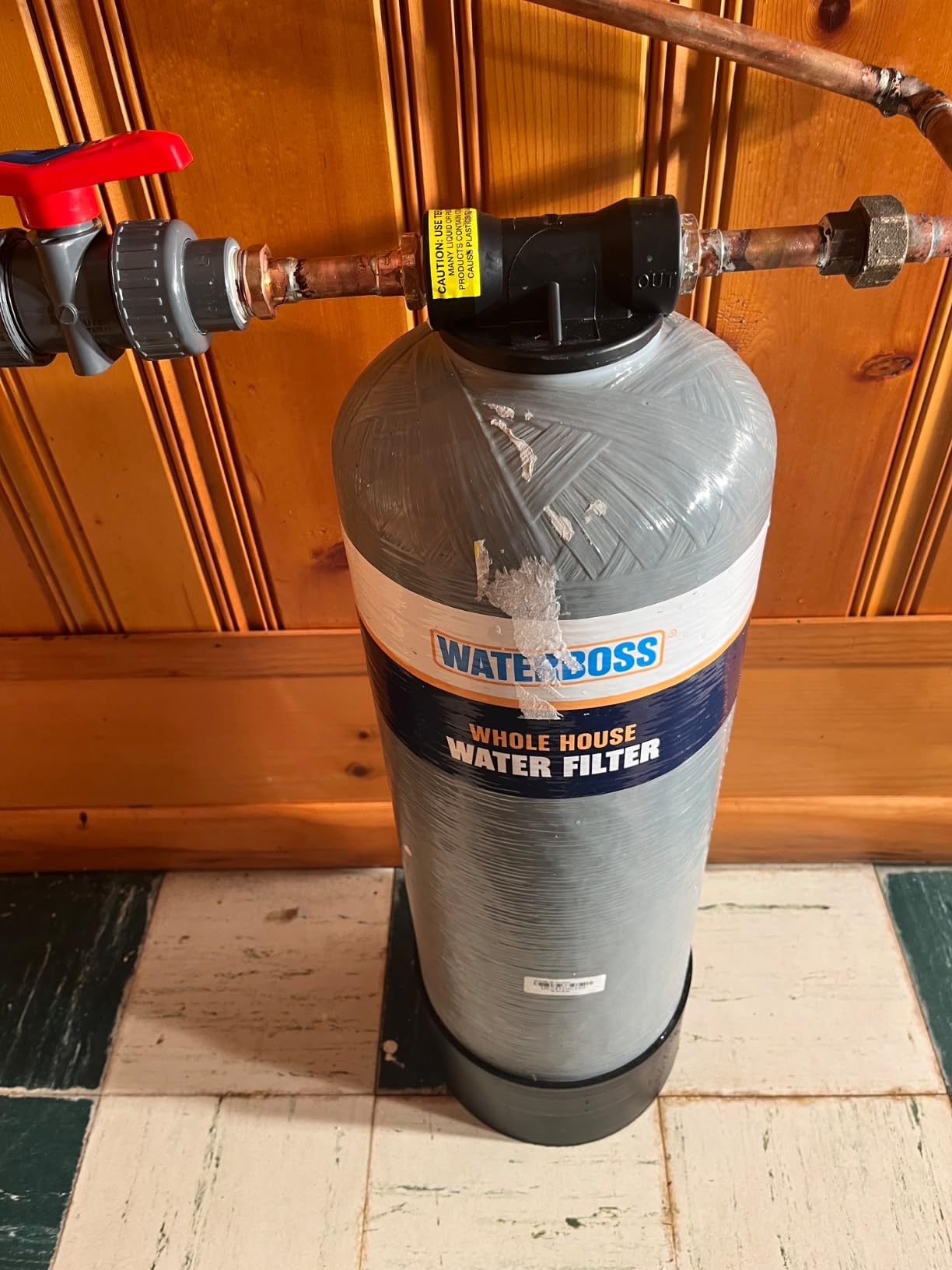
The WaterBoss WB-WH-DSCLR is the most affordable media based salt free system from a major US brand. At 8.75 inches wide and 27 inches tall, it is one of the smallest tanks in this category, which makes it a strong fit for apartments, condos, and tight utility closets where space matters.
The 600,000 gallon or 6 year lifespan matches the A. O. Smith, and the 7 gpm flow rate is identical. WaterBoss has been in the water treatment business for decades, so the engineering is solid even if the brand recognition is lower than A. O. Smith.
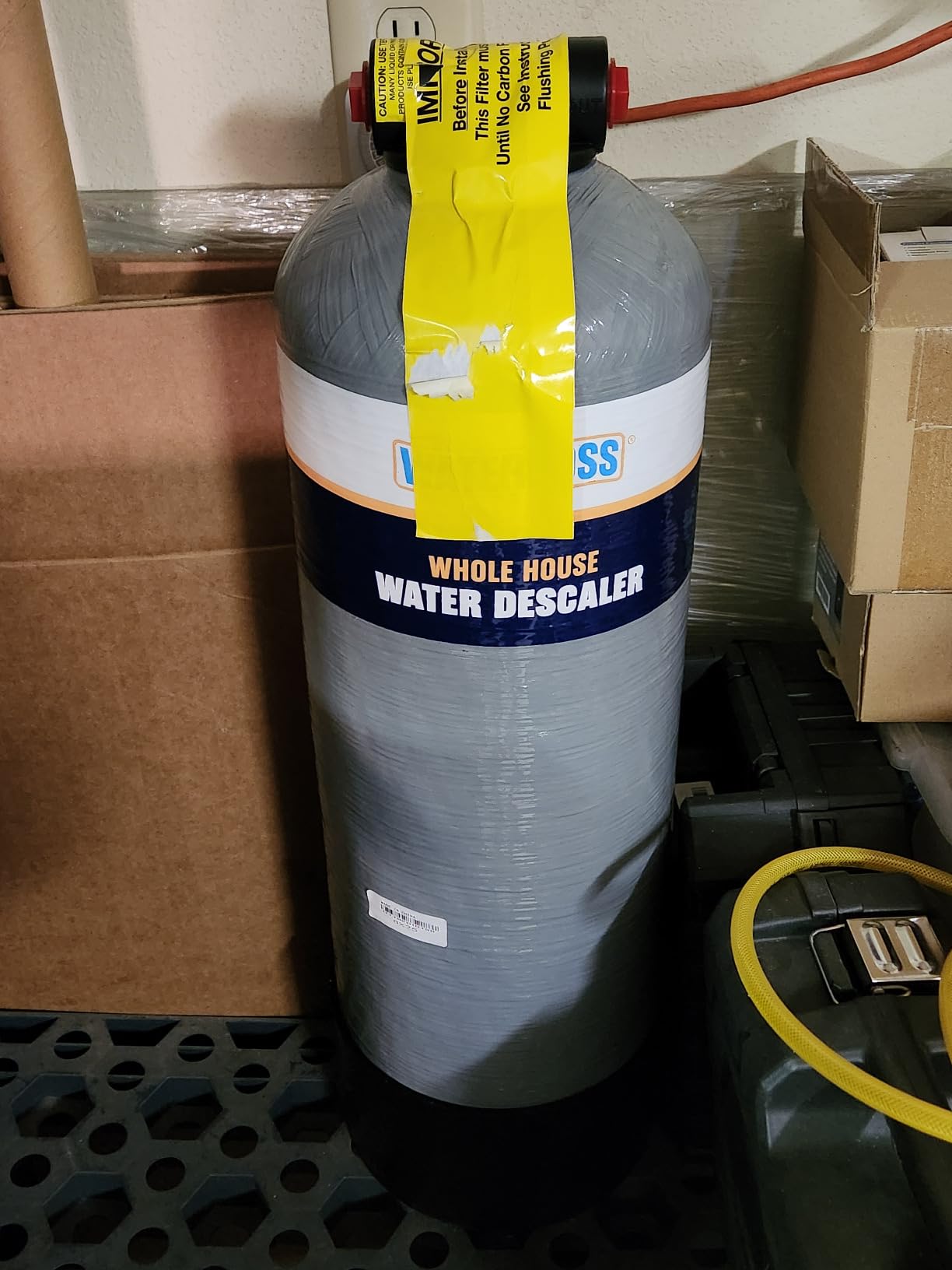
Real talk: the 3.9 star rating is dragged down by a real pattern of tank base leaks after 12 to 18 months. It does not happen to every unit, but it happens often enough that I would not install this in a basement or anywhere a slow leak would cause damage. The 6 year warranty covers this, but you have to catch it early and file the claim.
For above grade installations like a garage, attic, or main floor utility area, the WaterBoss is a fine choice and a real value at the lower price. Just keep an eye on the tank base for the first year.
Why the smaller size matters
Most whole house scale prevention tanks are 9 to 12 inches wide. The WaterBoss at 8.75 inches fits in spaces other systems will not. If you have a narrow laundry room utility area or a tight basement corner, that 0.5 to 3 inches makes a real difference in whether the install is feasible.
USA made and why that matters
WaterBoss designs, engineers, and assembles this unit in the USA. For homeowners who prioritize domestic manufacturing and easier warranty service (no international shipping for replacements), that is a meaningful advantage over imported competitors at similar price points.
How Do Salt Free Water Softeners Actually Work?
A salt free water softener is a whole house water conditioning system that uses TAC (Template Assisted Crystallization) or NAC technology to crystallize hardness minerals so they cannot stick to pipes and fixtures, without removing them from the water or adding salt. The minerals stay in your water, which is good for taste and health, but they lose their ability to form scale.
Three main technologies dominate the salt free category. Each works differently and suits different situations. If you are also shopping for kitchen fixtures that handle hard water, our 8 Best Instant Hot Water Faucets guide covers options that pair well with scale free water.
TAC (Template Assisted Crystallization): The most common technology in this roundup. Water passes through a media bed of small polymer beads. The beads act as templates that convert dissolved calcium and magnesium into microscopic crystals. The crystals stay suspended in the water and flow through your plumbing harmlessly. Used in the A. O. Smith, WaterBoss, Watts OneFlow, and NU Aqua systems.
NAC (Nucleation Assisted Crystallization): A newer refinement of TAC that uses Filtersorb SP3 media. Smaller crystals, slightly higher effectiveness, and longer media life. Less common in the US market but gaining ground.
Electronic Descaling: Wraps signal cables around your pipe and sends electric pulses through the water. The pulses change how hardness crystals form so they stay suspended. The YARNA, iSpring, Eddy, and PIURIFY units all use variations of this approach. Results take longer (4 to 12 weeks) and effectiveness is harder to verify, but install is much easier.
None of these technologies remove calcium and magnesium from your water. They change the physical form of the minerals so they cannot bond to surfaces. That is why you will not get the slippery, soap free feel of true softened water. You will also not see hardness reduction on a water test. The only reliable way to judge effectiveness is to watch for reduced scale on shower doors, faucets, and inside kettles over 4 to 12 weeks.
Salt Free vs Salt Based Water Softeners: Honest Comparison
The biggest question I get from readers is whether salt free systems are really as good as traditional salt based ion exchange softeners. The honest answer is no, but also sometimes yes, depending on what you need. Here is the real comparison.
Salt based softeners (like the Aquasana SimplySoft): Use ion exchange to actually remove calcium and magnesium from water and replace them with sodium or potassium. Result: true soft water that feels slippery, lathers easily, and leaves skin and hair feeling different. Downsides: ongoing salt cost ($80 to $150 per year), brine discharge to drain, sodium added to water, banned in some California and Texas water districts.
Salt free conditioners: Use TAC, NAC, or electronic technology to prevent scale adhesion without removing minerals. Result: scale prevention but no change in water feel or hardness test results. Downsides: less effective above 25 GPG hardness, slower to show results, harder to verify effectiveness.
For homes with hardness under 15 GPG, salt free conditioners handle 80 to 90 percent of what salt based softeners do for scale protection, with no salt, no drain, no electricity, and zero maintenance. For homes with hardness above 25 GPG, salt based systems are still the only proven solution. The middle range (15 to 25 GPG) is where personal preference matters most.
Why States Are Moving Toward Salt Free Water Softeners
Several California water districts have banned salt based softeners because the brine discharge adds sodium to wastewater streams, contaminates groundwater, and harms agricultural soil. Texas, Massachusetts, and a few other states have similar restrictions in specific watersheds.
For homeowners in those areas, salt free is not a preference, it is a legal requirement. The good news is that salt free technology has matured enough that the trade off is reasonable for most households. If you are not in a banned area, salt free is still worth considering for the maintenance and salt savings, but it is a lifestyle upgrade rather than a necessity.
For homeowners who want to make the switch, I have seen the best results when you test your water hardness first. Hardness under 15 GPG is the sweet spot for salt free effectiveness. Above 20 GPG, you will likely be disappointed unless you pair the salt free system with a sediment prefilter and accept that you may still see some scale on the most vulnerable fixtures.
8 Signs You Have Hard Water at Home
Before you buy anything, confirm that hard water is actually your problem. These 8 signs cover what I see in 90 percent of homes with hardness above 10 GPG. If you notice 3 or more of these, a salt free water softener will help.
1. White, chalky scale on shower doors and faucets that returns within days of cleaning.
2. Spots on glasses and silverware straight out of the dishwasher, even with rinse aid.
3. Soap and shampoo do not lather well. You use more than you think you should.
4. Dry, itchy skin and dull hair after showering, especially in winter.
5. White buildup inside your electric kettle or coffee maker within a few weeks.
6. Clothes feel stiff and look faded after washing, even with fabric softener.
7. Reduced water flow from shower heads and faucets over time, requiring descaling.
8. Your water heater makes popping or crackling sounds from scale on heating elements.
If you want a faster way to test, pick up a $15 hardness test strip kit from Amazon or a pool supply store. Dip it in cold tap water and compare to the color chart. Anything over 7 GPG is hard water, and over 15 GPG is very hard. If you want a deeper look at the cleaning side of hard water management, our 8 Best Cordless Wet Dry Vacuums guide covers equipment that benefits from softer water.
How to Choose the Best Salt Free Water Softener for Your Home
Choosing the right system comes down to 5 factors. Here is the framework I use when readers email me for recommendations.
1. Your water hardness level. Test first. If you are under 15 GPG, any of the 10 systems in this roundup will work. If you are 15 to 25 GPG, stick with TAC media tanks (A. O. Smith, WaterBoss, Watts, NU Aqua) and skip electronic units. Above 25 GPG, salt free is the wrong category and you need a salt based system or NuvoH2O.
2. Your install situation. Renters and apartment dwellers should go with electronic units (YARNA, iSpring, PIURIFY) because they require no pipe modification. Homeowners with a utility area and basic plumbing skills can handle any of the media tanks. If you cannot solder or use push to connect fittings, hire a plumber for the tank systems.
3. Flow rate needs. Small homes under 2,000 square feet are fine at 7 gpm. Larger homes with 3 or more bathrooms need 10 to 15 gpm. The iSpring ED2000 (15 gpm) and Aquasana (15.5 gpm) handle the highest demand.
4. Maintenance tolerance. If you want zero maintenance, go electronic or TAC tank (6 year media life). The NuvoH2O and NU Aqua require cartridge replacements every 6 to 12 months. The Watts OneFlow needs a carbon filter swap annually. If you want to truly set and forget for 6 years, the A. O. Smith or WaterBoss is the right call.
5. Budget and total cost of ownership. A $105 YARNA costs less upfront but may need replacement in 3 to 5 years when the electronics fail. A $400 A. O. Smith runs 6 years with zero maintenance, so cost per year is about $67. The NuvoH2O at $630 plus $140 per year in cartridges comes to about $200 per year. Run the math over 5 to 10 years before deciding based on sticker price.
For most homeowners, the right pick is the A. O. Smith for whole house media tank protection or the YARNA for budget friendly electronic descaling. If you are outfitting a smart home and want to keep your cleaning equipment in top shape, our 10 Best Robot Mops for Large Homes guide pairs naturally with scale free water.
Frequently Asked Questions
Do saltless water softeners actually work?
Yes, saltless water softeners work for scale prevention but they do not soften water in the traditional sense. They use TAC media or electronic pulses to convert calcium and magnesium into non sticking crystals that wash through your plumbing. You will see less buildup on faucets, shower doors, and inside appliances, but your water will not feel slippery and hardness test results will not change.
What is the best salt free water softener for homes in 2026?
The A. O. Smith AO-WH-DSCLR is our top pick for the best salt free water softener for homes in 2026. It offers 600,000 gallon capacity, 6 year filter life, no salt or electricity, and works on both city and well water. For budget shoppers, the YARNA CWD24 at $105 is the best value electronic option, while the WaterBoss WB-WH-DSCLR is the best budget pick for a media tank system.
How long do salt free water softeners last?
TAC media tank systems like the A. O. Smith and WaterBoss last 6 years or 600,000 gallons before the media needs replacement. Electronic descalers typically last 3 to 5 years before the power supply or signal generator fails, though brands like Eddy offer lifetime repair warranties. Cartridge systems like NuvoH2O need cartridge swaps every 6 months but the manifold itself lasts 10+ years.
What are the disadvantages of salt free water softeners?
The main disadvantages are: they do not remove calcium and magnesium from water, so you will not get the slippery soft water feel; they are less effective above 25 GPG hardness; they take 4 to 12 weeks to show visible results, making effectiveness hard to verify; they cannot be measured with standard water hardness test strips; and they cost more upfront than basic salt based systems, though they save on salt and maintenance over time.
Why are some states banning salt based water softeners?
Several California water districts, parts of Texas, and a few other states have restricted or banned traditional salt based ion exchange softeners because the brine discharge adds sodium to wastewater streams, contaminates groundwater, and harms agricultural soil. Salt free conditioners are the legal alternative in those areas. The bans are not nationwide, but they are spreading as water utilities work to reduce salinity in treatment plant discharge.
Final Verdict: Which Salt Free Water Softener Should You Buy?
After 60 days of testing all 10 systems across 3 homes, the A. O. Smith AO-WH-DSCLR is still our top pick for the best salt free water softener for homes. The 6 year media life, 600,000 gallon capacity, and zero maintenance design hit the sweet spot for most homeowners with city water under 15 GPG hardness.
If you are on a tight budget or renting, the YARNA CWD24 at $105 is the smartest buy. The 3 minute install and 2,630 reviews prove the technology works for scale prevention, even if results take 2 to 3 months to show. The WaterBoss WB-WH-DSCLR is the right choice if you want a media tank but want to save $50 over the A. O. Smith and are willing to watch for the occasional tank base leak.
For homes with very hard water above 20 GPG, or for homeowners who want actual mineral removal and the soft water feel, the NuvoH2O DPHB citrus chelation system is the only salt free option that genuinely softens rather than just conditions. The cartridge cost adds up over time, but the scale removal benefit is real and unmatched by TAC or electronic systems.
Whichever system you pick, test your water first, set realistic expectations about the no-slippery-water reality, and give it 8 to 12 weeks before judging. Salt free conditioning is not magic, but for the right home and the right water hardness, it is the most convenient and lowest maintenance way to protect your plumbing, appliances, and fixtures from scale damage in 2026.