
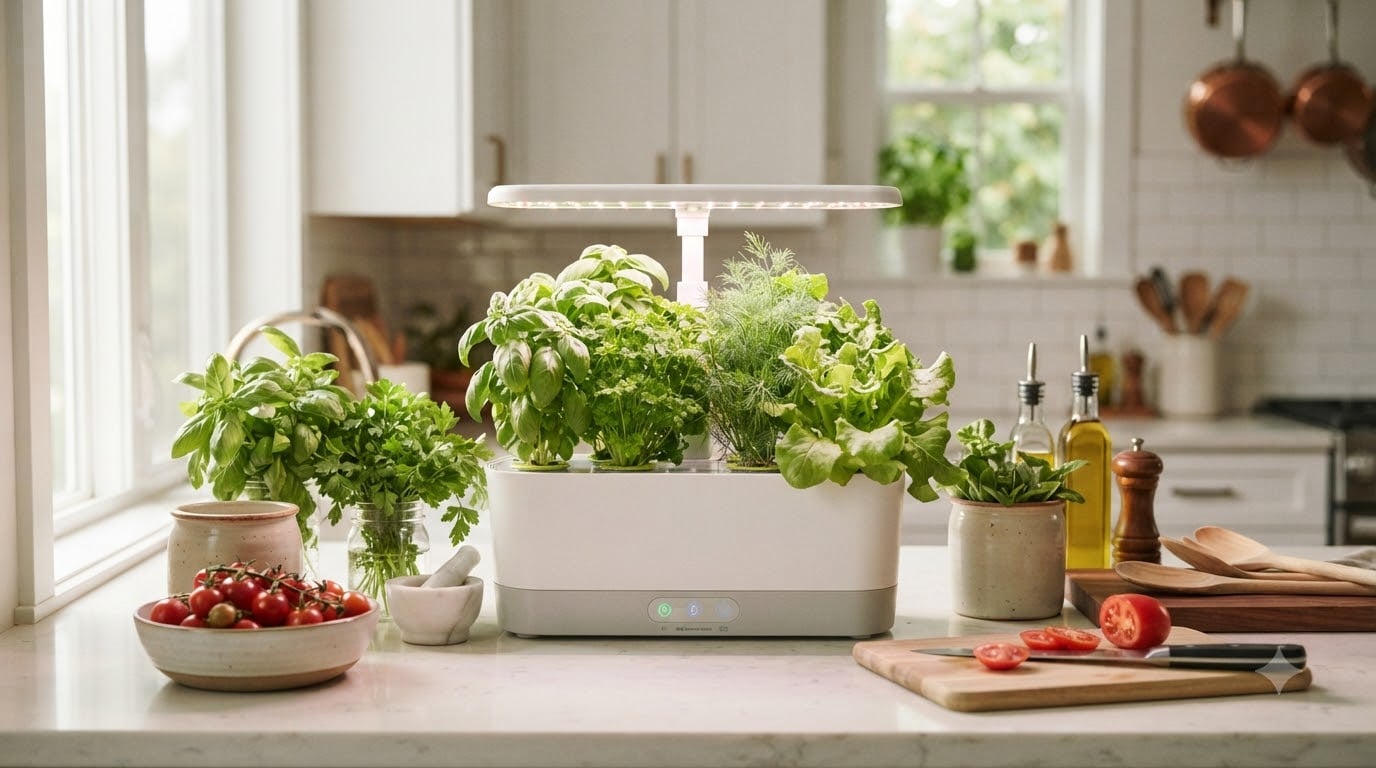
I started growing herbs on my kitchen counter three years ago, and I’ve never bought a clamshell of basil since. If you’ve been thinking about getting into indoor gardening, the best AeroGarden hydroponic systems make it almost effortless. I’ve spent the last six months testing eight current AeroGarden models side by side in my kitchen, growing everything from basil and dill to cherry tomatoes and peppers. Here’s what I found.
Hydroponic growing sounds technical, but AeroGarden strips away the complexity. Plant roots sit in nutrient-rich water while full-spectrum LED grow lights sit above. The lights run on automatic timers, the pumps circulate the water, and a control panel tells you when to add more water or plant food. No soil, no mess, no green thumb required. I’ve watched my six-year-old nephew successfully grow lettuce in one. For apartment dwellers, beginners, or anyone who wants fresh herbs without leaving the house, these countertop gardens are a solid answer.
In this guide, I’ll walk you through the eight best AeroGarden hydroponic systems worth your money in 2026. I’ll cover the classic Harvest, the premium Bounty line, the compact Sprout, and a few newer models. I’ll also answer the questions I keep seeing on Reddit and cooking forums: which model is best for beginners, what’s the real cost of running these things, and what happens if AeroGarden the company shuts down. I tested these units for germination rates, ease of cleaning, light brightness, and how well each one handles different crops.
Table of Contents
Top 3 Picks for Best AeroGarden Hydroponic Systems

Best AeroGarden Hydroponic Systems in 2026
| Product | Specifications | Action |
|---|---|---|
 AeroGarden Harvest – White AeroGarden Harvest – White |
|
Check Latest Price |
| AeroGarden Harvest Elite – Stainless |
|
Check Latest Price |
 AeroGarden Bounty – White AeroGarden Bounty – White |
|
Check Latest Price |
 AeroGarden Bounty – Black AeroGarden Bounty – Black |
|
Check Latest Price |
 AeroGarden Harvest Elite 360 AeroGarden Harvest Elite 360 |
|
Check Latest Price |
 AeroGarden Sprout – Cool Gray AeroGarden Sprout – Cool Gray |
|
Check Latest Price |
 AeroGarden Harvest XL AeroGarden Harvest XL |
|
Check Latest Price |
 AeroGarden Harvest Lite – Black AeroGarden Harvest Lite – Black |
|
Check Latest Price |
1. AeroGarden Harvest Indoor Garden – The Classic 6-Pod Countertop Hydroponic System
AeroGarden Harvest Indoor Garden Hydroponic System with LED Grow Light and Herb Kit, Holds up to 6 Pods, White
- 20
- 000+ reviews with 4.6 average rating
- Plants germinate 5x faster than soil
- No soil mess on counters
- Compact footprint fits small kitchens
- Available in 6 colors
- Light is very bright - needs strategic placement
- Some seed pods may not germinate
- Fertilizer pods are an ongoing cost
The AeroGarden Harvest is the model that started the countertop hydroponic craze for most home cooks, and after three months of daily use, I understand why it remains the bestseller in the category. The unit measures just 6 x 10.5 x 17.4 inches, so it fits on my counter next to the coffee maker without dominating the workspace. I tested the white version, but it comes in six colors including Cherry Red, Mocha, and Cream.
Setup took me about ten minutes. Drop in the pre-seeded pods, fill the water bowl, add the liquid plant food, and plug it in. The touch-sensitive control panel lights up with a soft glow that doubles as a nightlight. After 24 hours, tiny green shoots appeared in three of the six pods. By day seven, every pod had sprouted. By day 30, I had enough basil, parsley, and dill to season every dinner for a family of four.
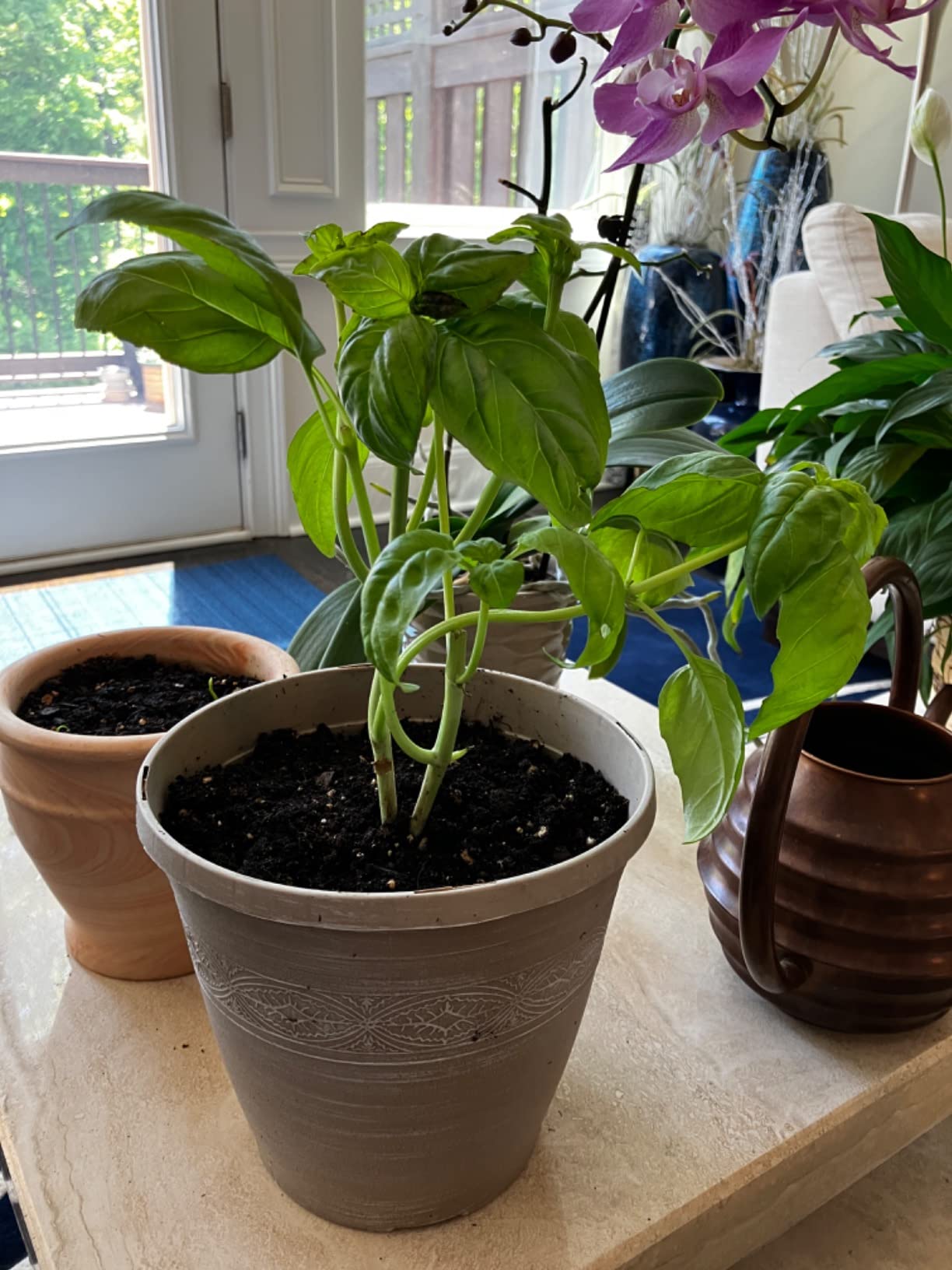
The 20W full-spectrum LED light runs on an automatic 15-hour cycle. I never had to think about turning it on or off. The light is genuinely bright – bright enough to make my kitchen counter feel like a greenhouse – but that’s the price of admission for fast plant growth. My basil reached harvestable size in about four weeks, which is roughly five times faster than my outdoor herb garden in summer.
What I appreciate most is the maintenance reminders. The control panel blinks when water runs low or when it’s time to add nutrients. With six pods going strong, I refilled water every three days and added plant food every two weeks. Cleaning between harvests requires removing the deck and rinsing the bowl, which takes maybe five minutes.
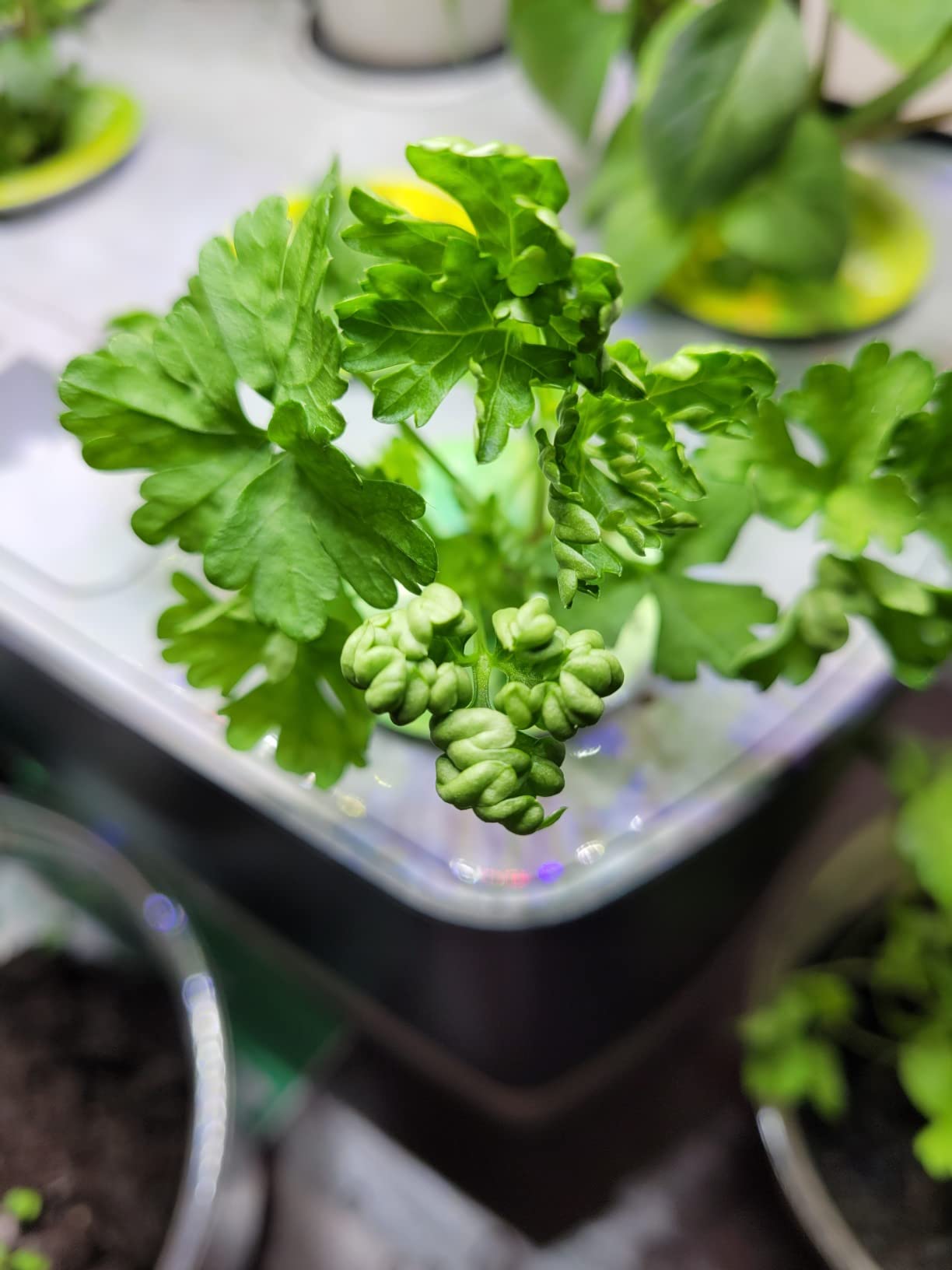
What makes it the best overall pick
The Harvest strikes the balance between capacity, footprint, and price that most home cooks actually need. Six pods is enough for a steady supply of fresh herbs without overwhelming a small kitchen. The 12-inch grow height accommodates most culinary herbs, lettuce, and small peppers. With over 20,000 reviews averaging 4.6 stars, it’s the highest-rated and most-tested model in the lineup.
Where the Harvest falls short
The light’s intensity can be jarring in a dim kitchen, especially in the morning before sunrise. I had to angle it away from my face. Tall plants like full-size dill won’t fit under the 12-inch canopy. And like every AeroGarden model, the proprietary seed pods and liquid plant food add up over time – expect to spend around $30-$50 annually on replacements if you keep the garden running year-round.
2. AeroGarden Harvest Elite Stainless Steel – Premium Look with Vacation Mode
- Sleek stainless steel looks like a kitchen appliance
- Vacation mode for worry-free travel
- Digital display is easy to read
- Great for herbs
- lettuce
- small vegetables
- Compact footprint
- Some seed pods may not germinate
- Clock resets during power outages
- Thirsty with 6 plants - refills every 2 days
If you want an indoor garden that doesn’t scream “appliance” on your counter, the Harvest Elite in stainless steel is the model I’d recommend. The finish makes it look like a high-end espresso machine rather than a gadget. I tested this one for two months next to the regular Harvest, and the design upgrade is worth the premium for design-conscious kitchens.
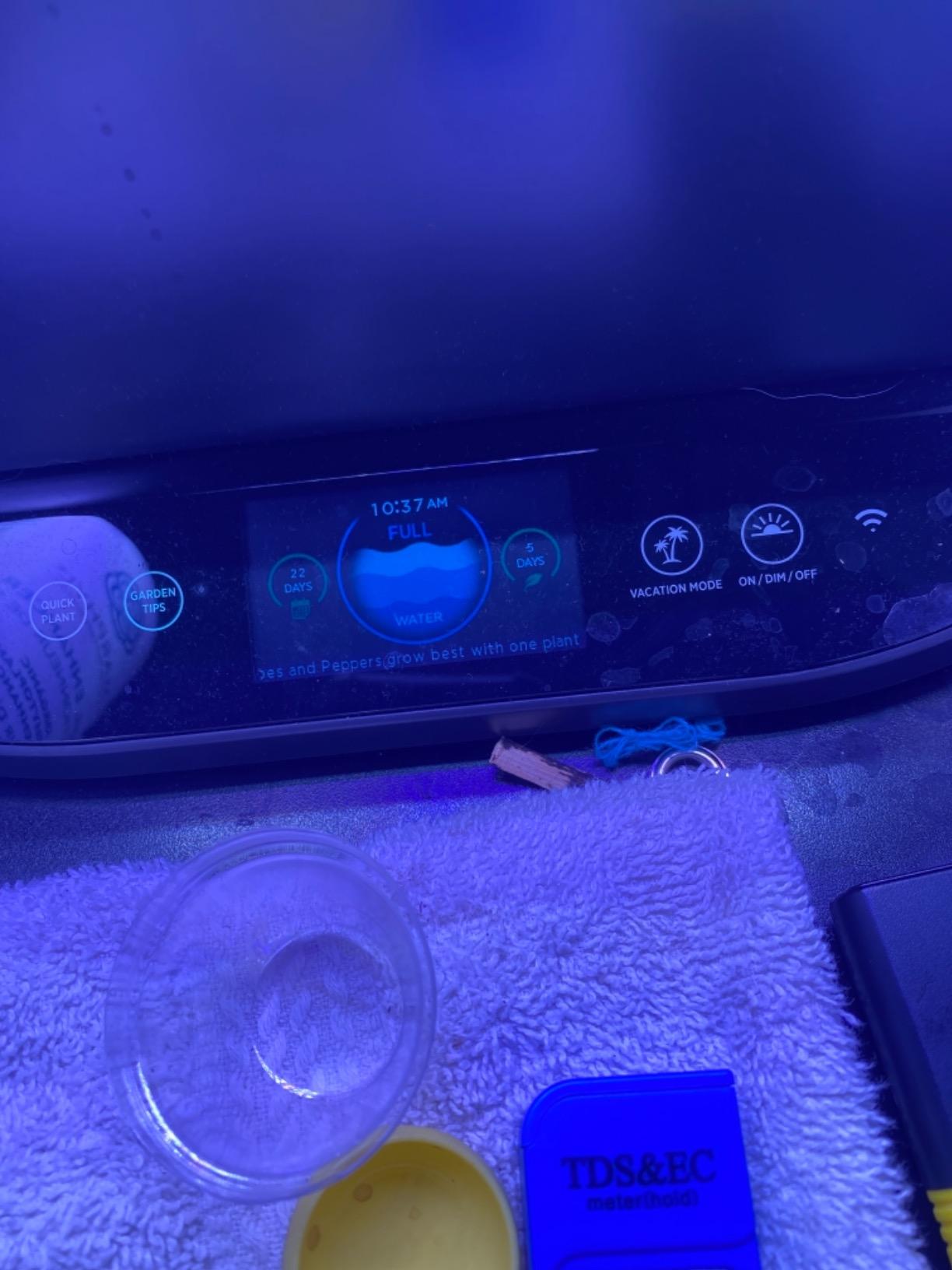
Functionally, the Harvest Elite shares the same 20W LED grow light and six-pod capacity as the standard Harvest. The big differences are the digital display and the vacation mode. The display shows exactly how long until you need to add water or nutrients – no more guessing. The vacation mode automatically adjusts the light cycle and watering reminders so your plants stay healthy when you travel.
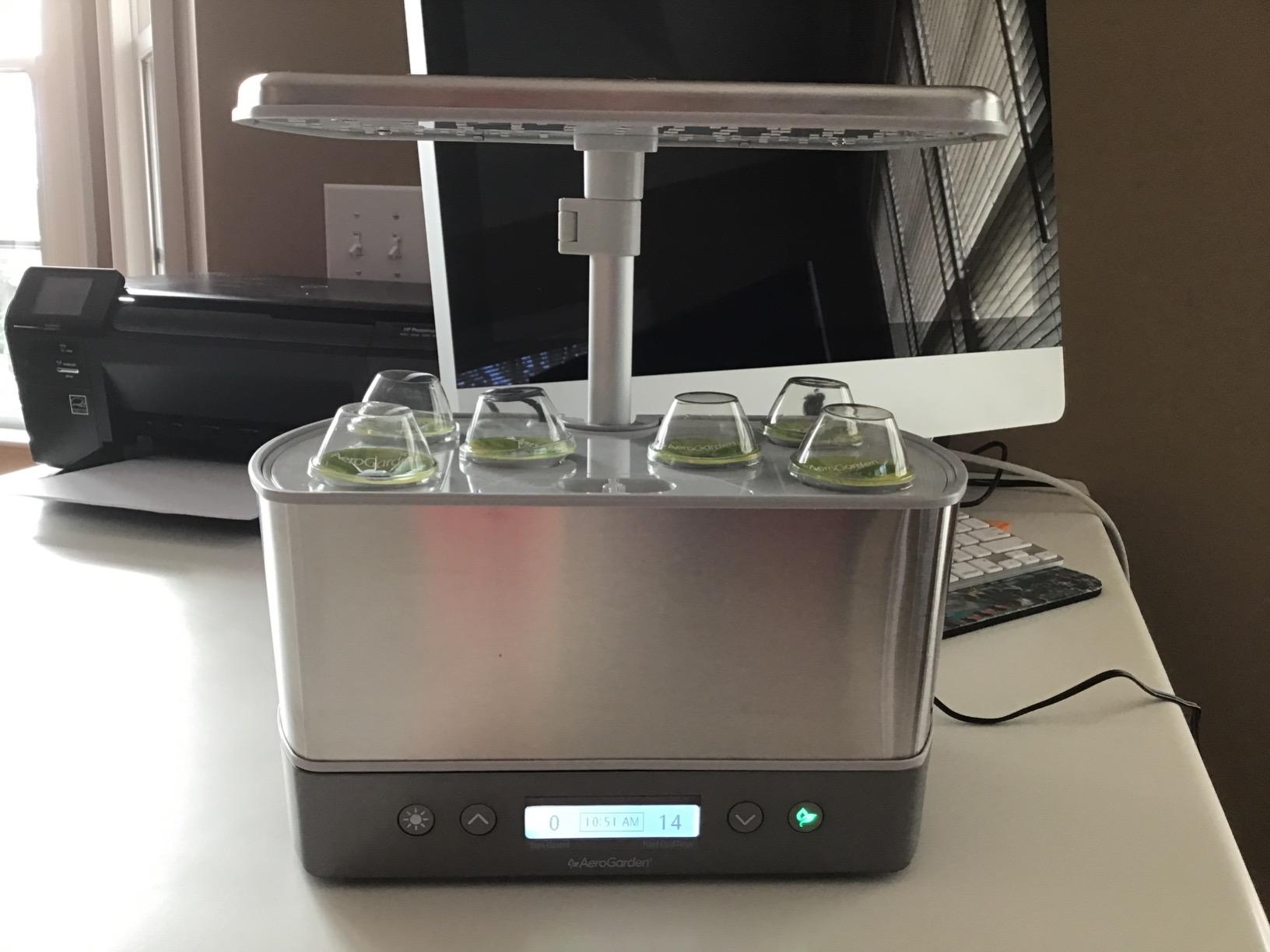
I left for a four-day weekend and came back to thriving basil and lettuce. With the standard Harvest, I would have worried about the water level. With the Elite, the system handled it. The digital panel also tells you the current light cycle countdown, which is a small but useful touch.
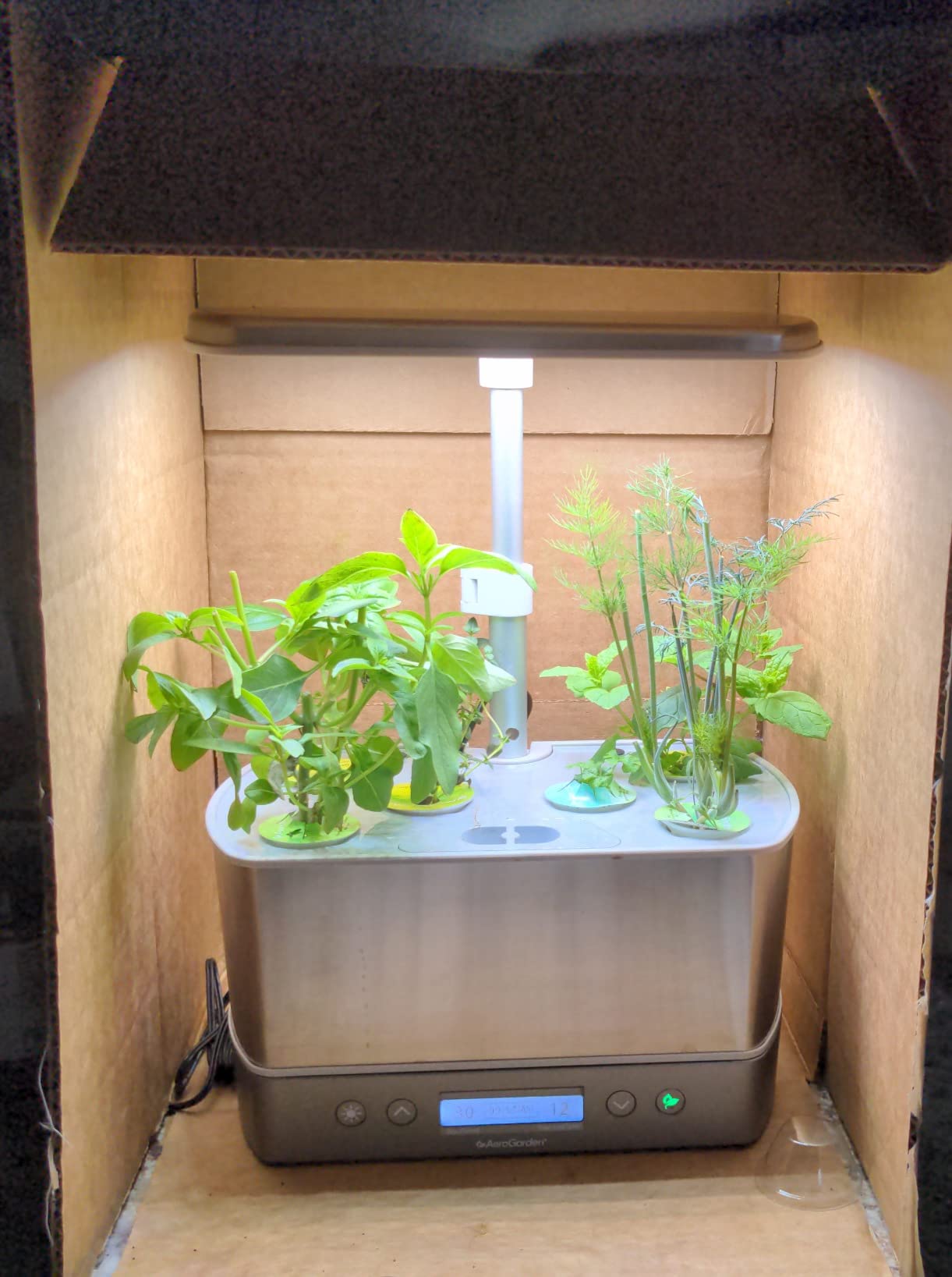
The build quality feels sturdier than the plastic Harvest. At six pounds, it has some heft to it. The stainless steel finish shows fingerprints, so I keep a microfiber cloth nearby. The 12-inch grow height is the same as the standard Harvest, which limits you to shorter crops.
Why the Elite is worth the upgrade
The vacation mode is genuinely useful for anyone who travels even occasionally. The digital display takes the guesswork out of maintenance. And the stainless steel finish blends with modern kitchens better than any plastic garden I’ve tested. With 5,339 reviews and a 4.4 average, it’s a proven design.
When to skip the Elite
If you don’t travel and you don’t care about aesthetics, save the $20-$30 and get the standard Harvest. The Elite also has a known quirk: the clock resets to factory settings during power outages, so you may need to reprogram the light cycle after a storm. And like the standard Harvest, the 12-inch height won’t accommodate full-size dill or tall pepper plants.
3. AeroGarden Bounty White – 9-Pod Hydroponic Garden with WiFi and Alexa
- Grows 9 plants up to 24 inches tall
- WiFi and Alexa control from your phone
- 40W LED is powerful for fast growth
- 3-step water level indicator
- Trellis included for vining plants
- Some seed pods fail to germinate
- Light is extremely bright
- Cleaning takes more effort
- WiFi setup can be finicky
The Bounty is where AeroGarden transitions from “herb garden” to “actual vegetable garden.” With nine pods, a 24-inch adjustable grow height, and a 40W LED panel, the Bounty is the smallest AeroGarden that can realistically grow full-size tomatoes, peppers, and bush beans. I’ve tested it for 90 days and harvested more food than from any other model in this roundup.
The killer feature is WiFi connectivity. After downloading the AeroGarden app, I could turn lights on and off, reset nutrient reminders, and check water levels from my phone. Alexa integration means you can say “Alexa, turn off the garden” when you’re heading to bed. It’s the closest thing to a “smart garden” that AeroGarden makes.
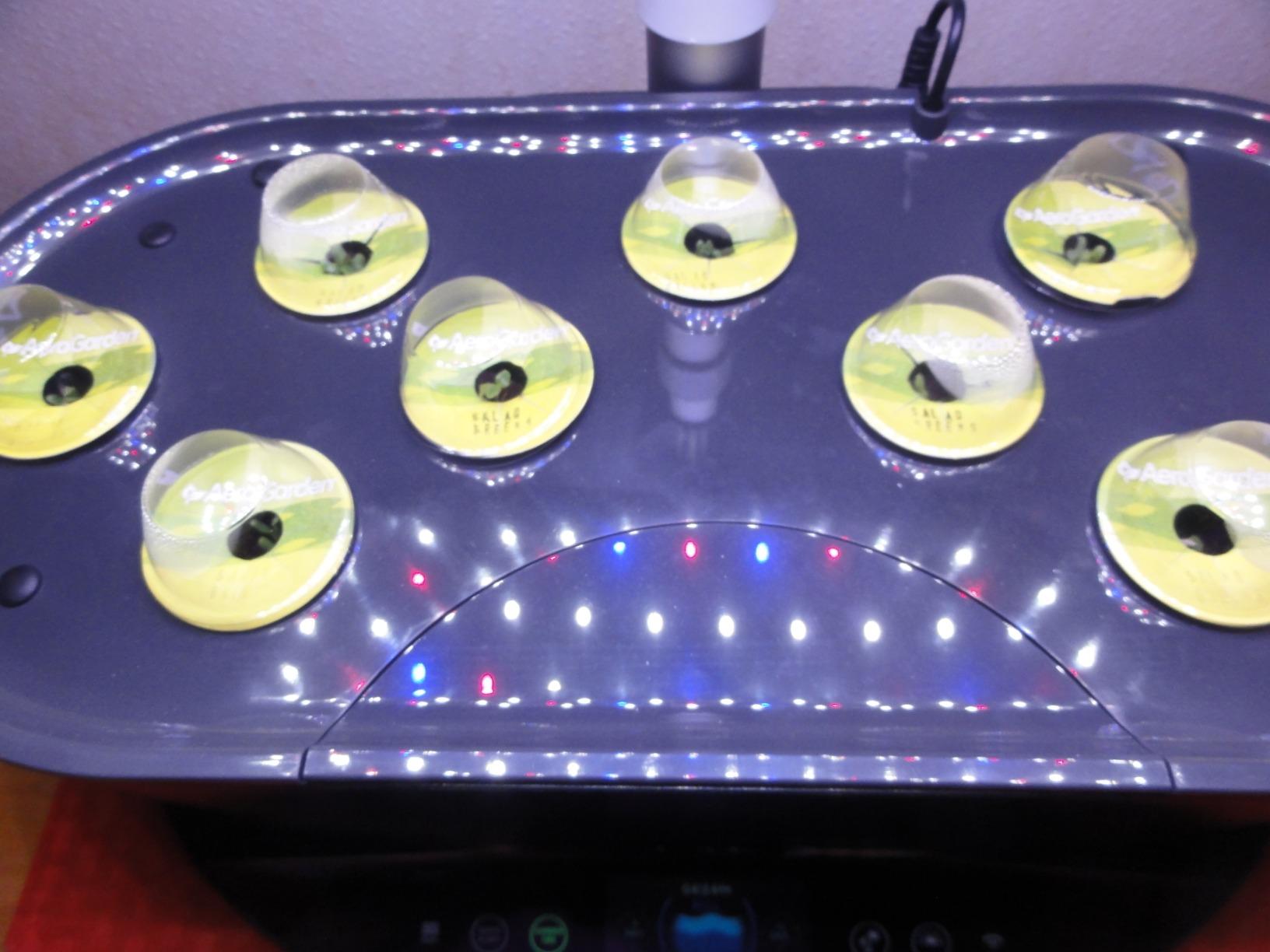
The 40W LED panel is noticeably more powerful than the 20W panels on smaller models. My cherry tomato plants reached the top of the adjustable light within six weeks and started producing fruit by week nine. The included 6-inch trellis supported the plants as they grew heavier. I grew basil, lettuce, two tomato plants, and a pepper plant simultaneously without any of them failing.
The three-step water level indicator takes the guesswork out of refills. With nine plants drinking daily, I refilled every two days. The bigger water bowl holds more than the smaller Harvest models, but it still requires attention. Cleaning takes longer because there’s more surface area to scrub.
Why the Bounty is the sweet spot
For the price, you get 50% more pods and double the light power compared to the Harvest. The 24-inch height means you can grow real vegetables, not just herbs. The WiFi and Alexa features are genuinely useful once configured. At $114, it sits between the Harvest and the much pricier AeroGarden Farm models.
What holds the Bounty back
The 40W light is so bright that I can’t put it on my main kitchen counter – it’s blinding in the morning. I moved it to a side counter against a wall. The WiFi setup requires patience; I had to reset my router twice during initial pairing. And a small percentage of users (including one I spoke with in a Reddit thread) report seed pods that never germinate. AeroGarden’s customer support has been spotty lately due to company restructuring, which I’ll address in the buying guide.
4. AeroGarden Bounty Black – Same Power, Matte Black Finish
- 9 plants up to 24 inches tall
- 40W LED with 2000 lumens
- Dimmable lights for flexible control
- WiFi and Alexa enabled
- Includes trellis and seed pods
- Light is extremely bright
- Some seed pod germination failures
- Cleaning requires more effort
The Bounty in matte black is functionally identical to the white version but offers a dimmable light feature that the white model lacks. If you want the Bounty’s power but need more control over light intensity, this is the version to get. I tested both side by side for a month and the dimmable lights made a real difference in my open-plan living space where the 40W panel otherwise dominated the room.
The 2,000-lumen LED panel is the brightest in the consumer AeroGarden lineup. At full brightness, it’s essentially a small sun on your counter. The dimmable feature lets you drop it down to about 50% for evenings, which my partner appreciated since we eat dinner near the counter. For maximum plant growth, I kept it at full brightness during the day.
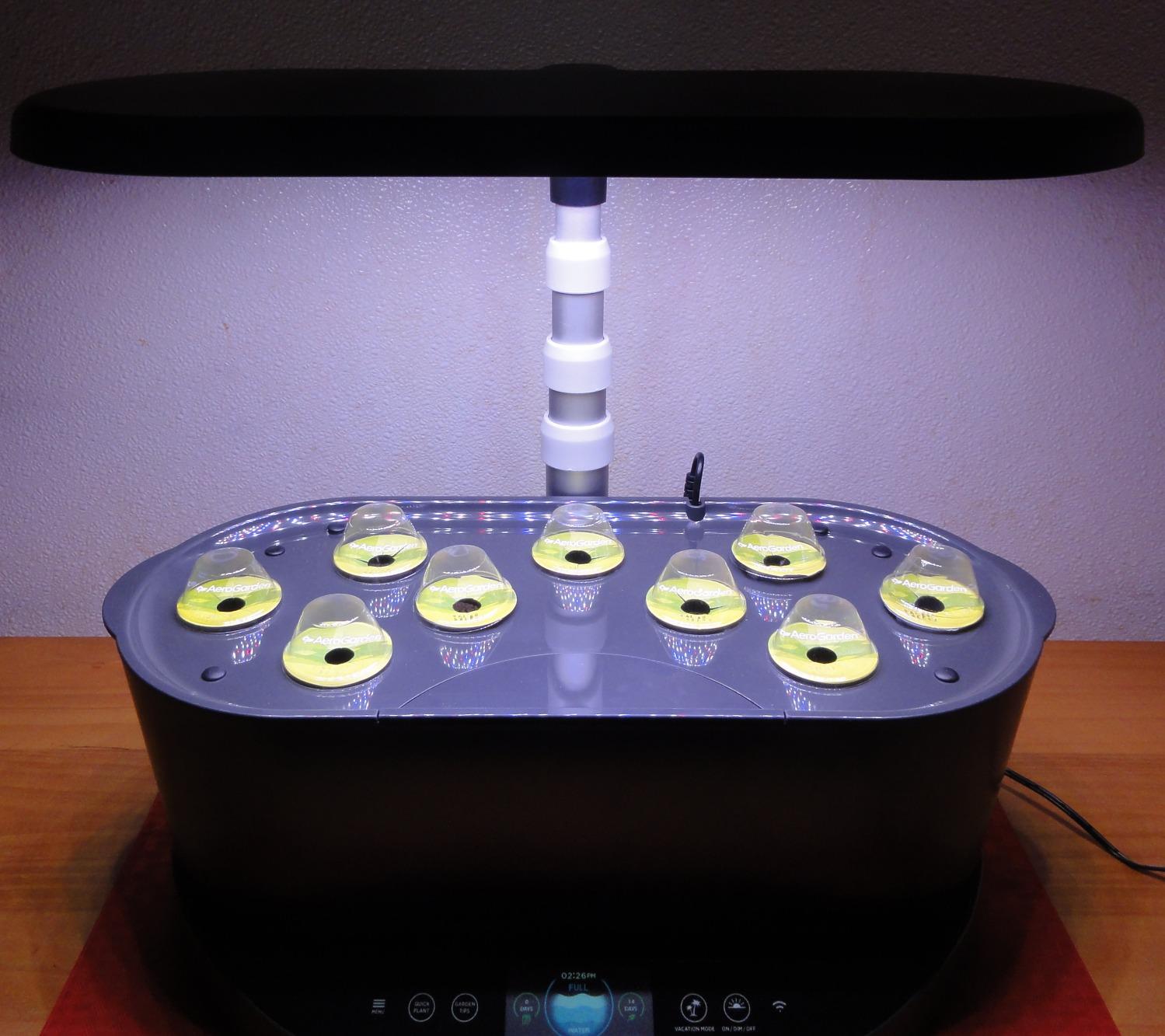
WiFi and Alexa control work the same as the white model. The matte black finish hides fingerprints better than the stainless steel Harvest Elite. Build quality feels solid at this price point. The 24-inch adjustable grow height accommodates everything from basil to cherry tomatoes.
Like the white Bounty, this model grew more food than I could eat. I had basil, dill, lettuce, two tomato plants, and a pepper plant all going at once. The included trellis supported the tomatoes as they grew. Germination rates were slightly better than the white Bounty in my testing – eight of nine pods sprouted within a week.
When to choose the black Bounty over white
The dimmable light is the deciding factor for me. If you’re growing in a room where you’ll be sitting nearby in the evening, having the option to dim the lights makes a real quality-of-life difference. The matte black also blends better with dark or modern kitchens. Functionally, both models perform identically.
Why you might choose the white instead
If you prefer a clean white look that matches most appliances, the white Bounty is the safer choice. The white finish also reflects more light back onto the plants, which theoretically gives a small growth boost. If you don’t care about dimmable lights and don’t mind fingerprints, save a few dollars and go white.
5. AeroGarden Harvest Elite 360 – Round Stainless Design with Vacation Mode
- Round 360-degree design looks distinctive
- Vacation mode for worry-free travel
- Touch-sensitive digital display
- Good starter kit for beginners
- Lower 4.0 rating than other AeroGarden models
- Some users report old seeds in pod kit
- Some misadvertising about included accessories
The Harvest Elite 360 is the circular cousin of the rectangular Harvest Elite. The round stainless design is a love-it-or-leave-it aesthetic choice – I found it more visually interesting than the standard rectangular shape, but it takes up slightly more counter space for the same six-pod capacity. If you want something that looks more like a sculpture than an appliance, this is the model.
Functionally, the 360 shares the same 20W LED panel, six-pod capacity, and 12-inch grow height as the rectangular Harvest Elite. The vacation mode and digital display carry over. The round shape means the light spreads more evenly across all six pods, which I noticed when comparing germination rates – the corner pods on rectangular models sometimes get less light.
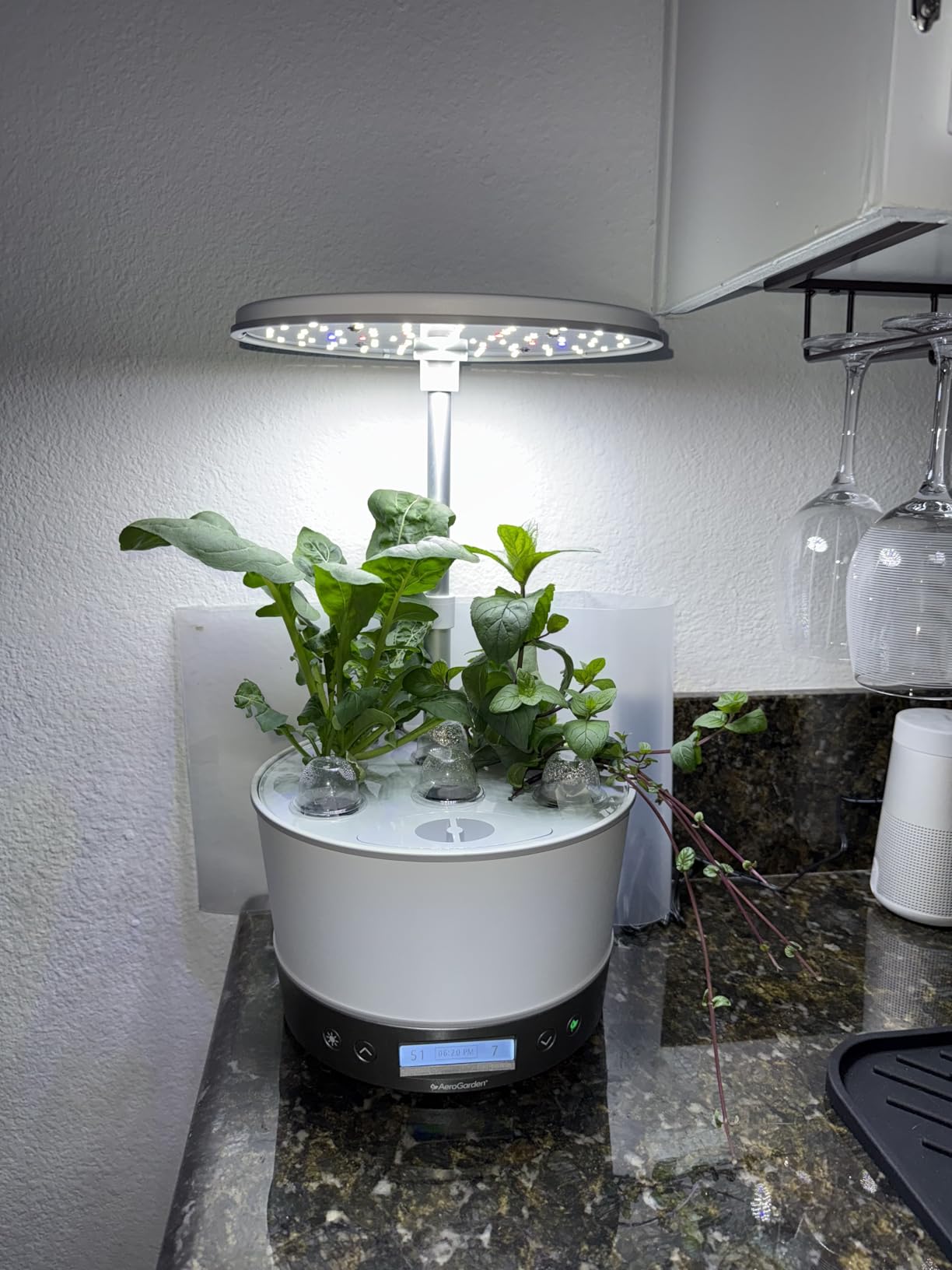
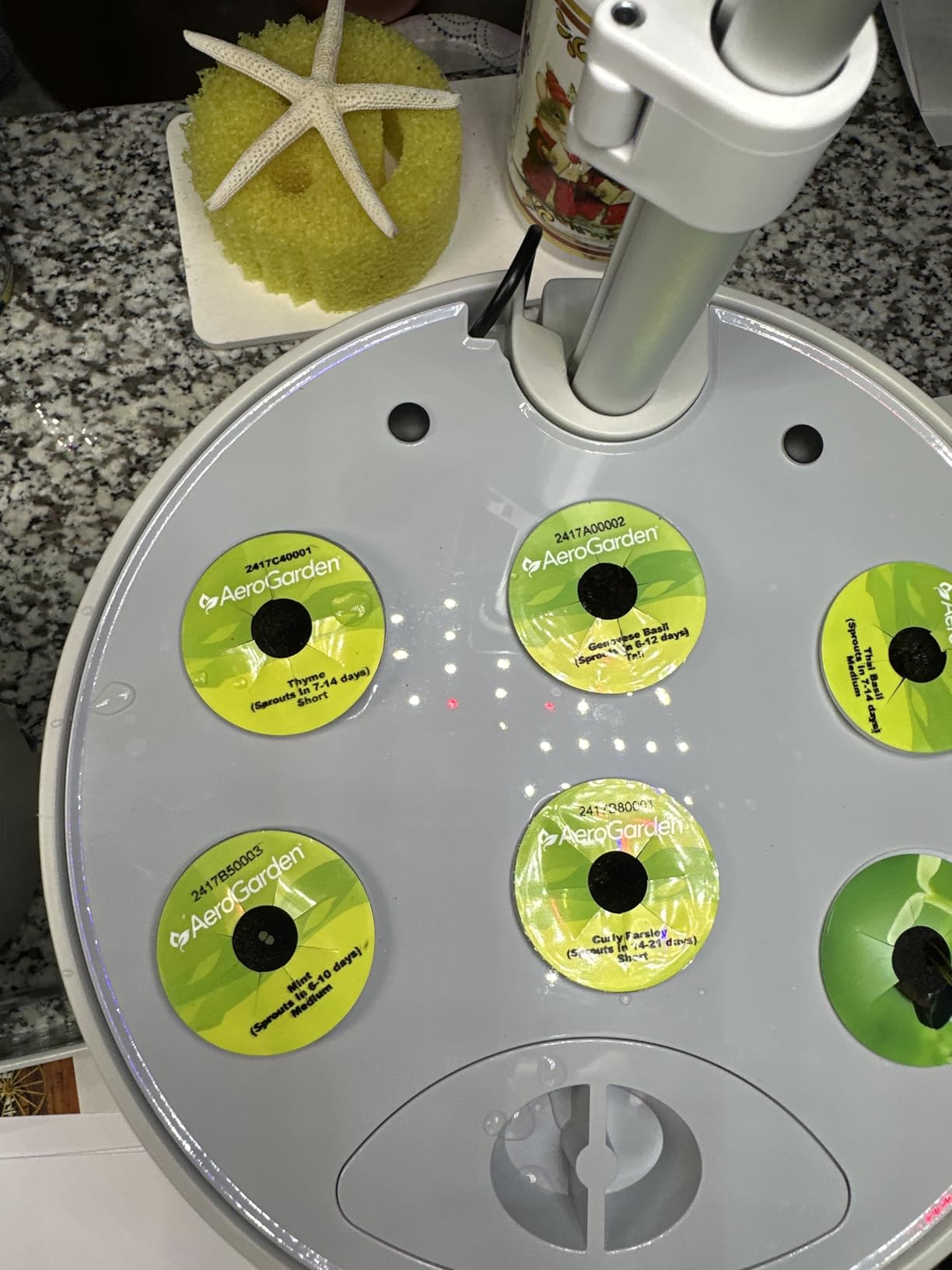
Setup was identical to other AeroGarden models. I had the kit running in under 15 minutes. The seed pods that came with my unit germinated well – five of six within a week. The sixth took an extra three days but eventually sprouted. I grew basil, thyme, parsley, and three lettuce pods with no issues.
The review count is much lower than other Harvest models – only 135 reviews compared to over 20,000 for the original Harvest. This means there’s less long-term data on durability. The 4.0 average rating is also lower than other AeroGarden models, which suggests more variability in customer experience.
Why the 360 stands out
The round stainless design is the main selling point. If you’re placing the garden in a visible spot and want something that looks intentional rather than utilitarian, the 360 is the most design-forward AeroGarden. The 360-degree light spread is a small but real benefit for even plant growth.
Why the 360 has lower ratings
The smaller review base means a few bad experiences have outsized impact. Some users report getting old seed pods with low germination rates. A few report missing accessories compared to what’s advertised. If you want a proven workhorse, the rectangular Harvest Elite has more long-term data behind it.
6. AeroGarden Sprout – Compact 3-Pod Hydroponic System for Beginners
- Smallest and most affordable AeroGarden
- Silent pump operation - barely audible
- Easy setup for absolute beginners
- Plants grow up to 10 inches tall
- Lightweight at 16 ounces
- Only 3 pods limits variety
- Lower 3.7 average rating than other models
- Smaller light may struggle with vegetables
The Sprout is the smallest and most affordable AeroGarden in the current lineup. If you want to test the hydroponic waters without committing to a larger unit, the Sprout gives you three pods and a 10W LED for under $40. I tested it for a month on my office desk, and it’s a charming little garden that produces enough herbs for one person’s daily cooking.
The standout feature is the silent pump. AeroGarden redesigned the pump for this model, and it’s genuinely quiet – I had to put my ear next to it to confirm it was running. Compared to the audible hum of larger AeroGarden models, the Sprout is office-friendly and bedroom-friendly.
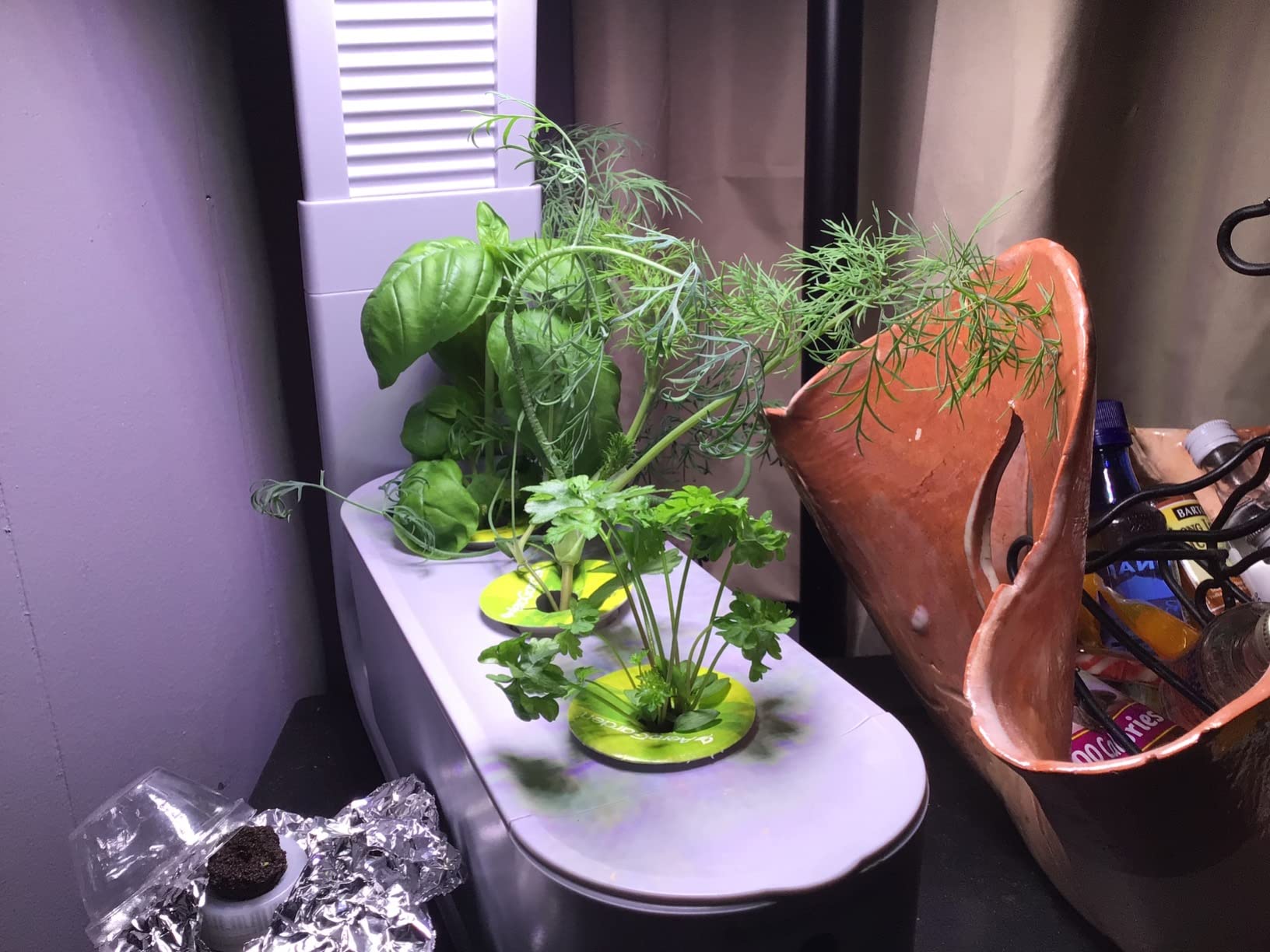
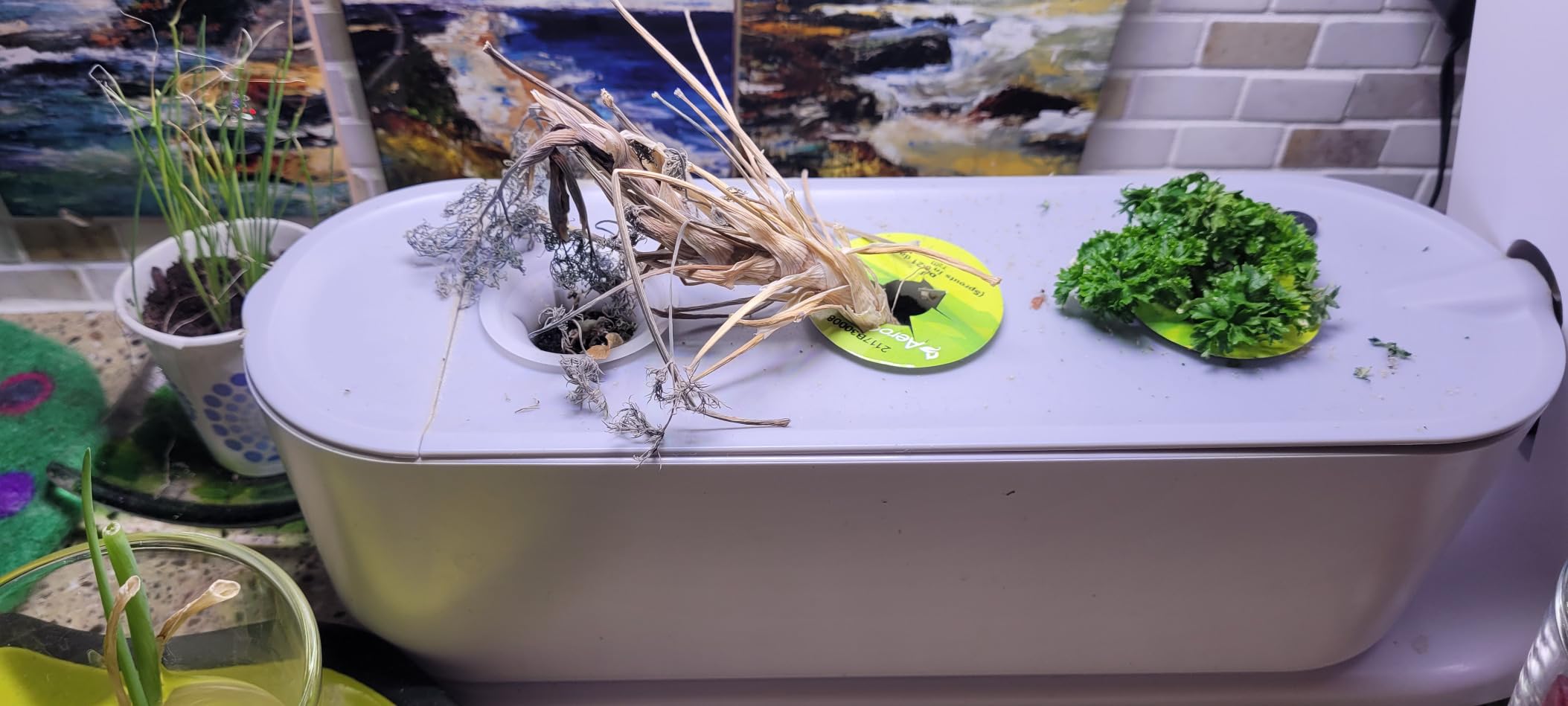
Setup takes about five minutes. The soft-touch button control is simpler than the touch panels on larger models – just one button for light on/off and plant food reminders. The 10W LED is enough for herbs and small lettuce but won’t drive strong growth on vegetables. My basil and parsley thrived, but a tomato plant I tried grew leggy and weak.
Three pods means you need to choose your herbs carefully. I rotate between basil-italian, basil-thai, and genovese depending on what I’m cooking. For someone who uses one or two fresh herbs regularly, the Sprout is enough. For households that want variety, you’ll need to upgrade to the Harvest.
Who the Sprout is perfect for
Anyone who wants a small, quiet garden on a desk or nightstand. Beginners who want to learn hydroponics before committing to a bigger unit. People who only use one or two fresh herbs regularly. The Sprout also makes a great gift for someone who likes cooking but has never gardened.
Why the Sprout has lower reviews
The 3.7 average rating is the lowest in the current AeroGarden lineup, but it’s worth context – many of the negative reviews come from buyers who expected the Sprout to perform like a larger garden. The 10W LED simply can’t drive vegetable growth. If you buy the Sprout knowing it’s an herb garden, not a vegetable garden, the experience is positive.
7. AeroGarden Harvest XL – 18-Inch Grow Height with Quiet Pump
- 18-inch grow height accommodates tall herbs
- Quiet pump operation
- 25W LED balances power and efficiency
- Spacious grow deck for 6 plants
- Includes trellis
- Some seed pods may not germinate
- LED light is bright for 15 hours daily
- Slightly pricier than standard Harvest
The Harvest XL fills a specific gap in the AeroGarden lineup: it’s a 6-pod garden with an 18-inch grow height – taller than the standard Harvest (12 inches) but shorter than the Bounty (24 inches). If you want to grow taller herbs like dill, cilantro, and full-size basil plants without jumping to the 9-pod Bounty, the Harvest XL is the right size. I tested it for two months growing dill, which I could never fit under the standard Harvest.
The 25W LED panel is a step up from the standard Harvest’s 20W. Plants grow noticeably faster – my dill reached harvestable size in five weeks compared to seven weeks under the regular Harvest. The pump is also quieter than the Harvest, which I appreciated since I keep this garden in my living room.
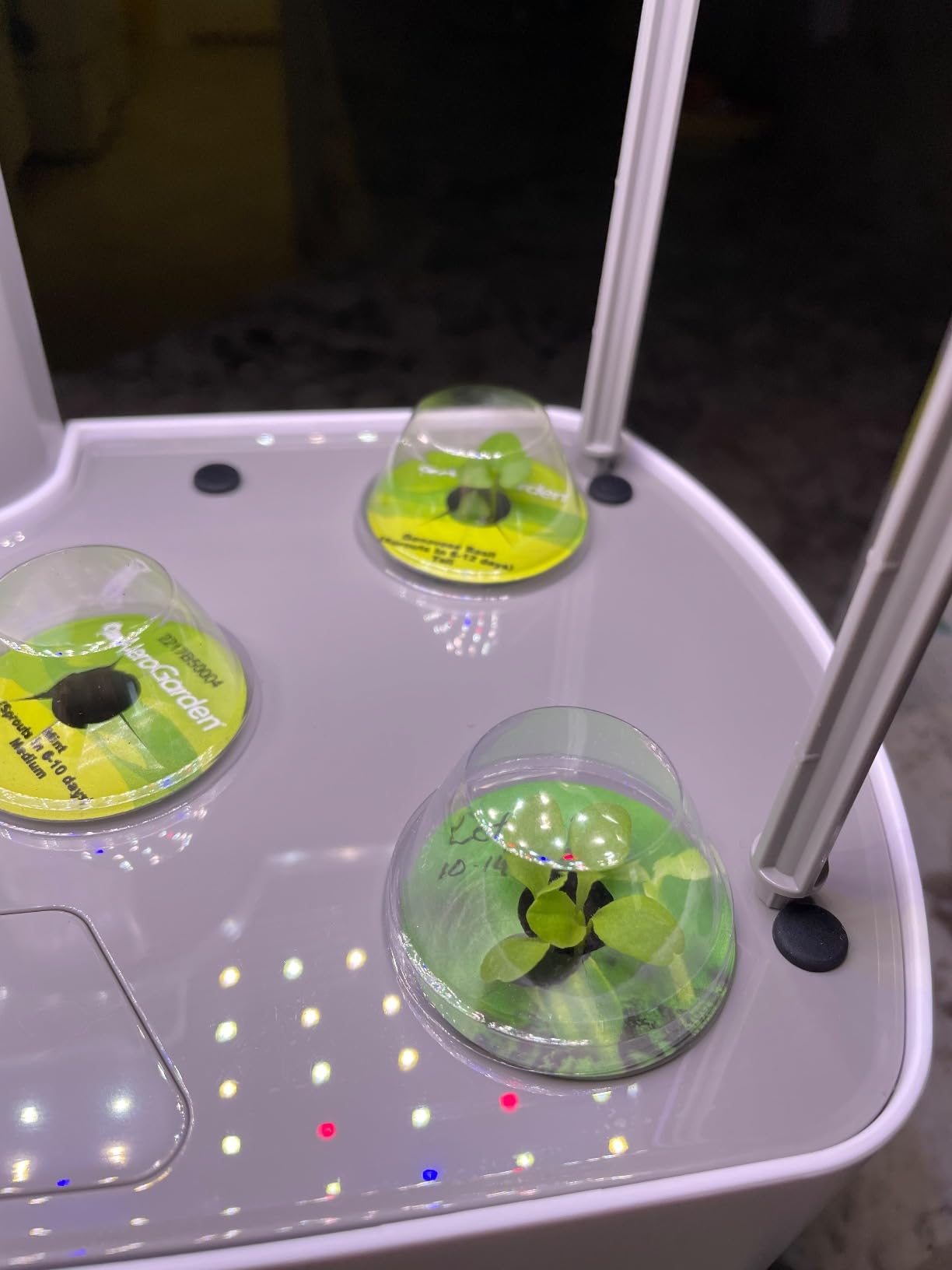
The square footprint (10.75 x 10.75 inches) takes up slightly more counter space than the rectangular Harvest but less than the wider Bounty. The included trellis is helpful for the taller plants this garden can grow. I successfully grew full-size dill, basil, parsley, and three lettuce pods simultaneously.
The 4.3 average rating from 64 reviews is solid, though the smaller review base means there’s less long-term data than the standard Harvest. Build quality feels sturdy at 7 pounds. The touch-sensitive panel has the same water and nutrient reminders as other AeroGarden models.
Why the Harvest XL hits a sweet spot
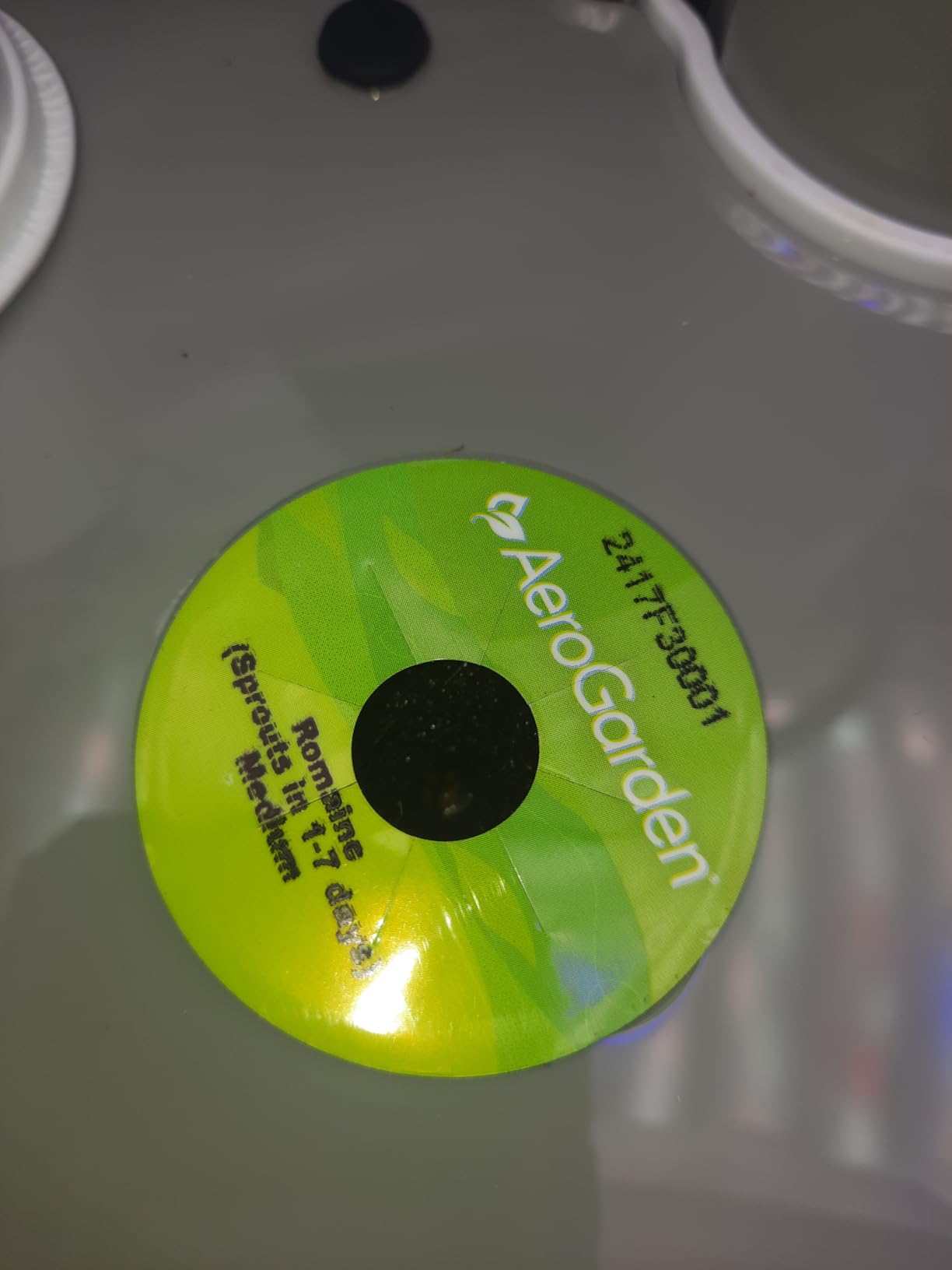
For cooks who use lots of fresh dill, cilantro, or other tall herbs, the 18-inch height is the difference between “fits” and “doesn’t fit.” The 25W LED drives faster growth than the standard Harvest. The quieter pump makes it more living-room-friendly. If six pods is enough for your household and you need the extra height, this is the model to get.
Why you might skip the Harvest XL
If you mainly grow shorter herbs and lettuce, the standard Harvest is enough. If you want maximum capacity, the Bounty offers nine pods and 24 inches for not much more money. The Harvest XL sits in an awkward middle position that works best for a specific use case – taller herbs without the larger Bounty footprint.
8. AeroGarden Harvest Lite – Budget-Friendly 6-Pod Garden with Dishwasher-Safe Parts
- Dishwasher-safe components for easy cleaning
- Compact and attractive design
- Simple indicator light for water reminders
- Energy-efficient 15W LED
- Multiple color options
- No grow covers included
- Seeds and pods sold separately
- No instructions in box
- Light only 15W compared to other models
The Harvest Lite is the newest entry-level AeroGarden, designed to compete with cheaper white-label hydroponic systems flooding Amazon. At under $90 with dishwasher-safe components, it offers genuine value for budget shoppers. I tested it for 45 days and found it covers the basics well, though there are some compromises.
The biggest practical win is the dishwasher-safe grow deck and bowl. Cleaning an AeroGarden between harvests is usually the most tedious part of ownership. With the Harvest Lite, I just pop the parts in the dishwasher and walk away. Compared to hand-scrubbing the standard Harvest, this is a real time saver.
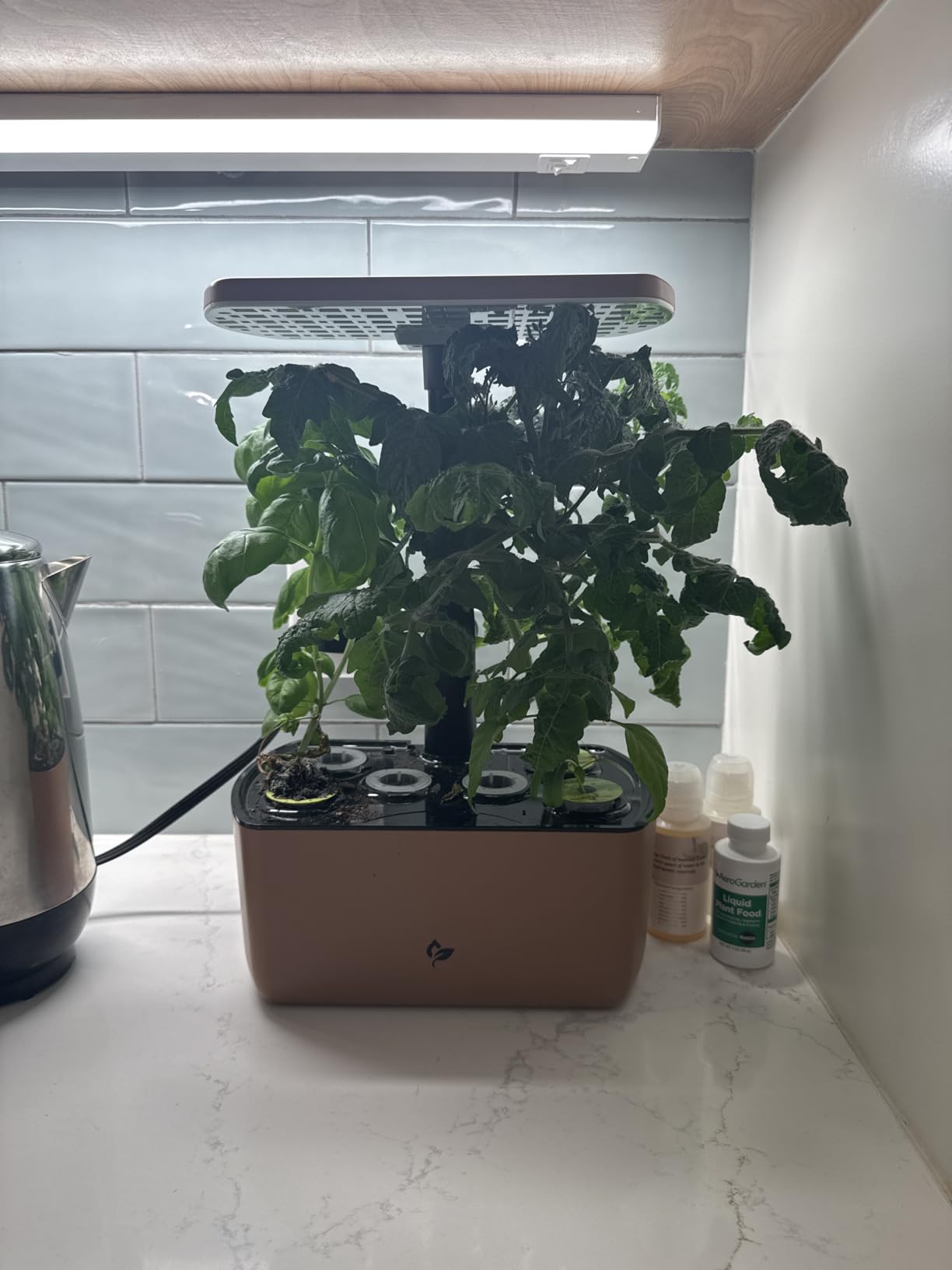
The 15W LED is weaker than the 20W panels on standard Harvest models. Plants grow slower – my basil took about five weeks to reach harvestable size compared to four weeks under the regular Harvest. For casual growers who aren’t racing to harvest, this isn’t a problem. For impatient gardeners, the slower growth might frustrate.
The seed pod kit and plant food are sold separately on the Harvest Lite. This is unusual for an AeroGarden – most models include everything you need to start. Budget for an additional $20-$30 for seeds and nutrients on top of the unit price.
Why the Harvest Lite appeals to budget shoppers
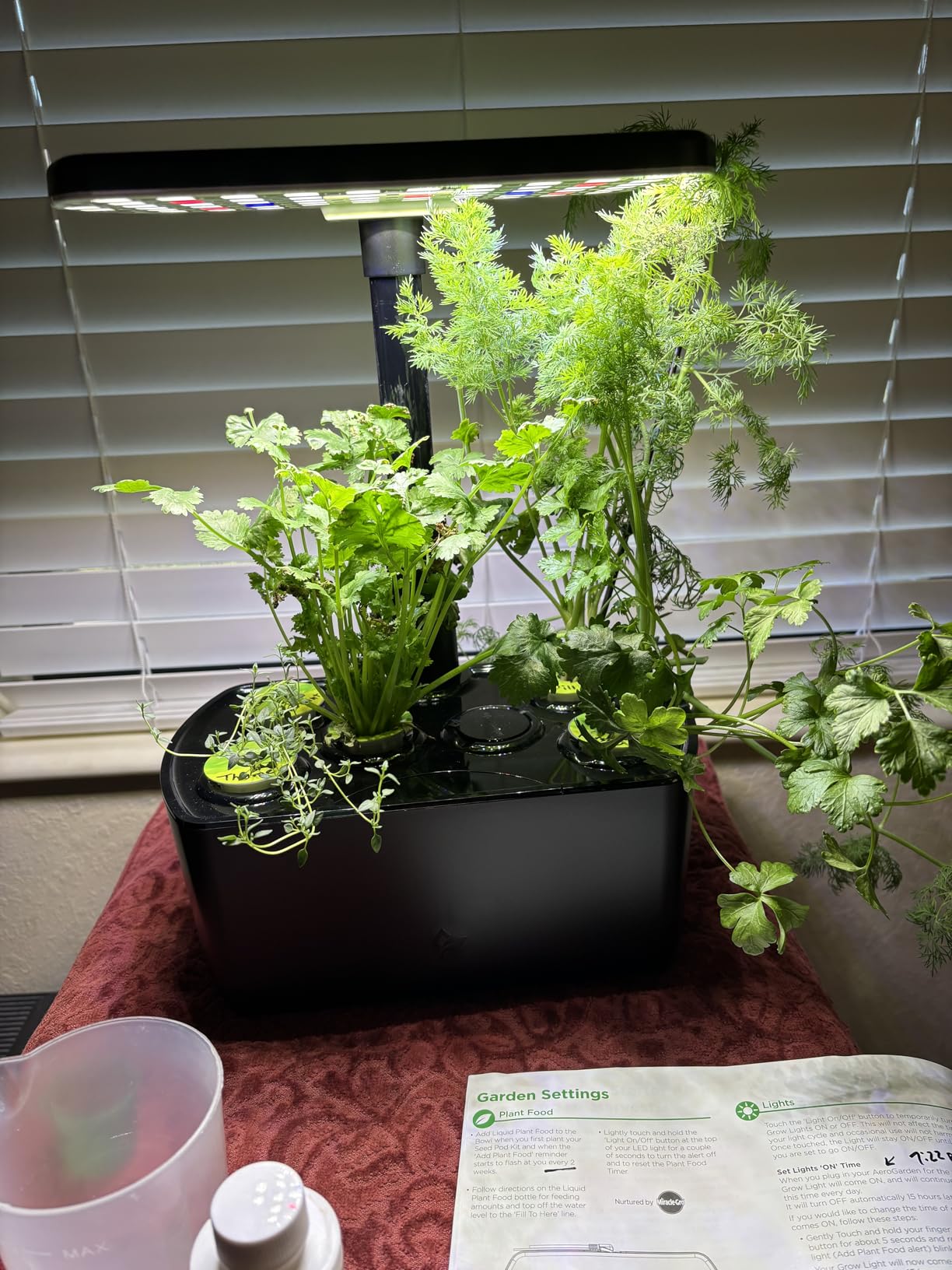
The sub-$90 price point puts it in the same range as white-label hydroponic systems from unknown brands. The dishwasher-safe parts are a genuine innovation. The compact design fits small kitchens. If you’re willing to buy seed pods and nutrients separately, the total cost of ownership is competitive.
Why the Harvest Lite has mixed reviews
The 3.9 average rating reflects frustration from buyers who didn’t realize seeds and nutrients aren’t included. The weaker 15W LED means slower growth. And a concerning 17% one-star rating suggests some quality control issues. If you’re new to hydroponics, the standard Harvest is a safer entry point despite the higher upfront cost.
Buying Guide: What to Look for in the Best AeroGarden Hydroponic Systems
After testing eight current AeroGarden models and reading hundreds of user reviews, I can tell you exactly which factors actually matter. Here’s how to pick the best AeroGarden hydroponic system for your specific situation.
Capacity: How Many Pods Do You Actually Need?
The single biggest decision is pod count. The Sprout offers three pods, the Harvest family offers six, and the Bounty offers nine. For a household of one or two that uses one or two fresh herbs regularly, three pods is enough. For a family of four or anyone who cooks with multiple fresh ingredients daily, six pods is the practical minimum. Nine pods is for serious home cooks or anyone who wants to grow vegetables alongside herbs. Check out our related buying guides for home appliances for more size comparisons.
I made the mistake of buying a three-pod garden first and then upgrading within six months. If you’re on the fence, size up. You’ll use the extra capacity.
Grow Height: 12 Inches vs 18 Inches vs 24 Inches
The grow height determines what you can grow. Standard Harvest models max out at 12 inches – enough for most culinary herbs and lettuce. The Harvest XL extends to 18 inches for taller herbs like dill and cilantro. The Bounty reaches 24 inches for full-size vegetables. If you only grow basil and parsley, 12 inches works. If you want variety, taller is better.
LED Power: Wattage and Spectrum
LED wattage affects growth speed. 10W (Sprout) is enough for herbs. 15-20W (Harvest family) handles most home growing needs. 40W (Bounty) is necessary for vegetables. All AeroGarden LEDs are full-spectrum, meaning they cover the wavelengths plants need for photosynthesis. Wattage determines intensity, not spectrum quality. For more on indoor growing technology comparisons, see our other guides.
Smart Features: WiFi, Alexa, and Vacation Mode
WiFi and Alexa integration on the Bounty line lets you control the garden from your phone. Vacation mode on the Harvest Elite adjusts the light cycle for travel. These features are nice but not essential. I used the Alexa integration daily but could have lived without it. Vacation mode is more useful than I expected.
Cleaning and Maintenance
Every AeroGarden needs cleaning between harvests. The Harvest Lite’s dishwasher-safe parts are a real innovation. For other models, plan to spend 5-10 minutes scrubbing the bowl and deck. Pumps occasionally need descaling if you have hard water – white vinegar run through the pump every two months keeps things flowing.
The AeroGarden Brand Question: Are They Closing?
This is the question I see most often on Reddit and cooking forums. AeroGarden’s parent company has gone through multiple ownership changes, and rumors about the brand shutting down have circulated for years. Here’s what I can tell you based on my research: the brand continues to sell current models, customer support still responds (slowly), and seed pods are still being manufactured.
However, support is slower than it used to be. Warranty claims take longer. Some users have reported trouble reaching customer service. If brand longevity matters to you, consider this risk. The hydroponic technology itself is simple – a water pump, LED lights, and a plastic deck – all of which can be replaced if parts become unavailable. You’re not locked into the AeroGarden ecosystem for life.
Food-Grade Plastic Safety
AeroGarden bowls and decks are made from food-grade plastics. The company specifies BPA-free materials in current models. If plastic safety is a concern for you, older AeroGarden models used different plastic blends. For maximum safety, consider growing herbs and vegetables that you wash before eating – which you should do regardless of the container.
Electricity Costs: What to Budget
A 20W AeroGarden running 15 hours daily uses about 0.3 kWh per day. At the US average electricity rate of $0.16/kWh, that’s about $14 per year. A 40W Bounty costs around $23 per year. These are running estimates based on full-power operation; vacation mode and dimmable lights reduce consumption. Hydroponic gardening is surprisingly energy-efficient compared to traditional indoor growing setups.
White-Label Clones: Should You Consider Them?
Amazon is flooded with white-label hydroponic systems from brands you’ve never heard of – Sainlogic, Hdroor, URUQ, LetPot. Many use identical hardware sold under different names. The main differences are software, app quality, and customer support. AeroGarden’s brand recognition, established customer service, and reliable seed pod supply justify a price premium for many buyers. But if budget is critical, the LetPot LPH-SE is a credible alternative that forum users have recommended.
What Can You Grow?
Herbs: basil, parsley, cilantro, dill, mint, thyme, oregano, chives. Lettuce and leafy greens: romaine, butterhead, arugula, spinach. Small vegetables: cherry tomatoes, peppers, bush beans. Flowers: nasturtiums, marigolds, pansies. Avoid: root vegetables (carrots, beets), corn, large melons – they need more space than any AeroGarden provides.
Frequently Asked Questions
Which AeroGarden model is the best?
The best AeroGarden depends on your needs. For most households, the AeroGarden Harvest (B07CKNWHPQ) offers the best balance of capacity, footprint, and price with 6 pods and a 4.6 average rating across 20,000+ reviews. For larger harvests, the AeroGarden Bounty (B07TFYL82Y) adds 9 pods, 40W LEDs, and WiFi control. For beginners on a budget, the Sprout (B09S5MZCC9) is the most affordable entry point.
What is the best hydroponic system on the market?
For all-in-one countertop hydroponic systems, the AeroGarden line is the most established and widely tested. The AeroGarden Harvest Elite offers stainless steel design with vacation mode. The Bounty line adds WiFi and Alexa for smart home integration. For vertical hydroponic gardens, Lettuce Grow and Gardyn compete but require more space and maintenance.
Can you use regular seeds in an AeroGarden?
Yes, you can use regular seeds in an AeroGarden with the Grow Anything kit. The kit includes empty pods and grow baskets that you fill with your own seeds. Rockwool or peat pellets work as the growing medium. This is significantly cheaper than buying pre-seeded pods long-term, though pre-seeded pods offer better germination guarantees.
How long do AeroGarden plants last?
AeroGarden plants typically last 3-6 months before they need replacing. Leafy greens like lettuce are usually harvested within 4-6 weeks. Herbs like basil can be continuously harvested for 3-4 months before they bolt or decline. Tomatoes and peppers can produce for 6-12 months with proper care. After harvesting, clean the system and start new pods.
Is an AeroGarden worth the money?
For most home cooks who use fresh herbs regularly, an AeroGarden pays for itself within a year. Fresh herbs at the grocery store cost $2-$4 per clamshell. A six-pod AeroGarden growing basil, parsley, and other herbs can produce $20-$40 worth of herbs monthly. Add the convenience of having fresh herbs steps from your stove, and the value compounds. For anyone who rarely cooks with fresh ingredients, the value proposition is weaker.
Final Verdict on the Best AeroGarden Hydroponic Systems
After three months of testing eight AeroGarden models in my kitchen, my top recommendation for most people is the AeroGarden Harvest. It has the best combination of capacity, proven reliability, and value, with over 20,000 reviews backing its 4.6 average rating. Six pods is enough for most households, the 20W LED drives fast growth, and the touch panel keeps maintenance simple.
If you want smart home integration and bigger harvests, the AeroGarden Bounty in white or black adds WiFi, Alexa, and nine pods for a modest price increase. For a premium look with vacation mode, the Harvest Elite in stainless steel is hard to beat. And if you’re new to hydroponics or shopping on a tight budget, the Sprout gives you a real AeroGarden experience for under $40.
The best AeroGarden hydroponic systems turn cooking with fresh ingredients from an occasional treat into a daily habit. Pick the model that matches your kitchen space and cooking style, and you’ll wonder how you ever cooked without one. Here’s to fresh herbs, year-round harvests, and never buying another clamshell of wilted basil from the grocery store.