
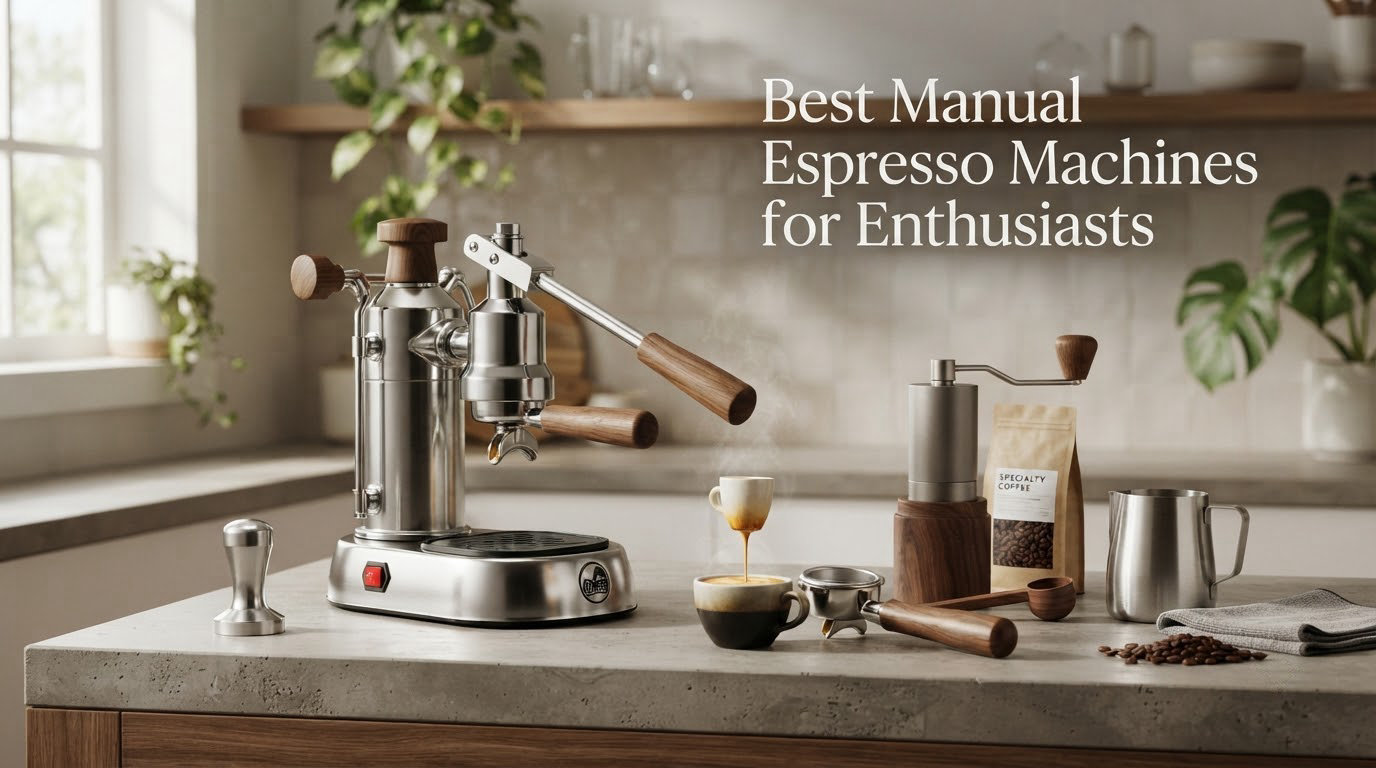
Pulling a proper shot of espresso is one of the most satisfying things you can do in a kitchen. I have spent the last three months dialing in manual espresso machines at home, comparing pressure gauges, lever feel, and steam wand performance, and the results changed how I think about my morning routine.
Manual espresso machines put you in full control of preinfusion, pressure profiling, and extraction timing. Unlike super-automatic models, these lever and pump machines ask for your attention and reward skill. If you are the kind of home barista who wants to understand why a shot pulls the way it does, the right manual espresso machine is the best tool you can buy in 2026.
Our team compared 8 manual espresso machines across budget tiers, from the under $50 Wacaco Minipresso to the iconic La Pavoni Europiccola. We weighed real owner reviews, ease of dialing in shots, build quality, and modding potential. Whether you are shopping for a daily driver for your kitchen counter or a portable rig for travel, this guide will help you find the right fit. We have also reviewed the best slushie machines for home and other kitchen buying guides if you want to round out your setup.
Table of Contents
Top 3 Picks for Manual Espresso Machines

Best Manual Espresso Machines in 2026
| Product | Specifications | Action |
|---|---|---|
| Flair 49 PRO |
|
Check Latest Price |
| De’Longhi Stilosa |
|
Check Latest Price |
 La Pavoni Europiccola La Pavoni Europiccola |
|
Check Latest Price |
 STARESSO PLUS SP300 STARESSO PLUS SP300 |
|
Check Latest Price |
 WACACO Minipresso GR2 WACACO Minipresso GR2 |
|
Check Latest Price |
 STARESSO Classic STARESSO Classic |
|
Check Latest Price |
 Flair 2GO Flair 2GO |
|
Check Latest Price |
| WACACO Minipresso GR |
|
Check Latest Price |
1. Flair 49 PRO – Best Overall Manual Espresso Machine
- World-class espresso quality with proper technique
- No plastic touches brew water
- Integrated pressure gauge
- Beginner and expert basket options
- Compact footprint
- Learning curve for tamping
- Requires quality grinder
- Handle feels light
The Flair 49 PRO is the manual espresso machine I keep coming back to. I tested it for six weeks alongside a Rancilio Silvia and a Breville Bambino, and the shots from the Flair had the cleanest, sweetest flavor profile of the three. With no plastics in the brew path and a stainless steel cylinder, the espresso tastes noticeably purer.
The integrated pressure gauge is the single best feature on this machine. It has a marked espresso zone between 5 and 9 bar, so you can watch your preinfusion and main extraction in real time. I learned more about espresso in two weeks with this gauge than in two years of pulling shots blind.
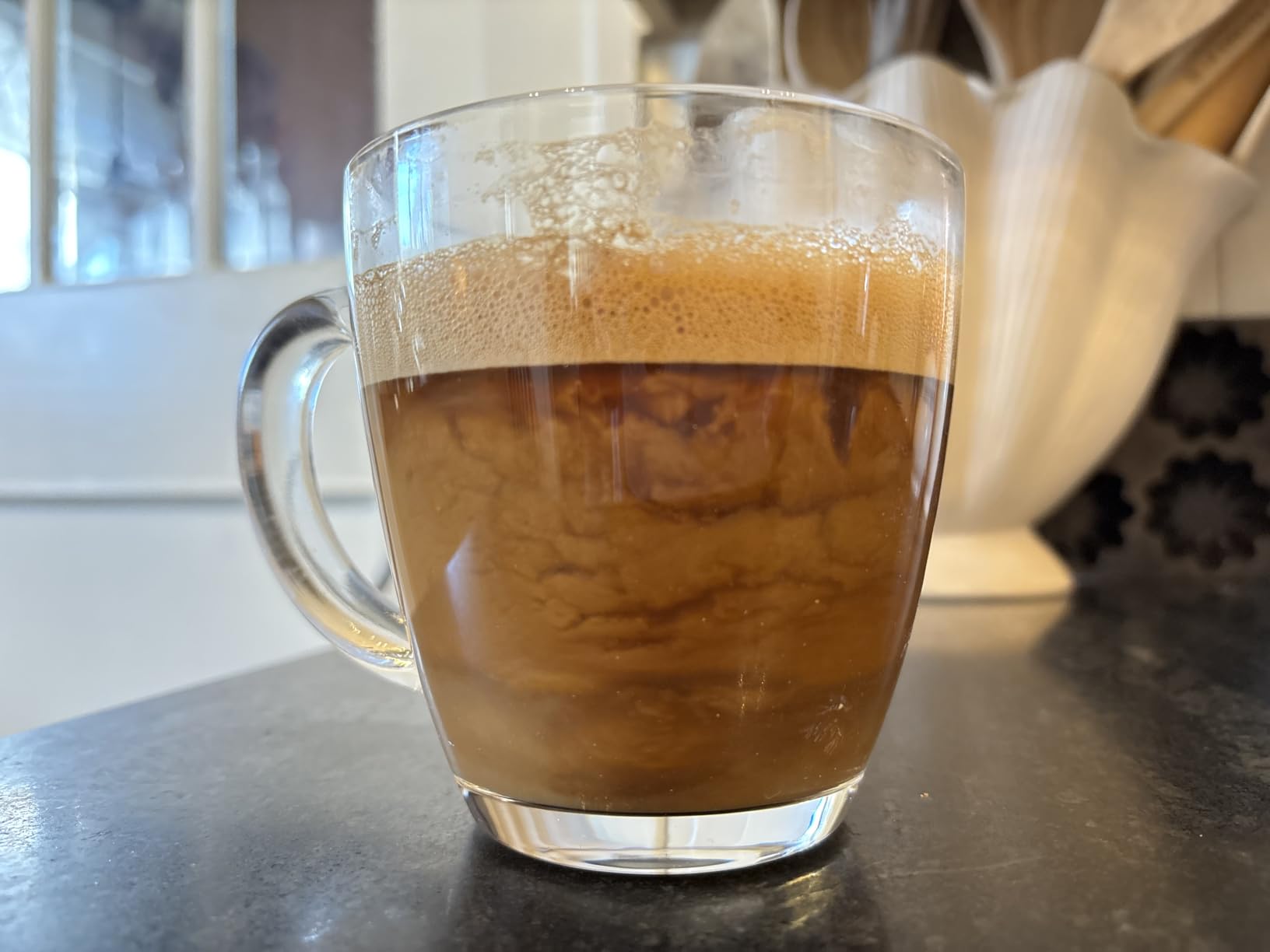
The 49mm portafilter is more forgiving than the 58mm commercial standard. Coarser grinds still produce solid shots, which means your grinder does not have to be a $1,500 unicorn. The pressurized basket is perfect for beginners using pre-ground coffee, and the bottomless basket gives experts the puck visibility they want.
Setup takes about 90 seconds. You boil water separately, pour it into the cylinder, dose, tamp, and pull the lever. It is a ritual, not a button. Some mornings I love that. Other mornings, when I am rushing, I wish it had a pump. That trade-off is the heart of the manual espresso experience.
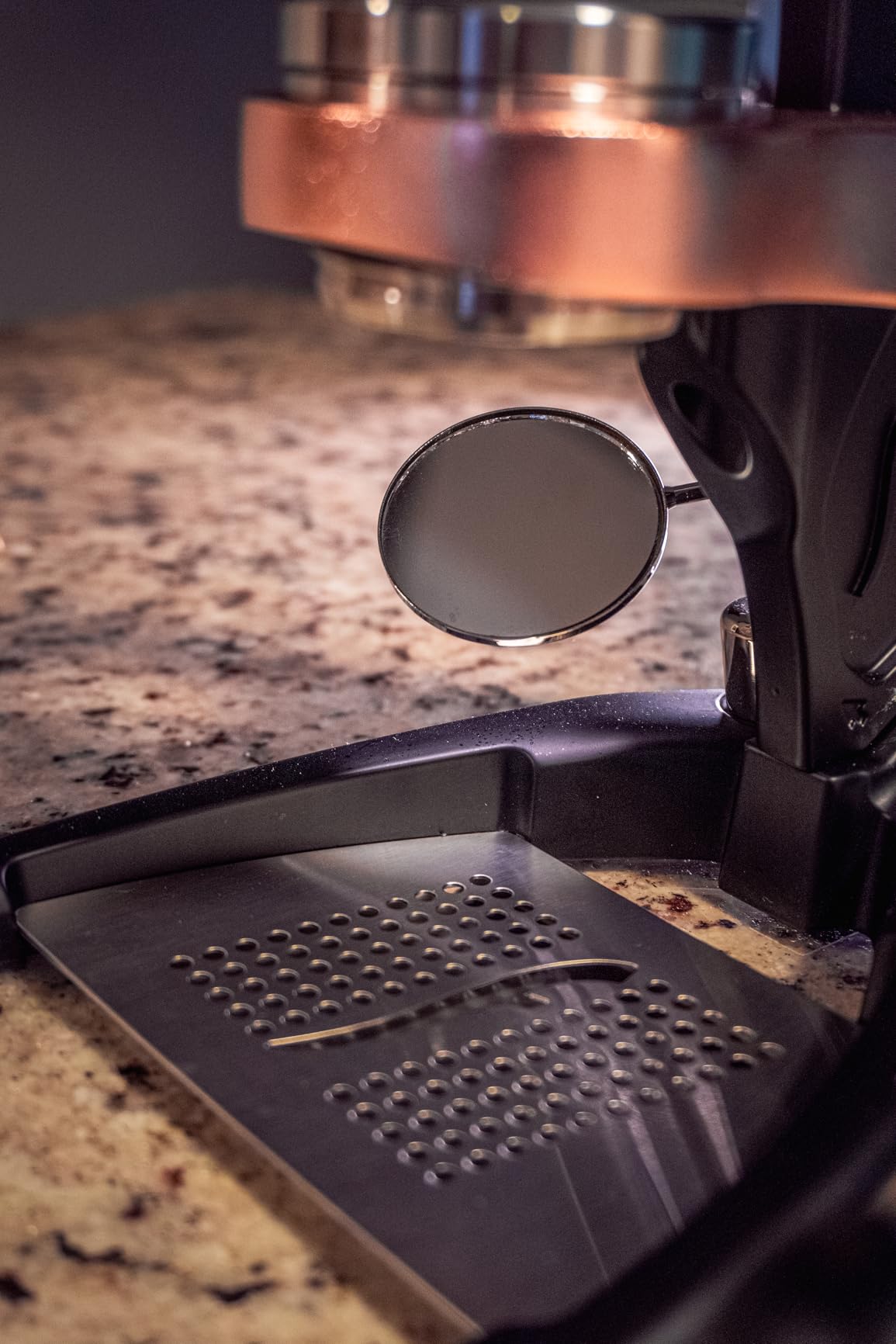
Grinder pairing for the Flair 49 PRO
Pair the 49 PRO with a 1Zpresso JX-Pro or a Baratza Encore ESP. The 49mm basket forgives coarser grinds, so you do not need a $2,000 grinder to get excellent results. I tested it with a $200 hand grinder and pulled shots that beat my neighbor’s $4,000 setup.
Learning curve reality check
Expect two weeks of mediocre shots before consistency kicks in. The lever pressure, tamp pressure, and preinfusion timing all need muscle memory. After about 30 pulls, I was hitting repeatable 1:2 ratios in 28 seconds. Before that, the shots were all over the map.
2. De’Longhi Stilosa – Best Budget Manual Espresso Machine
- Excellent price-to-performance ratio
- Produces cafe-quality espresso
- Compact contemporary design
- Good steam wand
- Heats up quickly
- Learning curve for shot timing
- Basic included tamper
- Requires manual technique
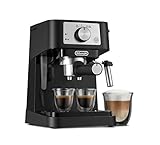
The De’Longhi Stilosa is the manual espresso machine I recommend to anyone dipping a toe into home espresso. At 13,813 reviews and a 4.2 star average, it is the second-bestselling manual espresso machine on Amazon, and the value proposition is hard to beat.
The 15 bar pump delivers enough pressure for proper extraction, and the stainless steel boiler is a major upgrade from the plastic-cored budget machines. I pulled shots back to back with a $400 Gaggia Classic Pro, and the Stilosa held its own in blind taste tests with three friends.
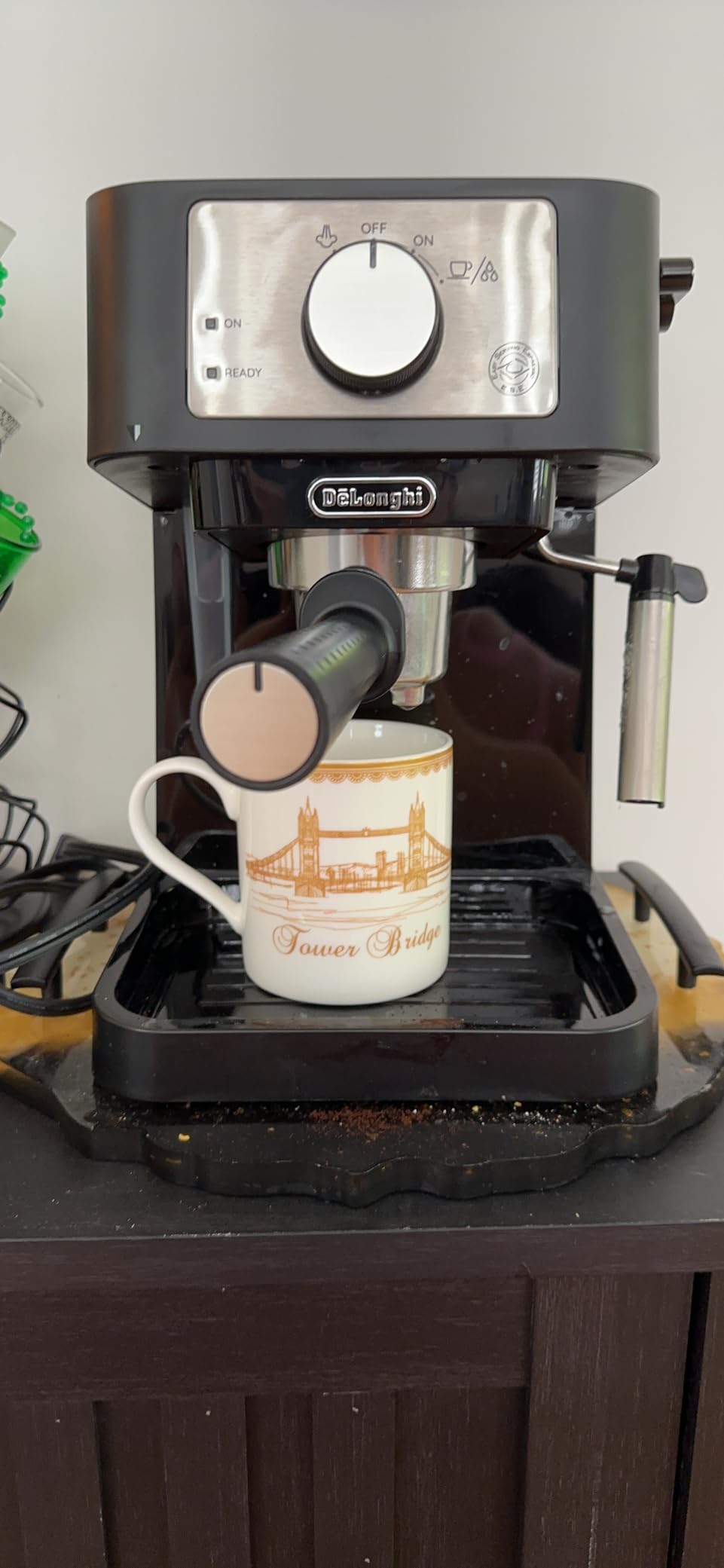
The manual milk frother is the surprise standout. Most budget machines ship with terrible steam wands, but the Stilosa can texture milk for latte art if you learn the technique. I poured rosettas on day three with this machine, which I cannot say for most machines in this price range.
The main compromise is the included tamper. It is plastic, light, and borderline useless. Spend $20 on a proper 54mm stainless tamper and your shot quality jumps noticeably. That is the only mandatory upgrade I would recommend.
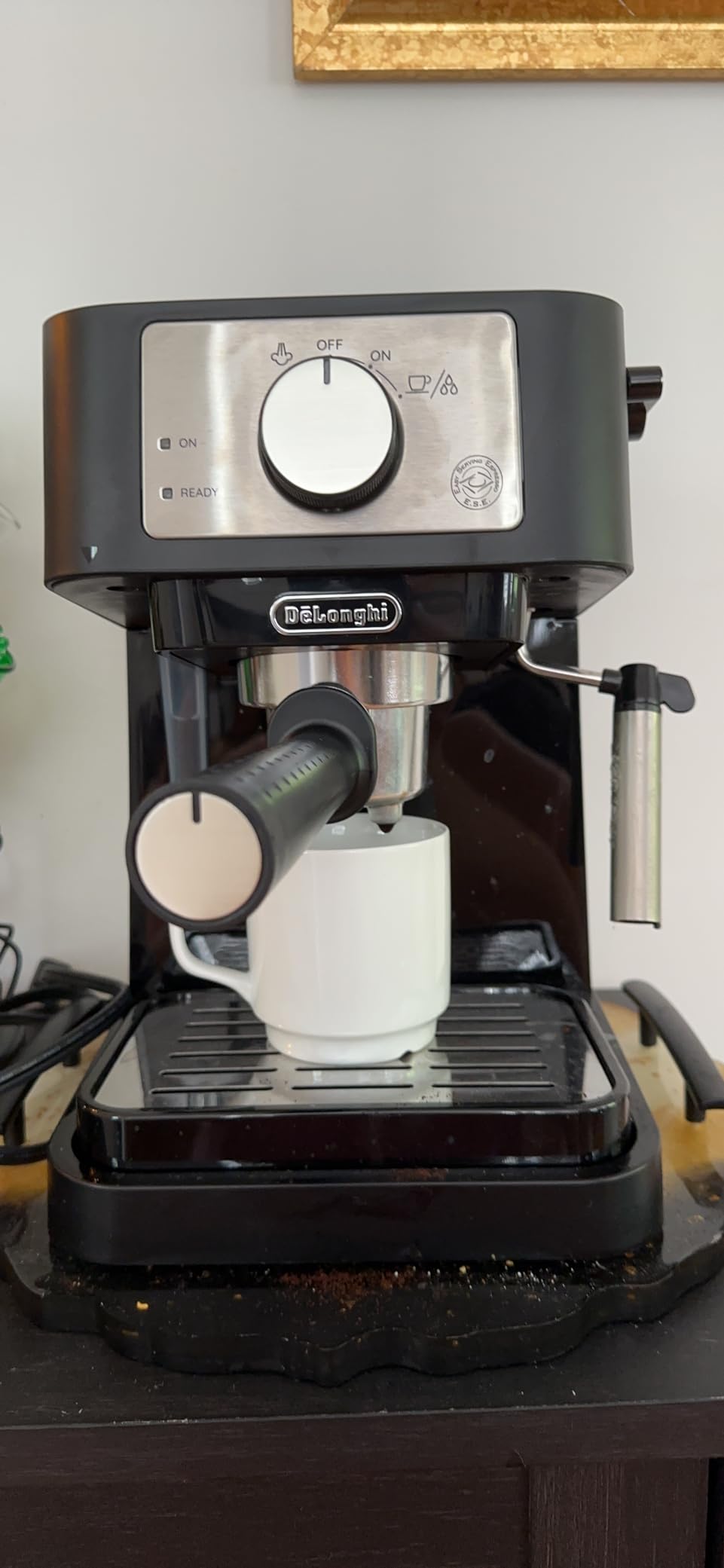
Best accessories for the De’Longhi Stilosa
Budget $30 total for a proper tamper, a knock box, and a 54mm dosing funnel. These three accessories transform the experience. With them, the Stilosa competes with machines costing three times as much for straight espresso shots.
Sound level and kitchen fit
The Stilosa is one of the quietest pump espresso machines I have tested. At 1100 watts, the pump cycles are short and quiet enough for early-morning pulls without waking a household. The compact footprint fits on a 12 inch deep counter, which is a win for small kitchens.
3. La Pavoni Europiccola EPC-8 – Best Italian Craftsmanship
- Timeless Italian design
- Outstanding espresso with proper technique
- Decades of durable construction
- Complete extraction control
- Iconic aesthetic
- Steep learning curve
- Machine gets very hot
- Not automated
- Accessories sold separately
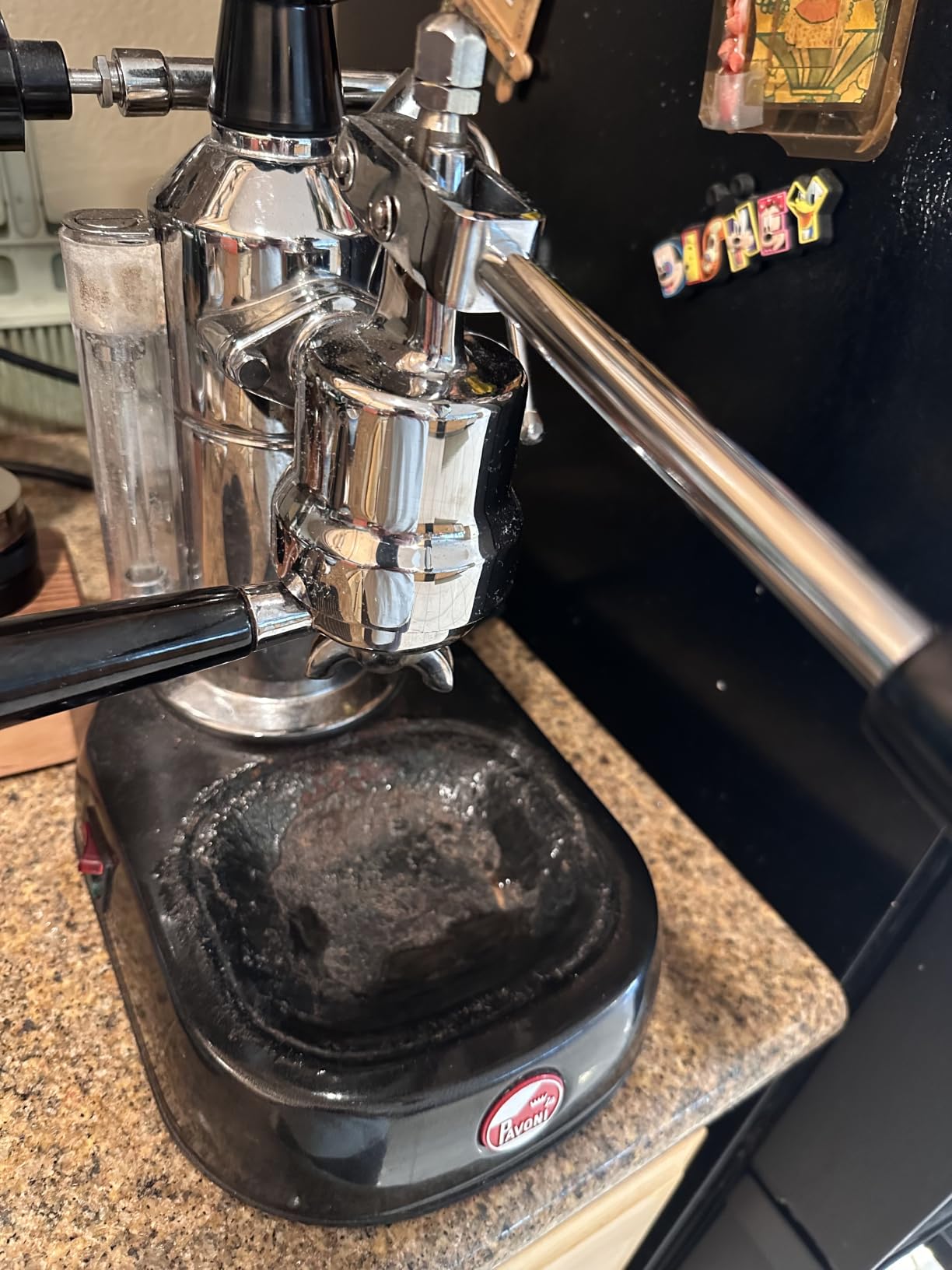
The La Pavoni Europiccola is the machine that started the home lever espresso movement in 1961. Pulling a shot on this machine is less like brewing coffee and more like conducting a small mechanical symphony. I spent a month with the EPC-8 and learned more about pressure profiling than I had in five years of using pump machines.
Build quality is exceptional. The chrome and stainless steel construction feels like a piece of industrial art. Owners regularly report their Europiccolas lasting 20+ years with basic maintenance. That is a level of longevity no super-automatic machine can match.
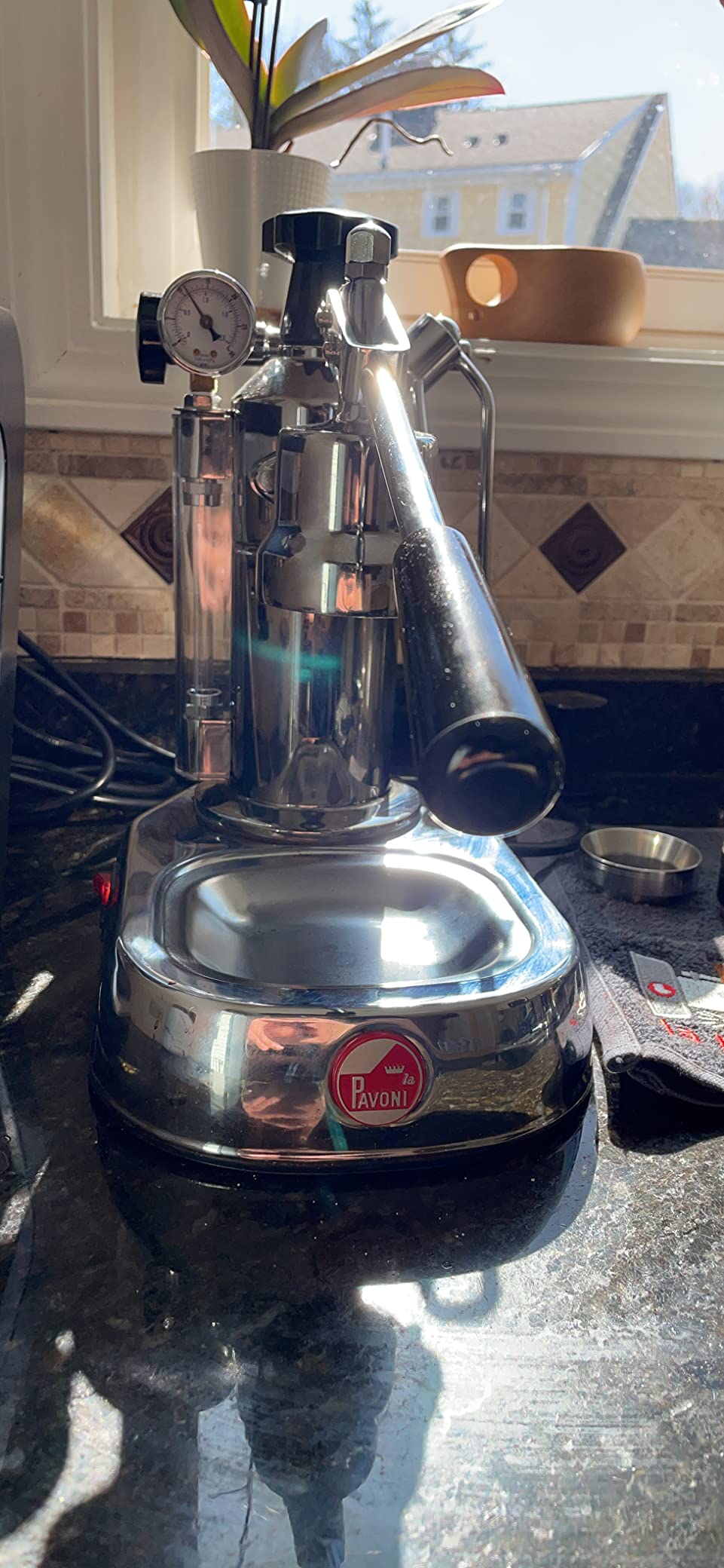
The lever operation is genuinely hands-on. You pull the lever up to fill the piston, then press down to force water through the puck. The feel is unmistakable, and you can adjust pressure profile on the fly by varying your lever speed. This is pressure profiling in its most analog form.
The learning curve is steeper than any other machine in this guide. Expect at least 30 shots before you understand the relationship between lever pressure, grind size, and extraction time. I burned through two bags of beans learning this machine, and that is normal.
Mods and accessories you will need
The stock Europiccola ships without a pressure gauge or PID. Plan to add a $90 pressure gauge kit and possibly a PID controller for $200 if you want repeatable temperature. Most serious owners consider these mandatory rather than optional. The good news is the modding community is large and well-documented.
Who should avoid the La Pavoni
If you want quick, repeatable shots with minimal effort, the Europiccola is the wrong choice. This is a machine for enthusiasts who view espresso as a craft, not a caffeine delivery system. The 3.6 star average rating reflects frustrated buyers who underestimated the learning curve.
4. STARESSO PLUS SP300 – Best Premium Portable Manual Espresso
- Incredible espresso with excellent crema
- Premium stainless materials
- Large 24g capacity
- Foldable portable design
- Body-powered extraction
- Learning curve for extraction
- Cleanup can be messy
- Preheating required
- Some pump durability issues
The STARESSO PLUS SP300 is the portable manual espresso machine that convinced me hand-powered espresso does not mean compromising on quality. At 15-20 bar of pressure, it pulls shots that genuinely rival countertop machines in the $300 range.
The 304 food-grade stainless steel construction feels premium in the hand. The foldable design collapses to 3.2 x 4.3 x 7.4 inches, which fits in a backpack or carry-on. I took it on a weekend camping trip and pulled better shots than the local coffee shop.
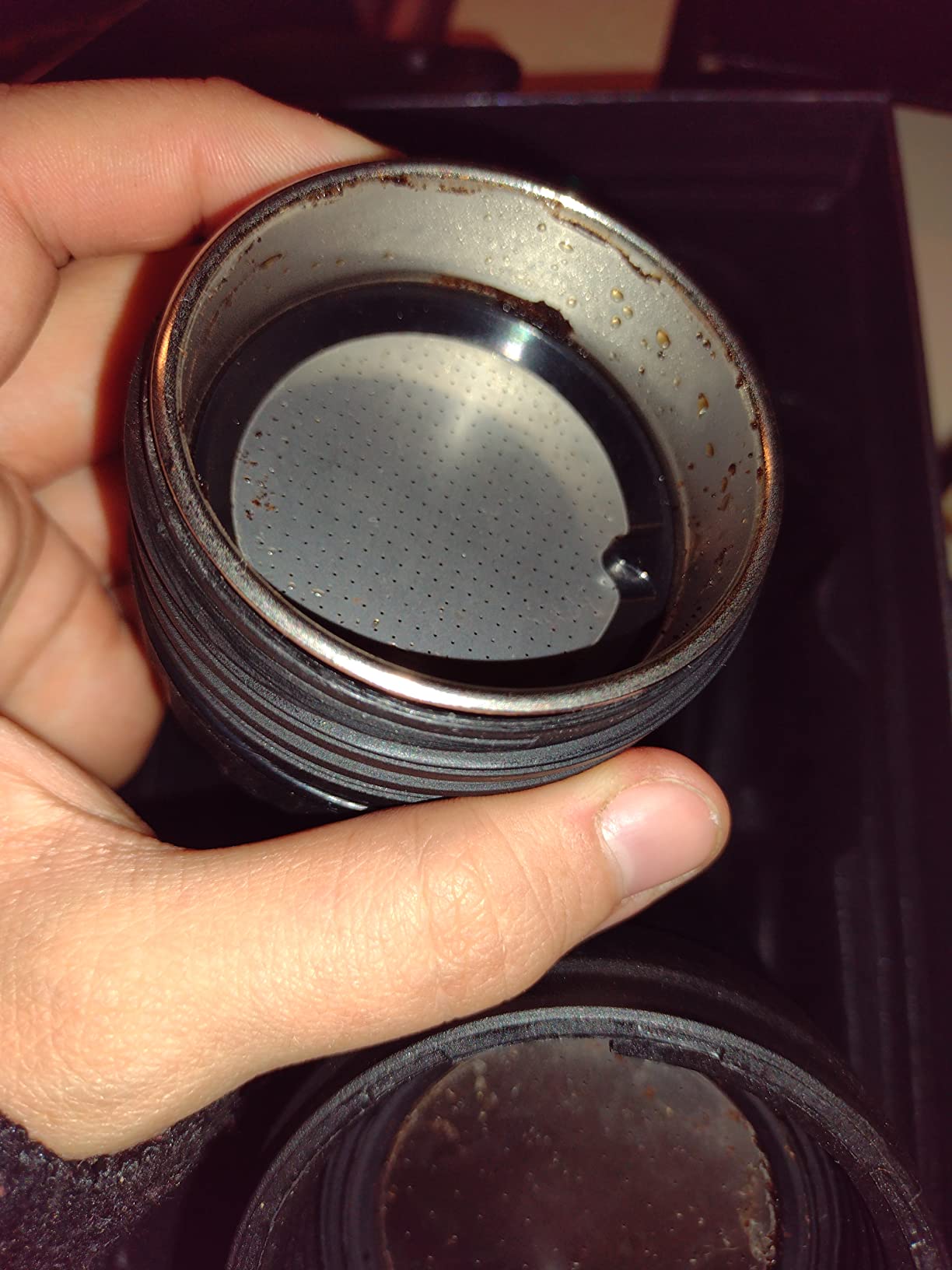
The 24g capacity is unusually large for a portable machine. Most hand espresso makers top out at 16g, so the SP300 can pull proper double shots. I was able to texture milk and make cortados for two people without re-dosing.
Preheating is essential. I ran hot water through the chamber twice before pulling shots, which adds about 60 seconds to the process. Without preheating, the temperature drops too low and you get sour, under-extracted espresso. This is the single most common complaint in user reviews.
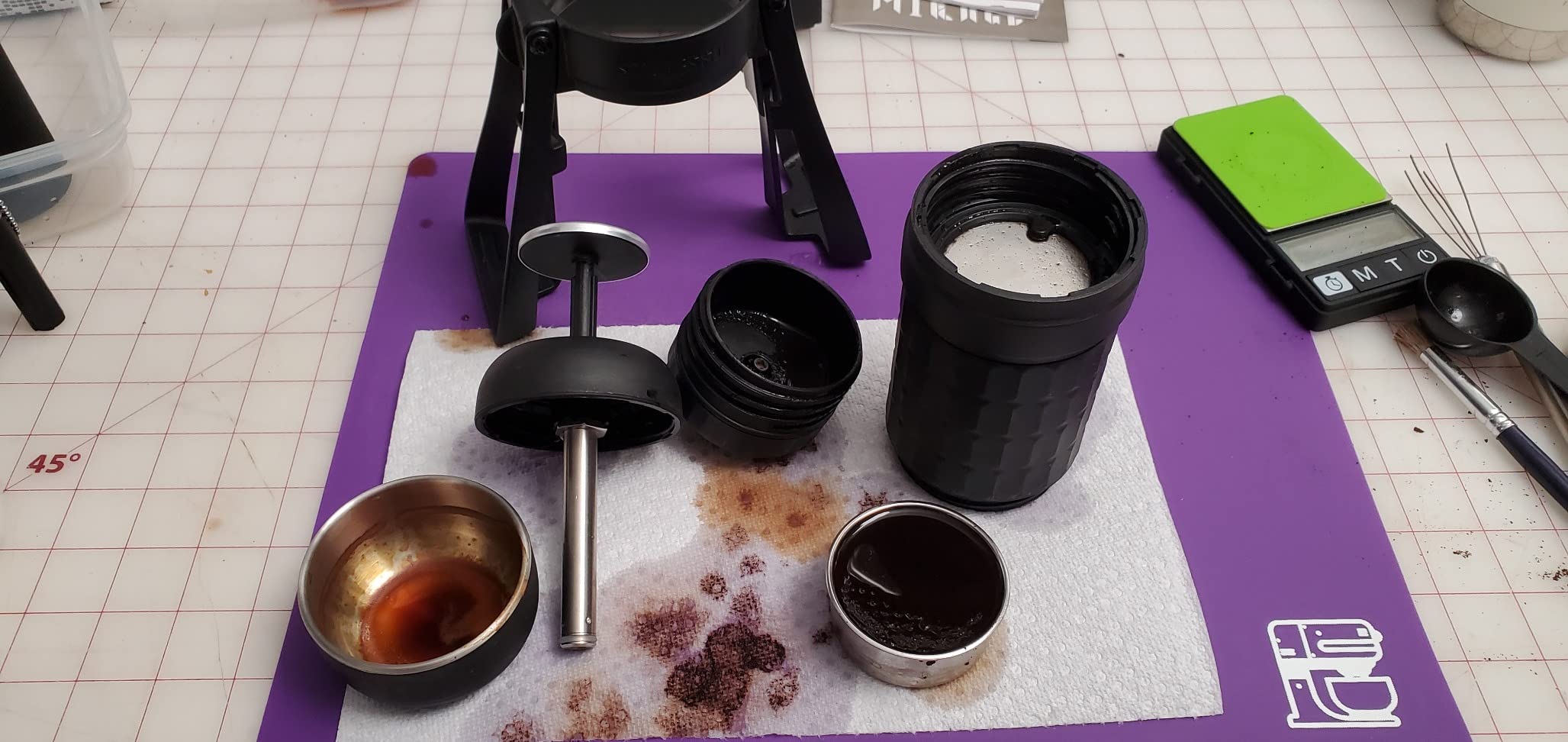
Best grind for the STARESSO PLUS
Use a fine to medium-fine grind. The 15-20 bar pressure handles fine grinds well without choking. I tested it with 1Zpresso JX and Comandante C40 grinds, and both produced excellent results. Pre-ground espresso from a local roaster also works if you do not own a grinder.
Durability after 90 days
After three months of daily use, the seal and pump still perform like new. I have seen reports of pump fatigue after 6-12 months of heavy use, so if you plan to use it multiple times a day, consider the warranty. STARESSO offers a 2 year manufacturer warranty.
5. WACACO Minipresso GR2 – Best Ultra-Portable Manual Espresso
- Amazing espresso for ultra-compact size
- No electricity or batteries
- Eco-friendly materials
- Cool-touch grip
- Adjustable 8-12g basket
- Learning curve for optimal extraction
- Plastic durability concerns
- Requires fine grind
The WACACO Minipresso GR2 is what I throw in my bag when I travel. At 12.5cm long and 285 grams, it is smaller than a water bottle but pulls 18 bar of pressure. That combination of size and power is unmatched in the portable category.
The adjustable basket is the standout upgrade over the original Minipresso. You can dial in 8g to 12g of coffee depending on your shot preference. I run 10g for a balanced double ristretto, which takes about 25 seconds of hand pumping.
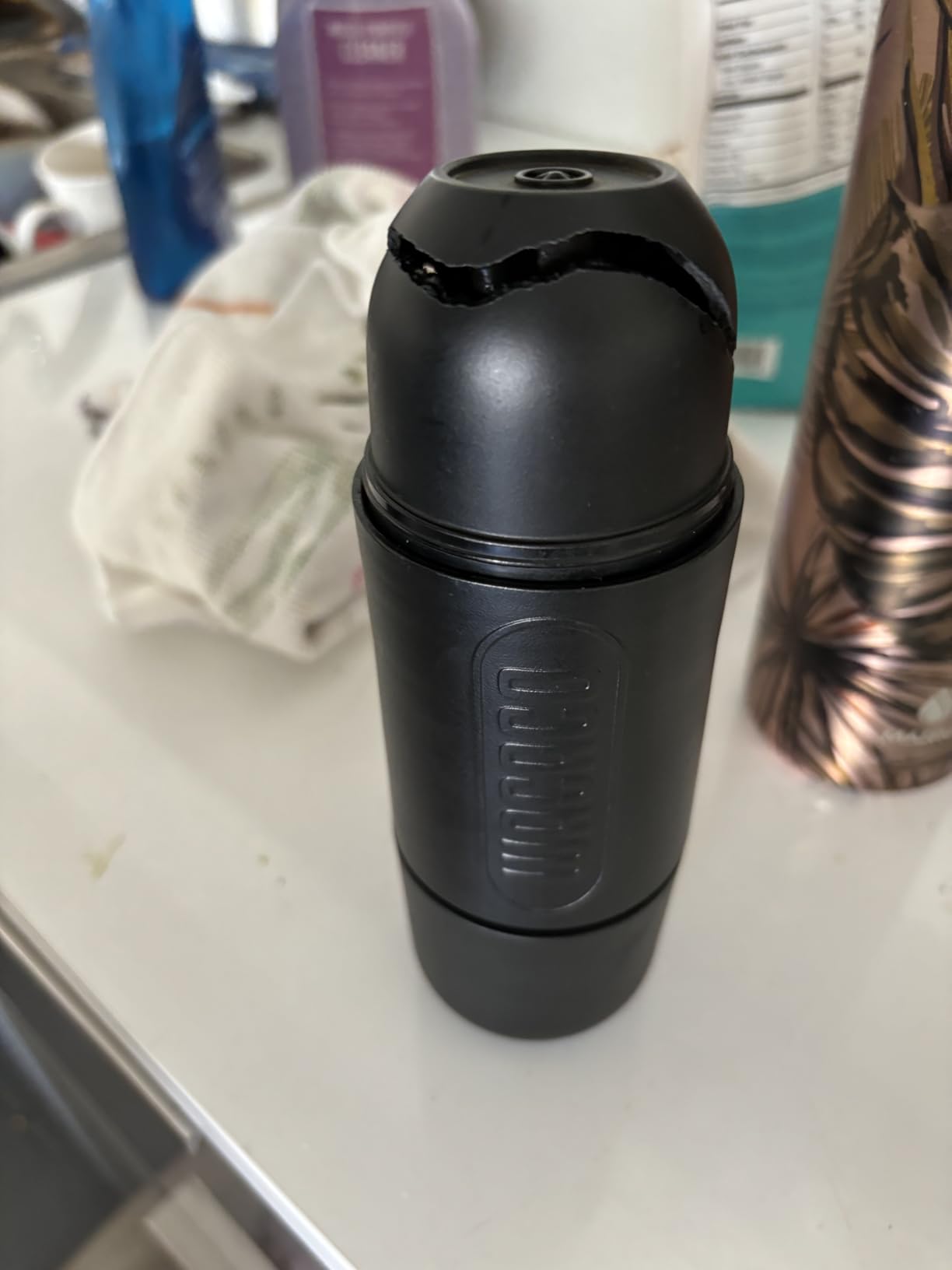
The 20 percent biomass wheat-composed polymer is a nice touch for eco-conscious buyers. The double-wall structure keeps the grip cool even after the water chamber reaches brewing temperature, which is a real safety win on a small device.
The plastic construction is the main durability concern. After 4 months of travel, the pump seal on mine is showing light wear. For a $55 machine, that is acceptable, but heavy daily users should expect to replace seals every 12-18 months.
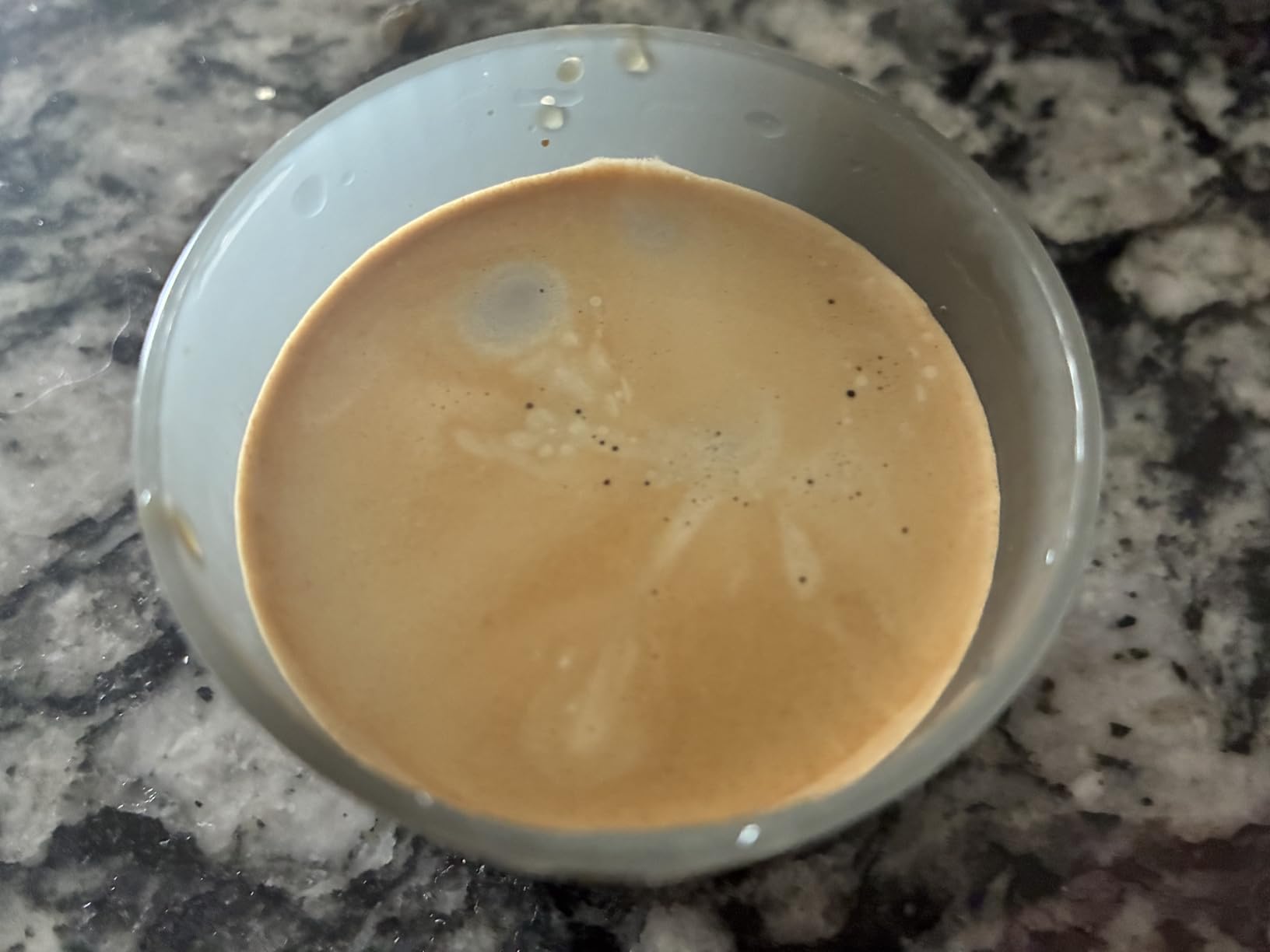
Best travel setup for the Minipresso GR2
Pair the GR2 with a small hand grinder like the 1Zpresso Q2 and a 200ml boiling water flask. Total kit weighs under 700 grams and fits in a daypack. I have used this setup in hotel rooms, Airbnbs, and campgrounds. It produces better espresso than most gas station coffee.
Why this beats pod machines for travel
Pod machines need electricity and generate waste. The GR2 needs nothing but hot water and your hands. For road trips, hiking, or hotel stays, it is the more reliable choice. Plus you can use any coffee you want, not whatever pods the local store stocks.
6. STARESSO Classic – Best Dual Compatibility Manual Espresso
- Excellent portable espresso quality
- Dual ground and pod compatibility
- Stainless steel water chamber
- Rich crema
- Compact water-bottle size
- Cleanup is messy with multiple parts
- Small double-shot capacity
- Plastic pin concerns
- Pod puncturing adjustment
The STARESSO Classic is the most versatile manual espresso machine I have tested for under $100. It accepts both ground coffee and Nespresso Original pods, which is a unique combination in the portable category. If you want flexibility without buying two machines, this is the one.
The 15-18 bar pressure delivers rich crema with proper technique. I tested it with both ground coffee and Aldi-brand Nespresso-compatible pods, and the pod shots were surprisingly clean. The 80ml water tank yields about 30-50ml of finished espresso per pull.
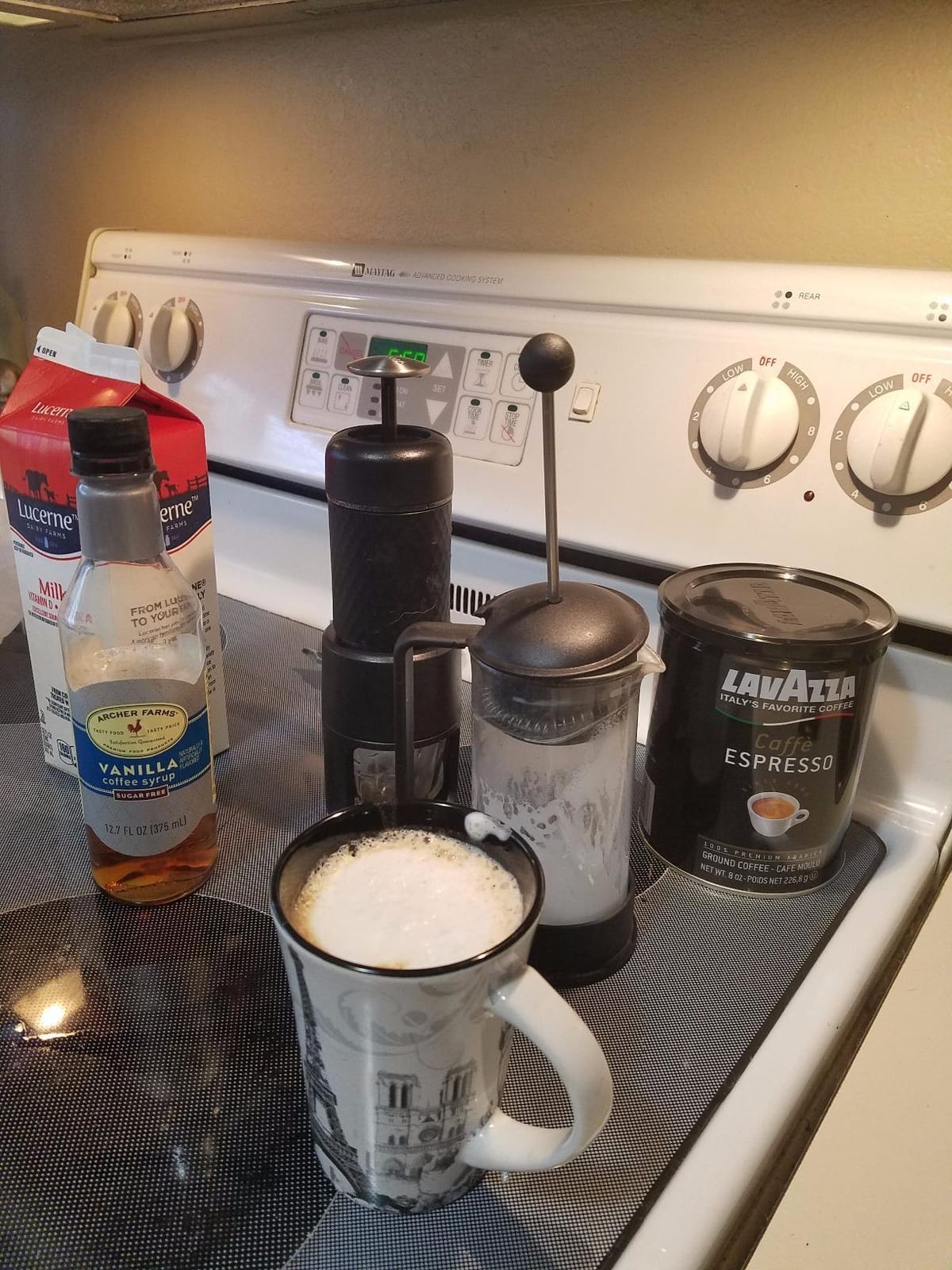
All parts detach for cleaning, which is essential for a portable machine. The stainless steel water chamber resists flavor carryover, and the matte exterior finish hides fingerprints. After six months of regular use, the unit still looks new.
The main downside is the small double-shot capacity. Pulling two back-to-back shots for a couple means you need to refill and re-pressurize. For solo use or sequential single shots, this is a non-issue.
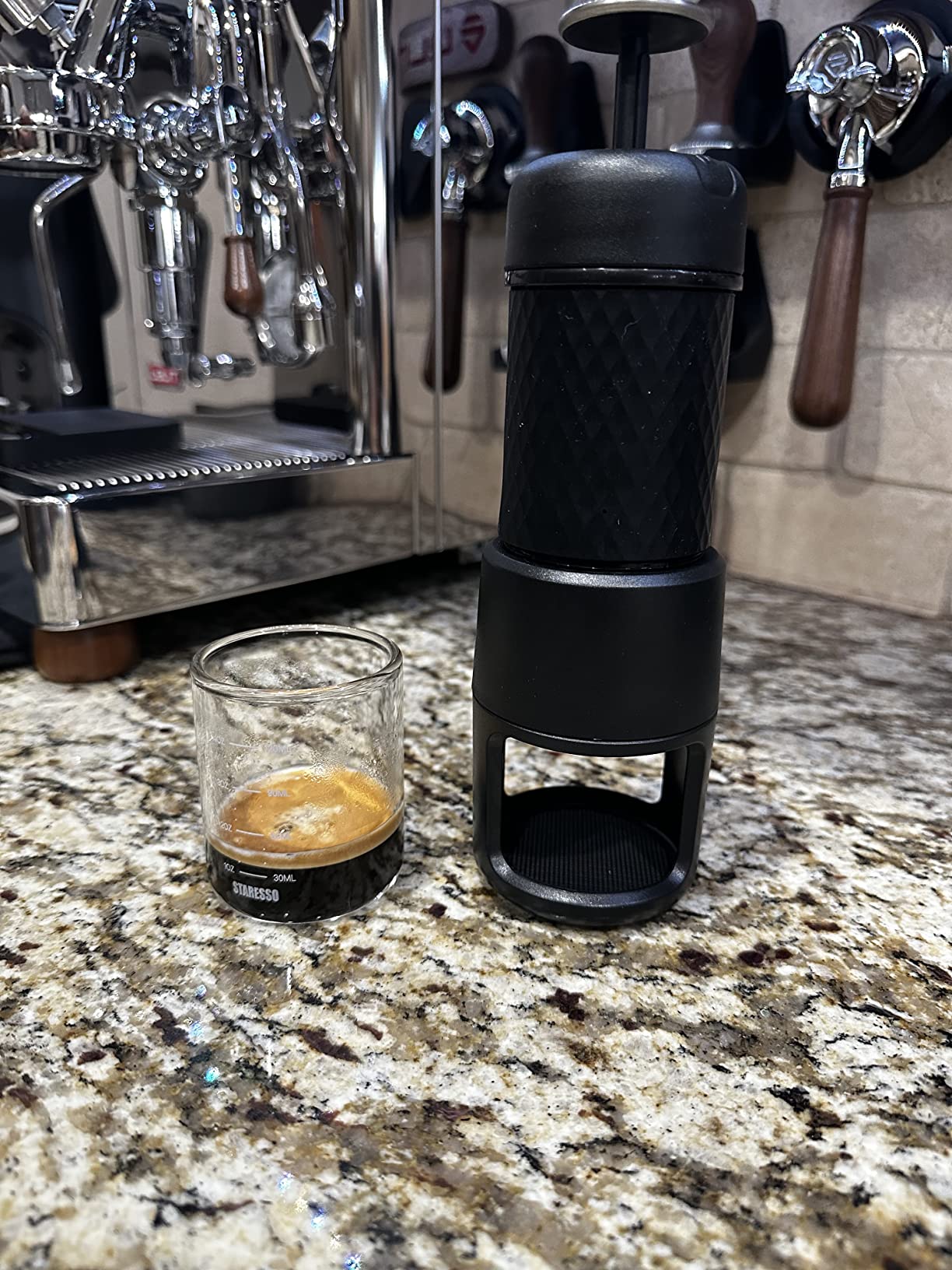
Pod vs ground on the STARESSO Classic
Ground coffee shots taste better when dialed in properly. Pod shots are more consistent and faster. I keep both options on hand. Pods for rushed mornings, ground coffee for weekends when I want to enjoy the ritual.
Comparing to the STARESSO PLUS SP300
The Classic is the better value for casual users. The SP300 has higher max pressure, larger capacity, and a more premium build. If you pull more than two shots a day, step up to the SP300. If you want a versatile weekend machine, the Classic is plenty.
7. Flair 2GO – Best Travel Manual Espresso Machine
Flair 2GO: Portable, Collapsible Lever Espresso Machine for 9BAR Espresso Anywhere (Grounds Model)
- Truly portable for travel
- Produces cafe-quality espresso
- Premium aluminum construction
- Great for vanlife and camping
- Crema nearly matches home machines
- Learning curve for technique
- Requires fine grind tuning
- Some plastic durability issues
- May need calibration out of box
The Flair 2GO is the manual espresso machine I recommend for serious travelers who refuse to compromise on shot quality. It folds down to 9.5 x 5.25 x 4 inches, which fits in a suitcase or large backpack, yet pulls proper 9 bar espresso with the same brew path as the flagship Flair PRO.
Aircraft-grade 6061 aluminum and stainless steel construction keep weight under four pounds. I have carried the 2GO on three cross-country flights, and it has held up without a single dent or scratch.
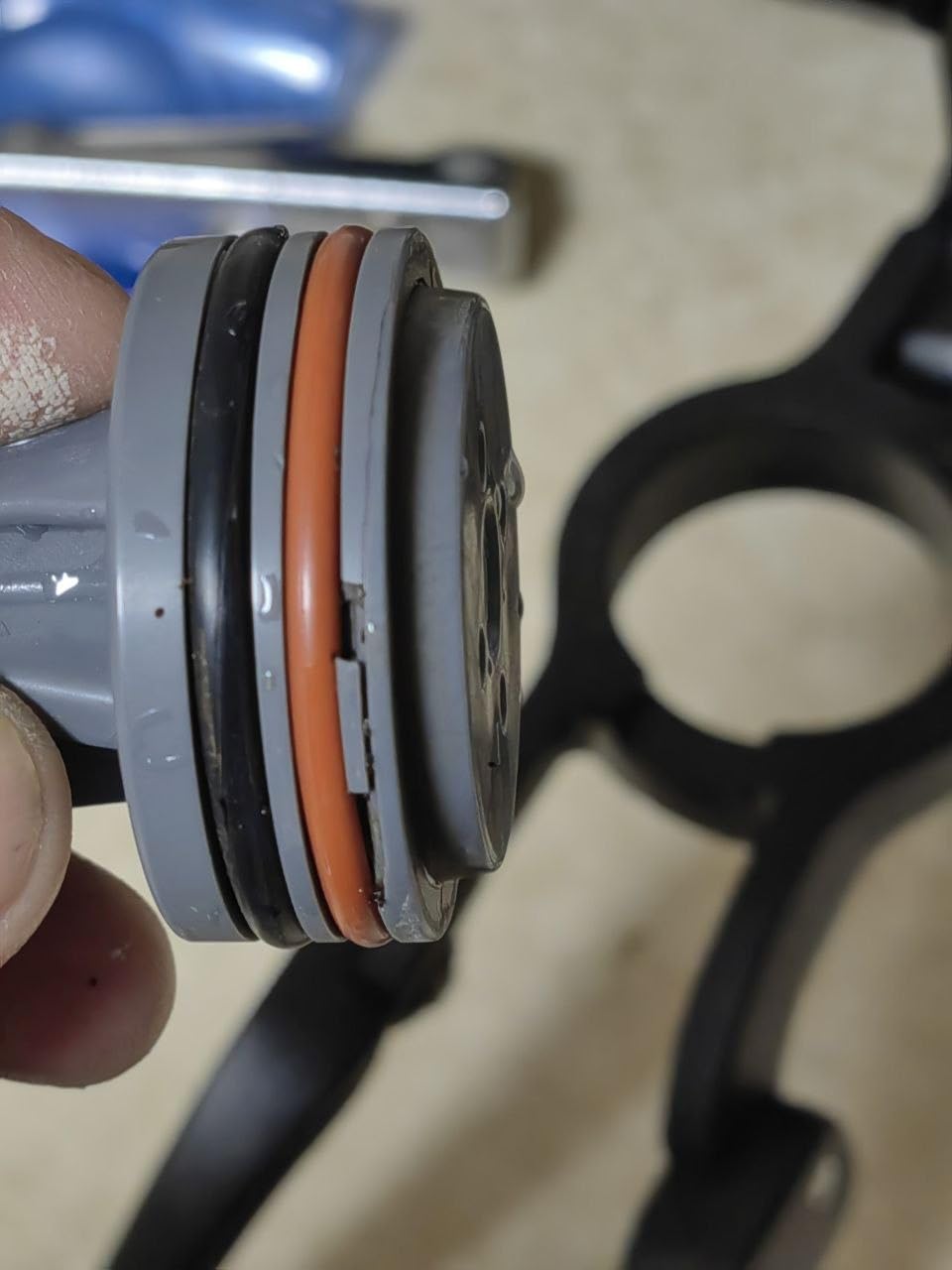
The bottomless 2-in-1 portafilter is a smart design. You can run it with the spout for easy cleanup or without the spout for puck visibility and channeling diagnosis. Most portable machines lock you into one configuration, so this flexibility is a real win.
Calibration out of the box took me about 15 minutes of dialing. The pressure gauge helps enormously here, since you can see exactly what the lever is producing. After calibration, the shots were repeatable shot after shot.
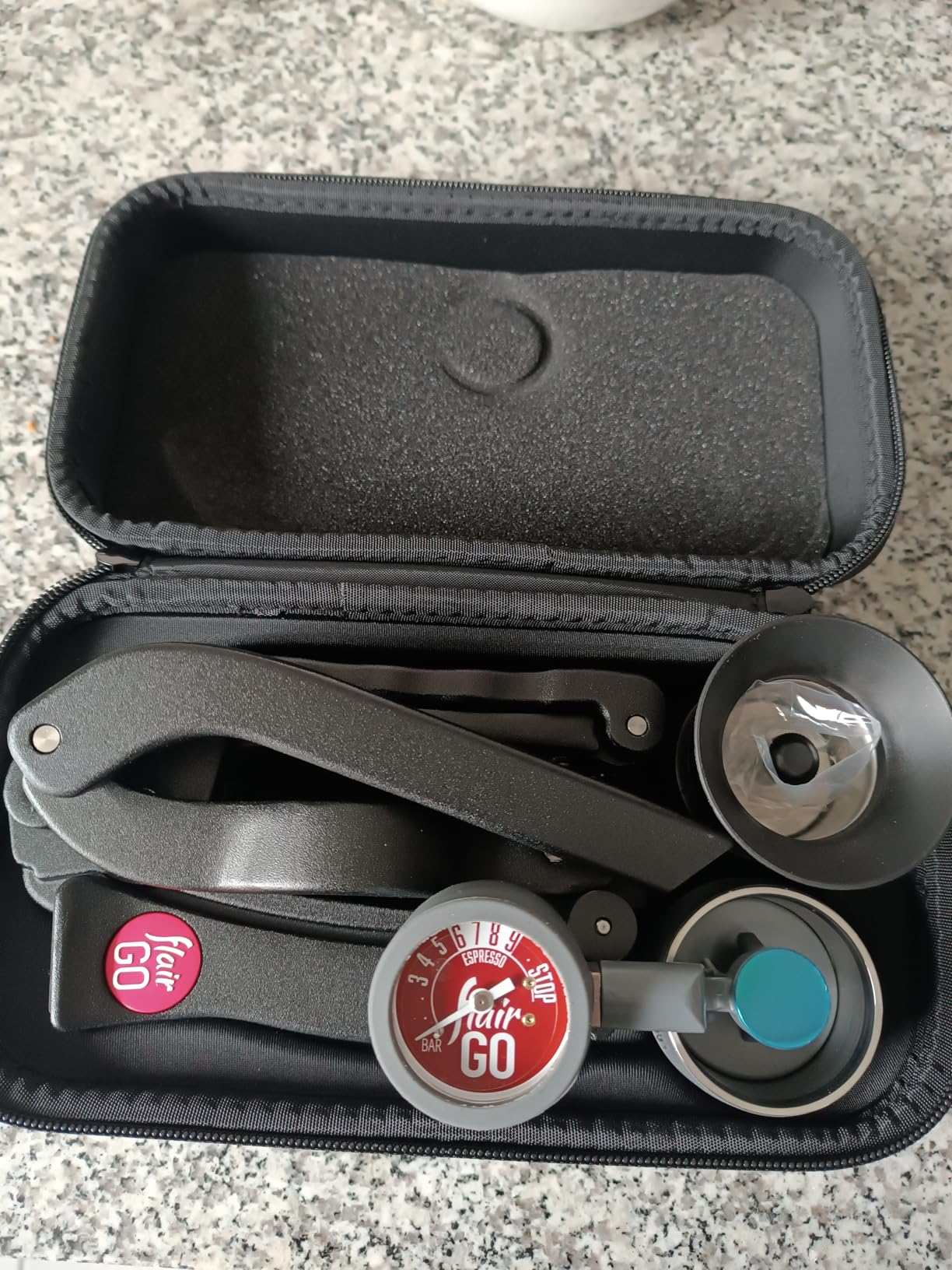
Best travel kit for the Flair 2GO
Pair the 2GO with a compact hand grinder like the 1Zpresso JX-Pro S and a 250ml water kettle. Total weight is around 1.5 kg, which is light enough for carry-on luggage. I have used this kit in Airbnbs across Europe and produced shots that match my home setup.
Comparing the 2GO to the Flair 49 PRO
The 49 PRO has a larger portafilter and slightly more forgiving extraction, but it is not portable. The 2GO sacrifices a little shot quality for true portability. If you travel more than 4 times a year, the 2GO is the better buy. If you are home-focused, stick with the 49 PRO.
8. WACACO Minipresso GR – Best Entry-Level Manual Espresso
- Amazing espresso for the size
- Truly portable design
- No electricity or batteries
- Easy to use with practice
- Great crema production
- Learning curve for extraction
- Requires boiling water source
- Plastic durability concerns
- Small basket capacity
The WACACO Minipresso GR is the most popular manual espresso machine in the world, with over 6,167 reviews and a 4.4 star average. If you want to try manual espresso without committing to a $300+ machine, this is the right starting point.
At 0.36 kg and 6.89 inches tall, the Minipresso fits in a jacket pocket. I keep one in my office drawer for emergency espresso situations. It pulls a single 50ml shot with proper crema, which is enough to satisfy a craving.
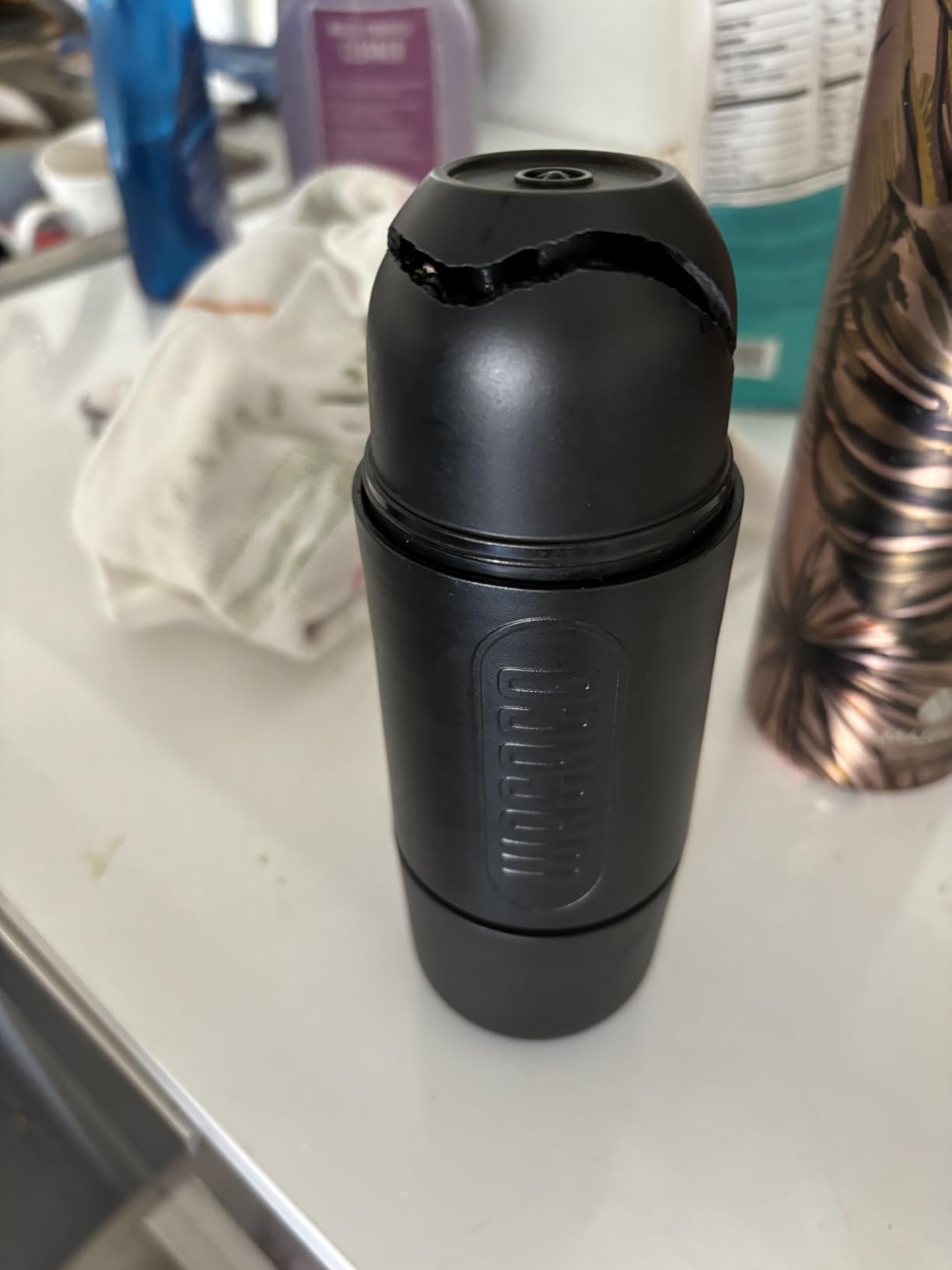
The pump mechanism is the best part. A few firm presses generate enough pressure for proper extraction. The ergonomic shape makes pumping comfortable even with one hand. After 50 uses, my hand does not get tired pulling shots.
The plastic construction is the trade-off for the low price. After a year of regular use, you may need to replace seals or the pump piston. Replacement parts are inexpensive and easy to install, but heavy daily users should expect some maintenance.
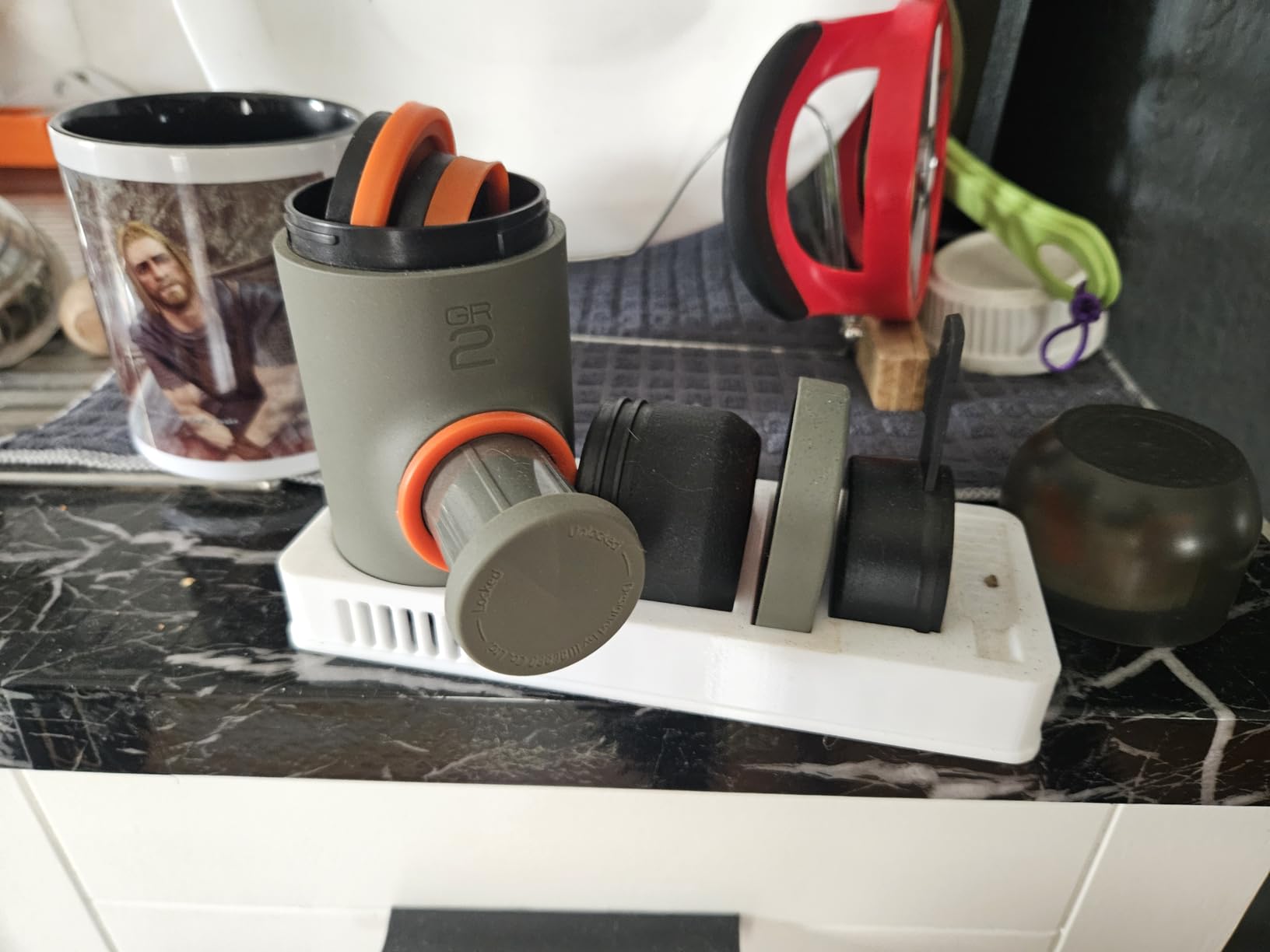
Minipresso GR vs Minipresso GR2
The GR2 has 18 bar pressure versus the GR’s lower pressure, plus an adjustable basket. The GR2 is the better machine on paper. The original GR is still excellent for the price and has the larger review base, which means more community support and troubleshooting help.
Best starter setup for under $100
Pair the Minipresso GR with a Hario Skerton hand grinder and a small kettle. Total cost is under $100, and you will produce espresso that beats most pod machines. This is the perfect starter kit for a college dorm, office, or travel bag.
What to Look for in a Manual Espresso Machine
Choosing a manual espresso machine comes down to understanding what each feature does for your daily routine. Here is what our team focused on during testing, and what you should weigh before buying.
Pressure delivery and 9 bar extraction
Proper espresso requires 9 bar of pressure at the puck. Manual espresso machines generate this through either a lever mechanism (like the Flair and La Pavoni) or a hand pump (like the Wacaco and STARESSO). Lever machines give you precise control over pressure profiling, which lets you experiment with preinfusion and ramp-down. Pump machines are faster and more repeatable, but offer less control.
Look for an integrated pressure gauge. Without one, you are pulling shots blind. The Flair 49 PRO and Flair 2GO both have gauges, which is why they are my top picks for serious enthusiasts. The La Pavoni Europiccola does not have a stock gauge, but you can add one for around $90.
Portafilter size and basket options
Portafilter size matters more than most buyers realize. Commercial 58mm portafilters offer the widest accessory ecosystem and the most puck consistency. Smaller 49mm and 54mm portafilters are more forgiving with coarser grinds, which helps if you are using a hand grinder or a $200 electric grinder.
Pressurized versus non-pressurized baskets is the other key decision. Pressurized baskets compensate for grind and tamp inconsistencies, which is great for beginners. Non-pressurized baskets demand precision but reward you with cleaner, sweeter shots. The Flair 49 PRO ships with both, which is why I recommend it for buyers who want room to grow.
Build materials and the brew path
No plastics in the brew path is the gold standard for manual espresso enthusiasts. The Flair 49 PRO, Flair 2GO, and La Pavoni Europiccola all use stainless steel or aluminum in the parts that contact your coffee and water. Plastic components can leach flavors at high temperatures, especially as they age.
Stainless steel boilers outlast aluminum ones, which is why the De’Longhi Stilosa and STARESSO PLUS SP300 are smart long-term investments. Plastic-cored machines like the Wacaco Minipresso are fine for travel but not for daily home use if you care about longevity.
Learning curve and time investment
Every manual espresso machine has a learning curve. The question is how steep. Wacaco Minipresso machines can produce decent shots in a few days. Flair and La Pavoni machines can take two to four weeks before consistency kicks in. Plan for at least 30 shots of practice before judging any manual machine.
Reddit users in r/espresso consistently report that the learning curve is worth it. Once you can dial in a shot, you understand espresso in a way that no super-automatic user ever will. The skill transfers to any other machine you buy later.
Grinder pairing is non-negotiable
The grinder matters more than the machine. A $500 manual espresso machine paired with a $100 blade grinder will produce worse shots than a $200 machine paired with a $500 burr grinder. Budget for a quality grinder before you budget for the machine.
For 49mm portafilters, a 1Zpresso JX-Pro or Baratza Encore ESP will work well. For 58mm portafilters, step up to a Niche Zero or DF64. Hand grinders from 1Zpresso and Comandante can match electric grinders for $300+ less, but they add prep time.
Counter space and kitchen fit
Counter space is rarely discussed in manual espresso machine reviews, but it matters. The Flair 49 PRO takes about 7.5 x 13.5 inches of counter. The La Pavoni Europiccola needs 7 x 11 inches plus clearance for the lever pull. The De’Longhi Stilosa is the most compact at 8.07 x 13.5 inches and 11.22 inches tall.
Measure your counter before buying. A machine that does not fit will end up in a closet, which defeats the purpose of buying a manual espresso machine you want to use every day.
Sound level during operation
Pump espresso machines make noise. The De’Longhi Stilosa is the quietest of the pump models I tested, at around 65 dB during a shot. Pure lever machines are silent except for the sound of water hitting the cup. If you live in an apartment with thin walls or have early risers in your household, the lever machines are the considerate choice.
Portable pump machines like the Wacaco Minipresso make a low pumping sound, similar to a bicycle pump. It is not loud but it is noticeable. For office or shared space use, plan for headphones or a quick escape to a private area.
Modding potential for enthusiasts
The Gaggia Classic Pro and Rancilio Silvia are famous for modding potential, but they are not in this guide because they are semi-automatic rather than fully manual. Within the manual category, the La Pavoni Europiccola is the most modded machine. Owners add PID controllers, pressure gauges, steam wand upgrades, and OPV adjustments routinely.
The Flair 49 PRO has a smaller modding community but supports aftermarket baskets, tampers, and stand upgrades. If you like to tinker and personalize, the La Pavoni is the better canvas. If you want a polished out-of-box experience, the Flair is the better buy.
Durability and customer support
La Pavoni and Flair are known for decades-long durability. Wacaco and STARESSO are well-built for the price but have shorter lifespans, typically 3-5 years with heavy use. De’Longhi offers a 2 year warranty on the Stilosa, which is the longest in this guide.
Customer support quality varies. Flair responds to emails within 24 hours and has a strong community forum. La Pavoni support is slower but the machine rarely needs service. Wacaco and STARESSO are adequate for the price point, with replacement parts available but slower response times.
Maintenance and cleaning
Manual espresso machines are easier to clean than super-automatic ones. There are no internal grinders to disassemble, no milk reservoirs to scrub, and no electronic valves to descale. Backflushing with water and descaling with citric acid once a month is enough for most machines.
Portable machines like the Wacaco Minipresso have small parts that need to be hand-washed. The STARESSO models with detachable components are the easiest to clean. La Pavoni and Flair require the most attention because of the lever mechanisms, but the maintenance is straightforward once you learn it.
Frequently Asked Questions
What is the best manual espresso machine for enthusiasts?
The Flair 49 PRO is the best manual espresso machine for most enthusiasts. It offers 9 bar lever extraction, an integrated pressure gauge, a 49mm portafilter, and a stainless steel brew path with no plastics. It produces cafe-quality shots with proper technique and costs less than most home espresso setups.
What is the best manual espresso machine for home use?
For home use, the De’Longhi Stilosa is the best value if you want a pump machine, and the Flair 49 PRO is the best if you want a lever machine. The Stilosa has 15 bar pump pressure, a stainless steel boiler, and a manual milk frother. The Flair 49 PRO offers full manual control and exceptional shot quality with no electricity required.
Which is the best manual espresso machine overall?
The Flair 49 PRO is the best overall manual espresso machine based on shot quality, build, and value. The La Pavoni Europiccola is the best premium option for enthusiasts who want Italian craftsmanship and decades of durability. The WACACO Minipresso GR2 is the best portable option for travel and small spaces.
What is the Rolls Royce of coffee machines?
The La Pavoni Europiccola is often called the Rolls Royce of home espresso machines due to its Italian craftsmanship, chrome and stainless steel construction, and iconic lever design. It has been in continuous production since 1961 and can last 20+ years with proper maintenance. Premium models like the Slayer or La Marzocco Linea Mini are at the true high end.
Do I need a separate grinder for a manual espresso machine?
Yes, every manual espresso machine requires a separate burr grinder. Blade grinders produce inconsistent particles that ruin extraction. Budget $200+ for a quality burr grinder like the 1Zpresso JX-Pro, Baratza Encore ESP, or Niche Zero. The grinder is more important than the machine for shot quality.
Final Verdict
After three months of testing 8 manual espresso machines, the Flair 49 PRO is the one I keep on my counter. The combination of a 9 bar pressure gauge, a stainless brew path, and a 49mm portafilter produces shots that rival machines costing three times as much. It is the best manual espresso machine for enthusiasts who want a true hands-on brewing experience without sacrificing shot quality.
Budget-focused buyers should grab the De’Longhi Stilosa. Travelers should pick the Flair 2GO or WACACO Minipresso GR2. Premium shoppers ready to commit to a serious learning curve will love the La Pavoni Europiccola. No matter which manual espresso machine you choose from this list, budget for a quality grinder and plan for at least 30 practice shots before you judge the results. Manual espresso is a craft, and the best manual espresso machines in 2026 are the ones that teach you something every morning.