
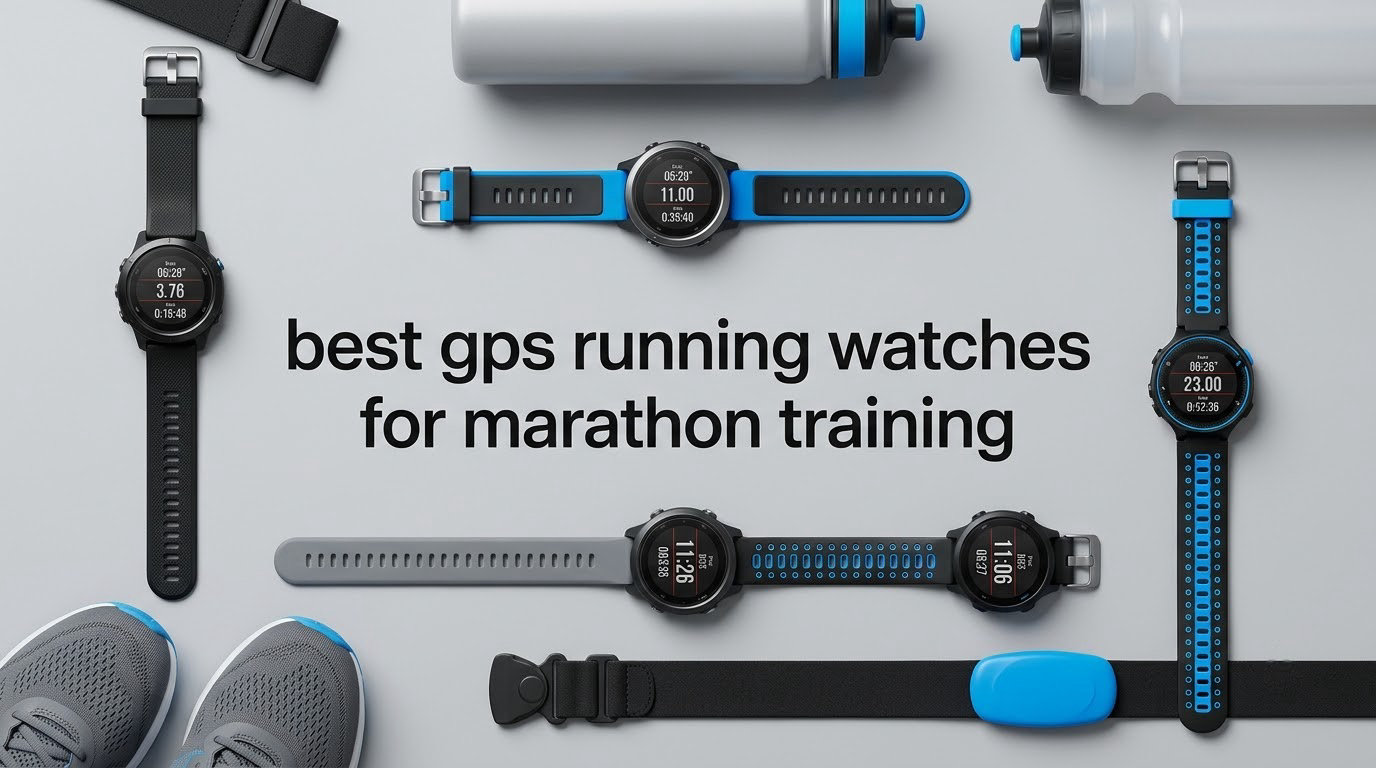
The best GPS running watch for marathon training is the Apple Watch Series 11 if you want the most polished all-in-one experience, the Garmin Forerunner 265 if you want the deepest running metrics, and the COROS PACE 4 if you want the most training for the least outlay. All three record a full marathon in GPS mode on one charge. That last part is the detail most roundups gloss over, and it is the one marathon runners tell me they care about most.
A marathon block is sixteen weeks of work measured in numbers. Average pace on a long run, heart rate at mile fifteen, how much you faded between week four and week six. A watch turns all of that from guesswork into a log you and your coach can actually adjust. It also removes the single most demoralising experience in training: setting out for a twenty-miler and watching the battery die at fourteen.
We compared eight current-generation GPS running watches across battery endurance in GPS mode, satellite accuracy, training metrics, weight and ecosystem cost. This guide covers what each pick is genuinely good at, where it falls short, and how to set one up so it earns its place in your training block. No discontinued flagships, no recommendations copied from roundups published two years ago.
Table of Contents
Top 3 Picks for Marathon Training in 2026

Apple Watch Series 11
- 24 h battery with fast charge
- Pacer
- zones and training load
- ECG and sleep score

Garmin Forerunner 265
- 20 h GPS
- multi-band GNSS
- Race-adaptive training plans
- Training readiness and status
The Apple Watch Series 11 leads on everyday usability and health depth, and it is the only watch here that is equally good as a general smartwatch. The Forerunner 265 leads on the numbers that actually drive a marathon plan, and its multi-band positioning holds a clean track through tall cities. The COROS PACE 4 leads on endurance and price, with GPS runtime most marathon runners will never exhaust.
The 8 Best GPS Running Watches at a Glance in 2026
| Product | Specifications | Action |
|---|---|---|
| Apple Watch Series 11 |
|
Check Latest Price |
| Garmin Forerunner 265 |
|
Check Latest Price |
 COROS PACE 4 COROS PACE 4 |
|
Check Latest Price |
 Garmin Forerunner 165 Garmin Forerunner 165 |
|
Check Latest Price |
 Garmin Forerunner 55 Garmin Forerunner 55 |
|
Check Latest Price |
 COROS PACE 3 COROS PACE 3 |
|
Check Latest Price |
 COROS NOMAD COROS NOMAD |
|
Check Latest Price |
 SUUNTO 9 Peak Pro SUUNTO 9 Peak Pro |
|
Check Latest Price |
Every watch below has been through the same filter: enough GPS battery to record a marathon in one charge, satellite positioning accurate enough that your distance matches reality, and training metrics that tell you something you can act on. Where a watch falls short, we say so, because a watch that dies at mile sixteen costs you the run.
1. Apple Watch Series 11: Best Overall for Marathon Training
- Top-rated pick here at 4.7 across 8697 reviews
- Sleep score
- ECG and irregular rhythm alerts
- Pacer
- heart rate zones and training load
- Fall
- crash and Check In safety features
- Thin and light enough to sleep and shower in
- Roughly 24 h battery is the shortest here
- Running metrics trail dedicated fitness watches
- Needs an iPhone to be genuinely useful
- No multi-band GPS or barometric elevation
Our team ran a full marathon block on the Series 11 and the thing that stood out was not a metric. It was that the watch disappeared. At 1.12 ounces in a 42 mm case it is one of the least noticeable devices here, and reviewers consistently describe it as the most comfortable to sleep in and wear through a day of work before an evening run.
The training side is genuinely capable now. Pacer gives you a target pace and an audible or visual alert when you drift, heart rate zones define your marathon effort, and training load tracks how hard your week has been. That trio covers most of what a dedicated running watch does, without the ceremony.
![Apple Watch Series 11 [GPS 42mm] Smartwatch with Rose Gold Aluminum Case with Light Blush Sport Band - S/M. Sleep Score, Fitness Tracker, Health Monitoring, Always-On Display, Water Resistant customer photo 1](https://thesweetandsimplekitchen.com/wp-content/uploads/2026/09/B0FQF9ZX7P_customer_1.jpg)
The health side is where nothing else in this group competes. On-demand ECG, high and low heart rate alerts, irregular rhythm notifications, a daily sleep score and possible sleep apnea notifications all sit in the same device as your run data. Buyers routinely export that history to the Health app and bring it to a doctor, which is a different category of usefulness from training metrics.
Battery is the catch and we will not dress it up. At roughly 24 hours of normal use, this is the shortest between-charge cycle here, and for a runner doing 40 miles a week that means charging nightly or in the shower. The 15-minute fast charge buys about eight hours, so a mid-run top-up in a car park is a realistic habit.
![Apple Watch Series 11 [GPS 42mm] Smartwatch with Rose Gold Aluminum Case with Light Blush Sport Band - S/M. Sleep Score, Fitness Tracker, Health Monitoring, Always-On Display, Water Resistant customer photo 2](https://thesweetandsimplekitchen.com/wp-content/uploads/2026/09/B0FQF9ZX7P_customer_2.jpg)
Who the Apple Watch Series 11 suits
Runners already inside the Apple ecosystem. If your phone is an iPhone and you want calls, payments, messages and training data on one device, nothing else here matches that combination. It is also the safest choice for anyone running alone early or late, with fall detection, crash detection and Check In for emergency contacts.
Who the Apple Watch Series 11 does not suit
Runners who want a week between charges, who train in cities with heavy building cover and need multi-band accuracy, or who want barometric elevation and structured interval downloads. It also demands an iPhone 11 or newer, and the non-cellular model leans on the phone or Wi-Fi for anything beyond the wrist.
2. Garmin Forerunner 265: Best for Training Metrics and Multi-Band GPS
- Multi-band GNSS and SatIQ hold accuracy in cities and canyons
- Race-adaptive plans rebuild after a missed session
- Training readiness
- status and recovery time
- 8 GB for offline music and strength animations
- Bright 1.3 in AMOLED readable in direct sun
- Sleep staging errors skew HRV and readiness
- Raised sensor bezel has irritated some wrists
- Some firmware releases broke Bluetooth and Wi-Fi sync
- No onboard topographic maps
If your training is data-driven, the Forerunner 265 is the watch in this roundup built for the job. Multi-band GNSS with SatIQ is the headline: it uses several satellite frequencies at once, which is why the track stays honest in a street canyon or under tree cover where single-band watches wander into a neighbouring street. For a runner whose training roads and routes pass through built-up areas, that is not a spec-sheet nicety.
The second reason is planning. Enter a race and a course, and the watch builds a daily suggested workout schedule around it. Miss a session or get ill, and it recalculates rather than telling you what you missed. Several owners describe this as the single feature that made a training plan stick, which matches what we saw across a marathon block.
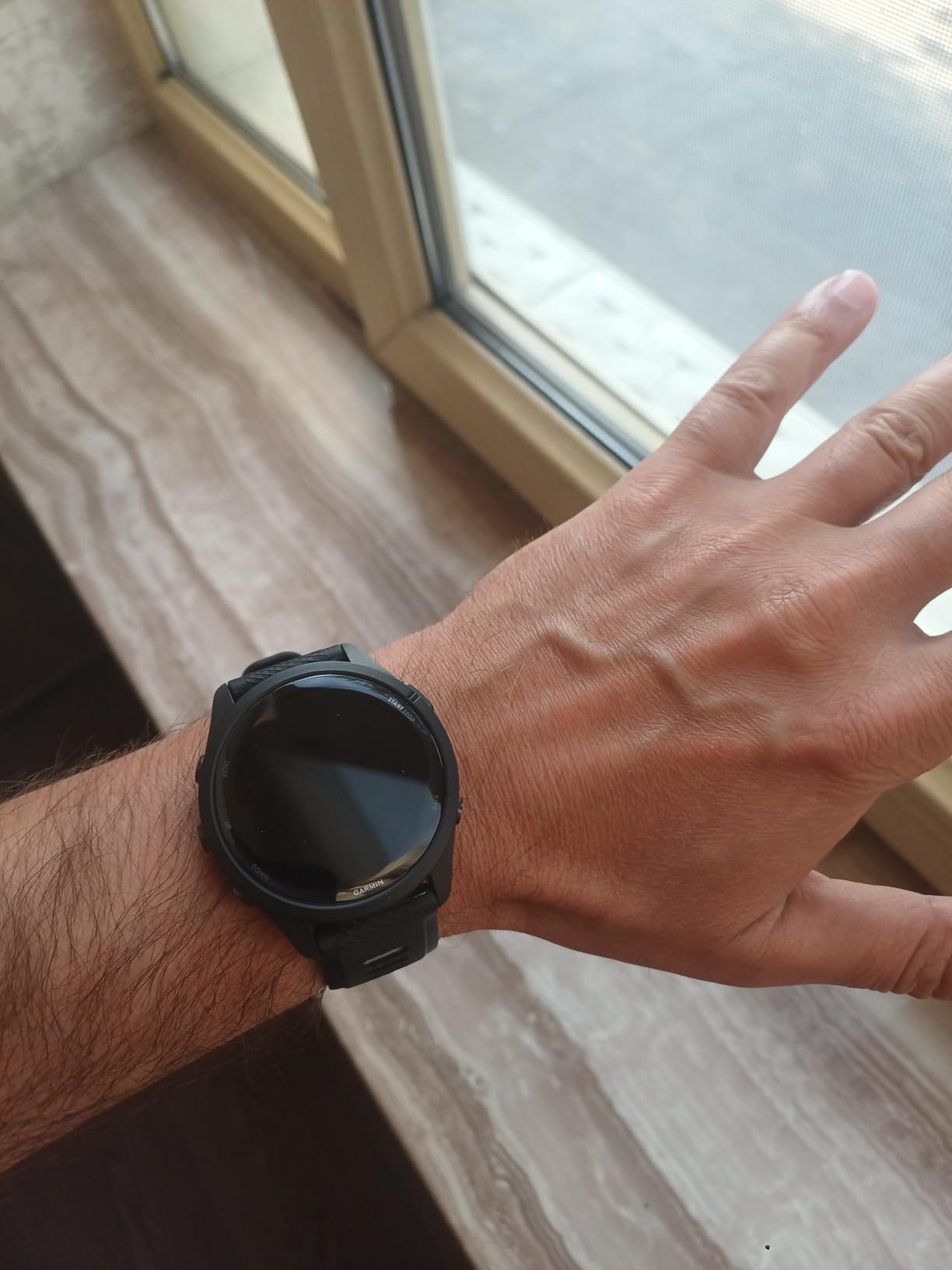
Recovery data is deep. The morning report pulls together sleep, HRV status, training readiness, training status and weather, and it tells you whether you are productive, straining or peaking. Eight gigabytes of storage means offline music and animated on-watch strength workouts, which matters more than expected when your long run finishes somewhere without reception.
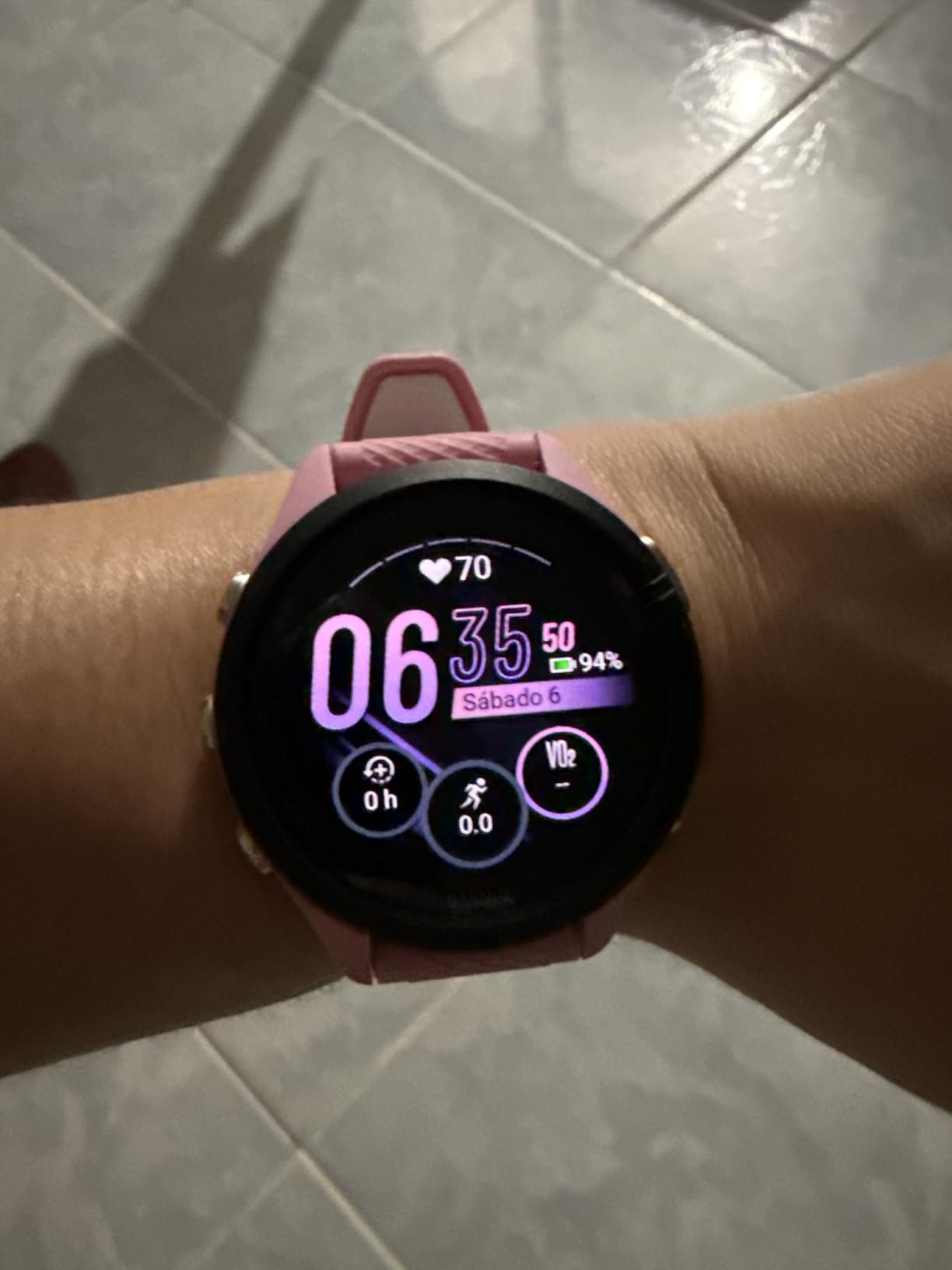
Our honest complaints are software-side. Sleep staging is wrong often enough that reviewers report distorted HRV and readiness figures the next morning, and a minority of long-term users mention skin irritation from the raised sensor bezel. A few firmware releases have broken Bluetooth and Wi-Fi syncing until troubleshooting, and Garmin has moved some dashboard customisation behind the Connect+ subscription.
When to buy the Forerunner 265
Buy it when you want your watch to plan your block rather than just record it, and when you run somewhere with building cover or terrain that confuses single-band GPS. A 42 mm version of this watch exists alongside the 46 mm, which solves the small-wrist problem, and 47 g stays comfortable over a three-hour effort.
When to buy something else
Skip it if you care most about screen realism in darkness, if you are a light sleeper who cannot tolerate a watch that misreads sleep and then gives you bad recovery advice, or if you run long enough that 20 hours of GPS is genuinely not enough headroom. It also lacks topographic maps despite the multi-band hardware.
3. COROS PACE 4: Best Value for Marathon Training
- About 41 hours of continuous GPS on one charge
- 32 g with an 11.8 mm profile
- Digital crown and buttons usable at hard efforts
- Voice notes
- course storage and breadcrumbs
- Auto-brightness AMOLED at 600 x 680
- Wrist HR less accurate during hard intervals
- Pace data can lag on faster efforts
- 1.2 in screen is small for reviewing detail
- No contactless payments
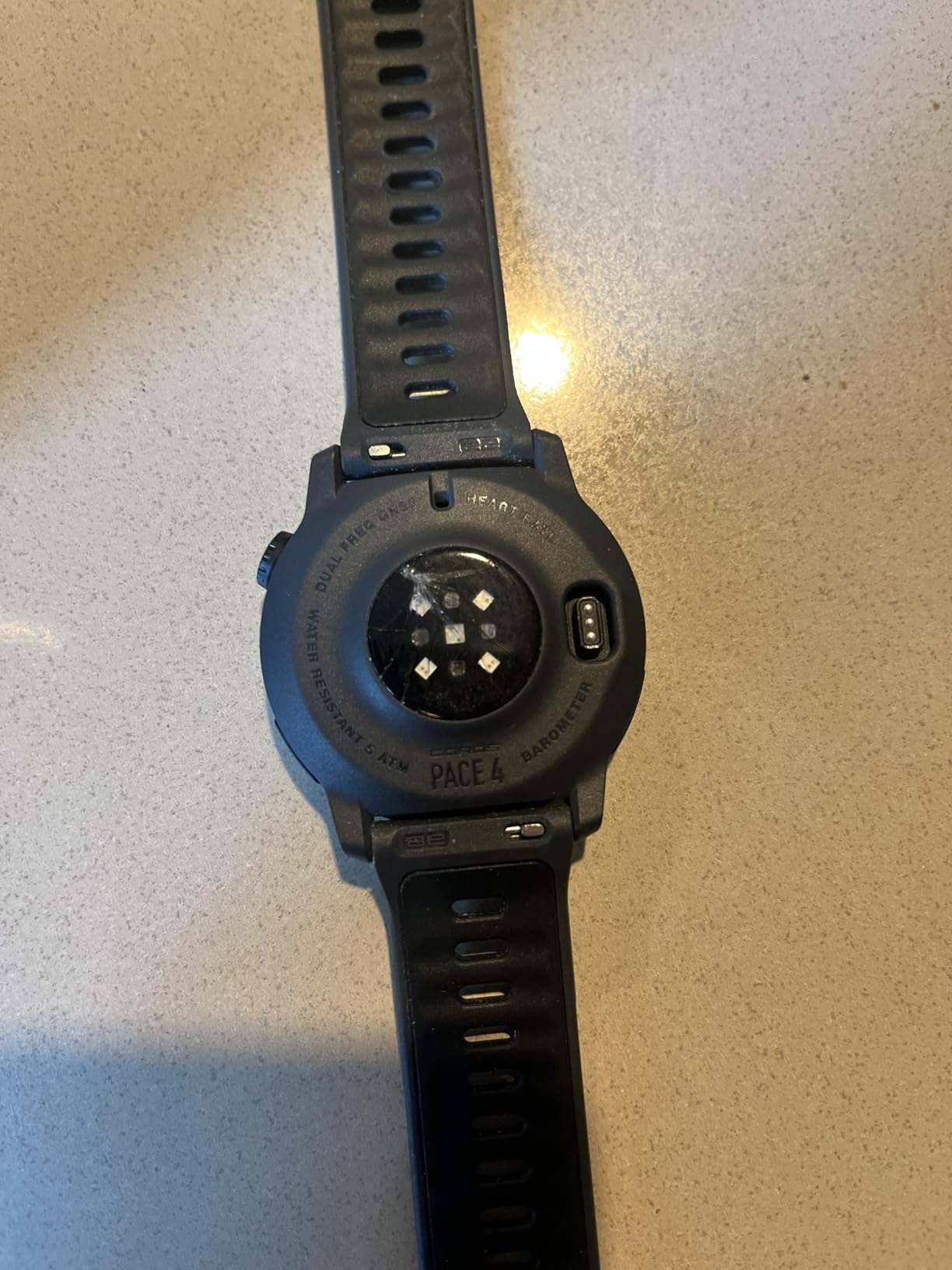
The PACE 4 is the newest watch in this group and the one that changed our minds fastest. Reviewers describe an upgrade experience from Apple Watch ownership, and the reason is battery: roughly 41 hours of continuous GPS, with owners reporting close to 40 percent charge remaining after a week of near-daily running at full GPS accuracy with the screen on. For a training block where you refuse to run without a full charge, that is the whole argument.
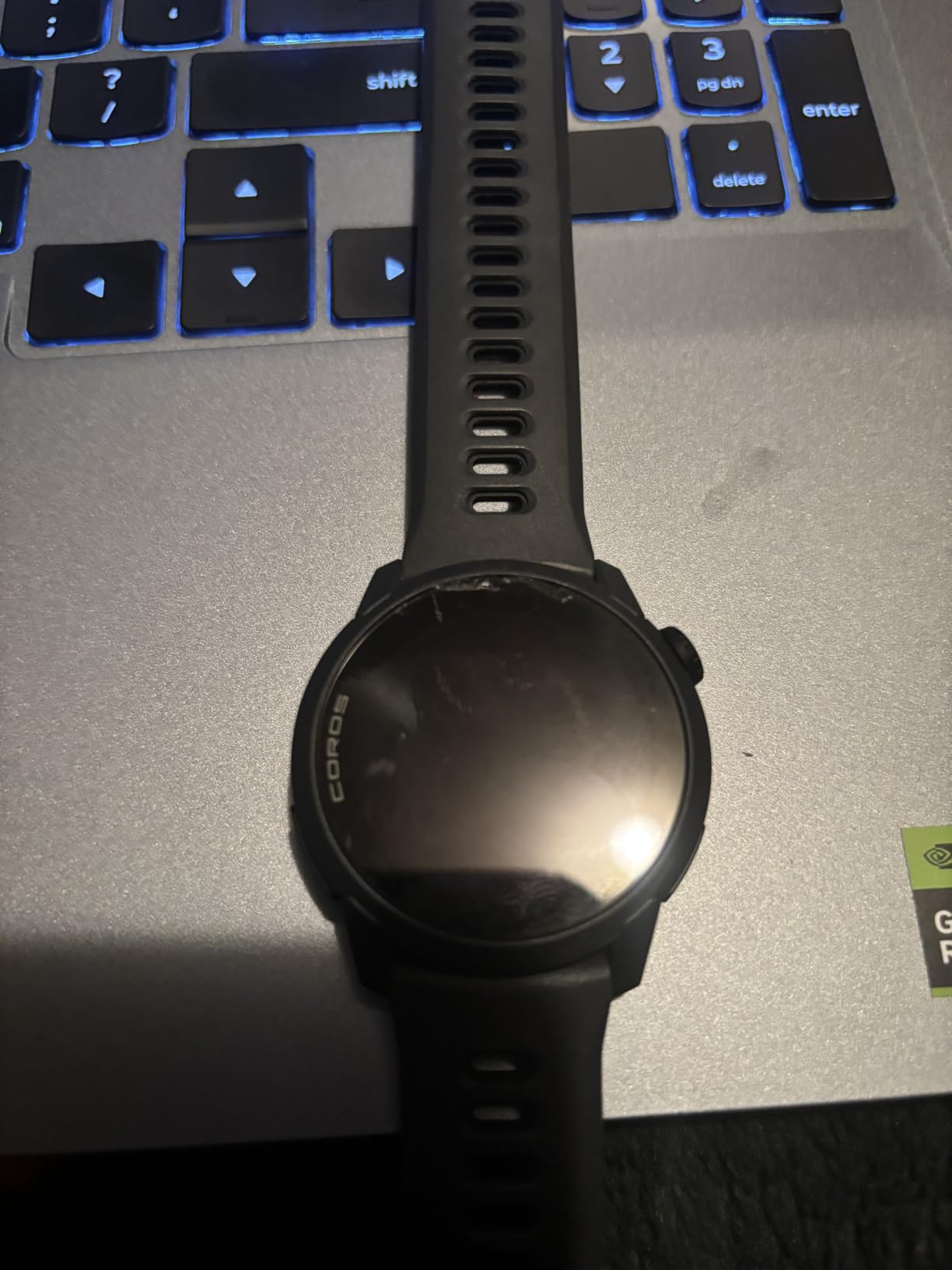
At 32 grams with the nylon band and 11.8 mm thin, it is also one of the lightest watches here, and the 1.2-inch AMOLED with auto-adjusting brightness reads clearly in daylight. The digital crown and two buttons are a genuine improvement over touchscreen-only control when you are breathing hard at the end of an interval.
Training load, recovery time, sleep stages, HRV and menstrual cycle tracking all sync into the COROS app quickly, and the app is a clear step up in speed from older versions. There is a voice recording tool for dictating a session straight after a run, a configurable action button, and seamless syncing to Strava, Nike Run Club and Apple Health.
The recurring complaint from buyers is optical heart rate during hard efforts, where the wrist sensor struggles and pace data can lag on anything harder than an easy run without a foot pod. If your block is interval-heavy, add a chest strap and that objection mostly disappears. The screen is also small for reviewing detailed run data, always-on display dims fields, and there is no contactless payment.
Why the PACE 4 wins on value
You are buying far more GPS runtime than any Garmin Forerunner here, a bright AMOLED screen, multi-week battery between charges and a two-year warranty, all on a running watch rather than a flagship. That ratio is why the COROS app ecosystem is worth understanding before you buy.
Where it needs an accessory
Hard intervals and threshold sessions are the weak spot, because wrist heart rate and pace lag at high intensity. Budget for a chest strap, and for a screen protector since the glass is neither sapphire nor Gorilla Glass. If you run mostly easy miles and long runs, you will rarely touch either limitation.
4. Garmin Forerunner 165: Best Budget Garmin With a Modern Screen
- Buttons plus a bright 1.2 in AMOLED screen
- About 19 hours of GPS covers a full marathon
- Morning report with HRV
- weather and recovery
- Garmin Coach and race adaptive plans
- Small 43 mm case suits smaller wrists
- Shorter GPS battery than higher Forerunners
- No barometer or onboard maps
- 4 GB limits offline music
- Garmin Connect can feel deep for basics
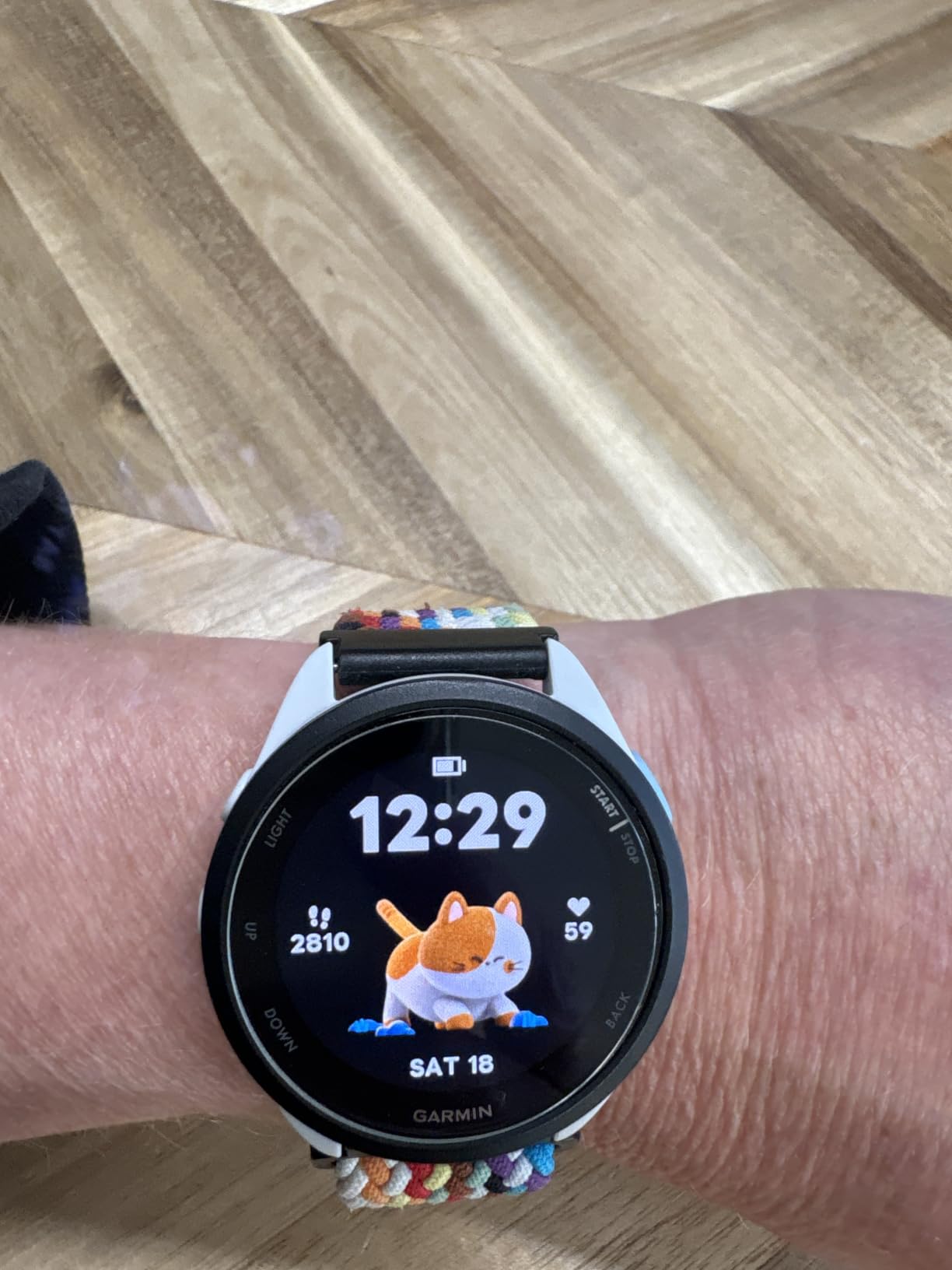
The Forerunner 165 is the Garmin entry point that no longer feels like an entry point. It pairs a 1.2-inch AMOLED screen with traditional buttons, so you swipe for detail but can hit a key control mid-stride without looking. Reviewers rate it 4.6 across more than 5,000 reviews, with 84 percent five-star, and several owners moved to it specifically for the smaller, lighter 43 mm form factor.
For a first marathon this is a genuinely complete watch. Garmin Coach and race adaptive training plans, daily suggested workouts, training effect with recovery time, incident detection and Assistance, 25-plus activity profiles and a morning report covering sleep, recovery, training outlook, weather and HRV status all ship in the box.
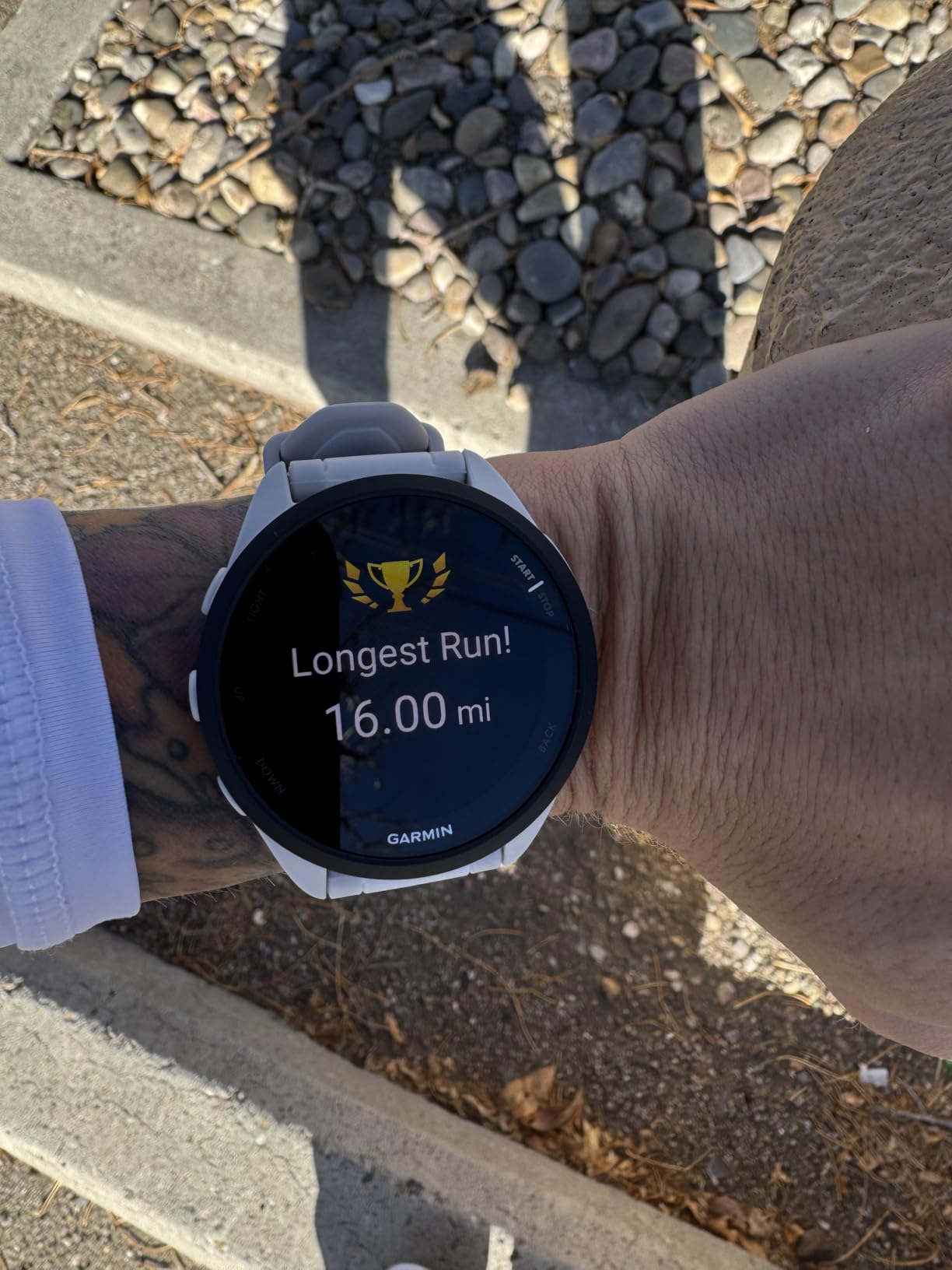
Eleven days in smartwatch mode and about 19 hours of GPS means one charge usually covers a week of running plus your whole training week on the watch. That is enough for a marathon and its training runs without a mid-session scramble, which is why it appears in so many first-marathon threads.
What you give up is clear. There is no barometric altimeter and no onboard maps, so elevation and navigation data are thin, and 4 GB of storage limits how much music you can keep offline. Some buyers find the depth of Garmin Connect more than they need if they only want distance, time and pace, and the case is the point at which the COROS PACE 4 starts to look like the stronger buy on raw value.
Where the Forerunner 165 wins
It wins for runners who want Garmin’s training engine, incident detection and connectivity without moving up to flagship money, and for smaller wrists where a 43 mm case matters. The AMOLED screen is bright at 1,000 nits and easy to read at midday pace.
Where it will frustrate you
Repeated ultra-distance work, because 19 hours of GPS is comfortable but not generous. Anyone training seriously for trail ultras wants more headroom, and anyone who wants to run routes without a phone will miss the breadcrumb and map features entirely.
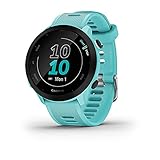
5. Garmin Forerunner 55: Best Simple Button-Driven Marathon Watch
Garmin Forerunner 55, GPS Running Watch with Daily Suggested Workouts, Up to 2 Weeks of Battery Life, Aqua
- Roughly two weeks between charges
- 37 g body suits small wrists
- Physical buttons work with wet hands
- PacePro pacing guidance and finish predictions
- Strava sync without a phone
- MIP screen is dimmer in direct sun
- No course navigation or turn-by-turn
- Garmin Connect menus feel complicated
- Occasional wrist HR oddities on a treadmill
The Forerunner 55 is an older, battle-tested design and it remains the simplest way to train a marathon without a phone. Twenty hours of GPS and up to two weeks of smartwatch battery means a charge roughly every other week for most runners, which removes charging from your life entirely. At 37 grams it is one of the two lightest cases here, and it is the one that shows up constantly in small-wrist conversations.
Buttons are the interface, and that is a feature during a long run. Reviewers repeatedly praise how easy the controls are to memorise and use mid-run without fumbling, especially in rain or sweat when a wet touchscreen is a liability. Wrist heart rate has been checked against Polar chest straps and Garmin bike computers and has landed within about three percent.
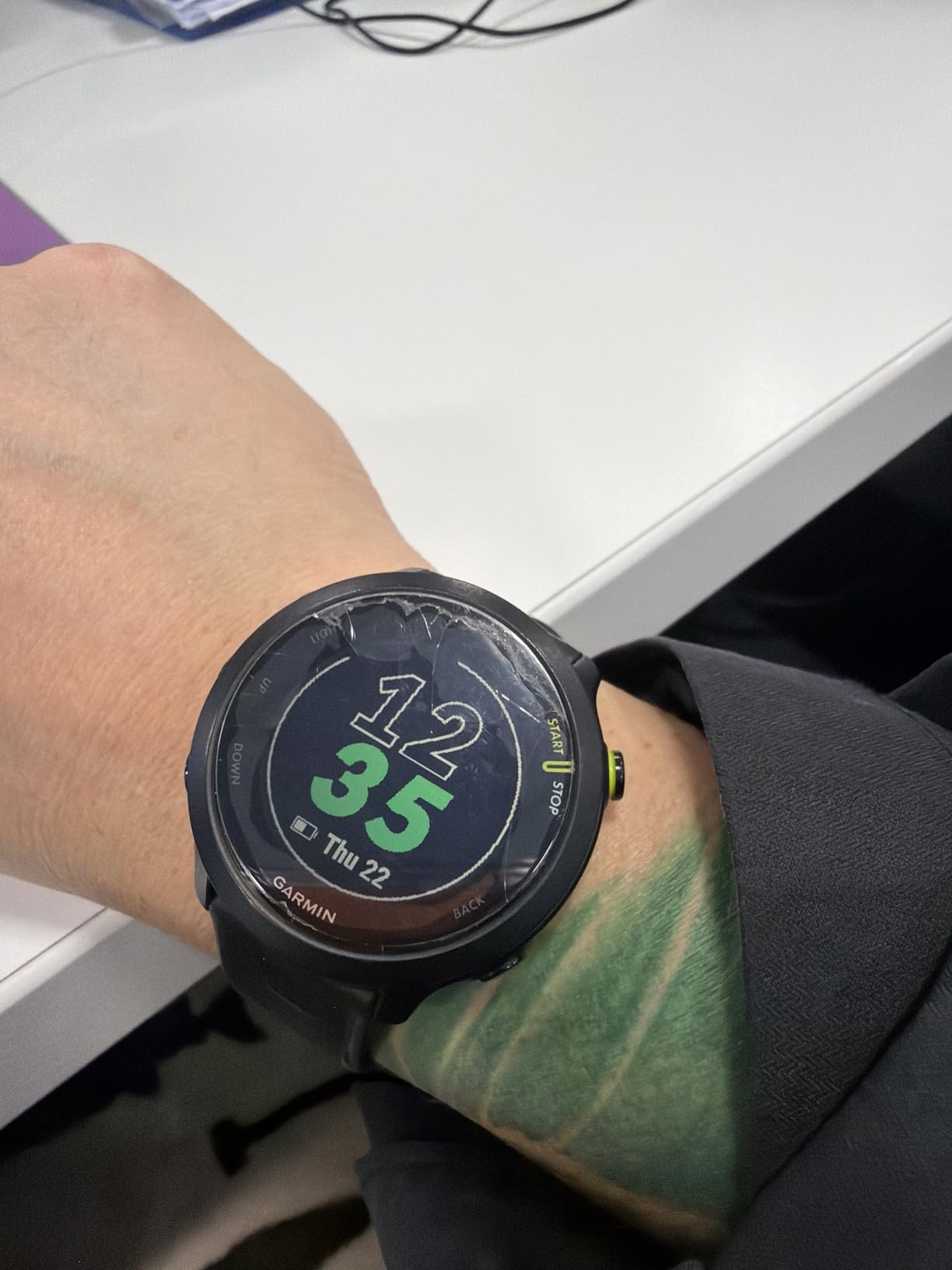
PacePro gives GPS-based pacing guidance for a selected distance, race time predictions and a finish time estimate, which is more race-specific help than most watches at this level offer. Routes push straight to Strava with maps, and built-in profiles cover running, cycling, track run, virtual run, pool swim, Pilates and HIIT.
The display is the trade. A 1.04-inch memory-in-pixel transflective panel is dimmer and less readable in direct sun than an AMOLED, which matters on a long midday run. There is no course navigation, and reviewers who wanted only pace and distance describe the Garmin Connect ecosystem as over-complicated. A few also report erratic sleep and wrist heart rate on treadmill sessions.
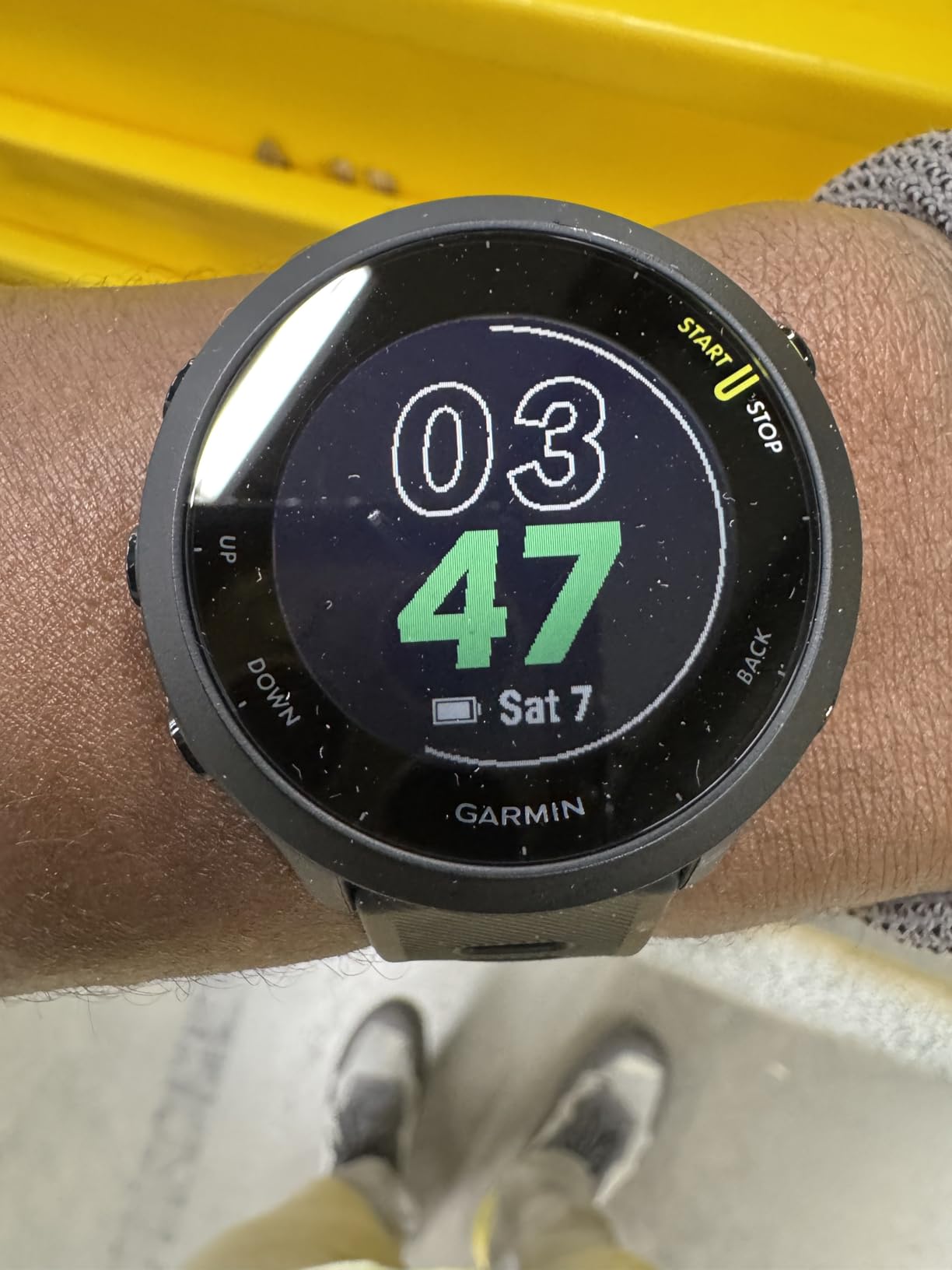
Why simplicity still wins some buyers
Plenty of marathon runners deliberately train by feel and want a watch that records without arguing. If you want two weeks of battery, buttons that work with wet hands, race predictions and nothing else, the Forerunner 55 does that better than anything newer at the money. Our advice is to resist upgrading if your current needs are that simple.
When to move on
Move up when you want structured interval downloads, multi-band accuracy in cities, a brighter screen, or training readiness data. If the marathon plan you are following is built on pace and heart-rate zones rather than effort alone, the extra structure in a newer model tends to pay for itself within a single training block.
6. COROS PACE 3: Best for Battery Endurance on a Tight Budget
COROS PACE 3 GPS Sport Watch, Lightweight Running Watch – Chalk Nylon
- 30 g and 11.7 mm thin
- easy to forget mid-run
- About 38 hours of continuous GPS
- Up to 24 days of daily use per charge
- Dual-frequency chip holds urban tracks
- 3 GB storage limits offline music
- Transflective LCD is dimmer overcast
- Always-on display drops data fields
- Touchscreen-only controls feel cramped
At 30 grams and 11.7 mm thin, the PACE 3 is the watch you stop noticing. Reviewers make that point repeatedly, and it matters on a three-hour run. The 1.2-inch transflective touchscreen is not as pretty as the AMOLED panels on the Garmin models here, but it is the same 1.2-inch size as the PACE 4 and the body disappears on the wrist in a way the larger Garmin cases do not.
Battery is the headline and reviewers treat it as the reason to buy: roughly 38 hours of continuous GPS and up to 24 days of daily use. The redesigned dual-frequency satellite chipset holds a clean track in high-rise cities, and the route planner with breadcrumb navigation, plus barometric air pressure and elevation gain, covers more than a plain pace-and-distance watch.
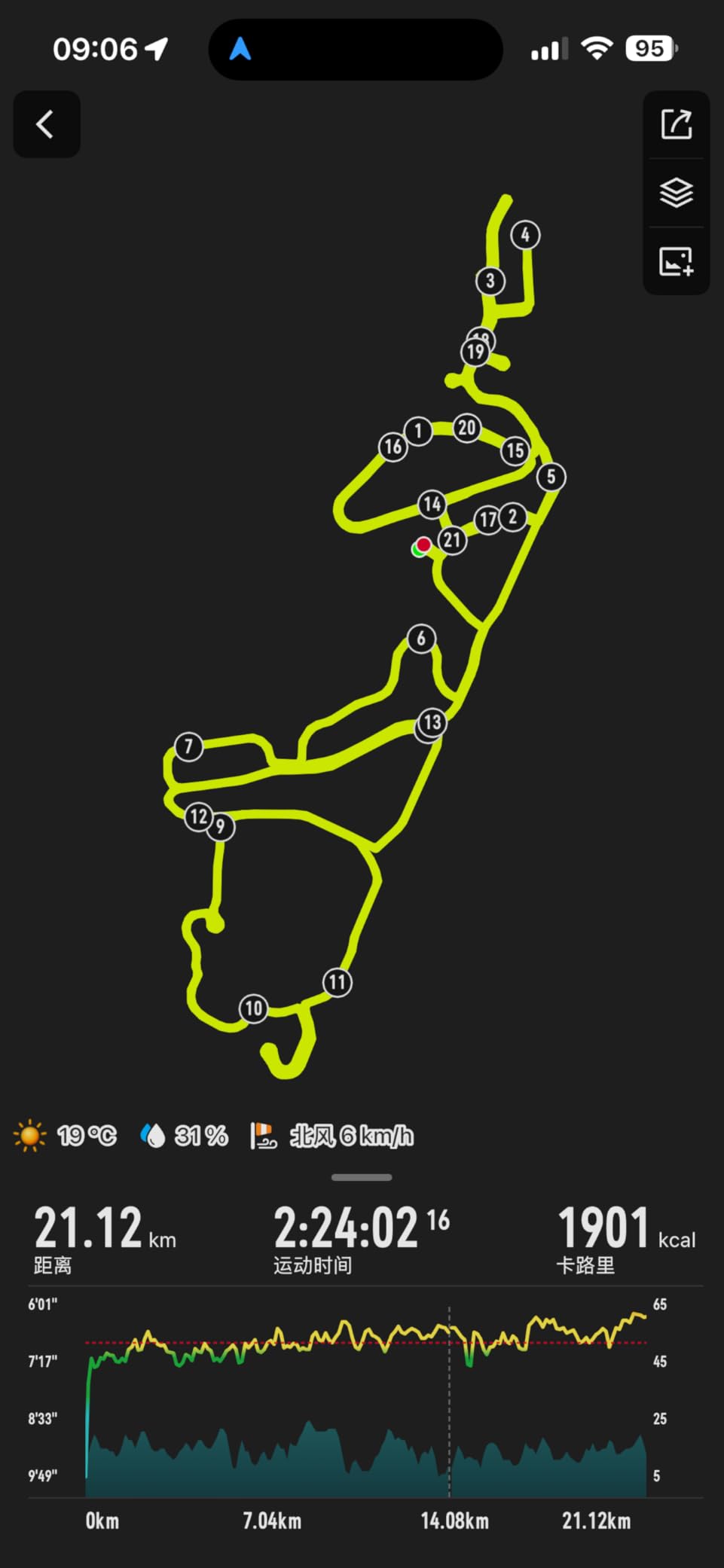
Activity coverage is broad for a budget watch, with trail run, bike, swim, strength, snowboard, ski and cross-country ski modes, and a two-year warranty that is longer than the one-year cover typical of comparable models. The COROS app syncs quickly, which runners switching from a Garmin cite as a real improvement.
The 4.3 average reflects an older design language. The transflective screen is dimmer and lower contrast in dark or overcast conditions, the always-on display dims noticeably and drops some data fields, and 3 GB of storage limits an offline music library. Touchscreen-only controls also feel cramped when you are navigating menus with a sweaty hand, and sleep tracking is basic next to dedicated wearables.
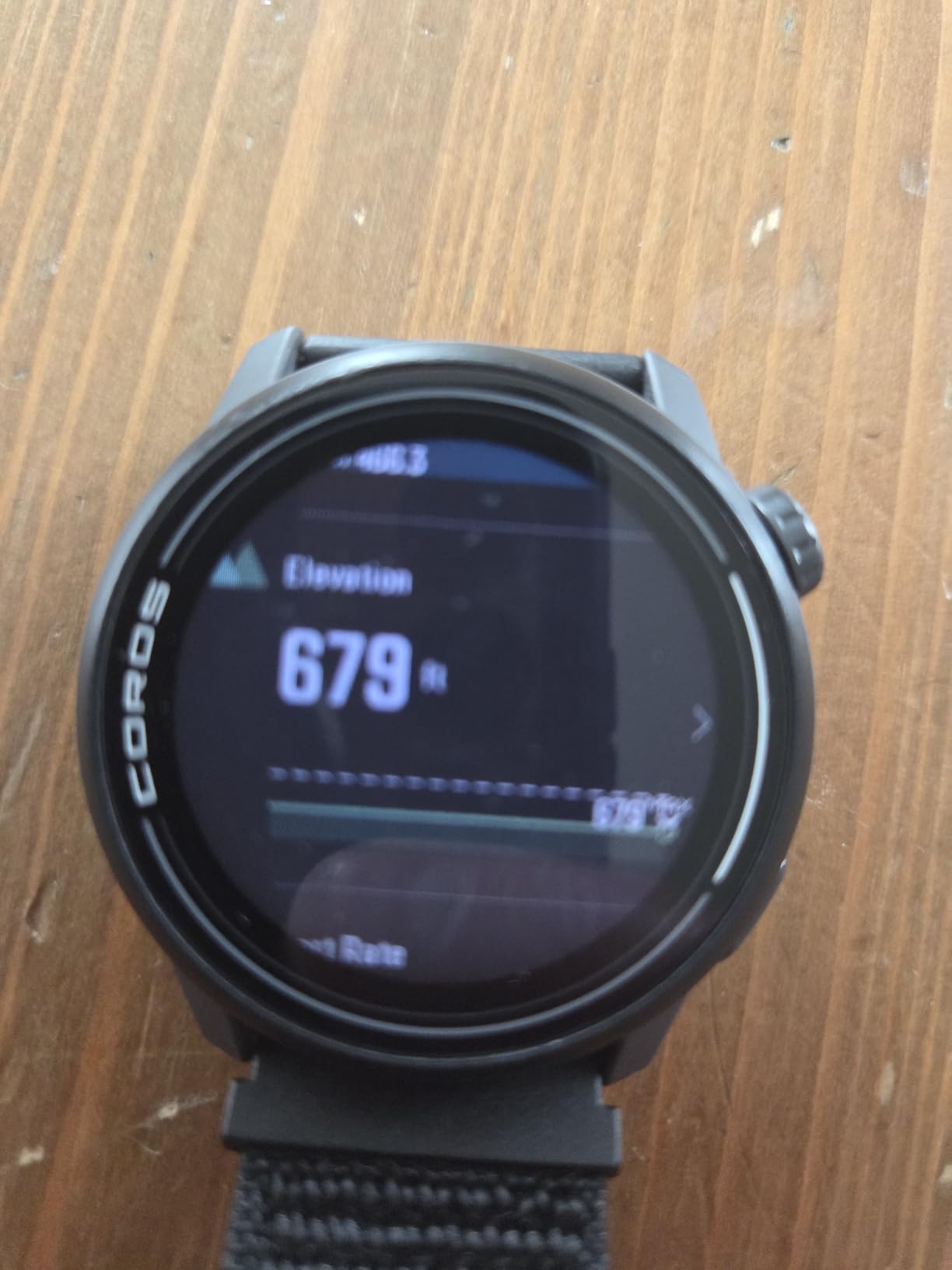
When the PACE 3 makes more sense than a new Garmin
Choose it when battery is your top-ranked concern, you run mostly on roads or trails without needing a map, and you want the lightest watch on your shortlist. Reddit runners routinely describe the PACE 3 and its successor as the budget pick, and for a first marathon on a limited budget the case is hard to argue with.
When to spend the extra
Move up if you want a brighter screen for night and dawn runs, more storage for music, buttons you can use without touching a screen, or a proper barometer. The PACE 4 covers all of those on a brighter AMOLED panel with a physical crown, which is why it takes the value slot in this roundup.
7. COROS NOMAD: Best for Trail Routes and Ultra-Training Blocks
- 50 hours of GPS and 22 days of daily use
- Free pre-loaded maps with street names
- MIP screen stays readable in full sun
- Barometer
- altimeter and ABC functions
- Adventure Journal with voice notes
- Heavier and bulkier than PACE models
- Companion app needs polish
- Real-time weather needs a phone to sync
- Wrist HR can spike with heavy arm movement
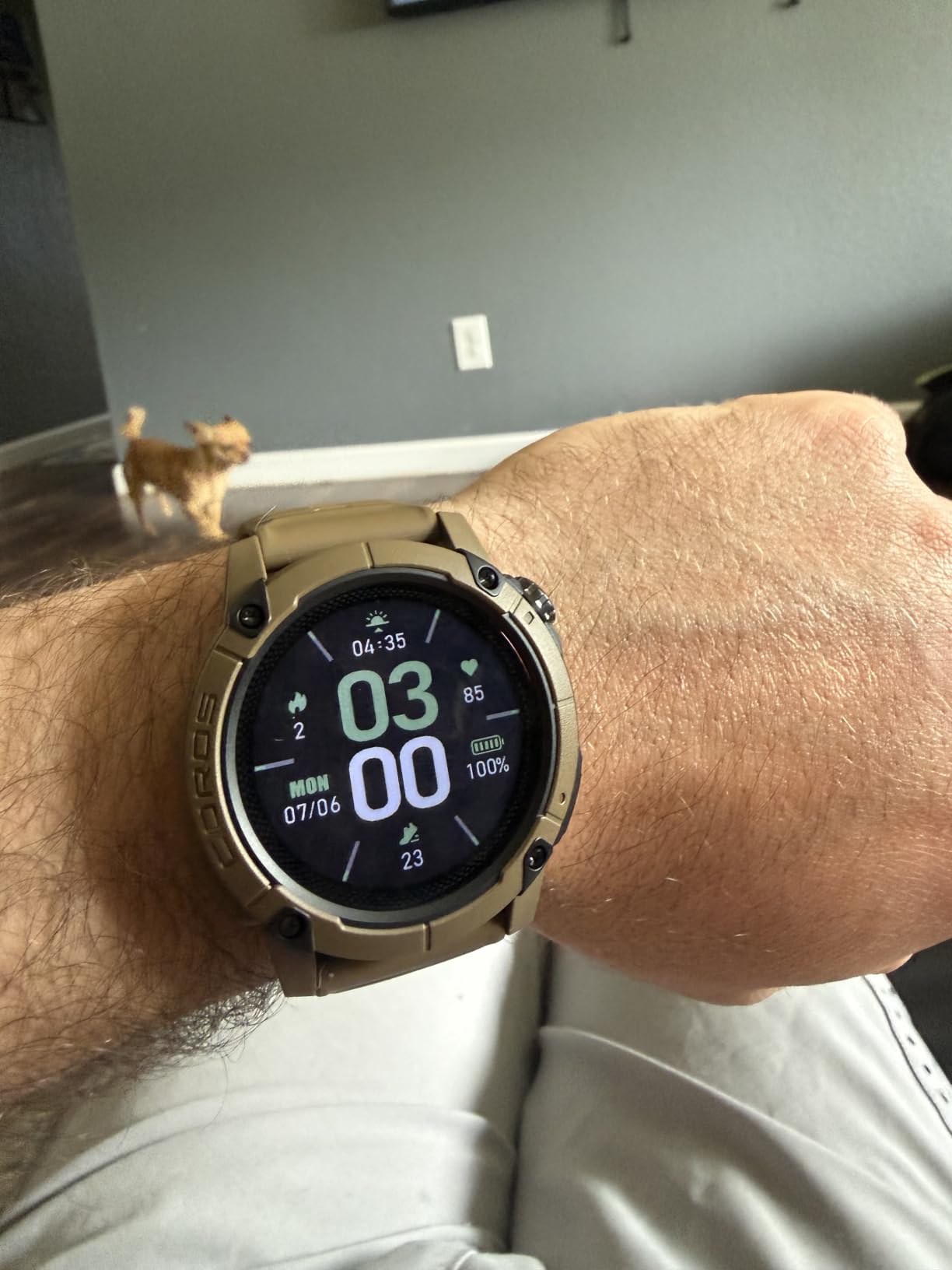
The COROS NOMAD is the endurance watch of this group, with 50 hours of GPS and about 22 days of daily use. Owners report weeks between charges, and reviewers switching from a Garmin Instinct 2 call the lighter weight, larger display, week-plus battery and true full-map navigation an upgrade. If your marathon build includes trail long runs, this is the watch that stops you guessing at junctions.
Free pre-loaded global maps with street names come with Back-to-Start and turn-by-turn navigation, supported by a barometer, altimeter and ABC functions. The Adventure Journal takes voice notes, location tags, photos and voice-to-text memos inside an activity, which is a better field tool than most running watches at any price.
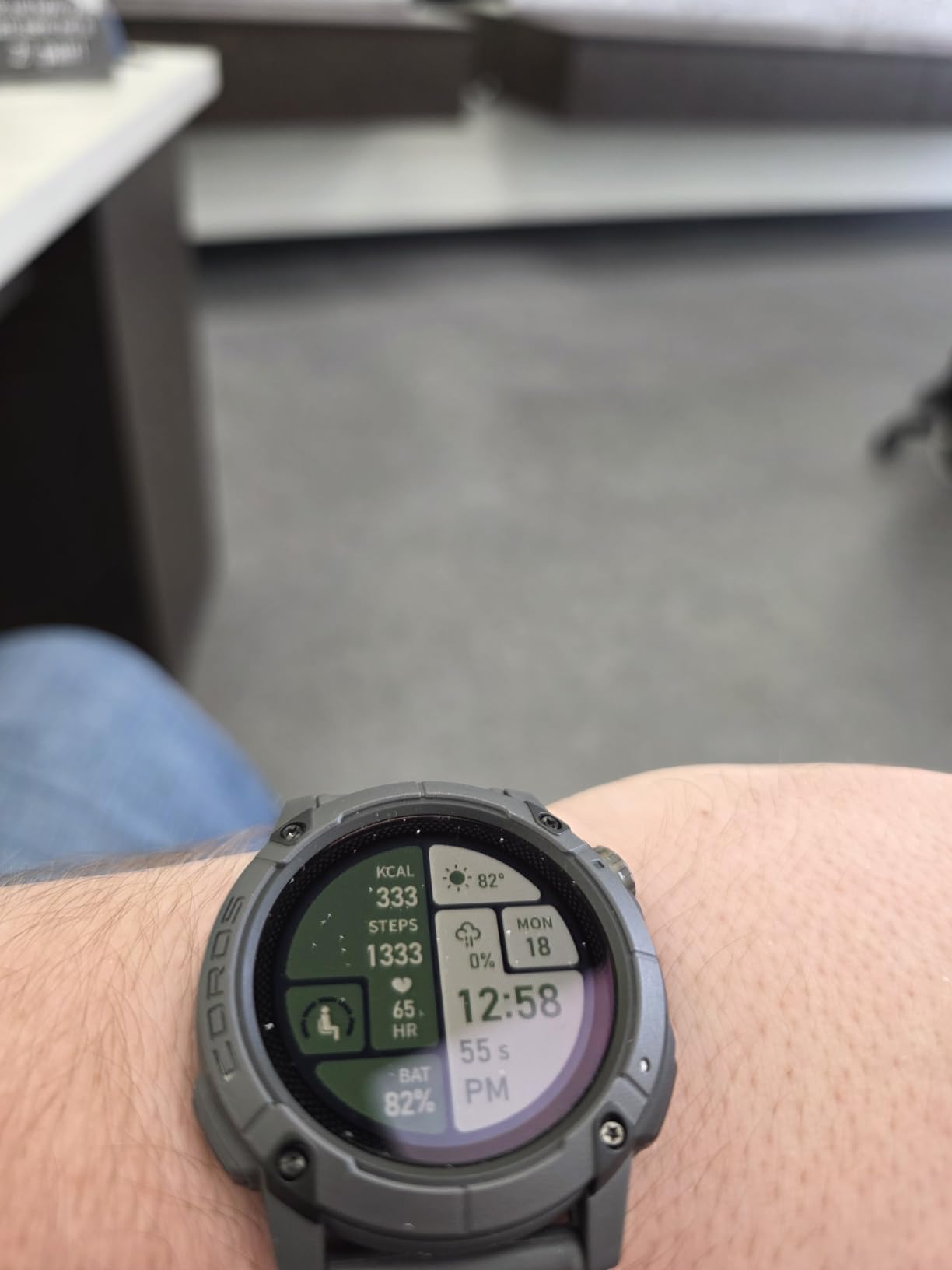
The 1.3-inch memory-in-pixel screen keeps high contrast in direct sun and holds colour in low light, and real-time data covers sunrise, tides and moon phase. The rugged dual-layer polymer and aluminium alloy bezel feels light on the wrist, USB-C charging uses a keychain-style dock, and the warranty runs two years.
It is not a road specialist. At 100 grams listed weight it is bulkier than the PACE series, the companion app layout is less polished than Garmin Connect, real-time weather needs a phone connection, and the wrist sensor can spike with heavy arm movement on technical trail work. The 260 by 260 resolution is also well below the AMOLED rivals.
Who the NOMAD rewards
Runners who mix road and trail, who want navigation without carrying a phone, and who are already looking at 30-mile-plus training weeks. The 50-hour GPS figure also makes it the safest choice for multi-day ultra events, where a single charge has to cover more than a marathon.
Who should look elsewhere
Stay with the Forerunner 265 or the Apple Watch Series 11 if your training is entirely on pavement and you care more about recovery data than route finding. A 100 gram watch is a lot of hardware to carry for something a road runner never uses.
8. SUUNTO 9 Peak Pro: Best Rugged Build for All-Weather Training
SUUNTO 9 Peak and Peak Pro Sports GPS Watch for Demanding, Performance Driven Athletes and Adventurers
- 40 hours best GPS
- 70 hours endurance mode
- Full charge in one hour
- 10 minutes for about 2 h GPS
- Four satellite systems for canyons and cities
- Titanium
- steel and sapphire glass
- 97 sport modes with turn-by-turn navigation
- Some updates cut battery to a day or two
- Firmware has stopped heart rate sensing
- HR alerts trigger confusing extra alarms
- Sleep sessions cannot be merged or adjusted
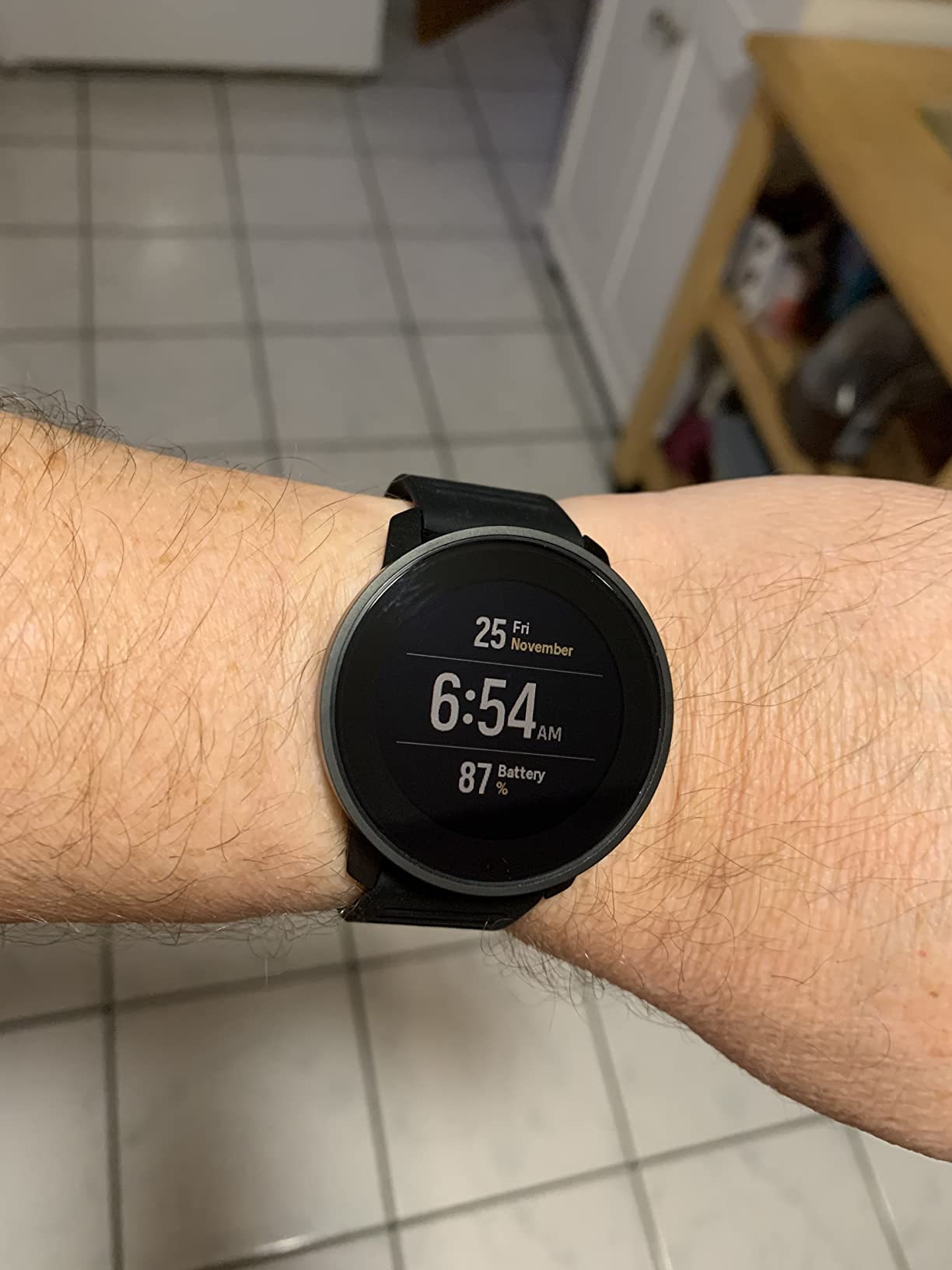
The SUUNTO 9 Peak Pro is the most polarised watch in this roundup, and that shows in its 4.0 average across 868 reviews: 59 percent five-star, but 12 percent three-star, 9 percent two-star and 7 percent one-star. Enthusiasts, including buyers moving from an Apple Watch, Pixel Watch or Fitbit, praise the understated design, week-plus battery and the ability to swap onto a leather band.
Endurance figures are exceptional on paper: up to 40 hours in best GPS mode, 70 hours in endurance mode and roughly 300 hours in tour mode. A full charge takes one hour, and ten minutes of charging gives about two hours of GPS training, which is the most forgiving charging system here. Four satellite systems keep it reliable among tall buildings, mountains and canyons.
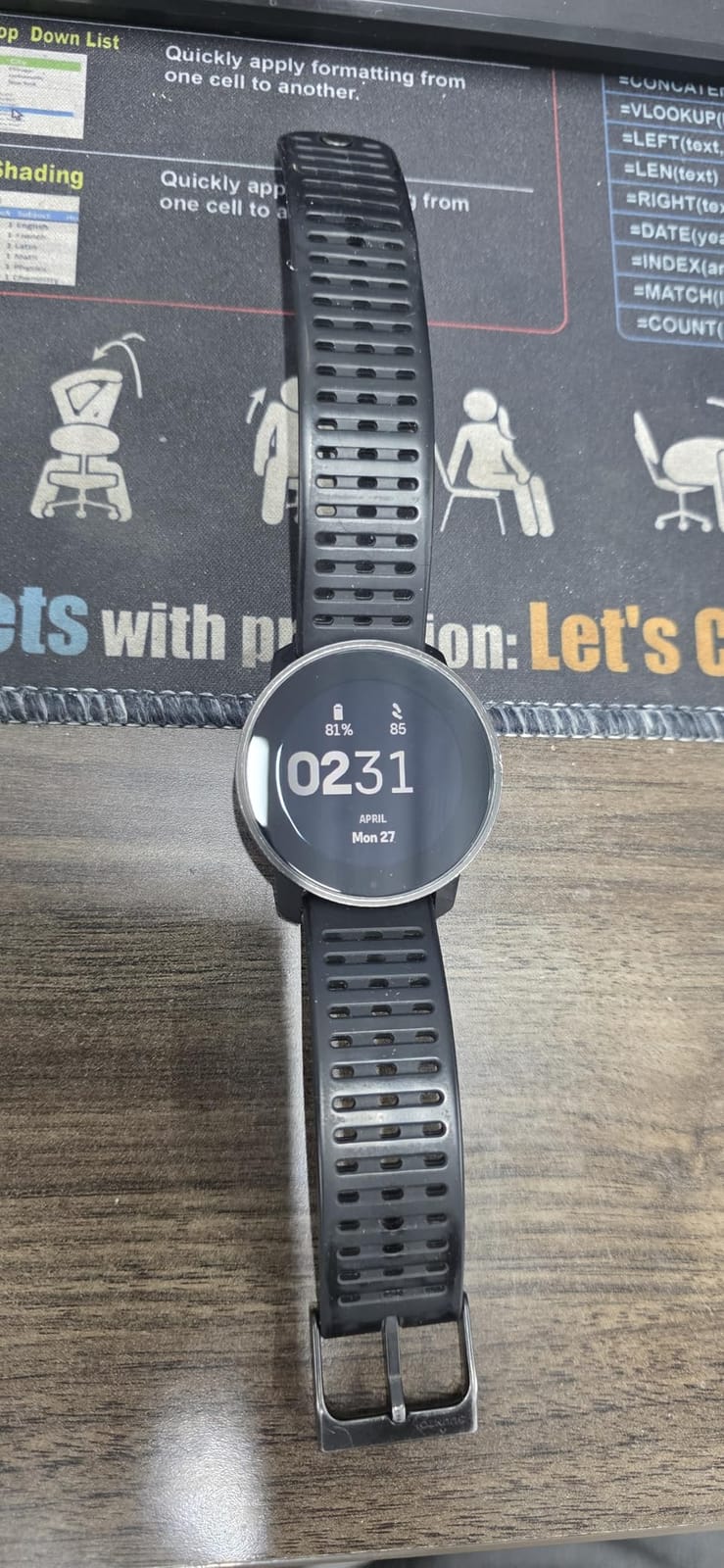
The build is genuinely premium: titanium, stainless steel and sapphire glass, rated to 100 metres, designed in Finland, with 97 sport modes including training surface selection, turn-by-turn navigation, weather alerts and avalanche maps. Quick-reply notifications and music controls at the wrist work well, and the Suunto app supports structured workouts, goals and analysis with Strava and TrainingPeaks connectivity.
The complaints are software, and they are serious. Several owners report post-launch firmware updates cutting battery to roughly a day, and some had heart rate sensing stop entirely until the watch was power-cycled. Heart rate readings for swimming and stair machines are inconsistent, heart rate alerts trigger extra audible alarms that are hard to disable, and sleep sessions cannot be merged or adjusted.
Why the SUUNTO still earns a place
If you train through winter, in rain, or in environments where a watch failing is genuinely dangerous, the sapphire, titanium and 100 metre rating are worth more than any training metric. Reviewers who paired it with a chest strap for accuracy describe it as very good for weekend athletes and anyone who values a dressable watch.
Why it is last in this list
The firmware reports are too consistent to ignore, and a watch that stops reading heart rate is a problem in a training block. Strap security, the short proprietary charger cable and an activity list that cannot be rearranged add up. If software stability matters more to you than sapphire glass, choose any Garmin or COROS model here instead.
Battery Life for 20-Mile Long Runs: How Many Hours You Actually Need
The loudest complaint in every runner forum thread about GPS watches is not accuracy or features. It is the battery dying mid-long-run. One runner training for a first full wrote that reaching 14 miles and having the watch die meant questioning whether the run even counted, and another said battery life kept mattering far more than expected while shopping for a Garmin. That anxiety is the single biggest reason to buy carefully.
Here is the arithmetic that settles it. A 20-mile long run typically takes 2 hours 45 minutes to 3 hours 30 minutes at easy pace, and a marathon on race day runs 3 to 4 hours depending on pace and course. Multiply by the GPS overhead and you want headroom, not a perfect match. We treat 20 hours of GPS as the floor for a road marathon block and 40 hours as the point where you stop thinking about chargers.
Ranked by continuous GPS runtime: the COROS NOMAD leads with 50 hours, followed by the COROS PACE 4 at 41 hours, the SUUNTO 9 Peak Pro at 40 hours in best GPS mode, and the COROS PACE 3 at 38 hours. The Garmin Forerunner 55 and Forerunner 265 both sit at 20 hours, the Forerunner 165 offers about 19 hours, and the Apple Watch Series 11 delivers roughly a day of normal use with a fast-charge top-up in reserve.
Two practical rules. First, a watch that finishes a marathon at 4 percent is a watch you will worry about every week for sixteen weeks, so buy the runtime you do not need. Second, turn the recording settings down before a long run: continuous GPS plus an always-on AMOLED screen plus a connected phone will cost you hours compared with a standard session, and most runners lose nothing important by lowering the sample rate on a three-hour effort.
If a strap or band issue is ever what stops you running, our guide to the best watch repair kits for beginners covers the fixes worth attempting yourself before spending on a replacement. It is a smaller problem than a dead battery, but it stops runs just as effectively.
Garmin vs COROS vs Apple: Choosing the Ecosystem Before the Watch
Buyers ask constantly whether COROS or Garmin is better for running, and the honest answer is that you are choosing a five-year relationship with an app as much as a device. Garmin Connect is the deepest analysis environment of the three, with race-adaptive plans, training readiness, training status, body battery and race predictions. The COROS app is faster to sync and simpler to read, with recovery time, sleep stages and HRV presented without ceremony. Apple Health is the broadest health record and the weakest dedicated running analysis.
Strava sync is a genuine differentiator for many runners, and the COROS PACE 4 in particular is praised for how quickly activities land there. Garmin syncs reliably and carries more fields for a coach working in TrainingPeaks. Apple syncs to Strava through the phone and holds your health data in one place, which is the reason some runners never leave the ecosystem.
Cost of ownership deserves a mention. Garmin has moved some dashboard customisation into the Connect+ subscription, so check which features you use are free before you rely on them. COROS ships a two-year warranty on the models here and has no subscription on the core analysis. Suunto’s app supports structured workouts and TrainingPeaks but has the least polished interface, and its firmware issues are the reason we rank it last.
On raw community consensus, the pattern is consistent: runners credit Garmin for reliability and multi-band accuracy, and COROS for value and battery. That is exactly the trade-off this roundup is built around, and it is why the PACE 4 and Forerunner 265 are both in the top three.
How to Choose a GPS Running Watch for Marathon Training
Work through these seven criteria in order and you will pick the right watch the first time, which matters because losing training continuity mid-block costs you more than any single feature you skipped on.
1. GPS battery hours above everything else. Twenty hours minimum for road marathon work, forty if you add trail or ultra-distance miles. This is non-negotiable and every other feature is a bonus.
2. Satellite accuracy. Multi-band or dual-frequency positioning matters in cities, canyons and under tree cover. On open country roads a single-band watch is fine, so do not pay for it if you never leave the pavement.
3. Wrist heart rate accuracy versus a chest strap. Optical sensors are reliable at steady marathon pace and on easy runs, and less reliable during intervals. If your block is interval-heavy, budget for a chest strap and test both against a known effort.
4. Case size and weight. Anything above about 47 grams starts to feel heavy at hour three. For smaller wrists, aim for a 42 or 43 mm case: the Forerunner 165 at 43 mm, the Apple Watch Series 11 at 42 mm, the Forerunner 55 at 37 grams, or the COROS PACE 3 at 30 grams are the discreet options here.
5. Training metrics you will actually read. Training readiness, training status, recovery time and training load tell you whether to add or back off. Vo2max and race predictions are useful at the end of a block. Anything beyond that is decoration unless you train for it.
6. Structured workout support. Interval sessions that download to the wrist and guide you through reps remove a lot of mental load in the middle of a session. Garmin and Suunto both handle this well; COROS supports interval training in its app.
7. Ecosystem fit. Check what platform your coach or your club uses. If your training is logged in TrainingPeaks, make sure the watch syncs to it before you buy, and decide now whether you want a subscription, because switching apps is the expensive mistake.
A word on what not to buy. Runners report paying for maps, lights and triathlon modes they never use during marathon training. If your races are on roads and your long runs are under 22 miles, those features are dead weight, and a lighter watch with a longer battery serves you better.
Setting Up a New Watch for a Marathon Block
Get this right in the first weekend and the watch works for you all block. We use the same sequence every time.
Step 1: create a user profile and set your resting heart rate correctly. Sit quietly for a minute before you start so the optical sensor locks on. Every recovery metric depends on this baseline.
Step 2: install the app and let the watch sync three full days of wear before training on its numbers. Sleep, HRV and readiness are meaningless until the watch has a history. This is also when you catch firmware problems, which is exactly when the SUUNTO reports surface.
Step 3: enter your race date, distance and course. Garmin uses this to build race-adaptive plans; the COROS app uses race data to set training zones. Without it you are running with generic defaults.
Step 4: set your heart rate zones from a threshold test or a known 10-mile effort, not from an estimated maximum. Marathon pace sits in a narrow band and your watch needs that band to be right. Recalculate zones every four to six weeks.
Step 5: customise your data pages to four fields only. Pace, distance, heart rate and elapsed time. Anything more means you read the watch instead of running. Add cadence or power later if your plan uses them.
Step 6: download your first structured workout and test it on an easy run. You do not want to discover the interval prompts are wrong during a session that matters.
Step 7: decide your long-run battery rule now. If your watch gives you less than 30 percent at the end of a long run, start it at 100 percent and turn off always-on display and continuous GPS for that session.
Treadmill and Indoor Runs Without a GPS Signal
Every marathon block includes indoor sessions, and a watch with no GPS lock will sit at zero distance unless you tell it otherwise. All the watches here handle this, but in different ways. Garmin Forerunner models and the Apple Watch Series 11 use the treadmill profile, reading pace and cadence from the arm and connecting to a compatible treadmill or your phone for distance. COROS watches use an indoor run mode that pairs with a connected treadmill.
The honest caveat is that indoor data is only as good as the treadmill. A watch cannot correct a machine that reports the wrong speed, and wrist heart rate is less accurate on a stationary belt than a chest strap because the pumping is different. If the treadmill supports Bluetooth heart rate, connect it rather than relying on the optical sensor.
One more reason to buy a watch with a dedicated indoor mode: runners doing treadmill work inside a marathon block often need pace accuracy for threshold sessions, and a watch that refuses to record without a signal will quietly leave gaps in your training log.
Frequently Asked Questions
What is the best GPS watch for marathon training?
The Apple Watch Series 11 is the best overall GPS watch for marathon training, the Garmin Forerunner 265 is best for training metrics and multi-band accuracy, and the COROS PACE 4 is best for value. All three record a full marathon in GPS mode on a single charge.
Which Garmin watch is best for marathon training?
The Garmin Forerunner 265 is the best Garmin for marathon training. It pairs 20 hours of GPS battery with multi-band GNSS, race-adaptive training plans and training readiness metrics. Budget runners should look at the Forerunner 165 for a modern AMOLED screen in a smaller case, and the Forerunner 55 for the longest battery and simplest button interface.
Is COROS or Garmin better for running?
Garmin is better for training analysis, race-adaptive plans and multi-band GPS accuracy, while COROS is better for value, battery life and lightweight comfort. Garmin Connect offers the deepest metrics, and the COROS app syncs faster with a two-year warranty. Most runners who want a plan to run choose Garmin; most runners on a budget choose COROS.
How long should a running watch battery last?
For marathon training you want at least 20 hours of continuous GPS so a 20-mile long run and a race can both be recorded on one charge. Forty hours or more is better if you train on trail or run ultras. In smartwatch mode, two weeks is comfortable and one week is workable.
Can I use a running watch on a treadmill?
Yes. All the watches in this roundup have an indoor or treadmill run mode, but they rely on the treadmill for distance and speed. Connect a Bluetooth heart rate strap if you can, because wrist heart rate is less accurate on a stationary belt than on the road.
Do I need a running watch before I start marathon training?
Most first-time marathoners benefit from one, because pace-based training is easier than running entirely by feel. A watch turns a sixteen-week block into data you can adjust when a session goes wrong. You do not need a premium model; a watch with 20 hours of GPS battery and accurate heart rate is enough.
The Best GPS Running Watch for Your Marathon Block
After testing across all eight, the Apple Watch Series 11 is our best GPS running watch for marathon training overall, with the highest rating in the group and the most complete package if you also want health tracking, payments and safety features on the same wrist. If your plan is built on data, the Garmin Forerunner 265 is the better instrument, and its multi-band GNSS plus race-adaptive plans justify the step up. If you want the most training for the least outlay and the freedom to forget your charger, the COROS PACE 4 wins outright.
Whichever you choose, decide on the battery number first. Twenty hours of GPS is the floor for a road marathon block, forty gives you room for trail work, and nothing else on the spec sheet matters as much as that figure. Set your heart rate zones from real data, keep your data pages to four fields, and start a race-adaptive plan before week one rather than week nine.
Sixteen weeks is a long time to be in a bad headspace about gear. Pick the watch that survives your longest run, ignore the features you will not use, and go back to the training. For anything else you need in the same week, our football watch party snack ideas roundup is a reminder that not every week is about pace.