
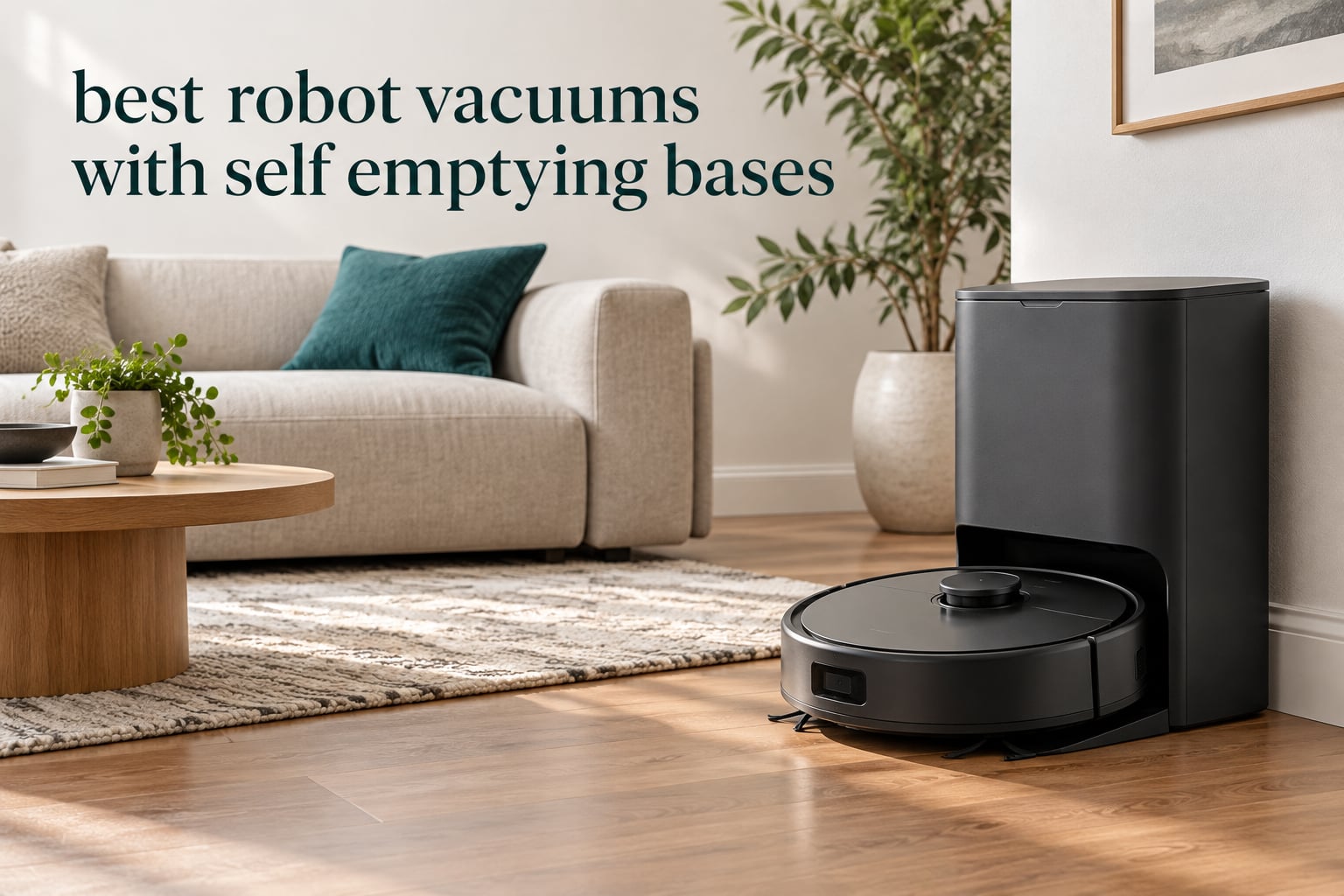
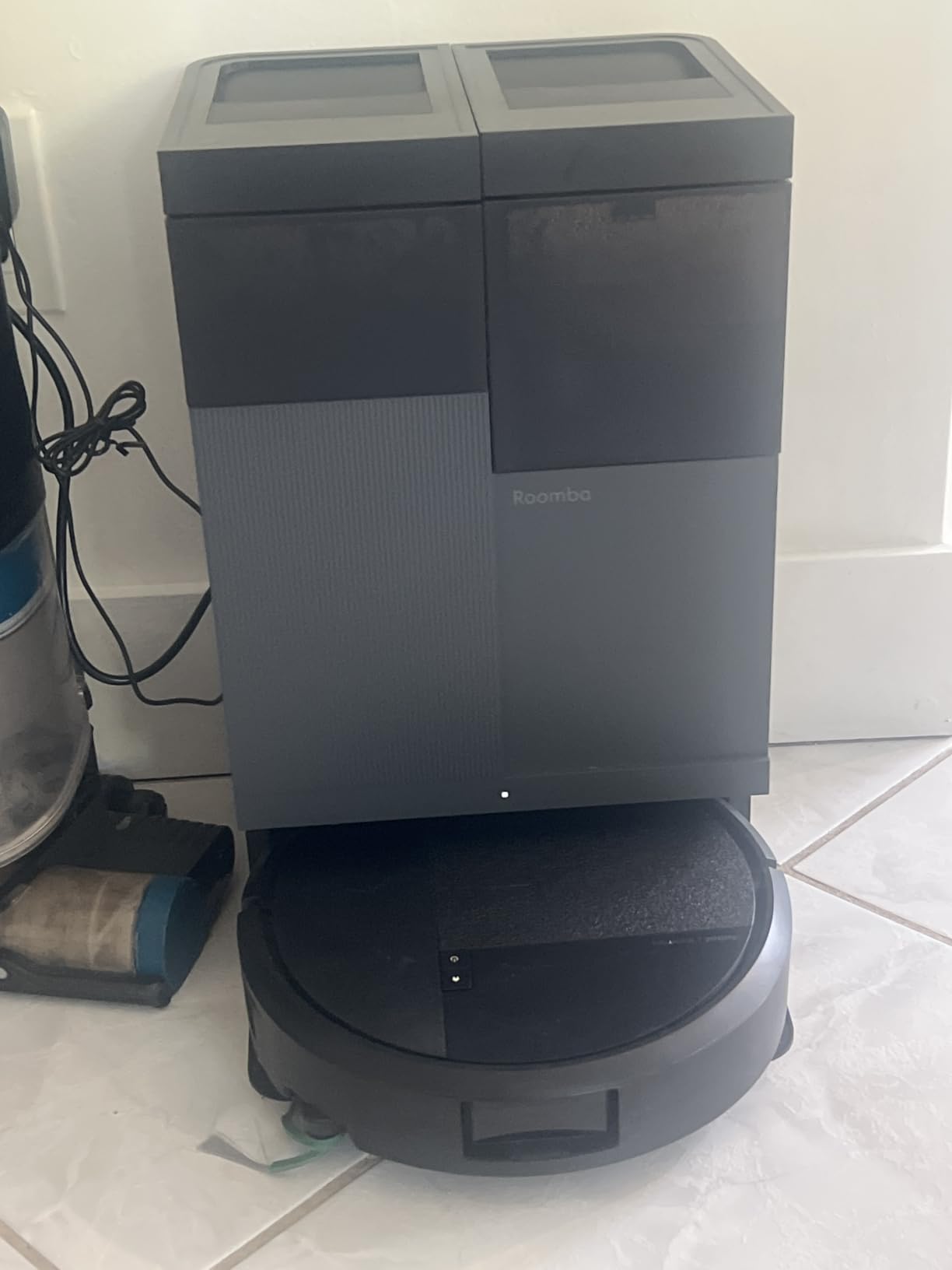
A self-emptying base is a docking station that works as a second, much larger dustbin. When the robot’s onboard bin fills, it drives back to the dock and a burst of suction transfers the debris into a bag or canister holding weeks of dirt. It is worth the premium if you run a robot three or more times a week. If you run it once a week in a small flat, a cheaper manual model makes more sense.
That distinction matters more than any spec on the box. The reason most robot vacuums end up abandoned is not suction, it is the daily chore of pulling out a small bin, tipping it into a bin, and rinsing it. A self-emptying base removes that chore entirely, and in a house with pets or allergies it removes the part where you touch collected dust at all. In our view of the category, the best robot vacuums with self emptying bases in 2026 are the ones where the dock is genuinely useful rather than decorative.
We compared ten of the strongest docks on the market right now, from a budget LiDAR machine to all-in-one stations that wash, dry and refill mops for you. Every pick below has a genuine auto-empty base, and we have flagged the bagged versus bagless question, the real capacity of each dock, the noise, and the floor space the base eats. If your home spans more than one level, our guide to the best robot vacuums for multiple floors covers the mapping side in more depth.
Table of Contents
Top 3 Robot Vacuums With Self-Emptying Bases in 2026
Three picks stand out above the rest, and each one answers a different need. The Roomba 105 Combo is the one most households should buy, because it combines a proven self-emptying dock with LiDAR mapping at a price that undercuts the premium tier. The eufy X10 Pro Omni is the value leader among all-in-one stations, washing and drying its own mops. The roborock Q7 M5+ is the budget pick, and it is the rare cheap robot that still maps properly.
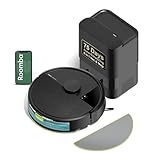
iRobot Roomba 105 Combo AutoEmpty
- 75-day self-emptying dock
- ClearView LiDAR mapping
- Simultaneous vacuum and mop

Best Robot Vacuums With Self-Emptying Bases in 2026
The table below puts all ten side by side. Features are drawn from the manufacturers’ own specifications, and the bagged or bagless column is the single fastest way to narrow the field, because it decides whether you will ever buy a consumable again.
| Product | Specifications | Action |
|---|---|---|
| iRobot Roomba 105 Combo AutoEmpty |
|
Check Latest Price |
| roborock Q7 M5+ |
|
Check Latest Price |
 Shark AV2501S AI Ultra Shark AV2501S AI Ultra |
|
Check Latest Price |
 eufy X10 Pro Omni eufy X10 Pro Omni |
|
Check Latest Price |
 iRobot Roomba 705X Combo iRobot Roomba 705X Combo |
|
Check Latest Price |
 iRobot Roomba 415X Combo iRobot Roomba 415X Combo |
|
Check Latest Price |
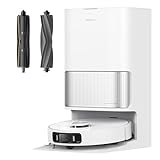 dreame L40s Ultra AE dreame L40s Ultra AE |
|
Check Latest Price |
 Shark PowerDetect AV2800ZE Shark PowerDetect AV2800ZE |
|
Check Latest Price |
 Shark Navigator AV2110S Shark Navigator AV2110S |
|
Check Latest Price |
 roborock Qrevo S Pro roborock Qrevo S Pro |
|
Check Latest Price |
1. iRobot Roomba 105 Combo AutoEmpty – Best Overall Self-Emptying Robot Vacuum
- Largest review base in this roundup
- LiDAR mapping with room labels and keep-out zones
- Carpet detection keeps rugs dry while mopping
- Bag changes only every couple of months
- Mopping will not replace a manual deep clean
- No advanced AI object recognition so clear cords first
- Noticeable noise in a quiet house
This is the machine we would put in the most homes, and the reason is not a single feature. It is the combination of a 75-day AutoEmpty dock, real LiDAR mapping and a vacuum that owners rate 4.4 out of 5 across more than 49k reviews. The dock traps particles as small as 0.7 microns, which matters if dust is your trigger.
Suction is genuinely strong for the money. Reviewers report that it picks up crumbs, dust and pet hair from hard floors and low-pile carpet, and the seven power levels let you trade noise for suction room by room. The body measures 4.09 inches tall, so it slides under most sofas and beds that stop taller robots.
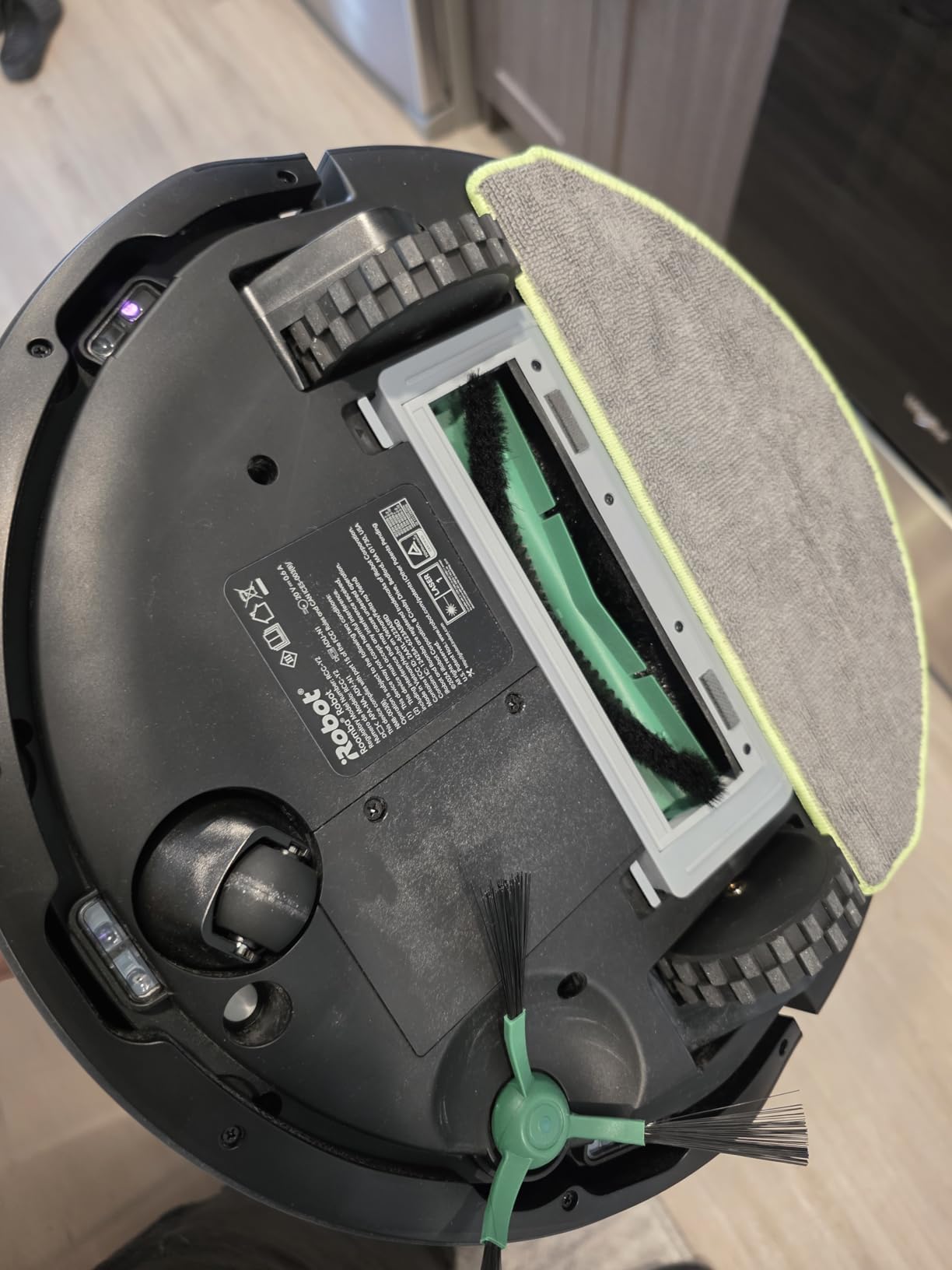
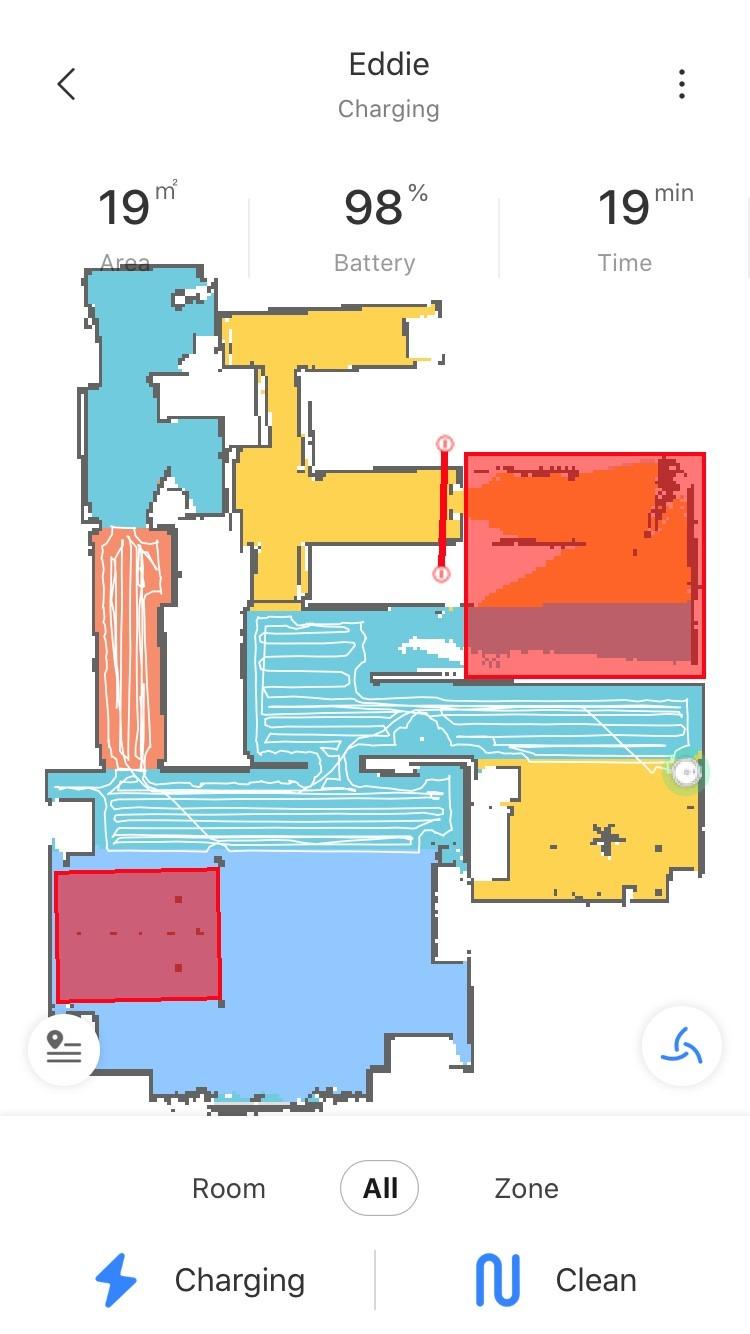
The mapping is the quiet hero here. ClearView LiDAR gives you usable room labels, keep-out zones and scheduling through the Roomba Home app, with time estimates and filter life shown in the same screen. Control works three ways, through voice assistant, the app or the buttons on the body, which matters when the phone is in another room.
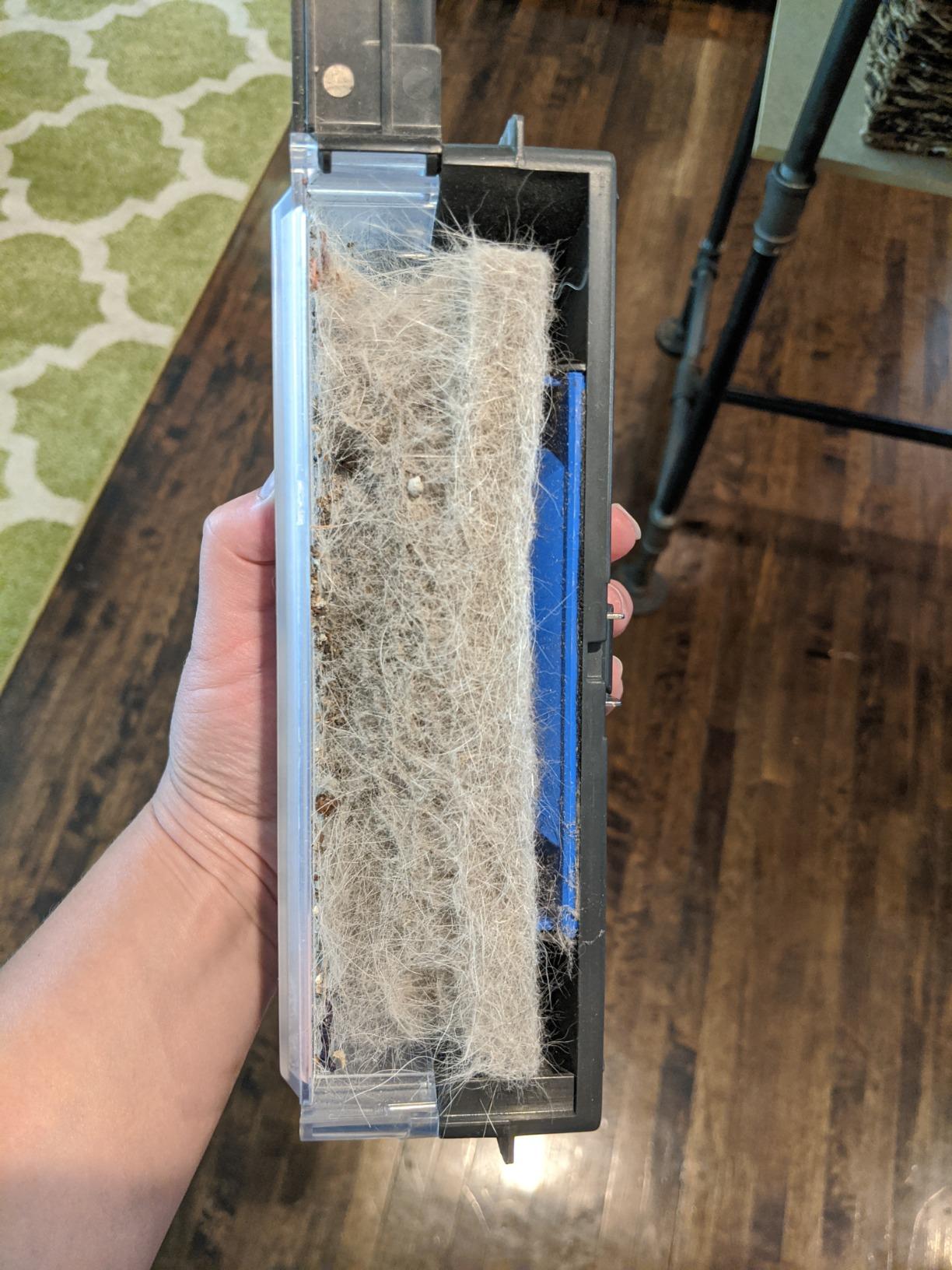
How well does the 75-day dock cope in a real pet household?
Plan on fewer days than the number on the box. The 75-day figure assumes a normal run schedule in a home without heavy shedding, and owners of shedding pets report replacing the bag on a much shorter cycle. The dock also has a bag-full sensor, so you get an alert rather than a silent overflow.
For a three-pet household running the robot daily, think in weeks rather than months. The bag is a sealed disposable type, which is the right call for allergy sufferers because you never open the canister.
What will cause problems in the first month?
Obstacle avoidance is the limitation to plan around. There is no advanced AI object recognition, so charging cables, socks and small toys should be picked up before a run, and reviews specifically flag this as a room-tidying habit rather than a fault. The mop pad also does not reach into tight corners the way the vacuum head does.
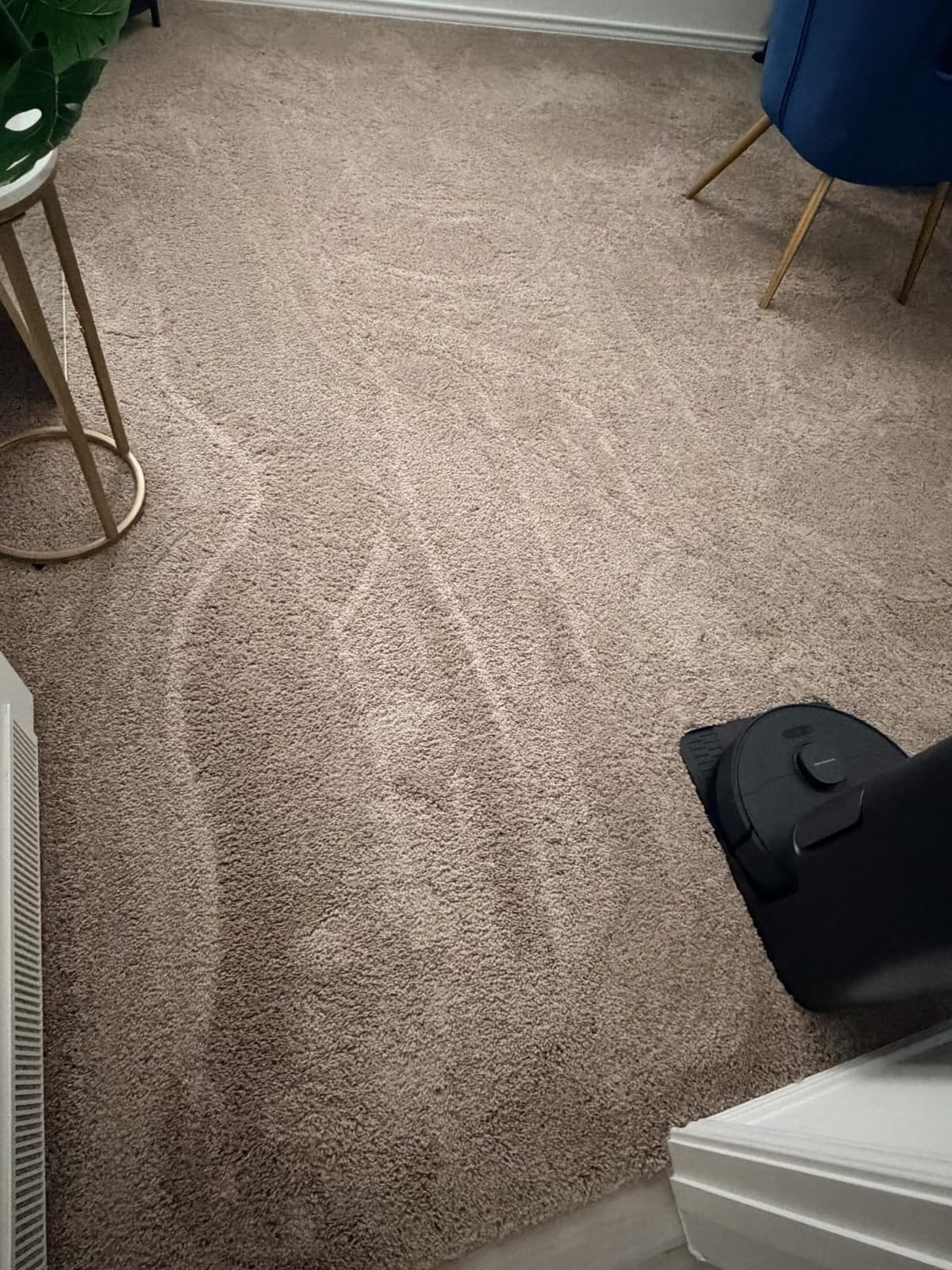
Mopping is a between-clean task, not a restoration. It uses a micro-pump for water control and SmartScrub scrubbing, and carpet detection lifts the mop away from rugs automatically. Owners treat it as a maintenance pass that keeps floors from needing a real mop.
2. roborock Q7 M5+ – Best Budget Self-Emptying Robot Vacuum
roborock Q7 M5+ Robot Vacuum and Mop, Up to 7-9 Weeks Self-Empty, 10000Pa
- Largest bagged capacity in this roundup at 2.7L
- PreciSense LiDAR mapping with no-go zones
- Dual anti-tangle system helps with pet hair
- VibraRise mops while vacuuming
- Onboard bin can fill before a long run ends
- Mop pad must be washed by hand
- App and firmware feel less polished than rivals
At the entry point of this roundup, the Q7 M5+ does something most cheap robots do not, which is map your home properly. PreciSense LiDAR with real-time mapping produces room labels and no-go zones within a couple of runs, and at 10000 Pa it has more suction headroom than most machines in its class.
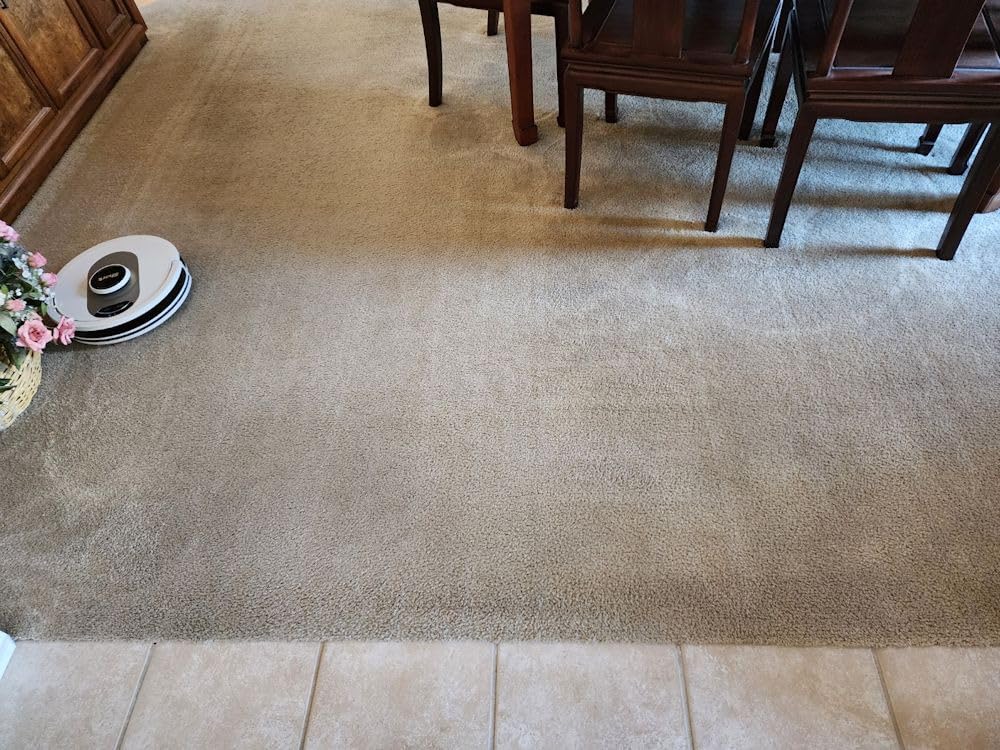
The RockDock Plus holds a 2.7L sealed bag, the biggest bagged capacity here, and roborock rates it at 7 to 9 weeks between changes. It is a vacuum-and-mop combo using VibraRise 2.0 with three water flow settings, and the four suction levels are easy to match to a room or a floor type.
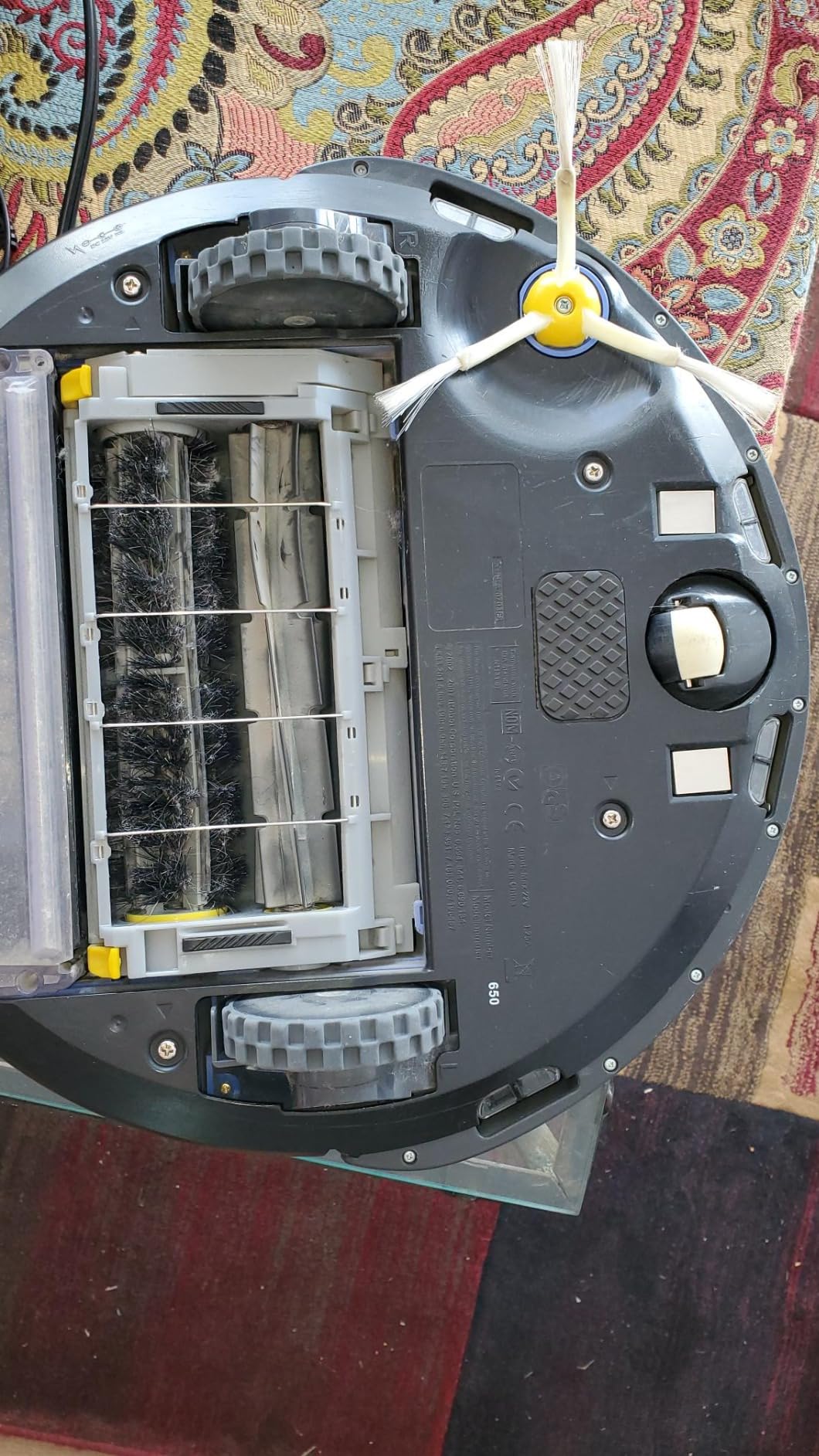
The dual anti-tangle design is the part pet owners mention most. The JawScrapers main brush and the side brush are both designed to resist long hair wrapping, which is the single biggest cause of early battery and brush failures on older robots.
It also runs quietly. The rated noise level is 65 dB, and owners describe it as quiet enough on balanced suction for most rooms, which is a genuine change from the machines that sound like a small aircraft.
Will a 150 minute runtime cover a large floor plan?
It should, with one caveat. The runtime rating of 150 minutes is longer than most of this list, and recharge and resume handles the gap when it runs out. The catch is the small onboard bin, which reviewers report can fill before a long run finishes, forcing a manual empty or a wait for the dock.
In a home over roughly 2,000 square feet, plan to schedule the robot in two blocks rather than one so the bin never becomes the limiting factor.
Is the mop worth using without a washing dock?
There is no automatic mop washing on this base. You rinse the pad by hand after each mopping run, which adds a step back that the all-in-one stations removed. Some owners simply do not mop with this model and use it as a vacuum only, which is a perfectly reasonable approach.
Documentation is thin, and the app has a beta-style map-saving toggle that has drawn criticism. Budget for a few minutes of fiddling in the first week.
3. Shark AV2501S AI Ultra – Best Bagless Self-Emptying Base for Pet Hair
- No disposable bags ever
- HEPA base captures 99.97 percent of 0.3 micron particles
- Matrix Clean grid coverage
- Works in the dark with LiDAR
- SharkClean app editing is spotty
- Scheduling is all or nothing
- Tall body misses lower furniture
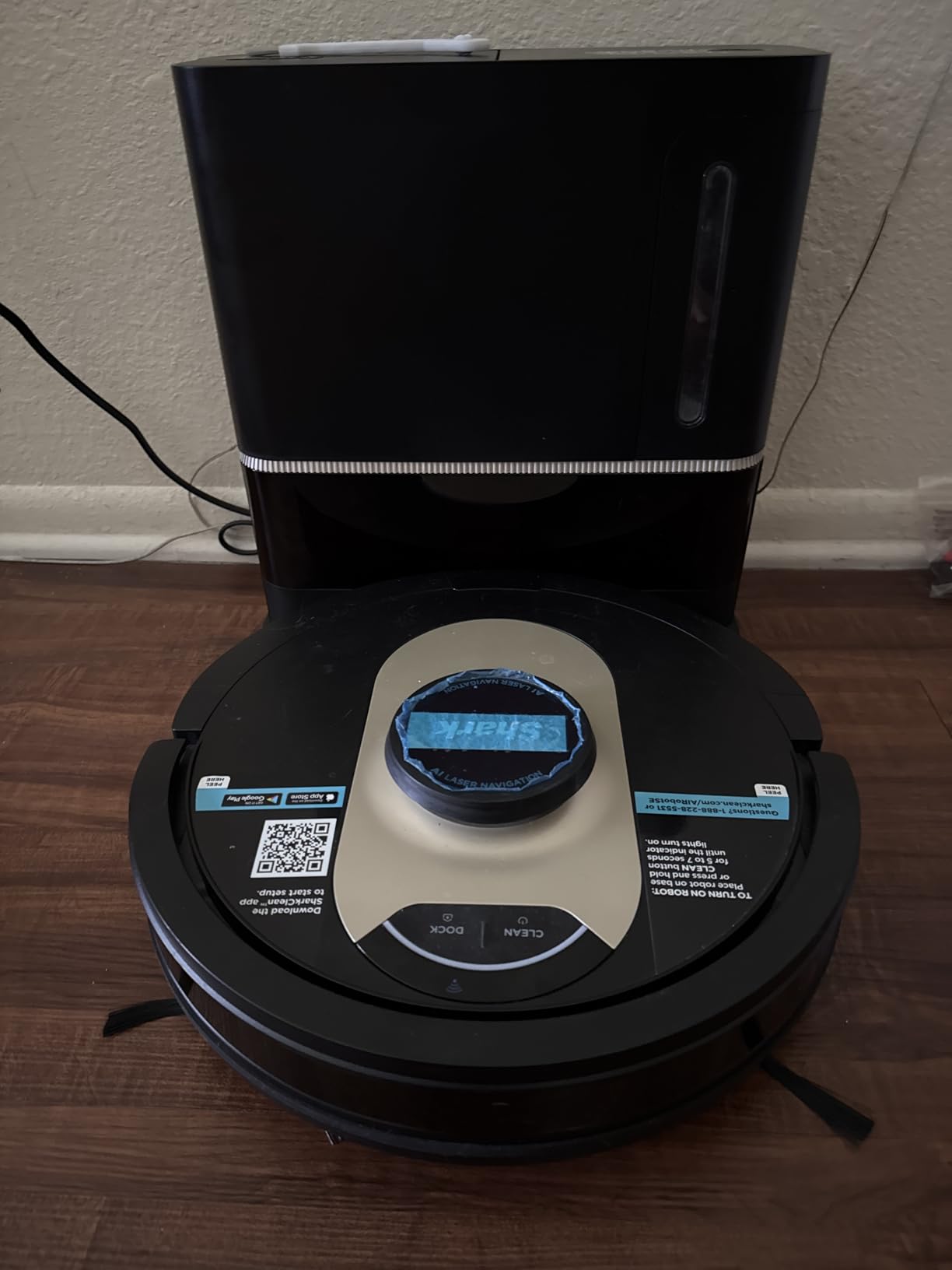
The reason this Shark shows up in a self-emptying roundup at all is the base. It is fully bagless, holding 30 days of capacity in a canister you empty yourself, and there is no consumable to buy, no bag to reorder and no plastic to bin. Owners who hate the recurring cost tend to gravitate here for exactly that reason.
Filtration is the other headline. True HEPA filtration in the base captures 99.97 percent of particles down to 0.3 microns, and the machine is built around pet hair and dander, which shows up in the reviews as visibly reduced hair on hard floors and rugs.
Coverage comes from Matrix Clean navigation, a grid pattern rather than the random wandering of older bots, combined with 360-degree LiDAR vision mapping. The battery is rated at 120 minutes with recharge and resume, and the low 4.1 inch body gets under beds and most furniture.
The one real trade-off with a bagless base is that you touch the dust again when you empty it. For an allergy sufferer that is the whole point of buying a self-emptying dock, and for anyone else it is a small weekly inconvenience in exchange for zero ongoing cost.
How much floor space does the base need, and can it go under a counter?
The robot itself is a manageable 13.7 inches square and 4.1 inches tall. The base is chunkier, and because the canister is bagless it holds real volume rather than a thin bag, so expect to give it a corner with a wall behind it and a nearby outlet. Plan the placement before the box arrives, because moving a bagless base is easier than moving a 25-pound all-in-one station.
Is the SharkClean app good enough to live with?
It is the weakest part of this package. Reviewers report spotty no-go zone editing, no live position display and all-or-nothing scheduling, which means you cannot schedule specific rooms the way you can with the Roomba or eufy apps. If per-room scheduling is part of your plan, look elsewhere or accept manual starts.
Obstacle detection is also not strong enough to reliably dodge pet accidents or small objects, and some owners reported cliff-sensor errors after extended use. Clear the floor before a run and the machine is otherwise capable.
4. eufy X10 Pro Omni – Best Value All-in-One Station
- Genuinely hands-off floor care with wash and heated dry
- AI.Map 3.0 with no-go zones
- 100+ object recognition via AI.See
- Quiet during normal runs
- Very heavy at 26.4 lbs
- Cleaning solution sold separately
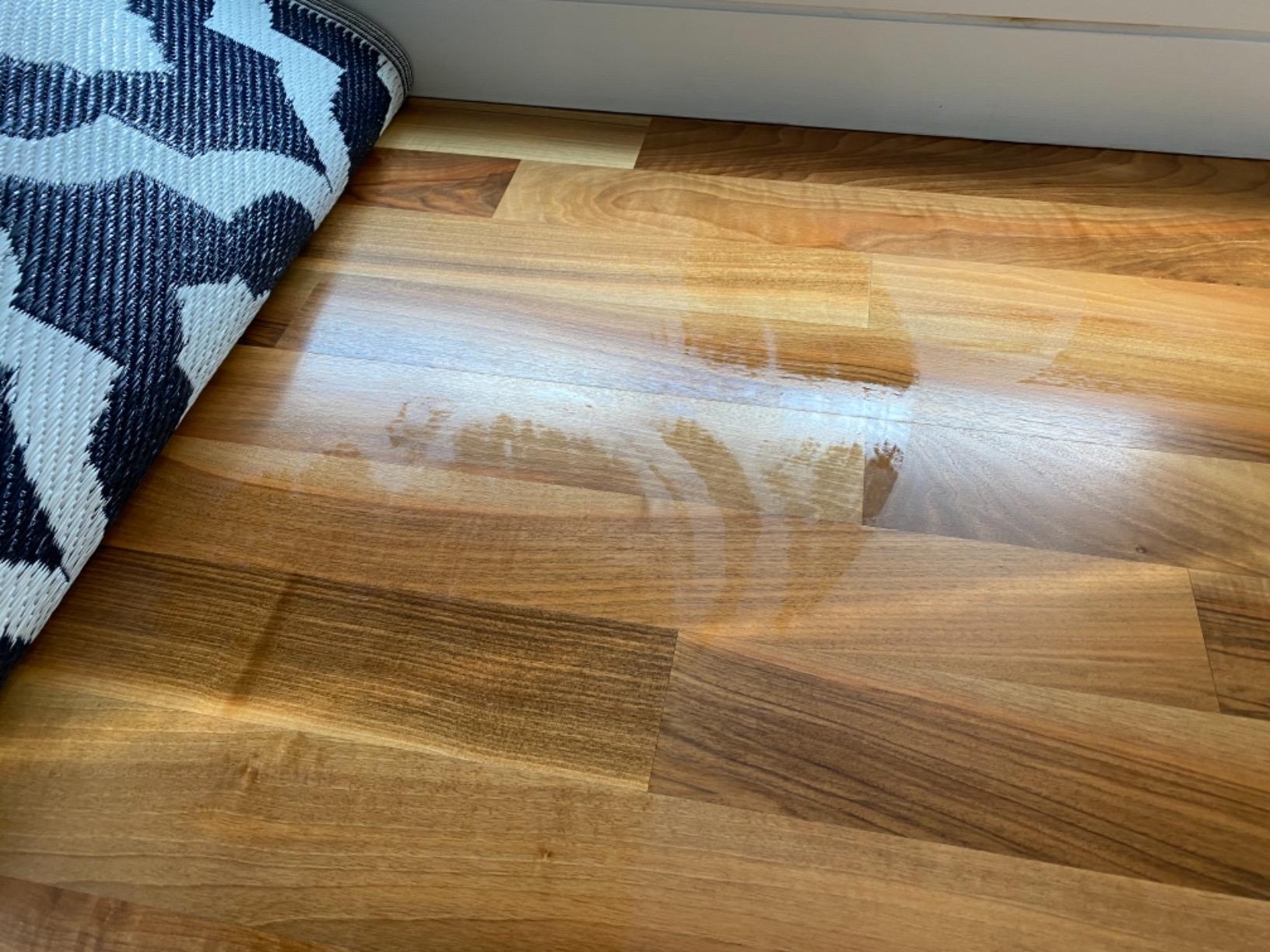
- Streaks possible on hardwood
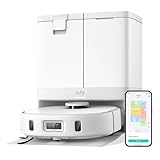
The X10 Pro Omni is the station to buy if you want floors vacuumed and mopped every day without touching either. The Omni dock empties the robot, washes the mop pads with fresh water and dries them with 45C heated air, which is the step that stops smelly pads and mildew. Almost nothing else in the category does all three this cleanly at this level.
Suction is 8000 Pa with a Pro-Detangling roller brush, and the app is well regarded for room scheduling, no-go zones and cleaning history. AI.See recognises more than 100 object types, which in practice means cords and shoes on the floor are treated as obstacles rather than obstacles for you to remove first.
The MopMaster 2.0 system is what makes the mopping usable in a mixed-floor home. Mops lift 12 mm automatically when the robot detects carpet, so you can vacuum and mop in one pass without arriving at the rug with a wet pad.
Runtime is not the strong suit here, and the listed battery life figure of 24 months reflects the pack warranty claim rather than a per-run time. The practical point is that the station refills a 3L clean water tank, so water is not your limiting factor.
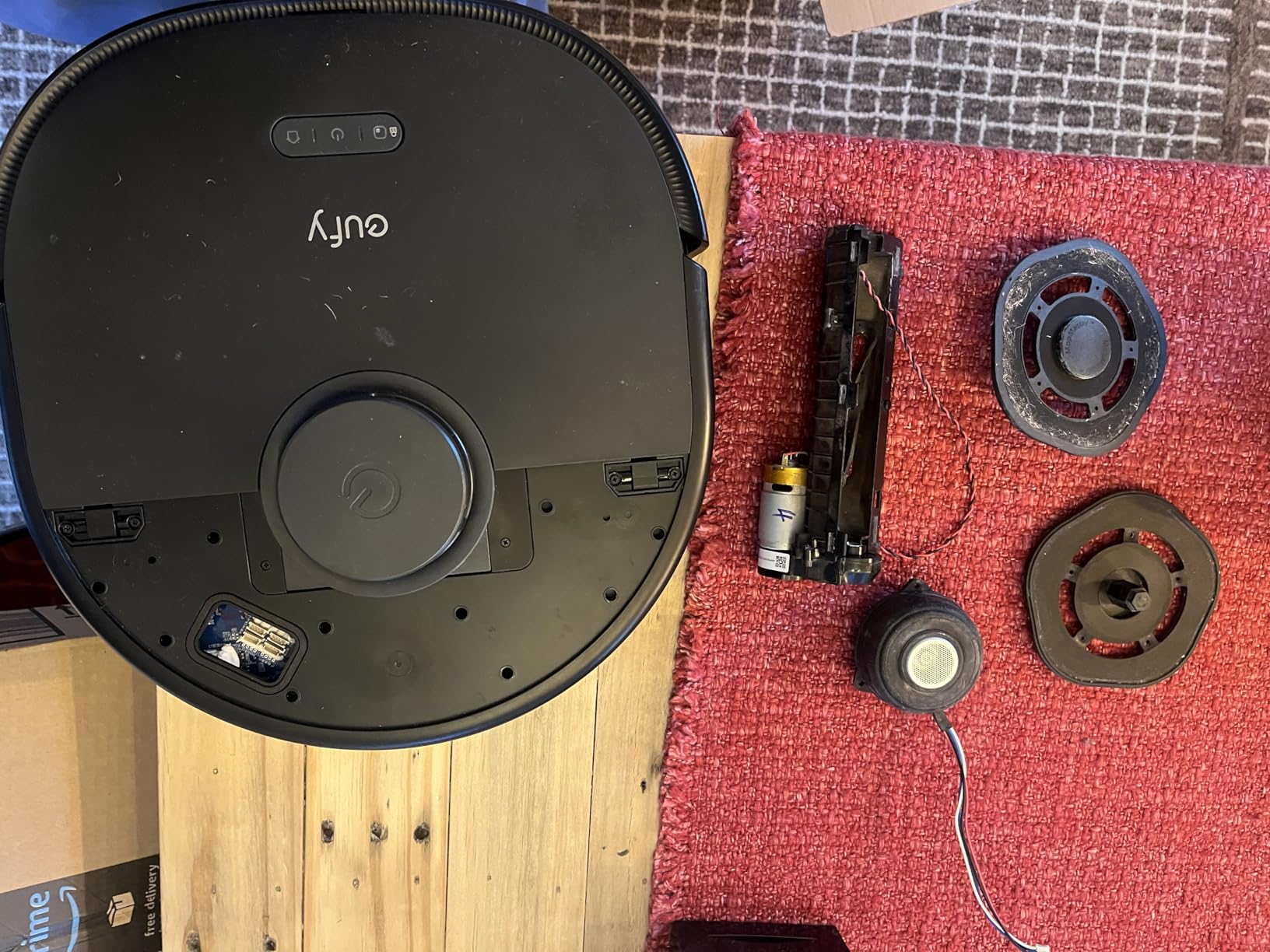
Can one person actually move this station?
This is the most important practical question with this machine, and the answer is not always. The package weighs 26.4 pounds and the base is large at roughly 16.5 inches square and 15 inches tall, so a two-person job is more realistic than a solo lift. Decide where the dock will live before delivery rather than after.
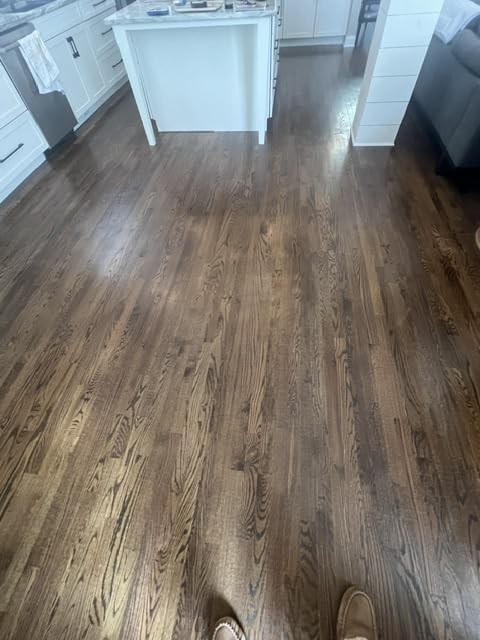
Beyond weight, hardwood owners report occasional streaks and swirl marks after mopping, and one mop pad can detach on rugs. If your main floor is bare wood, test on a small area first.
What does the all-in-one station cost you over its life?
Three recurring items sit beyond the machine itself. The 2.5L dust bag is replaced roughly every two months, the mop pads wash in the dock but still need replacing eventually, and eufy’s own cleaning solution is not included and has to be bought separately. Budget for all three rather than treating the dock as zero-maintenance.
Some owners also report docking, mopping or suction faults inside the first year, with slow support response. The one-year manufacturer warranty applies, so keep the packaging and the serial number somewhere safe.
5. iRobot Roomba 705X Combo – Best Self-Emptying Robot Vacuum for Mopping
- Heated mopping leaves tile visibly cleaner and cuts odors
- Dock empties
- washes
- dispenses solution and dries
- Camera AI handles cords and clutter well
- Carpet cover keeps rugs dry
- Very loud during empty and wash cycles
- Vacuum pickup average for the money
- Wash bay collects debris and needs cleaning
This is the machine to buy if mopping is the reason you are in the market. The PowerSpin roller mop runs at 200 RPM with heated water and SmartScrub pressure, and owners consistently call the heated wash a step change in floor care, with tile coming out noticeably cleaner and kitchen smells reduced.
The AutoWash Dock is the most complete we tested. It empties for 75 days, washes the mop, doses cleaning solution and hot-air dries, so your only routine task is refilling the clean water tank when the app tells you to.
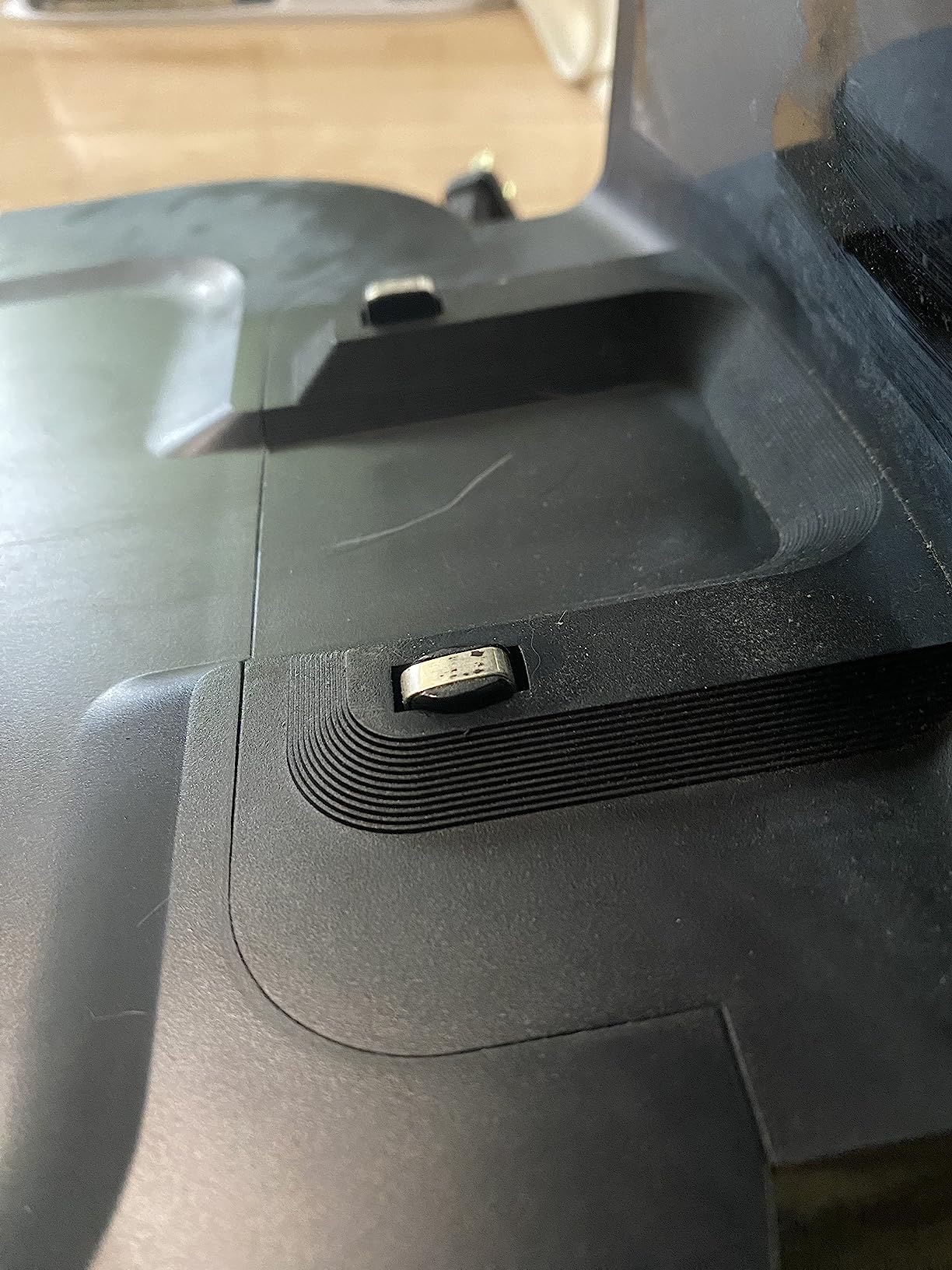
Obstacle handling is the technical strength. PrecisionVision AI camera recognition handles cords, socks and pet waste, which is the weakness of the LiDAR-only machines, and ClearView Pro LiDAR 3D mapping with auto room labels runs day or night and finds the dock reliably.
Suction is quoted at 175 times stronger than the Roomba 600 series with dual rubber brushes and automatic Carpet Boost. Whether that translates on your floors is another question, and more on that below.
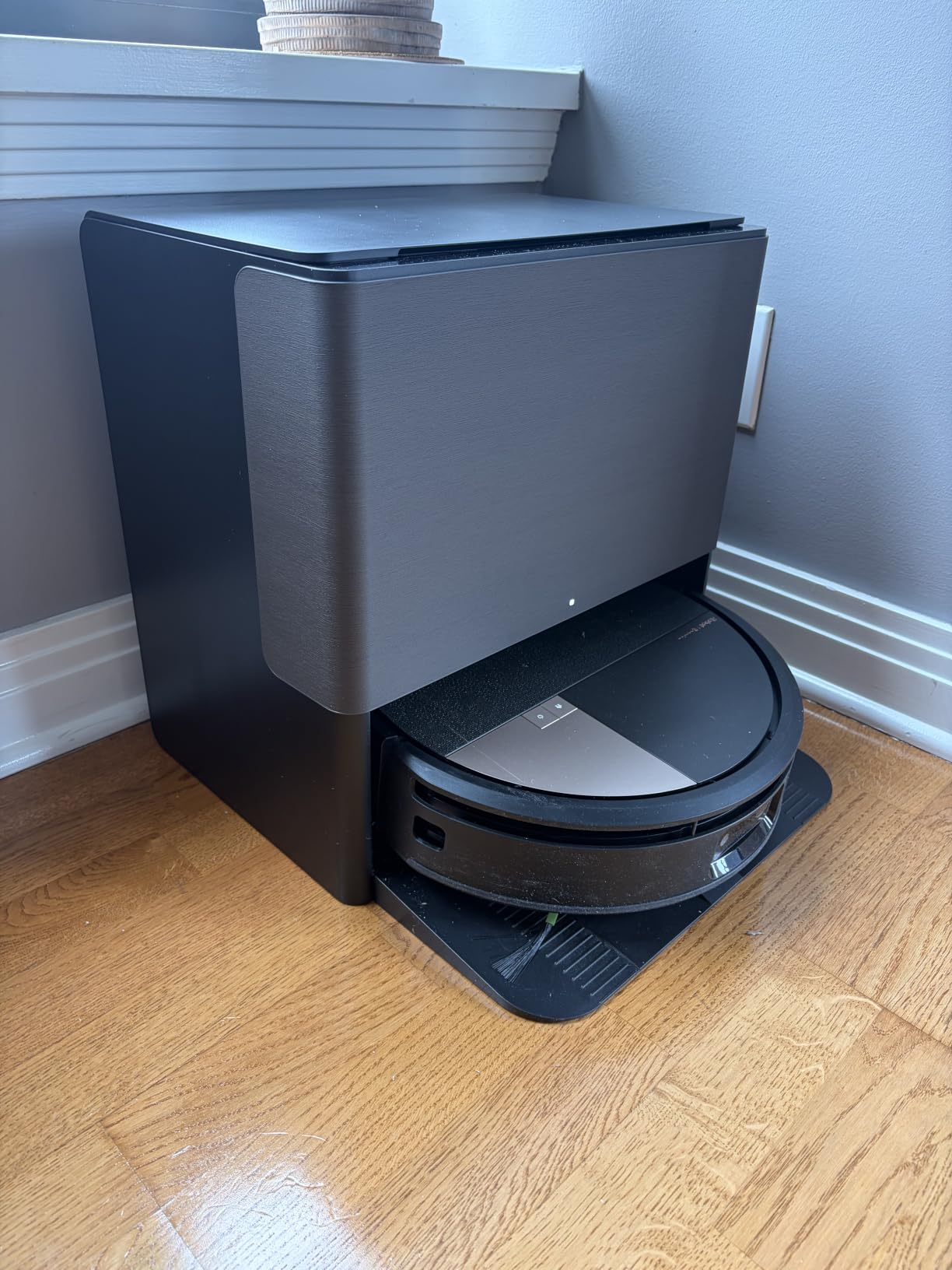
How loud is the self-emptying and wash cycle?
Loud, and worth planning for. This is the noisiest machine in the roundup, with owners flagging both the self-empty burst and the heated wash cycle as significantly louder than a standard vacuum. If the dock sits near a bedroom, hallway or home office, schedule runs for daytime and expect the wash to finish before you need quiet.
The upside of the noise is heat and pressure, and that is where the mopping quality comes from. Quieter docks on this list are the vacuum-only or bagless models.
What is the catch with the roller mop design?
The area around the roller inside the wash bay collects debris and needs frequent manual cleaning, which partially undoes the hands-free promise in a heavy-shedding home. The roller extends sideways for edge mopping and has a built-in carpet cover, so edges and rugs are both handled well.
Some owners feel the vacuum side does not deliver for a machine at this level, and mapping will not allow mop or keep-out zones right next to the dock, so leave a small buffer of floor around the base.
6. iRobot Roomba 415X Combo – Best Self-Emptying Robot for Low Furniture
iRobot Roomba 415X Robot Vacuum & Mop Combo, 2.3X Suction, 90 Days Self-Emptying, Multifunction Dock Self-Cleaning & Hot Dry, Smart Obstacle Avoidance, Lifting Spinning Mops, Ideal for Pet Hair
- Slimmest body here at 3.29 inches
- 10 mm mop lifting keeps rugs dry
- 90-day dock plus automatic water refill
- Tangle-free rubber brushes suit pet fur
- Obstacle avoidance below camera-based premium rivals
- Heavy base at 24.1 lbs
- Modest suction compared with high-Pa rivals
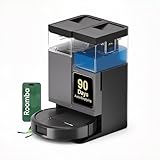
Height is the reason to buy this one. At 3.29 inches tall it is roughly 46 percent slimmer than the Roomba 105, and that is the difference between cleaning under a low sofa and staring at the underside of it. The rest of the specification is a competent, current-generation dock.
The AutoWash Dock handles a long list: it empties debris for up to 90 days, refills the water tank automatically, and washes and heat-dries the mop pads at 113F after every run. DualClean mop pads lift 10 mm over rugs, so a single pass can cover hard floor and carpet.
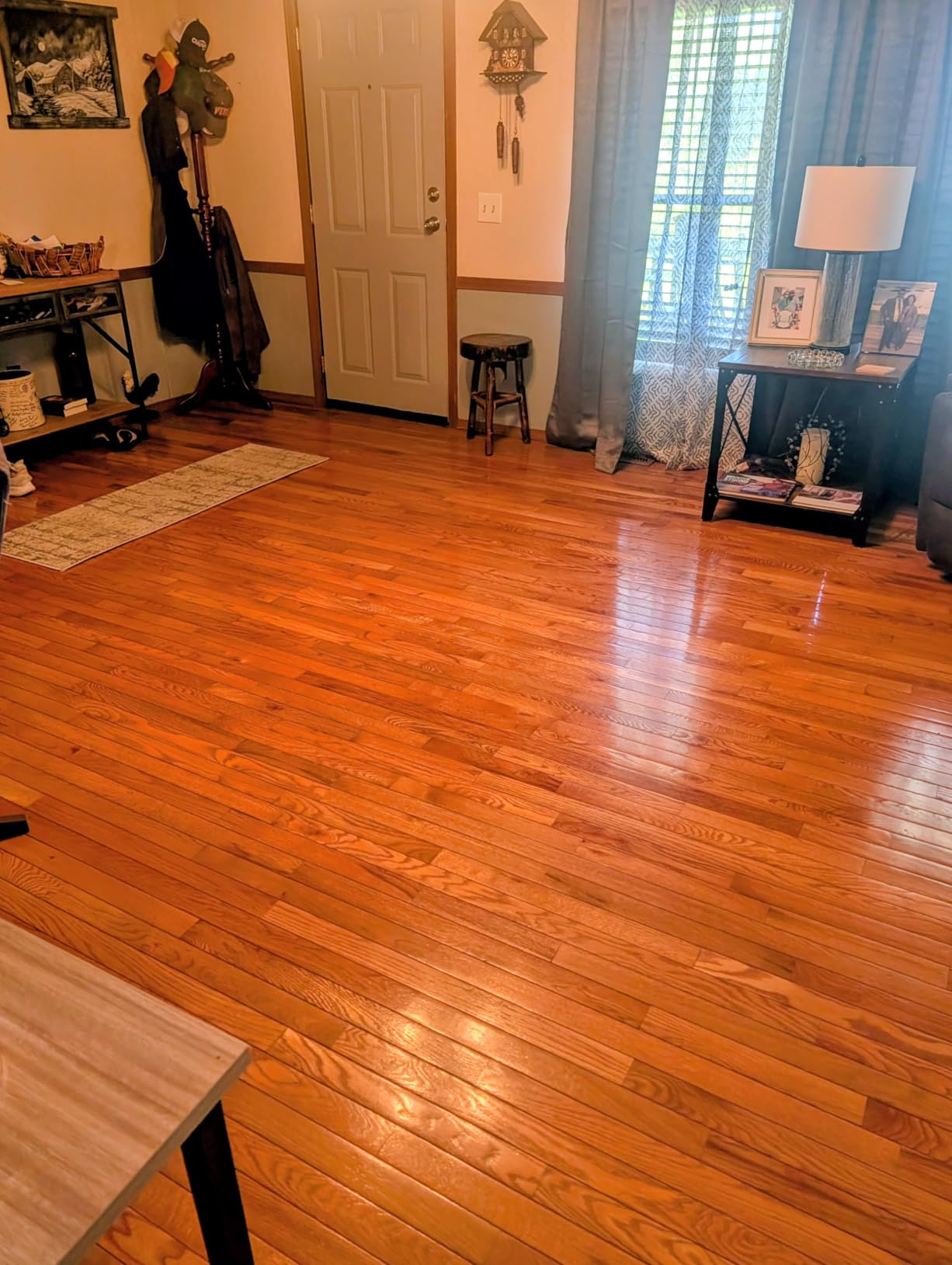
Suction is quoted at 2.3 times the previous generation with SmartScrub applying extra pressure to dried food, muddy paw prints and kitchen splatter. Tangle-free rubber brushes are the feature pet owners praise most, since they shed fur instead of wrapping it around the axle.
LiDAR mapping with obstacle recognition handles cords, shoes and toys, and control runs through the app, buttons or voice with room targeting and scheduling. A six-hour battery figure is listed, which is the pack rating rather than a single run.
Is 3.29 inches slim enough for a typical living room?
For most sofas and armchairs, yes, and it clears the toe space under kitchen cabinets that a taller machine cannot reach. The body is 11.7 by 11.9 inches, so it also turns tighter in tight hallways. What it will not do is climb thresholds as confidently as a lighter robot, so test the transitions between rooms before relying on a single whole-floor run.
How much trust should a newer Roomba line get?
The review base is much smaller than the established Roomba lines, at roughly 11k ratings, so long-term reliability data is thinner. The one-star share is lower than several rivals here, which is a mild positive, but a machine with less field history deserves a closer eye during the warranty period. Keep the dock wash bay clean and expect to wipe it periodically.
Obstacle avoidance is less capable than the camera-based premium models, so clear the floor the same way you would with any LiDAR-only machine.
7. dreame L40s Ultra AE – Best Self-Emptying Robot Vacuum for Raw Suction
dreame L40s Ultra AE Robot Vacuum and Mop, Self Emptying & Auto Refill
- Highest suction figure in this roundup
- TriCut brush built to prevent long-hair tangles
- Dock empties
- washes at 149F and hot-air dries
- Video calls and two-way voice for pet monitoring
- Only 219 ratings so far
- Very heavy at 30 lbs with a 26 inch tall base
- 2.4GHz Wi-Fi only
On paper this is the most capable vacuum here. The 19,000Pa Vormax figure is the highest number in the roundup, and the PowerDock base holds 100 days of debris, washes mops with water heated to 149F and finishes with hot-air drying. The included kit is generous, with two dust bags, two mop pads and a base ramp extension.
The brush system is thoughtful for shedding homes. A TriCut anti-tangle brush sits alongside a liftable rubber main brush, so you can change the tool depending on whether the run is carpet or hard floor, and MopExtend expands the pad toward edges and under low furniture.
Obstacle avoidance is 3DAdapt AI across more than 120 object types, and there are real-time video calls with two-way voice, which effectively turns the dock into a pet camera and baby monitor. Mops lift up to 10.5 mm with smart carpet modes that can boost suction, lift the mop or avoid the zone entirely.
Battery life is rated at 180 minutes, the joint-longest in this list alongside the Qrevo S Pro, and the robot is listed for wood, tile and marble.
How much should you trust a machine with a small review base?
With 219 ratings, this is the least battle-tested pick here and we want to be straightforward about that. Ratings are strong and heavily skewed positive, with owners citing suction, brush design and the dock, but there is no long-term reliability picture yet. Treat the first year as the evaluation period and keep the packaging.
It is also a newer brand with a less established service and parts network than iRobot or SharkNinja, which matters most if something fails outside the warranty.
Will it fit in your space, and on your network?
Probably not, if your storage is modest. The base is listed at 30 pounds with dimensions of 18 by 17 by 26 inches, so it towers over the other docks in this roundup and needs a real corner rather than a gap beside the washing machine. The robot and dock are also noted as a two-person lift.
It connects on 2.4GHz Wi-Fi only, which means a 5GHz-only home network will need a router change before setup.
8. Shark PowerDetect AV2800ZE – Best Self-Emptying Robot Vacuum for Hard Floors
- Bagless 60-day capacity with odor neutralizer cartridges
- Base refills water and washes and dries the pad
- Vacuum and mop in a single pass
- NeverStuck handles thresholds
- SharkClean app is the biggest complaint
- Weaker carpet hair pickup than hard floors
- Bush bar can develop a clacking noise
The PowerDetect is built for a home that is mostly hard floor, and its base is the reason to look at it. The XL bagless base holds 60 days of debris, refills the water tank for about 30 days, and washes and dries the pad, so the machine is genuinely hands-free without a single consumable bag. Two odor neutralizer cartridges are included.
Five PowerDetect technologies drive the cleaning, and two of them matter most. DirtDetect boosts suction when it senses debris, and StainDetect adds extra mopping passes to a mark it finds, which is how a single pass can handle both vacuuming and mopping through sonic mopping.
Edge work is unusually thorough for this price. EdgeDetect fires an air blast along the baseboards and the mop pad extends up to an inch into corners, so the edges that most robots miss get done on the same run.
360-degree LiDAR navigation with 3D sensors builds the map, and five suction power levels cover the range from daily crumbs to deep carpet. Runtime is rated at 120 minutes, with NeverStuck technology lifting the robot over thresholds and carpet transitions.
What will the bagless 60-day base cost you in inconvenience?
Nothing in consumables, and that is the appeal. In return you empty a canister every couple of months and you touch the dust, and the canister and the robot filters need cleaning more often than a sealed bag would. For an allergy sufferer who must not handle collected dust, choose a bagged base instead.
The base is a substantial object at roughly 18.8 by 14.3 by 17.6 inches and 25 pounds, so give it a proper corner rather than tucking it behind a curtain.
Is the SharkClean app a dealbreaker?
For some buyers, yes. It is the single most common complaint in the reviews, specifically that there is no per-room scheduling and that map storage has failed outright for some users after months of use. If you rely on running the kitchen nightly and the living room twice a week, that limitation is real.
On the vacuum side, carpet hair pickup is weaker than on hard surfaces, the brush bar can develop a loud clacking noise, and there are isolated reports of a side-brush motor failure that stopped the unit working.
9. Shark Navigator AV2110S – Best Self-Emptying Robot Vacuum for Small Homes
- Lightest robot in the roundup at 11.7 lbs
- Anti-hair wrap brushroll
- Bagless base with no consumables
- Recharge and resume for larger homes
- Vacuum only with no mopping
- SharkClean scheduling limits
- Modest deep-carpet suction
If your objection to self-emptying robots is floor space, this is the one to look at. The Navigator weighs 11.7 pounds, the lightest robot in the roundup by a wide margin, and the base measures 16.7 by 12.3 by 11.5 inches, which is compact enough for a hall cupboard or beside a washer.
Like the other Shark bases here it is bagless, so there are no disposal bags to buy, and the 30-day capacity is a sensible interval for a smaller home. Emptying it is a matter of lifting out a canister and tipping it.
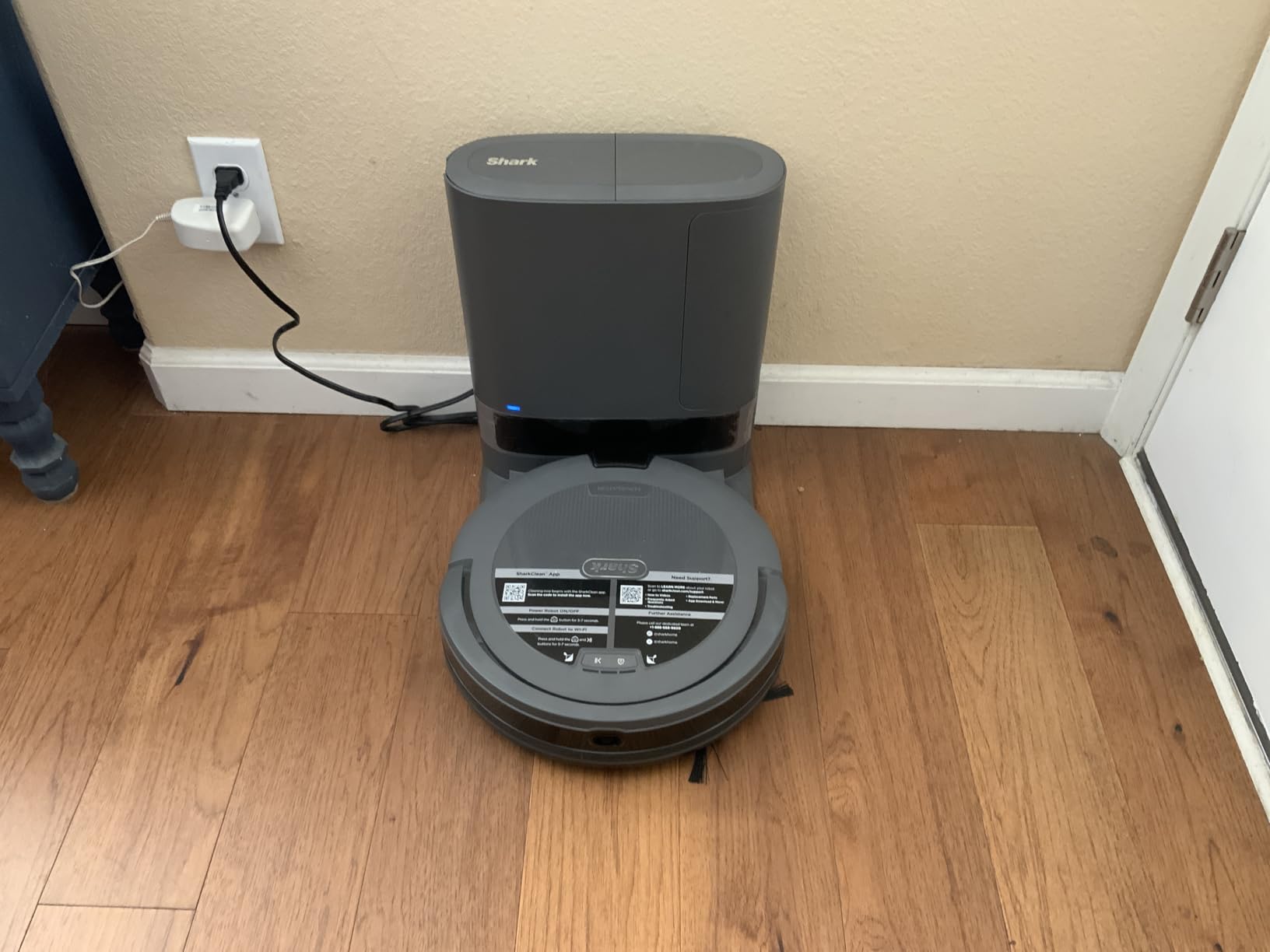
Navigation uses SmartPath LiDAR for row-by-row cleaning, which the manufacturer rates at up to 1.5 times the coverage of the older Shark ION. Object detection and avoidance sensors are fitted, and recharge and resume means a long run continues after a charge rather than stopping where it ran out.
The self-cleaning brushroll with anti-hair wrap is the feature owners mention for pet households, and three suction power levels are available for balancing noise against pickup.
What do you give up compared with the bigger docks?
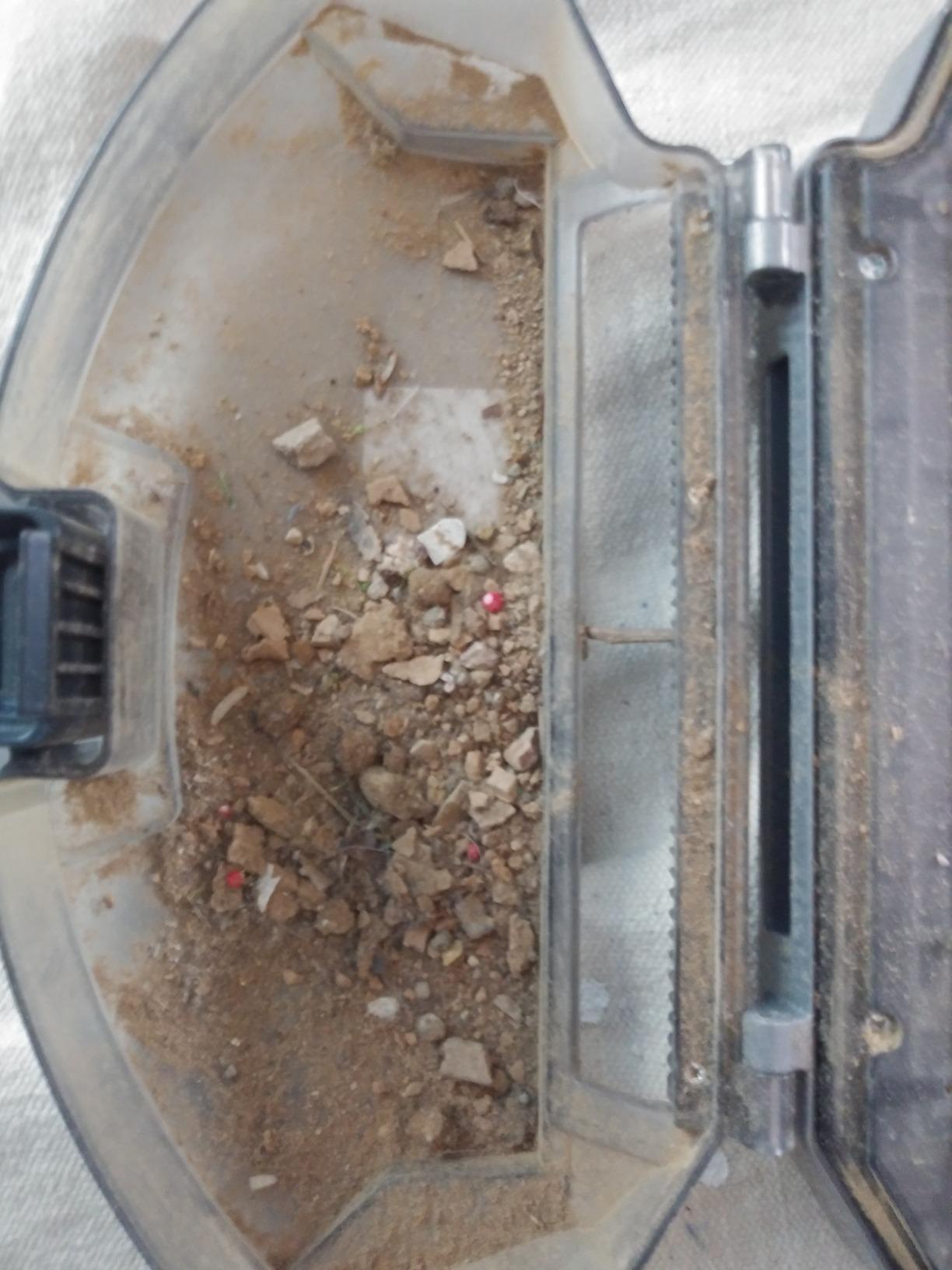
Three things. It is vacuum only, so hard floors that need mopping are not covered and you will still mop by hand. The on-board bin is small at 0.21 quarts, so it leans on the dock and empties more often during a long run. And the suction is modest next to the 18,000Pa and 19,000Pa machines, which shows on deep carpet.
If your home is genuinely small, those trade-offs cost you very little. If you have thick carpet, they are the whole story.
Is the app limiting?
The same SharkClean constraints apply here, including limited scheduling flexibility. Schedules, no-go zones, spot clean, Alexa and Google Voice are all supported, but expect fewer room-by-room options than the Roborock or Roomba apps offer.
It is a simple machine with a straightforward job, and at this review count the early record is solid rather than exceptional.
10. roborock Qrevo S Pro – Best Premium Self-Emptying Robot Vacuum
roborock 2026 New Qrevo S Pro Robot Vacuum and Mop, 18,500Pa Suction
- Quietest operating noise in the roundup at 55 dB
- Zero-tangle system genuinely reduces hair wrap
- Dock handles bag wash dry and refill
- 3.1 inch body cleans under low furniture
- 2.4GHz Wi-Fi only
- Dock and robot are heavy at 25.6 lbs
- Costs more than entry-level models
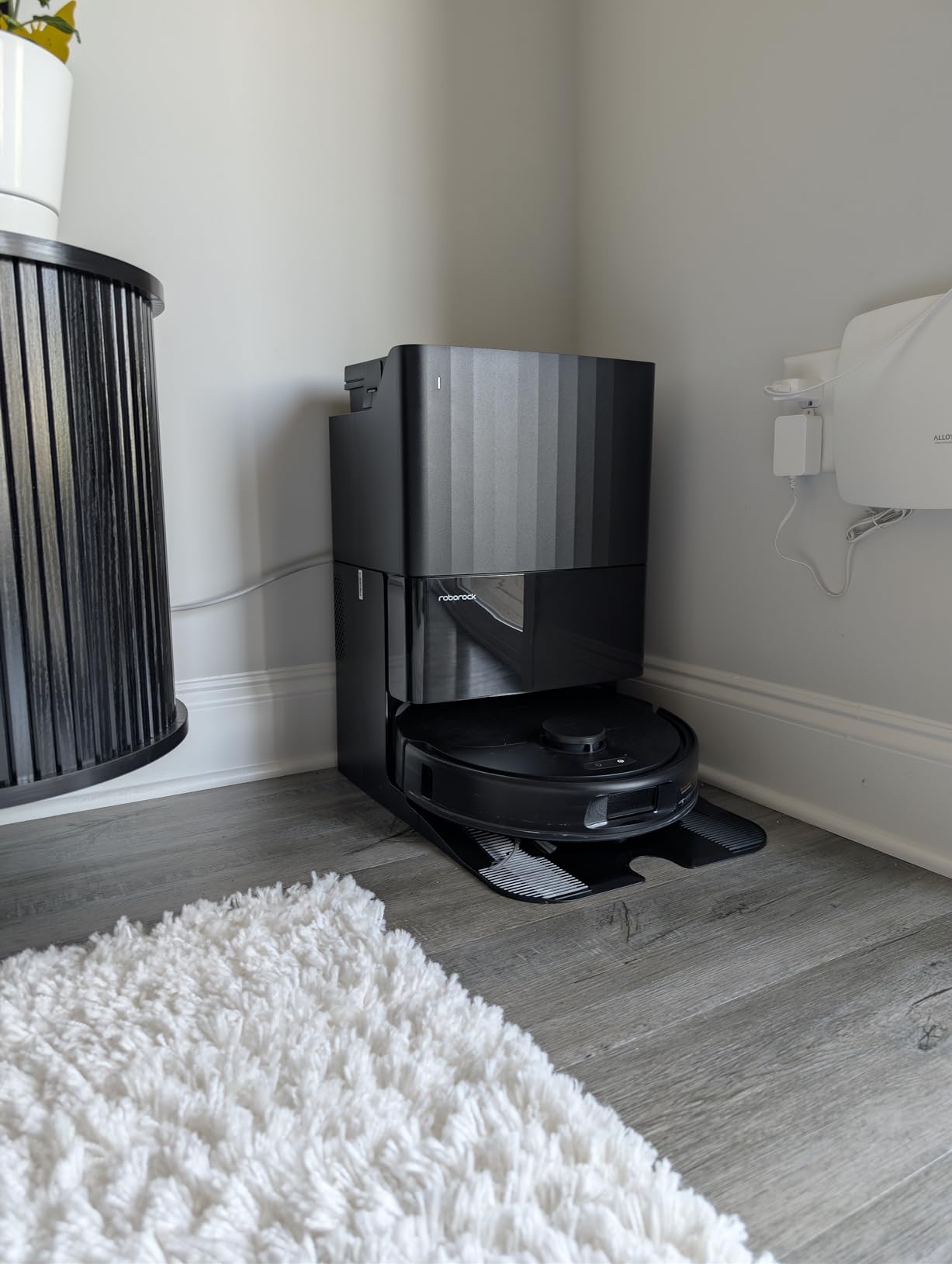
The Qrevo S Pro is the one to consider if you have a large floor plan and a low tolerance for noise. At a rated 55 dB it is the quietest machine here, which matters enormously if the dock is anywhere near where you work, sleep or watch television. The auto-empty burst is correspondingly restrained.
Suction is 18,500 Pa, the second-highest figure in this roundup, and the dock is fully automated: a 2.7L sealed bag rated at 7 to 9 weeks, mop cleaning at 167F, warm air drying at 113F and a self-refilling clean water tank. There is nothing routine left to do.
The anti-tangle system is the most substantive engineering claim, with a zero-tangle side brush and an all-rubber main brush. Owners of long-haired pets rate it as a real improvement over older robo designs rather than a marketing line, and SmartPlan 2.0 adjusts the clean automatically based on what the sensors report.
Dual spinning mops lift 10 mm over carpet, and the body is 3.1 inches tall, so it reaches under beds and sofas while still carrying 180 minutes of rated battery life.
What are the setup traps?
Wi-Fi is the big one. This machine is 2.4GHz only, so a modern dual-band or mesh-only network can refuse to connect and force a router change before the first run. Check your network before delivery, because troubleshooting it afterwards is frustrating.
The dock is also genuinely heavy at 25.6 pounds for the package, and with 19.17 by 20.51 inch dimensions you need a corner that can carry it. If the dock location changes later, plan for two people.
How much supervision does SmartPlan 2.0 need?
Less than you would expect, but not none. Owners of complicated multi-room layouts report that the automated behaviour occasionally needs manual correction, so check the first few maps before letting it run unattended for a week. Noise and mapping controls are all in the Roborock app, along with multi-floor maps and no-go zones.
It costs more than the entry-level self-emptying models, and at this review count the long-term record is still being written.
How to Choose a Self-Emptying Robot Vacuum in 2026
Once you have narrowed the field to machines with a real dock, five decisions do most of the work. The order matters, because the first two eliminate options faster than any spec sheet.
Bagged vs bagless base: which one suits your household
This is the single most decision-relevant question, and it comes down to whether you can tolerate touching dust. A bagged base seals everything in a disposable bag, so you lift out a full bag, tie it shut and bin it. You never see the contents, and the seal also helps with allergens. A bagless base empties into a reusable canister or cyclonic chamber, which removes every ongoing consumable but puts the dust back in your hands.
For allergy sufferers and asthma households, bagged wins outright. For everyone else who dislikes recurring purchases, bagless wins on running cost. Three of the ten models here are bagless, the two Shark bagless models and the PowerDetect, and they are the ones that will never make you order a spare.
Realistic days of debris, and why the marketing number lies
The 30, 60, 75 and 100-day figures on the boxes are laboratory numbers. They assume a fixed run schedule, an average debris load and a home without heavy shedding. Forum owners running a robot daily in a multi-pet house consistently report changing the bag far sooner than the claim, often on a cycle of a few weeks rather than a few months.
Divide the advertised figure by two as a starting point for a shedding household, and by a smaller margin for a child-free, mostly-hard-floor home. The dock’s bag-full sensor is the real safeguard, so enable notifications in the app and you will not find an overflowing base.
LiDAR vs camera navigation and obstacle avoidance
LiDAR builds accurate maps and works in the dark, which is why most of this list uses it. Camera-based object recognition sees cords, shoes and pet waste that LiDAR cannot, which is why the premium Roomba models pair it with LiDAR. The strongest combinations here use both.
A practical note: suction power in pascals is a poor proxy for real pickup. The spread in this roundup runs from 8,000 Pa to 19,000 Pa, and the lower figure is on a machine owners rate highly for pet hair. Brush design, wheel suspension and how long the robot spends on a spot matter more than the headline number.
How loud is the auto-empty burst, and how to schedule around it
The empty burst lasts a few seconds and sounds like a brief hair dryer, which is fine in most homes. The machines with heated mop washing add much longer, louder cycles, and the Roomba 705X stands out as the noisiest overall. The quietest is the Qrevo S Pro at a rated 55 dB, with the roborock Q7 M5+ rated at 65 dB.
If the dock sits near a bedroom, schedule cleans for the middle of the day and avoid evening runs on days when the mop will wash. Positioning the dock in a utility space rather than a hallway solves most of the problem outright.
Where the dock goes and how much floor it eats
This is the objection that decides more purchases than suction does, and it comes up constantly in home design groups. The robot bodies here run from 11.7 to 14.7 inches across and 3.1 to 4.1 inches tall. The bases are the problem, ranging from the compact Shark Navigator to the dreame L40s tower at 26 inches high and 30 pounds.
Choose a spot near an outlet, against a wall, out of direct sunlight, with clear floor in front of it for the robot to dock and about 1.5 feet of clearance to the sides. Cord management matters more with the bagged stations that need continuous power. If the only available space is a small apartment, the Navigator and the Q7 M5+ are the two that fit comfortably.
What a self-emptying robot costs to run each year
Running cost is where the bagged and bagless camps diverge sharply. A bagged dock needs roughly four to twelve replacement bags a year depending on household shedding, and the self-cleaning mop stations add pads and cleaning solution on top. A bagless dock has no consumable cost at all, only filter cleaning.
Whether self-emptying is worth it comes down to how often you would otherwise run the robot. Someone running three or four times a week gains hours and never touches a bin. Someone running once a week in a one-bedroom flat saves the time of a single weekly empty, and a cheaper manual robot is the more sensible purchase. Forum pricing conversations also tend to cluster around the mid-hundreds as the point where self-emptying stops feeling expensive.
One more thing worth checking before you buy: the average lifespan people report for a robot vacuum is several years rather than a decade, and the dock is usually the first part to fail. Buy from a brand with a service network in your country, not only the highest specification.
Frequently Asked Questions
What robot vacuum has an auto-emptying dock?
Almost every major brand now offers one. iRobot’s Roomba 105 Combo, 415X and 705X, Roborock’s Q7 M5+ and Qrevo S Pro, eufy’s X10 Pro Omni, Shark’s AV2501S, PowerDetect and Navigator, and the dreame L40s Ultra all include a base that empties the robot’s bin automatically. The Roomba 105 Combo, the eufy X10 Pro Omni and the roborock Q7 M5+ are the strongest starting points for most homes.
Is a self-emptying robot vacuum worth it?
Yes, if you run a robot three or more times a week, own a shedding pet, or have allergies. The dock removes the daily bin-emptying chore that causes most people to stop using their machines, and bagged models mean you never touch collected dust. If you run a robot once a week in a small flat and do not want a large base on your floor, a cheaper manual model is the better buy.
Are robotic vacuums noisy?
They are audible but not loud during normal cleaning, and most owners report that a robot running in another room becomes background noise within a few minutes. The noisiest moments are the auto-empty burst and, on all-in-one stations, the heated mop wash and dry cycle. The roborock Qrevo S Pro is rated at 55 dB, the roborock Q7 M5+ at 65 dB, and the iRobot Roomba 705X is the loudest in our roundup.
Which robotic vacuum is the quietest?
Among the self-emptying models we compared, the roborock Qrevo S Pro is the quietest, with a rated operating noise of 55 dB and a dock cycle that owners rarely describe as intrusive. The roborock Q7 M5+ follows at a rated 65 dB, and the Shark AV2501S and PowerDetect are also described by owners as relatively quiet. The iRobot Roomba 705X is the loudest because of its heated mop wash.
What are the downsides of using a robotic vacuum cleaner?
The main drawbacks are the floor space the base occupies, the noise during the empty and wash cycles, and the fact that no robot handles every edge or corner as well as a handheld does. Cords and small objects still need clearing on models without camera-based object recognition, and a full bin or a blocked dock will stop a run. Most people also find the app setup takes a few attempts.
How long do self-emptying robot vacuum bags last?
It depends far more on your household than on the label. The advertised 30 to 100 day figures assume a set run schedule and modest debris. In a home with shedding pets, owners commonly report a bag lasting a few weeks rather than a few months, while a child-free, mostly-hard-floor home can get closer to the claim. Enable the bag-full sensor notification and replace on the alert rather than on a calendar.
What is the average lifespan of a robot vacuum cleaner?
Most owners get several years of regular use, commonly three to five, before needing a battery, brush or motor replacement. Premium models tend to last longer because the rubber main brushes and sealed brush motors are more durable than the bristle designs they replaced. Keeping the filter clean and cutting wrapped hair off the brush roll every few weeks extends life more than any other habit.
The Best Robot Vacuums With Self-Emptying Bases in 2026
The iRobot Roomba 105 Combo is the pick for most people, because a 75-day LiDAR-equipped dock is rarely combined this cleanly. Buy the eufy X10 Pro Omni if mopping matters as much as vacuuming and you can accept a 26-pound station in a fixed corner. Buy the roborock Q7 M5+ if you want LiDAR mapping and a big bag without spending premium money.
If you have allergies, stay bagged. If you refuse to buy consumables, the Shark AV2501S AI Ultra and the Shark Navigator are the bagless routes, and the PowerDetect adds water refill and pad washing for hard-floor homes. Pet owners should look at the Roomba 415X and the Qrevo S Pro for tangle-free brushes, and skip any of these if the base footprint will not fit where you need it to live.
Use the comparison table above to check the dock type and navigation first, then read the full review for the model that matches your floor plan. Tap through to check the latest details and pricing, and come back when you have narrowed it to two.