
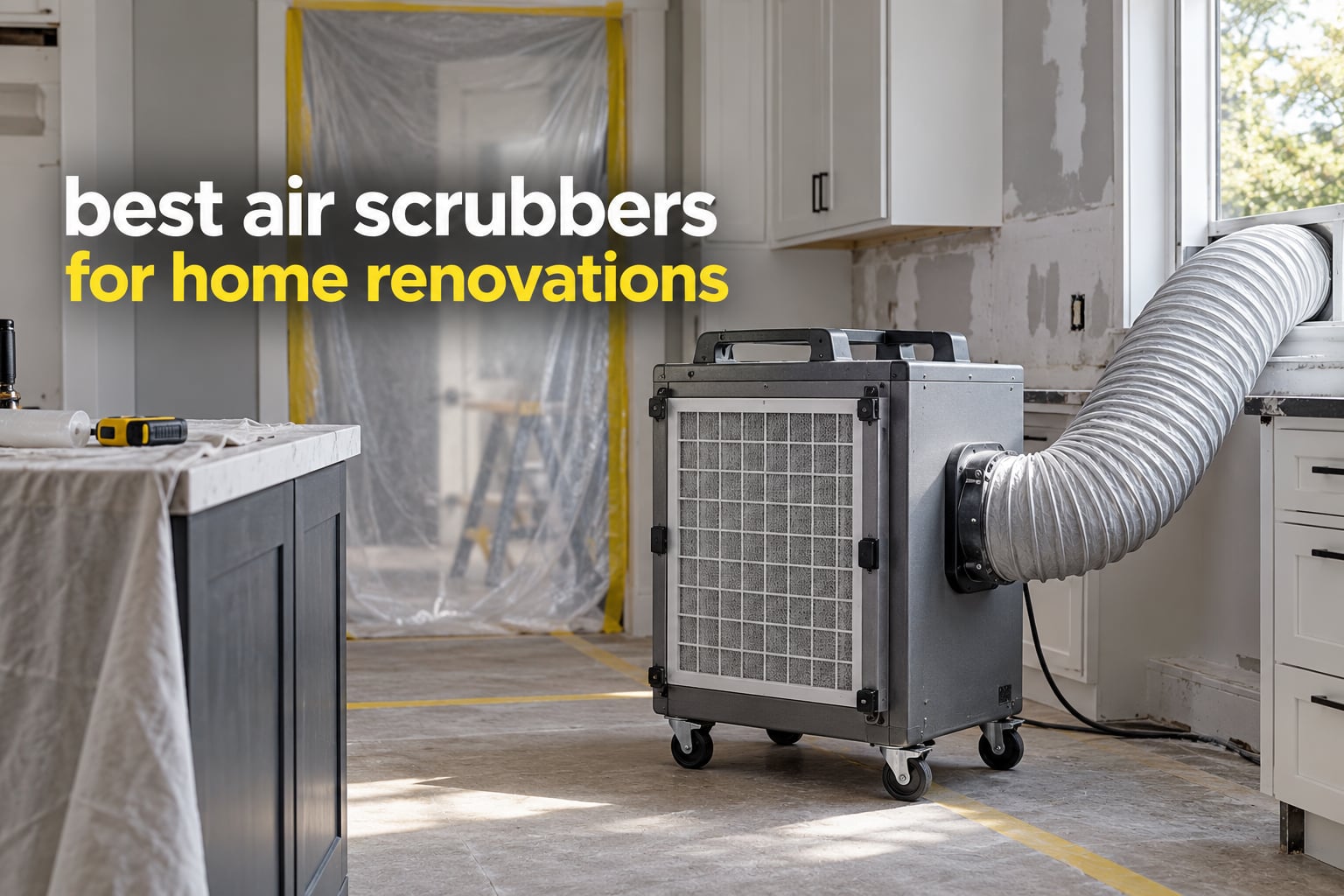
Renovation dust does not settle politely. A single gutted bathroom can put enough fine drywall particulate into the air to coat every surface in the house within hours, and that dust keeps resuspending long after the work stops. An air scrubber is a portable, high-airflow machine that pulls room air through a pre-filter, a true HEPA filter and usually an activated carbon stage, then discharges the cleaned air, so it is built to handle job-site load rather than everyday allergens.
We spent the last several weeks comparing the ten machines that dominate the best air scrubbers for home renovations category right now, reading spec sheets against owner reviews and matching airflow to real room volumes. What follows names every pick with its model number, its honest weaknesses, and a worked answer to the sizing question that most roundups skip. We also cover the containment setup that contractors actually use when a family is still living in the house, and the Corsi-Rosenthal box alternative that costs a fraction of any machine here.
Straight answers first, because two of these matter more than the buying itself. Do air scrubbers really work? Yes, for particles, and a true HEPA stage is specified to capture 99.97 percent of particles at or above 0.3 microns under laboratory test conditions. What they do not do is capture gases, odors or VOCs, which need an activated carbon stage, and they do not stop dust at the source, so they supplement rather than replace plastic containment, ventilation and daily cleanup. Is one worth the money? For a multi-room, multi-week renovation, almost always, because the alternative is sealing the work area and cleaning repeatedly. For a single small room demo over one weekend, a rented unit or a DIY box is the better economics.
One dissenting view comes up repeatedly on renovation forums, and it is worth stating plainly: one contractor argued that no air scrubber is needed at all, that a fan only spreads dust to places you do not want it, and that you should knock the dust down and clean it up. That advice is not wrong for a small, short, well-ventilated job with no vulnerable occupants. It stops being good advice the moment demo runs for weeks in an occupied house, and EPA guidance is consistent in treating portable filtration as a supplement to source control rather than a replacement for it.
Table of Contents
What an air scrubber is and how it differs from an air purifier
An air scrubber is a portable negative-air machine. A household air purifier is designed to quietly cycle a closed room at a few air changes per hour for allergens and pet dander. A scrubber moves several hundred cubic feet per minute, sits in the work area, and is often ducted so the room stays under negative pressure, which pulls dust toward the machine instead of letting it drift down the hall.
Negative air means the intake draws harder than the exhaust, so air moves into the contained room and out through the duct. Positive air, by contrast, pushes filtered air into the room and pressurizes it, which is useful for supplying clean air to an occupied zone but does nothing to keep dust in the work space. Most machines in this roundup can do either, provided you buy ducting separately and fit a proper air valve to the outlet collar.
Filtration runs in stages. A MERV-10 pre-filter catches drywall chunks, sawdust and scuff debris so the expensive filter downstream survives. A true HEPA stage then handles fine particulate down to 0.3 microns. An activated carbon stage is what deals with paint fumes, solvents, adhesives and cleaning-product odors, and it is the stage most often missing or undersized in budget units. A 99.97 percent figure is a filter test result, not a guarantee about a room, and EPA guidance on portable cleaners is careful to frame them as an addition to source removal and general ventilation, not a substitute.
Top 3 picks for home renovation dust control
Three machines take the top slots in this roundup. The BlueDri Air Shield 550 takes the editor’s choice for the strongest combination of owner rating and review volume in the group, with a body built for daily work and easy-to-source replacement filters. The ALORAIR CleanShield HEPA 550 is the value pick, carrying a 10-year limited warranty that nothing else in this airflow tier matches. The VEVOR 550 CFM is the budget pick and one of the lighter cabinets here to move between floors.

BlueDri Air Shield 550
- 550 CFM negative air machine
- 3-stage filtration with HEPA rated 99.97% at 0.3 microns
- Daisy-chain capable and stackable
- Covers roughly 1400 sq ft
ALORAIR CleanShield HEPA 550
- 270-550 CFM adjustable airflow
- MERV-10 plus carbon plus HEPA filtration
- Stackable and daisy-chainable
- 10-year limited warranty
VEVOR 550 CFM 3-Stage
- H13 HEPA with MERV-10 and carbon stages
- 550 CFM adjustable maximum airflow
- 35 pounds with foldable carry handle
- Daisy-chain up to 3 units
Quick comparison of the best air scrubbers for home renovations in 2026
Every machine in the roundup appears below with its headline specifications. Airflow figures are manufacturer maximums, so treat them as the ceiling rather than a guarantee once filters start loading, and note that several units share nearly identical rotomolded shells and filter footprints.
| Product | Specifications | Action |
|---|---|---|
| BlueDri Air Shield 550 |
|
Check Latest Price |
| ALORAIR CleanShield HEPA 550 |
|
Check Latest Price |
| VEVOR 550 CFM 3-Stage |
|
Check Latest Price |
 ALORAIR PureAiro HEPA Max 970 ALORAIR PureAiro HEPA Max 970 |
|
Check Latest Price |
 ALORAIR HEPA 550 Yellow ALORAIR HEPA 550 Yellow |
|
Check Latest Price |
 MOUNTO HEPA500 MOUNTO HEPA500 |
|
Check Latest Price |
 Abestorm HEPA 550 Abestorm HEPA 550 |
|
Check Latest Price |
 CADPXS Shield-550 CADPXS Shield-550 |
|
Check Latest Price |
 MOUNTO 1000 CFM HEPA1000 MOUNTO 1000 CFM HEPA1000 |
|
Check Latest Price |
 Dri-Eaz HEPA 700 Dri-Eaz HEPA 700 |
|
Check Latest Price |
1. BlueDri Air Shield 550 – the most proven all-round scrubber
- Highest review volume in this group at 755 ratings
- Dramatic dust clearance reported during demo and insulation work
- Standard 16x16x1 filter sizing so replacements are easy to find
- Covers roughly 1400 sq ft and daisy-chains for multi-room jobs
- Loud on the highest airflow setting
- Carbon and odor filter is sold separately and adds cost
- Seals are not perfect so some fine dust can bypass
The Air Shield 550 has been available since 2016 and has accumulated 755 ratings averaging 4.6 stars, by a wide margin the largest review base in this roundup. In a category where listings come and go with import cycles, that review depth matters more than any single spec. Owners overwhelmingly describe dramatic dust clearance during demolition, drywall sanding and paint spraying, and several note the machine covered its cost on a single job.
It sits in the 550 CFM class that suits a typical kitchen or bathroom, and the manufacturer lists coverage of roughly 1400 sq ft when daisy-chained. The single rotomolded housing is the same shell used across much of this category, which is a good sign for parts availability and a mild warning that it is not unique.
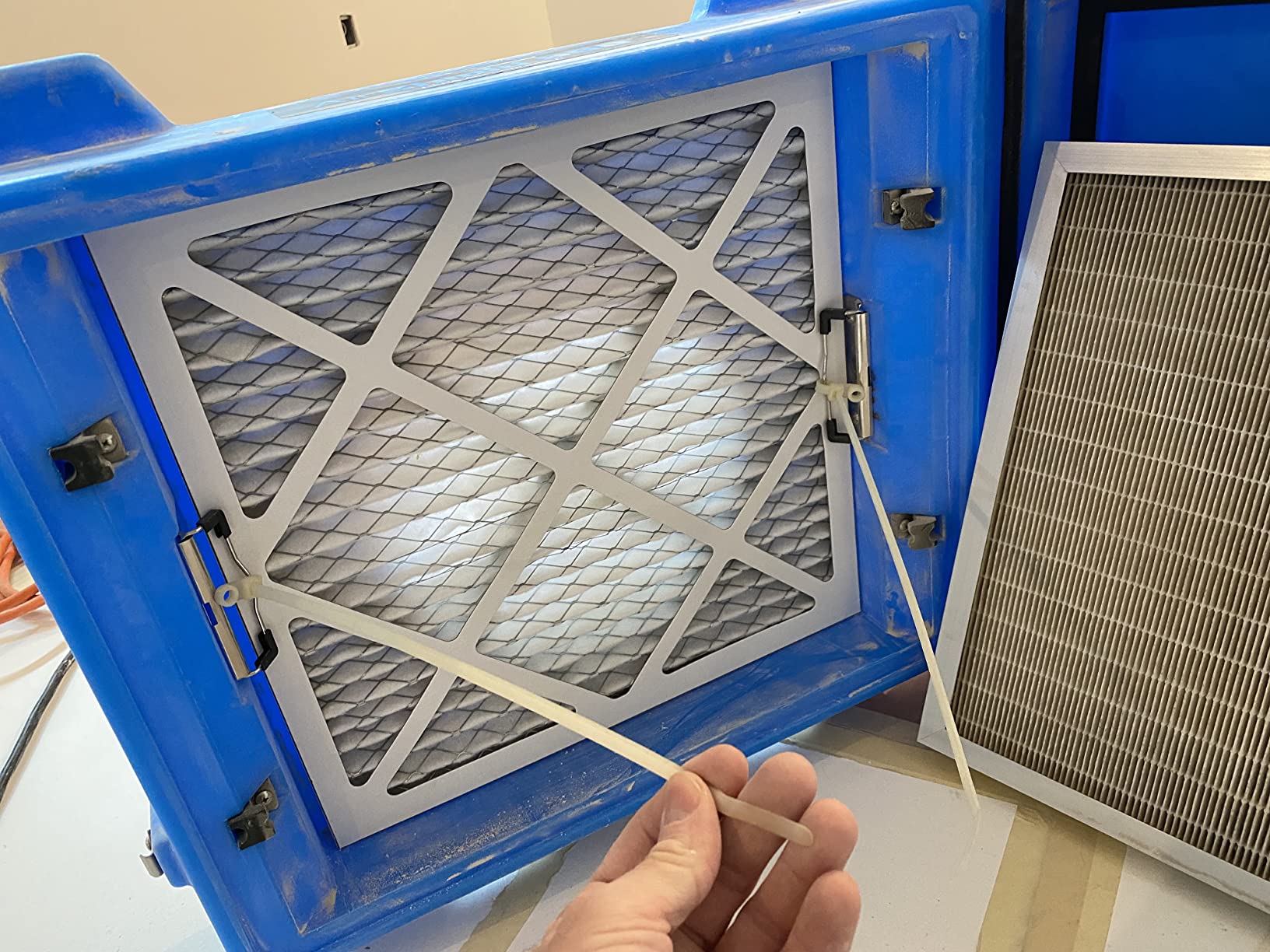
Two practical details reward attention. Replacement filters use common 16x16x1 sizing, so you are not locked into a proprietary cartridge, and the unit is quieter at lower airflow settings than the higher-priced restoration-brand machines it is compared against. That matters for occupied homes, where the unit often runs overnight in a room next to a bedroom.
The honest limitation is that the carbon stage is optional and separate. If your job involves paint, solvent or adhesive odor rather than pure particulate, budget for that add-on, because a HEPA stage alone does nothing for gases. The housing is also not perfectly sealed, so a small share of fine dust finds its way past the filter, and several owners note that the highest setting is genuinely loud.
What you should know before buying it
Confirm the carbon filter is in your plan. Paint and adhesive work is common in kitchens and bathrooms, and this unit is at its weakest without it. The 16x16x1 filter footprint means you can source replacements from multiple sellers, which is a real long-term saving over proprietary cartridges.
Plan where the duct will go. Outflow must leave the building or the room will not hold negative pressure, and that means a window, a dryer vent or a return with a proper air valve fitted.
Where it is the wrong choice
Skip it if your project is confined to one small room for a day. A 550 CFM cabinet in a 100 sq ft bathroom is overkill, and the noise at full output becomes a problem rather than a feature. It also captures only airborne dust, so settled debris still needs to be wiped down and vacuumed rather than left for the machine.
2. ALORAIR CleanShield HEPA 550 – the best warranty in the class
- 10-year limited warranty and ETL listing
- Stackable and daisy-chain up to 3 machines for 1650 CFM combined
- Adjustable 270-550 CFM range with filter-change indicator
- Two-pack of MERV-10 filters included with the unit
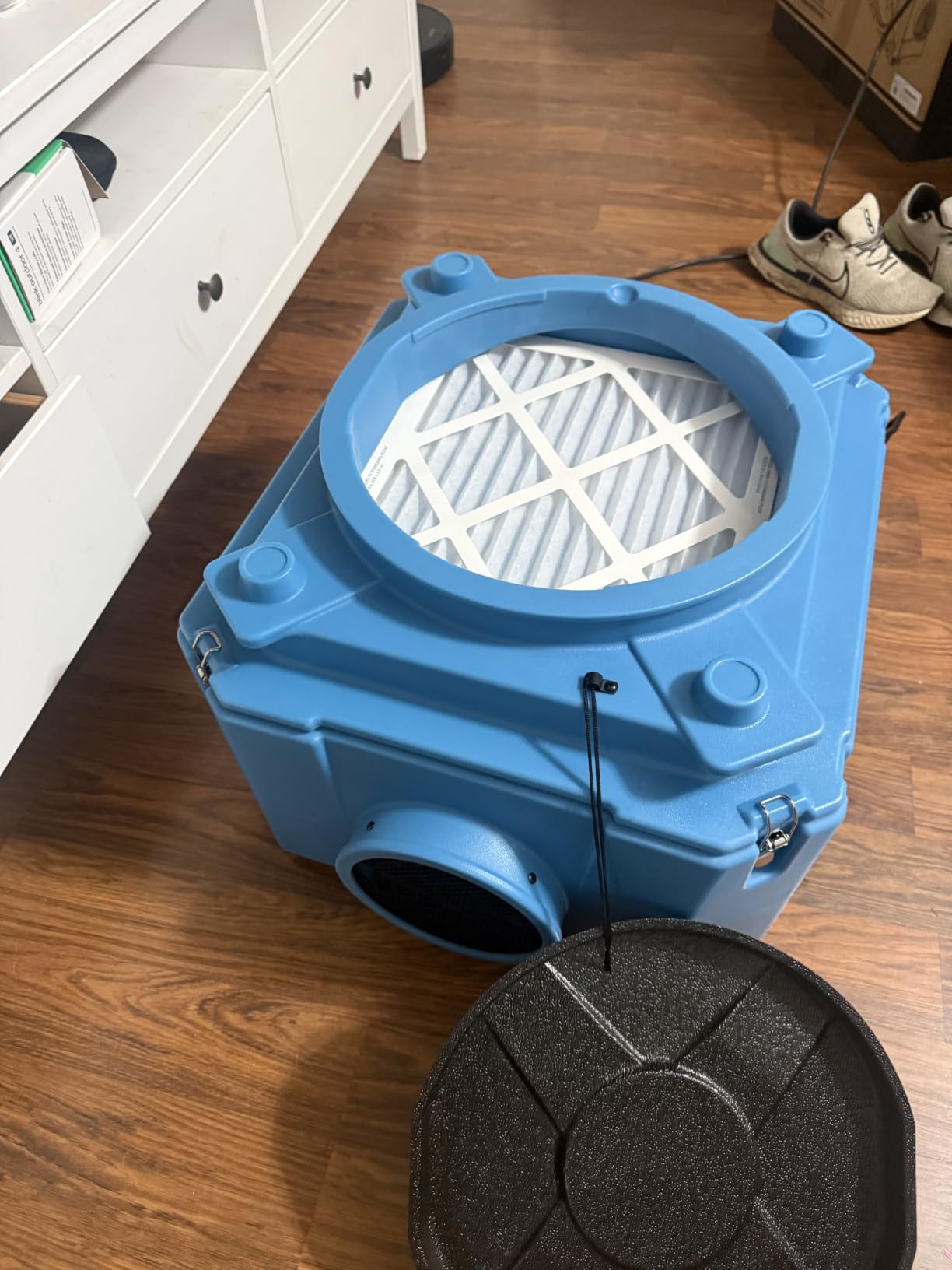
- Black transit cover must be removed before first use
- Optional ducting hardware is not included
- Airflow control is a simple panel rather than digital
- Audible at higher airflow settings
The CleanShield 550 carries a 10-year limited warranty, which matches the longest housing coverage in this roundup and is the single clearest reason to pick it. Buyers treat it as the value restoration-brand 550 CFM unit, and the 427 ratings at 4.3 stars reflect broad ownership rather than a niche run. Reviews mention construction dust, odors and sewage remediation work handled without complaint.
Filtration is a genuine three-stage arrangement: MERV-10 pre-filter, carbon filter and HEPA filter, specified to trap 99.97 percent of particles larger than 0.3 microns over a 5500 cubic foot filtration area. Airflow is adjustable from 270 to 550 CFM, which lets you dial the unit down for quiet running in a work room where someone is trying to sleep on the other side of the wall.
For whole-floor projects, the stacking and daisy-chain capability is the deciding factor. Three machines combined give 1650 CFM, and the housings stack horizontally or vertically, so one machine can cover a kitchen while a second covers a hallway. Auxiliary GFCI outlets on the control panel make that wiring straightforward.
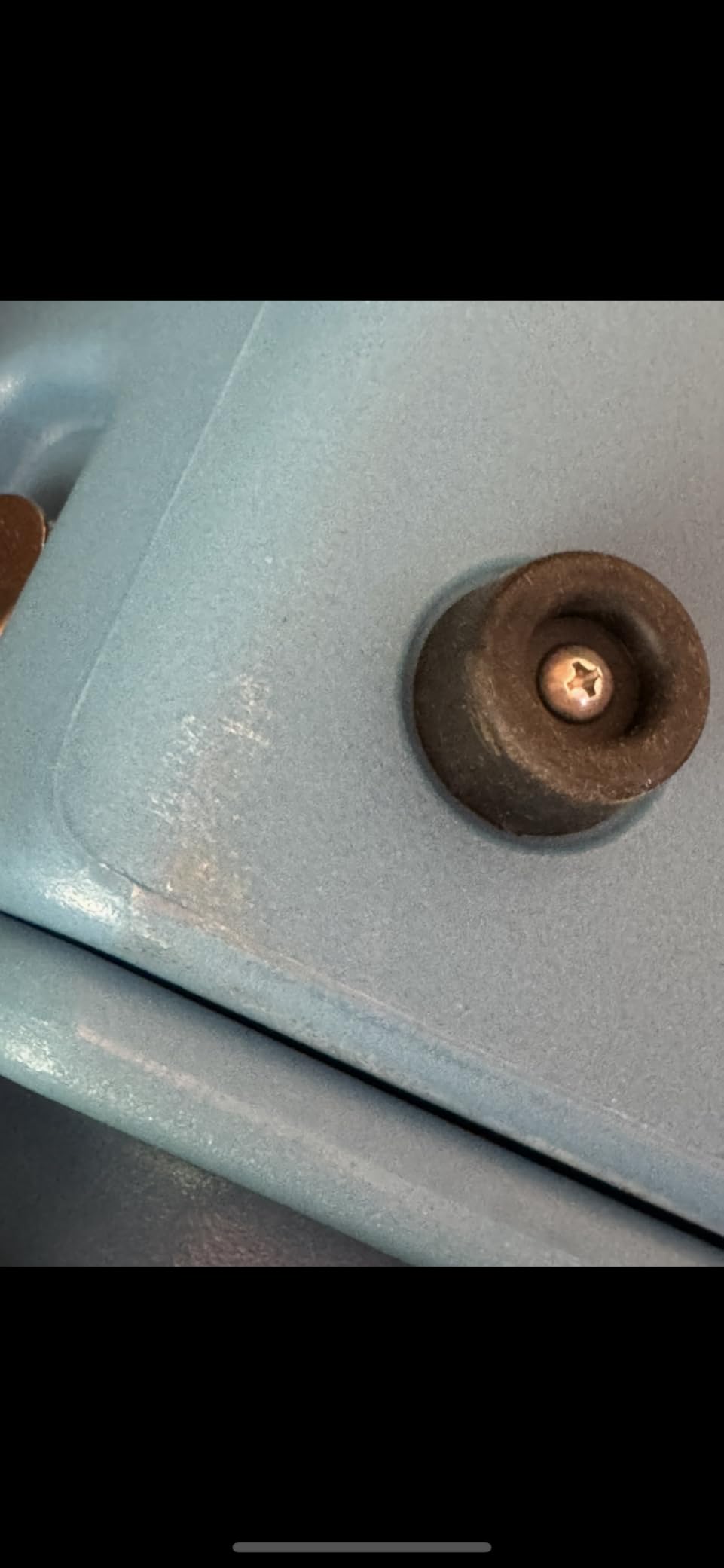
Two frictions come up repeatedly. The black transit cover has to come off the outlet before first use, which trips up more than one owner and looks like a fault at first glance. Optional ducting is not included, so budget for inlet and outlet ducting and an air valve separately, and note that the control panel is a simple airflow switch rather than a digital display with an hour meter.
What you should know before buying it
Check your local availability of the 20.87 by 24.8 by 14.96 inch footprint against your doorway and stair widths. At 39.6 pounds it is portable but not a one-person carry up a narrow staircase. The ETL listing and resettable circuit breaker are meaningful for anyone running tools on the same circuit.
The included MERV-10 two-pack is a real saving, so the first replacement filter is effectively covered. Plan that inspection pace around your demo schedule rather than a calendar.
Where it is the wrong choice
This is not the machine to buy if you want an hour meter tracking filter hours across a long project, because there is no display. It is also the wrong pick for a job where you need very high airflow in a large open-plan space, since 550 CFM is the ceiling regardless of stacking, and stacking means more machines rather than more power from one cabinet.
3. VEVOR 550 CFM 3-Stage – a light cabinet built for stairs
- Strong dust and odor capture for a straightforward setup
- Light 35 lb cabinet with a foldable carry handle
- No assembly required and ready to work out of the box
- Daisy-chain sockets plus resettable timer and breaker
- Entry-level brand with less proven long-term durability
- Some reviews criticize cord placement and housing seams
- Louvered intake can limit airflow when a filter is loaded
The VEVOR is the practical entry point into the 550 CFM class, and at 35 pounds it is one of the two lighter cabinets here to move between floors. A foldable carry handle and a housing that stacks with up to two more machines for 1650 CFM combined make it the practical choice for a homeowner who is not staging equipment on site every morning. It arrives ready to run with no assembly.
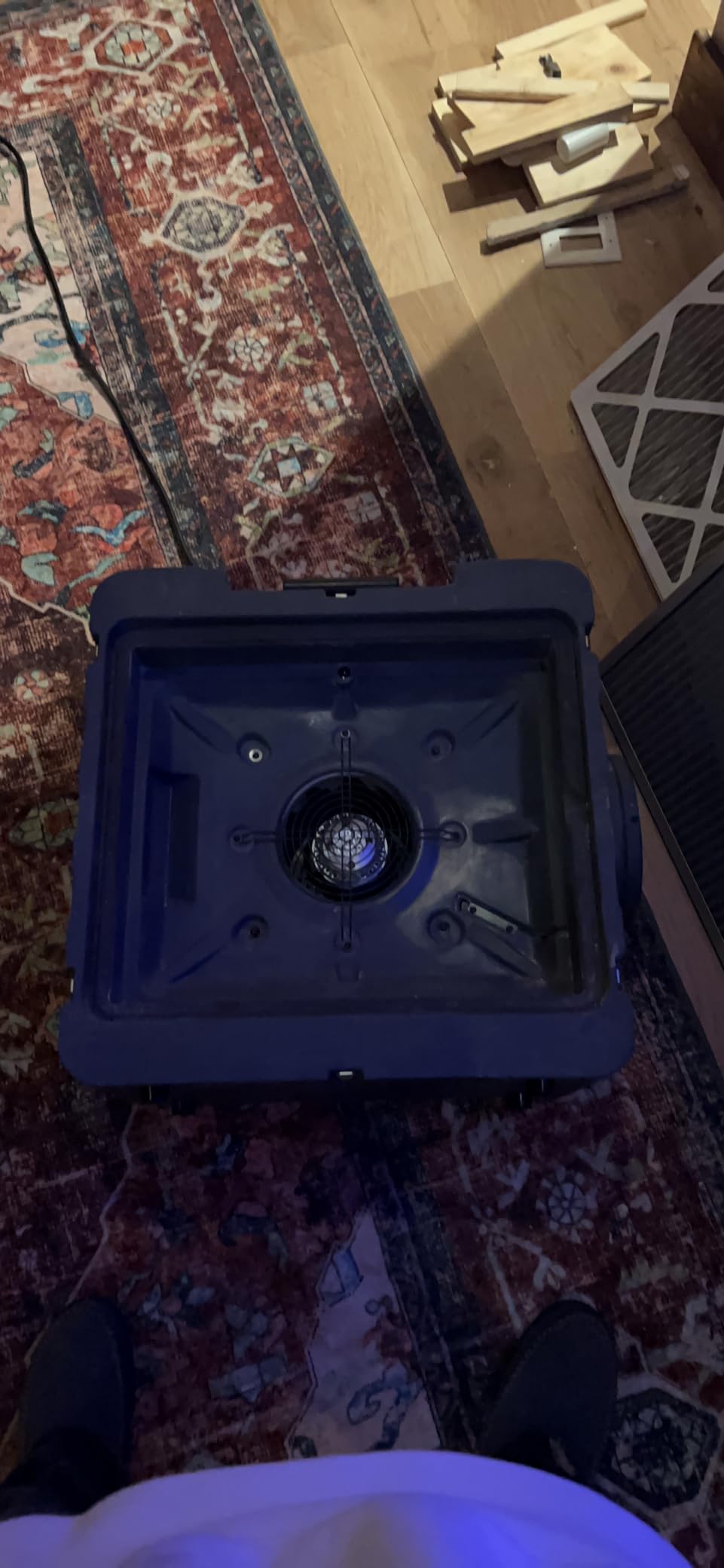
Filtration is a MERV-10 pre-filter, a carbon filter and an H13 HEPA filter, specified to capture 99.97 percent of particles as small as 0.3 microns. The control panel carries airflow adjustment, a resettable timer, a circuit breaker and a filter-change indicator light, and there are two auxiliary sockets for daisy-chaining. The 15.5 inch intake and 8.5 inch outlet are conventional sizes for ducting.
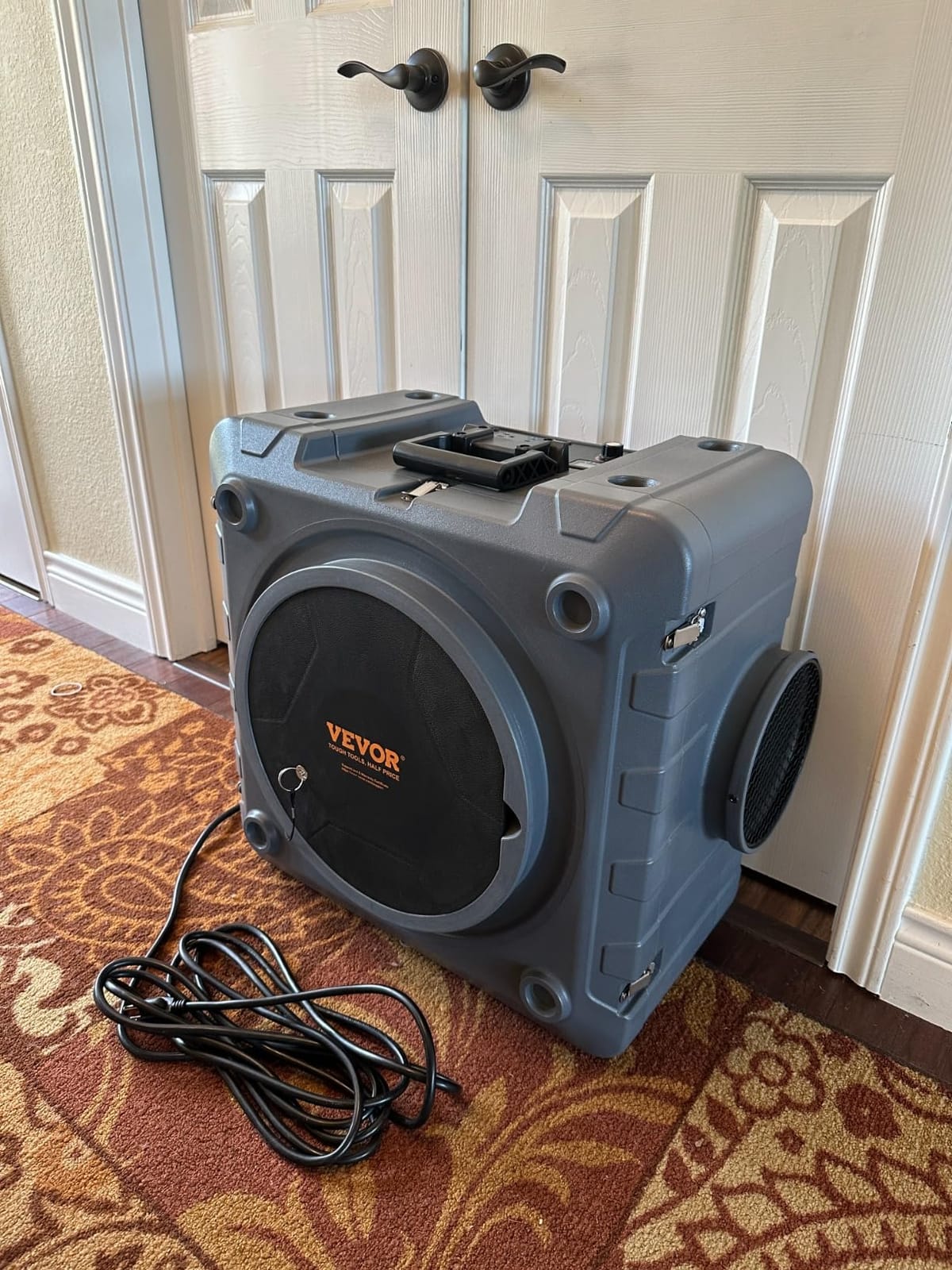
At 311 ratings and 4.4 stars, the review base is solid enough to draw conclusions from. Reviewers consistently treat it as the budget 550 CFM scrubber with strong dust and odor capture for the money, easy one-person transport and simple controls. The recurring reservations concern build quality and finish relative to the ALORAIR and BlueDri units, and some reports of airflow dropping as filters load.
That last point deserves emphasis because it is a category-wide trait, not a VEVOR defect. Every machine in this roundup moves less air as a pre-filter fills, and the louvered intake makes that more visible. Check the pre-filter at the start and end of every project stage rather than waiting for the indicator.
What you should know before buying it
The foldable handle and 35 pound weight are the deciding features if your project spans more than one floor or a room you reach through a narrow doorway. If the machine will live in a garage or basement and never move, those advantages disappear and the BlueDri’s larger review base is worth more.
Buy a spare MERV-10 pre-filter set. On a full gut demo the pre-filter is inspected weekly and replaced far sooner than in normal household use, and having a spare on the shelf avoids a lost afternoon.
Where it is the wrong choice
Skip it if you need a machine to survive years of daily commercial rental use. As an entry-level brand, its long-term durability is less proven than the restoration specialists, and some reviewers single out cord placement and housing seams as weak points. For a two-week home renovation it is more than adequate.
4. ALORAIR PureAiro HEPA Max 970 – more airflow and a UV-C stage
ALORAIR PureAiro HEPA Max 970 Air Scrubber with UV-C Light, 750CFM, Orange
- 750 CFM class moves more air than units of similar size
- UV-C light adds bacterial treatment beyond particle filtration
- Variable speed control with hour meter and filter-change light
- Stackable housing with daisy-chain GFCI duplex
- A small share of units have failed electronically within months
- Replacement parts and support have been hard to source
- Louder than expected on higher settings
- Filter-change indicator can stay lit when filters are fine
The PureAiro HEPA Max 970 runs at 750 CFM, a step above the mainstream tier, and its 14 inch air inlet is larger than most competing units of similar size. That extra throughput is what makes it interesting for a kitchen plus adjacent living space rather than a single closed room. At 38.5 pounds it stays portable, and owners describe using it successfully for duct scrubbing and whole-home pollen control between jobs.
Filtration combines pre-filters, an activated carbon and HEPA stage and a UV-C light, which adds bacterial treatment on top of particle capture. The control panel gives you variable speed, an hour meter display and a filter-change light, which is the feature set you want when a machine will run for weeks and you need to know its true runtime. The housing stacks and the GFCI duplex supports daisy-chaining.
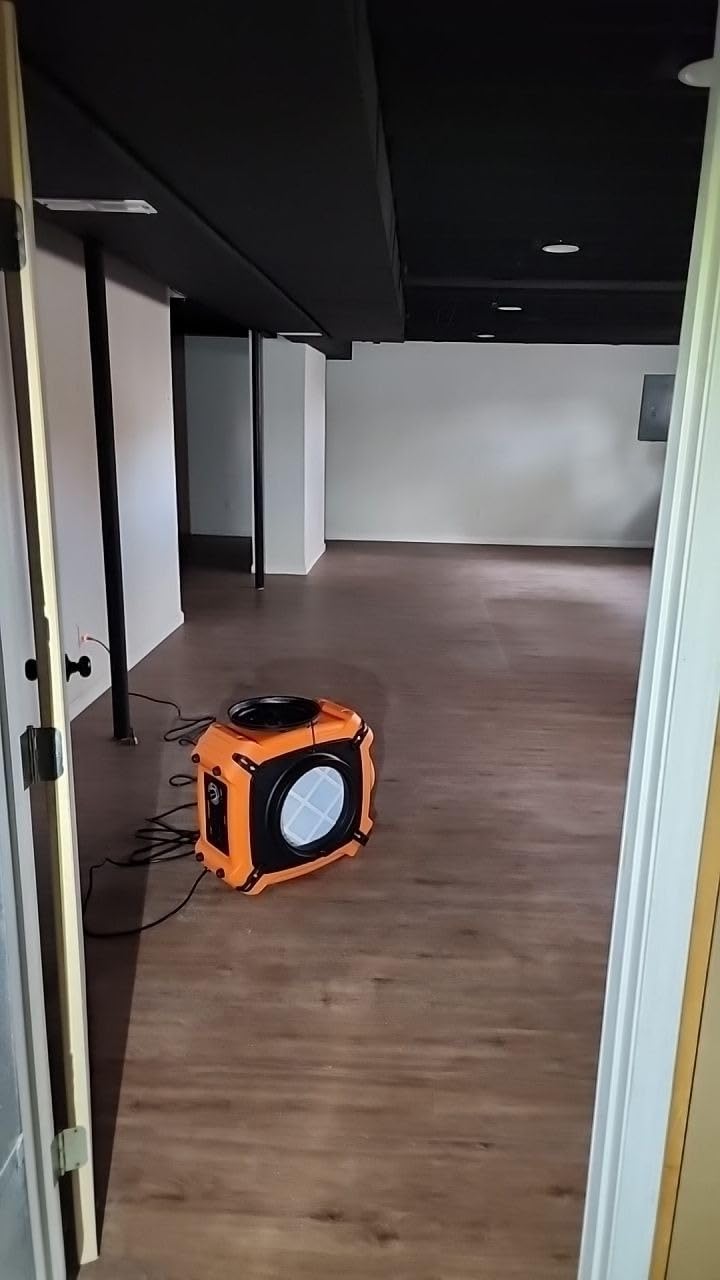
Two things temper the recommendation. The 4.3 star average across 282 ratings is held back by a small but vocal group reporting electronics failures within the first few months and difficulty obtaining parts or support, with one-star reviews clustering around support response times. The filter-change indicator also reportedly stays illuminated when filters are perfectly serviceable, so treat the light as a prompt rather than proof.
Noise is another honest flag. Owners describe it as louder than expected on higher settings, which is worth weighing if the machine will run overnight beside a bedroom. A UV-C stage is a genuine addition for anyone dealing with odor or microbial concerns, but it is not a substitute for a properly sized carbon stage when paint or solvents are involved.
What you should know before buying it
The hour meter is the feature you will use most. On a long project it tells you exactly how many hours a filter has actually run, which is the only reliable way to build a replacement schedule for a heavy demo rather than guessing.
Buy it for airflow, not for the UV-C lamp. If your priority is moving volume through a large open-plan floor, the 750 CFM class is the reason to step up. If your priority is quiet overnight running in a contained room, a 550 CFM unit with variable speed will serve you better.
Where it is the wrong choice
It is a poor match for anyone who plans to keep a machine for a decade and self-repair. The electronics and support experience reported by a minority of owners is the honest counterweight to a 10-year housing warranty and 1-year parts and labor coverage.
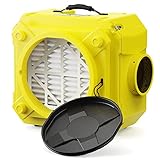
5. ALORAIR HEPA 550 in yellow – the rugged job-site workhorse
- Heavy-duty rotomolded shell built for daily job-site handling
- Variable 270-550 CFM with filter-change indicator
- MERV-10 filter pack included with the unit
- Stacks and daisy-chains for larger areas
- 10-year limited warranty
- Black cover must be removed from the outlet before use
- Optional ducting hardware is not included
- No digital display or hour meter on the control panel
- Loud at full output
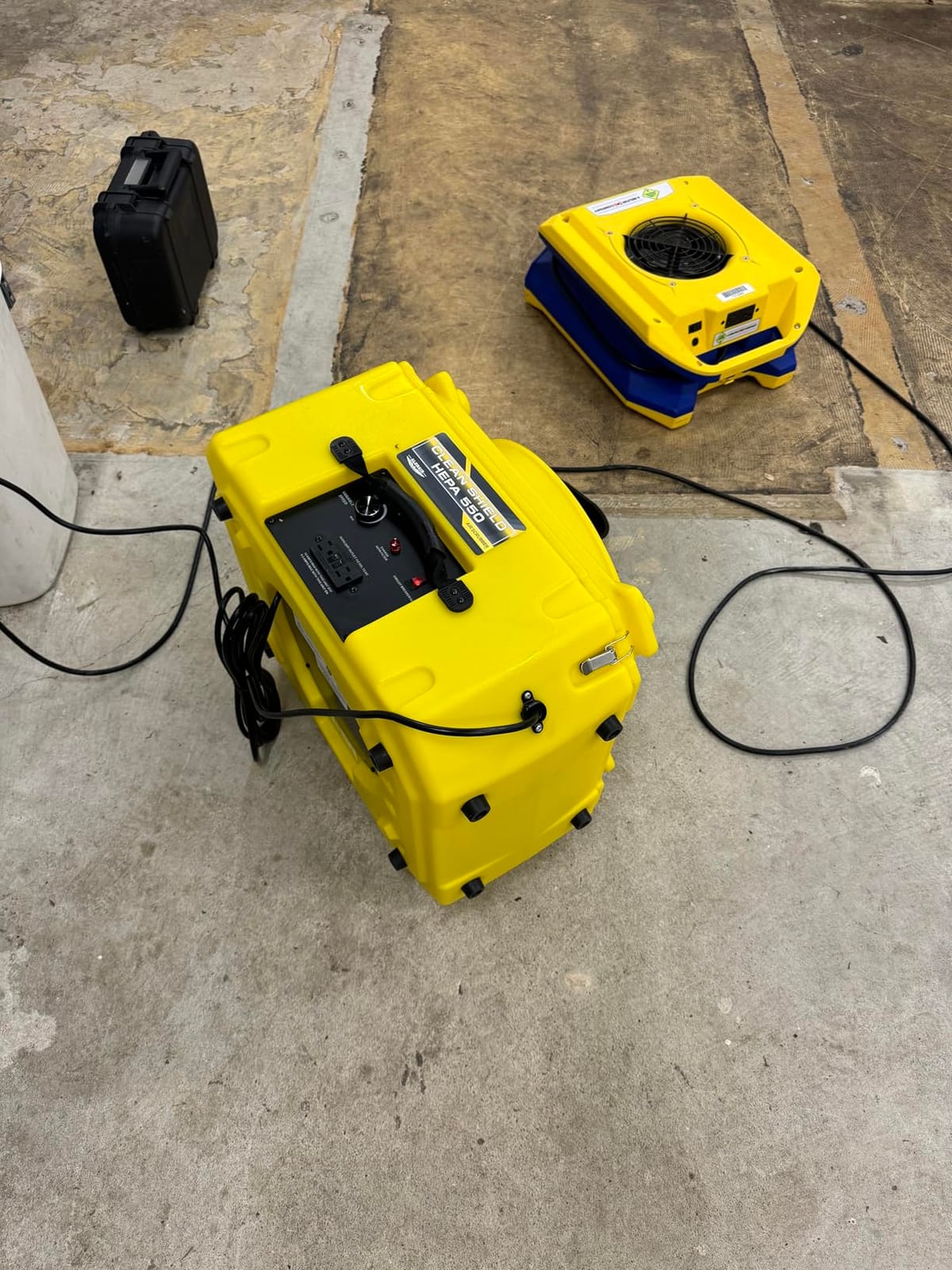
This is the same 550 CFM platform as the CleanShield in a different housing colour, and it is worth listing separately because contractors buy it for one reason: the rotomolded LLDPE shell. Owners describe a durable, no-frills industrial workhorse that absorbs being dragged, stacked and knocked about in a van, and the 4.4 star average across 234 ratings reflects that settled reputation rather than excitement.
It carries the same MERV-10, carbon and HEPA three-stage arrangement over a 5500 cubic foot filtration area, with adjustable airflow from 270 to 550 CFM, and it stacks horizontally or vertically with daisy-chaining to 1650 CFM across three machines. A pack of MERV-10 filters is included, which softens the first replacement cost.
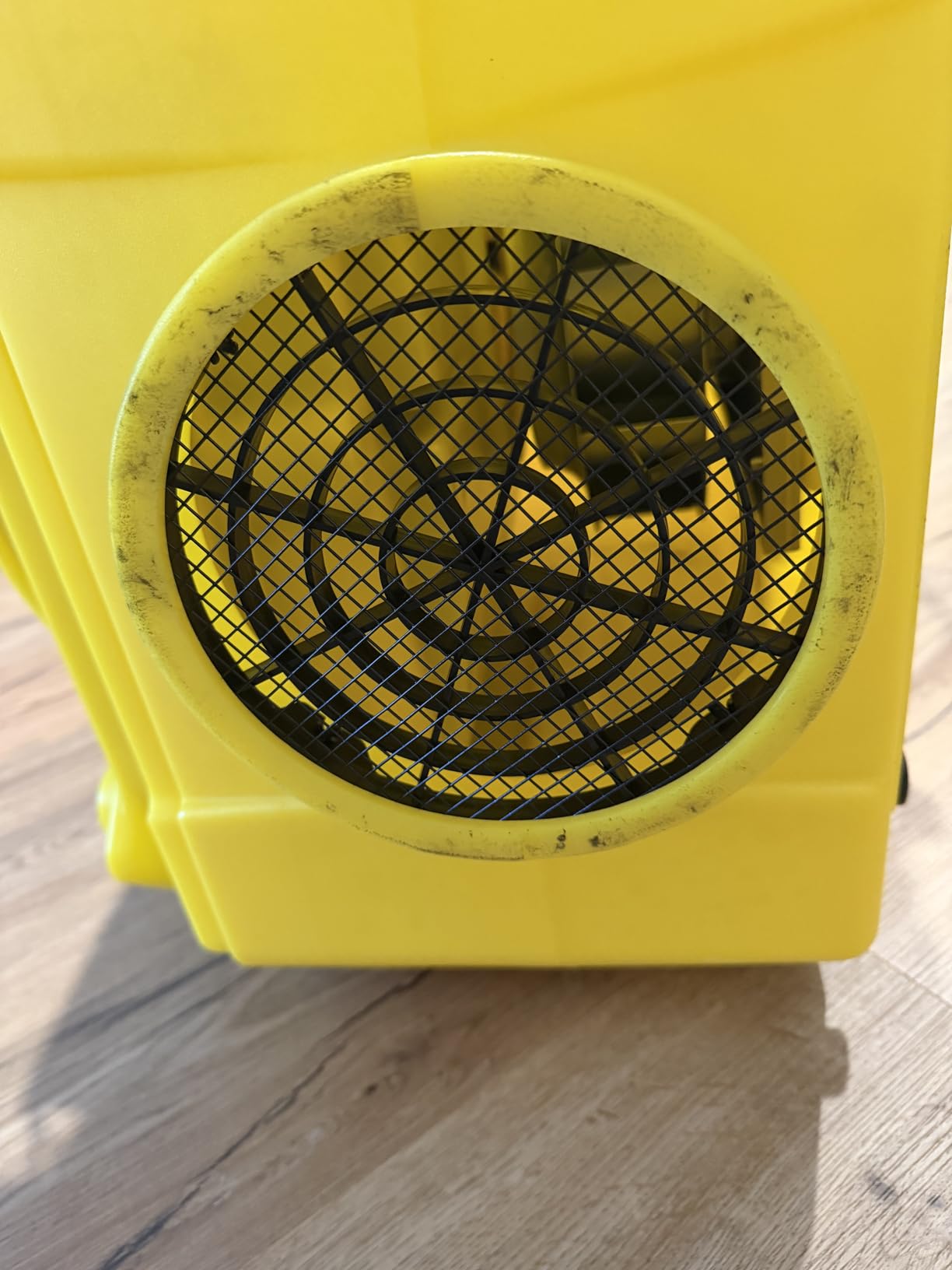
The complaints are consistent and mostly cosmetic. The black cover must be removed from the outlet before use. Ducting is optional and not included. There is no digital display or hour meter on the control panel, so tracking runtime means a separate clock or timer. And the top setting is loud, which is a direct consequence of the airflow you are buying it for.
For a DIY homeowner doing one kitchen, the practical difference between this and the CleanShield is small, and you should choose on warranty length and included filters rather than on colour. For someone running equipment continuously across multiple jobs, the perceived build quality and the 10-year limited warranty are the reasons this version keeps appearing on professional buying lists.
What you should know before buying it
Its 20.87 by 24.8 by 14.96 inch body and 39.6 pound weight match the rest of the class, so measure doorways before ordering. Optional 16 inch inlet and 8 inch outlet ducting compatibility means standard ducting works, but you still need an air valve on the exhaust side to hold negative pressure properly.
The ETL certification matters if you are running other tools on the same circuit, since it confirms the electrical safety listing independently.
Where it is the wrong choice
Choose the CleanShield instead if filter hours matter to you, because this control panel has no hour meter and the unit runs for weeks at a time on a live job. This is also not the machine to buy if quiet overnight operation is the priority, given the noise at full output.
6. MOUNTO HEPA500 – the pick for the 500 CFM tier
MOUNTO HEPA500 Commercial 500cfm Air Purifier Hepa Air Scrubber Negative Air Machine Roto-Molded (Blue)
- A 4.5 star average from 157 ratings
- among the best-rated here
- Variable speed control and filter-change light at this tier
- Quick-access filter compartment makes changes fast
- Dual GFCI outlets allow daisy-chaining or powering accessories
- 10-year housing warranty
- Slightly lower throughput than the 550 CFM class
- Rotomolded body is light enough to shift unexpectedly on stairs
- No UV stage and no hour meter
The HEPA500 is the small 500 CFM cabinet that gets the details right. It carries variable speed control and a filter-change light as standard, dual GFCI outlets for daisy-chaining, a quick-access filter compartment that makes media changes genuinely fast, and a cETL listing with a circuit breaker protector. At 4.5 stars from 157 ratings it sits among the highest-rated machines in the roundup.
Owners highlight the feature set and the compact, stackable rotomolded housing, and reviewers find it well suited to construction dust and odor control. The stackable shell means you can combine two machines rather than upsizing to a single larger cabinet, which is useful when the work area is a series of connected rooms rather than one open floor.
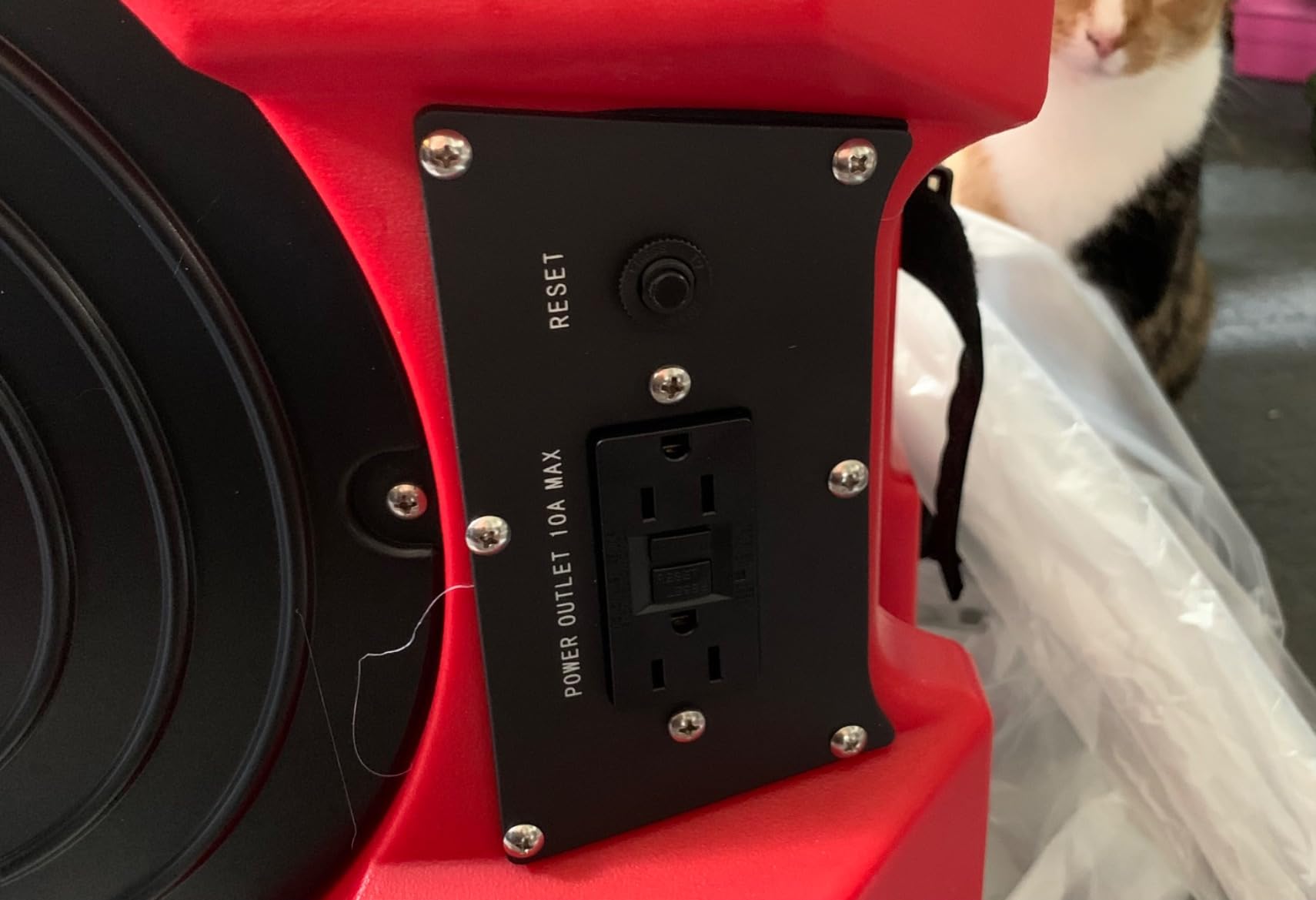
The main criticism is straightforward arithmetic. At 500 CFM it moves slightly less air per minute than the 550 CFM machines it competes with, so for a given room volume you get fewer air changes per hour. The quick-access filter compartment and variable speed control are real quality-of-life gains, but they do not add throughput, and the 25 by 16 by 25 inch body at 41.35 pounds is one of the squarer footprints in the group.
One more practical note. The rotomolded body is light enough that the unit can shift unexpectedly on stairs, which matters if you are moving it between levels in an occupied house. There is no UV stage and no hour meter, so runtime tracking is again down to a separate timer.
What you should know before buying it
Warranty terms here are split: 1-year parts and labor with a 10-year housing warranty. That is the right balance for a shell that will take the punishment, and it is worth confirming the parts and labor term with the seller before you commit.
The dual GFCI outlets are more useful than they sound. They let you power a work light or a small tool from the unit, which keeps a single circuit free in a room where you already have saws and a compressor running.
Where it is the wrong choice
Skip it when you are demoing a large open-plan floor. The 500 CFM class delivers fewer air changes per hour than a 550 CFM unit of the same size, and the shortfall widens as filters load. It is a strong choice for a kitchen, a bathroom or a basement room, and the wrong one for whole-floor coverage.
7. Abestorm HEPA 550 – a compact three-stage with a built-in GFCI outlet
Abestorm HEPA 550 Air Scrubber with 3-Stage Filteration, GFCI Connection
- Strong dust and odor control in a compact package
- Sturdy rotomolded shell sized for job-site handling
- Built-in GFCI outlet and stacking for larger jobs
- Compact footprint with a portable handle
- Two-pack of MERV-10 filters included
- Lower CFM than 550-class units once a filter is loaded
- Filter indicator light can be inaccurate
- Ducting sold separately
- No UV stage and no hour meter
The Abestorm HEPA 550 is another rotomolded 550 CFM machine, and the thing that separates it slightly is the built-in GFCI outlet on the control panel, which removes the need to source an auxiliary outlet before you can daisy-chain. Reviewers treat it as an affordable three-stage unit and report good performance on dust, dander and odor at a 4.4 star average from 145 ratings.
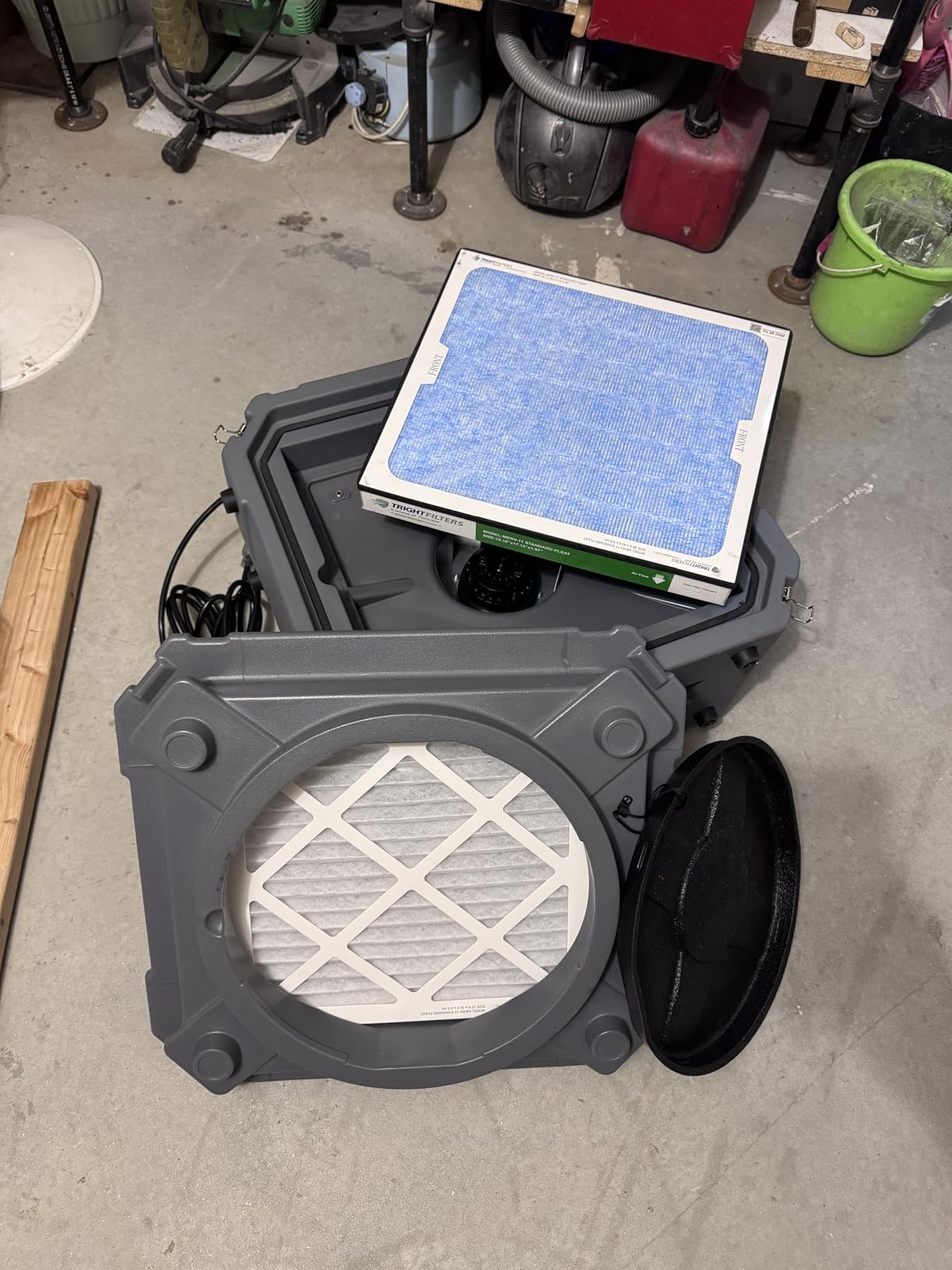
Filtration is a MERV-10 pre-filter, a HEPA filter and an activated carbon filter, specified to capture 99.97 percent of particles larger than 0.3 microns, with coverage stated at up to 800 sq ft across a 5500 cubic foot filtration area. Airflow is adjustable from 270 to 550 CFM, and up to three machines can be stacked for 1650 CFM combined. It can be configured as a negative air machine, though the duct is sold separately.
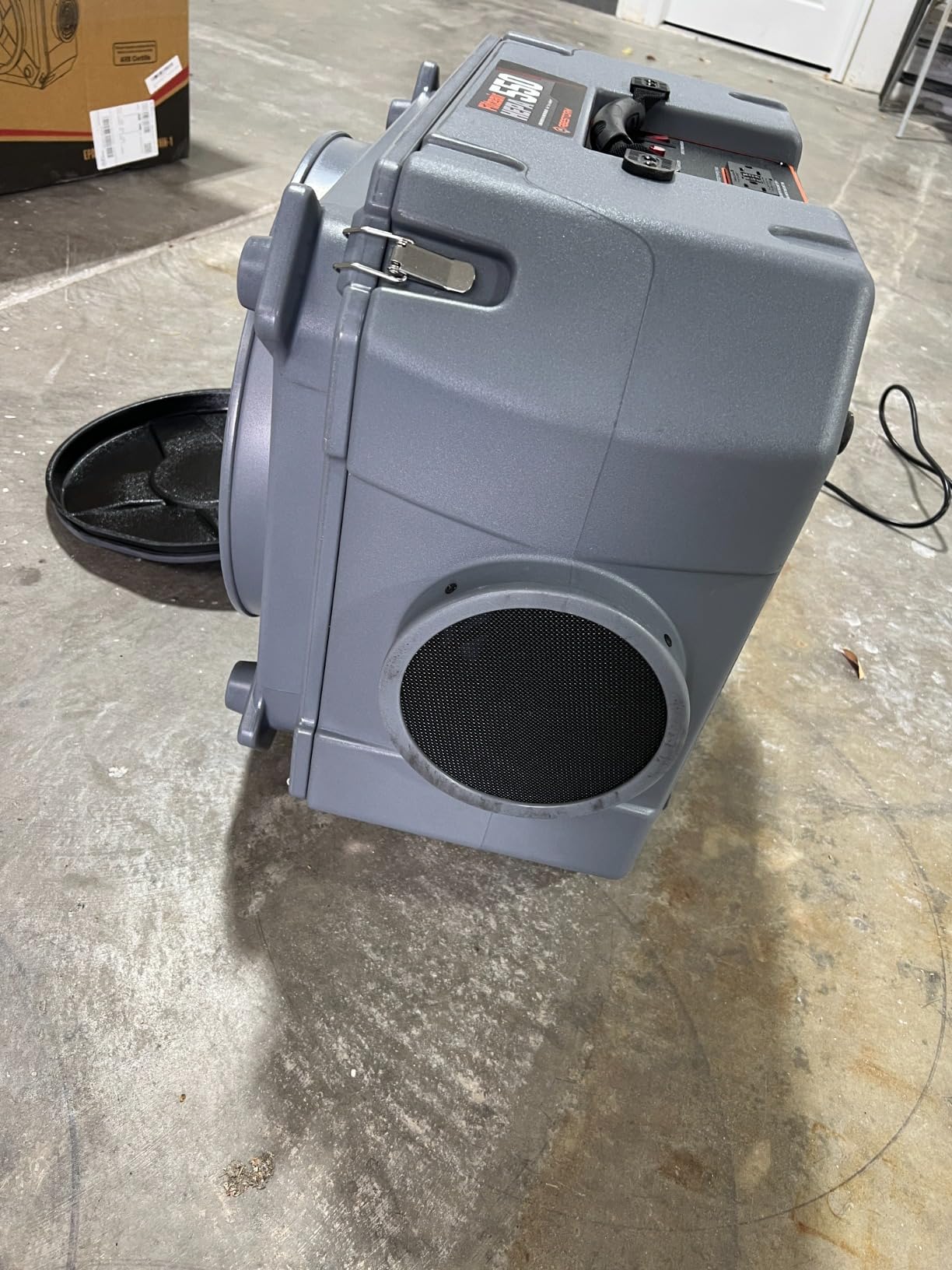
The recurring negatives are consistent across this segment. Airflow drops below the 550 figure once a filter is loaded, which is why pre-filter discipline matters more than the headline number. The filter indicator light can be inaccurate, so it should prompt a look rather than dictate a decision. Ducting has to be bought separately, and there is no UV stage or hour meter.
The body is 20.87 by 24.8 by 14.96 inches at 39.6 pounds with a portable handle, which is the same compact footprint as the ALORAIR units, and that compactness is the reason to prefer it when clearance around a doorway or under a counter is tight.
What you should know before buying it
Factor the duct into your plan before ordering. Because it is sold separately, a buyer who assumes the machine can go straight into negative-air mode will be stopped on assembly day. A 6 inch or 8 inch flex duct plus an air valve covers most residential window exits.
Verify the filter footprint matches a common size before committing, since a proprietary cartridge turns a one-time purchase into an ongoing sourcing problem.
Where it is the wrong choice
It is the wrong pick if accurate runtime tracking matters to you, because there is no hour meter and the indicator light is reported to be unreliable. For a short, contained project with a periodic filter check, that is a fair trade for a lower entry cost.
8. CADPXS Shield-550 – the pick for filter monitoring and quick access
CADPXS Shield-550 Air Scrubber 550 CFM with 3-Stage Filtration
- Tool-free quick-latch filter access beats screw-based housings
- Persistent hour meter retains runtime when unplugged
- Control panel on the side stays accessible whatever the duct orientation
- Effective carbon stage for paint smoke and VOC odors
- 10-year limited warranty
- Noisy even at the lowest speed with a narrow useful range
- Filter-change light can stay on regardless of filter condition
- HEPA and carbon elements are combined and not separately replaceable
- Rigid carry handle cannot fold for stacking
The Shield-550 earns its place on maintenance design rather than on airflow. Its tool-free quick-latch filter access removes the screwdriver routine that makes filter changes a chore, and the hour meter display persists when the unit is unplugged, so a machine moved between rooms does not lose its runtime record. At 33.51 pounds it is also the lightest cabinet in the roundup, which helps with stairs.
Filtration is a MERV-10 pre-filter protecting the primary HEPA filter, an activated carbon stage for odor and VOC reduction, and a HEPA filter rated to remove 99.97 percent of particles at or above 0.3 microns. The 550 CFM rating puts it in the mainstream tier, and the side-mounted control panel stays reachable regardless of how the duct is oriented, a detail that matters more than it sounds in a tight room.
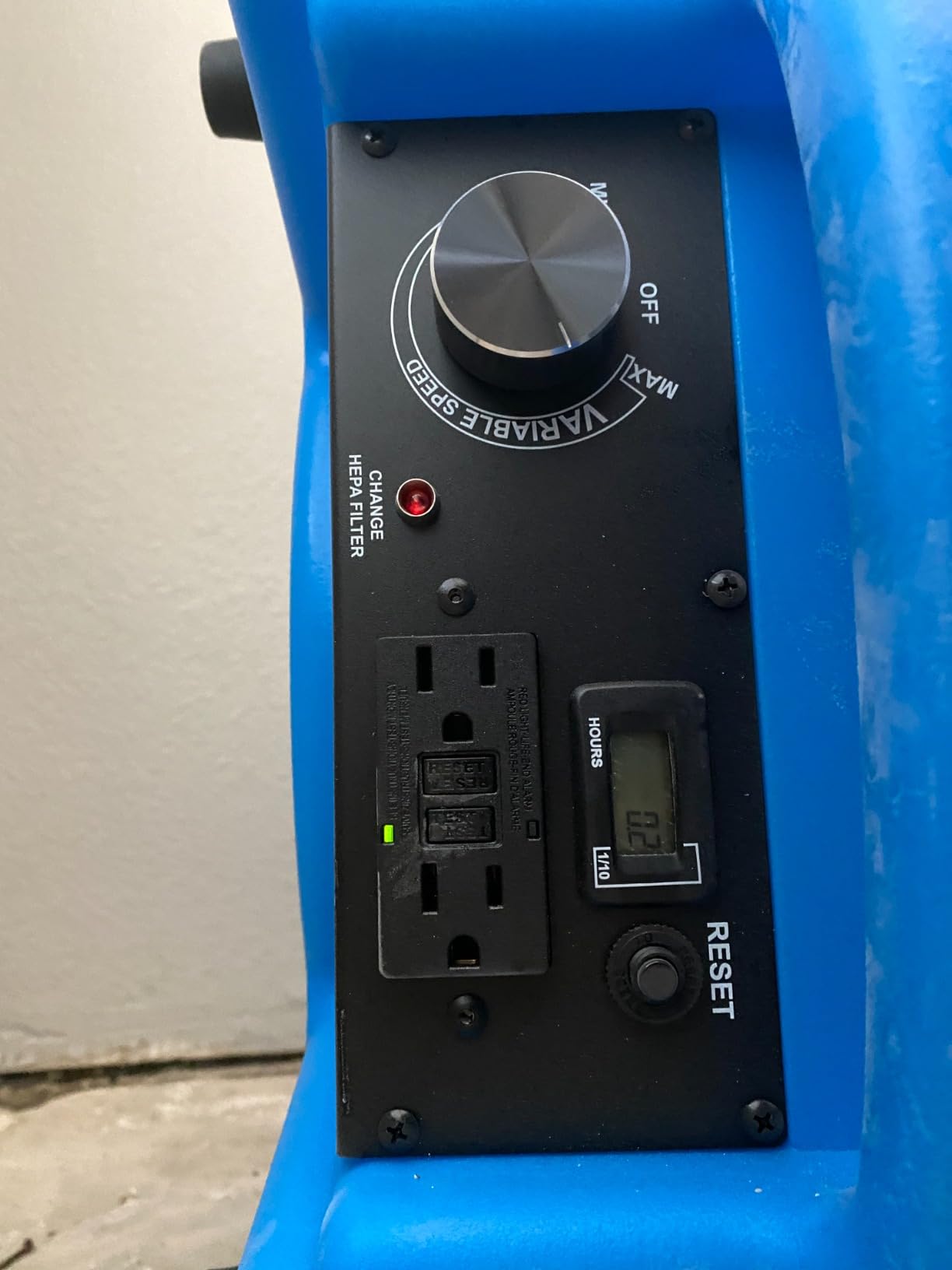
Contractors and remediators rate it highly for build quality and for the hours logged on the meter, with several reviewers reporting thousands of hours of continuous use and strong dust and odor removal. Community discussion has previously questioned whether the advertised CFM figure holds up in practice, and some owners report slightly lower real output than competing 550 CFM machines, so treat the number as a ceiling.
Three drawbacks are worth weighing. It is reported as noisy even at the lowest speed, with a narrow useful range. The filter-change light can stay illuminated regardless of actual filter condition, so the hour meter is the more trustworthy signal. And the HEPA and carbon elements are combined into one cartridge that cannot be replaced separately, which means replacing the carbon stage costs you the HEPA stage too, a genuine long-term cost penalty.
What you should know before buying it
Count on replacing the combined cartridge as a single expense, and factor that into your cost-per-job maths before committing. It is the main reason the price per hour of useful filtration can drift upward on a long project.
The rigid carry handle is a real limitation. Because it cannot fold for stacking, this unit is less suited to a multi-machine daisy-chain setup than the ALORAIR and VEVOR cabinets, whose housings stack flat.
Where it is the wrong choice
Choose something else if the machine will run overnight near a bedroom, since the narrow useful speed range limits how far you can turn it down. It is also the wrong pick for anyone who wants to replace only the carbon stage, which this design does not allow.
9. MOUNTO 1000 CFM HEPA1000 – for large open renovation areas
MOUNTO 1000cfm Portable Industrial Air Purifier Negative Air Scrubber – Powerful 1HP Motor, True HEPA Filter, 2-Speed, Handle and wheels 3-Year Warranty
- Highest airflow in this group and suited to large open renovation areas
- True 6 inch HEPA filter rated for 0.3 micron particles
- Built-in wheels and a sturdy handle make a heavy unit manageable
- Two-speed selection lets you trade noise for output
- 1 HP motor sustains high CFM
- Heaviest unit here at 79 pounds
- Bulky 24 by 24 by 33 inch footprint limits where it can be set up
- Loud at the higher of the two speeds
- 3-year warranty is shorter than 10-year housing coverage elsewhere
When a gut renovation takes out a whole floor, 1000 CFM changes the math. This unit runs a 1 HP motor with a two-speed selection, which is the strongest single airflow figure in the roundup. Owners running large renovation or industrial dust jobs report strong, steady airflow, and the 4.6 star average is the highest here alongside the BlueDri, though from a smaller base of 39 ratings.
Filtration is a 6 inch true HEPA filter specified to capture 99.97 percent of particles as small as 0.3 microns. Built-in wheels and a sturdy handle are what make a 79 pound unit manageable, and the two-speed setup is used to trade noise for output depending on whether the work is happening next to occupied rooms.
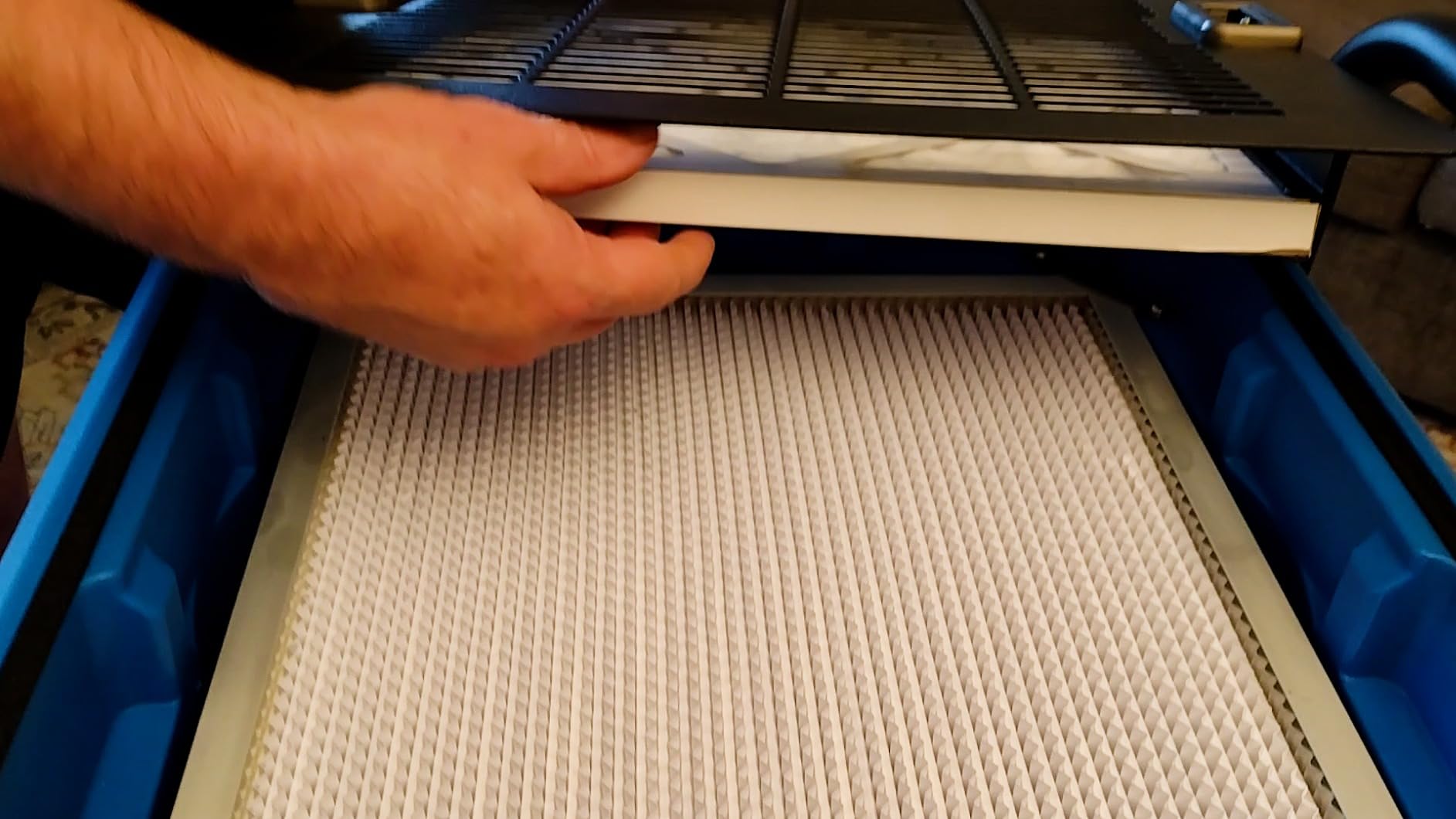
The costs of that scale are real. At 79 pounds with a 24 by 24 by 33 inch footprint, this is the least portable machine in the roundup, and you need to plan the setup location before it arrives rather than after. It is loud at the higher of its two speeds, which is the setting you will want during heavy demo.
Warranty is the other trade. Three years is shorter than the 10-year housing coverage offered on several smaller units in this group, and with only 39 ratings there is limited long-term durability feedback available. That is a fair price for the airflow, and a poor trade for a small room, where a 550 CFM cabinet does the same job at roughly half the weight.
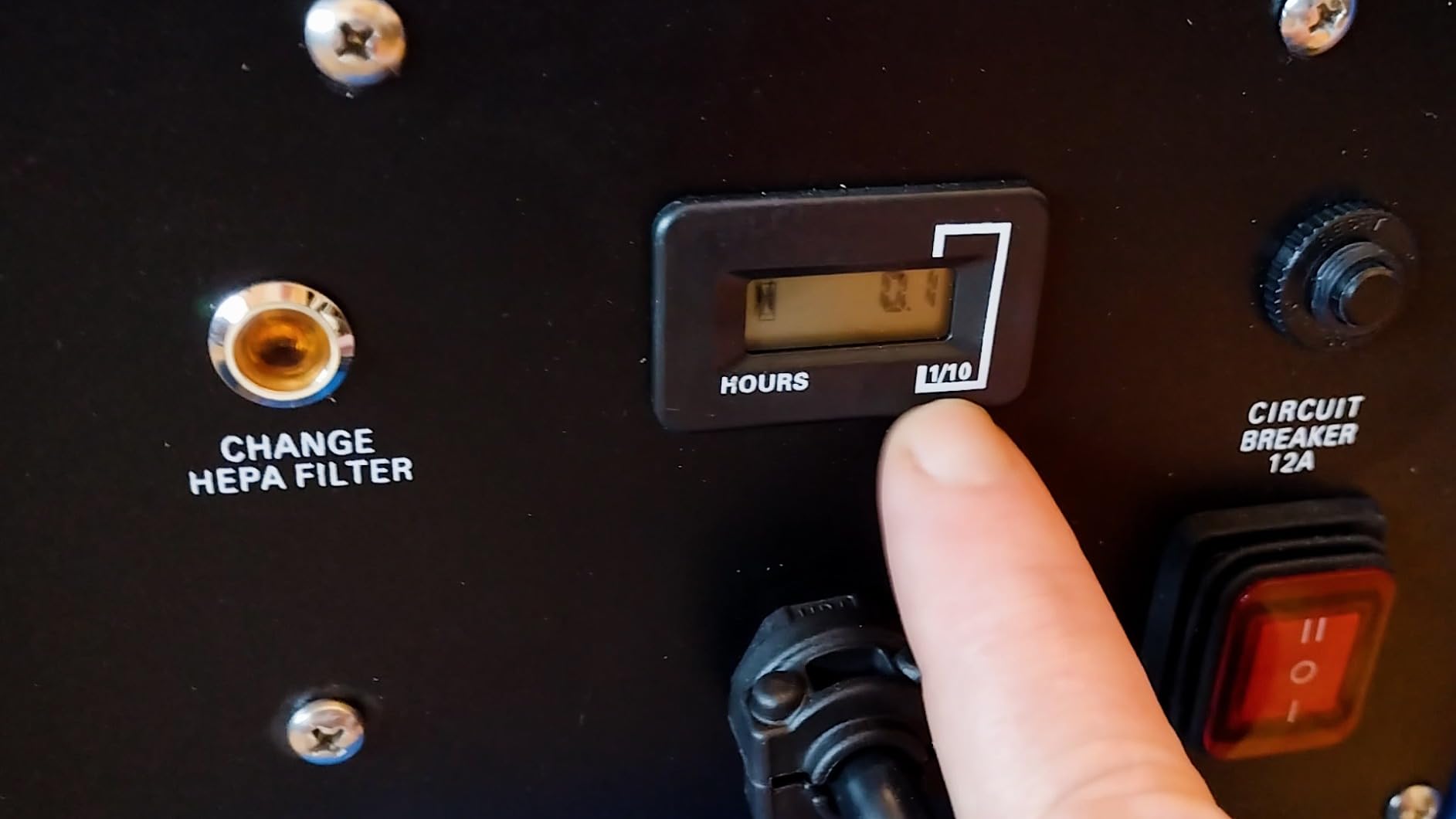
What you should know before buying it
Confirm the two-speed range gives you a genuinely quiet setting. The lower speed is what you will run overnight or while the family is in the house, and the higher speed is what you run during demo. If the low setting is still too loud for an occupied next room, a smaller machine with more speed steps is the better purchase.
Measure the intended location against a 33 inch height. Under a low ceiling, beside a staircase or in a crawlspace this cabinet will not fit, and moving it later is harder than moving a 35 pound unit.
Where it is the wrong choice
Do not buy it for a single room. A 1000 CFM machine in a bathroom adds noise, weight and running cost with no benefit, and the 3-year warranty leaves less protection if something fails mid-project. This is strictly an open-floor machine.
10. Dri-Eaz HEPA 700 – the most speed control with a touchscreen
Dri-Eaz HEPA 700 Air Scrubber, Industrial Air Filtration System, Optional Activated Carbon Filter, 700 CFM
- 8 speed airflow control via touchscreen for quiet running in occupied rooms
- Touchscreen reports HEPA filter condition directly
- Ductable and stackable for transport between job sites
- Rectangular outlet accepts 24 inch lay-flat poly with a retaining clip
- Effective at VOC removal for in-home spray finishing
- 700 model replacement HEPA and carbon filters are hard to find online
- Wi-Fi and app setup is difficult and expects a business profile
- Optional carbon filter is not sold through the same channel as the unit
- Dealer-oriented ownership experience rather than a simple homeowner setup
The HEPA 700 is the only machine here with eight airflow speeds, and that is the entire argument for it in an occupied home. Professionals and homeowners praise the touchscreen control for running the unit quietly while a household is in residence, and the screen reporting HEPA filter condition is more useful than a light that may or may not be accurate. One reviewer reports clearing the air in a 4000 sq ft house in under three hours, and others cite effective VOC removal for in-home spray finishing with doubled carbon filters.
At 42 pounds it is ductable and stackable, and the rectangular outlet accepts 24 inch lay-flat poly duct with a retaining clip, which is a straightforward way to run negative air out a window. The filter arrangement is a pre-filter, an optional activated carbon filter and a true HEPA filter, and it is made in the USA.
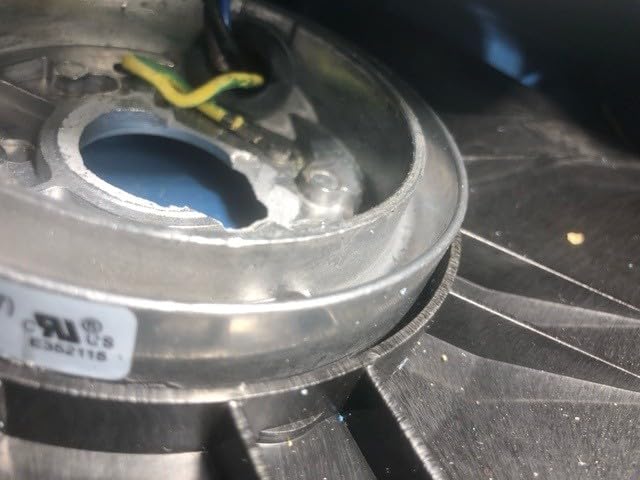
It has the lowest rating in the group at 4.2 stars, and the reason is filter sourcing rather than performance. 700 model replacement HEPA and carbon filters are difficult to find online, the manufacturer website filter links have pointed users to incorrect filter sizes, and the optional carbon filter is not sold through the same channel as the unit. Setup of the Wi-Fi and app is also difficult and expects a business profile, which frustrates non-commercial users.
On forums, the recurring complaint about commercial-grade brands in this class is exactly this: dealer-only or hard-to-source replacement filters. Confirm you can buy replacement media before you commit, because a machine that cannot be filtered again is a single-use purchase. One report also describes a blower motor arriving damaged, which is a transit issue rather than a design flaw but worth a note.
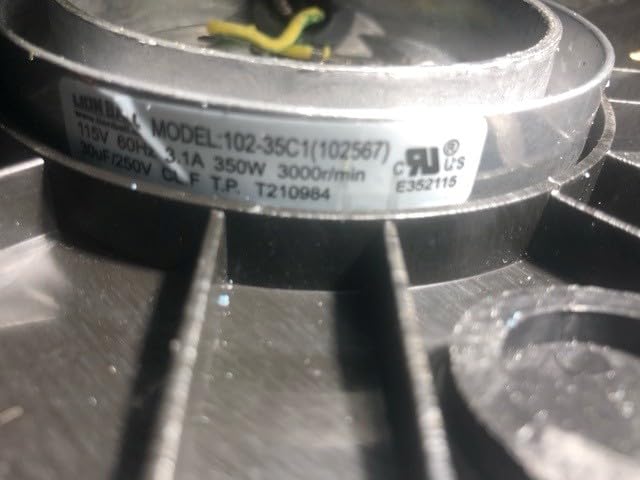
What you should know before buying it
Source the filters first. Search for the correct HEPA and carbon part numbers for the 700 model and confirm the sizes before ordering the unit, given reports of mismatched filter links. This is the single most important check on this machine.
You can skip the app entirely. The touchscreen handles airflow and filter health, and the Wi-Fi setup expects a business profile that a homeowner has no use for.
Where it is the wrong choice
Skip it if you want a simple homeowner setup. The 8-speed control and touchscreen are unnecessary for a short demo, and the filter sourcing problem makes it a poor fit for anyone without a dealer relationship.
How to size an air scrubber for your renovation room
Sizing is arithmetic, not guesswork, and it takes two minutes. Calculate the room volume by multiplying length by width by ceiling height in feet. Multiply that volume by your target air changes per hour, then divide by 60 to get the required cubic feet per minute. The standard target during general renovation is 4 to 5 ACH, with 6 or more during heavy demolition and about 4 for finish work where the goal is finishing rather than stripping.
Worked examples. A small bathroom of 8 by 10 feet with an 8 foot ceiling is 640 cubic feet, which needs roughly 43 CFM at 4 ACH and 53 CFM at 5 ACH, so a 300 CFM class machine gives you a large margin of headroom. A typical kitchen at 12 by 16 feet with 9 foot ceilings is 1728 cubic feet, needing 115 CFM at 4 ACH and 144 CFM at 5 ACH, so a 500 or 550 CFM unit clears it several times over. An open-plan main floor of 30 by 40 feet with 9 foot ceilings is 10800 cubic feet, requiring 720 CFM at 4 ACH and 900 CFM at 5 ACH, which is where the 700 and 1000 CFM machines earn their place.
The reason these numbers run higher than intuition suggests is that manufacturers rate airflow at the filter face with clean filters and no ducting attached. Add a flex duct run and static resistance reduces real output, and a loaded pre-filter reduces it further. That is why buying a machine with headroom above your calculated figure is sensible, and why stacking two smaller cabinets can beat one large machine in terms of flexibility.
Air scrubber vs. Corsi-Rosenthal box: is the DIY build worth it?
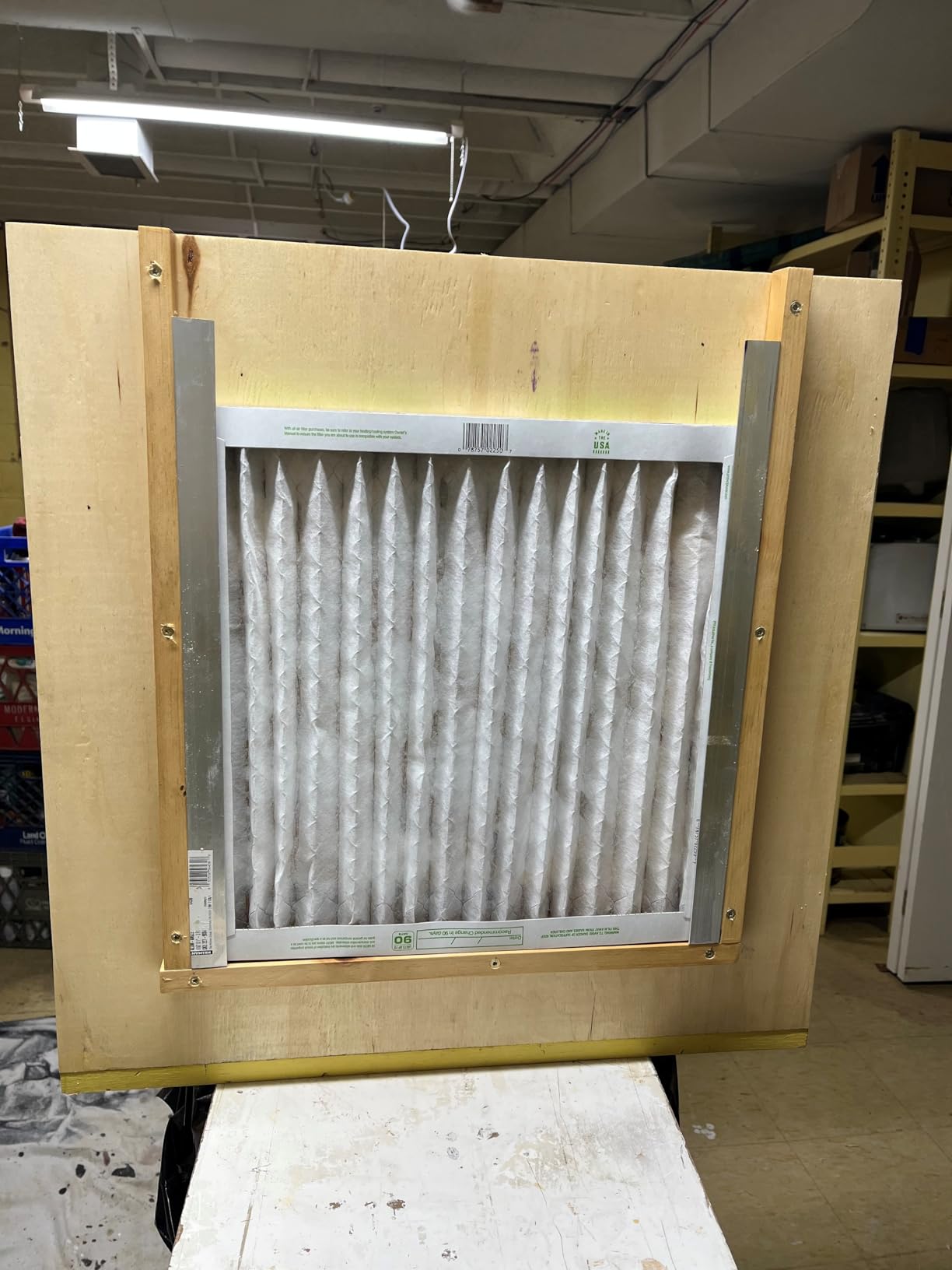
A Corsi-Rosenthal box is a fan-and-filter assembly built from standard furnace filters, typically three filters arranged in a cube formation around a centrally mounted fan. In air purifier forums, responders routinely point out that a CR box delivers comparable jobsite performance for roughly half the cost of a commercial air scrubber, and for many homeowners that math is decisive.
The trade-offs are real in both directions. A CR box is cheap to build, filters are available everywhere, and the cube is easy to modify as a project changes. It is also loud, bulky without a proper frame, has no negative-air duct collar, and offers no filter-change indicator or hour meter. An air scrubber gives you a sealed rotomolded housing, adjustable speed control, a proper outlet collar for ducting, and a warranty, which is what you are paying for.
Our read is that the CR box wins for a single room over a weekend and loses for anything multi-week or occupied. If the job is a bathroom gut, build the box or rent a machine. If the job is a kitchen plus a hallway over three weeks with people sleeping in the house, the difference in negative pressure and monitoring earns the spend.
Setting up negative-air containment in an occupied home
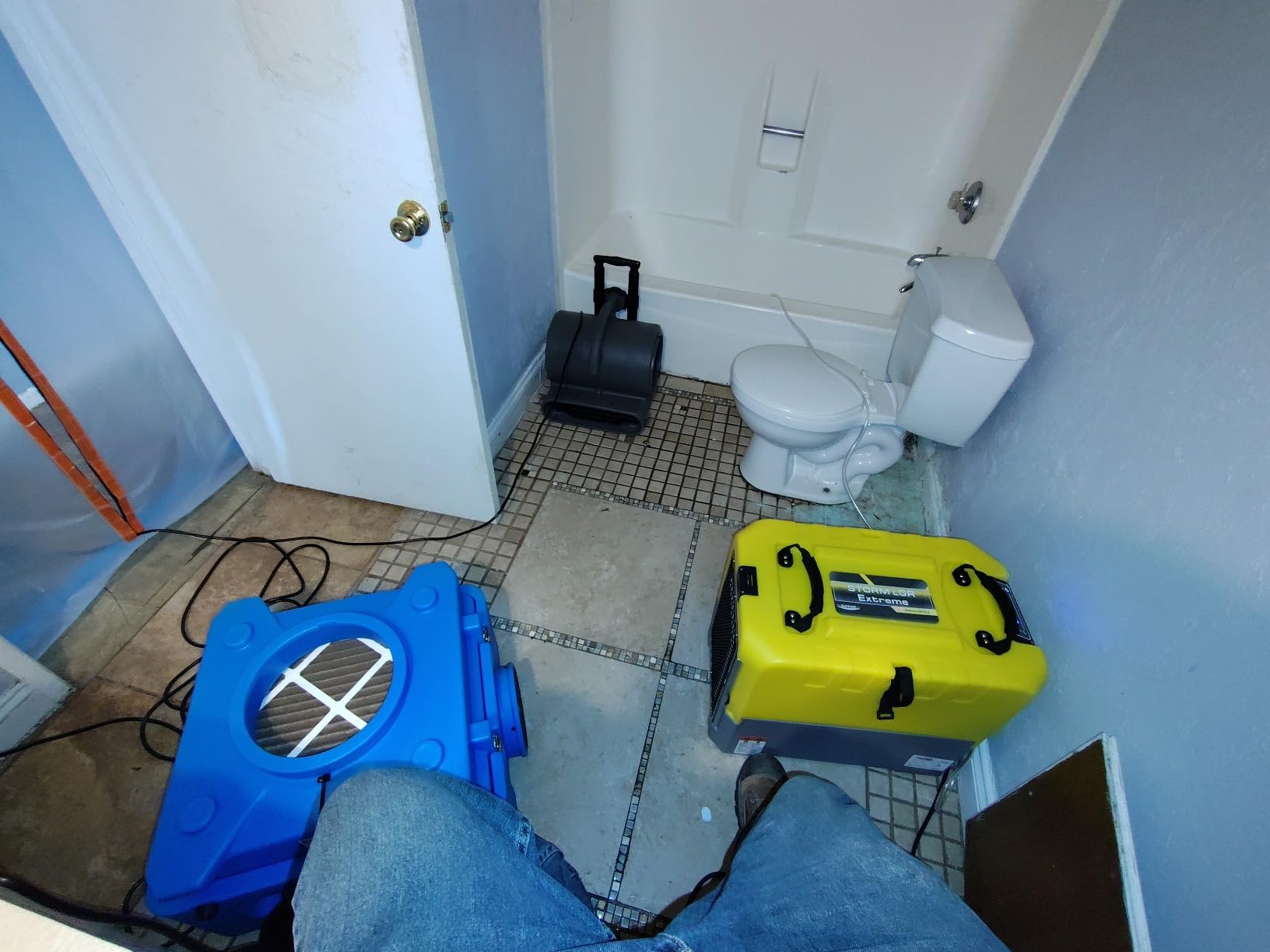
This is the question that comes up most often on renovation forums and the one no roundup answers, so here is the working protocol that contractors describe. The unit is one layer. Plastic sheeting, a door air-lock and daily cleanup do most of the work, and the scrubber is what makes the contained volume safe to leave running.
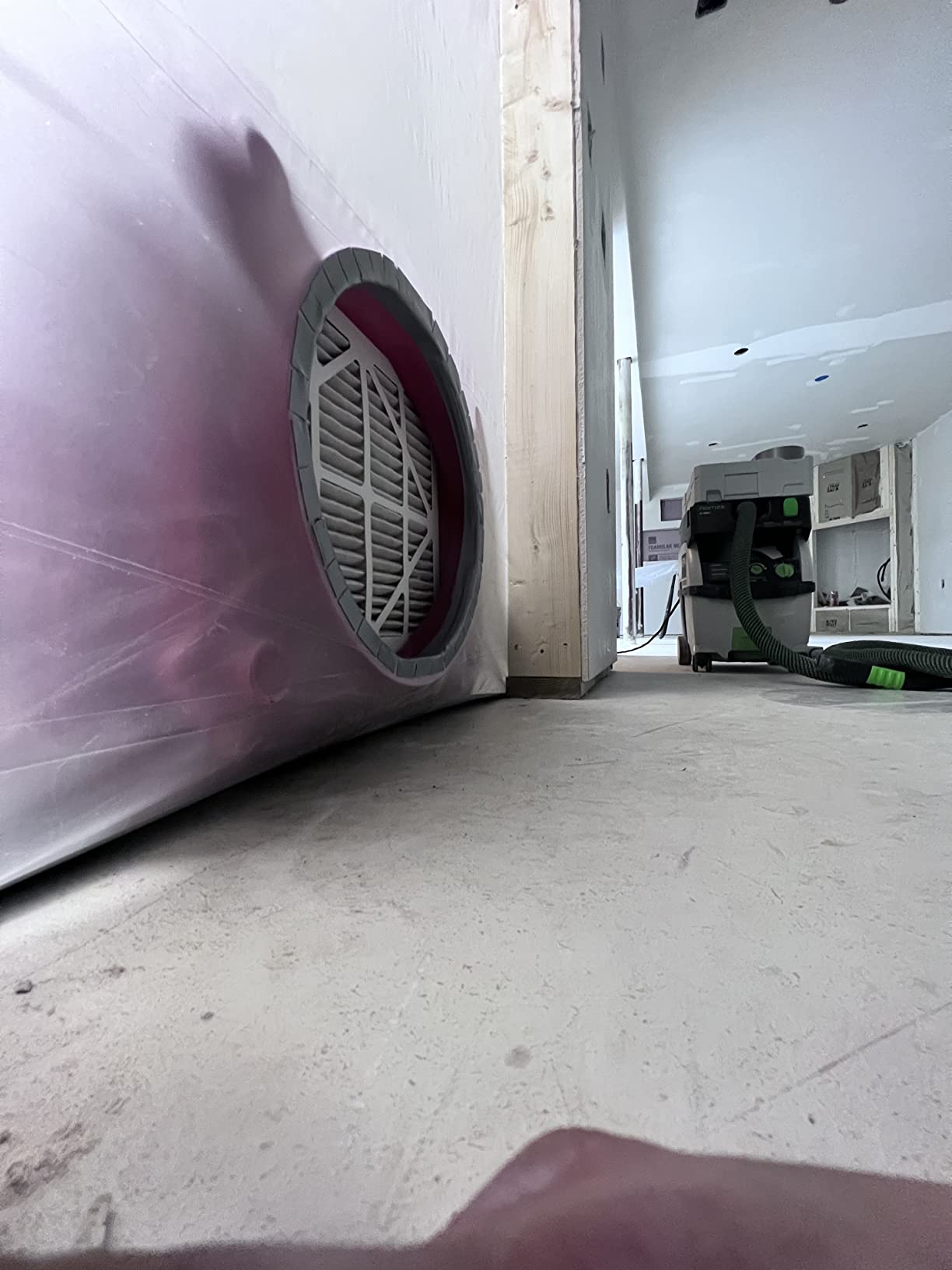
Step one, seal the boundary. Hang 6mm plastic at the doorway to the rest of the house and tape every edge, then build a short air-lock corridor with two sets of plastic if pets or small children are in the home. Step two, take the exhaust outside. Duct the outlet through a window or a dryer vent to the exterior, and fit a proper air valve in the line so the room holds negative pressure rather than pushing filtered air back in. Step three, seal the intake. If you are not using source capture, leave the inlet fully open in the work room. Step four, size the machine to the room using the ACH math above, and check airflow at the intended speed rather than assuming the maximum rating.
Step five, run it on a schedule, not continuously at maximum. Start it before demo begins to establish negative pressure, run it throughout the dusty work, and leave it running for several hours after each dusty stage, then again during finish work. Step six, keep two feet of clearance around the inlet and outlet and check the pre-filter at the start and end of every stage.
One last point on limits. During lead paint or asbestos demo, an air scrubber is a containment tool, not personal protective equipment. A properly fitted respirator, coveralls, gloves and a written exposure assessment are the requirements, and tradespeople planning a lead-painted bathroom demo on forums make the same point. If you want more background on cleaner air in occupied rooms between stages, our guide to air purifiers for home offices covers the different sizing logic for a living space rather than a work zone.
How much does an air scrubber really cost to run?
Two costs matter: electricity and filters. Electricity is the smaller of the two. A 550 CFM cabinet in this class typically draws a few hundred watts, so running one continuously for a month across 720 hours consumes a few hundred kilowatt-hours, which is a modest line on a household bill. The 1000 CFM unit with its 1 HP motor is the outlier, and its cost scales accordingly.
Filters are where renovation economics actually live. Assume a three-stage machine needs a pre-filter inspected weekly during heavy demo and replaced far sooner than in normal household use, with the HEPA element and carbon stage following on a schedule driven by hours run rather than calendar time. The combined cartridge on the CADPXS is the trap to watch, because replacing the carbon stage also replaces the HEPA stage. Units using common 16x16x1 filters, or where a spare pre-filter pack is included with the machine, cost meaningfully less per job.
The way to compare these machines is cost per project, not per unit. Take your projected renovation hours, multiply by the current draw to get energy cost, then add the number of pre-filter changes and HEPA or carbon replacements you expect across that period. On a four-week demo that math routinely justifies a more expensive unit with a longer warranty and a filter-change indicator, and it makes the shortest warranty in the roundup a real consideration rather than a footnote. If you are also replacing the appliances in the kitchen you are working in, running cost matters there too, and our ranges with air fryers guide covers the same energy-versus-features trade from the other end of the renovation.
One more comparison worth making if your project is a single room. Renting a machine for a weekend often costs less than buying filters for a year, and equipment rental is the option most homeowners overlook. For the tools side of a renovation, our wet tile saw roundup covers the same buy-versus-rent thinking for a different category.
Frequently Asked Questions
Do air scrubbers really work?
Yes, for particles. A true HEPA stage is specified to capture 99.97% of particles at or above 0.3 microns under laboratory test conditions, and airflow expressed in CFM tells you how fast the room is cleared. They do not capture gases, odors or VOCs, which need an activated carbon stage, and they do not stop dust at the source, so EPA guidance treats them as a supplement to source control and ventilation rather than a replacement.
What is the best air scrubber for home use?
For most home renovations the 500 to 550 CFM tier with true HEPA and an activated carbon stage is the sweet spot. Around 300 CFM is enough for a single small room, while 750 to 1000 CFM suits open-plan floors and gut renovations. A negative-air capable model matters most if the home is still occupied during the work.
What size air scrubber do I need for my renovation?
Multiply the room volume in cubic feet by your target air changes per hour, then divide by 60. Use 4 ACH for general renovation and 5 or 6 ACH for heavy demolition. A 12 by 16 foot kitchen with 9 foot ceilings is 1728 cubic feet and needs roughly 115 to 144 CFM, so a 500 or 550 CFM unit gives comfortable headroom.
How long do air scrubber filters last?
Far less than in normal household use. During a full gut demo the MERV-10 pre-filter should be inspected weekly and replaced well before it looks saturated, because a loaded pre-filter cuts real airflow. The HEPA and carbon stages follow a schedule driven by hours run, so a unit with an hour meter is easier to manage. Check filters at the start and end of every project stage rather than on a calendar.
Is an air scrubber worth the money?
For a multi-room or multi-week renovation, usually yes, because the alternative is sealing the work area and cleaning repeatedly. For a single small room demo lasting a weekend, a rented unit or a DIY Corsi-Rosenthal box is the better economics. The honest counterargument is that a scrubber captures airborne dust only, so source capture and daily cleanup still do the majority of the work.
What are people saying about the VEVOR air scrubber?
Owner reviews rate the VEVOR 550 CFM highly for dust and odor capture at its price point, easy one-person transport and simple controls, and it currently carries a 4.4 star average across 311 ratings. The recurring reservations concern build quality and finish compared with restoration-brand units, and some reports of airflow dropping as the pre-filter loads.
Final verdict
For most people running a home renovation, the BlueDri Air Shield 550 is the safest bet in the best air scrubbers for home renovations roundup, with the deepest review history in the group and filters you can actually source later. The ALORAIR CleanShield HEPA 550 is the pick if the 10-year warranty is what convinces you, and the VEVOR 550 CFM wins if moving it between floors is the hardest part of your project.
Whichever you choose, size it with the volume and ACH math, seal the work area, duct the exhaust outside with an air valve, and run it before, during and after the dusty work. Add a carbon stage if paint or solvents are involved, check the pre-filter weekly, and treat any CFM figure as a ceiling rather than a promise. Last updated in 2026.