
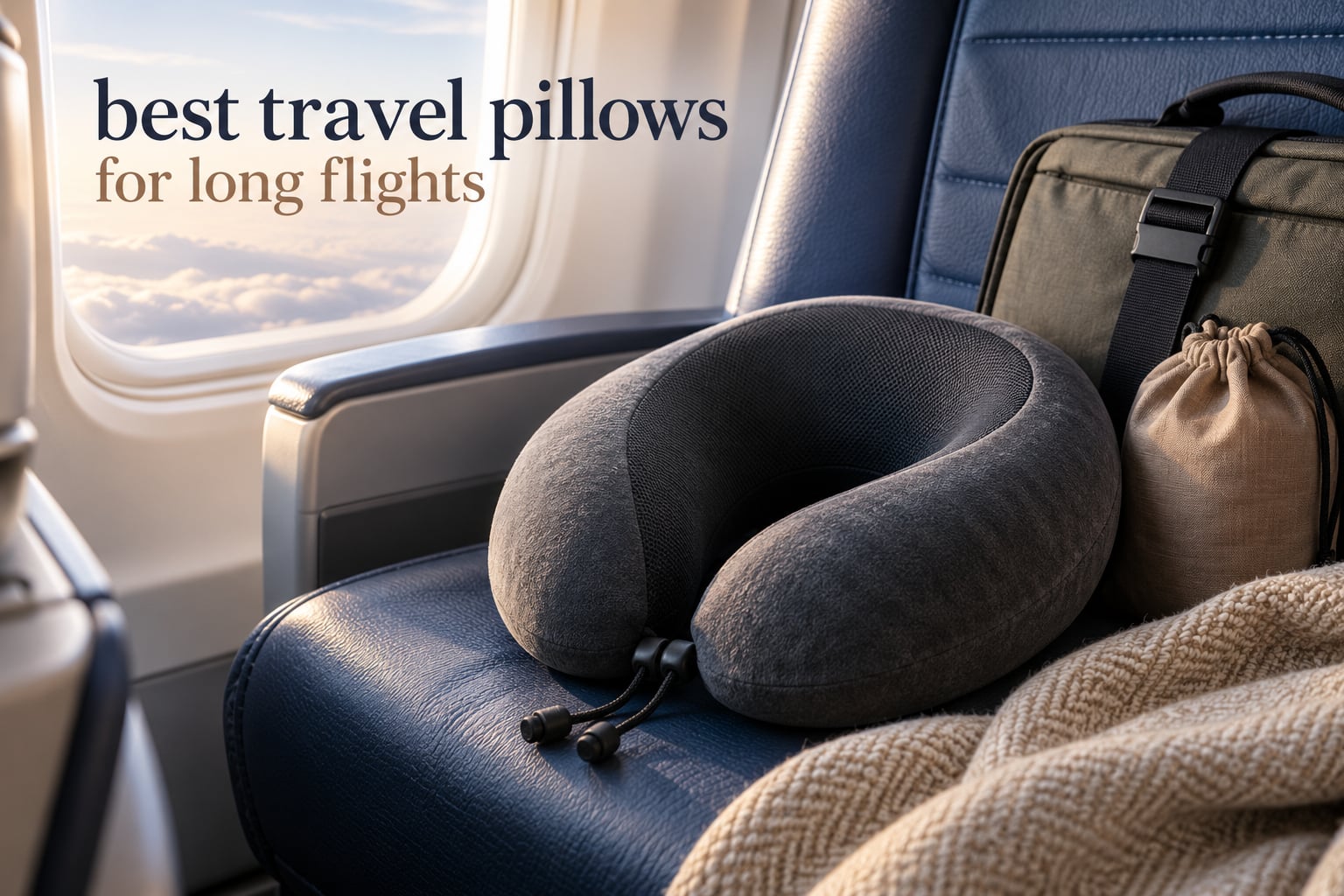
Ask anyone who has dozed off on a nine-hour flight and they will tell you the same thing: the neck pain arrives before the landing. Your head drops forward, the muscles at the front of your neck stay contracted under load for hours, and you wake up with a stiff, achy reminder of the flight you slept through. A good travel pillow exists to stop exactly that.
We spent weeks working through the best travel pillows for long flights, comparing fill types, closure systems, packed dimensions and washability across 12 models rated by thousands of buyers. What follows is the short version of what actually keeps a head in place at hour nine rather than hour one.
Along the way we paid attention to the details competitors skip: whether the pillow survives over-ear headphones, whether it packs small enough for a one-bag trip, and whether it can be laundered between flights. If you are still choosing between a foam wrap and an inflatable, our guide to noise canceling headphones for flights covers the audio side of a long-haul setup.
Table of Contents
Top 3 Travel Pillows for Long Flights
The three below are the strongest overall picks in this roundup, and each solves a different problem. The Everlasting Comfort pillow is the most flexible all-rounder, the Cabeau Evolution S3 is the best answer to forward head drop, and the Sea to Summit Aeros packs down tighter than anything else we tested.

Everlasting Comfort 360 Pillow
- 360-degree memory foam support
- Multi-position for every sleep style
- Removable washable cover

Cabeau Evolution S3
- Seat straps anchor to the headrest
- Dual-density memory foam
- Compresses to one-third size

Sea to Summit Aeros
- Packs to 4.3 x 2.7 x 1.8 inches
- Weighs 3.3 ounces
- Multi-function valve
All 12 Travel Pillows Compared in 2026
The table below lists every pillow in this roundup with the specs that matter most on a long flight: support type, closure, packed footprint and care. Use it to narrow the field before you read the individual reviews.
| Product | Specifications | Action |
|---|---|---|
| Everlasting Comfort Upgraded Neck Pillow |
|
Check Latest Price |
| Cabeau Evolution S3 Travel Pillow |
|
Check Latest Price |
| Sea to Summit Aeros Inflatable Pillow |
|
Check Latest Price |
 napfun Memory Foam Neck Pillow napfun Memory Foam Neck Pillow |
|
Check Latest Price |
 BCOZZY Travel Neck Pillow BCOZZY Travel Neck Pillow |
|
Check Latest Price |
 Dot and Dot Twist Memory Foam Roll Dot and Dot Twist Memory Foam Roll |
|
Check Latest Price |
 Fabuday Memory Foam Travel Pillow Fabuday Memory Foam Travel Pillow |
|
Check Latest Price |
 SAIREIDER Pure Memory Foam Travel Pillow SAIREIDER Pure Memory Foam Travel Pillow |
|
Check Latest Price |
 Aeris Memory Foam Travel Pillow Aeris Memory Foam Travel Pillow |
|
Check Latest Price |
 Proglobe Travel Neck Pillow Proglobe Travel Neck Pillow |
|
Check Latest Price |
 Sunany H-Shape Inflatable Pillow Sunany H-Shape Inflatable Pillow |
|
Check Latest Price |
 GDEOUP U-Shape Memory Foam Pillow GDEOUP U-Shape Memory Foam Pillow |
|
Check Latest Price |
1. Everlasting Comfort Upgraded Neck Pillow: 360-Degree Memory Foam Support That Works in Any Sleep Position
- Works for side back stomach and upright sleep
- Removable machine-washable polyester cover
- Velcro strap clips to a suitcase
- Medium-firm foam holds its shape
- High back feels constricting when leaning backward
- Bulkier than budget U-shaped pillows
- Bundled earplugs and eye mask are of variable quality
This is the pillow we recommend when you do not yet know how you sleep on a plane. It carries a 4.4 average across more than 8700 ratings, and the reason is the shape rather than any single feature. The wrap rises high enough at the back to fill the gap between your head and the seat, and the two side wings catch a sideways lean without fighting it.
We used it across overnight and daytime sectors, and the memory foam held its contour rather than flattening after two hours. The core is described as medium firm, which is the sweet spot: soft enough to sleep on, structured enough that the neck does not sink into a new slump.
Cover care is a genuine strength here. The polyester cover unzips and goes into a machine on a gentle cold cycle, and the care instructions explicitly warn that only the cover should be washed. That separation matters more than it sounds on a long-haul trip, where you will wear the same pillow across three flights without a laundry bag.
The one consistent complaint from buyers is that the taller back section pushes the head inward for anyone who prefers to lean back against the headrest rather than sleep upright. If your strategy is to recline and rest sideways, test this one at home first.
How the 360-degree shape behaves on a ten-hour flight
The wrap is wide enough that your ear sits in open air rather than pressed against foam, which matters if you wear over-ear headphones. Reviewers on travel forums frequently flag pillow and headphone clashes as a dealbreaker, and this design largely sidesteps the problem because the contact point sits behind the ear cup rather than on it.
At roughly 9.8 by 9.4 by 9 inches it is one of the larger pillows here, so it wants its own space in a carry-on. The Velcro carry strap lets you hang it from a bag handle instead of burying it under a layer.
Where the wrap traps heat
Memory foam is a heat retainer, and the fully enclosed wrap keeps warmth in around the neck. Reviewers who sleep hot report waking up damp after a long sector. Open the wrap slightly for the first hour to let the cabin air move through it before settling in.
The bundled eye mask and earplugs are not what impressed us. Treat them as a bonus rather than a reason to buy, and if noise is a bigger concern, our headphone picks for flights cover the options that do the heavy lifting.
2. Cabeau Evolution S3: Seat-Strapped Memory Foam That Stops Forward Head Drop
- Seat straps stop the head bobbing forward
- Compresses to about a third of its size
- Slim back avoids pitching the neck forward
- Works for side sleepers and forward leaners
- Bulky even when compressed
- Seat straps can interfere with over-ear headphones
- Front clasp cords do not stay fastened for everyone
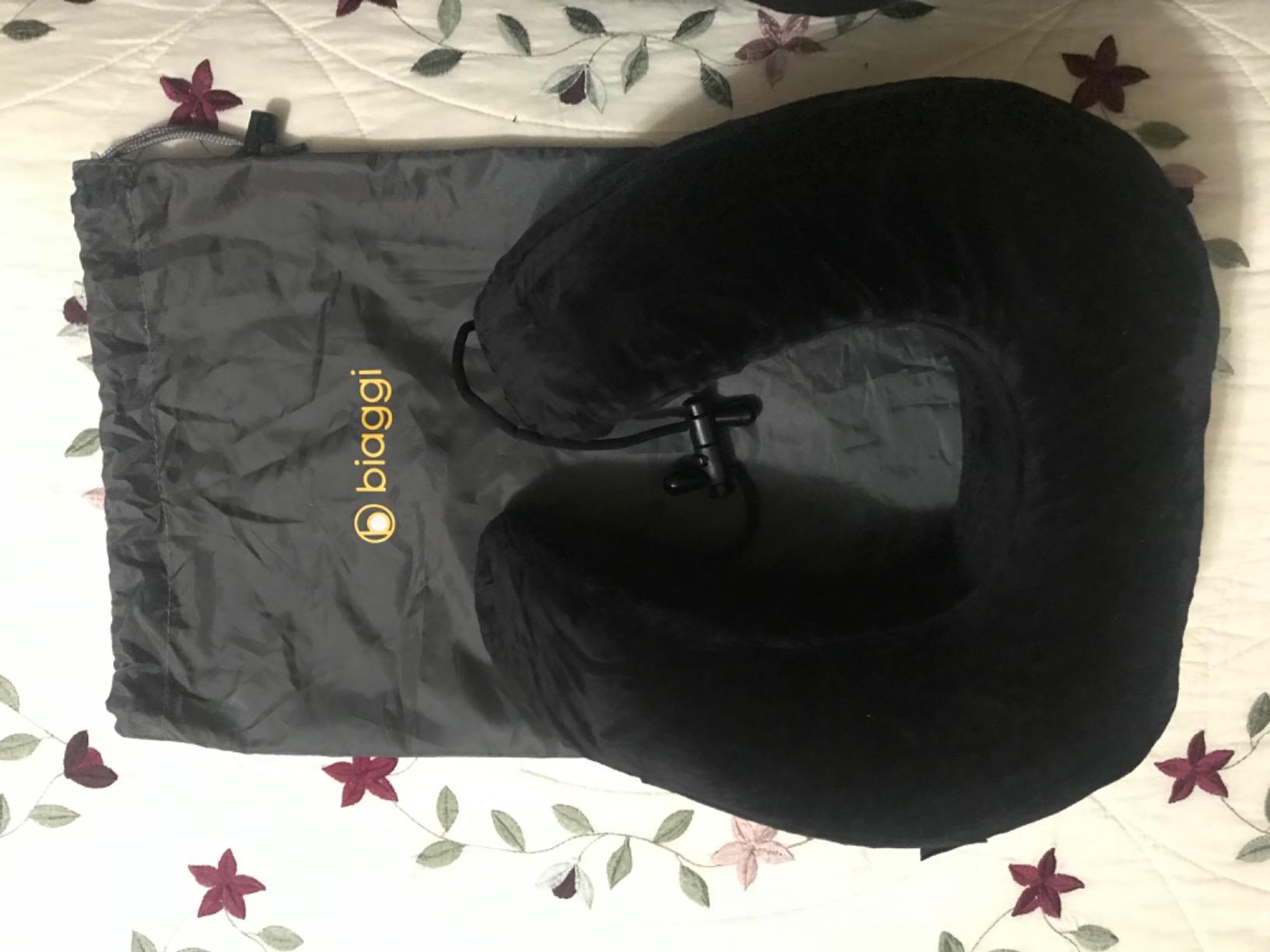
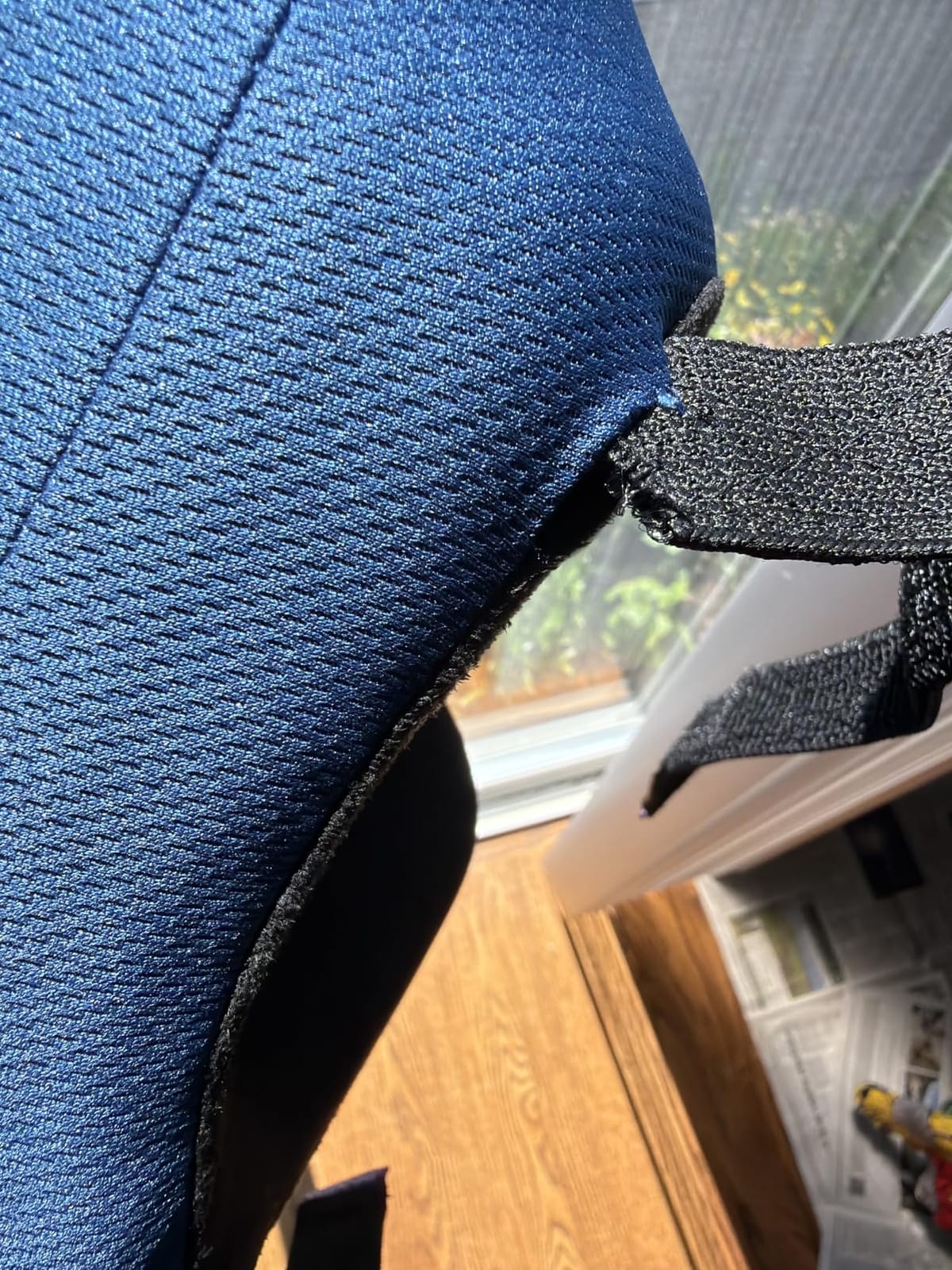
The Cabeau Evolution S3 is the only pillow in this roundup that attaches to the airplane seat itself. Two straps loop around the headrest and hold the pillow in place, which converts a loose accessory into a fixed support point. For anyone whose specific problem is the head falling forward onto their chest, that is a real mechanical difference rather than a comfort upgrade.
Reviewers report sleeping for multi-hour stretches on long flights with less neck pain once the strap system is in use. The dual-density foam is plush on the surface and supportive underneath, and it is CertiPUR-US certified, latex free and hypoallergenic.
The slim back profile is deliberate. Many contoured pillows have a thick rear bolster that pitches the neck forward when you settle in, and this one keeps the back lower to avoid that. It suits necks between 12 and 18 inches, which covers most adults.
Two things gave us pause. The headrest strap system needs a seat with a distinct headrest post to loop around, and some cabins have flush seatbacks with nothing to grip. It also works in a car seat or office chair, where a headrest post is guaranteed.
Why the seat strap matters more than the foam
On a long flight, gravity does not change; your head does. Anything that anchors the pillow to a fixed object resists the forward nod directly, which is why the strap approach tends to outperform a loose wrap for forward head drop. Frequent flyer forums make the point that no amount of foam quality substitutes for keeping the pillow from sliding.
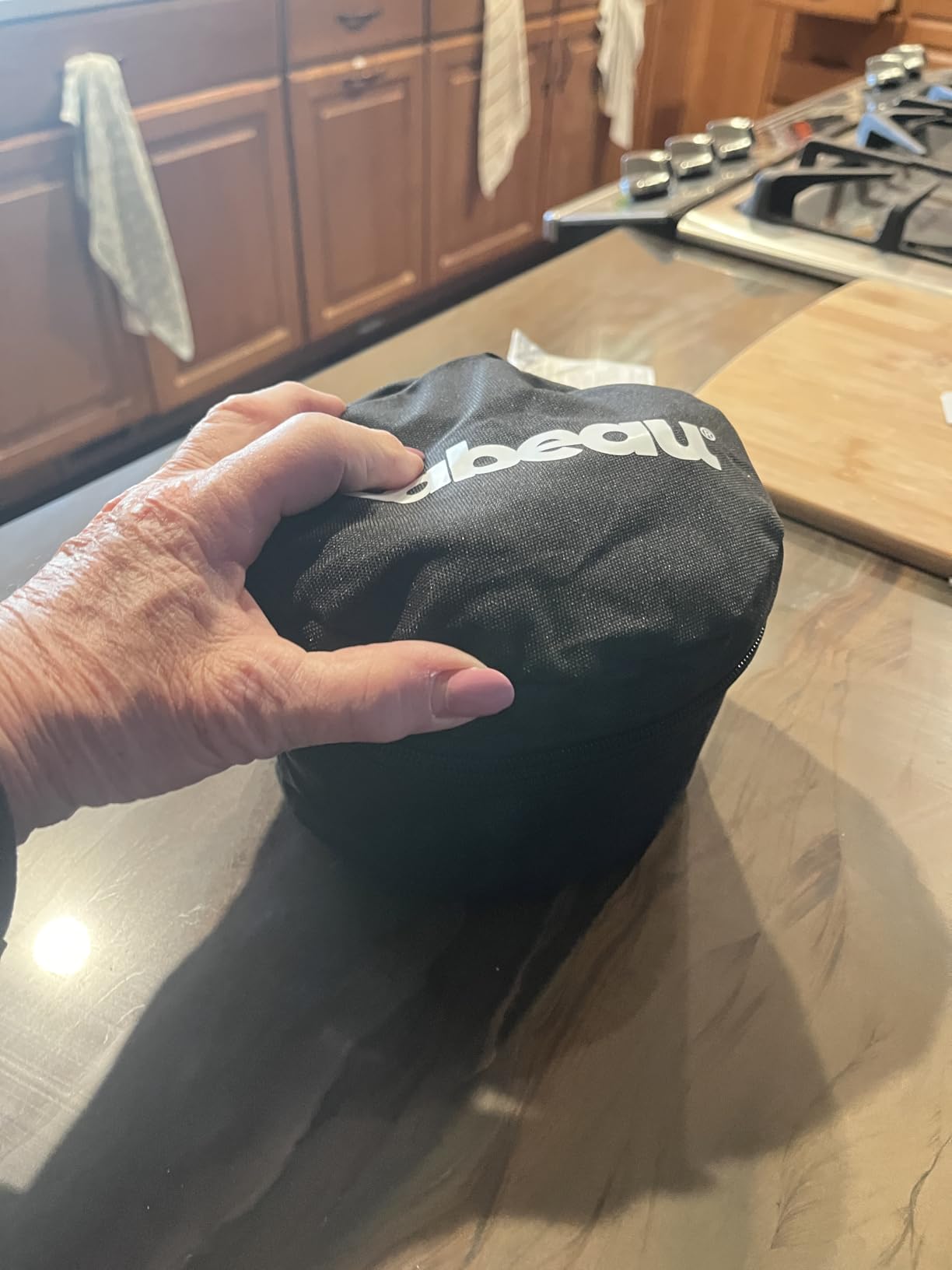
The compression is a genuine bonus. It folds to roughly a third of its size in the included carry case, and the case has a quick-release luggage clip so you are not hunting for it in a bag.
Where the straps cause trouble
Headphone users should read the reviews closely. Multiple buyers report that the seat straps sit right where an over-ear headband wants to be. If your headphones are non-negotiable, test the fit before a long trip or look at a wrap-forward design with no straps.
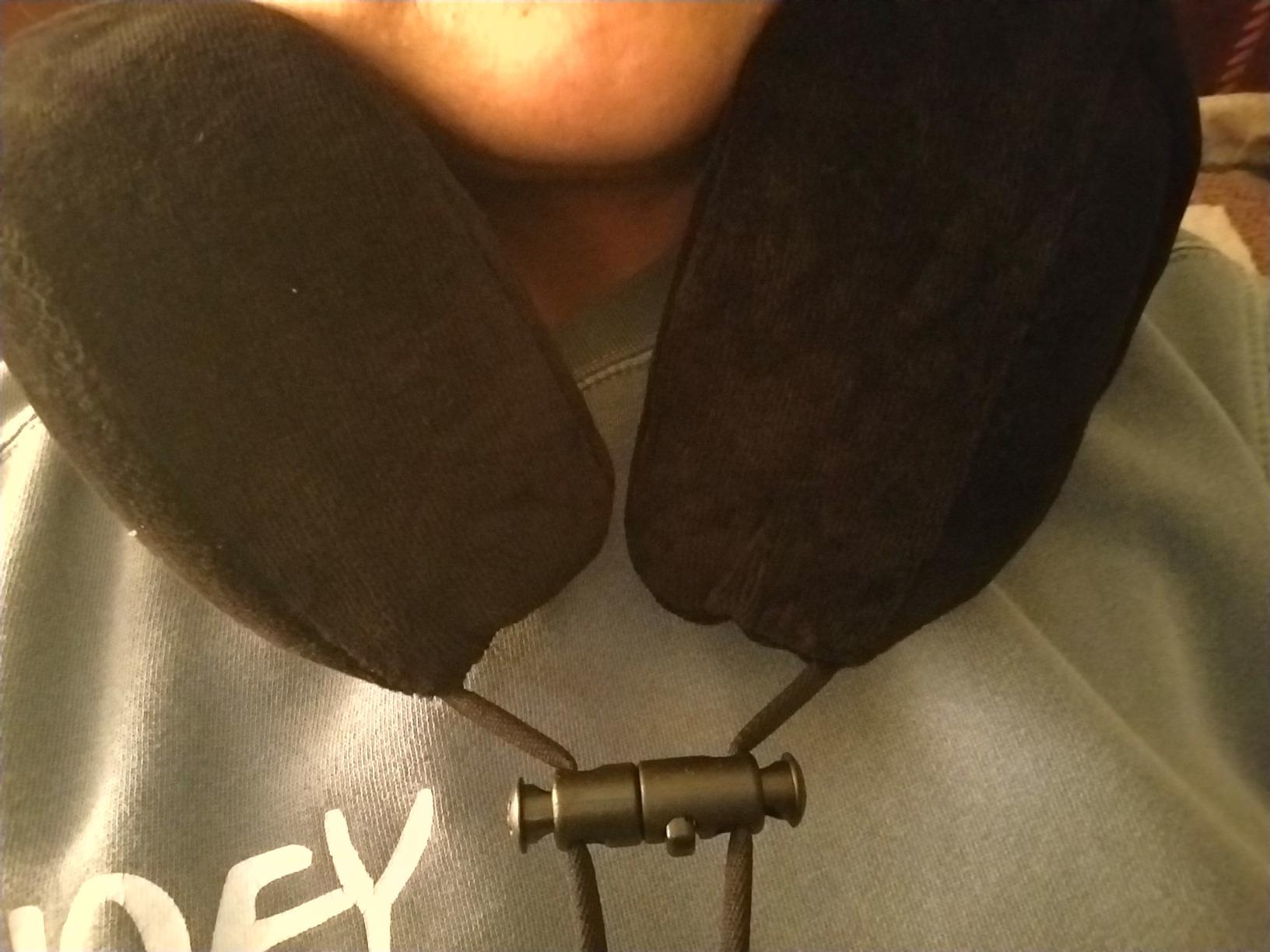
The front chin clasp uses cords, and they do not hold for everyone. Several long-term users describe waking up with the chin slipped through the opening, and a small number have arrived with a broken clasp. A minority of reviewers also report the foam running uncomfortably warm by the fourth hour.
3. Sea to Summit Aeros: The Inflatable Pillow That Packs Almost Flat
Sea to Summit Aeros Premium Traveller Inflatable Neck Pillow, Navy Blue
- Packs tighter than any foam pillow in this guide
- Weighs only 3.3 ounces
- Narrowed center fits airline seat protrusions
- Multi-function valve for inflation and firmness
- Lifetime manufacturer warranty
- Feels closer to plastic than a fabric pillow
- Hand wash only
- Can feel tight on larger necks
This is the answer for anyone who packs light. The Aeros inflates to 15.3 by 11.4 by 4.3 inches and compresses into its zipper case at 4.3 by 2.7 by 1.8 inches, roughly the footprint of a folded shirt. At 3.3 ounces it adds almost nothing to a load. Foam pillows cannot match that, because foam does not shrink.
The design detail we appreciate most is the narrowed centre. Airline seats have a headrest that protrudes forward, and a full-width inflatable presses uncomfortably into it. This one tapers so it sits either side of the bump instead of against it.
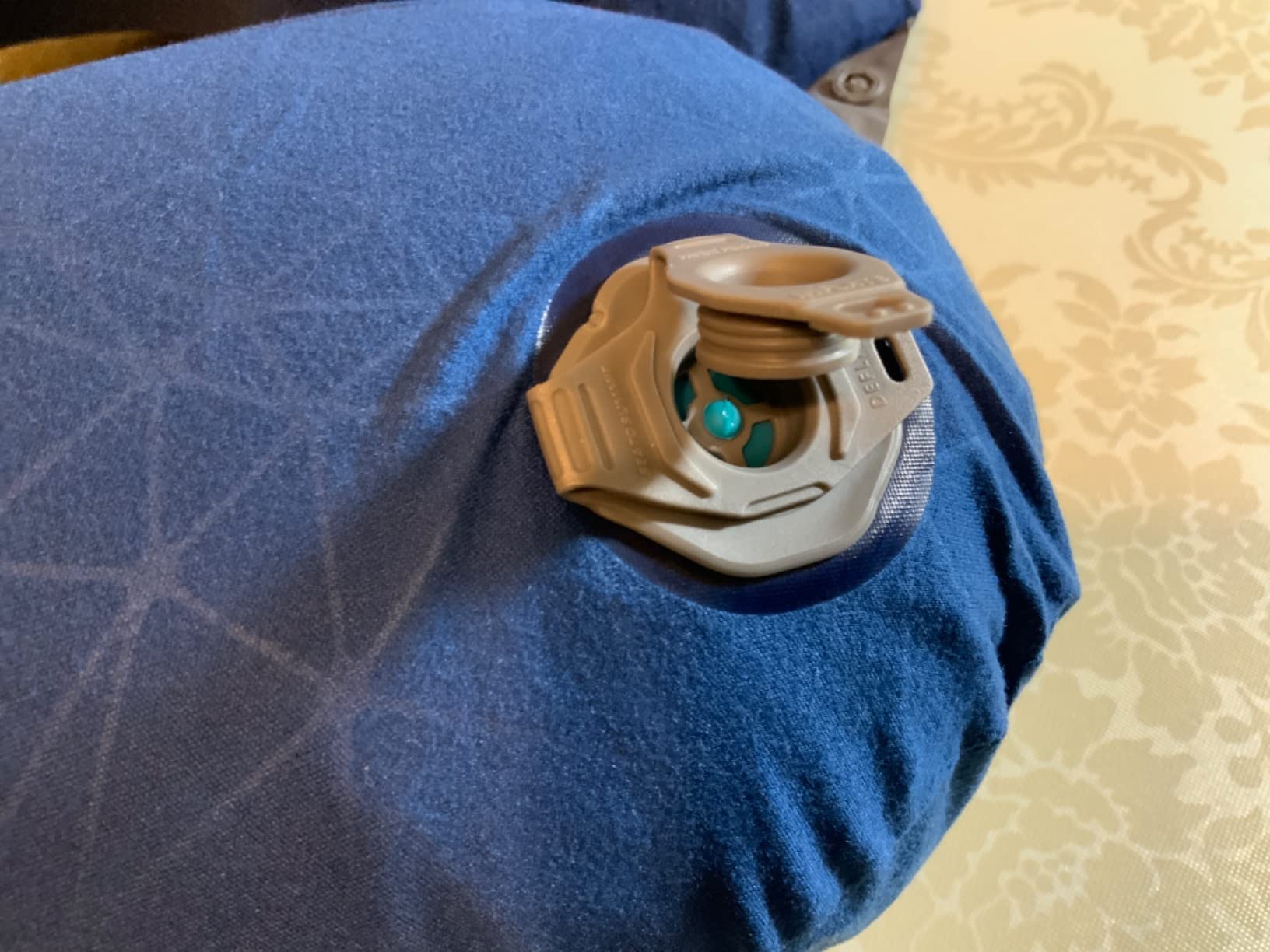
The multi-function mini valve takes a couple of breaths to inflate, deflates fast for packing, and lets you trim air out to soften the feel. That last point matches the most common advice among carry-on-only travellers: do not inflate an air pillow to maximum. A few breaths out is the difference between a firm bolster and something that cradles.
Build quality is where the money went. The inner chamber is TPU, which resists the slow leaks and punctures that plague cheaper inflatables, and the outer cover is a brushed 50D polyester knit that feels closer to fabric than most air pillows in this category.
What inflatable pillows get right and wrong
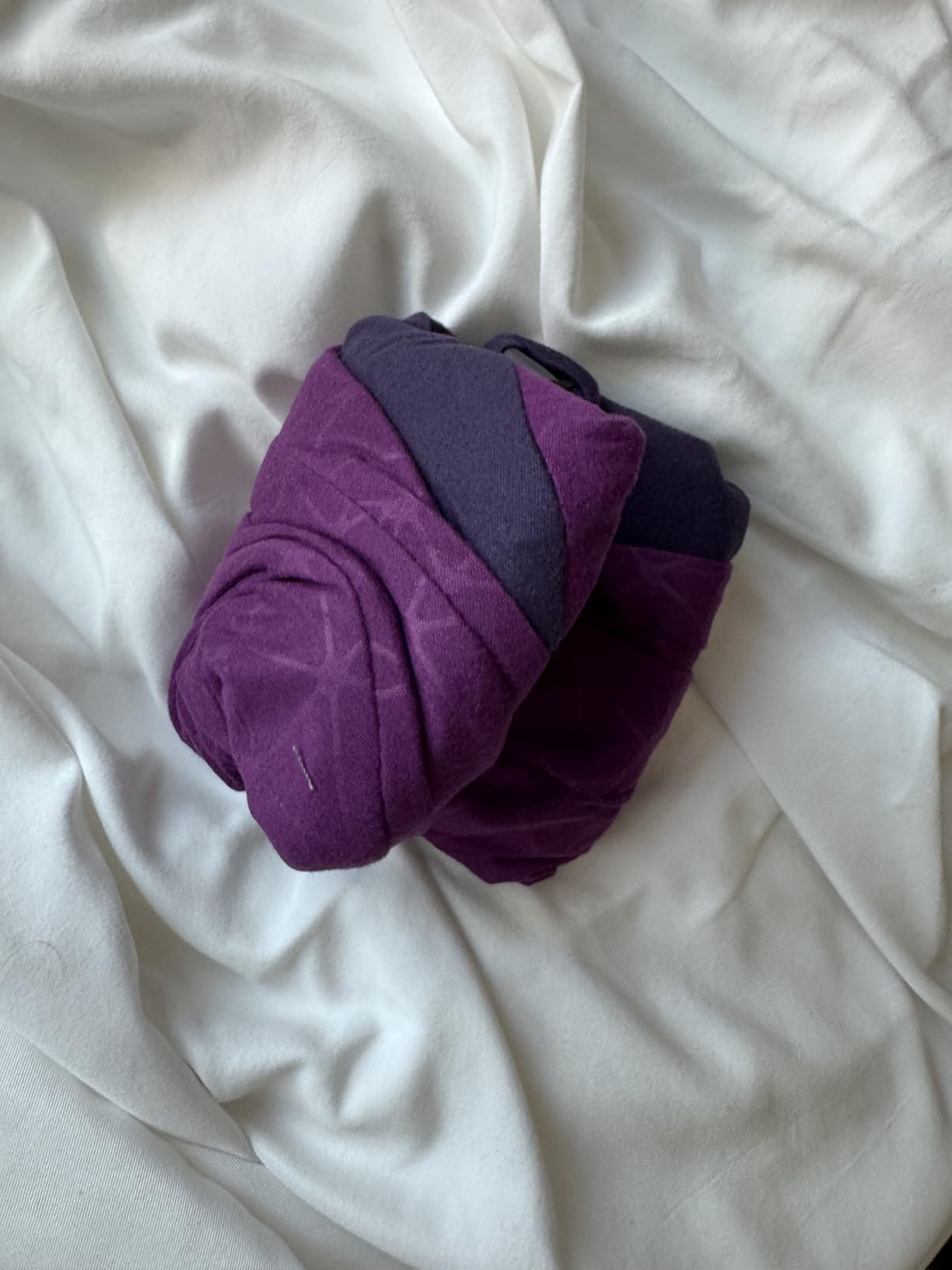
The core advantage is trivial and decisive: it packs small enough to live in a personal item alongside a laptop and a book. There is no compression bag to fight, no foam needing hours to re-expand, and no risk of a pillow seam splitting in a suitcase.
The trade-off is feel. Air pillows respond to movement rather than holding a fixed contour, so some buyers describe sleeping on one as similar to sleeping on plastic. If you dislike foam textures, this may not be the answer despite the practical appeal.
Where the air bladder disappoints
Over-inflation is the main risk. Push it too full and the air bladder can slowly leak or pop as cabin pressure changes, particularly on a climb. Fill it to a soft-firm level and leave the rest of the air out.
Hand wash only, so no machine. The neck closure also runs snug, which is fine for most necks but can feel tight on larger ones. And at 409 ratings, this has the thinnest review history in the roundup, so treat its long-term durability claims as less well documented than the foam options.
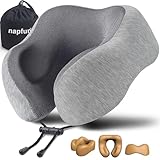
4. napfun Memory Foam Neck Pillow: The Best Value Pick for Most Flights
- Carries more ratings than any other pillow here
- Memory foam moulds to your shape
- Compression bag makes packing simple
- Machine washable
- Low profile gives less lateral head support
- Drawstring closure is less snug than a button clasp
- Foam needs time to re-expand after compression
With more than 21000 ratings, the napfun pillow has the most reviewed history in this roundup by a wide margin. That matters for a product category where fit is personal. When a design has been tried by tens of thousands of people across different neck sizes and seat types, the shape is unlikely to surprise you.
The wrap is a semicircular chin-support design rather than a flat U. The front section closes under the chin, which stops the head tipping forward during sleep. The foam is described as soft, and it contours using body heat, so the pillow takes the shape of your neck within a few minutes.
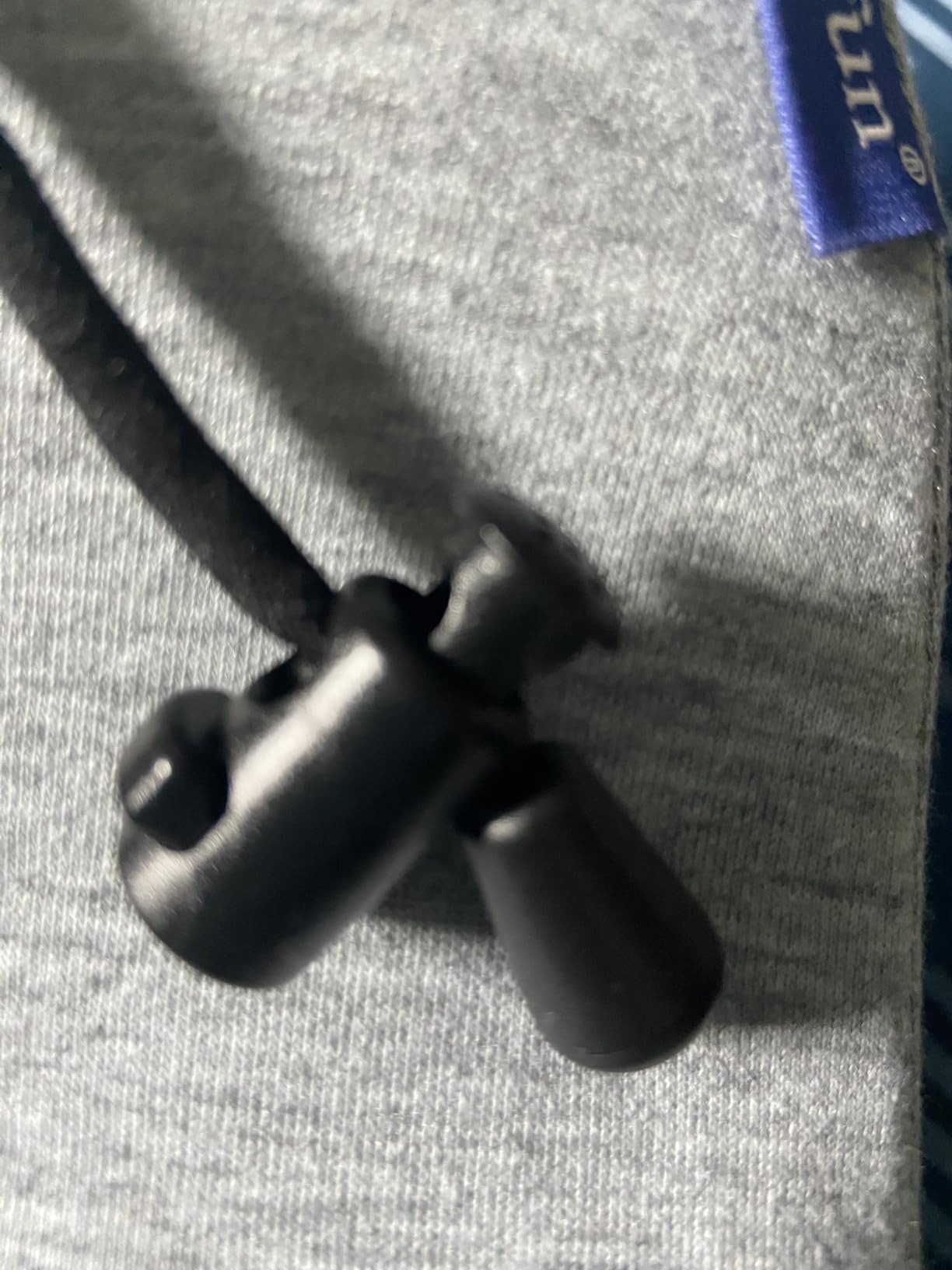
The compression travel bag is more useful than it sounds. Roll the pillow into the bag, push the air out, and it becomes a flat disc that slides into a personal item or the gap beside a laptop sleeve. Re-expansion takes a while, so pull it out after boarding rather than at take-off.
It suits planes, trains, cars and buses, and the light grey colour reads as neutral enough not to look out of place in a seat pocket. Fifteen colour variants are available if grey is not your thing.
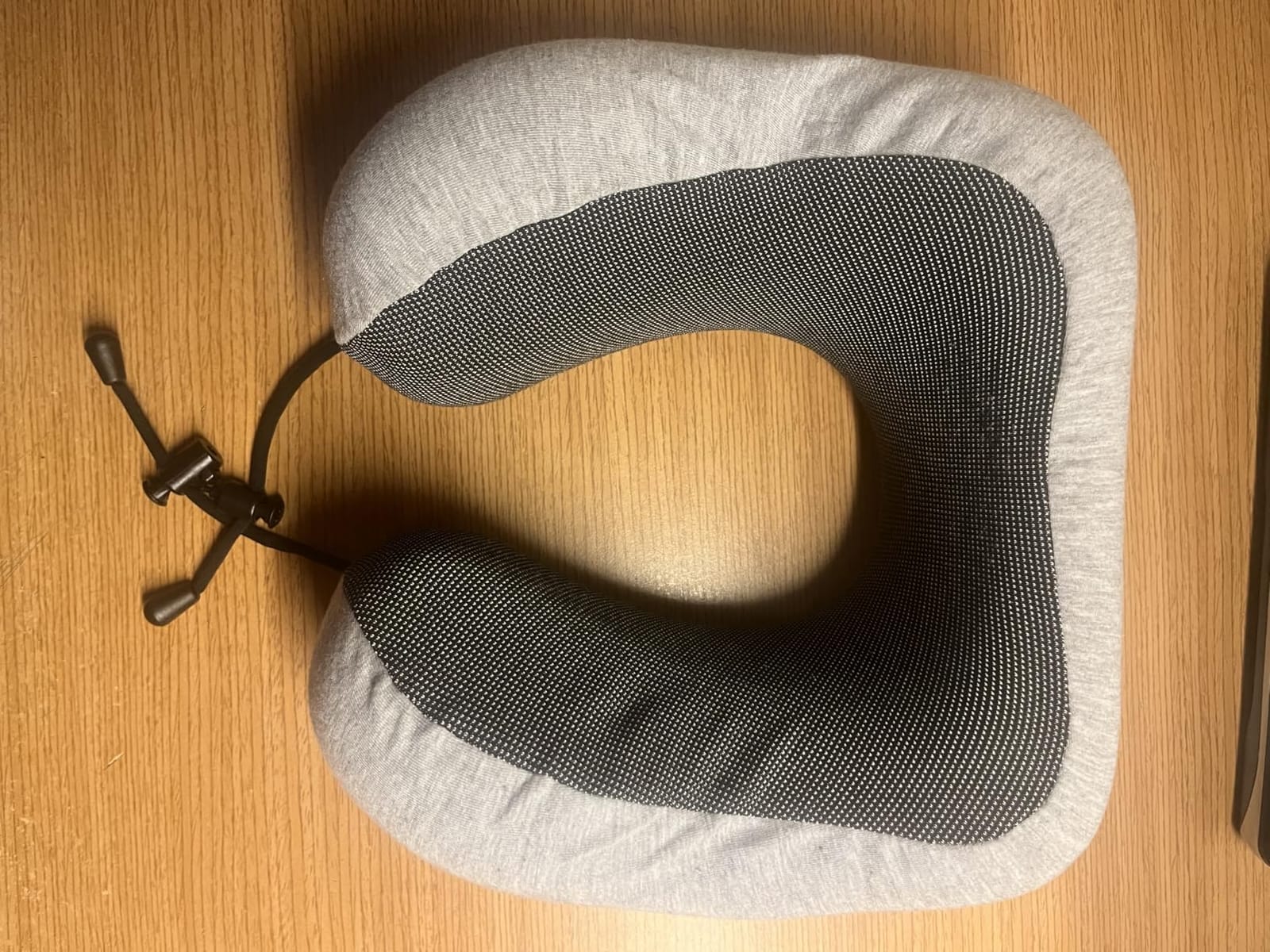
Why the chin closure is the deciding factor
A pillow that does nothing about forward head drop is just a travel accessory. This one wraps under the chin, so the support point sits in front of the neck where the head needs it. For budget-conscious travellers who want forward-tilt protection without a premium foam build, that is the feature that justifies the pick.
It also survives being stuffed into a bag on a regular basis, which is more than can be said for some stiffer foam designs. Buyers who use it for long road trips mention that the same compression routine works identically outside aviation.
Where the low profile shows
The low profile is the trade-off. A thinner wrap gives less lateral support for your head, so if you fall asleep sideways rather than upright, you will drift toward the window or the aisle. Taller pillows win that scenario.
The drawstring closure is also less secure than a button or clasp system. Several users report that the cord locks loosen over a long flight, and the foam, having been compressed, can take hours to return to its full loft.
5. BCOZZY Travel Neck Pillow: Patented Double Support for Head, Neck and Chin
BCOZZY Travel Neck Pillow for Airplane, Head & Chin Support, Large Navy
- Overlapping arms cradle head neck and chin
- Three support positions in one pillow
- Machine washable with carry bag and luggage snap loop
- X-Large version fits bigger necks
- Microfleece cover can feel warm on long flights
- Large size suits necks up to 16 inches only
- Polyester fill contours less than memory foam
The BCOZZY uses overlapping arms rather than a single tube. Two lobes cross in front, so the chin rests on the intersection and the head is held by a second layer behind it. That geometry is why buyers describe it as cradling rather than pressing, and it is why this pillow keeps surfacing in side-sleeper recommendations.
Three positions come out of the same shape. Sit upright with the arms under the chin, fold it for a flatter side-support cradle, or rotate it to combine head and neck support. People who move between positions mid-flight find this more adaptable than a fixed U.
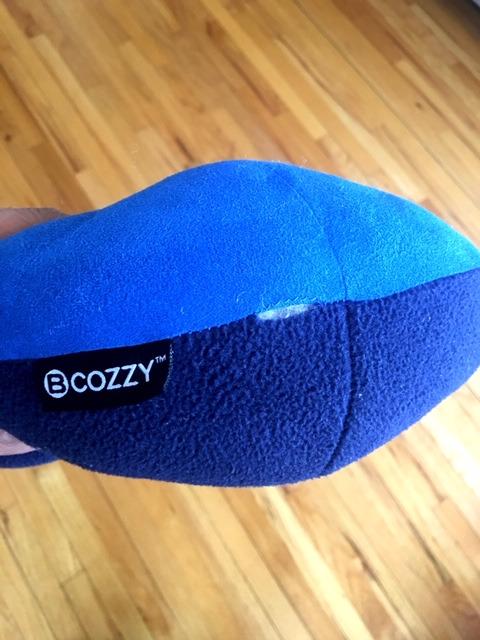
The whole thing is machine washable, which is a rare and useful feature in this category. The carry bag has a snap loop that attaches to a luggage handle so the pillow does not get buried on arrival.
Sizing deserves attention before you commit. The Large fits neck circumferences up to 16 inches, and this model is also listed in a kids range, which is unusual for a contoured pillow. If you know your neck measures more than 16 inches, you need the X-Large version rather than the one here.
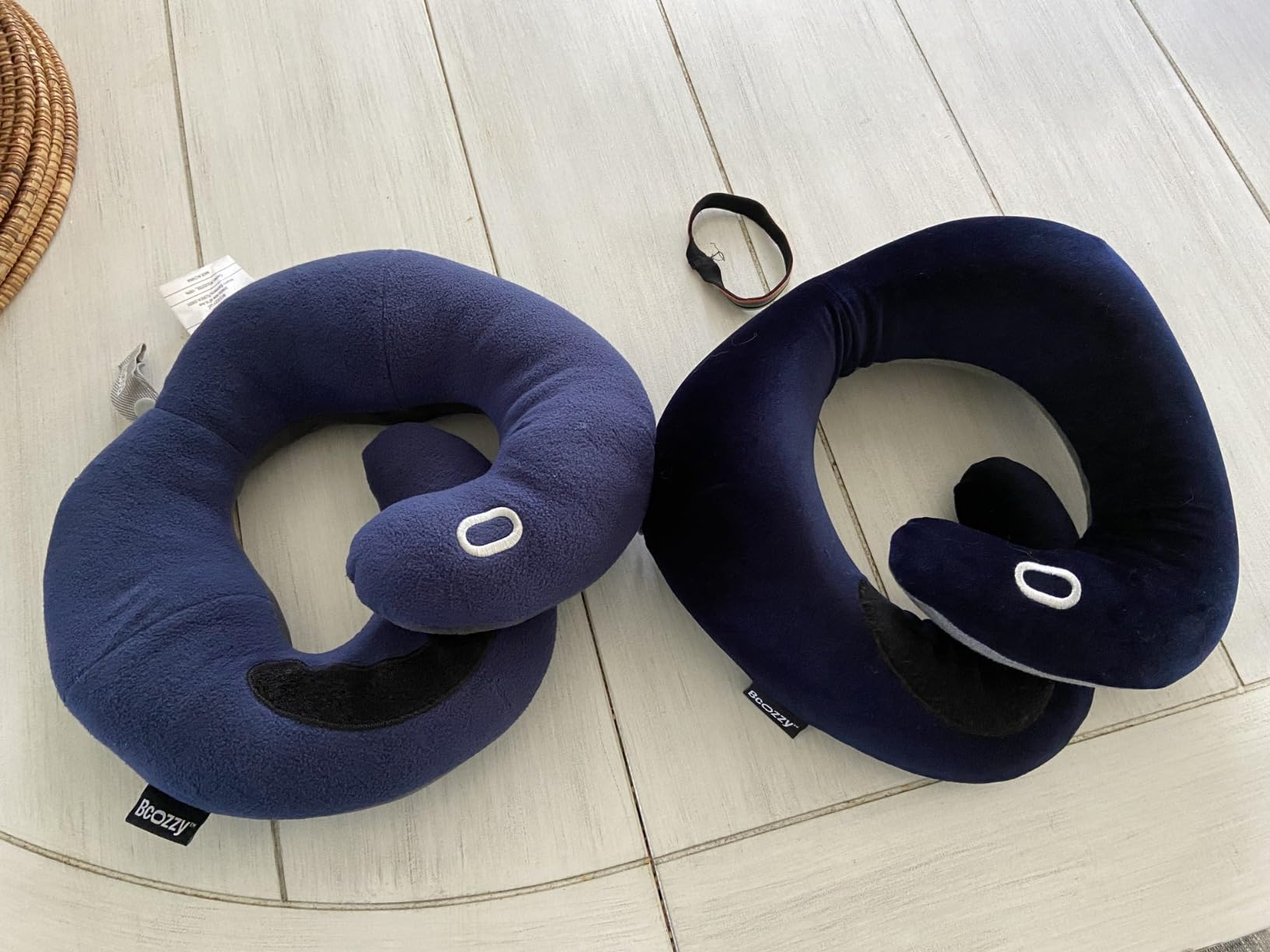
How overlapping arms compare to a plain U
On a standard U-shaped pillow the chin sits in open air between two lobes with nothing under it. The double-support design puts a fabric layer exactly where the chin lands, so the contact point is cushioned rather than suspended. Reviewers who use over-ear headphones find the arms sit forward of the ear cups more often than not, which keeps the two from fighting.
The three-position design also earns its place on long flights. Turbulence will push you back into upright sleep whether you planned for it or not, and a pillow that can be reconfigured without removing the headphones is easier to use.
Where warmth builds up
Heat is the recurring theme. The microfleece and microsuede cover feels pleasant on contact but builds warmth around the neck, and reviewers report waking up uncomfortable after several hours in a warm cabin.
The fill is polyester rather than memory foam. It springs back readily and lasts, but it moulds less precisely, so you get support without the custom contour a foam core provides. If precise shaping matters to you, a memory foam option suits better.
6. Dot&Dot Twist Memory Foam Roll: Bendable Support for Seats, Cars and Beds
- Bends and twists into almost any shape
- Works for neck back and shoulder support
- Cotton cover is breathable and machine washable
- Snap closure attaches to luggage or headrest
- 26 inch roll takes more bag space than a U-shaped pillow
- New foam can carry an odour that needs airing
- Less head-tilt control than a contoured pillow
Every other pillow here has a fixed shape. The Dot&Dot is a 26-inch roll of memory foam around a 1 cm rod, which means you can bend it, twist it into a spiral, fold it in half, or shape it into whatever the seat demands. Reviewers describe using it as a neck pillow, a lumbar support, a shoulder wedge and a pillow behind the knees.
The memory foam is firm rather than plush, which is what makes the twisting work. Softer foam tears when contorted; this holds a shaped curve without springing straight back.
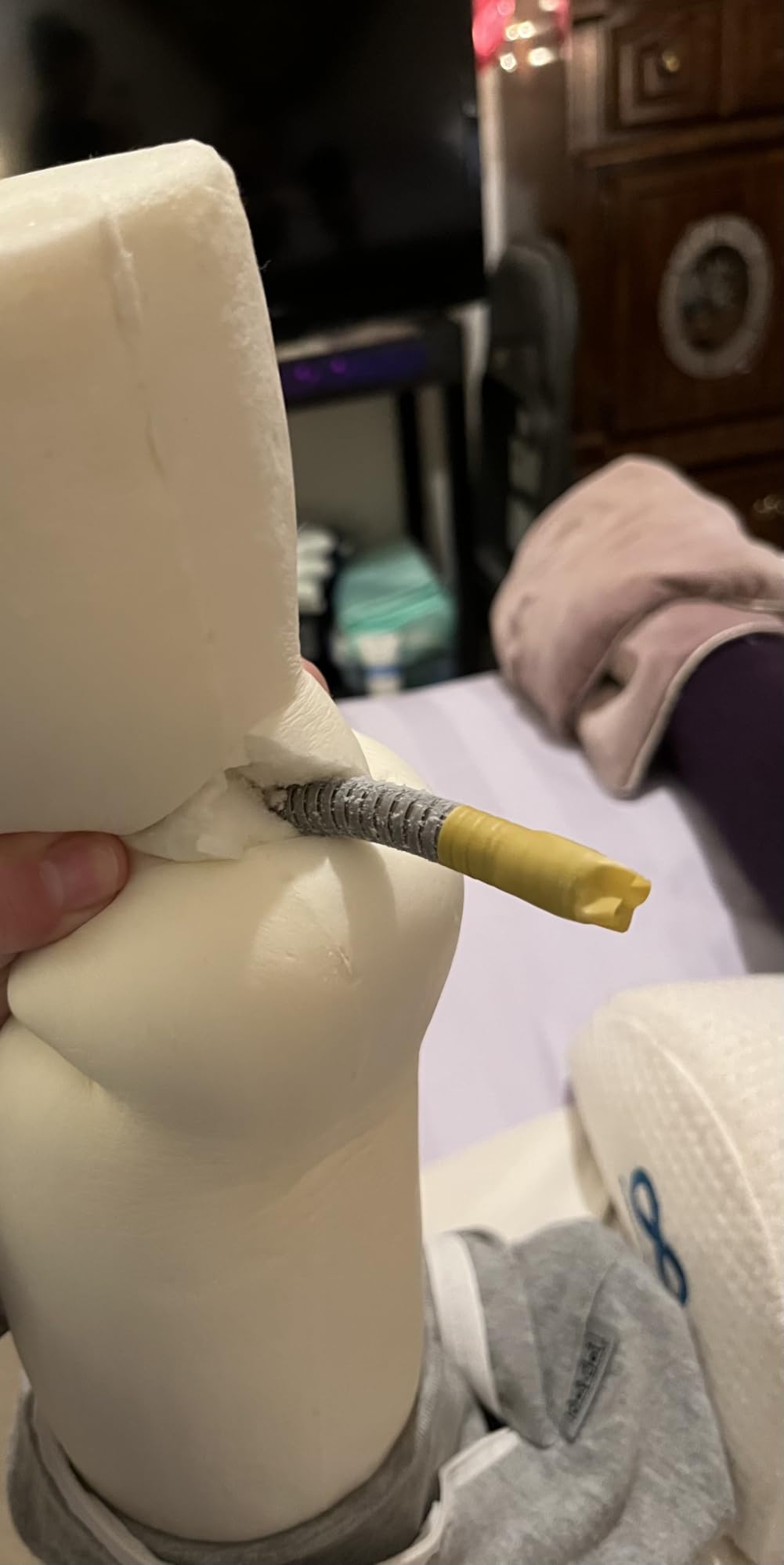
The cotton cover is a real differentiator in the materials used. Cotton breathes better than the velour and microsuede used on several other pillows here, and it is fully machine washable. The snap closure attaches the pillow to a suitcase handle or a car headrest so it stays put.
Buyers highlight one specific benefit: the rod inside gives extra structure so a section can be held in a U shape around the neck rather than slowly flattening. That internal support rib is what separates this from a soft rolled blanket.

When a bendable roll beats a contoured pillow
A roll wins when your trip involves more than the airplane seat. Folded under a shoulder it fills the gap created by seat recline, twisted into a spiral it props up a laptop at an angle, and on a road trip it moves to the car headrest without a second product. Users who split travel time across flights, trains and cars keep this one permanently in their bag.
It is also a good fit for anyone who shifts position constantly. A fixed contour fights you when you move; a roll conforms each time you reposition it.
Where bulk and shape let you down
The 26-inch length is bulkier than a compact U-shaped pillow, which matters if you are packing a small personal item or travelling one-bag only. Plan a dedicated space for it.
It also does less against forward head drop than a contoured design with a chin support. You can shape it under the chin, but it will not hold that shape as firmly. New foam arrives with a noticeable scent that needs airing before the first use.
7. Fabuday Memory Foam Travel Pillow: Plush Velvet Cover with a Hands-Free Snap Strap
- Soft short-nap velvet cover feels pleasant against skin
- Snap strap allows hands-free carrying
- Removable washable cover in ten colours
- Button closure keeps the pillow snug
- Inner foam has been reported to tear after extended use
- No separate carrying bag included
- Snap clasp can be intrusive for everyday lounging
Cover feel is what separates this one. The short-nap velvet is softer and less scratchy than the fleece, microsuede and velour used on several other pillows in this roundup, and that matters because the back of your neck rests against it for hours. In a head-to-head comparison of six travel pillows, buyers rated this one highest for fabric softness and extra-plush filling.
The high-rebound memory foam is medium soft and returns to shape quickly, so it does not stay dented after a long sleep. A button closure holds it snug around the neck, which is tighter than the drawstring closures used by some budget options.
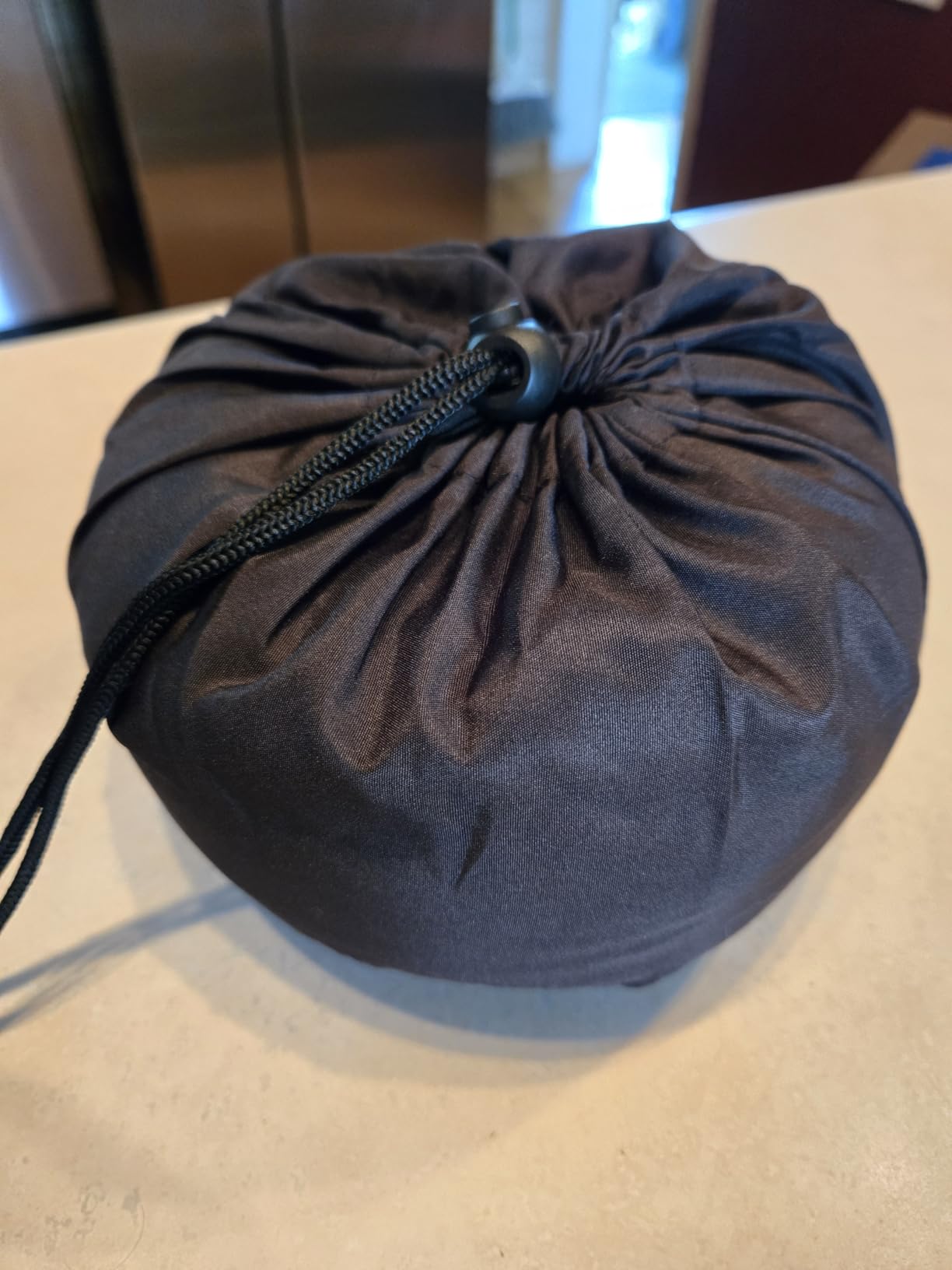
The snap strap is a thick canvas loop about 8.5 inches extended, attached to a backpack or carry-on so the pillow travels hands free. It was the only strap option in that same six-pillow test group, and users like being able to grab it without unpacking a seat pocket.
The cover unzips and goes in a washing machine, and the pillow comes in ten colour options, which is unusually broad coverage for this category.
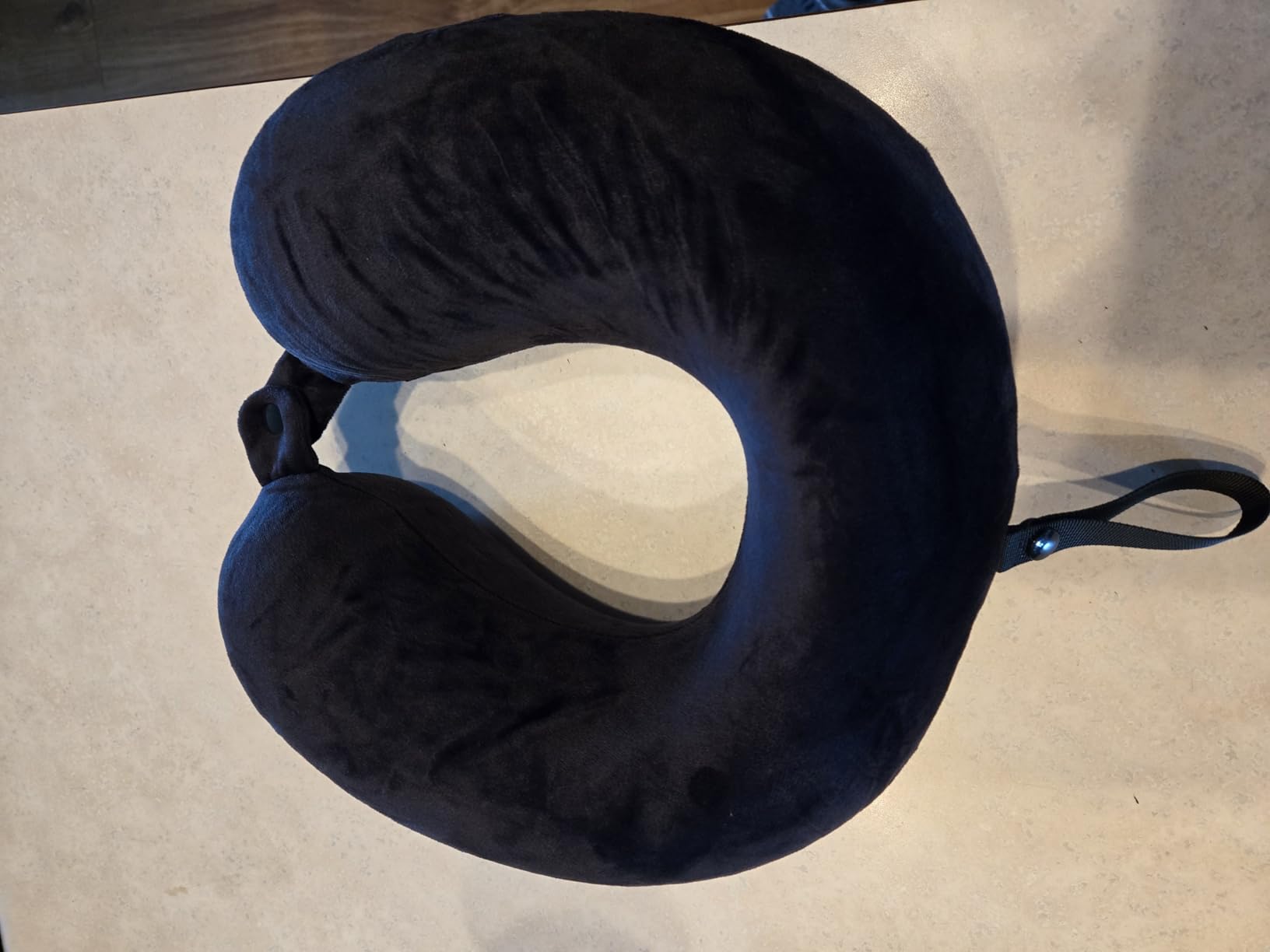
Softness versus structure over a long sector
The extra-plush fill sits in the middle of the range here. It is softer than the firm roll in position six and firmer than the very soft foam in the final pick, which makes it the middle path for people who find memory foam too hard but too floppy uncomfortable.
The 360-degree shape gives lateral support for the head, so if you fall asleep sideways against the window this holds better than a low-profile wrap. Reviewers using it as a reading or posturing pillow report the same close neck fit.
Where the foam durability lags
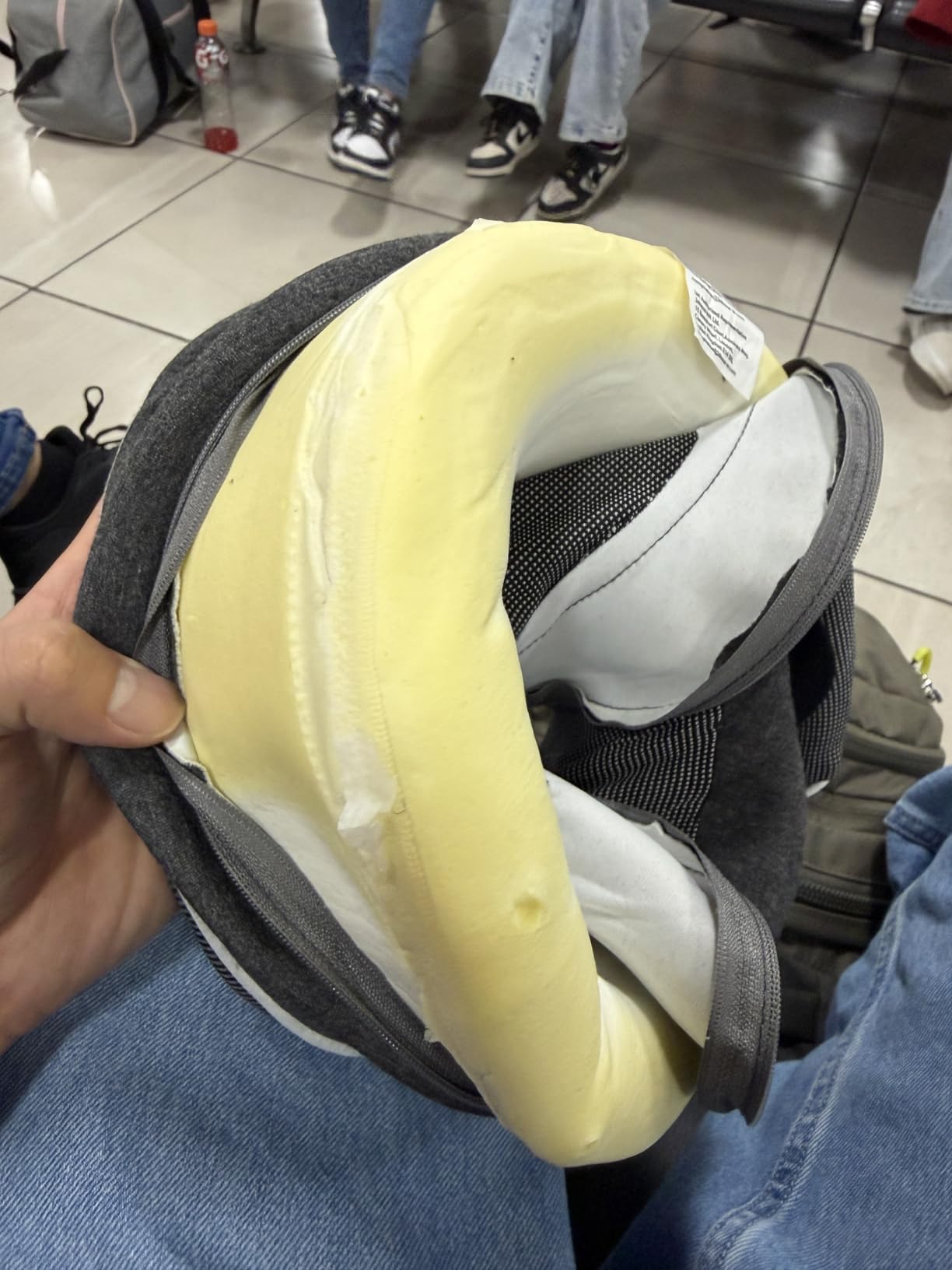
Durability is the honest weakness. Some buyers report the inner foam cushion tearing or splitting after extended repeated use, and there is no separate carrying bag, so the pillow needs its own compartment in your bag rather than compressing into one.
The snap clasp also becomes intrusive when the pillow is used for everyday lounging at home, so expect to detach it if you use it off-airplane. If long-term durability over many trips is your priority, a model with a dual-density foam core and a certification mark is a safer bet.
8. SAIREIDER Pure Memory Foam Travel Pillow: Three Size Adjustments for a Closer Fit
SAIREIDER Travel Pillow 100% Pure Memory Foam Travel Neck Pillow, Airplane Pillow for Traveling、Car、Home、Office,Washable Cover(Black)
- Carries the highest average rating in this roundup
- Three size adjustments improve the fit
- Removable machine-washable cover
- Compresses for travel storage
- Memory foam retains heat over extended use
- Universal sizing will not suit every neck
- Foam core cannot be washed
This is the highest-rated pillow in the roundup, sitting at 4.6 across more than 3000 ratings with a 77 percent five-star share. The core is pure memory foam with no added filler, which is why it moulds closely around the neck instead of resisting the shape.
The distinguishing feature is the three-way size adjustment, reached through an invisible zipper. Most one-size travel pillows can only be tightened or loosened; this one lets you alter the effective dimensions, which is the closest we found to a custom fit at this level. It is rated for big kids, youth and adults, so it doubles as a family pillow.
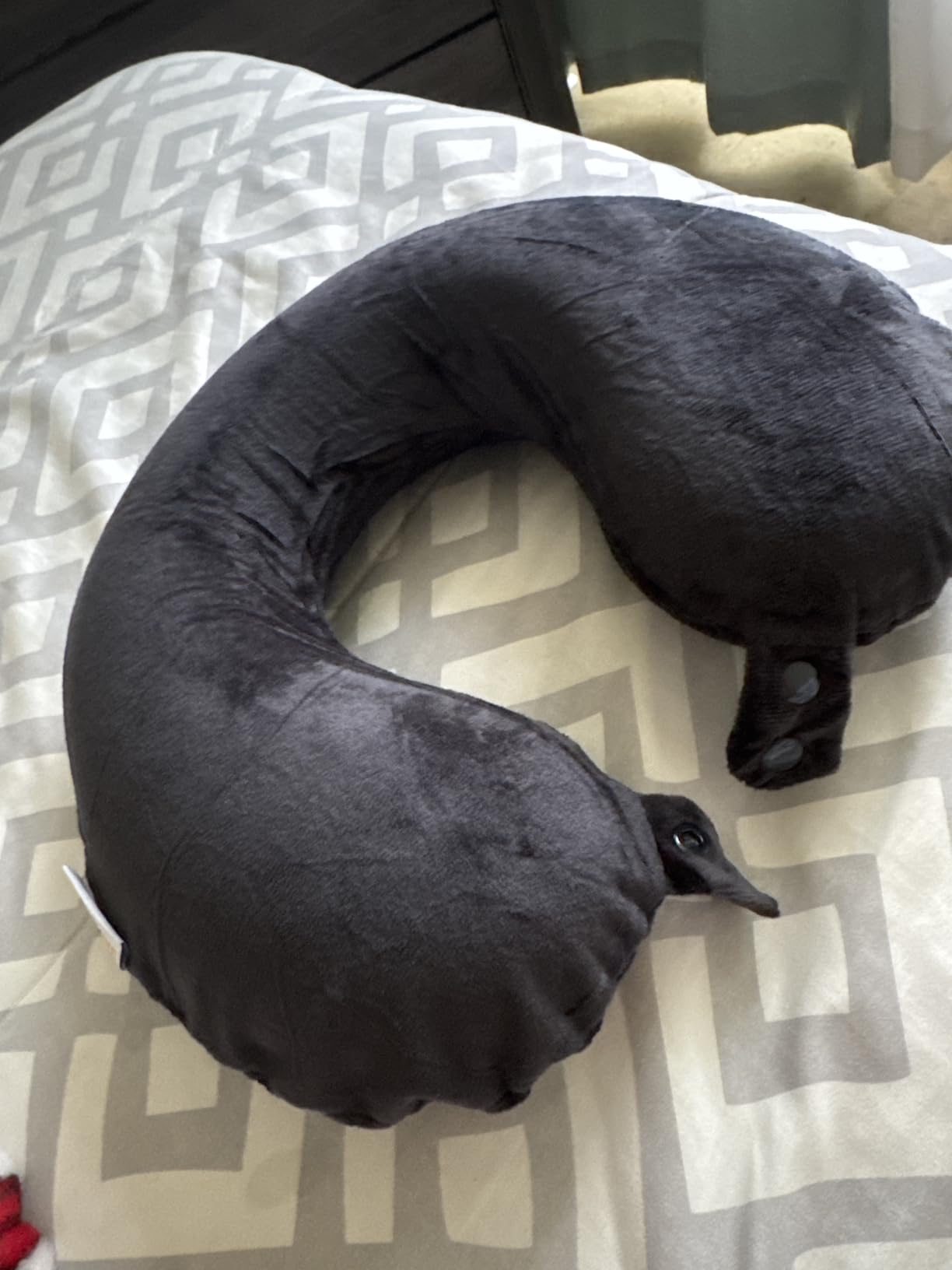
The 360-degree wrap supports neck, head and chin together, and the cover is removable, machine washable and made from a soft polyester fabric that is comfortable against the jawline. Storage is straightforward, since the design is compressible for travel.
Users report using it beyond flying, on office chairs and for evening reading, which is a reasonable indicator that the comfort holds up outside a travel context.
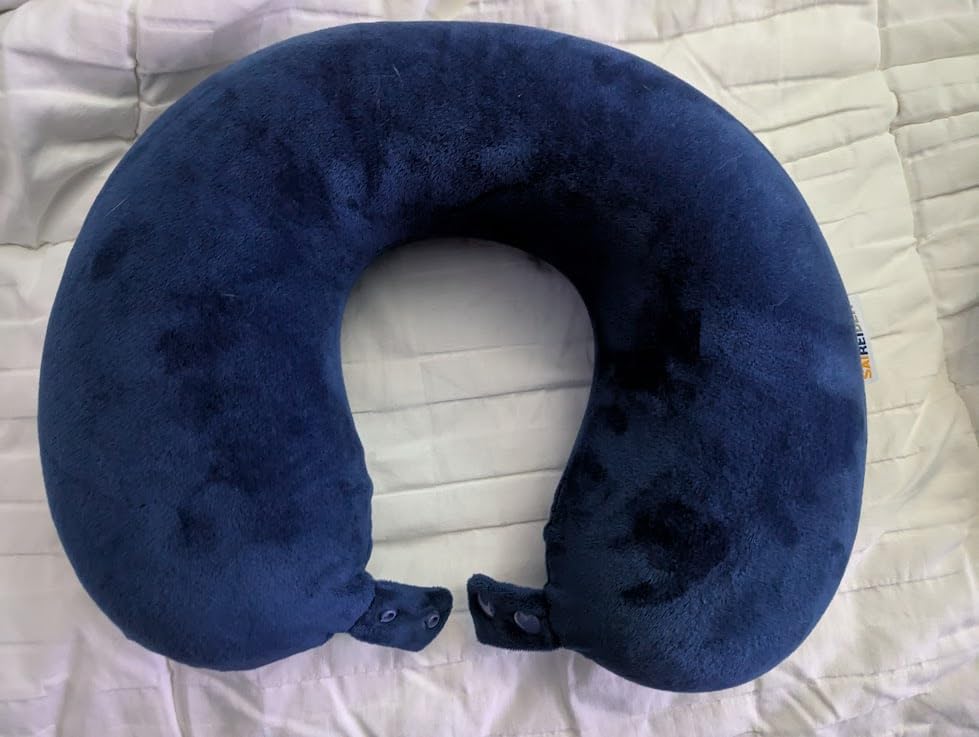
Why fit matters more than foam density
A travel pillow fails when it is slightly too large or slightly too small, not when the foam is a fraction denser. A loose fit lets the head slide, and a tight fit presses on the jaw and shoulders. Because this pillow offers three sizes, it covers a wider range of neck dimensions than the single-size designs in positions nine and ten.
The pure foam core also means no shredded filling shifting inside the wrap. Over repeated compression in a bag, that construction returns to its original loft more reliably than loose-fill alternatives.
Where the heat problem sits
Heat is the main drawback, as it is with any fully enclosed memory foam wrap. Extended use in a warm cabin leaves noticeable heat around the neck.
Despite the adjustment range, one neck size still will not suit everyone, and the foam core itself cannot be washed, only the cover. If you need a cool sleeping surface, our cooling pillow guide covers materials that manage temperature better than memory foam.
9. Aeris Memory Foam Travel Pillow: A Complete Flight Kit With Adjustable Chin Toggles
- Toggles hold the head upright and stop the bobbing
- Compact drawstring bag clips to luggage
- Removable machine-washable velour cover
- Foam has little to no smell
- Carry bag strap and zipper can break after a few uses
- Eye mask can feel tight for eyeglass wearers
- Bundled earplugs are of variable quality
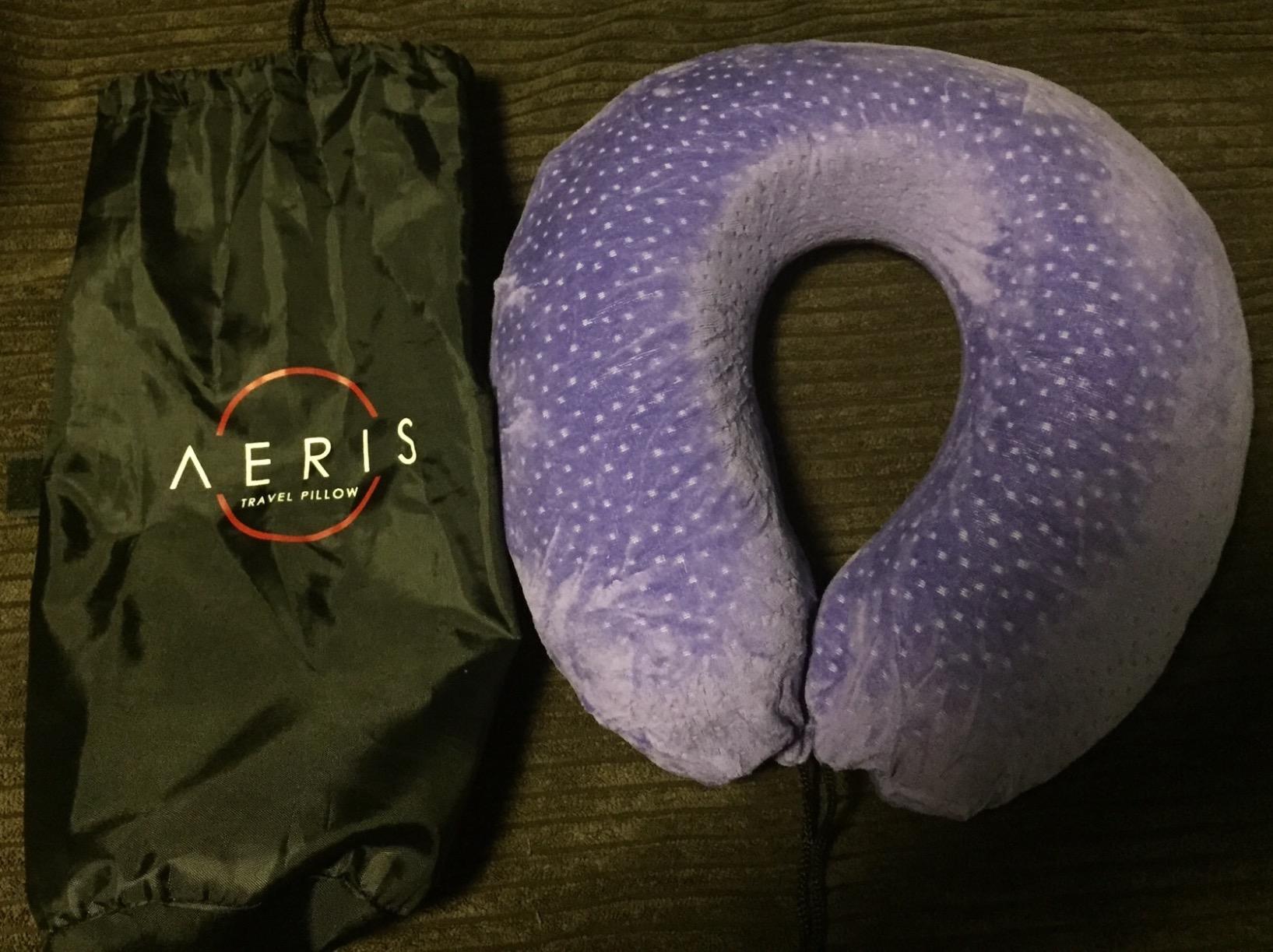
The Aeris arrives as a set rather than a bare pillow: the pillow itself, a removable cover, a drawstring carry bag with a velcro luggage clip, a contoured eye mask and earplugs. If you are building a first travel sleep kit, this is the one that assembles most of it in a single purchase.
The working element is the pair of front toggles. They cinch under the chin to hold the head upright, which is the same mechanical goal as the chin wrap designs here, delivered with adjustable tension rather than a fixed drawstring. Long-standing reviewers credit the pillow with several hours of sleep and no neck pain or migraines on long flights.
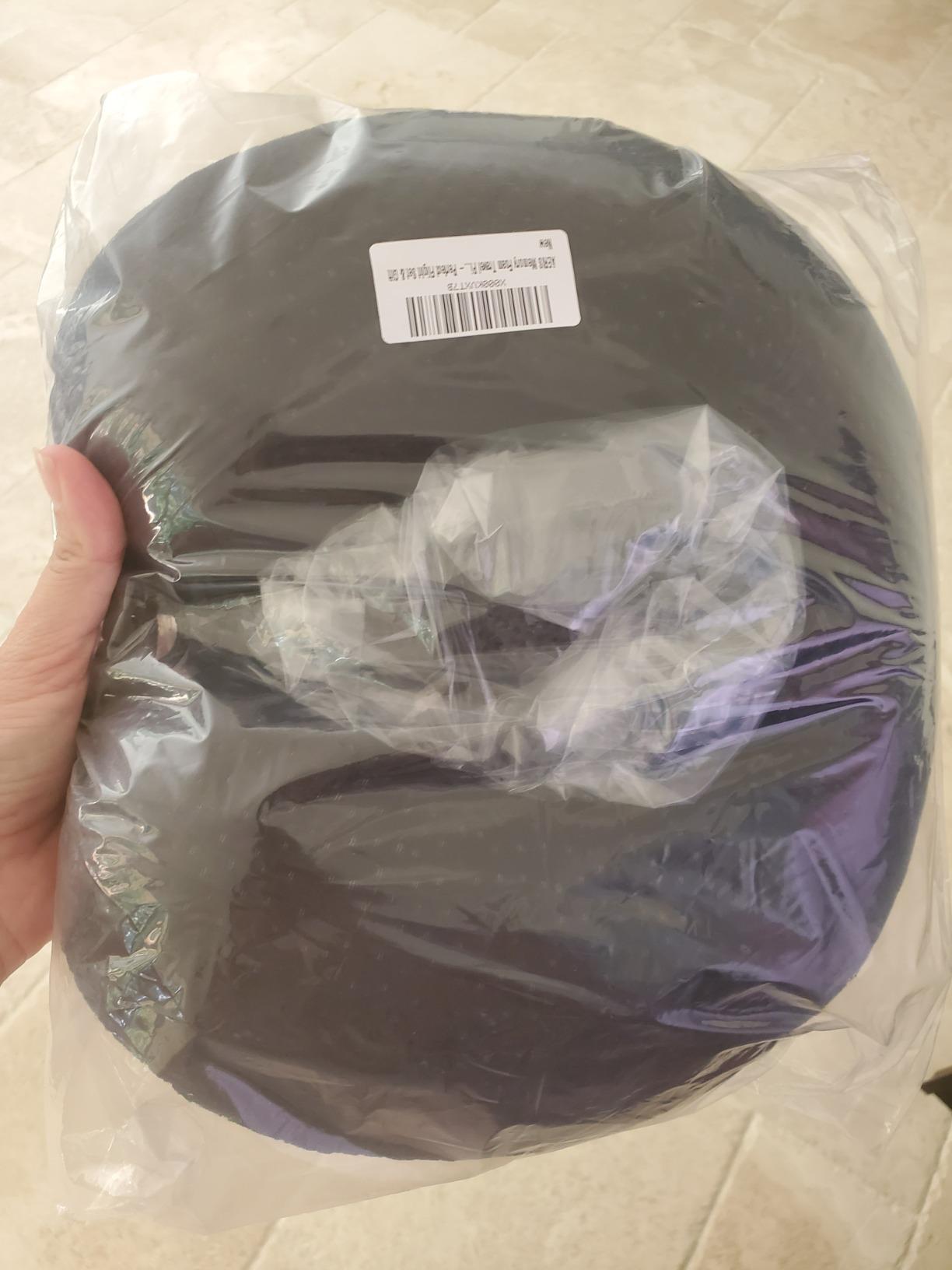
The foam is medium firm, which is firm enough to hold a position and soft enough to sleep on for hours. It is also described as having little to no new foam smell, a real advantage over several memory foam options that need days of airing first.
The carry bag compresses the pillow small and clips to a backpack or suitcase handle with a velcro strap, which solves the common problem of a pillow disappearing into a bag.
Why toggle tension beats a fixed drawstring
A drawstring either fits your neck or it does not, and cords loosen over hours. Toggles can be tightened to the exact point where the chin is held without pressure on the jaw, and they stay there. That adjustability is why this design performs better for a wider range of neck sizes than a fixed-cord wrap.
For anyone who also needs an eye mask, the bundled contoured mask is moulded rather than flat, which blocks more light than a flat fabric band.
Where the carry bag disappoints
The most repeated complaint across reviews is not the pillow but the bag. The velcro strap and zipper on the carry bag have been reported to fail after a small number of uses, so do not rely on that clip as your only attachment point.
The eye mask runs tight for eyeglass wearers and larger faces, and the earplugs are of variable quality. If you wear glasses, budget for a separate mask. Some buyers also note that the newer foam version is slightly less dense than earlier runs.
10. Proglobe Travel Neck Pillow: Velcro Adjustment Built for Smaller Necks
Proglobe Travel Neck Pillow for Airplanes, Long Haul Flight Kit, Grey
- Velcro closure fits smaller necks better than fixed sizes
- Folds into a mesh bag that snaps to luggage
- Kit includes a contoured eye mask and earplugs
- Moisture-absorbing fabric stays reasonably cool
- One size can feel tight on larger necks
- Bulky to roll back into the pouch
- Velcro can be awkward to adjust in a dim cabin
Small necks are the failure case most travel pillows ignore. The Proglobe uses a velcro adjuster sized roughly for 15 to 16 inch necks for men and 13 to 14 inches for women, and reviewers with smaller frames single out the adjustment as the reason it works for them where others choke.
The core is medium-soft memory foam inside a moisture-absorbing cotton blend cover. That fabric choice shows up in reviews about temperature, with users noting it stays reasonably cool in a warm cabin compared to polyester-only covers.
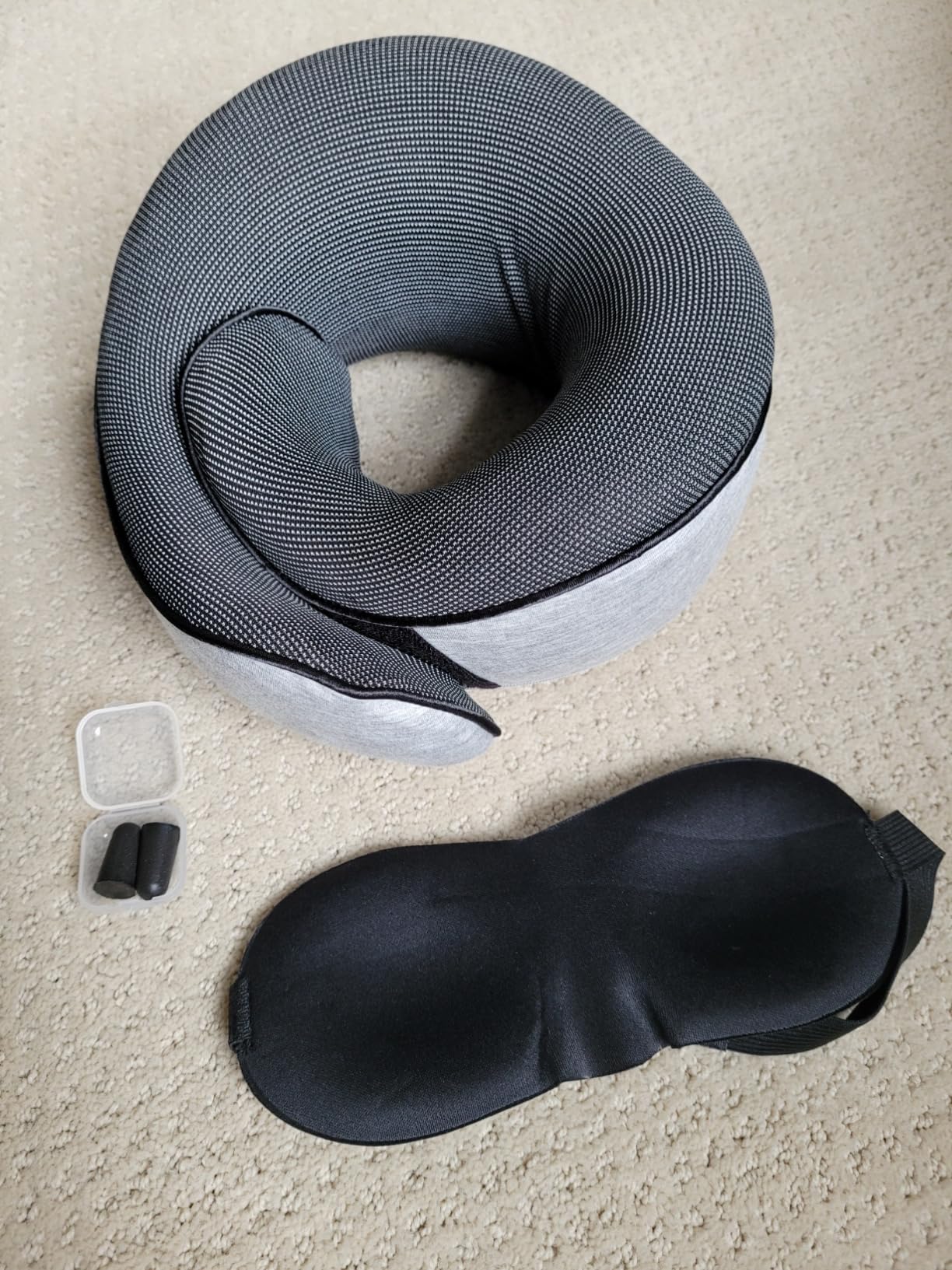
The kit is unusually complete for what is usually a bare pillow purchase: a contoured memory foam eye mask and earplugs come in the box alongside a mesh carry bag with a snap-on luggage loop. Several reviewers report full sleep on long transatlantic flights with the mask added.
The mesh bag is breathable, so a damp pillow can dry inside it rather than staying sealed, and the snap loop keeps the pillow attached to your carry-on rather than loose in a seat pocket.
Where a velcro closure beats cords and buttons
Velcro gives repeatable, incremental adjustment. A cord lock is either tight enough or not, while a button closure only has a fixed set of holes. On a pillow that needs to sit at exactly one tension for four hours, that precision is the whole argument for this design.
Published circumference ranges are rare in this category, so check the stated figures against your own neck before you order rather than guessing from a vague size label.
Where the single size bites
It is a single size, and for people with larger necks it can feel tight or, as some buyers put it, choking. Check the stated circumference range against your own neck before buying.
Rolling the pillow back into its pouch is awkward once the foam has taken a shape, and the velcro can be fiddly to reposition in a dim cabin. This is also a hand-wash-only product rather than machine washable, which limits how you clean it between trips.
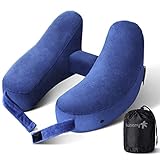
11. Sunany H-Shape Inflatable Pillow: Three-Second Inflation and Side-Wing Support
- H shape and side wings limit sideways tilting
- Inflates in 3 seconds with the patented valve
- Flat back avoids pressing on the neck
- Kit includes hood eye mask and earplugs
- Velvet cover is removable and machine washable
- Inflation flap can open during sleep and let air out
- Front adjuster can be too large for smaller frames
- Rubber smell at first that fades with airing
Most inflatable travel pillows are a doughnut with a valve. The Sunany uses an H shape, which gives you two wide wings and a narrower centre. That geometry stops your head tilting sideways as well as forwards, and 65 percent of its reviews are five-star for the same reason.
The flat back is another practical choice. Because the rear sits flat against the seat rather than bulging, there is no pressure on your neck from behind, and the side wings do the stabilising instead.
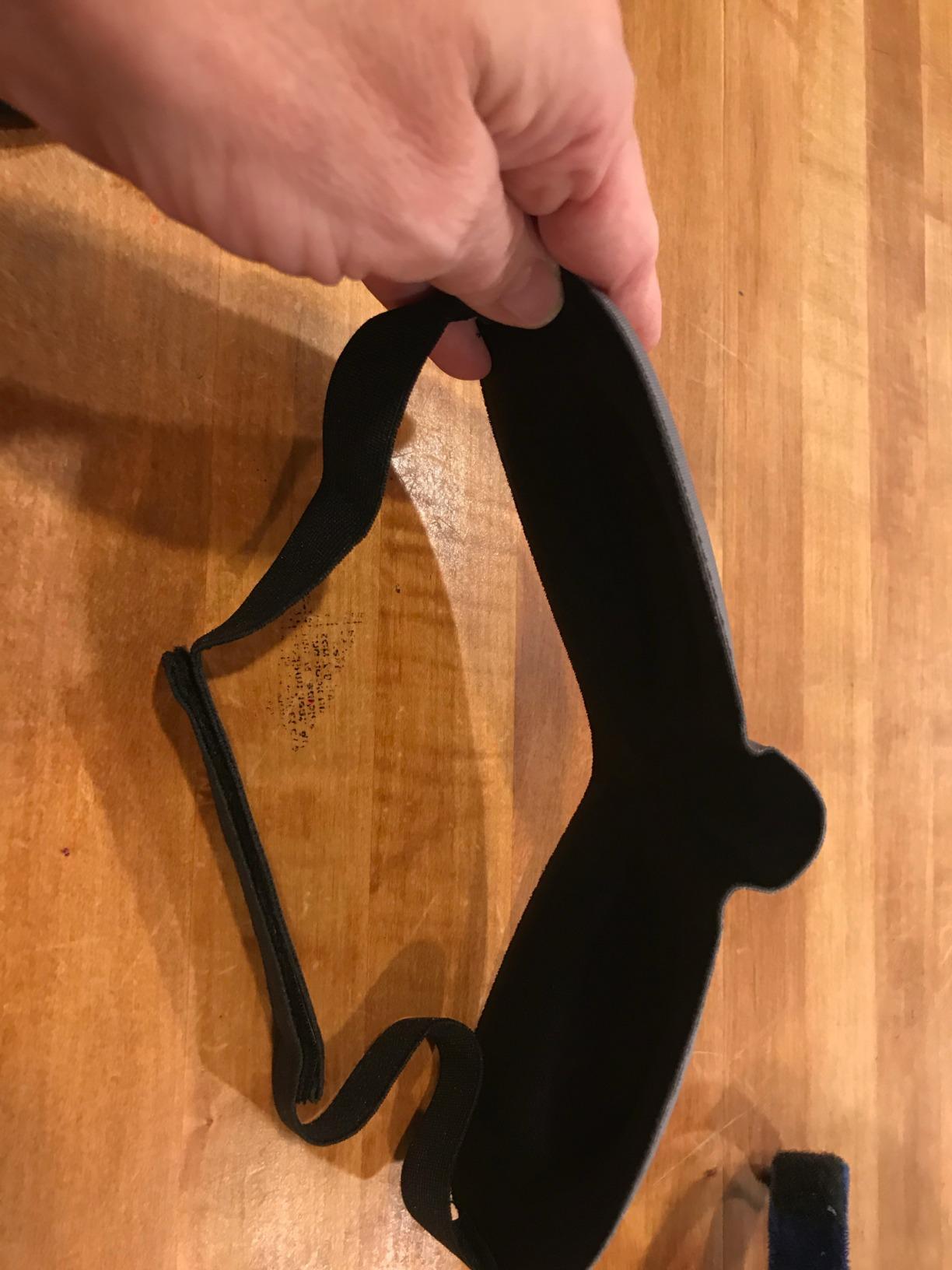
The patented valve fills the whole pillow in about three seconds, which means you can inflate it after boarding rather than before security. Users recommend stopping at 80 to 90 percent inflation for a softer feel, which matches the general advice to avoid over-inflating any air pillow.
The box includes a hood, an eye mask and earplugs, and the pillow folds into a waterproof drawstring bag small enough for a personal item.
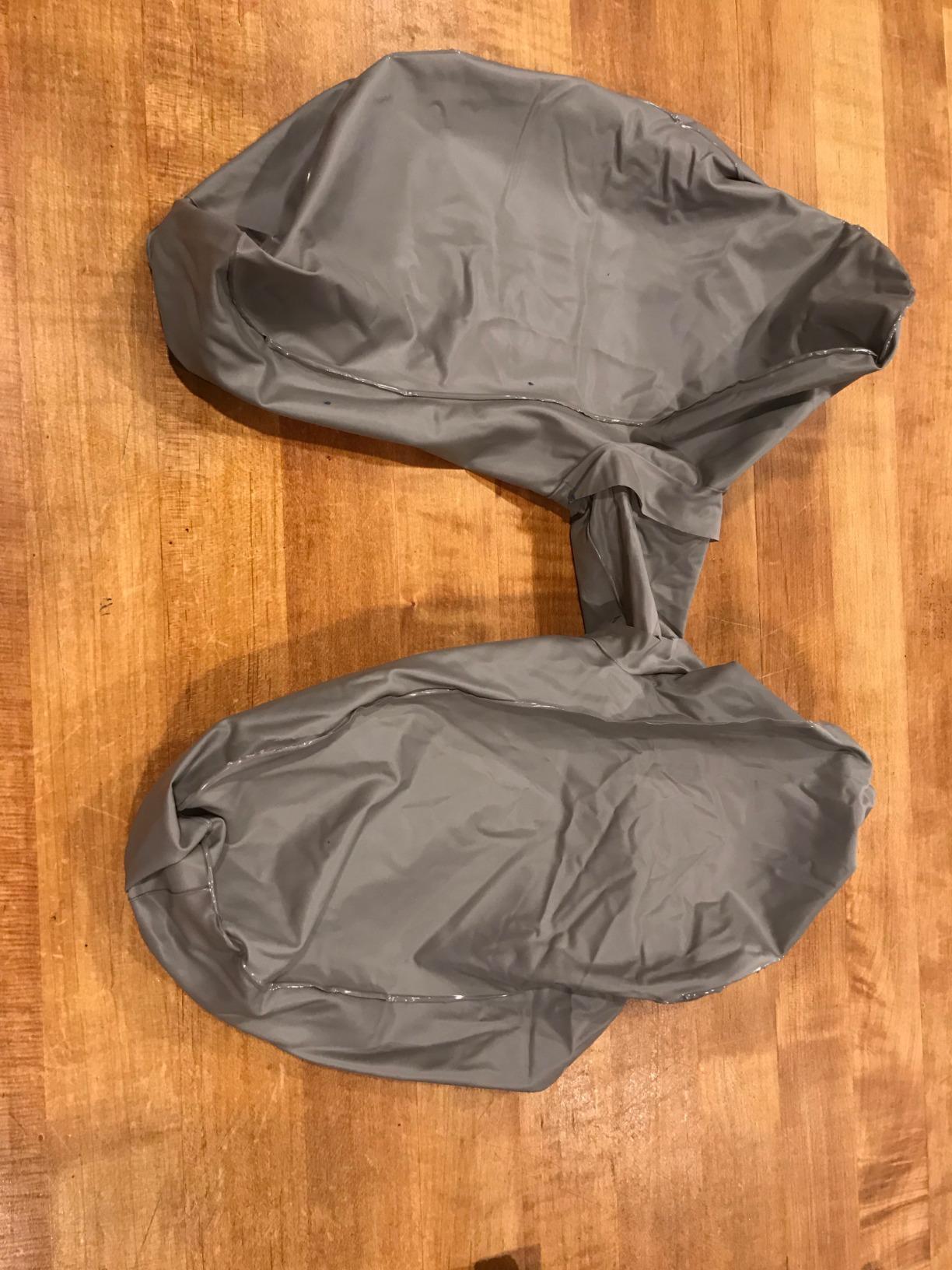
Why the H shape is genuinely different
A round inflatable lets the head roll toward the shoulder while you sleep, which produces the same kind of neck strain a forward nod causes, just sideways. The H configuration gives each side of your head its own vertical wall, so lateral collapse is limited without adding bulk all the way round.
Velcro on the front allows the fit to be tightened or loosened, and users report that the wings stay in position through turbulence in a way that softer foam wraps do not.
Where the valve becomes a liability
The inflation port flap can open when you roll onto it, which lets the pillow deflate over a long flight. This is the failure mode shared by most air pillows and the main reason we still prefer a foam core for multi-segment trips.
The front adjuster can be too large for smaller neck frames, and a fresh pillow has an initial rubber smell that dissipates with ventilation. The earplug container is also fragile. If you pack light, an air pillow solves volume, but you trade away some durability.
12. GDEOUP U-Shape Memory Foam Pillow: The Most Versatile With Raised-Lobe Support
- Raised lobes give lateral support most U pillows lack
- Ultra-soft zipped velour cover is machine washable
- Drawstring bag keeps the packed size small
- Works for reading and home sleeping too
- Foam is very soft so firm support fades with use
- Limited adjustment range may not suit larger frames
- Takes more space than an inflatable pillow
The GDEOUP is one of the most affordable pillows in this roundup and still carries a 4.4 average across more than 5700 ratings, which outscores several models that sit higher up the list. The core is pure memory foam with no additives, described as soft, and it moulds quickly.
The raised-lobe contour is the detail that lifts it above a generic U. Rather than two equal-height lobes, the sides step up to create a shelf that supports a lateral neck tilt. That is the feature reviewers praise when comparing it with flat-bottomed budget pillows.
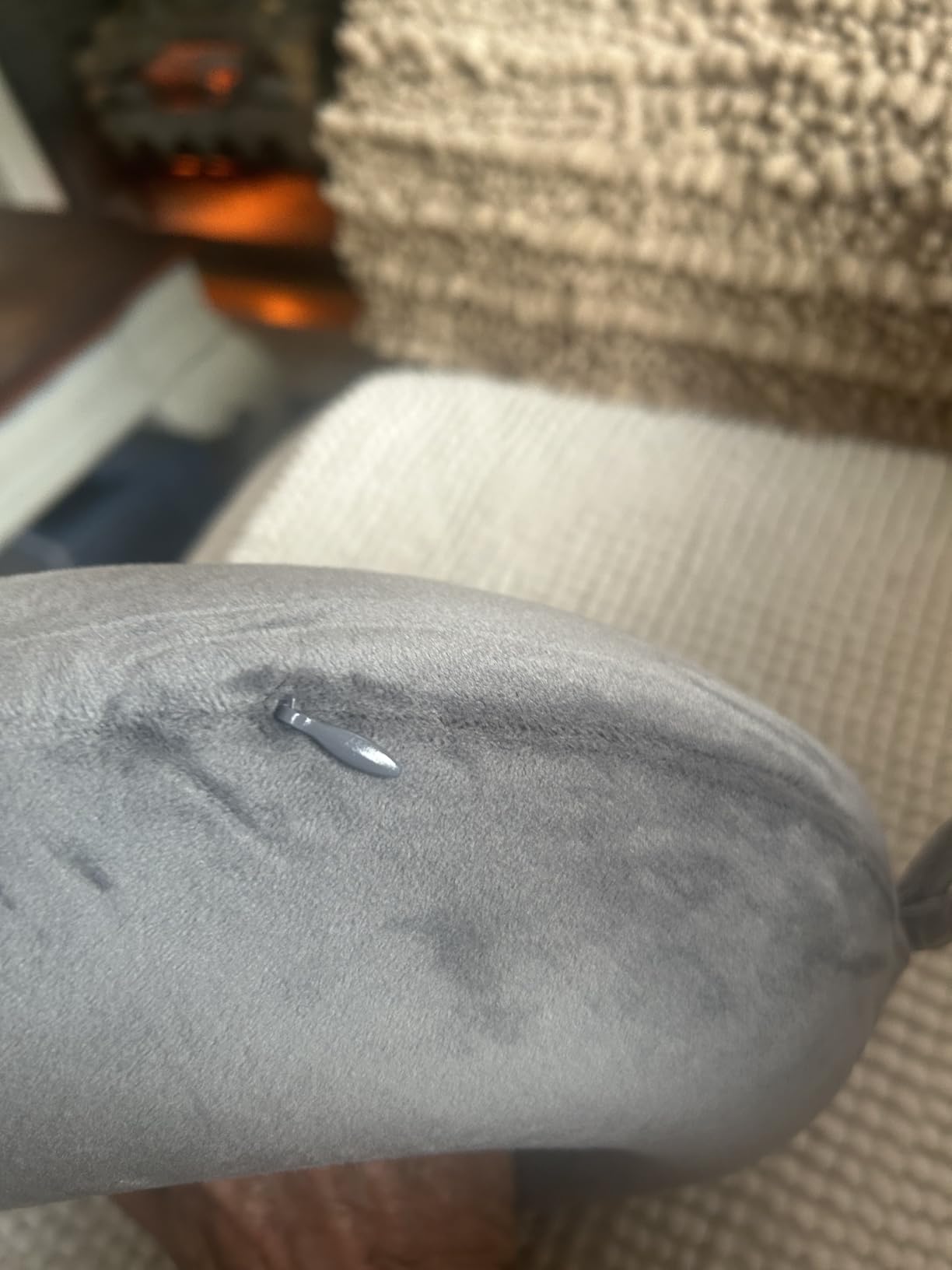
An adjustable rope closure with a button clasp lets you dial in tension, and the cover is a zipped velour that unzips for machine washing. It folds into a compact drawstring bag for packing.
Buyers use it well beyond flying, for reading in bed, posturing after surgery and general lounging, which tells you the comfort holds up outside a travel context.
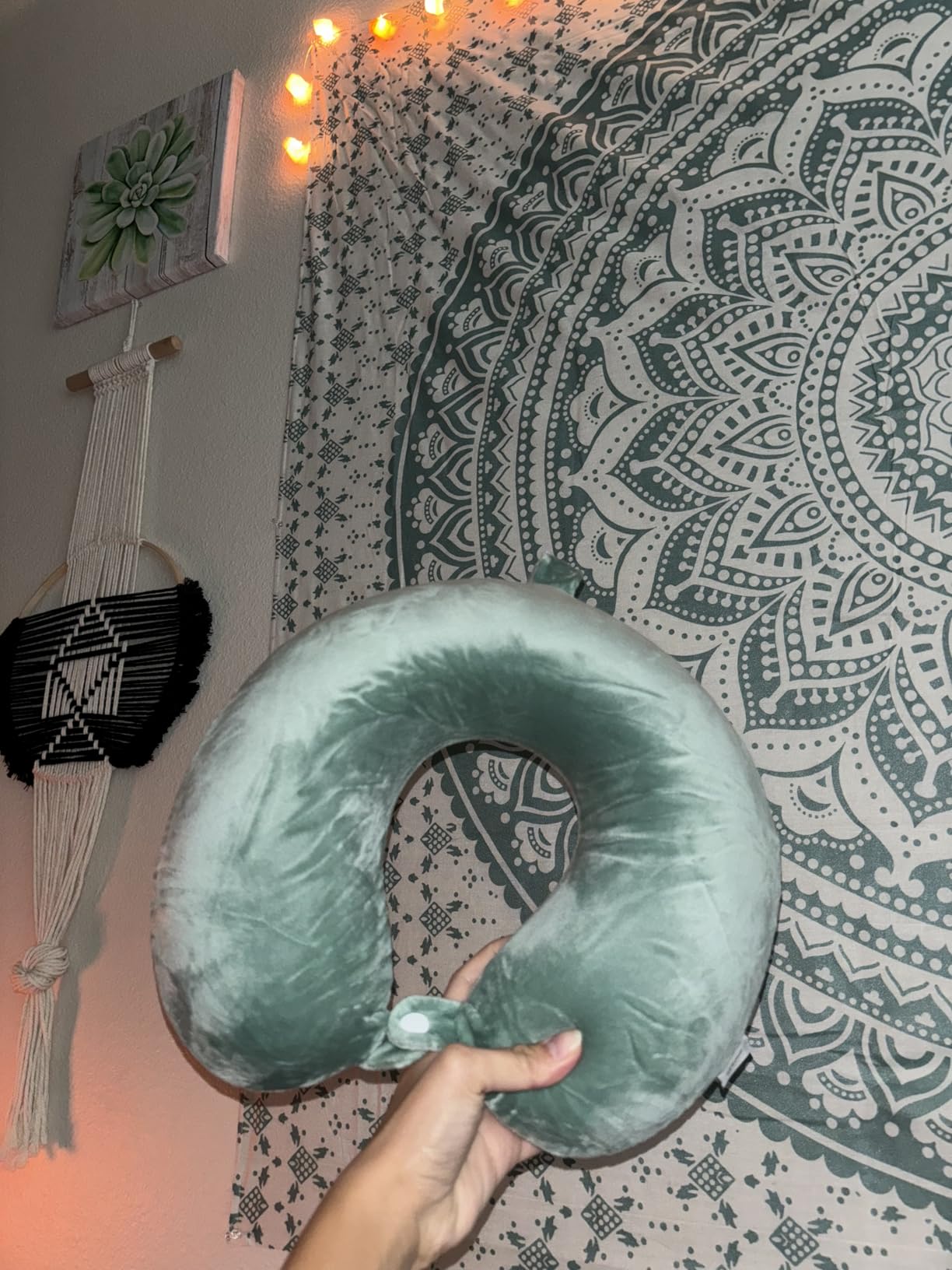
What you get at the entry price
For occasional flyers, the maths is simple. A soft memory foam wrap that folds into a bag and washes in a machine covers the most common failure cases, and if it eventually loses its loft you can replace it between trips without thinking about it. If you fly once or twice a year, a more elaborate design rarely pays for itself.
The pure foam also means no loose filling shifting inside the cover, which is where cheaper shredded-fill pillows tend to fail after compression.
Where soft foam costs you
The softness is the trade-off and it is a real one. Foam this soft compresses easily, so firm support fades with regular use, and reviewers who want a structured hold rate it lower than a medium or firm model.
The adjustment range is limited, so larger heads and necks may not find a comfortable tension. It also takes up more space than an inflatable, which matters if you are packing light. If you want something firmer that holds its shape for years, look at a dual-density model instead.
How to Choose a Travel Pillow for Long Flights
The most useful decision is not between brands, it is between support mechanisms. A pillow that prevents forward head drop will not necessarily stop sideways drift, and vice versa. Match the mechanism to the way you actually sleep.
Match the pillow type to your sleep position
Side sleepers should look for raised side wings or a raised-lobe contour, because the support point needs to be lateral. The Sunany H shape and the GDEOUP raised lobes both do this; a low flat wrap will simply be pushed aside.
Back sleepers need a chin support or a front closure, since the head falls backwards and forward as you settle. The Everlasting Comfort pillow and the napfun wrap handle this better than a bare doughnut.
Forward nodders need something that stops the head dropping toward the chest. That is where the Cabeau seat straps earn their place, since anchoring to the seat resists the movement physically. Chin-support designs such as the BCOZZY and the Aeris toggles help through geometry rather than attachment.
Tall travellers and those with broad shoulders have the hardest fit problem. Most travel pillows are designed around a narrow neck and fail to reach a wider frame, so check stated neck circumference before buying. The Cabeau is the widest range here at 12 to 18 inches. If you know you fall outside typical ranges, the three-way adjustment on the SAIREIDER or the bendable Dot&Dot roll are safer choices than a fixed-size wrap.
Understand what the fill is doing
Memory foam moulds to your shape using body heat, which gives a custom contour and stays put. It is also the best heat retainer of the fills here, so it suits cool cabins and cold sleepers more than warm ones.
Inflatable pillows made of TPU or PVC trade all shaping for packability. They are the right choice if you travel one-bag or carry only a personal item, and the wrong choice if you prioritise a fabric feel. Compress any inflatable to around 80 percent rather than filling it hard, which softens the ride and reduces leak risk as cabin pressure changes.
Polyester fill springs back quickly and resists permanent deformation, but it moulds less precisely. It is a reasonable middle ground for trips where durability outranks contouring.
Check the four details that cause complaints
Seat straps and over-ear headphones conflict. If you wear full-size headphones, avoid strap-anchored designs like the Cabeau unless you have tested the combination, and favour wraps whose contact points sit forward of the ear.
Washability decides whether the pillow survives multiple trips. Every foam model here has a removable cover that goes in a washing machine, which matters far more than any other care feature when you will wear the same pillow for two weeks. Never put a foam core in a machine, only the cover.
Packed size decides whether it comes with you. Foams compress into bags but take hours to re-expand, air pillows deflate instantly and pack to a fraction of the volume, and bendable rolls occupy the longest length. If you fly carry-on only, an inflatable is the safest option on volume.
Seat design decides whether attachment works at all. Strap systems need a headrest post to loop around, which most economy seats have and some window-side seats do not. Check the seat type on your specific aircraft before relying on an anchor.
Use the pillow as part of a system
A travel pillow solves neck position. It does not solve noise, light or temperature, and treating it as the whole solution is why some people conclude no travel pillow works. Pair it with effective noise cancellation and a contoured eye mask and the improvement compounds. If your main issue is overheating, our pillow picks for combination sleepers covers materials that manage heat better than memory foam.
Finally, set up before you fly. Most memory foam pillows need 20 minutes to decompress from a compression bag, so inflate or unpack yours after boarding rather than during take-off.
Frequently Asked Questions
What is the best travel cushion for long haul flights?
The Everlasting Comfort Upgraded Neck Pillow is our top pick for long haul flights, rated 4.4 across more than 8700 ratings. Its 360-degree memory foam wrap supports the head, chin and neck in side, back, stomach and upright positions, and the removable cover goes in a washing machine between flights.
What is the best travel pillow for flights overall?
It depends on your packing and your problem. For the most flexible all-round design choose the Everlasting Comfort pillow. For forward head drop choose the Cabeau Evolution S3, which anchors to the seat headrest with straps. For the smallest packed size choose the Sea to Summit Aeros, which compresses to 4.3 by 2.7 by 1.8 inches and weighs 3.3 ounces.
Is there a travel pillow that actually works?
Yes, and the ones that work share two things: support under the chin or behind the neck, and a fit matched to your neck size. A plain flat U-shaped wrap rarely prevents forward head drop, which is why chin-support designs, seat-strap anchoring and adjustable closures outperform basic doughnut shapes on multi-hour flights.
Is it worth getting a neck pillow for a long flight?
For any flight over six hours it is worth it, particularly if you already wake with a stiff neck. Unsupported upright sleep forces the front neck muscles to hold your head against gravity for hours, which is what causes the soreness you feel on landing. Budget inflatable and foam options cover the basic need if you do not want to spend much.
Which travel pillow packs down the smallest?
The Sea to Summit Aeros is the only pillow in this roundup with published packed dimensions that we can compare against, and at 4.3 by 2.7 by 1.8 inches in a zipper case at 3.3 ounces it takes almost no space. Foam pillows compress into bags but need time to re-expand afterwards. The Sunany H-Shape inflatable is another strong option, folding into a waterproof drawstring bag.
Do travel pillows work with over-ear headphones?
It depends on the design. Wraps with raised side wings and forward contact points, such as the Sunany H-Shape and the BCOZZY, tend to clear the ear cups. Seat-strap anchored pillows like the Cabeau Evolution S3 are the most likely to interfere with a headband, so test that combination before a long trip.
Can you wash a travel pillow?
The cover can be washed on every foam model in this roundup, including the Everlasting Comfort, napfun, BCOZZY, Dotu0026amp;Dot, Fabuday, SAIREIDER and Aeris pillows. Never put the foam core in a washing machine or dryer. Inflatable pillows need hand washing only, and the Sea to Summit Aeros cover is hand wash as well.
Final Verdict: The Best Travel Pillows for Long Flights
After working through all twelve, the Everlasting Comfort Upgraded Neck Pillow is the one we would pack. Its 360-degree memory foam wrap handles side, back, stomach and upright sleeping without reconfiguring anything, the rating sits at 4.4 across more than 8700 reviews, and the removable machine-washable cover means it survives a multi-leg trip.
Buy the Cabeau Evolution S3 if your specific enemy is the forward head drop and your seat has a headrest post to strap into. Buy the Sea to Summit Aeros if packed volume is the constraint, and choose the napfun memory foam pillow if you want the most-reviewed design available at a budget level.
Whatever you pick, match the mechanism to how you sleep, check the stated neck size before you commit, and unpack the pillow after boarding so the foam has time to decompress. That last step alone puts you ahead of most people who fight a freshly compressed pillow for the first three hours of the flight.