
If you are shopping for a new machine while Amazon runs its October event, the Skytech Crystal is the desktop we would keep an eye on first. It pairs a Ryzen 7 7700 with an RTX 5060 Ti and 32 GB of DDR5 in a standard ATX tower, and its 1,158 owner ratings are the second-highest in this list, so you can read a lot of real experience before you commit. Two other options cover different needs: the MSI Codex Z2 if you want the most capable graphics card in the group, and the CyberPowerPC Gamer Master if you plan to add parts yourself later. Prime Big Deal Days runs October 6-7, 2026, and the listings below are the desktop configurations worth watching rather than confirmed offer prices.
A desktop is a bigger decision than a pair of headphones, mostly because the wrong case or the wrong memory ceiling cannot be fixed with a firmware update. That is why this list leans on the spec sheet and the owner reviews together: a card that looks fast on paper tells you little if only two memory slots are fitted, and a quiet office tower is a poor answer for someone who wants ray tracing. Everything below is judged on what the listing actually specifies.
Table of Contents
Our Top 3 Picks for Best Amazon Prime Big Deal Days Desktop PC Deals

Skytech Crystal
- Ryzen 7 7700 with 5.3 GHz boost
- RTX 5060 Ti 8GB GDDR7
- 32 GB DDR5 5600
- 650W 80 Plus Gold PSU
- AM5 socket for later CPU upgrades

MSI Codex Z2
- RTX 5070 with 12GB GDDR6
- Ryzen 7 8700F 8 cores
- 32 GB DDR5 expandable to 96 GB
- 2 TB SSD
- Four-fan airflow with ARGB cooler
CyberPowerPC Gamer Master
- Standard parts you can swap individually
- AM5 Ryzen 7 8700F on B850 chipset
- Memory expandable to 192 GB
- RTX 5060 Ti 8GB graphics
The Skytech Crystal takes the top spot because the balance is hard to argue with: 8 cores on a current socket, 32 GB of memory, a Gold-rated power supply and a graphics card that handles modern titles at 1080p, wrapped in a case with tempered glass on three sides. It is also one of only two picks here with four-figure owner feedback, which means the reported problems are known rather than hypothetical.
The MSI Codex Z2 is the one to watch if the graphics card matters more than the platform. Its RTX 5070 carries 12 GB of memory and sits a full tier above the 5060 Ti in the other two picks, which is the difference between comfortable 1440p settings and settings you end up negotiating with. The trade-off is two memory slots and an older AM4 socket that closes off CPU upgrades.
The CyberPowerPC Gamer Master is the pick for people who treat a first desktop as a starting point. Owners highlight that it uses standard, non-proprietary parts, so the memory, the drive or the graphics card can each be replaced on their own, and the memory ceiling is listed at 192 GB. The catch is the 16 GB of memory it ships with, which several owners consider tight.
Best Amazon Prime Big Deal Days Desktop PC Deals Compared (2026)
| Product | Specifications | Action |
|---|---|---|
| Skytech Crystal |
|
Check Deal Price |
| MSI Codex Z2 |
|
Check Deal Price |
| CyberPowerPC Gamer Master |
|
Check Deal Price |
 Dell 27 All-in-One Dell 27 All-in-One |
|
Check Deal Price |
 Olialia RTX 3060 Ti Tower Olialia RTX 3060 Ti Tower |
|
Check Deal Price |
 ACEMAGICIAN S3A ACEMAGICIAN S3A |
|
Check Deal Price |
 Dell OptiPlex 7070 SFF Dell OptiPlex 7070 SFF |
|
Check Deal Price |
 HP ProDesk 600G4 HP ProDesk 600G4 |
|
Check Deal Price |
 KAMRUI Pinova P2 KAMRUI Pinova P2 |
|
Check Deal Price |
Read the memory and graphics rows together rather than one at a time. Four of these nine machines ship with 32 GB, while the two mini PCs and the all-in-one cap out at 16 GB with no path higher, so on three of them the number on the box is the number you will keep. Only the CyberPowerPC Gamer Master lists enough room to double or quadruple that later.
How We Chose
Every machine here was compared on the same fields: processor generation and core count, memory capacity and whether it can be upgraded, storage type and capacity, graphics hardware, ports, case size and the warranty. Owner ratings and written reviews on Amazon carried equal weight, because a spec sheet never mentions a first-boot problem or a noisy fan. Data was checked on October 2026, and no configuration or price is quoted here because both change through the event.
1. Skytech Crystal: Editor’s Choice for 1080p Gaming
Skytech Gaming PC Desktop, Ryzen 7 7700, RTX 5060 Ti 8GB, 32GB RAM, 1TB SSD
- AM5 socket leaves room for a future processor upgrade
- 32 GB DDR5 5600 with heat spreader
- 650W 80 Plus Gold power supply
- Keyboard and mouse included
- Assembled in the USA with lifetime technical support
- 32 GB is the listed maximum so there is no room to grow
- Graphics card vendor is not guaranteed
- Extra display ports beyond HDMI and DisplayPort may vary
Buy the Skytech Crystal if you want one machine that games well today and can take a stronger processor later without a new motherboard. The Ryzen 7 7700 runs at 3.8 GHz base and boosts to 5.3 GHz across 8 cores, and it sits on AM5, which is the main reason this tower ages better than the budget builds further down this list.
The RTX 5060 Ti carries 8 GB of GDDR7, and owners describe it as holding Ultra settings at 1080p with comfortable frame rates. The 650W Gold supply has headroom for a future card, and the high-performance air cooler keeps the box quiet enough for a room that is not a dedicated office. Storage is a 1 TB NVMe M.2 drive, which is the one spec on this machine we would change first if we were building rather than buying. Maximum display resolution is listed at 3840×2160, so a 4K panel is not out of reach.
Owners repeatedly highlight a balance of components rather than one standout headline spec: the 8-core processor, the 5060 Ti card and DDR5 memory in the same box, alongside a case that is genuinely well finished for the money. The ratings cluster at four stars and above, and they describe much the same experience, which is a machine that switches on, plays, and stays quiet.
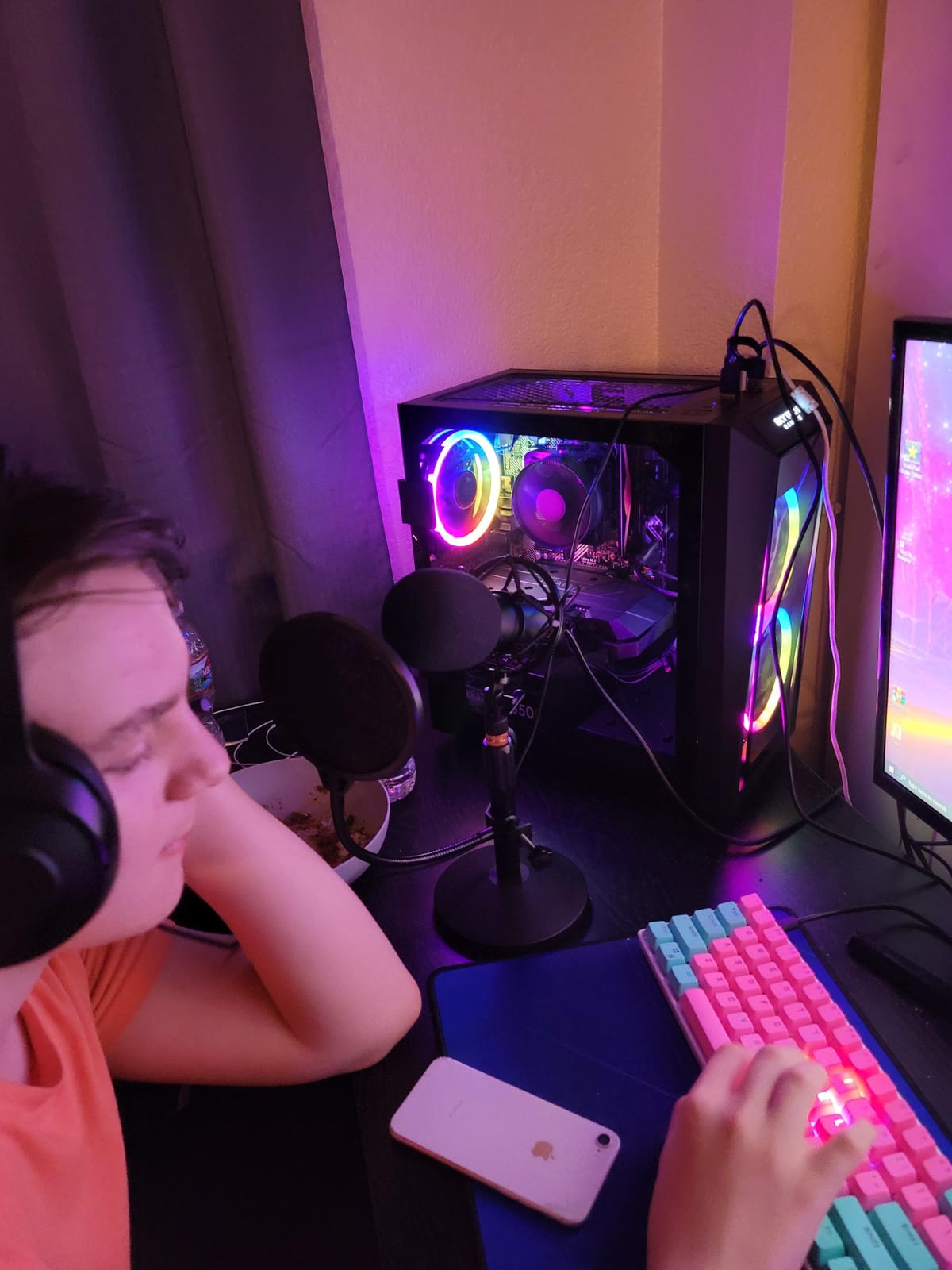
- Triple tempered glass panels make the internals visible without opening the case.
- No bloatware on the Windows 11 Home install, which owners mention as a relief compared with office prebuilts.
- Eight cores handle a game, a stream and a dozen browser tabs at the same time.
- One-year parts and labor warranty plus lifetime technical support.
Two limits are worth planning around. Memory tops out at 32 GB on this configuration, so there is no upgrade headroom there, and the graphics card vendor is not guaranteed, which means the exact board can change between orders. Neither matters if you play at 1080p and do not plan to build on the machine, and both matter if you do.
Compared with the MSI Codex Z2, the Crystal gives up a card tier for a better platform: the MSI RTX 5070 pushes harder in 1440p titles while the Crystal’s AM5 board accepts newer CPUs. Compared with the CyberPowerPC Gamer Master, the Crystal arrives with 32 GB rather than 16 GB and does not need a memory upgrade on day one, which is why it takes the top spot here.
2. MSI Codex Z2: Best for High-End Graphics
msi Codex Z2 Gaming Desktop, AMD R7-8700F, RTX 5070, 32GB DDR5, 2TB SSD
- RTX 5070 Blackwell with 12GB GDDR6 for 1440p and 4K
- 2 TB SSD removes storage pressure for years
- Ryzen 7 8700F boosts to 5.0 GHz across 8 cores
- Four case fans plus ARGB air cooler
- Keyboard and mouse included
- Only two memory slots limit expansion
- Windows 11 Home license may need upgrading for business use
- Listed memory clock of 3000 MHz is below the 6000 MHz rated speed
The MSI Codex Z2 is the pick when frame rate is the deciding factor. Its RTX 5070 is a Blackwell card with 12 GB of GDDR6, and the one-star share of the owner ratings comes mostly from people who expected a card two tiers up rather than from people who found the hardware faulty.
Storage is the quiet strength here. A 2 TB SSD is double what most of the other towers in this roundup carry, which matters more in 2026 than it used to when a single install could eat 200 GB. Memory is 32 GB DDR5 and can reach 96 GB, but only across two slots, so the answer to any future need is a matched pair rather than another stick.
Good to know: the case measures 16 by 8.38 by 19 inches, so plan where it will live before it arrives. A full tower is harder to move than to buy, and it wants floor or shelf space rather than a leg space under a desk.
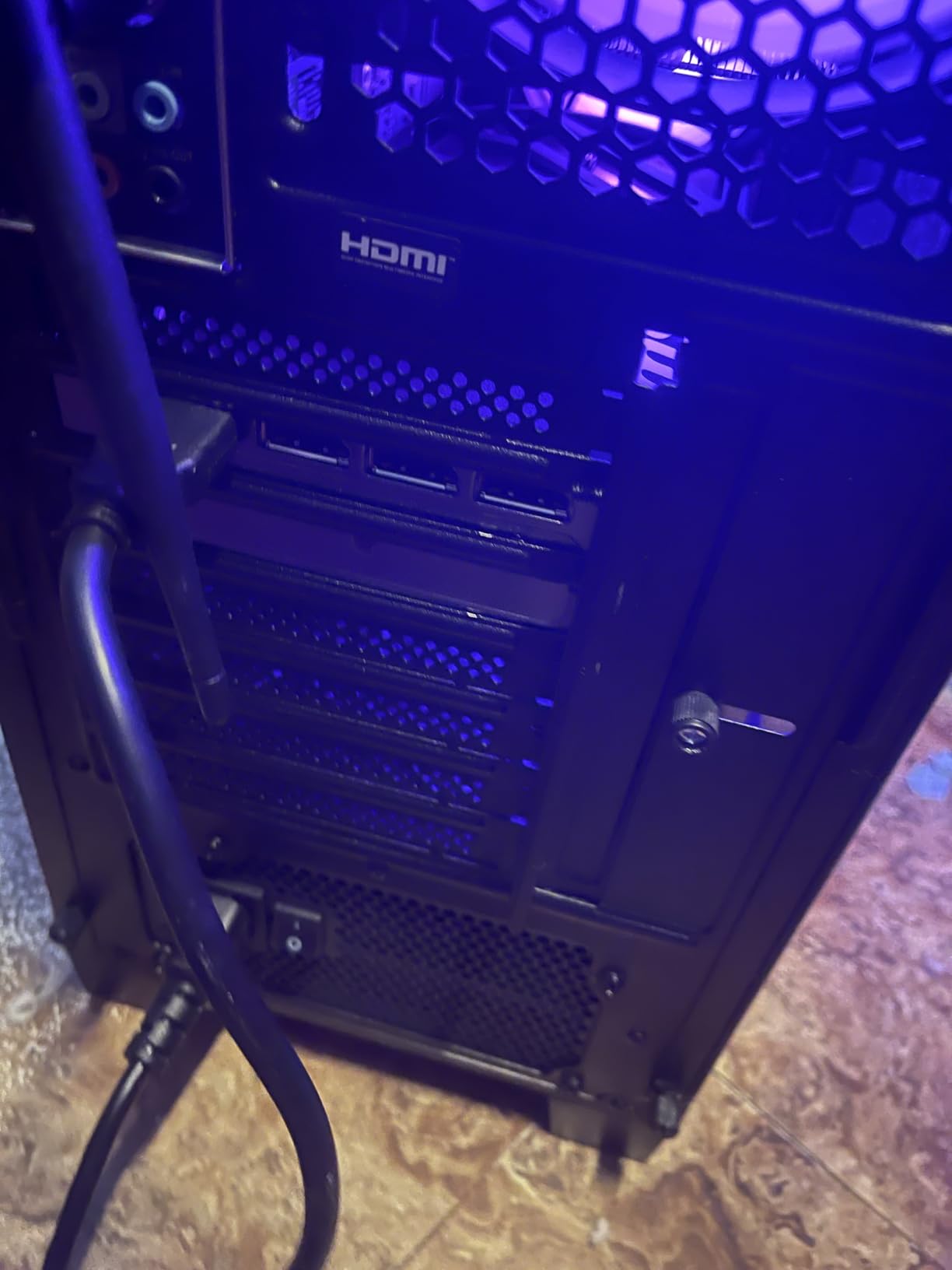
The 18 MB of cache helps in the heavily threaded games that lean on it, and 10 USB ports across the case cover a keyboard, mouse, headset, external drive and a charging phone without needing a hub. It is a lot of connectivity for the money, and it is one of the reasons this tower works as a shared family machine as well as a gaming one. Video output goes through one HDMI and three component outputs, with the card handling two displays comfortably.
Owners also mention that the ARGB lighting is adjustable without extra software beyond MSI Center, and the four case fans mean the system settles into a quiet background hum rather than a loud spin-up. If you like a machine that looks the part on a desk, the tempered sides and lighting are a step up from the plain cases on the renewed office towers.
The Ryzen 7 8700F is an 8-core, 16-thread chip on the older AM4 socket that boosts to 5.0 GHz, and it runs cool enough for a single air cooler. Owners like the four-fan layout and the fact that the front three intake fans and rear exhaust fan move plenty of air through the case. You also get Ethernet, HDMI, LAN, DisplayPort, Wi-Fi 802.11ax and Bluetooth on the back.
Skip it if your work needs Windows Pro licensing, because the machine ships with Windows 11 Home and the manufacturer recommends Pro for business use. Also note the clock speed discrepancy in the listing: 32 GB is described as 3000 MHz even though the rated speed is listed as 6000 MHz, so read that line twice before you assume the memory runs at full speed.
For anyone worried about a sealed configuration, the owner reviews on this tower are refreshingly uneventful. Most people bought it, plugged it in, installed their games and moved on. That is the main argument for buying a prebuilt rather than assembling one: the number of small compatibility problems you never have to solve.
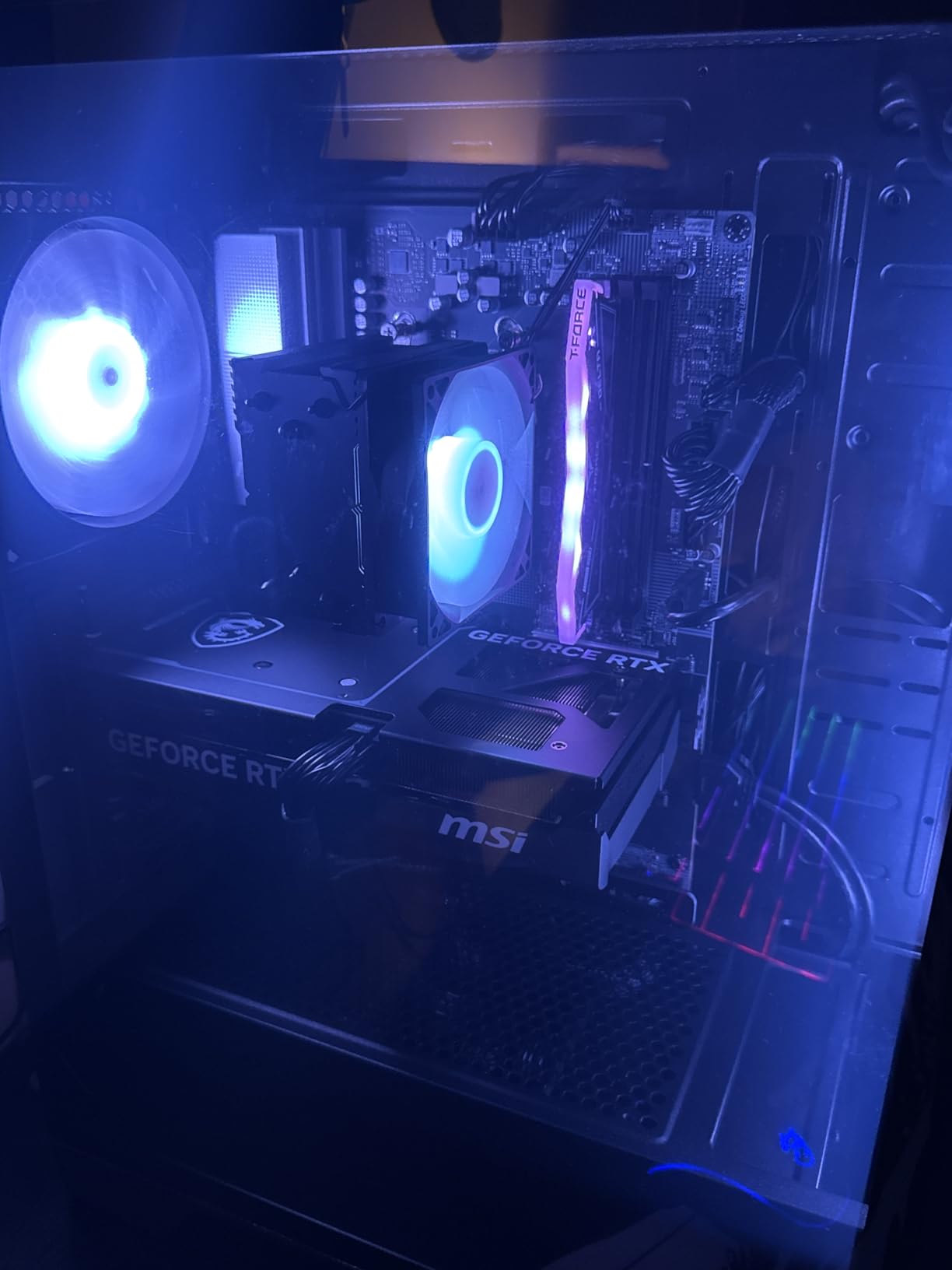
Where the Skytech Crystal wins is platform longevity, since the AM5 board can take a newer CPU. Where the MSI wins is the card, by enough that anyone targeting 1440p or 4K should start with this one and accept the sealed memory as the price. The 1-year manufacturer limited warranty is the shortest cover on any new tower in this roundup.
3. CyberPowerPC Gamer Master: Best for Upgraders
CyberPowerPC Gaming PC, AMD Ryzen 7 8700F, GeForce RTX 5060 Ti 8GB
- Standard non-proprietary parts you can replace individually
- Memory listed expandable to 192 GB
- AM5 Ryzen 7 8700F on the B850 chipset
- WiFi 6 and Bluetooth 5.3 with USB-C 3.2
- One-year warranty plus lifetime technical support
- 16 GB of memory is tight for modern multitasking
- Air cooler needs periodic dust cleaning
- Some owners report first-boot display output issues
The CyberPowerPC Gamer Master is the one to buy if you see a first desktop as a platform rather than a finished product. The Ryzen 7 8700F sits on an AMD B850 chipset, and the AM5 socket means a processor upgrade later does not mean a new motherboard. Memory is listed as expandable to 192 GB, which is the kind of headroom that never appears on a compact all-in-one. The B850 chipset also leaves modern ports and faster storage options on the table if the machine grows.
Owners repeatedly single out the standard, non-proprietary parts as the reason the machine is worth building on, because nothing here is welded shut. The RTX 5060 Ti 8GB is a step up from the cards usually found at this tier, and the port selection is unusually full: two USB-C 3.2 ports, four USB-A 3.2, two USB-A 2.0, WiFi 6, Bluetooth 5.3 and 7.1 channel audio.
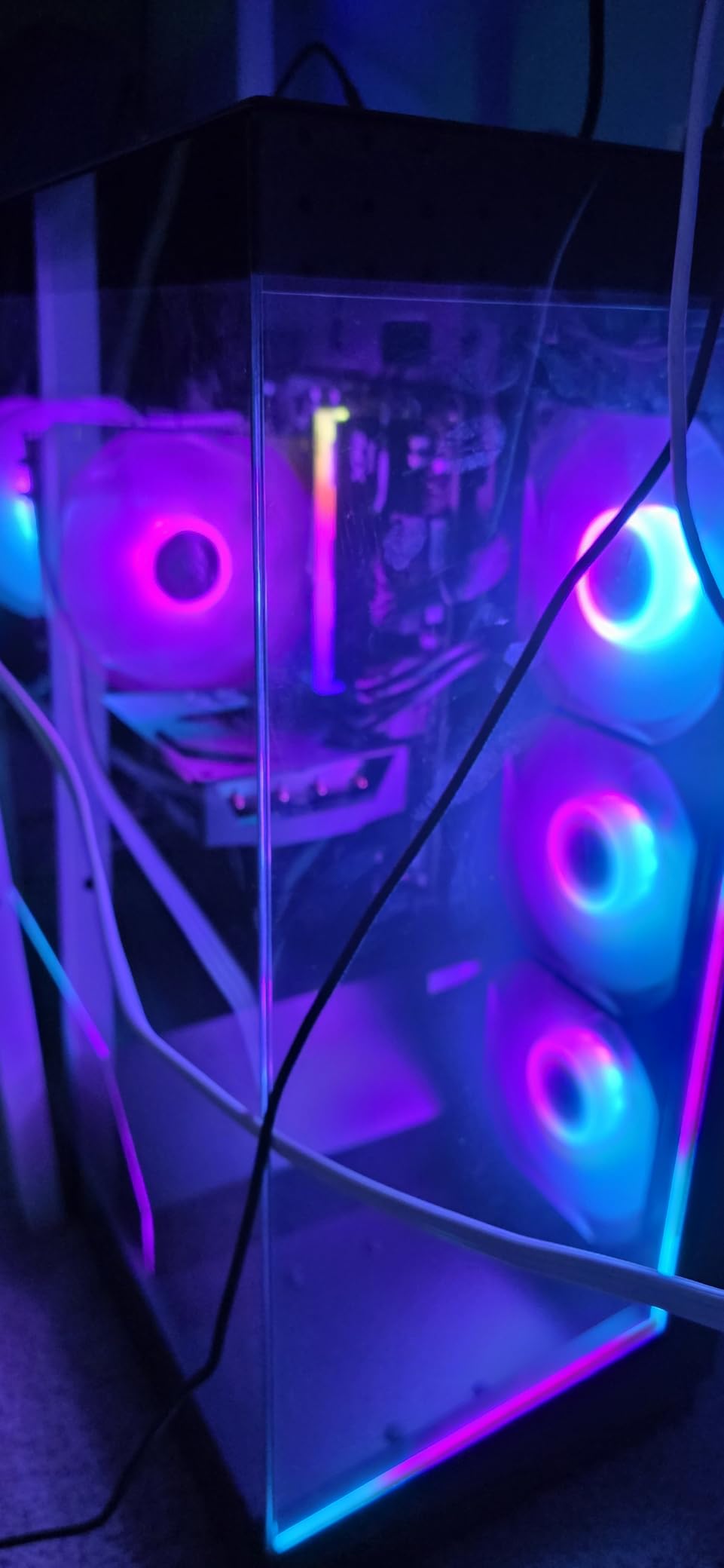
The trade-off starts with the 16 GB of DDR5. It runs at 4800 mt/s and is fine for games, but owners who keep a game, a video call and a browser running together tend to want more, and a matched 32 GB pair is the obvious first upgrade. Cooling is air rather than liquid, so the heatsink wants a dust clean every few months to keep temperatures steady under load.
A small share of reviews mention first-boot trouble, including a display port showing a gray screen and an RGB control app that did not always take, plus a few machines with a DRAM error light that never posted. Most owners never see this, and it is worth knowing about because the fix is a return rather than a repair. Against the Skytech Crystal, the trade is clear: less memory today, more upgrade room tomorrow. The tempered side panel and RGB lighting also make this the better-looking of the two on a desk.
4. Dell 27 All-in-One: Best for Clean Desks
Dell 27″ All-in-One Desktop, FHD, Intel Core 5 120U, Windows 11 Home
- 27-inch FHD IPS panel with 99% sRGB and ComfortView Plus
- Stand stores the keyboard underneath the display
- 5MP plus IR camera with pop-up privacy shutter
- Dual Bluetooth speakers with Dolby Atmos
- One-year onsite service
- 16 GB DDR5 is the maximum
- Integrated graphics limit GPU-heavy work
- Non-touch panel with little internal expansion
The Dell 27 All-in-One solves a different problem from the towers above. There is no separate box to hide, no video cable to run and no second power lead, which makes it the choice for a kitchen counter, a home office where a tower would be in the way, or a desk shared by two people who just want it to work.
The display is a 27-inch FHD IPS panel with 99% sRGB coverage, and the listing notes a 66% higher refresh rate and 50% higher contrast than the previous generation. ComfortView Plus cuts blue light, which matters for a machine that will sit against a wall and get used all day. The 10-core Core 5 120U runs from 1.4 GHz up to 5 GHz, so light work feels immediate even with integrated graphics.
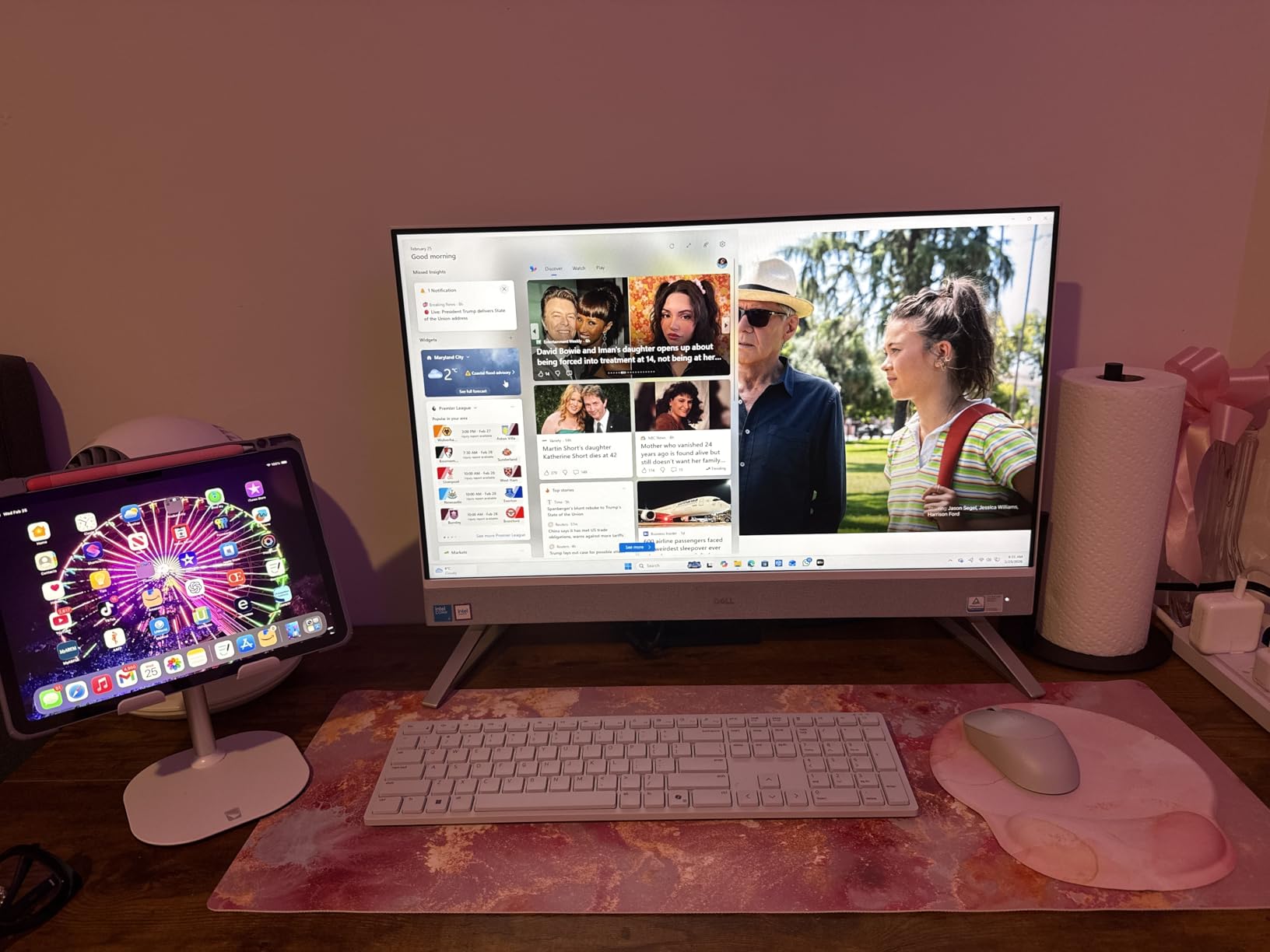
Two details owners praise more than expected. The stand is designed to hold the keyboard underneath the display, which keeps the desk clear, and the 5MP plus IR camera has a pop-up privacy shutter for the moments you do not want a video call to see your room. Audio runs through dual Bluetooth speakers with Dolby Atmos spatial sound at 5W each.
Good to know: the memory is fixed. Sixteen GB of DDR5 5200 across two slots is the listed maximum, and the small form factor leaves little room inside, so treat this as a machine to buy once and live with. It is non-touch, and if you want a desktop for games or GPU rendering, the Skytech Crystal is the opposite choice.
The one-year onsite service is the quiet advantage over the mini PCs in this roundup: for covered hardware problems Dell comes to you rather than asking you to box up a machine and post it back. Weight is 13.6 pounds, so it is still movable by one person, and a single cable carries power and video.
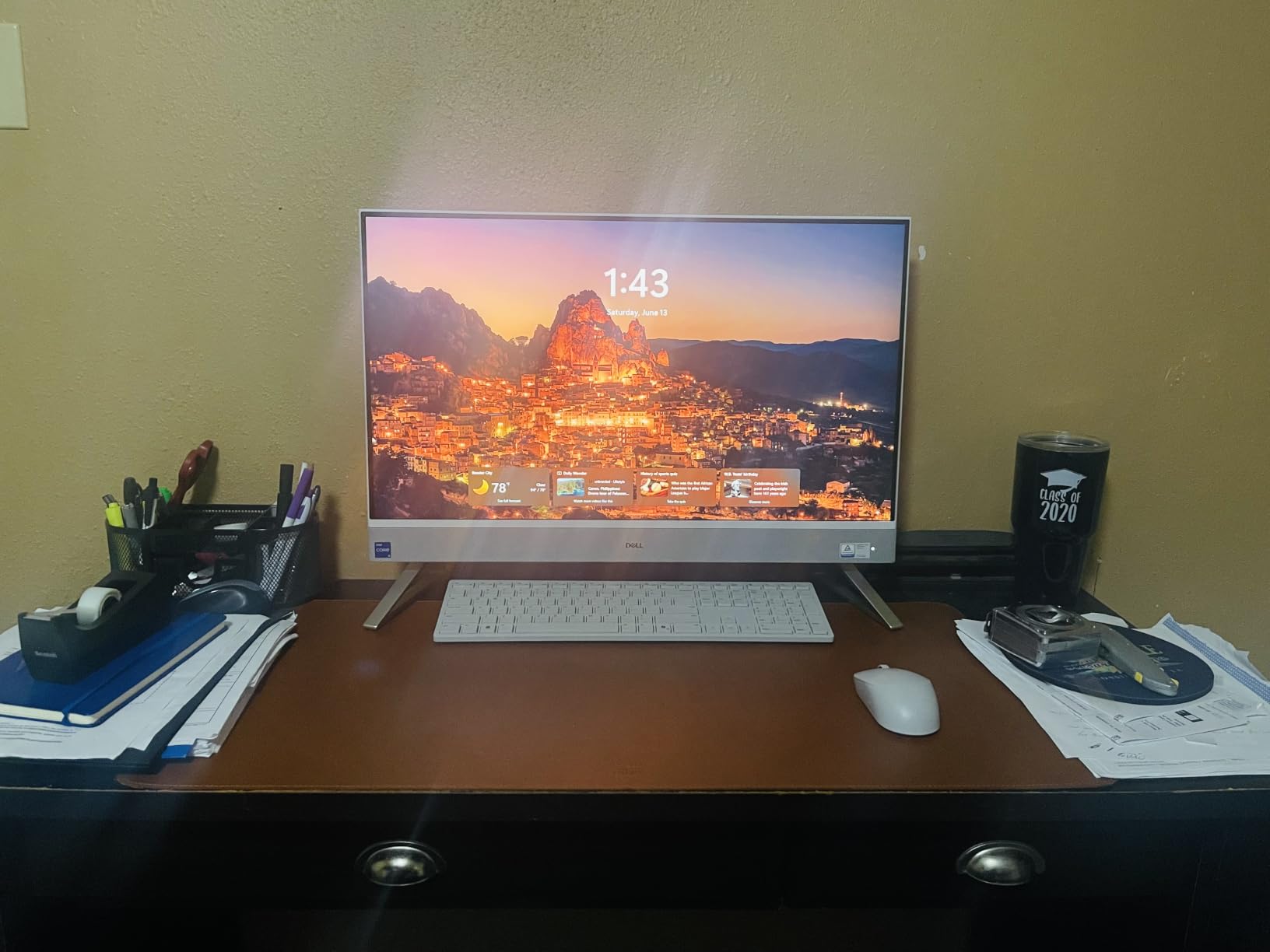
5. Olialia RTX 3060 Ti Tower: Best for 1440p Gaming on Older Parts
Olialia Gaming PC Prebuilt, RTX 3060 Ti, AMD Ryzen 5 5500, 16GB RAM
- RTX 3060 Ti 8GB handles 1080p Ultra and 1440p with DLSS
- Compact dual-chamber case with dual tempered glass panels
- Six adjustable RGB fans plus an RGB CPU cooler
- Built-in dust filters and ventilated panels
- Memory platform supports up to 64 GB
- Only 512 GB of storage fills up quickly
- DDR4 sits a step behind current DDR5 prebuilts
- Older generation parts lack newer frame generation features
- No keyboard or mouse in the box
The Olialia tower is the sensible way into 1440p gaming without paying for a current-generation card. Owners describe the RTX 3060 Ti 8GB running 1080p titles at Ultra settings and holding smooth frame rates at 1440p with DLSS enabled, and the listing supports output up to 2560×1440.
What you give up is platform currency. The Ryzen 5 5500 is a 6-core, 12-thread chip on AM4 that tops out at 4.2 GHz, and the memory is 16 GB of DDR4 with a path to 64 GB. That is a workable machine for years of 1080p and 1440p play, and it will never be a competitive 4K card.

The case is the part owners comment on most. It is a compact dual-chamber mid-tower with tempered glass on both sides, six adjustable RGB fans and an RGB CPU cooler, ventilated top and side panels and built-in dust filters. That filter detail is not marketing filler, because a gaming PC pulls a lot of air through a small enclosure and filters are what keep the heatsink readable a year in.
Two practical notes. Plug the display cable into the lower ports on the graphics card, not the motherboard ports, or you may be looking at the wrong output with no card acceleration. And nothing comes in the box but the tower, so plan for a keyboard, mouse and screen if you are starting from nothing. The 512 GB drive is the first upgrade most owners plan, since modern installs eat that space quickly.
Against the Skytech Crystal, the Olialia gives more raw graphics muscle per generation of hardware but less future platform life. Against the CyberPowerPC Gamer Master, it looks better on a desk and comes with more fans, while offering a socket that has reached the end of its upgrade road.
6. ACEMAGICIAN S3A: Best for Silent Workspaces
- Three power modes including a Silent mode at 35 dB
- Triple 4K output over HDMI 2.0 and DisplayPort 2.0 and USB4
- Tool-free removable storage expandable to 4 TB
- 16 GB LPDDR5 6400 memory
- Two-year warranty with lifetime technical support
- 16 GB of LPDDR5 is soldered and not upgradeable
- 512 GB base storage needs opening the case to grow
- Radeon 780M is not suited to AAA gaming
The ACEMAGICIAN S3A is the one to consider if noise is the thing that rules a machine out. Its three power modes run from a 20 to 35W Silent mode at 35 dB, through a 30 to 45W Auto setting, up to a 40 to 54W Performance mode, and a dual-fan cooler handles the heat. In a bedroom or a shared study office, that first mode is the feature that matters.
Inside is a Ryzen 7 H 255 with 8 cores and 16 threads boosting to 4.9 GHz, paired with Radeon 780M integrated graphics built on RDNA 3 with 12 compute units at 2600 MHz. That is genuine desktop-class multitasking in a chassis measuring 5.31 by 2.83 by 6.41 inches, and a VESA mount is included for the back of a monitor.
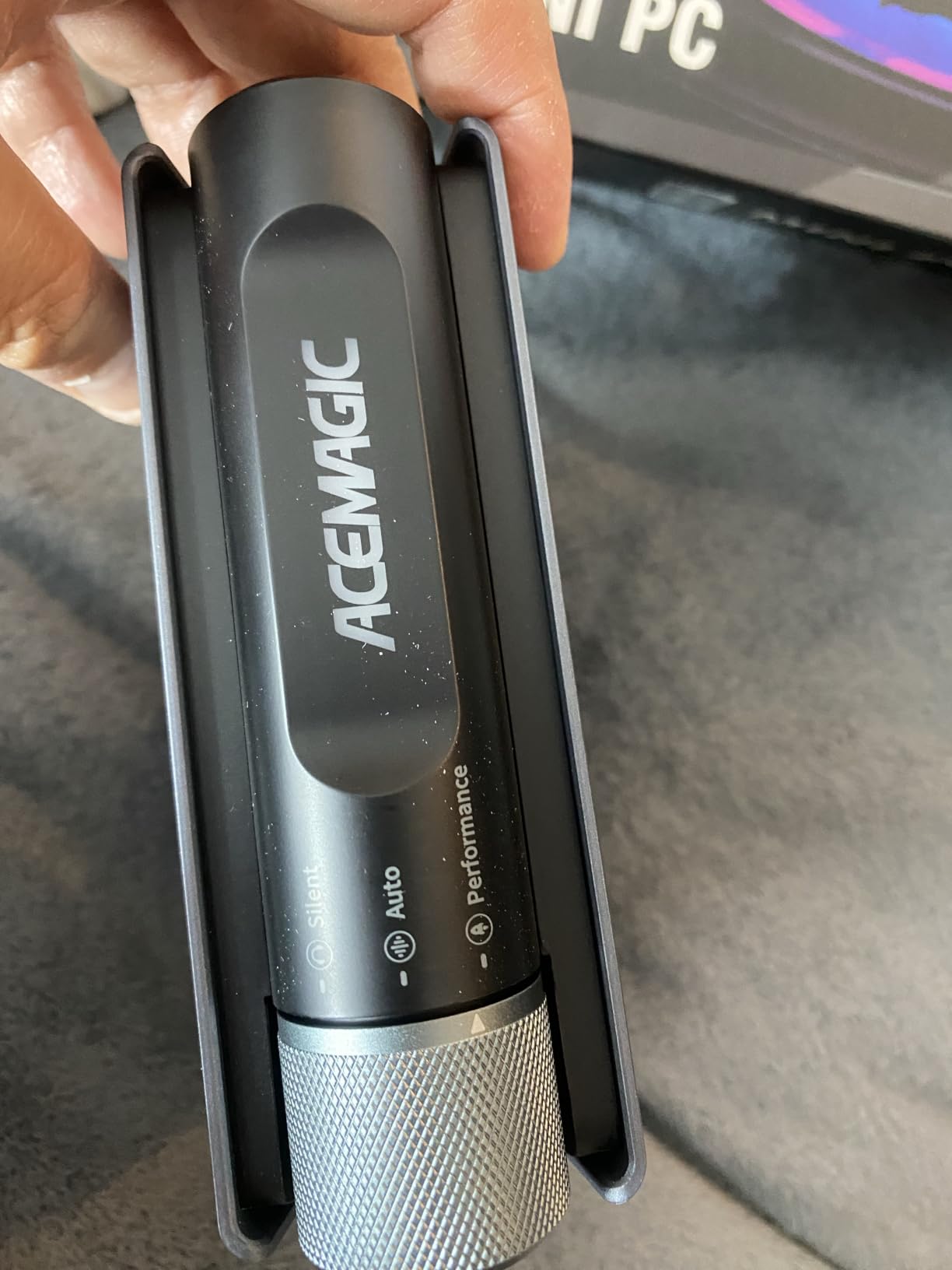
Display support is unusually good for the size. HDMI 2.0, DisplayPort 2.0 and a full-function USB4 Type-C port together drive up to three 4K displays at once, which makes it a natural fit for a three-monitor office setup. WiFi 6E, Bluetooth 5.2, gigabit LAN and seven USB ports cover the rest. Customizable RGB lighting is a small touch that stops a plain black brick looking anonymous on a desk.
Owners are clear about the limits. The 16 GB of LPDDR5 6400 is soldered, so it stays at 16 GB for the life of the machine, and the 512 GB PCIe 4.0 drive grows to 4 TB through a tool-free removable design, which is a genuinely easy upgrade if you can live with opening the case. Graphics performance is fine for light gaming and falls well short of anything with a dedicated card, which is the reason the Skytech Crystal sits at the top of this list.
The KAMRUI Pinova P2 is the other small machine here, and the two are easy to confuse: the Pinova P2 has a 4-core processor and a 256 GB base drive, while this one has twice the cores and faster LPDDR5 6400 memory. Both carry a 2-year warranty, so the deciding factor is the processor.
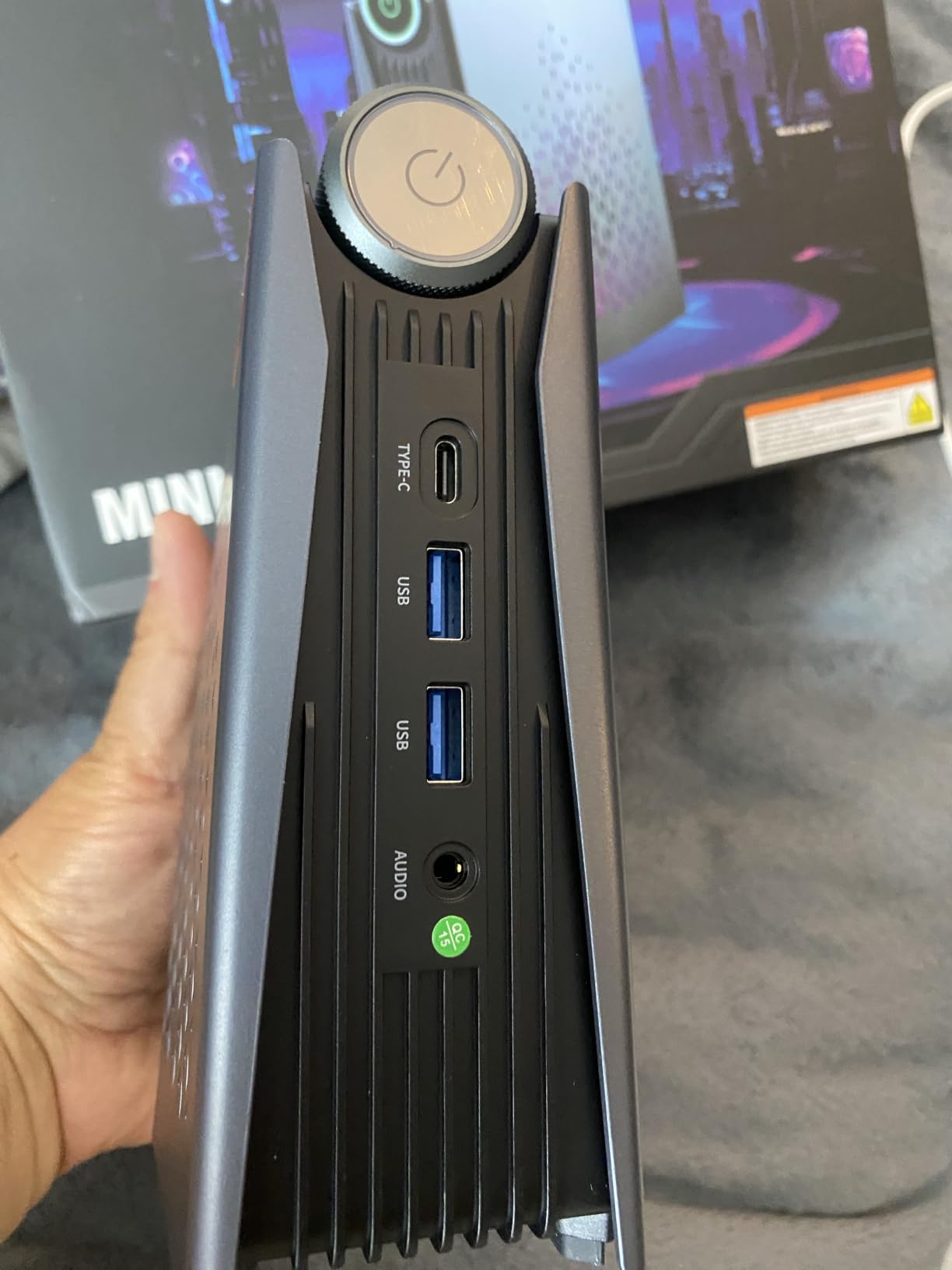
7. Dell OptiPlex 7070 SFF: Best for Office Work
- 8-core i7-9700 handles heavy office multitasking
- 32 GB DDR4 across 4 slots expandable to 64 GB
- Brand new 1 TB M.2 NVMe drive
- AX210 built-in WiFi 6E and Bluetooth
- Windows 11 Pro with a clean install
- Integrated graphics means no modern gaming
- Bundled wireless keyboard and mouse are low quality
- Renewed condition means cosmetic and component variability
- 90-day warranty only
This is the machine to pick if the processor and the memory are what matter and the graphics card is a checklist line. The 8-core Core i7-9700 boosts to 4.70 GHz with 12 MB of cache, and with 32 GB of DDR4 across four slots that can reach 64 GB, it handles a heavy browser and document workload without complaint.
The small form factor case measures 18 by 14 by 7 inches and weighs 13 pounds, so it tucks under a desk easily. AX210 WiFi 6E, Bluetooth, two DisplayPort outputs, five USB 3.1 ports, four USB 2.0 ports and a DVD-RW drive round out the connections, and owners often run it as a home office, media or game server machine.
Storage is the part that makes a renewed office tower worth buying. The 1 TB M.2 NVMe drive is new rather than inherited from the original build, so boot and load times are what you would expect from current hardware instead of the spinning disk these machines shipped with.
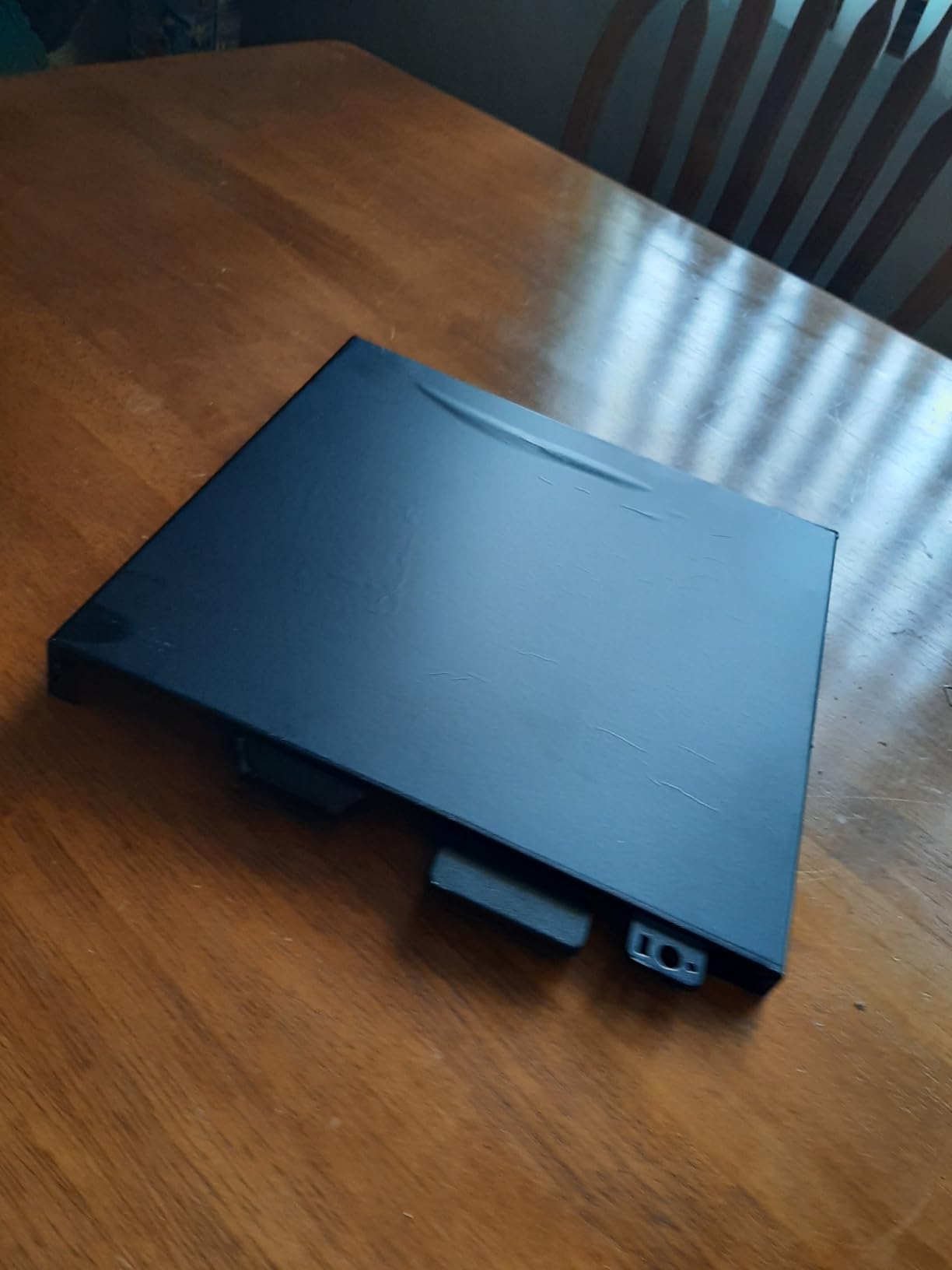
Windows 11 Pro is pre-installed with a clean install and no Dell bloatware, and the 80 Plus Platinum power supply suits a machine that stays on all day. Owners also point out the room inside the SFF case for a second hard drive or SSD, which is a small form factor that behaves like a normal tower on the inside.
Skip it for games. Integrated Intel UHD Graphics 630 shares system memory, and adding a discrete card to a small form factor power budget is rarely worth it. The most common complaints are about the bundled wireless keyboard and mouse, which owners describe as low quality, plus a minority who report a power button failing within months or a panel with refurbish scuffs. The warranty is 90 days, so keep the packaging.
The Dell OptiPlex 7070 SFF is the one to pick for a home office, a media server or a machine that runs Windows all day, and at that job the trade is easy. Against the HP ProDesk 600G4, this one has two more cores and a DVD drive; against the Skytech Crystal, it is a machine for documents rather than frames per second.
8. HP ProDesk 600G4: Best for Small Offices
- Hexa-core i7-8700 with 32 GB DDR4 for heavy multitasking
- 1 TB SSD configured as the primary boot device
- Dual DisplayPort output up to 3840x2160
- Ten USB ports including USB Type-C
- Windows 11 Pro from a Microsoft Authorized Refurbisher
- Integrated HD Graphics 630 is not suitable for modern gaming
- WiFi 5G is an older wireless standard
- No built-in audio so external speakers are required
- Renewed condition varies from machine to machine
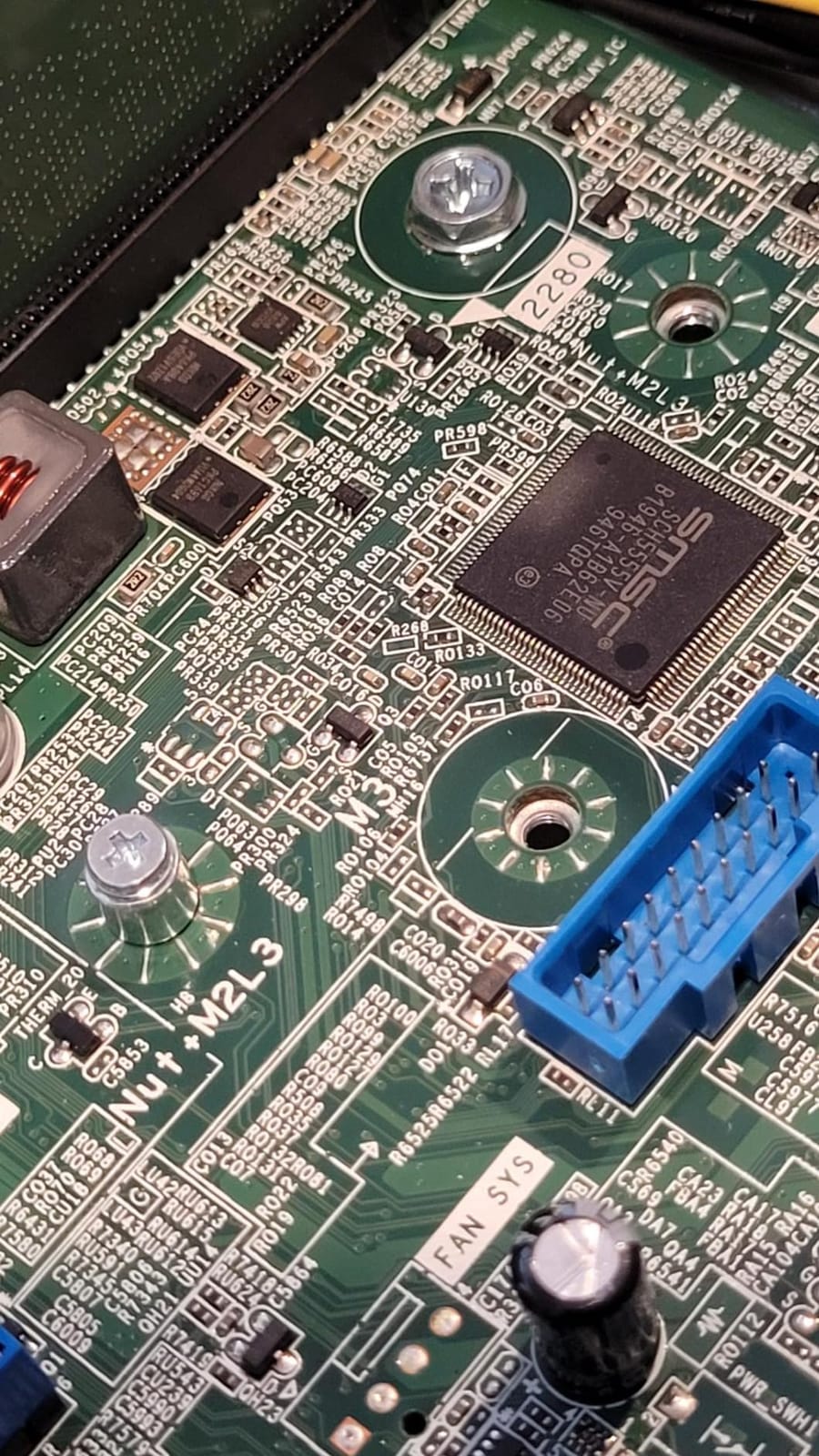
The HP ProDesk 600G4 is the cheapest way into this list to get 32 GB of memory and a terabyte of solid state, and for a family computer or a shared office desk that is often the whole requirement. The hexa-core Core i7-8700 boosts to 4.60 GHz, and the 1 TB SSD is set as the primary boot device, so nothing about the daily feel is dated.
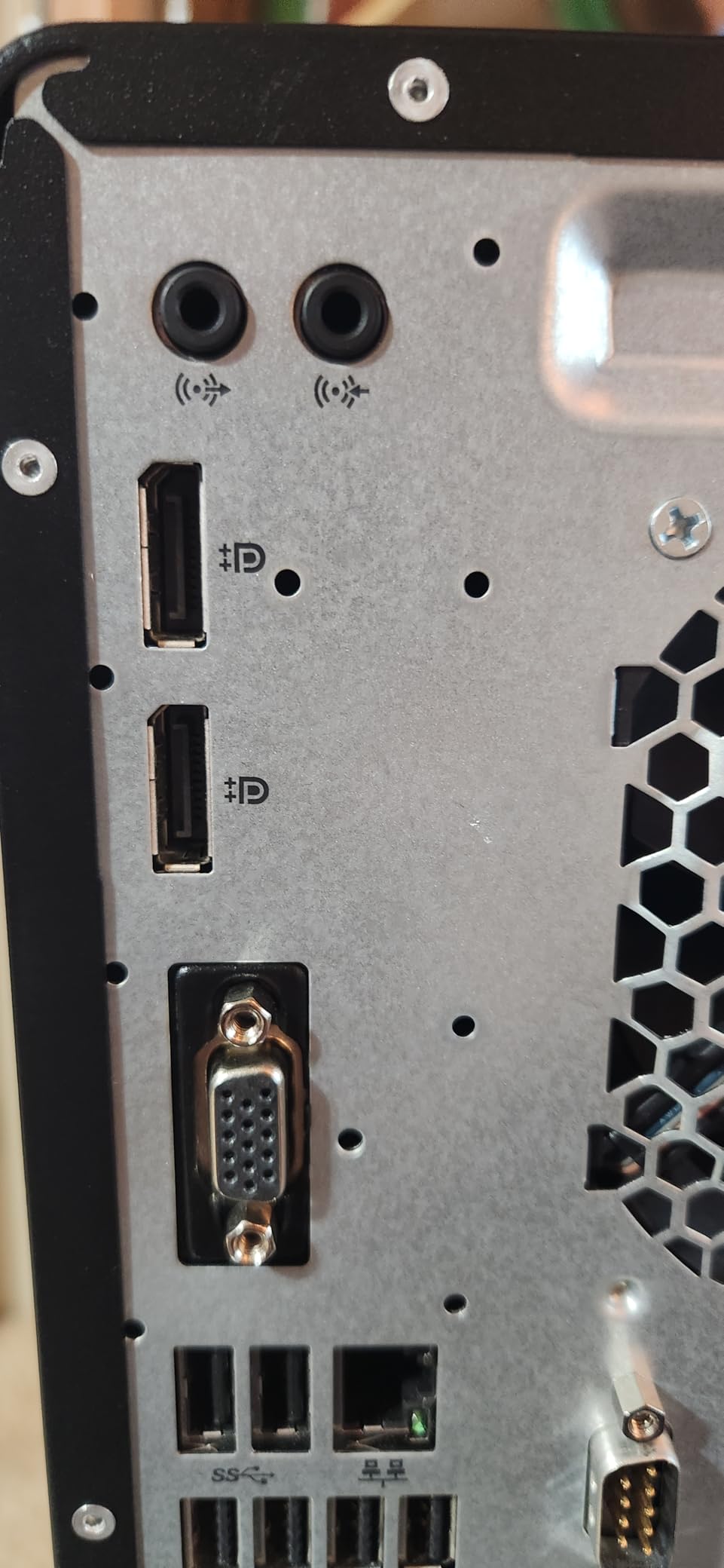
Port selection is the surprise. There are 6 USB 3.0 ports, 4 USB 2.0 ports, a USB Type-C port, 2 DisplayPort outputs with a 3840×2160 maximum resolution, and audio in, out and combo jacks. Four internal SATA connectors leave room for more storage and cooling, and a DVD drive is fitted for discs or backups.

The chassis is small, at 13.3 by 3.9 by 12.1 inches and 14.8 pounds, and owners point out how easily it fits under an office desk. The system comes from a Microsoft Authorized Refurbisher with free technical support, and Windows 11 Pro arrives with Windows Defender and Firewall already in place. The 90-day warranty is the shortest here, which is the price of the entry point.
Two things to know before you order. Wireless is WiFi 5G on the older 802.11n standard, not WiFi 6, and the tower has no built-in audio, so you will need external speakers for anything but system beeps. A USB audio adapter and a pair of powered speakers for desktops sort out the audio in one step.
Against the Dell OptiPlex 7070 SFF, this machine gives up two processor cores and the DVD drive, and it asks less of your wallet in return. Compared with the KAMRUI Pinova P2, the size difference is the bigger point: the mini PC mounts behind a monitor while this needs a shelf or the floor.
9. KAMRUI Pinova P2: Best for Multi-Monitor Desks
- Most reviewed machine in this group with 2040 reviews
- Triple simultaneous 4K output over HDMI 2.0 and DisplayPort 1.4 and USB-C
- Two M.2 expansion slots take storage to 4 TB total
- 5.04 by 5.04 by 1.63 inch chassis with VESA mount
- 15W processor keeps heat and noise low
- 256 GB base storage is small for media libraries
- Four cores are modest for video editing or compiling
- Soldered 16 GB LPDDR4X cannot be upgraded
- Listing does not clearly state the pre-installed operating system
The KAMRUI Pinova P2 is the smallest machine here and the most reviewed, with 2,040 owner ratings, so anything wrong with it would already be common knowledge. It is a 5.04 by 5.04 by 1.63 inch silver brick weighing 573 grams, with a VESA mount in the box for the back of a monitor.
Underneath is a Zen 3 Ryzen 3 7330U with 4 cores and 8 threads up to 4.3 GHz and 8 MB of L3 cache at a 15W draw. Owners compare it favourably with the Intel i3-10110U and N95 chips of the same class, and the spec sheet notes roughly 50% faster single-core and 46% faster multi-core performance than the Ryzen 3 4300U it replaces. Total system draw is listed at 28 watts.
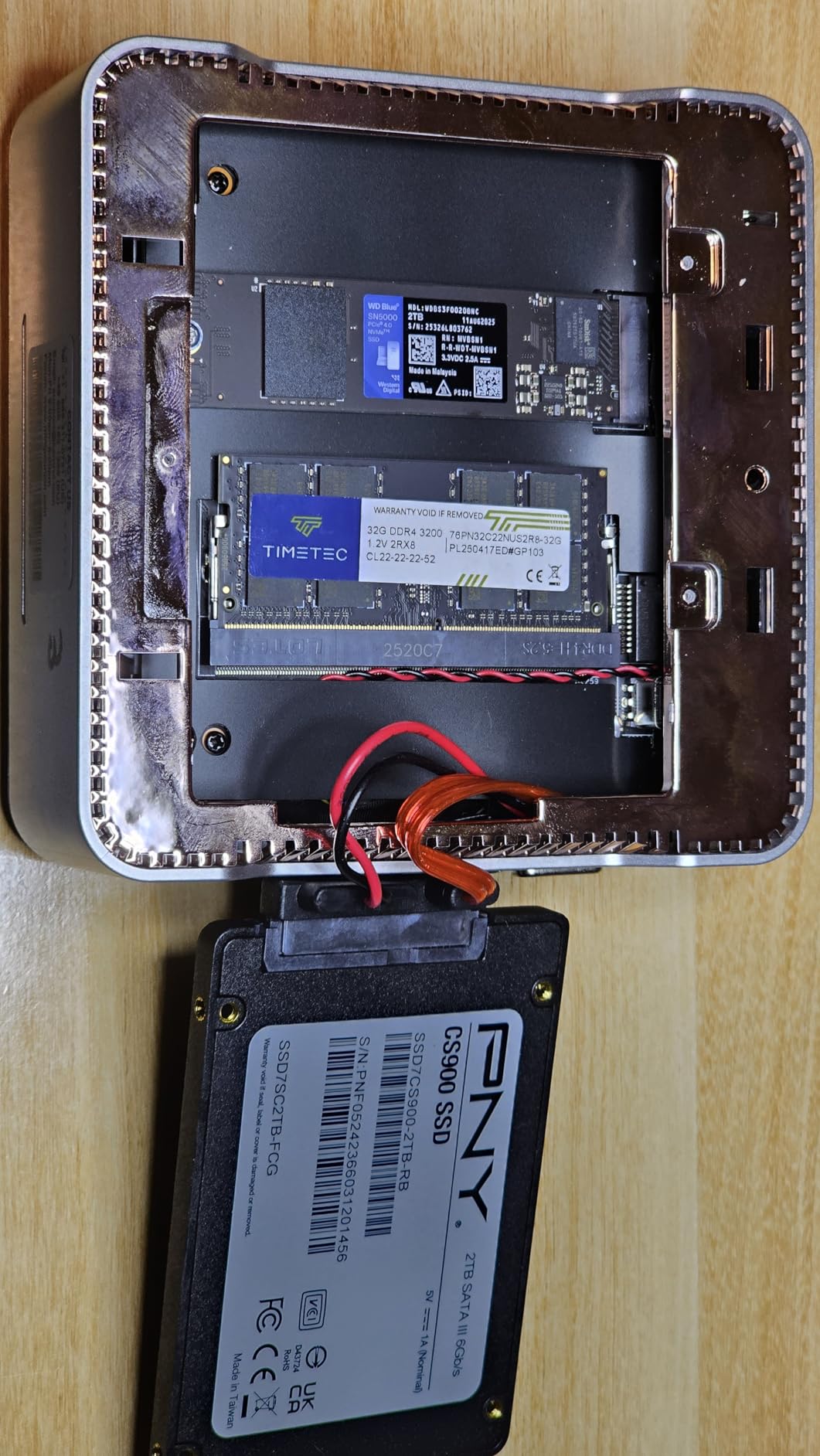
Display output is the reason to notice it. HDMI 2.0, DisplayPort 1.4 and a USB 3.2 Gen2 Type-C port with DisplayPort Alt Mode drive three 4K displays at 60Hz at the same time, and two USB 3.2 Gen2 Type-A ports move data at 10 Gbps. Storage is the weak point at 256 GB, but there are two M.2 expansion slots that take the total to 4 TB, so the drive is the fix rather than the machine.
What you give up is memory and headroom. The 16 GB of LPDDR4X at 3200 mt/s is soldered, integrated Radeon graphics with 6 compute units handle light gaming rather than AAA titles, and the listing does not clearly state which operating system is pre-installed, so check that line before ordering. The 2-year manufacturer warranty and lifetime technical support are better than the renewed office towers offer.
Compared with the ACEMAGICIAN S3A, the Pinova P2 is smaller, cooler-running and more heavily reviewed, but the S3A has twice the cores, faster LPDDR5 memory and a bigger base drive. Choose the S3A if you compile or edit; choose the Pinova P2 if you want three screens and a tidy desk.
How to Choose a Desktop PC During Prime Big Deal Days
Processor and Performance
Core count decides how many things run at once; clock speed decides how fast a single task feels. For browsing, documents and video calls, 6 cores is enough. For compiling, video editing or running a game while streaming, look for 8 cores, and check whether the socket accepts a faster CPU later, which is a real saving on the motherboard.
Memory and Storage Configuration
32 GB is the comfortable target for a machine expected to last several years, and 16 GB is workable for light work or a dedicated gaming box. Check whether the memory is on removable slots or soldered, because a machine with soldered LPDDR memory will sit at that capacity permanently. On storage, a 1 TB drive is the practical minimum, and every tower here except two carries at least that.
Graphics Card and Gaming Readiness
Integrated graphics, whether Intel UHD or Radeon, handle documents, video calls and media. Dedicated graphics start at the RTX 3060 Ti and RTX 5060 Ti level in this group, and those cards are what separate comfortable 1080p and 1440p gaming from settings you negotiate with. The RTX 5070 in the MSI Codex Z2 is the strongest card here, and nothing with integrated graphics in this roundup will run modern titles at high settings.
Connectivity and Upgrade Potential
Count the USB-A and USB-C ports before you buy, then look at what sits inside. Standard ATX parts mean you can replace a drive, a card or a stick of memory yourself; a proprietary board or soldered memory cannot be touched. Memory ceilings tell the same story: 192 GB on the CyberPowerPC Gamer Master means real headroom, while 16 GB on either mini PC here is fixed for the life of the machine.
Case Size and Workspace Fit
Measure the space and the noise tolerance together. Full towers like the MSI Codex Z2 and the Skytech Crystal want floor or shelf space, compact mid-towers like the Olialia fit under a desk, and the two mini PCs here mount behind a monitor. A tower with no built-in audio, such as the HP ProDesk 600G4, also needs external speakers, and small cases with many intake fans benefit from the dust filters some of these models include.
How to Shop Desktop PC Deals During the Sale
Read the model line and the spec table, not just the headline. Confirm the exact processor, memory capacity and type, storage size, graphics card and operating system license, then check what is actually in the box, since a keyboard and mouse are included with some of these towers and not others. Check whether the machine is new or Amazon Renewed, read who the seller and shipper are, and look for the Prime badge on the listing. Most desktop offers need an active Prime membership, and a free trial counts, while the price and configuration on a given listing can change through the event.
- Match the graphics card to the resolution you actually play at, not to the marketing tier.
- Confirm the memory type and whether the slots are populated or soldered.
- Check what is included in the box before planning on a keyboard, mouse or screen.
- Note the maximum memory the board supports, not the memory it comes with.
- Read recent reviews for first-boot problems and see how the seller handled them.
- Confirm the warranty length, since renewed office towers carry the shortest cover.
Frequently Asked Questions
When does Amazon Prime Big Deal Days take place in 2026?
Amazon Prime Big Deal Days runs October 6-7, 2026, across two days. Most desktop PC offers during the event require an active Prime membership, and a free trial counts. Desktop offers often appear a few days before the event opens, so watching listings early gives you more chances to find the configuration you want, but the price on a given listing moves through the day.
Do you need Prime membership to buy a desktop PC during the sale?
Most Prime Big Deal Days offers need Prime, and a 30-day free trial is the usual way to join without paying for a year up front. A handful of desktop deals run for everyone, but the deal pricing attached to most of the picks in this roundup is tied to a membership. Look for the Prime badge on the listing before you plan the purchase around it.
Are Best Amazon Prime Big Deal Days Desktop PC Deals worth waiting for?
They are worth watching, because desktop computers are one of the categories that gets the widest coverage during the October event. The catch is that offer pricing moves through the day and the configuration attached to a listing can change, so the exact machine you wanted may not be the machine on offer tomorrow. Know the processor, memory and graphics you need before the event opens.
How do I tell if a desktop PC deal has the right specifications?
Read the spec table rather than the headline. Confirm the exact processor, memory capacity and type, storage size, graphics card and the operating system license, then check what is in the box. If a listing advertises an RTX 5060 Ti or 32 GB of memory, that has to match the detailed specification, and owner reviews often mention straight away when the parts differ from the description.
Should I buy a gaming desktop or a general-purpose desktop PC?
Buy a gaming tower if you want a dedicated graphics card for games or GPU-accelerated work, and expect a larger case and a power supply built for it. Buy an all-in-one, a mini PC or a renewed office tower if the machine handles documents, browsing, video calls and a family media screen. Renewed office towers give you more cores and memory for less, but no modern gaming.
Final Verdict: Best Amazon Prime Big Deal Days Desktop PC Deals
The Skytech Crystal is the pick to watch most closely, because a current socket, 32 GB of memory and an RTX 5060 Ti in a standard tower covers most reasons to buy a desktop, and 1,158 owner reviews give you a real read on its reliability. If the graphics card is the deciding factor, the MSI Codex Z2 has the strongest card here and the largest storage, at the cost of sealed memory and an older socket. If you would rather build up a machine over time, the CyberPowerPC Gamer Master is the one built from parts you can replace individually.
For everything that is not gaming, the Dell 27 All-in-One is the cleanest desk, the ACEMAGICIAN S3A runs a Silent mode at 35 dB and drives three 4K screens, and the KAMRUI Pinova P2 is the smallest machine here with the most owner feedback. The Olialia RTX 3060 Ti Tower serves 1440p gaming on older parts. On a tight budget, the HP ProDesk 600G4 is the cheapest way to 32 GB and a 1 TB SSD, and the Dell OptiPlex 7070 SFF is the better office machine with more cores and a DVD drive.
Decide which of these fits your desk and your workload before the event opens, then check the listing again on the day you plan to order, since configurations and offer pricing both move through October 6-7, 2026.