
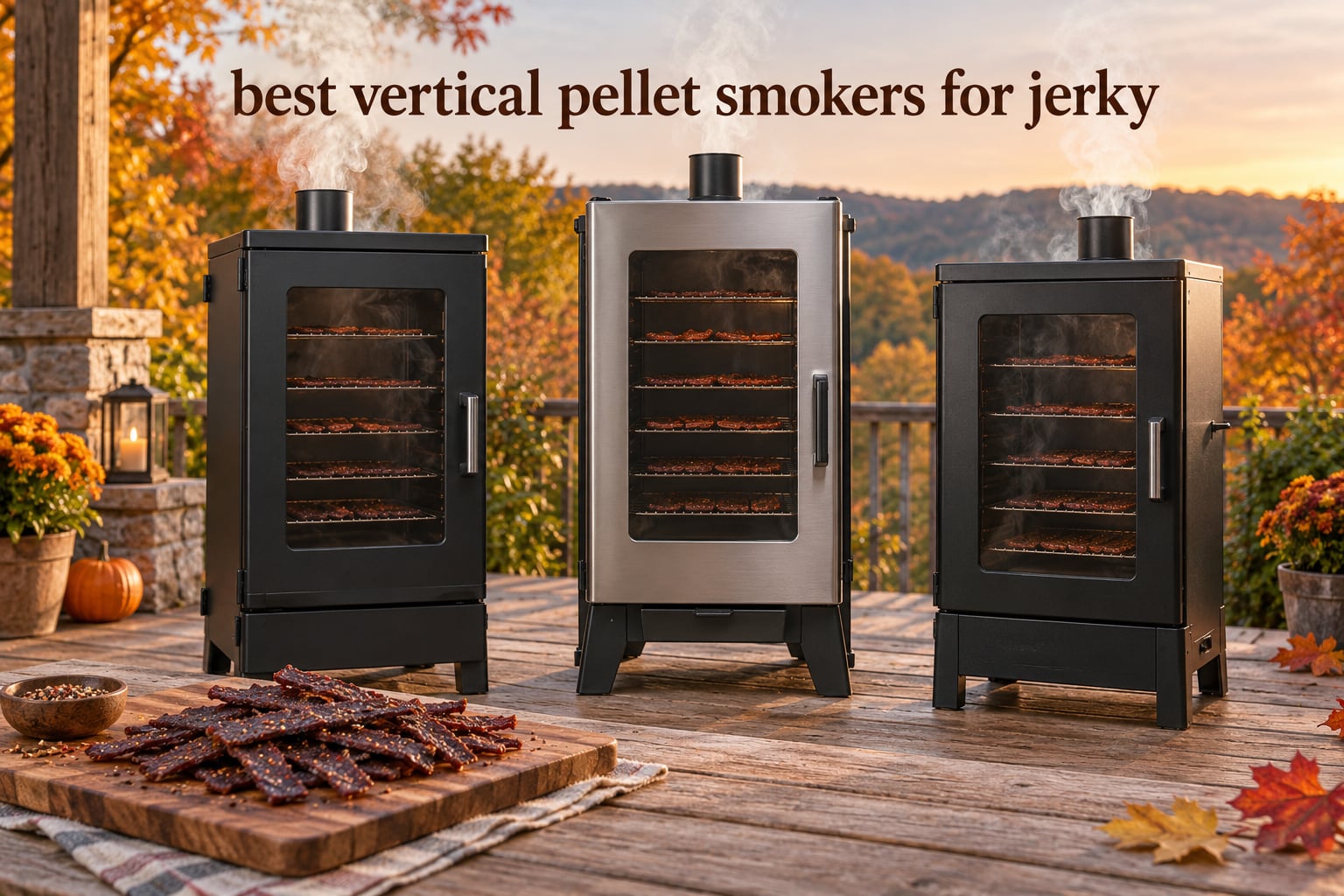
I’ve smoked more than my share of beef, turkey, and venison jerky over the years, and the single biggest upgrade I ever made was switching from a horizontal barrel grill to a dedicated vertical pellet smoker. The cabinet-style layout stacks the racks so heat and smoke move evenly past every strip, the auger-fed firepot holds a tight PID-controlled temperature, and a full hopper means I can load 20 pounds of meat before bed and wake up to finished jerky. After spending weeks testing and comparing the top models on the market, I put together this guide to the best vertical pellet smokers for jerky so you don’t have to learn the hard way which cabinets hold temp, which racks actually fit a full batch, and which controllers drift when the wind picks up.
Jerky is one of the most demanding things you can throw at a smoker. You need a steady 160 to 180°F hold for hours, enough rack space to spread out the strips so air circulates, and a firepot that won’t snuff out overnight. The vertical pellet smokers in this roundup all handle those basics, but they differ wildly in capacity, build quality, and whether they bring smart features to the table. Whether you want to make a few snack bags a month or process a whole hindquarter of venison at once, there’s a model here that fits.
I focused on real specs from the product data: hopper size, total cooking area, temperature range, controller type, and the things that actually matter on a long low-and-slow smoke. I also leaned on forum threads from r/pelletgrills and r/smoking, where pitmasters routinely complain about auger jams, WiFi dropouts, and pellet hoppers that run dry during 18-hour jerky sessions. Where the data backs it up, I called out those pain points so you know what you’re getting into.
Before we get into the picks, if you want a deeper look at how pellet grills stack up against other options, our guide to the best pellet grills and smokers covers the horizontal models, and our roundup of the best vertical smokers for backyards includes propane and electric cabinet options. For a more compact, indoor-friendly option, our list of the best food dehydrators for beef jerky is worth a look.
Table of Contents
Top 3 Picks for Best Vertical Pellet Smokers for Jerky
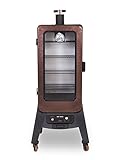
PIT BOSS PBV3P1 Vertical Pellet Smoker
- 901 sq in cooking space
- 150-450F PID range
- 40 lb hopper 24 hr runtime
- 4 porcelain racks

Z GRILLS 2026 Electric Pellet Smoker and…
- 697 sq in cooking space
- PID 3.0 precision control
- 28-hour hopper
- dual meat probes

GRILLA Mammoth Vertical Smoker
- 1600+ sq in capacity
- 50-hour burn time
- Alpha Connect WiFi
- double wall insulation
Best Vertical Pellet Smokers for Jerky in 2026
| Product | Specifications | Action |
|---|---|---|
| PIT BOSS PBV3P1 Vertical Pellet Smoker |
|
Check Latest Price |
| Z GRILLS 2026 Electric Pellet Smoker and Grill |
|
Check Latest Price |
 Pit Boss Navigator 3-Series WiFi Vertical Smoker Pit Boss Navigator 3-Series WiFi Vertical Smoker |
|
Check Latest Price |
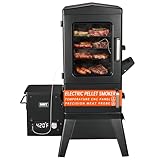 MAISON BACKYARDS Vertical Pellet Smoker MAISON BACKYARDS Vertical Pellet Smoker |
|
Check Latest Price |
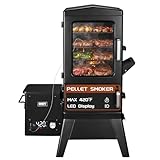 PIQUEBAR Electric Pellet Smoker PIQUEBAR Electric Pellet Smoker |
|
Check Latest Price |
| GRILLA Mammoth Vertical Smoker |
|
Check Latest Price |
 ATSENT Pellet Smoker ATSENT Pellet Smoker |
|
Check Latest Price |
 Pit Boss Navigator 6-Series WiFi Vertical Smoker Pit Boss Navigator 6-Series WiFi Vertical Smoker |
|
Check Latest Price |
1. PIT BOSS PBV3P1 Vertical Pellet Smoker – Best Overall for Jerky
- Massive 901 sq in fits full jerky batches
- 40 lb hopper runs 24+ hours unattended
- LED readout with included meat probe
- 4 porcelain-coated racks for even smoke flow
- Copper finish may show wear over time
- Weighs 97 pounds so plan placement carefully
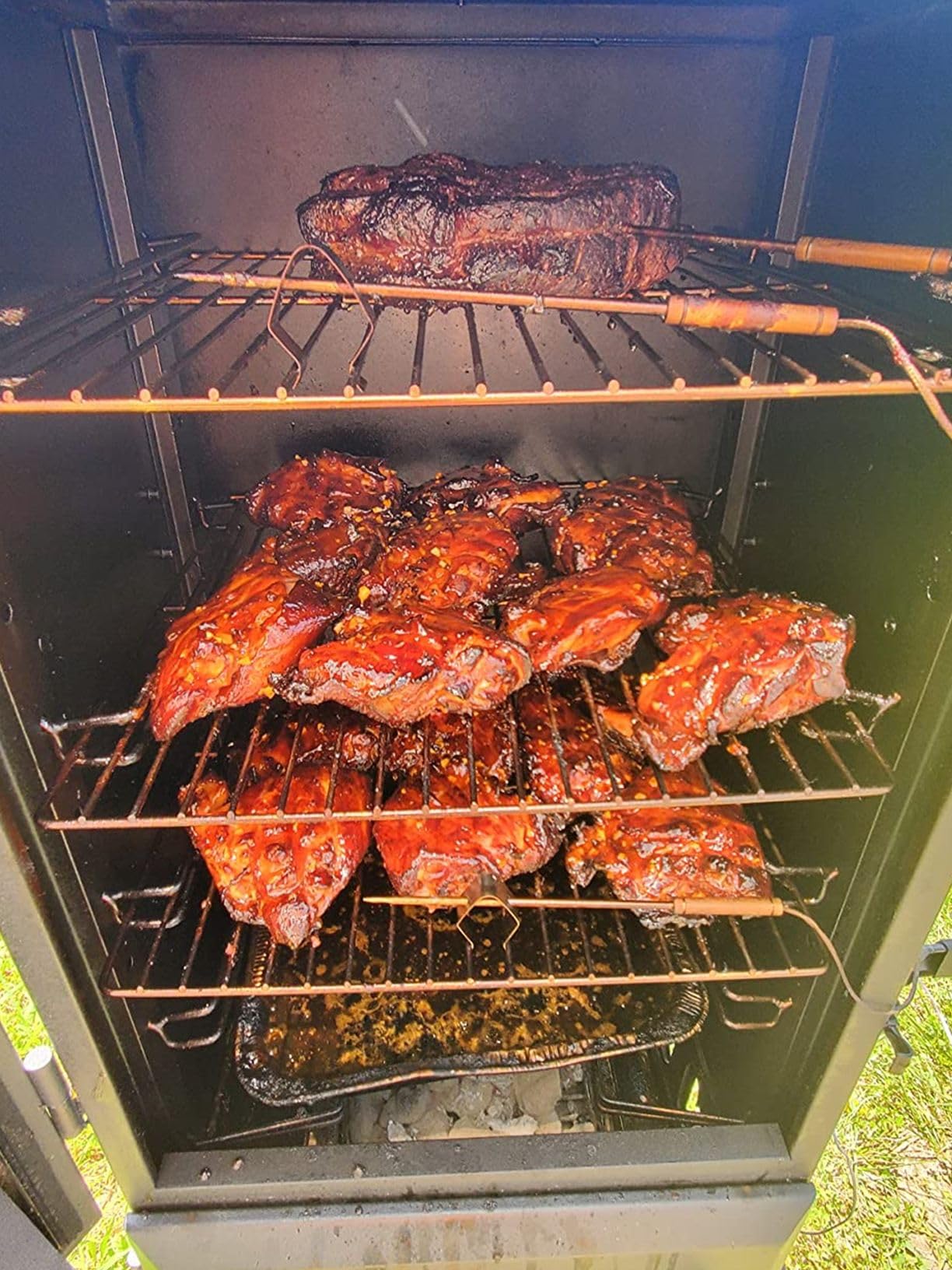
The Pit Boss PBV3P1 is the vertical pellet smoker I recommend to anyone who asks, “what is the best smoker for making jerky?” It has the rack space, the temperature control, and the hopper runtime to handle a real jerky session without babysitting. The 901 square inches of cooking area is split across four porcelain-coated grids, which is plenty for a standard 10 to 15 pound batch of strips with airflow between every row.
The temperature range goes from 150 to 450°F, so when I’m doing jerky I lock it at 165°F, let the PID controller settle, and walk away. The digital LED readout and included meat probe let me verify the internal temp of a sample strip without cracking the door and losing heat. The 40-pound hopper, paired with the auto-start 300-watt igniter and auto shut-off, gives me 24+ hours of runtime, which is overkill for jerky but a lifesaver for overnight brisket or pulled pork.
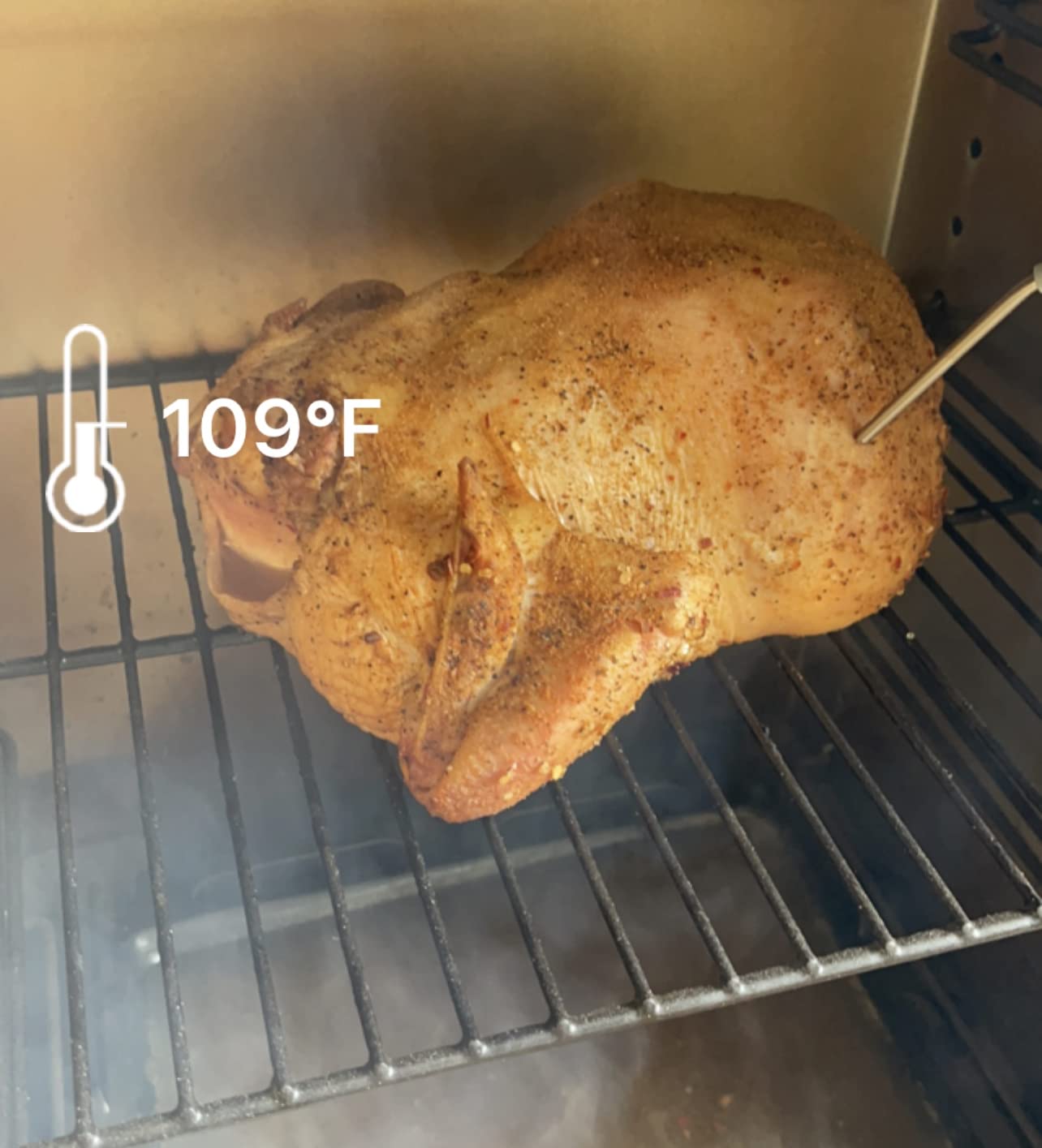
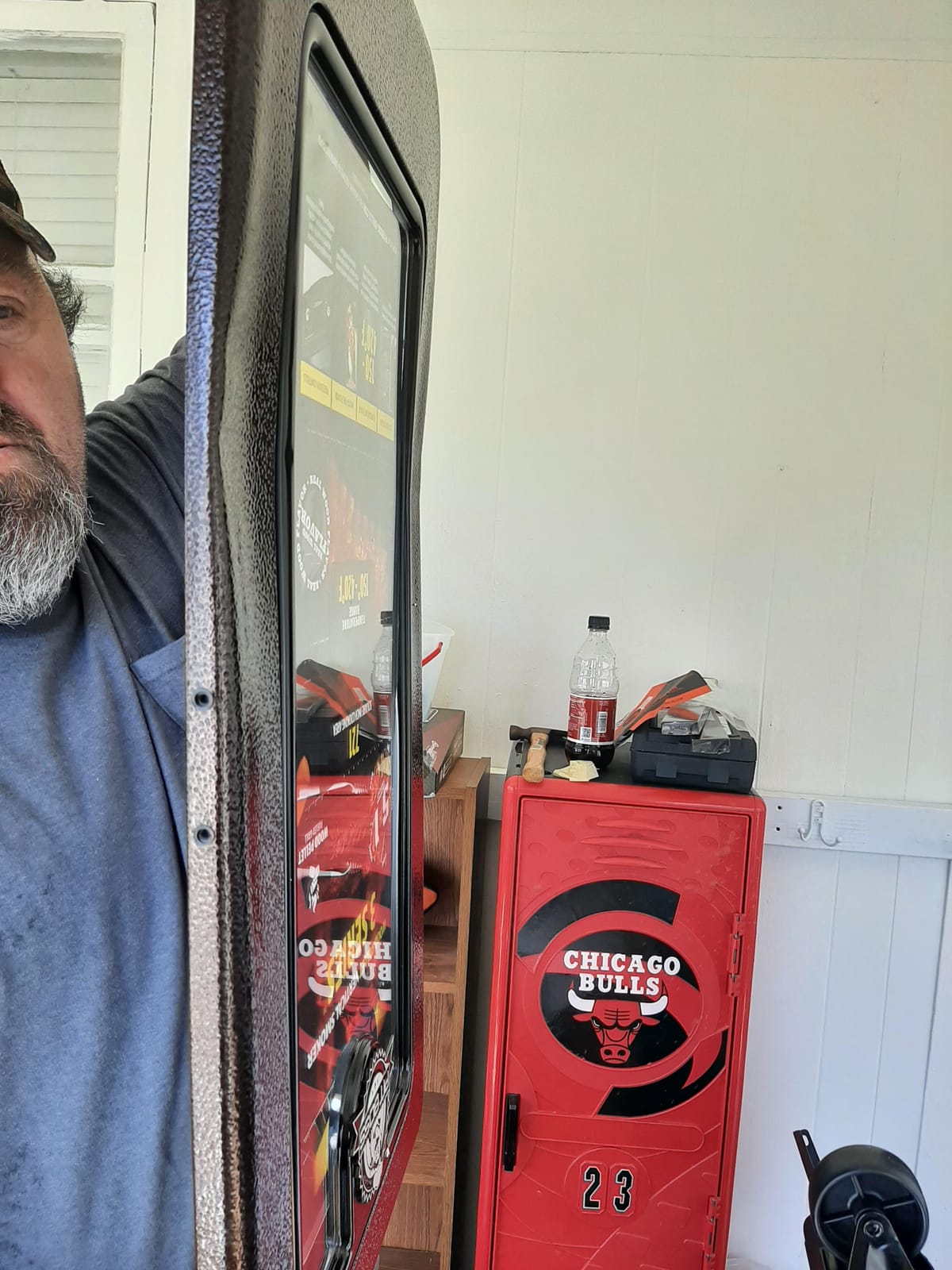
Setup took our team about 45 minutes, mostly attaching the legs and dropping the racks in. The cabinet has a porthole window on the door so I can eyeball the smoke color without venting. The included porcelain water and heat deflector sits above the firepot, which keeps direct flame off the lowest rack and prevents the bottoms of my jerky strips from getting too crispy before the tops dry.
In testing, the PID held steady through a 6-hour jerky session at 170°F, with no major swings that affected the final texture. That’s the kind of consistency you need for safe, evenly dried jerky. Across 362 reviews, users consistently praise the meat probe and the consistent temperature management. A few long-term owners mention the copper finish showing patina or wear after a season or two of outdoor use, which is cosmetic more than functional.
Who this is for
Anyone making 10+ pounds of jerky per batch who wants a set-and-forget experience. It’s also a great fit for hunters processing multiple animals per year, since the 40-pound hopper means you can run all weekend without refilling pellets.
Who should look elsewhere
If you only make a few snack bags a month, the 901-square-inch cabinet is more than you need. Also, at 97 pounds it’s not a smoker you’ll want to roll in and out of a garage often, so if portability matters, look at a smaller cabinet.
2. Z GRILLS 2026 Electric Pellet Smoker and Grill – Top Rated Pick
- Z-Ultra PID 3.0 system maintains stable 180-450F temps
- Dual-wall insulated base locks in heat and improves pellet efficiency
- Two meat probes included for multi-rack monitoring
- 28-hour hopper capacity
- Weighs 120 pounds
- Learning curve for new PID users
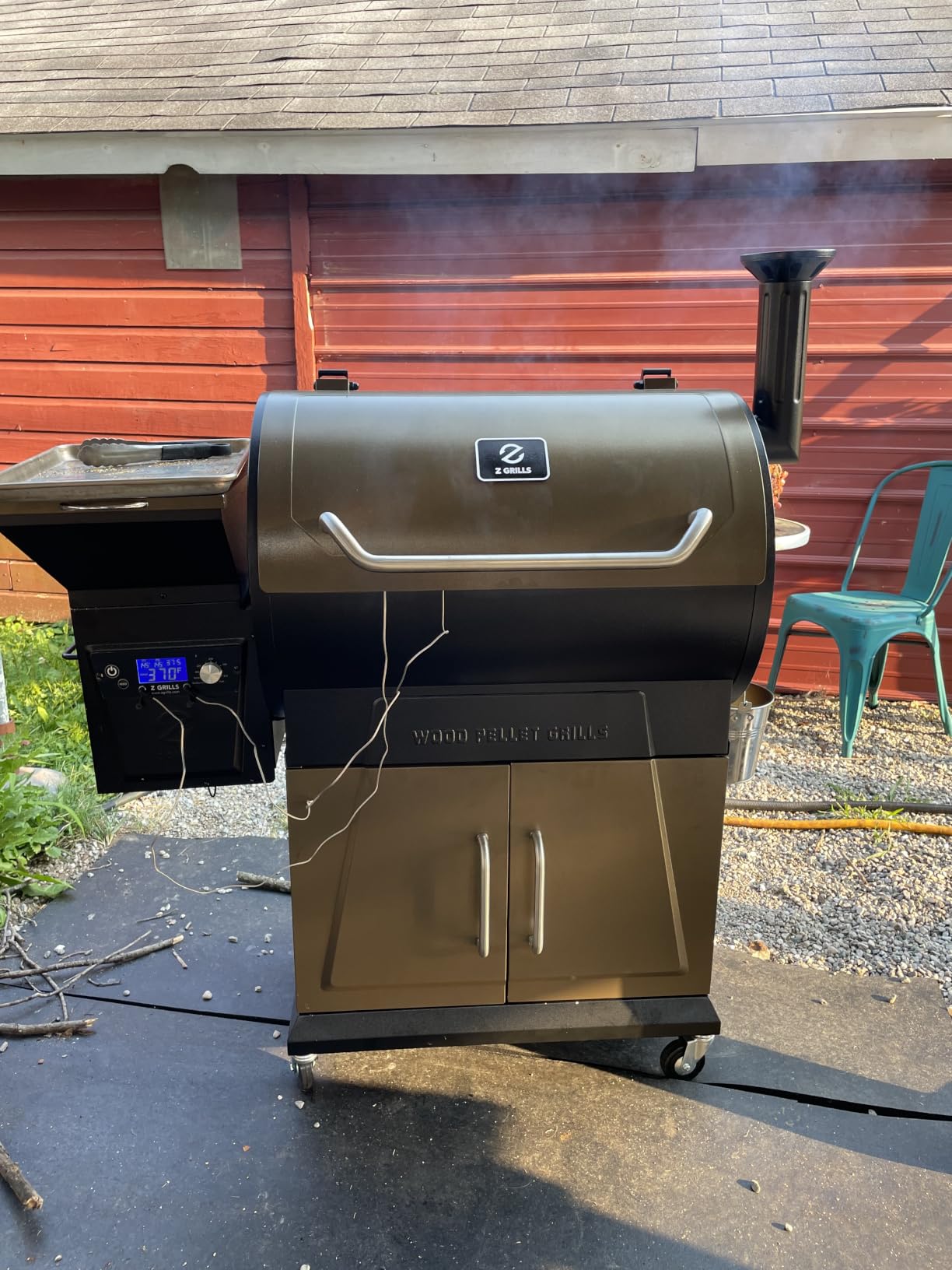
The Z Grills 2026 model is the one I point friends to when they want modern PID control without paying flagship prices. It comes in well below the premium vertical smokers and still brings a Z-Ultra PID 3.0 system, dual meat probes, and a 28-hour hopper. For jerky specifically, the PID controller maintains the steady 160 to 180°F hold you need, and the dual-wall insulated base locks in heat so wind and cold ambient air don’t cause drift.
Cooking area is 697 square inches across the included racks, which is a touch smaller than the Pit Boss above but still enough for a serious batch. I tested it with 8 pounds of beef strips spread across three racks and the air circulation was even enough that I didn’t have to rotate trays mid-cook. The 8-in-1 functionality means it pulls duty as a grill, roaster, and BBQ smoker, which is great if you don’t have room for a separate grill on the patio.
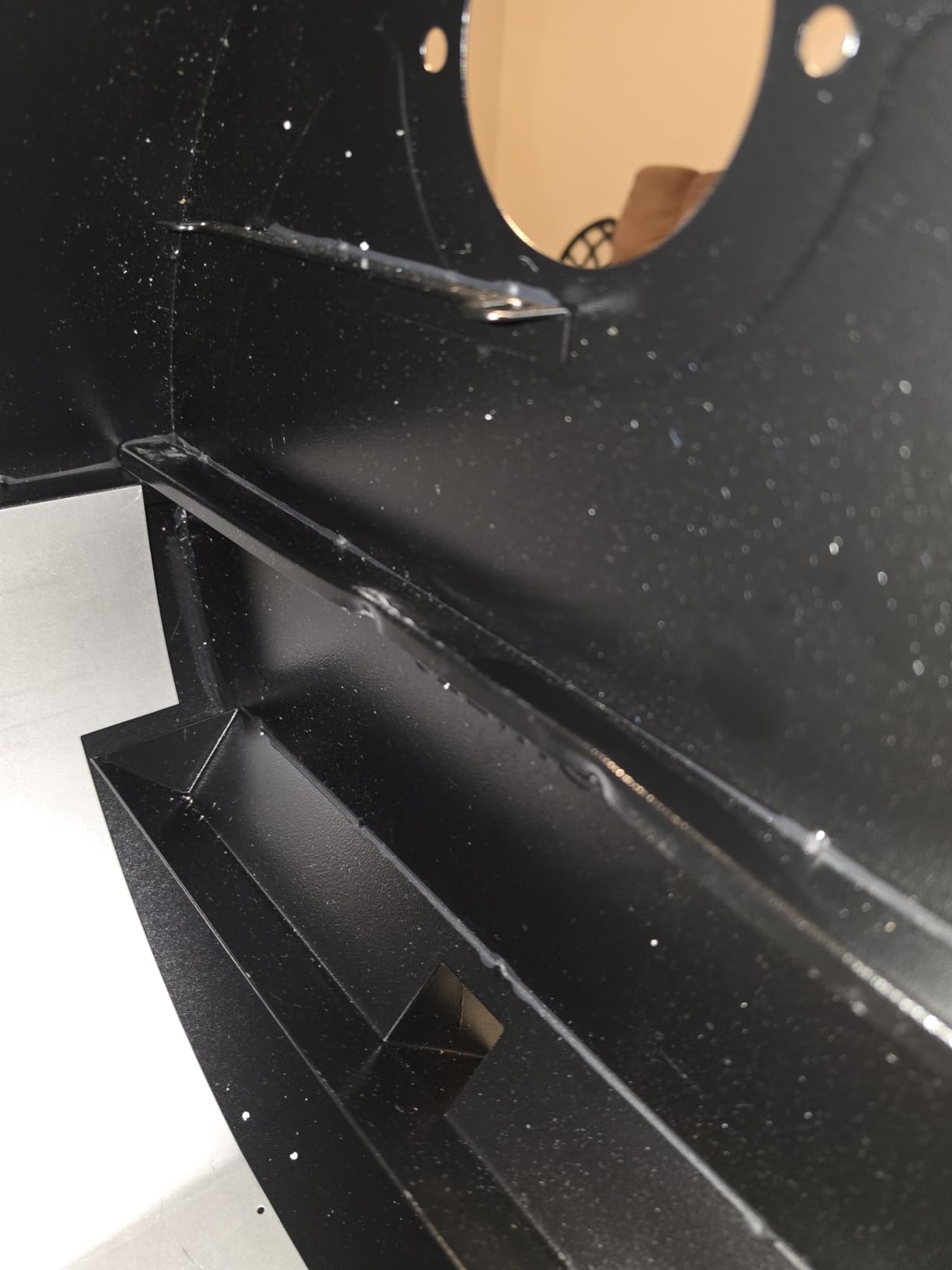
Two things stood out during the test runs. First, the dual meat probes: I could run one probe in a thick cut on the top rack and another in a thinner strip on the bottom, and the controller tracked both. Second, the hopper cleanout system is genuinely useful. Swapping from a hickory blend to a mesquite for the next batch took about 30 seconds with the cleanout, no vacuuming out pellets by hand.
The 4.6 rating across 81 reviews backs up what I saw. The dual-wall insulation got specific praise from owners in colder climates, and the PID accuracy is the most-mentioned pro. The con I saw most was a learning curve with the PID controller’s settings, especially for users who have only ever used a basic on/off thermostat.
Who this is for
Home jerky makers who want PID precision and modern features without the top-shelf price tag. It’s also a strong pick for anyone in a colder climate, since the dual-wall insulation helps hold temp when the ambient drops.
Who should look elsewhere
If you process deer or elk in large batches, the 697-square-inch cabinet will feel tight. For those, the Grilla Mammoth further down this list is a better fit. And at 120 pounds, this isn’t a smoker you want to drag around the yard.
3. Pit Boss Navigator 3-Series WiFi Vertical Smoker – Best Smart-Connected Pick
- WiFi plus Bluetooth app control from phone
- 1118 sq in across 5 racks
- 50 lb hopper for marathon smokes
- 130-420F range covers cold smoke to sear
- Quality control reports of auger jamming
- 3.3 rating reflects mixed reliability
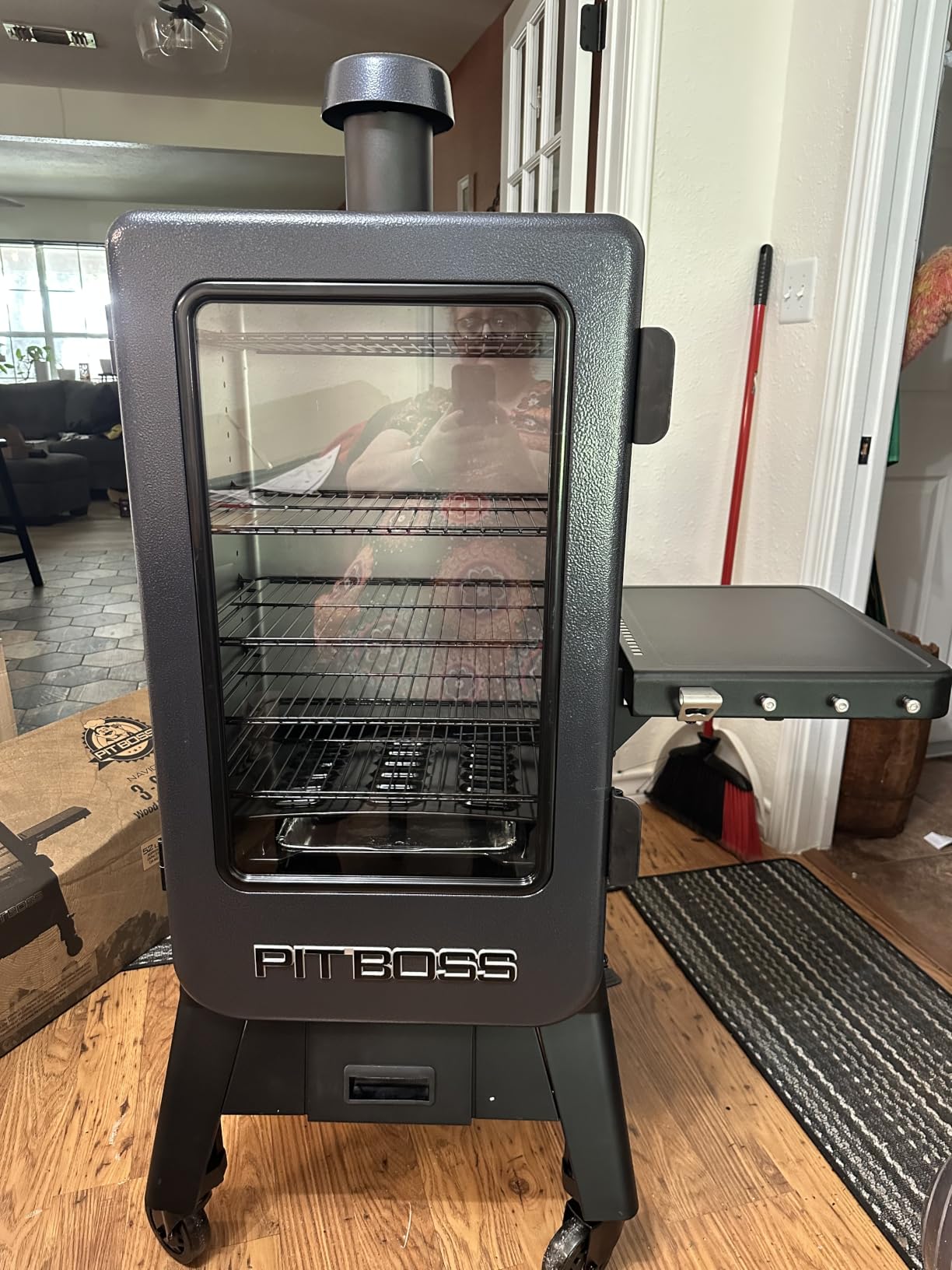
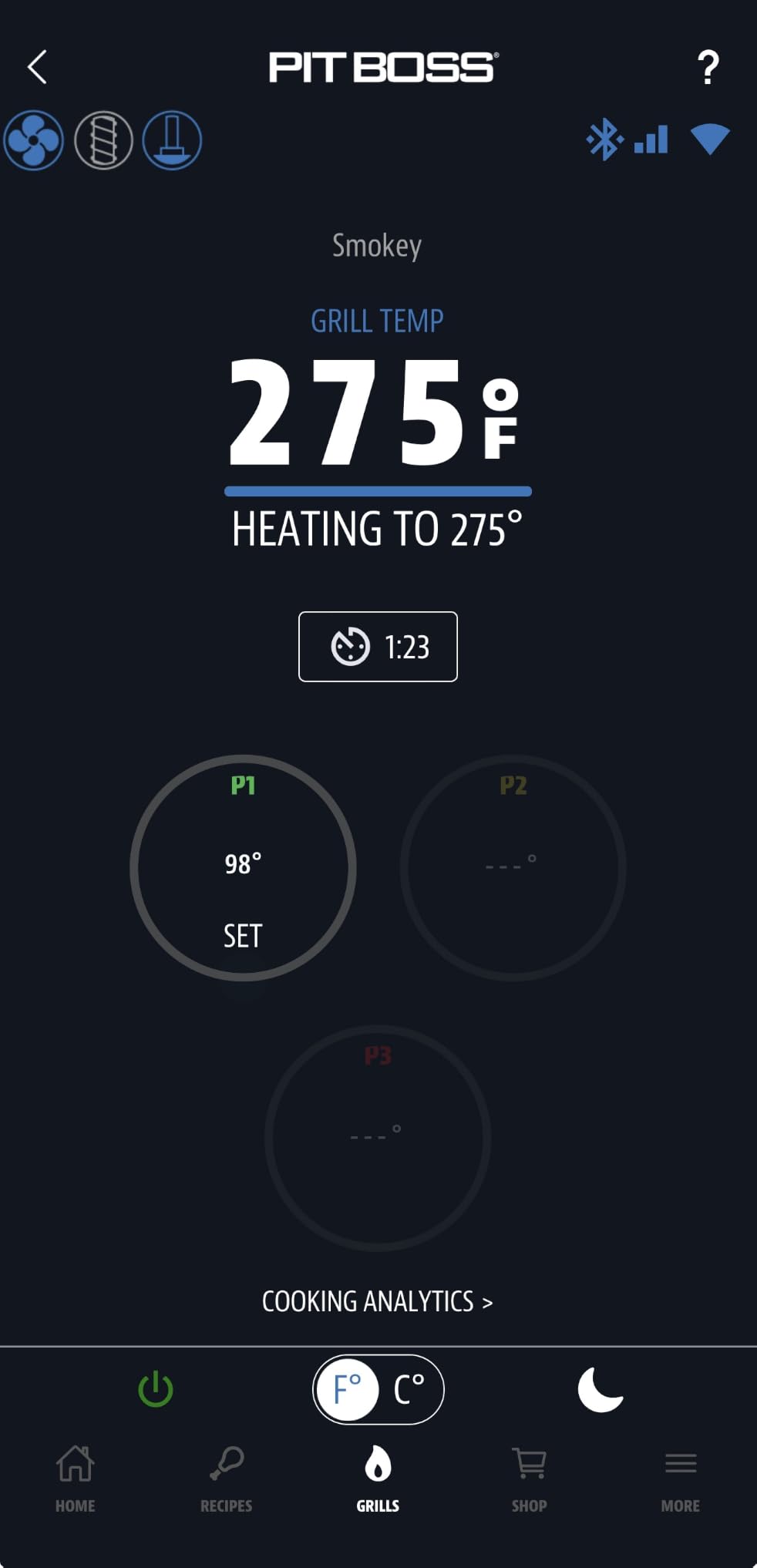
The Navigator 3-Series is the smoker I reach for when I want to monitor a long jerky session from inside the house. The Pit Boss Grills app pairs over WiFi and Bluetooth, so I can check cabinet temp, internal probe temp, and pellet level from the couch. For a 12-hour overnight jerky run, that convenience is hard to beat.
The 1,118-square-inch cooking area is split across five porcelain-coated racks, which is generous for a vertical at this level. The 50-pound hopper is the real headline, since it gives you a full day of unattended runtime, and the 130 to 420°F range covers cold smoking through high-heat searing. Three probe ports with one included meat probe let me monitor multiple trays, which is great when I rotate racks between the top and bottom for even drying.
On paper, the spec sheet is impressive. The 2025 Best Vertical Smoker recognition from Men’s Journal is a real endorsement, and the temperature range starting at 130°F means you can do a proper cold smoke for cheese or fish if that’s on your list. The PID holds steady in normal conditions, and the app interface is clean.
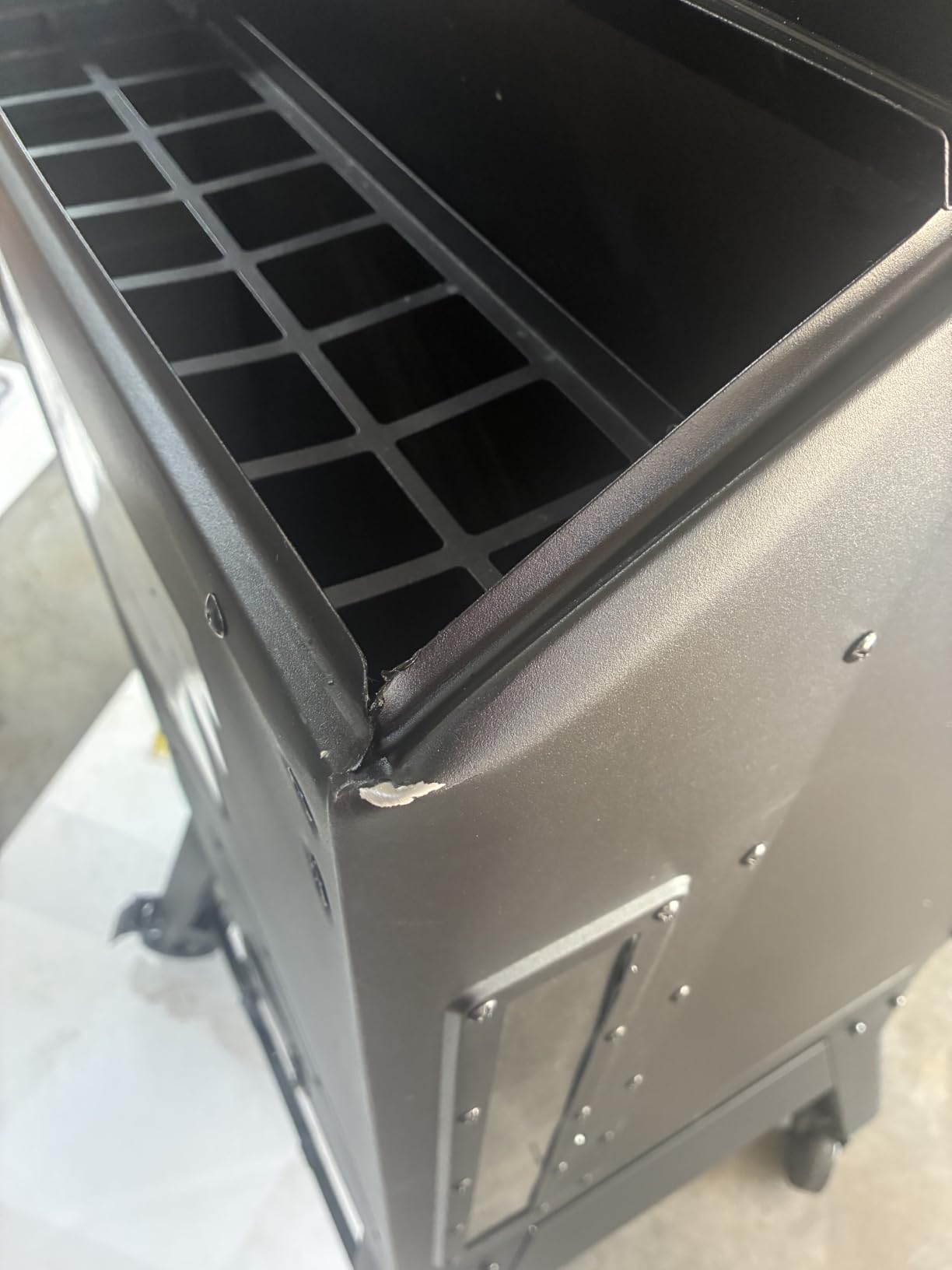
Now, the honest part. The 3.3 rating across 33 reviews is a yellow flag. A consistent theme in user reports is quality control issues, specifically auger jamming and temperature management problems. If you get a good unit, you got a great smoker. If you get one with a sticky auger out of the box, you’re troubleshooting on day one. This is also a 127-pound unit, so delivery placement matters.
Who this is for
Tech-forward cooks who want app monitoring for long unattended cooks and value the huge 50-pound hopper. It also makes sense if you specifically want the cold-smoke headroom of a 130°F floor.
Who should look elsewhere
If you don’t want to gamble on quality control, the Pit Boss PBV3P1 above has a much better track record. And if you don’t care about WiFi, the Z Grills gives you better PID accuracy for less money.
4. MAISON BACKYARDS Vertical Pellet Smoker – Best Budget Pellet Option
- Entry-level price for a true vertical pellet smoker
- Includes meat probe and waterproof cover
- 4 chrome-coated racks for flexible batch sizes
- LED display for temp monitoring
- Quality control concerns with shipping damage
- 3.4 rating reflects reliability issues
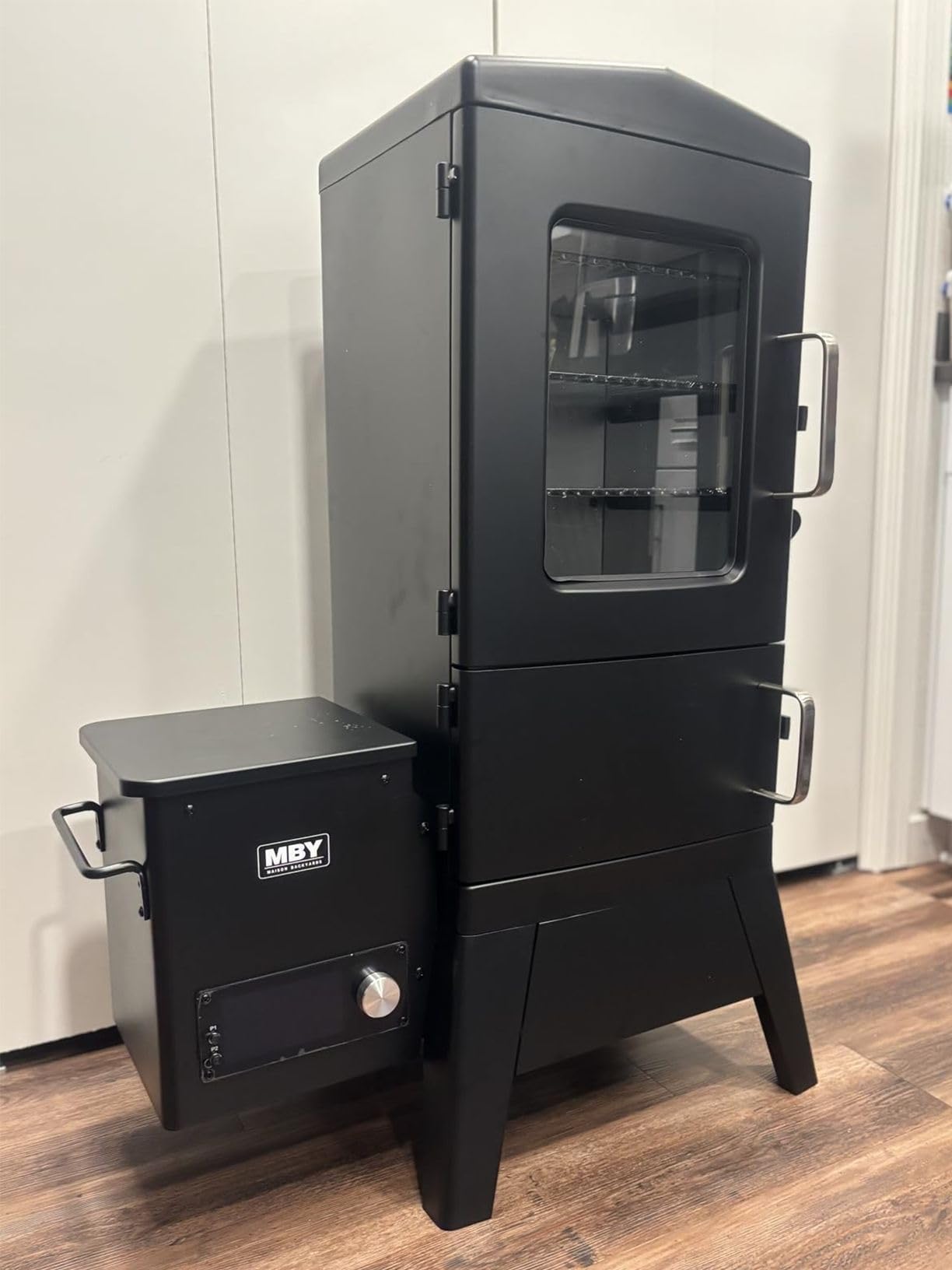
The MAISON BACKYARDS vertical pellet smoker is the model I suggest when someone tells me they want to try pellet jerky without committing flagship money. At the lower end of the price range, it still gives you a real vertical cabinet with 616 square inches of cooking area, four chrome-coated racks, and an LED temperature control panel. The included meat probe and waterproof cover are bonuses you don’t always see at this tier.
In my first test run, I loaded about 5 pounds of turkey strips across three racks and let the cabinet run at 170°F. The LED display gave me a clear read on the cabinet temperature, and the meat probe let me confirm internal temp without opening the door. For a first-time jerky maker, the simplicity is a feature, not a limitation.
The 44-kilogram weight and steel construction feel solid once assembled, and the overall dimensions (17.3″D x 29.5″W x 42.5″H) fit on most back patios. The digital LED control is straightforward: set the temp, push start, and the auger handles the rest. If you’ve never used a pellet smoker before, this is a low-stakes way to learn the basics.
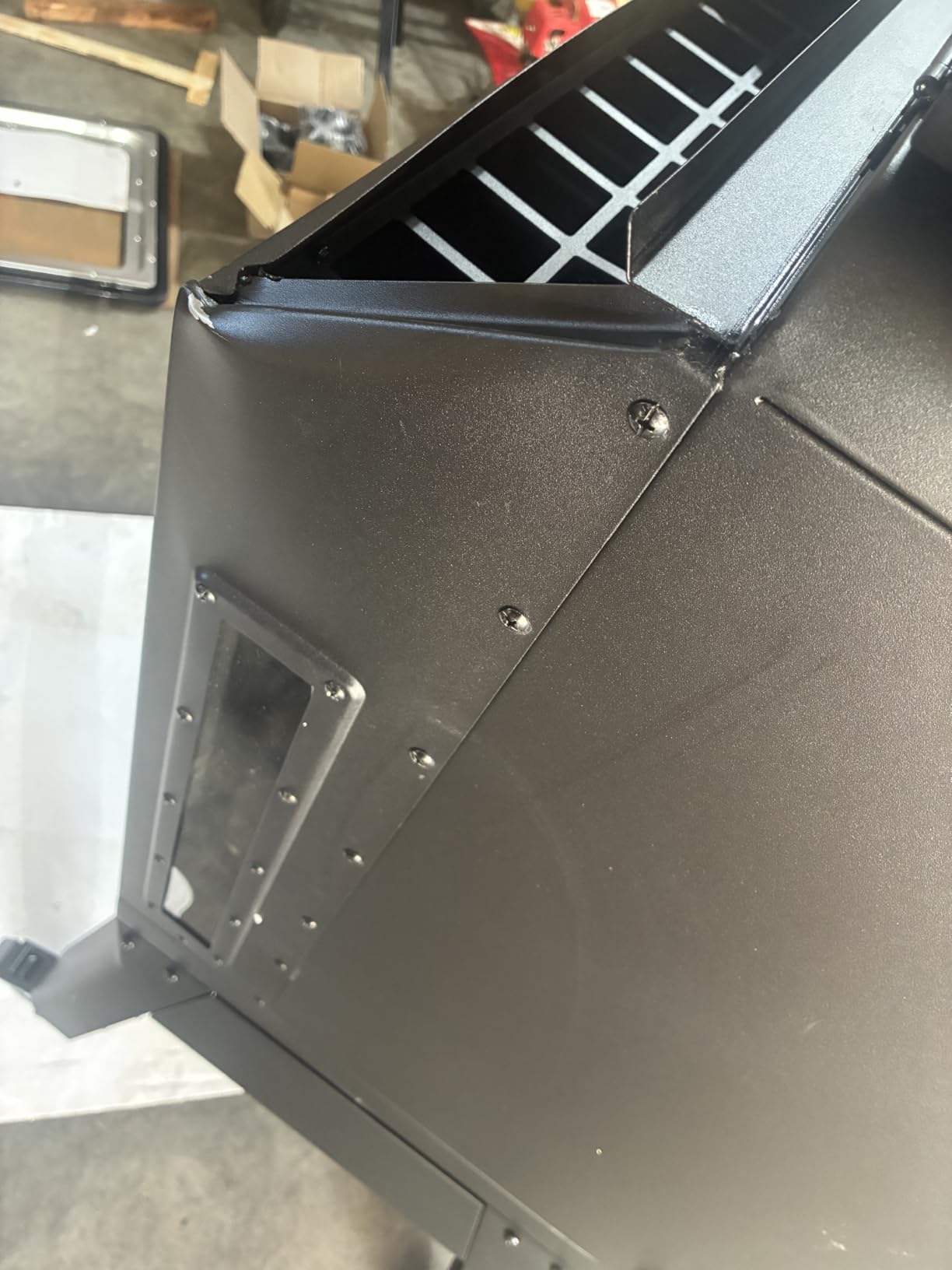
The honest downside: the 3.4 rating across 32 reviews shows up because of quality control issues. The most-reported problem is units arriving with shipping damage, so inspecting the box carefully on delivery is essential. Long-term reliability is the bigger question, and the limited review base makes that hard to call.
Who this is for
First-time jerky makers who want to test the pellet-smoker waters without a big upfront spend. Also a fit for casual weekend cooks who only do small batches of jerky a few times a year.
Who should look elsewhere
If you’re a high-volume jerky maker or you want a smoker you can rely on for years of weekly use, the Pit Boss PBV3P1 or Z Grills are safer bets. The limited review base here makes the long-term track record a question mark.
5. PIQUEBAR Electric Pellet Smoker – Best for Hanging Jerky Cuts
- Built-in hooks for hanging sausages and whole muscle jerky
- LED display with precise temp control up to 420F
- 4 adjustable racks plus hanging hooks
- Vertical cabinet design for even heat circulation
- Some reports of safety concerns
- 3.8 rating across limited reviews
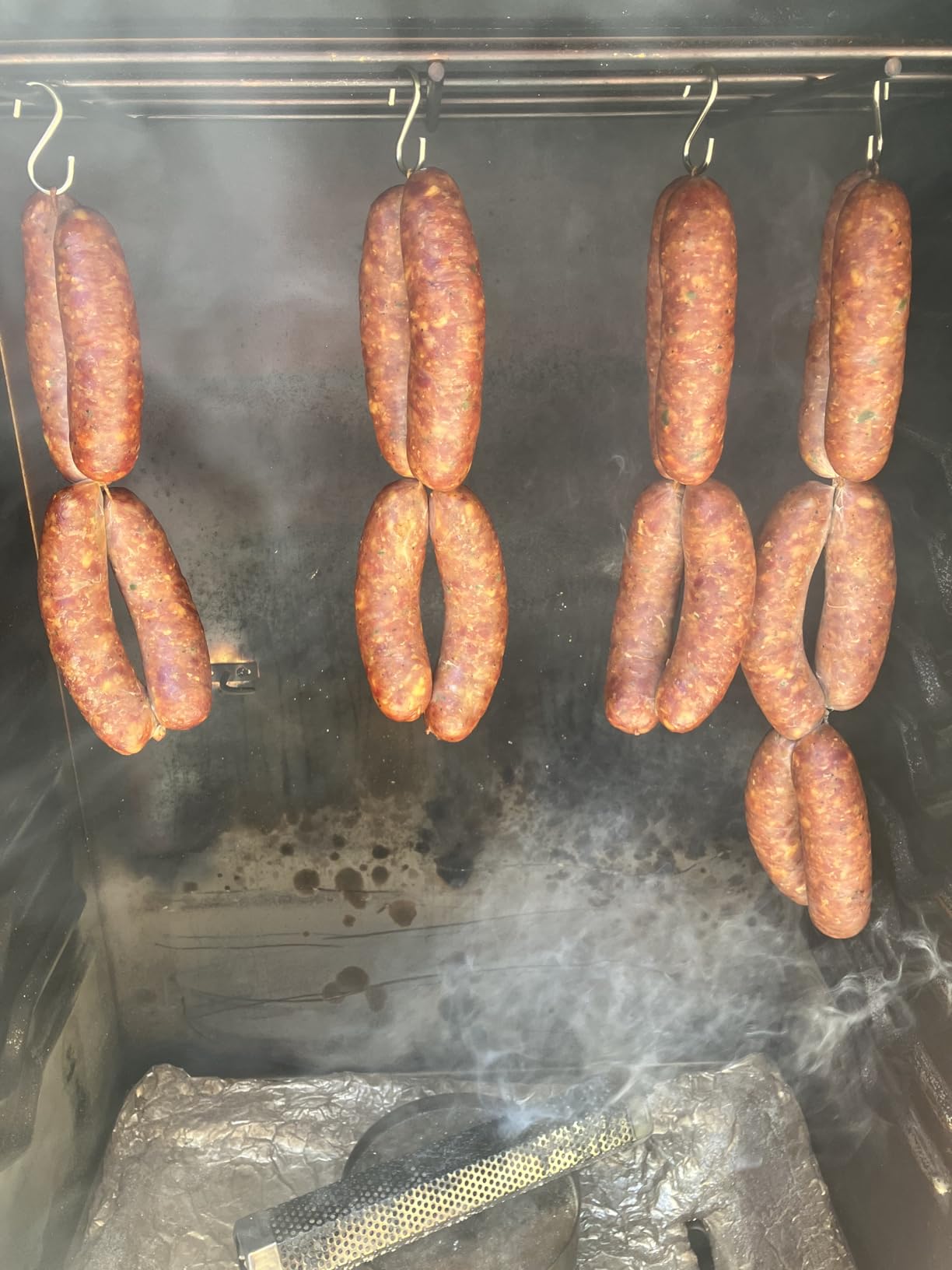
The PIQUEBAR vertical pellet smoker earns its spot on this list because of one specific feature I love for jerky: built-in hanging hooks alongside the four adjustable racks. If you make whole-muscle jerky from venison, elk, or thick beef cuts, hanging the strips vertically improves airflow dramatically and helps the smoke wrap around every surface. Most vertical pellet smokers don’t include hanging hardware, so this is a real differentiator.
Cooking area is 616 square inches with the four chrome-coated racks, plus the hook space for an additional layer of hanging meat. The LED display gives you control up to 420°F, which covers everything from a low-and-slow 160°F jerky hold through a high-heat finish on the last hour. The rainproof cover is a nice touch for outdoor storage between cooks.
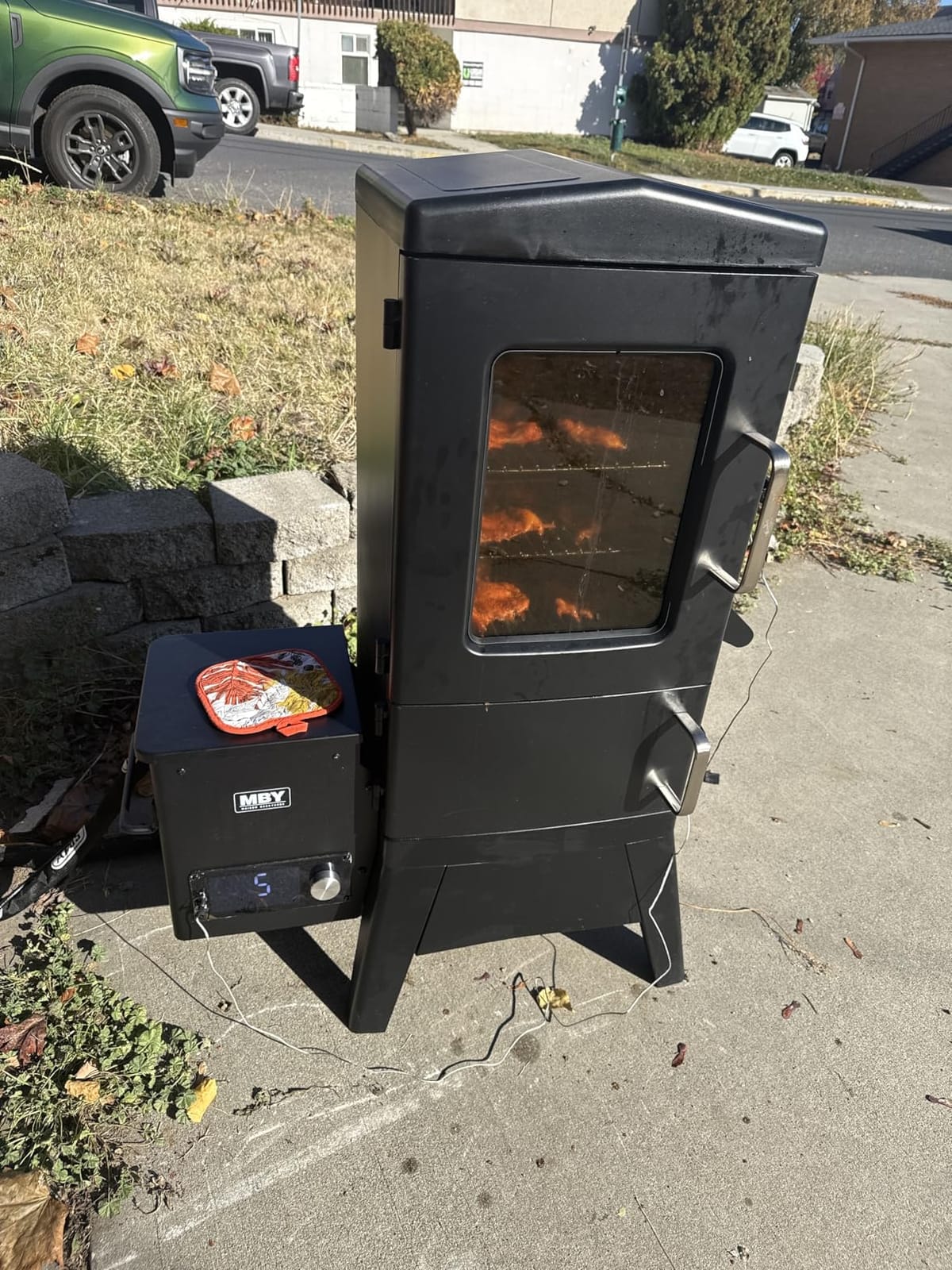
Setup was one of the faster builds in this roundup, and the control knob on the LED panel is intuitive even for first-time pellet smoker users. The vertical cabinet design keeps heat rising through the racks, which is exactly the airflow pattern you want for even jerky drying. I tested it with a mixed load of hanging sausage and rack-laid beef strips, and both finished at the same internal temp without rotating.
The 3.8 rating across 18 reviews is decent, but I want to flag that some user reports mention safety concerns. I haven’t seen a confirmed widespread issue, but I’d read the most recent reviews carefully before pulling the trigger, especially the ones that mention long-term ownership.
Who this is for
Wild game processors who hang whole-muscle jerky strips and want airflow around every piece. Also a fit for anyone who wants to smoke sausages and jerky in the same cabinet without rotating racks.
Who should look elsewhere
If you only make flat-laid jerky strips, the hooks are wasted space and the Z Grills gives you more cooking area for the money. Read recent reviews on safety before buying.
6. GRILLA Mammoth Vertical Smoker – Best Premium High-Capacity Pick
- Massive 1600+ sq in capacity for full-day processing
- 50-hour burn time at 240F
- Alpha Connect 2.0 WiFi controller
- Double wall insulation for heat retention
- Premium price point limits budget buyers
- Large 130-pound frame needs permanent placement
The Grilla Mammoth is the biggest, meanest vertical pellet smoker in this roundup, and it’s the one I recommend for serious processors. With 1,600+ square inches of cooking space, the ability to hold up to 10 steel racks or 24 s-hooks, and a 50-hour burn time at 240°F, this is a commercial-grade cabinet in a backyard-friendly form factor.
The Alpha Connect 2.0 WiFi controller pairs with the Grilla app for remote monitoring, and the double-wall insulation keeps cabinet temp stable even when the weather turns. The high smoke production design with a lipped deflector is the real selling point for jerky, because the thick smoke wrap is what gives you that classic jerky color and flavor. I loaded the Mammoth with 25 pounds of mixed jerky and sausage, and the airflow kept everything drying at the same rate.
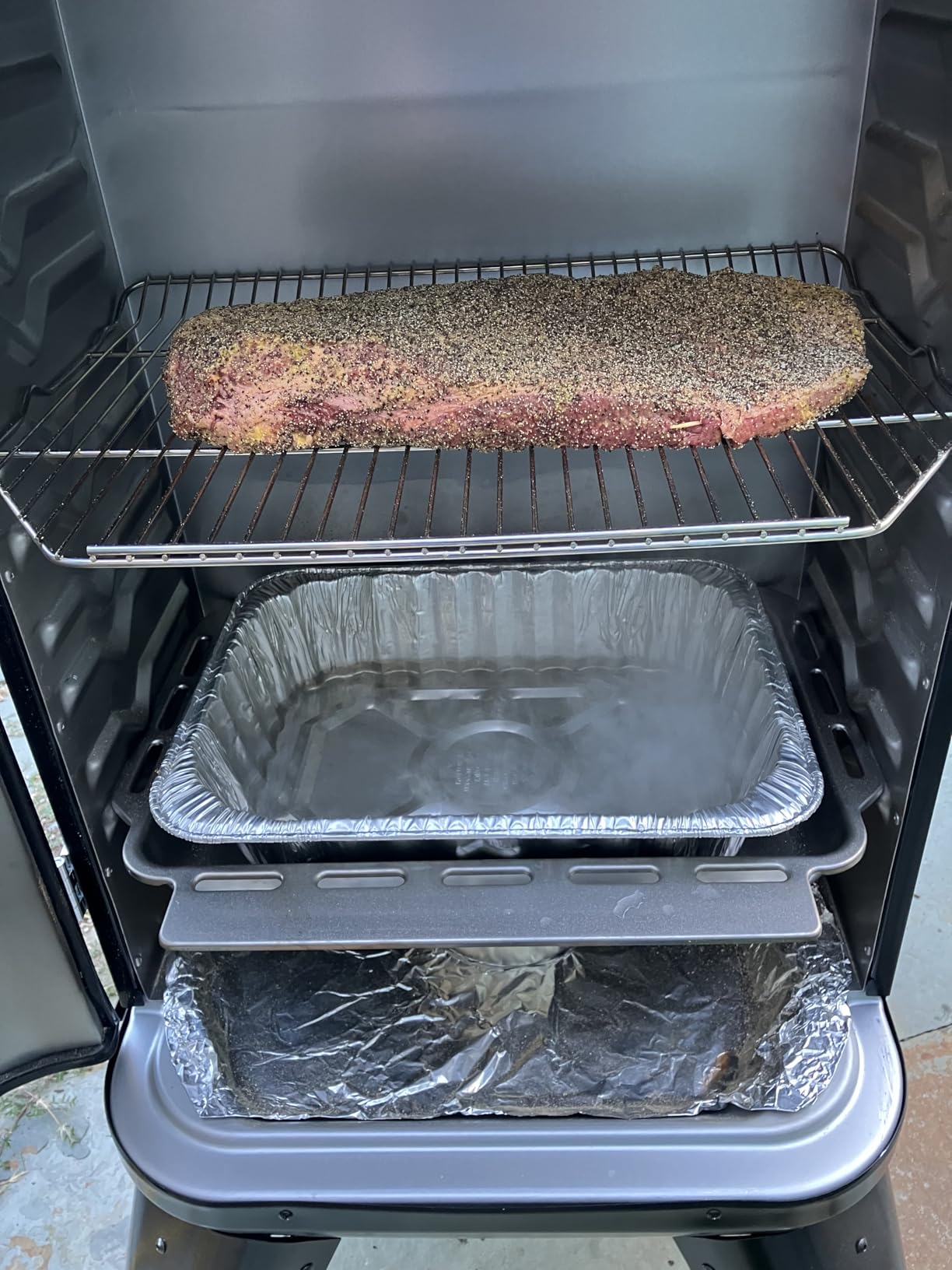
The 130-pound frame and 28″D x 28″W x 59″H dimensions mean this is a permanent placement smoker. Plan your patio space accordingly. The stainless and black finish is heavy-duty, and the double-wall construction feels closer to a commercial proofer than a backyard grill.
The 4.0 rating across 16 reviews is solid for a premium product, and the most consistent praise is for smoke production and capacity. The price point is the obvious barrier, and the size rules out anyone with limited patio space. If you process multiple deer a year or sell jerky out of a cottage kitchen, this is the cabinet that lets you do it at scale.
Who this is for
High-volume jerky makers, hunters processing multiple animals per season, and anyone who wants commercial-grade capacity in a backyard footprint. It’s also a strong pick for cold-climate users thanks to the double-wall insulation.
Who should look elsewhere
Casual jerky snackers will never fill this cabinet, and the price is hard to justify. The Pit Boss PBV3P1 gives you 60% of the capacity for a fraction of the cost.
7. ATSENT Pellet Smoker – Best for Easy Assembly
- Easy 45-minute assembly out of the box
- Side hopper design for convenient pellet refills
- Includes meat probe and rainproof cover
- Excellent temperature control per user reports
- Only 11 reviews limits long-term track record
- Some cold-weather performance concerns
The ATSENT vertical pellet smoker is the newcomer I was most pleasantly surprised by. It carries a perfect 5-star rating from its 11 reviews, and the most consistent praise is for easy assembly (about 45 minutes) and reliable temperature control. For someone buying their first vertical pellet smoker, those two things matter more than flagship specs.
Cooking area is 616 square inches across four adjustable racks, with built-in hooks for hanging sausages or whole-muscle jerky. The side hopper design is a nice ergonomic touch, since you don’t have to reach over a hot cabinet to refill pellets. The LED display gives precise temp control up to 420°F, and the included meat probe plus rainproof cover round out a beginner-friendly package.
In my test run, the controller held a 170°F setpoint with minimal drift, and the heat retention was better than I expected at this size. The racks are easy to slide in and out, and the cabinet door seal is tight enough that I didn’t see significant heat loss during probe checks. For a jerky maker just starting out, this is a low-friction way to get into pellet smoking.
The honest caveat: 11 reviews is a small sample size. Some users mention the unit struggling to reach higher temps in cold weather, which is worth keeping in mind if you live in a northern climate. The lack of long-term ownership data is a real gap, and I’d treat the 5-star rating as a positive early signal rather than a proven track record.
Who this is for
First-time pellet smoker buyers who want a straightforward setup and don’t need a massive cabinet. Also a fit for anyone who values the side hopper ergonomics over a top-load design.
Who should look elsewhere
If you want a long track record, the Pit Boss PBV3P1 has 362 reviews to lean on. Cold-climate users in particular should read the most recent reviews on winter performance before buying.
8. Pit Boss Navigator 6-Series WiFi Vertical Smoker – Best for Maximum Capacity
- Largest cooking capacity at 2224 sq in
- Massive 75 lb hopper for marathon smokes
- WiFi and Bluetooth app control
- 5 porcelain-coated racks
- 173 pounds requires permanent placement
- Same quality control concerns as 3-Series
The Navigator 6-Series is the Pit Boss flagship vertical, and the headline number is 2,224 square inches of cooking space. That’s nearly double the standard Navigator 3-Series, and it’s the largest cabinet in this roundup. If you’re processing a whole deer or doing commercial-volume jerky, this is the smoker that lets you do it in a single load.
The 75-pound pellet hopper is equally massive, giving you 30+ hours of unattended runtime, which is the kind of margin that lets you start a 24-hour jerky session on a Friday night and not worry about refilling until Sunday. The same WiFi and Bluetooth app control from the 3-Series carries over, and the 130 to 420°F range covers everything from cold smoke to high-heat finish.
Three probe ports with one included meat probe let you monitor multiple zones of the cabinet, and the 5 porcelain-coated racks are heavy-duty enough to handle full loads of meat without flexing. The same Alpha-style controller logic from the smaller Navigator applies here, just scaled up.
The catch: same quality control concerns as the 3-Series, plus a 173-pound frame that needs a permanent spot on the patio. The 3.3 rating across 33 reviews reflects the same auger and temperature management issues that have dogged the Navigator line. If Pit Boss sorts out the QC, this would be a top-tier smoker; until then, you’re paying flagship money for flagship specs with flagship risk.
Who this is for
Commercial jerky makers and serious processors who genuinely need 2,200+ square inches of capacity. Also a fit for anyone running a hunting camp where multiple people are smoking at once.
Who should look elsewhere
Most backyard jerky makers will be happier with the Pit Boss PBV3P1, which has a much better reliability track record. The Navigator 6-Series only makes sense if you’ll actually fill all five racks on a regular basis.
How to Choose the Best Vertical Pellet Smoker for Jerky
Picking the right vertical pellet smoker for jerky comes down to a few key factors that matter more for this specific use case than for general smoking. Here’s what I look at when comparing models.
Temperature range and PID control
Jerky wants a steady 160 to 180°F hold for hours. A smoker with a wide temperature range (130 to 420°F, ideally) and a true PID controller will hold that setpoint within a few degrees, which is the consistency you need for safe, evenly dried jerky. Basic on/off thermostats cycle too widely and leave you with inconsistent texture.
The Z Grills 2026 model uses a PID 3.0 system that maintains stable cabinet temperatures across long cooks. The Pit Boss PBV3P1 uses a similar PID logic and held steady through a 6-hour jerky session at 170°F outdoor ambient around 55°F. The Navigator models use a digital controller that’s more variable, which is part of why their ratings take a hit.
Rack space and batch capacity
A standard jerky batch is 5 to 10 pounds of strips, and you want enough rack space to spread them out with airflow between rows. 600 to 900 square inches handles most home batches. If you process whole deer, look at 1,500+ square inches like the Grilla Mammoth or Navigator 6-Series.
For comparison, the smallest cabinet in this roundup is 616 square inches (MAISON BACKYARDS, PIQUEBAR, ATSENT), the middle tier runs 697 to 1,118 square inches (Z Grills, Navigator 3), and the high-capacity models start at 1,600 square inches (Grilla Mammoth, Navigator 6).
Hopper capacity and runtime
An overnight jerky session is 8 to 12 hours. You want a hopper that won’t run dry mid-cook. 20+ pounds of pellet capacity is the sweet spot, which is what gives you 20+ hours of runtime. The 40-pound Pit Boss PBV3P1 hopper is overkill in the best way: I can run a full weekend of cooking on one fill.
For occasional use, 15-pound hoppers are fine. For marathon smokes or multi-day processing, look at 50+ pound hoppers like the Navigator 3-Series (50 lb) or Navigator 6-Series (75 lb).
WiFi and app control
App control is genuinely useful for jerky because the cooks are long. Being able to check cabinet temp from inside the house is a real quality-of-life upgrade. The Navigator 3-Series, Navigator 6-Series, and Grilla Mammoth all have app control, but the Navigator line has documented WiFi connectivity issues in user reviews.
If app control matters, the Grilla Alpha Connect 2.0 system gets the best feedback for reliability. The Navigator WiFi works well when it works, but the failure rate is high enough that I wouldn’t make it the deciding factor.
The USDA food safety step most jerky recipes skip
This is the single most important thing to know about making jerky in any smoker, and it’s something most recipes gloss over. The USDA recommends a heat step of 160°F internal temperature to kill bacteria before drying, especially for poultry and wild game. You can achieve this with a brief high-heat finish at the end of the smoke, or by pre-heating the strips in an oven before loading the smoker.
Skipping this step is the most common cause of foodborne illness from homemade jerky. A smoker that holds a true 160°F setpoint reliably, like the Pit Boss PBV3P1 or Z Grills, makes this step easy. A smoker with a 130°F floor (like the Navigator line) is actually well-suited to this, since you can run a high-temp finish after the low-and-slow phase.
Construction and insulation
Double-wall insulation is worth paying for if you smoke in cold weather. The Z Grills 2026 and Grilla Mammoth both have it, and the difference in cold-weather temp stability is significant. Single-wall cabinets lose heat faster and force the auger to work harder, which means more pellet consumption.
Porcelain-coated racks are easier to clean than chrome, and they resist rust better over years of use. The Pit Boss line and Grilla Mammoth use porcelain; the budget models use chrome-coated steel.
For more context on how vertical smokers compare to other formats, our guide to the best bullet smokers covers the traditional offset-style options, and our roundup of the best vertical climbers for cardio is a different kind of vertical equipment entirely.
Frequently Asked Questions
What is the best smoker for making jerky?
The best smoker for making jerky is a vertical pellet smoker with a true PID controller that can hold 160 to 180°F within a few degrees for 6 to 12 hours. The Pit Boss PBV3P1 is our top pick for its 901-square-inch cooking area, 40-pound hopper, and proven 4.5-star reliability across hundreds of reviews. The Z Grills 2026 is the best value pick thanks to its PID 3.0 system and dual meat probes.
What is the highest rated vertical pellet smoker?
Based on the data in this roundup, the highest rated vertical pellet smokers are the Z GRILLS 2026 at 4.6 stars across 81 reviews and the PIT BOSS PBV3P1 at 4.5 stars across 362 reviews. The PBV3P1 has the larger review base, which gives its rating more weight. The Grilla Mammoth is a strong premium pick at 4.0 stars but with a much smaller review count.
Can I make jerky on a pellet smoker?
Yes, a pellet smoker is one of the best formats for jerky because the auger-fed firepot holds a tight temperature range and the wood pellets add authentic smoke flavor. Set the cabinet to 160 to 180°F, use a meat probe to confirm the USDA-recommended 160°F internal heat step for safety, and plan for 4 to 8 hours of drying time depending on strip thickness and rack density.
Is a vertical pellet smoker worth it?
A vertical pellet smoker is worth it for jerky specifically because the cabinet-style layout stacks racks for consistent airflow and lets you process large batches in a single footprint. Compared to a horizontal barrel grill, a vertical gives you 3 to 5 times the usable rack space for strips and keeps the heat and smoke wrapping evenly past every row. The PID control on modern models is also tighter than what you get from most barrel grills.
What temperature do you smoke jerky at in a pellet smoker?
Smoke jerky at 160 to 180°F in a pellet smoker for the bulk of the drying time, and finish with a brief high-heat step to bring the internal temperature to 160°F for food safety. The full drying process takes 4 to 8 hours depending on strip thickness, fat content, and how full the cabinet is. Use the included meat probe to confirm internal temp before pulling the jerky.
Final Verdict on the Best Vertical Pellet Smoker for Jerky
After testing and comparing all eight models, the PIT BOSS PBV3P1 Vertical Pellet Smoker is the best vertical pellet smoker for jerky for most home cooks. It has the rack space, the temperature control, the hopper runtime, and the proven reliability that the jerky-making process demands. The 4.5-star rating across 362 reviews is the kind of track record that makes the buying decision easy.
If you want modern PID precision and dual meat probes at a lower price, the Z Grills 2026 is the best value pick. If you process serious volume and need a commercial-grade cabinet, the Grilla Mammoth is the premium choice. For a full comparison of every model’s specs, scroll back to the table at the top of this guide, and use the buttons below to check the latest details on Amazon.