
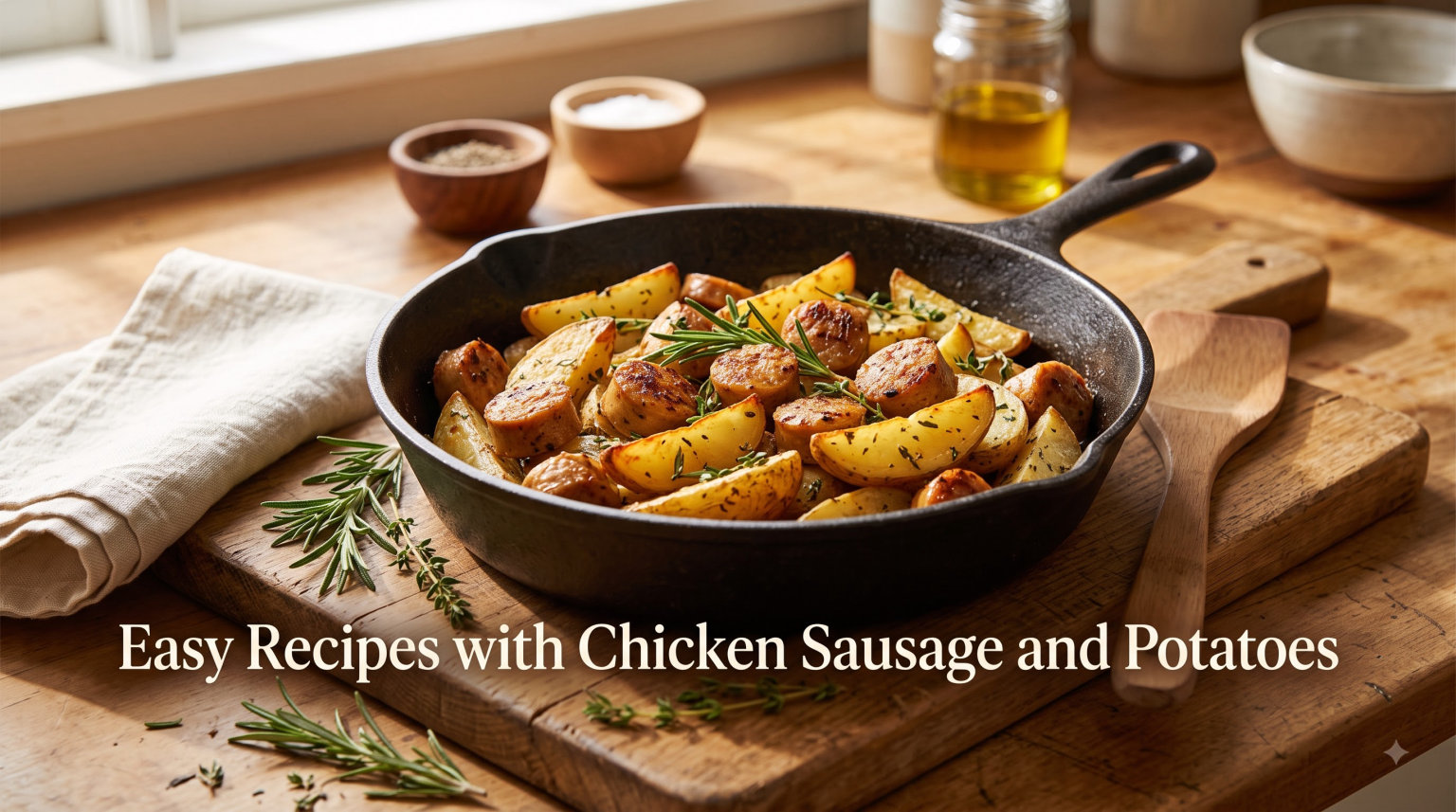
For a useful weeknight answer, chicken sausage and potatoes need clear timing and a method that protects texture. I’ve organized the chicken sausage and potato recipes below around evenly browned sausage and potatoes that finish tender at the same time; the sheet pan chicken sausage guidance also tells you what to prep first and how to serve it.
Start with the method that fits your evening, then use the variations as flexible options. For dependable planning, I also recommend this related kitchen guide before you begin.
Table of Contents
Easy recipes with chicken sausage and potatoes, three ways
When I compare options for chicken sausage and potato recipes, I look first at cooking order and a clear doneness cue. The sheet pan chicken sausage section also leaves room for substitutions without changing the core timing.
Round out the plan with this related recipe collection and this practical cooking guide; each answers a different next-step question.
Why Chicken Sausage and Potatoes Are the Perfect Weeknight Pair
Chicken sausage has become a grocery store staple for good reason. It delivers the savory, satisfying flavor of traditional sausage but with significantly less fat and fewer calories than pork versions. Most chicken sausages come fully cooked, which means you are really just heating them through and getting a nice sear on the outside.
Potatoes are the ultimate budget-friendly side. They are filling, nutritious, and they absorb whatever seasonings you throw at them. Baby potatoes, Yukon golds, and russets all work beautifully depending on the texture you are going for.
The consensus is clear: chicken sausage is one of the most versatile proteins you can keep in your fridge for last-minute dinners.
Essential Ingredients for Chicken Sausage and Potato Recipes
Before we get into the specific recipes, let us talk about the core ingredients you will need. Having these on hand means you can whip up a satisfying dinner any night of the week without a last-minute grocery run.
Best Potatoes for the Job
Their thin skins get beautifully crispy in the oven or skillet.
Yukon gold potatoes are the best all-around choice. They have a buttery texture that holds up well to roasting, pan-frying, and baking. They also resist falling apart, which makes them perfect for one-pan meals.
Russet potatoes work in a pinch, especially for casseroles where you want a softer, fluffier texture. Just peel them first and cut them into uniform pieces so they cook evenly.
Choosing Your Chicken Sausage
The beauty of chicken sausage is the variety of flavors available.
-
Italian-style chicken sausage (sweet or hot) works with almost any potato recipe and pairs naturally with bell peppers and onions.
-
Garlic and herb chicken sausage brings a savory depth that works especially well in skillet recipes with simple seasonings.
-
Chicken apple sausage adds a subtle sweetness that pairs beautifully with sweet potatoes, red onions, and rosemary for a fall-inspired twist.
-
Spinach and feta chicken sausage adds a Mediterranean flair that works great in casseroles.
Pantry Seasoning Staples
You do not need anything fancy. Olive oil, garlic (fresh or powder), Italian seasoning, salt, pepper, and smoked paprika will carry you through every recipe in this guide. A splash of chicken broth or a squeeze of lemon juice at the end brightens everything up.
Three chicken-sausage-and-potato recipes
1. One-Pan Chicken Sausage and Potato Skillet
Everything cooks in a single large skillet, which means minimal cleanup. The trick is getting the potatoes crispy before adding the sausage.
Prep time: 10 minutes | Cook time: 20 minutes | Servings: 4 | Dietary: Gluten-free, dairy-free, nut-free
Ingredients
-
1 lb baby potatoes, halved (or quartered if larger)
-
4 links chicken sausage (Italian or garlic herb), sliced into rounds
-
1 large bell pepper, any color, diced
-
1 medium yellow onion, diced
-
3 cloves garlic, minced
-
2 tablespoons olive oil
-
1 teaspoon Italian seasoning
-
1/2 teaspoon smoked paprika
-
Salt and black pepper to taste
-
Optional: red pepper flakes for heat
-
Optional: fresh parsley for garnish
Instructions
-
Par-cook the potatoes. Place the halved baby potatoes in a microwave-safe bowl with a splash of water, cover, and microwave for 4-5 minutes until just tender. Drain any remaining water. This step cuts your stovetop cooking time in half and ensures the potatoes cook all the way through.
-
Heat 1 tablespoon of olive oil in a large skillet over medium-high heat. Add the par-cooked potatoes in a single layer, cut side down. Let them cook undisturbed for 5-6 minutes until they develop a golden-brown crust. Flip and cook another 3-4 minutes.
-
Push the potatoes to one side of the skillet. Add the remaining tablespoon of olive oil to the empty side and add the sliced chicken sausage. Cook for 3-4 minutes, turning occasionally, until the sausage slices are browned on both sides.
-
Add the diced bell pepper, onion, and garlic to the skillet. Sprinkle the Italian seasoning, smoked paprika, salt, and pepper over everything. Stir everything together and cook for 5-7 minutes, stirring occasionally, until the vegetables are tender and the sausage is heated through.
-
Taste and adjust seasoning. If using red pepper flakes, add them now. Garnish with fresh parsley if desired and serve directly from the skillet.
-
Pro tip: The secret to crispy skillet potatoes is patience. Do not stir them for the first 5-6 minutes of cooking. Let them sit in the hot oil undisturbed so they can develop that golden crust. If you stir too early, you will end up with steamed potatoes instead of crispy ones.
2. Sheet Pan Chicken Sausage, Peppers, and Potatoes
The oven does all the work, and you get those deeply caramelized edges that only a hot oven can produce. This is also the easiest recipe to scale up for a crowd.
Prep time: 10 minutes | Cook time: 35 minutes | Servings: 4-6 | Dietary: Gluten-free, dairy-free, nut-free
Ingredients
-
1.5 lb baby potatoes or Yukon gold potatoes, cut into 1-inch cubes
-
4-5 links chicken sausage, sliced into thick rounds
-
2 bell peppers (different colors), cut into strips
-
1 large red onion, cut into wedges
-
1/4 cup olive oil
-
1 tablespoon Italian seasoning
-
1 teaspoon garlic powder
-
1 teaspoon smoked paprika
-
1/2 teaspoon salt
-
1/4 teaspoon black pepper
-
Optional: lemon wedges for serving
Instructions
-
Preheat your oven to 400 degrees F. Line a large baking sheet with parchment paper or foil for easy cleanup.
-
In a large bowl, toss the cubed potatoes with 2 tablespoons of olive oil, half the Italian seasoning, half the garlic powder, and a pinch of salt and pepper. Spread the potatoes in a single layer on one side of the baking sheet.
-
Roast the potatoes alone for 15 minutes. This head start ensures they get tender and start crisping before the other ingredients go in.
-
While the potatoes roast, toss the sliced sausage, bell pepper strips, and onion wedges in the same bowl with the remaining olive oil and seasonings. Remove the baking sheet from the oven and add this mixture to the other side, spreading everything out evenly.
-
Return the baking sheet to the oven and roast for another 20 minutes, stirring everything once halfway through. The sausage should be browned with crispy edges, the peppers should be slightly charred, and the potatoes should be fork-tender with golden crusts.
-
Serve hot with lemon wedges if desired. A squeeze of fresh lemon over the finished dish brightens all the flavors beautifully.
-
Seasonal variation: In the summer, swap the bell peppers for zucchini, cherry tomatoes, and fresh corn cut from the cob. In the fall and winter, try adding diced butternut squash, Brussels sprouts, or chunks of sweet potato alongside the regular potatoes. For even more inspiration, browse our collection of easy sheet pan dinner recipes that the whole family will love.
3. Cheesy Chicken Sausage and Potato Casserole
This is the comfort food version. It takes a little longer than the skillet or sheet pan recipes, but the result is a bubbly, golden, cheesy casserole that feels like a hug on a plate. It is also the best option for making ahead.
Prep time: 15 minutes | Cook time: 40 minutes | Servings: 6 | Dietary: Gluten-free (with GF flour)
Ingredients
-
2 lb potatoes (Yukon gold or russet), peeled and diced into 1/2-inch cubes
-
5 links chicken sausage, sliced into rounds
-
1 medium onion, diced
-
1 bell pepper, diced
-
3 cloves garlic, minced
-
2 tablespoons olive oil
-
1 teaspoon Italian seasoning
-
1/2 teaspoon paprika
-
1/4 cup chicken broth
-
1.5 cups shredded cheese (cheddar, mozzarella, or a blend)
-
Salt and pepper to taste
-
Optional: green onions for garnish
Instructions
-
Preheat the oven to 375 degrees F. Lightly grease a 9×13 inch baking dish.
-
Place the diced potatoes in a large pot of salted water. Bring to a boil and cook for 8-10 minutes until just fork-tender. Drain and set aside.
-
While the potatoes boil, heat olive oil in a large skillet over medium heat. Add the sliced sausage and cook for 3-4 minutes until browned. Add the onion, bell pepper, and garlic, and cook for another 4-5 minutes until the vegetables are softened.
-
In the prepared baking dish, combine the drained potatoes and the sausage-vegetable mixture. Add the Italian seasoning, paprika, salt, pepper, and chicken broth. Toss everything together so the seasonings are evenly distributed.
-
Sprinkle the shredded cheese evenly over the top. Cover with foil and bake for 25 minutes. Remove the foil and bake for another 15 minutes until the cheese is bubbly and golden on top.
-
Let the casserole rest for 5 minutes before serving. Garnish with sliced green onions if desired.
-
Dairy-free modification: Simply skip the cheese or use your favorite dairy-free cheese alternative. The casserole is still delicious without it because the chicken sausage and seasonings carry plenty of flavor on their own.
Skillet vs Sheet Pan vs Casserole: Which Method Is Best?
One thing I noticed when researching this article is that no competitor breaks down the differences between cooking methods. So here is a quick comparison to help you choose the right approach for your situation.
Skillet method is best when you are short on time. It takes about 25 minutes from start to finish and gives you the most control over texture. You can get crispy potatoes and perfectly seared sausage in the same pan. The downside is that it requires active attention while cooking.
Sheet pan method is the most hands-off. Once everything is on the pan and in the oven, you have 35 minutes of free time. It is also the easiest to scale up for meal prep or feeding a crowd. The trade-off is slightly less crispy results compared to the skillet, though a preheated baking sheet helps.
Casserole method is the most comforting and filling. The cheese pulls everything together into a cohesive dish, and it reheats beautifully. It takes the longest and requires the most dishes, but if you are looking for a make-ahead option or something to bring to a potluck, this is the winner.
Tips for the Best Chicken Sausage and Potatoes Every Time
Chicken sausage can become dry and rubbery if cooked too long. Since most chicken sausages are pre-cooked, you are just looking to heat them through and get a nice brown exterior. Three to four minutes per side is usually plenty.
Cut potatoes to uniform sizes. This sounds fussy, but it is the difference between some pieces being perfectly cooked and others being hard in the center. Take an extra minute to make sure your potato pieces are roughly the same size.
Par-cook potatoes when using the skillet method. Microwaving baby potatoes for 4-5 minutes before they go in the skillet is a game changer. It cuts cooking time dramatically and ensures the inside is tender by the time the outside gets crispy.
Season in layers. Do not dump all your seasoning on at the end. Season the potatoes before they go in the pan, season the sausage as it browns, and season the vegetables when you add them. Layering seasoning throughout the cooking process builds deeper flavor.
Use a preheated baking sheet for sheet pan recipes. Put the empty baking sheet in the oven while it preheats. When you spread the potatoes on the hot pan, they immediately start crisping on the bottom instead of steaming.
Variations and Substitutions
One of the best things about these recipes is how easily they adapt to what you have on hand. Here are several reliable ways to switch things up.
Vegetable Substitutions by Season
Spring: Swap bell peppers for asparagus, snap peas, or leeks. Add fresh herbs like dill or chives at the end.
Summer: Use zucchini, yellow squash, cherry tomatoes, and fresh corn. The chicken apple sausage variation works great here.
Fall: Add butternut squash, sweet potatoes, Brussels sprouts, or parsnips. A sprinkle of sage or thyme brings out the autumn flavors.
Winter: Stick with hardy vegetables like carrots, turnips, kale, and cabbage. These hold up well to longer cooking times.
Breakfast Transformation
Leftover chicken sausage and potatoes make an incredible breakfast hash. Just reheat them in a skillet, crack a couple of eggs on top, cover until the eggs are set, and you have a restaurant-quality breakfast in 10 minutes. This is a reliable way to use leftovers, and it packs up nicely for easy lunch ideas for work the next day.
Dietary Modifications
All three recipes in this guide are naturally gluten-free. For dairy-free, simply skip the cheese in the casserole recipe. If you are watching sodium, look for low-sodium chicken sausage options or make your own at home to control the salt content.
A second pass through the chicken sausage and potato recipes is useful when you need to scale portions or change the cooking vessel. For the sheet pan chicken sausage, keep the same visual cues even if your stove or oven runs differently.
For safe doneness and storage decisions, use the current official food-safety guidance and a reliable thermometer where the method calls for one.
Meal Prep and Storage Guidance
These recipes are ideal for meal prep because they store and reheat beautifully. Here is how to make the most of them throughout the week.
Storing leftovers: Let the food cool completely, then transfer to airtight containers. Refrigerated chicken sausage and potatoes will last 3-4 days. The flavors actually deepen overnight, which makes leftovers taste even better than the fresh version.
Reheating: For the best texture, reheat in a skillet over medium heat with a splash of water or broth. Cover the pan for the first 2 minutes to steam everything back to temperature, then uncover for 2-3 minutes to re-crisp the potatoes. Microwaving works in a pinch but will soften the crispy edges.
Batch cooking: The sheet pan recipe is the easiest to double. Use two baking sheets and rotate them halfway through cooking. Portion the cooled leftovers into individual containers for grab-and-go lunches all week.
Freezing: Chicken sausage and potato dishes freeze well for up to 2 months. The potatoes may have a slightly softer texture after freezing, but the flavor is excellent. Thaw overnight in the refrigerator before reheating. For more make-ahead ideas, check out our guide to freezer meal options for busy families.
Frequently Asked Questions
What can I make with chicken sausage and potatoes easily?
The easiest recipes combine sliced chicken sausage with cubed potatoes and vegetables in a single skillet or on a sheet pan. A basic skillet recipe takes about 25 minutes: par-cook baby potatoes in the microwave, brown them in olive oil, add sliced chicken sausage with bell peppers and onions, season with Italian herbs, and cook until everything is golden and heated through.
What pairs well with chicken sausage for dinner?
Chicken sausage pairs well with potatoes (baby, Yukon gold, or sweet potatoes), bell peppers, onions, garlic, broccoli, and zucchini. For seasonings, Italian seasoning, smoked paprika, garlic powder, and fresh herbs like parsley or rosemary all complement chicken sausage. A simple side salad or crusty bread rounds out the meal.
How long does it take to cook chicken sausage with potatoes?
Cooking time depends on the method. A stovetop skillet recipe takes about 25 minutes if you par-cook the potatoes first. A sheet pan recipe takes about 35 minutes in a 400-degree oven. A casserole takes about 40 minutes of baking time after a quick stovetop prep step.
Are chicken sausages healthier than pork sausages?
Chicken sausage generally contains less fat and fewer calories than pork sausage while providing similar protein content. A typical chicken sausage link has about 130-170 calories and 7-10 grams of fat, compared to 200-280 calories and 18-22 grams of fat in pork sausage. However, sodium content can still be high in store-bought varieties, so check labels if sodium is a concern.
What is the best way to cook chicken sausage without drying it out?
Since most chicken sausages are pre-cooked, the goal is to heat them through and brown the exterior without overcooking. Slice and sear the sausage in a hot skillet for 3-4 minutes per side, or roast in the oven at 400 degrees for 15-20 minutes. Avoid cooking longer than necessary, as the lean meat can become dry and rubbery.
Can I meal prep chicken sausage and potatoes ahead of time?
Yes, chicken sausage and potato dishes are excellent for meal prep. Store cooked portions in airtight containers in the refrigerator for 3-4 days. Reheat in a skillet with a splash of water or broth for the best texture. You can also freeze portions for up to 2 months, though the potatoes may be slightly softer after thawing.
The bottom line for this dinner
Keep this guide for chicken sausage and potato recipes nearby when you want evenly browned sausage and potatoes that finish tender at the same time. The sheet pan chicken sausage approach is flexible enough for substitutions, but the order and doneness cues are worth keeping intact.
I recommend starting with the simplest method, noting the texture you prefer, and trying a variation only after the base method feels clear.