
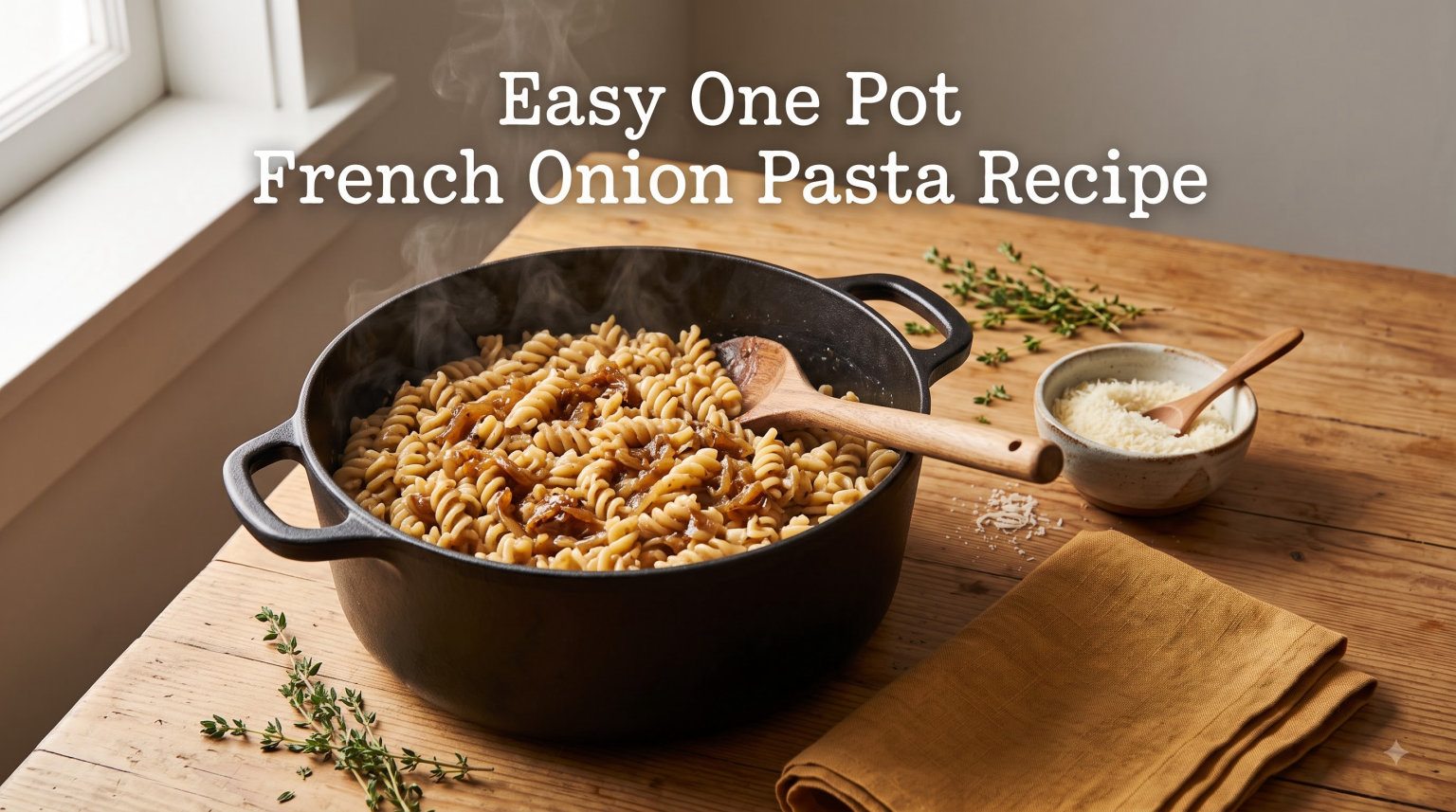
For a dinner I can plan with confidence, I use one pot French onion pasta recipe. Slow-caramelized onions, broth, pasta, thyme, and Gruyère translate French onion soup flavor into a creamy one-pot dinner.
I have also included caramelized onion pasta guidance for the exact moments that decide the result, from prep and doneness to storage. For another practical dinner, browse these one-pot pasta recipes.
Table of Contents
Before making Easy one pot French onion pasta recipe
Why You’ll Love This Easy One Pot French Onion Pasta Recipe
The magic of this dish comes down to one simple technique: caramelizing onions low and slow until they turn into something almost candy-like. That deep, jammy sweetness is what makes French onion soup so legendary, and when you fold it into pasta with a splash of cream and a generous handful of Gruyere, the result is genuinely restaurant-quality.
I love this recipe because it feels fancy enough for a dinner party but easy enough for a random Tuesday night. The ingredient list is short, the technique is forgiving, and the cleanup is basically nothing. It is the kind of comfort food that makes a cold evening feel instantly cozier.
Another reason this one wins is versatility. You can keep it vegetarian with mushroom broth, skip the wine entirely if you are cooking for kids, or dress it up with crispy prosciutto and burrata when you want to show off. I will walk you through all of those options below so you can make it exactly the way your family likes it.
Ingredients You’ll Need
For dependable one pot French onion pasta recipe, give the onions enough low heat to turn deep amber, then add liquid gradually as the pasta releases starch. The same rule keeps caramelized onion pasta focused and balanced instead of burnt onions or pasta swimming in broth. You may also want to save these pasta side dishes for your next meal plan.
Here is everything you need to make this French onion pasta. I have included a few substitution notes in parentheses so you can adapt it to what you already have in your kitchen.
For the onions:
-
3 large yellow onions (about 1.5 pounds), thinly sliced
-
2 tablespoons unsalted butter
-
1 tablespoon olive oil
-
1 teaspoon kosher salt
-
1/2 teaspoon sugar (helps the caramelization along)
For the pasta and sauce:
-
2 cloves garlic, minced
-
1 teaspoon fresh thyme leaves (or 1/2 teaspoon dried thyme)
-
1/2 cup dry white wine, such as Sauvignon Blanc or Pinot Grigio (see substitutions below for a wine-free version)
-
4 cups beef broth (use mushroom or vegetable broth for vegetarian)
-
1 tablespoon Worcestershire sauce
-
12 ounces rigatoni (or orecchiette, penne, or ziti)
-
1/2 cup heavy cream
-
1.5 cups grated Gruyere cheese (about 6 ounces)
-
Freshly cracked black pepper, to taste
-
Optional: fresh thyme sprigs and extra cheese for serving
When it comes to onion selection, yellow onions are my go-to because they have the right balance of sweetness and sulfur flavor for caramelizing. Sweet onions like Vidalia work too, but they cook down a little faster and can burn more easily, so keep an eye on them. Red onions are not ideal here because they tend to turn muddy in color.
Image placeholder: Flat lay of pasta ingredients on a wooden countertop including yellow onions, rigatoni, beef broth, white wine bottle with label obscured, block of Gruyere cheese, heavy cream, fresh thyme, butter, and olive oil, arranged neatly with a wooden cutting board and knife, soft natural lighting.
Equipment Needed
You do not need any specialty equipment for this recipe. Here is what I use:
-
A large Dutch oven or deep skillet (at least 12 inches wide with high sides)
-
A wooden spoon or heatproof spatula
-
A sharp chef’s knife and cutting board
-
A cheese grater
-
Measuring cups and spoons
A heavy-bottomed pot is really important because it distributes heat evenly and prevents the onions from scorching during that long caramelization process. If your skillet is thin, the onions are much more likely to burn in spots before they fully caramelize.
How to Make Easy One Pot French Onion Pasta Recipe
For food-safety temperatures and handling limits, I follow the USDA food-safety guidance and use an instant-read thermometer whenever doneness is uncertain.
I judge one pot French onion pasta recipe by the finished texture and temperature, not by the clock alone. With caramelized onion pasta, The onions should be jammy and brown, the pasta al dente, and the final sauce glossy enough to cling to every piece. For a useful companion guide, see these easy weeknight dinners.
-
Slice the Onions: Start by trimming the root end and the stem end off each onion, then slice them in half lengthwise from root to stem. Peel off the papery outer skin and lay each half flat-side down on your cutting board. Slice the onions as thinly as you can, about 1/4 inch thick, cutting across the grain so you end up with half-moons. The thinner you slice, the faster and more evenly the onions will caramelize. If you end up with some thicker pieces, they will still work, but they will take a little longer to soften. I have tried using a mandoline for this step, but honestly a sharp knife gives you more control and less tears. If your eyes are sensitive to onion fumes, try chilling the onions in the fridge for 30 minutes before slicing. You can also light a candle nearby, which seems to help draw some of the sulfur compounds away from your face.
-
Caramelize the Onions: Heat the butter and olive oil in your Dutch oven or deep skillet over medium-low heat. Once the butter is melted and just starting to foam, add all of the sliced onions and the kosher salt. Toss everything together so the onions are coated in the fat. Now comes the most important part: patience. Cook the onions over medium-low heat for about 25 to 35 minutes, stirring every few minutes, until they are deeply golden brown and jammy. You want them to look almost like marmalade, with a rich amber color and a texture that is soft but not mushy. Image placeholder: Close-up of deeply golden brown caramelized onions in a cast iron skillet with a glossy, jammy texture, a wooden spoon resting on the edge, warm amber lighting, steam rising slightly, no humans. If the onions start to brown too quickly or look like they are catching on the bottom of the pan, turn the heat down a notch. Adding the sugar halfway through helps deepen the color and balance the savory flavors. This is not a step you want to rush, because the caramelization is what gives this French onion pasta its signature depth. If your onions do start to burn, do not panic. Use a wooden spoon to scrape up the dark bits, add a splash of water, and lower the heat immediately. The water will deglaze the pan and stop the burning in its tracks. You can pour off any excess liquid after a minute or two.
-
Add the Aromatics and Deglaze: Once the onions are beautifully caramelized, add the minced garlic and fresh thyme. Cook for about 30 seconds, just until the garlic is fragrant. Garlic burns very quickly, so keep the pan moving. Now pour in the white wine to deglaze the pan. Use your wooden spoon to scrape up all of those gorgeous browned bits from the bottom of the pan, because that is where the best flavor lives. Let the wine simmer for about 2 to 3 minutes until it has mostly evaporated and the sharp alcohol smell has mellowed. If you are skipping the wine, you can deglaze with an extra 1/2 cup of broth instead. The flavor will be slightly less complex, but still absolutely delicious.
-
Add the Broth and Pasta: Pour in the beef broth and Worcestershire sauce, and stir everything together. Bring the liquid to a gentle boil over medium-high heat. Once it is bubbling, add the dry rigatoni directly to the pan. No need to boil it separately first. Give everything a good stir so the pasta is submerged in the broth. The pasta is going to cook right in that flavorful liquid, which means it absorbs all of the oniony, beefy goodness as it softens. This is the trick that makes the finished sauce so silky without needing to make a separate roux. Image placeholder: Top-down shot of rigatoni pasta simmering in a rich amber beef broth with caramelized onions, small bubbles forming around the pasta edges, in a deep Dutch oven with warm kitchen lighting.
-
Simmer Until Al Dente: Reduce the heat to medium-low so the broth maintains a steady but gentle simmer. Cover the pan and let the pasta cook for about 12 to 14 minutes, stirring every 3 to 4 minutes to prevent sticking. The pasta is done when it is tender but still has a slight bite, what Italians call al dente. If the liquid absorbs too quickly and the pasta is not quite tender yet, add another 1/4 to 1/2 cup of hot broth or water and keep simmering. Different pasta shapes and brands absorb liquid at different rates, so it is completely normal to need a little extra. If you are using gluten-free pasta, check it even earlier. Gluten-free pasta has a tendency to break down quickly and can turn gummy if overcooked. Start checking at about 9 minutes and pull the pan off the heat as soon as the pasta is just barely tender.
-
Finish with Cream and Cheese: Once the pasta is al dente and there is still a small amount of liquid left in the pan, remove it from the heat. Stir in the heavy cream first, then gradually add the grated Gruyere cheese a handful at a time, stirring continuously. The residual heat will melt the cheese into a creamy, glossy sauce that coats every piece of pasta. Taste and adjust the seasoning with salt and plenty of freshly cracked black pepper. If the sauce feels too thick, add another splash of broth or cream to loosen it up. If it is too thin, let it sit off the heat for a couple of minutes and it will continue to thicken as it cools. Image placeholder: Close-up of finished French onion pasta with melted Gruyere cheese stretching from a fork, creamy golden sauce coating rigatoni, garnished with cracked black pepper and fresh thyme, served in a shallow rustic bowl. Serve immediately, topped with extra grated Gruyere and a sprinkle of fresh thyme if you are feeling fancy. This dish is best enjoyed right away while the cheese is still melty and the sauce is at its silkiest.
This is where the magic happens. The entire process takes about 45 to 55 minutes, and most of that is hands-off simmering time.
Tips and Tricks for the Best French Onion Pasta
After making this recipe more times than I can count, I have learned a few things that will save you from common mistakes and take your pasta from good to unforgettable.
Do not rush the onions. This is the single most important tip I can give you. Caramelizing onions properly takes at least 25 minutes, and trying to speed it up by cranking the heat will only give you burnt onions with a bitter flavor. For a deeper look at the science behind caramelizing onions, Serious Eats has a great breakdown of why patience pays off.
Salt the onions early. Adding salt at the very beginning draws moisture out of the onions, which helps them break down and caramelize more evenly. It also seasons the onions from the inside out.
Grate your own cheese. Pre-shredded Gruyere is coated with anti-caking agents that prevent it from melting smoothly. Grating from a block takes an extra two minutes and makes a huge difference in how creamy your sauce turns out.
Stir the pasta often. Because the pasta is cooking in broth rather than a big pot of boiling water, it has more of a tendency to stick to the bottom of the pan. Stirring every few minutes keeps things moving and ensures even cooking.
Save some pasta water. If the finished dish seems a little dry before serving, a splash of the starchy cooking liquid, or just a little extra warm broth, will bring the sauce right back to life. The starch helps bind everything together.
Use fresh thyme if you can. Dried thyme works in a pinch, but fresh thyme has a brighter, more complex flavor that really complements the sweetness of the onions. I keep a small pot of thyme on my windowsill year-round just for recipes like this.
Delicious Variations and Substitutions
One of the things I love most about this French onion pasta is how easy it is to customize. Here are some of my favorite variations that I have tested in my own kitchen.
-
Wine-free version: If you do not cook with wine or are serving kids, simply replace the wine with an equal amount of extra broth. You can also add a teaspoon of white wine vinegar or lemon juice at the end to give the dish a little acidic brightness that the wine would normally provide.
-
Gruyere alternatives: Gruyere is traditional, but it can be pricey and hard to find. Good substitutes include Swiss cheese, Jarlsberg, fontina, or a mix of Swiss and Parmesan. Each one melts a little differently, but all of them will give you a creamy, cheesy sauce.
-
Vegetarian modification: Swap the beef broth for mushroom or vegetable broth. The flavor will be slightly lighter, but the caramelized onions and Gruyere still give it that rich, savory depth. Add a handful of sauteed cremini mushrooms when you add the broth for extra umami.
-
Gluten-free version: Use your favorite gluten-free pasta, but reduce the cooking time by 2 to 3 minutes and check frequently. Tinkyada and Jovial brands hold up particularly well to simmering in broth.
-
Crispy prosciutto topping: This is the upgrade that Half Baked Harvest made famous, and it is worth the extra step. Crisp up 4 slices of thinly sliced prosciutto in a dry skillet for about 3 minutes per side, then crumble it over the finished pasta. It adds a salty crunch that takes the dish to another level.
-
Burrata finish: For an ultra-decadent version, tear apart a ball of fresh burrata and arrange it over the hot pasta just before serving. The creamy center melts into the sauce and makes everything feel extra luxurious.
Storage, Reheating, and Serving Suggestions
This French onion pasta stores beautifully, and honestly the leftovers might taste even better the next day once all of those flavors have had time to mingle.
-
Fridge storage: Let the pasta cool completely, then transfer it to an airtight container and refrigerate for up to 3 days. The sauce will thicken as it chills, which is completely normal.
-
Image placeholder: Glass meal prep container filled with leftover French onion pasta, sealed with a lid, sitting on a refrigerator shelf next to fresh ingredients, clean bright lighting.
-
Reheating: Reheat gently in a skillet over medium-low heat with a splash of broth, cream, or even water to loosen the sauce. Stir frequently until warmed through. You can also microwave it in 30-second bursts, stirring between each one, but the stovetop method gives a much creamier result.
-
Make-ahead caramelized onions: You can caramelize the onions up to 3 days in advance and store them in the fridge. This is a huge time-saver on busy weeknights, and it means you can get the longest step out of the way whenever you have a free 30 minutes. You can also freeze caramelized onions for up to 3 months.
-
Serving suggestions: This pasta is rich and hearty on its own, but it pairs beautifully with a simple green salad dressed with lemon vinaigrette to cut through the richness. Crusty bread for soaking up any extra sauce is never a bad idea. For a complete comfort food dinner, serve it alongside roasted asparagus or garlicky green beans.
-
Leftover makeovers: If you end up with leftovers, try turning them into a baked pasta casserole by transferring the pasta to a baking dish, topping with extra cheese, and baking at 375 degrees Fahrenheit for 15 minutes. You can also use leftover French onion pasta as a filling for stuffed chicken breasts or melt it into a frittata for a savory brunch option.
Frequently Asked Questions
How do I know when French onion pasta is ready?
The onions should be jammy and brown, the pasta al dente, and the final sauce glossy enough to cling to every piece.
How do I prevent burnt onions or pasta swimming in broth?
Give the onions enough low heat to turn deep amber, then add liquid gradually as the pasta releases starch.
Can I substitute broth for white wine?
Yes. Deglaze with extra broth and finish with a teaspoon of sherry vinegar or lemon juice for brightness.
What should I serve with French onion pasta?
A bitter-green salad, roasted asparagus, green beans, or crusty bread balances the sweet onions and melted cheese.
Conclusion
For one pot French onion pasta recipe, the most important move is to give the onions enough low heat to turn deep amber, then add liquid gradually as the pasta releases starch. That same discipline makes caramelized onion pasta useful on a busy day without sacrificing flavor or texture.
I recommend reading the method once, preparing every ingredient, and using the doneness cues above as the final authority. Slow-caramelized onions, broth, pasta, thyme, and Gruyère translate French onion soup flavor into a creamy one-pot dinner.