
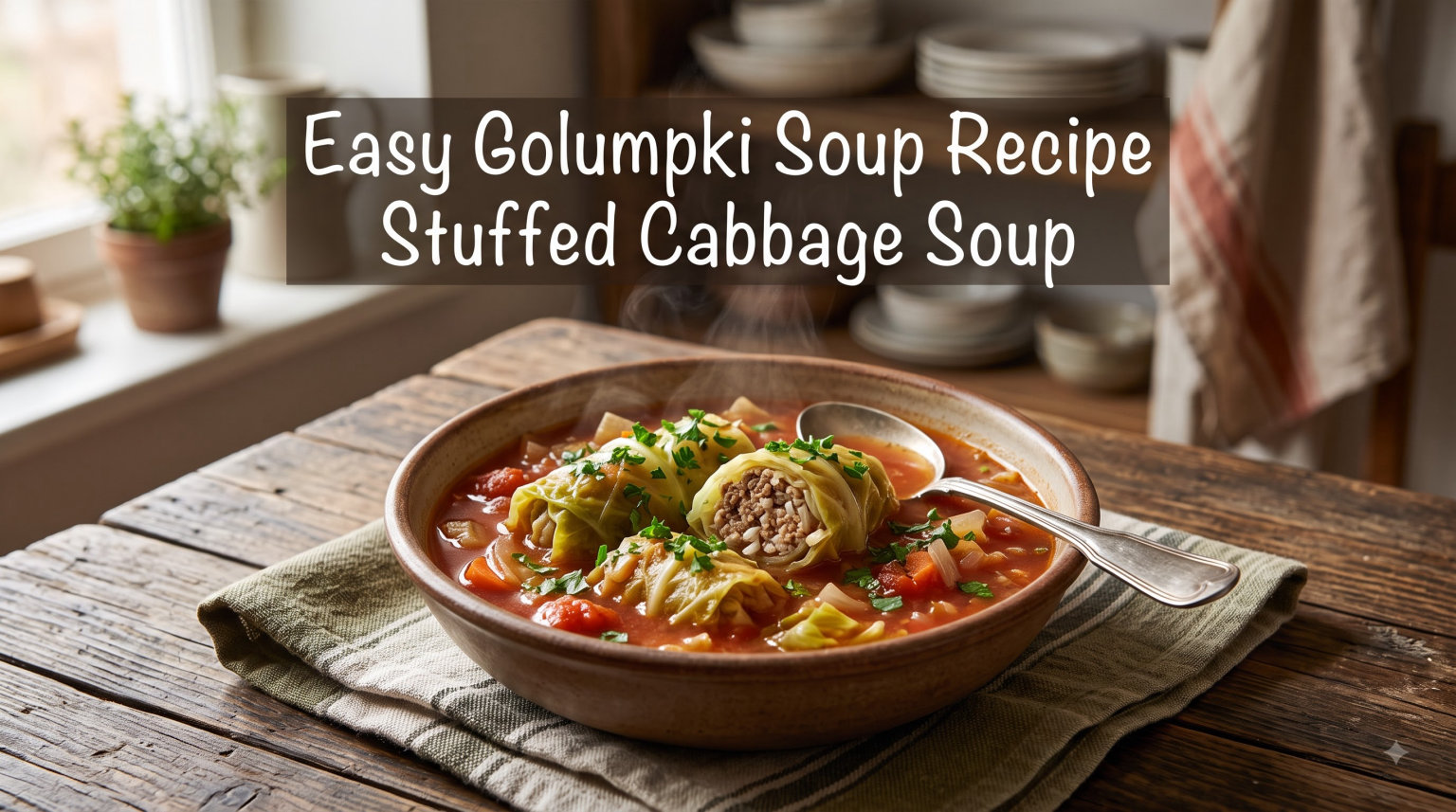
When dinner needs to be both dependable and satisfying, I turn to golumpki stuffed cabbage soup. Ground beef, chopped cabbage, rice, and sweet-tangy tomato broth deliver cabbage-roll flavor without rolling leaves.
I have also included Polish cabbage roll soup guidance for the exact moments that decide the result, from prep and doneness to storage. For another practical dinner, browse these ground beef dinner ideas.
Table of Contents
Why Easy Golumpki soup recipe stuffed cabbage soup works
What Is Golumpki? A Quick Trip to Polish Roots
Golumpki (also spelled golumpke, gwumpki, or written in proper Polish as gołąbki, pronounced roughly “gah-WOMP-kee”) is a classic Polish dish of cabbage leaves stuffed with a mixture of ground meat, rice, and onions, then simmered in a tomato sauce. The name literally translates to “little pigeons,” a nod to the plump, bundled shape of the rolls. Polish immigrants brought the recipe to communities across the American Midwest and Northeast, where it became a beloved church-supper and family-gathering staple.
So, is golumpki Polish or German? It is firmly Polish in origin, though similar stuffed cabbage dishes appear throughout Eastern and Central Europe under different names. Germany has its own version called krautwickel, and other neighbors have their own takes too. The soul of authentic golumpki, though, belongs to Poland.
Traditional golumpki takes serious time. You blanch a whole head of cabbage, peel off the leaves carefully, mix the filling, roll each parcel, tuck it into a pot, and simmer everything low and slow. It is a labor of love worth doing once a year. For the other 364 days, this Easy Golumpki Soup Recipe gives you all of that same comfort food satisfaction in a single pot. Think of it as the lazy, loving cousin of the classic cabbage roll.
Easy Golumpki Soup Recipe Ingredients List
For dependable golumpki stuffed cabbage soup, add rice at the right stage or cook it separately so the grains stay tender and do not absorb every drop of broth. The same rule keeps Polish cabbage roll soup focused and balanced instead of mushy rice or underseasoned cabbage broth. You may also want to save these easy slow-cooker chili for your next meal plan.
This Easy Golumpki Soup Recipe relies on simple, affordable ingredients you probably already have in your pantry and fridge. Here is the complete list with the measurements I use for a big pot that serves six to eight people.
The Meat Base
1 pound ground beef (80 to 85 percent lean): This is the backbone of the soup. A little fat keeps the broth rich. If your beef is very lean, add a splash of olive oil when browning.
1 medium yellow onion, diced: Onion forms the aromatic foundation. One medium onion yields about a cup diced.
3 cloves garlic, minced: Fresh garlic makes a real difference here. Crush the cloves, mince them fine, and add them after the onion softens.
1 tablespoon olive oil: For browning the meat and sautéing the aromatics. Butter works too if you prefer a richer base.
The Cabbage and Rice
-
1 small head green cabbage (about 2 pounds), cored and chopped: Remove the tough outer leaves and core, then chop the cabbage into bite-sized pieces. One small head gives you roughly 8 cups chopped.
-
1 cup long grain white rice: I prefer long grain white rice because it holds its shape best in soup. See my rice tips below for the great cooking debate.
The Tomato Broth
-
1 can (28 ounces) crushed tomatoes: Crushed tomatoes give the broth body without big chunks. Diced tomatoes work if that is what you have.
-
1 can (15 ounces) diced tomatoes, undrained: Adds texture and a little brightness.
-
3 tablespoons tomato paste: This is the secret weapon. Toasting tomato paste in the hot pan before adding liquid deepens the entire pot.
-
4 cups beef broth: Beef broth matches the ground beef beautifully. Low-sodium lets you control the salt.
-
1 tablespoon Worcestershire sauce: Adds that savory umami backbone that makes the soup taste like it cooked for hours.
Seasonings
-
1 teaspoon smoked paprika: Smoked paprika echoes the flavor of traditional Polish smoked meats and adds depth.
-
1 teaspoon dried thyme: Thyme and tomato are best friends in hearty soups.
-
1 bay leaf: One bay leaf simmered in the pot adds an earthy note. Remember to remove it before serving.
-
1 teaspoon salt and 1/2 teaspoon black pepper: Adjust to taste at the end of cooking.
1 tablespoon brown sugar (optional): A touch of brown sugar balances the acidity of the tomatoes. This is a trick I picked up from Dinner at the Zoo’s cabbage roll soup, and it makes a real difference.
If you are wondering what the four essential ingredients in cabbage soup are, at its most basic you need cabbage, ground meat, tomatoes, and rice. Everything else on this list builds flavor around those four pillars.
How to Make Easy Golumpki Soup Recipe Step by Step
For food-safety temperatures and handling limits, I follow the USDA food-safety guidance and use an instant-read thermometer whenever doneness is uncertain.
-
Brown the Meat and Aromatics: Heat the olive oil in a large Dutch oven or soup pot over medium-high heat. Add the ground beef and break it apart with a wooden spoon. Cook until no pink remains, about 5 to 7 minutes. Drain off most of the excess fat, leaving about a tablespoon in the pot for flavor. Add the diced onion and cook for 3 to 4 minutes until it softens and turns translucent. Stir in the minced garlic and cook for another 30 seconds, just until fragrant. Do not let the garlic brown or it will turn bitter.
-
Toast the Tomato Paste: This is the step most recipes skip, and it is the one that makes this Easy Golumpki Soup Recipe taste like it simmered all afternoon. Clear a small space in the center of the pot and add the tomato paste directly to the hot surface. Let it cook for 2 to 3 minutes, stirring constantly, until it darkens to a deep brick red and smells sweet and intense. Toasting the paste caramelizes the natural sugars and concentrates the tomato flavor. It is the same technique Platter Talk highlights in their Polish-inspired golumpki soup, and once you try it, you will never skip it again.
-
Build the Tomato Broth: Pour in the crushed tomatoes, diced tomatoes with their juice, beef broth, Worcestershire sauce, smoked paprika, dried thyme, bay leaf, brown sugar, salt, and black pepper. Stir well, scraping up any browned bits from the bottom of the pot. Those browned bits are pure flavor, so do not leave them behind. Bring the pot to a gentle boil over medium-high heat, then reduce the heat to maintain a steady simmer. Cover the pot partially with a lid.
-
Add the Cabbage: Stir in the chopped cabbage. It will look like a mountain of cabbage at first, but it wilts down quickly. Cover the pot and let it simmer for about 10 minutes, stirring once or twice, until the cabbage has softened and collapsed into the broth.
-
Add the Rice and Simmer: Stir in the uncooked long grain white rice. Reduce the heat to low, cover the pot fully, and let the soup simmer for 20 to 25 minutes. Stir every 5 to 7 minutes to keep the rice from sticking to the bottom of the pot. The soup is ready when the rice is tender and the cabbage is soft but still has a little texture. Fish out the bay leaf and discard it. Taste the broth and add more salt and pepper if needed.
-
Serve and Enjoy: Ladle the hot soup into deep bowls and serve immediately. A slice of crusty bread on the side turns a bowl of this into a full meal. This Easy Golumpki Soup Recipe also reheats beautifully, which makes it perfect for leftovers the next day.
This is the method I have refined over dozens of batches. Follow these steps in order and you will have a pot of rich, hearty stuffed cabbage soup on the table in about 45 minutes.
Easy Golumpki Soup Recipe Tips for Success
I judge golumpki stuffed cabbage soup by the finished texture and temperature, not by the clock alone. With Polish cabbage roll soup, The beef must reach 160°F, the cabbage should be tender, and the rice should have no hard center while the soup remains brothy. For a useful companion guide, see these comforting casserole recipes.
-
The Great Rice Debate: Cook It In or Cook It Separately?: Should you cook the rice right in the soup, or cook it separately and stir it in at the end? My answer is: cook it in the soup if you are serving right away, and cook it separately if you are meal-prepping or planning leftovers. Rice cooked in the soup absorbs the tomato broth and tastes incredible, but it continues to soak up liquid overnight and can turn gummy by day two. If you know you will have leftovers, cook a batch of rice on the side and let everyone stir it into their own bowl. That keeps the broth clear and the rice perfectly textured no matter how many days you stretch it.
-
Do Not Overcook the Cabbage: Mushy cabbage is the fastest way to ruin a pot of golumpki soup. Add the cabbage after the broth comes together, simmer it just until it wilts, and resist the urge to let it cook forever. You want it tender with a slight bite, not dissolving into strings.
-
Toast the Tomato Paste Every Time: I mentioned this above, but it deserves repeating because it is the single biggest flavor upgrade in this recipe. Two minutes of toasting tomato paste transforms the broth from flat to deep and savory. Set a timer and do not rush it.
-
Use Smoked Paprika for Authentic Depth: Traditional Polish golumpki often includes smoked meats. Smoked paprika echoes that smoky depth without requiring you to track down smoked kielbasa or bacon, though you can absolutely add either if you have them.
After making this soup more times than I can count, I have learned a few things that separate a good pot from a great one. These tips address the most common pain points home cooks run into.
Variations and Substitutions
-
Protein Swaps: Ground turkey makes a lighter, leaner version that many readers love. Ground pork adds richness and is very traditional in Polish cooking. A 50/50 blend of ground beef and ground pork is my personal favorite for maximum flavor. Italian sausage, either sweet or hot, is a delicious twist that pushes the soup in a slightly Italian direction. For a budget option, a mix of ground beef and cooked lentils stretches the meat and adds fiber.
-
Slow Cooker Golumpki Soup: This recipe adapts beautifully to a slow cooker. Brown the ground beef, onion, and garlic in a skillet first, then transfer everything except the rice to your slow cooker. Cook on low for 6 to 8 hours or on high for 3 to 4 hours. Stir in the uncooked rice during the last hour of cooking so it does not turn to mush. This is the method I use on busy days when I want dinner ready the moment I walk in the door.
-
Vegetarian Golumpki Soup: None of the top-ranking recipes offer a vegetarian version, so here is mine. Skip the ground beef and instead use a mix of cooked brown lentils and chopped mushrooms. Use vegetable broth instead of beef broth, and add an extra tablespoon of soy sauce or Worcestershire sauce to replace the umami you lose from the meat. The lentils provide protein and heartiness, while the mushrooms add a deep, savory flavor that stands in beautifully for beef.
-
Sauerkraut Addition: Sauerkraut is a divisive ingredient in golumpki circles. Some Polish families swear by it, others never touch it. If you want to try it, drain a cup of sauerkraut and stir it in during the last 10 minutes of cooking. It adds a bright, tangy kick that cuts through the richness of the beef and tomato. Start with a small amount and taste before adding more.
One of the best things about this Easy Golumpki Soup Recipe is how flexible it is. Here are my favorite variations once you have the base method down.
Storage and Freezing Instructions
-
Refrigerator Storage: Let the soup cool to room temperature, then transfer it to an airtight container and refrigerate for up to 4 days. Keep in mind that if you cooked the rice in the soup, it will absorb more broth as it sits. Add a splash of water or beef broth when you reheat to loosen things back up.
-
Can You Freeze Cabbage Soup for Later?: Yes, you can absolutely freeze golumpki soup. The soup itself freezes beautifully for up to 3 months. The one caveat is the rice. Rice frozen in soup can develop a slightly softer texture after thawing. If you know you will be freezing the batch, cook the rice separately and freeze the soup without it. Add freshly cooked rice when you reheat. If you have already cooked the rice in the soup, freeze it anyway. The texture change is minor, and most people will not notice once the soup is hot and garnished.
-
Reheating Tips: Reheat individual bowls in the microwave for 2 to 3 minutes, stirring halfway through. For larger portions, warm the soup gently on the stovetop over medium-low heat, stirring occasionally, until it is heated through. Add a little broth or water if it has thickened overnight.
This Easy Golumpki Soup Recipe is a meal-prep dream. Here is how to store and freeze it so you always have a comforting bowl ready.
What to Serve With Golumpki Soup
This soup is hearty enough to stand on its own, but a few sides turn it into a true comfort-food spread.
Crusty bread: A thick slice of warm, crusty bread is essential for soaking up the tomato broth. Sourdough, rye, or a simple baguette all work beautifully.
Simple green salad: A crisp salad with a light vinaigrette balances the richness of the soup.
Pierogi: If you are leaning into the Polish theme, a side of pierogi makes the meal feel like a celebration.
Garnishes: A dollop of sour cream, a sprinkle of fresh parsley or dill, and a grind of black pepper finish each bowl perfectly.
Frequently Asked Questions
How do I know when Golumpki soup is ready?
The beef must reach 160°F, the cabbage should be tender, and the rice should have no hard center while the soup remains brothy.
How do I prevent mushy rice or underseasoned cabbage broth?
Add rice at the right stage or cook it separately so the grains stay tender and do not absorb every drop of broth.
Can I substitute ground turkey for beef?
Yes. Brown it with a little oil and cook it to 165°F; smoked paprika can replace some of the beef’s deeper flavor.
What should I serve with Golumpki soup?
Rye bread, crusty rolls, cucumber salad, or a spoonful of sour cream fit the sweet-tangy cabbage broth.
Can I make Golumpki soup ahead?
Store rice separately when possible because it continues absorbing broth in the refrigerator.
The Bottom Line
For golumpki stuffed cabbage soup, the most important move is to add rice at the right stage or cook it separately so the grains stay tender and do not absorb every drop of broth. That same discipline makes Polish cabbage roll soup useful on a busy day without sacrificing flavor or texture.
I recommend reading the method once, preparing every ingredient, and using the doneness cues above as the final authority. Ground beef, chopped cabbage, rice, and sweet-tangy tomato broth deliver cabbage-roll flavor without rolling leaves.