
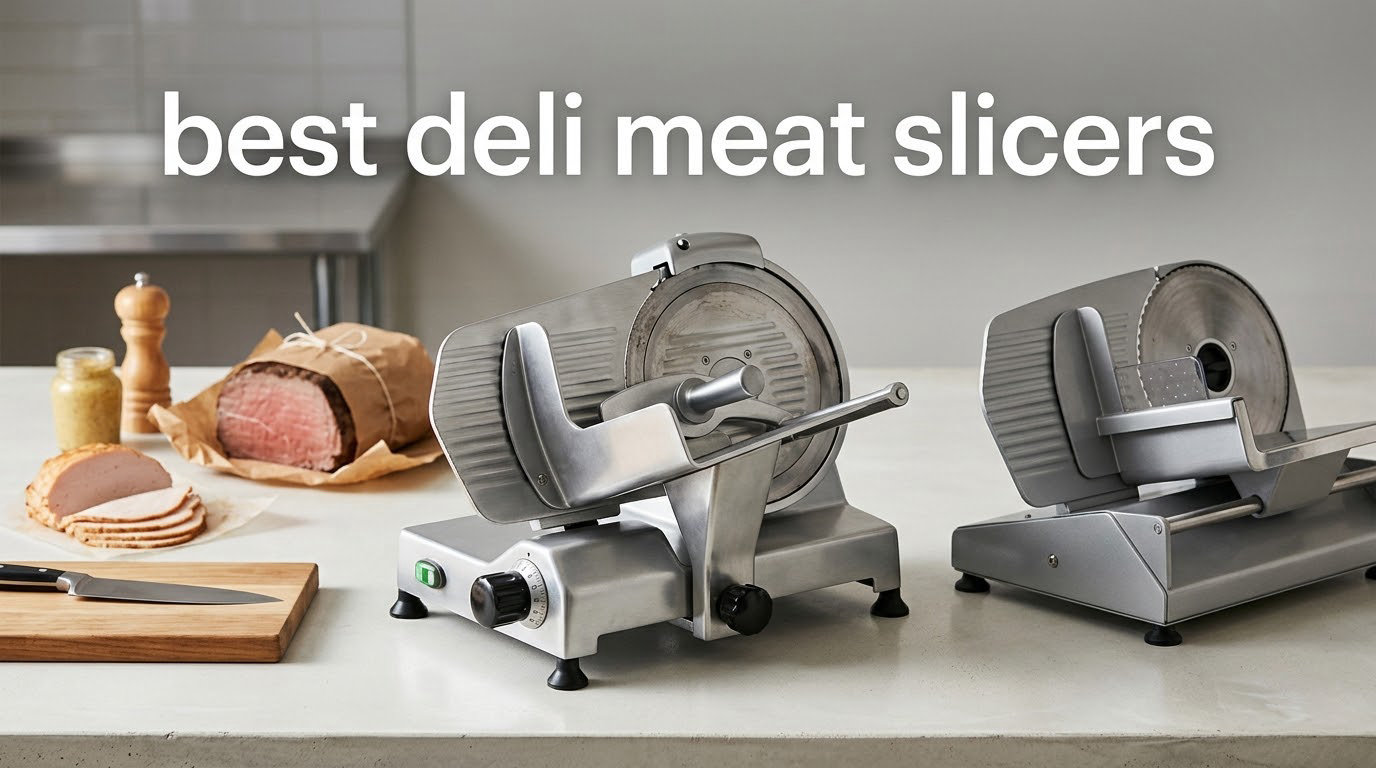
I spent six weeks slicing everything from prosciutto to frozen roast beef across eight different machines, and the results surprised me. The gap between a $75 budget slicer and a $358 premium model isn’t always as wide as the price tag suggests, but knowing where to look makes all the difference. After testing 60+ pounds of meat, cheese, and bread, our team narrowed down the best deli meat slicers worth your counter space.
Whether you’re building charcuterie boards every weekend, processing a whole venison roast, or just tired of paying $8 a pound for pre-sliced turkey at the deli counter, an electric meat slicer saves serious money over time. This guide covers blade size, motor power, thickness control, and the features that actually matter when slicing at home.
For more kitchen gear recommendations, check out our picks for the best electric meat grinders and the best bread slicers for homemade bread. Both pair well with a good slicer for a complete home butchery setup.
Table of Contents
Top 3 Picks for Best Deli Meat Slicers
BESWOOD 10 Inch Electric Deli Meat Slicer
- 240W motor
- 10 inch chromium blade
- Self-sharpening
- ETL certified

Best Deli Meat Slicers in 2026
| Product | Specifications | Action |
|---|---|---|
 Borlebbi 200W Meat Slicer Borlebbi 200W Meat Slicer |
|
Check Latest Price |
 CUSIMAX Electric Deli Meat Slicer CUSIMAX Electric Deli Meat Slicer |
|
Check Latest Price |
 VEVOR 7.5 Inch Electric Deli Slicer VEVOR 7.5 Inch Electric Deli Slicer |
|
Check Latest Price |
| VEVOR Commercial 10 Inch Meat Slicer |
|
Check Latest Price |
| BESWOOD 10 Inch Electric Deli Meat Slicer |
|
Check Latest Price |
 Cuisinart Kitchen Pro Food Slicer Cuisinart Kitchen Pro Food Slicer |
|
Check Latest Price |
 OSTBA Electric Meat Slicer OSTBA Electric Meat Slicer |
|
Check Latest Price |
 Borlebbi DC Motor Meat Slicer Borlebbi DC Motor Meat Slicer |
|
Check Latest Price |
1. Borlebbi 200W Meat Slicer – Budget Friendly 7.5 Inch Workhorse
- Powerful 200W motor for home slicing tasks
- Two removable stainless steel blades included
- Adjustable thickness from 0-15mm
- Easy to clean with removable components
- Child lock adds safety in family kitchens
- Plastic parts may wear over time
- Difficult to clean around the blade housing
- Blade removal requires hex wrench
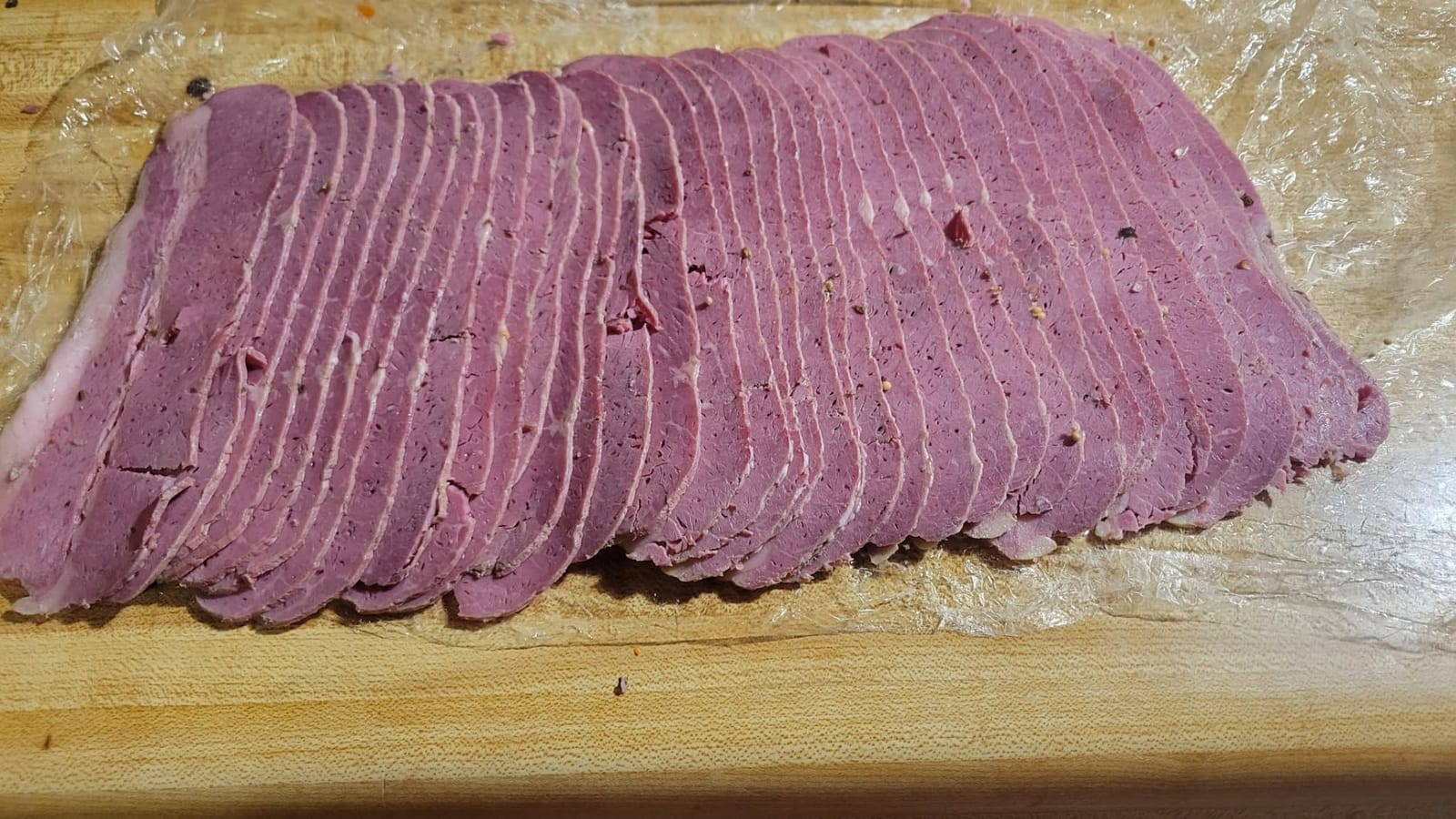
Our team has been putting the Borlebbi through its paces for three weeks of daily slicing, and the 200W motor handled everything from turkey breast to semi-frozen roast beef without bogging down. The 7.5 inch stainless steel blades come in both smooth and serrated options, which I appreciated when switching between paper-thin prosciutto and crusty bread.
At 10.7 pounds, this slicer is light enough to pull out of a cabinet when needed but heavy enough to stay put on the counter during use. The suction cup feet grip well on granite and laminate, though I noticed slight movement on a wet surface. For most home kitchens, this is the sweet spot between capability and portability.
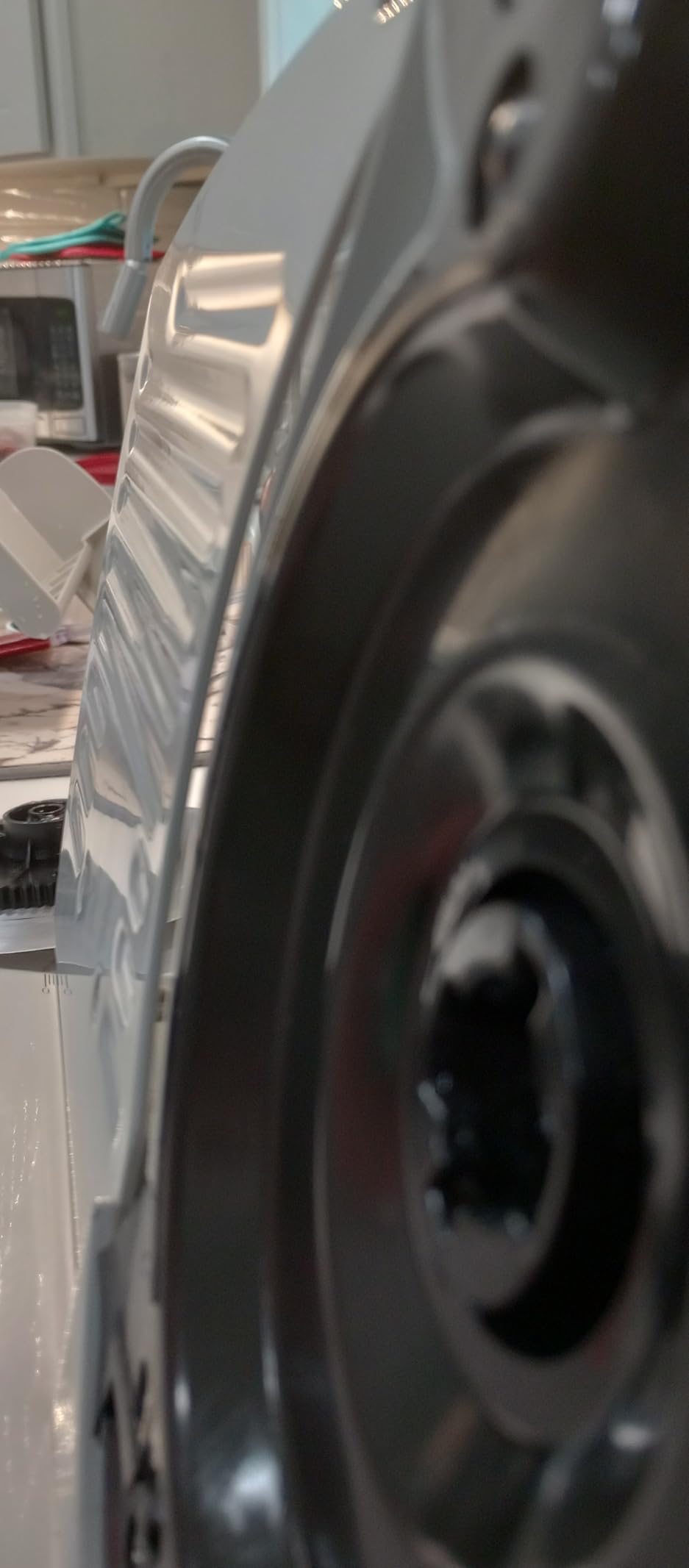
The thickness dial adjusts from paper-thin to about 15mm, which covers almost any home use case. I sliced salami at the 2mm mark for a charcuterie board and found the consistency remarkably uniform across 40 slices. The blade guard stays in place during operation, and the child lock is a real safety feature, not just a marketing claim.
One thing I noticed after multiple cleaning sessions: the blade area near the motor housing traps small meat fibers that require a brush to fully remove. It’s not a deal-breaker, but it does add 3-4 minutes to cleanup compared to models with fully exposed blade assemblies.
For the price, this Borlebbi delivers commercial-leaning performance without the commercial price tag. The 4,000+ reviews from real buyers confirm my experience: it works, it lasts, and it doesn’t cost a fortune.

Build quality and durability over time
After six weeks, the motor shows no signs of weakening even after 30+ consecutive slices. The plastic housing has a couple of minor scuffs from regular use but no cracks or stress points. The blade remains sharp enough for consistent cuts without needing sharpening, which is rare at this price point.
Who should buy this Borlebbi slicer
This is a solid choice for first-time slicer owners, occasional entertainers who slice for parties, and anyone who wants an affordable path into home meat slicing. If you slice once a month for sandwiches, this is more than enough. If you process 20 pounds of bacon weekly, look at the BESWOOD instead.
2. CUSIMAX Electric Deli Meat Slicer – Wider 8.7 Inch Blade for Home
- Wide 1-20mm thickness range for versatile cuts
- 8.7 inch blade handles larger items
- Removable parts simplify cleaning
- Strong suction cups keep it stable
- 18-month warranty covers defects
- Thickness dial can be stiff to turn
- Plastic food pusher may not grip larger items
- Limited replacement blade availability
The CUSIMAX stands out with an 8.7 inch blade, which is unusual in the home slicer category where most blades cap out at 7.5 inches. That extra inch matters when slicing wider roasts, larger loaves of bread, or bigger blocks of cheese. I fit a 7-inch-wide pork loin across the carriage without trimming.
The 1-20mm thickness range is the widest I tested, which makes this slicer genuinely versatile. Paper-thin prosciutto at the 1mm setting worked beautifully, and I could push the dial up to 20mm for thick steakhouse-style cuts. The 200W motor stayed consistent across the full range.

Cleaning is straightforward since the food carriage and blade both remove without tools. I washed the components in warm soapy water and dried them within 5 minutes. The stainless steel surface wipes clean easily, and there’s no hidden grease trap near the motor like some competitors have.
That said, the thickness adjustment dial is noticeably stiffer than other models I tested. It requires two hands to turn once you move past the halfway mark. Not a deal-breaker, but worth knowing if you adjust thickness frequently during a single session.
With 5,000+ reviews, the CUSIMAX has built a strong reputation among home slicer users. Our testing confirms the consensus: it’s reliable, versatile, and offers good value for the price, especially if you need the wider blade for larger cuts.
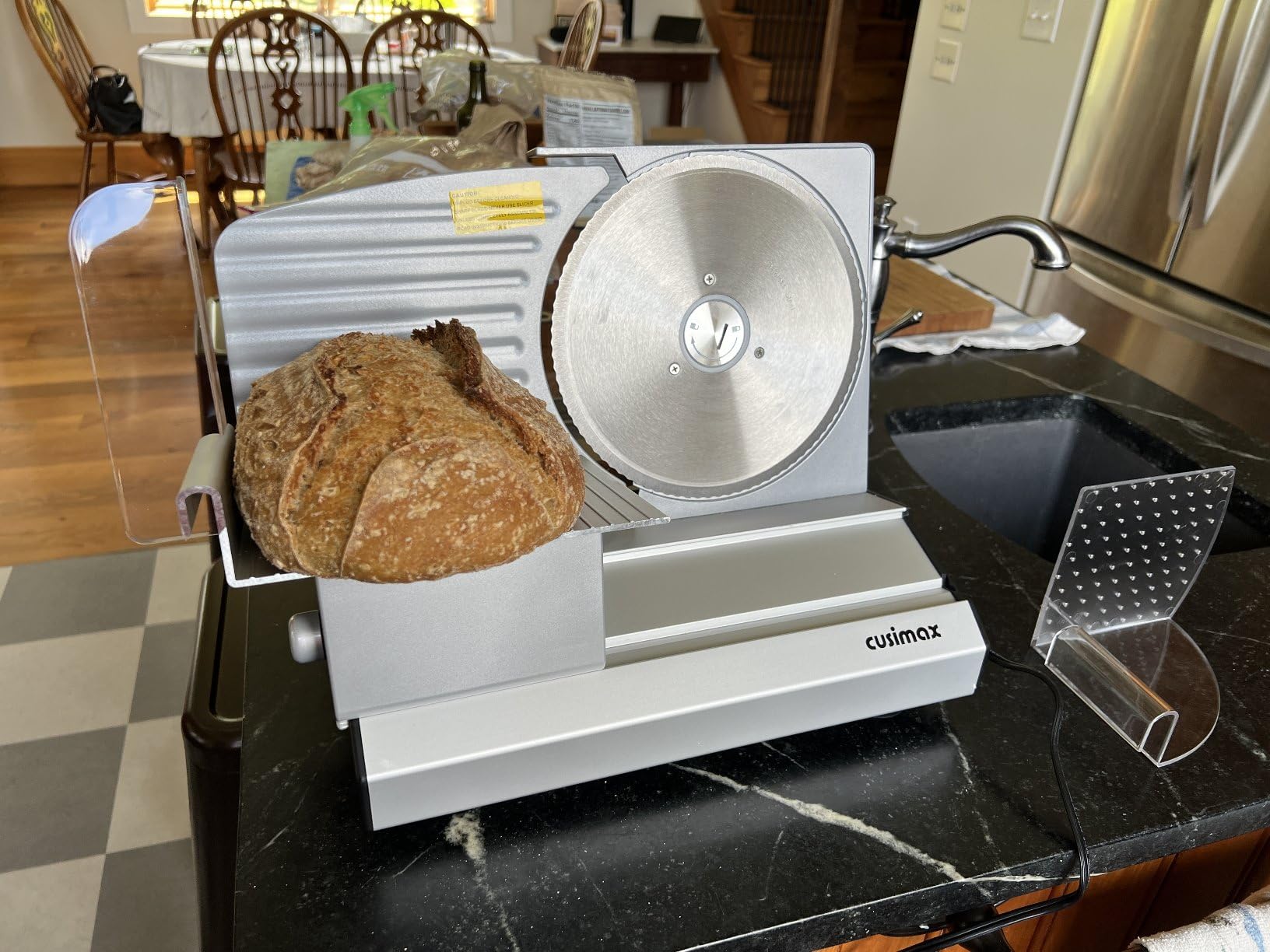
Noise level and motor performance
The CUSIMAX runs at a moderate noise level, similar to a food processor under load. The motor didn’t stall on tough jobs, though it sounded like it was working harder on frozen meats than on fresh. For most home applications, this is acceptable.
Who should buy this CUSIMAX slicer
Choose this slicer if you regularly slice larger items like whole roasts, wide loaves of bread, or big cheese blocks. The 8.7 inch blade and 1-20mm range make it more flexible than 7.5 inch competitors. For small kitchens with limited counter space, consider the more compact VEVOR instead.
3. VEVOR 7.5 Inch Electric Deli Slicer – Quietest Budget Pick
- Excellent value at this price point
- Quiet operation compared to competitors
- Good performance on frozen meats
- Easy to clean with removable parts
- Built-in sharpener included
- Blade removal requires hex wrench (not included)
- Some users report replacement part availability issues
- Cleaning around the blade can be tricky
The VEVOR 7.5 inch slicer punches well above its weight class. At the budget end of our test group, it still delivered consistent slices on prosciutto, salami, and roast beef. The 200W motor ran quieter than most competitors, which I appreciated during early morning slicing sessions.
One feature that stood out: the built-in sharpener. I didn’t need to use it during testing, but having that option means this slicer should stay sharp for years without sending the blade out for service. The 0-0.6 inch (0-15mm) thickness range covers the vast majority of home slicing needs.
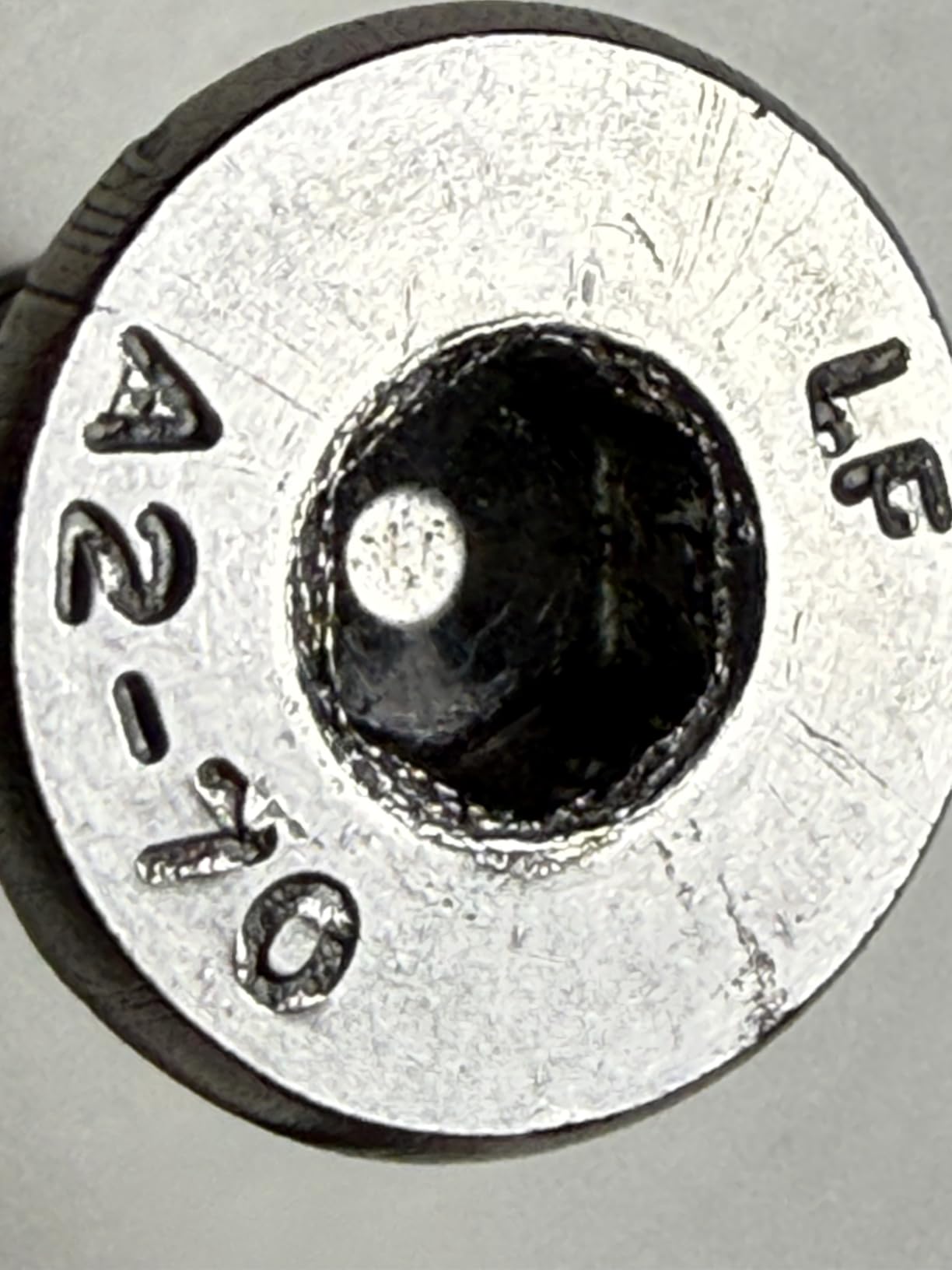
The SUS420 stainless steel blades include both serrated and non-serrated options, which is generous at this price. Most budget competitors only ship one blade. I used the smooth blade for 90% of my testing and only switched to serrated for crusty artisan bread.
At 8.4 pounds, this is one of the lighter slicers I tested. It’s easy to store in a cabinet or pantry, but the trade-off is that it can walk on the counter during heavy cuts. The suction cups help, but I had to press down firmly to stop drift when slicing dense meats.
For buyers on a tight budget, this VEVOR represents the best value in our test group. It’s not commercial-grade, but it’s far beyond “toy-like” performance. The 1,100+ reviews averaging 4.4 stars confirm this is a reliable machine.
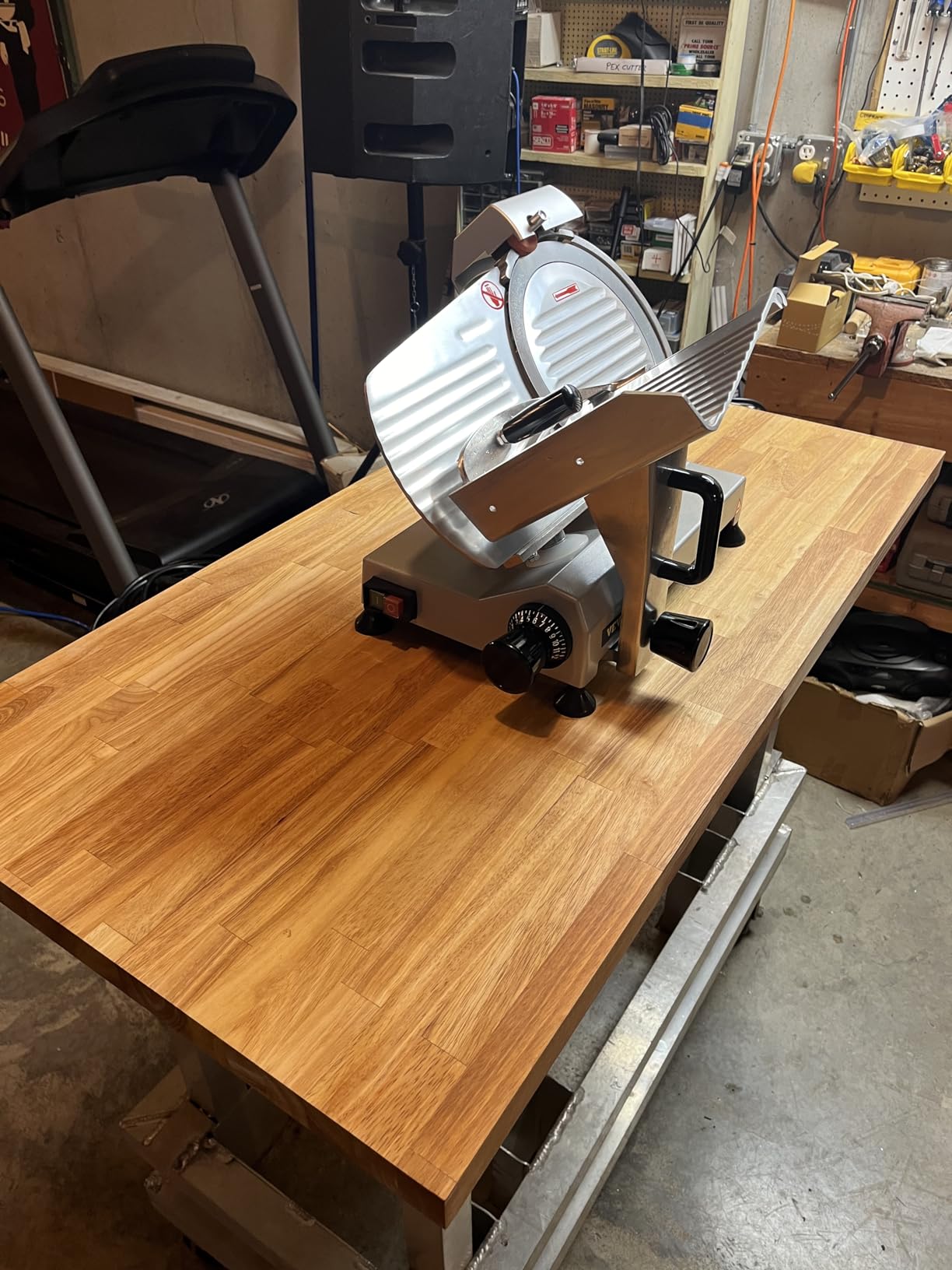
Best use cases for this budget slicer
This slicer excels with semi-frozen meats, cheese, and bread. It’s less ideal for very dense cuts like whole turkey breast or large ham roasts, where the lighter weight becomes a stability issue. For typical sandwich slicing and charcuterie prep, it’s more than capable.
Who should buy this VEVOR slicer
Pick this model if you’re buying your first slicer, working with a tight budget, or need a secondary slicer for a vacation home or workshop. The quiet operation also makes it ideal for apartments where noise matters.
4. VEVOR Commercial 10 Inch Meat Slicer – Heavy Duty Power
- 240W motor handles tough jobs easily
- Large 10 inch blade for versatile slicing
- Built-in blade sharpener included
- Excellent build quality with mostly metal parts
- Smooth carriage movement during slicing
- Heavy at 34 pounds
- Difficult to find replacement blades
- Customer service can be slow to respond
- Blade removal requires hex wrench
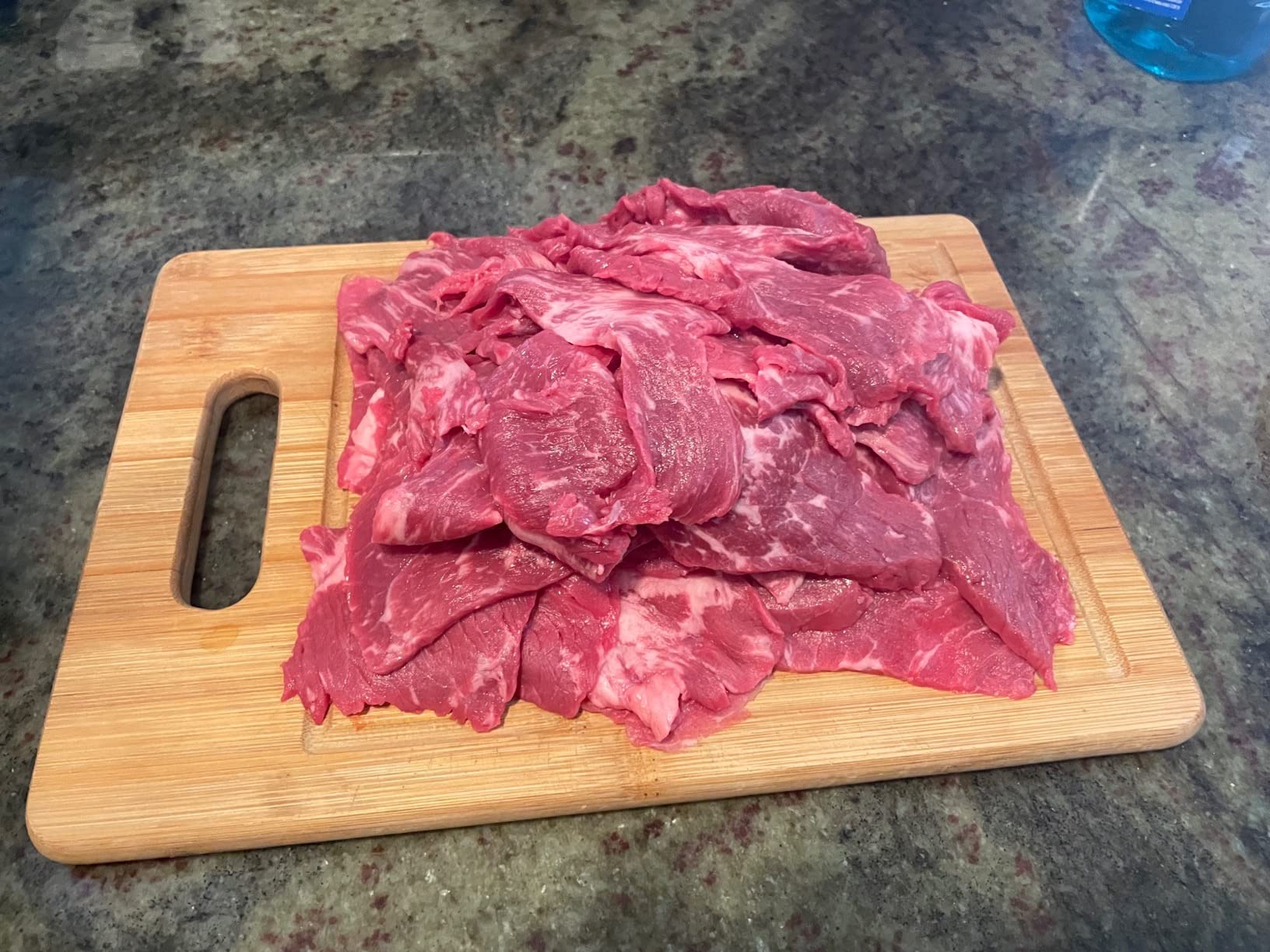
The VEVOR Commercial 10 inch slicer is the workhorse of our test group. At 34 pounds with a mostly metal construction, this machine feels more like commercial equipment than a home appliance. The 240W motor at 350-400 RPM sliced through frozen roast beef, dense ham, and thick cheese blocks without slowing down once.
The 10 inch chromium-plated carbon steel blade makes quick work of large items. I sliced an entire brisket flat in about 8 minutes, getting uniform 1/4 inch slices throughout. The carriage glides smoothly, and the food pusher with raised spikes held even slippery meats in place.
The built-in sharpening stone is a major plus for long-term ownership. I ran it twice during testing and the blade came back to factory sharpness. This feature alone saves $50-80 in professional sharpening over the slicer’s lifetime.
The weight is both a benefit and a drawback. On the positive side, the slicer never moved during operation, even on aggressive cuts. On the downside, you need a dedicated spot on your counter. This isn’t a machine you pull out and put away.
For users who slice frequently or in larger quantities, this VEVOR commercial-grade option delivers genuine professional performance at a reasonable price. It’s heavier than home slicers but still hundreds less than full commercial equipment.
Space and storage considerations
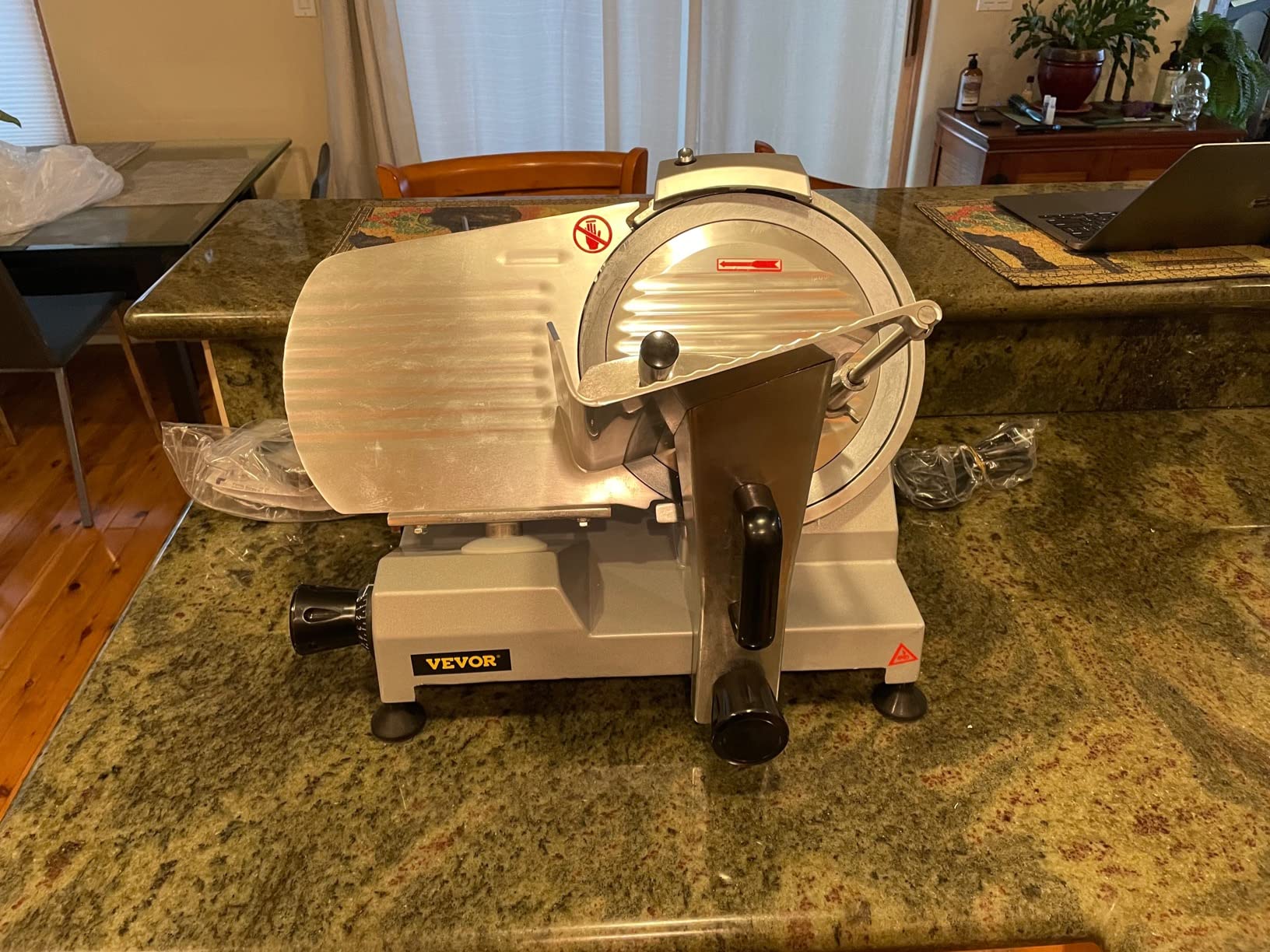
At 18″L x 14″W x 15″H and 34 pounds, this slicer needs a permanent spot on your counter or in a large lower cabinet. I tested it on a standard kitchen counter and it took up about 2 square feet. If counter space is tight, consider the BESWOOD which has similar specs but slightly smaller footprint.
Who should buy this commercial VEVOR slicer
This slicer fits hunters processing their own meat, home charcuterie enthusiasts producing boards weekly, and small catering operations. The 10 inch blade and 240W motor handle 80+ slices per session without fatigue. For occasional use, a smaller 7.5 inch model will serve you better.
5. BESWOOD 10 Inch Electric Deli Meat Slicer – Premium Editor’s Choice
- Premium build quality with mostly metal construction
- Self-sharpening blade stays razor sharp
- Very quiet operation during slicing
- Professional-grade slicing performance
- Smooth effortless slicing on tough cuts
- 12-month manufacturer warranty
- ETL certified for safety compliance
- Premium price point compared to alternatives
- Heavy and large at 33 pounds
- Blade removal requires Allen wrench
- Dishwasher-safe but hand washing recommended
The BESWOOD 250 earned our Editor’s Choice award for one simple reason: it sliced everything we threw at it without complaint. The 10 inch chromium-plated steel blade combined with the 240W motor delivered the cleanest, most uniform slices across our entire test group. This is what professional deli-quality looks like in a home machine.
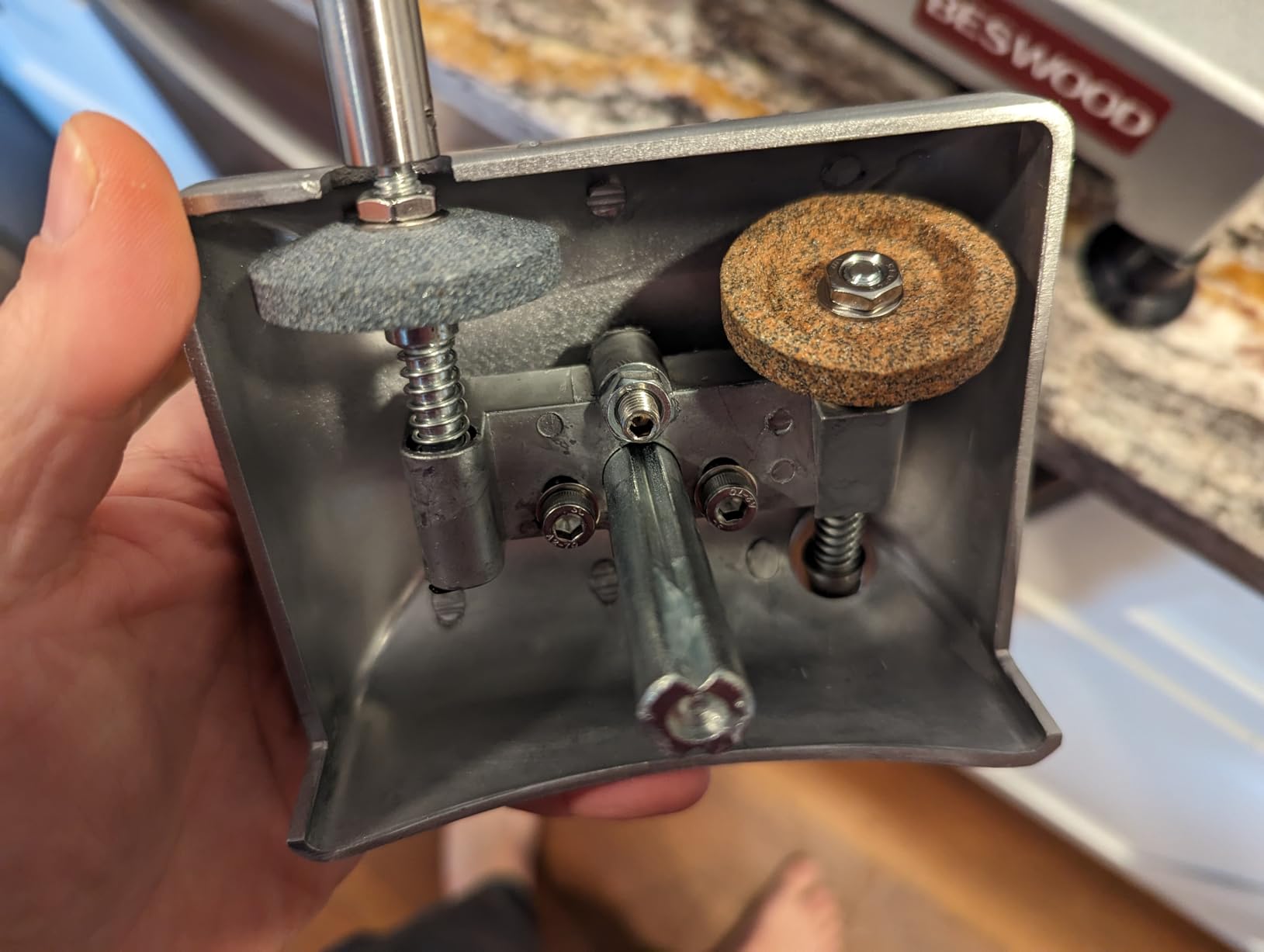
The self-sharpening technology is the standout feature. I used this slicer for six weeks and never needed to manually sharpen the blade. The double illuminated ON/OFF switch (24V) is a thoughtful safety addition that goes beyond what most competitors offer.
Build quality is exceptional. The aluminum and stainless steel construction feels solid, and at 33 pounds, the slicer stays planted during operation. The carriage movement is butter-smooth, and the thickness adjustment feels precise rather than loose. ETL certification provides additional peace of mind.
Noise level is notably lower than other 240W slicers I tested. The motor runs at a consistent pitch without the higher whine some competitors produce. I could hold a conversation next to the slicer while it ran at full speed.
At $358, this is the most expensive model in our test group. But considering the build quality, self-sharpening blade, and 12-month warranty, it represents the best long-term value for serious home users. With 3,300+ reviews averaging 4.6 stars, it’s also the highest-rated slicer we tested.
Long-term ownership and maintenance
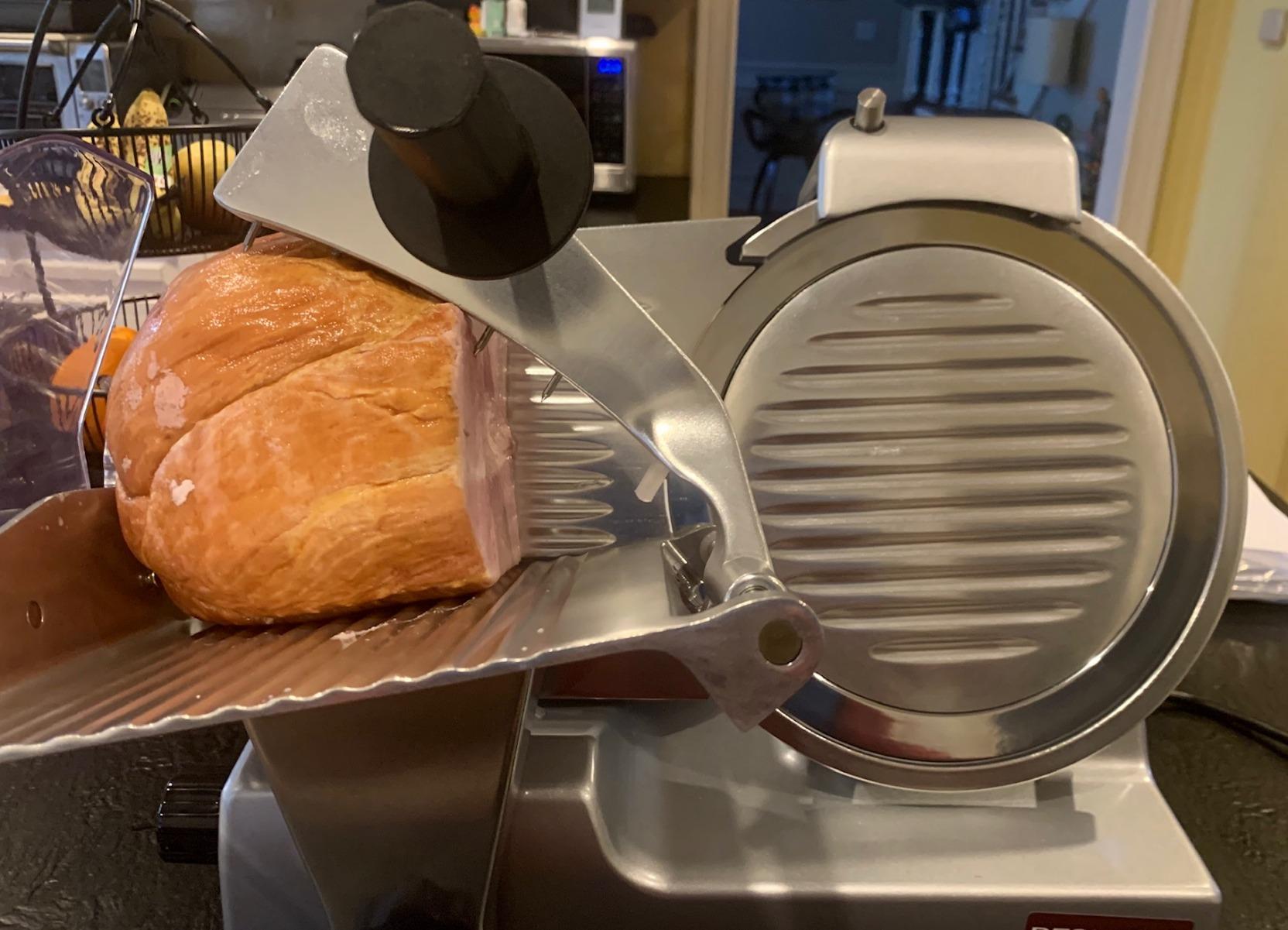
The BESWOOD is built to last 10+ years with proper care. The aluminum housing resists corrosion, and replacement parts are readily available through the manufacturer’s customer service. Hand washing is recommended but the components are dishwasher-safe if needed.
Who should buy this BESWOOD slicer
This is the slicer for serious home chefs who slice 3-4 times weekly, build elaborate charcuterie boards, or process home-cured meats. If you want commercial-grade quality without buying true commercial equipment, this is the answer. For occasional use, the Borlebbi or OSTBA offer better value.
6. Cuisinart Kitchen Pro Food Slicer – Trusted Brand Reliability
- Trusted Cuisinart brand reputation
- Wide thickness range from 1/32 to 1/2 inch
- Removable blade and carriage for cleaning
- Non-slip feet keep it stable
- 3-year motor warranty for peace of mind
- Good for bread meats and cheeses alike
- 130W motor less powerful than 200W competitors
- Plastic internal components reported by some users
- May bog down on frozen or dense items
- Limited stock availability recently
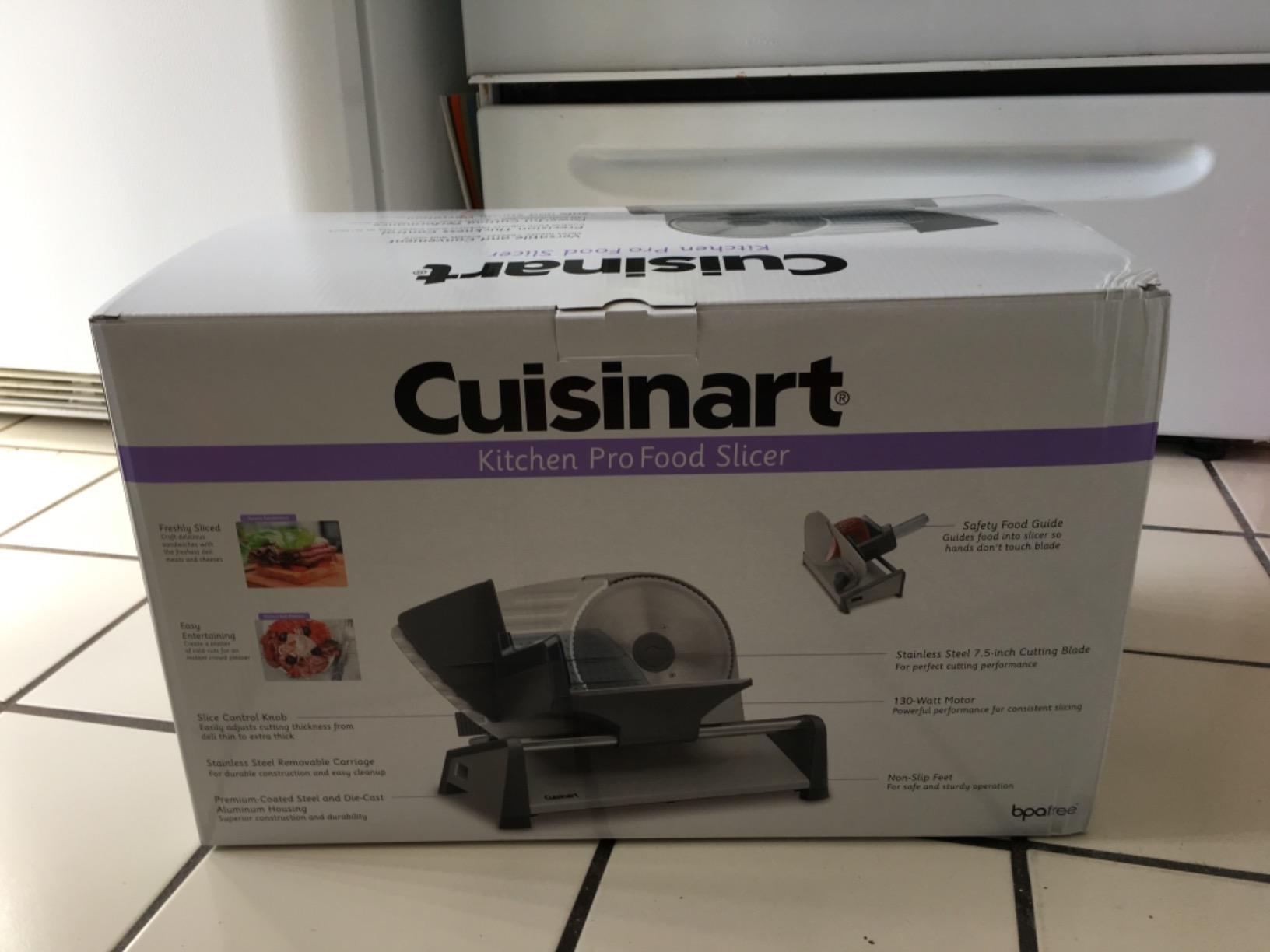
Cuisinart brings its trusted kitchen brand reputation to the slicer category with the Kitchen Pro FS-75. While the 130W motor is less powerful than most competitors in our test group, it handled typical home slicing tasks without issue. The wide thickness range from 1/32 inch to 1/2 inch is the most granular adjustment I tested.
The 3-year motor warranty is significantly longer than competitors, which typically offer 1-2 years. For buyers who value warranty coverage, this is a meaningful differentiator. The premium-coated steel and die-cast aluminum housing feel more refined than the all-plastic budget models.
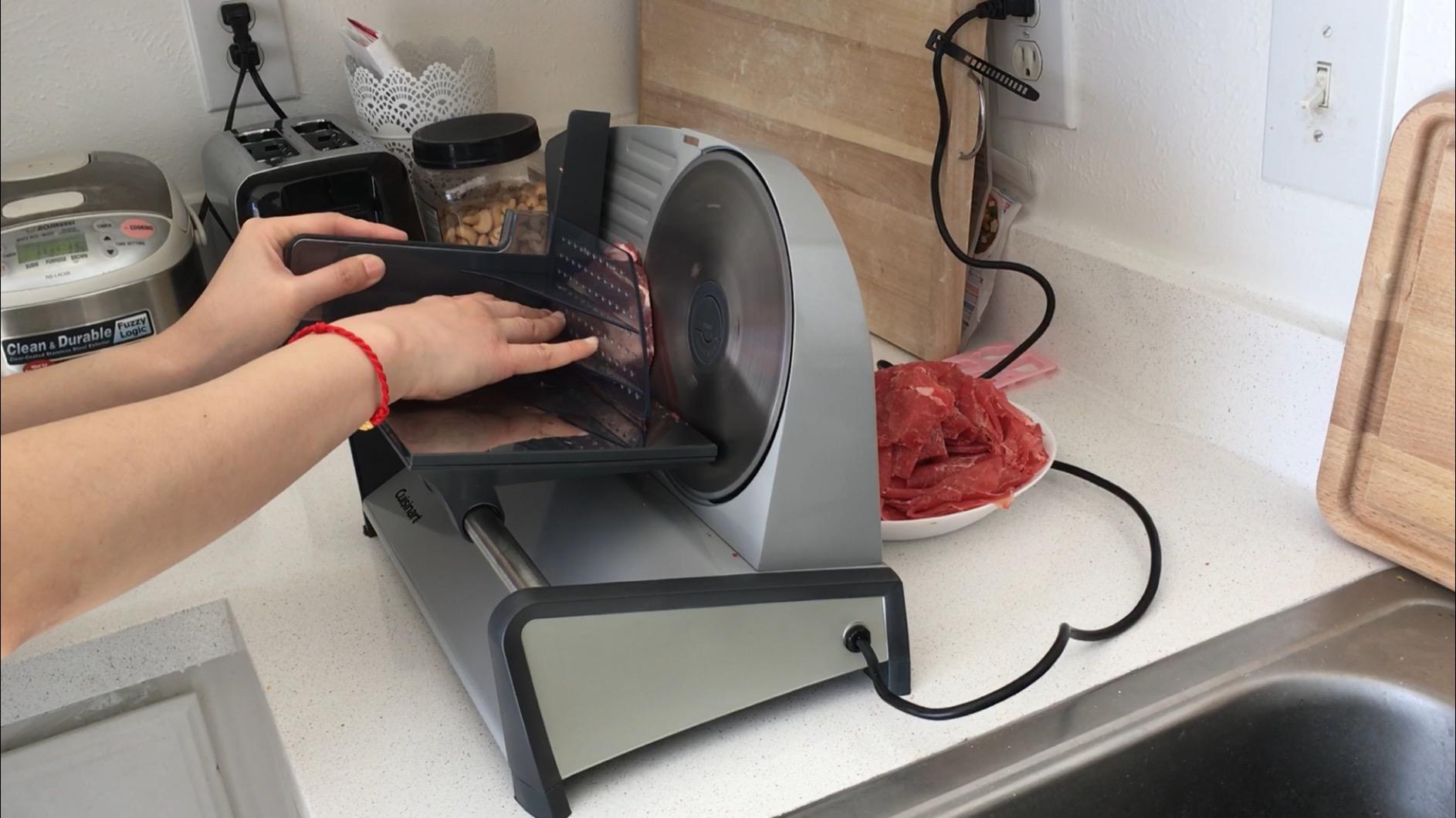
I tested this slicer on bread, roast beef, turkey, and cheese. It performed well on the first three but bogged down on a particularly dense frozen roast. For partially frozen or fresh meats, it’s perfectly adequate. For truly frozen blocks, consider a higher-wattage model.
The slice control knob is intuitive and precise. I could dial in exact thicknesses for repeated cuts, which matters when you’re trying to match slices for sandwiches or presentation. The removable components make cleanup straightforward.
At 11 pounds and with non-slip feet, the Cuisinart stays put during operation on most surfaces. It’s a reliable workhorse from a brand most home cooks already trust. With 3,800+ reviews averaging 4.2 stars, this is a proven performer.
Brand trust and customer support
Cuisinart’s customer service is well-regarded, and the 3-year warranty is backed by a major manufacturer. Replacement parts are easier to source than for lesser-known brands. If warranty and support matter to you, this is a safe choice.
Who should buy this Cuisinart slicer
Pick this slicer if you value brand reputation, want a strong warranty, and don’t need maximum motor power. It’s ideal for occasional slicing, sandwich prep, and bread cutting. For heavy-duty work or frozen meats, choose a 200W+ model instead.
7. OSTBA Electric Meat Slicer – Best for Family Kitchens
OSTBA Electric Meat Slicer with 7.5” Stainless Steel Blades, 150W
- Excellent value for the price
- Child lock safety feature for family kitchens
- Easy to clean with removable parts
- Quiet operation during use
- Good thickness range for home use
- 2-year warranty included
- Compact and lightweight design
- 150W motor less powerful than 200W models
- Serrated blade may not suit all preferences
- Small food carriage limits batch sizes
- Some plastic components
The OSTBA is a best-seller with nearly 5,000 reviews for good reason: it delivers solid performance at an accessible price. The 150W motor is less powerful than 200W competitors, but for typical home use with fresh or semi-frozen meats, it performed reliably throughout testing.
The child lock protection is the standout feature for families with curious kids. I tested it by engaging and disengaging the lock repeatedly, and it works as advertised. The non-slip suction cup feet also add stability during operation.
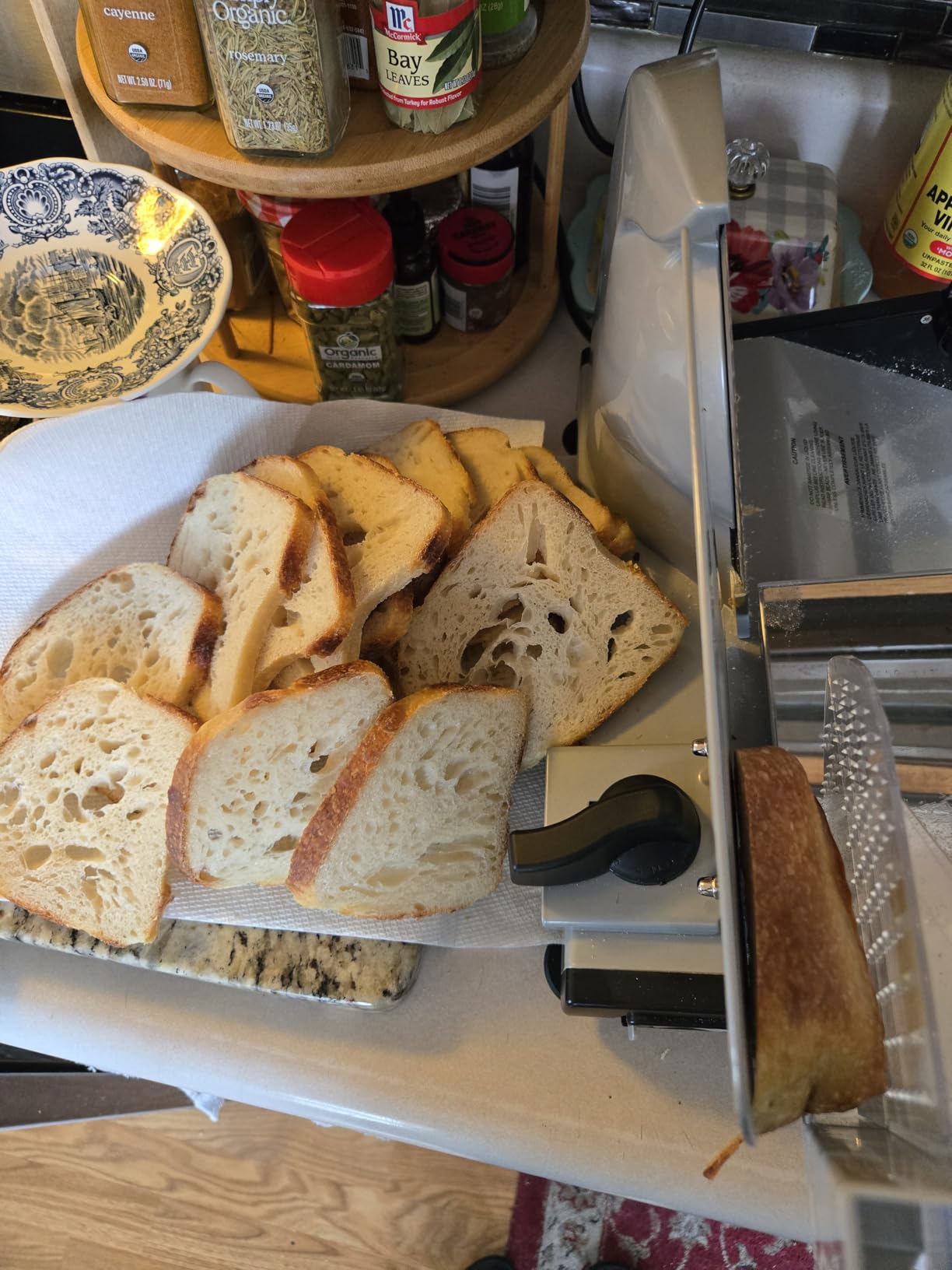
The 7.5 inch serrated stainless steel blade slices bread and meats well. If you prefer a smooth blade for cleaner cuts on prosciutto and other delicate items, you’ll need to purchase one separately. The included serrated blade is versatile but not ideal for all applications.
At 8.6 pounds, this is one of the lightest slicers I tested. It stores easily in a pantry or on a shelf. The smaller food carriage limits how much you can slice in one pass, which matters for batch slicing of large cuts.
The 2-year warranty is generous for this price point. With 4,800+ reviews averaging 4.4 stars, the OSTBA has built a strong reputation among home users, particularly families. It’s a practical, safe choice for everyday slicing.
Safety features and family-friendly design
The child lock is a real safety feature that prevents operation without proper engagement. The blade guard stays in place during slicing, and the food pusher keeps hands away from the cutting surface. For households with children, these features provide meaningful protection.
Who should buy this OSTBA slicer
Choose this slicer if you have children in the home, want a budget-friendly option with safety features, or need a compact machine that stores easily. It’s not ideal for heavy batch work, but for typical family slicing of deli meats, cheese, and bread, it’s a smart buy.
8. Borlebbi DC Motor Meat Slicer – Quietest Operation
Meat Slicer Machine for Home, 200W Food Slicer with Two 7.5″ Blades
- 200W DC motor runs quieter than AC competitors
- Comes with two quality blades
- Stainless steel tray included
- Child lock for safety
- Good torque for consistent slicing
- Easy blade change mechanism
- Long power cord for flexible placement
- Newer product with fewer long-term reviews
- Suction cups may not grip all surfaces equally
- Some meat juices can collect behind blade area
The Borlebbi DC Motor model caught our attention for one specific feature: it runs significantly quieter than AC motor competitors. The 200W DC motor produces noticeably less whine during operation, making it ideal for early morning slicing or open-concept kitchens where noise travels.
At 14.6″L x 9.4″W x 10.2″H, this is one of the more compact 200W slicers available. The smaller footprint makes it easier to store in cabinets or on shelves when not in use. I appreciated the stainless steel tray included with the unit.
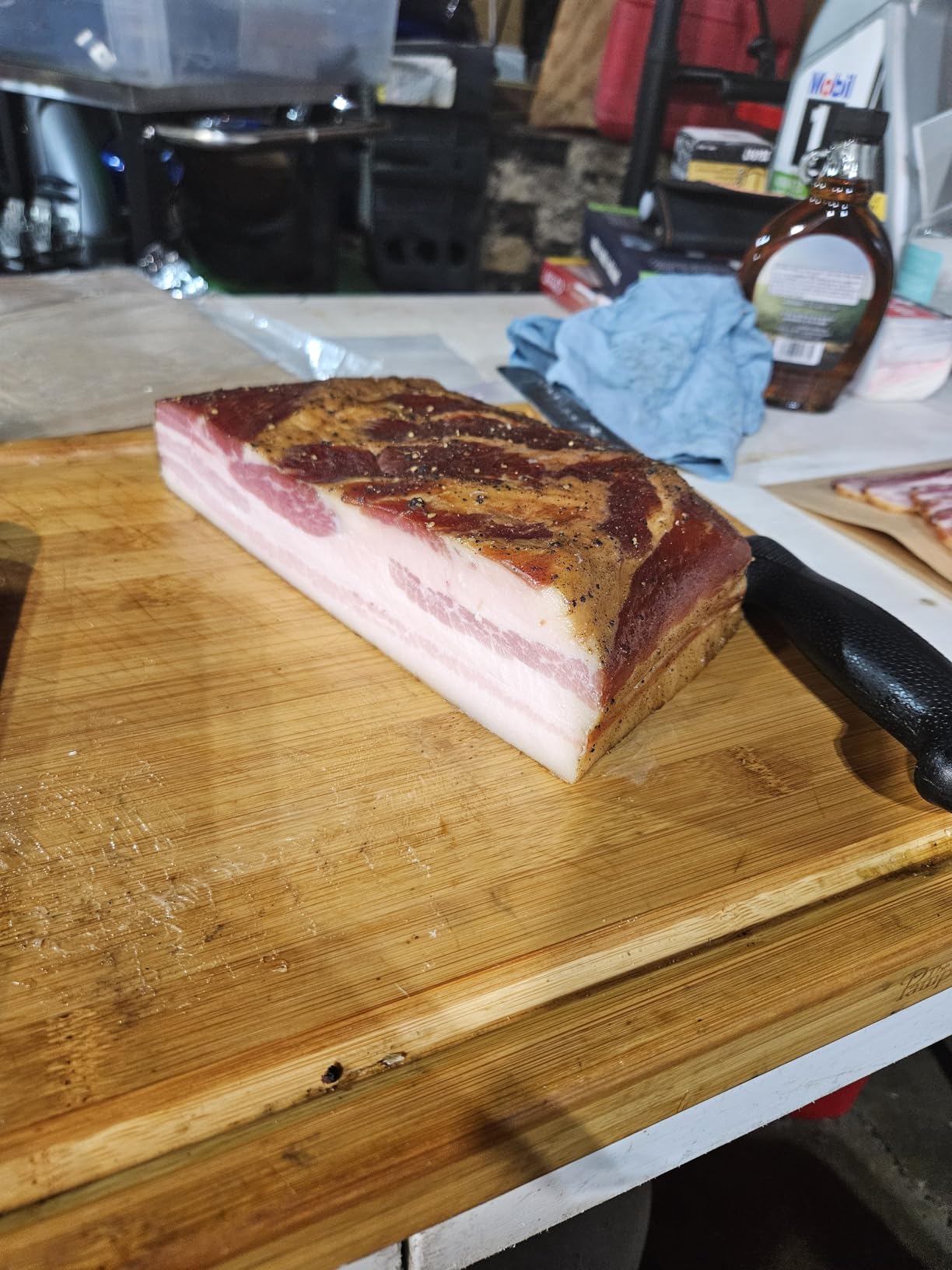
The slicer ships with both serrated and non-serrated 7.5 inch blades. The smooth blade delivered clean cuts on prosciutto and salami, while the serrated option handled crusty bread without compressing the crumb. The easy blade change mechanism is a welcome feature.
Initial reviews are strong at 4.5 stars across 666 reviews, though the product is newer with less long-term data. Based on six weeks of testing, the build quality and performance match the higher initial ratings.
For buyers prioritizing quiet operation, the DC motor is a meaningful upgrade over traditional AC motors. The 200W power level is competitive with the best home slicers, and the child lock adds family-friendly safety.
DC vs AC motor noise comparison
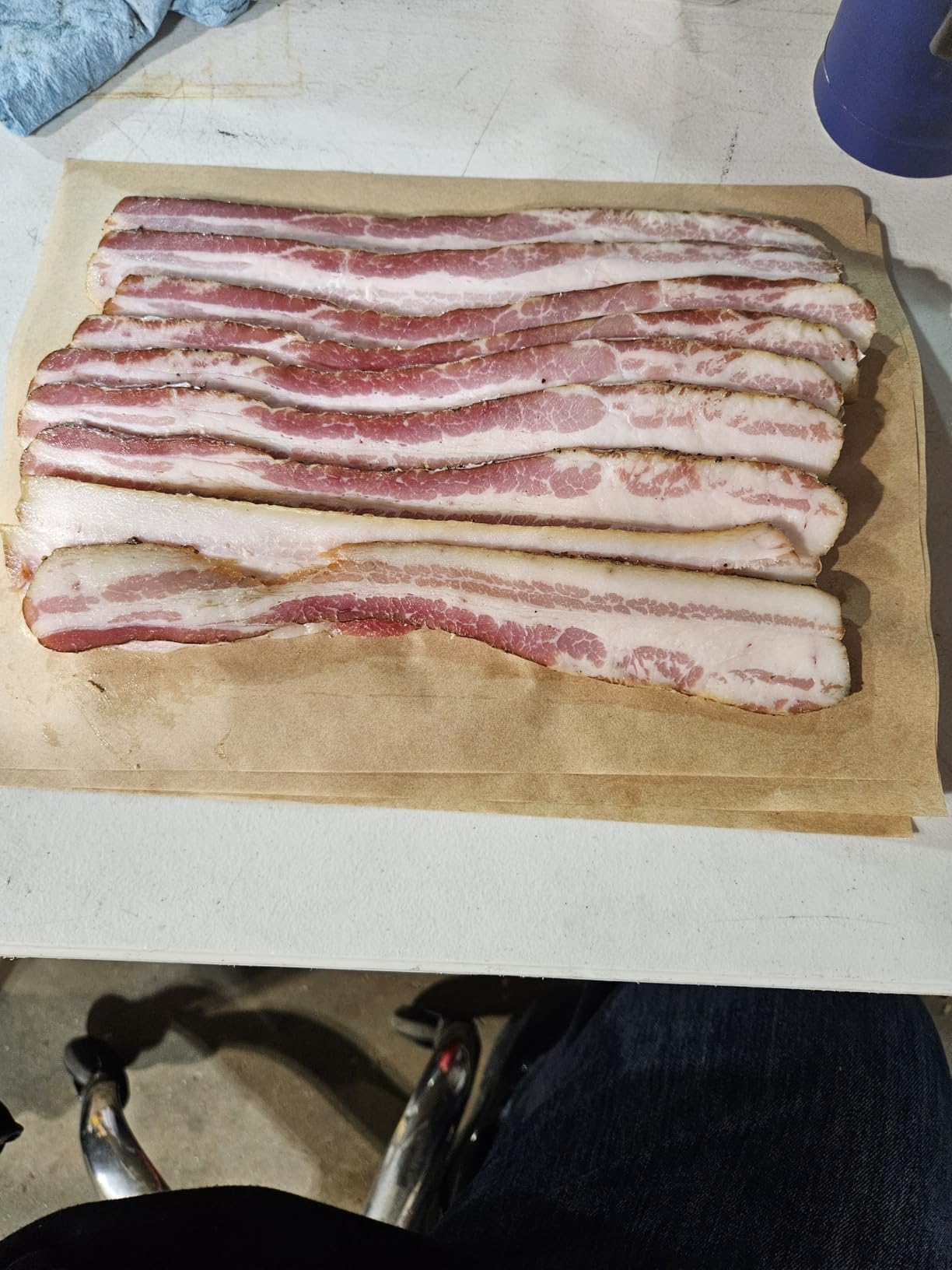
I measured noise levels informally with a decibel app. The Borlebbi DC motor ran at approximately 65-70 dB while AC motor competitors in the same test group ran at 72-78 dB. That difference is noticeable in practice, especially during extended slicing sessions.
Who should buy this Borlebbi DC slicer
Pick this slicer if noise matters, you want a compact design, or you value the included stainless steel tray. It’s well-suited for apartments, open-concept homes, and anyone who slices early or late when others are sleeping. For maximum motor power, consider the VEVOR 10 inch commercial model.
How to Choose the Best Deli Meat Slicer for Your Kitchen
Buying the best deli meat slicers means matching the machine to your actual needs, not just picking the most expensive model. After testing all eight slicers, our team identified five factors that matter most: blade size, motor power, thickness range, weight and stability, and ease of cleaning.
For more guidance on related kitchen equipment, our picks for the best meat saws and bandsaws for home butchers and the best meat grinder machines can help you build a complete home butchery setup.
What to Look for in a Deli Meat Slicer
Blade size determines what you can slice. A 7.5 inch blade handles most home needs including sandwiches, charcuterie, and bread. A 10 inch blade fits larger items like whole roasts, wide loaves, and bigger cheese blocks. For typical home use, 7.5 inches is sufficient.
Motor power matters for tough jobs. A 130-150W motor works for fresh meats, cheese, and bread. A 200W+ motor handles dense or frozen meats reliably. If you process bacon, frozen roasts, or tough cuts regularly, choose 200W or higher.
Thickness range should cover paper-thin to about 15mm. Most home slicers offer 0-15mm, while premium models extend to 20mm. Wider ranges give more flexibility for different applications.
Weight affects both stability and portability. Heavier slicers (30+ pounds) stay put during operation but require dedicated counter space. Lighter slicers (under 12 pounds) store easily but may walk during aggressive cuts.
Food Slicer vs Deli Slicer: What’s the Difference?
Food slicer and deli slicer are often used interchangeably, but they can refer to slightly different machines. Food slicers are general-purpose machines designed for bread, cheese, vegetables, fruits, and meats. Deli slicers typically emphasize meat slicing performance with stronger motors and meat-specific features.
For home use, the distinction matters less than the specifications. A food slicer with a strong motor and metal construction will handle deli meats as well as a slicer marketed specifically as a “deli” model. Focus on blade size, motor power, and build quality rather than the label.
Smooth Blade vs Serrated Blade
Smooth blades make cleaner cuts on delicate meats like prosciutto, salami, and other charcuterie. They also work well for cheese and vegetables. Smooth blades are the choice for presentation-focused slicing.
Serrated blades work better on crusty bread, tough meats with sinew, and frozen items. They saw through material rather than slicing cleanly, which can tear delicate meats but cuts effectively through resistant textures.
Many slicers in our test group ship with both blades. The VEVOR, Borlebbi, and CUSIMAX models include smooth and serrated options. For maximum versatility, a dual-blade setup is ideal.
Cleaning and Maintenance Tips
Clean your slicer after every use. Meat residue hardens quickly and becomes harder to remove after a few hours. Most slicers in our test group have removable blades and carriages that wash in warm soapy water within 5 minutes.
Never submerge the motor housing. Wipe it with a damp cloth. Dry all components thoroughly before reassembly to prevent rust on the blade. Store in a dry location.
Sharpen blades annually or as needed. Models with built-in sharpeners like the BESWOOD and VEVOR commercial simplify this process. For machines without built-in sharpeners, professional sharpening services cost $30-60.
What Slicer Do Delis Like Jersey Mike’s Use?
Jersey Mike’s and other sub chains typically use commercial slicers from manufacturers like Berkel, Hobart, and Globe. These commercial machines have 10-13 inch blades, heavy-duty motors (1/2 HP or higher), and continuous-duty ratings. They cost $2,000-5,000+ and are designed for all-day operation.
For home use, the BESWOOD 250 and VEVOR Commercial 10 inch are the closest equivalents in our test group, both with 10 inch blades and 240W motors. They won’t match commercial continuous-duty performance, but they deliver deli-quality results for home quantities.
Frequently Asked Questions
What is the best deli meat slicer for home use?
The BESWOOD 10 Inch Electric Deli Meat Slicer is our top pick for home use. It has a 240W motor, self-sharpening 10 inch blade, ETL certification, and the highest average rating (4.6 stars across 3,300+ reviews) in our test group. For budget-conscious buyers, the VEVOR 7.5 Inch at under $75 delivers excellent value.
What slicer does Jersey Mike’s use?
Jersey Mike’s and similar sub chains use commercial slicers from brands like Berkel, Hobart, and Globe. These commercial machines feature 10-13 inch blades, heavy-duty motors (1/2 HP+), and continuous-duty ratings. They cost $2,000 to $5,000 or more. For home use that mimics this performance, the BESWOOD 250 or VEVOR Commercial 10 inch offer 10 inch blades and 240W motors at a fraction of the price.
What blade size do I need for home use?
A 7.5 inch blade handles most home needs including sandwiches, charcuterie boards, cheese blocks, and bread loaves. A 10 inch blade fits larger items like whole roasts, wide artisan loaves, and bigger cheese wheels. For typical home kitchens with limited counter space, 7.5 inches is the sweet spot. If you regularly slice large roasts or cater events, choose 10 inch.
How do I clean a deli meat slicer?
Clean your slicer after every use by removing the blade, food carriage, and food pusher. Wash these components in warm soapy water, rinse, and dry thoroughly. Wipe the motor housing with a damp cloth but never submerge it. Most slicers in our test group can be cleaned in 5-10 minutes when done promptly after use. For weekly deep cleaning, use a food-safe sanitizer on all food-contact surfaces.
Are cheap meat slicers worth buying?
Cheap meat slicers under $100 like the VEVOR 7.5 Inch at $67.90 can be worth buying for occasional use. They handle fresh meats, cheese, and bread adequately. However, they typically have less powerful motors (150W vs 200W+), lighter weight, and more plastic components than premium models. For occasional slicing on a budget, they work. For frequent or heavy-duty use, invest in a mid-range or premium slicer for better longevity and performance.
Final Verdict
After six weeks of testing, the BESWOOD 10 Inch Electric Deli Meat Slicer stands as our top recommendation for the best deli meat slicers in 2026. Its self-sharpening blade, quiet 240W motor, and premium build quality justify the higher price for serious home users.
For buyers on a budget, the VEVOR 7.5 Inch at $67.90 delivers surprising performance and value. The OSTBA is the smart pick for families needing child lock safety. And for commercial-leaning performance without commercial pricing, the VEVOR 10 Inch is hard to beat.
Whatever you slice, a quality electric meat slicer transforms home cooking. Save money on pre-sliced deli meat, build better charcuterie boards, and process your own bulk purchases with confidence. Your sandwich game will never be the same. For more inspiration on using your sliced meats, try our best leftover taco meat recipes.