
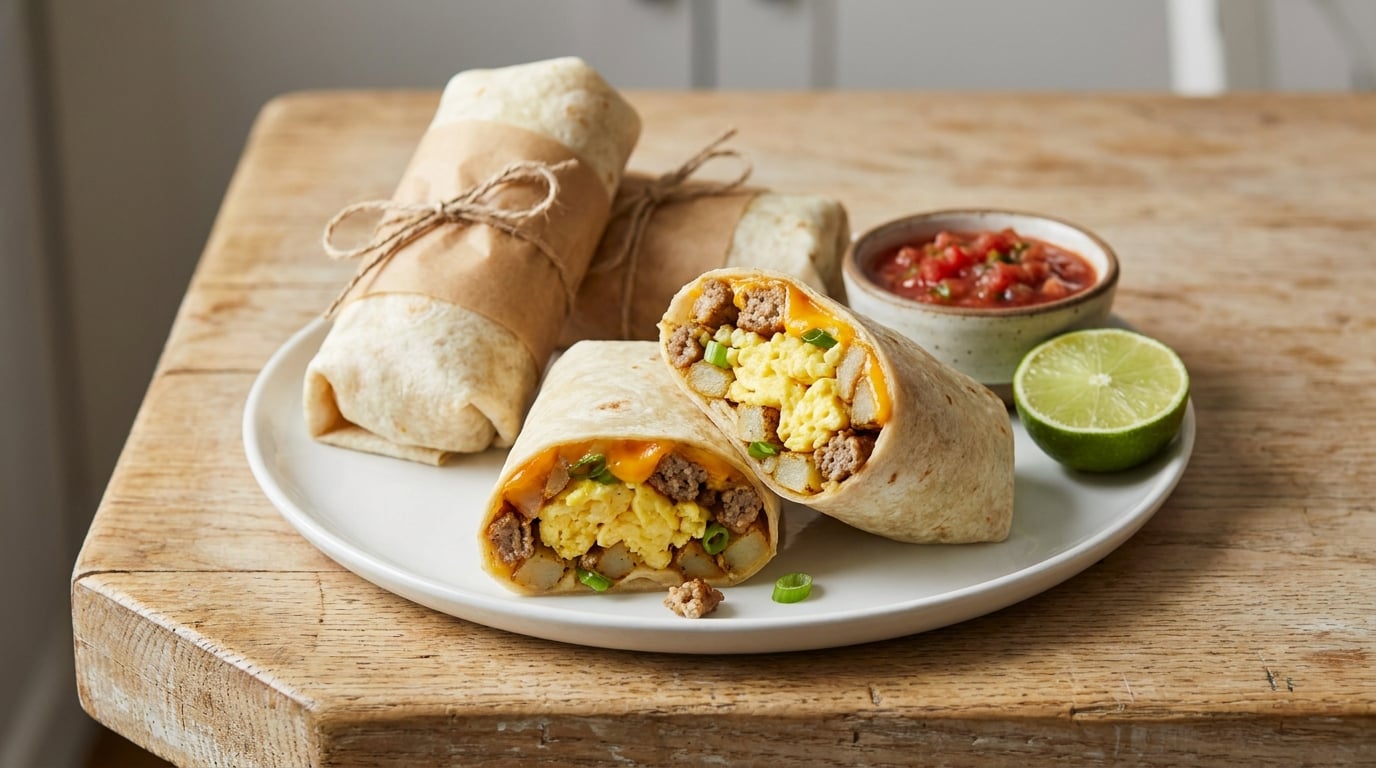
Make ahead breakfast burritos for the freezer are the most useful thing I cook on a Sunday. Eggs, sausage, potatoes, cheese, and green onion rolled in large flour tortillas, cooled, flash-frozen, and bagged. Yes, they freeze well: two to three months is the safe window, and the texture is at its best inside the first month. One batch of eight burritos turns a 30-minute morning scramble into about three minutes of reheating.
This is the version I keep coming back to, because it does the boring parts for you. Every filling is cooked before it goes in the tortilla, nothing wet goes in at all, and the portions freeze flat and separately so you can pull out exactly what the morning needs. Total hands-on time is about 45 minutes, most of it waiting for the filling to cool.
If you want more ideas for the same kind of prep, my make ahead breakfast recipes for busy mornings roundup pairs well with this one, and the 15 easy breakfast ideas list is good for the mornings when you are not reheating anything.
Table of Contents
Why This Recipe Works
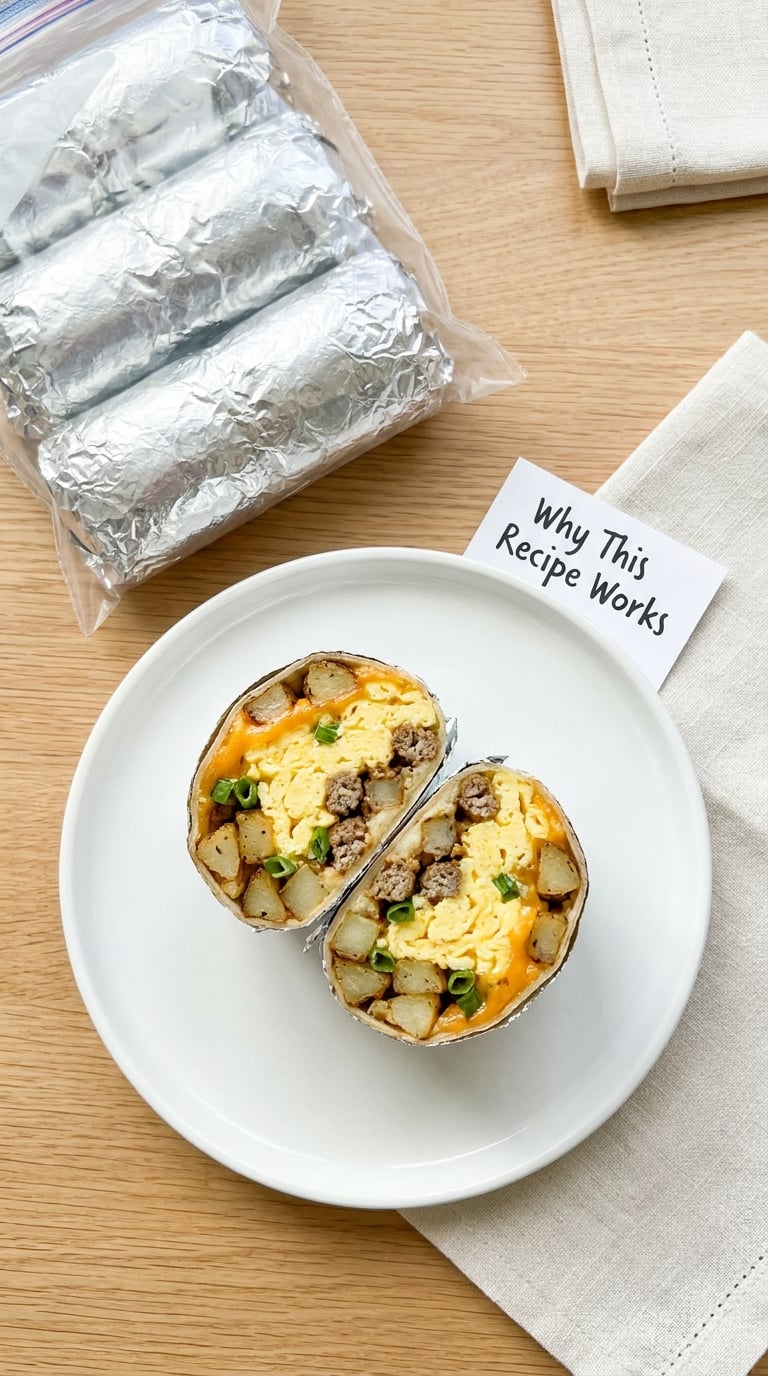
- The filling decides how long a burrito stays good. Every component here is cooked first, so there is no raw egg or raw meat to spoil and nothing to cook on a weekday morning.
- Cooling the filling completely is the whole anti-soggy trick. Warm filling releases steam inside the wrap, and that steam softens the tortilla and makes it split. I learned this by packing one batch straight out of the skillet and finding a bag of tortillas as limp as wet paper the next morning.
- Shredded cheese works as a moisture barrier. A thin layer of shredded cheddar against the tortilla keeps grease and egg moisture off the dough, and it re-melts into the filling on reheating.
- Corn tortillas crack when frozen, flour tortillas do not. Flour burrito-size tortillas stay flexible through freezing and thawing. Corn is fine for a same-day breakfast but splits along the fold lines after a month in the freezer.
- Flash-freezing on a lined sheet stops sticking. Fifteen to twenty minutes uncovered, then into the bag, is the difference between eight separate burritos and one frozen tortilla brick.
Ingredients
Makes 8 large breakfast burritos, enough for eight grab-and-go mornings.
- 1 lb (450 g) breakfast sausage, casings removed
- 1 medium russet or Yukon Gold potato (about 150 g), peeled and diced into 1/2-inch cubes
- 10 large eggs
- 2 tbsp milk
- 2 tbsp unsalted butter or neutral oil
- 1/2 cup (75 g) diced yellow bell pepper
- 1/2 cup chopped green onion, whites and tops separated
- 1 cup (113 g) shredded sharp cheddar
- 1/2 cup (85 g) shredded pepper jack
- 8 burrito-size flour tortillas (about 10 inch)
- 1 tsp kosher salt, plus black pepper
- Cooking spray or neutral oil, for the sheet pan
On the key ingredients. The potato is the part people leave out, and it is the part that makes these feel like breakfast instead of a wrapped omelet. Dice it small and it gives the filling body that survives freezing. Russet and Yukon Gold both work; waxy potatoes turn gluey.
Substitutions that stay freezer-safe. Any kind of breakfast sausage works, including turkey and apple chicken, as long as the internal temperature reaches 160°F (71°C). Plant-based sausage crumbles are fine too. Skip fresh tomato, avocado, sour cream, and raw lettuce; they release water and turn the tortilla to mush. Frozen peas and diced bell pepper are excellent, and cooked spinach must be squeezed completely dry first.
Corn tortillas are the one swap I would not make for a freezer batch. They crack along the fold once frozen. If corn is your only option, wrap each burrito twice and expect to soften them before serving.
Equipment
- A large skillet, 12-inch or wider, with a lid
- A second pan or plate for cooling, or a wire rack over a baking sheet
- A mixing bowl and a rubber spatula
- Measuring cups and a wooden spoon
- A rimmed baking sheet lined with parchment paper
- Resealable freezer bags or airtight freezer containers, plus a marker
- Optional: an instant-read thermometer, the single most useful tool for this recipe
That is the entire list. A blender, a griddle, and a tortilla press are all nice, none of them required.
How to Make Make Ahead Breakfast Burritos for the Freezer
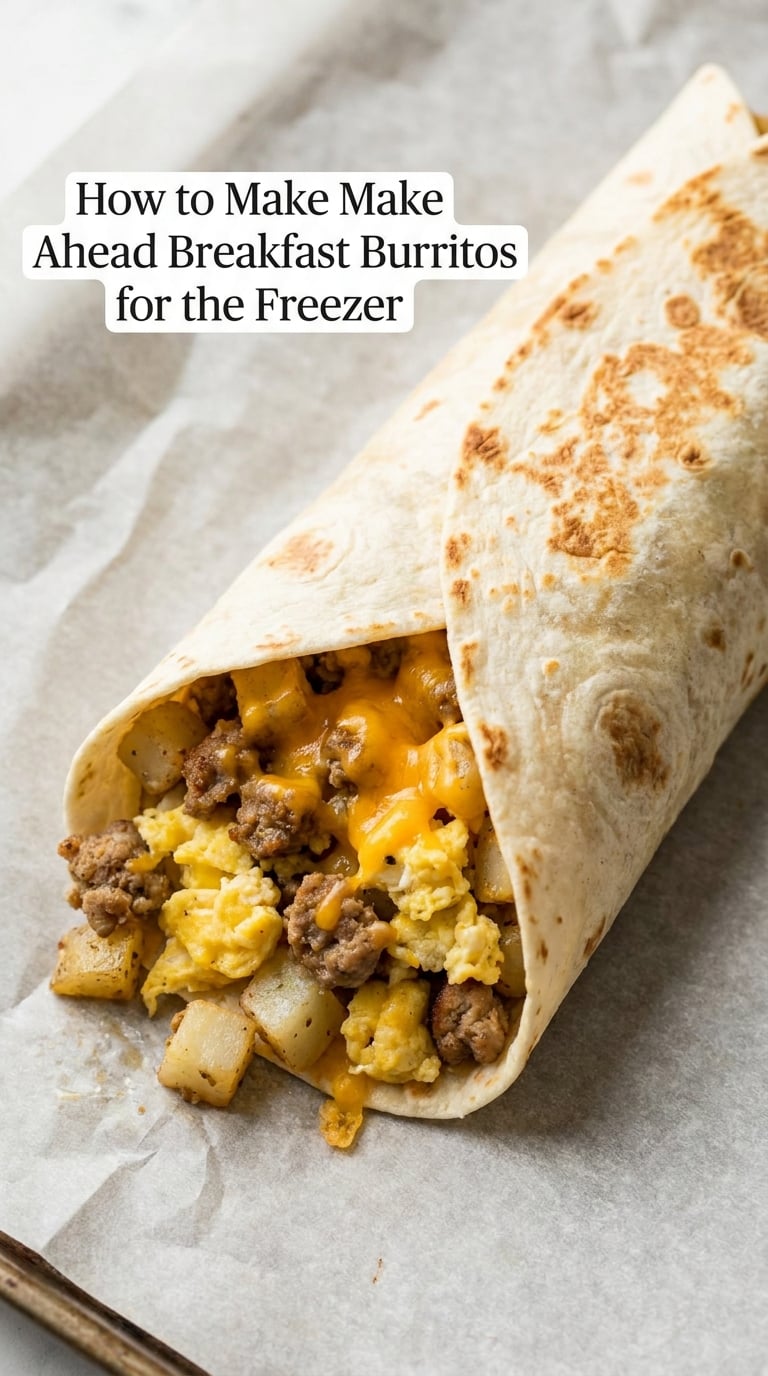
Cook the filling
- Heat a large skillet over medium-high heat. Brown the sausage in 1 tablespoon of the butter, breaking it up as it cooks, about 6 to 8 minutes, until no pink remains and the internal temperature reads 160°F (71°C).
- Push the sausage to one side. Add the diced potato to the empty half of the skillet with the remaining butter. Cook for 6 to 8 minutes, stirring, until the cubes are browned on the edges and fork-tender.
- Add the bell pepper and the green onion whites to the pan. Cook 2 to 3 minutes more, until the pepper looks glossy and soft.
- Pour in the eggs and the milk. Stir constantly with a spatula for 2 to 3 minutes, until the eggs are set but still slightly underdone in the middle. Pull the pan off the heat while they still look a little damp; they finish on the counter and on the stove later.
- Season with the salt and pepper, stir once more, and scrape everything onto a plate or into a wide bowl.
Cool the filling completely
- Spread the filling in a single layer, no more than 1 inch deep, so it cools fast.
- Let it sit until there is no warmth at the center of the mound, about 30 to 45 minutes. Touch the middle of it with the back of your hand; if it feels like nothing, it is ready.
- Stir in the shredded cheddar, pepper jack, and green onion tops once the filling is cool. Adding cheese to hot filling melts it into a slick layer, which is exactly the soggy problem you are trying to avoid.
Assemble and roll each burrito
- Warm the tortillas for 15 seconds in the microwave, or 30 seconds wrapped in a damp towel. Cold tortillas crack when you roll them.
- Lay a tortilla flat. Add about three-quarters of a cup of filling in a line across the lower third, leaving a 1-inch border of bare dough on all sides.
- Fold the sides in first, then roll the near edge over the filling and tuck it under itself, then keep rolling tightly. Two tight rolls beat a loose one every time.
- Set it seam-side down on the lined baking sheet. Repeat with the rest.
Flash freeze, then bag and label
- Set the sheet in the freezer uncovered for 20 to 30 minutes, until the burritos are firm and no longer bend.
- Transfer them to a resealable freezer bag, standing them upright or laying them flat. Push out the air and seal.
- Label the bag with the date, the filling, and the reheat method. A bag marked only with a month is how good food gets pushed to the back of the freezer and forgotten.
- Keep them flat in the coldest part of the freezer, away from the door, and use within two to three months.
Tips for Success
- Cool the filling all the way. If the eggs are even slightly warm, the trapped steam softens the tortilla. This one habit fixes more soggy burritos than any wrap method.
- Pat the meat dry. After browning, blot the sausage and potatoes on a paper towel before they go in the tortilla. Surface grease soaks into dough faster than anything else in the filling.
- Do not overstuff. A full cup of filling in an 8-inch tortilla is a burrito. More than that is a burrito that splits on the first bite, no matter how tight you roll it.
- Use burrito-size flour tortillas. The regular 8-inch dinner tortillas are too small, and the jumbo ones are fine but overkill. About 10 inch is the sweet spot for holding a real breakfast filling.
- Flash-freeze, do not just bag them. Stacking warm burritos in a bag creates one solid frozen mass. Twenty minutes on a lined sheet is the whole fix.
- Reheat uncovered when you can. Wrapping a burrito in paper towel for the microwave keeps it from drying out, but leave the last 20 seconds uncovered so steam can escape, or the tortilla will be soft and the filling hot.
Variations
- Vegetarian: Skip the sausage entirely. Cook the potatoes and peppers first, then add 10 eggs, and finish with a handful of black beans. Black beans freeze and reheat well; rinsed and dried, not canned with liquid.
- Low-carb: Use a low-carb or spinach wrap and double the egg and cheese, cut the potato. These need about a minute less in the microwave than a flour-tortilla version because there is less bread to heat through.
- Gluten-free: A gluten-free flour tortilla holds up fine, though the texture is slightly softer. Keep the filling the same and do not over-wet it.
- Dairy-free: Leave the cheese out and season the eggs with salt, pepper, and a pinch of smoked paprika for the depth cheese would have given. The filling freezes equally well without it.
- Kid-friendly: Use mild turkey sausage, mild cheddar only, and skip the green onion tops. Cut the finished burrito in half on the plate; half a burrito reads as a quesadilla to most kids, which helps.
- Southwest: Swap the pepper jack for Monterey Jack with jalapeño slices, and add a teaspoon of chili powder to the eggs. Hold the fresh salsa until serving.
Storage, Make-Ahead and Reheating
Assembled burritos keep 3 to 4 days in the refrigerator, covered in a container so they do not dry out, and 2 to 3 months in the freezer. In the freezer, the tortilla stays the limiting factor: at one month the burritos are essentially as good as fresh, and past two months the tortillas start to stiffen even though the filling is still perfectly safe.
| Where it lives | How long | Best for |
|---|---|---|
| Counter, unwrapped | Up to 2 hours | Nothing. This is the one to avoid. |
| Refrigerator, wrapped or in a container | 3 to 4 days | Eating the batch this week |
| Freezer, flash-frozen and bagged | 2 to 3 months | Best texture within the first month |
Thawing. Move the burritos from the freezer to the refrigerator the night before, still in the bag, and reheat them straight from thawed the next morning. Thawing on the counter is not safe for a filling that includes meat. If you forget, reheat from frozen; the two-stage method below is built for exactly that.
Reheating from frozen:
| Method | Time and temperature | Result |
|---|---|---|
| Microwave, from frozen | 2 minutes at 50% power, then 1 to 2 minutes at full power, on a plate or paper towel | Fastest, tortilla softest. Add a cup of water alongside and leave the last 20 seconds uncovered. |
| Microwave, from thawed | 60 to 90 seconds at full power | Even heating, no steaming stage needed. |
| Oven | 350°F (175°C) for 10 to 15 minutes, unwrapped on a sheet pan | Crispest tortilla, hands-off, ideal for a double batch. |
| Skillet | 4 to 5 minutes per side over medium heat, seam-side down first | Best texture of any method, needs a little oil and attention. |
| Air fryer or toaster oven | 400°F (200°C) for 6 to 8 minutes, turning once | Crisp edges in about half the time, watch it closely at the end. |
Whichever method you use, heat the burrito until the filling is steaming hot all the way through, about 165°F (74°C), including the center. A cold middle is the most common complaint, and it is a reheat-timing problem, not a recipe problem: the tortilla heats long before the filling does, so let it sit 1 to 2 minutes after reheating to let the heat even out before you bite it.
Allergens: eggs, milk, wheat, and soy are the main ones in this recipe, and sausage usually carries its own additives. For a gluten-free or dairy-free household, see the variations above; the filling and the wrap both swap cleanly.
What to Serve With It
- Fresh fruit: Sliced banana or orange segments straight off the cutting board, no prep beyond peeling.
- Salsa and sour cream: A spoonful on the side, not inside the burrito, so it stays out of the tortilla.
- Greek yogurt with honey: Five minutes of stirring, and the protein balances the carb-heavy wrap.
- Roasted baby potatoes: A batch on the sheet pan with the burritos, tossed with oil and salt at 400°F (200°C) for 25 to 30 minutes.
- A quick smoothie: Banana, milk, and a handful of spinach blended in under a minute, which is about the same effort as getting out the blender.
For a bigger spread on the weekend, my freezer-ready breakfast muffin recipes pair well with a reheated burrito when you have guests.
Frequently Asked Questions
Can you freeze breakfast burritos with eggs?
Yes. Fully cooked scrambled eggs freeze and reheat very well, which is why almost every freezer burrito recipe uses them. The only rule is to cook the eggs until they are just barely set, cool them completely to room temperature, and never add salsa or fresh tomato before freezing. Cooled eggs that are not wet will come out soft and set, not weepy.
How long do make ahead breakfast burritos stay in the freezer?
Two to three months is the safe window, and quality is best in the first month. After that the filling holds up fine but the tortilla stiffens and loses the soft-chewy texture of a fresh one. Date every bag when you freeze it, and cook the oldest ones first. Some people eat freezer burritos well past three months without a problem, but I would not plan a menu around that.
Should breakfast burritos be thawed before reheating?
Thawing is nicer but not required. If you have time, move the bag to the refrigerator the night before and reheat for 60 to 90 seconds in the microwave. If you did not plan ahead, reheat from frozen using two stages: 2 minutes at 50% power, then 1 to 2 minutes at full power. The slow first stage thaws the center before the tortilla gets a chance to go rubbery.
How do I keep tortillas from getting soggy in the freezer?
Cool the filling completely, pat cooked meat dry with a paper towel, and keep wet ingredients out entirely. Skip fresh tomato, avocado, sour cream, and raw lettuce before freezing, and use a layer of shredded cheese as a barrier between the filling and the dough. Flash-freeze on a lined sheet for 20 to 30 minutes so the tortillas never sit pressed against something wet while the water is still moving.
Can I freeze breakfast burritos with fresh vegetables?
Cooked vegetables are fine; fresh ones are the problem. Bell peppers, onions, and mushrooms freeze well once sautéed. Leafy greens need cooking and a hard squeeze in a towel, and fresh lettuce or tomato will release water that soaks the tortilla no matter how well you wrap it. Frozen peas work straight from the bag with no cooking first.
What is the best way to reheat a frozen breakfast burrito?
For the crispest tortilla, use a skillet for 4 to 5 minutes per side over medium heat, or a toaster oven or air fryer at 400°F (200°C) for 6 to 8 minutes. The microwave is fastest at 2 minutes on 50% power plus 1 to 2 minutes at full power, and the tortilla will be soft. Let the burrito sit 1 to 2 minutes after reheating so the center catches up with the outside.
Conclusion: Freeze a Batch for Easier Mornings
If your weekday mornings are the problem, make a full batch on a Sunday or whenever your meal-prep day lands, and freeze them the way this recipe does: cooked filling, cool filling, tight roll, flash freeze, dated bag. Eight burritos cover eight mornings in about three minutes of reheating each, which is a better return than almost anything else you can cook ahead.
Start with the classic build, then try the vegetarian version with black beans on your second batch once you trust your own cooling and rolling. Either way, make ahead breakfast burritos for the freezer are the one prep job that keeps paying out on the mornings you would otherwise be standing in the kitchen at 7 a.m.