
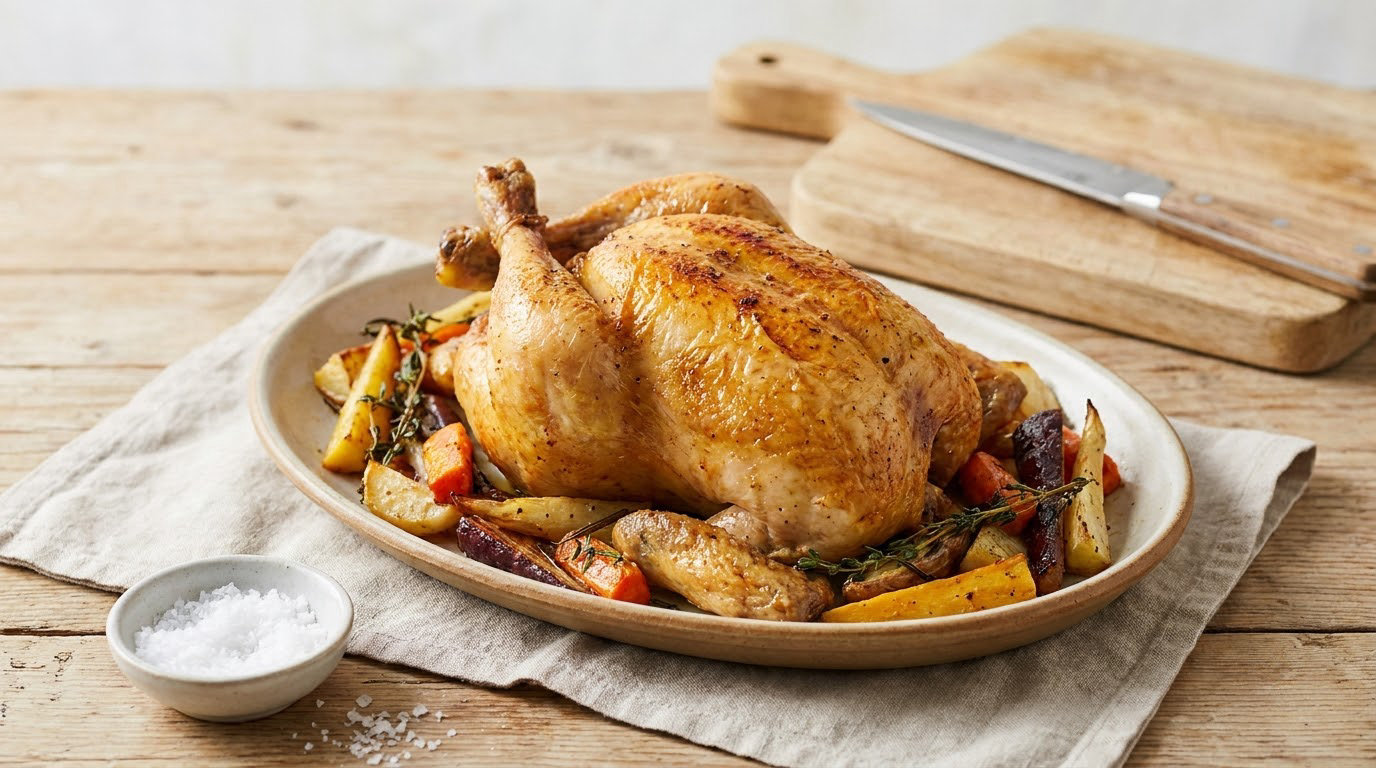
If you have ever pulled a brick of frozen chicken out of the freezer at 5 p.m. with dinner in mind, you already know the stress of figuring out how to thaw chicken safely without ruining the meal. The good news: the USDA spells out four approved methods, and each one keeps the meat out of the bacterial danger zone (40 to 140°F). The bad news: almost every shortcut you have heard about, including the counter, hot water, and the blow dryer, is on the unsafe list.
Below is the exact walkthrough I wish I had ten years ago, with times per cut, temperatures, and the small mistakes that turn a safe thaw into a food safety problem.
Table of Contents
How to Thaw Chicken Safely: The Short Answer
According to the USDA Food Safety and Inspection Service, there are four safe ways to thaw chicken: in the refrigerator, in cold water, in the microwave, or by cooking it directly from frozen. Anything else, especially leaving chicken on the counter, can push the meat into the 40 to 140°F danger zone where bacteria multiply fast. Plan ahead when you can, use cold water when you cannot, and cook the chicken to 165°F (74°C) at the end no matter which method you pick.
Thawing Chicken at a Glance
| Method | Time per pound | Best for | Texture after thaw | Food-safety rating |
|---|---|---|---|---|
| Refrigerator | About 24 hours per 5 lb | Planning ahead, overnight thaws | Juicy, even texture | Best |
| Cold water | 30 minutes per pound | Same-day dinners, medium cuts | Juicy, slightly softer | Very good |
| Microwave defrost | 5 to 10 minutes per pound | Last-minute meals, small pieces | Can partially cook edges | Good, cook immediately |
| Cook from frozen | 50% longer than thawed time | Forgot to defrost, breasts and thighs | Moist if covered | Good |
| Counter / room temp | Not recommended | Never | Uneven, unsafe | Unsafe |
Method 1: Thaw Chicken in the Refrigerator (Best for Planning Ahead)
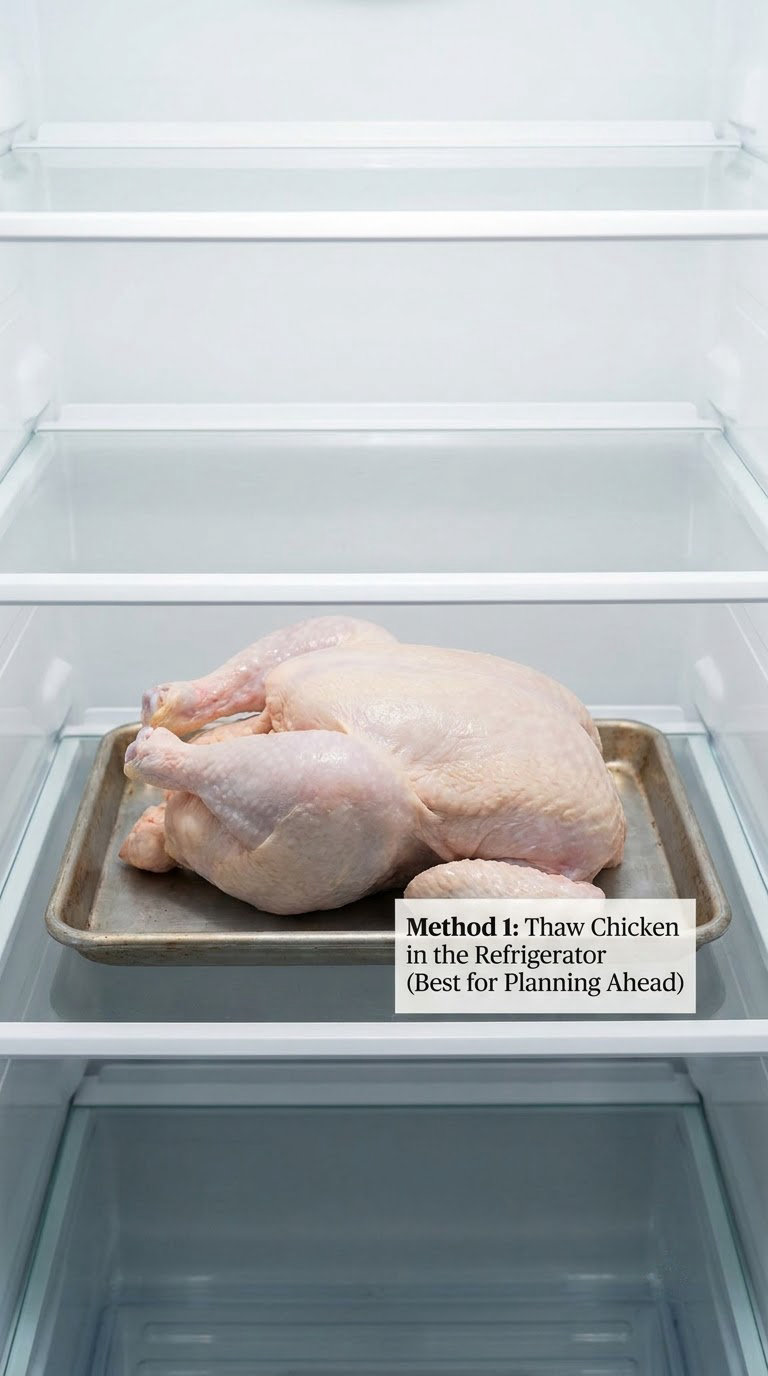
The refrigerator method is the gold standard for how to thaw chicken safely. It keeps the meat at or below 40°F the entire time, so bacteria stay dormant. The trade-off is patience: a whole 4 lb chicken needs about 24 hours, and a pack of boneless breasts takes roughly 12 to 24 hours depending on thickness.
Here is the routine I use on Sundays for the week’s meals:
- Take the chicken out of the store packaging and place it on a rimmed sheet pan or in a shallow dish to catch drips.
- Put the pan on the lowest shelf of the fridge, where any leaks stay away from produce and ready-to-eat foods.
- Keep the chicken in its original vacuum-sealed bag if it is leak-proof, or transfer it to a sealed container.
- Let it thaw undisturbed for the times below.
- Cook within 1 to 2 days of fully thawing for the best texture.
Per-pound timing in the fridge runs about 5 hours per pound, so a 4 lb whole bird needs roughly 20 hours, and a 2 lb pack of breasts needs about 10 hours. The table below gives you a quick lookup by cut.
| Cut | Average weight | Fridge thaw time |
|---|---|---|
| Whole chicken | 4 to 6 lb | 20 to 30 hours |
| Bone-in breast | 1.5 to 2 lb | 8 to 12 hours |
| Boneless breast | 1 to 1.5 lb | 5 to 10 hours |
| Thighs (bone-in) | 1.5 to 2 lb | 8 to 12 hours |
| Wings | 1 to 2 lb | 6 to 10 hours |
| Ground chicken | 1 lb | 5 to 8 hours |
If you want a no-fuss Sunday night dinner, a fridge-thawed chicken slides perfectly into our crockpot pulled chicken sandwiches or the crockpot chicken curry.
Method 2: Thaw Chicken in Cold Water (Fast, Same-Day)
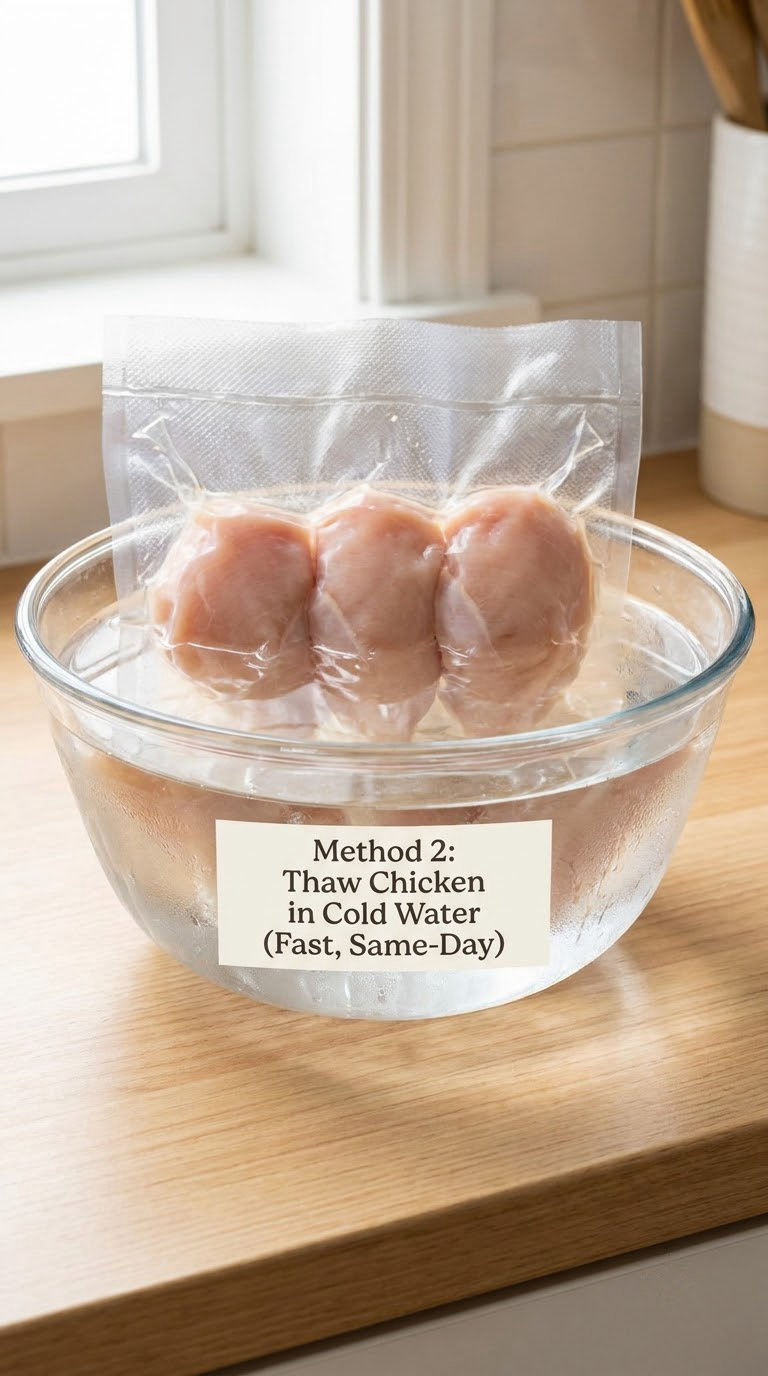
When you forgot to move the chicken the night before, cold water is the next best thing. The water transfers heat much faster than air, so a 1 lb pack of breasts thaws in about 30 minutes, and a 4 lb whole bird thaws in roughly 2 hours. The trick is keeping the water cold and the chicken sealed.
Follow these steps every time:
- Leave the chicken in its original leak-proof packaging. If the wrap is torn, place the chicken inside a heavy-duty zip-top bag and squeeze out the air.
- Fill a large bowl or clean sink with cold tap water (below 70°F, definitely under 40°F if your tap runs that cold).
- Submerge the chicken fully. Weigh it down with a heavy plate if it tries to float.
- Change the water every 30 minutes so the bath stays cold.
- Cook the chicken right away once it is pliable with no ice crystals in the center.
Allow about 30 minutes per pound for whole birds and bone-in cuts, and around 20 to 25 minutes per pound for boneless pieces. Skip this method for thin cuts like individual breasts or wings; they thaw so quickly on a plate that the cold-water bath adds little and risks a messy counter.
Method 3: Thaw Chicken in the Microwave (Last-Minute Only)
The microwave is fast but uneven, and that is exactly why it sits at the bottom of the safe-method list. Defrost mode uses low power to warm the chicken without cooking it, but the edges often start to cook before the center thaws. The USDA treats microwave thawing as safe only when the chicken goes straight to the stove or oven when done.
Use this method when dinner is happening in the next 20 minutes:
- Remove the chicken from the store packaging and place it in a microwave-safe dish.
- Set the microwave to defrost or 30 percent power. Boneless breasts usually need 5 to 7 minutes; a pound of thighs needs 6 to 8 minutes.
- Flip and rotate the pieces every 1 to 2 minutes, breaking apart any sections that are thawing faster.
- Separate ground chicken with a fork as it loosens up so it thaws evenly.
- Cook the chicken immediately. Do not put it back in the fridge or leave it on the counter.
If the edges look gray or feel warm, the meat has started to cook, which is fine as long as the chicken goes to the skillet right away. Throw a towel over the plate to keep splatters down and to remind yourself not to walk away.
Method 4: Cook Chicken from Frozen (The Safest Shortcut)
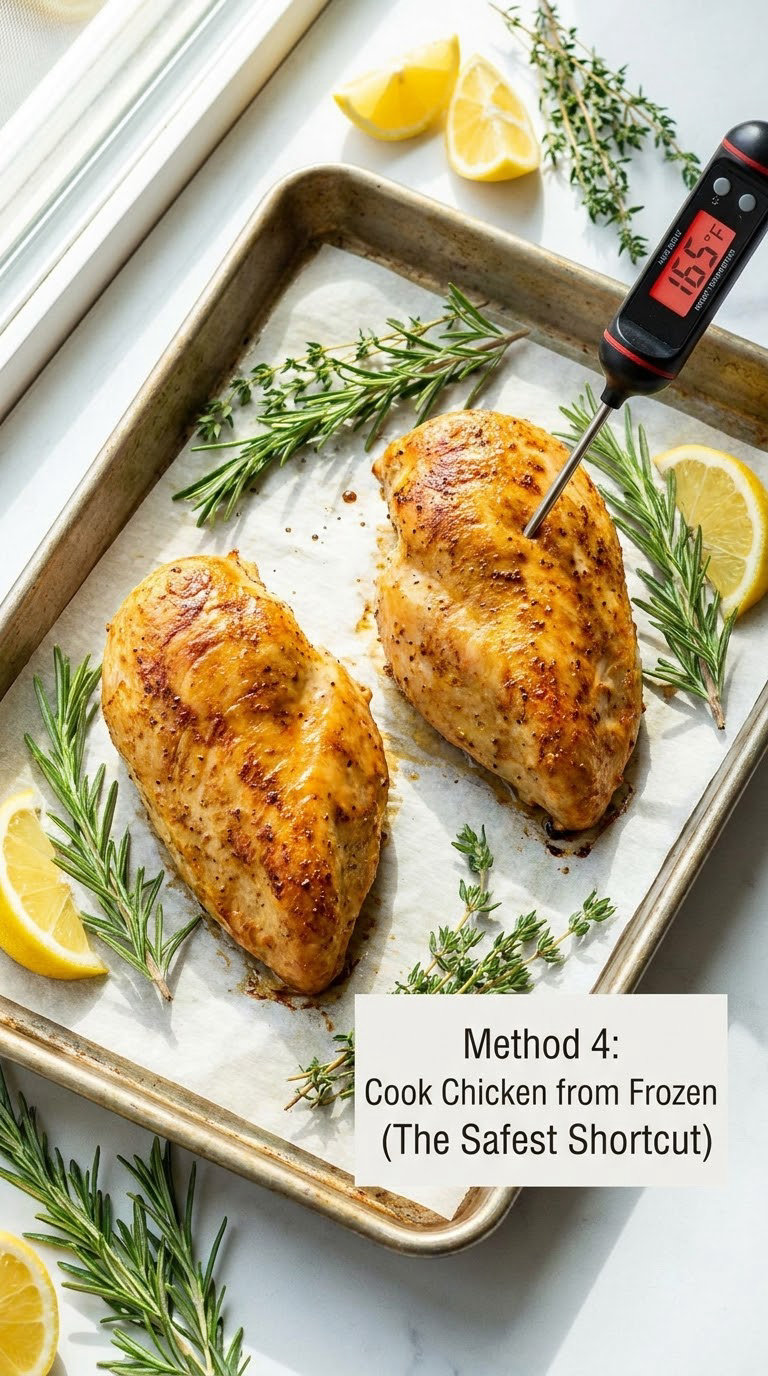
Skipping the thaw entirely is a safe option the USDA confirms, and it is genuinely the lowest-stress method for weeknights. Frozen chicken is harder to overcook than people think because the ice moderates the oven temperature, and the meat stays moist when you give it time.
For oven roasting, set the temperature to 350°F (175°C) and plan on 50 percent longer than the thawed-time recipe calls for. A typical boneless breast that takes 25 minutes thawed will need about 38 to 40 minutes from frozen. The only non-negotiable rule: pull the chicken when an instant-read thermometer in the thickest part hits 165°F (74°C). If you are baking from frozen, our guide to freezing cooked rice safely pairs well for meal prep.
For the stovetop, sear frozen chicken breasts in a covered skillet over medium-low heat with a splash of chicken stock or oil. Cook 8 to 10 minutes per side, lid on, then finish uncovered for a few minutes to brown. For an Instant Pot or slow cooker, the USDA explicitly warns against starting frozen meat in a slow cooker, since the slow rise in temperature holds the meat in the danger zone too long. If pressure cooking from frozen is your shortcut, set the pot to high pressure for the full time and confirm 165°F before serving.
Thawing Times by Cut and Weight
| Cut | Fridge time | Cold-water time | Microwave time | Cook-from-frozen time |
|---|---|---|---|---|
| Whole chicken (4 to 6 lb) | 20 to 30 hours | 2 to 3 hours | Not recommended | About 50% longer than thawed recipe |
| Bone-in breast | 8 to 12 hours | 1 to 1.5 hours | 10 to 14 minutes | 45 to 55 minutes at 350°F |
| Boneless breast | 5 to 10 hours | 30 to 50 minutes | 5 to 7 minutes | 35 to 45 minutes at 350°F |
| Thighs (bone-in) | 8 to 12 hours | 1 to 1.5 hours | 8 to 12 minutes | 45 to 55 minutes at 350°F |
| Drumsticks | 8 to 12 hours | 1 to 1.5 hours | 8 to 12 minutes | 45 to 55 minutes at 350°F |
| Wings | 6 to 10 hours | 45 to 75 minutes | 5 to 8 minutes | 35 to 45 minutes at 350°F |
| Ground chicken | 5 to 8 hours | 30 to 45 minutes | 4 to 6 minutes | Cook from frozen in skillet, breaking apart |
How to Tell Thawed Chicken Is Still Safe to Cook
Thawed chicken is not automatically spoiled, and frozen chicken does not expire on the day it loses its ice crystals. Use this quick sensory check before cooking:
- Cold to the touch. If the meat feels room temperature or warmer, it has been out of the safe range too long.
- No off smell. Fresh chicken has a very mild, almost neutral scent. A sour, sulfurous, or ammonia-like odor means the meat has started to spoil.
- Flesh springs back. Press the thickest part with a fingertip. It should feel firm and bounce back, not leave a deep dent.
- No sticky or slimy film. A light tackiness is normal, but a glossy, sticky coating is a red flag.
- Color is even. Pink-tinted flesh with white fat is normal. Gray patches, green tints, or large dark spots are not.
Most importantly, the final safety gate is the cook, not the thaw. Even chicken that looks and smells fine must reach 165°F (74°C) at the thickest part before serving. A $15 instant-read thermometer is the single best tool for protecting a meal.
Common Mistakes to Avoid
These are the five slip-ups reviewers mention most often, with the fix for each:
- Leaving chicken on the counter. The outside warms into the danger zone long before the inside thaws. Move the chicken to the fridge, cold water, or microwave instead.
- Using hot or warm water. Hot water cooks the outside and pushes the meat into the danger zone. Always start with cold tap water and refresh it every 30 minutes.
- Refreezing without cooking first. Chicken thawed in cold water or the microwave has already sat in warm enough conditions to grow bacteria. Refreezing traps that bacteria, and you cannot undo it later.
- Thawing chicken in warm or dirty water. Dishwasher “turbo defrost” tricks, warm sinks, and reused cooking water are all bad ideas. The water must be clean and below 40°F.
- Skipping the rimmed pan in the fridge. Without a pan, drips land on cheese, produce, and leftovers. A rimmed sheet pan on the lowest shelf keeps raw juices contained.
Refreezing, Marinating, and Storing Thawed Chicken
Once the chicken is thawed, you have a small window before quality and safety both slip. Cooked chicken keeps 3 to 4 days in the fridge and 2 to 6 months in the freezer. Raw thawed chicken keeps 1 to 2 days in the fridge before it should be cooked.
Refreezing is fine only when the chicken was thawed in the refrigerator and stayed under 40°F the entire time. Refreeze within 2 days for the best texture. If you thawed the chicken in cold water or the microwave, cook it first, then freeze the cooked meat if you want to save it for later.
For marinades, always work in the fridge, even when the recipe is short. A 30-minute marinade on the counter is enough time for the surface to climb out of the safe zone, especially with acidic or oil-based mixtures. Pull the chicken out only when you are ready to cook it.
Frequently Asked Questions
Is it safe to thaw chicken on the counter overnight?
No. Leaving chicken on the counter overnight is the most common food safety mistake home cooks make. The outside of the meat enters the 40 to 140°F danger zone long before the inside thaws, allowing bacteria like Salmonella to multiply to unsafe levels. The USDA recommends throwing away chicken that has been at room temperature for more than 2 hours and discarding it sooner in a hot kitchen.
How long does it take to thaw chicken in the fridge?
Plan on about 5 hours per pound in the refrigerator. A 1 lb pack of boneless breasts takes 5 to 10 hours, while a 4 to 6 lb whole chicken needs 20 to 30 hours. The fridge keeps the meat at or below 40°F, so it thaws slowly and safely. Place the package on a rimmed pan on the lowest shelf to catch any drips.
Can I refreeze chicken that was thawed in cold water or the microwave?
You should cook the chicken first before refreezing in those cases. Cold water and microwave thawing warm the surface into the danger zone, and any bacteria present will keep growing in the freezer. Once cooked to 165°F, the chicken can be frozen for 2 to 6 months. Chicken thawed in the fridge can be refrozen raw within 2 days without cooking first.
How can I tell if thawed chicken has gone bad?
Look for four signs: a sour or ammonia-like smell, a sticky or slimy surface, gray or green patches, and flesh that stays dented when pressed. Fresh thawed chicken should feel cold, look pink with white fat, and spring back when you press it. When in doubt, throw it out. A $15 instant-read thermometer protects you more than any other tool.
Is it safe to cook chicken from frozen without thawing?
Yes, and it is one of the safest shortcuts. The USDA confirms cooking from frozen is safe, and the ice inside the meat helps prevent overcooking. Plan on 50 percent longer than your usual recipe time, and always confirm the thickest part reaches 165°F (74°C) with an instant-read thermometer before serving. Avoid slow cookers for frozen meat since the temperature rises too slowly.
Should I rinse chicken after thawing it?
No. Rinsing raw chicken does not remove bacteria, and the splashing spreads germs up to three feet around your sink onto towels, counters, and utensils. The USDA and CDC have recommended against washing poultry for years. Pat the chicken dry with paper towels if you want better browning, and wash your hands and any surfaces that touched the raw meat with hot soapy water.
The Best Way to Thaw Chicken Safely
The refrigerator is the default, cold water is the same-day fix, the microwave is the last-minute option, and cooking from frozen is the never-stress shortcut. Whichever method you choose, finish the chicken to 165°F (74°C) on an instant-read thermometer, and you have mastered how to thaw chicken safely for every weeknight ahead.