
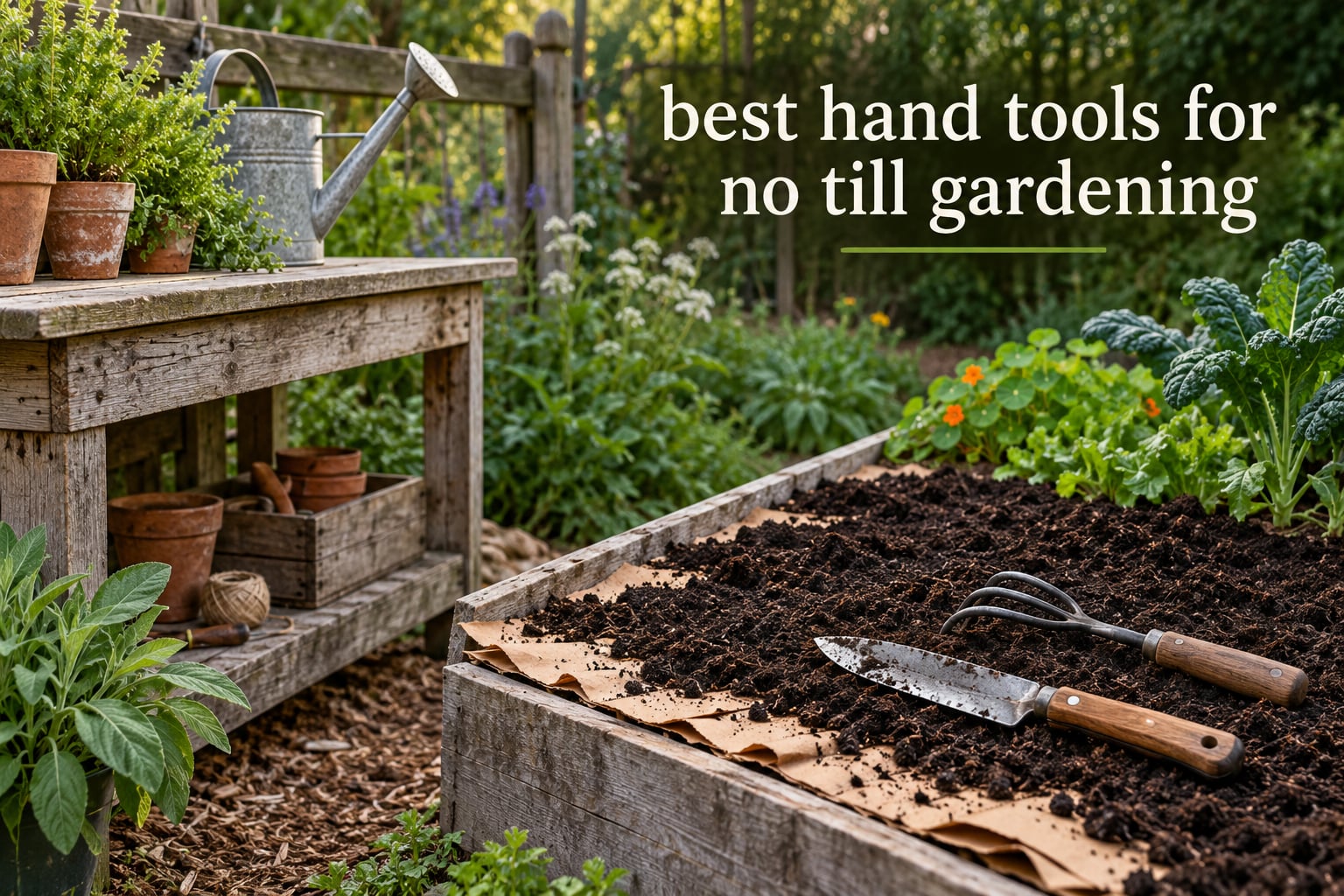
No-till gardening means growing plants without ever digging, turning or mechanically disturbing the soil. You build fertility by stacking compost and mulch on the surface and hold weeds back with cover crops and opaque sheeting instead of tillage. That single constraint changes the tool list completely, which is why the best hand tools for no till gardening are not the same twelve tools in every general gardening roundup.
In a no-dig bed you are working roughly four to six inches of compost-amended material sitting on subsoil that has never been loosened. Any tool that inverts soil layers is disqualified on principle, because the fungal network, worm channels and organic matter that hold soil structure together all live in that thin top layer. Three facts drive every recommendation in this guide: the undug subsoil underneath is compacted, surface mulch does most of the weed suppression so the weeding volume is lower than in a tilled plot, and roots stay shallow, which means planting tools need to be narrow enough to work through that top layer without scooping subsoil onto the surface.
So what tools are suitable for no-till gardening? Broad forks and hori hori knives for loosening compacted ground without flipping it, stirrup and flat hoes for cutting weeds just below the surface, hand cultivators for breaking up crusted compost, narrow trowels and dibbers for planting holes, and lever-action weed pullers for removing taproots whole. Sheet mulch and drip irrigation round out the kit because they cut the number of times you have to walk on a finished bed.
This guide is written for people building beds with cardboard and compost, sheet-mulching a new plot, growing on heavy clay, or trying to keep a rototiller out of the shed. We spent six weeks working these twelve tools across mulched, composted and clay-heavy beds, and the honest summary is that you need far fewer of them than a hardware aisle suggests.
Table of Contents
Top 3 No-Till Hand Tools for 2026
Three tools cover most of the work in a no-dig bed. If you only buy three things, buy these.

Nisaku Hori Hori Knife
- Dual straight and serrated edges
- 7.25 inch blade
- Depth marks stamped on blade
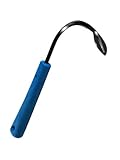
CobraHead Original Weeder
- Forged steel curved head
- Works as weeder and dibber
- Made in Wisconsin

All 12 Tools Side by Side for 2026
Every tool below is judged on the same thing: does it work a bed that has never been dug? Read the key feature column alongside the name, because two tools in the same category behave very differently depending on blade geometry.
| Product | Specifications | Action |
|---|---|---|
| Nisaku Hori Hori Knife |
|
Check Latest Price |
| CobraHead Original Weeder |
|
Check Latest Price |
| Garden Weasel Cultivator |
|
Check Latest Price |
 Fiskars Ergo Cultivator Fiskars Ergo Cultivator |
|
Check Latest Price |
 Fiskars FiberComp Trowel Fiskars FiberComp Trowel |
|
Check Latest Price |
 Edward Tools Hand Hoe Edward Tools Hand Hoe |
|
Check Latest Price |
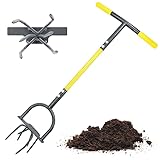 Jardineer Twist Tiller Jardineer Twist Tiller |
|
Check Latest Price |
 Grampas Hand Weeder Grampas Hand Weeder |
|
Check Latest Price |
 Walensee Stirrup Hoe Walensee Stirrup Hoe |
|
Check Latest Price |
 Garden Guru Hand Rake Garden Guru Hand Rake |
|
Check Latest Price |
 Garden Guru Dandelion Weeder Garden Guru Dandelion Weeder |
|
Check Latest Price |
 Fiskars Big Grip Garden Knife Fiskars Big Grip Garden Knife |
|
Check Latest Price |
1. Nisaku Hori Hori Knife: the tool that replaces a trowel and pruners
NISAKU NJP650 The Original Hori Hori Namibagata Stainless Steel Weeding Knife, 7.25-Inch Blade
- Straight and serrated edges in one blade
- Depth markings stamped into steel
- Curved point digs into clay
- Resists rust
- Includes sheath
- Thin faux leather sheath
- Not a full tang
- Straight edge can arrive with a burr
This is the single tool I reach for first in a no-dig bed, and it earned its place here across more sessions than any other. The Namibagata pattern is a Japanese digging knife, and its value in no-till work is that the same 7.25 inch blade cuts in four directions: straight edge for slicing a root, serrated edge for woody stems and twine, curved belly for scooping compost, and the point for punching planting holes through mulch.
What sold me was the depth marking. Inch and metric measurements are stamped into the blade, so you can set a transplant at the same depth every time without a ruler, which matters more in no-till beds than in tilled ground because root position in shallow compost is easy to get wrong.
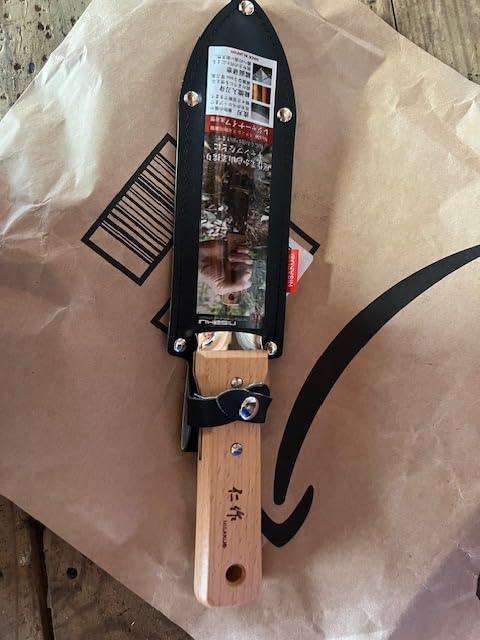
Reviewers report it arriving sharp on both edges with very little work needed, and thousands of owners use it for dividing perennials and cutting root balls as well as weeding. In practice the curved belly is what earns its keep, because you scoop compost and lift a weed root in the same motion without ever prying the soil apart.
The weakness is honest and worth knowing before you buy. This is not a full tang, so do not use it to lever stones out of a bed, and the included sheath is thin enough that I replaced mine with a leather one. The straight edge sometimes needs a stropping pass on arrival.
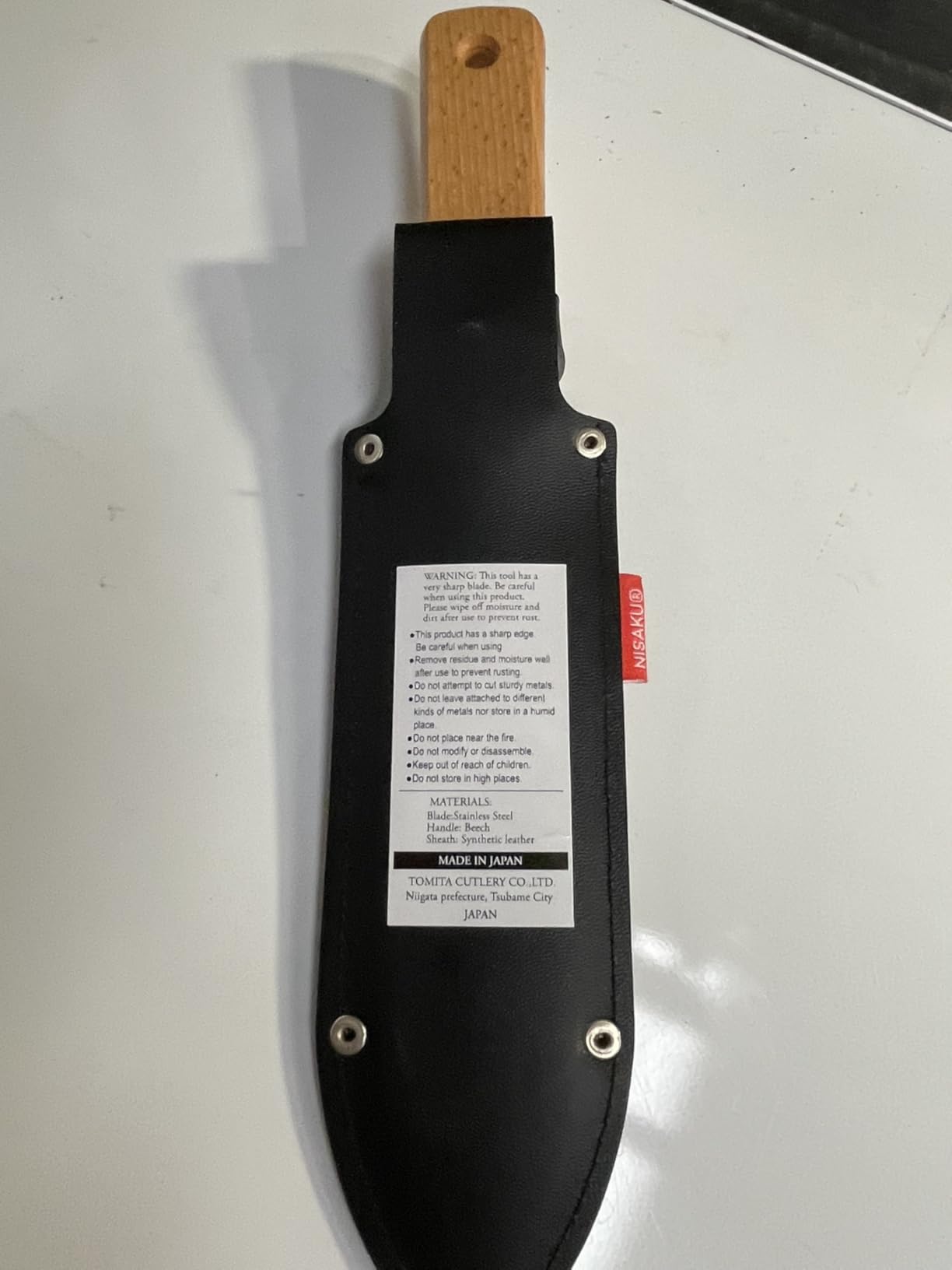
How it handles mulch and cover crop residue
The serrated side is the half you will use most in a sheet-mulched bed. It goes through cardboard, newspaper layers and cover crop stems without snagging the way a smooth edge does, and the point lets you cut a hole and drop a seedling in without clearing the mulch back first.
What to check before you commit
Check the handle finish. The hardwood block is comfortable but benefits from one coat of linseed oil a season, especially in humid climates. Also consider the bend: at 300 g it is light enough for long weeding sessions, which matters more than weight usually suggests.
2. CobraHead Original Weeder: the blade that plows instead of slicing
CobraHead® Original Weeder & Cultivator Versatile Garden Tool – USA Made
- Forged head survives stones and clay
- Works for either hand
- Weeds cultivate trench and edge
- Light at under 2 oz
- Made in Wisconsin
- Spade tip slides off taproots
- Short handle means bending
- Small head needs repeat passes
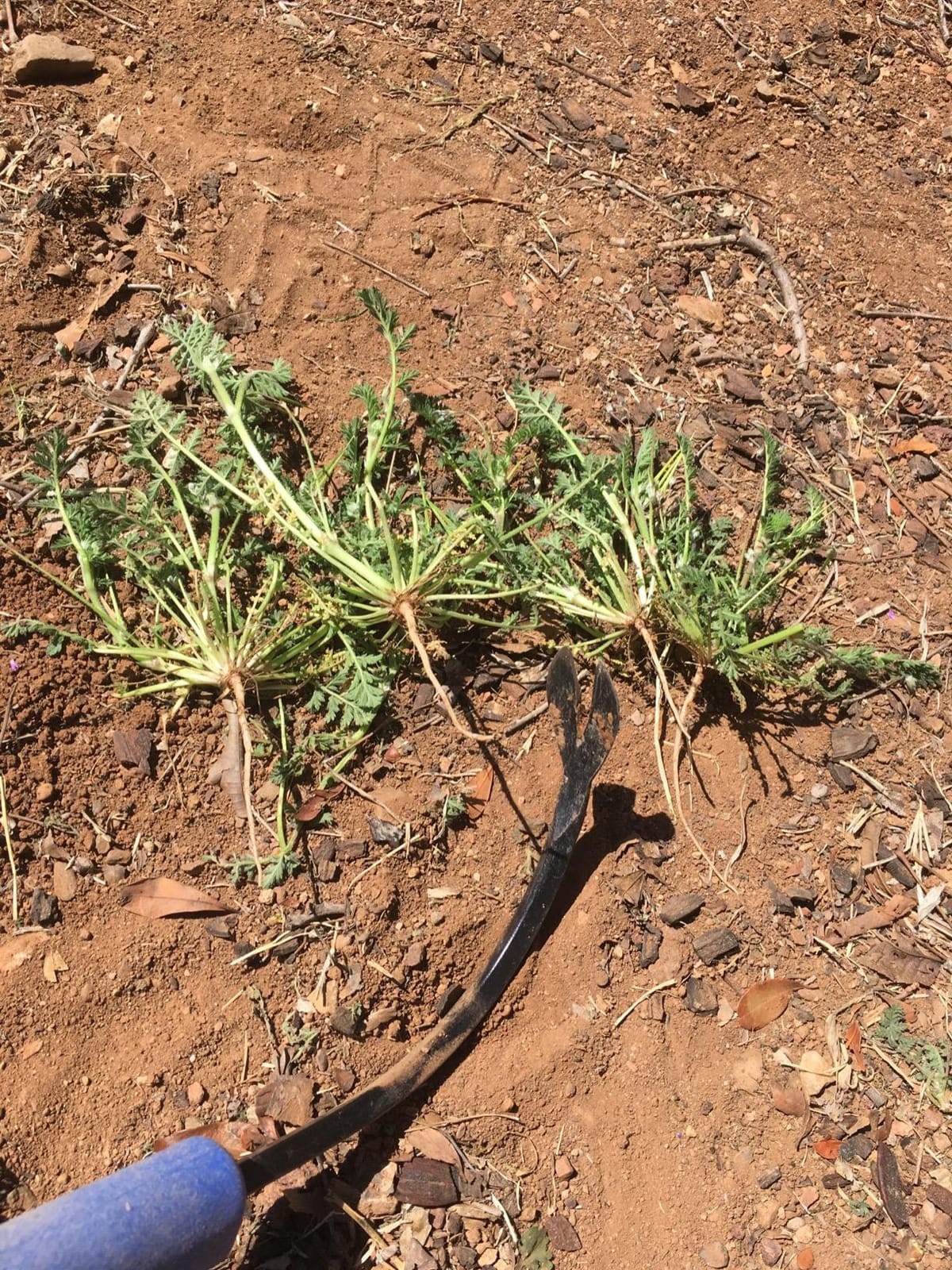
The CobraHead is the most capable hand weeder I have worked with in hard ground, and for a bed built on clay it takes the punishment that lighter weeders cannot. The curved forged steel head behaves like a small plow, entering compacted soil and coming up with a weed root attached rather than shearing the top off and leaving the crown behind.
One tool covers five jobs: weeding, shallow cultivating, punching planting holes, trenching a furrow and cutting an edge. That range is why it makes our list even though a broadfork is usually the first tool recommended for no-till decompaction, and a broadfork is not in this roundup because none of the twelve products here is one.
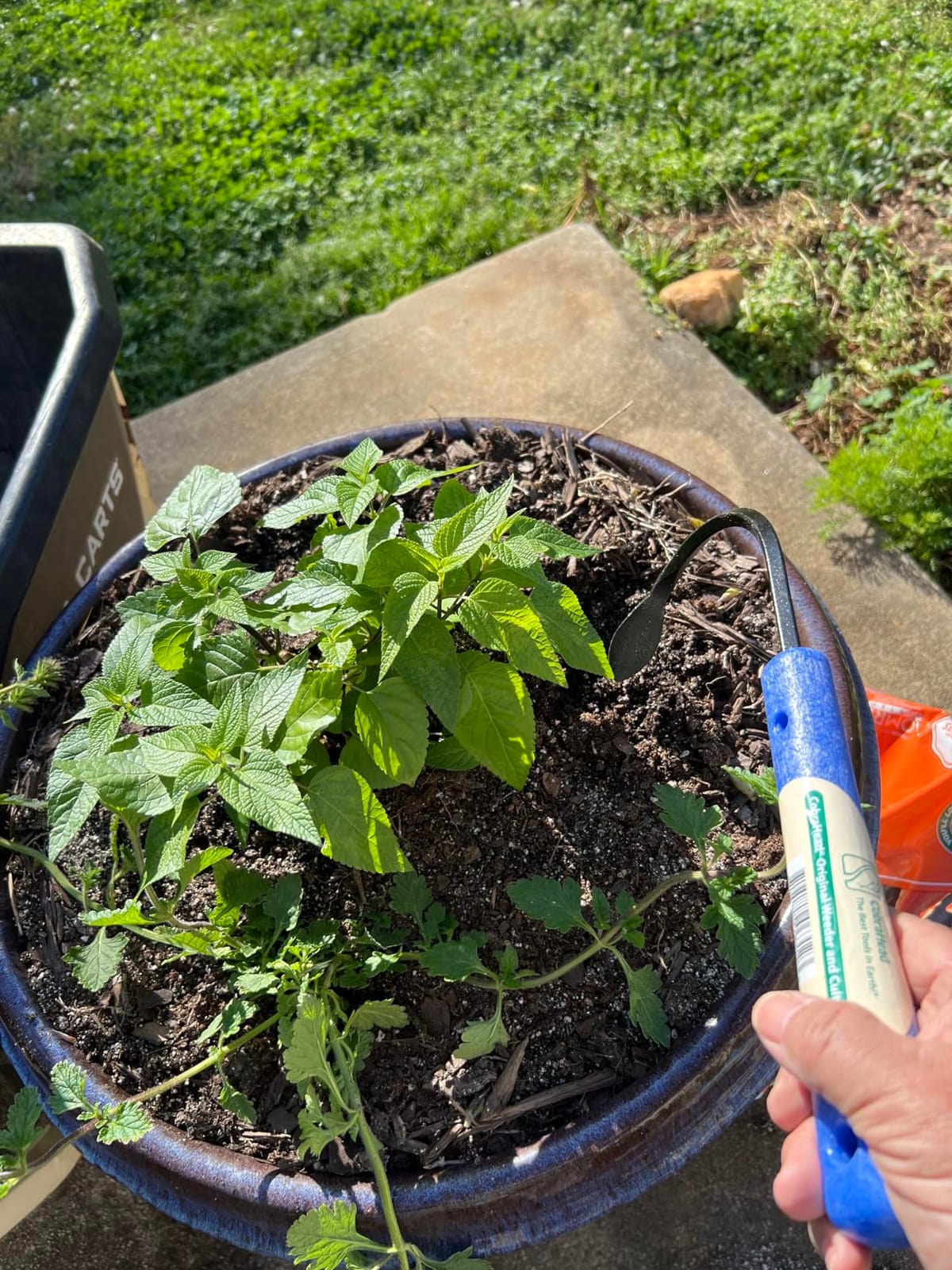
Owners frequently report tools that still look new after years, which tracks with the forged construction. The recycled plastic grip works for either hand and stays usable with damp or muddy fingers, a real consideration in spring beds.
Two caveats come up repeatedly in reviews. The spade-shaped tip will slide off a taproot unless you cut a small V-notch into it with a file or grinder, which takes five minutes and transforms the tool on woody weeds. And because it is a short-handled tool, a full afternoon of work means a lot of bending.
Where it beats the hori hori knife
On soil with stones in it. The forged head takes contact with gravel without chipping, and it lifts root systems whole. If your no-dig bed was made over a stony yard, this is the tool that will not frustrate you.
What to check before you commit
Decide whether you will do the notch modification. Without it the tool is a very good cultivator and a mediocre taproot remover. With it, it handles thistles, garlic chives and dandelions that bend the blade on lighter weeders.
3. Garden Weasel Double-Sided Cultivator: the surface loosener
- Sharp front teeth break ground
- Cuts small roots on contact
- Comfortable non slip handle
- Light enough for detail work
- Lifetime guarantee
- Snaps if used as a pry bar
- Can arrive rough from molding
- Needs rinsing after use
This is the tool for the job nobody sells you a dedicated implement for: breaking up a crusted compost surface in spring so water soaks in instead of running off. In a no-till bed the top few inches seal over between plantings, and a short three-pronged cultivator with sharp front teeth is exactly the right shape for flicking that crust aside without disturbing anything below it.
The double-sided head is the part that matters. Flip it and you have a rake profile for breaking down compost lumps and leveling a seedbed; use it as delivered and you have three cutting teeth for slicing weeds and roots on the pull.
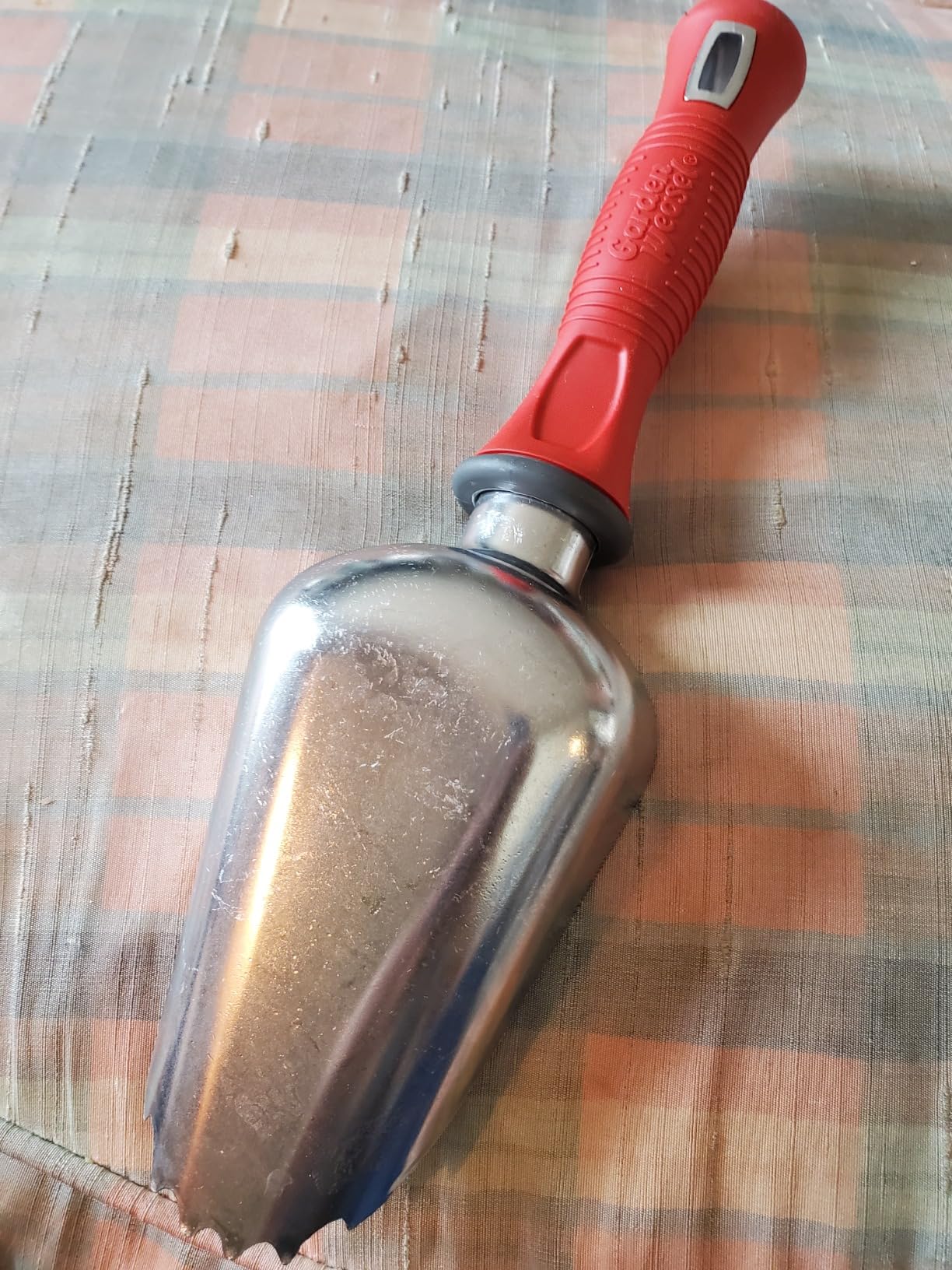
Reviewers consistently call it sturdier than expected and many buy more than one, which says something about how quickly a second bed appears. The handle is thick and non-slip, and at just over five ounces it is easy on the hands during a long surface pass.
Three limitations are worth planning around. It is not built to pry, and levering against baked soil will snap it. A few arrive slightly rough from the molding process and benefit from a light filing. And leaving it dirty overnight corrodes the finish, so rinse it.
How it handles compost top-dressing
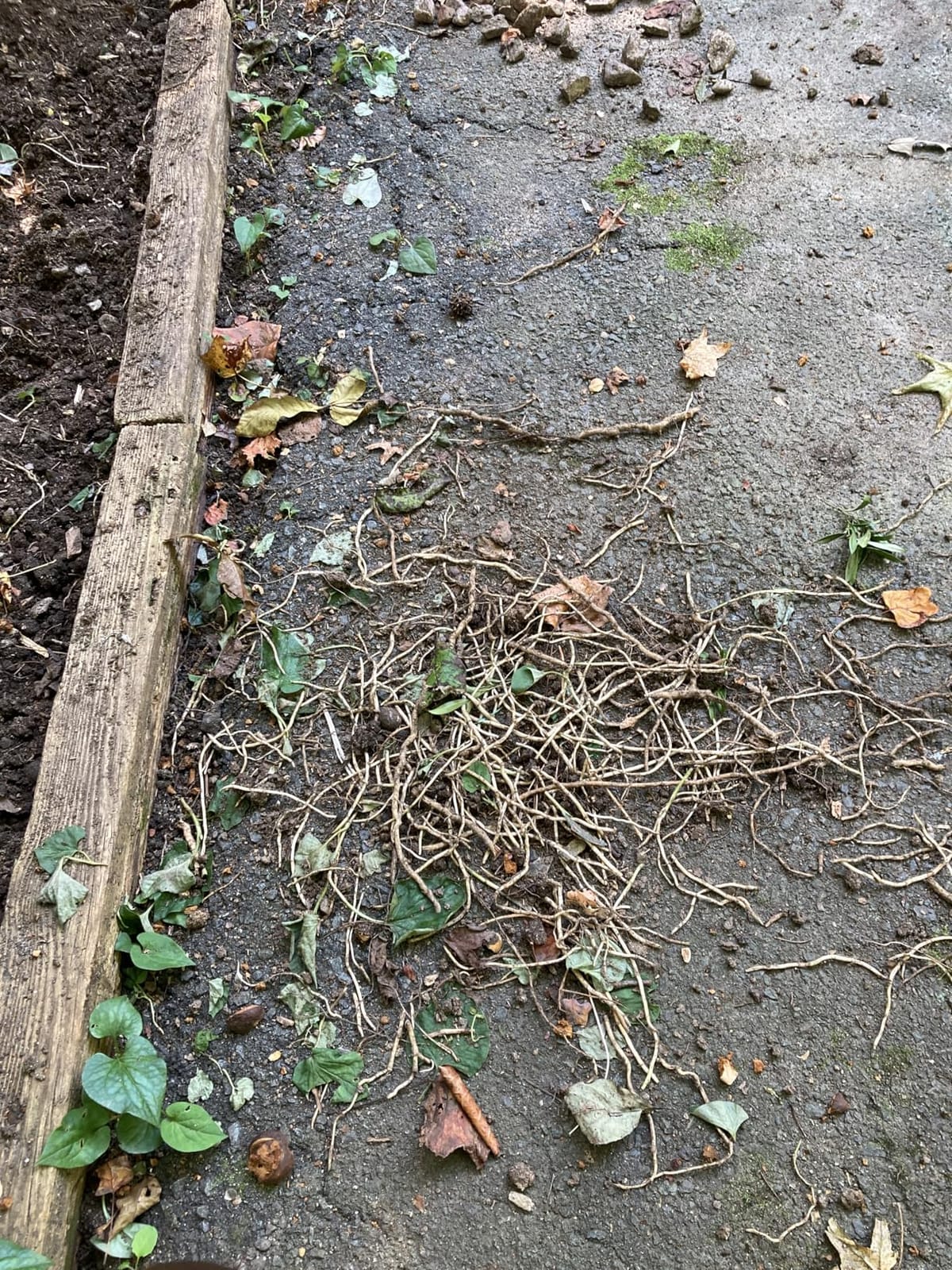
Use the rake side to pull compost into the bed rather than tipping a wheelbarrow load and raking it flat with a full-size rake. It moves smaller amounts evenly, which matters when you are layering amendments on an existing no-dig bed and do not want to bury emerging transplants.
What to check before you commit
Look for the lifetime guarantee on the listing and keep it. For surface work on soft beds this is close to a no-brainer pick, and the double-sided head means you are not buying a second tool for leveling compost.
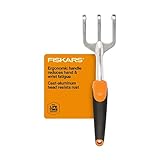
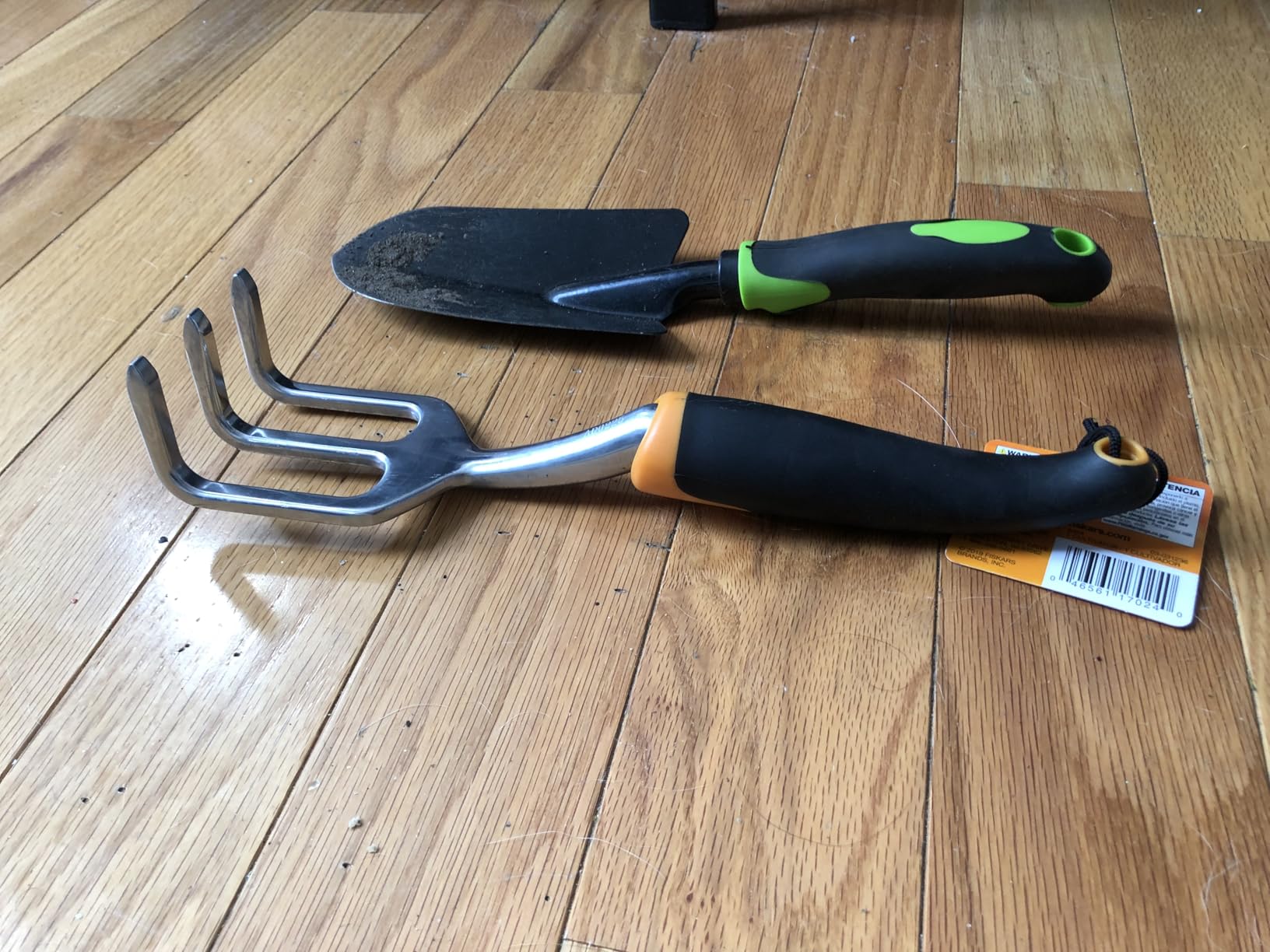
4. Fiskars Ergo Garden Cultivator: the one that fits pots and narrow beds
Fiskars Ergo Garden Cultivator, Hand Tool for Digging, Aerating & Weeding
- Cast tines cut real ground
- Polished tines resist rust
- Ergonomic handle cuts fatigue
- Small head fits between plants
- Handy hang hole
- Aluminum tines blunt over time
- Short handle means bending
- Not for prying in hard ground
Where the Garden Weasel cultivator is a three-prong breaker, the Fiskars Ergo is a compact multi-tine cultivator, and that difference shows up in tight spots. It is the tool I reach for between closely spaced lettuce and brassica transplants, where a three-pronged head is too wide to fit without damaging neighbouring plants.
Cast aluminum is rust-resistant and polished tines stay sharp through a season, and the whole tool weighs eight ounces. Over a long no-dig session that weight matters more than any spec, because fatigue is what ends weeding early.
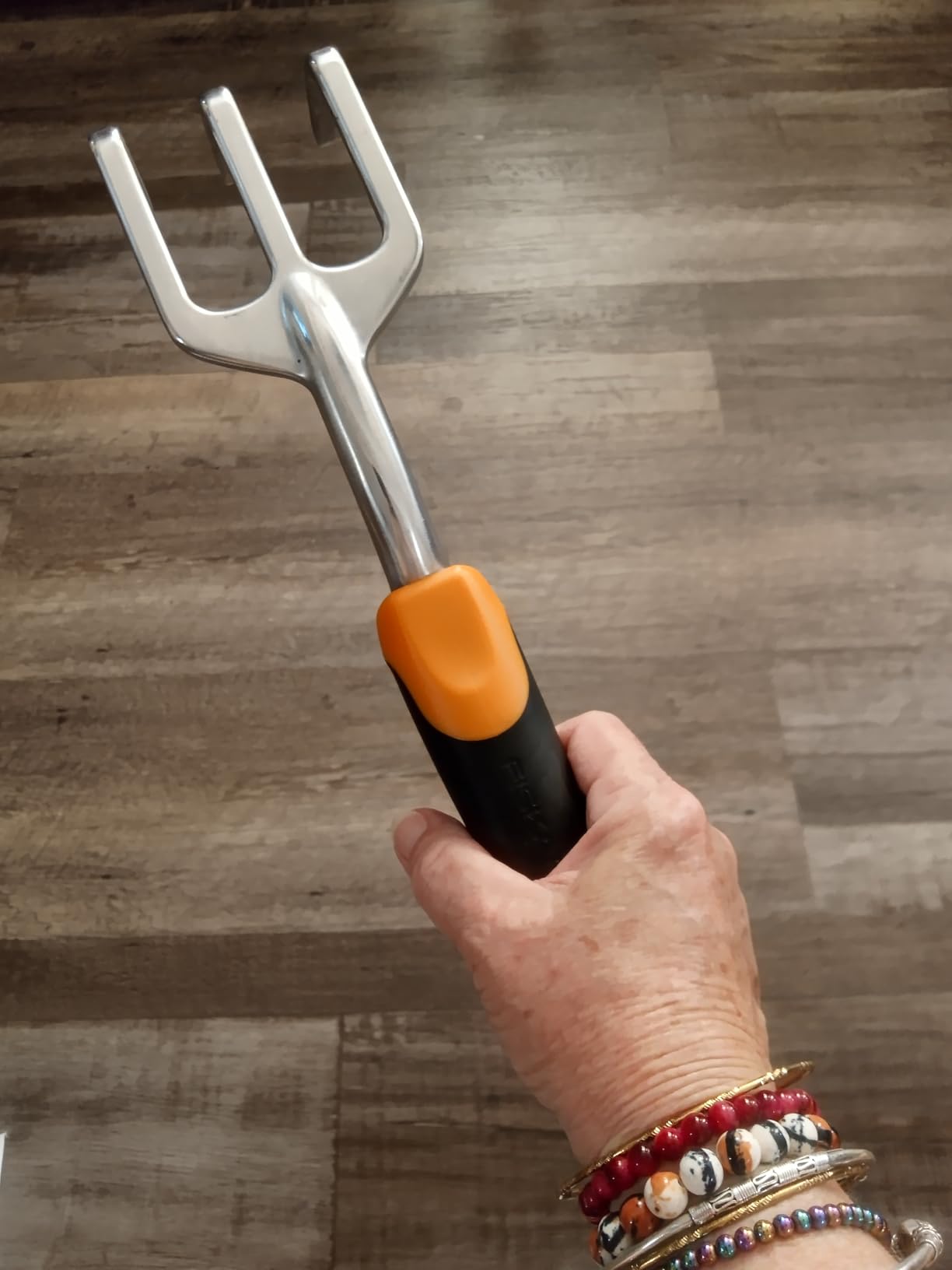
Reviewers describe it as dependable rather than remarkable, and that is the point. It loosens, aerates and weeds in beds, window boxes and containers, and the hang hole means it lives on the same peg as your hori hori knife rather than rattling around in a shed.
One theme is worth being straight about. Aluminum does not take an edge the way carbon or forged steel does, so once the tines dull they are finished as cutting tools and become mixing tools instead. And like most short-handled implements here, working it means bending over a mulched bed.
How it handles finished beds with heavy mulch
It works mulch into the surface rather than cutting through it, which suits topping up an established bed between plantings. It will not reach underneath a thick layer, so for mulch you want to slice through, use a hoe or the hori hori instead.
What to check before you commit
Count your containers and narrow beds. If most of your growing is in beds four feet wide or wider, the longer-handled options here serve better. If you are working raised beds, window boxes and tight urban corners, this is the more useful tool.
5. Walensee Stirrup Hoe: the oscillating blade for mulched beds
Walensee Stirrup Hoe,Garden Hand Scuffle Hoe for Weeding and Soil Loosening
- Oscillating blade cuts on push and pull
- One head hoes rakes and scrapes
- Hand forged heat treated steel
- No assembly
- Light for close work
- Light build gives in rocky soil
- Best on shallow rooted weeds
- Short overall length
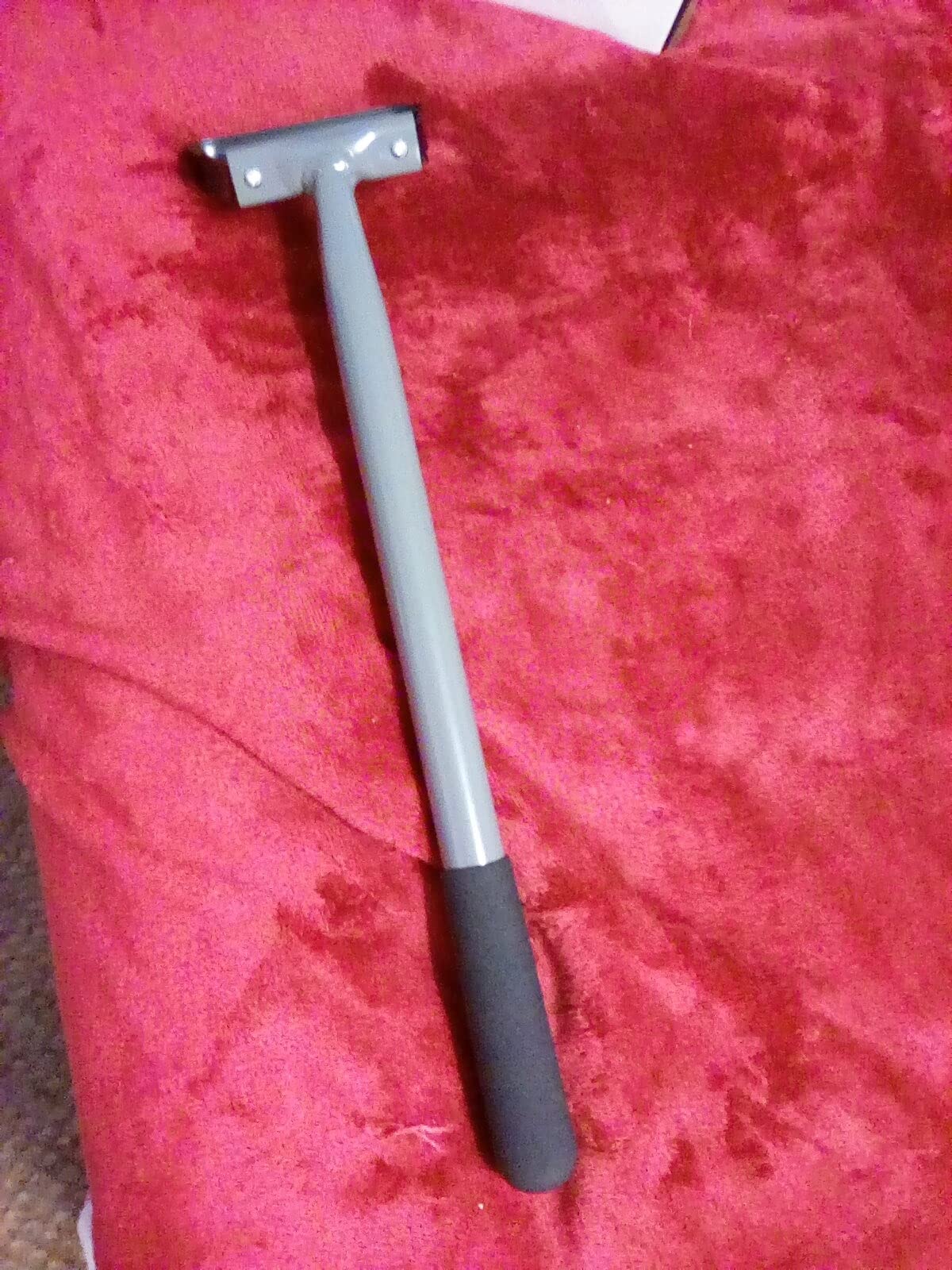
Stirrup hoe versus collinear hoe versus hula hoe is the most argued question in this category, and the answer depends on your bed surface rather than your preference. The stirrup design here uses a hollow trapezoid head that oscillates as you move, so the blade cuts just below the surface on the way forward and again on the way back.
That double cut is why stirrup hoes work so well on mulched beds. Weeds that have popped up through a thin layer of straw are severed at the soil line and dropped on top where they dry out, rather than being pulled up and dropped back into the bed.
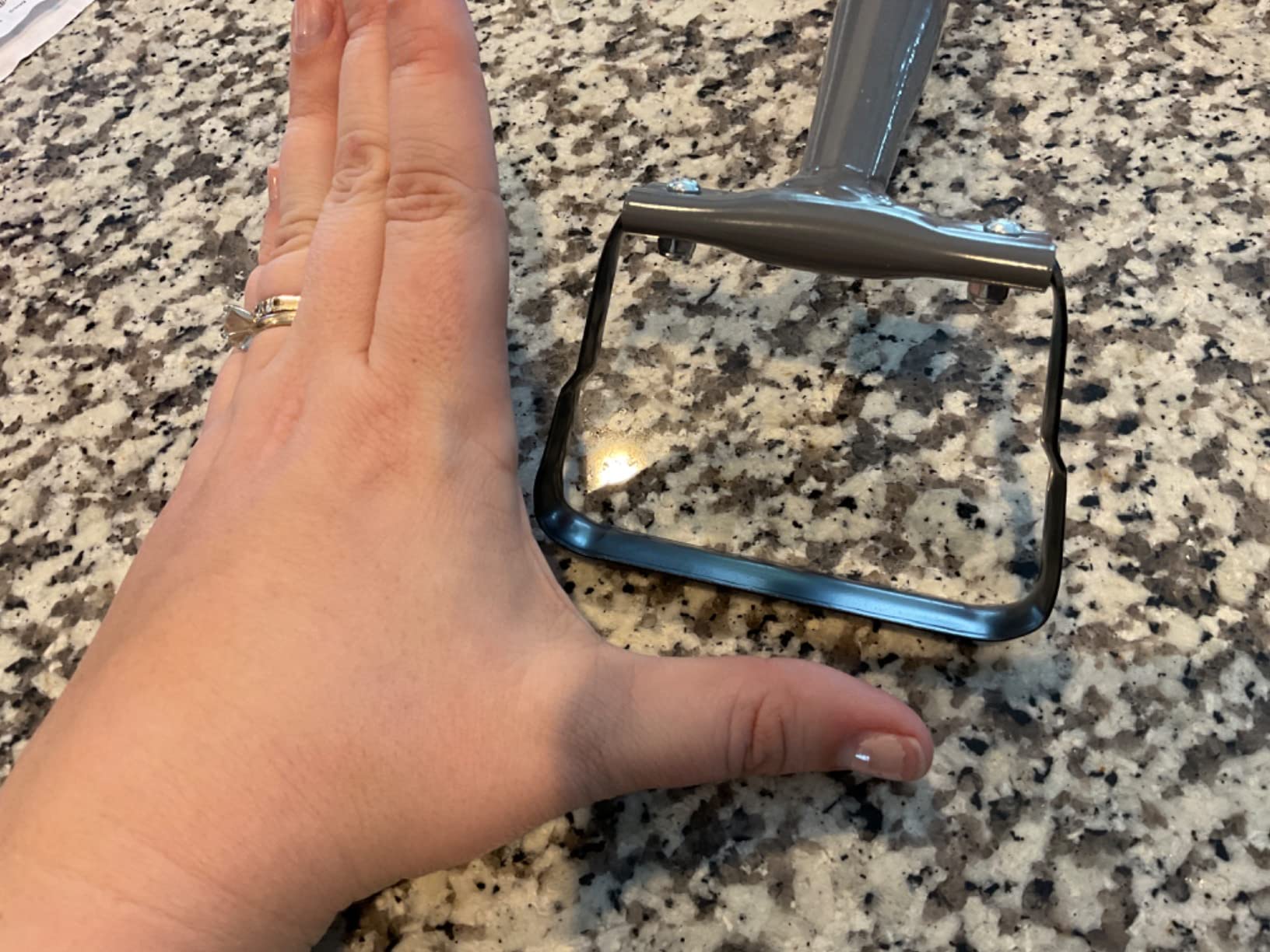
The head doubles as a small rake and a grass scraper, which saves carrying a second implement across a bed. It arrives ready to use with no assembly, and at 14 inches overall it is easy to control for close, in-row work.
The tradeoff is weight. This is a light tool, which is an advantage for detail work and a disadvantage in stony or baked ground, where a heavier blade keeps contact better. It is built for shallow-rooted weeds in maintained beds rather than deep-rooted problems.
How it handles cover crop and mulch residue
Short and thick cover crop growth can bend an oscillating blade or stall it entirely. Cut cover crops down earlier and use this on the regrowth, which is what it is built for. It also slides under light straw without snagging the way a flat blade drags material forward.
What to check before you commit
Consider your weed types and your soil. Shallow-rooted grasses and broadleaf weeds in loose compost suit it. Thistles, dock and ground elder in heavy clay do not, and a lever-action weed puller is the better purchase for that list.
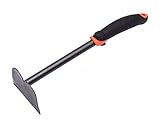
6. Edward Tools Carbon Steel Hand Hoe: the flat blade for scraping and edging
- Heavy carbon steel resists bending
- Powder coat slows rust
- Grip holds when wet
- Compact head reaches corners
- Useful for weeding and planting
- Blade edge arrives dull
- Needs sharpening before use
- Limited to soft soil until honed
This is a flat spade-blade hoe rather than an oscillating one, and the difference is what it is for. A flat blade held at a shallow angle scrapes rather than slices, which makes it good at cutting the crust back off a bed edge, slicing a furrow for direct sowing and clearing weeds from between mulch in an established flower bed.
Carbon steel at sixteen ounces is heavier than anything else on this list, and that weight is the point. It does not bounce off hard ground, and the powder-coated finish is what keeps carbon steel from rusting between sessions.
Reviewers like the anti-slip rubber grip staying secure in wet conditions, which is common in spring. The compact head reaches into corners and tight beds that a full-size hoe cannot enter.
The recurring complaint is consistent enough to plan for: the blade ships dull. Until you put an edge on it, this tool is a scraper and a mixer, not a cutter, and it needs a sharpening stone before its first real session.
How it handles a new sheet-mulched bed
It is one of the few tools here that can shave the flattened cardboard and newspaper layers of a newly built bed without tearing them, and it cuts a straight furrow for sowing seed into compost without disturbing the layer structure below.
What to check before you commit
Budget ten minutes with a sharpening stone before your first use, and plan to do it again mid-season. If you already own a sharp flat-blade tool, this is the least necessary purchase on the list.
7. Jardineer Twist Tiller Cultivator: the one you work standing up
- Lets you work upright
- Foot plate adds real leverage
- Sharp steel tines break clay
- Mixes compost evenly
- Fits raised beds and corners
- Bolts need retightening
- Weak in dry baked clay
- Loosens but does not pull weeds
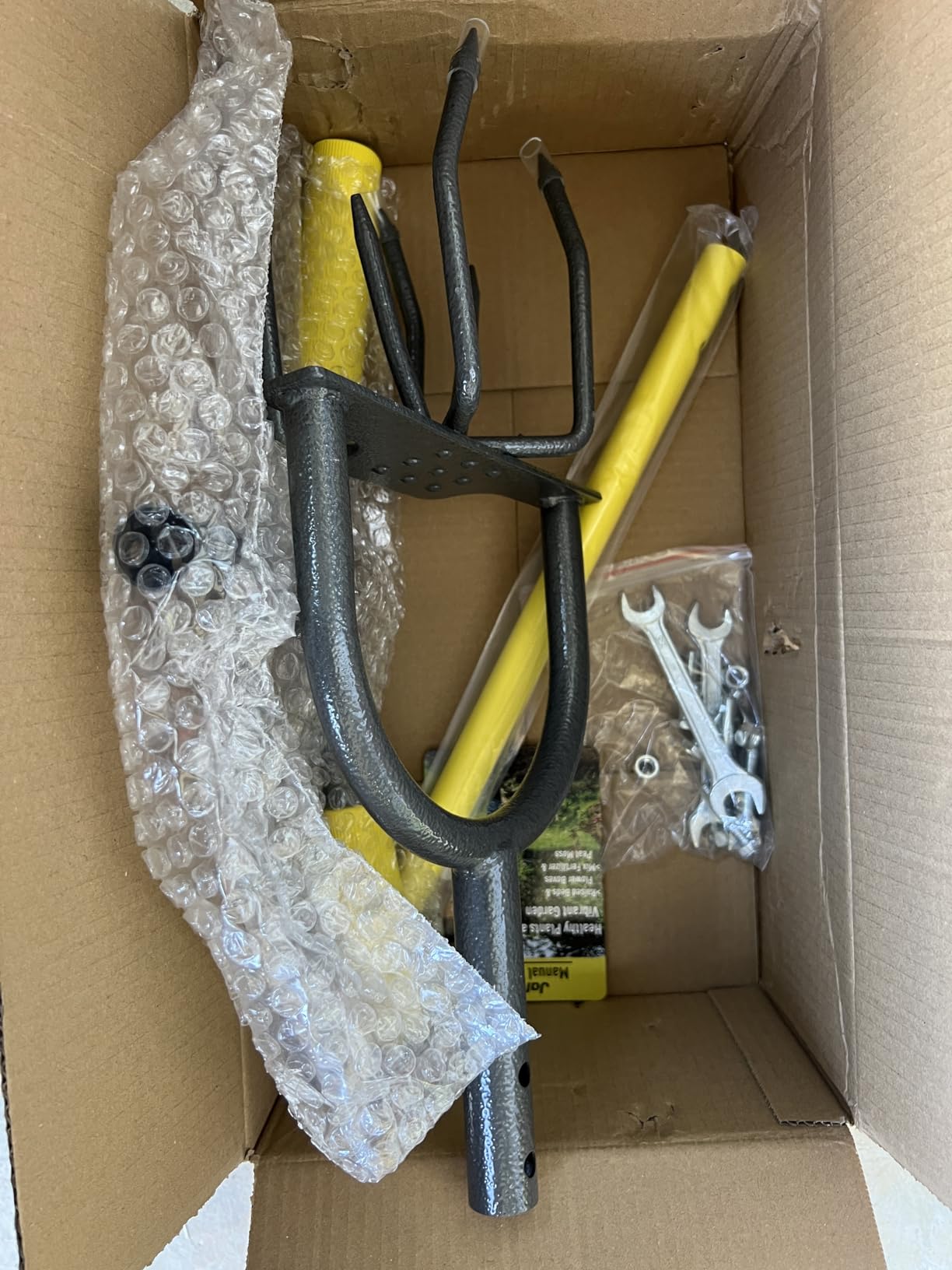
This is the answer to the back-pain question that runs through every short-handled tool in this roundup. At 37 inches with a curved handle, you work it standing upright and push the tool through the bed with your body weight instead of lifting it. For anyone whose beds are mulched and whose lower back has opinions, that changes how long a session you can actually do.
The foot plate is the second feature that earns its place. Standing on it and twisting gives you genuine downward force to drive the steel tines into compacted ground, which is exactly the decompaction job a broadfork would do on a larger plot.
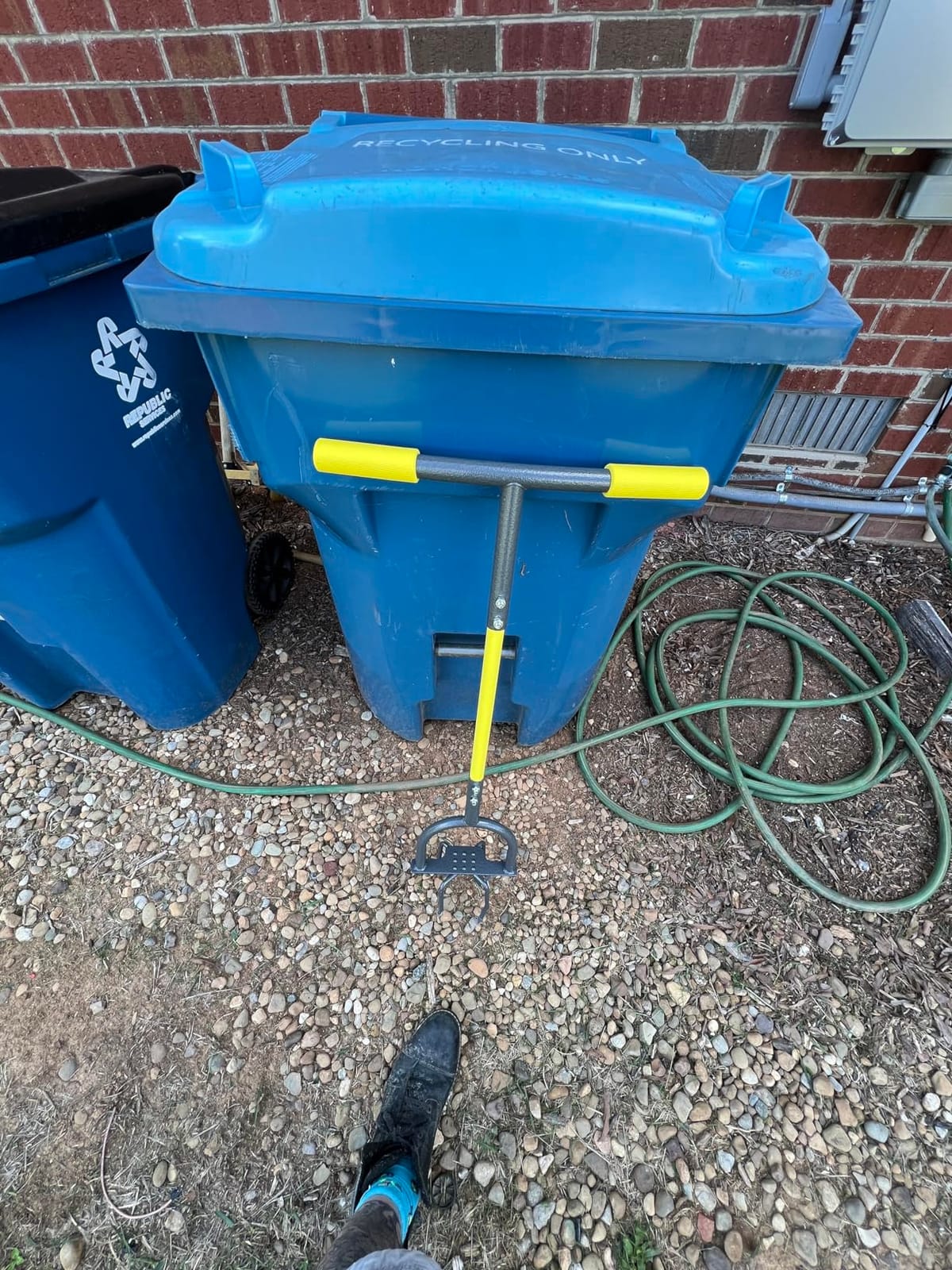
Owners report it mixes compost, fertilizer and peat moss into beds evenly and works well in raised beds and flower boxes. It arrives needing a short assembly with the included wrenches, and spare screws are supplied, which is a hint that retightening is part of the routine.
Two honest limits. It is less effective in very dry or heavily compacted clay, where the tines skate rather than bite, and it does not close around a weed to grip it, so it loosens and mixes but does not pull.
How it handles a first-year bed on hard ground
Use it to blend compost into the surface and break the top of undug subsoil into the growing layer. Twist, lift, drop the amendment back in, twist again. It will not take the layer all the way down, and it is not trying to.
What to check before you commit
Measure your reach and your bed height. At 37 inches it suits a standard bed; it is tall work in a low raised bed. Also confirm you are willing to re-tighten bolts every few sessions.
8. Grampa’s Hand Weeder: the lever that pulls whole roots
Grampa’s Hand Weeder Tool with Lever Design for Easy Weed Removal
- Lever base gives real pulling force
- Forked tip captures whole roots
- Wood handle absorbs shock
- Half moon base avoids big holes
- Works after rain
- Metal collar near handle can shift
- Less effective on large woody weeds
- Only part of the weeds per pass
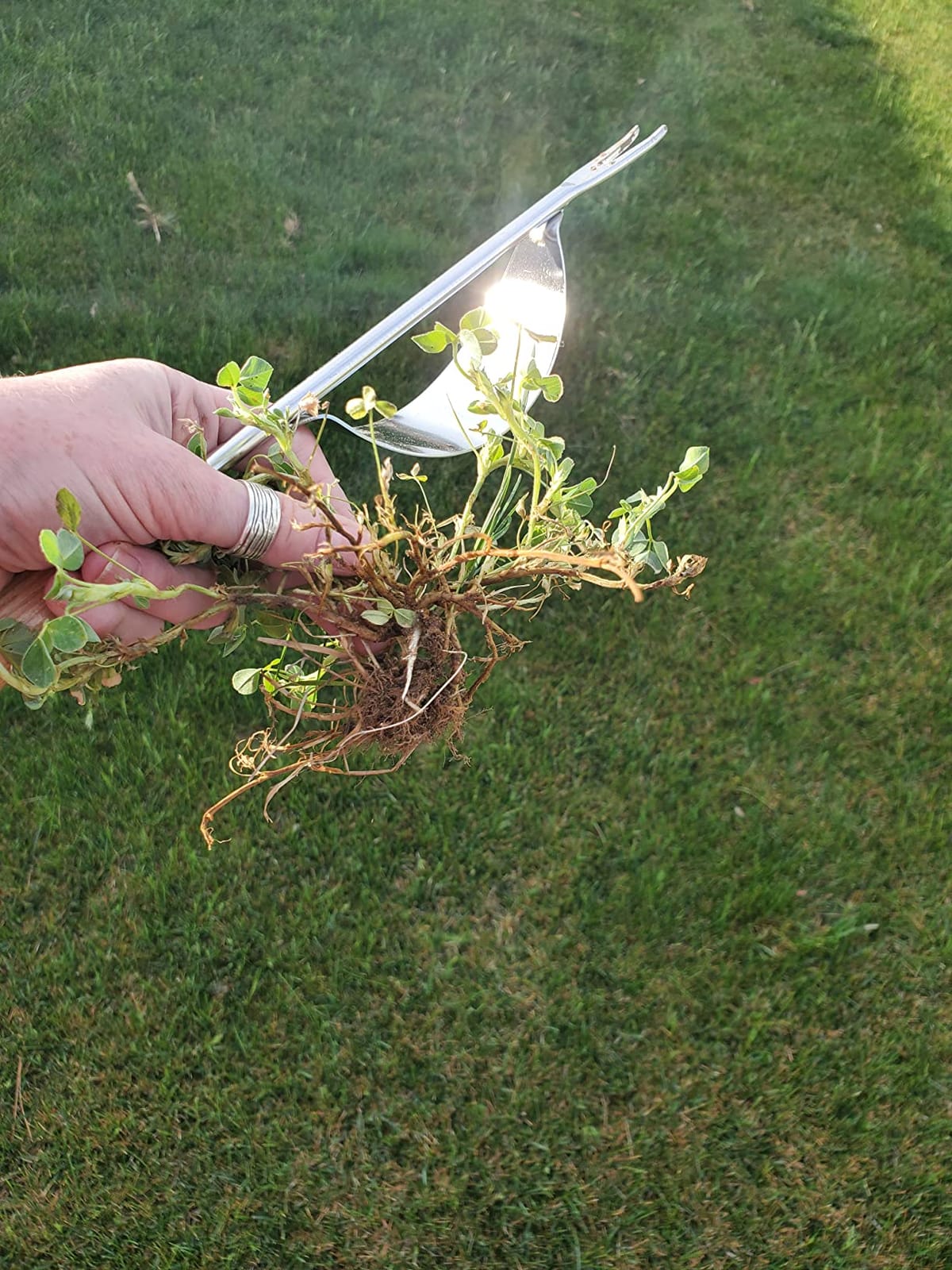
This tool exists to solve one problem: a weed that regrows because you left the root crown in the ground. The lever base uses the soil itself as a fulcrum, converting a downward push into upward force at the forked tip, and the forked tip closes around the root so it comes out with the plant attached.
In a no-dig bed that matters more than in a tilled one, because you cannot chase regrowth with a hoe without disturbing the mulch layer you spent a season building.
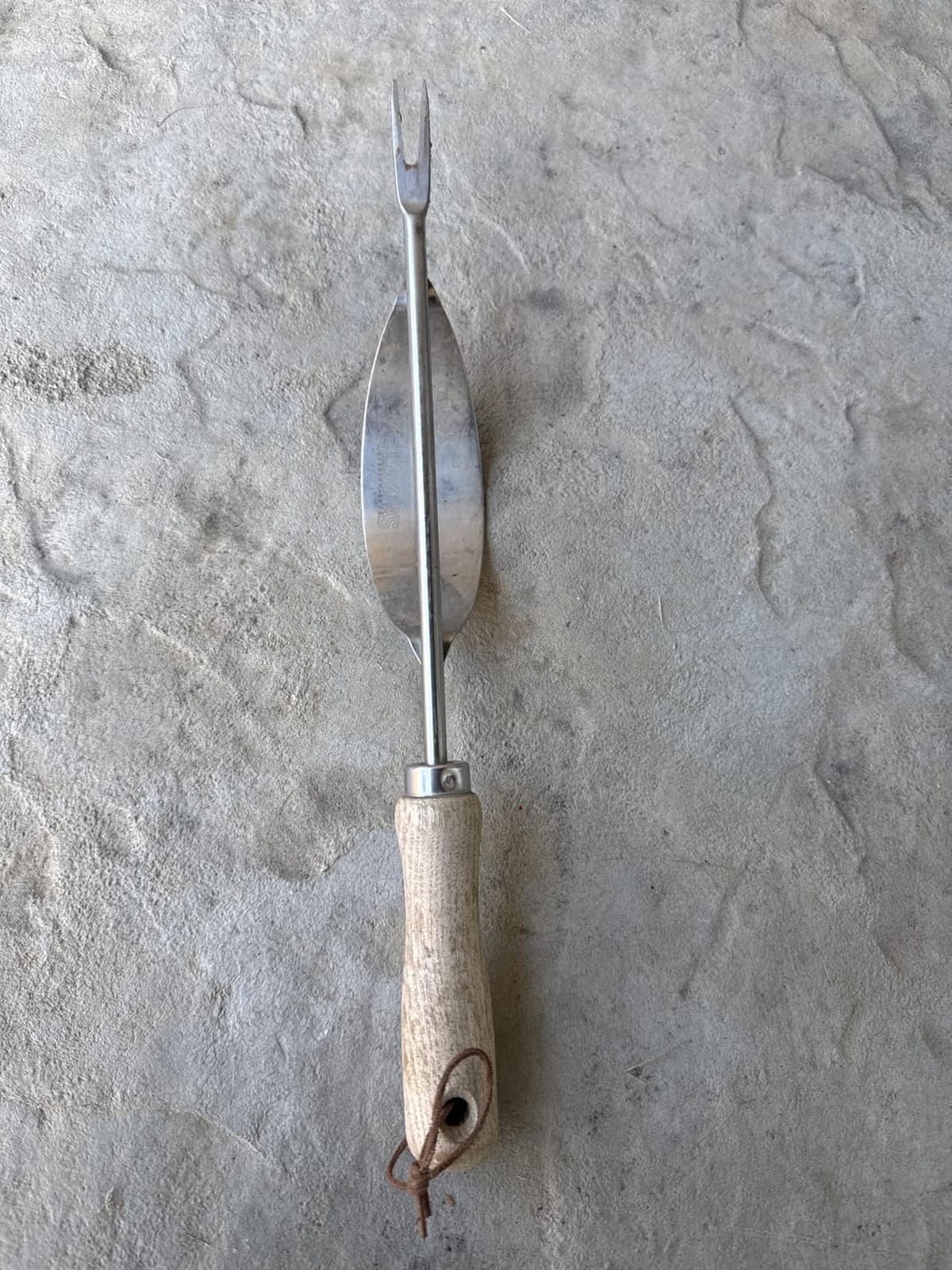
Owners report pulling thistles, dandelions, crabgrass and chickweed whole, often after rain when the soil gives slightly, and several describe it as satisfying enough to use when they do not need to. The wood handle takes shock well.
The half-moon base means it does not leave the large hole a hoe or fork would. Two cautions: the metal collar near the handle can shift and has caused cuts for some owners, and very large woody weeds defeat the tip, so treat it as a taproot tool rather than a brush cutter.
How it handles a mulch-covered bed
It works through thin mulch and compost because it pulls rather than chops, and it is the tool to reach for when a hoe would drag mulch aside and expose bare soil. On heavily strawed beds you still need a clearing hand to part the layer first.
What to check before you commit
Look at your weed list. If thistles, dandelions and taproot weeds are the recurring problem, this earns its place. If your issue is dense grassy regrowth, an oscillating blade hoe covers more ground per minute.
9. Garden Guru Dandelion Weeder: the narrow fork for taproots
- Lifts whole taproots with little disturbance
- Light and rust resistant
- Soft grip has finger grooves
- Large hang hole
- Extracts roots from lawns and beds
- Half inch tip struggles on large roots
- Edge often needs filing
- Some prefer a wider tip
Where the Grampa’s weeder gives you leverage, this one gives you precision. The two-pronged fork goes down either side of a taproot and levers the whole thing up using the ground as a pivot, and at 11 inches and just over six ounces it is precise enough to work right up to a stem without disturbing it.
That is the useful combination in a no-till bed: extraction rather than cutting. Nothing is chopped, no mulch is dragged aside and the hole left behind is small enough to close on its own.
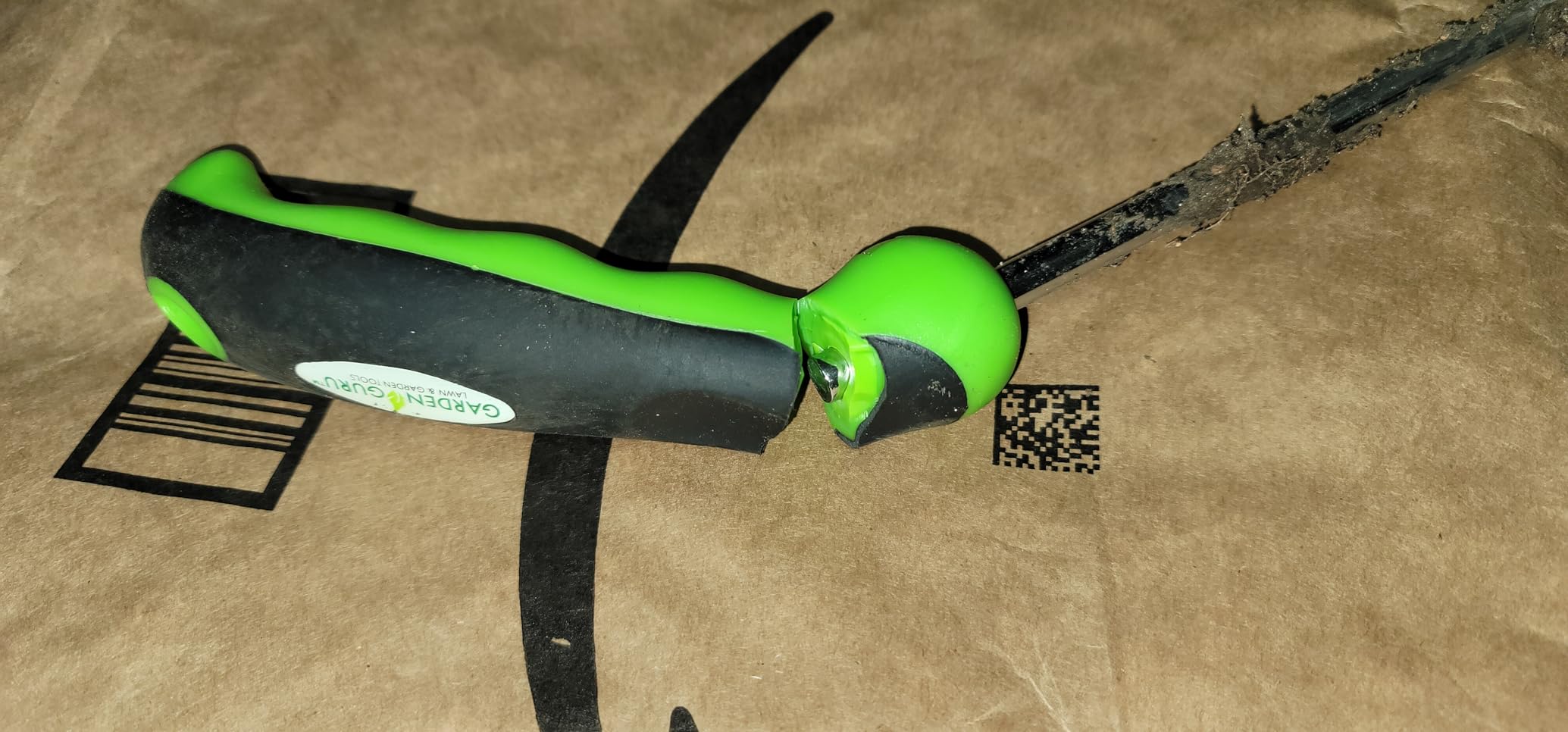
Owners report switching to it after other weeders broke, and it carries a lifetime warranty. The contoured soft-grip handle has finger grooves that reduce wrist fatigue across a long session.
The most common criticism is the tip width. At roughly half an inch, finding and severing the centre of a large dandelion root can take repeated attempts, and several buyers file the edge on arrival. A handful of reviewers would rather have a wider tip.
How it handles a bed already full of perennials
This is the safest weeding tool here for crowded beds. It fits between plants without a wide stroke, and the lever action lifts rather than slices, so neighbouring roots stay put. In a densely planted no-dig bed that precision is worth more than raw capacity.
What to check before you commit
Test it on the size of weed you actually have. Small and medium taproots come out in one pull. Big established roots often need a second pass around the crown after loosening the soil with the fork.
10. Garden Guru Stainless Steel Hand Rake: the seeder and mulcher
Garden Guru Stainless Steel Hand Rake Soil Tiller with Ergonomic Handle, Great for Gardening, Cultivating, Loosening Soil & Spreading Mulch, Raking Flower Beds
- Tines resist fracturing and warping
- Grip reduces palm and wrist strain
- Fine tines work around small stems
- Spreads mulch evenly
- Light under half a pound
- Fine tines bend in rocky soil
- Shallow reach for deep work
- Light head suits beds not paths
Seeding a no-till bed does not need a seeder. Broadcast the seed, then scratch it into the compost surface with a hand rake, which is the method growers on home and homestead forums describe as the realistic alternative to buying machinery for a small plot.
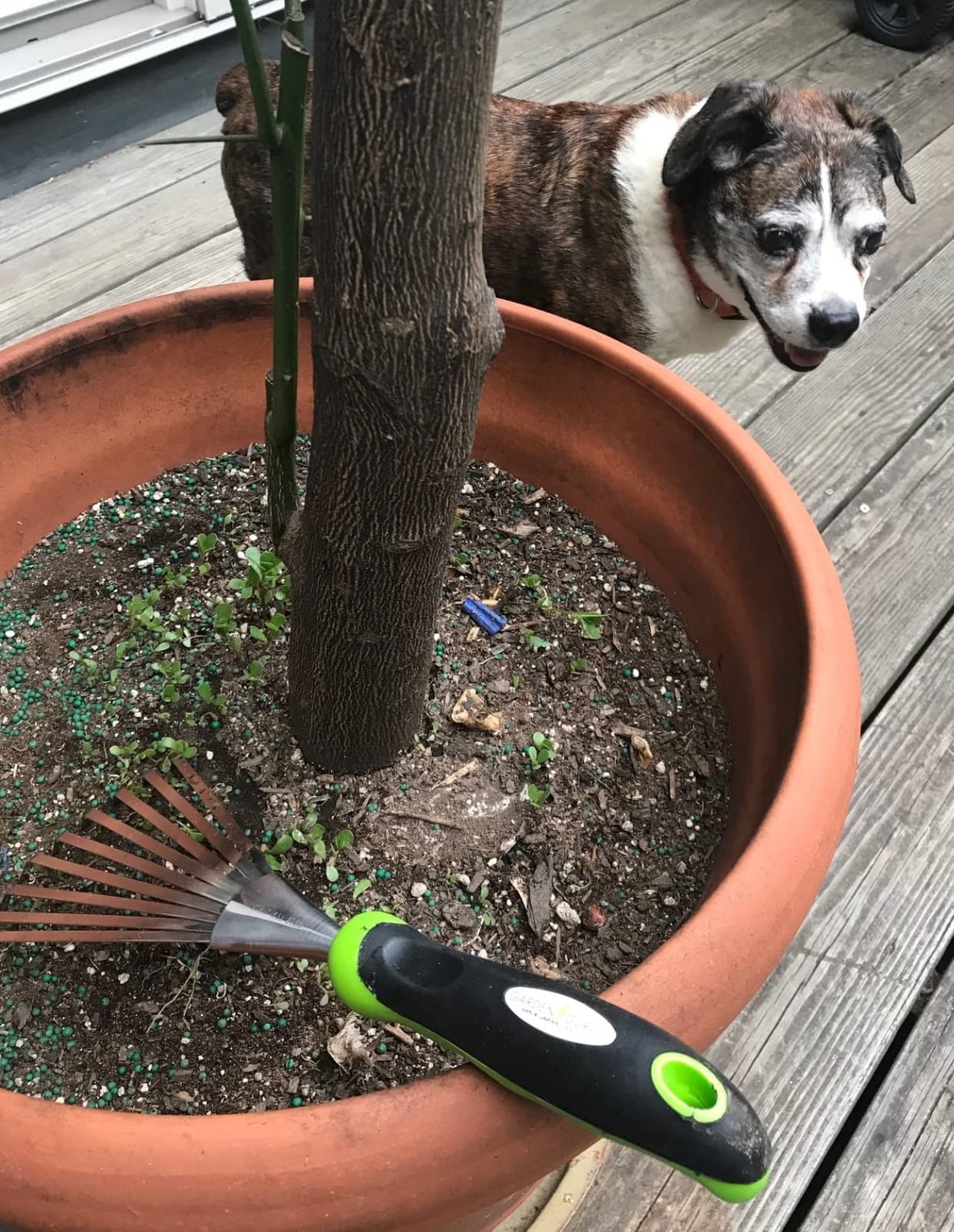
This is the tool for that step. Fine stainless tines work compost and a thin mulch layer without dragging it, and the same action levels a top-dressing of compost between plantings.
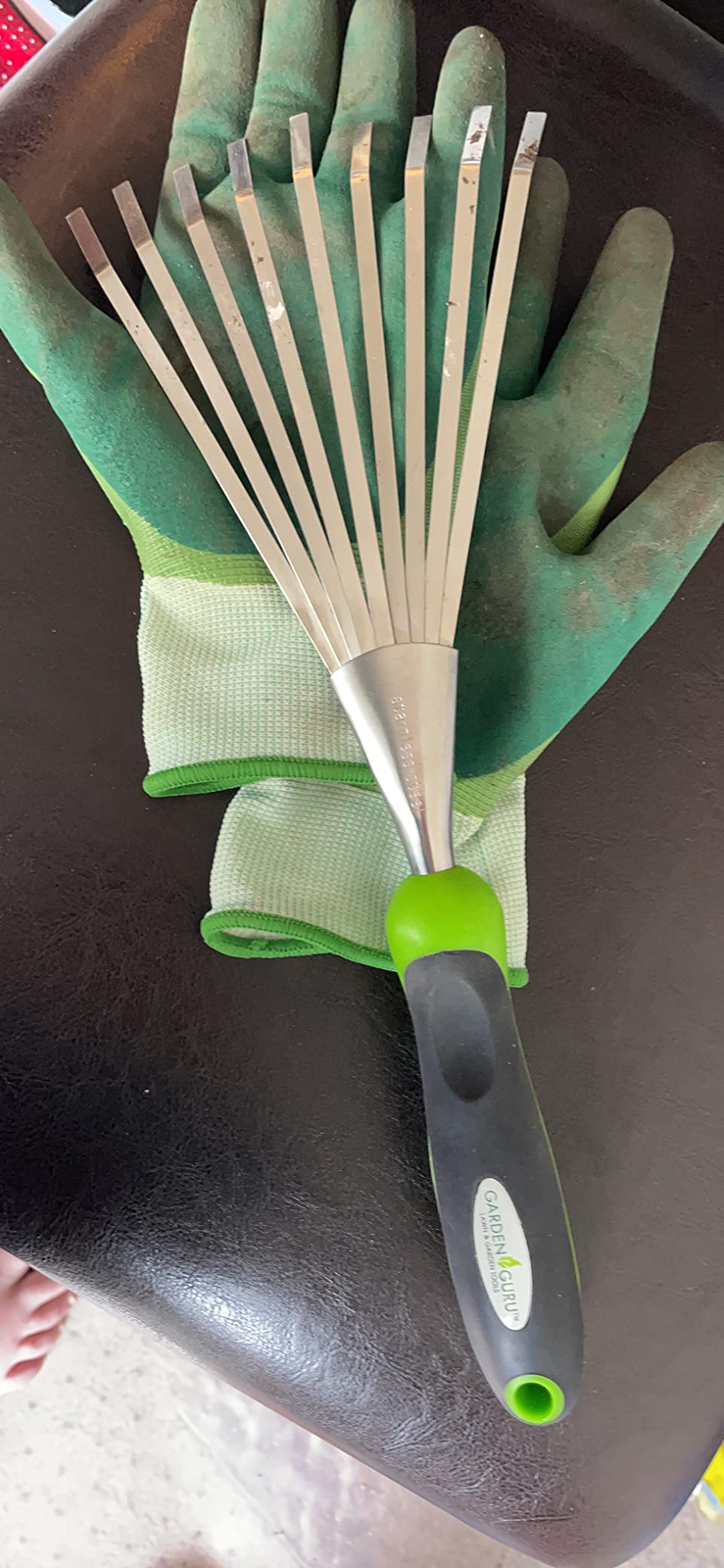
Owners highlight the tines for durability and the grip for comfort on longer sessions. At under half a pound it stays out of the way in a full bed, and it carries a lifetime warranty alongside a satisfaction guarantee.
Two limits are structural. Fine tines will bend if you meet stones, so keep it off undug ground and use it on the finished surface only. And the reach is shallow, which is correct for a no-dig bed and wrong for breaking into a crust more than an inch down.
How it handles a newly seeded bed
After broadcasting seed over compost, rake lightly across the surface so the seed makes contact, then water. The tines are fine enough not to bring subsoil up, which a coarser rake or a full-size garden rake would do and undo the whole point of the method.
What to check before you commit
Decide whether you are sowing by hand and mulching by hand. If yes, this is a cheap and genuinely useful addition. If you broadcast by hand and set mulch with a shovel, you may only need it seasonally for leveling.
11. Fiskars FiberComp Hand Trowel: the planting-hole maker
Fiskars FiberComp Hand Trowel, Gardening Hand Tool for Yard & Lawn Care
- Oversized head moves more soil per scoop
- Lightweight and rustproof composite
- Ergonomic handle reduces fatigue
- Large hang hole
- Lifetime warranty
- Composite handle less rigid under load
- Aluminum head can wear over time
- Lowest rating in this set
Be clear about what a trowel does and does not do in a no-dig bed. It is not for digging. It is for setting transplants into compost at a consistent depth, backfilling around roots and moving a scoop of amendment to the spot that needs it, and for that an oversized head moves noticeably more material per stroke than a narrow planting knife.
Fiber composite is rustproof and very light, which matters when you are carrying a loaded trowel up and down a path rather than working a fixed bed edge.
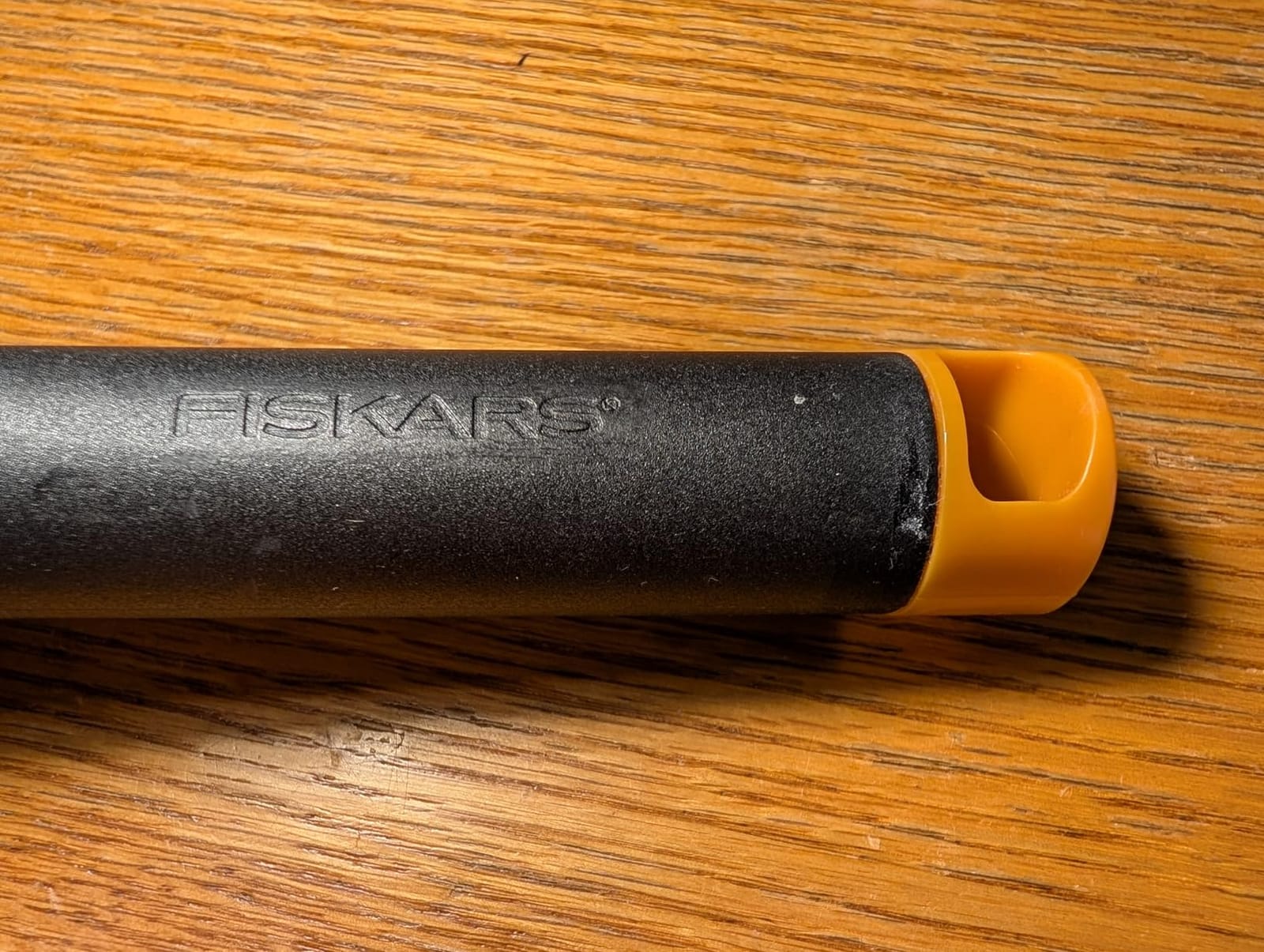
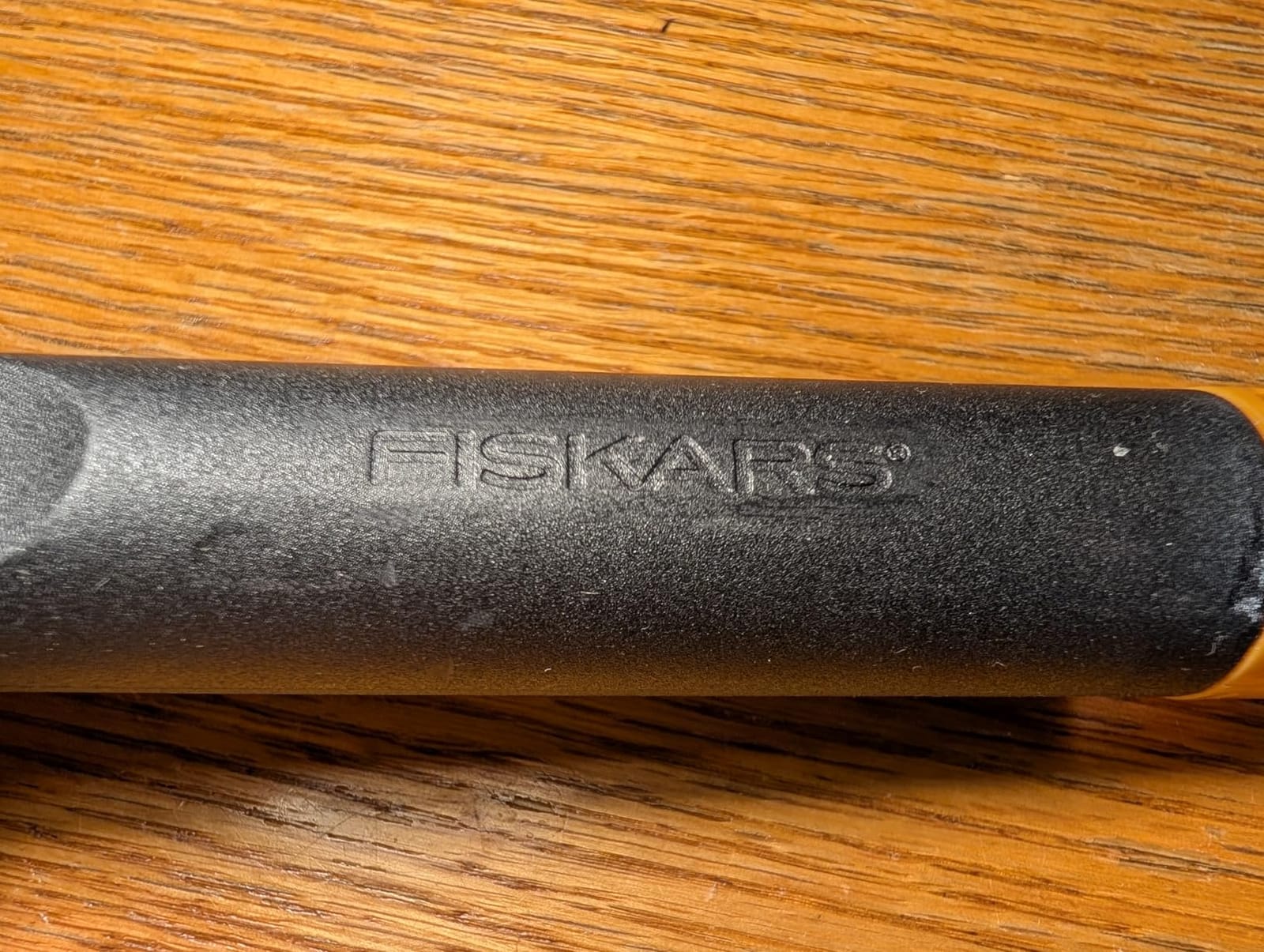
Buyers generally find it affordable and capable for basic digging and setting plants, and the hang hole keeps it on the same rail as the other short tools. The lifetime warranty is a real commitment from the manufacturer.
This is the lowest-rated tool in the set, and the reviews explain why. The composite handle feels less solid under heavy load, and some owners report the aluminum head wearing down over time. It is a planting tool, and asking it to be a digging tool is where that shows.
How it handles compost-heavy planting
Loose, well-made compost is the easiest material this tool works with. The wide head scoops a transplant hole in one or two passes, backfills cleanly and leaves the sides of the hole a bit rough for direct sowing, which is where a dibber or the hori hori point is better.
What to check before you commit
Consider whether you need it at all. If you already own the hori hori knife or the CobraHead, both make planting holes with less disturbance and one less tool in the shed. Buy this if you want a dedicated trowel for large, soft compost.
12. Fiskars Big Grip Garden Knife: the full-time substitute
Fiskars Steel Garden Knife, Multi-Purpose Weed Puller Gardening & Yard Tool
- Edge serration and fork in one head
- Alloy steel resists rust
- Extra large soft grip
- Over 3400 reviews
- Digs weeds divides and cuts roots
- Bulkier than a hori hori for fine work
- Handle tires over very long sessions
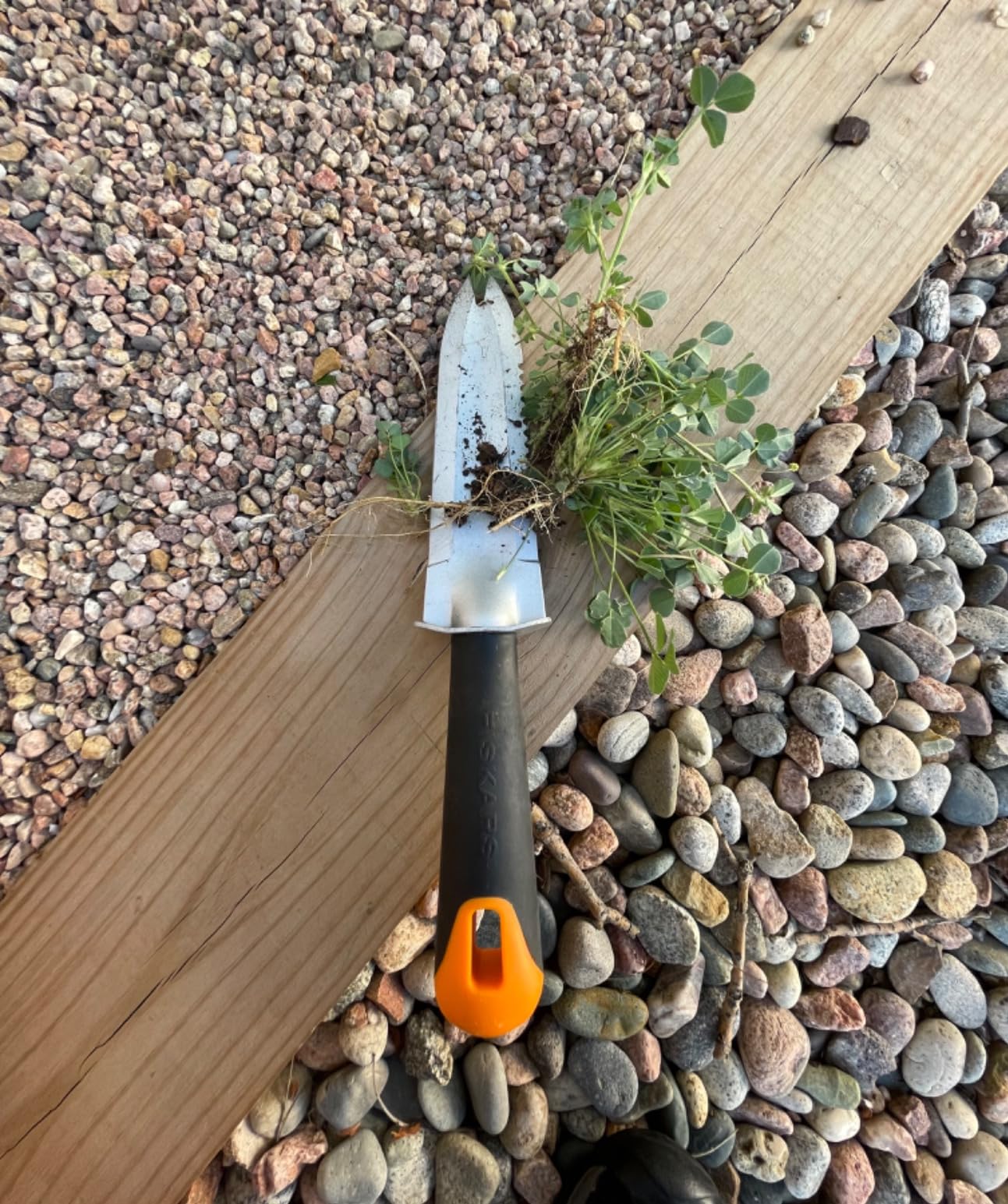
The case for this tool is that it replaces two purchases. A sharpened edge, a serrated section and a forked tip in one alloy steel head covers weeding, dividing seedlings, cutting roots and slicing twine, which in practice removes the need for a separate pair of pruners on most bed work.
The extra-large Softgrip handle is the reason it is comfortable for that range of jobs, and the alloy head is the reason it survives being used as a tool rather than a knife.
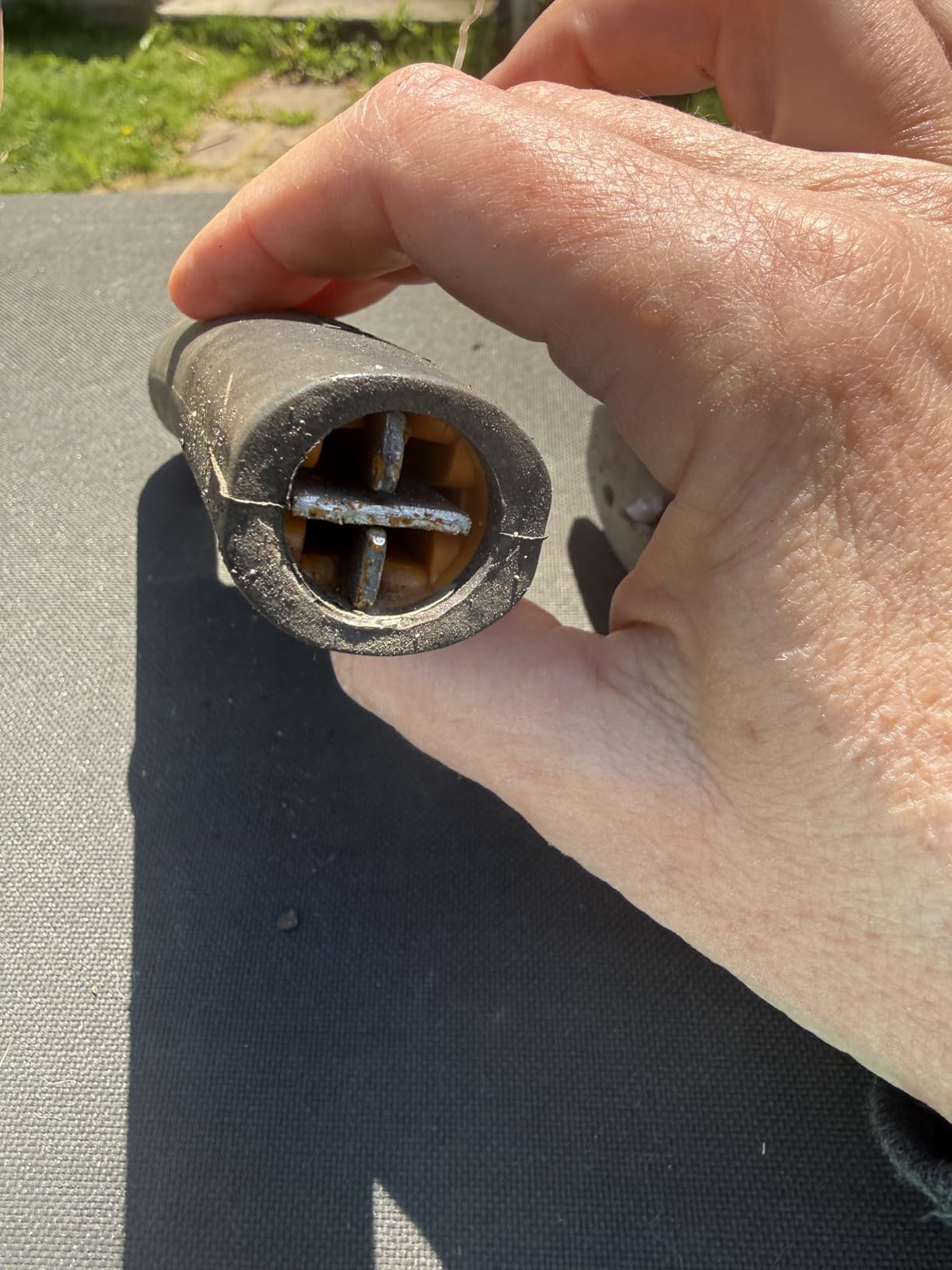
With more than 3400 reviews it is among the most established tools in this roundup, and reviewers rely on it for weeding, planting and root removal as a first choice rather than a backup.
The honest comparison is against the hori hori at number one. This knife is bulkier, so it is less precise for fine soil work, and some buyers report the handle becomes uncomfortable over a very long session. Where it wins is reach and cutting edge length.
How it handles harvesting without walking the beds
A sharp edge plus fork tip means chard, kale and cabbage stalks can be cut and trimmed in place without kneeling on mulched ground. That matters more in a no-till bed than in a tilled one, because you cannot walk on a finished bed without compressing what you built.
What to check before you commit
Ask whether you want one tool for everything or a specialist for each job. For a small plot or a first no-dig bed this covers the widest range per tool. For frequent precise soil work, the narrower hori hori is the better single purchase.
How to Choose No-Till Garden Tools in 2026
Most buying mistakes in this category come from picking tools by category name rather than by what they do to the soil. Four questions will narrow any list quickly, whether you are replacing a tool from this roundup or building a kit from nothing.
The four-question no-till tool test
First, does it invert soil layers? A spade, a standard digging fork and any tiller do, and they end the method. Second, does it need heavy downward force into undug ground, or does it work from the surface down? Third, can the edge be resharpened, and is it steel rather than a coated alloy that dulls? Fourth, is it something you will use in a no-dig bed specifically, or is it a general garden tool that happens to be in the shed?
A tool that fails the first question is disqualified. A tool that fails the second will tire you out before it has done much. The third decides whether it lasts one season or twenty.
Forged steel, cast steel or cast aluminum: what actually matters
Construction matters more than the label on the box. Forged steel, like the head on the CobraHead here, is compressed and shaped under heat, which closes the grain and makes it resistant to chipping against stones. Cast steel is heavier and holds an edge well but can be brittle at thin sections. Cast aluminum, used on the Fiskars Ergo cultivator and trowel here, will not rust but will not take a fresh edge either, so it dulls over a season and then works as a mixing tool rather than a cutting one.
For a no-dig bed the practical rule is: anything expected to cut something should be steel with a resharpenable edge, and anything expected to move compost can be lighter. The stainless and alloy steel options here, including the Nisaku hori hori and the Fiskars garden knife, resist rust and rinse clean, which matters if tools live in a damp shed.
Forged steel construction, a named brand and available replacement parts are the quality signals growers actually look for, and a realistic lifespan with maintenance is more persuasive than any warranty claim. Several tools here carry lifetime warranties or guarantees, which matters when the same head is expected to meet stones every spring.
Handle length decides how much bending you do
Eleven of the twelve tools here are short-handled, which means you work bent over a mulched bed. That is a real cost, not a preference. The Jardineer twist tiller at 37 inches is the only long-handled option in the group and the only one you push rather than lift, and that difference decides how long a session you can finish.
On a mulched no-till bed, kneeling pads matter as much as handle length, because any kneeling pressure compresses the bed you built. Several short-handled weeding tools also sell in long-handle versions, which converts a back-straining hour into a standing one.
Soil type changes the tool you need
Clay-heavy ground rewards the forged steel cultivator and the plow-style weeder, because weight and blade curvature keep contact in ground that bounces off lighter tools. Sandy soil needs much less: it has few weeds, drains fast and is the soil type most forgiving of no-till, so a light cultivator and a hand rake cover nearly everything. Loam sits in between, and the stirrup-style oscillating blade does most of the work.
If your soil is heavy clay, the same short-handled weeder that feels pleasant in sand will make you quit early. Match the tool weight to the resistance.
Tools to skip entirely in a no-till garden
Skip powered tillers and rototillers outright. They exist to invert and pulverish soil, which is the one thing the method is designed to avoid, and extension services such as UC Cooperative Extension have documented that intensive tillage breaks up soil aggregates and can cost agricultural soils a large share of their stored carbon.
Also skip the standard digging spade and the spading fork for bed work. In a no-dig bed the subsoil is undug and compact by definition, so every stroke either lifts subsoil onto the surface or leaves a hole that fills with air and dries out. Use them for compost handling, not for the bed.
And be honest about the honest criticism of the method itself. Undug subsoil stays compacted, deep-rooted crops establish more slowly, fresh carbon-heavy mulch can tie up nitrogen early in the season, and heavy mulching can waterlog a bed. Those are real trade-offs, and none of them are solved by a better tool. They are managed with compost, cover crops and restraint in how thick the mulch layer goes.
Frequently Asked Questions
What tools are suitable for no-till gardening?
The right tools are the ones that loosen and cut without flipping soil layers. Broad forks and hori hori knives break up compacted ground, stirrup and flat hoes sever weeds just below the surface, hand cultivators loosen crusted compost, narrow trowels and dibbers make planting holes, and lever weed pullers lift taproots whole. Add sheet mulch and drip irrigation to cut how often you walk on the bed.
Do I need a broadfork if I am not tilling?
Yes, for compacted subsoil, though it is optional in loose ground. A broadfork loosens the bed by driving tines in and lifting the soil slightly, breaking compaction without mixing horizons or inverting layers. On sandy or previously amended soil it adds little, and on a small plot a hori hori knife or a twist tiller does the same job for far less effort.
Are hori hori knives good for no-till gardens?
They are one of the best fits for the method. A hori hori digs holes, cuts roots, divides plants and scoops compost using one blade, so it never needs to invert a layer. Its curved point punches through mulch and compost cleanly, and stamped depth markings help you set transplants consistently. Budget time to learn a weeding stroke with it, and expect to keep it sharpened.
How do you weed a no-till garden without a hoe?
You have three options. Cut weeds below the surface with a hori hori knife or a narrow cultivator. Pull them out whole with a lever-action weed puller, which works best after rain when the soil gives. Or prevent them, which is the real answer in a mulched bed, by keeping cardboard, compost or straw covered so light never reaches the surface.
What are the disadvantages of no-till gardening?
Four honest ones. Undug subsoil stays compacted, so deep-rooted crops establish slowly. Fresh carbon-heavy mulch can tie up nitrogen early in the season. Heavy mulching can waterlog a bed if drainage is poor. And you carry the weeding load in spring when cover crops must be terminated, which is more hand work than a hoe would take.
Should I buy a garden tool set or individual tools?
Buy individually, because sets are usually built around a trowel, a fork and a hoe, and that combination assumes you can dig. Individual tools let you skip anything that inverts soil. A small-space gardener can start with two tools, a hori hori knife and a hand cultivator, and cover most bed work between them.
The Best Hand Tools for No-Till Gardening in 2026
Twelve tools sit in this roundup, and you do not need all twelve. If you are starting a bed from cardboard and compost this season, the Nisaku hori hori knife at number one is the one to buy: it digs, cuts, divides, scoops and sows without inverting a single layer, and its stamped depth markings make shallow planting in compost easier than with anything else we tested.
Add the CobraHead if your ground is stony or clay-heavy, a stirrup hoe for weeding through mulch, and a lever weed puller for taproots. The rest of this list specialises one of those four jobs rather than opening a new one.
The rule underneath all of it is simple. Pick tools that cut and loosen rather than dig and turn, keep the mulch layer intact, and match the tool weight to your soil.