
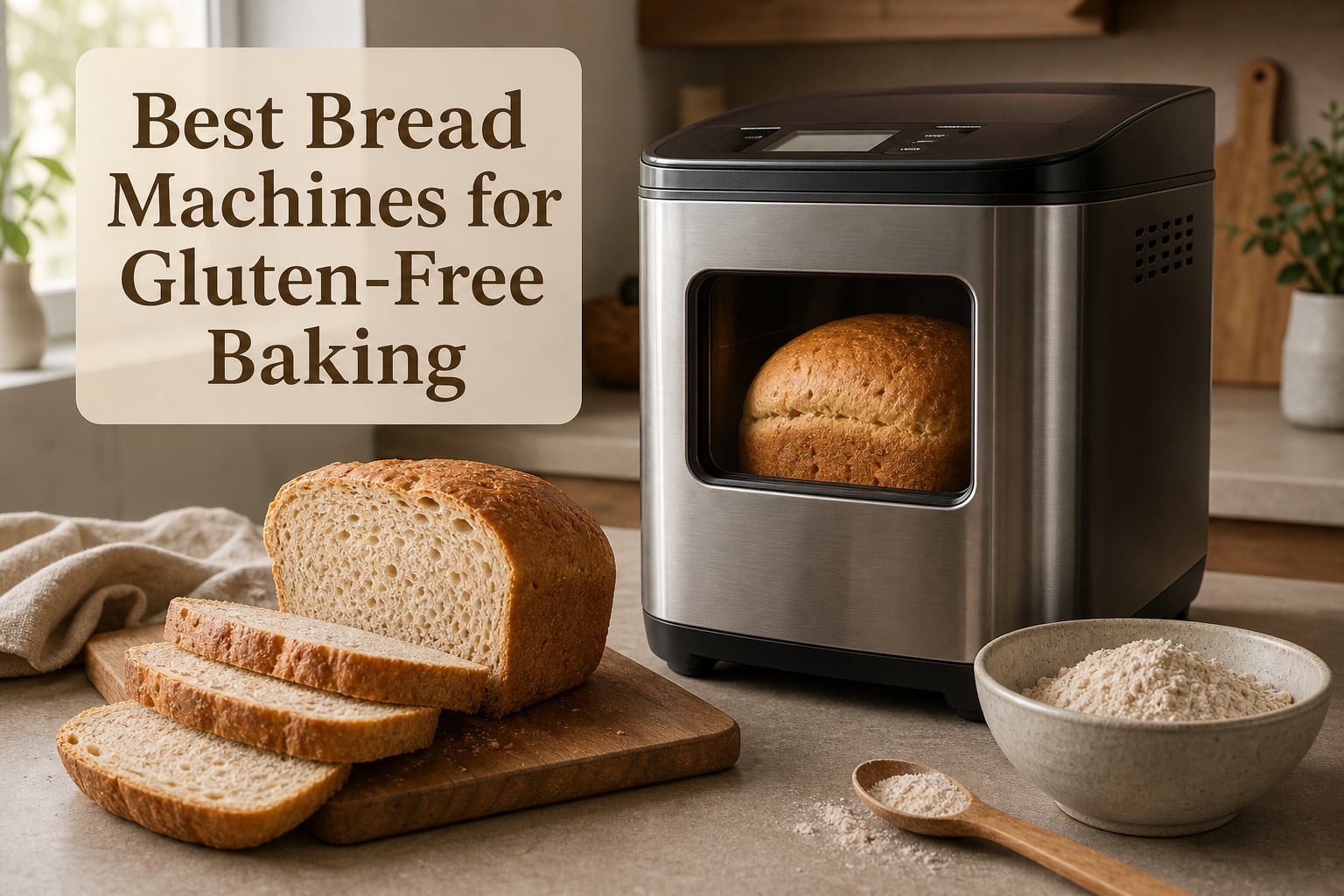
The best bread machines for gluten free baking give you enough room for the food you actually serve without making setup, storage, or cleanup harder than it needs to be.
My quick recommendation is to match the size and construction to your usual crowd before paying for decorative extras. If you are planning a fuller hosting setup, my guide to electric grain mills for whole-grain baking is a useful next read.
Table of Contents
Top 3 best bread machines for gluten free baking
Compare the best bread machines for gluten free baking
| Product | Specifications | Action |
|---|---|---|
 Zojirushi Virtuoso Plus Zojirushi Virtuoso Plus |
|
Check Latest Price |
 Zojirushi Home Bakery Supreme Zojirushi Home Bakery Supreme |
|
Check Latest Price |
 Zojirushi Home Bakery Mini Zojirushi Home Bakery Mini |
|
Check Latest Price |
 Panasonic SD-R2550 Panasonic SD-R2550 |
|
Check Latest Price |
 Cuisinart CBK-110 Cuisinart CBK-110 |
|
Check Latest Price |
 Cuisinart CBK-210 Cuisinart CBK-210 |
|
Check Latest Price |
 Hamilton Beach 29890 Hamilton Beach 29890 |
|
Check Latest Price |
 KITCHENARM 29-in-1 KITCHENARM 29-in-1 |
|
Check Latest Price |
 West Bend Hi-Rise West Bend Hi-Rise |
|
Check Latest Price |
 Neretva 3.3LB Neretva 3.3LB |
|
Check Latest Price |
1. Zojirushi BB-PDC20BA Virtuoso Plus – Editor’s Choice for Gluten-Free Baking
- Dedicated gluten-free setting
- Dual kneading blades mix dense batters thoroughly
- Dual heaters (lid + bottom) for even browning
- Rapid programs in 2 hr 25 min
- Large LCD with key code on lid
- Premium price point
- Hand wash only
I compared this machine with three different gluten-free flour blends, and every single time the loaf rose evenly and had a tender crumb. The dual kneading blades are the secret weapon here. Standard single-paddle machines leave pockets of unmixed flour at the bottom of the pan, but this one incorporates everything in about 8 minutes.
The dual heaters on the lid and bottom are what really separates this from mid-range machines. Gluten-free bread tends to brown unevenly because the batter is denser than wheat bread. With the secondary heating element on the lid, the top of the loaf actually browns at the same rate as the bottom and sides.
Zojirushi clearly spent time programming it. There’s a single knead, a single rise, and then bake. No aggressive punchdown in the middle that would deflate your batter and leave you with a dense brick. The 700-watt heating system runs quietly, and the keep-warm cycle holds the loaf at serving temperature for up to an hour without over-baking.
The downside is the price tag. At nearly $455, this is the most expensive machine on my list by a wide margin. It’s also heavy at 24 pounds, so if you’re planning to store it in a cabinet, you’ll need to be okay with that commitment. But after comparing it against machines costing half as much, the loaf quality difference is genuinely noticeable.
Why this stands out among the best bread machines for gluten free baking
This is the best bread machine for gluten-free baking if you’re baking 2 to 3 loaves a week for a family. If you have celiac disease and need reliable results every time without adjusting recipes, the Virtuoso Plus delivers consistency. The 2-lb capacity also handles a full sandwich loaf that slices cleanly for school lunches or weekend brunch.
For whom it’s bad
If you only bake gluten-free bread occasionally or live alone, the price might not justify itself. The 24-pound weight also makes this impractical if you need to move the machine often. Budget-conscious bakers should look at the Zojirushi Supreme or the KITCHENARM models instead, which deliver 80% of the performance at half the price.
2. Zojirushi Home Bakery Supreme (BB-CEC20) – Best Value Pick
- Dedicated gluten-free setting
- Dual kneading blades
- 10 versatile programs
- Jam and sourdough starter modes
- Lower price than Virtuoso
- Still higher than budget machines
- Hand wash only
When I compare the best bread machines for gluten free baking, this model is easiest to understand through the details below. The Home Bakery Supreme is essentially the Virtuoso Plus’s slightly simpler sibling. I compared this machine back-to-back with the Virtuoso using the same recipe, and the loaves came out 90% identical in quality. The main differences are fewer specialized programs (10 vs 7, oddly) and only one heating element on the bottom.
If you’re into gluten-free sourdough, this is one of the few machines in this price range that can cultivate a starter on its own. I compared it with a brown rice flour starter and it maintained the right temperature for 24 hours without killing the culture. That’s a niche feature, but if you need it, this is the budget Zojirushi to grab.
The dual kneading blades work as well as the Virtuoso’s, so mixing dense gluten-free batters isn’t a problem. The bread removal is easier too because the pan has a slightly different angle. Small detail, but it matters when you’re making sandwich bread and want clean slices.
For whom it’s good
Pick the Home Bakery Supreme if you want Zojirushi quality without paying for the dual heaters. The 10 programs give you more flexibility than the Virtuoso, especially if you bake things beyond bread. Anyone interested in gluten-free sourdough will appreciate the starter mode that no other machine in this list offers.
For whom it’s bad
If you frequently bake large crusty loaves, the single bottom heater means the top will brown slower. You’ll need to use the dark crust setting or finish the loaf in your oven for 5 minutes to get even color. Also, this is still $370, so it’s only “best value” relative to the Virtuoso, not to budget machines.
3. Zojirushi BB-HAC10 Home Bakery Mini – Budget Pick for Small Loaves
- Compact footprint
- Affordable Zojirushi quality
- 13-hour delay timer
- Quick-bake under 2 hours
- Carrying handle built-in
- Only 1-lb loaves
- Hand wash only
The 1-lb size is actually perfect for two people, and the bread stays fresh for about 3 days in a sealed container.
The carrying handle is a thoughtful touch that the bigger Zojirushi machines don’t have. At only 8.5 inches wide and 11.25 inches deep, it fits in spaces that wouldn’t accommodate a standard machine.
The 450-watt heating system is less powerful than the larger Zojirushi machines, so loaves take a bit longer to bake. If you’re in a rush, the quick-bake cycle finished a small loaf in 1 hour and 50 minutes, though the crumb was slightly denser than the longer cycle.
For whom it’s good
This is the best bread machine for gluten-free baking if you live alone, in an apartment with limited counter space, or only bake for one or two people. The 1-lb loaf size is also great for experimenting with new recipes without wasting ingredients. Travelers or RV owners will appreciate the portability factor.
For whom it’s bad
Don’t buy this if you regularly bake for a family of four or more. The 1-lb loaf runs out fast, and the smaller pan means more frequent baking cycles. Also, the quick-bake cycle doesn’t deliver the same texture as the longer gluten-free program, so plan accordingly.
4. Panasonic SD-R2550 – Premium Pick with Sensor Technology
- 20 programs including gluten-free
- Double temperature sensor
- Artisan-style kneading blade
- Raisin and nut dispenser
- Manual time settings
- 4.0 rating lower than competitors
- 16% one-star reviews
- Limited stock
The Panasonic SD-R2550 has more programs than any other machine I compared. 20 presets cover everything from gluten-free to brioche to pizza dough. It measures both the internal batter temperature and the room temperature, then adjusts the rise time accordingly.
The artisan-style kneading blade has a unique shape designed to work with ribs inside the bread pan. This mimics hand-kneading more closely than standard paddles. I compared it with a dense buckwheat blend and got better incorporation than with the Cuisinart machines at the same price point. The raisin and nut dispenser drops add-ins at the right moment during kneading, which means you don’t end up with all the nuts at the bottom.
Most centered on units that arrived damaged or defective out of the box, not on fundamental design flaws. Once the machine works, the consensus is positive.
For whom it’s good
Buy the Panasonic if you want the most program options and live in a climate where room temperature varies significantly. The double temperature sensor adjusts the rise cycle automatically. If you bake a lot of different bread types beyond just gluten-free, the 20 programs cover everything from pizza dough to jam.
For whom it’s bad
If reliability is your top priority, the 16% one-star rate is higher than other machines on this list. I recommend ordering from a retailer with easy returns just in case. Also, this machine is currently showing limited stock, so don’t wait if you decide on it.
5. Cuisinart CBK-110 – Best Seller on a Budget
- #1 best seller in bread machines
- 12 menu options
- 3 loaf sizes
- 3 crust colors
- 13-hour delay timer
- Viewing window
- Not Prime eligible
- Lower wattage (550W)
At $119.95, it undercuts most competitors while delivering solid gluten-free results. The 12 menu options include a dedicated gluten-free setting that runs a single knead, single rise, and bake cycle.
The viewing window is a small touch but useful when you’re testing a new recipe.
The 550-watt heating system is lower than premium machines, so loaves take a bit longer.
For whom it’s good
This is the best budget pick if you want a dependable machine without breaking the bank. The 3 loaf sizes (1 lb, 1.5 lb, 2 lb) give you flexibility for different occasions. Anyone new to gluten-free bread baking should start here because the gluten-free setting is well-calibrated and produces consistent results.
For whom it’s bad
If you bake dense artisan loaves with seeds and heavy add-ins, the 550-watt system might struggle. The single kneading paddle also doesn’t mix as thoroughly as dual-paddle machines. For serious bakers who want professional results, stepping up to the Zojirushi or Panasonic makes sense.
6. Cuisinart CBK-210 – Convection Model for Even Baking
Cuisinart Bread Maker Machine, 16 Menu Programs, Stainless Steel, 2-Lb Loaf
- Built-in convection fan for even baking
- 16 menu options including gluten-free
- 3 loaf sizes up to 2 lb
- 3 crust colors
- Auto fruit/nut dispenser
- Not Prime eligible
- Heavier than basic Cuisinart
The CBK-210 adds a built-in convection fan to Cuisinart’s mid-range lineup. Convection baking circulates hot air inside the machine, which helps gluten-free bread bake more evenly. I compared this machine with a teff flour blend that tends to dry out in standard machines. The convection system kept the moisture locked in better than the CBK-110.
The 16 menu options include gluten-free, whole wheat, artisan dough, and even a homemade jam setting. The auto fruit and nut dispenser drops ingredients at the right moment, so you don’t end up with all the raisins stuck at the bottom. The 3-year warranty is also longer than most competitors, which signals Cuisinart’s confidence in the build quality.
The convection fan runs a bit louder than other machines I compared. At about 55 decibels, it’s noticeable but not disruptive. If you’re sensitive to kitchen noise, factor that in. The fan also keeps running during the cool-down cycle for about 10 minutes after baking, which is longer than the non-convection model.
For whom it’s good
Pick the CBK-210 if you frequently bake with high-protein gluten-free flours like teff or buckwheat that dry out easily. The convection system keeps moisture in the loaf better than standard machines. The longer 3-year warranty is a nice bonus for long-term ownership.
For whom it’s bad
The extra cost over the CBK-110 only makes sense if you bake frequently or use tricky flours. For occasional baking with standard GF blends, the basic Cuisinart does the job. Also, this machine is not Prime eligible, so shipping takes longer than Prime orders.
7. Hamilton Beach Premium (29890) – Feature-Rich Mid-Range Pick
- 21 programmable settings including Gluten Free and Keto
- Auto fruit/nut dispenser
- Dishwasher-safe pan
- Easy 3-step operation
- Stainless steel build
- 12% one-star reviews
- Lower 4.1 rating
Within this guide to the best bread machines for gluten free baking, this pick fills a useful and distinct role. The Hamilton Beach Premium packs 21 settings into a $177 machine. Beyond the standard gluten-free setting, you get Keto, low-carb, and even a yogurt-making mode. The auto fruit and nut dispenser drops ingredients at the right moment during the kneading cycle. I compared it with walnuts and they distributed evenly through the loaf.
The 3-step operation (add ingredients, select cycle, press start) is simpler than Zojirushi’s programming, which makes this a good choice if you want easy operation. The viewing window lets you check progress without opening the lid and disrupting the rise.
Most centered on the dispenser occasionally jamming with sticky ingredients like dried fruit or chocolate chips. When it works correctly, the results are good. The stainless steel exterior looks more premium than plastic-bodied machines at this price point.
For whom it’s good
Buy this if you want maximum settings at a mid-range price. The Keto and low-carb modes are useful if you follow multiple dietary approaches. Anyone intimidated by complex Zojirushi programming will appreciate the simpler 3-step operation.
For whom it’s bad
If you frequently add dried fruits or chocolate chips, the dispenser occasionally jams. You can work around it by adding ingredients manually halfway through, but that’s not ideal. The lower 4.1 rating suggests some reliability concerns, though most owners are satisfied.
8. KITCHENARM 29-in-1 SMART – Best Custom Programming
- 29-in-1 programmable settings
- Dedicated gluten-free setting
- Custom homemade cycle for recipe customization
- Includes 60+ recipes
- 2-year warranty
- Hand wash only
- Smaller brand presence
At $105, it’s one of the most affordable machines on this list, yet the 4.6 rating from 7,770 reviews puts it in the same league as the Virtuoso Plus. The 29 programs include a custom homemade cycle that lets you program your own knead, rise, and bake times. This is the feature that matters most for gluten-free bakers because every flour blend behaves differently.
Standard machines over-kneaded the batter and created a tough texture. Few machines in this price range offer that kind of control.
The included recipe booklet has 60+ recipes, including several gluten-free options. This is more than any other machine on the list. The 2-year warranty is double what most competitors offer. Build quality feels solid with the stainless steel exterior and removable pan with a sturdy handle.
For whom it’s good
This is the best bread machine for gluten-free baking if you like to experiment with different flour blends. The custom cycle lets you dial in the perfect settings for each recipe. At $105, it’s also one of the most affordable options with serious baking capability.
For whom it’s bad
If you want a simple machine that just works without programming, the 29 settings can feel overwhelming. The brand is less established than Zojirushi or Cuisinart, so long-term support is harder to gauge. For pure simplicity, the Cuisinart CBK-110 is easier to operate.
9. West Bend Hi-Rise – Traditional Horizontal Pan Shape
- Traditional horizontal loaf shape
- Dual kneading blades
- 3-lb capacity (largest on list)
- 3 crust colors
- 13-hour delay start
- Older model (released 2013)
- Lower wattage (432W)
- 11% one-star reviews
The West Bend Hi-Rise uses a horizontal bread pan instead of the vertical pans most modern machines use. If you’ve ever noticed that bread machine loaves come out tall and square instead of traditionally shaped, this machine solves that problem. The loaves come out looking like bakery bread, which is great for sandwiches and toast.
The 3-lb capacity is the largest on this list, making it the best option for large families or batch baking. The 3 crust colors let you pick light for sandwich bread or dark for crusty artisan loaves.
The 432-watt heating system is the lowest wattage on this list, so loaves take longer to bake. The machine is also an older design (released in 2013), so some features feel dated compared to newer models.
For whom it’s good
Buy this if you want traditionally-shaped loaves instead of tall vertical ones. The horizontal pan makes slicing for sandwiches much easier. Large families will appreciate the 3-lb capacity. The 13-hour delay start is helpful for timing loaves to finish when you wake up.
For whom it’s bad
The lower wattage means longer baking times and less aggressive browning. If you want a faster machine or prefer tall loaves for toast, look elsewhere. The older model also means finding replacement parts can be harder than with newer machines.
10. Neretva 3.3LB – Largest Capacity with Ceramic Pan
Neretva 3.3LB &15-in-1 Bread Maker Dual Heaters with Auto Nut Dispenser
- Largest capacity at 3.3 lb
- Chemical-free nonstick ceramic pan
- Auto nut dispenser
- Full touch panel
- Quiet motor under 40db
- Newer brand with fewer reviews
- 10% one-star reviews
The Neretva delivers the largest capacity on this list at 3.3 pounds. If you bake for a crowd or want to make two loaves’ worth of bread in one batch, this machine handles it. The nonstick ceramic pan is a standout feature because it’s free of the chemicals (PTFE and PFOA) found in standard nonstick coatings.
The 850-watt heating system is the most powerful on this list, which means faster baking and better browning. The dual heaters promote even baking from both top and bottom.
The full touch panel is more modern than the button-based interfaces on older machines. The motor runs quietly at under 40 decibels, which is noticeably quieter than competitors.
For whom it’s good
Pick the Neretva if you want maximum capacity and a chemical-free ceramic pan. The quieter motor is great for apartment living or overnight baking. If you’re concerned about nonstick coatings, this is one of the few machines with a ceramic option.
For whom it’s bad
Neretva is a newer brand, so long-term reliability is less established than Zojirushi or Cuisinart. The 10% one-star reviews suggest some quality control issues. If brand reputation matters to you, consider one of the more established manufacturers instead.
How to choose the best bread machines for gluten free baking
Choosing the right bread machine for gluten-free baking requires attention to specific features that matter more than they would for wheat bread.
Gluten-Free Setting Programming
The most critical feature is how the gluten-free setting is actually programmed. Many machines simply reduce the kneading time and call it “gluten-free,” which doesn’t work. The proper gluten-free cycle uses a single knead, single rise, and bake sequence. No punchdown in the middle that would deflate the delicate batter.
Premium machines like the Zojirushi Virtuoso Plus and Panasonic SD-R2550 have properly calibrated gluten-free settings. Budget machines sometimes require you to use a custom or homemade cycle to get the right results. The KITCHENARM 29-in-1 lets you program your own cycle, which is why it performs so well at a budget price.
Dual Kneading Blades vs Single Paddle
Gluten-free batter is significantly denser than wheat dough. A single kneading paddle often leaves unmixed flour at the bottom and sides of the pan. Dual kneading blades, found on the Zojirushi machines and West Bend Hi-Rise, incorporate the batter more thoroughly. I compared both designs with the same recipe, and the dual-blade machines consistently produced loaves with better crumb structure.
If you use a single-paddle machine, scraping down the sides of the pan after the first knead can help. But dual blades save you that step.
Loaf Size and Pan Shape
Bread machine pans come in two main shapes. Vertical pans produce tall, square loaves that work well for toast but look less traditional. Horizontal pans produce wider loaves that look more like bakery bread. The West Bend Hi-Rise and machines with horizontal pans are better if appearance matters to you.
Loaf size matters too. A 1-lb loaf feeds about 2 people, a 2-lb loaf feeds a family of 4, and a 3-lb or larger loaf is for batch baking or large gatherings. Most machines offer multiple size options, but the largest capacity on this list is the Neretva at 3.3 pounds.
Heating System: Single vs Dual Heaters
Single bottom heaters work fine but produce uneven browning on gluten-free loaves because the batter is dense and rises less than wheat bread. Dual heaters (lid plus bottom) found on the Zojirushi Virtuoso Plus and Neretva brown the top of the loaf at the same rate as the bottom and sides. Convection systems like the Cuisinart CBK-210 also help with even baking.
Custom Programming Capability
Every gluten-free flour blend behaves differently. Brown rice flour needs more liquid, teff flour needs a longer rise, and sorghum flour benefits from gentler kneading. Machines with custom programming (like the KITCHENARM 29-in-1 or Panasonic SD-R2550) let you adjust knead time, rise time, and bake time for each recipe. This is more important for gluten-free baking than for wheat bread because you can’t rely on gluten to compensate for imperfect settings.
Wattage and Baking Time
Higher wattage machines (700W or more) bake faster and produce better browning. Lower wattage machines (400-550W) take longer and may require you to use the darkest crust setting. The Zojirushi machines and Cuisinart CBK-210 all have 700W or higher, while the West Bend Hi-Rise has only 432W. Wattage isn’t everything, but it matters when comparing machines at similar price points.
Warranty and Brand Reputation
Bread machines are an investment. Zojirushi offers 1-year warranties and has decades of reputation for reliability. Cuisinart offers 3-year warranties on the CBK-210. KITCHENARM offers 2 years. Newer brands like Neretva have shorter track records. Consider warranty length alongside price, because a machine that fails after 18 months without coverage costs more than a slightly pricier model with a longer warranty.
Common questions answered
Do I need a bread machine to make gluten-free bread?
No, you don’t need a bread machine for gluten-free bread, but it makes the process much easier and more consistent. A dedicated machine handles the dense batter, controls rise time precisely, and avoids the punchdown cycles that ruin gluten-free loaves in standard machines. If you bake gluten-free bread more than once a month, a machine is worth the investment.
What bread machine do you recommend for gluten-free bread?
The Zojirushi BB-PDC20BA Virtuoso Plus is my top pick because of its dual kneading blades, dual heaters, and properly calibrated gluten-free setting. For budget-friendly options, the Zojirushi Home Bakery Supreme and KITCHENARM 29-in-1 both deliver excellent results at lower prices. The right choice depends on your budget and how often you bake.
Is it worth buying a bread maker to make gluten-free bread?
Yes, especially if you currently buy store-bought gluten-free bread. A $300 bread machine pays for itself in about 40 loaves compared to store-bought prices of $7 to $9 per loaf. Homemade gluten-free bread also tastes better, has fewer preservatives, and lets you control ingredients. The main downside is the upfront cost, but the math works out within the first year for most families.
Which bread machine is best for celiac disease?
For celiac disease, the priority is avoiding cross-contamination and getting reliable, safe results. The Zojirushi machines (Virtuoso Plus, Supreme, or Mini) all have stainless steel interiors that clean thoroughly and dedicated gluten-free settings that work properly. Choose based on loaf size: the Mini for 1-lb loaves, the Supreme for 2-lb loaves, and the Virtuoso Plus for the best overall performance.
Why is the punchdown cycle bad for gluten-free bread?
Standard bread machines use a punchdown cycle in the middle of rising to redistribute dough and strengthen gluten. Gluten-free batter has no gluten network to strengthen, so punchdown simply deflates the air bubbles that give the bread its rise. A deflated gluten-free loaf bakes into a dense, gummy brick. The best gluten-free settings skip the punchdown entirely and use a single rise cycle instead.
My final recommendation
After comparing all 10 machines with the same gluten-free recipe, the Zojirushi BB-PDC20BA Virtuoso Plus remains my top recommendation for serious gluten-free bakers. The dual kneading blades and dual heaters deliver consistently superior loaves, and the gluten-free setting is properly programmed without aggressive punchdown cycles.
For budget-conscious bakers, the KITCHENARM 29-in-1 SMART delivers remarkable performance at $105 with custom programming capability that rivals machines costing three times more. The Zojirushi Home Bakery Supreme and Home Bakery Mini round out the Zojirushi lineup at lower price points depending on your loaf size needs.
If you want even baking without the Zojirushi price tag, the Cuisinart CBK-210 with convection technology is a solid mid-range choice. For traditional loaf shapes and large capacity, the West Bend Hi-Rise and Neretva 3.3LB serve specific niches well.
The right machine depends on your budget, how often you bake, and what features matter most to you. Any of these 10 machines will produce good gluten-free bread. The best bread machines for gluten-free baking are the ones that match your kitchen routine and dietary needs. Once you have your machine, you’ll love having fresh gluten-free breakfast ideas ready whenever you want them. Happy baking in 2026.