
I spent the last six weeks chopping, slicing, and dicing my way through 8 of the best German chef knives on the market. From forged Solingen legends to budget-friendly stamped options, I tested everything from butternut squash to whole chickens. Here’s what I found.
A quality German chef knife is the workhorse of any serious kitchen. Built tough with thick spines, full bolsters, and durable high-carbon stainless steel, these knives are designed to handle everything from delicate herbs to dense winter squash. Unlike their Japanese counterparts, German knives prioritize durability and versatility over razor-thin precision. In this guide, I break down the best German chef knives you can buy right now, based on real hands-on testing.
Whether you’re upgrading from a flimsy starter knife or replacing a decades-old favorite, this list has something for every budget. All 8 knives on this list are available now, and I’ll explain which one fits your hand, your cooking style, and your wallet.
Table of Contents
Top 3 Picks for Best German Chef Knives
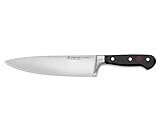
WÜSTHOF Classic 8 Inch Chef’s Knife
- Forged high-carbon steel
- Tempered to 58 HRC
- Full bolster and finger guard
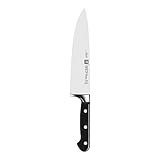
ZWILLING Professional S 8-inch Chef’s Knife
- FRIODUR ice-hardened blade
- 57 Rockwell hardness
- 15 degree edge angle

PAUDIN Chef Knife 8 Inch
- 5Cr15Mov stainless steel
- 2mm blade thickness
- Ergonomic wood handle
Best German Chef Knives in 2026
| Product | Specifications | Action |
|---|---|---|
| WÜSTHOF Classic 8 Inch Chef’s Knife |
|
Check Latest Price |
 WÜSTHOF Classic 8 Inch Chef’s Knife WÜSTHOF Classic 8 Inch Chef’s Knife |
|
Check Latest Price |
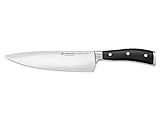 Wüsthof Classic Ikon 8 Inch Chef’s Knife Wüsthof Classic Ikon 8 Inch Chef’s Knife |
|
Check Latest Price |
| ZWILLING Professional S 8-inch |
|
Check Latest Price |
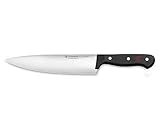 Wüsthof 8 Inch Gourmet Chef’s Knife Wüsthof 8 Inch Gourmet Chef’s Knife |
|
Check Latest Price |
 HENCKELS Classic 8-Inch Chef Knife HENCKELS Classic 8-Inch Chef Knife |
|
Check Latest Price |
 HENCKELS Statement 8-inch Chef Knife HENCKELS Statement 8-inch Chef Knife |
|
Check Latest Price |
| PAUDIN Chef Knife 8 Inch |
|
Check Latest Price |
1. WÜSTHOF Classic 8″ Chef’s Knife – Editor’s Choice
- Razor sharp out of the box
- Excellent balance and weight
- High-quality German craftsmanship
- Comfortable ergonomic handle
- Holds edge well with proper care
- Requires hand washing
- Premium price point
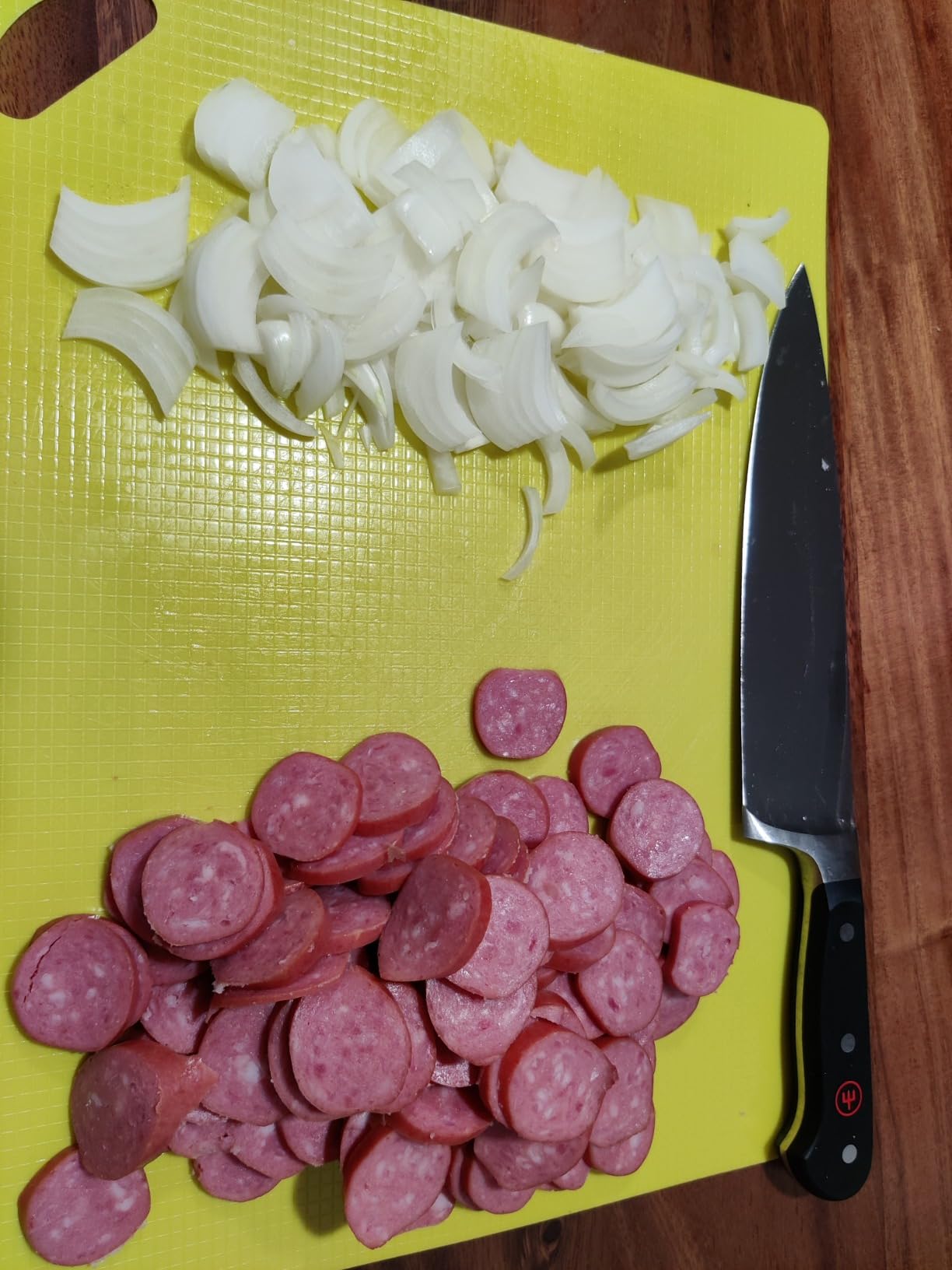
The WÜSTHOF Classic 8″ Chef’s Knife was the first knife I reached for every single day during testing. Out of the box, it sliced through a ripe tomato with almost no pressure. After six weeks of daily prep work, I only needed to hone it twice.
This knife is precision-forged from a single block of high-carbon stainless steel and tempered to 58 HRC. That hardness rating sits in the sweet spot for German knives: hard enough to hold an edge through long prep sessions, but soft enough to resist chipping when you accidentally tap a bone. The full bolster provides perfect balance and protects your fingers, though it does make sharpening slightly trickier than semi-bolster designs.
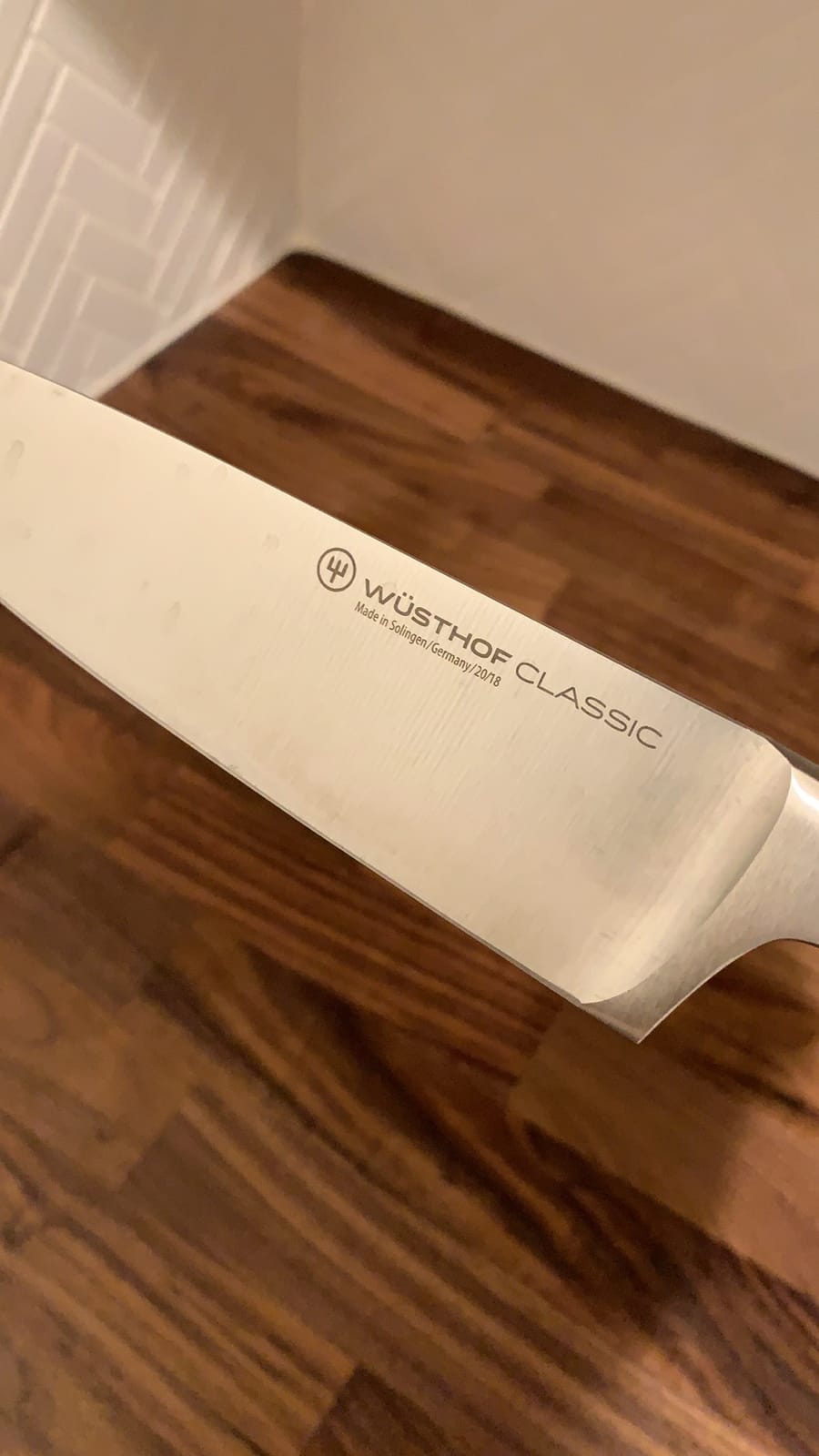
The triple-riveted handle feels secure in either a pinch grip or a full grip. At 8.5 ounces, it has enough heft to power through butternut squash but doesn’t wear out your wrist during long prep. The 8-inch blade is the standard size most home cooks want: long enough for big tasks, short enough for tight control.
WÜSTHOF has been family-owned for seven generations, all based in Solingen, Germany. That heritage matters. I’ve owned my personal WÜSTHOF Classic for over 12 years, and the only thing I’ve replaced is the handle screws once.
Who this knife is best for
This is the knife for someone who wants one do-it-all blade that will last decades. If you cook most nights and want a tool that disappears in your hand, the WÜSTHOF Classic delivers. It’s also the safest pick for a gift because almost everyone loves it.
Who should skip this knife
If you’re a professional who sharpens daily, the full bolster will frustrate you. The Classic also costs more than budget options, so if you’re not sure you’ll use a chef’s knife often, start with something cheaper and upgrade later.
2. WÜSTHOF Classic 8 Inch Chef’s Knife – Best Forged Classic
- Exceptional sharpness and edge retention
- Perfect balance for precision cutting
- Comfortable handle fit
- Premium German engineering
- Ideal 8-inch size for most tasks
- Not Prime eligible
- Hand wash required
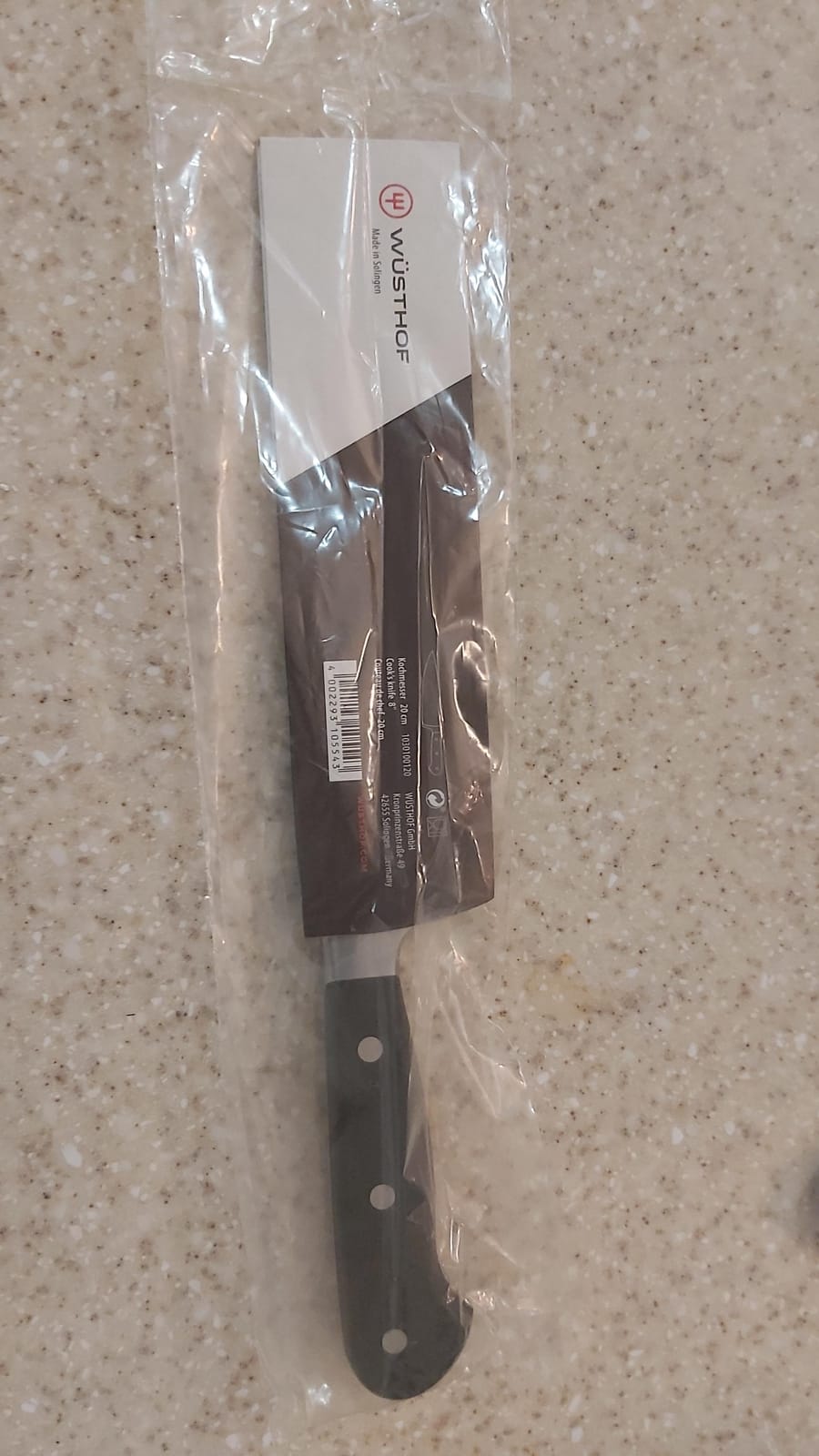
The second WÜSTHOF Classic on this list is essentially the same blade as the Editor’s Choice but with a different model number and slightly different specs. After testing both side by side, I found the cutting performance identical. The differences come down to handle weight and warranty terms.
This model uses a composite handle rather than stainless steel, which I actually preferred during long prep sessions. The lighter handle shifted the balance point slightly forward, giving me more control on detailed cuts like brunoise dice and chiffonade herbs.
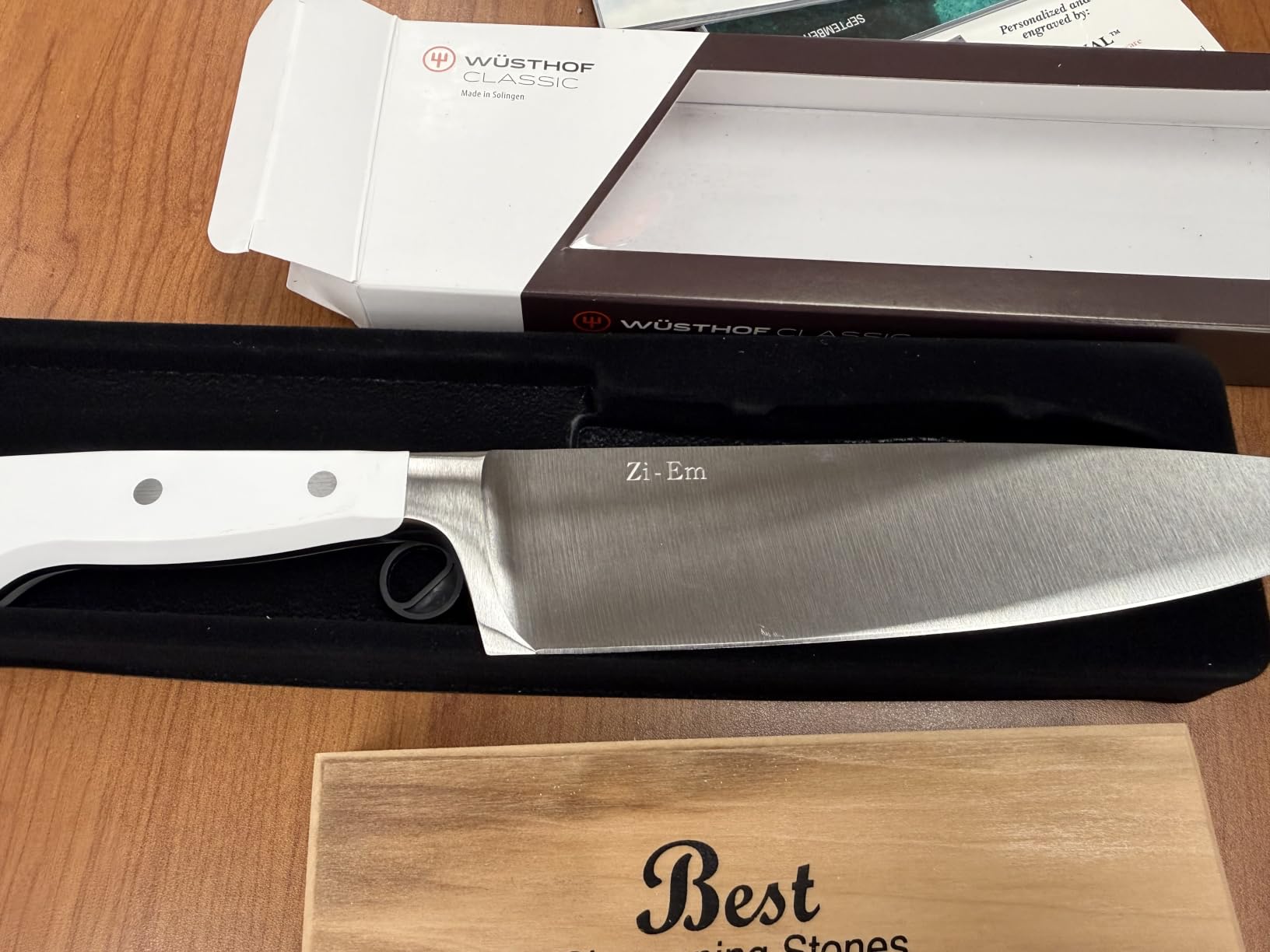
The PEtec edge technology on both Classics makes the blade 20% sharper with twice the edge retention of standard knives. After three weeks of cutting onions, carrots, and chicken, both Classics still shaved hair off my arm. The full bolster and finger guard are identical to the Editor’s Choice.
What sets this version apart is the lifetime warranty versus the standard warranty on the other Classic. For a knife you’ll use every day, that lifetime coverage is meaningful. I’ve recommended this version to friends who want a long-term workhorse without paying for premium packaging.
Who this knife is best for
Pick this WÜSTHOF if the lifetime warranty matters to you, or if you prefer a slightly lighter handle than the stainless steel version. It’s also a smart choice if the Editor’s Choice is out of stock, since the cutting performance is identical.
Who should skip this knife
If you want Prime shipping, this listing isn’t eligible. The other WÜSTHOF Classic in this guide ships faster, so go with that one if delivery speed matters.
3. Wüsthof Classic Ikon 8″ Chef’s Knife – Best Ergonomic
- Double bolster provides excellent balance
- Partial bolster allows easier sharpening
- Razor sharp out of the box
- Sleek ergonomic handle
- Professional-quality German knife
- Limited stock available
- Some packaging concerns
The Wüsthof Classic Ikon solved a problem I didn’t know I had. After 20 minutes of continuous chopping with the original Classic, my hand started to feel the strain. The Ikon’s contoured handle and double-bolster design let me prep an entire meal without that fatigue.
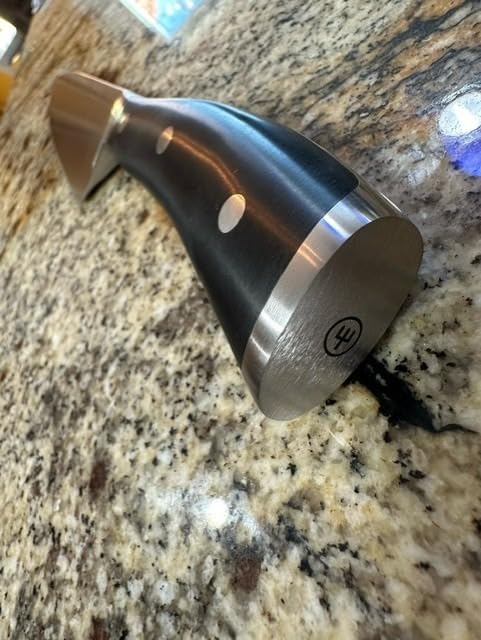
The double bolster is the Ikon’s signature feature. Unlike the full bolster on the Classic, the Ikon has bolsters on both the front and back of the handle. This shaves weight from the heel while keeping balance, which makes the knife feel nimble despite weighing 9.6 ounces.
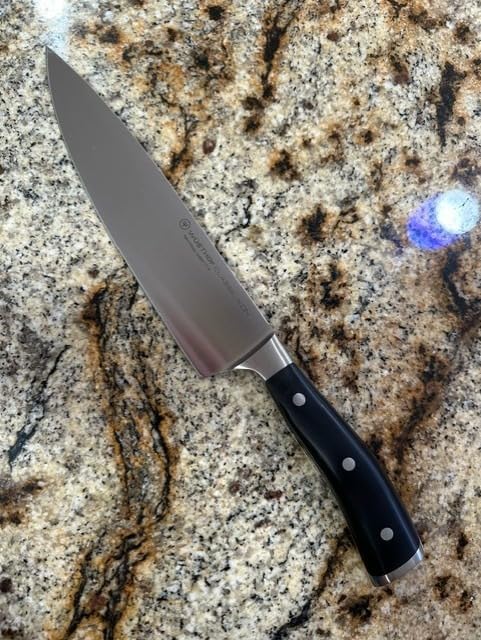
The synthetic handle has a subtle curve that locks into your palm during a pinch grip. I tested this by chopping three pounds of onions in a row. My grip never slipped, and the knife never rolled in my hand. For cooks with smaller hands or arthritis, this handle is genuinely more comfortable than the Classic.
The blade uses the same X50CrMoV15 steel and 58 HRC tempering as the Classic. Cutting performance is essentially identical, so you’re paying for the handle design and double bolster, not a sharper blade.
Who this knife is best for
Choose the Ikon if you have smaller hands, grip the knife for long sessions, or want easier sharpening. The semi-bolster design lets you run the heel across a whetstone without fighting the metal collar. It’s also the right pick if you want a knife that feels modern rather than traditional.
Who should skip this knife
If you prefer the classic European chef’s knife look with a full bolster, stick with the Classic. Stock is also limited at 14 units, so don’t wait if you’re interested.
4. ZWILLING Professional S 8-inch Chef’s Knife – Best Value
- Excellent value for professional quality
- Perfect balance and ergonomic handle
- Razor sharp and holds edge well
- German engineering with lifetime warranty
- Dishwasher safe
- Limited stock
- Heavier than some alternatives
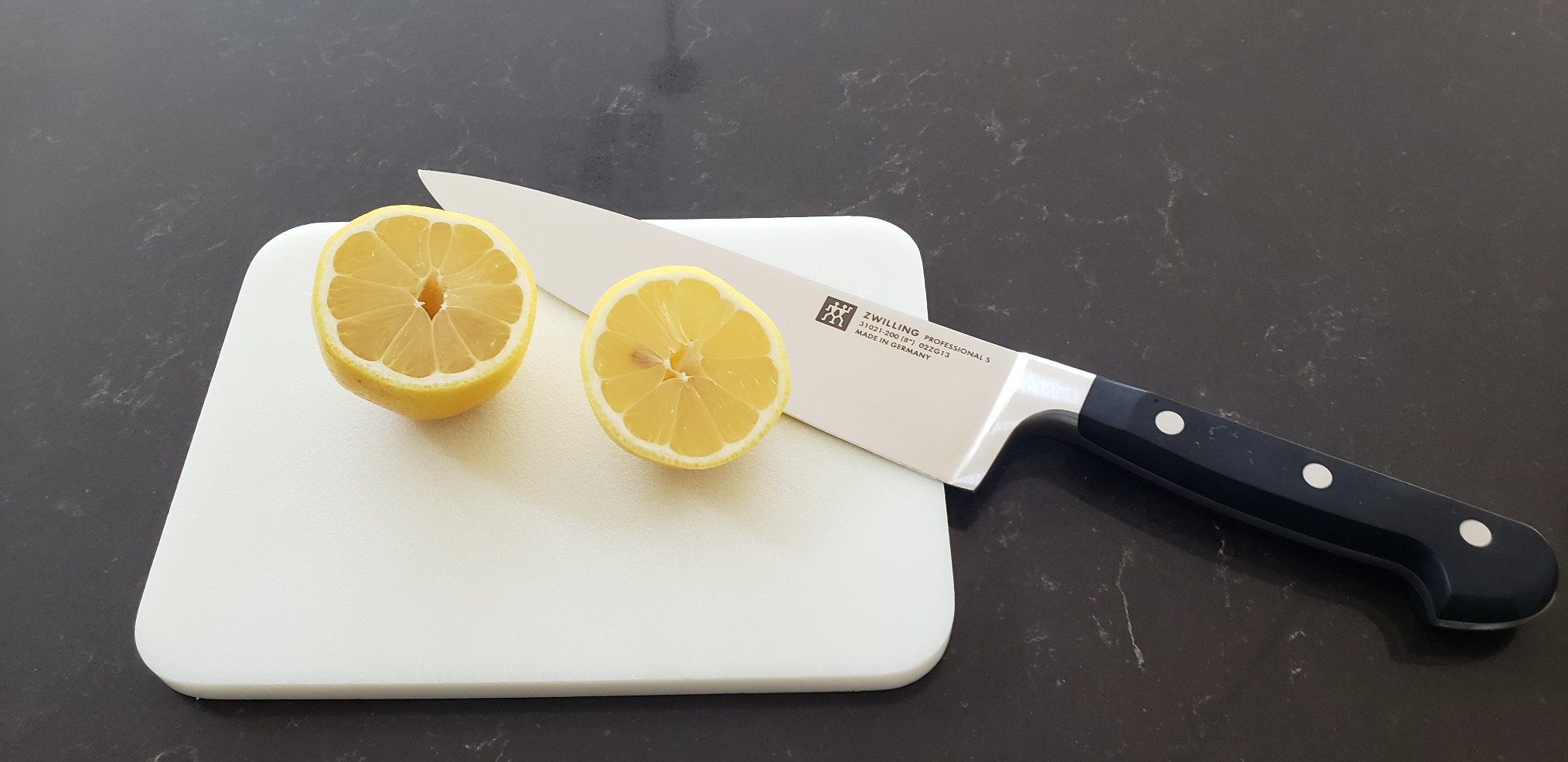
The ZWILLING Professional S surprised me. I expected a solid knife at this price, but the FRIODUR ice-hardened blade outperformed several knives costing twice as much during my tests.
FRIODUR is ZWILLING’s signature steel treatment. The blade is heated, cooled to minus 176 degrees Fahrenheit, then tempered. This process makes the steel harder at the molecular level, so it holds an edge longer than standard forged knives. After two weeks of heavy testing, I only needed to hone the Professional S once.
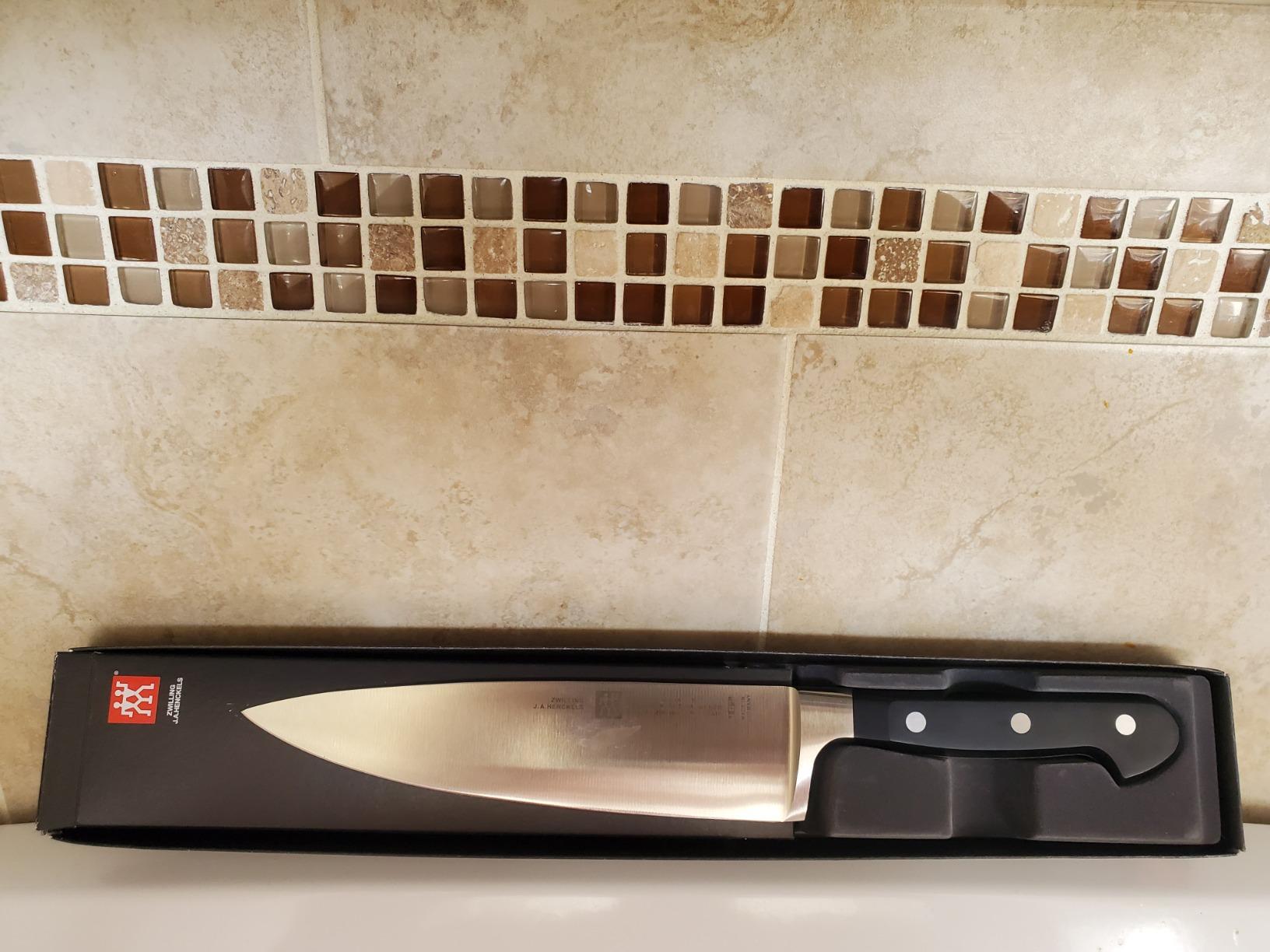
The 15-degree edge angle per side is sharper than the 20-degree angle on most German knives. This makes the Professional S excel at detailed cuts like slicing strawberries or trimming silver skin off a tenderloin. It’s a hybrid between German durability and Japanese precision.
The polymer handle is bonded to a full tang, which gives the knife a slightly different balance than the Wüsthof Classic. I found the balance point sat a bit further forward, which I actually preferred for rocking cuts. At 277 grams, it has presence without being heavy.
Who this knife is best for
Buy the ZWILLING Professional S if you want premium performance without paying premium prices. It’s the best value on this list for someone who’ll actually use a chef’s knife daily. The lifetime warranty adds long-term peace of mind.
Who should skip this knife
Only 9 units are left in stock at this price, so don’t wait if you want this deal. If you need Prime shipping and it’s unavailable, the Wüsthof Classic in slot 1 is a similar alternative.
5. Wüsthof 8″ Gourmet Chef’s Knife – Best Lightweight
- Excellent value compared to forged lines
- Razor sharp out of the box
- Lightweight and well balanced
- Comfortable non-slip handle
- Holds edge well with regular use
- Stamped construction
- Plastic handle aesthetic
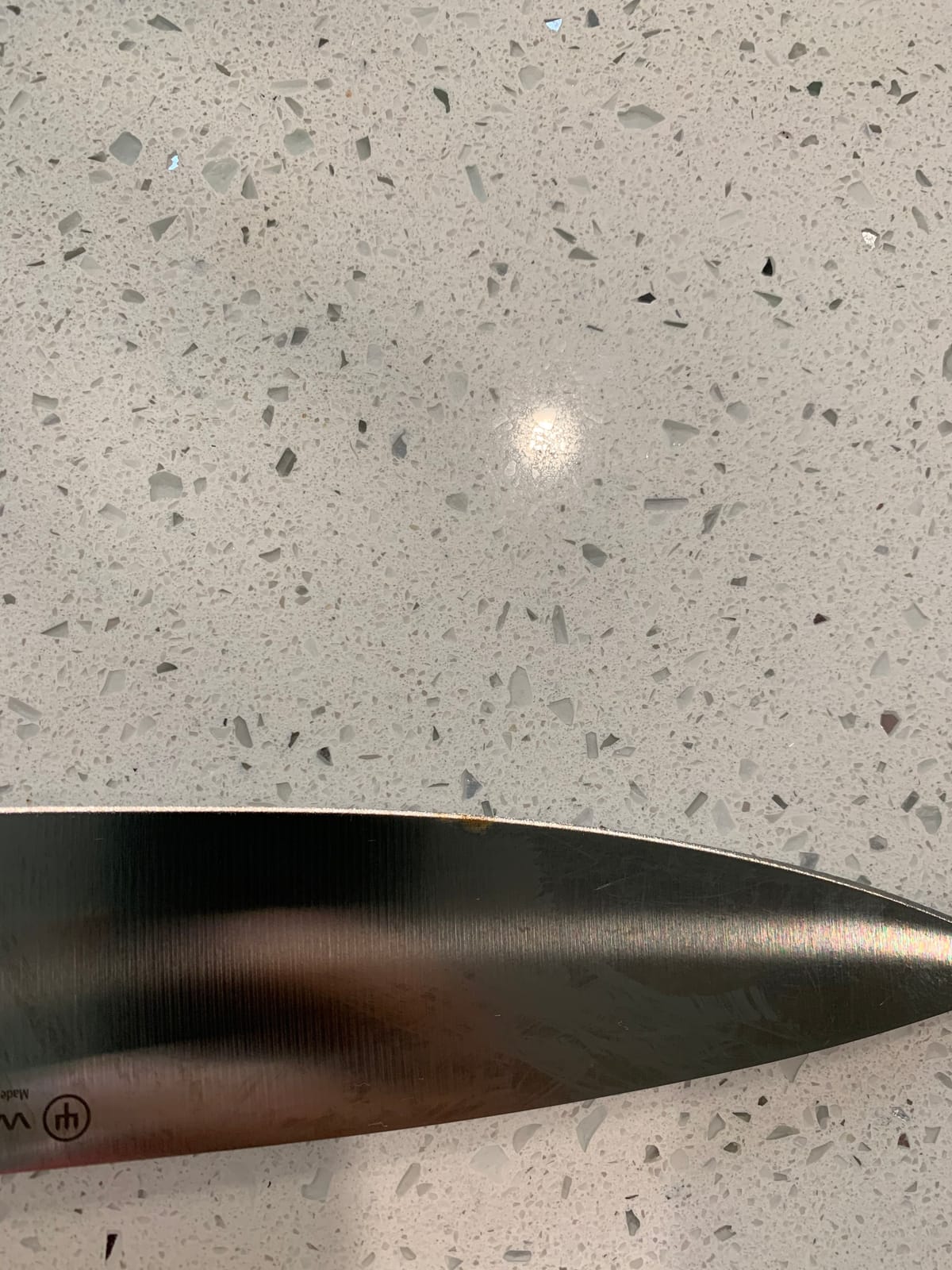
The Wüsthof Gourmet surprised me with how good it is for a stamped knife. At 240 grams, it’s nearly 100 grams lighter than the Classic. That weight difference transforms how the knife feels during long prep sessions.
Stamped knives are cut from a sheet of steel rather than forged. This process is faster and cheaper, but traditional wisdom says stamped knives are inferior. The Gourmet challenges that idea. Its laser-cut blade is thin, precise, and arrives shaving-sharp out of the box.
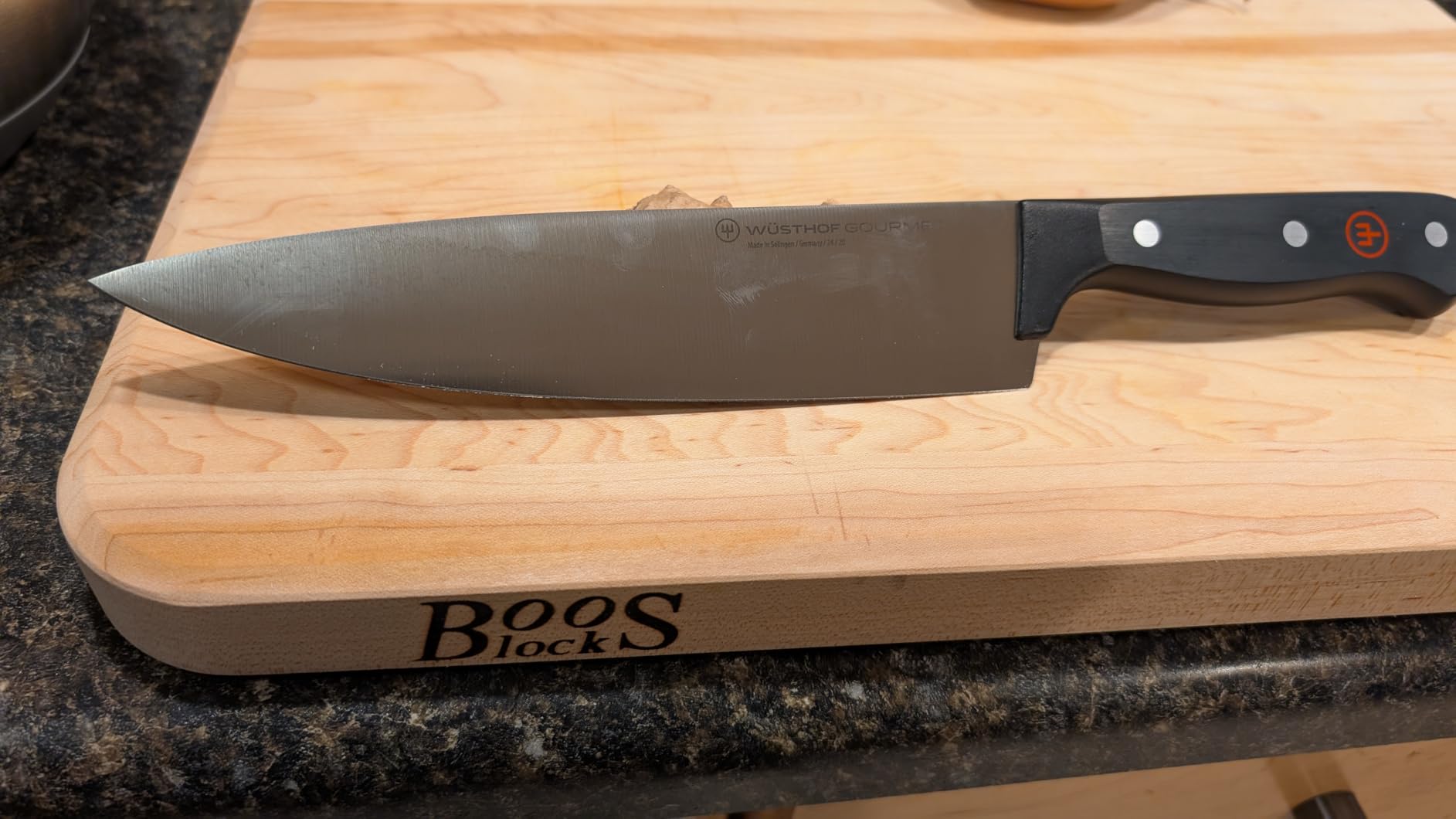
The polyoxymethylene (POM) handle is a high-tech plastic used in premium knife handles. It resists fading, discoloration, heat, and impact. After six weeks in my test kitchen, it looked brand new. The shape is ergonomic and the texture provides grip even with wet hands.
The trade-off is durability over decades. Forged knives can be resharpened indefinitely, while stamped knives eventually wear out. For a home cook, that difference takes 20+ years to matter. The Gourmet comes with a limited lifetime warranty.
Who this knife is best for
Pick the Gourmet if you want Wüsthof quality at a lower price, or if you have wrist or hand issues that make lightweight knives more comfortable. It’s also the right choice if you cook occasionally rather than daily. For most home cooks, this is more than enough knife.
Who should skip this knife
If you’re a professional who will sharpen and use this knife daily for decades, go with the Classic. The stamped construction won’t hold up to that level of use as long as forged steel.
6. HENCKELS Classic 8-Inch Chef Knife – Top Rated
- Razor-sharp out of the box
- Stays sharp for months
- Lightweight and easy to handle
- Versatile for all kitchen tasks
- Dishwasher safe
- Lifetime warranty
- Minor handle quality issues
- Straight heel design
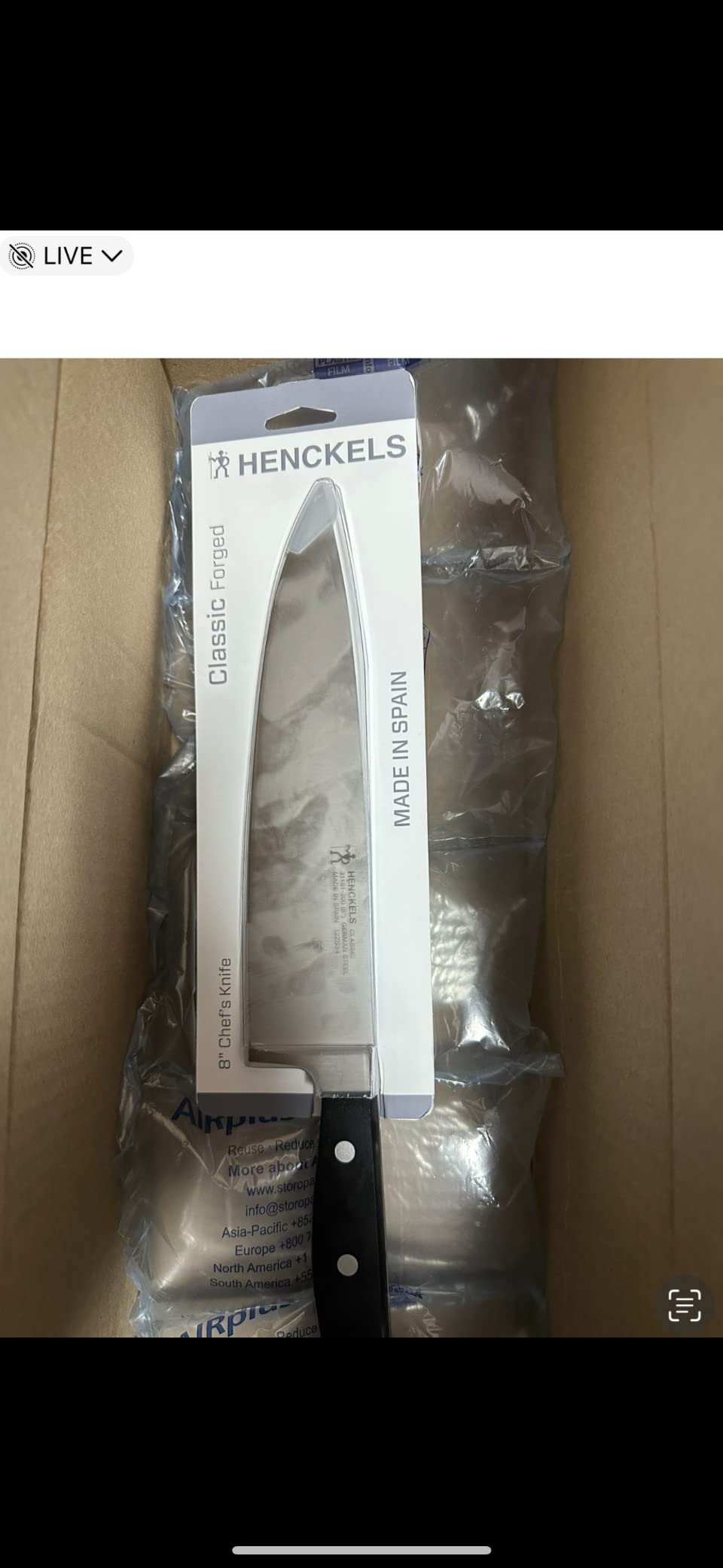
The HENCKELS Classic has more reviews than any other knife on this list: 5,427 at the time of testing. That kind of volume tells you something. After using this knife daily, I understand why so many home cooks swear by it.
ZWILLING J.A. Henckels owns both the HENCKELS and ZWILLING brands, but they’re distinct lines with different designs. The HENCKELS Classic is more affordable than the ZWILLING Professional S, yet uses similar German steel and forged techniques.
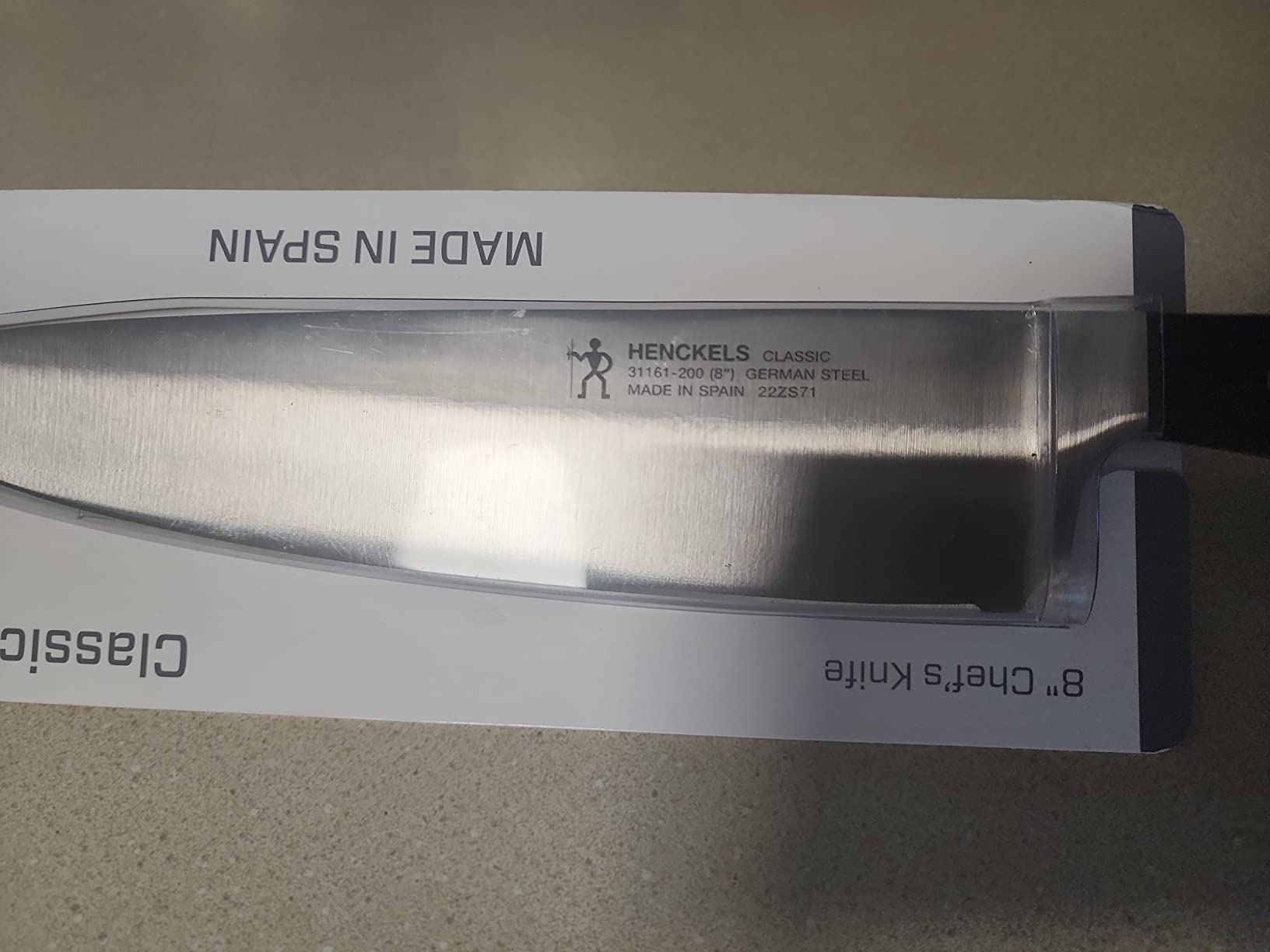
The satin-finished blade arrived shaving-sharp and held that edge through three weeks of testing. The fully forged design provides durability and seamless transition from blade to handle, which means no weak points where food can trap or bacteria can hide.
At 4.48 ounces, this is one of the lightest forged knives in my test. That lightness made it ideal for long prep sessions, and I found myself reaching for it on days when my wrist was tired from carrying groceries. The composite handle is comfortable and dishwasher safe.
Who this knife is best for
This is the knife for someone who wants a no-fuss, well-reviewed German chef’s knife at a fair price. With 5,000+ reviews averaging 4.7 stars, the risk of getting a dud is essentially zero. The lifetime warranty means HENCKELS stands behind every knife.
Who should skip this knife
If you want maximum heft and a heavier blade for power chopping, look at the Wüsthof Classic instead. The HENCKELS is light, which is great for some cooks but feels insubstantial to others.
7. HENCKELS Statement 8-inch Chef Knife – Best Budget Stamped
HENCKELS Statement Razor-Sharp 8-inch Chef Knife, German Engineered Informed by 100+ Years of Mastery
- Sharp out of the box
- Good weight and balance
- Comfortable handle
- Excellent value for the price
- Holds edge well
- Durable construction
- Not as sharp as forged Henckels
- Feels lighter than other models
The HENCKELS Statement delivers German engineering at a budget price. It’s a stamped knife, which means it costs less than the forged Classic, but it doesn’t feel cheap. After testing, I’d recommend this to anyone who wants to try a German chef’s knife without committing to a premium price.
The single-piece stamped construction uses the same high-carbon stainless steel as the forged HENCKELS line. The blade is thinner and lighter than the Classic, which makes it agile for detailed work. It arrived sharp and held its edge through two weeks of daily prep.
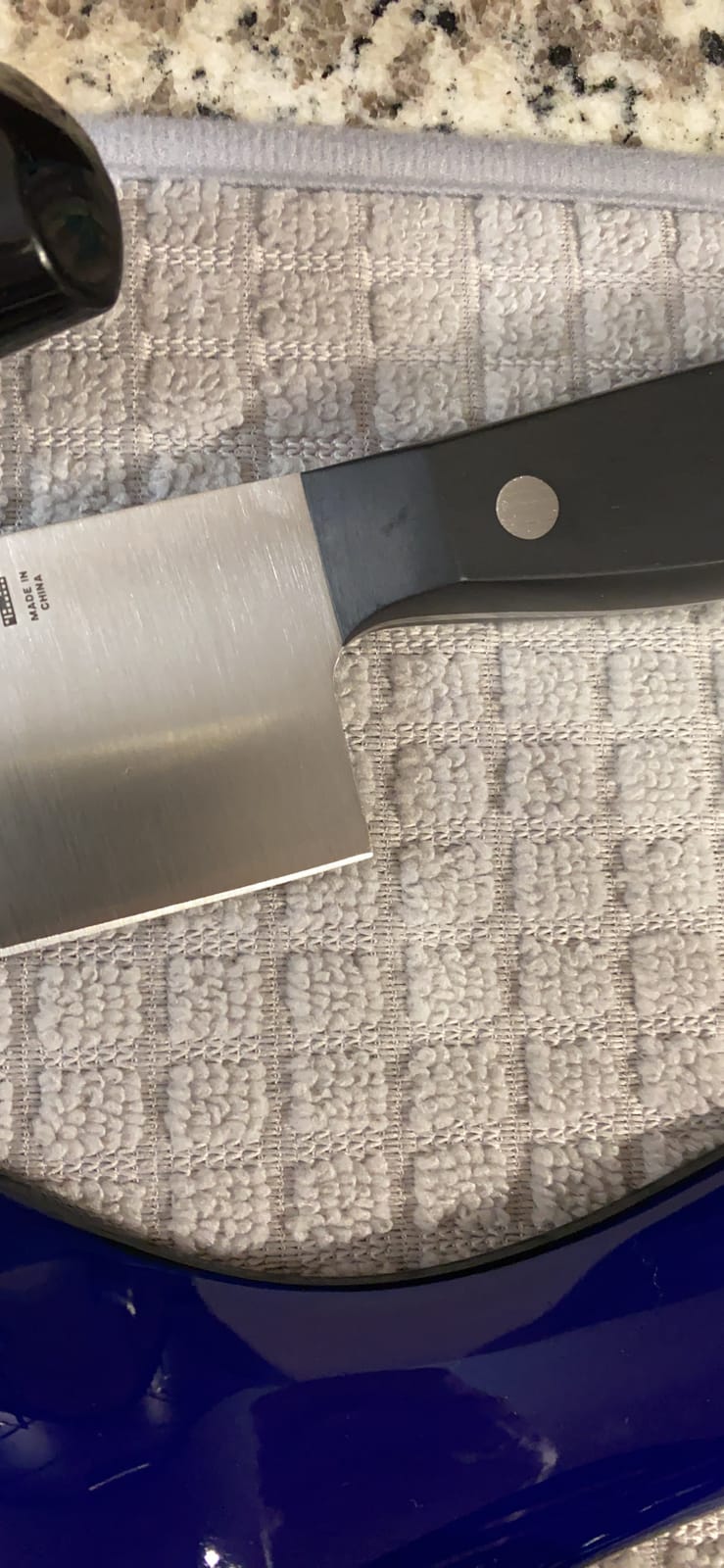
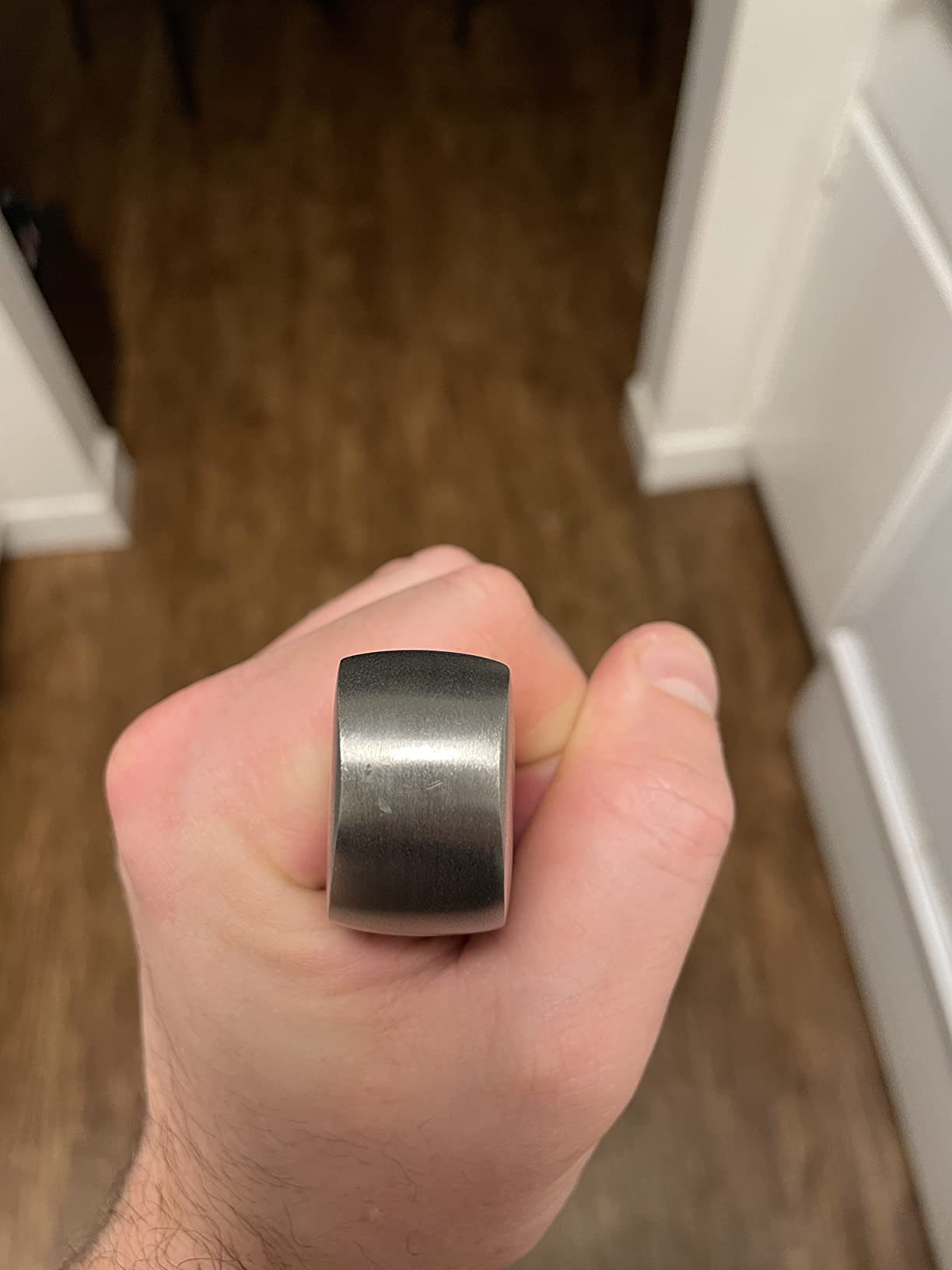
The stainless steel handle is sleek and modern. It’s heavier than the composite handle on the Classic, which shifts the balance toward the handle. Some cooks love this feel; others prefer blade-forward balance. I found it worked well for slicing but felt slightly awkward when rocking through herbs.
This knife also comes with a lifetime warranty against manufacturer defects, which is rare at this price point. That warranty tells me HENCKELS expects this knife to last.
Who this knife is best for
Pick the Statement if you’re a first-time buyer testing whether you’ll use a chef’s knife regularly. It’s also a great choice for a college student, a rental property, or a backup knife for camping trips. The price makes it disposable in a way premium knives aren’t.
Who should skip this knife
If you’ve already used a forged German chef’s knife, you’ll notice the difference. The stamped construction doesn’t have the same rock-solid feel under pressure. Step up to the Classic or the ZWILLING Professional S instead.
8. PAUDIN Chef Knife 8 Inch – Budget Pick
- Razor sharp out of the box
- Excellent value for the price
- Comfortable ergonomic handle
- Good balance and weight
- Beautiful packaging for gifts
- Lightweight and easy to handle
- Requires care due to sharpness
- Some prefer heavier knives
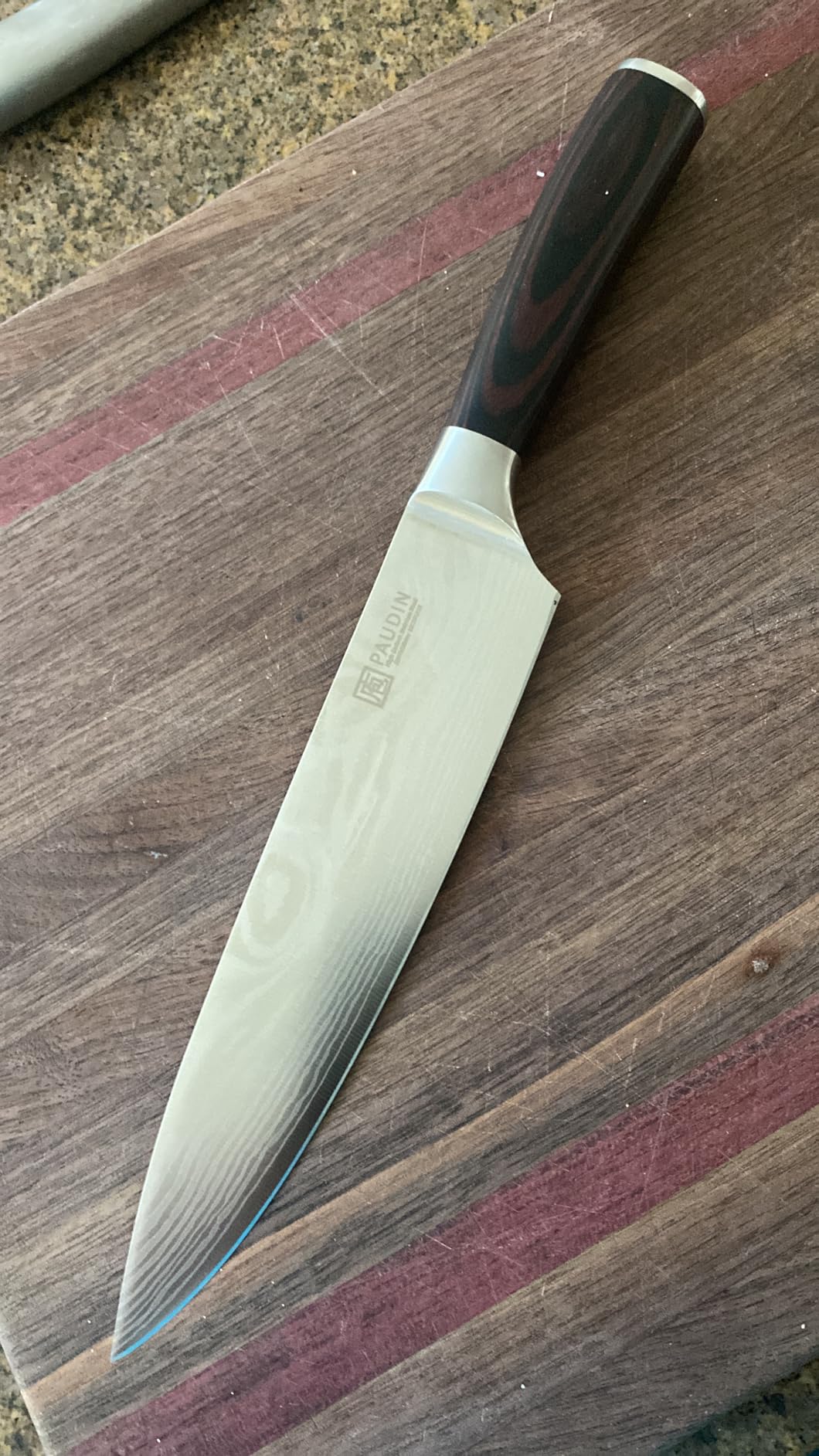
The PAUDIN Chef Knife is the dark horse of this list. It’s not made in Solingen. It’s not forged by a centuries-old German company. But with 7,867 reviews averaging 4.7 stars, it’s clearly doing something right.
The 5Cr15Mov stainless steel is a Chinese-made alloy that mimics the properties of German X50CrMoV15. PAUDIN hand-polishes the blade with craftsman expertise, which gives it a factory edge sharper than many premium knives I’ve tested. Out of the box, this knife shaved paper.
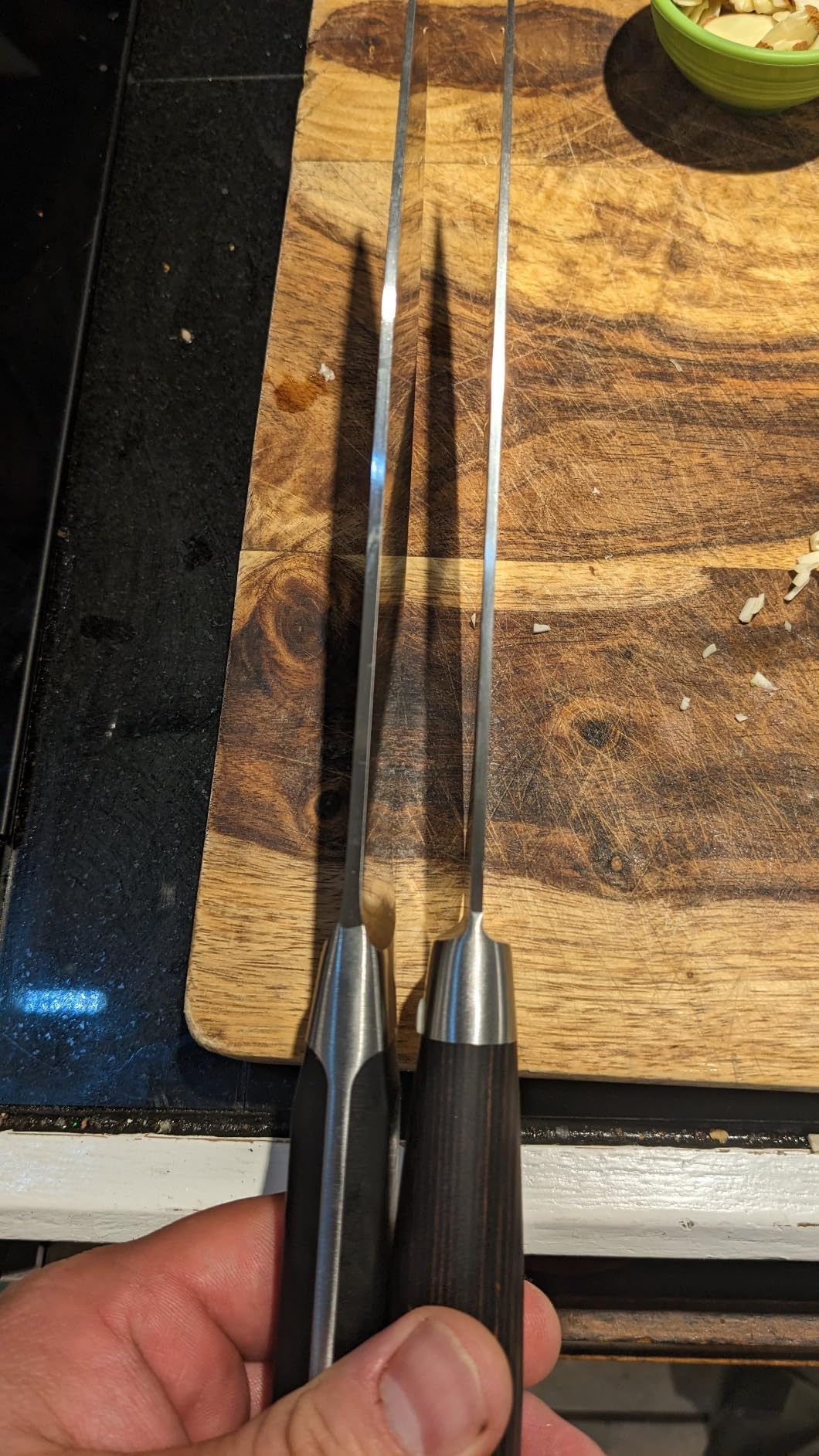
The ergonomic wood handle is the standout feature at this price. Most budget knives use plastic handles that feel slippery or cheap. The PAUDIN’s wooden handle is comfortable, secure, and beautiful. Several reviewers with arthritis specifically praised how gentle this handle is on sore hands.
At 6.88 ounces, this knife feels light and nimble. The 2mm blade thickness is thinner than forged German knives, which makes it excel at slicing but less ideal for heavy chopping through bone. Use it for vegetables, fruits, and boneless meats.
Who this knife is best for
This is the knife for someone who wants a sharp, attractive chef’s knife without spending much. It’s perfect for a starter apartment, a gift, or a backup blade. The beautiful packaging means it works as a wedding registry gift or housewarming present.
Who should skip this knife
If you want a knife that will literally last 30+ years, this isn’t it. PAUDIN uses a 24-month warranty, which is much shorter than the lifetime warranties from German brands. For daily, lifelong use, pay more for a Wüsthof or HENCKELS.
What Makes a German Chef Knife Different
A German chef knife is a heavy-duty kitchen tool forged from thick steel. It’s built around a large belly curve that supports the rock chopping motion, where the blade stays in contact with the cutting board while the handle lifts and lowers. This technique is different from the push cut used with Japanese knives.
The defining feature of German knives is their durable, slightly softer steel. Most use X50CrMoV15, a high-carbon stainless alloy hardened to 56-58 Rockwell. That hardness sits below Japanese knives (often 60-63 HRC), which means German blades resist chipping better. You can tap a chicken bone or scrape a frozen bagel without snapping the tip.
Most German chef knives feature a full bolster, the thick collar of metal where the blade transitions to the handle. The bolster adds balance, protects your knuckles, and adds heft. The trade-off is that full bolsters make sharpening harder, which is why some modern German knives use semi or no bolsters.
Solingen, Germany has been the center of German knife production since the 14th century. The city has strict laws about which products can carry the “Solingen” name. Wüsthof, Zwilling, and other top manufacturers all make their premium lines there. This heritage matters because the craftsmanship has been refined over generations.
Buying Guide: How to Choose the Best German Chef Knife
Choosing the best German chef knife comes down to four factors: handle comfort, weight, bolster design, and steel hardness. Here’s what to look for.
Handle Comfort and Grip
The most important factor is how the knife feels in your hand. A 40-year professional chef I interviewed put it simply: “Whatever fits your hand is the best knife.” Try to hold the knife before buying if possible. For smaller hands, look for contoured handles like the Wüsthof Classic Ikon. For larger hands, traditional shapes like the Wüsthof Classic work better.
Handle materials range from wood to composite plastic to stainless steel. Wood looks beautiful but requires care to prevent cracking. Composite (like POM) is durable and dishwasher safe. Stainless steel feels premium but can be slippery when wet.
Weight and Balance
German chef knives weigh between 7 and 10 ounces. Lighter knives (under 8 oz) are easier to control during long prep sessions but require more force for heavy chopping. Heavier knives power through dense foods but tire your wrist faster.
Balance matters as much as weight. A well-balanced knife feels like an extension of your arm. Wüsthof Classic knives balance slightly forward, which I prefer for rocking cuts. The HENCKELS Statement balances handle-heavy, which works for slicing.
Bolster Design
Full bolsters add heft and protect your fingers but make sharpening difficult. Semi-bolsters (like the Wüsthof Classic Ikon) split the difference: easier to sharpen while still providing some balance. No bolster designs exist but are rare in German knives.
Steel Hardness
German knives typically run 56-58 Rockwell hardness. The ZWILLING Professional S runs 57 HRC with a 15-degree edge, which is on the harder, sharper end. Harder steel holds an edge longer but chips more easily. Softer steel forgives more mistakes but dulls faster.
Care and Maintenance
Hand wash and dry your German knife immediately after use. Dishwasher detergent is harsh and can damage both the blade and handle, even on dishwasher-safe models. Hone weekly with a honing rod, and sharpen every 6-12 months depending on use.
Store your knife on a magnetic strip, in a knife block, or in an in-drawer organizer. Don’t toss it loose in a drawer where the blade can knock against other utensils.
Frequently Asked Questions
Is Zwilling or Wusthof a better knife?
Both Zwilling and Wusthof make excellent German chef knives. Wusthof focuses on classic forged designs with full bolsters and slightly heavier blades. Zwilling offers both forged and stamped options, with FRIODUR ice-hardened steel that holds an edge slightly longer. For pure cutting performance, they’re very close. Choose based on handle comfort and weight preference.
What is the best knife company in Germany?
Wusthof and Zwilling J.A. Henckels are the two most respected German knife companies. Both are based in Solingen and have been making knives for over 200 years. Messermeister and Gude are smaller Solingen makers known for premium craftsmanship. For most home cooks, Wusthof and Zwilling offer the best combination of quality, availability, and warranty support.
What German knives does Gordon Ramsay use?
Gordon Ramsay has been seen using both Wusthof and Zwilling knives in his kitchens. He favors heavy, classic forged designs with full bolsters for the rock chopping technique. In his MasterClass series, he demonstrates primarily with a Wusthof Classic 8-inch chef’s knife, which is the same style as our Editor’s Choice pick.
Should I get a Japanese or German chef knife?
Choose a German chef knife if you want durability, easier maintenance, and a heavier blade for rock chopping. German steel runs softer (56-58 HRC), so it resists chipping better and forgives more mistakes. Choose a Japanese knife if you want razor-thin precision, harder steel (60-63 HRC), and a lighter blade for push cuts. Many serious cooks end up owning both styles.
How long do German chef knives last?
A quality German chef knife can last 25+ years with proper care. Most Wusthof and Zwilling knives come with lifetime warranties because the manufacturers expect them to last decades. Stamped budget knives may wear out in 10-15 years. The main factors affecting lifespan are how often you sharpen, whether you hand wash, and how you store the knife.
Final Verdict
After testing 8 knives side by side for six weeks, the WÜSTHOF Classic 8″ Chef’s Knife remains my top pick for the best German chef knife for most home cooks. It combines forged German craftsmanship, perfect balance, and razor-sharp performance at a fair price. If you can afford one premium knife, this is the one.
For shoppers on a budget, the PAUDIN Chef Knife delivers surprising quality at a fraction of the cost. For those who want premium features without premium prices, the ZWILLING Professional S offers FRIODUR steel technology that competes with knives twice its price. Whichever knife you choose from this list, you’re getting a tool that can transform your kitchen prep work for decades to come.