
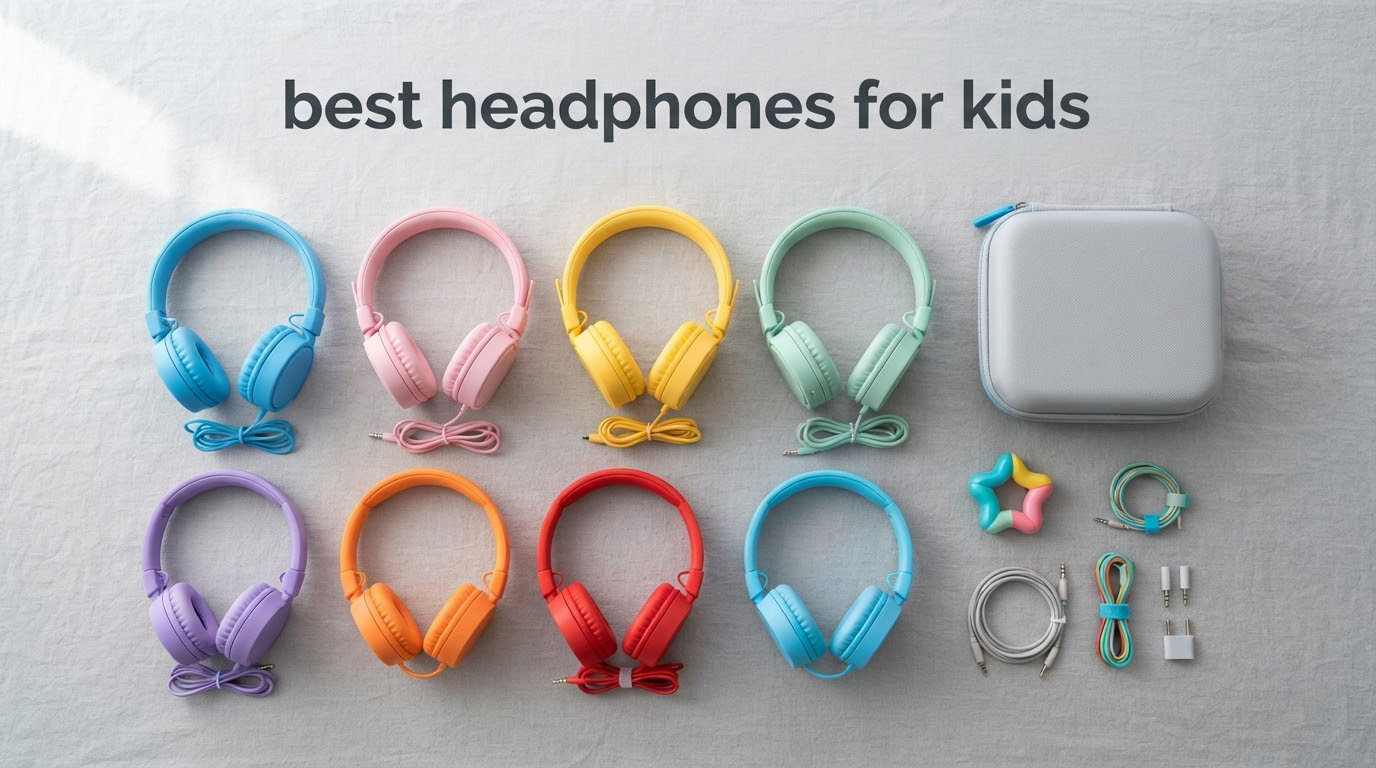
If you want one pair that works for almost any child in almost any situation, the noot products K11 is our default recommendation: it is a wired 3.5mm pair with a 5-foot nylon braided cord, an adjustable headband rated for ages 3 to 16, and more than 41,000 reviews averaging 4.7 stars. That combination of adjustability, cord durability and a two-year warranty is why it keeps landing in the top slot.
We built this guide around one stubborn fact: noise-induced hearing damage in children is permanent and cumulative, and you cannot supervise volume every hour of every day. A pair with a genuine 85 dBA limiter solves that problem in hardware. A pair without one just moves the problem into your schedule.
Below we cover ten pairs across wired and wireless, on-ear and over-ear, from a lightweight foldable wired model to Bluetooth sets with long battery life and light-up earcups. Every pick has a stated volume cap or a clearly noted lack of one, and we tell you which parents can verify the claim. We last updated this guide in 2026 and revisit it whenever the models change.
A quick note before we start: this site earns a commission when you buy through the links on this page, at no extra cost to you. It does not change which products we pick or the order they appear in.
Table of Contents
Top 3 Best Headphones for Kids Right Now

noot products K11
- Wired 3.5mm with 5-foot braided cable
- Adjustable headband for ages 3-16
- 24-month warranty

AILIHEN C8
- In-line mic plus volume and play controls
- 59-inch braided cable
- Works with Chromebooks and tablets

MIDOLA MD-B01
- Bluetooth 5.4 with 68-hour claimed playtime
- 74/85/94dB three-stage limiter
- Detachable AUX wired fallback
Quick Picks: The 10 Best Headphones for Kids in 2026
Every pair below has a place. The labels match how parents actually shop rather than how brands rank themselves, so you can find your line fast.
- Best Overall: noot products K11 — wired, on-ear, 3.5mm, ages 3-16, 24-month warranty, 4.7 stars from more than 41,000 reviews.
- Best for School and Online Learning: AILIHEN C8 — wired, in-line mic with volume and playback controls, 59-inch braided cable.
- Best Battery Life: MIDOLA MD-B01 — Bluetooth 5.4, 68-hour claimed playtime, detachable AUX cable, 74/85/94dB limiter.
- Best for Long Car and Plane Rides: Riwbox WT-7S — Bluetooth 5.4, 60-hour battery, 100-foot range, LED earcups. No built-in volume cap.
- Best for Sharing One Device: iClever HS19 — wired, 85dBA limiter, inline mic, 3.5mm audio sharing port.
- Best Budget Wired With a Limiter: EarFun K1 — 85/94dB limiter, retractable braided cord, sharing jack, 18-month warranty.
- Best Wireless for School Days: EarFun K2 — Bluetooth 5.4, 40-hour real-world battery, 74/85/94dB limiter, memory foam pads.
- Best for Small Heads: JBL Junior 320 — 116.8 g, 12mm padded headband, round earcups, sub-85dB Safe Sound cap.
- Best for Toddlers and Preschoolers: Candy Bila BH03 — 8 ounces, foldable, adjustable for ages 3+, 85/94dB limiter.
- Best for Light-Up Fun: iClever BTH12 — four LED modes, 74/85dBA limiter, USB-C fast charging, foldable build.
| Product | Specifications | Action |
|---|---|---|
| noot products K11 |
|
Check Latest Price |
| AILIHEN C8 |
|
Check Latest Price |
| MIDOLA MD-B01 |
|
Check Latest Price |
 iClever BTH12 iClever BTH12 |
|
Check Latest Price |
 Riwbox WT-7S Riwbox WT-7S |
|
Check Latest Price |
 iClever HS19 iClever HS19 |
|
Check Latest Price |
 EarFun K1 EarFun K1 |
|
Check Latest Price |
 EarFun K2 EarFun K2 |
|
Check Latest Price |
 JBL Junior 320 JBL Junior 320 |
|
Check Latest Price |
 Candy Bila BH03 Candy Bila BH03 |
|
Check Latest Price |
1. noot products K11 — Best Overall Headphones for Kids
noot products K11 Kids Headphones with Wired Cord 3.5mm Jack Navy/Teal
- Braided 5-foot cord survives daily yanking
- Adjustable headband spans ages 3 to 16
- Folds flat into a school bag
- 41000+ reviews at 4.7 stars
- No microphone or inline controls
- On-ear cups leak more sound than over-ear
- Sound is functional rather than rich
The K11 is the pair we end up recommending when a parent sends one message and stops reading. It weighs 8 ounces, it folds flat, and the 5-foot nylon braided cable is the single most durable feature on it.
We picked it first because the headband is genuinely wide rather than decorative. Reviewers regularly describe fitting the same pair on a 3-year-old and a 12-year-old, which solves the sizing-up problem that ends most kids’ headphone ownership. The cushions are soft faux leather over a nylon and plastic frame.
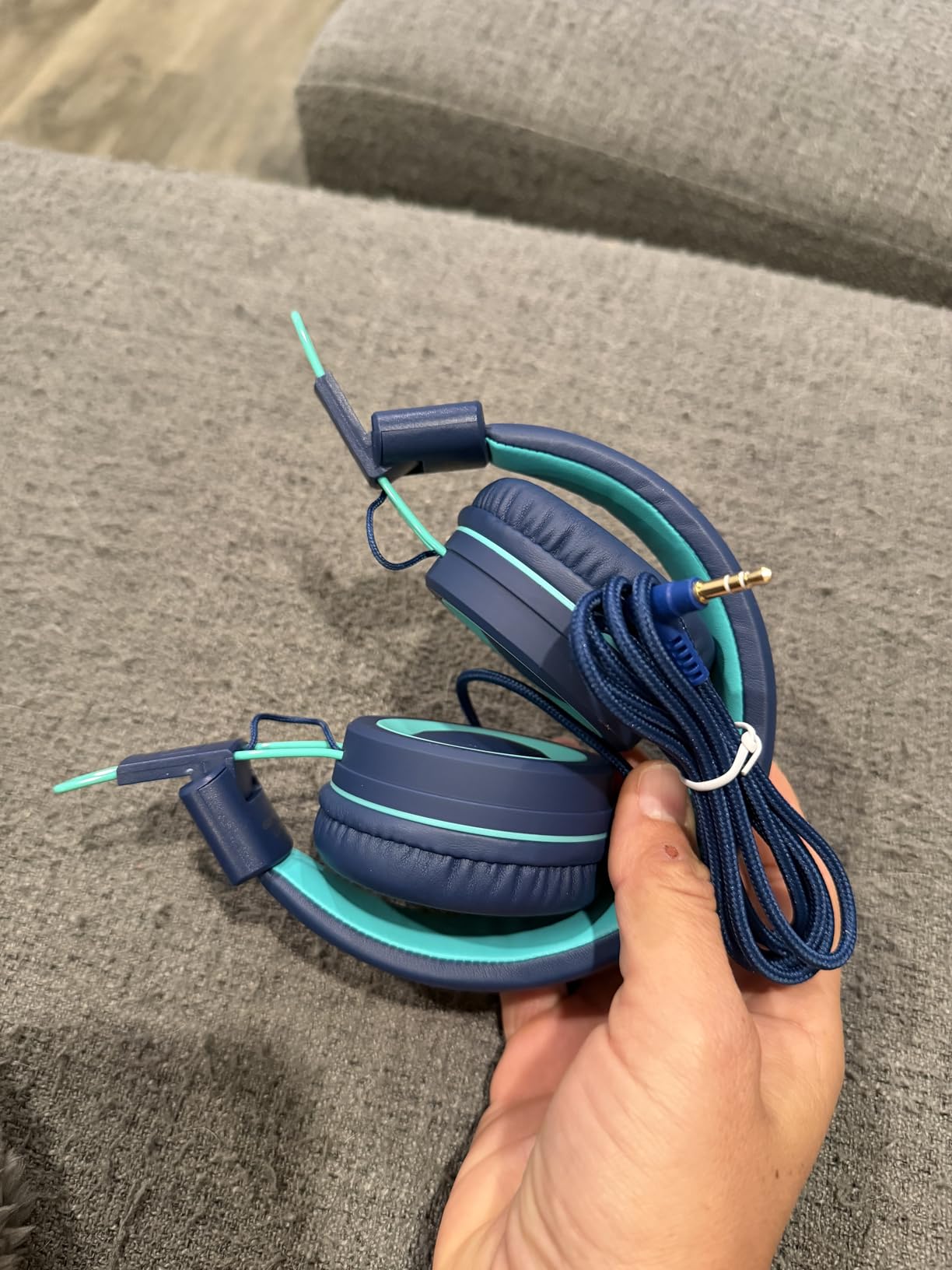
Sound comes from dynamic drivers with a 20 Hz to 20,000 Hz range and 32 ohm impedance, which pairs cleanly with school laptops, tablets and older televisions. The 24-month warranty is the longest in this group by a wide margin, and that matters when the main risk is a hinge cracking.
The honest trade-off is that there is no microphone and no inline remote. If your child needs to talk in a video class, this is the wrong tool — move to the AILIHEN C8 below. Sound is described as fine for music, videos and games but not detailed.
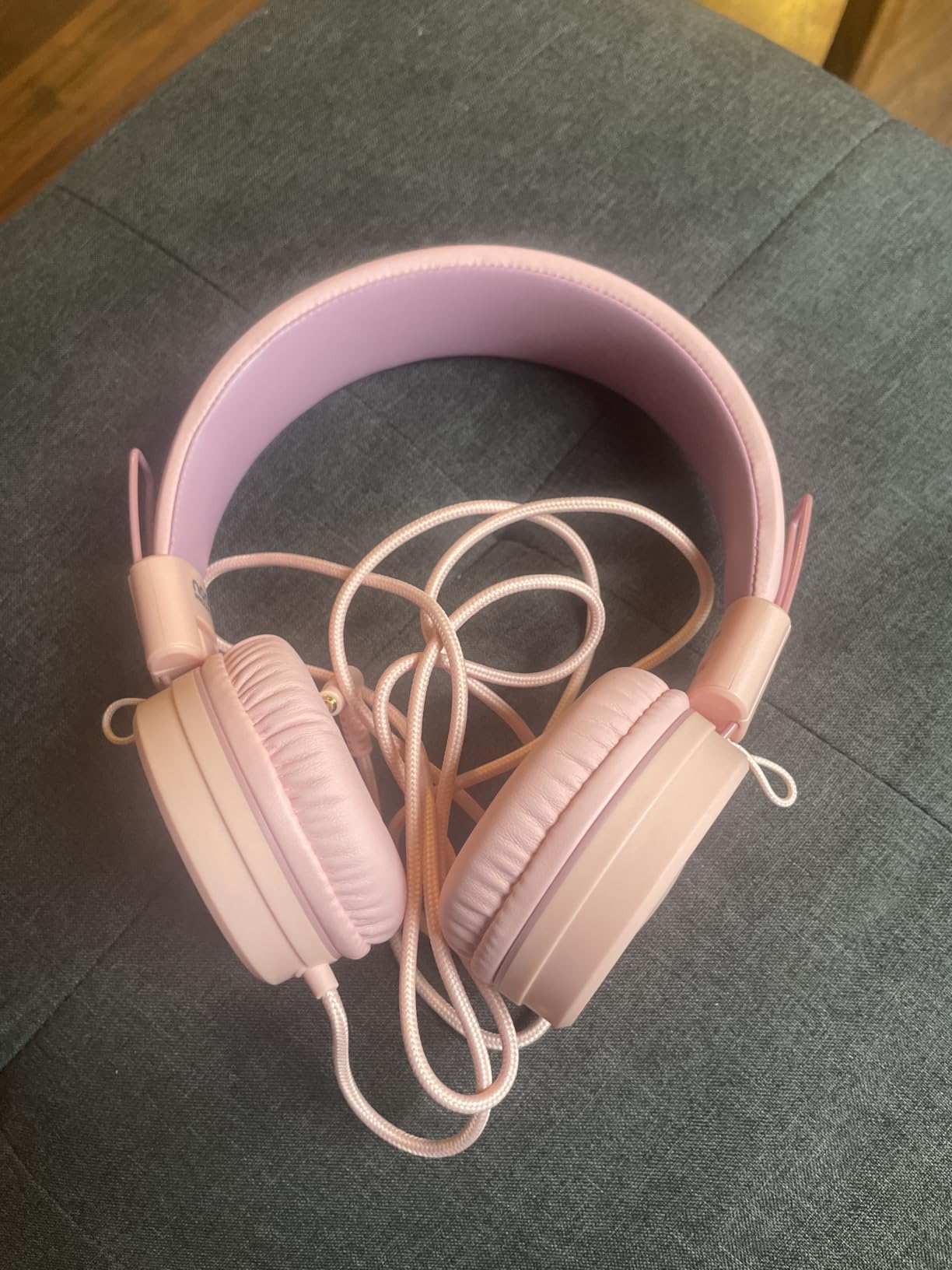
Why the braided cable is the deciding feature
A wired headset for kids usually arrives with a thin plastic-coated cord that tangles in a school bag within a week. The K11 does not. Braided nylon resists the two things that actually destroy cheap headphones: kinking at the strain relief and snapping when a child pulls the plug instead of the plug body.
That single design decision is why this pair accumulates reviews over years rather than months. Parents who bought it three years ago come back to say it still works.
Where it falls short
On-ear placement means less passive isolation than a full over-ear cup, so a noisy classroom leaks in and sound leaks out. For a child who sits next to a loud sibling, that is a real limitation.
There is also no USB-C or Lightning adapter in the box, so newer phones and tablets need a dongle. On a Chromebook, tablet or laptop with a 3.5mm jack, it plugs straight in.
2. AILIHEN C8 — Best Value Headphones for School and Online Classes
AILIHEN C8 Kids Wired Headphones with Mic for School, 3.5mm Jack, BlackBlue
- In-line mic plus volume and playback buttons
- Works with Chromebooks tablets and PCs
- 59-inch braided cable
- Many kid-friendly colours
- Runs small on larger head circumferences
- Inline volume button does not work on some PCs
- Passive isolation only
- no true noise cancelling
If your child is doing daily video calls for school, the microphone is the deciding feature and the C8 is the one with it. The in-line remote carries a mic, volume up and down, play and pause, and track skipping on a single button strip.
That arrangement is the reason the pair has more than 35,000 reviews. Parents are not buying audio quality — they are buying a way for a child to be heard by a teacher without the whole room hearing them.
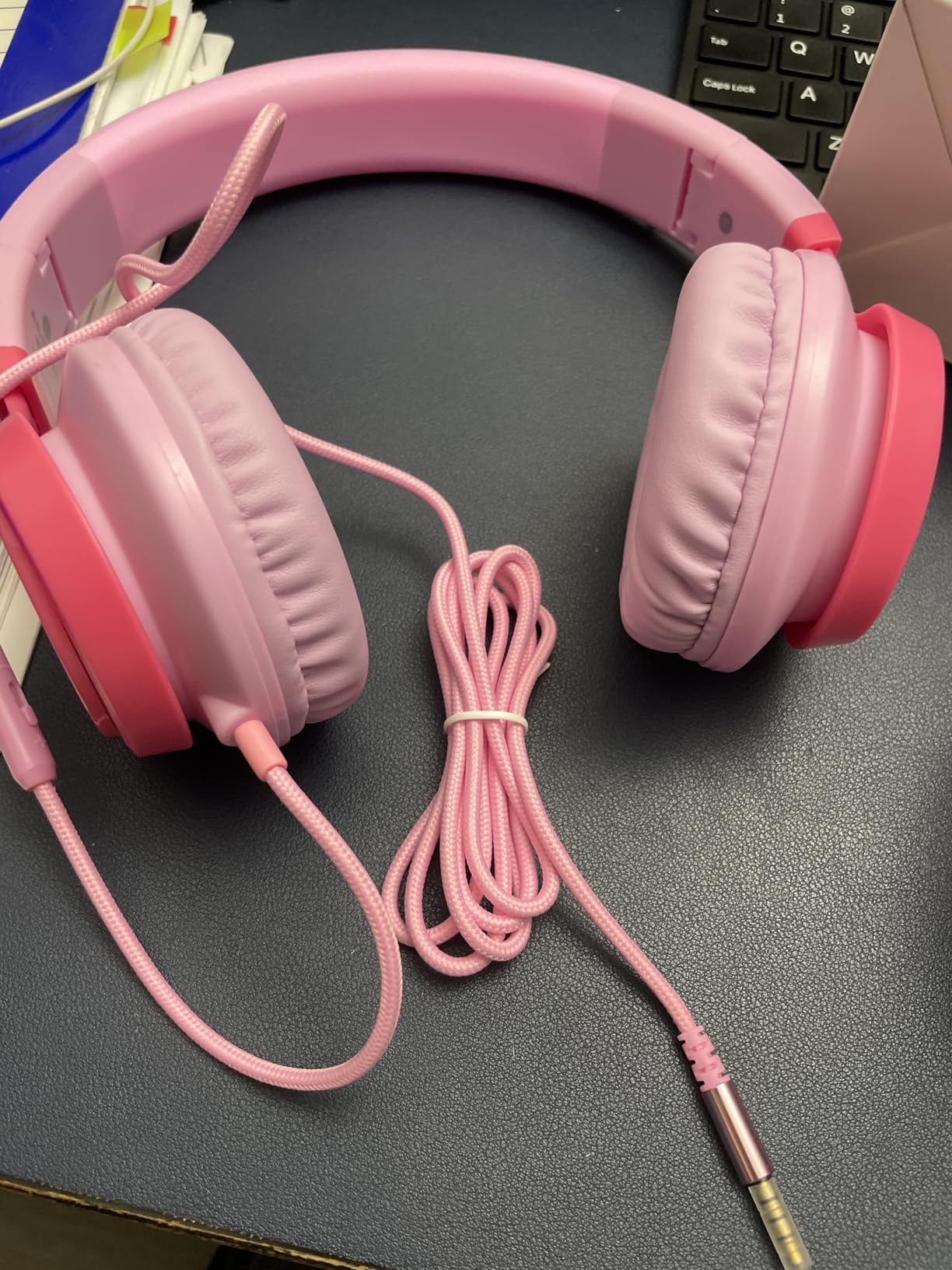
The 40mm dynamic drivers run 20 Hz to 20 KHz at 32 ohm, and the 59-inch braided cable is long enough to reach a laptop tucked behind a chair. The headband adjusts and the ear cushions are soft and breathable for a full school day.
Compatibility is broad: Chromebooks, tablets, laptops, PCs and consoles all take a 3.5mm plug. The 1-year warranty and 24-hour support are the weak point compared with the K11’s two years.
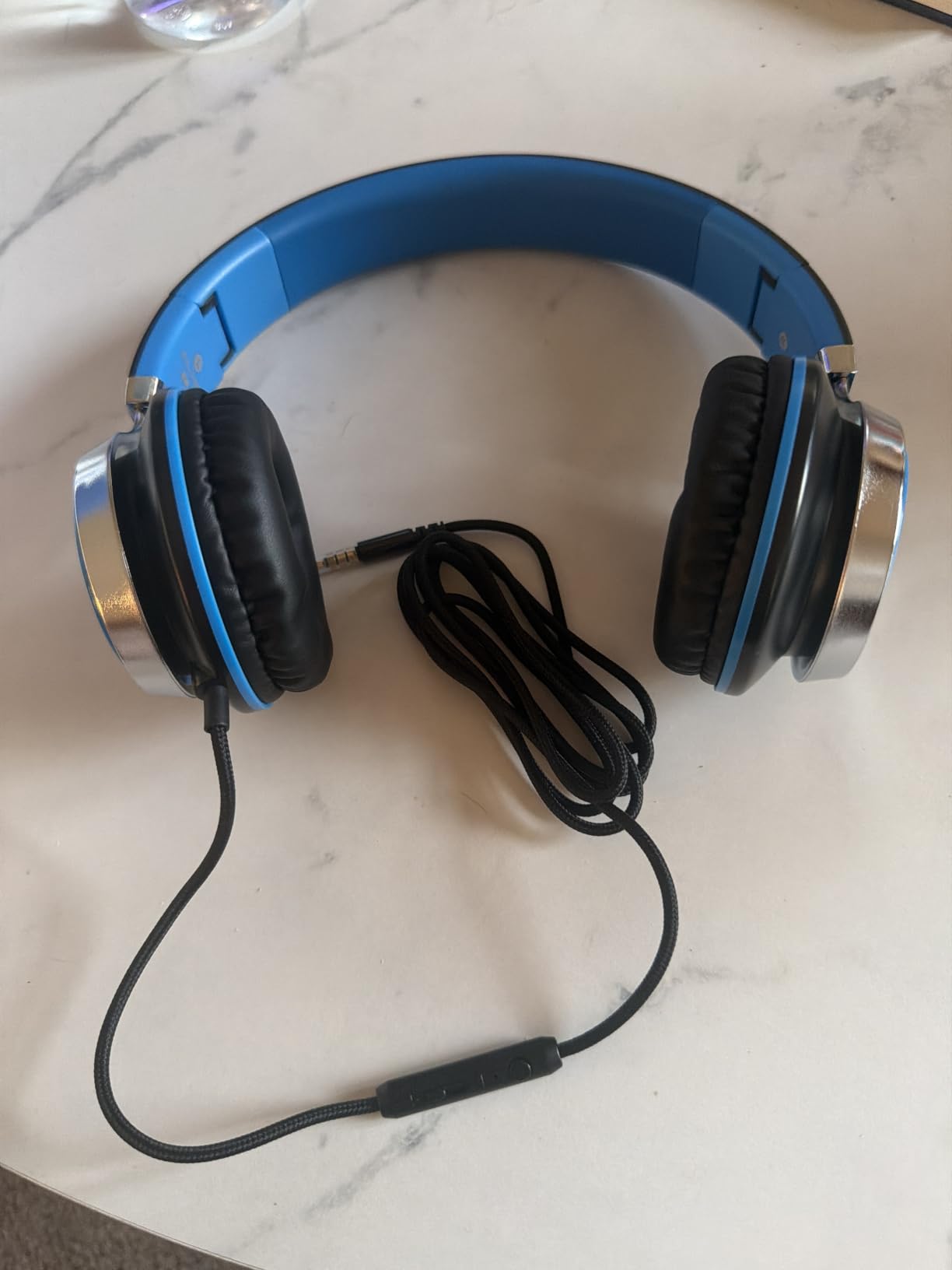
Why parents pick this for video calls
An inline mic sits closer to the mouth than a phone on a desk, and because it travels on the cable, there is nothing to remember to clip on. For a six-year-old who cannot reliably find a mute button, that reliability is the feature.
Sound quality is described as good for the price. Bass is present enough for games and music and nothing more demanding.
Where the fit and controls disappoint
Owners frequently note that the fit runs small, particularly on the ear pads and at the tight end of the headband adjustment range. For a 7-year-old with a larger head, this can turn into a pair that slides off within a minute.
One recurring gotcha: the inline volume button does not work when the pair is connected to a PC, though the mic and playback buttons still function. On a Chromebook or tablet, the full remote works.
3. MIDOLA MD-B01 — Best Battery Life for Long Trips
Kids Bluetooth Headphones Wireless 68 Hours,Safe Volume Limit 85/94dB Pink
- Three-stage 74/85/94dB limiter with one-button switching
- Bluetooth plus detachable AUX wired mode
- 2-hour recharge
- Adjustable for ages 2 and up
- Push-button power switch is fragile
- Average rather than rich sound
- LED and radio controls take practice
When a trip is longer than a single charge cycle, battery life stops being a spec and becomes the reason you picked the pair. The MD-B01 claims 68 hours of playtime, with a more realistic 15 hours at normal volume, and recharges fully in about 2 hours.
It is also the rare kids headset that does both jobs: Bluetooth 5.4 for a cordless day, and a detachable 3.5mm AUX cable for the flight where wireless adds nothing.
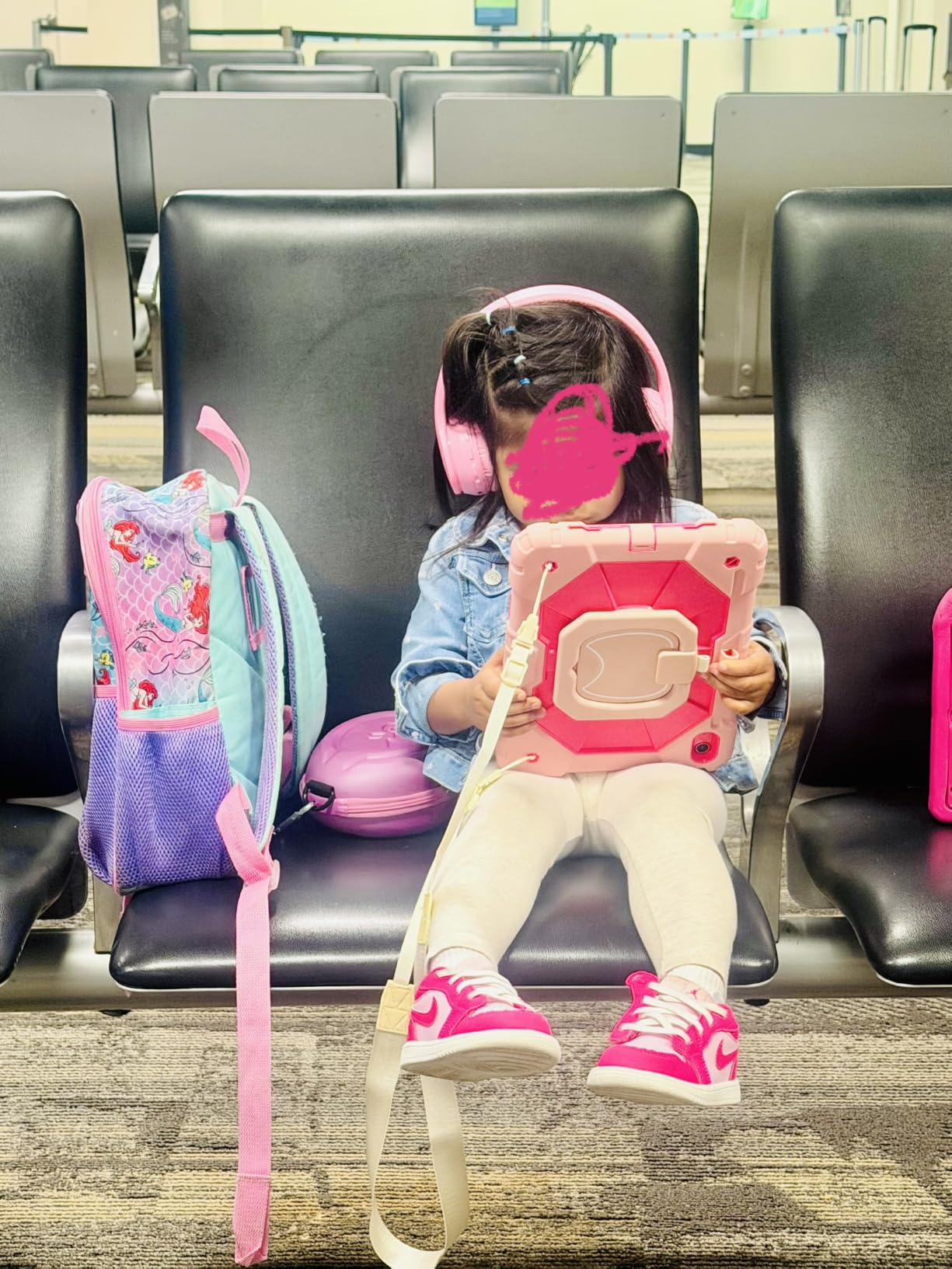
The volume limiter is the most interesting part of the design and also the part parents need to read carefully. It offers three stages — 74dB, 85dB and 94dB — switched with a single button. The 74 and 85 stages are the ones we would use; 94dB is the loud setting that many manufacturers call a travel mode.
Drivers are 40mm dynamic units at 16 ohm with a stated 85 dB sensitivity, and the foldable over-ear frame adjusts to fit children from age 2 upward.
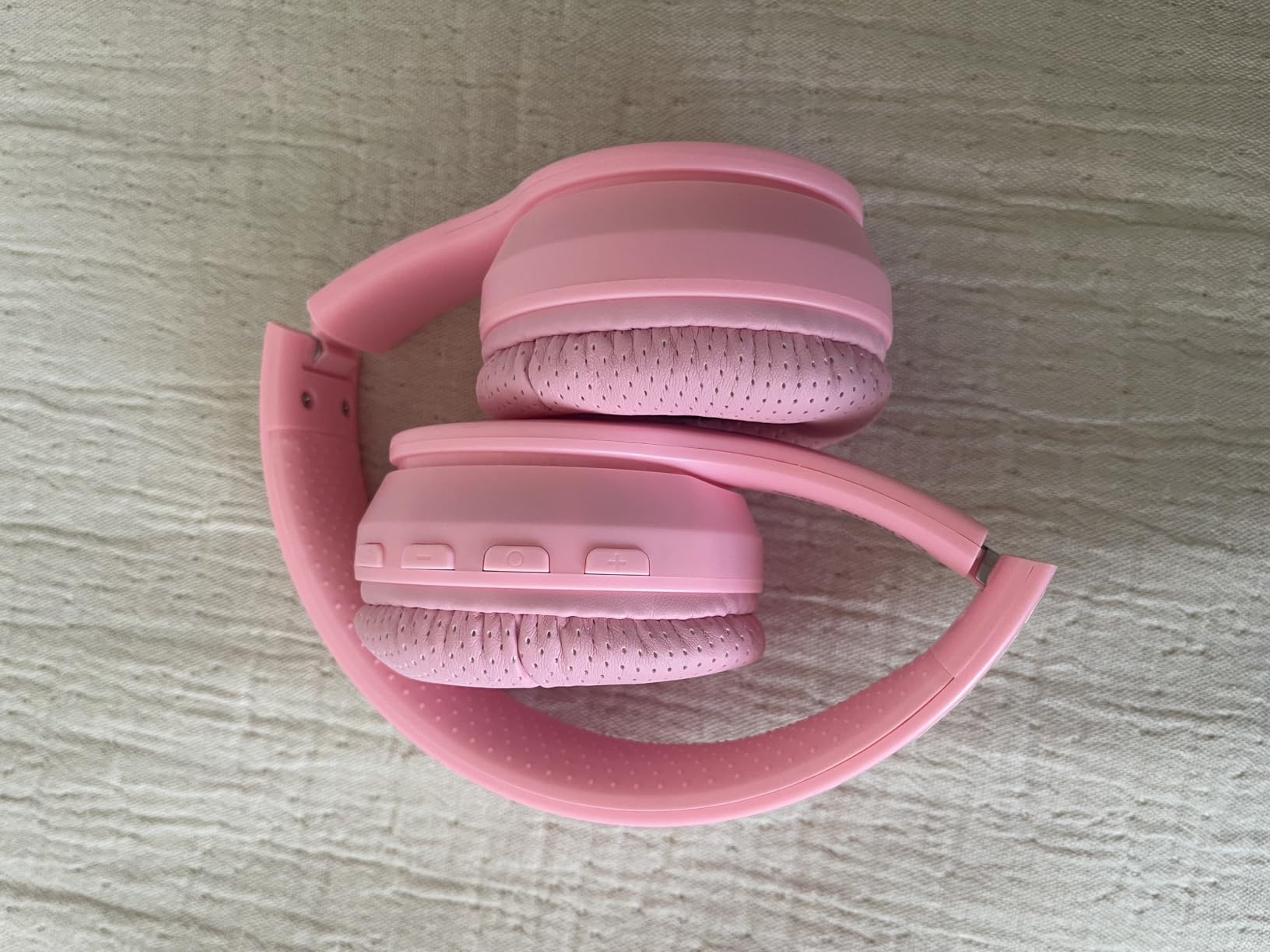
What the three-stage limiter actually gives you
Having 74dB and 85dB in the same pair is genuinely useful. A 74dB setting is comfortable for a long-haul flight where the child will wear the headset for hours, and 85dB suits music and video. Parents can move between them without touching the device volume.
Bluetooth range is listed at 50 feet, which covers a house, a car rear seat and most of a campsite. A sticker set and a parent operation guide are included.
Where it falls short
The most common complaint is mechanical rather than electronic: the push-button power switch on newer revisions breaks when a child presses it hard. That is a small part failing, but it ends the product’s usefulness in a child’s hands.
Sound quality is described as average rather than rich. The LED indicator and radio controls also take some practice, which can be frustrating mid-travel.
4. iClever BTH12 — Best for Kids Who Are Motivated by Lights
iClever BTH12 Kids Bluetooth Headphones 85H Playtime with LED Lights Travel
- Four LED modes children consistently love
- 74/85dBA limiter with combination-key lockout
- 85-hour claimed playtime with USB-C fast charging
- One-button pairing and auto reconnect
- Cushions can press on the ears over long sessions
- Minimum size suits kids about seven and up
- Bulkier than rivals at this tier
The honest truth about kids’ headphones is that a child will wear the pair they like and ignore the pair they tolerate. The BTH12 wins on liking: four LED lighting modes run from off to a steady glow to a pulsing effect, all on a dedicated button that does something other than change tracks.
That single feature converts a pair of headphones from a school-supplied accessory into a toy, and parents on forums describe exactly this: the child claims the headphones and keeps them.
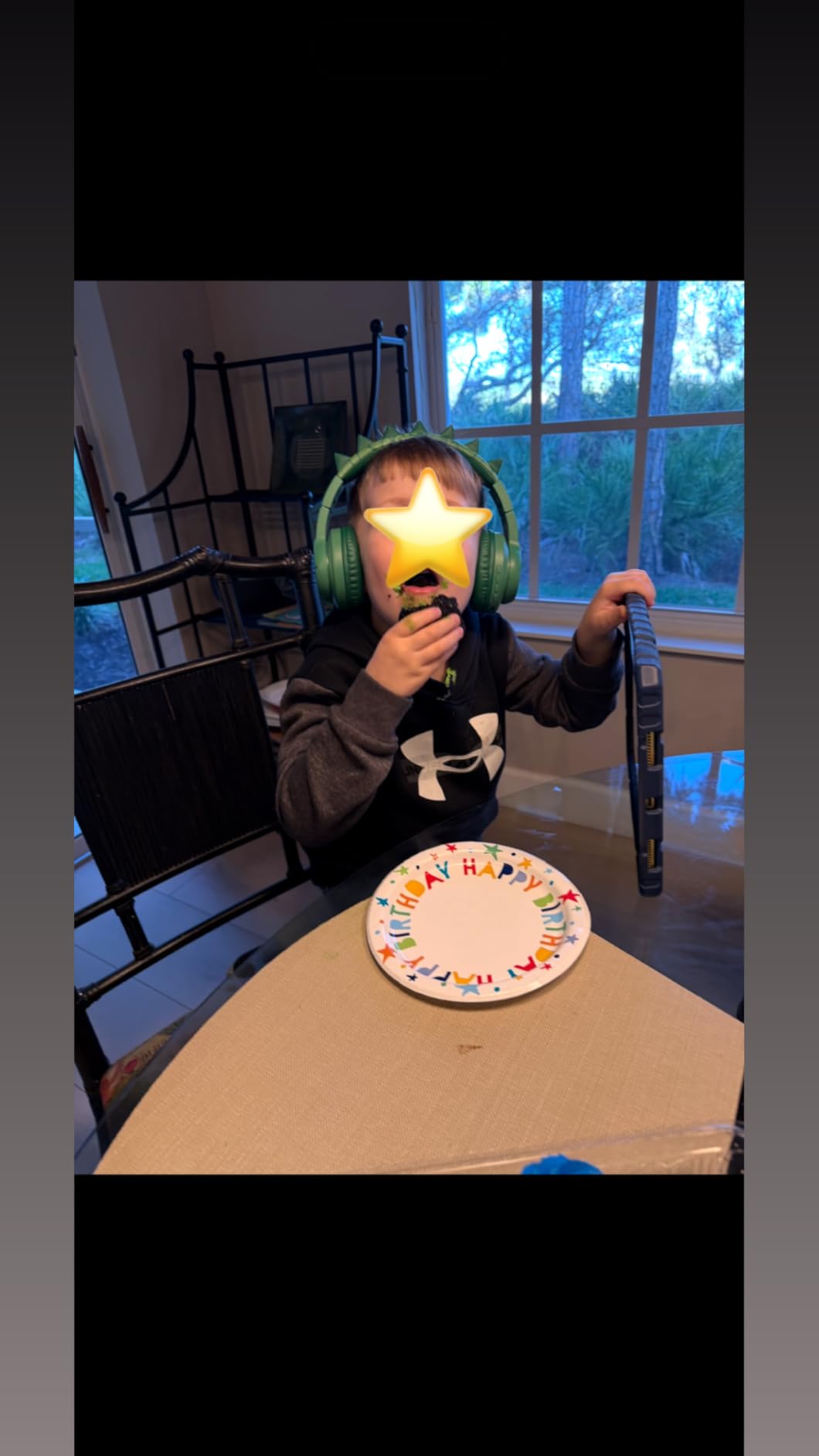
Underneath the lights, the engineering is solid. Volume limiting is 74 or 85 dBA, and it locks via a combination key press so a child cannot undo it by holding down a button. Battery life is 7 hours at normal volume with 85 hours claimed at lower settings, and 10 minutes of charging gives roughly 7 hours of use over USB-C.
The build is reinforced ABS and leather, the frame folds flat, and the cable detaches for wired use. Bluetooth 5.2 with a range of about 11 meters covers a bedroom or a classroom desk.
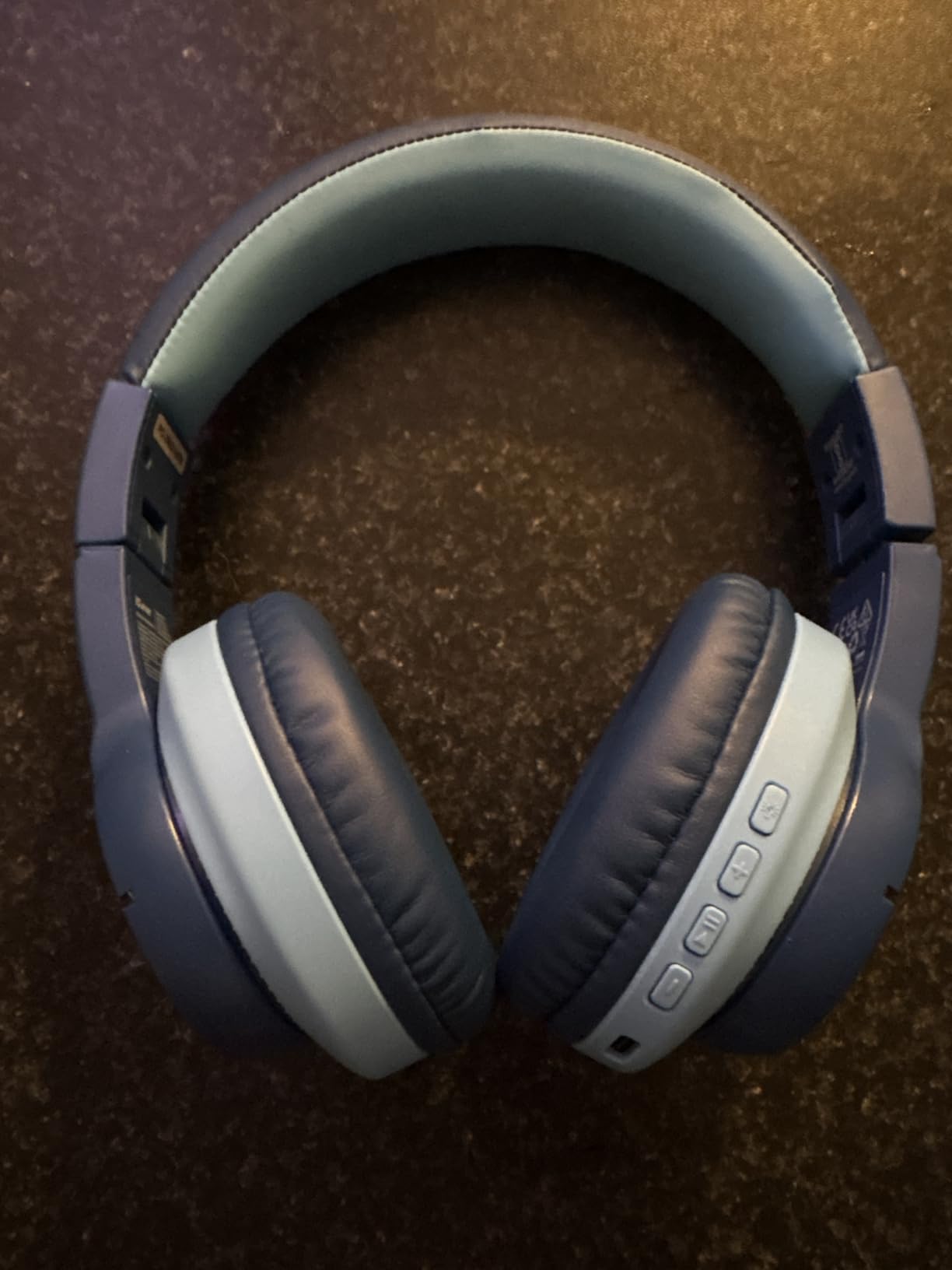
Why the lockout matters more than the lights
Most volume limiters on wireless kids headphones are one long press away from being disabled. The combination-key lockout on the BTH12 means a child who has worked out the button layout still cannot turn the cap off, which is the whole point of buying a limited pair.
Pairing is a single button press and the headset reconnects automatically, which removes the most common reason wireless headphones get abandoned mid-week.
Where it is the wrong pick
Fit is the real limitation. Reviewers put the minimum comfortable size at around seven years old, and some children find the cushions press on their ears over a long session. The design is also bulkier than other options at this level.
For a five-year-old who still has a small head, skip this and go to the Candy Bila BH03 or the iClever HS19 instead.
5. Riwbox WT-7S — Best for Long Car Rides, With One Important Caveat
- LED earcups pulse to the music and can be switched off
- 60-hour battery with roughly one-hour charging
- Works wired with the included AUX cable
- Long-term owners report years of service
- No built-in volume cap so an adult must monitor levels
- No headphone sharing port
- Fit feels tight for adults
The WT-7S wins on endurance. Sixty hours of battery, a one-hour charge, and a 100-foot Bluetooth range mean a long road trip or a week of after-school listening without a charger in the backpack.
Long-term owners say the pair lasts years, and the LED earcups that pulse to the music can be switched off to preserve battery when the novelty fades.
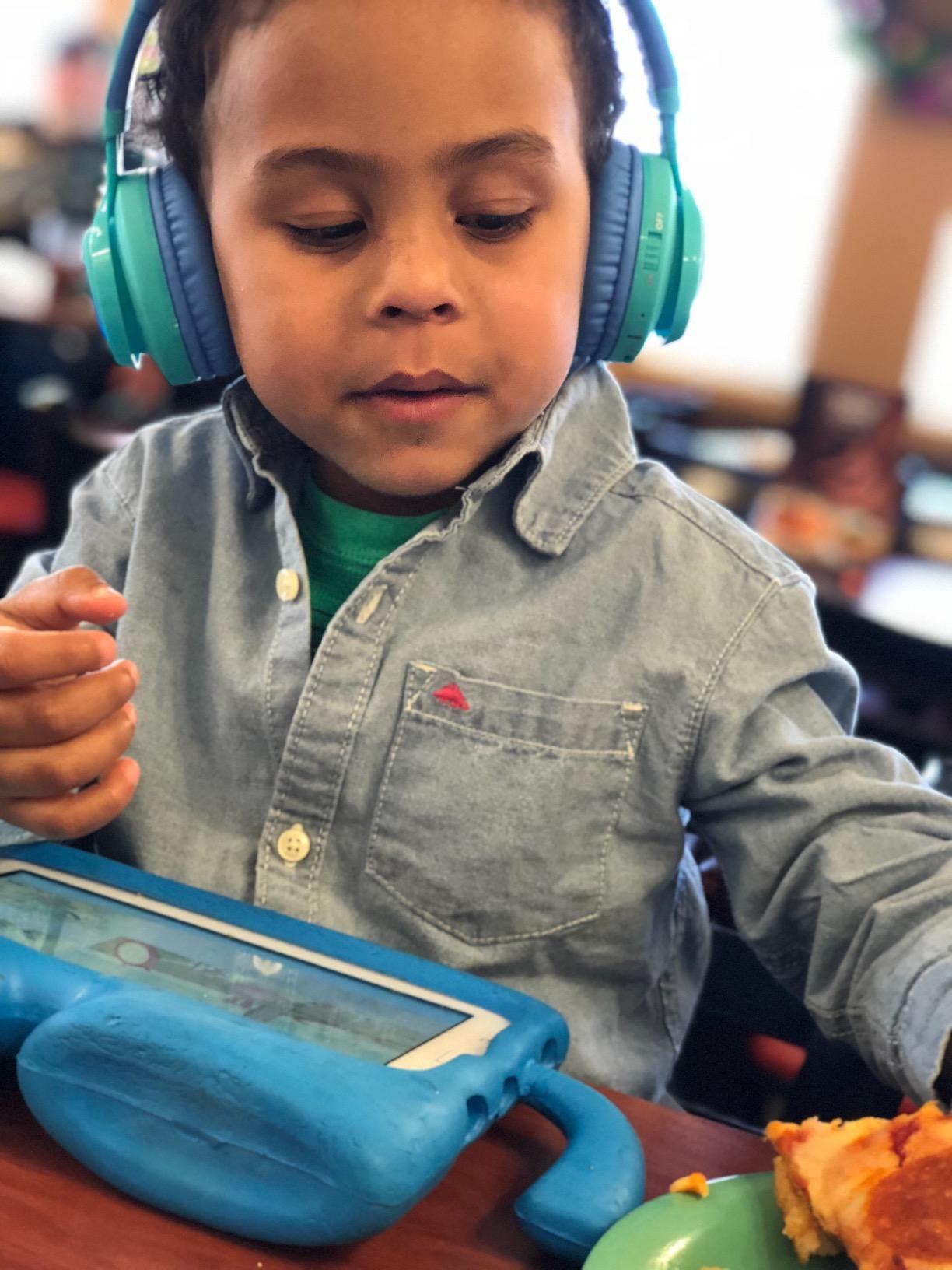
Sound is described as clear and static-free by multiple reviewers, with 40mm drivers at 32 ohm across a 20 Hz to 20 kHz range. The frame is foldable, the headband adjusts, and push-button media and volume controls sit on both sides.
An included AUX cable covers the case where the battery dies mid-journey, which is a safety net more expensive wireless sets often skip.
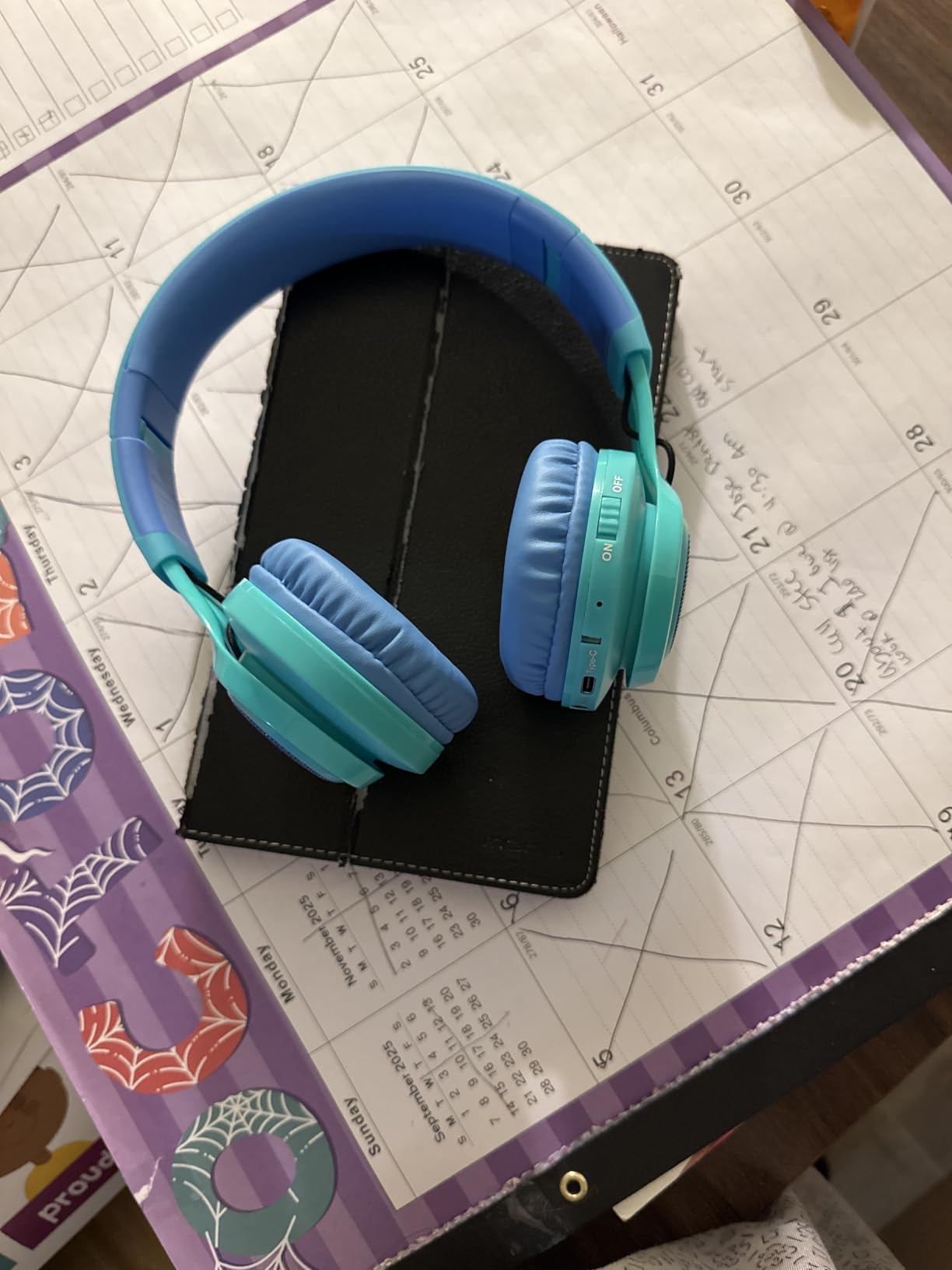
Read this before you buy it for a young child
There is no built-in volume cap on the WT-7S. That means an adult has to set the level and check it, and a child with a device in hand can raise it past that point. For a teenager who already understands volume limits, that is a workable trade. For a six-year-old, it is not.
If hearing safety is your priority, choose a limited pair such as the MIDOLA or the EarFun K2. If endurance is the priority and your child is older, the WT-7S is hard to beat on battery life.
Other things to weigh
There is no headphone sharing port, so two siblings on one tablet need a splitter. The 280 g weight is heavier than most of the pairs here, and adults report the fit feels tight, which tells you something about the headband range.
Build quality is described as average plastic with a high-protein sponge cushion and breathable leatherette cover.
6. iClever HS19 — Best When Two Kids Share One Device
iClever HS19 Kids Headphones for School, Over-Ear for Toddler Boys Girls
- 85dBA volume limit protects young ears
- Share port lets a second pair plug in without a splitter
- Inline mic for online courses and calls
- Works with Chromebook Kindle Fire Switch iPad and PC
- Wired only with no wireless option
- No USB-C compatibility except on the USB-C colourway
- Passive rather than active noise isolation
Sharing one tablet between two children is a recurring problem, and the usual answer is a splitter. The HS19 has a better answer: a 3.5mm audio sharing port built into the headset, so a second pair plugs straight in with no extra hardware.
That single jack is the reason to buy this over a similar wired pair. Parents on forums ask about it constantly because a splitter is easy to lose and easy to leave at school.
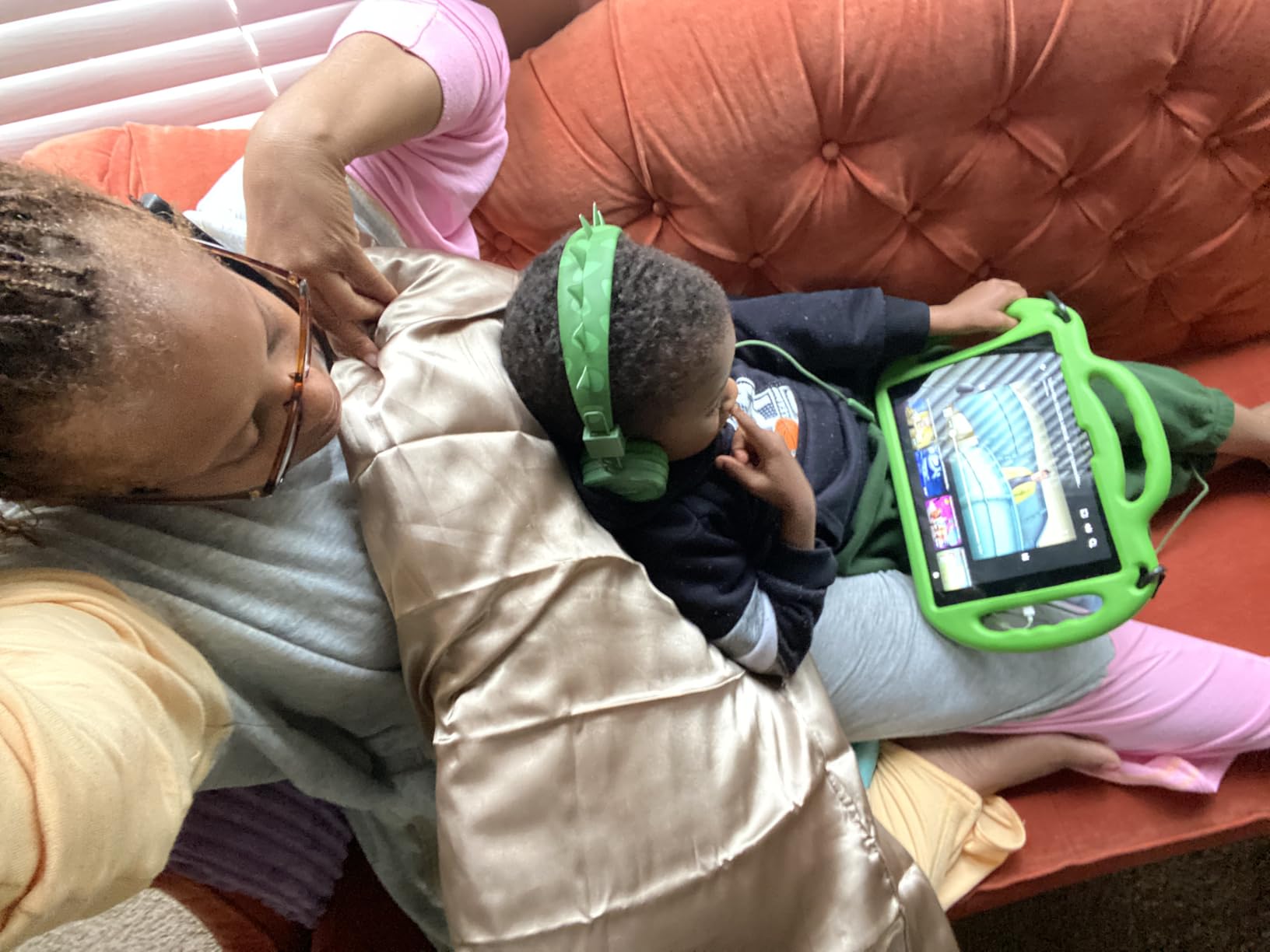
The volume limiter is a fixed 85dBA, which is the number most safety guidance points to. There is a 2-position volume level and an inline microphone for online courses and voice calls, driven by 40mm drivers at 32 ohm.
At 173 g it is light enough for a small child, the cushions are soft and breathable, and the frame folds flat for a school bag. Compatibility covers Chromebook, Kindle Fire, Switch, iPad, laptops and PCs. A 12-month replacement warranty is included.
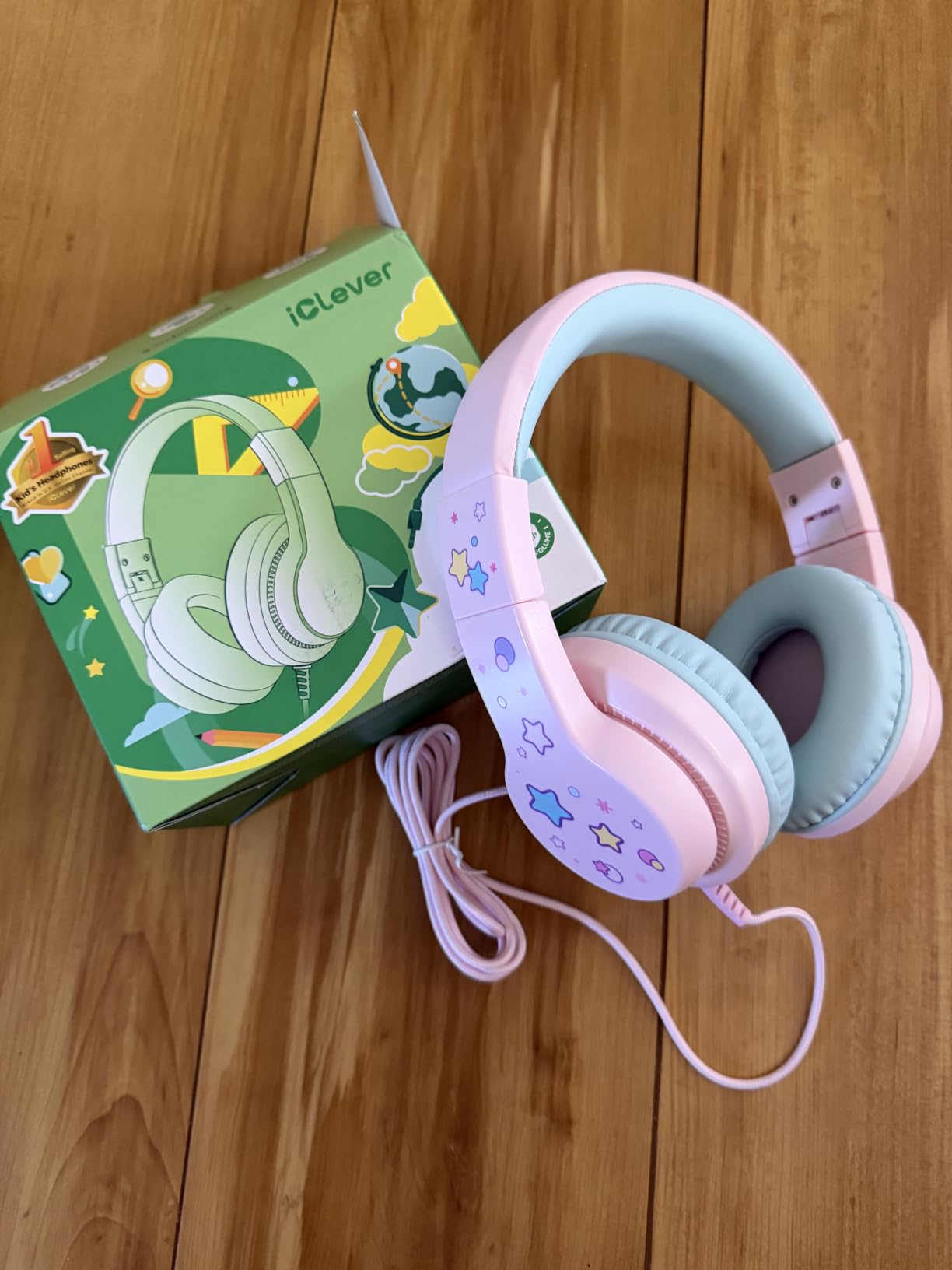
How the sharing port works in practice
Plug the first pair into the tablet, then run the second pair’s cable into the sharing jack on the first headset. Both children hear the same audio, each pair keeps its own 85dBA limiter, and each has its own mic if a call is happening.
Because it is a wired design, there is no pairing, no charging and no dead battery halfway through a lesson. The tradeoff is a cord to manage.
Where it does not fit
This is a wired-only headset. A child who wants cord-free listening on a bus or in a car needs a wireless model, and the USB-C version requires choosing that specific colourway.
Noise control is passive sound isolation rather than active noise cancellation, so a very loud environment still reaches the earcups. If that is your situation, earmuffs are the better tool.
7. EarFun K1 — Best Budget Wired Pick With a Verified Limiter
EarFun K1 Kids Headphones Wired with Mic, Volume Limit Headphones for Kids
- 85/94dB limiter with CPC-certified materials
- Retractable nylon braided cord
- 3.5mm sharing jack for two listeners
- In-line mic and playback controls
- Wired only with no Bluetooth option
- Sound is good rather than exceptional
- No active noise isolation in loud rooms
The EarFun K1 is the pair we would hand to a parent who wants the two safety features most — a real limiter and a cord that survives a child — and still leaves room in the budget for a second pair.
It has both a volume limiter set at 85dB or 94dB and a retractable nylon braided cable, which is a combination you rarely see in one budget headset.
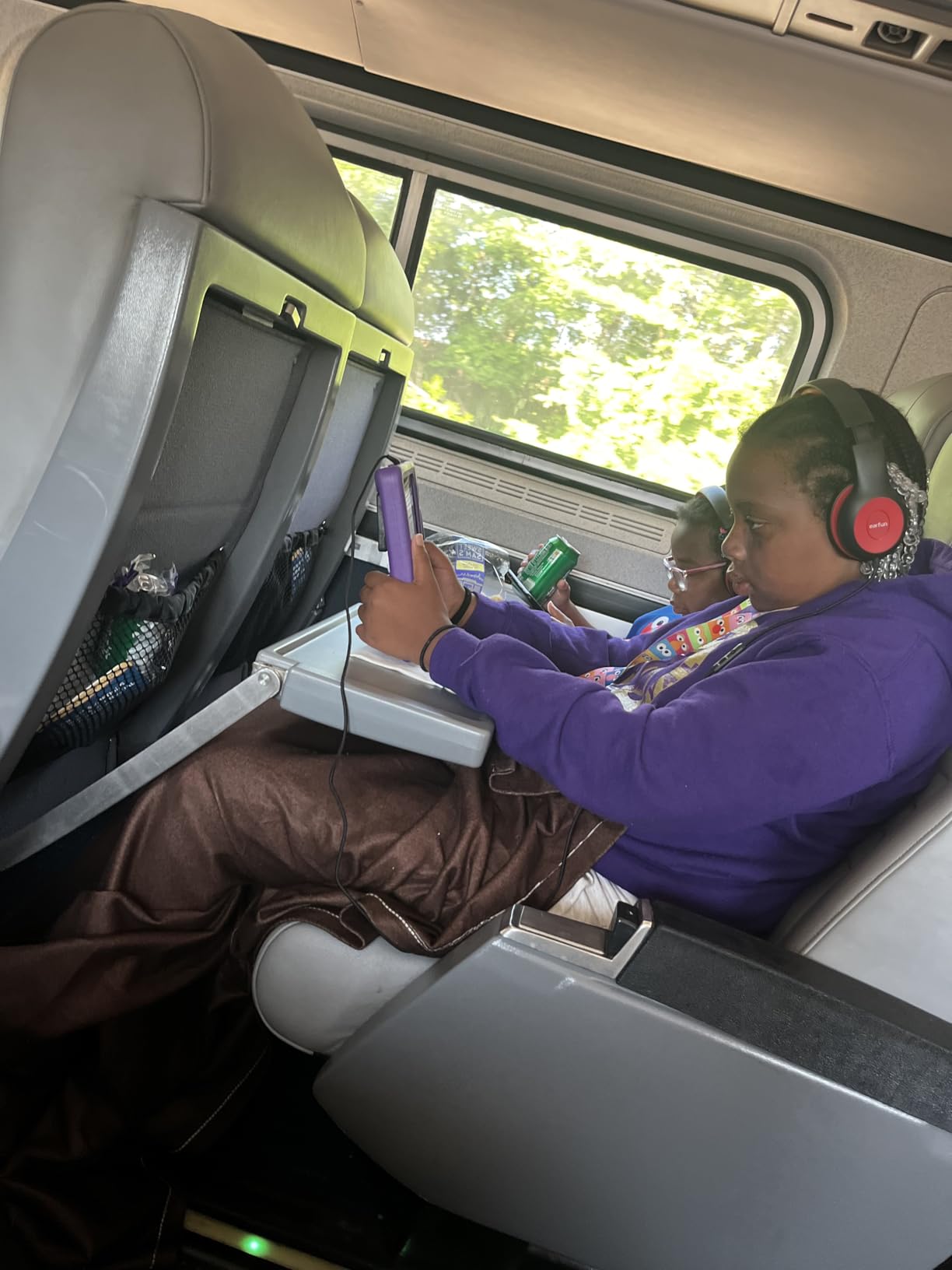
Sound comes from 40mm dynamic drivers with a 20 Hz to 20 kHz range at 32 ohm. The cable carries a microphone plus play, pause, call and track controls, so it handles online study and voice chat without a separate accessory.
The 3.5mm sharing jack means a sibling can listen from the same device. The ear caps are soft, the sliders adjust, and the frame folds flat. Materials are CPC-certified, and the warranty runs 18 months.
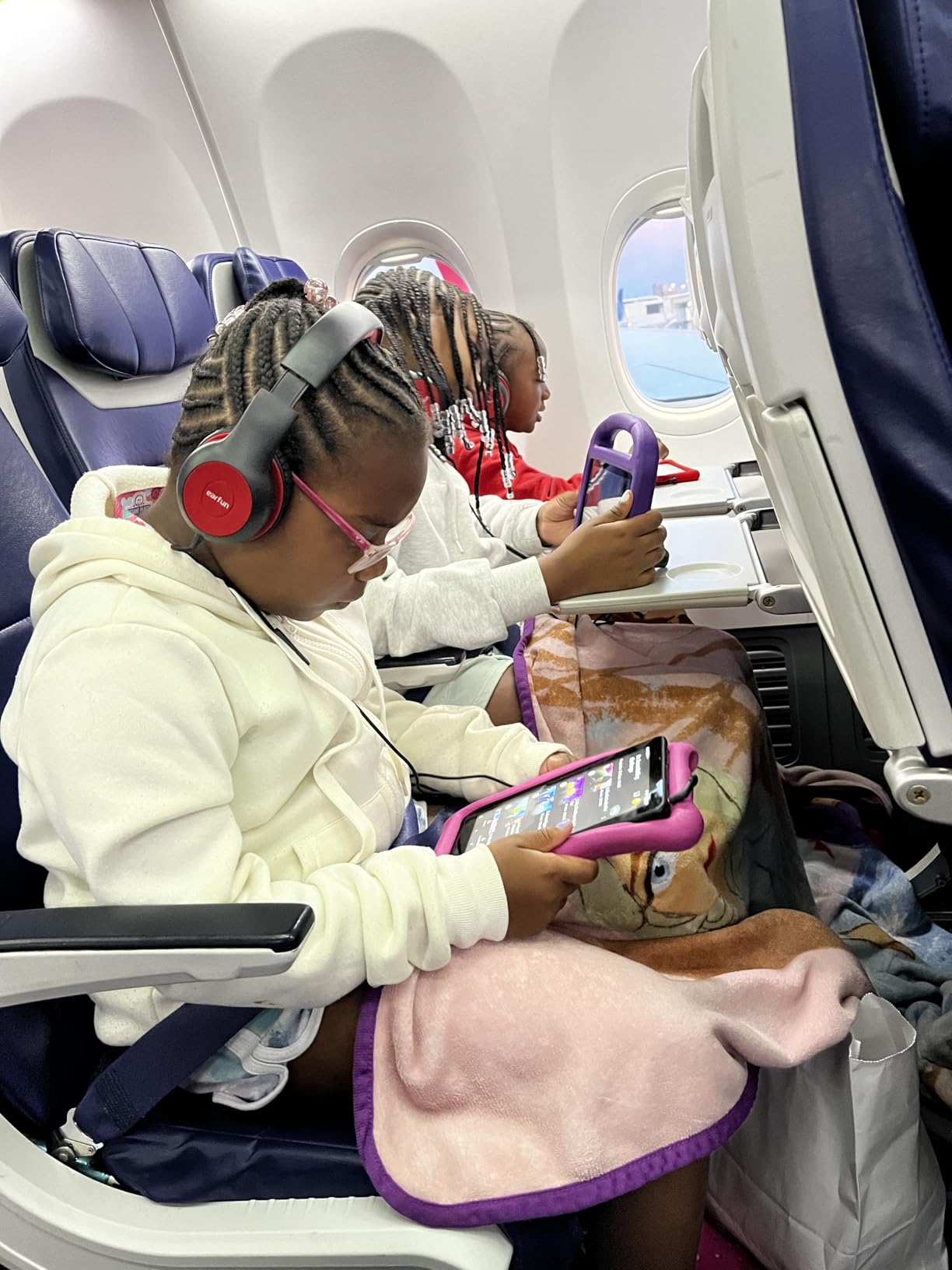
Why the retractable cord is the standout feature
Parents on forums ask about cable failure more than any other durability question, and the answer is consistent: a permanently attached cord is a countdown. A yank that would ruin most headsets simply retracts into this one.
At 198 g the pair is light enough for a young child, and the foldable frame means it disappears into a school bag rather than sitting on top of everything else.
What you give up
There is no wireless option, so a child without a jack on their device needs an adapter. Sound is described as good rather than exceptional, and there is no active noise isolation, so it will not block a loud classroom.
Note the 94dB setting on the limiter. It is there for parents who want a louder mode, and we would leave it on 85dB for children.
8. EarFun K2 — Best Wireless Headphones for School Days
EarFun K2 Kids Bluetooth Headphones for School, Kids Headphones with Mic
- Three-stage 74/85/94dB limiter
- 40-hour battery with 2-hour USB-C recharge
- Bluetooth 5.4 with a built-in HD mic
- Memory foam headband and earpads
- Wireless only so it needs charging for school
- On-ear cups are less isolating than over-ear
- Sound is balanced rather than bass-heavy
The K2 is the pick when a child’s school day is spent on a device with no headphone jack. A Chromebook or a tablet that has dropped its 3.5mm port leaves wireless as the only option, and this pair handles that cleanly.
Buyers point to the three-stage volume limiter and to the fact that there is no cord to tangle during an online class or get caught on a desk corner.
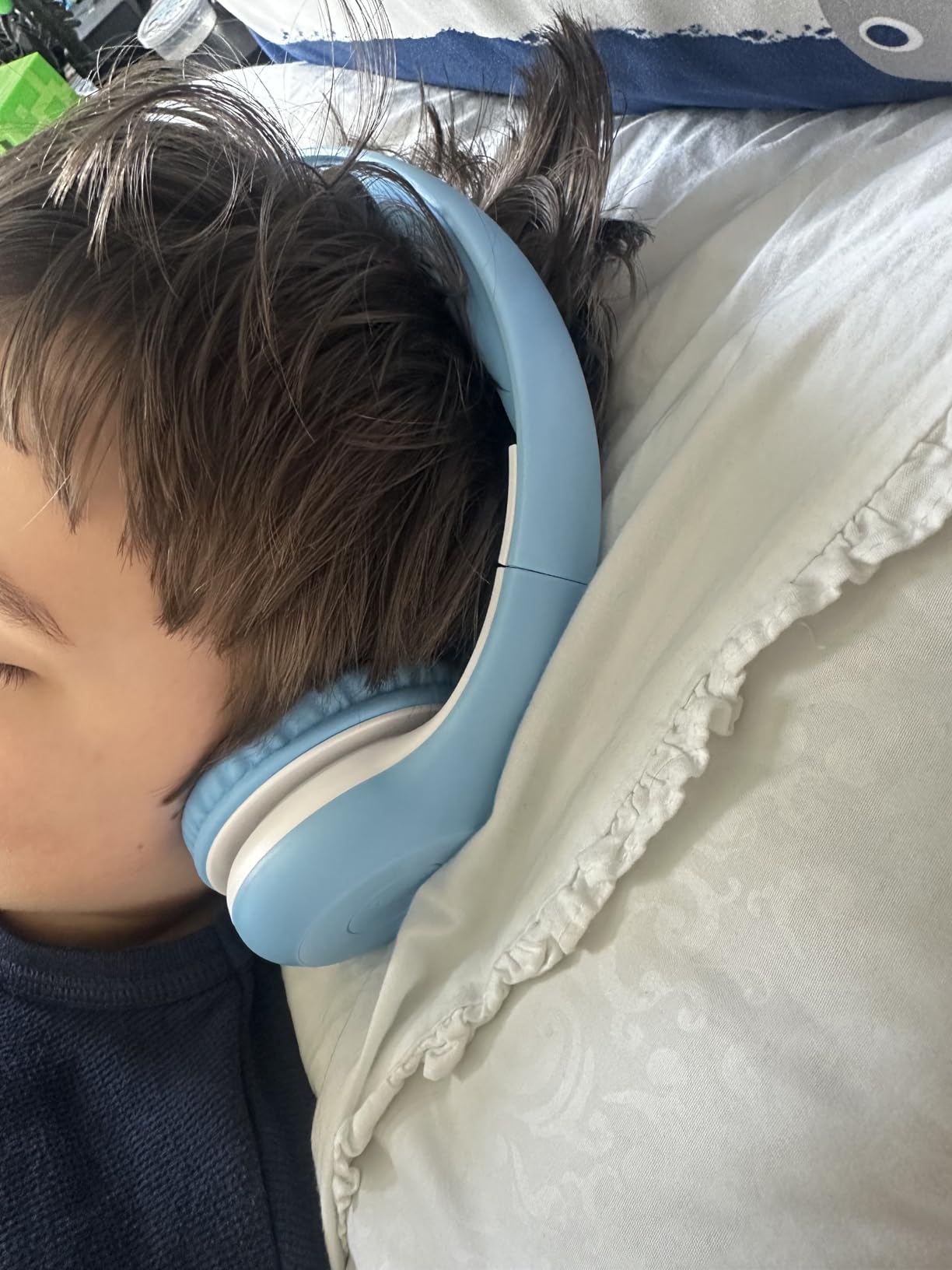
Battery life is listed at 40 hours with up to 60 hours claimed at lower volume, and a full recharge takes about 2 hours over USB-C. That number comfortably covers a school week of charging on Sunday night.
The soft memory foam headband and earpads are the part reviewers praise most, specifically for long sessions. Bluetooth 5.4 gives a stable connection and the built-in mic covers calls and lessons. The twist-and-fold design is built to survive rough handling, and materials are CPC-certified with an 18-month warranty.
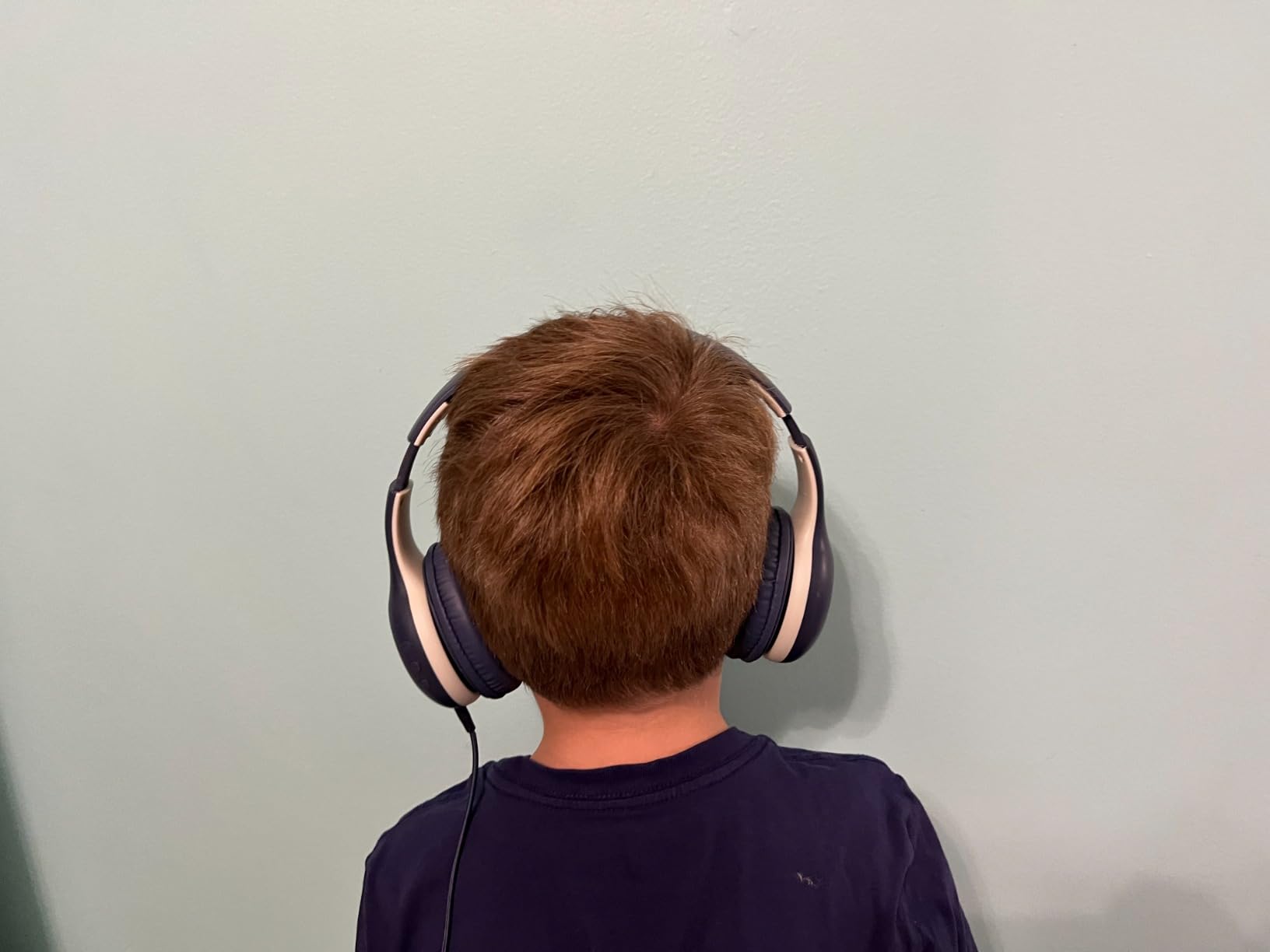
Why the 74/85/94dB limiter is aligned to guidance
Three stages let a parent match output to the situation. 74dB works for a child who is sensitive to sound or wearing the pair for hours; 85dB is the everyday listening cap. Both sit inside the range most safe-listening guidance points to.
Having the stages in hardware means the limit holds regardless of what the phone or tablet volume is set to, which is the whole reason a limiter beats a parental rule.
Where it falls short
It is wireless only. If a child forgets to charge, there is no cable to fall back on — a real problem that parents describe when a set dies mid-lesson and the child cannot reach a charger.
On-ear placement is less isolating than a full over-ear cup, and the sound profile is balanced for kids rather than bass-heavy, so older children may find it plain.
9. JBL Junior 320 — Best for Small Heads
- Lightest weight in this group at 116.8 g
- Soft 12mm padded headband sized for small heads
- Single-sided cable reduces tangles
- Built-in mic for classes and chat
- Fit runs tight on larger heads
- Fitted cable cannot be removed and may need adapters
- One report of earcup padding loosening
Weight is the number that matters most here, and the JBL Junior 320 is the lightest pair in this group at 116.8 g. For a small child, a lighter headset is a headset that stays on rather than sliding off the head mid-lesson.
JBL Safe Sound caps output below 85dB, and the round earcups sit on a 12mm padded headband designed for smaller heads than most adult-style cups accommodate.
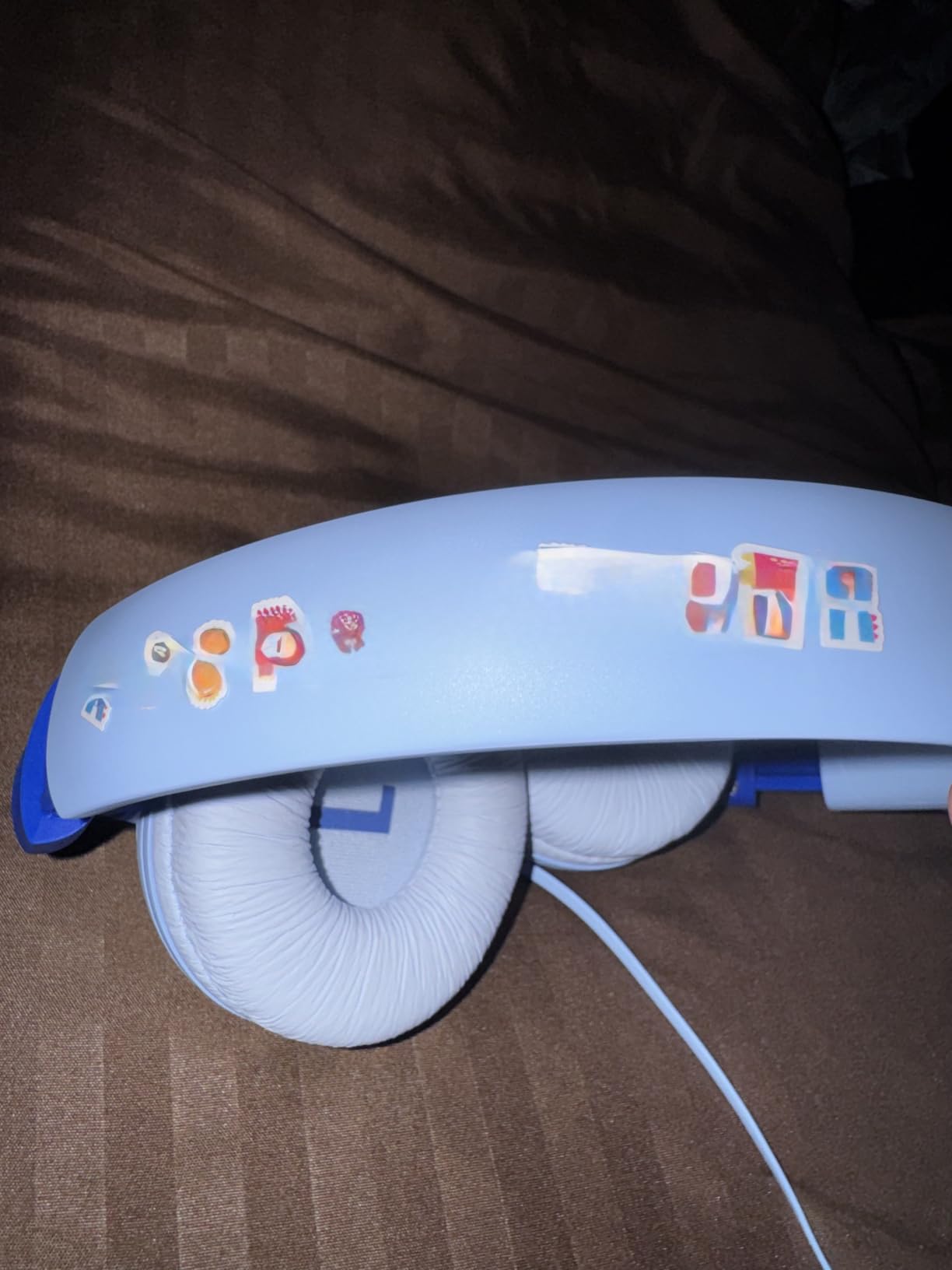
The cable attaches on one side only, which cuts the tangle rate noticeably compared with two-sided designs. It folds flat for storage, and a customisable sticker set lets a child personalise the earcups, which encourages them to actually wear it.
There is a built-in microphone for talking to teachers and classmates, and 32mm drivers at 34 ohm with passive noise cancellation handle everyday music and video. The warranty is one year.
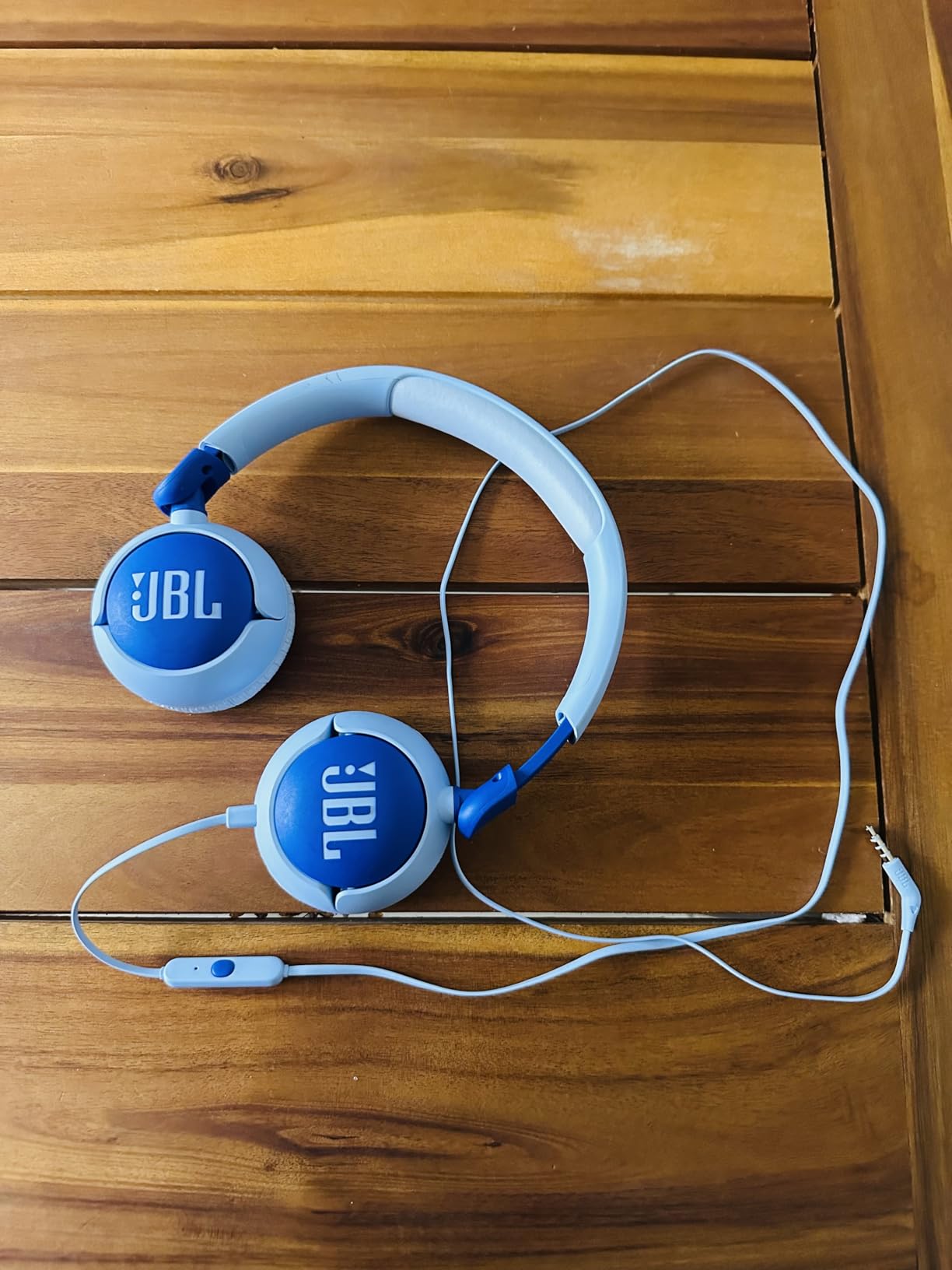
Why the single-sided cable is a real improvement
Cord tangles are the most common complaint about wired kids headphones, and a design that keeps the cord to one side cuts the loops in half. Combined with folding flat, it means the pair goes into a bag in a way that survives the rest of the day.
The sub-85dB cap is also a genuine one rather than a two-stage switch, so there is no louder setting for a child to find.
Who should skip it
Heads outgrow small pairs. Owners with older children report the fit running tight, so if your child is already near the top of the elementary age range, the EarFun K1 or the Candy Bila BH03 adjust further.
The cable is fixed and cannot be removed, so a damaged cord ends the headset rather than a replacement accessory. Modern devices without a jack will also need an adapter.
10. Candy Bila BH03 — Best for Toddlers and Preschoolers
Candy Bila Wired Kids Headphones for School, Over-Ear for Boys Girls
- Adjustable for ages 3 and up with a foldable frame
- Tear-resistant nylon cord that survives pulling
- Inline mic for learning apps and chat
- Several owners report two or more years of daily use
- Modest bass compared with adult headphones
- Wired only with no wireless option
- 4 ohm impedance pairs less ideally with some devices
The BH03 is the pair to look at when your child is three or four and will be wearing headphones for videos, audiobooks and games on a shared family tablet. The over-ear cups are light at 8 ounces and the headband adjusts for ages 3 and up.
It folds flat, which matters more than it sounds when the storage space is a sofa cushion rather than a desk drawer.
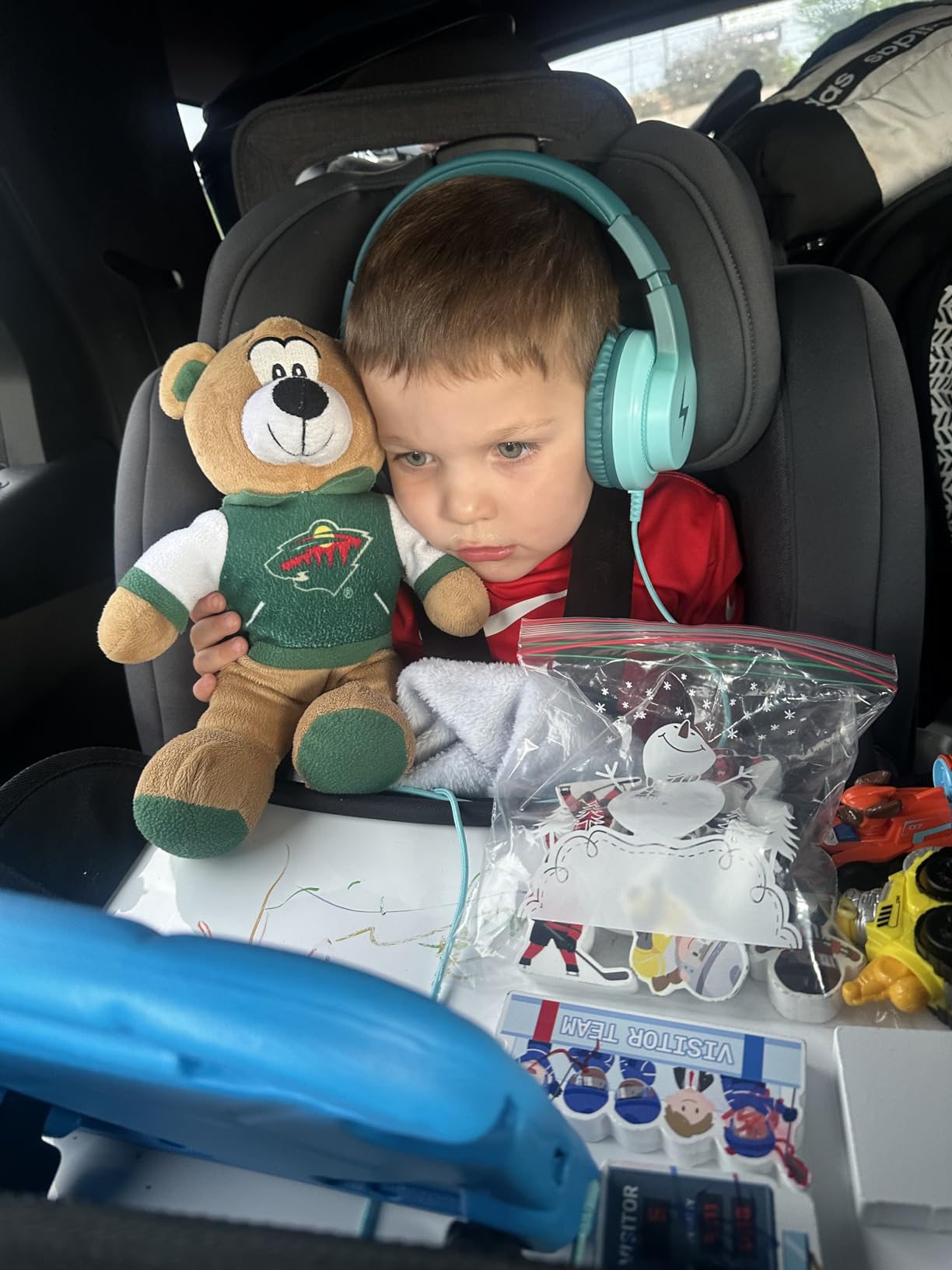
The volume limiter runs at 85dB or 94dB with a one-button in-line remote, and the inline microphone works for online learning and chat apps. Multiple owners describe pairs still going after two or more years of daily school use, which is the most concrete durability report we saw from owners in this group.
The cord is retractable and tear-resistant nylon in a matte finish, with 1-year warranty and 24-hour customer support behind it. Many colour and gradient options are offered so a child can pick their own.
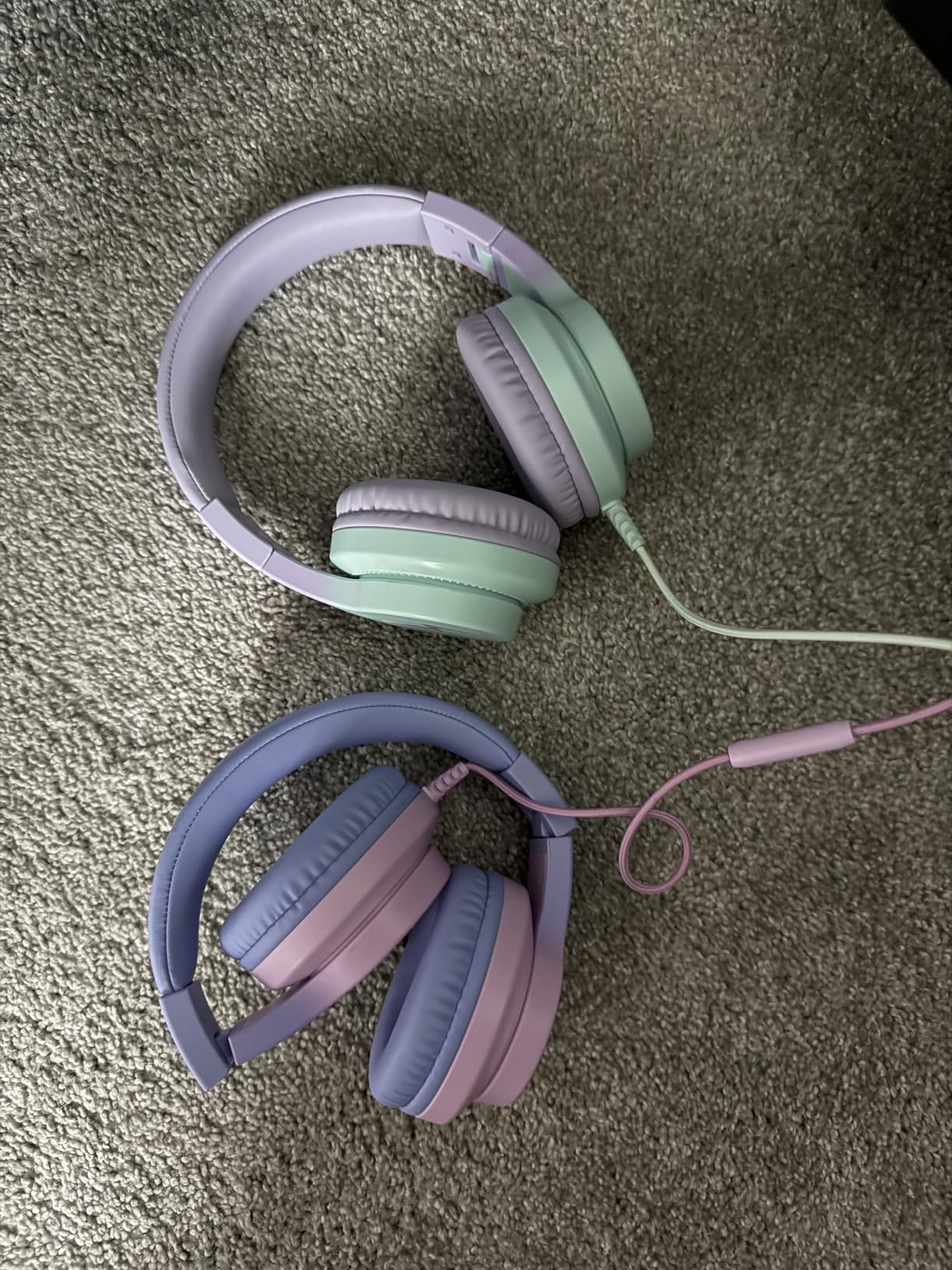
Why over-ear cups suit small children
Over-ear placement covers the ear more fully than an on-ear cup, which means less sound leaking into a shared room and better passive blocking of household noise. For a child who cannot control volume themselves, that containment is worth more than audio fidelity.
Soft cushions and a two-position volume level keep the fit comfortable across a long audio session, and the foldable design packs flat.
What to watch out for
Bass is modest next to adult-oriented headphones, so older children may find it thin. It is wired only, which means an adapter for a jack-less tablet. The stated 4 ohm impedance also pairs less ideally with some devices than a standard 32 ohm pair would.
As with the other two-stage pairs in this guide, we would keep the limiter on 85dB rather than the 94dB setting.
How to Check That a Pair Really Limits Volume
The gap in this category is trust. Retail pages print “85dB safe” on the box, and parents have no way to confirm it at home. Here is a five-step approach that catches most problems without lab equipment.
1. Find the limiter before you buy. Look for a stated cap in dB on the product page, not the phrase “safe and sound.” A model with no number and no limiter hardware is a different category of product, and we flag that plainly when we list it.
2. Check for a child-bypassable mode. Buttons labelled “travel,” “airplane,” “big kid” or “outdoor” usually raise the cap to 92dB or above. One press is all it takes. A lockout that needs a combination of keys is better.
3. Test it against your own ears, loudly. Play pink noise or a dense orchestral track, set the device volume to maximum, and listen. If the headset does not sound obviously quieter than your adult headphones at the same setting, the cap may not be doing much.
4. Watch for a difference between modes. On pairs with several stages, switch between them while the source is at maximum. If the 74dB and 94dB settings sound the same, the stages are cosmetic.
5. Re-check after a firmware update or a new device. Wireless pairs connect to new phones, tablets and laptops, and a limiter is a hardware cap rather than an account setting, but it is worth ten seconds of confirmation when a child switches devices.
None of this replaces a measurement microphone. It does separate a real limiter from a printed claim, which is the part that matters most when you cannot be in the room.
Which Headphones Fit Your Child’s Age
Age is a proxy for head size, and head size is the reason most kids reject a perfectly good pair. Here is how our ten picks map to age bands.
Toddler, 18 months to 3. Look for something very light, very soft and widely adjustable with no sharp edges. Our pick is the Candy Bila BH03, and for flights or loud events use earmuffs instead of headphones. Keeping the rest of the day easy matters too, so our easy kid-approved dinner ideas are a useful companion to a screen-free toddler hour.
Preschool, 3 to 5. Prioritise a pair that folds flat and a cord that survives pulling; an inline mic is optional at this age. The iClever HS19 fits here, with the noot products K11 as the simpler wired alternative.
Early elementary, 5 to 7. Light weight and small cups matter most, plus a hard-wired limiter a child cannot undo. The JBL Junior 320 is the fit, and the EarFun K1 is the backup if the headband needs more range.
Age 7, the most common question we get. You want an adjustable headband, an inline mic for online school, and a sharing port if there is a sibling on the same tablet. The AILIHEN C8 is our pick, with the iClever HS19 as the sharing-port option.
Elementary, 8 to 10. Battery life, Bluetooth and comfort across long sessions start to outweigh weight. The EarFun K2 leads here, and the iClever BTH12 is the choice if the light-up earcups are the deciding factor.
Tween, 11 to 13. Style and a longer battery now matter as much as the limiter, and a mic that works on a console or PC earns its place. The MIDOLA MD-B01 covers this band, with the iClever BTH12 as the more playful option.
Teen, 14 and up. Weight and fit come first, followed by a locked 85dB cap that cannot be switched to a louder mode. The MIDOLA MD-B01 suits most teens, and the noot products K11 still works up to the top of its 3-to-16 range.
Two notes on sizing up. Buy for head size rather than age when the two disagree, because a too-small pair is rejected outright while a slightly large pair is adjusted. And buy two where you can — a spare pair in a drawer removes most of the anxiety around a broken hinge, which is the failure that actually ends these products.
If your child wears glasses, on-ear styles sit more comfortably than over-ear cups because a headband resting on the temple does not fight the frame arm. That is worth more than any specification on the page.
Wired vs Wireless Headphones for Kids
This is the decision parents get wrong most often, and it is usually not a close call. It depends almost entirely on whether the child’s device has a working headphone jack.
Choose wired when the device has a 3.5mm port and the child is under about 10. Nothing to charge, nothing to pair, and no way for a battery to die mid-lesson. The failure mode of a wired pair is a broken cord, and the pairs we recommend above have braided or retractable cables specifically to remove that risk.
Choose wireless when the device has no jack, when the child moves between rooms, or when a cord around a tablet is a daily negotiation. Budget two hours of charging per week into your routine, and check whether the pair has a wired fallback cable.
The mic question deserves its own note. A pair with an inline mic can stop working entirely when connected by cable to certain devices, so if online school is a daily fixture, confirm the mic works in the mode your child will actually use. Several models on the market carry a mic that only functions over Bluetooth.
A third option deserves a mention: a splitter. Two wired pairs, one device, no sharing port needed. It is the cheapest fix for siblings and the easiest thing to lose, which is why we still prefer a built-in sharing jack when one is available.
Hearing Safety: What 85dB Actually Means
The 85dB figure on the box is a real number, and understanding it takes thirty seconds. Sound levels are measured in decibels, and roughly speaking every 10 dB increase is perceived as about twice as loud. Noise-induced hearing damage in children is cumulative and permanent, which is why a limiter in hardware is more reliable than a rule you enforce by ear.
Duration matters as much as level. The commonly used 85dBA threshold is a level above which exposure time should be limited, not a level that is safe indefinitely. A child wearing a capped pair for three hours of school and a film is a different exposure from one wearing the same pair for three minutes.
This is where the 92dB and 94dB settings deserve scrutiny. Several pairs in this guide offer a louder mode for travel, and parents reasonably ask why not just use it on a plane. The answer is that a louder cap buys clarity at the cost of exposure, when the better solution is quieter surroundings rather than more decibels. Active noise cancellation or well-fitting earmuffs reduce what reaches the ear without raising the cap.
One more safety note that parents miss: the limiter only works if it cannot be undone. A single long press on a mode button can be enough. Combination-key lockouts, as on the iClever BTH12, are a meaningful difference in a household with a determined seven-year-old.
If your child has auditory processing differences or sensory sensitivities, test the earpad material before buying. Crinkly foam and stiff faux leather bother some children enough that they remove the headset within minutes, and a pair they will not wear does not help anyone.
Frequently Asked Questions
What are the best headphones for a 7-year-old?
The AILIHEN C8 is our pick for a 7-year-old because the headband adjusts well for that age and the in-line mic handles daily online classes. Its 59-inch braided cable survives a bag and its inline controls let a child answer without touching the device. If your child shares a tablet with a sibling, the iClever HS19 adds a 3.5mm sharing port and a fixed 85dBA limiter. Both are wired, so you will need a USB-C adapter if the school device has no headphone jack.
What age should kids get headphones?
Most children can start using headphones around 18 months with an adult, provided the volume is limited. Between three and five, a light foldable pair with soft cushions works best. After six, comfort over long sessions and a microphone for online school matter more than weight. Above eleven, style and battery start to matter as much as the limiter. Keep the cap at 85dB at every age rather than switching to a louder travel mode.
What are some good headphones for kids?
The three picks we return to most are the noot products K11 for general use, the AILIHEN C8 for school and online classes, and the EarFun K1 for a budget pair with a genuine 85/94dB limiter. All three are wired 3.5mm, all three have adjustable headbands, and all three use braided or retractable cables. For wireless, the EarFun K2 covers a jack-less school device with a 40-hour battery and a three-stage limiter.
Can a 9 year old use adult headphones?
They can physically use them, but we would not recommend it. Adult headphones are heavier, sized for larger heads, and carry no volume limiter, so the only protection is you remembering to monitor every session. Noise-induced hearing loss in children is cumulative and permanent, which is exactly the case a hardware limiter exists to solve. If you already own a good adult pair, save it for travel and buy a limited pair for daily use.
Which headphones are good for kids?
The pairs worth choosing share four traits: a stated volume cap in dB, a headband that adjusts for the child’s head, a cord or battery that survives daily use, and a warranty of at least a year. Within those four, a wired 3.5mm pair with an inline mic serves school best, while a Bluetooth pair with a 40-hour battery serves travel and jack-less devices best. Pairs with no volume cap, such as the Riwbox WT-7S, suit older children only.
Should kids have noise cancelling headphones?
Yes, for flights and noisy travel, because cancelling background noise lets a child hear dialogue at a lower and safer volume instead of turning the volume up. We prefer this to a louder 92dB or 94dB travel mode, which raises exposure to buy clarity. Active noise cancelling models cost more, and a well-fitting over-ear pair with passive isolation handles a car or a cafe adequately. Check that the limiter is still active in ANC mode before you rely on it.
Are Bluetooth headphones ok for kids?
Yes, as long as the volume is capped and the battery plan works. Wireless removes the cable that usually breaks first and is the only option on a device without a 3.5mm jack. The two things to plan for are charging and a dead battery mid-lesson, so choose a model rated for 40 hours or more and charge it the same day each week. Also confirm the microphone works in the mode your child needs for online school.
The Verdict: One Default Pick for Most Families
If you take one recommendation from this guide, take the noot products K11. The 3-to-16 headband range, the 5-foot braided cord, the 8-ounce weight and the 24-month warranty make it the pair most likely to still work two years from now, and the 4.7-star average across more than 41,000 reviews is the largest body of owner feedback behind any pick in this guide.
Adjust from there. Buy the AILIHEN C8 when online school is a daily fixture, the EarFun K2 when the device has no headphone jack, the iClever HS19 when two children share one tablet, and the Candy Bila BH03 when the child is three. Skip any pair with no stated volume cap unless the child is old enough to manage levels themselves, and set any two-stage limiter to 85dB rather than the louder mode.
We update this roundup through 2026 and add new picks as models change. If you are also building out a family kit, our weighted blankets for kids guide covers a similar age-by-age framework, and our snow cone machine picks sort out another summer survival tool. For long car trips, easy popsicle recipes for kids make a screen-free distraction that travels well in a cooler.