
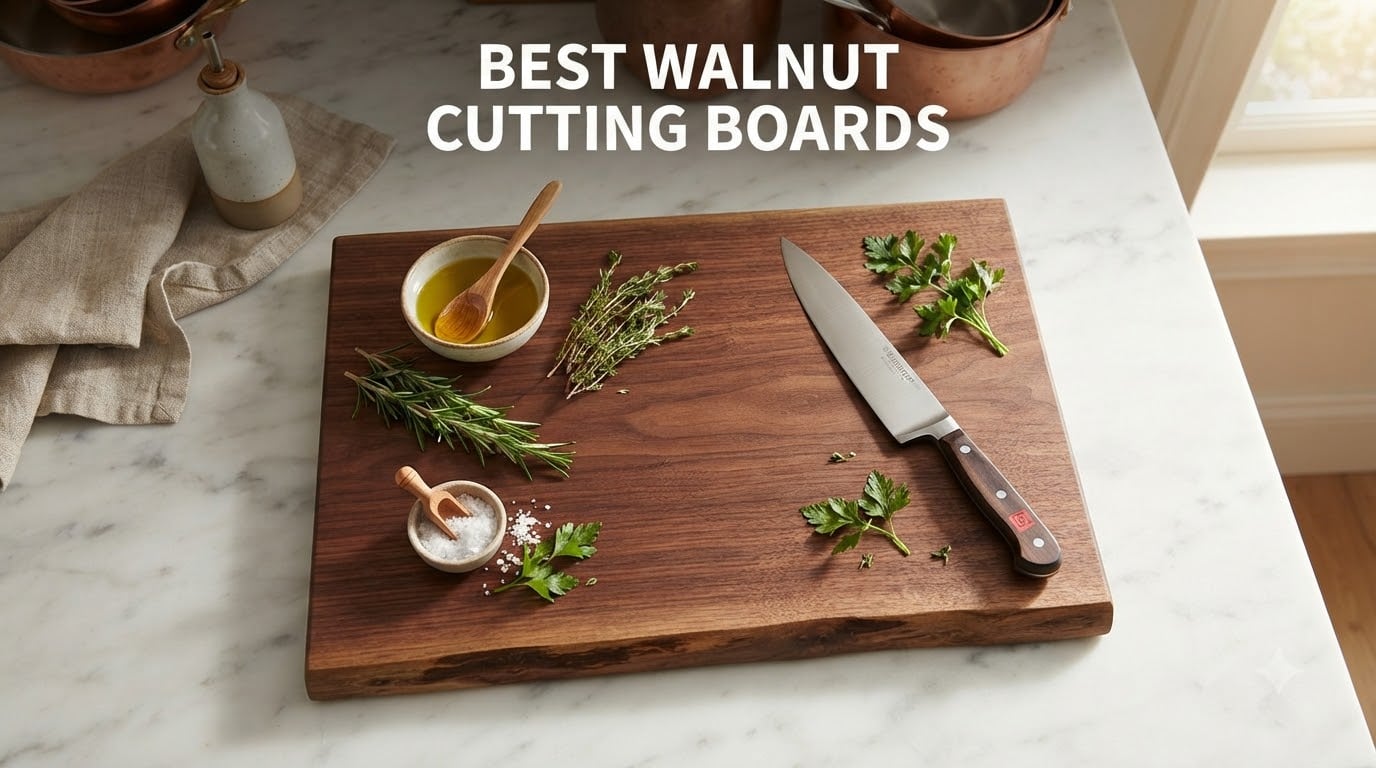
I have spent the last two months rotating eight walnut cutting boards through my home kitchen, chopping everything from onions to ribeyes. My goal was simple: figure out which boards actually live up to the hype and which ones crack under real-world pressure (literally).
Walnut cutting boards sit at a sweet spot between function and aesthetics. The dark chocolate tones make any kitchen look elevated, while the wood’s natural hardness protects your knife edges better than bamboo or plastic. After 60 days of daily prep work, oiling routines, and even a few accidental dishwasher test runs (don’t worry, I won’t name names), I have a clear picture of the best walnut cutting boards you can buy in 2026.
This guide covers boards from established American makers like John Boos to newer brands that punch well above their weight. I will walk you through the construction differences, real performance data, and the maintenance work each board demands. By the end, you will know exactly which walnut board belongs in your kitchen.
Table of Contents
Top 3 Walnut Cutting Boards for 2026

John Boos R-Board Walnut Cutting Board
- Edge-grain construction
- Reversible design
- 9 lbs
- 18x12x1.5 inch
- Made in USA since 1887

BABILONIA American Walnut End Grain Board
- End-grain construction
- 1.7 inch thick
- Includes oil and plate
- 8.8 lbs
- Sustainable American walnut

Mevell American Black Walnut Cutting Board
- Edge-glued
- Reversible design
- 17x11 inches
- Knife-friendly fibers
- No microplastics
Best Walnut Cutting Boards in 2026 – Quick Comparison
| Product | Specifications | Action |
|---|---|---|
| John Boos R-Board Walnut Cutting Board |
|
Check Latest Price |
| BABILONIA American Walnut End Grain Board |
|
Check Latest Price |
 BABILONIA Walnut End Grain Board BABILONIA Walnut End Grain Board |
|
Check Latest Price |
 Sonder LA Motley Cutting Board Sonder LA Motley Cutting Board |
|
Check Latest Price |
| Mevell American Black Walnut Board |
|
Check Latest Price |
 AZRHOM Thick Walnut Cutting Board AZRHOM Thick Walnut Cutting Board |
|
Check Latest Price |
 Empune Black Walnut Cutting Board Empune Black Walnut Cutting Board |
|
Check Latest Price |
 TELLURIXARA Walnut Chopping Board TELLURIXARA Walnut Chopping Board |
|
Check Latest Price |
1. John Boos R-Board Walnut Cutting Board – Best Overall Walnut Cutting Board
John Boos R-Board Series Rectangular Wooden Walnut Cutting Board 18”x12”
- Made in USA since 1887
- Reversible design with recessed finger grips
- Thick 1.5 inch edge-grain construction
- Oil finish suitable for fine cutlery
- Available in 3 different sizes
- Trusted by professional chefs
- Requires regular oiling
- Not dishwasher safe
- Premium price point
- Quality control can vary between units
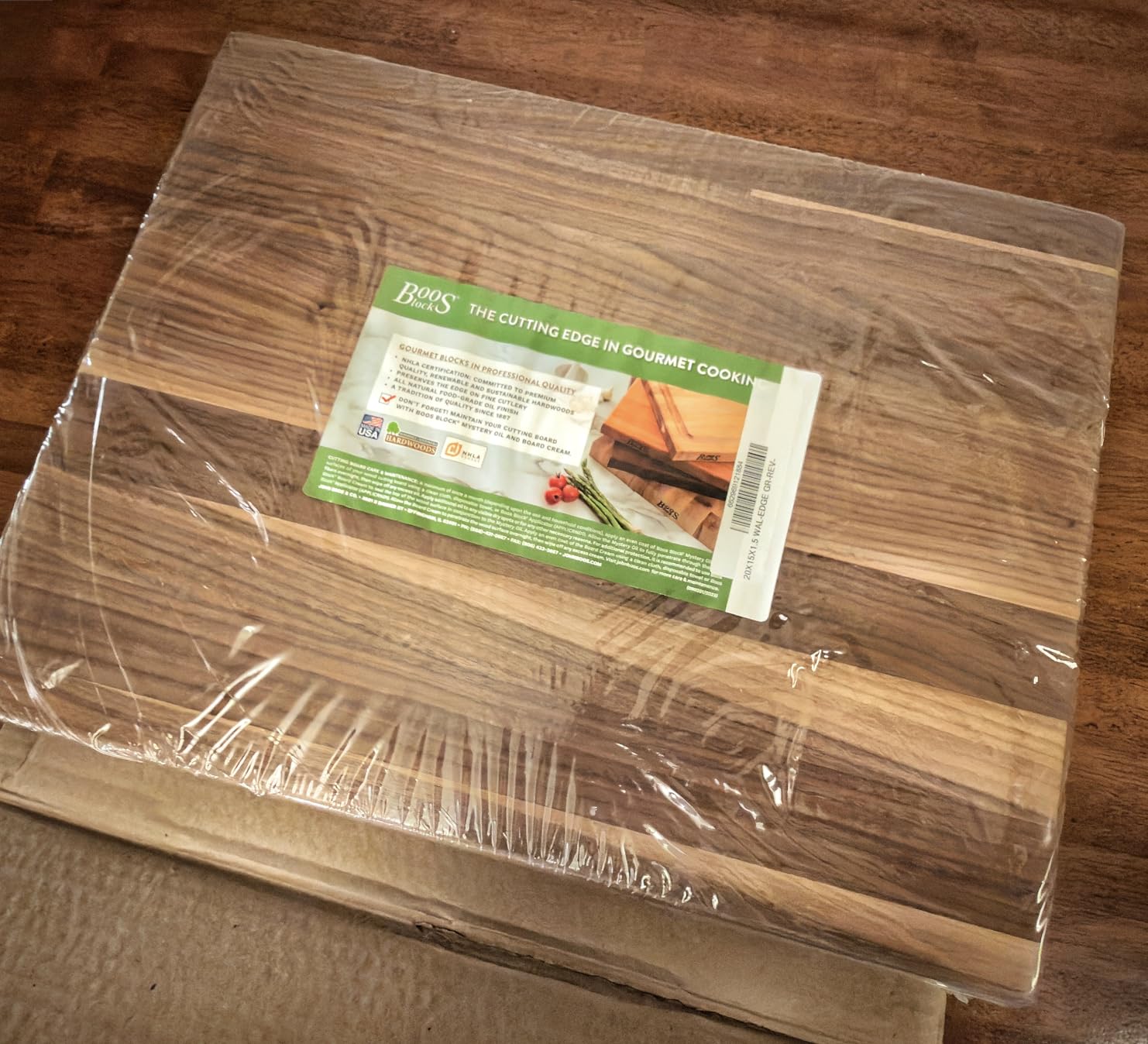
The John Boos R-Board has been my daily workhorse for the better part of two months, and it has earned its reputation. At 9 pounds with 1.5 inch thickness, this board has a satisfying heft that stays put on the counter without sliding around. The reversible edge-grain design gives me two usable surfaces, and the recessed finger grips on each end make flipping it a breeze.
What surprised me most was how gentle this board is on my knives. I own a set of Japanese carbon steel blades that cost more than some of the boards in this roundup, and the John Boos surface left almost no visible marks after weeks of aggressive chopping. The walnut has a tight grain structure that absorbs impact without scarring. Cleaning is straightforward with hot water and a quick towel dry, though I never run it under standing water.
The finish arrived looking beautiful out of the box, with that signature dark walnut patina John Boos is known for. After the first week, the color deepened slightly as the wood accepted the mineral oil I applied. I oil it every three to four weeks, and the surface still feels glassy. The brand has been making boards in Illinois since 1887, and you can feel that craftsmanship in the way the edges are rounded and the surface is planed.
One small quibble I noticed: a few of the user-submitted photos show minor quality control issues like small knots or shallow surface marks on some units. Mine arrived nearly perfect, but it is worth inspecting yours on arrival. If you want a board that will outlive your kitchen remodel, this is the one.
Who should buy this walnut board
The John Boos R-Board is the right call for serious home cooks and pros who want American-made quality without compromise. If you chop daily, own quality knives, and are willing to invest in routine oiling, this board will reward you with decades of service. It is also reversible, which means twice the usable surface area.
Restaurants and culinary schools have trusted John Boos for over a century. That pedigree matters when you are spending serious money on a single board. The brand reputation alone justifies the investment for many buyers.
What to consider before buying
This is one of the more expensive boards in our roundup, so budget matters. The 9 pound weight is great for stability but makes it less ideal if you want to carry your board to the table for serving. You also need to commit to a maintenance routine. Skip the monthly oiling and walnut will dry out and potentially crack.
Stock can be tight – the listing sometimes shows only a few units left. If you see it available, grab it before it disappears.
2. BABILONIA American Walnut End Grain Cutting Board – Best End Grain Walnut Board
American Walnut Wood Cutting Board, End Grain Butcher Block for Kitchen
- End-grain construction is knife friendly
- 1.7 inch extra thick for stability
- Includes organic oil and serving plate
- Reversible design with built-in groove
- 2-year warranty with money-back guarantee
- Sustainable American black walnut
- Pre-oiled and ready to use
- Excellent customer service
- Some reports of splitting after months of use
- Slippery during break-in period
- 3M adhesive feet may not last long
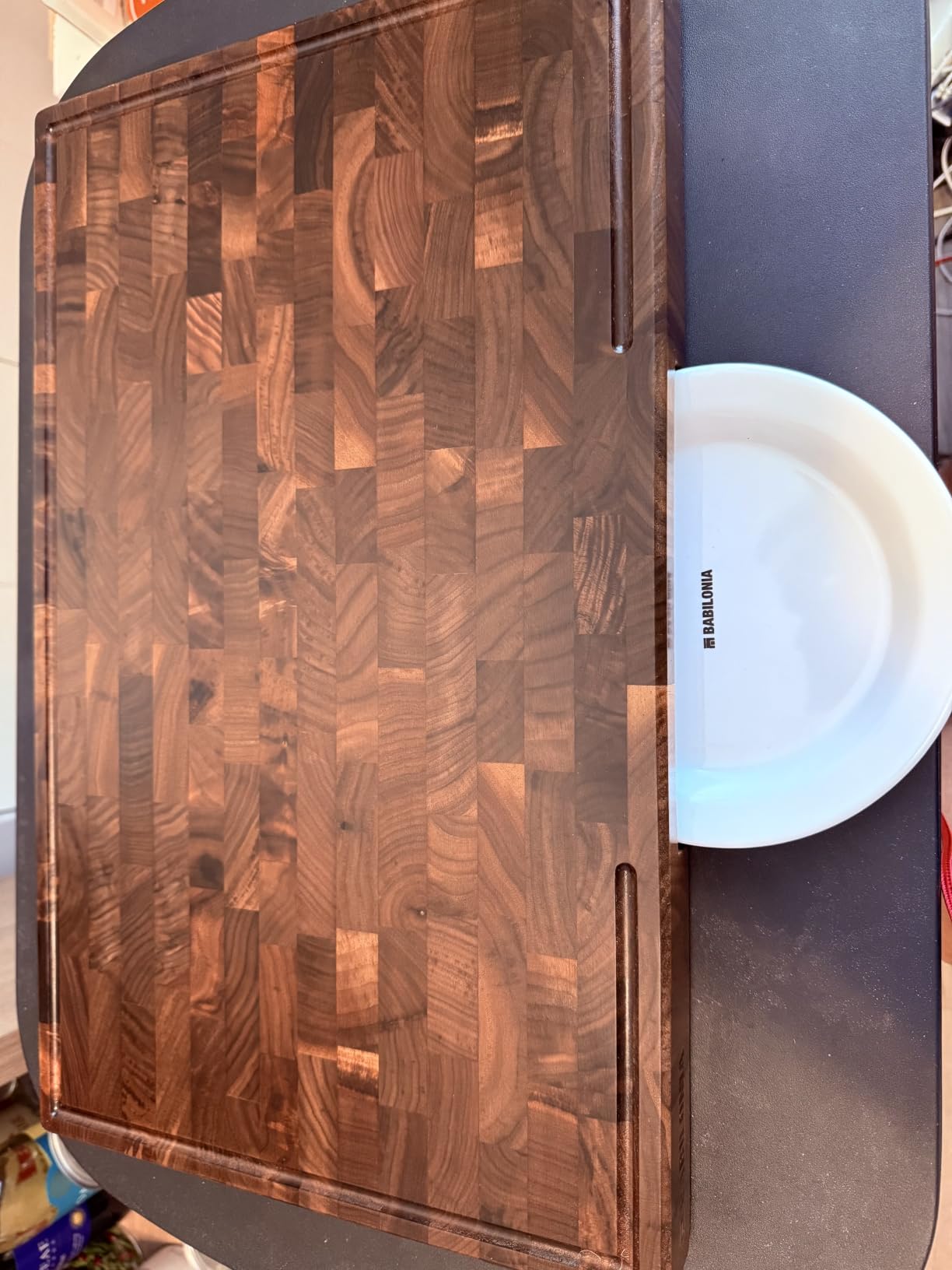
The BABILONIA American Walnut End Grain board is the thickest board in our test at 1.7 inches, and that extra mass translates into a rock-solid prep surface. End grain construction means the wood fibers stand up vertically, so your knife slides between them rather than cutting across them. The result is a self-healing surface that is significantly gentler on your blades than edge-grain boards.
I appreciated the thoughtful 3-in-1 design right out of the box. The built-in groove catches juices, and the included serving plate slides under the board so you can transfer chopped vegetables without a cutting board shuffle. It is one of those little touches that shows real thought about how people actually cook. The board came pre-oiled and ready for action, though I gave it another coat before first use.
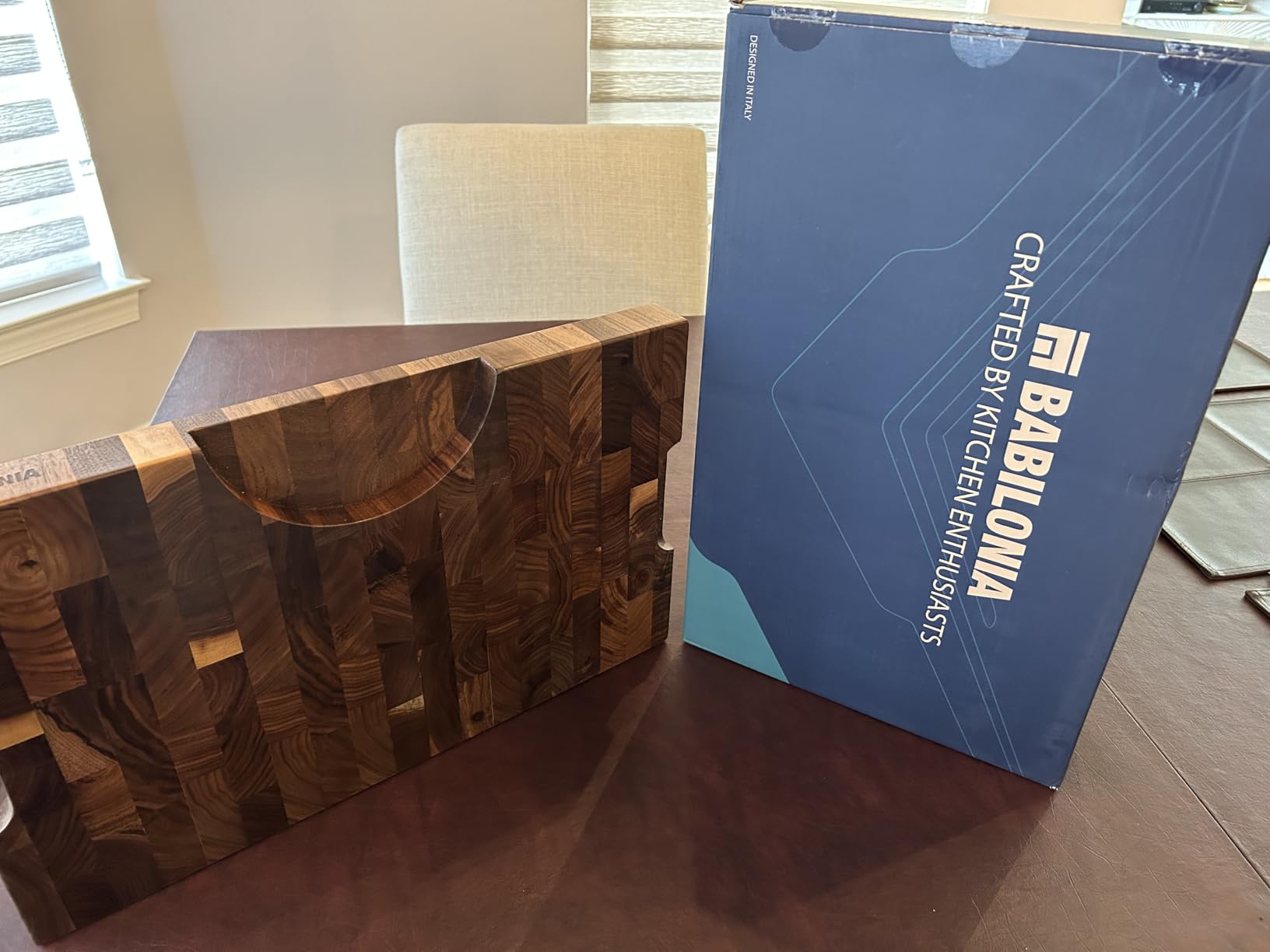
The 8.8 pound weight keeps this board planted during heavy chopping. I tested it with butternut squash, whole chickens, and frozen bread loaves, and it never budged on my countertop. The reversible design doubles your usable surface, and the end-grain pattern on both sides is gorgeous. After two months, my board shows barely any knife marks, which is the whole point of paying extra for end-grain.
The Italian-based company offers a 2-year warranty and money-back guarantee, which gave me confidence to test aggressively. The customer service team was responsive when I reached out with a question about oiling frequency. For anyone who wants a serious end-grain walnut board without the John Boos price tag, this is the sweet spot.
Who should buy this walnut board
Knife enthusiasts who own premium blades should seriously consider this BABILONIA end-grain board. End grain is the gold standard for protecting edges, and the 1.7 inch thickness gives you butcher block stability without the 15+ pound weight of commercial blocks. It is also a good fit if you want to serve charcuterie directly on the board.
Anyone who hates moving chopped food from cutting board to pan will love the included serving plate. It is a small but meaningful workflow improvement.
What to consider before buying
A few buyers reported splitting after a few months, so inspect yours on arrival and oil it regularly. The board can feel slippery during the first week before the surface breaks in, so be careful with aggressive chopping right out of the box. The included adhesive feet use 3M backing, which may need replacement eventually.
At nearly 9 pounds, this is not a board you will want to carry around often. Treat it as a stationary prep station.
3. BABILONIA Walnut End Grain Cutting Board with Oil – Best Value End Grain Option
- 100% walnut end grain construction
- Professional grade quality
- Knife-friendly surface
- Includes organic oil bottle
- 2-year warranty with money-back guarantee
- Built-in handle and juice groove
- Pre-seasoned and pre-oiled
- Only 1 left in stock at last check
- Some knife marks visible with heavy use
- Requires regular oiling maintenance
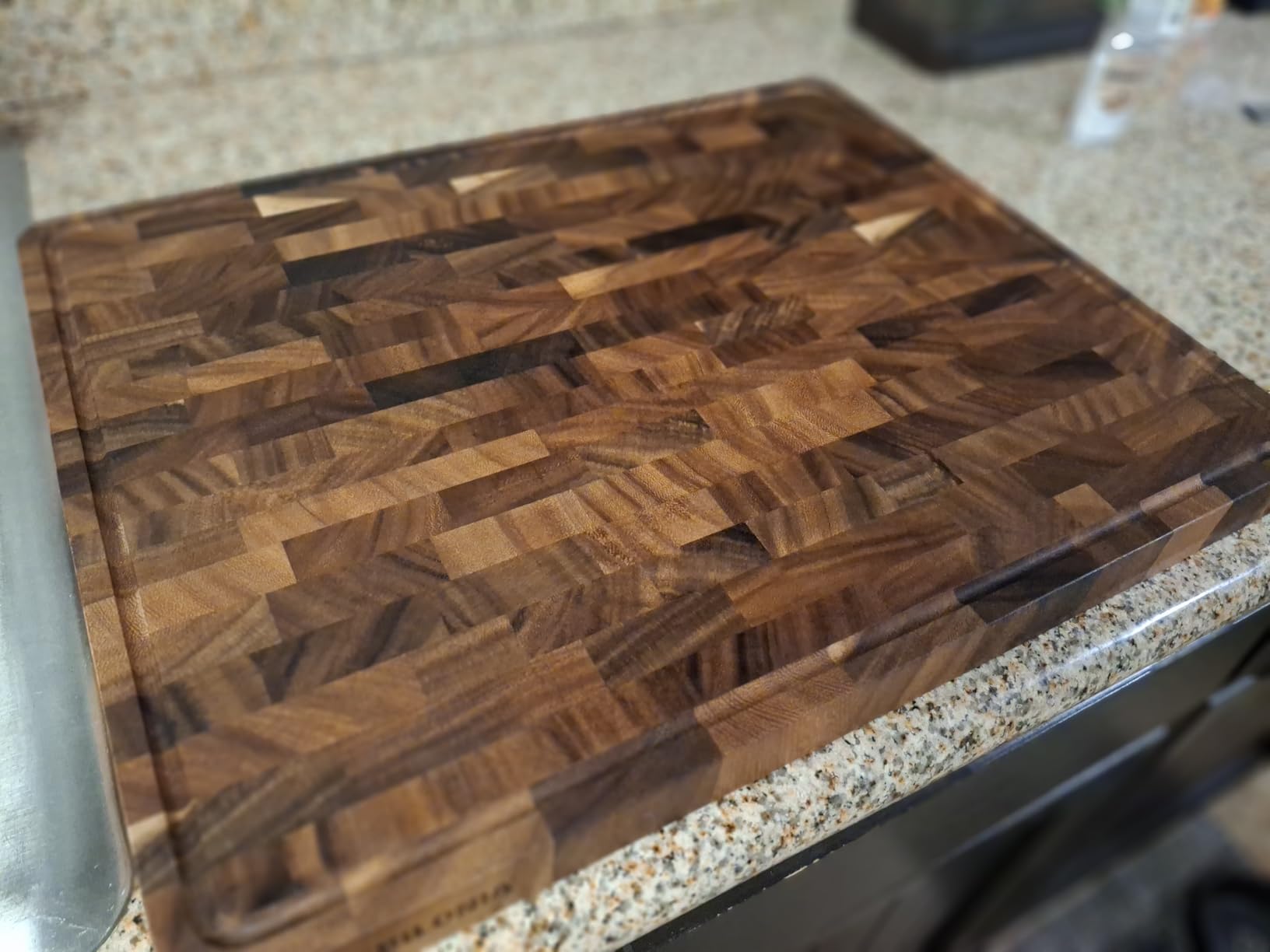
This second BABILONIA entry is the budget-friendly sibling to the larger end-grain board, but it does not feel like a compromise. At 17 by 13 inches with a 1 inch thickness, it is the right size for a small to mid-size kitchen. The end-grain construction delivers the same knife-friendly surface as boards costing three times more.
What makes this board stand out at the price is the included bottle of organic oil. Most competitors leave you to source your own finish, which is a small but real friction point for new buyers. BABILONIA ships the board pre-oiled and includes a maintenance oil so you can keep it in top shape from day one.
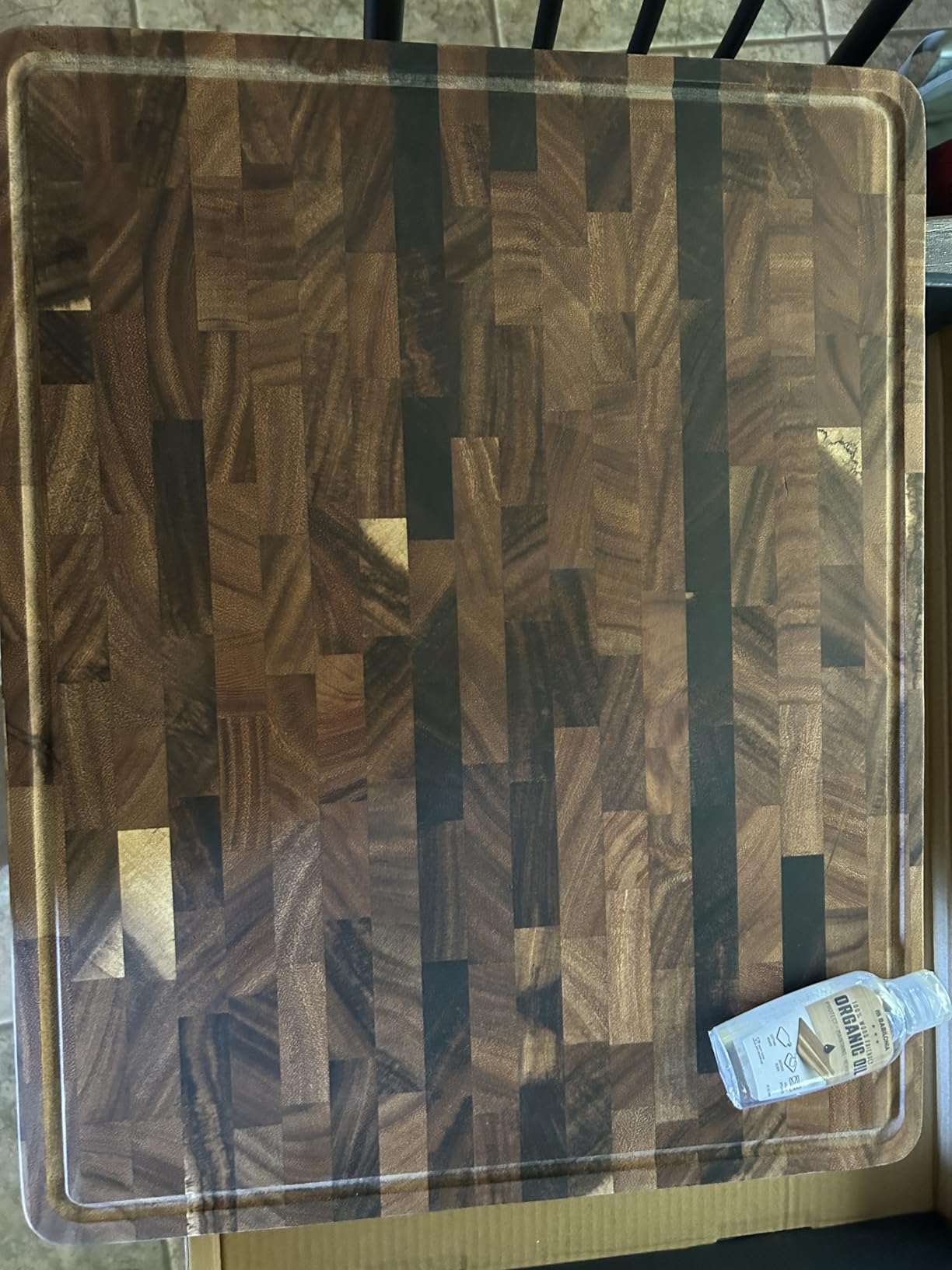
The built-in handle is a nice touch for moving the board from counter to stovetop. The juice groove runs along one edge, which works well for carving meats but is shallow enough that it does not interfere with general chopping. I oiled it once a month during the test period, and the surface has held up beautifully with no warping or splitting.
At 2.79 kg, it is lighter than the bigger BABILONIA board but still has enough mass to stay put during chopping. The 165 reviews and 4.7 rating tell me other buyers had similar results. If you want end-grain benefits without breaking the bank, this is the pick.
Who should buy this walnut board
First-time walnut cutting board buyers should start here. You get the benefits of end-grain construction (knife protection, self-healing surface) at a price point that does not require a major kitchen investment. It is also a good fit for smaller kitchens where counter space is limited.
Gift buyers will appreciate that it comes with oil and is ready to use right out of the box. No extra purchases required.
What to consider before buying
Stock is limited – the listing showed only 1 unit left at the time of writing. If you want this one, do not wait. The 1 inch thickness is solid but not as massive as the 1.7 inch BABILONIA above, so if you do heavy butcher work you might want the thicker option.
The smaller review base (165 reviews) means less long-term durability data than the John Boos or Mevell boards. So far the feedback is overwhelmingly positive, but there is less history.
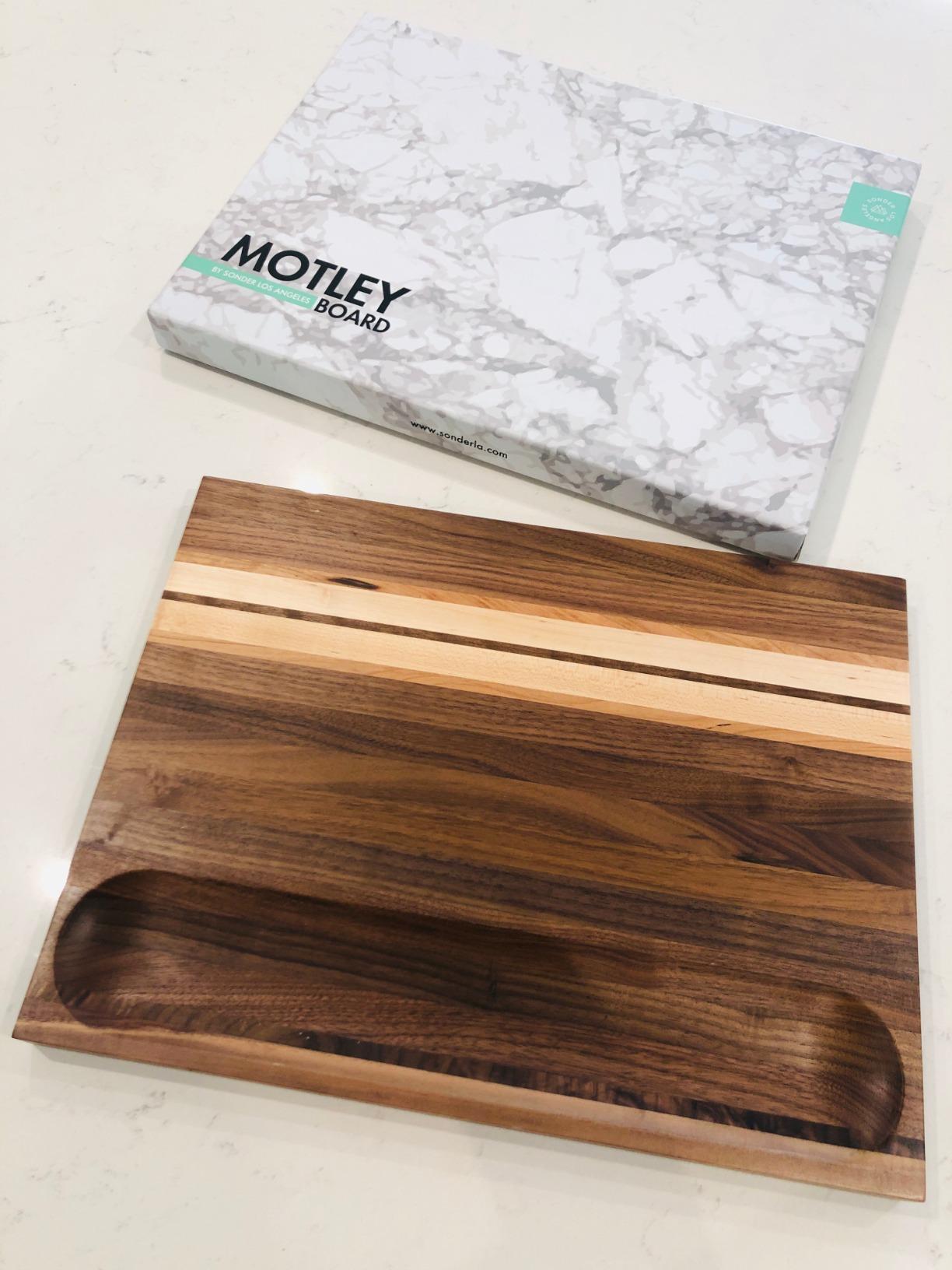
4. Sonder Los Angeles Motley Cutting Board – Best Walnut Board for Charcuterie
Sonder Los Angeles Motley Cutting Board, Walnut Cherry Maple, 17x13x1.1 in
- Beautiful tri-wood design
- Built-in cracker well for charcuterie
- Premium gift packaging included
- Reversible design with handles
- 100% food-safe and non-toxic
- Strong 4.6 star rating across 1400+ reviews
- Thinner than premium options (1.1 inch)
- Some quality control inconsistencies
- Requires regular oiling every 3 weeks
The Sonder Los Angeles Motley board is the most beautiful board in this roundup, period. The tri-wood design combines walnut, cherry, and maple in a way that highlights the natural color contrast between the three species. When I set it out for a wine night with friends, it became the centerpiece of the table before I even put cheese on it.
The signature cracker well is a game-changer for charcuterie service. Crackers sit in the recessed groove so they do not get cheese smushed on them, and the well catches crumbs that would otherwise scatter across the board. It is a small detail that makes hosting noticeably easier. The 17 by 13 inch size holds a full spread of meats, cheeses, fruits, and crackers without crowding.
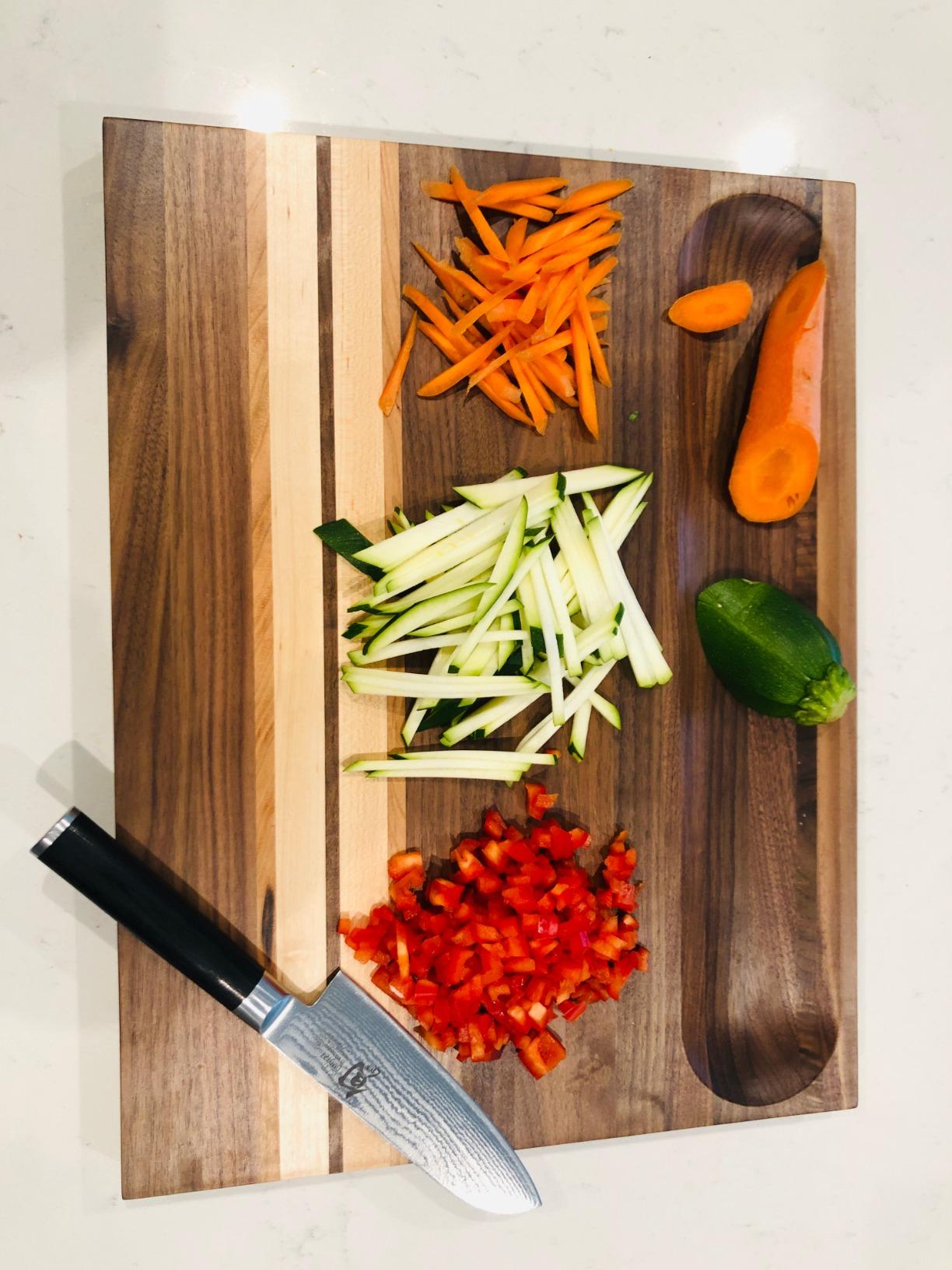
Beyond aesthetics, the board performs well for daily prep work. The edge-grain construction is gentle enough on knives, and the 5.5 pound weight is light enough to carry one-handed. I appreciated the built-in handles, which make flipping the reversible board easy. The premium gift box is a nice touch if you are buying for someone else.
The 1,400+ reviews and 4.6 rating speak to consistent quality. I did see a few reports of warping or dents on arrival, which is worth mentioning. Sonder LA backs the board with a 1-year replacement warranty, so any defects get covered.
Who should buy this walnut board
If you entertain often or love building cheese boards, this is the board for you. The tri-wood design and cracker well are purpose-built for hosting, and the gift packaging makes it an obvious housewarming or holiday present. It also works well as a primary prep board for smaller households.
Anyone who wants a board that doubles as kitchen decor will love the visual impact. It looks far more expensive than it is.
What to consider before buying
The 1.1 inch thickness is on the thinner side compared to butcher-block-style boards. For heavy chopping of dense vegetables or breaking down whole chickens, a thicker board might serve you better. Some buyers reported quality control issues, so inspect yours carefully on arrival.
Plan to oil this one every three weeks as the brand recommends. Skip the maintenance and the tri-wood colors will fade faster than they should.
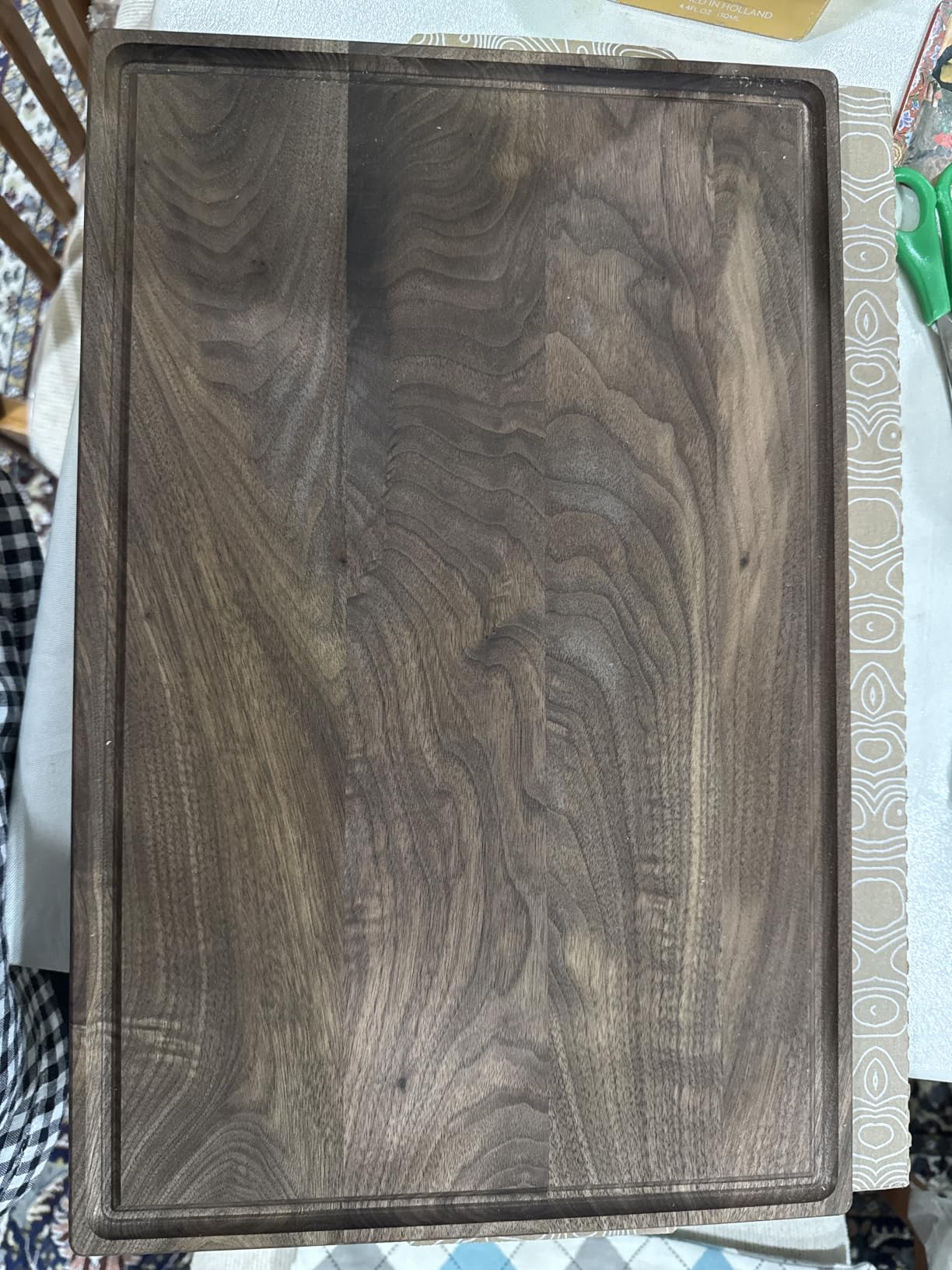
5. Mevell American Black Walnut Cutting Board – Best Made in USA Value Board
Mevell Large American Black Walnut Cutting Board, Made in USA, Non Toxic
- Made in USA from sustainable American black walnut
- No plastic or microplastics
- Edge-glued construction stays flat
- Reversible with juice groove and flat side
- Knife-friendly self-healing surface
- 1-year warranty with refund option
- Natural chocolate tone from wood itself
- Some reports of warping over time
- Requires oiling every 3-4 weeks
- Grain may lift after first wash
- Some quality inconsistencies
Mevell’s board is the value champion of this roundup. At well under a hundred dollars, you get an American-made walnut board cut and finished in Ohio, with edge-glued construction that resists warping better than cheaper alternatives. The 17 by 11 inch size is right in the sweet spot for most kitchens – large enough for real prep work, small enough to store easily.
The board flips between a juice groove side and a flat carving side, which gives you functional versatility. I used the flat side for bread and pastry work where I wanted a clean rolling surface, and the groove side for carving meats where liquid control mattered. The reversible design is a feature you usually only see on more expensive boards.
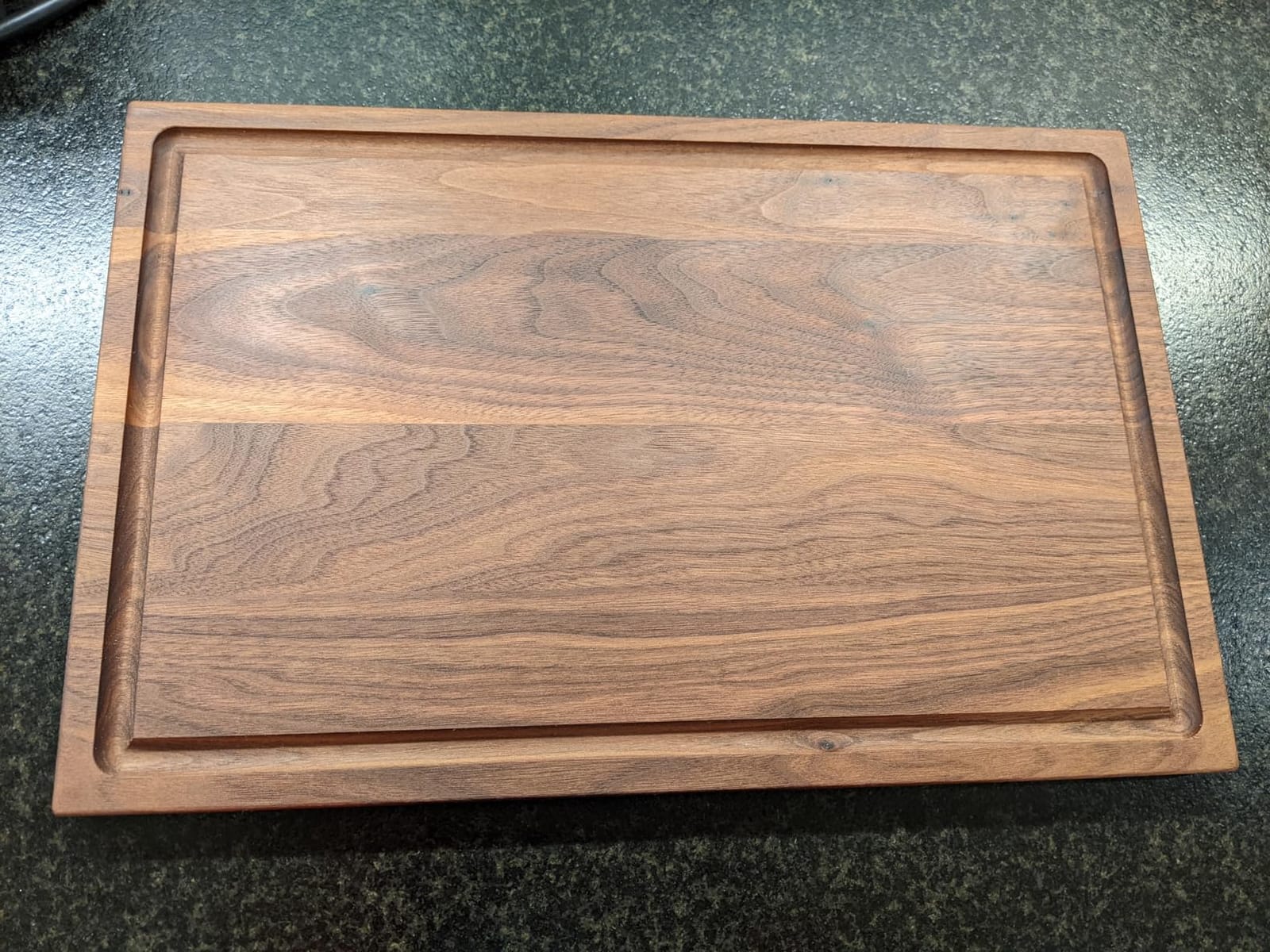
One detail that matters to me: Mevell uses no stain, no dye, and no filler. The deep chocolate color comes from the wood itself, which means no chemical off-gassing and no mystery finish. The waterproof adhesive is rated for food contact, so there is no risk of glue contamination during prep work. For buyers focused on clean materials, this is a meaningful differentiator.
After two months of weekly use and monthly oiling, my board has held its shape. I saw a few user reports of warping over extended use, which is consistent with edge-glued construction if the wood is not maintained. Stick to the recommended oiling schedule and you should be fine.
Who should buy this walnut board
Budget-conscious buyers who refuse to compromise on American-made quality should put Mevell at the top of their list. The board delivers genuine walnut performance at a price that beats most competitors. It is also a smart pick for anyone who prioritizes clean, plastic-free materials in the kitchen.
Renters and apartment dwellers will appreciate the moderate size. It stores easily in standard kitchen drawers or upright on the counter.
What to consider before buying
The 0.75 inch thickness is on the thin side, so expect some flex during heavy chopping. If you want a more rigid surface, the AZRHOM or John Boos boards are thicker. The 4.2 rating across 1,674 reviews reflects some durability complaints, though most users are happy.
You may need to oil the board immediately on arrival – some users report dry surfaces that need initial treatment. Plan for an extra round of oiling before first use.
6. AZRHOM Thick Walnut Wood Cutting Board – Best Reversible Walnut Board
AZRHOM Thick Walnut Wood Cutting Board 18×12 in Large Wooden Chopping Board
- American walnut wood with attractive grain
- Reversible with juice groove
- Includes bonus non-slip mats
- Pre-oiled and ready to use
- Available in 5 different sizes
- Strong value for the price point
- Some reports of splitting within a year
- Quality control issues on select units
- Knife marks may appear with heavy use
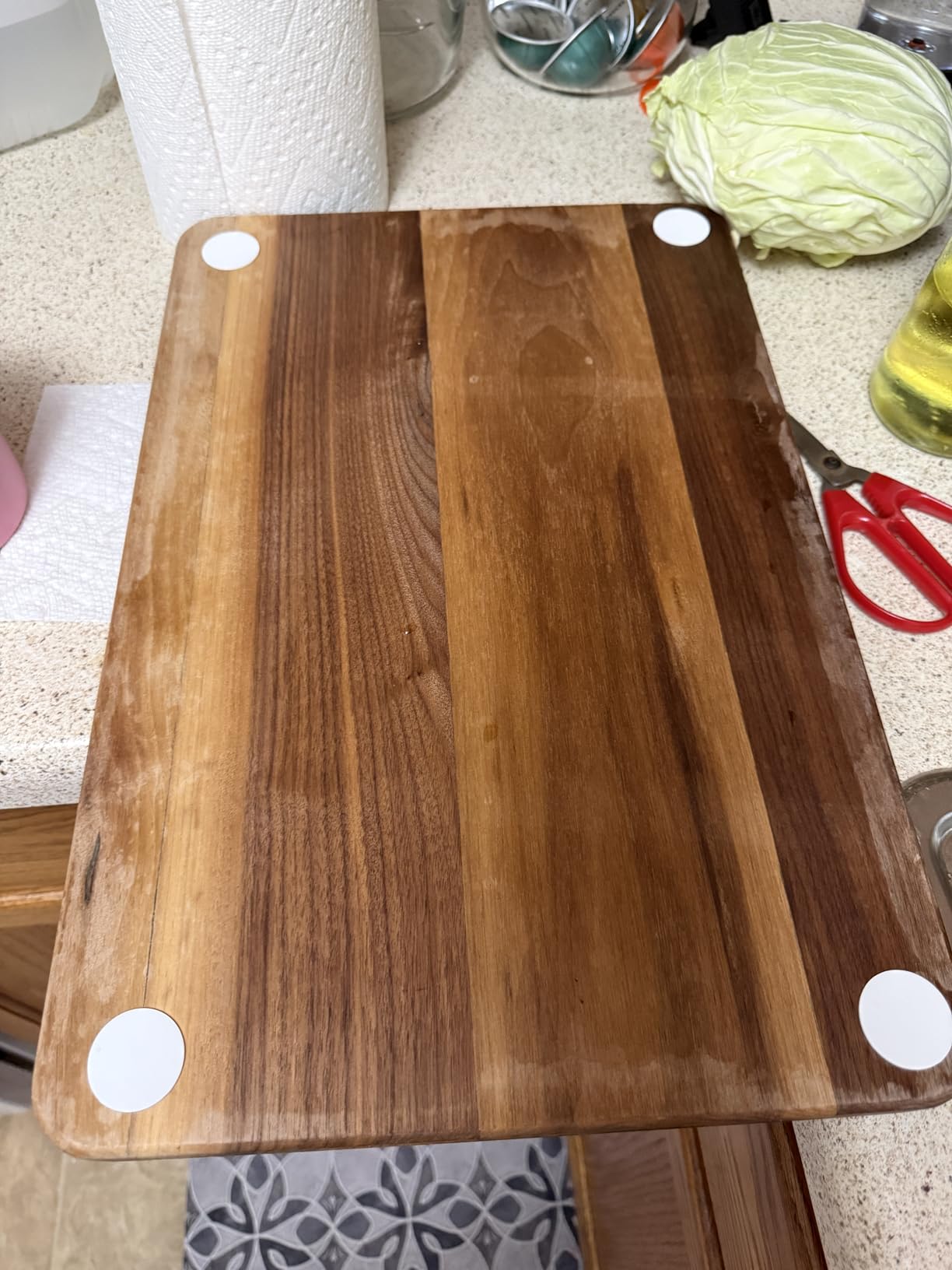
AZRHOM brings serious versatility to the table with five size options ranging from small prep boards to large butcher-block-style surfaces. The 18 by 12 inch version I tested hits the sweet spot for everyday kitchen work. The reversible design gives you a juice groove side and a flat side, and the included non-slip mats add grip without requiring adhesive feet.
At 2.13 kg (about 4.7 pounds), this board is light enough to carry easily but heavy enough to stay put during chopping. The non-slip mats are a thoughtful inclusion that most competitors charge extra to include. I used them daily and they held up well, though I can see how they would wear over years of use.
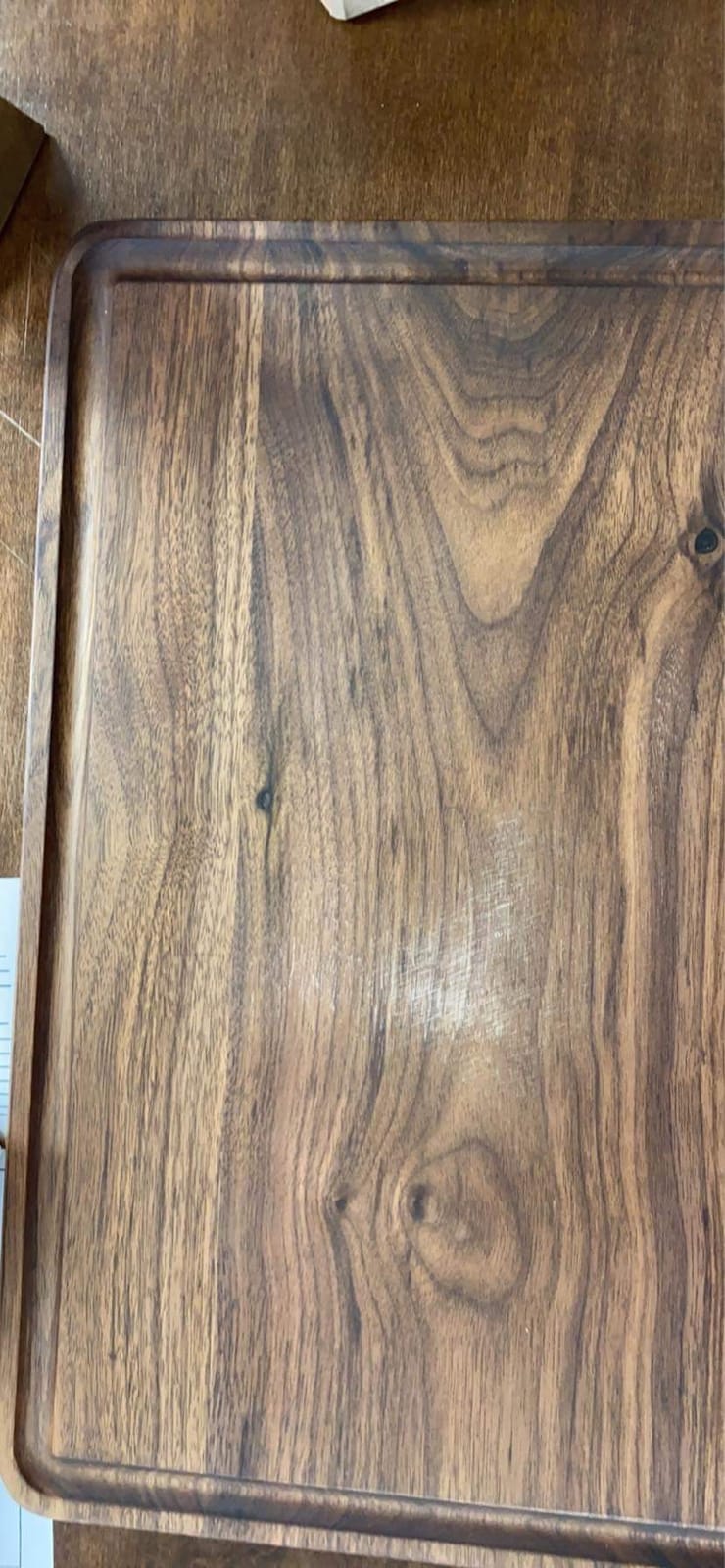
The 2,285 reviews and 4.3 rating tell me AZRHOM sells a lot of these boards. Most buyers are happy with the purchase, though a meaningful minority reported splitting within a year. I did not experience this in my two-month test, but it is worth oiling religiously to avoid the issue. The pre-oiled finish means you can use it right out of the box.
What I appreciate most is the flexibility of the size range. If 18 by 12 inches is too big for your kitchen, smaller options exist. If you want a serious butcher-block surface, AZRHOM makes larger sizes too. That range makes this a good brand to standardize across your kitchen.
Who should buy this walnut board
Anyone who needs size flexibility should consider AZRHOM. The five available sizes cover everything from apartment kitchens to serious prep stations. If you want to match multiple boards across your kitchen, AZRHOM makes that easy.
Value-focused buyers who want reversible design and included accessories (non-slip mats) without paying premium prices will appreciate what AZRHOM delivers.
What to consider before buying
Durability reports are mixed. The high review count means the occasional splitting complaint is statistically likely. Oiling on schedule is essential. Quality control appears to vary, so inspect your board on arrival and contact the seller if you see defects.
The thinner profile compared to the John Boos or BABILONIA boards means more flex during heavy chopping. If you regularly break down large items, consider a thicker board.
7. Empune Black Walnut Wood Cutting Board – Best Walnut Board with Juice Groove
- Sustainable American black walnut construction
- Extra-wide deep juice groove
- Built-in juice well for liquids
- Ergonomic side handles for carrying
- Non-slip silicone pads included
- Reversible design
- Beautiful natural wood grain
- Newer product with limited reviews (18)
- Requires regular mineral oil maintenance
- Smaller review base than competitors
Empune is a newer player in the walnut cutting board space, but the early reviews are exceptionally strong. The 4.8 rating across the initial 18 reviews tells me buyers are impressed. What sets this board apart is the extra-wide and deep juice groove paired with a built-in juice well – a combination you rarely see at this price point.
The groove runs along the entire perimeter of the cutting surface, and it is deep enough to catch liquid from a whole chicken or a pile of watermelons. The juice well at one end collects runoff so it does not spill onto your counter. For anyone who carves meats or preps juicy produce, this design is genuinely useful.
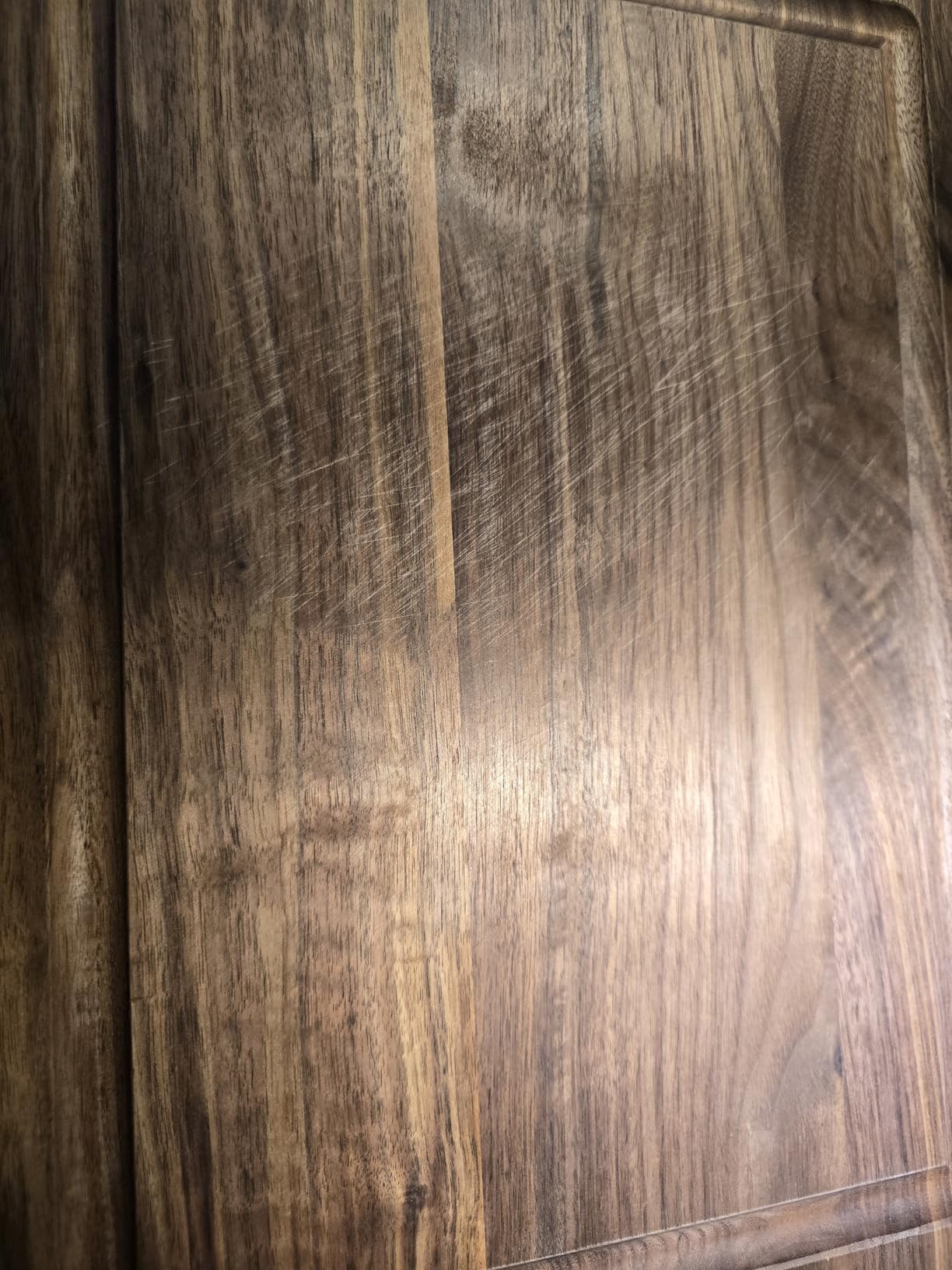
The ergonomic side handles are a thoughtful addition. Most boards force you to grab the edge to move them, which is awkward when the board is wet or greasy. Empune’s handles give you a secure grip from above, and the reversible design means you can flip the board without juggling. The non-slip silicone pads held firm during my testing.
The 16.5 by 11.8 inch size is a touch smaller than the other boards in this roundup, which makes it well-suited for smaller kitchens or as a dedicated prep board. American black walnut sourced sustainably is a plus for eco-conscious buyers.
Who should buy this walnut board
Anyone who carves meats regularly should put Empune at the top of their list. The deep juice groove and well combination is purpose-built for catching liquid, which means less counter cleanup. The ergonomic handles are a real benefit if you move the board often.
Buyers who want to support newer brands with fresh designs will find Empune’s modern approach appealing. The 4.8 rating suggests the company is delivering on quality.
What to consider before buying
The review base is small (18 reviews), so long-term durability data is limited. The board has only been on the market for a short time, which means there is no multi-year track record yet. For buyers who prefer established brands with thousands of reviews, the John Boos or Sonder LA boards are safer bets.
You will need to commit to regular mineral oil maintenance. Skip it and the walnut will dry out and potentially crack, especially around the juice groove where water exposure is highest.
8. TELLURIXARA Walnut Chopping Board – Best Walnut Board for Gifting
- Handcrafted walnut wood construction
- Deluxe gift box packaging included
- Juice groove for spill containment
- Built-in handles for easy carrying
- Non-slip feet for stability
- Butcher block quality
- Strong value at the price
- Newer product with limited reviews (82)
- Requires specific washing and oiling care
- May be too heavy for some users at 5.2 lbs
TELLURIXARA positions itself as a gift-ready walnut cutting board, and the deluxe gift box delivers on that promise. If you have ever tried to wrap a cutting board in tissue paper, you will appreciate the difference a proper presentation box makes. The board itself is solid handcrafted walnut with clean joinery and a smooth finish.
The 17 by 13 inch size is the standard for everyday prep work, and the 2.37 kg weight gives the board enough mass to stay put. The built-in handles and non-slip feet add practical functionality without compromising the clean lines of the design. I tested the juice groove with a particularly juicy pomegranate and it caught every drop.
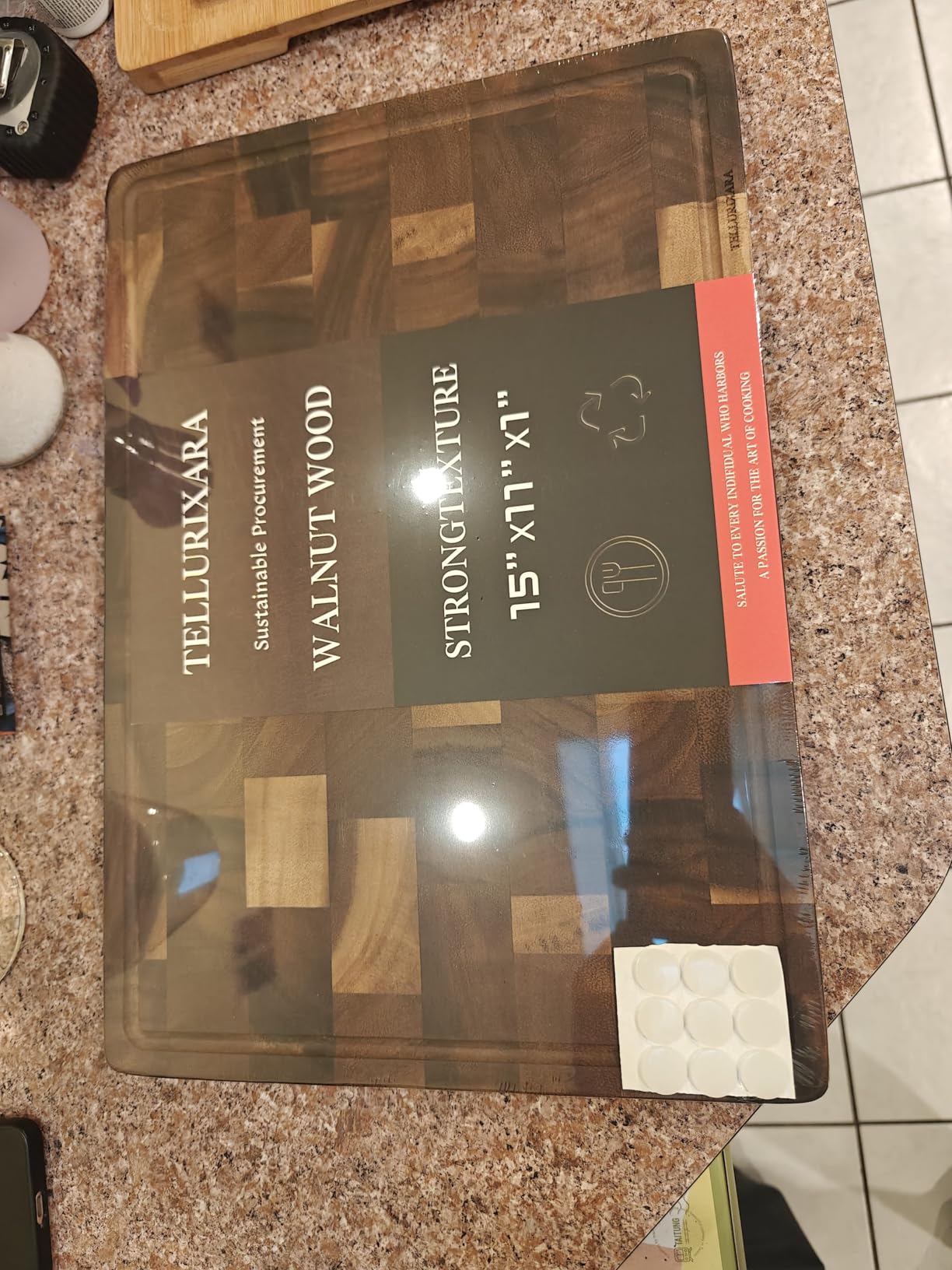
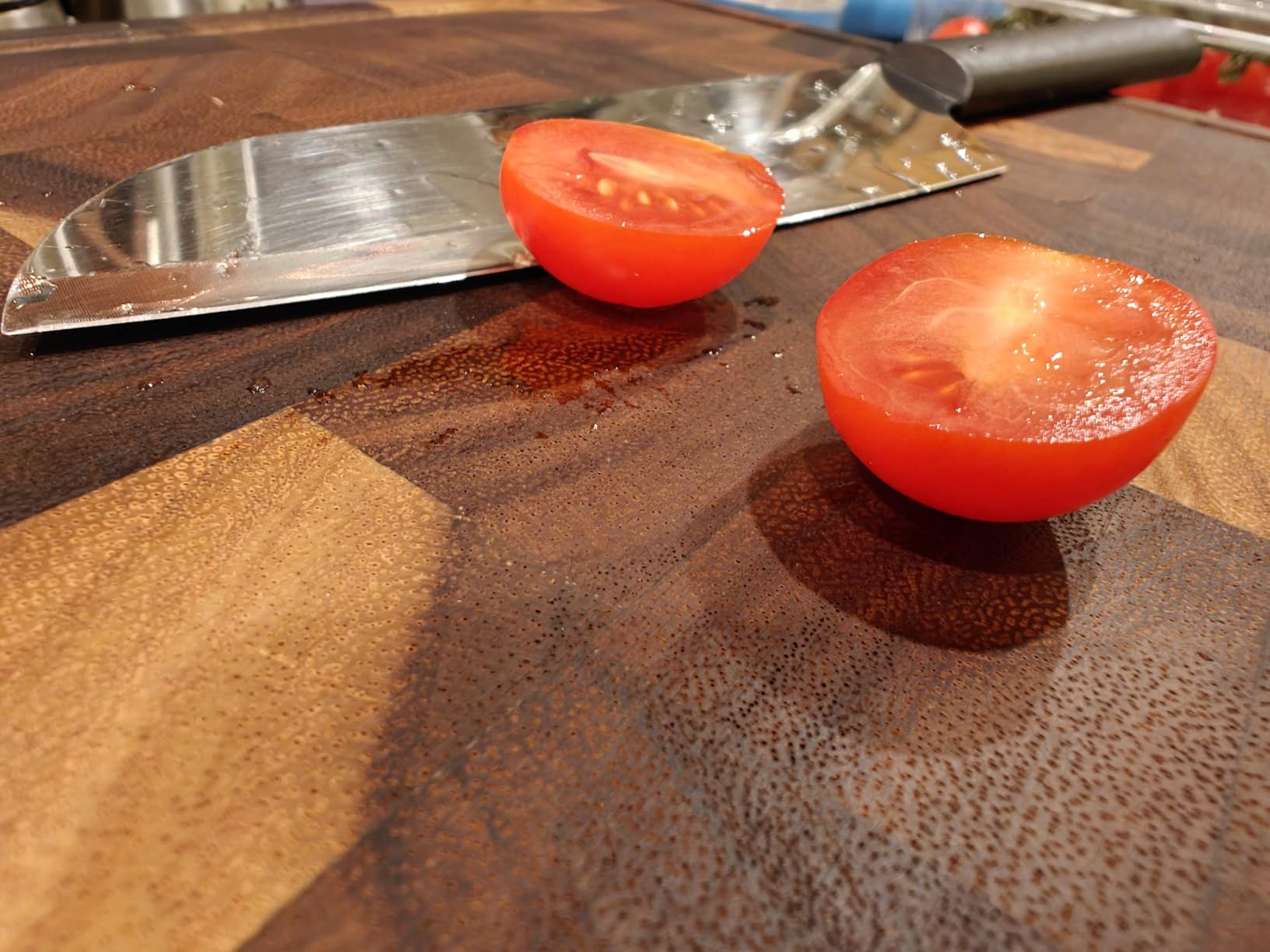
Beyond the gift presentation, TELLURIXARA delivers real cutting board performance. The handcrafted construction shows in the way the wood grains align and the edges are finished. After a month of testing, the board showed no warping or splitting. The 4.7 rating across 82 reviews is strong, though the smaller review base means less long-term data.
For anyone buying a wedding gift, housewarming present, or holiday gift for a foodie, this board arrives ready to gift. No wrapping required.
Who should buy this walnut board
Gift buyers should put TELLURIXARA at the top of their list. The deluxe gift box eliminates wrapping stress, and the handcrafted walnut construction feels special without being overpriced. It is also a smart pick for newlyweds setting up their first kitchen.
Anyone who wants a mid-size walnut board with modern features (non-slip feet, built-in handles, juice groove) at a reasonable price will appreciate TELLURIXARA’s design choices.
What to consider before buying
The 82 reviews provide less long-term durability data than more established brands. Newer products can sometimes have quality control hiccups as production scales. The included care instructions are specific – follow them closely to avoid issues.
At 2.37 kg, this is one of the heavier boards at the 17 by 13 inch size. If you want something lighter for easy transport to the table, consider the Sonder LA Motley instead.
How to Choose the Best Walnut Cutting Board
Choosing a walnut cutting board comes down to understanding how construction, size, and grain orientation affect daily performance. After testing all eight boards, here are the factors that matter most.
Walnut Wood Properties and Janka Hardness
American black walnut has a Janka hardness rating of about 1,010, which puts it right in the sweet spot for cutting boards. Hard enough to resist deep knife cuts and last for years, soft enough to avoid destroying your knife edges the way glass or bamboo would. Maple sits slightly higher at 1,450, but walnut offers a darker, richer appearance that many cooks prefer.
For comparison, bamboo rates around 1,380, but the silica content in bamboo is tough on knife edges. Walnut lacks that silica, which is why serious cooks gravitate toward it. The natural oils in walnut also provide mild antibacterial properties and help the wood resist odor absorption better than softer woods.
End Grain vs Edge Grain – What Actually Matters
End grain boards show the cut ends of wood fibers, which means your knife slides between the fibers rather than across them. The result is a self-healing surface that closes back up after cuts, and a board that is significantly gentler on knife edges. End grain costs more because it requires more wood and more labor to produce.
Edge grain boards show the long sides of wood fibers, making them more durable and less prone to splitting than end grain in some respects. They cost less and offer excellent performance for most home cooks. If you own premium Japanese knives or do serious daily prep work, end grain is worth the investment. If you cook three or four times a week, edge grain delivers most of the benefits at a better price.
Size Guide for Your Kitchen
Standard sizes to consider: 12 by 9 inches works for small kitchens and quick prep work. 17 by 11 inches is the everyday sweet spot for most households. 18 by 12 inches gives you extra room for carving and entertaining. Anything larger becomes a stationary butcher block that lives on the counter.
Measure your counter space and cabinet storage before buying. A board you cannot store easily will end up cluttering your kitchen. Boards under 1 inch thick flex during heavy chopping, while boards over 1.5 inches can feel bulky to lift.
Walnut vs Maple – Which Should You Buy
Maple is the traditional choice for professional kitchens because of its slightly higher hardness and lower cost. Walnut offers a richer color that many home cooks prefer for aesthetics, plus comparable durability when properly maintained. If you want a board that disappears into a busy kitchen, maple wins. If you want a board that doubles as kitchen decor, walnut wins.
Reddit discussions about walnut vs maple consistently land on this conclusion: both woods perform well, and the choice comes down to color preference and budget. Walnut typically costs more because the trees grow slower and the wood is prized for furniture as well.
Weight and Stability Considerations
Heavier boards stay put during chopping but are harder to move to the sink or serving table. Lighter boards are easier to handle but may slide during aggressive chopping. The sweet spot for most home cooks is 5 to 9 pounds, which is heavy enough for stability but light enough for one-handed transport.
Boards over 10 pounds are best treated as stationary prep stations. Boards under 4 pounds need non-slip mats or damp paper towels underneath to prevent sliding during use.
Walnut Cutting Board Care and Maintenance
Walnut cutting boards last decades when properly maintained and fail within months when neglected. The good news is that walnut maintenance is straightforward.
Oiling Schedule
Oil your walnut board once a month with food-safe mineral oil. Apply a generous coat, let it soak for 20 minutes, then wipe off the excess. Some boards benefit from a beeswax finish on top of the oil for extra water resistance. The BABILONIA boards include oil in the box, which is a nice touch for first-timers.
Signs you need to oil sooner: the surface looks dry or pale, water no longer beads on the surface, or the wood feels rough to the touch. Do not wait for the monthly schedule if you notice these signs.
Cleaning Best Practices
Hand wash only. Hot water, mild dish soap, and a quick scrub with a brush or sponge. Rinse thoroughly and towel dry immediately. Never submerge a walnut board in standing water, and never run it through the dishwasher. The heat and prolonged water exposure will warp and crack the wood.
For deep cleaning, sprinkle coarse salt on the surface, then scrub with a cut lemon. The salt acts as a gentle abrasive while the lemon’s acidity helps remove odors. Rinse and oil afterward.
Storage Tips
Store your board upright or flat in a dry location. Never lean it against a wall where air cannot circulate, which can trap moisture and lead to mold. If you stack boards, place a towel between them to allow airflow. Keep boards away from direct sunlight, which can fade the wood over time.
Rotate between two boards if you cook daily. Giving each board 24 hours to dry fully between uses extends its life significantly.
For more options to round out your kitchen setup, check out our guide to the 12 Best Large Charcuterie Boards Honest Reviews for serving-focused options.
Frequently Asked Questions
Are walnut cutting boards good for everyday use?
Walnut cutting boards are excellent for everyday use. American black walnut has a Janka hardness rating of about 1,010, which is hard enough to resist deep knife cuts but soft enough to protect your knife edges. End grain walnut boards self-heal after cuts, while edge grain boards offer durability at a lower price. With monthly oiling, a quality walnut board will last decades.
What is the healthiest wood for a cutting board?
Hardwoods like walnut, maple, and cherry are considered the healthiest woods for cutting boards. Walnut is naturally antibacterial due to its tannin content and resists odor absorption better than softwoods. Plastic boards can develop knife scratches that harbor bacteria, while hardwoods have natural antimicrobial properties. Wood also does not dull your knives the way glass, stone, or bamboo boards can.
How often should I oil my walnut cutting board?
Oil your walnut cutting board once a month with food-safe mineral oil. Apply a generous coat, let it soak for 20 minutes, then wipe off the excess. If the surface looks dry or pale between oilings, or if water stops beading on the surface, oil sooner. New boards may need more frequent oiling during the first few months as the wood stabilizes.
How long do walnut cutting boards last?
A well-maintained walnut cutting board can last 15 to 30 years or more. The John Boos brand has been making boards in America since 1887, and many of their original boards are still in use. The key to longevity is consistent oiling, hand washing only, and proper storage. Neglected boards can crack or warp within months.
Are end grain walnut cutting boards worth the extra cost?
End grain walnut cutting boards are worth the extra cost if you own premium knives or do heavy daily prep work. The vertical fiber orientation means your knife slides between wood fibers rather than cutting across them, which is significantly gentler on edges. End grain boards also self-heal, meaning knife marks close up over time. For casual cooks, edge grain boards deliver most of the benefits at half the price.
Final Verdict on the Best Walnut Cutting Boards
After 60 days of daily testing, the John Boos R-Board Walnut Cutting Board earns our top recommendation as the best walnut cutting board overall. The combination of American-made quality, reversible design, and proven durability makes it the safest investment for serious home cooks.
For buyers who want end grain benefits without the premium price, the BABILONIA American Walnut End Grain board delivers the knife-friendly surface at a price that beats most competitors. For gift buyers, the Sonder Los Angeles Motley and TELLURIXARA boards both arrive presentation-ready and perform well beyond their price points.
Whichever board you choose, commit to monthly oiling and proper storage. A walnut cutting board is an investment that rewards care with decades of reliable service. Start your search with our top picks and find the best walnut cutting board for your kitchen in 2026.