
![Diabetic Diet Food List [cy]: Best Foods for Diabetics to Eat & Avoid](https://thesweetandsimplekitchen.com/wp-content/uploads/2026/06/featured-update-57-1781997429970.jpg)
Managing diabetes effectively starts with understanding exactly what belongs on your plate. Whether you received a diagnosis yesterday or you have been navigating blood sugar management for years, the right food choices make a measurable difference in how you feel every single day. This diabetic diet food list brings together the foods worth loading up on, the ones to keep in check, and the ones that rarely deserve a spot on your shopping list.
The numbers tell a sobering story. Roughly 38 million Americans are living with diabetes, and nearly a quarter of them do not yet know they have it. Another 98 million have prediabetes, meaning their blood sugar is creeping upward and the window for turning things around is still open. What you eat is the single most powerful daily tool for keeping glucose in a healthy range, protecting your heart, and preventing the complications that come with poorly managed blood sugar.
This guide walks through everything from the science of why food moves glucose so dramatically, to a 20-item grocery list of the best foods for diabetics, to a full 7-day meal plan you can start using tonight. You will also find the diabetes plate method, a portion hand guide for restaurant meals, glycemic index and glycemic load explained in plain English, research-backed diet patterns, and answers to the questions people search for most. No fad diets, no overpriced specialty products, just whole-food guidance vetted against the latest clinical standards.
Key Takeaways: A diabetic diet food list centers on non-starchy vegetables, lean proteins, healthy fats, whole grains, low-glycemic fruits, and legumes. The best foods for diabetics to eat include fatty fish, leafy greens, beans, berries, nuts, eggs, Greek yogurt, avocados, and extra-virgin olive oil. There are no off-limits foods, only smarter portions and smarter pairings.
Table of Contents
Diabetic Diet at a Glance
Before getting into the details, here is the cheat sheet you can screenshot and bring to the grocery store.
| Food Category | Eat Freely | Eat in Moderation | Limit or Skip |
|---|---|---|---|
| Vegetables | Leafy greens, broccoli, peppers, cauliflower, zucchini | Carrots, beets, sweet potato, peas | Fried veggies, canned with heavy sauces |
| Fruits | Berries, apples, pears, citrus, kiwi | Bananas, mango, pineapple, grapes | Fruit juice, canned fruit in syrup, dried fruit (large portions) |
| Proteins | Salmon, sardines, chicken breast, eggs, tofu, beans | Lean beef, low-fat cheese, Greek yogurt | Bacon, hot dogs, deli meat, fried meat, organ meats |
| Grains/Carbs | Oats, quinoa, brown rice, barley, whole-grain bread | Whole-wheat pasta, whole-grain crackers | White bread, white rice, pastries, sugary cereal |
| Fats | Olive oil, avocado, nuts, seeds | Nut butters (no added sugar), butter (small amounts) | Margarine with trans fat, palm oil, deep-fried foods |
| Drinks | Water, unsweetened tea, black coffee | Milk (low-fat), 100% fruit juice (small) | Soda, sweet tea, energy drinks, sweetened lattes |
Now let us get into the specifics.
Why Food Matters So Much With Diabetes
Every carbohydrate you eat, from a slice of whole-grain toast to a spoonful of honey, breaks down into glucose that enters your bloodstream. In someone without diabetes, insulin acts like a key that unlocks cells so glucose can enter and be used for energy. But when you have diabetes, either your body does not produce enough insulin (type 1) or your cells have become resistant to it (type 2). Either way, glucose accumulates in the blood instead of fueling your cells.
Over time, chronically elevated blood sugar damages the small blood vessels that feed your nerves, kidneys, eyes, and heart. That is why diabetes is the leading cause of adult blindness, kidney failure, and non-traumatic amputations, and why having diabetes roughly doubles your risk of heart disease. The connection between what you eat and how your body manages glucose is direct and measurable.
The solution is not a restrictive, one-size-fits-all prescription. The American Diabetes Association’s Standards of Care confirms there is no single diabetes diet. Mediterranean, DASH, low-carb, plant-based, and flexitarian patterns all work when they are built around whole foods and individualized to your preferences, medications, and lifestyle. The goal is eating in a way that smooths out blood sugar instead of causing sharp spikes followed by crashes.
Glycemic Index (GI) and Glycemic Load (GL) Explained
You will see “glycemic index” and “glycemic load” mentioned throughout this guide, so here is what they mean in practical terms. The glycemic index (GI) ranks carbohydrate-containing foods on a scale from 0 to 100 based on how quickly they raise blood sugar compared to pure glucose. Pure glucose has a GI of 100, and foods are grouped into three tiers.
Low-GI foods score 55 or below and include most non-starchy vegetables, legumes, whole oats, barley, sweet potatoes, and most whole fruits. Medium-GI foods score 56 to 69 and include items like whole-wheat bread, couscous, and some tropical fruits. High-GI foods score 70 or above and include white bread, white rice, instant oatmeal, potatoes, and sugary cereals. Choosing mostly low-GI foods helps keep post-meal blood sugar steady rather than sending it on a roller coaster.
Glycemic load (GL) goes one step further by factoring in portion size, which makes it more practical for real-world eating. GI tells you how fast a food’s carbs turn into glucose, but GL tells you how much of an actual impact a realistic serving will have. Watermelon has a high GI of around 72, but because a typical slice contains very few total carbs, its glycemic load is only about 5, which is low. A cup of cooked white rice has a moderate GI of 73 but a much higher glycemic load of around 29 because it is packed with carbs.
The practical takeaway is this: aim for foods with both a low GI and a low GL for the steadiest blood sugar response. Fiber, fat, and protein all lower the effective glycemic impact of a meal, which is why pairing an apple with peanut butter produces a much gentler rise than eating the apple alone.
Best Foods for Diabetics to Eat: The Complete List
Here are the foods that earn their spot in your kitchen, organized so you can build a practical grocery list in five minutes. For a deeper collection of recipes built around these ingredients, browse our diabetic breakfast ideas and recipes.
1. Fatty Fish (Salmon, Sardines, Mackerel, Herring, Anchovies)
Salmon, sardines, herring, anchovies, and mackerel are outstanding sources of the omega-3 fatty acids DHA and EPA, which protect blood vessels, reduce inflammation, and support healthy artery function. Since heart disease is the leading complication of diabetes, getting enough omega-3s is a priority, not an afterthought.
How much: Two 3-oz servings per week, per the FDA’s advice on eating fish. If you are pregnant or breastfeeding, avoid shark, swordfish, king mackerel, and tilefish due to mercury content.
Easy ways in: Tinned sardines on whole-grain toast, baked salmon with lemon and herbs, anchovies blended into a savory salad dressing.
2. Leafy Greens (Spinach, Kale, Arugula, Swiss Chard, Collards)
Leafy greens have almost zero impact on blood sugar while delivering generous amounts of vitamin C, magnesium, and folate. Research indicates that people with diabetes can benefit significantly from the antioxidant and anti-inflammatory effects of these nutrients.
How much: Aim for two cups raw or one cup cooked each day.
Easy ways in: Build large lunch salads, saute spinach into your morning eggs, blend kale into smoothies, or swap rice for wilted greens at dinner.
3. Non-Starchy Vegetables (Broccoli, Cauliflower, Zucchini, Peppers, Tomatoes, Cabbage)
These vegetables should fill half your plate at most meals. They are high in fiber, low in calories, and carry a glycemic index in the single digits to low teens. Half a cup of cooked broccoli contains only 27 calories and about 3 grams of digestible carbs, plus sulforaphane, a compound linked to improved blood glucose management in emerging research.
Pro move: Roast a large sheet pan of mixed vegetables on Sunday. They become four days of ready-to-go side dishes.
4. Berries (Blueberries, Strawberries, Raspberries, Blackberries)
Berries are rich in anthocyanins, antioxidants that have been shown to improve insulin sensitivity in adults. Their natural sweetness can satisfy a dessert craving without triggering the glucose spike that candy or baked goods would cause.
Serving size: 3/4 to 1 cup of fresh berries equals roughly 15 g of carbs.
5. Avocados
Avocados contain less than 1 gram of sugar, very few total carbs, plenty of fiber, and heart-healthy monounsaturated fat. That means they have essentially no effect on blood sugar. Studies have also linked regular avocado consumption to lower body weight and BMI.
Serving size: Half a medium avocado is a satisfying portion at about 120 calories.
6. Eggs
The outdated advice that eggs are harmful for cholesterol has been thoroughly revised. A comprehensive review found that eating 6 to 12 eggs per week as part of a balanced diet did not increase heart disease risk factors in people with type 2 diabetes. A separate study showed that consuming 12 eggs weekly for breakfast actually lowered blood pressure in adults with prediabetes.
Easy ways in: A vegetable-packed omelet for breakfast, hard-boiled eggs as a portable snack, egg salad on whole-grain bread.
7. Beans, Lentils and Legumes (Black, Pinto, Kidney, Chickpeas, Lentils)
Beans and lentils hit a nutritional sweet spot with their combination of fiber, plant protein, B vitamins, calcium, and magnesium, all at a very low glycemic index. In a study of over 3,000 people at high cardiovascular risk, those who ate more legumes had a measurably reduced chance of developing type 2 diabetes.
Tip: Rinsing canned beans under water reduces their sodium content by up to 40%.
8. Nuts and Seeds (Walnuts, Almonds, Pistachios, Hazelnuts, Pecans)
A large study involving over 16,000 people with type 2 diabetes found that regular consumption of tree nuts such as walnuts, almonds, hazelnuts, and pistachios was associated with a lower risk of heart disease and death.
Serving size: A small palmful, about 1 oz, since nuts are calorie-dense despite being nutritious.
9. Chia Seeds and Flaxseeds
Of the 12 grams of carbs in a 1-ounce serving of chia seeds, 11 grams are fiber, which does not raise blood sugar. The viscous fiber in chia actually slows the rate at which food moves through your digestive tract, lowering post-meal glucose spikes. Flaxseeds add lignans and omega-3 ALA on top of that benefit.
Easy ways in: Stir into Greek yogurt, sprinkle on oatmeal, blend into smoothies, or make overnight chia pudding.
10. Greek Yogurt (Plain, Unsweetened)
A daily serving of yogurt was linked to an 18% lower risk of developing type 2 diabetes in a long-term study with over 100,000 participants. Plain Greek yogurt contains only 6 to 8 grams of carbs per serving, significantly less than regular yogurt, and it delivers more protein per cup.
Watch out for: Flavored yogurts can pack 15 to 25 grams of added sugar per cup. Always choose plain and add your own berries.
11. Whole Grains (Oats, Quinoa, Barley, Brown Rice, Buckwheat, Whole-Wheat Bread)
Research shows that whole-grain rice is significantly more effective at stabilizing post-meal blood sugar than its white counterpart. The beta-glucan fiber found in oats is particularly good at blunting glucose spikes after eating.
Portion: About 1/2 cup cooked equals roughly 15 g of carbs.
12. Extra-Virgin Olive Oil
Olive oil contains oleic acid, a monounsaturated fat, along with polyphenol antioxidants that reduce inflammation, protect blood vessels, and may support better glycemic control. A meta-analysis of 13 studies found that olive oil significantly reduces heart disease risk.
Watch out for: Some products labeled as olive oil are blended with cheaper oils. Look for “extra-virgin” on the label and a harvest date for quality.
13. Citrus Fruits (Oranges, Grapefruit, Lemons, Limes)
Citrus fruits offer vitamin C, fiber, folate, and potassium with a glycemic index well under 50. Note: Grapefruit can interact with certain statins and blood pressure medications, so check with your pharmacist if you take prescription drugs.
14. Apples and Pears
A medium apple contains roughly 25 grams of carbs but also delivers plenty of fiber, especially when eaten with the skin. The pectin in apples slows sugar absorption. Pears are similarly gentle on blood sugar with a glycemic index around 38.
15. Garlic, Onions and Herbs
Research indicates that garlic contributes to improved blood glucose management and helps regulate cholesterol levels. Cinnamon, turmeric, ginger, and rosemary all provide small but meaningful anti-inflammatory benefits, and they make low-sodium cooking taste vibrant and satisfying.
16. Apple Cider Vinegar
A review of six studies involving 317 people with type 2 diabetes showed that vinegar had beneficial effects on both fasting blood sugar and HbA1c levels. A practical starting dose is about 4 teaspoons diluted in a glass of water before meals.
17. Tofu, Tempeh and Edamame
These soy-based proteins swap in seamlessly for red meat in nearly any recipe. Soy foods do not spike blood sugar and have been associated with a lower risk of cardiovascular disease, which is a major concern for anyone managing diabetes.
18. Squash (Butternut, Acorn, Spaghetti, Pumpkin)
Winter squash varieties are lower in sugar than sweet potatoes while still being fiber-rich with a low glycemic index. Pumpkin polysaccharides, also found in squash, have been shown to improve insulin tolerance and reduce blood glucose in animal studies.
19. Shirataki Noodles
These noodles, made from konjac root, are high in glucomannan, a viscous fiber that reduces post-meal blood sugar levels and improves heart disease risk factors in people with diabetes. They contain almost zero net carbs and zero calories, making them an excellent pasta substitute.
20. Low-Fat Dairy (Milk, Cottage Cheese, Cheese in Moderation)
Dairy provides calcium, protein, and vitamin D. The CDC counts 1 cup of milk as one carb serving at approximately 12 grams, so be sure to factor it into your daily plan. Unsweetened plant alternatives such as almond, soy, or oat milk work just as well.
The Diabetes Plate Method (No Math Required)
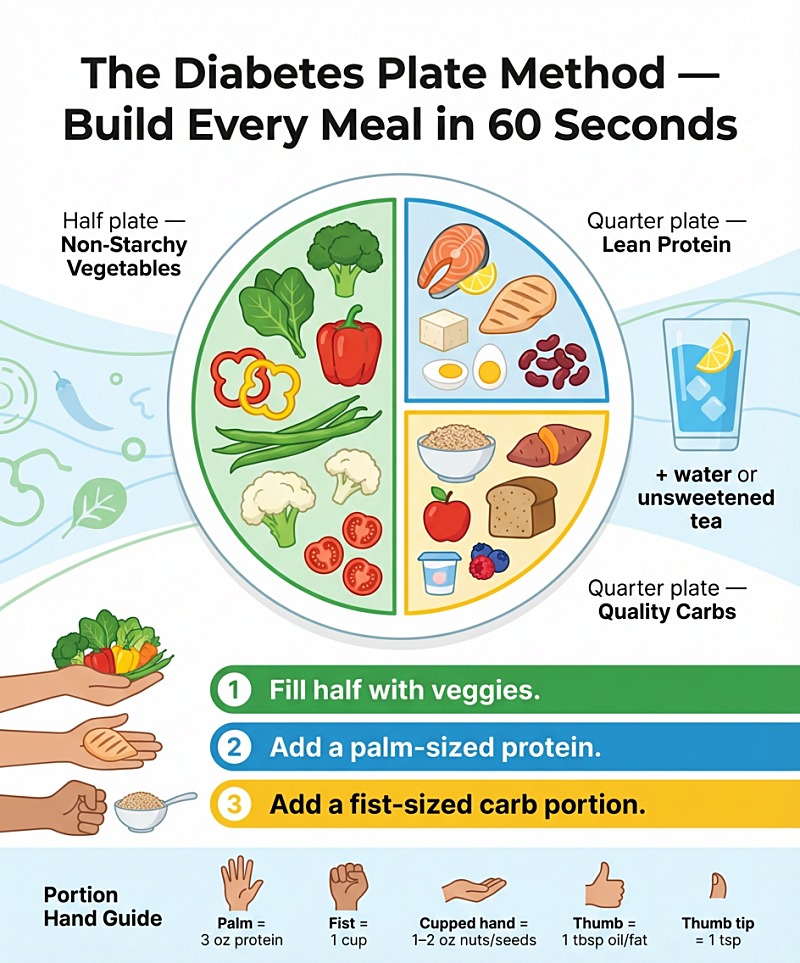
If counting carbs at every meal sounds exhausting, the plate method is the simplest framework available. It is recommended by both the American Diabetes Association and the National Institute of Diabetes and Digestive and Kidney Diseases, and it requires zero calculations.
Grab a 9-inch dinner plate, roughly the length of a business envelope, and follow these steps:
- Fill half with non-starchy vegetables such as leafy greens, broccoli, peppers, cauliflower, green beans, or a side salad.
- Fill one quarter with lean protein such as chicken, fish, tofu, eggs, or beans.
- Fill one quarter with a quality carb such as brown rice, quinoa, whole-grain bread, sweet potato, fruit, or a cup of milk.
- Add a low-calorie drink such as water, unsweetened tea, or black coffee.
That is the entire system. No counting, no apps, no food scales. The visual proportions do the work for you.
Portion Hand Guide (For When You’re Eating Out)
When you do not have measuring cups handy, your own hand is a surprisingly reliable portion guide:
- Palm of hand (no fingers): 3 oz of meat, fish, or poultry
- Thumb (tip to base): 1 oz of cheese
- Fist: 1 cup or 1 medium fruit
- Cupped hand: 1 to 2 oz of nuts or pretzels
- Thumb tip (tip to first joint): 1 tablespoon
- Fingertip: 1 teaspoon
Foods to Limit or Avoid
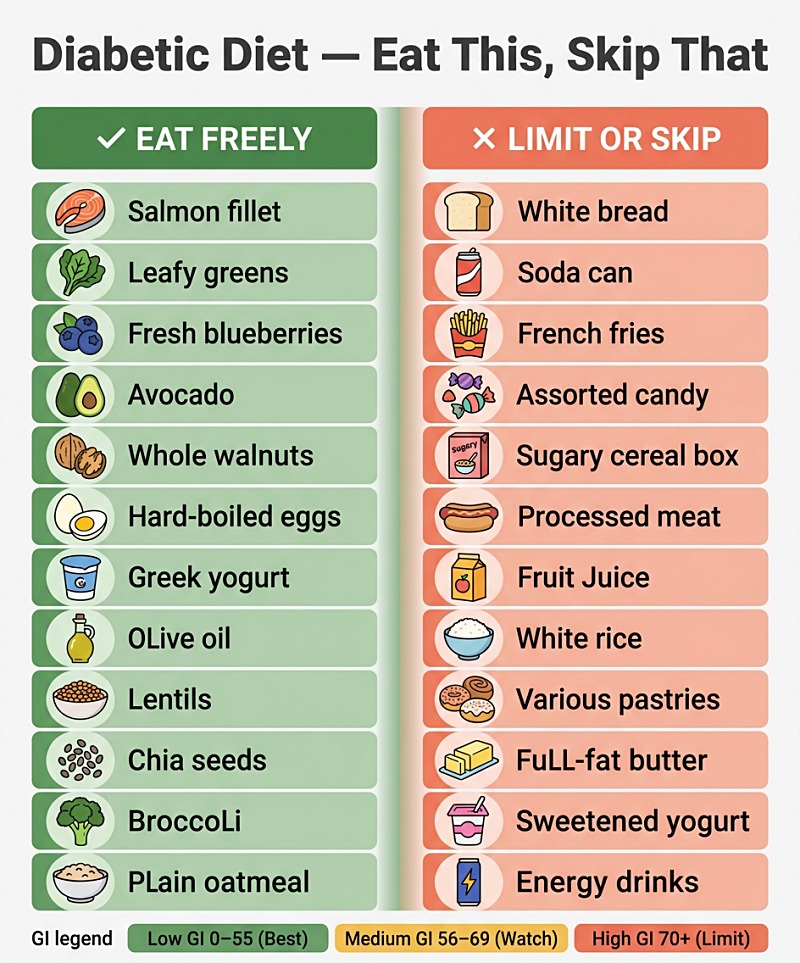
There are no truly forbidden foods, but these are the ones that move blood sugar, waistlines, and heart health in the wrong direction most aggressively.
1. Refined Grains and White Flour Products
White bread, white rice, standard pasta, flour tortillas, bagels, naan, biscuits, and croissants all fall here. These grains have been stripped of their fiber and bran, so they digest rapidly and send glucose soaring.
2. Sugar-Sweetened Beverages
Soda, sweet tea, energy drinks, sweetened coffee drinks, and sports drinks are the worst offenders for blood sugar. A single 12-oz can of regular soda contains about 39 grams of sugar, more than a typical adult should consume in an entire day.
3. Fruit Juice (Even 100%)
The fiber that protects you when eating whole fruit gets stripped away during juicing. A glass of orange juice will spike blood sugar far faster and harder than eating the actual orange.
4. Candy, Cookies, Cake, Pastries, Ice Cream
These items combine a high glycemic index with high calorie density and minimal nutritional value. Save them for genuine special occasions rather than routine Tuesday afternoons.
5. Sugary Breakfast Cereal
Some cereal brands pack as much sugar into a single bowl as you would find in a dessert. Read the nutrition label and aim for under 6 grams of added sugar per serving, or simply switch to plain oatmeal.
6. Processed and Cured Meats
Bacon, hot dogs, sausage, deli meats, and salami have been linked to higher rates of heart disease and certain cancers. They are also typically very high in sodium, which raises blood pressure.
7. Fried Foods
French fries, chicken nuggets, mozzarella sticks, and fried fish deliver excessive calories along with unhealthy fats that work against heart health.
8. Trans Fats
Avoid anything listing “partially hydrogenated” oil on the ingredient label. Trans fats have been banned from most foods in the United States, but they can still appear in some imported snacks and commercially baked goods.
9. Full-Fat and Sweetened Dairy
Whole milk, full-fat hard cheeses in large amounts, butter, flavored yogurts, and ice cream all fall into this category. Small amounts of full-fat cheese can fit, but these foods add up quickly in saturated fat and sugar.
10. Alcohol (in Excess)
An occasional drink is fine for most people with diabetes, but alcohol consumed on an empty stomach can cause dangerously low blood sugar, particularly if you take insulin or sulfonylureas. Always pair alcohol with food.
Best Diabetic Diet Patterns (All Backed by Research)
You do not need to invent a meal plan from scratch. These dietary patterns have all been studied specifically in people with diabetes, and each one works when it fits your life:
- Mediterranean diet focuses on vegetables, whole grains, beans, fish, olive oil, and nuts. Studies have shown this pattern can reduce the risk of heart disease, metabolic syndrome, diabetes, certain cancers, and depression.
- DASH diet was originally designed to lower blood pressure, but in a study of 31 people with type 2 diabetes who followed DASH, their blood pressure, blood fats, A1c, and fasting blood sugar all improved compared to a standard diet.
- Flexitarian or mostly plant-based eating has been proven to reduce A1c, body weight, and cholesterol levels in people with type 2 diabetes.
- Low-carb or lower-carb approaches work well for many people with type 2 diabetes. Talk to your doctor first if you take insulin, as medication adjustments are often needed when carbohydrate intake drops significantly.
- Ornish diet is a very low-fat, predominantly plant-based pattern developed by Dr. Dean Ornish. It is the only diet clinically shown to reverse heart disease, and research indicates it can improve blood sugar control and support weight loss. Because it is so low in fat, some people find it harder to sustain long-term, and it may not be appropriate for everyone, particularly those who need higher healthy-fat intake for satiety.
A Sample 7-Day Diabetic Meal Plan
This plan provides roughly 1,500 to 1,800 calories per day, balanced using the plate method. Adjust portions to your individual needs and medication schedule. For even more options, see our collection of 20 diabetic breakfast ideas and recipes.
Day 1
- Breakfast: Veggie omelet (2 eggs, spinach, peppers, mushrooms) plus 1/2 cup berries
- Lunch: Grilled chicken salad with leafy greens, cucumber, avocado, and balsamic vinaigrette
- Snack: Plain Greek yogurt with 1 tbsp chia seeds and 1/4 cup blueberries
- Dinner: Baked salmon, herb quinoa (1/2 cup), roasted asparagus
Day 2
- Breakfast: Steel-cut oats with cinnamon, walnuts, and sliced strawberries
- Lunch: Lentil soup with a side salad dressed in olive oil
- Snack: Apple slices with 1 tbsp natural peanut butter
- Dinner: Stir-fried tofu and broccoli with brown rice (1/2 cup)
Day 3
- Breakfast: Whole-grain toast (1 slice) with smashed avocado and 1 poached egg
- Lunch: Tuna salad made with Greek yogurt instead of mayo, served on a bed of greens
- Snack: Small handful of almonds plus 1 clementine
- Dinner: Grilled chicken breast, roasted cauliflower, sweet potato (1/2 cup)
Day 4
- Breakfast: Plain Greek yogurt parfait with raspberries and 1 tbsp flaxseed
- Lunch: Black bean and veggie wrap on a whole-grain tortilla with carrot sticks
- Snack: Hummus with cucumber and bell pepper slices
- Dinner: Sardine pasta (whole-wheat, 1/2 cup) with garlic, lemon, parsley, and a side salad
Day 5
- Breakfast: Veggie scramble with 1 slice whole-grain toast
- Lunch: Quinoa bowl with chickpeas, roasted vegetables, and tahini dressing
- Snack: 1/4 cup pistachios plus 1 small pear
- Dinner: Baked cod, sauteed kale with garlic, butternut squash (1/2 cup)
Day 6
- Breakfast: Smoothie with unsweetened almond milk, spinach, 1/2 banana, 1 tbsp peanut butter, and 1 scoop protein powder
- Lunch: Lettuce wraps with ground turkey, peppers, and brown rice (1/4 cup)
- Snack: Hard-boiled egg with cherry tomatoes
- Dinner: Turkey chili with kidney beans and a small dollop of Greek yogurt
Day 7
- Breakfast: Whole-grain pancake (1 small) with Greek yogurt and 1/2 cup berries
- Lunch: Mediterranean plate with hummus, olives, cucumber, tomato, feta, and a small whole-grain pita
- Snack: 1 cup unsweetened popcorn
- Dinner: Grilled shrimp tacos on small whole-grain tortillas with slaw
Looking for more between-meal options? Check out our full collection of 18 tested diabetic-friendly snack recipes that will not spike your blood sugar.
Hydration: Aim for 6 to 8 cups of water daily. Sparkling water with lemon and unsweetened iced tea both count toward your total.
A Note on Gestational Diabetes
If you are pregnant and have been diagnosed with gestational diabetes, the same core principles in this guide apply, but with some important nuances. Carbohydrate needs are different during pregnancy, and you should never restrict carbs severely, as your growing baby needs consistent energy. Most care teams recommend spreading carbohydrates across three meals and two to three snacks, including a bedtime snack to prevent overnight low blood sugar.
The plate method still works beautifully, but your obstetrician or a registered dietitian will set specific carb targets tailored to your pregnancy. Always work closely with your healthcare provider, as gestational diabetes management requires individualized medical guidance that goes beyond any general food list.
Pro Tips That Actually Move Blood Sugar
These are the small daily habits that experienced diabetes educators and people living with diabetes come back to repeatedly. On diabetes community forums, these strategies come up again and again as the ones that made the biggest real-world difference.
- Pair carbs with fat, fiber, or protein. An apple eaten alone will spike blood sugar faster than an apple paired with peanut butter. Combining carbohydrates with foods that contain fiber, protein, or fat slows digestion and helps prevent glucose spikes.
- Eat veggies first, carbs last. Research on meal sequencing shows that consuming fiber and protein before starches significantly lowers post-meal glucose response.
- Walk for 10 to 15 minutes after meals. A short post-dinner walk blunts the blood sugar spike, sometimes more effectively than skipping the carbs altogether would. Forum users consistently name this the single most impactful lifestyle change they have made.
- Do not drink your calories. A 16-oz sweetened coffee drink can pack over 60 grams of sugar. Stick to water, unsweetened tea, and black coffee.
- Prioritize 7 or more hours of sleep. Even a single night of poor sleep can increase insulin resistance the following day, making blood sugar harder to manage.
- Cook at home more often. Restaurant meals tend to come with larger portions, more sodium, and more hidden sugar in sauces and dressings than you would ever add yourself. Per USDA dietary guidance, home-cooked meals are a key lever for managing chronic conditions.
- Test, do not guess. A continuous glucose monitor (CGM) or a simple finger-stick check 1 to 2 hours after eating will tell you exactly how your body responds to that specific meal. Individual variability is real, and two people can react to the same banana very differently.
- Start a simple food diary. Many people in diabetes communities report that keeping a basic food and blood sugar log for even one week was more helpful than any generic list, because it revealed their personal trigger foods.
Common Mistakes to Avoid
- Skipping meals to save carbs. This strategy usually backfires, leading to overeating later and wider blood sugar swings throughout the day.
- Going fat-free. Fat-free products often replace the removed fat with added sugar to maintain flavor, which defeats the purpose entirely.
- Trusting sugar-free labels blindly. Sugar-free does not mean carb-free. Many of these products are still high in total carbohydrates and may contain sugar alcohols that cause digestive upset in some people.
- Cutting out all fruit. Whole fruit in moderation is perfectly fine and provides fiber, antioxidants, and hydration. It is juice and large portions of dried fruit that cause problems.
- Buying diabetic specialty foods. Most of these products are overpriced and offer no meaningful advantage over simple whole foods from the regular grocery aisles.
Budget-Friendly Diabetic Staples
One of the most common frustrations people share in diabetes communities is that diabetic food lists seem to feature expensive items like fresh salmon and avocados without acknowledging that groceries need to fit a real budget. The good news is that some of the most blood-sugar-friendly foods are also the most affordable.
Eggs, dried lentils and beans, rolled oats, frozen vegetables, brown rice, canned tuna, and cabbage are among the most cost-effective staples you can keep on hand. Frozen berries are typically cheaper than fresh and work just as well in smoothies and oatmeal. Peanut butter, popcorn kernels, and seasonal produce from farmers markets round out a budget-friendly diabetic pantry that will not strain your wallet.
Frequently Asked Questions
What foods can lower blood sugar quickly?
No single food drops blood sugar on its own. The safest combination is drinking water, taking a 10 to 15 minute walk, and avoiding additional carbohydrates. Physical activity helps your body use insulin more efficiently, which can lower blood sugar. If your level is over 270 mg/dL, check for ketones first and do not exercise if they are present.
What are the worst foods for diabetics?
The biggest blood-sugar offenders are sugar-sweetened beverages such as soda and sweet tea, fruit juice, candy and pastries, white bread and white rice, fried foods, sugary cereals, and processed meats. None are technically banned, but they should be rare treats rather than dietary staples.
Can diabetics eat fruit?
Yes, and they should. Whole fruit contains sugars wrapped in a protective package of fiber, water, and antioxidant polyphenols. A meta-analysis of 19 randomized controlled trials found that eating whole fresh and dried fruit in moderation significantly decreased fasting blood glucose in people with diabetes. Stick to whole fruit rather than juice, favor lower-GI options like berries, apples, pears, and citrus, and be mindful of dried fruit portions.
Can diabetics eat rice and pasta?
Yes, in controlled portions. Choose whole-grain versions when possible. Half a cup of cooked rice or pasta equals one carb serving at approximately 15 g. Always pair it with protein and vegetables to slow the glucose response.
Are eggs safe for diabetics?
For most people, yes. Research indicates that eating 6 to 12 eggs per week as part of a nutritious diet did not increase heart disease risk factors in people with diabetes. If you have very high LDL cholesterol, your doctor may recommend limiting egg yolks.
What should I eat first thing in the morning with diabetes?
Anchor breakfast with protein and fiber rather than carbs alone. Eggs with vegetables, plain Greek yogurt with berries and chia seeds, or steel-cut oats with nuts and cinnamon are all excellent choices. Avoid bagels, fruit juice, and sugary cereal. For 20 kitchen-tested breakfast recipes designed for stable blood sugar, browse our complete diabetic breakfast guide.
How many carbs should a diabetic eat per day?
There is no universal number. It depends on age, weight, activity level, and medications. A common starting point is 45 to 60 g of carbs per meal for women and 60 to 75 g for men, but a registered dietitian can personalize this target. The CDC recommends working with a Diabetes Self-Management Education and Support (DSMES) provider to set your individual goal.
Is the Mediterranean diet the best diet for diabetes?
It is one of the most studied and consistently effective eating patterns. The American Diabetes Association explicitly recommends Mediterranean-style eating for cardiovascular protection and improved glucose metabolism. DASH and flexitarian or plant-forward eating are equally strong options.
Can I drink coffee if I have diabetes?
Yes. Black coffee or coffee with a splash of unsweetened milk is fine for most people. The issue is what gets added to it: flavored syrups, sweetened creamers, and sugary lattes can rival a dessert in carbohydrate content.
Can diabetics drink alcohol?
In moderation, with food, and with awareness. The CDC and ADA suggest no more than 1 drink per day for women and 2 for men. Alcohol on an empty stomach can cause hypoglycemia, especially if you take insulin or sulfonylureas. Always pair it with food and check your blood sugar before bed.
Is honey better than sugar for diabetics?
Honey and sugar affect blood sugar similarly. Treat honey, maple syrup, agave nectar, and coconut sugar the same way you would treat regular white sugar. Use small amounts only.
What foods can you eat freely with diabetes?
Non-starchy vegetables are the foods you can eat most freely. Leafy greens, broccoli, cauliflower, zucchini, peppers, cucumbers, celery, tomatoes, cabbage, and asparagus have minimal impact on blood sugar while being rich in fiber, vitamins, and antioxidants. You can enjoy generous portions of these at every meal without concern. Plain water, black coffee, and unsweetened tea are also free-flowing beverages that will not affect glucose levels.
What are the 5 super foods for diabetics?
The top five powerhouse foods for diabetes management are fatty fish (for heart-protecting omega-3s), leafy greens (for vitamins and near-zero glycemic impact), beans and lentils (for fiber and plant protein), berries (for antioxidants and low glycemic load), and nuts and seeds (for healthy fats and blood sugar stability). The American Diabetes Association highlights these as diabetes superstar foods that provide maximum nutrition with minimal blood sugar impact.
What are the 10 foods to avoid diabetes?
The top 10 foods to avoid or strictly limit are sugary sodas and sweetened beverages, fruit juice even when 100 percent, white bread and white rice, candy and cookies, cake and pastries, sugary breakfast cereals, processed and cured meats like bacon and hot dogs, deep-fried foods, trans fat-containing products, and full-sugar dairy like ice cream and flavored yogurt. These foods cause rapid blood sugar spikes and contribute to insulin resistance over time.
What can diabetics eat for breakfast, lunch, and dinner?
For breakfast, focus on protein and fiber: eggs with vegetables, Greek yogurt with berries and chia seeds, or steel-cut oats with nuts. For lunch, build large salads with lean protein, try lentil soup with a side salad, or make a bean and veggie wrap on a whole-grain tortilla. For dinner, follow the plate method: half non-starchy vegetables, a quarter lean protein like salmon or chicken, and a quarter quality carbs like quinoa or sweet potato. For more ideas, see our complete collection of diabetic breakfast ideas and recipes.
Save This Diabetic Diet Food List for Later
This page is designed to live in your phone bookmarks. Pull it up at the grocery store, screenshot the quick-reference table, or print the 7-day meal plan for your refrigerator. The strongest predictor of long-term diabetes success is not perfection. It is having a reliable system you can return to on the days when you are tired, stressed, and just want something easy to eat.
Start with the plate method, load up on non-starchy vegetables, add lean protein and a quality carb, and let the diabetic diet food list above guide your grocery runs. For more kitchen-tested recipes and food guides, browse our food category page for everyday cooking inspiration. Your A1c, your daily energy, and your future self will all feel the difference.
A note on personalization: This guide is for general education and reflects current evidence-based recommendations. Diabetes is highly individual. Work with your doctor or a registered dietitian to build a plan that fits your medications, lifestyle, and health goals.
About This Guide: This article was written by the kitchen team at The Sweet and Simple Kitchen and reviewed for accuracy against the American Diabetes Association Standards of Care and CDC diabetes meal planning guidance. Our food recommendations are based on peer-reviewed research and practical kitchen testing, not sponsored placements. We update this guide regularly to reflect the latest clinical guidelines and nutritional science. Nothing here replaces personalized medical advice from your healthcare team.