
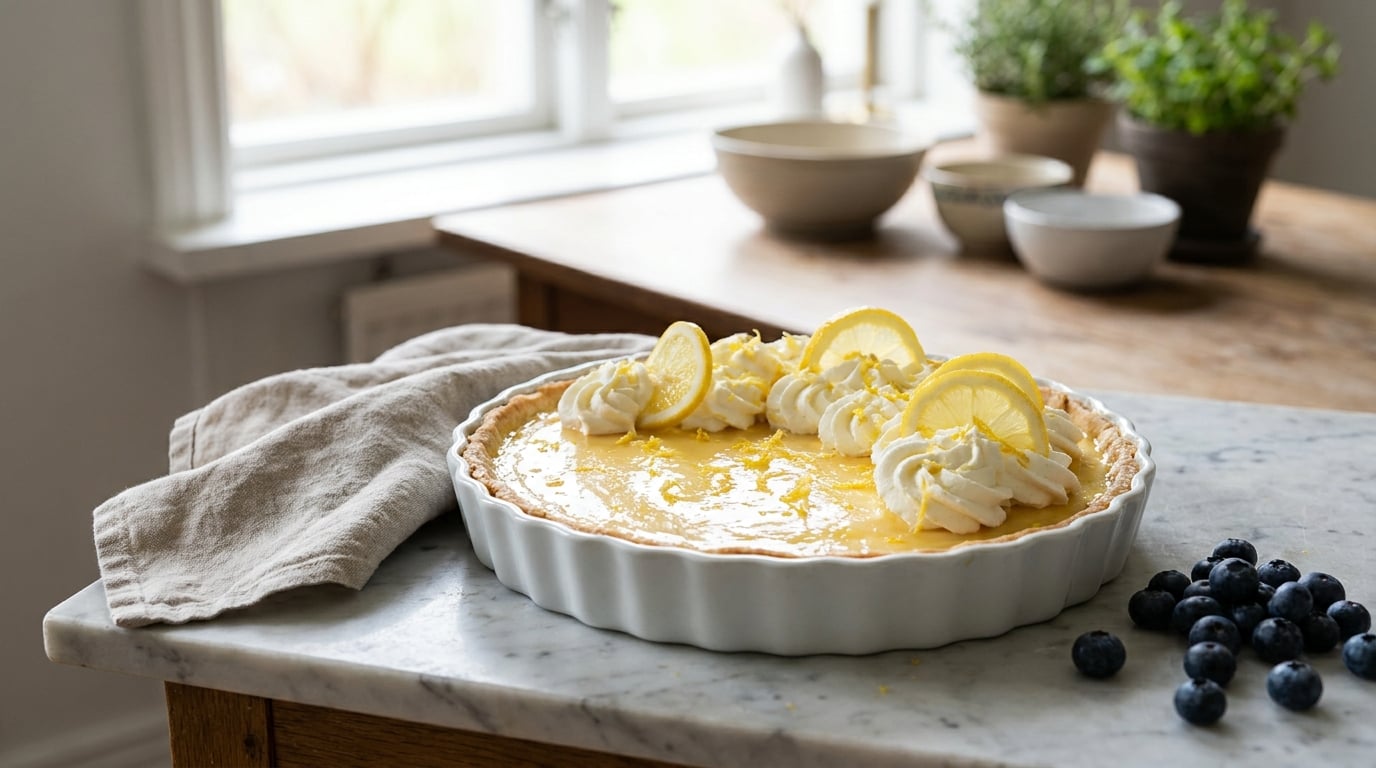
Easy lemon dessert recipes for spring should not require a piping bag, a springform pan, or a stand mixer. Every recipe below comes together with a bowl, a whisk, and about 45 minutes of actual work, and half of them never touch the oven at all. I made these across a spring of Sunday lunches and brunches, and each one survived a table of hungry people.
What they share is the balance thing that makes lemon food go wrong. The tartness gets rounded out by butter, cream, or cream cheese, so a second slice feels reasonable. Pick by the time you have: under 30 minutes for a weeknight, chilled and made ahead for a gathering, or a bake for Saturday.
Table of Contents
Easy Lemon Dessert Recipes for Spring at a Glance
Here is the short version before you commit to anything. Times include hands-on work, not chilling or baking, unless the line says so.
| Recipe | Total Time | Difficulty | Best For |
|---|---|---|---|
| 1. Easy Lemon Posset | 4 hr 25 min (mostly chill) | Easy | Elegant dinner puddings |
| 2. Lemon Mousse Cups | 45 min plus 3 hr chill | Easy | Individual brunch servings |
| 3. Lemon Lavender Shortbread Bars | 1 hr 15 min | Easy | Potluck and bake sale |
| 4. Fresh Lemon Tart | 1 hr 30 min | Medium | The centerpiece dessert |
| 5. Lemon Coconut Sheet Cake | 1 hr 25 min | Easy | Birthday and spring brunch |
| 6. Lemon Blueberry Trifle | 1 hr 10 min plus 4 hr chill | Easy | Make-ahead buffets |
| 7. Lemon Ricotta Cheesecake | 30 min plus 6 hr chill | Easy | No-bake showstopper |
| 8. Lemon Brownies | 50 min | Easy | Under 45 min, one pan |
| 9. Lemon Pavlova with Berries | 1 hr 40 min | Medium | Berry season gatherings |
| 10. Lemon Sugar Cookies | 1 hr 20 min | Easy | Cookie trays and gifting |
1. Easy Lemon Posset
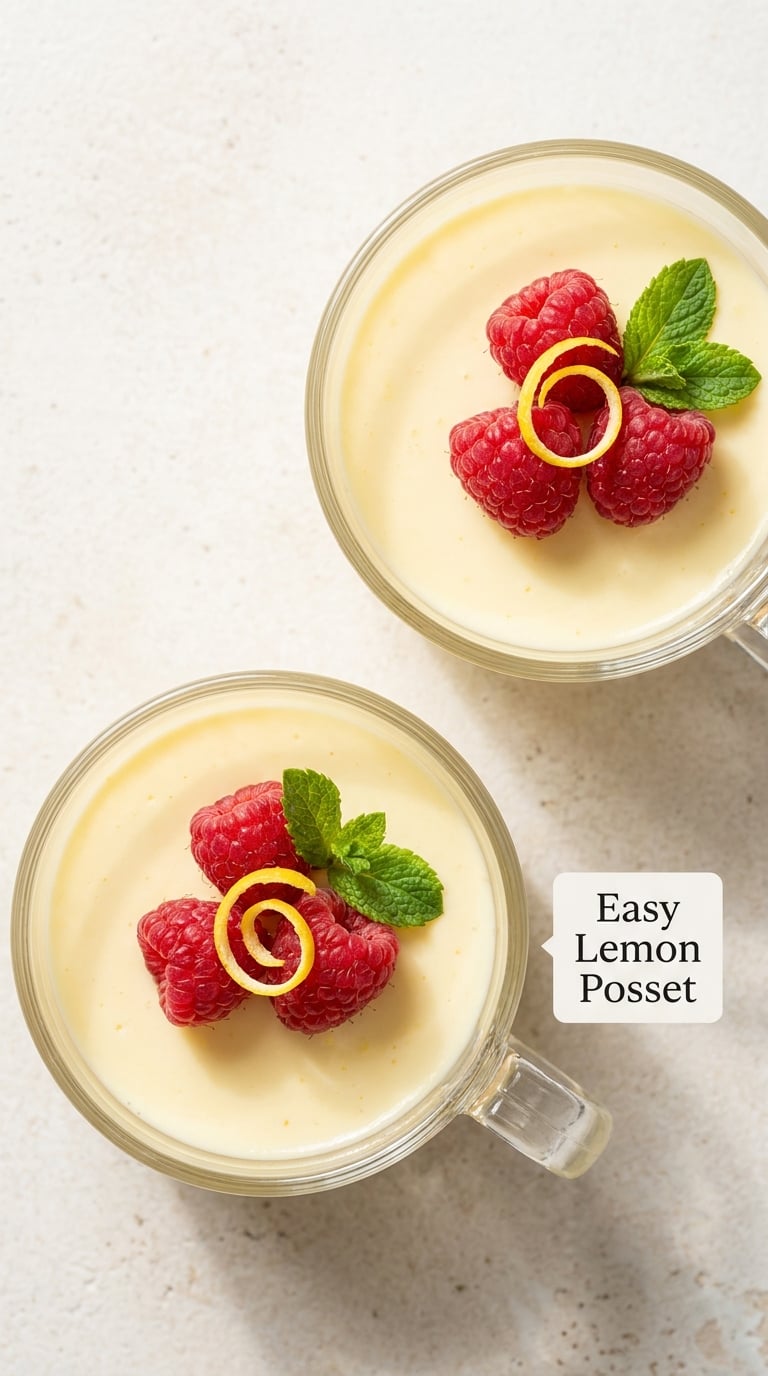
This is the dessert that made me stop worrying about lemon being too sharp. Cream plus egg plus sugar sets into something between a panna cotta and a very rich curd, and it holds a spoon upright without any gelatin at all.
Yield: 4 servings · Prep: 10 min · Cook: 12 min · Chill: 4 hr · Total: 4 hr 25 min · Difficulty: Easy
Ingredients
- 3 large pasteurized eggs
- 1 large pasteurized egg yolk
- 3/4 cup (150 g) granulated sugar
- 2 cups (480 ml) heavy cream
- 1 tsp vanilla extract
- Finely grated zest of 2 lemons
- 1/3 cup (80 ml) fresh lemon juice
- Raspberries and mint leaves, to finish
Instructions
- Zest both lemons into a small bowl, then juice them and set the juice aside.
- Whisk the eggs, yolk, and sugar in a medium saucepan until smooth and slightly pale.
- Pour in the cream and whisk again until no streaks of egg remain.
- Cook over medium-low heat, stirring constantly with a silicone spatula, until the mixture reaches 175°F to 180°F (79°C to 82°C) and coats the back of a spoon. Do not let it boil.
- Pour through a fine-mesh sieve into a jug, pressing gently on the solids for a silkier texture.
- Stir in the vanilla, lemon zest, and lemon juice.
- Divide among four small glasses and refrigerate for at least 4 hours, until set and no longer liquid around the edges.
Tip: The temperature matters more than the clock. Below 175°F (79°C) the set will be loose; above 180°F (82°C) the cream can tighten and the texture goes slightly rubbery.
Swap it: Use two Meyer lemons and one regular for a softer, floral finish, or go full lime with lime zest and juice for a key lime version that is much greener.
Storage: Keeps 3 days covered in the fridge. Make it up to two days ahead and add the raspberries at the last minute so they stay bright.
2. Lemon Mousse Cups
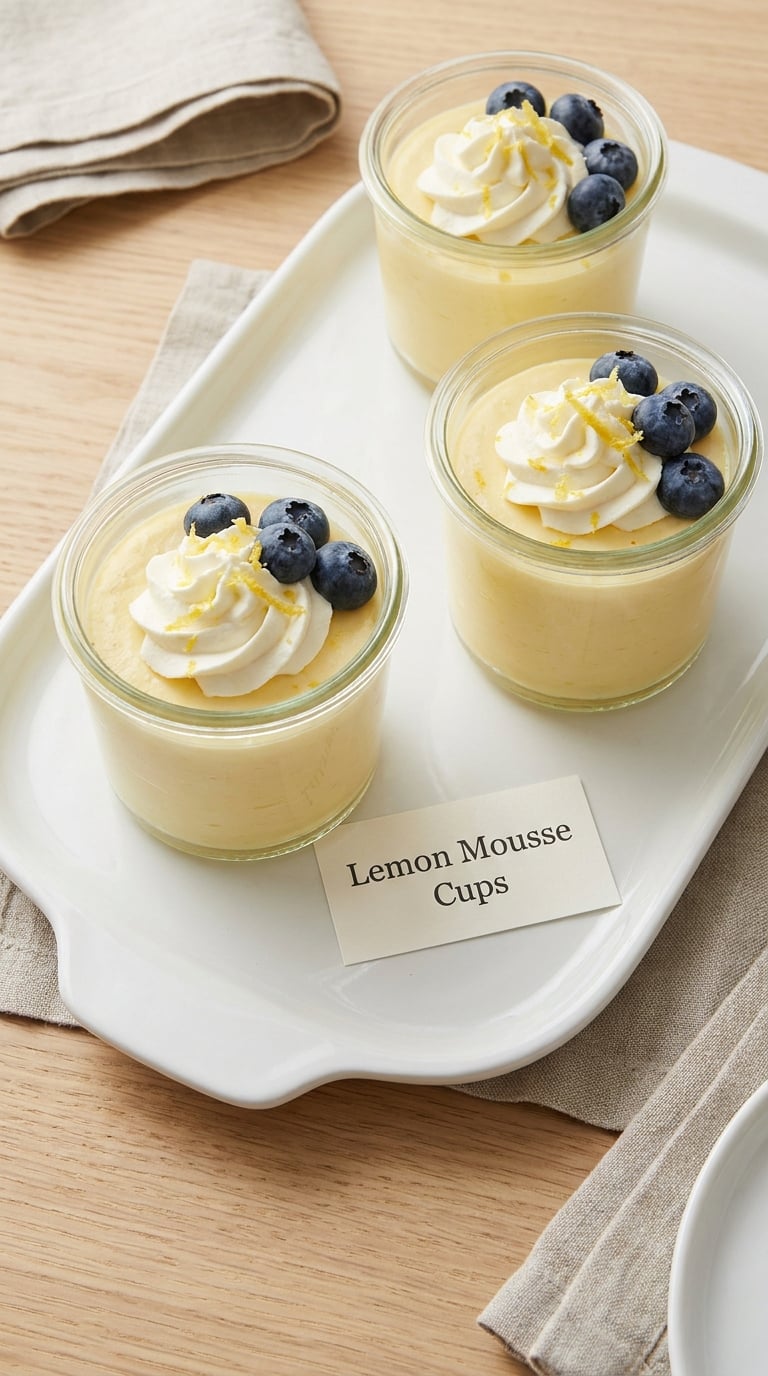
Individual cups mean no slicing, no smearing, and a portion size already decided for you. This one is light enough that people go back for a second, which is rare for mousse.
Yield: 6 cups · Prep: 20 min · Cook: 5 min · Chill: 3 hr · Total: 3 hr 30 min · Difficulty: Easy
Ingredients
- 2 tsp (7 g) powdered gelatin
- 1/4 cup (60 ml) water
- 3/4 cup (180 ml) fresh lemon juice
- 3/4 cup (150 g) granulated sugar, divided
- 3 large egg yolks
- Zest of 1 lemon
- 1.5 cups (360 ml) heavy cream, cold
- Fresh blueberries and extra zest, to finish
Instructions
- Sprinkle the gelatin over the water in a small bowl and let it sit for 1 minute, then heat in the microwave for 20 seconds until dissolved. Stir to be sure no grains remain.
- In a saucepan, whisk the lemon juice, 1/2 cup (100 g) of the sugar, the egg yolks, and lemon zest over medium heat until steaming and thick enough to coat a spoon.
- Pour in the dissolved gelatin and whisk for a full minute, until the mixture looks glossy.
- Pour into a bowl, press plastic wrap directly onto the surface, and chill until just set, about 90 minutes.
- Whip the cold heavy cream with the remaining 1/4 cup (50 g) sugar to medium peaks, then it should hold its shape when the bowl is tilted.
- Fold the cream into the lemon base in two additions, cutting the spatula through to the bottom and turning the bowl a quarter after every few strokes. Stop the moment the streaks disappear.
- Spoon into six cups and chill at least 2 hours. Top with blueberries and lemon zest just before serving.
Tip: Over-folding is what makes mousse go grainy and dense. Once you see only a faint pale streak, stop.
Swap it: Skip the gelatin and set it with the whipped cream alone for a looser, airier dessert, though it will not hold a spoon for long. A spoonful of limoncello in the base is a grown-up move.
Storage: Holds 2 days in the fridge. Do not freeze; the cream and gelatin separate and the texture turns grainy on thawing.
3. Lemon Lavender Shortbread Bars
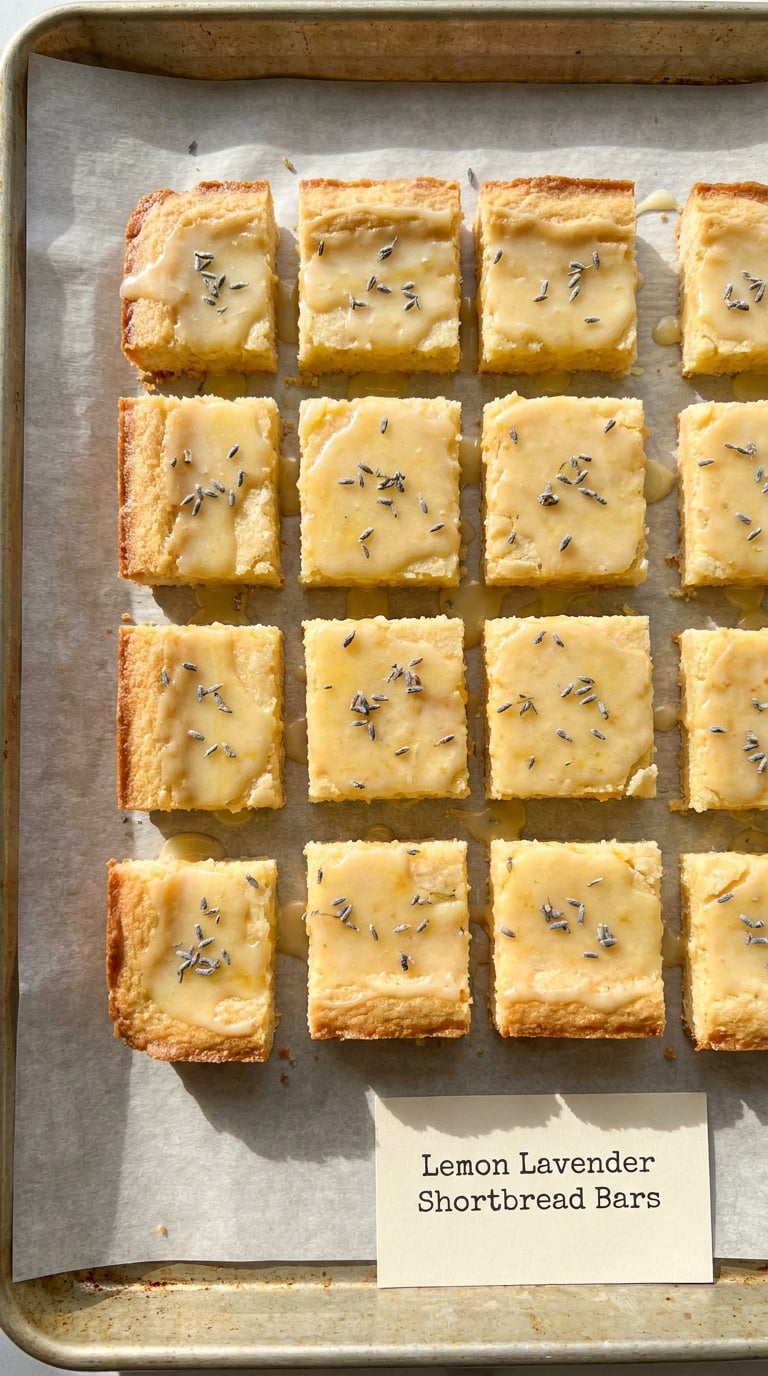
Lavender sounds risky until you use the culinary kind, which is floral rather than soapy. Here it is a whisper against a shortbread base and a proper lemon glaze, and it is the one recipe on this list people ask about most.
Yield: 15 bars · Prep: 20 min · Bake: 45 min · Total: 1 hr 15 min · Difficulty: Easy
Ingredients
- For the shortbread base: 1.5 cups (190 g) all-purpose flour
- 1/3 cup (65 g) granulated sugar
- 1/4 tsp fine salt
- 10 tbsp (140 g) unsalted butter, cold and cubed
- 1 tbsp culinary dried lavender, rubbed between your fingers
- 1 tbsp finely grated lemon zest
- For the filling: 1 cup (200 g) granulated sugar
- 3 tbsp (12 g) cornstarch
- 1/2 cup (120 ml) fresh lemon juice
- 2 large eggs
- 1/3 cup (75 g) unsalted butter, cubed
- 1 tsp vanilla extract
Instructions
- Heat the oven to 325°F (165°C). Line a 9×13 inch pan with parchment, letting it hang over two edges.
- Whisk the flour, sugar, and salt in a large bowl. Cut in the cold butter with a pastry cutter until the mixture holds together in pea-sized pieces, then stir in the lavender and lemon zest.
- Press the dough firmly and evenly into the pan, about 1/4 inch thick. Bake for 20 minutes, until the edges are pale gold and the middle looks set.
- Whisk the filling sugar, cornstarch, lemon juice, and eggs in a saucepan over medium-low heat. Stir constantly until it thickens and just begins to bubble, about 4 minutes.
- Take the pan off the heat, stir in the butter until melted, then add the vanilla. Pour the filling over the hot crust and spread it to the corners.
- Bake for 22 to 25 minutes, until the top is set with a slight wobble in the very center. For darker tops, turn the broiler on for 3 to 4 minutes and watch it closely.
- Cool in the pan completely, then lift out the parchment and cut into 15 bars with a sharp knife.
Tip: Pouring the filling onto a hot crust is what keeps the base crisp. If the crust has cooled first, the two layers meet and go soft in the middle.
Swap it: A graham cracker base works in a pinch, but press it with an extra tablespoon of butter and bake it only 8 minutes or it will over-brown. For a gluten-free version, swap the flour for a 1-to-1 gluten-free blend and let the bars cool fully before cutting.
Storage: Cut bars keep 4 days at room temperature in a covered tin, or 2 weeks in the freezer in layers with parchment. They freeze better than most lemon desserts because there is no cream.
4. Fresh Lemon Tart
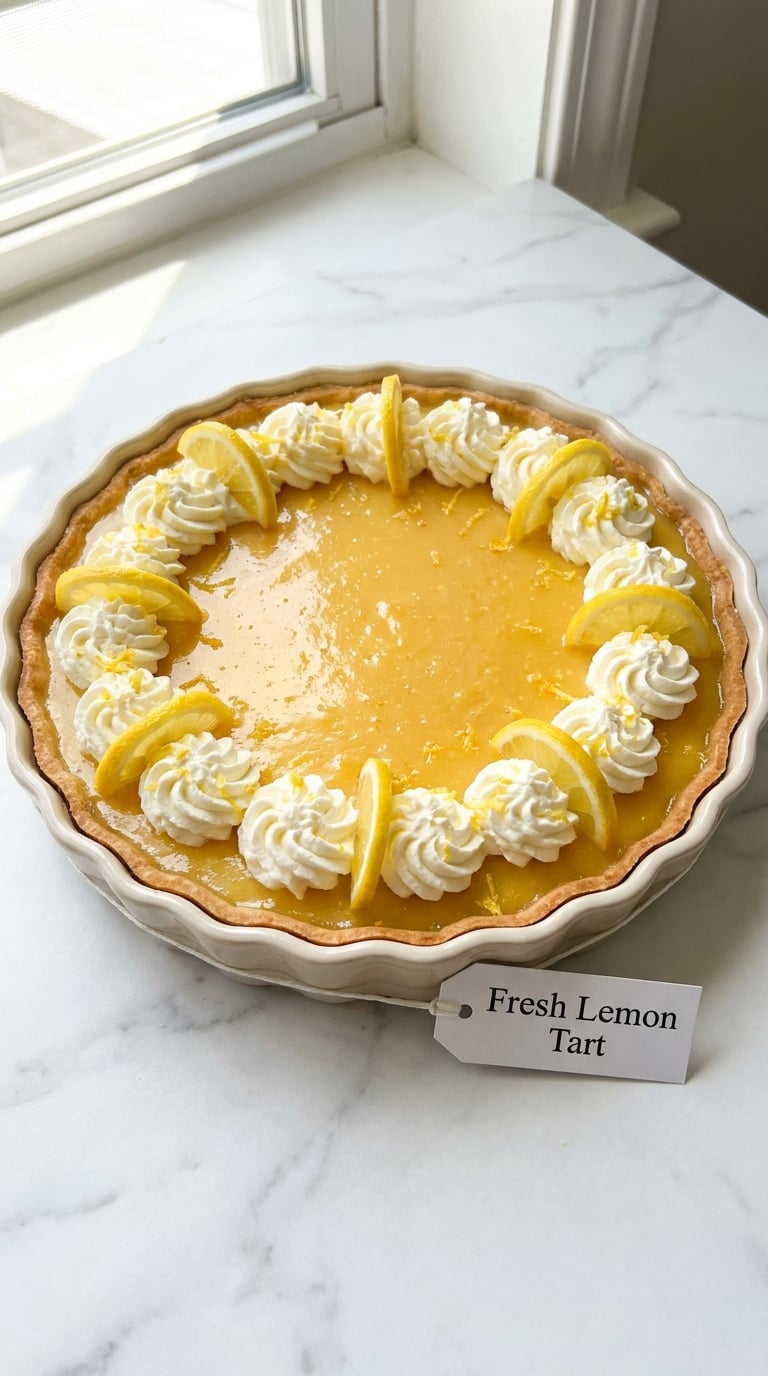
A tart looks like a project and behaves like one, mostly because the pan has a removable bottom. Everything here is mixed in one bowl, and the filling is forgiving as long as you pull it before it boils.
Yield: 8 servings · Prep: 25 min · Bake: 55 min · Total: 1 hr 30 min · Difficulty: Medium
Ingredients
- For the crust: 1.25 cups (160 g) all-purpose flour
- 3 tbsp (38 g) granulated sugar
- 1/4 tsp fine salt
- 10 tbsp (140 g) unsalted butter, cold and cubed
- 1 tbsp finely grated lemon zest
- For the filling: 1 cup (200 g) granulated sugar
- 3 large eggs plus 2 egg yolks
- 2/3 cup (160 ml) fresh lemon juice
- 1/4 cup (36 g) cornstarch
- 1/3 cup (75 g) unsalted butter, cubed
- 1/4 tsp fine salt
- Whipped cream and lemon slices, to serve
Instructions
- Heat the oven to 325°F (165°C). Pulse the flour, sugar, and salt in a food processor, then add the cold butter one slice at a time until it clumps. Add the zest, pulse twice more, and stop while it still looks sandy.
- Press the crumbs into a 9-inch tart pan in an even layer, working up the sides with your thumb. Chill 15 minutes.
- Blind bake for 16 minutes, until the crust is light golden and smells like biscuits. Remove and let it cool 10 minutes.
- Whisk the filling sugar, eggs, yolks, lemon juice, cornstarch, and salt in the same pan. Cook over medium-low heat, whisking constantly, until it thickens to a pudding texture and reaches 170°F (77°C), about 6 minutes. It should not boil.
- Whisk in the butter until melted, then strain through a sieve into the cooled crust.
- Bake for 18 to 22 minutes, until the edges are set and the center wobbles when you nudge the pan. Cool completely on a rack.
- Slice with a thin sharp knife dipped in hot water between cuts, and serve at room temperature with whipped cream.
Tip: The cornstarch is what keeps a lemon tart sliceable instead of pudding-like. Do not leave it out thinking the eggs will do the work.
Swap it: Add a torch-finished meringue: whip 2 leftover egg whites with 1/4 cup (50 g) sugar until glossy, spread over the baked tart, and brown at 450°F (230°C) for 6 to 8 minutes. A graham cracker crust works if you are short on time.
Storage: Keeps 3 days in the fridge, covered loosely so the pastry does not dry out. This is the tart to bake a day ahead. Do not freeze.
5. Lemon Coconut Sheet Cake
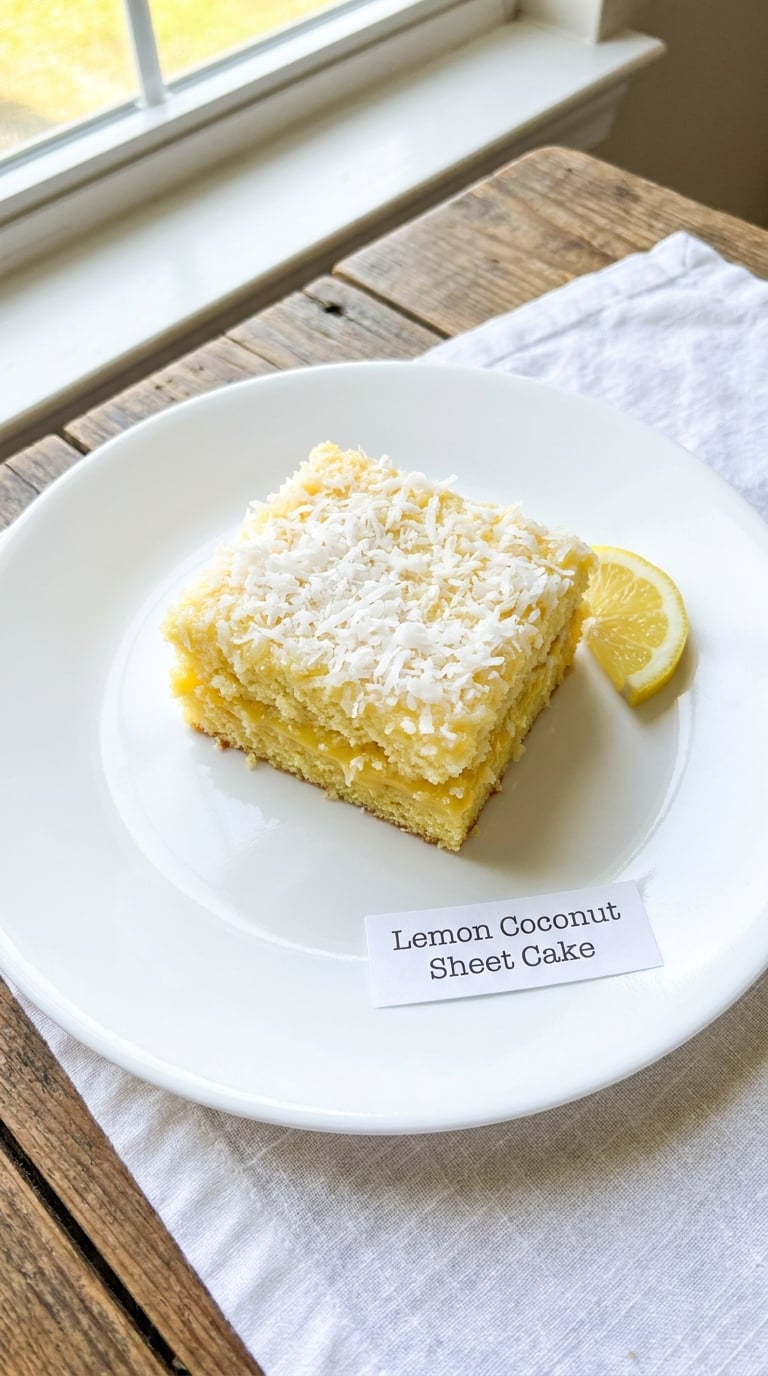
One pan, one bowl, and it feeds a crowd. Buttermilk and oil give it a crumb that stays tender for two days, which matters more than usual when the cake is sitting out at a brunch table.
Yield: 12 servings · Prep: 20 min · Bake: 40 min · Total: 1 hr 25 min · Difficulty: Easy
Ingredients
- 2.5 cups (320 g) all-purpose flour
- 1.5 cups (300 g) granulated sugar
- 2 tsp baking powder
- 1/2 tsp baking soda
- 1 tsp fine salt
- 3 large eggs
- 3/4 cup (180 ml) neutral oil, such as canola or sunflower
- 1 cup (240 ml) buttermilk
- 2 tsp vanilla extract
- Finely grated zest of 2 lemons
- 1/3 cup (80 ml) fresh lemon juice
- For the top: 1 cup (200 g) granulated sugar
- 1/3 cup (75 g) unsalted butter
- 1/2 cup (120 ml) fresh lemon juice
- 1 cup (85 g) unsweetened shredded coconut
Instructions
- Heat the oven to 350°F (175°C). Grease a 9×13 inch pan and line the bottom with parchment.
- Whisk the flour, sugar, baking powder, baking soda, and salt in a large bowl.
- In a second bowl, whisk the eggs, oil, buttermilk, vanilla, zest, and lemon juice until smooth. Pour into the dry ingredients and fold just until no dry streaks remain, about 30 seconds of gentle folding.
- Spread the batter into the pan, tapping the bottom once on the counter to settle it. Bake for 32 to 36 minutes, until a tester inserted in the center comes out with a few moist crumbs.
- Simmer the topping sugar, butter, and lemon juice in a small saucepan for 3 to 4 minutes, until it thickens to a glaze.
- Spread the warm glaze over the cake, sprinkle with the coconut, and return to the oven for 5 minutes to toast the coconut. Cool in the pan for 20 minutes before cutting into 12 rectangles.
Tip: Cool the cake in the pan before cutting. A warm sheet cake has no structural integrity, and the first slice always tears.
Swap it: Any unsweetened shredded coconut swaps for a 1-to-1 cup of chopped pecans, which is a winter-leaning version. For dairy-free, use plant milk with a tablespoon of lemon juice added and let it sit 5 minutes to thicken before measuring.
Storage: Covered at room temperature for 2 days, or refrigerated for 4. Wrapped in foil, slices freeze for up to 2 months and thaw well.
6. Lemon Blueberry Trifle
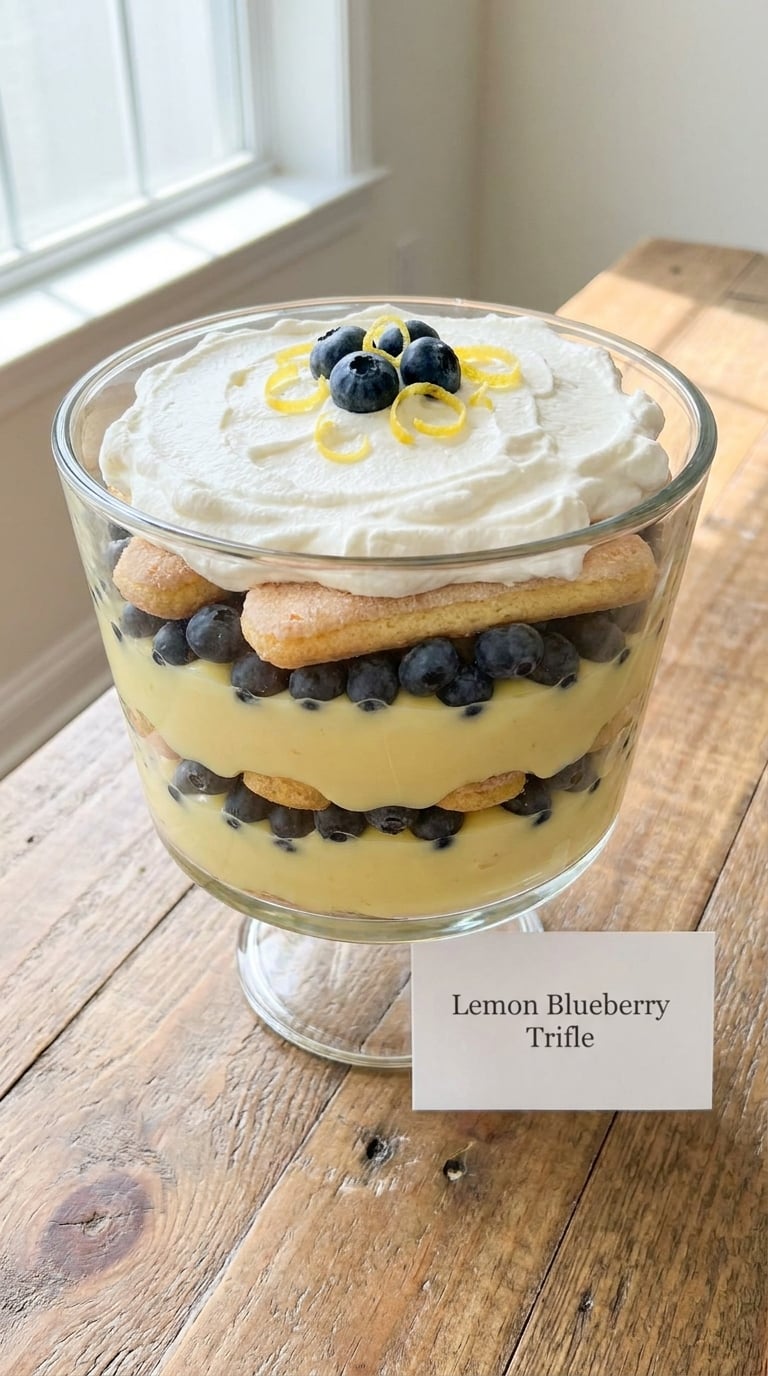
This is the make-ahead workhorse of the ten. Assemble it the night before, refrigerate it, and all you do at the gathering is put out bowls. The glass bowl is doing half the work, so pick one you can see through.
Yield: 8 servings · Prep: 20 min · Cook: 10 min · Chill: 4 hr · Total: 5 hr · Difficulty: Easy
Ingredients
- For the lemon pudding: 2 cups (480 ml) whole milk
- 1/2 cup (100 g) granulated sugar
- 3 large egg yolks
- 1/4 cup (36 g) cornstarch
- 2 tbsp (30 g) unsalted butter
- 1 tsp vanilla extract
- Zest of 1 lemon plus 1/3 cup (80 ml) fresh lemon juice
- For assembling: 1.5 cups (350 g) fresh blueberries
- 8 to 10 ladyfingers, lightly softened
- 1.5 cups (360 ml) heavy cream, whipped with 3 tbsp (45 g) powdered sugar
- Extra berries and lemon zest, to finish
Instructions
- Whisk the milk, sugar, egg yolks, and cornstarch together in a saucepan over medium-low heat. Cook, whisking constantly, until it thickens enough to coat a spoon and reaches 170°F (77°C), about 8 minutes. Do not boil.
- Whisk in the butter, vanilla, lemon zest, and juice. Transfer to a bowl, press plastic wrap onto the surface, and chill until cool.
- Layer a third of the pudding in the trifle dish, scatter over half the berries, then add a layer of ladyfingers torn into rough pieces.
- Repeat with the remaining pudding and berries, ending with a layer of pudding.
- Cover and refrigerate for at least 4 hours, until the ladyfingers have softened and the layers hold their shape.
- Spread the whipped cream over the top and finish with the remaining blueberries and a little lemon zest.
Tip: Soften the ladyfingers for 20 seconds in the microwave or by brushing them with a spoonful of the pudding. Dry ladyfingers sitting in a trifle feel like a mistake.
Swap it: Swap lemon for half-and-half with a little orange zest for a lighter cream version, or use strawberries and rhubarb when those are better. For a gluten-free trifle, replace the ladyfingers with crushed shortbread or toasted coconut.
Storage: Keeps 3 days refrigerated, though the ladyfingers soften further each day. Assemble the base a day ahead and hold the whipped cream in a separate bowl until serving.
7. Lemon Ricotta Cheesecake
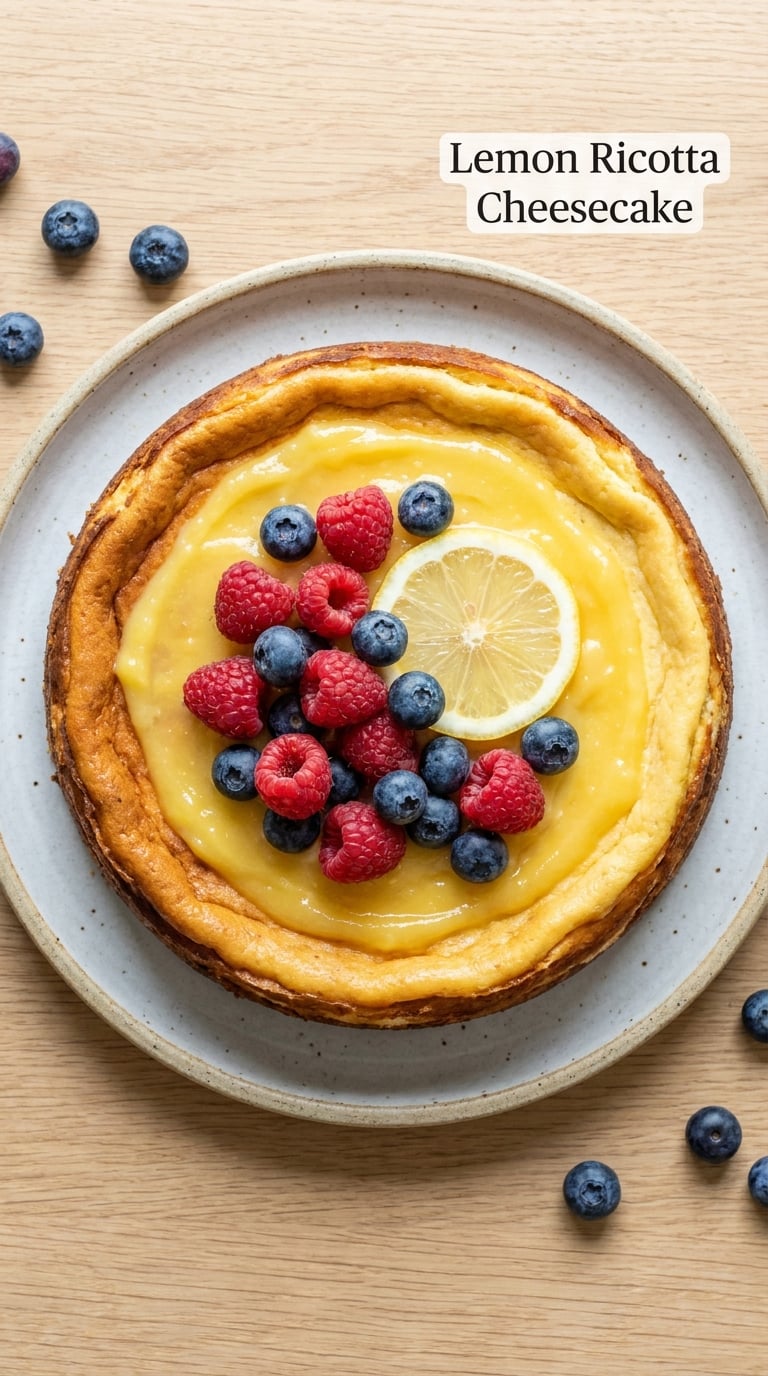
Ricotta replaces the cream cheese, which drops the fat and takes away the fear of a cracked top. It tastes softer and more lemony, and it needs a long overnight chill rather than any baking at all.
Yield: 10 servings · Prep: 25 min · Chill: 6 hr · Total: 6 hr 30 min · Difficulty: Easy
Ingredients
- For the crust: 1.5 cups (150 g) graham cracker crumbs
- 3 tbsp (40 g) granulated sugar
- 6 tbsp (85 g) unsalted butter, melted and cooled slightly
- Pinch of salt
- For the filling: 15 oz (425 g) whole milk ricotta, drained overnight
- 8 oz (225 g) cream cheese, softened
- 1 cup (200 g) granulated sugar
- 2 large pasteurized eggs
- Finely grated zest of 1 lemon
- 1/3 cup (80 ml) fresh lemon juice
- 1 tsp vanilla extract
- Fresh berries, for topping
Instructions
- Drain the ricotta the night before: set it in a fine-mesh sieve over a bowl in the fridge for at least 8 hours, then press the curds gently with the back of a spoon. The liquid that collects is whey and can be discarded.
- Mix the graham crumbs, sugar, salt, and melted butter until the crumbs clump when squeezed. Press firmly into the base of a 9-inch springform pan, about 1/2 inch thick. Chill 15 minutes.
- Beat the softened cream cheese and sugar with an electric mixer for 2 minutes, until smooth and pale. Scrape the bowl down twice.
- Add the drained ricotta, lemon zest, and juice, and beat on low until no lumps remain.
- Add the pasteurized eggs one at a time, mixing on low speed after each. Overbeating is what makes a no-bake filling turn grainy.
- Pour into the pan, tap it once on the counter to push out air pockets, and refrigerate for at least 6 hours, preferably overnight.
- Run a thin knife around the edge, release the springform ring, and serve topped with berries.
Tip: Undrained ricotta is the reason most no-bake cheesecakes fail. Two days of draining in the fridge is not optional, and the texture change is worth it.
Swap it: Replace the graham crumbs with crushed shortbread cookies for a sweeter, less sandy base, or with toasted almonds for a gluten-free version. Skip the eggs entirely and set it with 2 tbsp (6 g) dissolved gelatin for an egg-free cake.
Storage: Keeps 4 days in the fridge, and the flavor improves on day two. Do not freeze; the ricotta grain separates on thawing.
8. Lemon Brownies
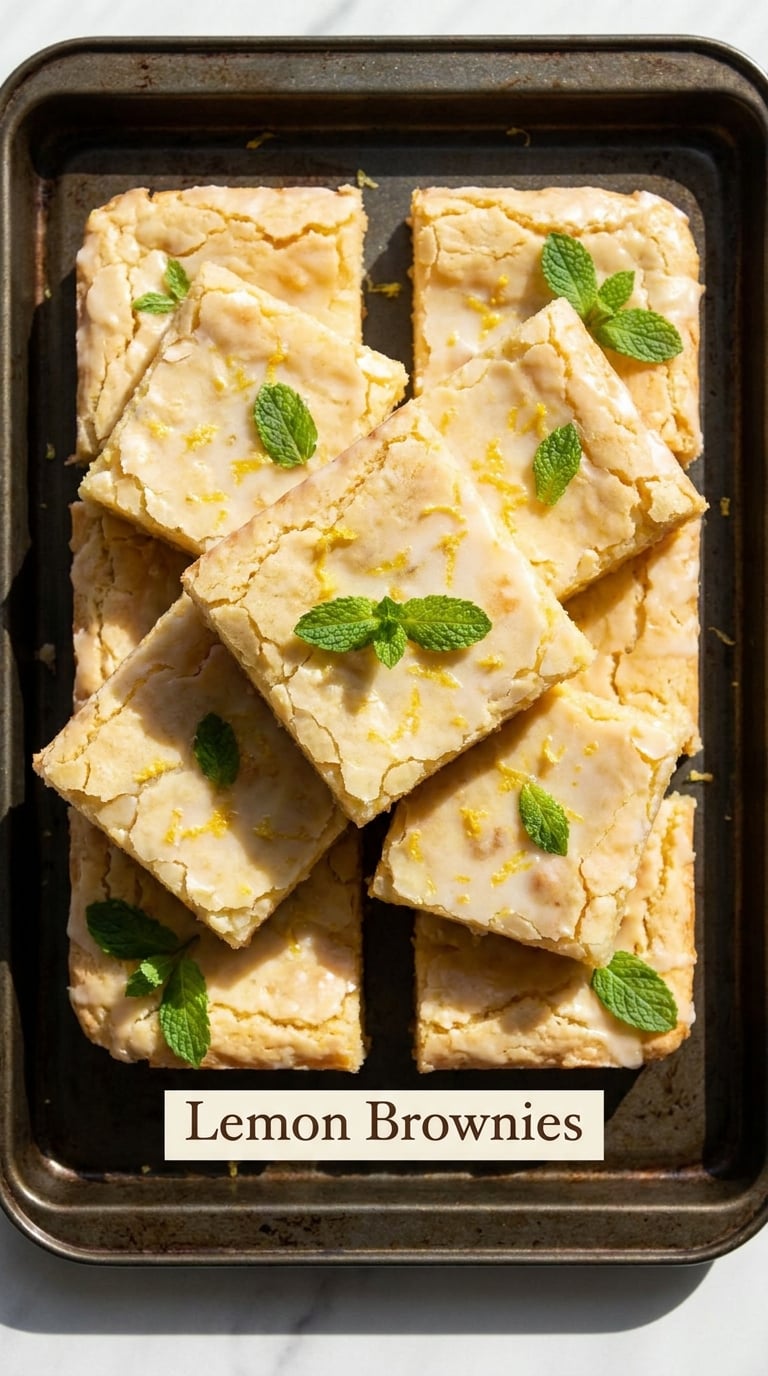
The fastest bake in this roundup, and the one people are most surprised by. A thin lemon glaze over dark chocolate keeps the whole tray in balance on the plate, and the tray plays just as well next to a spread of our easy chocolate dessert recipes when the table wants something sweet twice over.
Yield: 16 squares · Prep: 15 min · Bake: 27 min · Total: 50 min · Difficulty: Easy
Ingredients
- 2/3 cup (160 g) unsalted butter
- 3/4 cup (150 g) granulated sugar, plus 1/2 cup (100 g) more for the glaze
- 3/4 cup (65 g) unsweetened cocoa powder
- 1/2 cup (65 g) all-purpose flour
- 1/4 tsp fine salt
- 3 large eggs
- 1 tsp vanilla extract
- 1/3 cup (80 ml) fresh lemon juice
- Finely grated zest of 1 lemon
Instructions
- Heat the oven to 350°F (175°C). Line an 8-inch square pan with parchment, leaving an overhang on two sides.
- Melt the butter in a small saucepan, then remove from the heat and stir in the 3/4 cup sugar, cocoa, flour, and salt. Mix until smooth.
- Whisk the eggs, vanilla, lemon juice, and zest together, then fold them into the chocolate mixture just until the streaks disappear.
- Spread into the pan and bake for 25 to 28 minutes, until the top is shiny with a thin crackle and a tester comes out with moist crumbs, not wet batter.
- Whisk the powdered sugar, lemon juice, and 1 to 2 tsp water into a pourable glaze. Cool the brownies fully in the pan, then lift them out by the parchment and cut into 16 squares.
- Spread the glaze over the top right before serving, or return the squares to the warm pan for 2 minutes to set the glaze.
Tip: Pull the brownies while the center still looks slightly underdone. They firm up as they cool, and an over-baked lemon brownie turns chalky and bitter at once.
Swap it: For a chocolate-chocolate version, drop the lemon juice and zest and add 1/2 cup (110 g) of chopped dark chocolate. A pinch of espresso powder deepens the cocoa without tasting of coffee.
Storage: Keeps 4 days in an airtight tin at room temperature, and freezes for up to 3 months. Glaze only the squares you plan to eat, or it will soften the tops in the freezer.
9. Lemon Pavlova with Berries
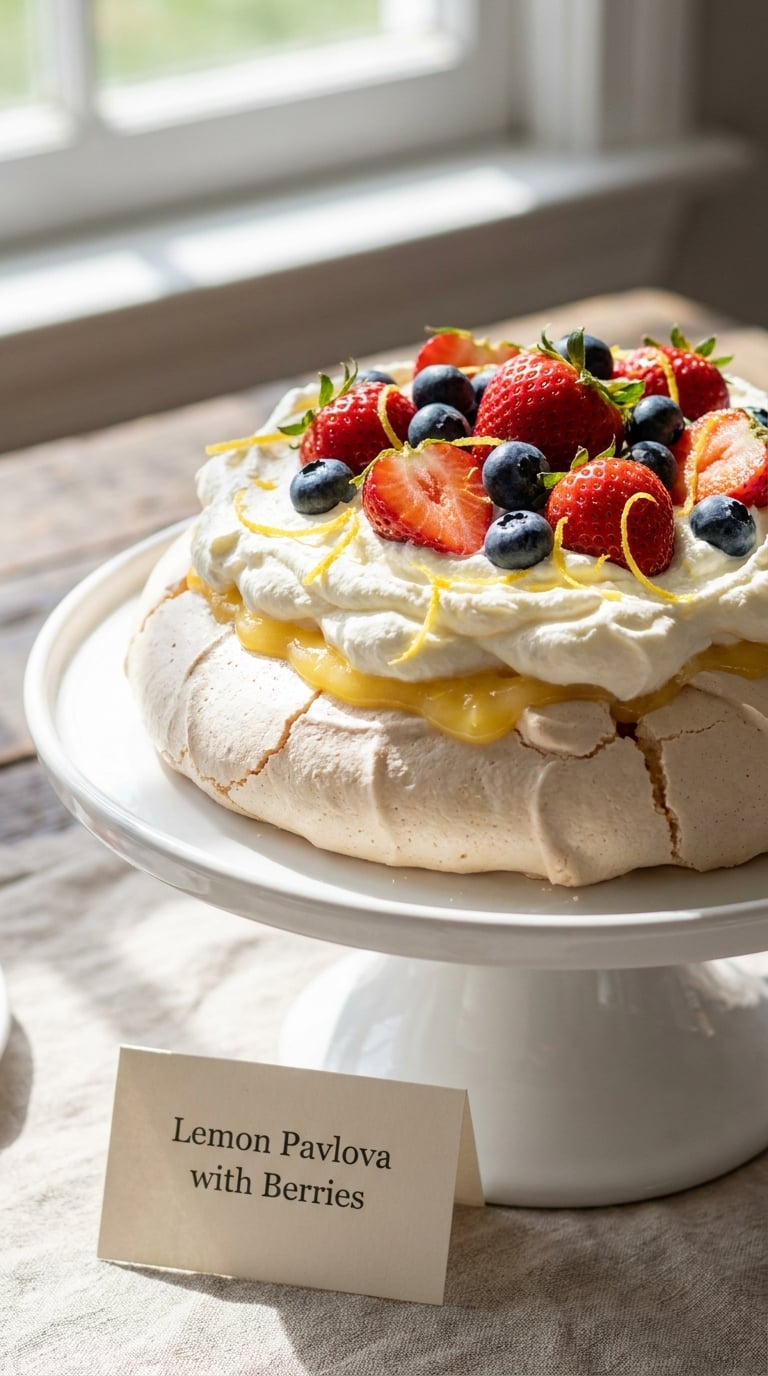
A pavlova is a meringue, a puddle of cream, and a pile of fruit, and the trick is entirely in the meringue. Baked low and cooled in the oven, the outside crunches and the middle chews, which is exactly right under fresh cream.
Yield: 6 servings · Prep: 20 min · Bake: 70 min · Total: 1 hr 40 min · Difficulty: Medium
Ingredients
- 4 large egg whites, at room temperature and free of any yolk
- 1 cup (200 g) granulated sugar
- 1 tsp cream of tartar
- 1/2 tsp vanilla extract
- 1/4 tsp lemon extract
- 1.5 cups (360 ml) heavy cream, whipped with 2 tbsp (30 g) powdered sugar
- 1/2 cup (150 g) lemon curd
- 1 cup (150 g) strawberries, halved
- 1 cup (150 g) blueberries
- Finely grated lemon zest
Instructions
- Heat the oven to 225°F (110°C). Line a baking sheet with parchment and draw a 7-inch circle in the center as a guide.
- Whip the egg whites and cream of tartar on medium-high with a very clean, grease-free bowl until soft peaks form, 4 to 5 minutes. No trace of yolk or oil, or the whites will not hold.
- Add the sugar gradually, a spoonful at a time, whipping on high until the meringue is glossy and the peaks hold firmly when you lift the beaters.
- Fold in the vanilla and lemon extract with a spatula, then spoon the meringue onto the parchment inside the circle, smoothing the top and building the sides slightly higher.
- Bake for 60 to 70 minutes, until the outside is dry and crackled and it releases from the parchment at the edges. Do not use a deep pan or add liquid, or it will not crisp.
- Turn off the oven, leave the door cracked, and cool completely inside, at least 1 hour. A fast temperature change cracks the shell.
- Whisk the cream to soft peaks. Spread the lemon curd over the cooled meringue, pile the whipped cream on top, and finish with the berries and lemon zest.
Tip: Add the sugar slowly. Rushing it is what makes a pavlova weep syrup onto the tray and turn grainy inside.
Swap it: Swap lemon curd for passion fruit curd, and the berries for sliced mango or poached rhubarb. To keep things strictly dairy-free, use coconut cream whipped with the powdered sugar.
Storage: The dry meringue keeps 5 days in an airtight tin at room temperature. Store the whipped cream and fruit separately and assemble within 2 hours of serving; the meringue softens in the fridge but does not weep.
10. Lemon Sugar Cookies
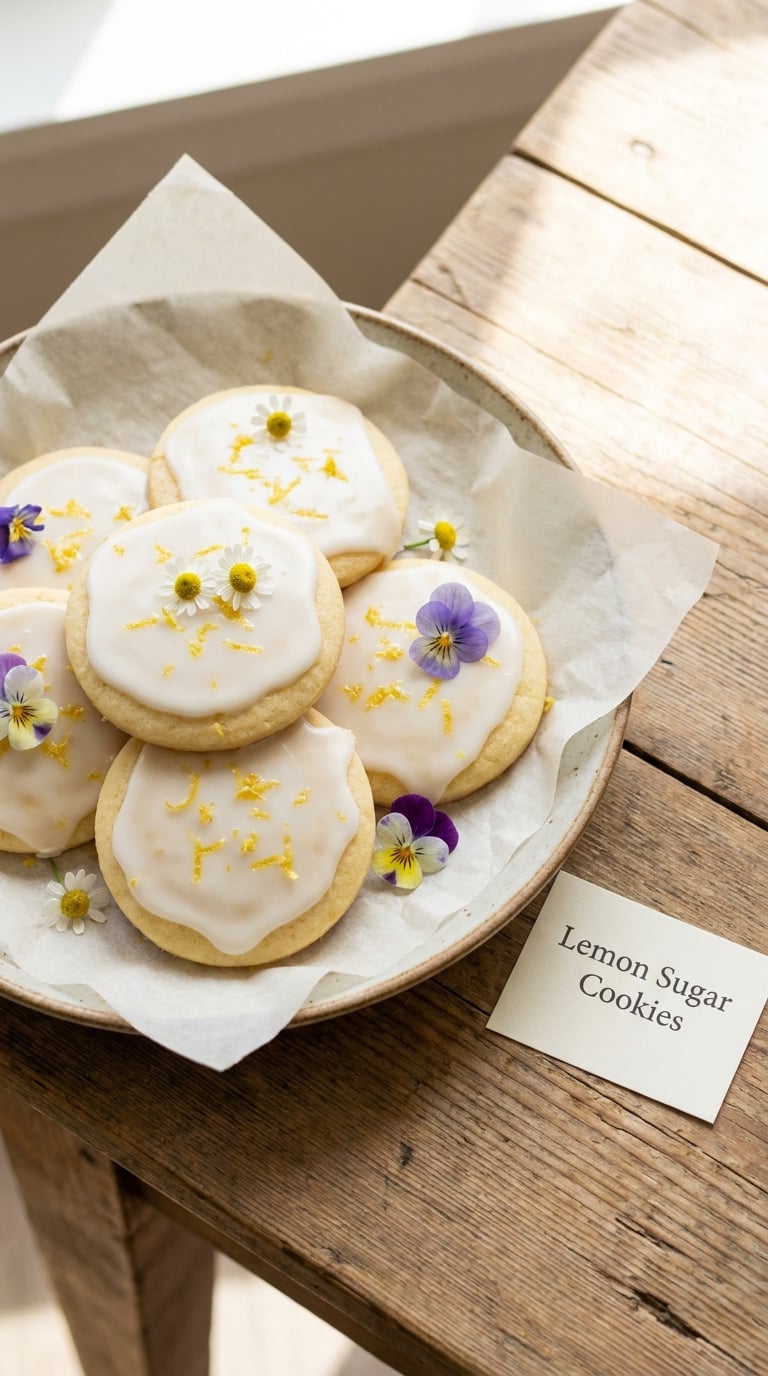
The last one is the bake-sale workhorse: soft in the middle, crisp at the edge, and sturdy enough to stack in a tin. The two-stage sugar is what gives you both textures and keeps the tops from burning.
Yield: 24 cookies · Prep: 20 min · Bake: 11 min · Total: 1 hr 20 min · Difficulty: Easy
Ingredients
- 2 cups (250 g) all-purpose flour
- 1 tsp baking powder
- 1/2 tsp fine salt
- 1/2 cup (115 g) unsalted butter, softened
- 1/3 cup (75 g) granulated sugar
- 1/2 cup (100 g) granulated sugar, for rolling
- 1 large egg
- 1 tsp vanilla extract
- Finely grated zest of 2 lemons
- 1 to 2 tbsp milk, only if needed
- For the glaze: 1.5 cups (190 g) confectioners’ sugar
- 2 tbsp fresh lemon juice plus 1 to 2 tsp milk
- Finely grated zest of 1 lemon
Instructions
- Heat the oven to 350°F (175°C) and line two baking sheets with parchment.
- Whisk the flour, baking powder, and salt in a small bowl. In a larger bowl, beat the butter and 1/3 cup sugar until pale and fluffy, about 2 minutes.
- Beat in the egg, vanilla, and lemon zest, then mix in the dry ingredients until just combined. The dough will be soft; add the milk a teaspoon at a time only until it holds together.
- Scoop 2 tbsp of dough per cookie onto the sheets, 2 inches apart, and roll each in the reserved sugar, pressing gently so the top is coated but the shape stays round.
- Bake for 9 to 12 minutes, until the edges are golden and the centers still look slightly underdone. They firm up as they cool on the sheet.
- Whisk the confectioners’ sugar, lemon juice, and enough milk to make a thick drizzle, then stir in the zest. Let the cookies cool for 20 minutes, drizzle, and leave to set for another 15.
Tip: Rolling in sugar is optional but it is what stops the tops browning before the centers cook, so do not skip it if you are baking to the longer end of the timing.
Swap it: For thicker, chewy cookies, use bread flour in place of the all-purpose flour and chill the scooped dough 20 minutes before baking. A 1-to-1 gluten-free flour blend works, and the dough will need a few more minutes to firm up for rolling.
Storage: Keep 5 days in an airtight tin with a slice of bread, which keeps the cookies soft. Unglazed cookies freeze for 3 months; freeze the glaze separately, or it will turn the tops sticky after thawing.
Tips for Making These
A handful of details separate a sharp lemon dessert from a balanced one, and five of them show up in almost every recipe above.
How to keep easy lemon desserts from tasting too sour
- Zest into the batter, juice into the filling. The colored outer layer of the peel carries the aromatic oils, and the white pith underneath is bitter. Take only the top third of each lemon with a fine grater or Microplane, then scrub the fruit well before juicing.
- Use room temperature lemons, and roll them hard on the counter. Cold fruit yields less juice, and cold juice flattens the flavor. Ten seconds of rolling under your palm breaks up the pulp and gets you two extra tablespoons.
- Taste as you go, and stop before it feels right. Sugar on a spoon reads much sweeter than sugar in a chilled dessert, so taste the filling slightly sweeter than you want it. Chill time softens perceived sweetness in every recipe here.
- Balance the plate, not the bowl. A dollop of whipped cream, a scoop of berries, or a slightly sweeter shortbread base is usually the fix for a filling that reads too tart after baking.
- Keep the heat low and the whisking constant. Egg-based lemon fillings split into scrambled egg and whey above 180°F (82°C), which is the cause of both bitter flavor and a grainy texture.
- Chill the full recommended time for no-bake desserts. A posset, mousse, trifle, or ricotta cheesecake that has not had its full four to six hours will slump on the plate even when the recipe is followed exactly.
Frequently Asked Questions
What is the best easy lemon dessert for spring?
For most spring tables, the lemon posset is the strongest pick: it tastes like a restaurant dessert, needs only four ingredients beyond cream and eggs, and sets without gelatin or baking. For something you can make in under 30 minutes, the lemon sugar cookies win. For a crowded buffet, the lemon blueberry trifle portions itself and travels well.
Which of these lemon desserts can be made ahead?
Seven of the ten work best made ahead. The posset, mousse cups, trifle, ricotta cheesecake, fresh lemon tart, and shortbread bars all keep well for 24 to 48 hours refrigerated. The pavlova shell keeps for five days in an airtight tin, with the cream and fruit added on the day. The brownies and sugar cookies hold up too, though both are best within a day or two.
Can I use bottled lemon juice instead of fresh?
Bottled juice works for lemon curd and bars, where the sugar and eggs cover the flatter flavor. Skip it for anything where lemon is the whole point, like the posset, the mousse, and the cheesecake, since the aroma is what people notice. One practical compromise is fresh juice for the filling and bottled for the glaze or a syrup.
Are these lemon desserts freezer friendly?
The shortbread bars, brownies, and sugar cookies freeze well, wrapped in layers with parchment. The pavlova meringue also freezes for up to two months. Do not freeze the posset, mousse, ricotta cheesecake, trifle, or fresh lemon tart, since the cream and egg-based fillings separate and turn grainy on thawing. All of those keep several days in the fridge instead.
What spring fruit pairs best with lemon desserts?
Blueberries are the safest match and need no change to the recipe, as in the blueberry trifle. Strawberries and raspberries are excellent cut over the pavlova or cheesecake. Rhubarb is worth roasting first with a little sugar, since raw rhubarb is far too tart next to lemon. For a tea-party plate, thin lemon slices with a few cracked black peppercorns work on their own.
How do I serve lemon desserts at a spring gathering?
Set out one big item and one no-bake item so there is a choice, and keep both at cool room temperature rather than in the fridge, since cold dulls lemon flavor noticeably. For a brunch, lemon sugar cookies and a posset work better than a tart, since nothing needs cutting. Add a small bowl of fresh berries alongside and let people garnish their own plates.
Conclusion
If you only make one, make the lemon posset. Twenty minutes of work, one saucepan, and a fridge doing the rest, and it will look like you spent the afternoon on it. For a bake sale, a casual brunch, or a tray that has to survive a car ride, the shortbread bars are the one I make twice as often as anything else.
Pick whichever of these easy lemon dessert recipes for spring fits the time you actually have, then make it a day ahead so that the day itself stays easy. If you want more shortlists, our no-bake dessert ideas and four-ingredient dessert recipes are good next stops.