
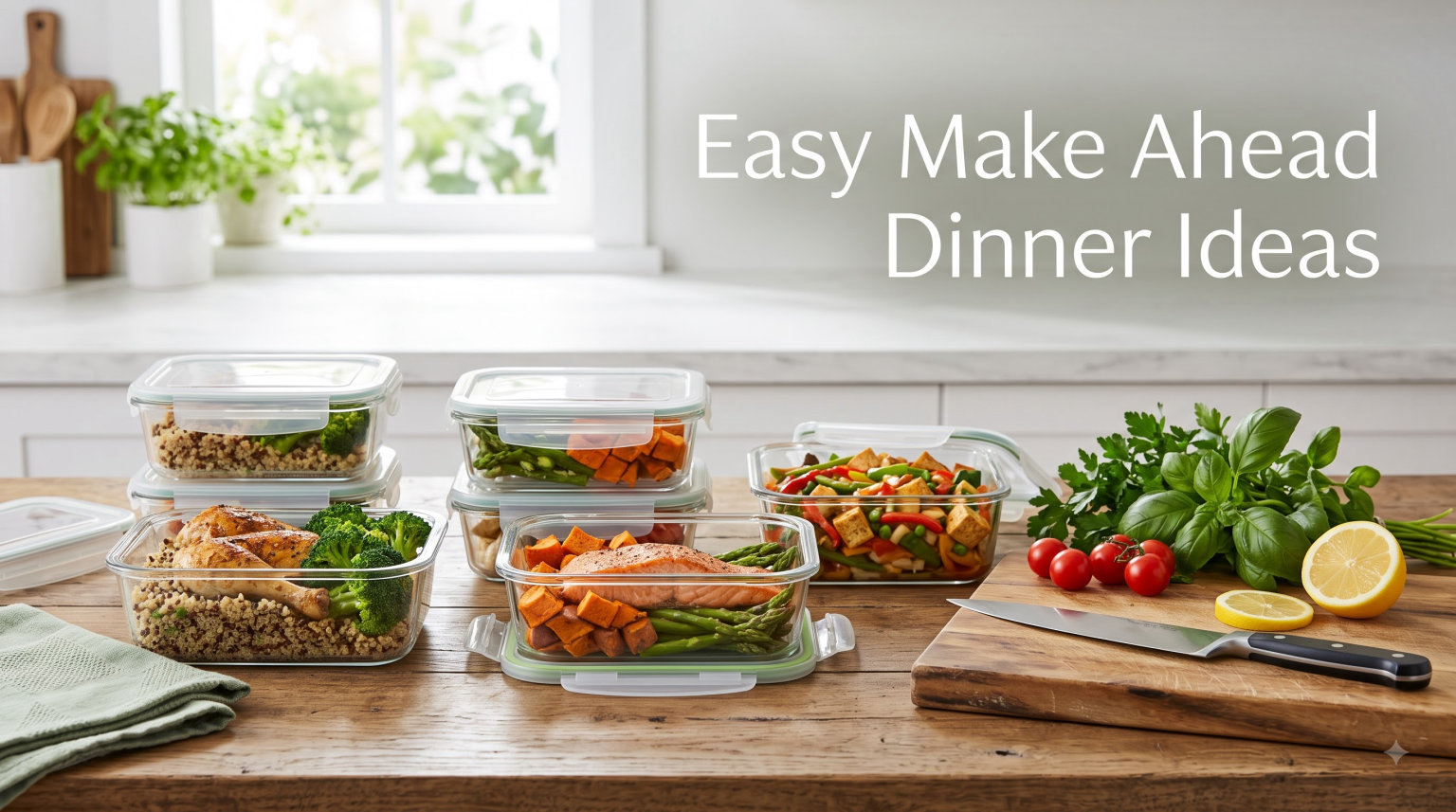
Before choosing a recipe, I decide what the finished plate needs to do. I make this kind of dinner easier by starting with the real constraint—time, budget, heat, equipment, or appetite—then choosing a meal that solves it without unnecessary work. The result is a useful collection of easy make ahead dinner ideas.
I organized the guide around make-ahead dinner recipes and prep-ahead family meals, with practical timings, substitutions, serving ideas, storage guidance, and fixes for the problems that matter. For another useful option, see this protein-forward dinner guide.
Table of Contents
Quick Picks: My Favorite Make-Ahead Dinner Ideas
If you are short on time and just want the highlights, here are the categories that works for everyday cooking when planning my week. Each one preps quickly, reheats beautifully, and feeds a hungry family without complaint.
-
Chicken Enchilada Casserole – Assemble Sunday, bake Tuesday. About 20 minutes of hands-on prep.
-
Classic Beef Chili – Tastes dramatically better on day two. Freezer-friendly for up to three months.
-
Slow Cooker Pulled Pork – Cook once, eat three different meals from tacos to sandwiches to rice bowls.
-
Chicken and Wild Rice Soup – Creamy, hearty, and the flavors deepen overnight in the fridge.
-
Shepherd’s Pie – Assemble fully, refrigerate up to three days, bake straight from cold.
-
One-Pot Taco Pasta – 15 minutes of prep, reheats like a dream for lunches.
-
Lasagna – The queen of all make-ahead dinners. Freezes beautifully and feeds a crowd.
Any one of these will save you a stressful evening, and I will walk you through exactly how to make each one work in the sections below.
Why Make-Ahead Dinners Are Worth the Effort
Before we get to the recipes, let me explain why I became such a believer. The benefits go way beyond just saving time on a busy night.
First, flavors genuinely improve when ingredients sit together. Soups, stews, chili, and casseroles all taste richer and more complex the next day because the seasonings have time to meld. This is something professional cooks have known forever, and it is a free flavor upgrade you get just by waiting.
Second, make-ahead cooking saves serious money. When you plan meals in advance, you buy with purpose instead of grabbing random items at the store. You waste less food, you skip takeout, and you can take advantage of bulk protein sales. For families trying to stretch a grocery budget, this alone is reason enough to start.
Third, the mental load drops significantly. Instead of asking what is for dinner every single day at four in the afternoon, you already know. You just pull a dish from the fridge or freezer and heat it up. That peace of mind is hard to overstate.
Fourth, you control exactly what goes into your food. Restaurant meals and takeout often come loaded with sodium, sugar, and unhealthy fats. When you prep at home, you decide how much salt, oil, and seasoning to use. This makes make-ahead dinners a smart choice for anyone watching their health or managing dietary restrictions.
Finally, make-ahead cooking reduces food waste. When you cook with a plan, you use what you buy before it goes bad. Vegetable scraps can become stock, leftover proteins get repurposed into new meals, and you stop throwing away wilted produce at the end of every week.
What Makes a Good Make-Ahead Dinner?
Not every recipe works as a make-ahead meal. Through plenty of trial and error, I have learned to look for specific characteristics that signal a recipe will hold up well in the fridge or freezer and still taste great on day three.
The best make-ahead dinners share these traits: they reheat without losing texture, they use ingredients that do not get soggy or separate over time, and they scale easily so you can double or triple the batch without much extra effort.
Casseroles are the obvious winners because everything bakes together in one dish. Soups and stews get better with time as their flavors deepen. Slow cooker meals work beautifully because the long cooking process tenderizes proteins and melds seasonings naturally.
Recipes to avoid for make-ahead include anything with delicate greens that wilt, fried foods that lose their crunch, and dishes with dairy-heavy sauces that can separate when reheated. Save those for fresh cooking nights instead.
Tips for Make-Ahead Meal Success
-
Great make-ahead meals start with smart storage. The right containers, fridge strategy, and reheating technique make all the difference between a satisfying dinner and a soggy disappointment.
-
Invest in glass containers with snap-locking lids. They handle freezer and oven duty, do not stain from tomato sauce, and you can see exactly what is inside at a glance. I switched from plastic to glass about five years ago and never looked back.
-
For freezer storage, leave at least an inch of headspace in the container because liquids expand as they freeze. Trust me on this one. I learned the hard way with a cracked glass dish and a freezer full of chili.
-
Square and rectangular containers stack more efficiently than round ones, which matters when you are storing multiple meals at once. Look for containers with the same footprint so they nest neatly on your fridge and freezer shelves.
-
Most cooked make-ahead meals stay fresh in the fridge for three to four days. Soups and stews sometimes stretch to five days if they were cooled quickly and stored properly. If you will not eat something within that window, freeze it.
-
In the freezer, most casseroles, soups, and cooked meats are good for two to three months. Label everything with the date and what it is, because frozen mystery containers are how good food gets wasted. A piece of masking tape and a Sharpie take ten seconds and save so much guesswork later.
-
Raw proteins also freeze well. Marinate chicken, beef, or pork in freezer bags so they absorb flavor as they thaw. When you are ready to cook, simply move the bag to the fridge the night before and the protein thaws while marinating.
-
For casseroles and baked dishes, reheat in the oven at 350 degrees rather than the microwave when you have time. The texture stays so much better, especially for anything with a crispy topping. Cover with foil for the first 20 minutes to prevent drying out.
-
Soups and stews reheat beautifully on the stovetop over medium-low heat. Stir occasionally and add a splash of broth or water if they have thickened too much in storage.
-
The microwave works in a pinch, but heat in one-minute intervals and stir between each. This prevents hot spots and helps the food reheat evenly without turning rubbery on the edges.
-
The safest thawing method is moving the dish from the freezer to the fridge the night before you plan to cook it. This keeps food out of the danger zone where bacteria multiply quickly. For more detailed guidance on safe food handling, the USDA Food Safety resource at foodsafety.gov is a dependable option reference.
-
If you forgot to thaw overnight, you can bake most casseroles straight from frozen by adding about 30 minutes to the cooking time and covering tightly with foil for the first half of baking.
-
For soups and stews, you can reheat directly from frozen in a pot on the stove over low heat. Add a cup of broth or water to get things started, cover with a lid, and stir occasionally as the frozen block loosens into hot soup.
-
I cannot overstate how important labeling is. Use masking tape or freezer-safe labels and write three things: the name of the dish, the date you made it, and any reheating instructions. This takes 15 seconds and saves you from mystery-container syndrome a month later.
-
Color-coded tape is a fun upgrade if you want to get organized. Green tape for chicken dishes, red for beef, blue for vegetarian. It sounds excessive until you realize how much faster your freezer browsing becomes.
Choose the Right Containers
Know Your Fridge and Freezer Timelines
Reheating Without Ruining Texture
Thawing Frozen Make-Ahead Meals Safely
Build a Labeling System That Works
Easy Make Ahead Dinner Ideas
Use these checkpoints to compare make-ahead dinner recipes and prep-ahead family meals before committing to a recipe.
-
Match the method to the time and equipment you actually have.
-
Read the doneness cue before starting so the final texture is not left to guesswork.
-
Choose one useful side or make-ahead component to turn the idea into a complete meal.
Here is where the fun starts. I have organized a reliable recipes by protein type and cooking method so you can find exactly what fits your family and your fridge space.
Chicken Make-Ahead Dinner Ideas
Chicken is the workhorse of make-ahead cooking because it is affordable, versatile, and takes on whatever flavors you pair it with. Here are five recipes I keep in regular rotation.
1. Chicken Enchilada Casserole
This is essentially enchiladas deconstructed for ease. Layer shredded rotisserie chicken, corn tortillas, enchilada sauce, and cheese in a baking dish. Cover tightly and refrigerate up to three days before baking at 375 degrees for 25 minutes.
Prep time is about 20 minutes, and the leftovers reheat beautifully. For a gluten-free version, double-check your enchilada sauce label and use certified GF tortillas.
To freeze, assemble fully but do not bake. Wrap the dish tightly in foil and plastic wrap, then freeze for up to three months. Thaw overnight in the fridge before baking as directed, adding about 10 extra minutes to the baking time.
2. Lemon Herb Chicken and Rice
Marinate bone-in chicken thighs in lemon juice, olive oil, garlic, and herbs overnight. The next day, arrange them over partially cooked rice in a baking dish with chicken broth. Bake at 375 degrees for 45 minutes until the chicken skin crisps and the rice absorbs the broth.
This dish reheats well for two days and is naturally gluten-free. It pairs beautifully with a simple green salad or roasted vegetables.
For meal prep, portion the chicken and rice into individual containers. The rice actually improves in texture after a day in the fridge, making this a great option for grab-and-go work lunches.
3. Chicken Pot Pie
Assemble the filling with cooked chicken, mixed vegetables, and a creamy sauce, then top with pie crust or biscuit dough. Wrap tightly and refrigerate up to two days before baking at 400 degrees for 35 to 40 minutes.
You can also freeze the unbaked pie for up to two months. Thaw overnight in the fridge before baking as directed.
For a time-saving shortcut, use store-bought rotisserie chicken and frozen mixed vegetables. Nobody will know, and the assembly time drops to about 15 minutes.
4. BBQ Chicken Sliders
Slow cooker shredded chicken tossed with your favorite BBQ sauce is one of the easiest meal prep proteins around. Pile onto slider buns with coleslaw for a quick dinner, or use the same chicken over baked potatoes, in quesadillas, or on salads throughout the week.
This recipe highlights the beauty of the cook-once-eat-thrice strategy. One batch of chicken yields three completely different meals.
To make it, place chicken breasts in the slow cooker with a cup of broth and your favorite seasonings. Cook on low for six hours, shred with two forks, and stir in BBQ sauce. Store the shredded chicken in an airtight container for up to four days.
5. Chicken Tetrazzini
This old-school casserole deserves a comeback. Combine cooked spaghetti, diced chicken, mushrooms, and a creamy Parmesan sauce. Top with breadcrumbs and bake at 350 degrees for 30 minutes.
Assemble it fully up to two days ahead, or freeze unbaked for up to two months. It reheats well and is a confirmed crowd-pleaser for potlucks. If you love dishes like this, my collection of casserole recipes has plenty more ideas.
The breadcrumb topping stays crunchy even after a day in the fridge, which makes this one of the few casseroles that does not need fresh garnishes on day two.
Beef Make-Ahead Dinner Ideas
Beef brings serious comfort-food energy to make-ahead meals. These five recipes are hearty enough to satisfy big appetites and they all reheat without losing their appeal.
1. Classic Beef Chili
Brown ground beef with onions, garlic, and chili spices, then simmer with diced tomatoes, beans, and beef broth for 30 minutes. Cool completely before refrigerating. Eat it the next day topped with shredded cheese, sour cream, and green onions.
Chili freezes beautifully for up to three months. I almost always make a double batch specifically to freeze half for a future week.
The reason chili tastes so much better on day two comes down to chemistry. The spices need time to bloom into the liquid, and the tomatoes mellow from acidic to rich and savory as they sit. This is the recipe I make most often for new parents or friends who need a meal delivered.
2. Shepherd’s Pie
Cook ground beef (or lamb) with onions, carrots, and peas in a savory gravy. Spread in a baking dish, top with mashed potatoes, and refrigerate up to three days. Bake at 400 degrees for 25 minutes until the potato peaks turn golden.
For the best texture, let the pie sit at room temperature for 20 minutes before baking so the dish does not crack from temperature shock.
You can prep the mashed potato topping up to two days ahead and store it separately. Spread it over the filling right before baking for the fluffiest texture.
3. Beef Stroganoff
Sear strips of beef with mushrooms and onions, then simmer in a sour cream and beef broth sauce. Store the sauce separately from the noodles for the best texture on reheating.
When ready to serve, reheat the sauce gently on the stove, cook fresh egg noodles, and combine. This trick prevents the noodles from turning to mush overnight.
For a freezer-friendly version, freeze just the beef and sauce portion. Thaw overnight, reheat on the stove, and serve over freshly cooked noodles, rice, or mashed potatoes.
4. Homemade Meatloaf
Mix ground beef with breadcrumbs, egg, onion, and seasonings, then shape into a loaf. You can refrigerate the raw meatloaf for up to 24 hours before baking, or freeze the shaped loaf raw for up to three months.
Bake at 375 degrees for about an hour, adding the glaze in the last 15 minutes. Leftovers make incredible sandwiches the next day.
The glaze is a simple mix of ketchup, brown sugar, and mustard. Brush it on during the final 15 minutes of baking so it caramelizes without burning.
5. Classic Lasagna
Lasagna might be the ultimate make-ahead dinner. Assemble fully with layers of noodles, meat sauce, and ricotta mixture, then refrigerate up to three days or freeze unbaked for up to three months.
Bake covered at 375 degrees for 45 minutes, then uncover and bake 15 more minutes until the cheese is bubbly and golden. Let it rest 15 minutes before slicing for cleaner pieces.
For a vegetarian version, swap the meat sauce for a rich roasted vegetable ragu. Eggplant, zucchini, and mushrooms simmered in tomato sauce make a filling that satisfies even dedicated carnivores.
Pork Make-Ahead Dinner Ideas
Pork is sometimes overlooked for meal prep, but it brings big flavor and serious value to the table. These three recipes are favorites in my house.
1. Slow Cooker Pulled Pork
Rub a pork shoulder with brown sugar, paprika, garlic powder, and salt, then cook on low in the slow cooker for eight hours. Shred with two forks and toss with your favorite BBQ sauce.
One batch yields enough meat for three or four meals. Use it in sandwiches, over rice bowls, in tacos, or stirred into mac and cheese.
Pulled pork freezes beautifully for up to three months. Portion it into two-cup containers before freezing so you can thaw exactly what you need for one meal without reheating a massive batch.
2. Pork Tenderloin with Apples
Sear pork tenderloin in a skillet, then transfer to a baking dish with sliced apples, onions, and a maple mustard glaze. Bake at 375 degrees for 25 minutes.
The flavors deepen overnight, making this a great option for a Sunday dinner that doubles as Monday lunch leftovers.
Pork tenderloin is lean, so be careful not to overcook it. The internal temperature should reach 145 degrees before you pull it from the oven. Let it rest for 10 minutes before slicing to keep the juices inside.
3. Sausage and Peppers
Slice Italian sausage links and saute with bell peppers, onions, and garlic in tomato sauce. This reheats beautifully for three days and works over pasta, on hoagie rolls, or alongside polenta.
For a low-carb version, serve over cauliflower rice or zucchini noodles.
This dish also freezes well for up to two months. The peppers soften slightly during freezing and reheating, but the flavor stays bold and satisfying.
Soups and Stews That Taste Better the Next Day
There is a reason soups and stews dominate make-ahead conversation. They genuinely improve with time as flavors meld, they freeze without complaint, and they reheat effortlessly. These three are my regular rotation.
1. Hearty Vegetable Beef Soup
Brown stew beef, then simmer with onions, carrots, celery, potatoes, tomatoes, and beef broth for an hour until everything is tender. Cool and refrigerate overnight before serving.
The depth of flavor on day two is dramatically better than day one. Freeze for up to three months in individual portions for easy lunches.
This soup stretches a small amount of beef into a meal that serves six. It is one of a reliable budget-friendly dinners when grocery prices feel especially high.
2. Chicken and Wild Rice Soup
Cook chicken thighs with onions, celery, carrots, and wild rice in chicken broth. Stir in a splash of cream at the end for richness. This soup thickens as it sits, so add a little broth when reheating if needed.
It keeps for four days in the fridge and freezes well for two months. It is the definition of comfort food.
Wild rice holds its texture beautifully even after reheating, which is why I prefer it over white rice for soups. White rice tends to dissolve and thicken the broth too much.
3. White Chicken Chili
Combine shredded chicken, white beans, green chiles, cumin, and chicken broth in a pot. Simmer for 20 minutes, then stir in Monterey Jack cheese and sour cream just before serving.
Make the base ahead and add the dairy components fresh when reheating. This prevents the dairy from separating during storage.
This chili is a fantastic way to use up leftover rotisserie chicken. It also freezes beautifully if you hold back the dairy until serving day.
One-Pot and Skillet Make-Ahead Meals
One-pot meals are the unsung heroes of make-ahead cooking. Less cleanup, big flavors, and most reheat perfectly. These three are my favorites for busy weeks.
1. One-Pot Taco Pasta
Brown ground beef with taco seasoning, then add pasta, diced tomatoes, and broth. Simmer until the pasta is tender and the liquid absorbs. Top with cheese and let it melt.
This reheats like a dream for three days. For a healthier spin, swap half the pasta for cauliflower florets during the last five minutes of cooking.
The flavors are basically deconstructed tacos in pasta form, which makes it a hit with kids and adults alike. Top each serving with crushed tortilla chips for crunch.
2. Sheet Pan Sausage and Veggies
Toss sliced sausage, potatoes, broccoli, and bell peppers with olive oil and seasonings on a sheet pan. Roast at 400 degrees for 30 minutes.
This keeps for four days and can be repurposed into wraps, grain bowls, or eaten cold over greens for lunch.
The trick to crispy sheet pan meals is giving everything enough space. Use two pans if needed so the vegetables roast instead of steam. Crowded pans lead to soggy results.
3. Skillet Jambalaya
Saute chicken, sausage, and shrimp (add shrimp near the end) with onions, celery, bell pepper, and rice in seasoned broth. Everything cooks in one skillet for easy cleanup.
Store the rice and meat separately from any leftover shrimp for the best texture on reheating. If you want quick weeknight inspiration beyond make-ahead, my quick dinner recipes list has you covered.
Jambalaya reheats well for up to three days and the spices actually intensify overnight. Add a splash of broth when reheating to bring back the original saucy texture.
Slow Cooker and Instant Pot Make-Ahead Winners
Appliance cooking is a natural fit for make-ahead meals. You do the prep work in the morning, the machine does the cooking all day, and dinner is ready whenever you walk through the door.
My top slow cooker picks include Mississippi pot roast, beef stew, and white chicken chili. The long cooking time develops deep flavors that taste even better the next day. For more slow cooker ideas, browse my collection of slow cooker chicken recipes.
The Instant Pot is unbeatable for batch cooking proteins and grains. A pressure cooker turns tough cuts of beef tender in under an hour, and rice for meal prep bowls takes just four minutes of pressure cooking. You can even cook rice in your Instant Pot in large batches to use throughout the week.
One of a reliable make-ahead strategies is cooking a large batch of shredded beef in the Instant Pot on Sunday. I use half for tacos that night, then refrigerate the rest for beef sandwiches, rice bowls, or nachos later in the week.
The slow cooker is also perfect for breakfast prep while you are focused on dinner. Overnight oats, breakfast casseroles, and even yogurt can be made in the slow cooker while you sleep.
Budget-Friendly Make-Ahead Meal Strategies
The strongest make-ahead dinner recipes stay flexible without becoming vague, and the same is true of prep-ahead family meals. Keep the timing cue and main technique intact, then adjust seasonings or sides to fit the meal. This low-carb dinner recipes offers another practical direction.
You do not need expensive ingredients to make-ahead successfully. Some of the best meal prep dinners cost just a few dollars per serving.
Beans, rice, and eggs are budget powerhouses. A big pot of black bean chili, a batch of fried rice with leftover vegetables, and a crustless quiche loaded with whatever greens you have on hand are all affordable options that reheat well.
Buy proteins in bulk when they go on sale and freeze them in meal-sized portions. Ground beef, chicken thighs, and pork shoulder are typically the most affordable options. Stretch them further by combining with beans or grains rather than serving them solo.
Embrace the cook-once-eat-thrice method. One large batch of shredded chicken, pulled pork, or chili can anchor three completely different meals throughout the week.
Frozen vegetables are just as nutritious as fresh and cost significantly less. Keep bags of frozen peas, corn, green beans, and mixed vegetables on hand for quick additions to soups, casseroles, and skillet meals.
Shop seasonal produce whenever possible. In-season vegetables are always cheaper and taste better. Pumpkins and squash in fall, asparagus in spring, and tomatoes in summer all drop significantly in price during their peak harvest windows.
Make-Ahead Meal Planning Timeline
If you are new to this, here is the timeline I use every Sunday to set up my week. It takes about two hours total and saves me easily ten hours during the week.
Friday: Plan and Shop
Sit down with your calendar and decide which nights need make-ahead meals versus nights you will cook fresh. Make a shopping list organized by grocery store section and shop Friday evening when stores are less crowded.
Check your fridge and pantry before heading out. You might already have half the ingredients for a recipe sitting on your shelves.
Saturday: Prep Proteins and Chopping
Brown ground beef, shred rotisserie chicken, or marinate proteins for tomorrow’s assembly. Chop onions, bell peppers, and other vegetables so they are ready to go. Store everything in labeled containers.
This step takes maybe 45 minutes and sets you up for fast assembly tomorrow. The kitchen stays relatively clean because nothing is actually being cooked into a finished dish yet.
Sunday: Assemble and Cook
Assemble casseroles and refrigerate or freeze them. Cook a big pot of soup or chili. Start the slow cooker if you want a meal ready for Monday evening. By Sunday night, your week is set.
I usually dedicate about 90 minutes to this step. Pop on a podcast or your favorite playlist and the time flies by.
Weekday: Reheat and Enjoy
Move frozen meals to the fridge the night before. Reheat on the stovetop or in the oven as needed. The only decision you have to make at five in the afternoon is which container to grab.
On nights when even reheating feels like too much effort, fall back on the pulled pork or shredded chicken you prepped. Pile it on bread, over rice, or in tortillas with whatever toppings you have on hand.
Dietary Adaptations for Make-Ahead Meals
One of the best things about make-ahead cooking is how easily most recipes adapt to dietary needs. Here are the swaps I use most often.
Gluten-Free
Use gluten-free pasta in casseroles, swap soy sauce for tamari or coconut aminos in Asian dishes, and thicken sauces with cornstarch instead of flour. Always double-check labels on broth, sauces, and spice blends.
Rice, quinoa, and potatoes are naturally gluten-free carbs that work beautifully in make-ahead bowls and casseroles. They reheat well and add substance to any meal.
Dairy-Free
Coconut milk works beautifully in creamy soups and curries. Cashew cream blended with a little nutritional yeast makes a convincing stand-in for Parmesan. Use dairy-free cheese shreds in casseroles, but know they melt differently than dairy cheese.
For butter substitutes in baking and sauteing, olive oil and avocado oil both work well. Coconut oil adds a slight sweetness that pairs nicely with baked goods and curries.
Low-Carb and Keto
Swap pasta for zucchini noodles or cauliflower rice in most dishes. Use extra vegetables in place of potatoes in soups and stews. Load up on proteins and healthy fats to keep meals satisfying without the carbs.
Cheese, cream cheese, and heavy cream are keto-friendly ingredients that make casseroles rich and satisfying. Just be aware that dairy-heavy dishes sometimes separate during reheating.
Vegetarian and Vegan
Beans, lentils, and chickpeas are excellent protein sources that hold up beautifully in soups, stews, and casseroles. A pot of lentil chili tastes just as rich on day two as the beef version.
Tofu and tempeh absorb marinades well and work great in stir-fries and grain bowls. Press tofu before cooking to remove excess water and improve texture.
How to Plan Make-Ahead Dinners for Busy Weeknights
Planning make-ahead dinners for busy weeknights starts with a simple strategy. Pick two or three meals to prep in advance, schedule one slow cooker meal for hands-off cooking, and leave two nights open for simple fresh meals or leftovers.
Start by listing your family’s favorite proteins and base ingredients. From that list, choose recipes that use overlapping components. If you are cooking ground beef for tacos, make extra to use in chili later in the week. If you are roasting chicken, shred the leftovers for soup.
Keep a running list of what is in your fridge and freezer so nothing gets forgotten. A simple note on your phone works great. Older meals should move to the front for priority eating.
Involve the whole family in planning. When kids help choose what goes on the weekly menu, they are far less likely to complain when that meal lands on the table. This simple step has saved me countless dinner-table battles.
The goal is not perfection. Even one make-ahead meal a week will take pressure off your busiest night and give you back an hour you would have spent cooking from scratch.
Make-Ahead Dinners for Entertaining and Company
Make-ahead meals are not just for busy weeknights. They are also the secret to stress-free entertaining when friends or family come over.
The key is choosing recipes that scale easily and look impressive on the plate. Lasagna, baked ziti, and hearty stews all feed a crowd and taste even better when made a day in advance.
For a dinner party, prep the main dish the day before so you can focus on appetizers and table setting the day of. A make-ahead dessert like bread pudding or a cheese board finishes the meal without last-minute stress.
When hosting overnight guests, having breakfast casseroles and lunch ingredients prepped ahead means you can actually enjoy your guests instead of being chained to the kitchen. A strata assembled the night before and baked in the morning is a host’s best friend.
Common Make-Ahead Mistakes to Avoid
-
Even experienced meal preppers make mistakes. Here are the most common ones I see, and how to avoid them.
-
First, do not overcook pasta before freezing. It will continue to soften during reheating and turn mushy. Undercook pasta by about two minutes if you plan to freeze a pasta dish.
-
Second, avoid freezing recipes with high-water-content vegetables like zucchini and cucumbers. They release water during thawing and turn soggy. Add these vegetables fresh when reheating instead.
-
Third, never put hot food directly into the freezer. Cool it to room temperature first to prevent ice crystals from forming and to keep your freezer temperature stable. An ice bath in the sink speeds this up safely.
-
Fourth, do not forget to label. You might think you will remember what is in that container, but three weeks from now, you will not. Masking tape and a Sharpie are your best friends.
-
Finally, do not try to meal prep your entire week on your first attempt. Start with one recipe, get comfortable with the process, and build up gradually. Burnout happens fast when you take on too much too soon.
Food Safety and Leftover Planning
I follow USDA food-safety guidance for chilling, reheating, and temperature checks. Cool leftovers promptly, refrigerate within two hours, and reheat them thoroughly before serving. For more meal-planning context, pair the guide with these heart-healthy dinner recipes.
-
Refrigerate perishable food within two hours, or within one hour when the room or outdoor temperature is above 90°F.
-
Store leftovers in shallow, covered containers so they cool evenly.
-
Label freezer portions with the dish and date, then thaw them in the refrigerator rather than on the counter.
Questions Readers Ask
How do I choose a dinner from this list?
Start with the ingredient that needs using, then filter by the time and equipment you have. That narrows the decision without making dinner feel repetitive.
What can I prepare earlier in the day?
Sauces, chopped vegetables, cooked grains, and assembled casseroles are good make-ahead components. Keep everything covered and chilled until needed.
How can I make these meals more filling?
Add a clear protein source plus a fiber-rich vegetable, bean, or whole grain. A satisfying meal does not need to be complicated.
Can I change the protein or vegetables?
Usually. Match the replacement to a similar cooking time, cut dense vegetables smaller, and verify meat with a thermometer.
What is the best way to use leftovers?
Turn cooked components into bowls, wraps, soups, fried rice, or lunch portions, and store them promptly in shallow containers.
Conclusion
Use the easy make ahead dinner ideas as flexible plans, then let the timing, texture, and doneness cues decide the final details. The best make-ahead dinner recipes solve the immediate dinner problem, while prep-ahead family meals give you enough variety to keep the idea useful next week.
Start with one recipe, keep the key checkpoint visible, and use the storage notes so tomorrow’s portion tastes intentional rather than leftover.