
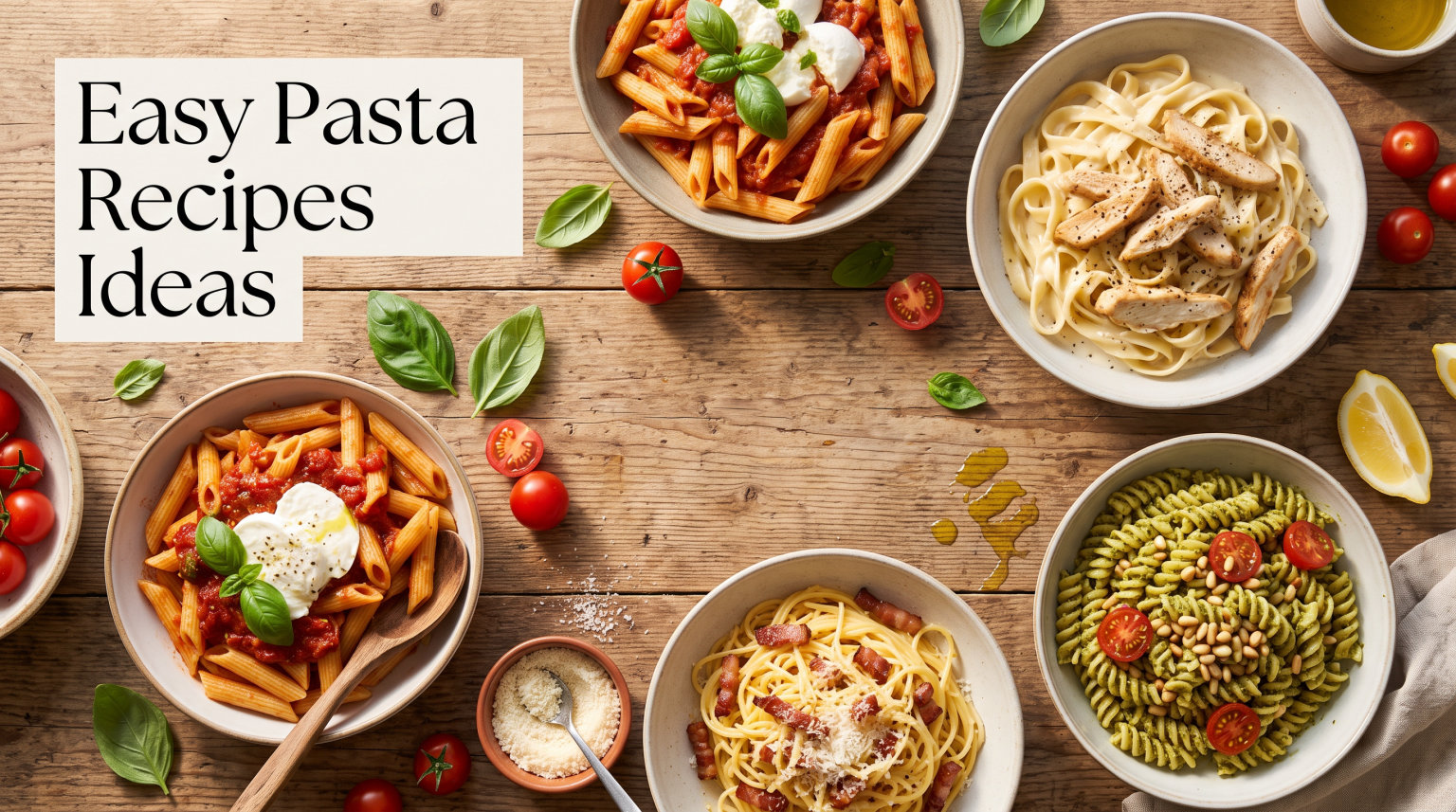
When the pantry looks sparse and everyone is hungry, easy pasta recipes ideas can turn a box of noodles into a real dinner without a complicated sauce. These 20 complete recipes cover buttery pantry bowls, speedy protein-and-vegetable combinations, one-pot dinners, and creamy sauces made without heavy cream.
I have kept the directions precise where pasta often goes wrong: when to reserve cooking water, when to move the pan off the heat, and when the sauce needs a minute to thicken. Pick the flavor you want, then use the pasta shape already in your cupboard unless the recipe depends on a specific cooking time.
Table of Contents
Find the Right Pasta for Tonight
-
Only pantry basics: Start with buttered Parmesan noodles, aglio e olio, pesto and peas, or tuna pasta.
-
Dinner in about 20 minutes: Choose spinach-feta, tomato-mozzarella, tahini, or avocado pasta.
-
Need more protein: Make shrimp, sausage and pepper, tuna, or carbonara-style pasta.
-
Want fewer dishes: Pick any recipe in the one-pot section.
-
Want creamy without heavy cream: Use goat cheese, tahini, eggs and Parmesan, or avocado.
If you are planning several busy nights, pair this collection with the easy weeknight dinner recipes, a quick option from the salmon recipe collection, or one of these easy one-pot soups.
20 Easy Pasta Recipes Ideas
Three-Ingredient Comfort
These pantry-first recipes use a short ingredient list and pasta water to create more body than the name suggests.
1. Buttered Parmesan Noodles
Serves: 4 | Time: 15 minutes | Method: Stovetop
Ingredients
-
12 ounces egg noodles
-
4 tablespoons unsalted butter
-
1 cup finely grated Parmesan
-
1/2 cup reserved pasta water
-
Black pepper, to taste
Instructions
-
Cook the noodles in well-salted water until al dente; reserve 1/2 cup cooking water before draining.
-
Return the noodles to the warm pot and toss with butter and Parmesan.
-
Add pasta water a splash at a time until the cheese forms a silky coating, then season with pepper.
2. Aglio e Olio
Serves: 4 | Time: 20 minutes | Method: Stovetop
Ingredients
-
12 ounces spaghetti
-
1/3 cup olive oil
-
6 garlic cloves, thinly sliced
-
1/4 teaspoon red pepper flakes
-
1/3 cup chopped parsley
Instructions
-
Cook the spaghetti until al dente and reserve 1 cup pasta water.
-
Warm the oil and garlic over medium-low heat until the garlic is pale gold, then add pepper flakes.
-
Toss in the spaghetti and enough pasta water to emulsify the oil; finish with parsley.
3. Tomato and Fresh Mozzarella Pasta
Serves: 4 | Time: 20 minutes | Method: Stovetop
Ingredients
-
12 ounces short pasta
-
2 cups halved cherry tomatoes
-
8 ounces fresh mozzarella, diced
-
3 tablespoons olive oil
-
1/2 cup torn basil
Instructions
-
Cook the pasta until al dente and reserve 1/2 cup pasta water.
-
Toss the hot pasta with tomatoes, mozzarella, olive oil, and basil.
-
Add a little pasta water if needed and serve while the cheese is just beginning to soften.
4. Pesto Pasta with Peas
Serves: 4 | Time: 15 minutes | Method: Stovetop
Ingredients
-
12 ounces fusilli
-
3/4 cup prepared pesto
-
2 cups frozen peas
-
1/2 cup reserved pasta water
-
1/3 cup grated Parmesan
Instructions
-
Add the peas to the pasta pot during the final 2 minutes of cooking.
-
Reserve pasta water, drain, and return everything to the pot.
-
Stir in pesto off the heat, loosening with pasta water, and finish with Parmesan.
5. Cacio e Pepe-Style Spaghetti
Serves: 4 | Time: 20 minutes | Method: Stovetop
Ingredients
-
12 ounces spaghetti
-
1 1/2 cups finely grated Pecorino Romano
-
2 teaspoons freshly cracked black pepper
-
1 1/2 cups reserved pasta water
-
1 tablespoon butter, optional
Instructions
-
Toast the pepper in a wide skillet for 30 seconds while the spaghetti cooks.
-
Whisk the cheese with 3/4 cup warm pasta water to make a thick paste.
-
Transfer the pasta to the skillet, remove from heat, and toss with the cheese paste, adding water gradually until glossy.
Fifteen-Minute Dinners
These fast dinners add vegetables or protein without turning pasta night into a long project.
6. Garlic Butter Shrimp Pasta
Serves: 4 | Time: 25 minutes | Method: Stovetop
Ingredients
-
12 ounces linguine
-
1 pound peeled shrimp
-
4 tablespoons butter
-
4 garlic cloves, minced
-
1 lemon
-
1/3 cup chopped parsley
Instructions
-
Cook the linguine and reserve 1 cup pasta water.
-
Sauté the shrimp in half the butter until opaque, then move them to a plate.
-
Cook garlic in the remaining butter, add lemon juice and pasta water, then toss with linguine and return the shrimp.
7. Spinach and Feta Pasta
Serves: 4 | Time: 20 minutes | Method: Stovetop
Ingredients
-
12 ounces penne
-
5 ounces baby spinach
-
6 ounces crumbled feta
-
2 tablespoons olive oil
-
2 garlic cloves, minced
-
1 lemon
Instructions
-
Cook the penne until al dente and reserve 3/4 cup pasta water.
-
Sauté garlic in oil, add spinach, and cook just until wilted.
-
Toss with pasta, feta, lemon zest, lemon juice, and enough pasta water to coat.
8. Quick Marinara and Mozzarella Pasta
Serves: 4 | Time: 20 minutes | Method: Stovetop
Ingredients
-
12 ounces rigatoni
-
3 cups marinara sauce
-
1 cup shredded mozzarella
-
1/2 cup grated Parmesan
-
1/3 cup torn basil
Instructions
-
Warm the marinara in a wide skillet while the pasta cooks.
-
Transfer the al dente pasta to the sauce with 1/2 cup pasta water and simmer for 1 minute.
-
Stir in mozzarella and Parmesan, cover briefly to melt, and finish with basil.
9. Lemon Herb Tuna Pasta
Serves: 4 | Time: 20 minutes | Method: Stovetop
Ingredients
-
12 ounces spaghetti
-
2 cans tuna, drained
-
1 lemon
-
3 tablespoons olive oil
-
2 tablespoons capers
-
1/3 cup chopped parsley
Instructions
-
Cook the spaghetti until al dente and reserve 1 cup pasta water.
-
Warm the tuna, olive oil, capers, lemon zest, and half the juice in a skillet.
-
Toss with spaghetti and enough pasta water to coat; finish with parsley and remaining lemon juice.
10. Broccoli Cheddar Pasta
Serves: 4 | Time: 25 minutes | Method: Stovetop
Ingredients
-
12 ounces shells
-
4 cups small broccoli florets
-
1 1/2 cups shredded sharp cheddar
-
1 cup milk
-
1 tablespoon butter
-
1 teaspoon Dijon mustard
Instructions
-
Add the broccoli to the pasta pot for the final 3 minutes, then drain.
-
Warm milk and butter in the pot without boiling.
-
Remove from heat, stir in cheddar and Dijon until smooth, then fold in the pasta and broccoli.
11. Sausage and Pepper Pasta
Serves: 4 | Time: 30 minutes | Method: Stovetop
Ingredients
-
12 ounces penne
-
12 ounces Italian sausage, sliced
-
2 bell peppers, sliced
-
1 small onion, sliced
-
2 cups marinara
-
1 tablespoon olive oil
Instructions
-
Brown the sausage in a wide skillet, then move it to a plate.
-
Cook peppers and onion in the same skillet until tender while the pasta boils.
-
Add marinara and sausage, then toss with the drained pasta and simmer for 1 minute.
One-Pot Minimal Cleanup
The pasta cooks in its sauce, so frequent stirring matters and the liquid amount may need a small adjustment for your pasta shape.
12. Creamy Mushroom One-Pot Pasta
Serves: 4 | Time: 30 minutes | Method: Stovetop
Ingredients
-
12 ounces fettuccine
-
12 ounces mushrooms, sliced
-
3 cups low-sodium broth
-
1 cup milk
-
3 garlic cloves, minced
-
1/2 cup grated Parmesan
Instructions
-
Brown the mushrooms in a wide pot, then add garlic and cook for 30 seconds.
-
Add pasta, broth, and milk; simmer uncovered, stirring often, until the noodles are tender.
-
Remove from heat and stir in Parmesan, adding water if the sauce becomes too thick.
13. One-Pot Tomato Basil Pasta
Serves: 4 | Time: 25 minutes | Method: Stovetop
Ingredients
-
12 ounces linguine
-
1 can diced tomatoes
-
3 cups low-sodium broth
-
1 small onion, thinly sliced
-
3 garlic cloves, sliced
-
1/2 cup torn basil
Instructions
-
Combine linguine, tomatoes, broth, onion, and garlic in a wide pot.
-
Bring to a boil, then simmer uncovered and stir frequently until the pasta is al dente.
-
Rest for 2 minutes so the sauce thickens, then fold in basil.
14. Sausage and Kale One-Pot Pasta
Serves: 4 | Time: 30 minutes | Method: Stovetop
Ingredients
-
12 ounces short pasta
-
12 ounces Italian sausage
-
5 cups chopped kale
-
1 can crushed tomatoes
-
3 cups low-sodium broth
-
1/2 cup grated Parmesan
Instructions
-
Brown the sausage in a large pot and drain excess fat if needed.
-
Add pasta, tomatoes, and broth; simmer uncovered, stirring often.
-
Fold in kale during the final 5 minutes and finish with Parmesan.
15. One-Pot Lemon Garlic Pasta with Peas
Serves: 4 | Time: 25 minutes | Method: Stovetop
Ingredients
-
12 ounces spaghetti
-
3 cups low-sodium broth
-
2 cups frozen peas
-
4 garlic cloves, minced
-
1 lemon
-
1/2 cup grated Parmesan
Instructions
-
Simmer spaghetti, broth, and garlic in a wide pot, turning the noodles as they soften.
-
Add peas during the final 3 minutes and cook until the pasta is al dente.
-
Remove from heat and stir in lemon zest, lemon juice, and Parmesan.
16. Cheesy One-Pot Broccoli Pasta
Serves: 4 | Time: 25 minutes | Method: Stovetop
Ingredients
-
12 ounces shells
-
4 cups small broccoli florets
-
3 cups low-sodium broth
-
1 cup milk
-
1 1/2 cups shredded cheddar
-
1/2 teaspoon garlic powder
Instructions
-
Simmer the shells in broth and milk, stirring frequently to prevent sticking.
-
Add broccoli when the pasta has about 5 minutes left.
-
Remove from heat, stir in cheddar and garlic powder, and rest for 2 minutes before serving.
Creamy Without Heavy Cream
Cheese, tahini, eggs, or avocado creates a creamy texture without relying on heavy cream.
17. Goat Cheese and Spinach Pasta
Serves: 4 | Time: 20 minutes | Method: Stovetop
Ingredients
-
12 ounces rotini
-
5 ounces goat cheese
-
5 ounces baby spinach
-
1 lemon
-
1 cup reserved pasta water
-
1/3 cup chopped walnuts, optional
Instructions
-
Cook the rotini and reserve 1 cup pasta water.
-
Mash goat cheese with lemon zest, lemon juice, and 1/2 cup warm pasta water.
-
Toss with hot pasta and spinach until creamy, adding more water as needed; finish with walnuts if using.
18. Creamy Tahini Pasta
Serves: 4 | Time: 20 minutes | Method: Stovetop
Ingredients
-
12 ounces spaghetti
-
1/3 cup tahini
-
1 lemon
-
2 garlic cloves, finely grated
-
1/2 cup reserved pasta water
-
2 cups baby spinach
Instructions
-
Whisk tahini, lemon juice, garlic, and warm pasta water until smooth.
-
Toss the hot spaghetti with the sauce and spinach off the heat.
-
Add more pasta water until glossy, then season with salt and pepper.
19. Carbonara-Style Pasta with Eggs
Serves: 4 | Time: 25 minutes | Method: Stovetop
Ingredients
-
12 ounces spaghetti
-
3 large eggs
-
1 cup finely grated Parmesan
-
4 ounces diced bacon or pancetta
-
1 teaspoon black pepper
-
1 cup reserved pasta water
Instructions
-
Cook the bacon until crisp and whisk the eggs, Parmesan, and pepper in a bowl.
-
Drain the al dente spaghetti, reserving water, and toss it with the bacon off the heat.
-
Add the egg mixture while tossing constantly, loosening with warm pasta water until creamy; do not return to direct heat.
20. Creamy Avocado Pasta
Serves: 4 | Time: 20 minutes | Method: Stovetop
Ingredients
-
12 ounces spaghetti
-
2 ripe avocados
-
1 lemon
-
1 garlic clove
-
1/3 cup olive oil
-
1/2 cup chopped basil
Instructions
-
Blend avocado, lemon juice, garlic, olive oil, basil, and a pinch of salt until smooth.
-
Cook the spaghetti and reserve 1/2 cup pasta water.
-
Toss the hot pasta with avocado sauce off the heat, adding water as needed, and serve immediately.
A Reliable Pasta-to-Sauce Routine
-
Start the sauce first if it needs more than 10 minutes; otherwise begin with the pasta water.
-
Salt the water before the pasta goes in so the noodles are seasoned throughout.
-
Reserve at least 1 cup of cooking water before draining.
-
Move the pasta while it is still al dente into the sauce when the recipe calls for finishing in the pan.
-
Add pasta water gradually while tossing until the sauce looks glossy rather than watery.
-
Rest one-pot pasta briefly because its sauce continues to thicken off the heat.
Pasta Cooking Tips That Will Change Your Dinners
Mastering a few basic techniques will elevate every pasta dish you make, even the simplest ones. These practical pasta cooking tips solve the most common texture and sauce problems.
Why Salting Pasta Water Matters
Pasta water should be well seasoned; adding enough salt is the difference between bland and flavorful pasta.
Salt the water after it comes to a boil but before adding pasta. Use about 1-2 tablespoons of salt per gallon of water. The pasta absorbs this salted water as it cooks, seasoning it from the inside out. Sauce alone cannot compensate for undersalted pasta.
The Magic of Reserved Pasta Water
That cloudy liquid left after draining pasta is liquid gold. Pasta water is full of starch that helps sauce cling to noodles and creates silky emulsions.
Always save a cup before draining. When tossing pasta with sauce, add splashes of pasta water while stirring vigorously. The starch helps fat and liquid combine into a cohesive sauce that actually sticks to your pasta instead of pooling at the bottom of the bowl.
Achieving Perfect Al Dente Texture
Al dente means “to the tooth” in Italian, describing pasta that is tender but still has a slight firmness when bitten. This texture holds up better when tossed with sauce and reheats more successfully.
Start testing your pasta 2 minutes before the package instructions suggest. It should yield slightly to pressure but still have a tiny white core when you bite through. Remember that pasta continues cooking slightly from residual heat after draining.
Common Beginner Mistakes to Avoid
Rinsing cooked pasta is a habit to break immediately. Rinsing removes the surface starch that helps sauce adhere. The only exception is when making cold pasta salad.
Overcrowding the pot is another common error. Pasta needs room to move freely in vigorously boiling water. Use a large pot and plenty of water to prevent sticking and ensure even cooking. Adding oil to the water does not prevent sticking and actually makes sauce slide right off.
Finishing Pasta in the Sauce
The final minute of cooking should happen in your sauce pan, not the pasta pot. Drain pasta when it is just slightly underdone, then transfer it directly to your sauce with a splash of pasta water.
Finish cooking over medium heat, tossing constantly. This allows the pasta to absorb sauce flavors and creates that restaurant-quality cohesion where every bite is perfectly coated.
Which Pasta Shapes Work Best with Simple Sauces
Matching pasta shape to sauce type is not just fussy chef behavior. The right pairing makes simple sauces more satisfying and helps ingredients distribute evenly throughout your dish.
Long thin pasta like spaghetti and linguine work beautifully with olive oil-based sauces like aglio e olio. The strands tangle together and hold onto thin sauces without letting them slide off.
Short pasta shapes with ridges or tubes, like penne and rigatoni, are ideal for chunky sauces and vegetable pieces. The hollow centers capture bits of sauce and small ingredients in every bite.
Small shapes like orecchiette and farfalle excel with vegetables and proteins. Their shapes cradle peas, beans, and small pieces of meat or cheese perfectly.
For creamy sauces, flat wide noodles like fettuccine provide plenty of surface area for the sauce to coat. The result is rich and luxurious without needing extra fat.
When in doubt, use whatever pasta you have. These pairings optimize texture but a good simple sauce works on any shape. I regularly make aglio e olio with penne when that is what is in my pantry.
How to Store and Reheat Pasta Without Drying It Out
Leftover pasta is a gift to your future self, but only if you store and reheat it properly. Dry, clumpy reheated pasta ruins the experience and wastes good food.
Storing Cooked Pasta
Toss hot pasta with a small amount of olive oil before refrigerating to prevent sticking. Store sauce separately when possible to maintain the best texture.
Keep pasta in airtight containers in the refrigerator for up to 4 days. For longer storage, freeze pasta without sauce in freezer bags for up to 3 months. Thaw overnight in the refrigerator before reheating.
Reheating Techniques That Work
The microwave is actually fine for reheating pasta if you do it right. Add a splash of water or milk to the container before microwaving, then cover loosely. Heat in 30-second intervals, stirring between each, until warmed through.
For stovetop reheating, warm pasta in a pan with a splash of water, broth, or milk. Toss frequently over medium-low heat until hot. This method restores the saucy texture better than the microwave.
Sauced pasta generally reheats better than plain pasta. The sauce provides moisture that prevents drying out. If you know you will have leftovers, consider slightly undercooking the initial batch so it finishes perfectly when reheated.
Quick Fixes for Common Pasta Problems
-
Sauce looks oily: Add warm pasta water one tablespoon at a time and toss vigorously to rebuild the emulsion.
-
Sauce is too thick: Loosen it with pasta water, broth, or milk, depending on the recipe.
-
Cheese clumped: Move the pan off direct heat and add finely grated cheese gradually.
-
One-pot pasta is still firm: Add 1/4 cup hot water, cover briefly, and keep cooking while stirring.
-
Pasta tastes flat: Add salt carefully, then finish with lemon, vinegar, herbs, pepper, or grated cheese.
-
Leftovers are dry: Reheat gently with a splash of water, broth, or milk rather than more oil.
Frequently Asked Questions
What is the easiest sauce for pasta?
Butter and Parmesan, olive oil and garlic, prepared pesto, or warm marinara are the simplest starting points. Reserve pasta water so even a short sauce can coat the noodles instead of sitting at the bottom of the bowl.
How much dry pasta serves four people?
Twelve ounces is a practical amount for four moderate servings when the meal includes vegetables or protein. Use a full pound for larger appetites or if you want planned leftovers.
Can pasta cook directly in sauce?
Yes, if the recipe includes enough liquid and you stir frequently. Wide pots work best because the pasta lies more evenly. Add extra hot water in small amounts if the noodles are still firm before the sauce has thickened.
How do I make pasta creamy without heavy cream?
Finely grated cheese, goat cheese, tahini, eggs, blended avocado, milk, or puréed beans can all create body. The key is combining the ingredient with warm pasta water and avoiding excessive direct heat.
Should pasta be rinsed after cooking?
Do not rinse pasta for a hot sauced dish because rinsing removes the surface starch that helps sauce cling. Rinsing can be useful for a cold pasta salad when you need to stop the cooking and cool the noodles quickly.
How long does cooked pasta last in the refrigerator?
Use most cooked pasta within three to four days when it has been cooled promptly and stored in a covered container. Follow the federal cold-storage chart for specific ingredients and freeze portions you will not use soon.
What can I serve with a simple pasta dinner?
Add a quick green salad, roasted or steamed vegetables, fruit, beans, chicken, fish, or crusty bread according to what the pasta already contains. A rich pasta usually benefits from a crisp, acidic vegetable side.
Conclusion: Make Easy Pasta Recipes Ideas Your Own
The best easy pasta recipes ideas teach a reusable move: emulsify butter with pasta water, finish noodles in sauce, or create creaminess away from direct heat. Once you understand that move, you can swap the vegetable, cheese, or protein without losing the method.
Start with one pantry recipe and one one-pot recipe this week. Keep a cup near the colander as your reminder to save pasta water, and the rest of dinner becomes much easier.