
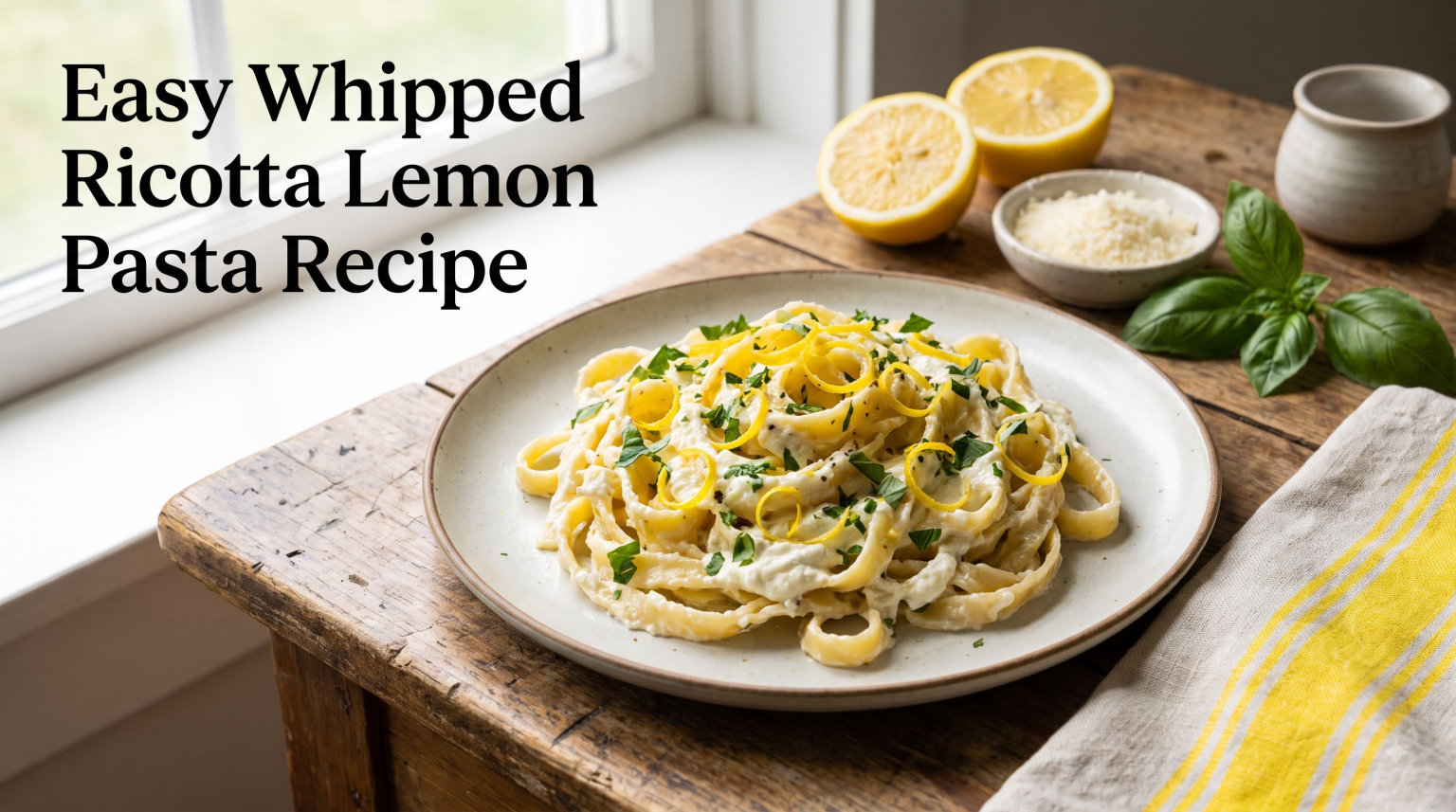
When dinner needs to be both dependable and satisfying, I turn to whipped ricotta lemon pasta recipe. The dependable result comes from one practical choice: blend room-temperature ricotta until smooth and loosen it gradually with reserved pasta water off the heat. The guide below explains the texture, timing, substitutions, serving options, and storage without guesswork.
I have also included creamy lemon ricotta pasta guidance for the exact moments that decide the result, from prep and doneness to storage. For another practical dinner, browse these easy one pot pasta recipes ideas.
Table of Contents
Why Easy whipped ricotta lemon pasta recipe works
Why This Whipped Ricotta Lemon Pasta Works
This recipe works because the food processor does all the heavy lifting for you. Whipping ricotta transforms it from a grainy, scoopable cheese into a smooth, cloud-like sauce base that no one will guess came straight from a tub. Blended with good olive oil, salt, and a generous hit of lemon, it becomes something genuinely luxurious.
The starchy pasta water is the secret weapon. It loosens the ricotta just enough to coat the noodles without diluting the flavor. This is the same trick Italian cooks use for cacio e pepe, and it works beautifully here too.
You also skip the cream entirely. No heavy cream, no butter, no flour-thickened roux. The ricotta alone gives you that rich mouthfeel, and the lemon keeps it light. That balance is what makes whipped ricotta lemon pasta feel like restaurant food made at home.
Ingredients You Will Need
For dependable whipped ricotta lemon pasta recipe, blend room-temperature ricotta until smooth and loosen it gradually with reserved pasta water off the heat. The same rule keeps creamy lemon ricotta pasta focused and balanced instead of grainy cheese or a tight sauce. You may also want to save these what to serve with spaghetti best side dishes for your next meal plan.
Here is the full ingredient list with the exact measurements I use. Stick to these the first time, then adjust the lemon and salt to your taste.
For the pasta:
-
12 oz short pasta (rigatoni, fusilli, cavatappi, or orecchiette)
-
1 teaspoon kosher salt, for the pasta water
For the whipped ricotta sauce:
-
1 cup whole milk ricotta cheese (do not use part-skim here)
-
1/3 cup grated Parmigiano Reggiano or Parmesan
-
Zest of 1 large lemon (about 1 tablespoon)
-
2 tablespoons fresh lemon juice
-
2 tablespoons extra virgin olive oil, plus more for drizzling
-
1/2 teaspoon kosher salt, plus more to taste
-
1/4 teaspoon black pepper
For serving:
-
1/4 cup fresh basil leaves, torn
-
1 cup cherry tomatoes, halved (optional but recommended)
-
Extra Parmesan and lemon zest for finishing
-
Red pepper flakes, if you like heat
On the ricotta: Whole milk ricotta is non-negotiable for this recipe. Part-skim versions have less fat and tend to whip up grainy and thin. If you can only find part-skim, add an extra tablespoon of olive oil to help the texture along.
On the pasta shape: Short shapes with curves and ridges work best. Rigatoni, fusilli, cavatappi, and orecchietta all hold the whipped ricotta sauce in their nooks. Long noodles like spaghetti work in a pinch, but you will lose some of that creamy coating.
Equipment Needed
You need a food processor to get the ricotta truly smooth. A high-powered blender works too, but a food processor gives you better control over the texture. You will also need a large pot for boiling pasta, a measuring cup for scooping out the pasta water, and a pair of tongs for tossing everything together at the end.
How to Make Whipped Ricotta Lemon Pasta, Step by Step
For food-safety temperatures and handling limits, I follow the USDA food-safety guidance and use an instant-read thermometer whenever doneness is uncertain.
I judge whipped ricotta lemon pasta recipe by the finished texture and temperature, not by the clock alone. With creamy lemon ricotta pasta, the sauce should look glossy and cling in a thin layer while the pasta remains al dente and bright with lemon. For a useful companion guide, see these easy high protein dinner recipes.
This is the full method broken into clear steps. Read through once before you start so you know when to multitask.
Step 1: Cook the pasta and reserve the water. Bring a large pot of well-salted water to a boil. Add the pasta and cook according to the package directions until al dente. Before you drain, scoop out one full cup of the starchy pasta water and set it aside. Drain the pasta and leave it in the colander.
Step 2: Whip the ricotta. While the pasta cooks, add the ricotta, Parmigiano Reggiano, lemon zest, lemon juice, olive oil, salt, and pepper to the bowl of a food processor. Process on high for about 60 to 90 seconds, stopping once to scrape down the sides. You want the ricotta completely smooth with no grainy bits left. It should look silky and almost pourable.
Step 3: Taste and adjust the seasoning. Scrape the lid and taste a small spoonful. Add more salt if it tastes flat, or another squeeze of lemon if it needs brightness. The ricotta should taste seasoned and bright on its own, because the pasta will mute it slightly.
Step 4: Toss the pasta with the sauce. Return the drained pasta to the warm pot (off the heat). Add the whipped ricotta mixture and about 1/4 cup of the reserved pasta water. Toss vigorously with tongs until every noodle is coated.
Step 5: Adjust the consistency. If the sauce feels too thick or sticky, add more pasta water, one tablespoon at a time, and keep tossing. You are looking for a loose, glossy sauce that clings to the pasta without pooling at the bottom. Most batches need between 1/4 and 1/2 cup of pasta water total.
Step 6: Fold in the extras and serve. Gently fold in the cherry tomatoes and half of the torn basil. Transfer to a wide serving bowl or individual plates. Finish with the remaining basil, a generous shower of Parmesan, a fresh grating of lemon zest, a drizzle of olive oil, and red pepper flakes if using.
Serve immediately while the pasta is warm. The sauce is best fresh, but leftovers reheat surprisingly well with a splash of water.
Pro Tips for Perfect Whipped Ricotta
A few small details separate good whipped ricotta lemon pasta from great.
Strain your ricotta if it looks watery. Some brands of ricotta sit in a pool of liquid. If yours does, scoop it into a fine-mesh strainer set over a bowl for 15 minutes before whipping. You will be shocked at how much water drains out, and the whipped texture will be much better for it.
Why pasta water matters: Pasta water is loaded with starch from the cooking noodles. That starch emulsifies with the ricotta and olive oil, creating a sauce that clings instead of slipping off. This is the same technique behind classic Roman pasta dishes, and it is why you should never skip the draining step. For more on the science behind this, Serious Eats has a deep dive on the whipped ricotta technique that is worth reading.
Whip longer than you think. The biggest mistake people make is under-processing the ricotta. Run the food processor for at least 60 seconds. If you still see tiny curds, keep going. The texture should be completely homogeneous, almost like a thick mousse.
Season aggressively. Cold ricotta tastes bland. When you taste the whipped mixture before adding the pasta, it should taste slightly over-salted and over-lemoned. That intensity mellows once it meets the noodles.
Variations and Add-Ons
Once you have the base recipe down, this is a flexible dish. Here are the variations I come back to most often.
-
Add protein: Sliced grilled chicken, sauteed shrimp, or crispy prosciutto all turn this into a heartier main. Crumbled bacon is also a popular addition, especially in our house. Cook whatever protein you choose separately and fold it in at the end with the tomatoes.
-
Add vegetables: A few handfuls of baby spinach stirred in at the end will wilt from the heat of the pasta. Fresh peas, blistered broccoli, or roasted asparagus also work well. Avoid water-heavy vegetables like raw zucchini, which will thin the sauce.
-
Make it gluten-free: Swap in your favorite gluten-free pasta and follow the recipe exactly. The sauce itself is naturally gluten-free since there is no flour involved.
-
Swap the citrus: Try Meyer lemon for a sweeter, more floral note. A mix of lemon and orange zest also works beautifully.
Storage and Make-Ahead
Leftover whipped ricotta lemon pasta keeps well in an airtight container in the fridge for up to 3 days. Reheat gently in a saucepan over low heat with a splash of water or milk to loosen the sauce back up. The microwave works too, just heat in 30-second bursts and stir between each one.
You can absolutely make the whipped ricotta mixture ahead of time. Store it in an airtight container in the fridge for up to 4 days. When you are ready to eat, cook the pasta fresh and toss it with the cold whipped ricotta and plenty of pasta water. The heat from the noodles will warm everything through.
This recipe is also a smart starting point for freezer meal recipes if you like batch cooking. The whipped ricotta freezes well on its own, though I recommend cooking the pasta fresh rather than freezing the assembled dish.
Serving Suggestions
This pasta is rich and bright enough to stand alone, but a few simple sides round it out. A crisp green salad with a light vinaigrette cuts the creaminess nicely. Crusty bread for soaking up any extra sauce is never a bad idea.
For wine, a crisp Pinot Grigio or Vermentino mirrors the lemon notes in the dish. If you prefer red, a light Chianti or Dolcetto works without overpowering the delicate ricotta.
Frequently Asked Questions
How do I know when whipped ricotta lemon pasta is ready?
The sauce should look glossy and cling in a thin layer while the pasta remains al dente and bright with lemon.
How do I prevent grainy cheese or a tight sauce?
Blend room-temperature ricotta until smooth and loosen it gradually with reserved pasta water off the heat.
Can I substitute cottage cheese for ricotta?
It can work after very thorough blending, although the flavor is tangier and the texture is slightly lighter.
What should I serve with whipped ricotta lemon pasta?
Add asparagus, peas, spinach, or a simple arugula salad; grilled chicken or salmon can make it a fuller meal.
Can I make whipped ricotta lemon pasta ahead?
Chill leftovers quickly and reheat gently with a splash of water because high heat can make ricotta grainy.
The Bottom Line
For whipped ricotta lemon pasta recipe, the most important move is to blend room-temperature ricotta until smooth and loosen it gradually with reserved pasta water off the heat. That same discipline makes creamy lemon ricotta pasta useful on a busy day without sacrificing flavor or texture.
I recommend reading the method once, preparing every ingredient, and using the doneness cues above as the final authority. The dependable result comes from one practical choice: blend room-temperature ricotta until smooth and loosen it gradually with reserved pasta water off the heat. The guide below explains the texture, timing, substitutions, serving options, and storage without guesswork.