
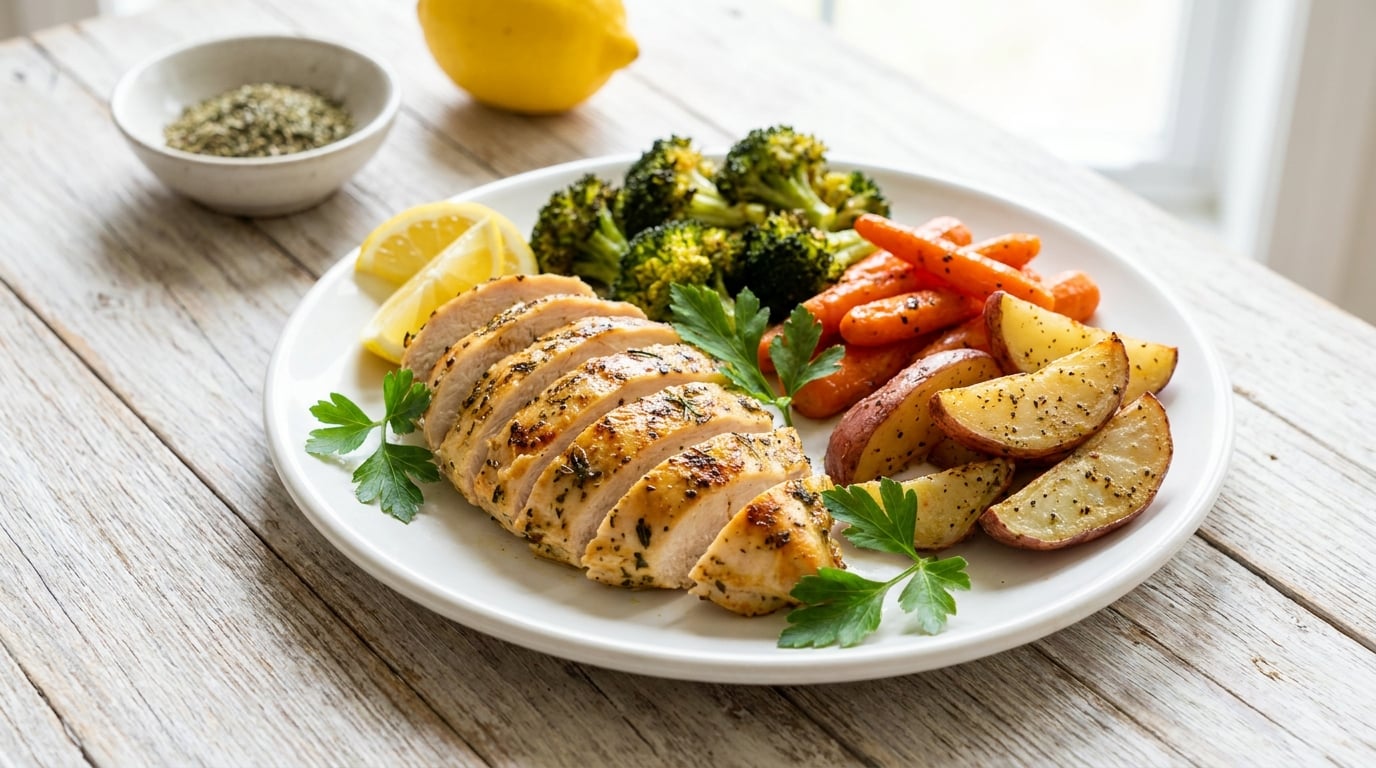
If you or someone at your table has been told to cut back on salt, the hardest part is dinner. These low sodium dinner recipes for high blood pressure all land between 320 and 460 mg of sodium per serving, cook mostly in under 45 minutes, and use ordinary supermarket ingredients rather than specialty “healthy” food you would have to hunt down.
I built this list in early fall, when the produce is still good and the oven is comfortable, and every dish here is one the whole family can eat from the same pot. Nothing is a diet punishment, and none of it needs more than a rimmed sheet pan, a skillet, and about half an hour of chopping. A note before you start: this is cooking information, not medical advice, so check your own numbers with your doctor or a registered dietitian.
Table of Contents
Low Sodium Dinner Recipes for High Blood Pressure at a Glance
| Recipe | Time | Difficulty | Best for |
|---|---|---|---|
| 1. Lemon-Herb Chicken with Roasted Vegetables | 45 min | Easy | The easiest first recipe and a picky-eater win |
| 2. Garlic Shrimp and Brown Rice Bowls | 25 min | Easy | Fastest dinner on the list |
| 3. Sheet-Pan Salmon with Sweet Potato and Broccoli | 40 min | Easy | Omega-3 fats and one pan to wash |
| 4. Turkey and Vegetable Meatballs with Whole-Wheat Spaghetti | 45 min | Medium | Kids who want pasta night |
| 5. Southwestern Chicken and Black Bean Stuffed Peppers | 45 min | Easy | A make-ahead freezer meal |
| 6. Mediterranean Chickpea and Vegetable Skillet | 30 min | Easy | Meatless nights and one skillet |
| 7. Lean Beef and Broccoli Stir-Fry | 25 min | Easy | A quick dinner with real crunch |
| 8. Herbed White Bean and Kale Soup | 40 min | Easy | Cool nights and batch cooking |
| 9. Baked Cod with Herbed Green Beans and Potatoes | 35 min | Easy | A light, mild fish dinner |
| 10. Turkey Burger Bowls with Brown Rice and Roasted Vegetables | 35 min | Easy | Burger flavor without the bun |
| 11. Ginger Chicken Stir-Fry with Napa Cabbage | 30 min | Easy | A bright 30-minute dinner |
| 12. Roasted Cauliflower and Lentil Bowls with Tahini | 40 min | Medium | Plant-based protein in a bowl |
1. Lemon-Herb Chicken with Roasted Vegetables
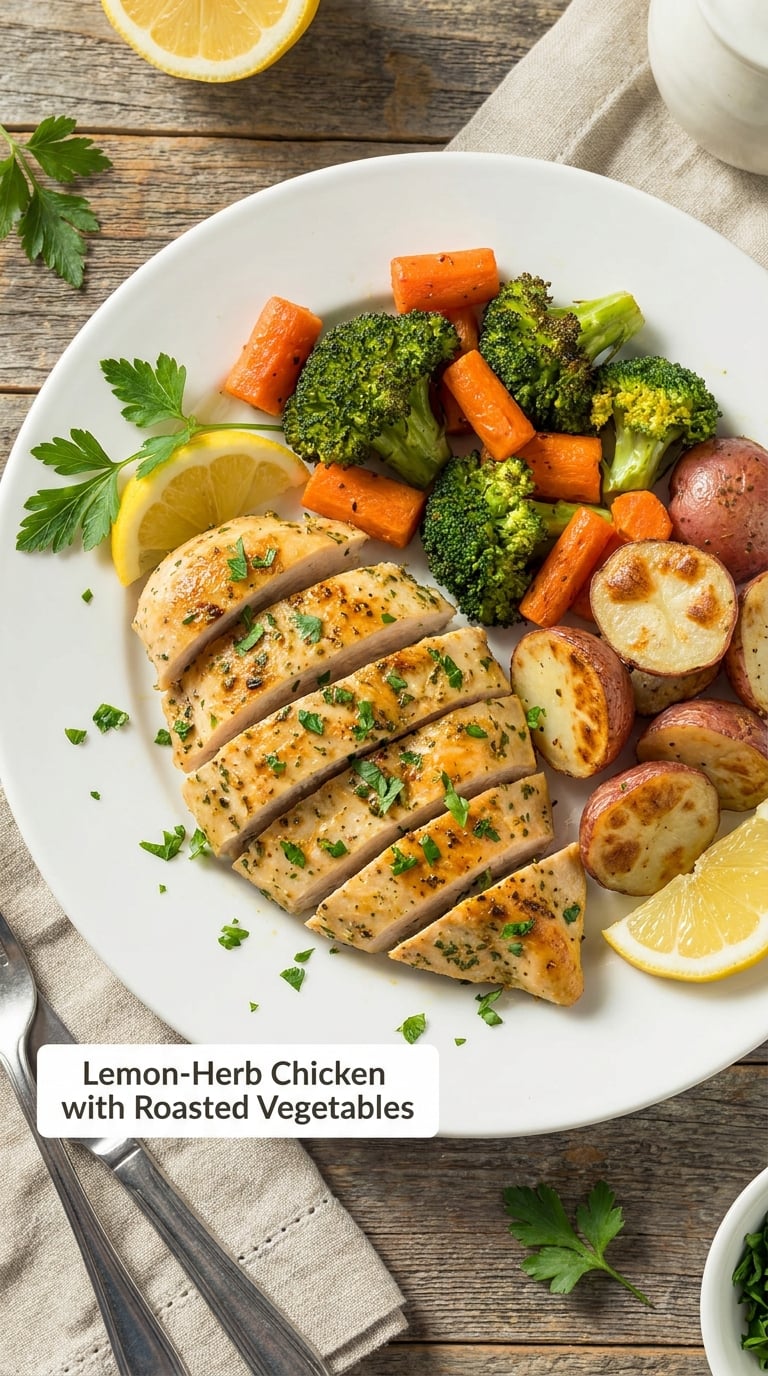
This is the recipe I hand to anyone starting a low sodium routine, because it is hard to get wrong and almost nobody turns it down. Everything roasts together on one pan, and the lemon does the seasoning work that salt usually would.
Yield: 4 servings · Prep: 15 min · Cook: 30 min · Total: 45 min · Difficulty: Easy · Sodium per serving: about 410 mg
Ingredients
- 1 1/2 lb skinless boneless chicken breast, cut into 6 chunks
- 1 lb small red potatoes, halved
- 2 cups broccoli florets
- 2 medium carrots, cut into 1-inch pieces
- 2 tbsp extra-virgin olive oil
- 1 lemon, zested and juiced
- 3 garlic cloves, minced
- 2 tsp dried oregano
- 1 tsp dried thyme
- 1/2 tsp black pepper
- 1/2 cup flat-leaf parsley, chopped
Instructions
- Heat the oven to 425°F (220°C) and line a large rimmed sheet pan with parchment.
- Toss the potatoes, carrots, and broccoli with 1 tbsp olive oil and spread them out cut-side down.
- Rub the remaining olive oil over the chicken with the lemon zest, half the juice, garlic, oregano, thyme, and black pepper.
- Set the chicken on top of the vegetables and scrape the garlic and herbs off the pan with a spoon.
- Roast for 15 minutes, then pull the pan out and turn the vegetables with a spatula.
- Roast for 12 to 15 more minutes, until the chicken reaches 165°F (74°C) inside with no pink meat and the vegetables are tender-crisp.
- Rest the chicken 3 minutes, then scatter with parsley and a squeeze of lemon.
Tip: Cut the chicken chunks the same size as the potato halves so everything finishes at the same time. A thermometer is the only reliable doneness check here.
Swap it: Use cauliflower or butternut squash in place of the potatoes, or swap chicken for 1 lb trimmed pork tenderloin and cook to 145°F (63°C) with a 3-minute rest.
Storage: Refrigerate leftovers in a sealed container for up to 4 days and reheat at 375°F (190°C) until the center is hot. No-salt-added chicken breast pieces freeze well for up to 3 months.
Allergens: None of the major allergens as written. Check your olive oil label, since some brands add salt.
2. Garlic Shrimp and Brown Rice Bowls
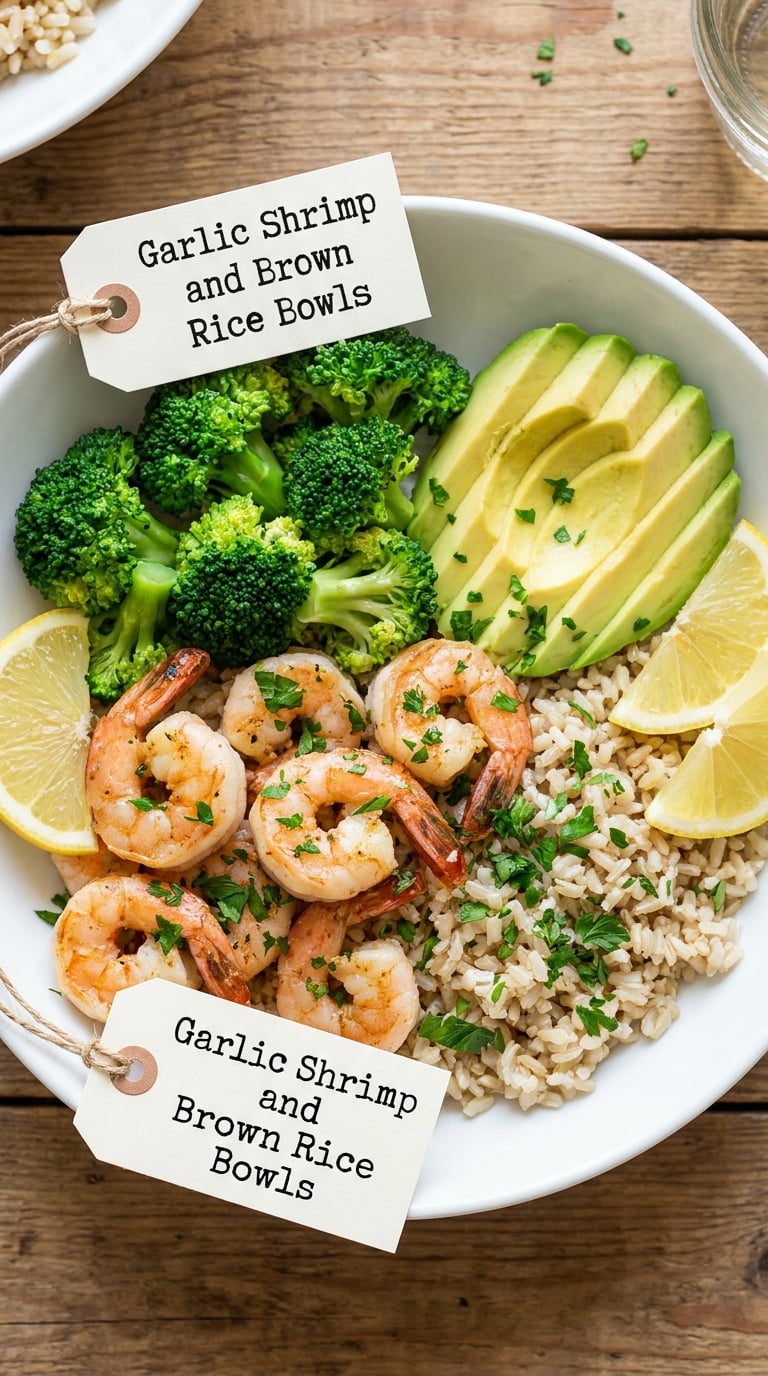
Twenty-five minutes, one pan for the broccoli, and shrimp that cook in three minutes flat. This is the dinner to make on a weeknight when you have about half an hour and nothing planned.
Yield: 4 servings · Prep: 10 min · Cook: 15 min · Total: 25 min · Difficulty: Easy · Sodium per serving: about 320 mg
Ingredients
- 1 lb raw peeled and deveined shrimp, tails off
- 3 cups cooked brown rice, kept hot
- 3 cups broccoli florets
- 3 garlic cloves, thinly sliced
- 1 tbsp low-sodium soy sauce
- 1 tbsp rice vinegar
- 1 tsp toasted sesame oil
- 1 tsp honey
- 1 lemon, cut into wedges
- 1 avocado, sliced
- 1/4 cup flat-leaf parsley, chopped
Instructions
- Bring a pot of water to a boil and steam the broccoli for 4 minutes, until bright green and just tender. Drain.
- Whisk the soy sauce, vinegar, sesame oil, honey, and 1 tbsp of the lemon juice in a small bowl.
- Heat 1 tsp olive oil in a large skillet over medium-high heat and add the garlic for 30 seconds, until fragrant and pale gold.
- Add the shrimp in a single layer and cook 2 minutes per side, until they curl into a C shape and turn opaque.
- Pour in the sauce and let it bubble for 30 seconds so it coats the shrimp.
- Spoon the rice into bowls, add the broccoli and shrimp, and finish with avocado, parsley, and lemon wedges.
Tip: Shrimp are done at 145°F (63°C) and the moment they curl into a loose C. A tight O means you left them a minute too long and they go rubbery.
Swap it: Use chicken breast slices instead of shrimp and cook to 165°F (74°C), or double the broccoli and serve over cauliflower rice.
Storage: Keep the rice and shrimp separate in the fridge for up to 3 days. Reheat the rice with a damp paper towel over the bowl for 60 seconds.
Allergens: Shellfish and soy.
3. Sheet-Pan Salmon with Sweet Potato and Broccoli
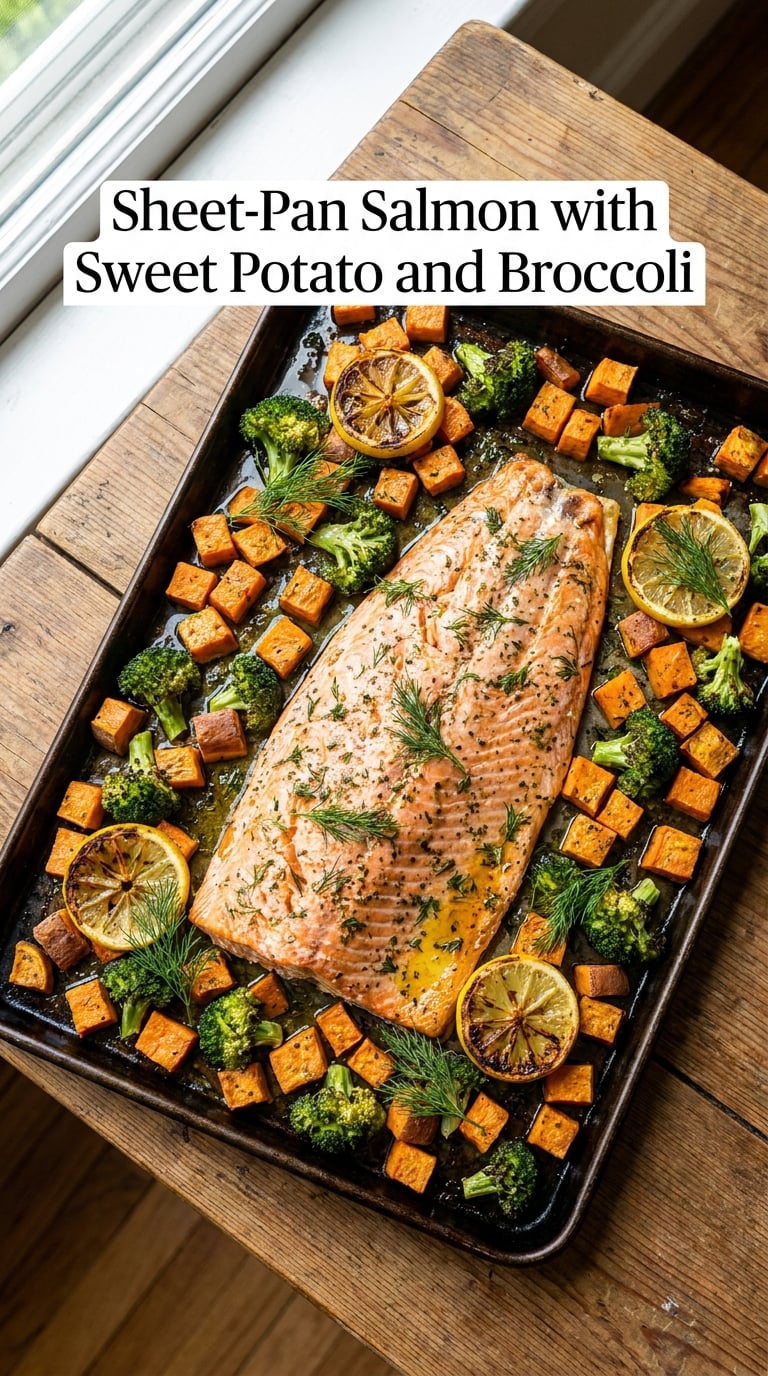
Salmon and sweet potato roast at the same rate, which is why this is a single-pan dinner with almost no chopping. The unsaturated fat in the fish pairs with the fiber in the vegetables, and the whole plate lands well under 400 mg of sodium.
Yield: 4 servings · Prep: 15 min · Cook: 25 min · Total: 40 min · Difficulty: Easy · Sodium per serving: about 380 mg
Ingredients
- 4 skin-on salmon fillets, 5 oz each
- 2 medium sweet potatoes, cut into 1/2-inch cubes
- 2 cups broccoli florets
- 2 tbsp extra-virgin olive oil, divided
- 1 tsp smoked paprika
- 1 tsp garlic powder
- 1/2 tsp ground cumin
- 1/2 tsp black pepper
- 1 lemon, cut into thin slices
- 1/4 cup fresh dill, chopped
Instructions
- Heat the oven to 400°F (205°C) and line a rimmed sheet pan with parchment.
- Toss the sweet potato cubes with 1 tbsp olive oil and roast alone for 12 minutes, since they take longer than fish.
- Add the broccoli to the pan, toss with the remaining oil, and push it to the edges to make room.
- Rub the salmon with the paprika, garlic powder, cumin, and pepper, and nestle it skin-side down among the vegetables.
- Tuck the lemon slices around the fish and roast for 10 to 13 more minutes.
- Check the thickest fillet: it is done at 145°F (63°C) and flakes into opaque layers with no translucent center.
- Scatter with dill before serving.
Tip: Starting the potatoes first is the step people skip, and it is the difference between roasted sweet potato and pale, undercooked cubes.
Swap it: Use haddock or cod in place of salmon, or double the broccoli and drop the sweet potato if you want to keep the carbs lower.
Storage: Cooked salmon keeps 3 to 4 days refrigerated. Reheat gently at 300°F (150°C) for 10 minutes so it does not dry out, and eat the vegetables cold or warmed separately.
Allergens: Fish.
4. Turkey and Vegetable Meatballs with Whole-Wheat Spaghetti
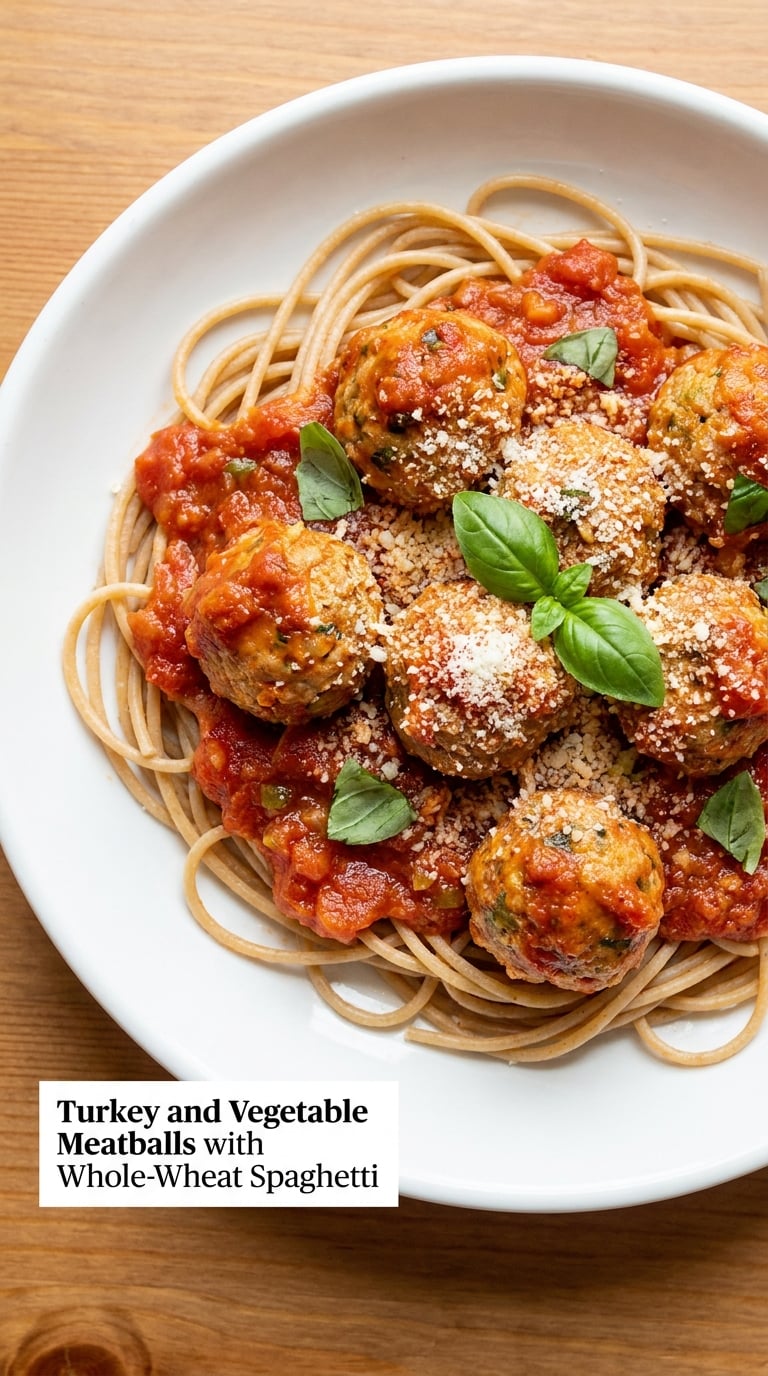
Pasta night does not have to be sacrificed. Zucchini and grated carrot go into the meatballs so they stay tender without any of the usual filler, and a homemade no-salt-added tomato sauce keeps the whole plate under 500 mg.
Yield: 4 servings · Prep: 20 min · Cook: 25 min · Total: 45 min · Difficulty: Medium · Sodium per serving: about 460 mg
Ingredients
For the meatballs:
- 1 lb lean ground turkey (93% lean)
- 1/2 cup panko breadcrumbs
- 1 large egg, lightly beaten
- 1/2 cup grated zucchini, squeezed dry
- 1/3 cup grated carrot, squeezed dry
- 2 garlic cloves, minced
- 1 tsp Italian seasoning
- 1/2 tsp black pepper
For the pasta:
- 12 oz whole-wheat spaghetti
- 1.5 cups no-salt-added tomato sauce
- 1/2 cup water
- 1 tsp Italian seasoning
- 2 tbsp grated parmesan, plus more to serve
- 1/4 cup fresh basil, torn
Instructions
- Heat the oven to 400°F (205°C) and set a rack in the middle.
- Mix the turkey, breadcrumbs, egg, zucchini, carrot, garlic, Italian seasoning, and pepper with a light hand until just combined.
- Roll into 20 meatballs about 1 inch wide and space them on a parchment-lined sheet pan.
- Bake for 18 to 20 minutes, until the centers reach 160°F (71°C) and the outsides are set.
- While they bake, cook the spaghetti in unsalted water until al dente, then drain.
- Warm the tomato sauce with the water and 1 tsp Italian seasoning in the pasta pot until steaming.
- Toss the spaghetti through the sauce, top with the meatballs, and finish with parmesan and basil.
Tip: Weigh the zucchini and carrot after squeezing them. Wet vegetables are the one thing that turns turkey meatballs into crumbly ones.
Swap it: Use chickpea patties or baked lentil meatballs in place of the turkey, and a no-salt-added marinara thinned with a spoonful of pasta water.
Storage: Refrigerate for up to 4 days. The meatballs freeze on a tray first, then in a bag for up to 3 months; reheat from frozen at 375°F (190°C) for 20 minutes.
Allergens: Wheat, egg, and dairy.
5. Southwestern Chicken and Black Bean Stuffed Peppers
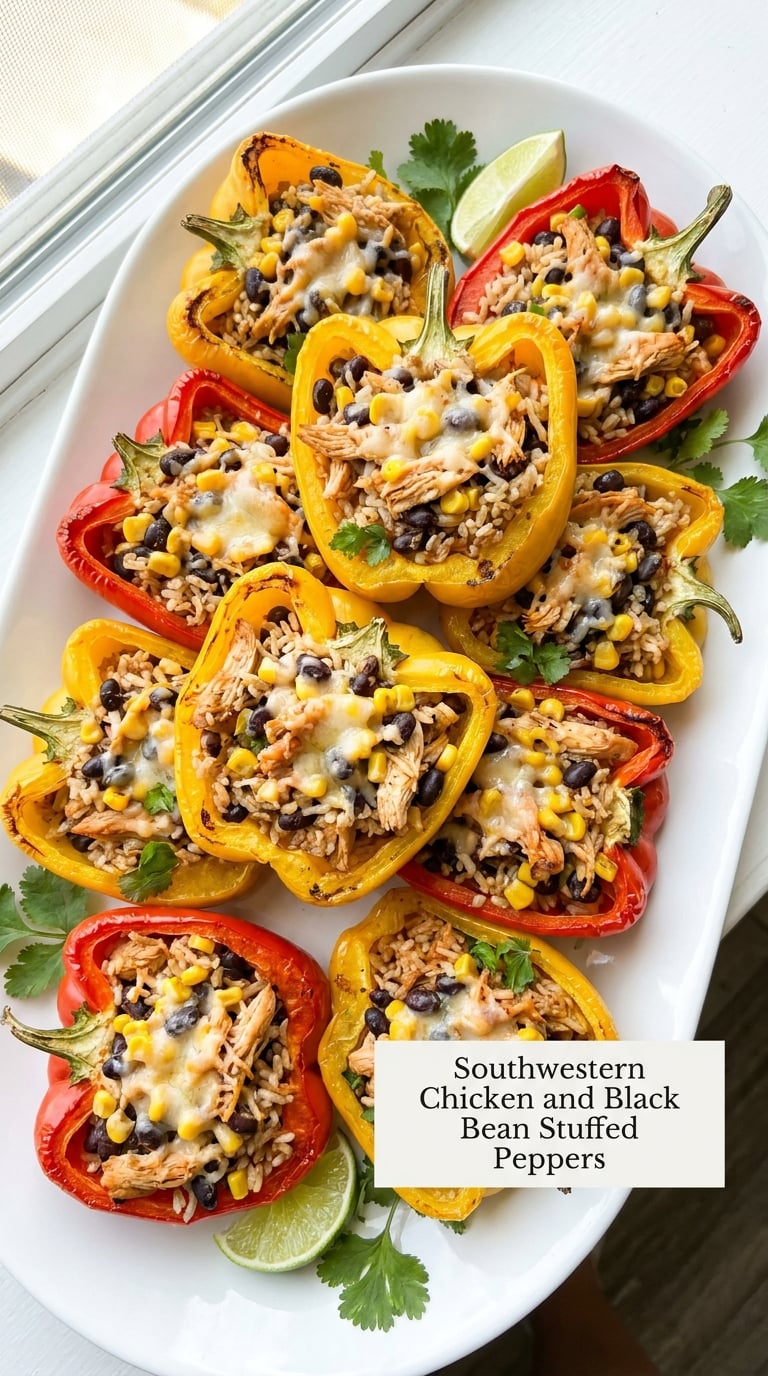
These are the workhorse dinner of the whole list: cook them once, and you have four more nights of dinner already handled. The black beans add bulk and fiber for very little sodium, as long as you rinse them properly.
Yield: 4 servings (8 pepper halves) · Prep: 20 min · Cook: 25 min · Total: 45 min · Difficulty: Easy · Sodium per serving: about 340 mg
Ingredients
- 4 large bell peppers, 2 red and 2 yellow
- 1 lb chicken breast, cut into 1/2-inch pieces
- 1 cup no-salt-added black beans, rinsed
- 1 cup cooked brown rice
- 1/2 cup frozen no-salt-added corn
- 1/2 cup no-salt-added diced tomatoes
- 1 small onion, diced
- 2 garlic cloves, minced
- 2 tsp chili powder
- 1 tsp ground cumin
- 1/2 tsp smoked paprika
- 1 lime, cut into wedges
- 1/4 cup cilantro, chopped
Instructions
- Heat the oven to 400°F (205°C) and arrange the pepper halves cut-side up in a baking dish.
- Rinse the canned black beans under cold running water for at least 30 seconds, then drain, and do the same with the corn and tomatoes.
- Sear the chicken in a skillet over medium-high heat for 6 to 8 minutes, stirring, until no pink pieces remain.
- Add the onion and garlic and cook for 2 minutes more, until softened.
- Stir in the beans, corn, tomatoes, rice, chili powder, cumin, and smoked paprika and heat until steaming.
- Spoon the filling into the pepper halves and cover the dish with foil.
- Bake for 20 minutes, remove the foil, and bake 5 more minutes until the peppers are tender and the chicken reaches 165°F (74°C) inside.
- Finish with cilantro and a squeeze of lime.
Tip: Do not skip the rinse. Draining canned beans in a colander removes very little, but running them under cold water is what actually pulls the packing liquid out.
Swap it: Use brown rice and black beans with no chicken at all, or swap the filling for cooked quinoa if you want a gluten-free plate.
Storage: Refrigerate for up to 4 days and reheat covered at 350°F (175°C) for 20 minutes. These freeze well unbaked for up to 3 months; add 10 minutes to the bake from frozen.
Allergens: None of the major allergens as written.
6. Mediterranean Chickpea and Vegetable Skillet
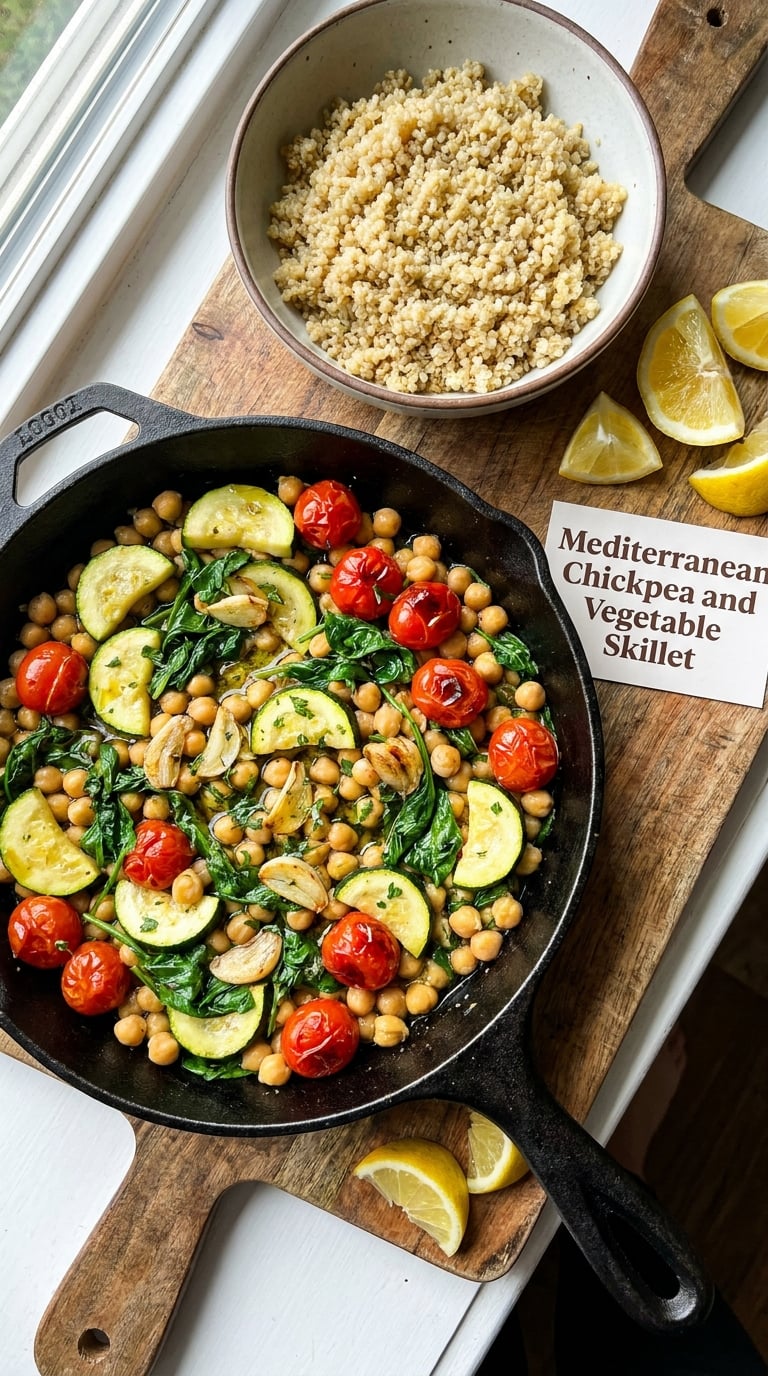
One skillet, no meat, and about half the sodium of the canned-soup version of this idea. The lemon at the end is what makes the chickpeas taste like a deliberate dish instead of a compromise.
Yield: 4 servings · Prep: 10 min · Cook: 20 min · Total: 30 min · Difficulty: Easy · Sodium per serving: about 390 mg
Ingredients
- 1 tbsp extra-virgin olive oil
- 1 medium onion, diced
- 1 small zucchini, cut into half-moons
- 3 garlic cloves, minced
- 1/2 tsp red pepper flakes
- 1 can (15 oz) no-salt-added chickpeas, rinsed and drained
- 1 cup cherry tomatoes, halved
- 1/2 cup no-salt-added crushed tomatoes
- 2 cups baby spinach
- 1/2 cup fresh dill or basil, chopped
- 1 lemon, halved
- 2 cups cooked quinoa, for serving
Instructions
- Heat the oil in a 12-inch skillet over medium heat and cook the onion for 4 minutes, until soft and translucent.
- Add the zucchini, garlic, and red pepper flakes and cook for 3 minutes more.
- Stir in the chickpeas and cook 2 minutes, letting a few of them brown at the edges.
- Add the cherry tomatoes and crushed tomatoes and simmer for 5 minutes, until the juices thicken slightly.
- Fold in the spinach a handful at a time until it wilts.
- Squeeze in the juice of one lemon half and scatter with the herbs just before serving over quinoa.
Tip: Add the lemon off the heat. Boiling it dulls the flavor, and the juice is doing most of the seasoning work here.
Swap it: Use white beans or rinsed lentils, and serve over brown rice or a baked sweet potato if you prefer. If you are also watching carbs, our low carb dinner recipes roundup has more bowl-style ideas built the same way.
Storage: Keeps 4 days refrigerated in a covered container. This one is genuinely better the next day, and the quinoa keeps separately so it does not turn to mush.
Allergens: None of the major allergens as written. If you serve it with a bread or pita, that adds wheat.
7. Lean Beef and Broccoli Stir-Fry
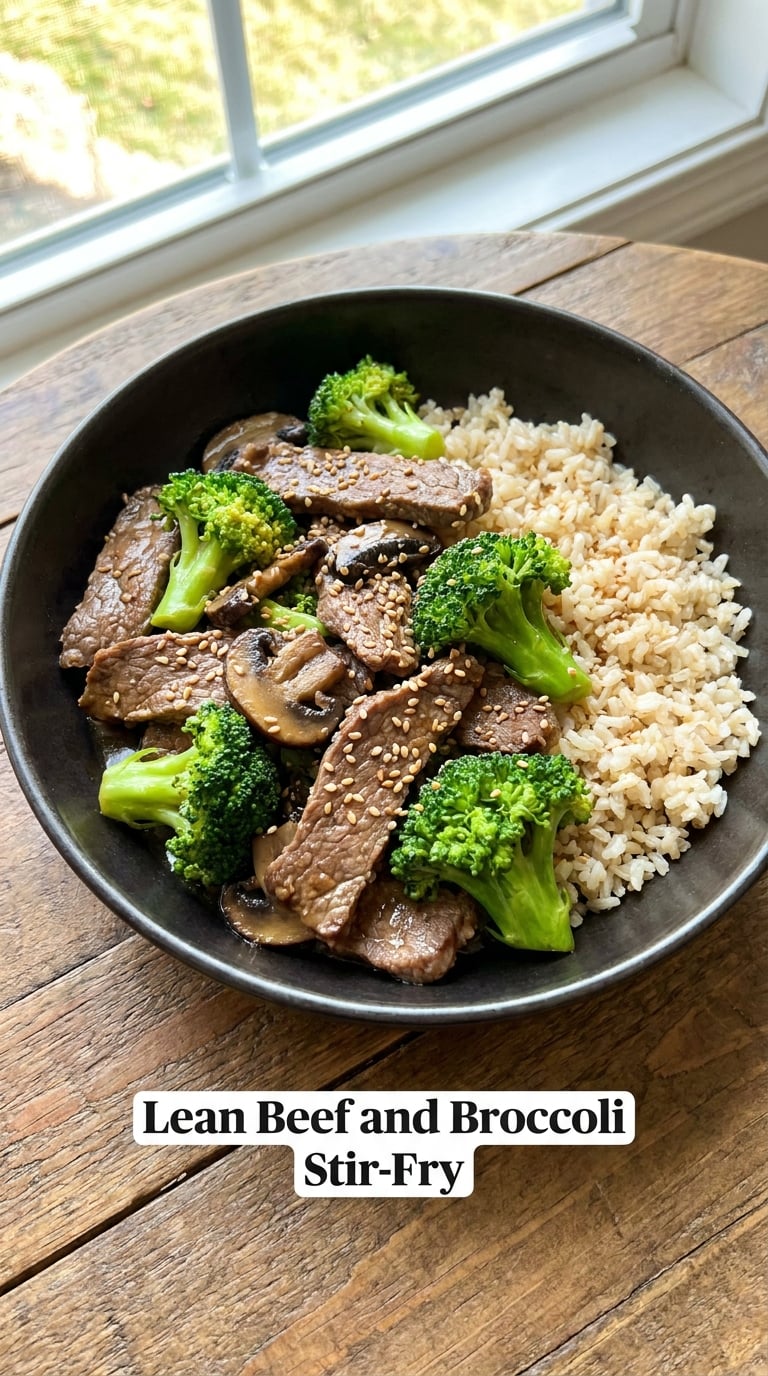
A restaurant-style stir-fry in about 25 minutes, with the sauce built from low-sodium soy sauce and rice vinegar instead of a bottled stir-fry sauce, which is usually where the sodium sneaks back in.
Yield: 4 servings · Prep: 12 min · Cook: 13 min · Total: 25 min · Difficulty: Easy · Sodium per serving: about 430 mg
Ingredients
- 12 oz lean flank steak, sliced thin against the grain
- 3 cups broccoli florets
- 8 oz mushrooms, quartered
- 3 cups cooked brown rice, kept hot
- 1 tbsp low-sodium soy sauce
- 1 tbsp rice vinegar
- 1 tsp toasted sesame oil
- 2 garlic cloves, minced
- 1 tsp fresh ginger, grated
- 1 tsp cornstarch
- 1 tsp toasted sesame seeds
- 2 scallions, sliced
Instructions
- Mix the soy sauce, rice vinegar, sesame oil, and cornstarch in a small bowl.
- Heat a large skillet over high heat until it is hot enough to sizzle, then add 1 tsp of oil.
- Sear the beef in a single layer for 1 minute per side, then transfer to a plate.
- Add the broccoli and mushrooms to the same skillet and stir-fry for 4 minutes, until the broccoli is bright and crisp-tender.
- Push the vegetables to the edges, add the garlic and ginger for 30 seconds, and pour in the sauce.
- Return the beef and toss for 1 minute, then remove the pan from the heat.
- Rest the beef 3 minutes after cooking, then serve over brown rice with scallions and sesame seeds.
Tip: Freeze the sliced beef 15 minutes ahead and the slices stay separate instead of steaming together. It is a small thing that makes a real difference.
Swap it: Use chicken breast cooked to 165°F (74°C), or 8 oz of extra-firm tofu pressed and pan-seared for the same bowl without any meat.
Storage: Refrigerate for up to 3 days. Reheat in a hot skillet with a splash of water for 3 minutes; the microwave makes the broccoli rubbery.
Allergens: Soy and sesame.
8. Herbed White Bean and Kale Soup
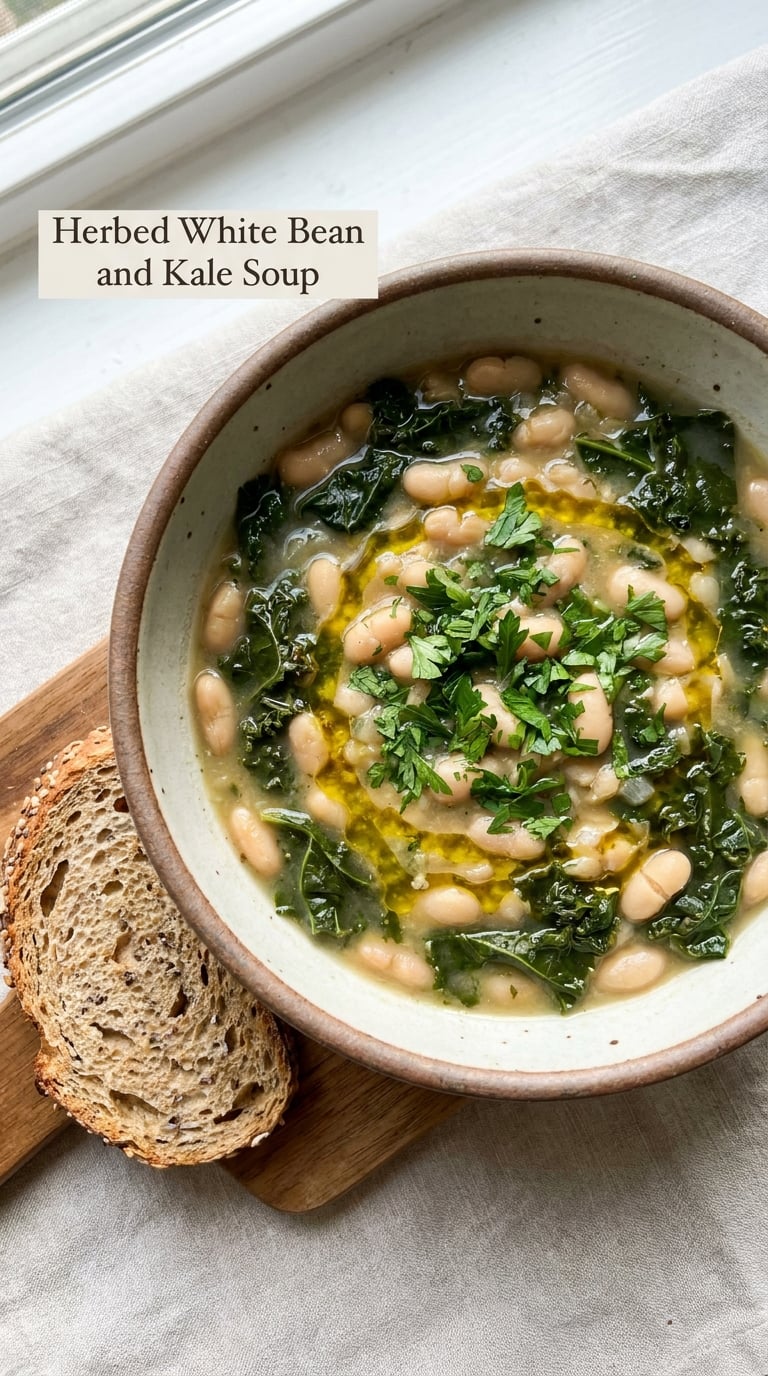
This is the soup to make on a Sunday. It reheats better than it tastes the day you make it, it freezes, and the beans do the work that cream usually does in a heavier version.
Yield: 6 servings · Prep: 15 min · Cook: 25 min · Total: 40 min · Difficulty: Easy · Sodium per serving: about 420 mg
Ingredients
- 2 tbsp extra-virgin olive oil
- 1 large onion, diced
- 2 carrots, diced
- 2 celery stalks, diced
- 4 garlic cloves, minced
- 2 cans (15 oz each) no-salt-added white beans, rinsed
- 1 can (14.5 oz) no-salt-added diced tomatoes
- 4 cups low-sodium vegetable broth
- 1 tsp dried thyme
- 1 bay leaf
- 4 cups chopped kale, stems removed
- 1/2 tsp black pepper
- 1 lemon, cut into wedges
- 1/4 cup flat-leaf parsley, chopped
Instructions
- Heat the oil in a Dutch oven over medium heat and cook the onion, carrots, and celery for 8 minutes, until softened.
- Add the garlic and thyme and cook for 1 minute, until fragrant.
- Rinse both cans of beans under cold running water for 30 seconds, then drain well.
- Add the beans, tomatoes, broth, bay leaf, and black pepper to the pot and bring to a simmer.
- Simmer partially covered for 20 minutes, until the vegetables are very soft.
- Mash about 1 cup of the beans against the side of the pot to thicken the broth.
- Stir in the kale and cook for 5 minutes more, until tender and dark green.
- Remove the bay leaf, finish with lemon juice and parsley, and serve with whole-grain bread.
Tip: Mash a cup of beans rather than reaching for cream. It thickens the soup the old-fashioned way and adds fiber instead of saturated fat.
Swap it: Use cannellini or butter beans, or swap half the beans for diced Yukon gold potatoes if your household prefers a thicker, less bean-forward bowl.
Storage: Refrigerate for 4 days and freeze in single-servings for up to 3 months. Thaw overnight in the fridge and warm slowly with a splash of water.
Allergens: None of the major allergens as written. Serve with wheat bread if you like.
9. Baked Cod with Herbed Green Beans and Potatoes
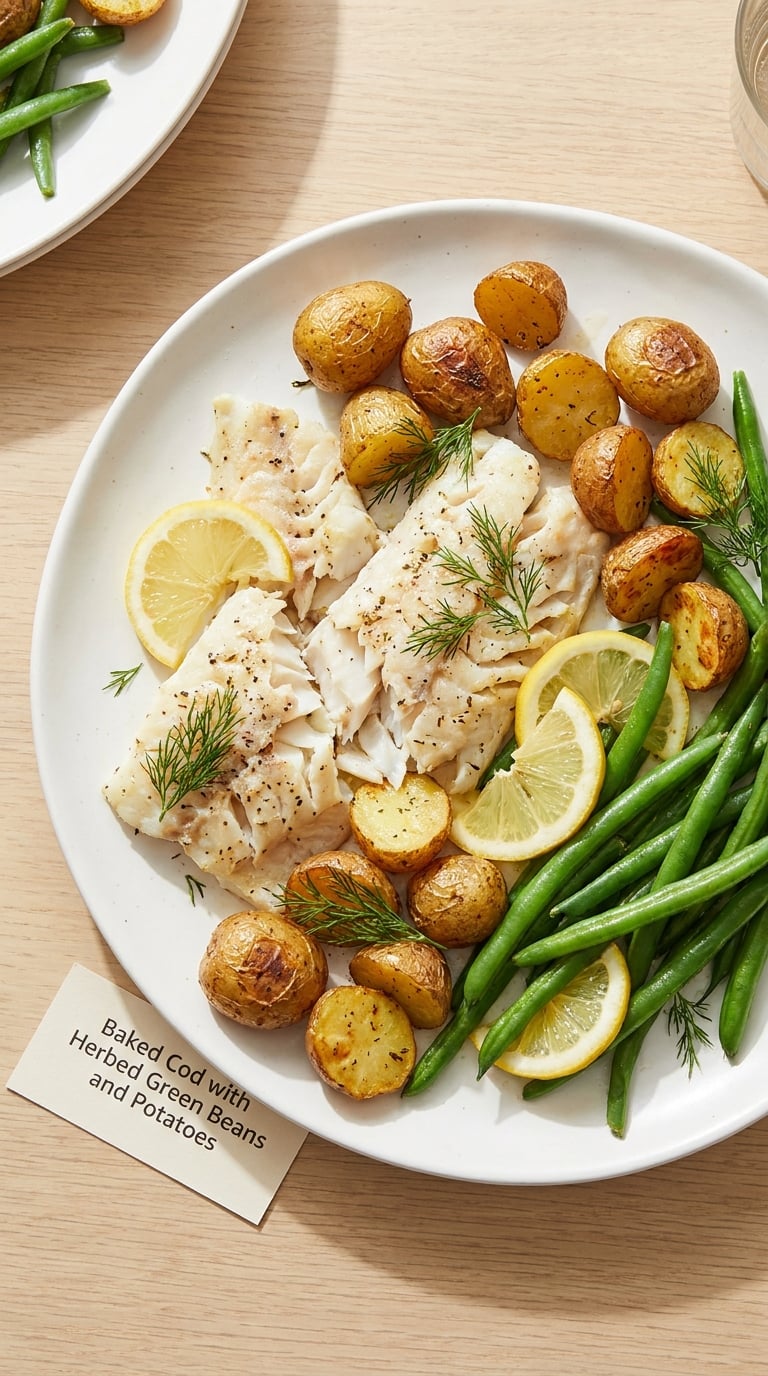
Cod is mild enough that picky eaters usually accept it, and baking it on top of the vegetables means one pan and one wash. This is the lightest dinner on the list and the fastest to assemble.
Yield: 4 servings · Prep: 10 min · Cook: 25 min · Total: 35 min · Difficulty: Easy · Sodium per serving: about 350 mg
Ingredients
- 4 cod fillets, 5 oz each
- 1 lb baby potatoes, halved
- 1 lb green beans, trimmed
- 2 tbsp extra-virgin olive oil, divided
- 1 tsp dried dill
- 1/2 tsp garlic powder
- 1/2 tsp black pepper
- 1 lemon, cut into slices
- 1/4 cup fresh parsley, chopped
Instructions
- Heat the oven to 425°F (220°C) and line a rimmed sheet pan with parchment.
- Toss the potatoes with 1 tbsp olive oil and roast for 12 minutes, until the cut sides are golden.
- Add the green beans to the pan, toss with the remaining oil, and spread them around the edges.
- Rub the cod with the dill, garlic powder, and pepper and set the fillets in the middle of the pan.
- Lay the lemon slices over the fish and roast for 12 to 14 minutes.
- Check the thickest fillet: it should reach 145°F (63°C) and separate into flakes that look white all the way through.
- Finish with parsley and a squeeze of lemon.
Tip: Thicker fillets need the full 14 minutes, thin ones are dry by minute 10. Test the thickest piece, not the smallest.
Swap it: Use haddock, pollock, or tilapia, and swap the green beans for roasted asparagus or broccoli if that is what you have.
Storage: Cooked fish keeps 3 to 4 days refrigerated. Reheat at 300°F (150°C) for 10 minutes with a loose foil cover, never at high heat.
Allergens: Fish.
10. Turkey Burger Bowls with Brown Rice and Roasted Vegetables
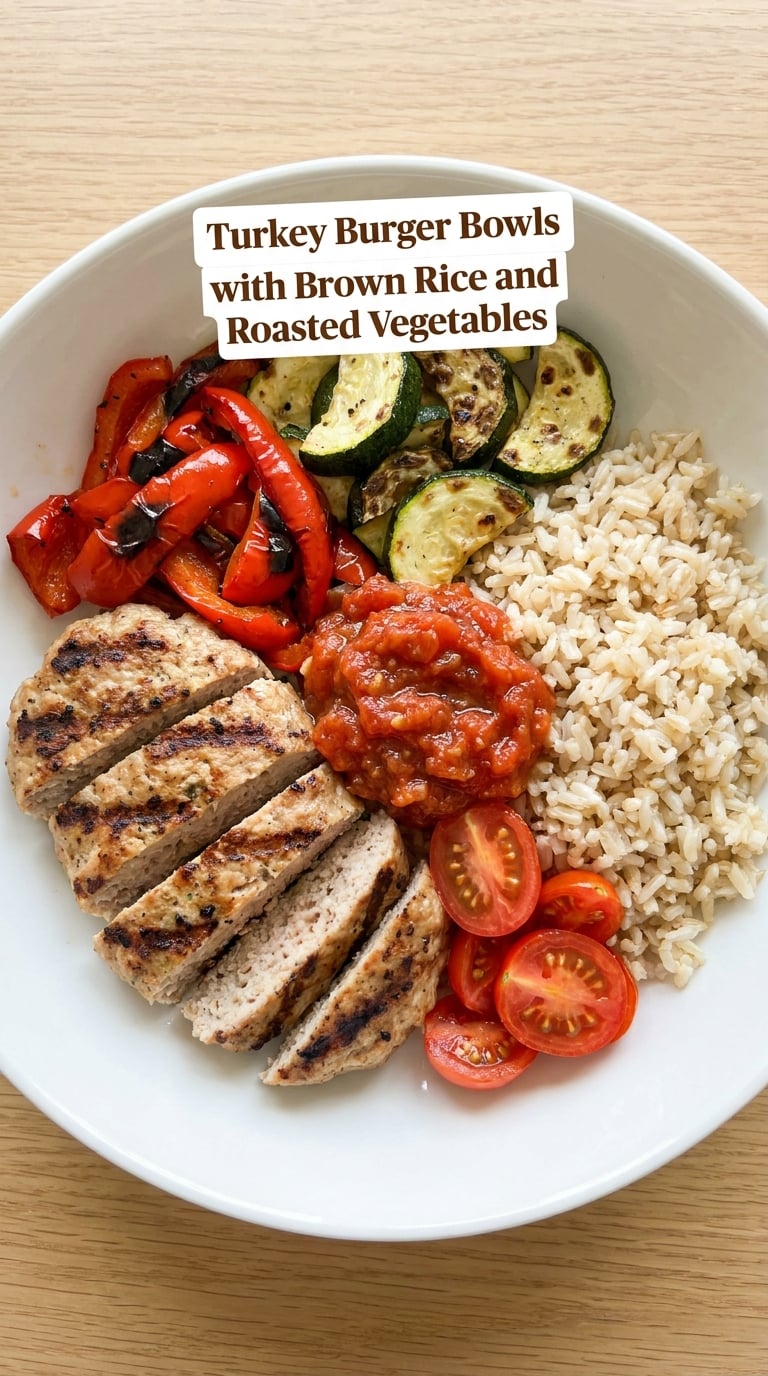
Everything you want from a burger, built in a bowl so you can skip the bun and the salty pickle. The relish is made from fresh tomatoes and vinegar, which does the job of a bottled relish with a fraction of the sodium.
Yield: 4 servings · Prep: 15 min · Cook: 20 min · Total: 35 min · Difficulty: Easy · Sodium per serving: about 400 mg
Ingredients
For the patties:
- 1 lb lean ground turkey (93% lean)
- 1/2 cup quick oats
- 1 large egg
- 1 tsp garlic powder
- 1/2 tsp onion powder
- 1/2 tsp black pepper
For the bowls:
- 3 cups cooked brown rice
- 2 cups chopped zucchini and bell pepper
- 1 cup cherry tomatoes, halved
- 1/2 cup no-salt-added tomato sauce
- 1 tbsp rice vinegar
- 1 tsp prepared mustard
- 1/4 cup parsley, chopped
Ingredients note: As written there are no major allergens beyond egg. Adding dairy cheese or a wheat-based pita raises the sodium noticeably, so check labels if you do.
Instructions
- Heat the oven to 425°F (220°C) and line a sheet pan with parchment.
- Mix the turkey, oats, egg, garlic powder, onion powder, and pepper and shape it into 4 thin patties.
- Toss the zucchini, bell pepper, and cherry tomatoes with 1 tbsp olive oil and spread them on one side of the pan.
- Set the patties on the other side, lightly oiled, and roast for 15 to 18 minutes.
- Check the thickest patty: ground meat is done at 160°F (71°C), and the juices run clear with no pink.
- Stir the no-salt-added tomato sauce with the vinegar, mustard, and parsley to make a quick relish.
- Spoon brown rice into bowls, add the roasted vegetables, and top with a sliced patty and a spoonful of relish.
Tip: Keep the patties thin and press them flat before they go in. Thick turkey patties dry out long before they pick up any color.
Swap it: Use lean ground chicken breast or a black bean and oat patty, and swap brown rice for quinoa or cauliflower rice.
Storage: Refrigerate for up to 3 days with the relish kept on the side. The patties freeze well on a tray before bagging, for up to 3 months.
Allergens: Egg as written; dairy and wheat appear with optional cheese or pita.
11. Ginger Chicken Stir-Fry with Napa Cabbage
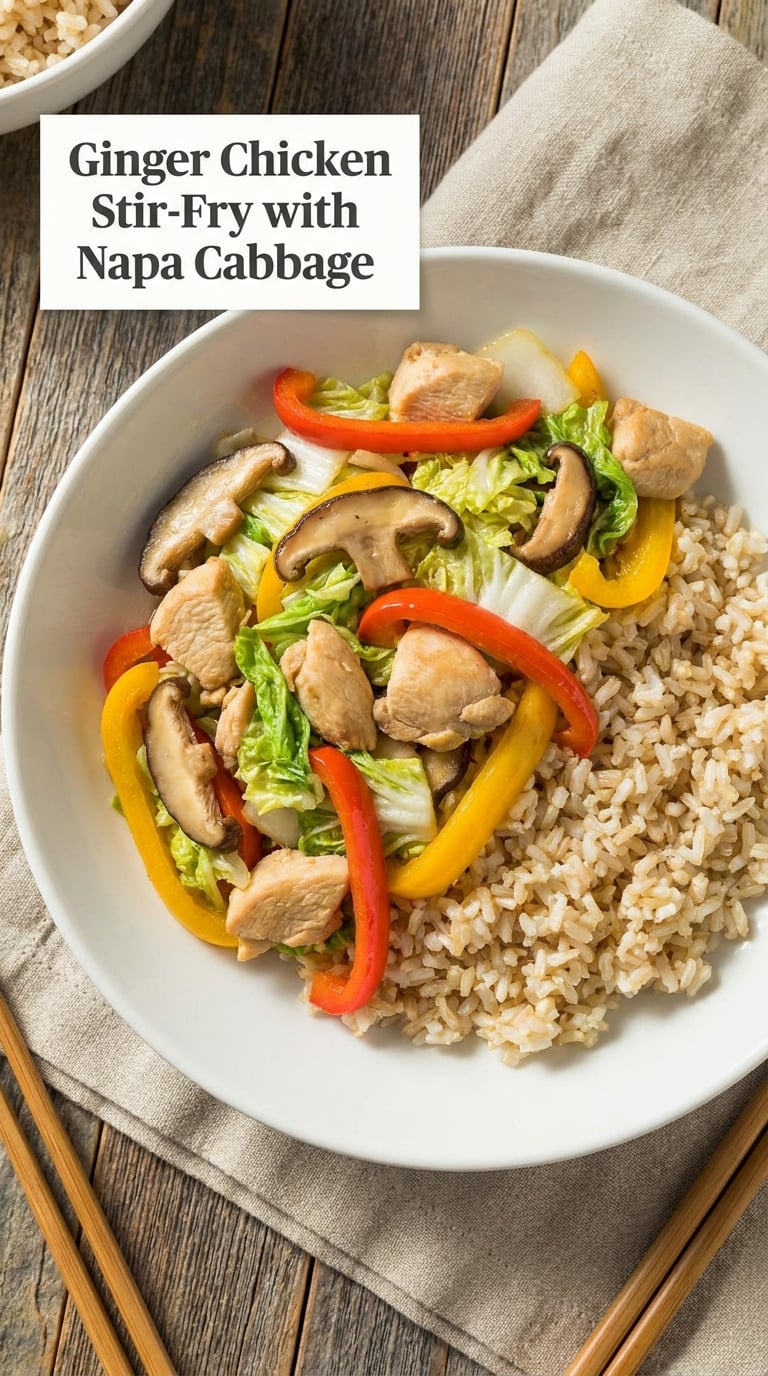
Napa cabbage is the secret ingredient in a fast stir-fry. It keeps its crunch, cooks in two minutes, and does not release the water that makes chicken soggy.
Yield: 4 servings · Prep: 15 min · Cook: 15 min · Total: 30 min · Difficulty: Easy · Sodium per serving: about 445 mg
Ingredients
- 1 1/4 lb chicken breast, sliced thin
- 3 cups shredded napa cabbage
- 1 red bell pepper, sliced
- 8 oz mushrooms, sliced
- 3 cups cooked brown rice, kept hot
- 1 tbsp low-sodium soy sauce
- 1 tbsp rice vinegar
- 1 tsp fresh ginger, grated
- 1 tsp toasted sesame oil
- 1 tsp cornstarch
- 1 tsp toasted sesame seeds
- 3 scallions, sliced
Instructions
- Whisk the soy sauce, rice vinegar, ginger, sesame oil, and cornstarch together in a small bowl.
- Heat a large skillet over high heat and add 1 tsp of oil, then the chicken in a single layer for 2 minutes.
- Stir the chicken and cook 2 more minutes until the edges are white and no pink remains.
- Add the mushrooms and bell pepper and stir-fry for 2 minutes, keeping everything moving.
- Add the napa cabbage and cook for 2 more minutes, until it wilts but still has bite.
- Pour in the sauce and toss for 1 minute until it thickens and coats the pan.
- Confirm the chicken has reached 165°F (74°C), then serve over brown rice with scallions and sesame seeds.
Tip: Slice the chicken against the grain, thin. It cooks faster that way, which is what lets you hit a 30-minute dinner from start to finish.
Swap it: Use shrimp, 8 oz of pressed tofu, or thinly sliced cabbage and mushrooms alone for a meatless version.
Storage: Keeps 3 days refrigerated. Reheat the rice separately with a damp paper towel, and warm the vegetables in a hot dry skillet so they stay crisp.
Allergens: Soy and sesame.
12. Roasted Cauliflower and Lentil Bowls with Tahini
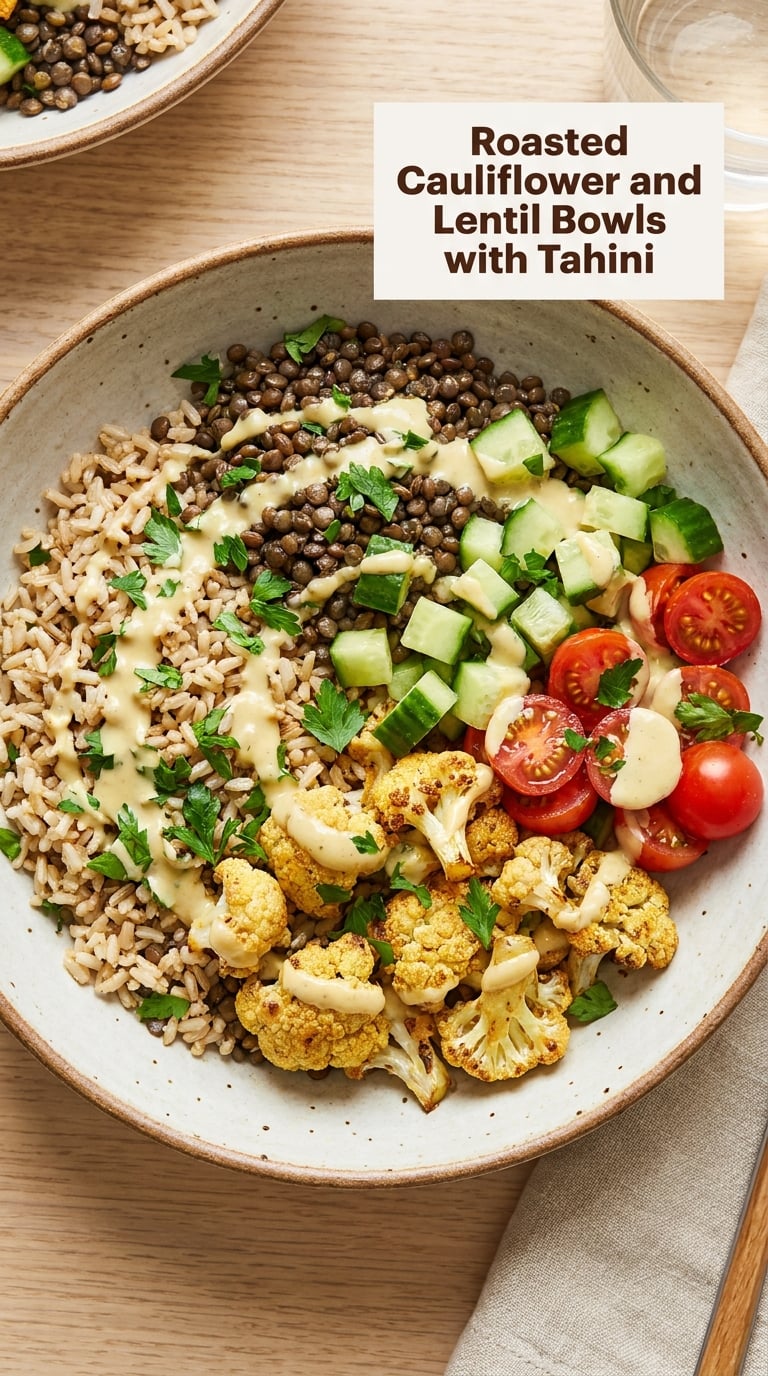
Lentils bring protein and potassium, roasted cauliflower brings the crunch that a bowl of grains on its own never has, and the tahini sauce is the part people go back for. It is a full dinner with no animal protein at all.
Yield: 4 servings · Prep: 15 min · Cook: 25 min · Total: 40 min · Difficulty: Medium · Sodium per serving: about 410 mg
Ingredients
- 1 cup dry brown lentils, rinsed
- 1 small head cauliflower, cut into florets
- 2 tbsp extra-virgin olive oil, divided
- 1 tsp ground cumin
- 1/2 tsp ground coriander
- 1/4 tsp ground turmeric
- 1/4 tsp black pepper
- 2 cups cooked brown rice
- 1 small cucumber, diced
- 1 cup cherry tomatoes, halved
- 1/3 cup tahini
- 1 lemon, juiced
- 1 garlic clove, grated
- 1/4 cup flat-leaf parsley, chopped
Instructions
- Heat the oven to 425°F (220°C) and line a rimmed sheet pan with parchment.
- Simmer the lentils in unsalted water for 18 to 20 minutes, until tender but not mushy, then drain well.
- Toss the cauliflower with 1 tbsp olive oil, the cumin, coriander, turmeric, and pepper and spread it on the pan.
- Roast for 22 to 25 minutes, turning once, until the florets are deeply browned and crisp at the edges.
- Whisk the tahini with the lemon juice, grated garlic, 1/4 cup water, and 1 tbsp olive oil until it thins to a pourable cream.
- Divide the brown rice and lentils between four bowls and arrange the roasted cauliflower, cucumber, and tomatoes on top.
- Drizzle with the tahini sauce and scatter with parsley.
Tip: The sauce seizes the moment the tahini meets the lemon. Add the water a tablespoon at a time and keep whisking; it comes back to a pourable cream after a minute.
Swap it: Use roasted broccoli or sweet potato instead of cauliflower, and swap brown rice for quinoa. A spoonful of plain yogurt stirred into the sauce works if tahini is not your thing.
Storage: Cooked lentils and roasted cauliflower keep 4 days refrigerated. Keep the tahini sauce in a jar for up to a week, and give it a stir and a splash of water before using.
Allergens: Sesame.
Tips for Making These
Keeping low sodium dinner recipes for high blood pressure flavorful comes down to where the flavor comes from, not how hard you work. If you season with acid, toasted spices, garlic, and herbs instead of measuring salt, none of these dishes reads as a compromise.
- Read the label before you buy, not after you cook. Look for 140 mg of sodium or less per serving for a low sodium claim, 5% daily value or less for a low figure, and 20% daily value or more for a high one. “Reduced sodium” still means it contains salt.
- Rinse everything canned under cold running water. Beans, tomatoes, corn, and canned vegetables all carry packing liquid with added salt. Thirty seconds in the stream takes more of it out than draining in a colander ever will.
- Reach for acid before anything else. A squeeze of lemon in the garlic shrimp, vinegar in the stir-fry sauce, and lime on the stuffed peppers do the job salt would, without adding a single milligram of sodium.
- Buy no-salt-added tomatoes and hunt for low sodium broth. Both are in the regular grocery aisle, not the specialty one, and they let you build sauce from scratch instead of pouring it from a jar.
- Measure the cheese, broth, and condiments. Cheese, sauces, and prepared broth are where a “healthy” recipe quietly climbs past 500 mg. Use the tablespoon measure, not a free pour.
- Do not fight the whole table. Cook one dinner, serve the family the same plate, and put any extra seasoning in a small dish on the side so it is not baked into the food. If you want more quick weeknight ideas, our easy high-protein dinner recipes roundup follows the same build-your-own-bowl format. For the list of what to cut back on when you eat out, see foods to avoid with high blood pressure.
How to Keep Low Sodium Dinner Recipes for High Blood Pressure Flavorful
Use the first ten minutes of cooking to build flavor in layers rather than bolting salt on at the end. Start with aromatics, toast any dry spices in oil for 30 seconds to wake them up, then finish with fresh herbs, citrus, or vinegar off the heat. It takes almost no extra time, and it is the difference between a meal everyone finishes and one that ends up in the fridge.
Frequently Asked Questions
How much sodium should someone with high blood pressure eat per day?
Most adults are advised to stay under 2,300 mg of sodium a day, and the American Heart Association recommends 1,500 mg or less for people with high blood pressure. Because dinner is where a large share of sodium is usually eaten, budgeting roughly 500 mg per serving for your evening meal leaves room for breakfast, lunch, and snacks. Your doctor may set a different target based on your readings and other conditions.
What does no-salt-added mean on a food label?
No salt added means no salt was added during processing. It does not mean the food contains zero sodium, because salt is naturally present in tomatoes, beets, celery, and most vegetables. A no-salt-added tomato sauce can still carry 200 to 300 mg per half cup. Choose it over regular sauce, then check the sodium per serving and rinse beans and canned vegetables under running water.
Can I use potassium-based salt substitutes with high blood pressure?
Potassium-based salt substitutes can help reduce sodium, but they are not safe for everyone. They are a poor choice if you have kidney disease, take potassium-sparing diuretics, or are on ACE inhibitors or ARBs, because the added potassium can build up in the blood. Ask your doctor or a registered dietitian before using one regularly. Using lemon, vinegar, and herbs for flavor sidesteps the question entirely.
Which everyday ingredients contribute the most hidden sodium?
The usual culprits are bread, deli meat, cheese, canned soups, prepared sauces, soy sauce, bouillon cubes, pasta, and condiments like ketchup and barbecue sauce. Even a modest serving of each can add up across a day. Frozen vegetables without sauce are almost always lower sodium than canned, and rinsing canned beans and draining no-salt-added tomatoes are two easy wins when you do buy canned goods.
Can people with kidney disease or potassium restrictions eat these dinners?
Most of these recipes are built around potassium-rich foods like beans, lentils, tomatoes, greens, and sweet potato, which are excellent for blood pressure but may not suit a potassium restriction. Swapping the beans and lentils for lower-potassium choices and using smaller portions of potato and tomato changes the picture completely. A renal dietitian can adapt any of these recipes, and that adjustment is worth making before you start cooking.
Conclusion
Start with the lemon-herb chicken. Everything goes on one pan, the seasoning comes from lemon, garlic, and dried herbs, and there is no step where a pinch of salt sneaks in. If it works for the people at your table, most of the other eleven will too.
One last practical reminder: the sodium numbers here are estimates, and the biggest variable is the packaged ingredient you choose, not anything you do at the stove. Spend a few extra seconds comparing labels before you shop, and these low sodium dinner recipes will keep doing the quiet work for you all week.