
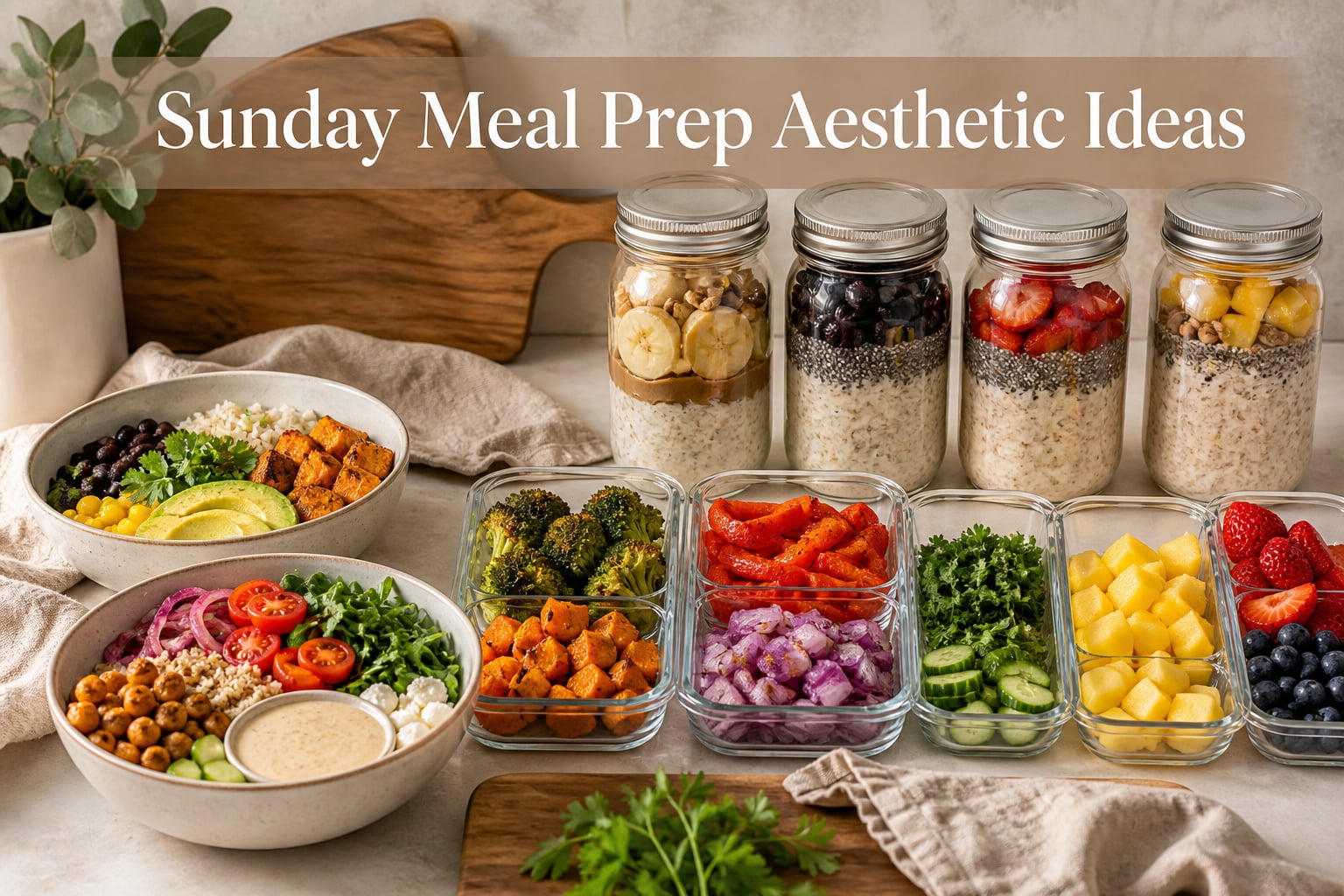
A calm-looking refrigerator is useful only when the food still tastes good on Thursday. These sunday meal prep aesthetic ideas organize color, texture, portions, and storage so the week feels easier without turning Sunday into an all-day photo shoot.
I would begin with the meals that solve your busiest hours, then choose containers to fit those foods. Matching lids and clear boxes help, but a practical plan depends more on cooling food correctly, separating crisp components, and leaving one flexible meal for leftovers.
Table of Contents
17 Sunday Meal Prep Aesthetic Ideas That Stay Practical
Start With the Meals You Actually Need
- For rushed mornings: prepare oat jars, yogurt trays, or freezer burritos.
- For desk lunches: choose jars and divided boxes that keep sauces away from greens.
- For changing appetites: prep components instead of sealing five identical meals.
- For the end of the week: freeze later portions on Sunday and thaw them as needed.
1. Citrus Chicken Bento Boxes
Roast 1 1/2 pounds of lemon-pepper chicken thighs alongside 4 cups of broccoli and sliced bell peppers, then divide everything among four 3-cup containers with 3 cups of cooked brown rice. Place the rice on one side, slice the chicken across the grain, and alternate the green and red vegetables instead of mixing them into a single pile. Cool every component before closing the lids so condensation does not dull the vegetables. Refrigerate for up to four days and pack lemon wedges separately; reheat without the lemon, then squeeze it over the warm box.
2. Three-Flavor Overnight Oat Jars
Set out three 16-ounce jars and add 1/2 cup rolled oats, 1/2 cup milk, 1/3 cup plain Greek yogurt, and 1 teaspoon chia seeds to each. Stir berries into one jar, diced apple and cinnamon into the second, and cocoa with sliced banana into the third. Leave 1 inch of space at the top so the oats can expand, wipe the rims, and label each lid before refrigerating overnight. The apple and berry jars hold well for four days; add banana to its jar the morning you plan to eat it so the slices stay pale and firm.
3. Mediterranean Jar Salads
For four quart jars, begin with 2 tablespoons of lemon-oregano vinaigrette in each, followed by chickpeas, cucumber, tomatoes, olives, cooked farro, feta, and chopped romaine in that order. The dressing and sturdy beans stay at the bottom while the leaves remain dry at the top. Use about 1/2 cup grain and 1/2 cup chickpeas per lunch so the salad is more than garnish. Keep the jars upright and eat within four days. At lunch, invert one into a wide bowl and toss; do not try to mix it inside the narrow jar.
4. Salmon, Sweet Potato, and Green Bean Bowls
Cut 2 pounds of sweet potatoes into 3/4-inch cubes and roast them at 425°F for 15 minutes before adding 1 pound of trimmed green beans. Set four 4-ounce salmon portions on the same pan for the final 10 to 13 minutes, removing them when the centers flake and reach the doneness you prefer. Divide the vegetables and salmon among four shallow containers, then add dill yogurt sauce in small cups after everything is cold. Eat the fish portions during the first three days; freeze any fourth portion without the sauce if it will not be used in time.
5. Crunchy Taco Salad Kits
Brown 1 pound of ground turkey with 2 tablespoons of taco seasoning and cool it on a plate rather than inside a deep pot. Portion the meat into four small microwave-safe containers. In four larger lunch boxes, layer 2 cups chopped romaine, 1/2 cup black beans, corn, cherry tomatoes, and shredded cabbage; keep salsa, avocado, and a handful of tortilla strips separate. Warm only the turkey, then scatter it over the cold vegetables. The divided packing order protects the crisp textures, and the kits remain useful for four lunches without turning into a soggy pre-dressed salad.
6. Color-Blocked Vegetable Snack Boxes
Build five small boxes with roughly 1 cup of vegetables, 1/3 cup of dip, a cheese or egg portion, and one crisp item in each. Good groupings include cucumber with hummus and pita, snap peas with herbed yogurt and cheddar, or carrots with white-bean dip and seeded crackers. Arrange the produce in compact rows by color, but choose vegetables for durability rather than appearance alone. Dry washed produce thoroughly before packing and keep crackers in a lidded cup. Slice delicate fruit only when serving; the rest of each box can be prepared on Sunday for the first four workdays.
Breakfasts and Lunches With Their Own Texture
7. Freezer Breakfast Burrito Row
Scramble 10 eggs softly, roast 3 cups of diced potatoes, and cook 8 ounces of breakfast sausage or seasoned black beans. Cool the fillings before dividing them among eight 10-inch tortillas with 1 cup of shredded cheese. Tuck in both sides, roll tightly, and wrap each burrito in parchment before placing the row in a labeled freezer bag. Freeze flat first so they hold their shape. Thaw one overnight for the most even center, then microwave it in the parchment until steaming and crisp it briefly in a dry skillet if you want a toasted seam.
8. Roasted Vegetable Grain-Bowl Bar
Instead of locking five lunches into one flavor, prepare 5 cups of cooked quinoa, two sheet pans of seasonal vegetables, 3 cups of chickpeas, and two sauces. Keep the components in separate clear containers: roasted cauliflower and carrots together, quick-roasted zucchini apart, and greens un-dressed. Each bowl starts with 1 cup grain, 1 cup vegetables, and about 1/2 cup chickpeas, then changes direction with tahini-lemon sauce or a basil vinaigrette. This modular arrangement stays attractive in the refrigerator and lets you assemble dinner-sized portions without eating the identical bowl all week.
9. Tomato Soup and Toast Kits
Blend a pot of tomato-red-pepper soup and divide six cups among three pint containers, leaving room for expansion in any portion headed to the freezer. Slice a small sourdough loaf and store the bread at room temperature for two days or freeze individual pairs of slices. Pack grated Parmesan, basil, and roasted pumpkin seeds in separate topping cups. The organized weekly meal prep works because the wet, crisp, and fresh elements never share a container until serving. Reheat the soup to a full simmer, toast the bread from frozen, and add the garnishes only after the bowl is hot.
10. Pesto Pasta Salad Jars
Cook 12 ounces of short pasta just to al dente, rinse briefly to stop the cooking, and toss it with 1/2 cup pesto while still slightly warm. Divide it among four wide containers with white beans, halved cherry tomatoes, chopped spinach, and small mozzarella pearls. Use about 3 cups of vegetables across the batch so the lunches stay fresh rather than pasta-heavy. Chill uncovered for 15 minutes before sealing. Pack toasted nuts separately and fold them in at lunch. If the pasta tightens in the refrigerator, loosen one serving with a teaspoon of lemon juice instead of adding more oil.
11. Sesame Tofu Lunch Boxes
Press a 14-ounce block of extra-firm tofu for 20 minutes, cube it, and roast at 425°F with soy sauce and sesame oil until the corners are browned, about 25 minutes. Fill four boxes with 3/4 cup cooked rice, the tofu, steamed edamame, shredded carrots, and lightly cooked broccoli. A square of parchment between the rice and quick-pickled cucumber keeps the warmable side separate from the cool garnish. Refrigerate the dressing in four tiny cups and spoon it on after reheating. These visually balanced lunch boxes use repeated colors, but every component also has a practical texture and portion role.
12. Greek Yogurt Breakfast Trays
Pour 3/4 cup plain Greek yogurt into each of four leakproof bowls and fit a dry insert or separate cup above it. Fill the dry sections with 1/3 cup granola, 1 tablespoon nuts or seeds, and a different fruit for each day. Keep berries whole, cut grapes in half if needed for the eater, and leave apples uncut until morning. A teaspoon of honey can go into the yogurt on Sunday without softening the toppings. Stack the trays at eye level so breakfast is the first food visible when the refrigerator opens, then combine the layers immediately before eating.
Flexible Components for the Back Half of the Week
13. Turkey and Hummus Wrap Components
Prepare the fillings for four wraps but roll only the first two on Sunday. Portion 4 ounces of sliced turkey, 2 tablespoons hummus, spinach, grated carrot, cucumber sticks, and one large tortilla per lunch. Store the hummus in a cup and the tortilla in a dry reusable wrap so neither touches the vegetables early. Assemble the remaining wraps the night before they are needed, folding the sides over the cucumber before rolling. This approach takes two minutes during the week and avoids the gummy tortilla that often makes fully assembled five-day wrap prep disappointing.
14. Red Lentil Curry Freezer Portions
Simmer 2 cups of red lentils with onion, ginger, curry spices, tomatoes, and 6 cups of broth until the lentils are soft and the sauce is thick enough to mound on a spoon. Cool the curry in a wide pan, then divide it among six two-cup containers with cooked basmati rice packed beside, not underneath, the sauce. Refrigerate three portions and freeze three for later weeks. Coconut milk can separate slightly after freezing, so stir each reheated portion thoroughly and add a spoonful of water if needed. Finish with fresh cilantro only after the bowl is hot.
15. Apple, Cheddar, and Seeded-Cracker Boxes
Portion 1 1/2 ounces of sharp cheddar, 1 ounce of turkey or roasted chickpeas, and a small handful of seeded crackers into four divided boxes. Add grapes or a whole clementine on Sunday, but wait to cut the apple until the morning of use; six thin slices are enough to balance the salty components without taking over the box. If pre-slicing is essential, toss the wedges with diluted lemon juice and dry them before packing. Keep the crackers behind a silicone divider or in a paper cup. The finished boxes work as a substantial snack or a light lunch with a cup of soup.
16. Mix-and-Match Stir-Fry Shelf
Create make-ahead meal components rather than five finished stir-fries: 4 cups cooked rice, 1 1/2 pounds sliced chicken or tempeh, a tray of blanched broccoli and peppers, and one jar of ginger-garlic sauce. Refrigerate everything in separate shallow containers. On a weeknight, sear one portion of protein, add 2 cups of vegetables and 3 tablespoons sauce, then heat until the protein is safely cooked and the vegetables remain bright. Warm the rice separately. Because the sauce is added only during cooking, the vegetables do not spend four days softening in a salty marinade.
17. Thursday Fridge-Reset Dinner Shelf
Reserve one clear bin for Thursday rather than assigning every ingredient on Sunday. Place a labeled container of cooked grain, a roasted vegetable, a sauce, and one freezer protein in it, then add any unused produce from the earlier boxes as the week progresses. By Thursday, turn the bin into fried rice, a warm grain salad, or stuffed pitas according to what remains. This Sunday cooking routine deliberately plans for leftovers without pretending exact appetites are predictable. Freeze cooked meat or poultry you will not use within the recommended refrigerator window instead of keeping it for a vague weekend meal.
When I compare sunday meal prep aesthetic ideas, I look past matching containers and ask whether the plan protects texture, shows which portion comes next, and leaves enough flexibility for a changed schedule. A beautiful stack that creates food waste is not an organized system.
Keep the Refrigerator Orderly Without Overpacking It
Leave visible space around containers so cold air can circulate and labels can be read without moving a stack. I place food that should be eaten first at eye level, freezer-bound portions together, and sauces in one shallow bin. That arrangement is more dependable than sorting only by color.
For safe timing, cool cooked food promptly in shallow containers. The federal cold-storage chart for home kitchens lists three to four refrigerated days for cooked meat or poultry leftovers, so freeze later-week portions instead of stretching a Sunday batch too far.
If you want more breakfast variety, a few of these make-ahead breakfast recipes can replace the oat jars or burritos without changing the rest of the plan. For dinners, the freezer strategy in these freezer meal ideas is especially useful when Thursday regularly runs late.
Frequently Asked Questions
How many meals should I prepare on Sunday?
Start with the two daily decisions that cause the most stress. That may mean four lunches and three breakfasts rather than every meal for seven days. A smaller plan is easier to cool, store, and finish before quality drops.
How can meal prep look colorful without wasting produce?
Repeat durable vegetables across several meals and change their role. One tray of peppers can fill a bento box, brighten a taco salad, and join a stir-fry. Buy color with a purpose instead of adding one decorative ingredient to every container.
Which foods should stay separate until serving?
Keep crackers, granola, toasted nuts, dressings, delicate herbs, and cut avocado away from moist foods. Pack them in small cups or dry inserts, then combine them immediately before eating.
What if I dislike eating the same lunch repeatedly?
Use one grain, one protein, two vegetables, and two sauces as a small mixing system. Changing the sauce and the final crunchy garnish makes a noticeable difference without doubling the Sunday workload.
Can glass containers go straight from the freezer to the microwave?
Follow the container manufacturer’s directions. Sudden temperature changes can damage some glass, so thaw a frozen portion in the refrigerator and move it to a microwave-safe dish when the product instructions are unclear.
Final Thoughts for a Sunday Setup That Lasts
The best sunday meal prep aesthetic ideas make the next decision obvious: what to eat first, what to reheat, and what to keep crisp. Pick three systems that match your schedule, label the portions that must be frozen, and leave one open slot for leftovers. If lunch is the hardest part of your week, these practical meal-prep lunches offer another set of combinations without changing that flexible approach.