
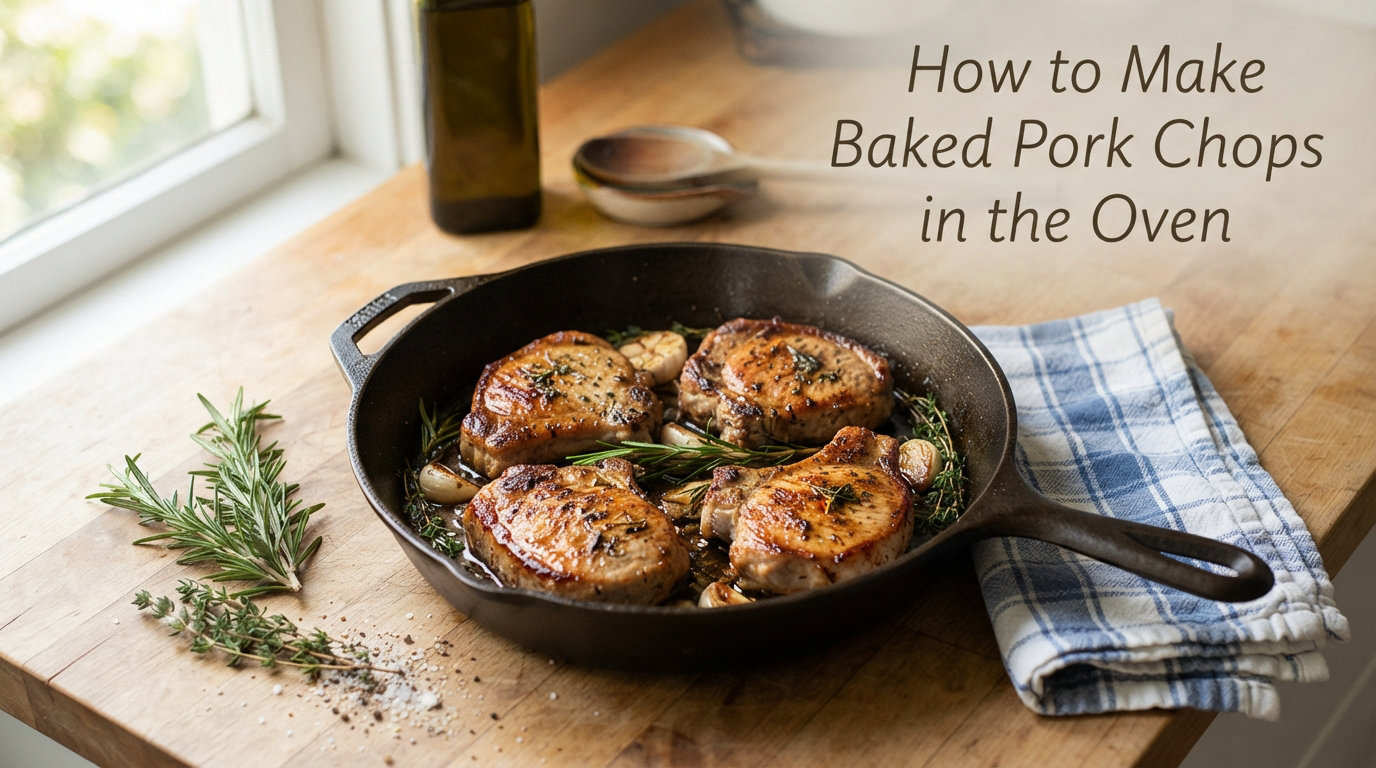
I used to dread making pork chops. They always came out dry, tough, and disappointing. Then I discovered the simple technique that changed everything: baking them at the right temperature with the right timing.
Learning how to make baked pork chops in the oven has transformed my weeknight dinners. This method delivers juicy, tender results every single time with minimal effort. The oven does the hard work while you focus on side dishes or simply relaxing.
In this guide, I will walk you through my foolproof recipe that our family has tested dozens of times. You will learn the exact temperature, timing, and techniques to ensure your pork chops come out perfect every time.
Table of Contents
Why This Recipe Works
Our baked pork chops recipe relies on simple pantry ingredients and a straightforward technique. You do not need fancy equipment or hard-to-find spices. Everything comes together in under 30 minutes, making this ideal for busy weeknights.
The secret lies in the combination of a flavorful seasoning blend and proper temperature control. We bake at 400 degrees Fahrenheit, which creates a beautiful caramelized exterior while keeping the interior moist and tender. The high heat works quickly, preventing the dreaded dry pork chop.
I love that this recipe scales easily for families of any size. Whether you are cooking for two or feeding a crowd, the method stays the same. The cleanup is minimal too, especially if you line your baking sheet with parchment paper.
Ingredients You’ll Need
These oven baked pork chops require just six simple ingredients you likely already have. We keep the ingredient list short to let the natural flavor of the pork shine through.
- 4 boneless pork chops, about 1 inch thick (approximately 1.5 pounds)
- 2 tablespoons olive oil
- 1 teaspoon paprika (smoked paprika works beautifully too)
- 1 teaspoon garlic powder
- 1 teaspoon onion powder
- 1 teaspoon brown sugar
- 1 teaspoon kosher salt
- 1/2 teaspoon black pepper
The brown sugar might surprise you, but it helps create that gorgeous golden brown crust. It balances the savory spices perfectly. If you prefer, you can substitute honey or maple syrup in the same amount.
How to Bake Pork Chops
Follow these simple steps for perfect baked pork chops every time. This is the exact method our team uses for family dinners and meal prep alike.
Step 1: Preheat and Prepare
Preheat your oven to 400 degrees Fahrenheit. Line a rimmed baking sheet with parchment paper or aluminum foil for easy cleanup. Pat the pork chops completely dry with paper towels to ensure proper browning.
Step 2: Season the Pork Chops
Mix the paprika, garlic powder, onion powder, brown sugar, salt, and pepper in a small bowl. Brush both sides of each pork chop with olive oil. Rub the seasoning blend evenly over both sides, pressing gently so it adheres.
Step 3: Arrange on Baking Sheet
Place the seasoned pork chops on your prepared baking sheet. Make sure they have a little space between them for proper air circulation. Crowding the pan will cause steaming instead of browning.
Step 4: Bake to Perfection
Bake uncovered for 15 to 20 minutes, depending on thickness. Start checking the internal temperature at the 15-minute mark. Remove from the oven when the pork reaches 145 degrees Fahrenheit on an instant read thermometer.
Step 5: Rest and Serve
Transfer the pork chops to a clean plate and tent loosely with foil. Let them rest for 5 to 10 minutes before serving. This resting time allows the juices to redistribute throughout the meat, keeping every bite succulent.
How Long to Bake Pork Chops
Timing is everything when learning how long to bake pork chops. The exact time depends on three factors: oven temperature, thickness of your chops, and whether they are boneless or bone-in.
Is It Best to Bake Pork Chops at 350 or 400?
I recommend 400 degrees Fahrenheit for most home ovens. This higher temperature sears the exterior quickly, sealing in the juices before the inside has a chance to dry out. The result is a beautifully caramelized crust with a tender center.
That said, 350 degrees works well if you prefer a gentler cooking method or have very thick chops. At 350 degrees, expect to add 5 to 10 minutes to your cooking time. The lower temperature requires more time but reduces the risk of overcooking.
For extra thick cuts over 1.5 inches, some cooks prefer 425 degrees for the first 10 minutes, then reducing to 375 degrees until done. This two-stage method gives you both great browning and even cooking.
Cooking Times by Thickness
Use this guide for timing at 400 degrees Fahrenheit. Remember, these are estimates; always verify doneness with an instant read thermometer.
- 1/2 inch thick: 10 to 12 minutes
- 3/4 inch thick: 12 to 15 minutes
- 1 inch thick: 15 to 18 minutes
- 1.5 inches thick: 20 to 25 minutes
- 2 inches thick: 25 to 30 minutes
Bone-in pork chops typically take 3 to 5 minutes longer than boneless chops of the same thickness. The bone insulates the meat slightly, slowing heat penetration. However, bone-in chops often taste more flavorful and juicy.
The Magic Number: 145 Degrees Fahrenheit
The USDA recommends cooking pork to an internal temperature of 145 degrees Fahrenheit with a three-minute rest time. This temperature ensures food safety while delivering perfectly juicy results. Gone are the days of cooking pork to 160 degrees and ending up with shoe leather.
Insert your instant read thermometer into the thickest part of the chop, avoiding the bone if present. The temperature will rise another 3 to 5 degrees during the resting period due to carryover cooking. Removing the pork at exactly 145 degrees accounts for this rise.
Covered vs Uncovered: Which is Better?
I bake my pork chops uncovered, and I recommend you do the same. Uncovered baking allows the hot air to circulate freely around the meat, creating that desirable caramelized, golden brown exterior. Covering traps steam, which leads to soggy, pale pork.
There is one exception: if you notice your pork chops are browning too quickly but are not yet cooked through, tent them loosely with foil for the final few minutes. This prevents burning while allowing the interior to reach the safe temperature.
Some recipes call for covering initially, then uncovering to brown. While this works, I find it unnecessary for most home cooking. Starting uncovered at the right temperature gives you both browning and doneness without the extra step.
Tips for Juicy Pork Chops
After years of testing, these are the techniques that guarantee moist, tender baked pork chops every single time. Follow these tips and you will never suffer through dry pork again.
- Bring pork to room temperature: Let your chops sit out for 15 to 20 minutes before seasoning. Cold meat straight from the refrigerator cooks unevenly, leaving you with overcooked edges and undercooked centers.
- Do not skip the thermometer: Visual cues like color or feel are unreliable. An instant read thermometer takes the guesswork out of doneness and is the only way to guarantee juicy results.
- Pat them dry: Moisture is the enemy of browning. Use paper towels to remove surface moisture before adding oil and seasonings. Dry pork sears better and develops more flavor.
- Watch the thickness: Chops thinner than 3/4 inch cook in just 10 to 12 minutes. They go from perfect to overcooked quickly, so check them early.
- Rest is not optional: Those 5 to 10 minutes of resting time allow the muscle fibers to relax and reabsorb juices. Cut too soon and all that moisture runs out onto your cutting board.
- Use kosher salt: Kosher salt has larger flakes than table salt, making it easier to distribute evenly. If using table salt, reduce the amount by half to avoid over-salting.
Boneless vs Bone-In Pork Chops
Both boneless and bone-in pork chops work beautifully in this recipe. The choice depends on your priorities for cooking time, flavor, and ease of eating.
Boneless Pork Chops
Boneless chops cook faster and more evenly since heat penetrates from all sides. They are easier to slice and serve, making them ideal for quick weeknight meals or when cooking for kids. Most boneless chops are also leaner, which appeals to health-conscious cooks.
The downside is that boneless chops can dry out more easily if overcooked even slightly. They lack the insulation and flavor contribution that bones provide. Stick closely to the timing guidelines and temperature recommendations when using boneless cuts.
Bone-In Pork Chops
Bone-in chops offer superior flavor and moisture retention. The bone conducts heat more slowly, giving you a larger window between perfectly cooked and overcooked. Many cooks swear that meat near the bone tastes more flavorful and succulent.
The trade-off is slightly longer cooking times and the need to navigate around the bone when eating. Rib chops and center-cut loin chops are both excellent choices for baking. Look for chops with some marbling for the juiciest results.
Delicious Recipe Variations
Once you master the basic technique, experiment with these tasty variations to keep your dinners exciting. Each one brings a different flavor profile while using the same reliable baking method.
Breaded Pork Chops
For crispy breaded pork chops, set up a breading station with three shallow dishes. Place flour seasoned with salt and pepper in the first, beaten eggs in the second, and panko breadcrumbs mixed with parmesan cheese in the third.
Dredge each chop in flour, dip in egg, then coat with the breadcrumb mixture. Spray the tops lightly with cooking spray before baking to encourage browning. Bake at 425 degrees for 18 to 22 minutes until golden and cooked through.
Marinated Pork Chops
Marinate your chops for 2 to 8 hours before baking for extra flavor and tenderness. A simple marinade of olive oil, soy sauce, garlic, and herbs works wonders. Even a quick 30-minute marinade adds noticeable flavor.
Pat the chops dry before seasoning and baking. The marinade provides moisture and flavor, but excess liquid prevents proper browning. Reduce the salt in your seasoning blend if your marinade was salty.
Sheet Pan Pork Chops
Turn this into a complete meal by adding vegetables to the same pan. Root vegetables like potatoes and carrots need 35 to 40 minutes, so start them first. Quick-cooking vegetables like broccoli or green beans can join for the final 12 to 15 minutes.
Toss the vegetables with olive oil, salt, and pepper before arranging around the pork chops. Everything finishes at the same time with only one pan to wash. This is our go-to method for busy weeknights.
Spicy Southwest Style
Replace the paprika with chipotle powder or add a pinch of cayenne to the seasoning blend. The smoky heat pairs beautifully with pork. Serve with lime wedges and cilantro for a fresh finish.
What to Serve with Baked Pork Chops
These versatile pork chops pair with almost any side dish. Here are our favorite combinations for a complete, satisfying meal.
- Roasted vegetables: Brussels sprouts, carrots, broccoli, or asparagus roasted alongside the pork
- Starchy sides: Mashed potatoes, roasted sweet potatoes, rice pilaf, or buttered egg noodles
- Fresh salads: A simple green salad with vinaigrette, coleslaw, or cucumber tomato salad
- Bread options: Dinner rolls, cornbread, or crusty French bread to soak up the juices
- Quick grains: Quinoa, couscous, or wild rice cook while the pork bakes
- Comfort classics: Mac and cheese, green bean casserole, or glazed carrots
For a classic Sunday dinner feel, serve with applesauce. The sweet-tart flavor complements the savory pork perfectly. This combination has been a family favorite for generations.
Storage and Reheating Tips
Leftover baked pork chops keep well for quick lunches or second dinners. Proper storage and reheating techniques ensure they stay as delicious as the first serving.
Store cooled pork chops in an airtight container in the refrigerator for up to 3 to 4 days. Place paper towels in the container to absorb excess moisture and prevent sogginess. For longer storage, wrap individual chops tightly and freeze for up to 3 months.
To reheat without drying, use the oven or air fryer rather than the microwave. Place the pork in a baking dish with a splash of broth or water, cover with foil, and warm at 300 degrees for 10 to 15 minutes. The microwave works in a pinch but tends to toughen the meat.
For frozen pork chops, thaw overnight in the refrigerator before reheating. You can also reheat directly from frozen, adding 10 to 15 minutes to the oven time. The low and slow approach preserves moisture better than high heat.
Frequently Asked Questions
Should I cover my pork chops when baking them in the oven?
No, bake pork chops uncovered for the best results. Uncovered baking allows air to circulate, creating a caramelized, golden brown exterior. Covering traps steam and prevents browning. If your chops are browning too quickly before cooking through, tent them loosely with foil for the final few minutes only.
Is it best to bake pork chops at 350 or 400?
400 degrees Fahrenheit is ideal for most baked pork chops. The higher temperature sears the exterior quickly while keeping the interior juicy. At 400 degrees, most 1-inch chops cook in 15 to 20 minutes. Use 350 degrees for thicker cuts over 1.5 inches, adding 5 to 10 minutes to the cooking time.
How long are you supposed to cook pork chops in the oven?
Cook 1-inch thick boneless pork chops at 400 degrees for 15 to 18 minutes. For 3/4-inch chops, check at 12 to 15 minutes. Thicker 1.5-inch chops need 20 to 25 minutes. Bone-in chops take 3 to 5 minutes longer than boneless. Always verify doneness with an instant read thermometer; pork is safe to eat at 145 degrees Fahrenheit.
How to cook pork chops in the oven so they don’t dry out?
To keep pork chops juicy, bring them to room temperature before cooking, pat them dry for better browning, and use an instant read thermometer to avoid overcooking. Remove pork at exactly 145 degrees Fahrenheit and rest for 5 to 10 minutes before cutting. Resting allows juices to redistribute so they stay in the meat, not on your plate.
Are baked pork chops ok for diabetics?
Yes, baked pork chops are an excellent choice for diabetics. Pork is naturally low in carbohydrates and high in protein, which helps stabilize blood sugar levels. This recipe uses minimal brown sugar (just 1 teaspoon for 4 servings), making it diabetic-friendly. Skip the brown sugar entirely or substitute with a diabetic-approved sweetener if preferred. Always monitor portion sizes and pair with non-starchy vegetables.
What is the 6 2 2 rule for pork?
The 6-2-2 rule refers to a specific cooking method: sear pork chops for 6 minutes on one side, 2 minutes on the other, then rest for 2 minutes. However, this method applies to pan-searing, not baking. For oven baking, focus on reaching an internal temperature of 145 degrees Fahrenheit with a 5 to 10 minute rest instead.
Get Cooking!
You now have everything you need to make perfect baked pork chops in the oven every single time. This simple method has transformed our weeknight dinners, and I know it will do the same for you.
The combination of proper temperature, accurate timing, and that essential resting period guarantees juicy, flavorful results. Once you taste these tender pork chops, you will wonder why you ever settled for dry, disappointing versions.
Grab your instant read thermometer and give this recipe a try tonight. Your family will thank you, and you will gain confidence in cooking one of the most versatile proteins in your kitchen arsenal. Happy cooking!