
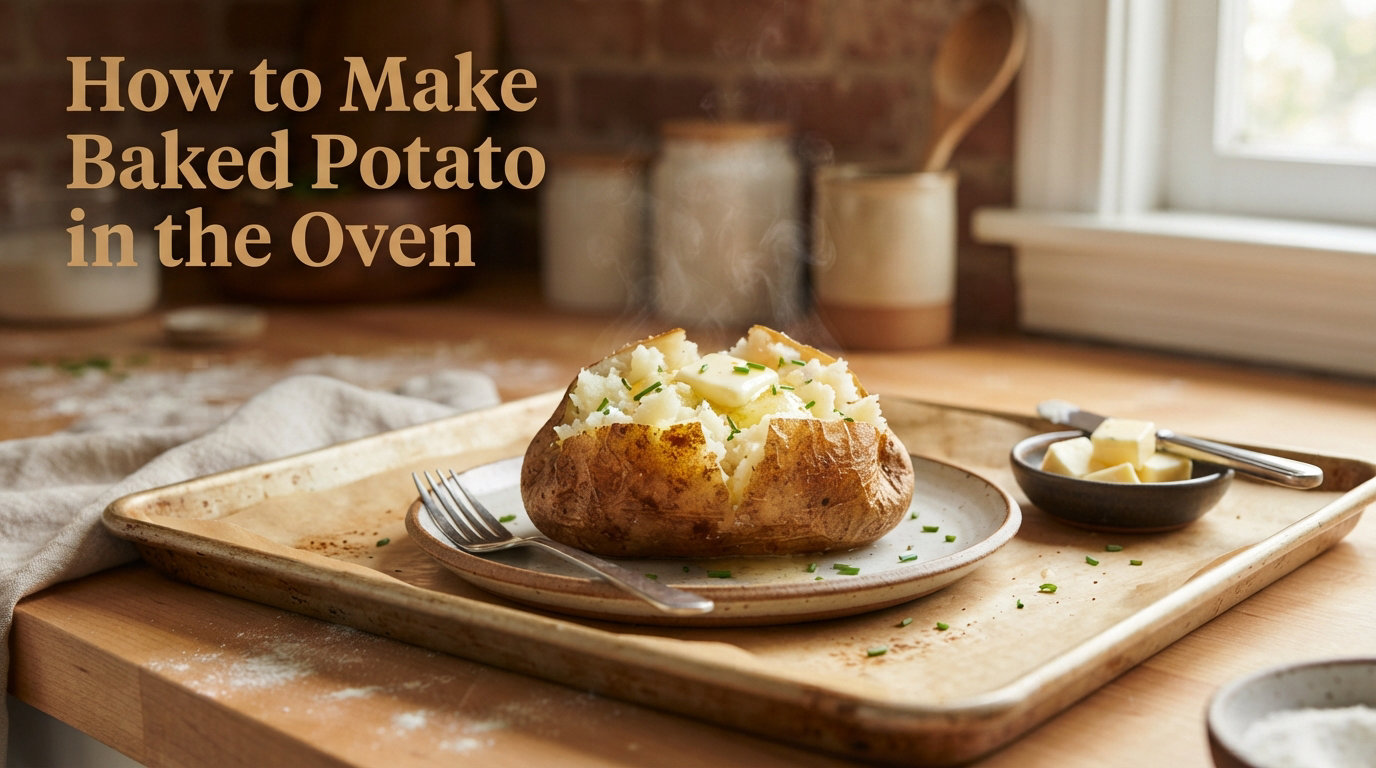
Learning how to make baked potato in the oven is one of the most valuable skills any home cook can master. The perfect baked potato has a golden, crispy skin that crackles when you cut into it, revealing a fluffy, steamy interior that practically begs for a pat of butter. After testing dozens of methods over the years, I have found that the secret lies in high heat, the right potato variety, and one crucial step most people skip.
This method works every time. You will get restaurant-quality results with just four basic ingredients and about five minutes of active preparation. The rest is hands-off oven time that fills your kitchen with an irresistible aroma.
Table of Contents
Why This Method Works
Baking at 425°F to 450°F creates the ideal conditions for that coveted texture contrast. The high heat causes the potato skin to dehydrate and crisp while the interior starches expand and create steam, resulting in a fluffy, tender center. The salt and oil coating is not just for flavor—it helps draw moisture from the skin, promoting even better crisping.
Skipping the foil is perhaps the most important decision you can make. Foil traps steam against the potato skin, which creates a soggy, leathery texture instead of the crackly perfection you are after.
Ingredients You Will Need
Quality matters here, but you do not need anything fancy. These simple ingredients combine to create magic:
- 4 large russet potatoes (about 8-10 ounces each)
- 2 tablespoons olive oil or melted butter
- 1 tablespoon coarse kosher salt
- Freshly ground black pepper (optional)
Why russet potatoes? Russets have thick skins and high starch content, which translates to crispy exteriors and fluffy interiors. Yukon Gold or red potatoes work in a pinch, but they will have waxier textures and thinner skins that do not crisp as beautifully.
How to Make Baked Potato in the Oven
Follow these six steps for perfect results every time. I have refined this method through countless family dinners and meal prep sessions.
Step 1: Preheat Your Oven and Prep the Potatoes
Preheat your oven to 450°F. Position a rack in the center for even heat distribution. While the oven heats, scrub your russet potatoes thoroughly under cool running water using a vegetable brush. Pat them completely dry with a clean kitchen towel. Any remaining moisture will steam the skin instead of crisping it.
Step 2: Poke Holes to Prevent Explosions
Use a fork to poke 8-10 holes around each potato. This might seem excessive, but it is essential. As potatoes bake, steam builds up inside. Without escape holes, pressure can cause your potatoes to burst in the oven. The holes also allow some moisture to escape, which helps create that fluffy texture inside.
Step 3: Coat with Oil and Salt
Rub each potato all over with olive oil or melted butter. This creates a barrier that helps the skin crisp while preventing the potato from drying out. Sprinkle coarse kosher salt generously over all sides. The salt does more than season—it draws moisture from the skin as it bakes, enhancing crispness and creating that steakhouse-quality crust.
Step 4: Bake on the Oven Rack
Place potatoes directly on the center oven rack. Position a baking sheet on the rack below to catch any drips. Do not wrap them in foil. Do not place them on a baking sheet directly. The circulating air around the potatoes is crucial for even crisping. Bake for 45-60 minutes depending on size.
Step 5: Test for Doneness
Your potatoes are done when a fork slides in easily with no resistance. The internal temperature should read 205°F to 212°F on an instant-read thermometer. The skin will look slightly wrinkled and feel firm when squeezed gently with an oven mitt. If you meet any resistance when testing with a fork, give them another 5-10 minutes.
Step 6: Slice and Fluff
Remove from the oven and let rest for 5 minutes—they will be screaming hot inside. Slice lengthwise down the center, then use a fork to fluff the interior, breaking up the steamy flesh. Add butter, salt, and your favorite toppings while hot.
Recipe Card
Perfect Oven-Baked Potatoes
- Prep Time: 10 minutes
- Cook Time: 50-60 minutes
- Total Time: 1 hour
- Servings: 4 potatoes
- Ingredients: 4 large russet potatoes, 2 tbsp olive oil, 1 tbsp kosher salt
- Temperature: 450°F
- Storage: Refrigerate up to 4 days
Pro Tips for Success
These insights come from years of trial and error, plus advice from professional chefs who make baked potatoes by the hundred.
Temperature Matters
Higher heat produces crispier skin. While you can bake potatoes at 400°F, they will take longer and the skin will not get as crispy. I recommend 450°F for the best results. If your oven runs hot or you are baking something else simultaneously, 425°F works beautifully.
Size Consistency Is Key
Try to select potatoes that are roughly the same size so they finish at the same time. A medium russet (8 ounces) takes about 50 minutes. Large potatoes (12+ ounces) may need a full hour to hour and fifteen minutes.
The Foil Debate
Never wrap potatoes in foil if you want crispy skin. Foil creates a steaming environment that traps moisture against the skin. Some restaurants wrap potatoes after baking to keep them warm for service—that is the only time foil belongs near a baked potato.
Internal Temperature Guide
Use this chart based on potato weight:
| Potato Size | Weight | Bake Time at 450°F | Internal Temp |
|---|---|---|---|
| Small | 6 oz | 40-45 min | 205°F |
| Medium | 8-10 oz | 50-60 min | 208°F |
| Large | 12+ oz | 60-75 min | 210-212°F |
Delicious Topping Ideas
A perfectly baked potato is a blank canvas for endless topping combinations. Here are my favorite ways to serve them:
Classic Style
Butter, sour cream, chopped chives, and a sprinkle of salt and pepper. Sometimes the simplest preparation is the most satisfying.
Loaded Baked Potato
Top with shredded cheddar cheese, crispy oven-baked bacon, sour cream, and sliced green onions. Run under the broiler for 2 minutes to melt the cheese if desired.
Broccoli Cheese
Steamed broccoli florets with melted cheddar cheese sauce. A great way to add vegetables to your meal.
Mediterranean
Diced tomatoes, cucumber, Kalamata olives, feta cheese, and a drizzle of olive oil with dried oregano.
Chili Cheese
Your favorite chili topped with shredded cheese and diced onions. This transforms your baked potato into a hearty main course.
Make Ahead and Storage Instructions
Baked potatoes are excellent for meal prep. Here is how to store and reheat them:
Refrigerating
Let potatoes cool completely, then refrigerate in an airtight container for up to 4 days. Do not store them in foil, as this can promote bacterial growth.
Freezing
Wrap cooled potatoes individually in plastic wrap, then aluminum foil. Freeze for up to 3 months. Thaw overnight in the refrigerator before reheating.
Reheating
The oven produces the best results. Bake at 350°F for 15-20 minutes until heated through. For a quicker option, microwave for 2-3 minutes, then finish in a 400°F oven for 5 minutes to re-crisp the skin.
Troubleshooting Common Problems
Even experienced cooks encounter issues sometimes. Here is how to fix the most common baked potato problems:
Undercooked Center
If you cut into your potato and find a hard, dense center, return it to the oven immediately. Cover the cut with foil to prevent drying and bake at 400°F for another 15-20 minutes. Next time, extend your initial baking time or choose smaller potatoes.
Soggy Skin
This almost always means the potato was wrapped in foil or did not dry properly before oiling. It can also happen if you crowd the oven too much. Ensure potatoes have space for air to circulate.
Burnt Skin, Raw Inside
Your oven is too hot or the potatoes are too large. Lower the temperature to 400°F and extend cooking time. Large potatoes benefit from a quick 5-minute microwave head start before baking.
Frequently Asked Questions
Is baked potato ok for diabetics?
Yes, baked potatoes can be part of a diabetic diet when consumed in moderation. They are complex carbohydrates that provide fiber, potassium, and vitamin C. The key is portion control and choosing healthy toppings. Skip the butter and sour cream in favor of Greek yogurt, salsa, or steamed vegetables. Consider u003ca href=u0022https://thesweetandsimplekitchen.com/diabetic-diet-food-list-best-foods-for-diabetics/u0022u003esweet potatoes as part of a balanced dietu003c/au003e for a lower glycemic option.
Do you wrap your baked potato in foil?
No, you should not wrap baked potatoes in foil if you want crispy skin. Foil traps steam and moisture against the potato skin, creating a soggy texture. Bake potatoes unwrapped directly on the oven rack or a baking sheet. The only time to use foil is after baking if you need to keep them warm for a short period before serving.
How long does it take a potato to bake at 400 in the oven?
At 400°F, a medium russet potato (8-10 ounces) takes 60-75 minutes to bake fully. Small potatoes (6 ounces) need 50-60 minutes, while large potatoes (12+ ounces) may require 75-90 minutes. Test for doneness by inserting a fork—it should slide in easily with no resistance. The internal temperature should reach 205-212°F.
Is it better to bake a potato at 350 or 400?
400°F is significantly better than 350°F for baking potatoes. Higher heat creates crispy skin and fluffy interiors through proper steam management and Maillard reactions. At 350°F, potatoes take much longer (up to 90+ minutes) and often result in leathery, unevenly cooked skin. For best results, bake at 425-450°F.
How do you know when a baked potato is done?
A baked potato is done when a fork slides into the center easily with no resistance. The internal temperature should read 205-212°F on a meat thermometer. Visually, the skin will appear slightly wrinkled and feel firm when gently squeezed. When cut open, the interior should appear fluffy and steamy, not dense or hard.
Should you poke holes in potatoes before baking?
Yes, always poke 8-10 holes in potatoes before baking. These holes allow steam to escape during cooking, preventing the potato from exploding in your oven. The holes also help moisture escape from the interior, contributing to a fluffier texture. Use a fork and pierce deeply into the flesh all around the potato.
Final Thoughts
Mastering how to make baked potato in the oven comes down to three simple principles: high heat, dry skin, and patience. The method I have shared here will give you restaurant-quality results with minimal effort. The crispy, salt-crusted skin and fluffy interior will ruin you for restaurant baked potatoes forever.
Once you master the basic technique, experiment with different toppings and seasonings. A perfectly baked potato is endlessly versatile—elegant enough for a dinner party yet simple enough for a weeknight meal. Try pairing your potatoes with crispy oven-baked bacon for the ultimate loaded experience.
Let me know in the comments how your baked potatoes turn out. I would love to hear about your favorite topping combinations.