
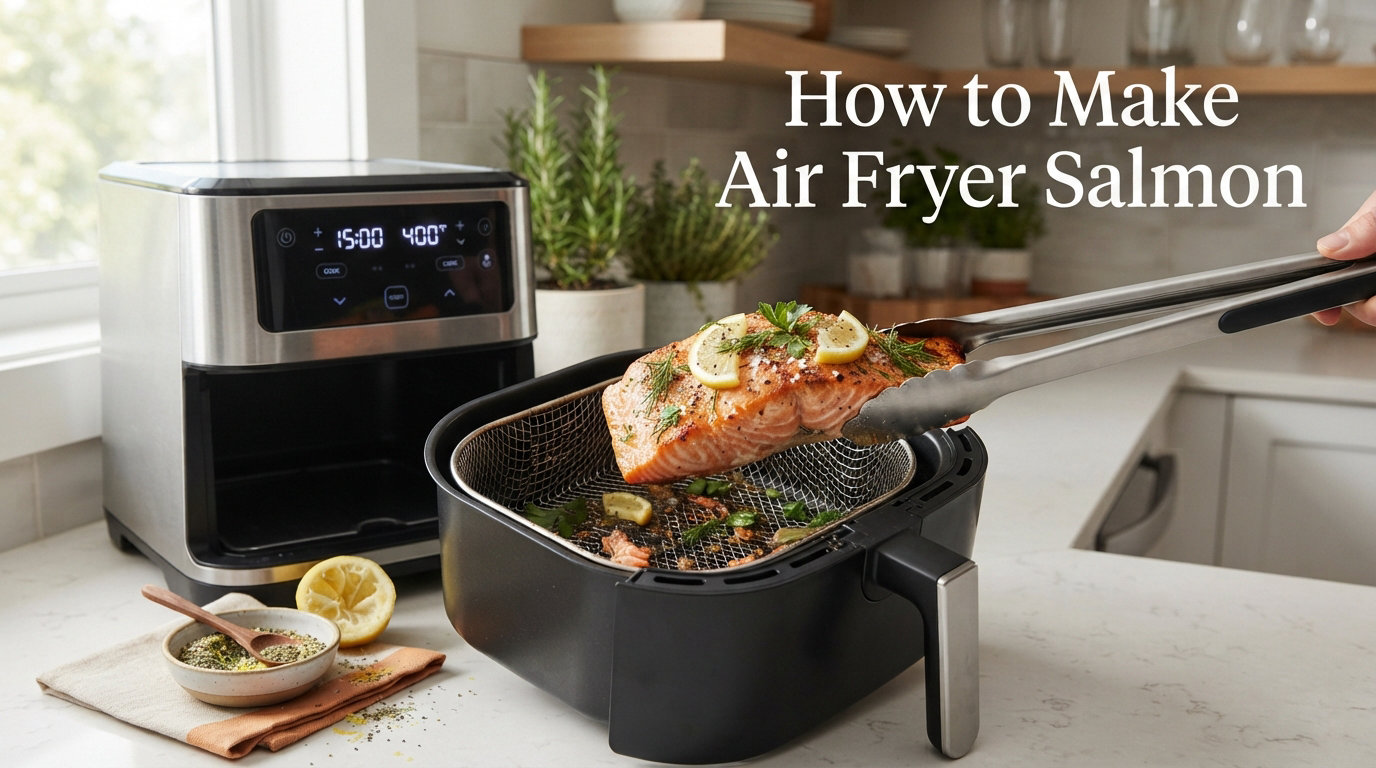
Learning how to make air fryer salmon well gives you one of my favorite answers to the “what can I cook quickly?” question: the edges turn lightly crisp, the center stays moist and flaky, and dinner is ready in about 10 minutes.
The method is simple, but two details matter—drying the fish well and checking its temperature before it overcooks. I’ll show you how to handle both, plus how to adjust the timing for thick or frozen fillets.
Use the basic garlic-paprika seasoning when you want a dependable weeknight dinner, or jump to one of the five variations below. If you enjoy fast, low-mess cooking, my air fryer chicken wings are another easy place to start.
Table of Contents
What You Need to Make Air Fryer Salmon
You only need a handful of ingredients for basic air fryer salmon. The beauty of this recipe is its simplicity.
Ingredients for Basic Salmon
-
2 salmon fillets (6 ounces each, skin on or skinless)
-
1 tablespoon olive oil or avocado oil
-
1/2 teaspoon garlic powder
-
1/2 teaspoon paprika
-
1/2 teaspoon salt
-
1/4 teaspoon black pepper
-
Fresh lemon wedges for serving
Equipment Needed
Any air fryer works for this recipe. I’ve tested it in basket-style models, oven-style units, and different brands from Ninja to Cosori to Instant Pot.
You’ll also need a meat thermometer for checking doneness and tongs or a spatula for removing the cooked salmon.
Choosing Your Salmon
Fresh salmon fillets work best, but frozen salmon works too with a few adjustments I’ll cover later. Look for fillets that are roughly the same thickness so they cook evenly.
Skin-on salmon works beautifully in the air fryer. The skin gets crispy and helps hold the fillet together. Skinless works fine too if you prefer.
Atlantic salmon, Sockeye, Coho, or King salmon all work with this method. Each has slightly different fat content, but the cooking process remains the same.
How to Make Air Fryer Salmon
Follow these exact steps for perfect air fryer salmon every time. I recommend reading through once before starting.
Step 1: Preheat Your Air Fryer
Preheat your air fryer to 400 degrees Fahrenheit for 3-5 minutes. Preheating ensures the salmon starts cooking immediately when it hits the basket, creating that desirable crispy exterior.
Step 2: Prepare the Salmon
Pat the salmon fillets completely dry with paper towels. Removing moisture is crucial for getting crispy edges instead of steamed fish.
Brush both sides of each fillet with olive oil. This helps the seasoning stick and promotes even browning.
Step 3: Season Generously
Mix the garlic powder, paprika, salt, and pepper in a small bowl. Sprinkle the seasoning evenly over both sides of the salmon fillets.
Press the seasoning gently into the fish so it adheres well. Don’t be shy with the seasoning – salmon can handle bold flavors.
Step 4: Arrange in Air Fryer Basket
Place the salmon fillets in the preheated air fryer basket skin-side down if using skin-on. Leave space between the fillets for proper air circulation.
Don’t overcrowd the basket. Cook in batches if needed. Proper air flow is what makes air frying work.
Step 5: Cook at 400°F
Air fry at 400 degrees Fahrenheit for 7-9 minutes. The exact time depends on your fillet thickness.
Thin fillets (1/2 inch) need about 7 minutes. Medium fillets (3/4 inch) need 8 minutes. Thick fillets (1 inch or more) need 9-10 minutes.
Step 6: Check for Doneness
Check the internal temperature with a meat thermometer inserted into the thickest part. Salmon is done at 145 degrees Fahrenheit.
If you don’t have a thermometer, look for opaque flesh that flakes easily with a fork. The color should change from translucent orange to opaque pink.
Step 7: Rest Before Serving
Remove the salmon from the air fryer and let it rest for 2-3 minutes. The internal temperature will rise slightly and the juices will redistribute.
Serve with fresh lemon wedges and enjoy your perfectly cooked air fryer salmon.
How to Tell When Salmon Is Done
The most reliable way to check salmon doneness is with an instant-read meat thermometer. Insert it into the thickest part of the fillet and look for 145°F, the minimum temperature listed for fish on the USDA safe temperature chart.
Visual cues work too. Properly cooked salmon turns from bright orange-red to a lighter pink-orange color throughout. The flesh should look opaque, not translucent.
Try the flaking test. Gently press the top of the fillet with a fork. If the layers separate easily into flakes, your salmon is done.
The touch test also helps. Press the center gently with your finger. Done salmon feels firm but still has some give, like the flesh between your thumb and index finger when relaxed.
Cooking Time by Thickness
At 400 degrees Fahrenheit, use this timing guide based on fillet thickness measured at the thickest part:
Air fryer salmon timing at 400°FFillet thicknessEstimated time1/2 inch6-7 minutes3/4 inch7-8 minutes1 inch8-9 minutes1 1/4 inches9-10 minutes1 1/2 inches10-11 minutes
Always check temperature rather than relying solely on time. Air fryer models vary in power and airflow.
5 Delicious Seasoning Variations
Once you master the basic method, try these flavor variations to keep things interesting. Each brings a different character to your salmon.
1. Classic Garlic & Paprika
The basic recipe above uses this combination. Garlic powder and paprika create a savory, slightly smoky flavor that complements salmon’s natural richness. Add a pinch of cayenne for heat.
2. Lemon Pepper & Dill
Mix 1 teaspoon lemon pepper seasoning with 1/2 teaspoon dried dill. Sprinkle over oiled salmon before cooking. This bright, fresh combination tastes like summer.
Finish with fresh lemon juice and extra dill after cooking for maximum flavor impact.
3. Cajun Spiced
Combine 1/2 teaspoon each of paprika, garlic powder, onion powder, dried oregano, and dried thyme. Add 1/4 teaspoon cayenne pepper and black pepper. This creates bold, spicy salmon perfect for pairing with rice.
4. Honey Garlic Glaze
Mix 2 tablespoons honey, 1 tablespoon soy sauce, 1 teaspoon minced garlic, and 1/2 teaspoon sesame oil. Brush over salmon before cooking. The honey caramelizes beautifully in the air fryer.
Watch carefully as the sugar can brown quickly. Check at the 6-minute mark.
5. Everything Bagel Seasoning
Sprinkle 1-2 teaspoons of everything bagel seasoning over your oiled salmon. The mixture of sesame seeds, poppy seeds, dried garlic, and dried onion creates incredible texture and flavor.
This is my go-to when I want something different but don’t want to measure spices.
Pro Tips for Perfect Air Fryer Salmon Every Time
A few small habits make a noticeable difference in the final result.
Pat the salmon completely dry before seasoning. I use two paper towels and press gently but firmly. Moisture is the enemy of crispy edges.
Don’t skip the oil even if you’re trying to reduce fat. A light coating helps the seasonings stick and creates better browning. Without it, your salmon may look pale and unappetizing.
Preheat your air fryer every time. Starting with a hot cooking environment makes the exterior sear while the interior stays tender. This single step improved my results dramatically.
Leave space between fillets in the basket. Overcrowding steams the fish instead of frying it. Air circulation is essential for that crispy texture.
Let the salmon rest after cooking. I know it’s tempting to dig in immediately, but those 2-3 minutes of resting make the texture noticeably better.
Troubleshooting Common Air Fryer Salmon Problems
Even with the best instructions, things sometimes go wrong. Here’s how to fix the most common air fryer salmon issues.
Problem: Salmon Is Dry and Overcooked
The main culprit is cooking too long. Air fryers cook fast, and salmon continues cooking from residual heat after removal.
Solution: Check temperature 1-2 minutes before you think it’s done. Remove at 140 degrees Fahrenheit and let it rest to reach the target 145 degrees.
Also check your air fryer temperature calibration. Some units run hot. If salmon consistently overcooks, try reducing temperature to 380 degrees Fahrenheit.
Problem: Salmon Sticks to the Basket
This happens when the skin or flesh bonds with the basket surface during cooking.
Solution: Brush the basket lightly with oil before adding salmon. Don’t try to flip or move the salmon too early. Let it cook undisturbed for at least 5 minutes to develop a crust that releases naturally.
Using parchment paper specifically made for air fryers also helps, though it may reduce crispiness slightly.
Problem: Smoke or Strong Smell
Salmon’s natural oils can create smoke in some air fryers, especially if drippings hit the heating element.
Solution: Add a tablespoon of water to the bottom of the air fryer drawer beneath the basket. This catches drips and prevents smoking.
Also ensure your air fryer is clean. Old grease from previous cooking sessions burns and creates smoke.
Problem: Uneven Cooking
Some parts are overcooked while others are undercooked.
Solution: Buy fillets with uniform thickness or fold thin tail sections under to create even thickness. Rotate the basket halfway through cooking if your air fryer has hot spots.
Problem: Skin Won’t Get Crispy
The skin stays soft and rubbery instead of crispy.
Solution: Make sure the skin is completely dry before cooking. Increase cooking time by 1-2 minutes if needed. Some air fryers simply don’t get the skin as crispy as pan-frying would.
How to Cook Frozen Salmon in the Air Fryer
Yes, you can cook frozen salmon directly in the air fryer. No need to thaw first, which makes this perfect for busy weeknights when you forgot to plan ahead.
Rinse the frozen salmon fillets under cold water to remove any ice glaze. Pat as dry as possible with paper towels. Ice crystals create steam that prevents browning.
Brush with oil and season as normal. The seasoning will stick better than you might expect.
Air fry at 400 degrees Fahrenheit for 10-12 minutes. Add 3-4 minutes to the normal cooking time for fresh salmon.
Check for doneness at the 10-minute mark. Frozen salmon may cook unevenly, so verify the internal temperature reaches 145 degrees Fahrenheit throughout.
The texture won’t be quite as perfect as fresh salmon, but it’s still delicious and far better than waiting hours for thawing.
What to Serve with Air Fryer Salmon
Air fryer salmon pairs beautifully with countless sides. Here are my favorite combinations for complete meals.
Vegetable Pairings
Roasted asparagus, green beans, or broccoli complement salmon perfectly. You can cook them right alongside your salmon in the air fryer for an easy one-basket meal.
For something different, try a fresh cucumber salad, roasted Brussels sprouts with balsamic glaze, or garlic sautéed spinach.
Grain Options
Quinoa, rice, or couscous make excellent bases for salmon bowls. Top with your cooked salmon, vegetables, and a drizzle of tahini or yogurt sauce.
Or keep it low-carb with cauliflower rice or zucchini noodles.
Breakfast Pairing Idea
Leftover air fryer salmon makes an incredible breakfast. Pair it with crispy bacon and eggs for a protein-packed morning meal.
More Air Fryer Recipes
For another crisp, crowd-friendly option, try my oven-baked chicken wings.
Storing and Reheating Leftover Salmon
Air fryer salmon stores well and makes excellent leftovers for meal prep or next-day lunches.
Refrigeration
Store cooked salmon in an airtight container in the refrigerator for up to 3-4 days. Keep it in a single layer if possible to prevent the delicate flesh from breaking apart.
Freezing
You can freeze cooked salmon for up to 3 months. Wrap individual portions tightly in plastic wrap, then place in a freezer bag. Thaw overnight in the refrigerator before reheating.
Reheating Methods
The air fryer works great for reheating salmon. Place leftover fillets in the basket at 350 degrees Fahrenheit for 3-4 minutes until warmed through.
Microwave reheating works in a pinch but can make the salmon rubbery. Use 50% power in 30-second intervals.
My favorite method for maintaining texture is flaking the cold salmon over a salad or into pasta. No reheating needed.
Frequently Asked Questions
How long do you cook salmon in the air fryer?
Cook salmon in the air fryer at 400°F for 7-9 minutes depending on thickness. Thin fillets (1/2 inch) need 6-7 minutes, medium fillets (3/4 inch) need 7-8 minutes, and thick fillets (1 inch or more) need 8-9 minutes. Always check that the internal temperature reaches 145°F for food safety.
What temperature should I use for air fryer salmon?
The ideal temperature for air fryer salmon is 400°F. This high heat creates crispy edges while cooking the interior quickly to retain moisture. Some air fryers run hot, so you may need to adjust to 380°F if you notice consistent overcooking.
Do you flip salmon in the air fryer?
No, you don’t need to flip salmon in the air fryer. The hot air circulates around the food, cooking both sides evenly. Place the salmon skin-side down and cook undisturbed for the entire time. Flipping can cause the delicate fish to break apart.
Can you cook frozen salmon directly in the air fryer?
Yes, you can cook frozen salmon directly in the air fryer without thawing. Rinse off ice glaze, pat dry, season, and cook at 400°F for 10-12 minutes. Check for doneness at 10 minutes and ensure the internal temperature reaches 145°F throughout.
Why is my salmon dry in the air fryer?
Dry salmon usually results from overcooking. Air fryers cook faster than ovens, so check your salmon 1-2 minutes before you think it’s done. Remove at 140°F and let it rest to reach 145°F. Also ensure you’re not cooking at too high a temperature for your specific air fryer model.
How do I keep salmon from sticking to the air fryer basket?
To prevent sticking, brush the air fryer basket with oil before adding salmon. Ensure your salmon skin is patted completely dry. Don’t try to move the salmon too early during cooking. Let it cook undisturbed for at least 5 minutes to form a crust that releases naturally. Parchment liners made for air fryers also help.
Is air fryer salmon healthy?
Yes, air fryer salmon is very healthy. Salmon provides high-quality protein and omega-3 fatty acids. Air frying uses minimal oil compared to pan-frying, reducing added fat and calories. A typical 6-ounce serving contains approximately 35 grams of protein and heart-healthy fats. It’s naturally low-carb, keto-friendly, and gluten-free.
Can I use foil in the air fryer for salmon?
Yes, you can use foil in the air fryer for salmon, though it’s not necessary. If using foil, create a small basket shape that allows air circulation underneath. Don’t cover the salmon completely as this prevents proper air flow and creates steamed rather than fried fish. Foil makes cleanup easier but may reduce crispiness.
Conclusion
Learning how to make air fryer salmon has transformed weeknight dinners in my kitchen. What used to require careful oven timing and cleanup now takes under 10 minutes with virtually no mess.
The method is forgiving and adaptable. Once you understand the basics of 400 degrees Fahrenheit for 7-9 minutes, you can experiment with seasonings, try different salmon types, and make this recipe your own.
Air fryer salmon proves that healthy, delicious meals don’t need to be complicated. With just a few ingredients and minutes of cooking time, you have a restaurant-quality protein ready for any meal.
I hope this guide helps you make perfect salmon every time. If you try this recipe, I’d love to hear how it turns out. Share your results or favorite seasoning variations.
Ready to become an air fryer salmon expert? Grab some fresh fillets and give this method a try tonight. Your taste buds will thank you.