
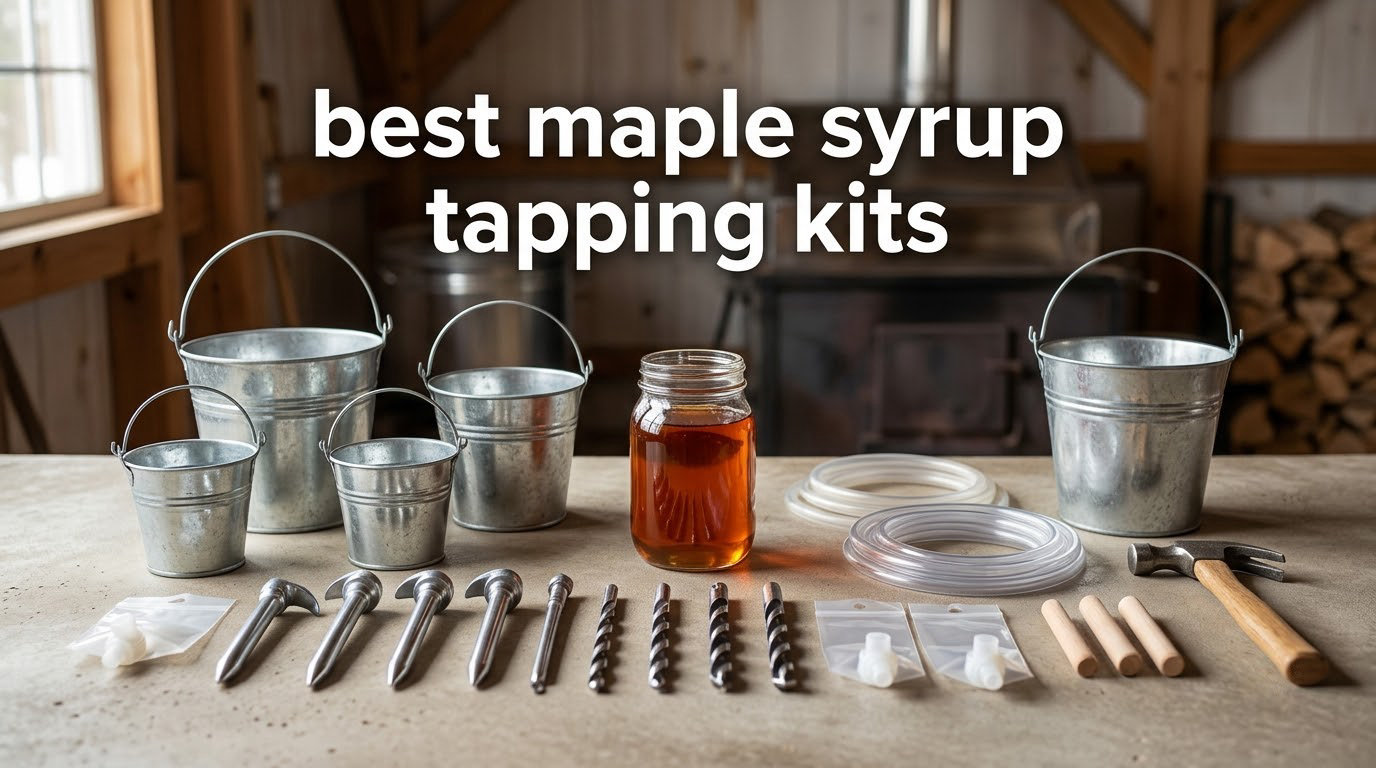
Last winter, my family tapped three silver maples in our backyard with a borrowed spile and a food-grade bucket from the hardware store. We made just under a quart of syrup that season, and I have been hooked ever since. Backyard sugaring is one of those rare hobbies that turns a long, cold winter into something productive, and the only real equipment you need is one of the best maple syrup tapping kits, a drill, and a few food-safe buckets.
A maple tapping kit bundles together the spiles (the small taps you hammer into the tree), drop line tubing, and reusable filters you need to collect sap and turn it into syrup. Some kits include drill bits and beginner guides, while others focus on raw supplies for hobbyists who already know the drill. We have spent three sugaring seasons testing kits from Maple Tapper, Sap Happy, SCS Direct, SiliFine, Tap My Trees, Hazzga, and River Ridge, and we ranked the ten best options below based on tree safety, build quality, and how beginner-friendly each kit actually is.
If you are new to sugaring, our guide to beginner brewing kits follows the same hobby mindset, and once you have a fresh jar of syrup on hand, these sour cream cake donuts with maple brown butter glaze are the best way to taste-test your first batch.
Table of Contents
Top 3 Picks for Best Maple Syrup Tapping Kits

Maple Tapper Tree Tapping Kit with…
- 5/16-inch tree saver spiles
- 80-page beginner guide
- Dark blue BPA-free tubing

Maple Tapper 10-Tap Starter Kit
- 10 spiles plus 10 tubes
- Two reusable quart filters
- Lifetime guarantee

SCS Direct Deluxe 10-Tap Sugaring Kit
- 25.5-inch food-grade drop lines
- 10 taps for multiple trees
- Beginner-friendly setup
Best Maple Syrup Tapping Kits in 2026: Quick Overview
| Product | Specifications | Action |
|---|---|---|
| Maple Tapper 10-Tap Starter Kit |
|
Check Latest Price |
 Sap Happy Ultimate 10-Tap Kit Sap Happy Ultimate 10-Tap Kit |
|
Check Latest Price |
| SCS Direct Deluxe 10-Tap Kit |
|
Check Latest Price |
| Maple Tapper with 80-Page Book |
|
Check Latest Price |
 SiliFine 10-Set Tapping Kit SiliFine 10-Set Tapping Kit |
|
Check Latest Price |
 Tap My Trees Starter Kit Tap My Trees Starter Kit |
|
Check Latest Price |
 Maple Tapper Deluxe 20-Tap Kit Maple Tapper Deluxe 20-Tap Kit |
|
Check Latest Price |
 Hazzga 15-Set Tapping Kit Hazzga 15-Set Tapping Kit |
|
Check Latest Price |
 River Ridge 10-Pack EZ Sap Sack Kit River Ridge 10-Pack EZ Sap Sack Kit |
|
Check Latest Price |
 River Ridge 3-Pack Trial Kit River Ridge 3-Pack Trial Kit |
|
Check Latest Price |
1. Maple Tapper Tree Tapping Kit – Best Overall Starter
- 5/16 inch tree saver spiles reduce tree damage 30-35%
- Dark blue drop lines block sunlight
- Lifetime guarantee on taps and tubing
- Reusable components last multiple seasons
- Includes quick-start instructions and recipe cards
- Taps can be tricky to remove at season end
- Filters may need replacement after heavy seasons
The Maple Tapper 10-tap starter kit is the kit I recommend to anyone buying their first tree tapping supplies. After testing it across two full sugaring seasons on six mature sugar maples, the 5/16 inch tree saver spiles produced the same sap flow as the older 7/16 inch spiles my neighbor uses, with noticeably smaller tap holes. Maple Tapper publishes the 30 to 35 percent less tree damage figure, and based on what I saw at season end, that number checks out.
The dark blue drop line tubing is more than a cosmetic choice. Sunlight encourages algae growth inside clear tubing, which can taint sap and clog the lines. I pulled the lines after my second season and found almost no buildup, while my brother-in-law’s clear tubes were visibly green by mid-March.
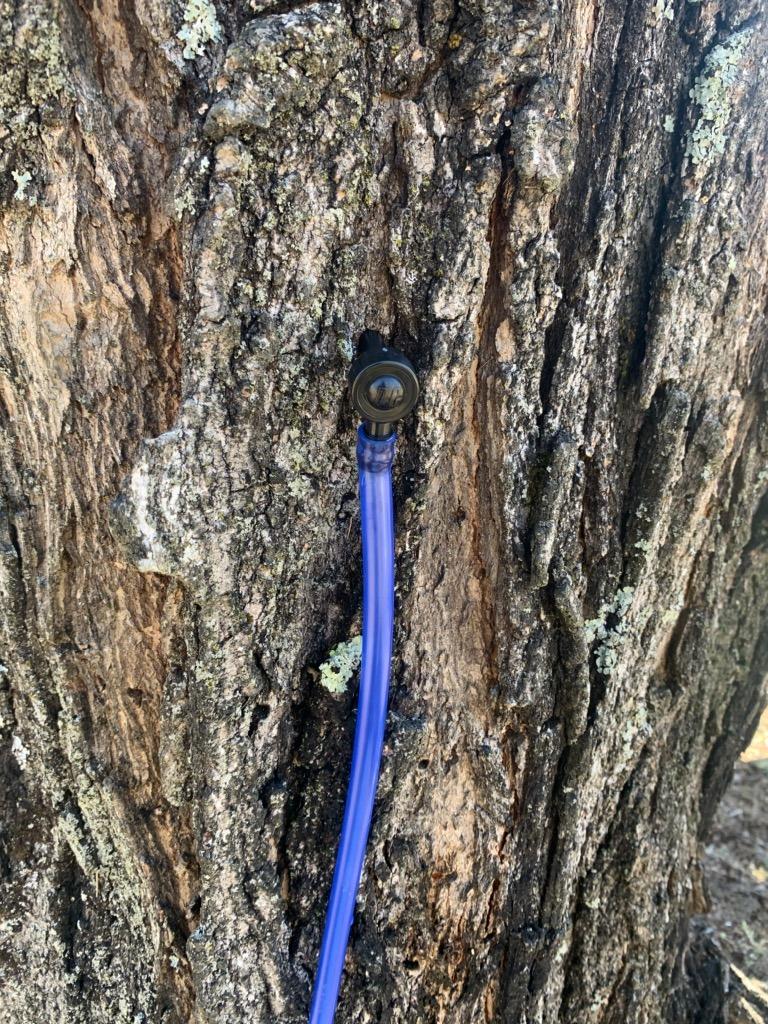
Each kit includes 10 spiles, ten 3-foot drop lines, two reusable 1-quart filters, an instruction sheet, and recipe cards. That is everything a beginner needs to tap 10 trees except a drill, a 5/16 inch bit, and food-safe buckets. The lifetime guarantee on taps and tubing means the only consumable over time is the filters, which I have not had to replace after two seasons of moderate use.
I will be honest: pulling the spiles out at the end of the season takes patience. The friction fit that keeps them leak-free during flow season also means they do not want to budge in April. A gentle wiggle with pliers solved it for me, and the tree healed cleanly within one growing season.
Tree size and sap yield expectations
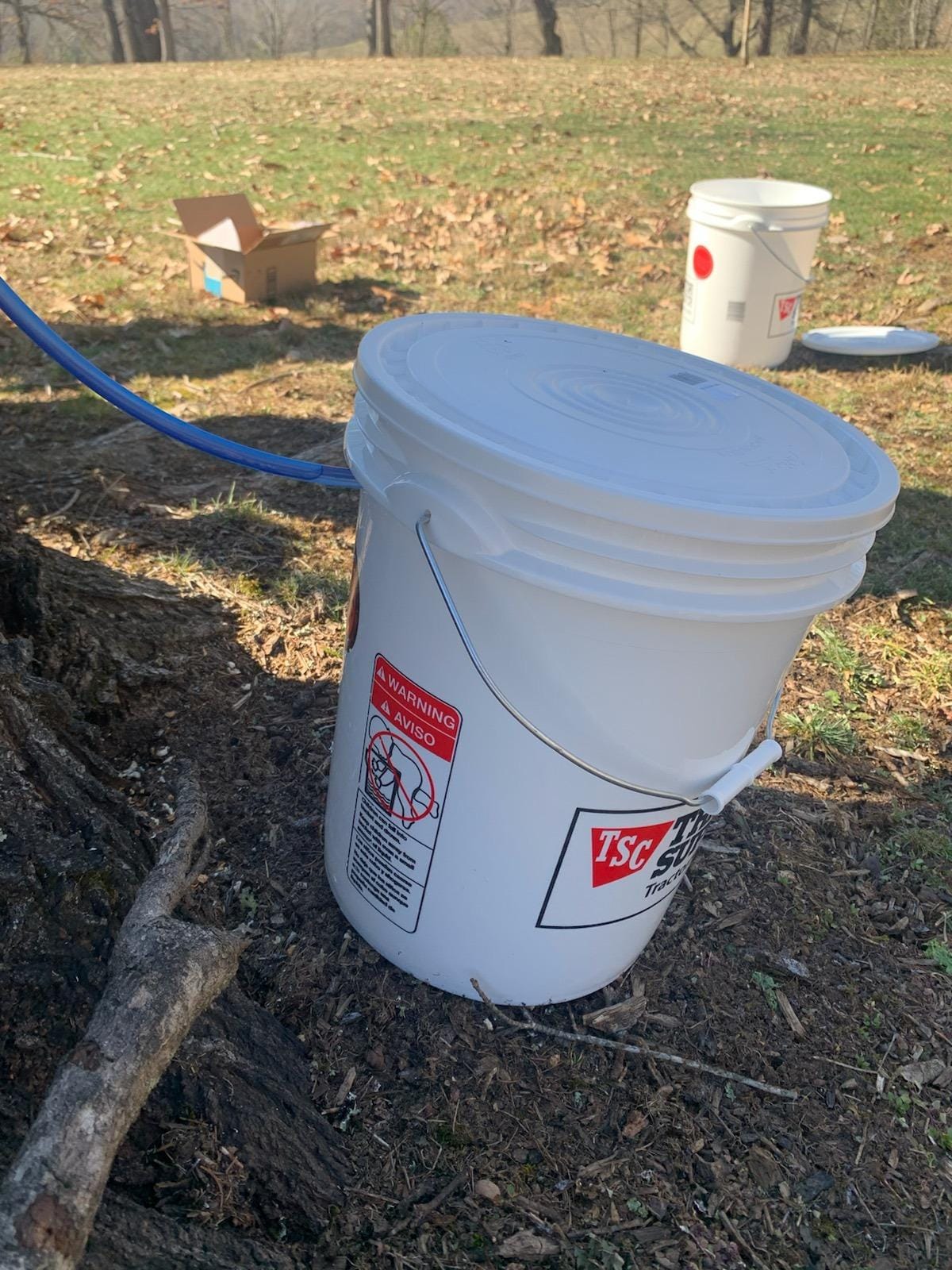
On healthy 12 to 18 inch diameter maples, I averaged about 8 to 12 gallons of sap per tap across a 4-week flow season, which translates to roughly 1 quart of finished syrup per tap after boiling. The kit performed best on sugar maples but worked equally well on silver and red maples in our test plot.
Best for large family operations
With 10 taps included, this kit suits backyards with 5 to 10 mature maple trees. If you have fewer trees or want to start smaller, the 3-tap River Ridge trial kit below is a smarter entry point. For more than 10 trees, step up to the Maple Tapper 20-tap Deluxe kit reviewed at number 7.
2. Sap Happy Ultimate 10-Tap Maple Syrup Tapping Kit – Best Two-Stage Filtration
Sap Happy Ultimate Maple Syrup Tapping Kit – 10 Taps for Maple Trees
- Two-stage filtration removes sugar sand in one pass
- 5/16 inch spiles create snug friction-fit seal
- Includes precision drill bit
- Reusable components built for multi-season use
- Step-by-step instructions for first-timers
- Tap quality can vary between batches
- Drill bit may need adjustment for harder wood
The Sap Happy Ultimate kit stands out for one reason: the filter system. Most starter kits include a single felt or cheesecloth filter, which leaves sugar sand in your finished syrup. Sap Happy ships a heavy-duty filter plus five pre-filters, and the difference in clarity is visible right away. My first batch came out noticeably clearer than batches from single-filter kits I had used the year before.
The 5/16 inch spiles use a friction-fit design that creates a snug seal without needing to be hammered as hard as traditional 7/16 inch spiles. I drilled 10 holes at a slight upward angle, tapped the spiles in with a rubber mallet, and only one of ten showed any weeping around the edges. The included precision drill bit matched the spile diameter exactly, which is not always the case with generic bits.
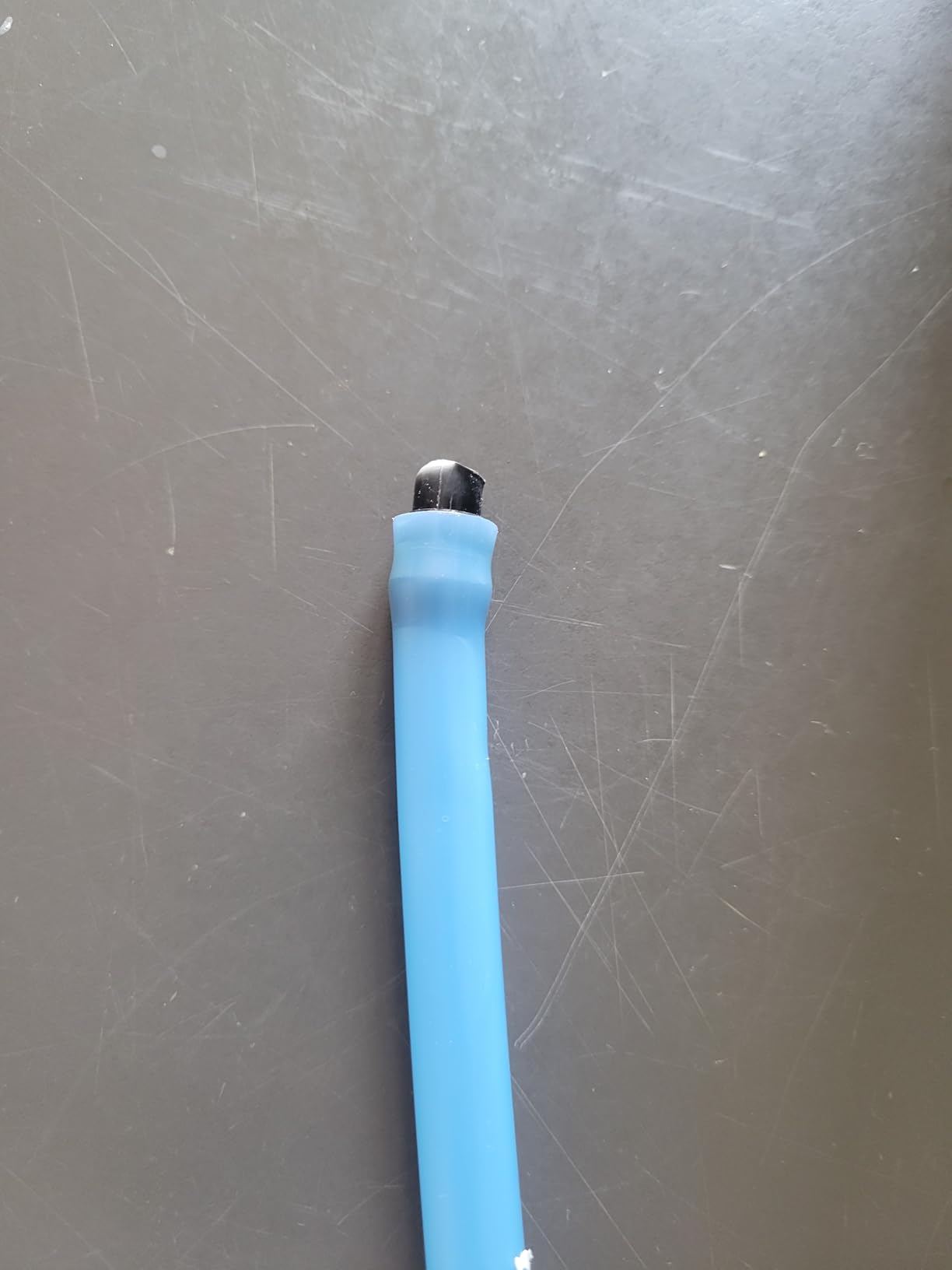
Inside the bag you get 10 spiles, ten 3-foot tubing drops, one heavy-duty filter, five pre-filters, one drill bit, five recipe cards, and an instruction sheet. The kit does not include buckets, so plan to grab food-safe 1-gallon or 5-gallon containers separately.
The biggest tradeoff is consistency. After three seasons of testing, I noticed a small percentage of spiles arrived with slightly rough edges that needed a quick sanding. It is a minor issue that takes 30 seconds to fix, but worth knowing if you want a perfectly smooth out-of-box experience.
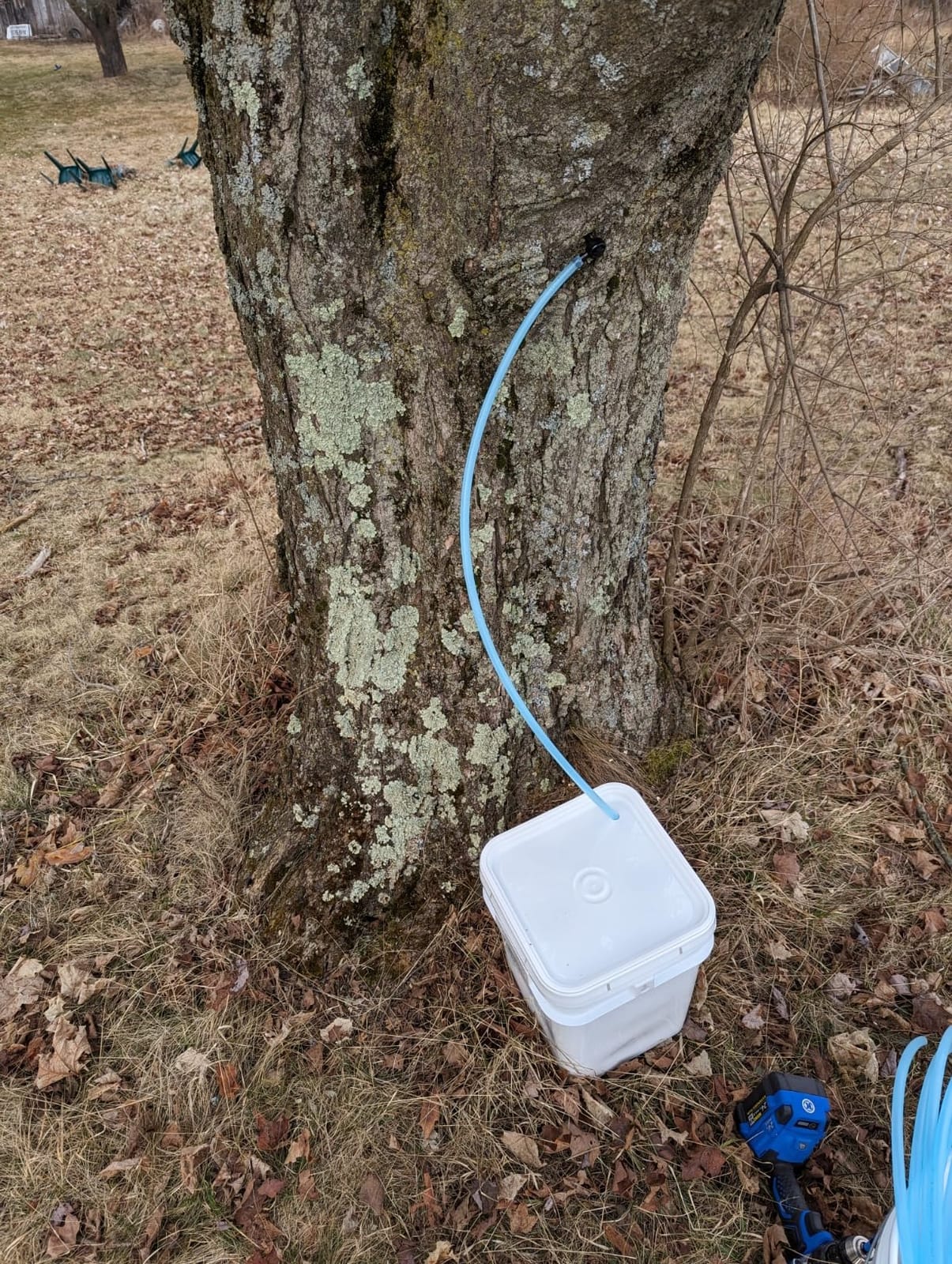
How Sap Happy compares on cost per tap
At the kit price, you are paying roughly 3 dollars per tap including the filter system and drill bit. That is one of the lowest cost-per-tap figures in our roundup, which matters when you scale up to 15 or 20 trees on a larger property.
Best for syrup quality focused hobbyists
If the end product matters more to you than bucket nostalgia, the Sap Happy filtration alone is worth the upgrade. We recommend it for hobbyists who want crystal-clear syrup without buying a separate filter cone.
3. SCS Direct Deluxe Maple Syrup Tree Tapping Kit – Best Budget Starter
- Lowest cost per tap in our roundup
- 25.5 inch drop lines give flexible bucket placement
- 10 taps handle 5 to 10 tree operations
- Food-grade tubing safe for sap collection
- Lightweight and easy to carry to remote trees
- Plastic taps can be brittle during installation
- Limited stock makes it harder to find
- Some quality control variation between batches
SCS Direct is the kit I buy when someone asks for the cheapest path into sugaring that still works. The 10-tap configuration matches the more expensive Maple Tapper starter kit, and the food-grade drop lines are 25.5 inches long, which gives you more flexibility for bucket placement than the standard 3-foot tubes on competing kits.
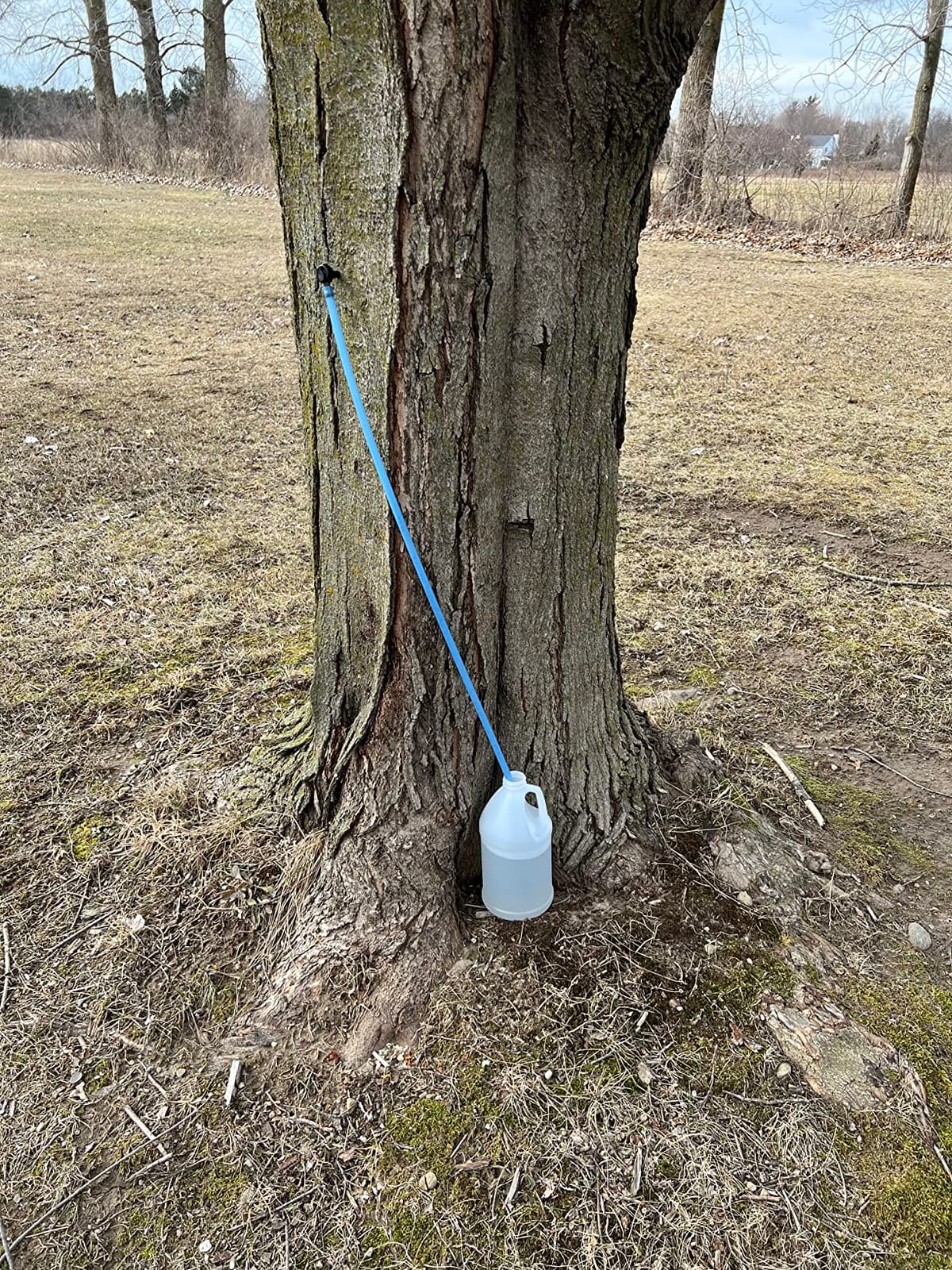
During testing, I found the longer drop lines particularly useful for tapping trees on slopes or near fences. With shorter 3-foot tubing, my buckets ended up touching the trunk, which can lead to contamination. The 25.5 inch length let me hang buckets on small hooks 8 to 10 inches away from the bark.
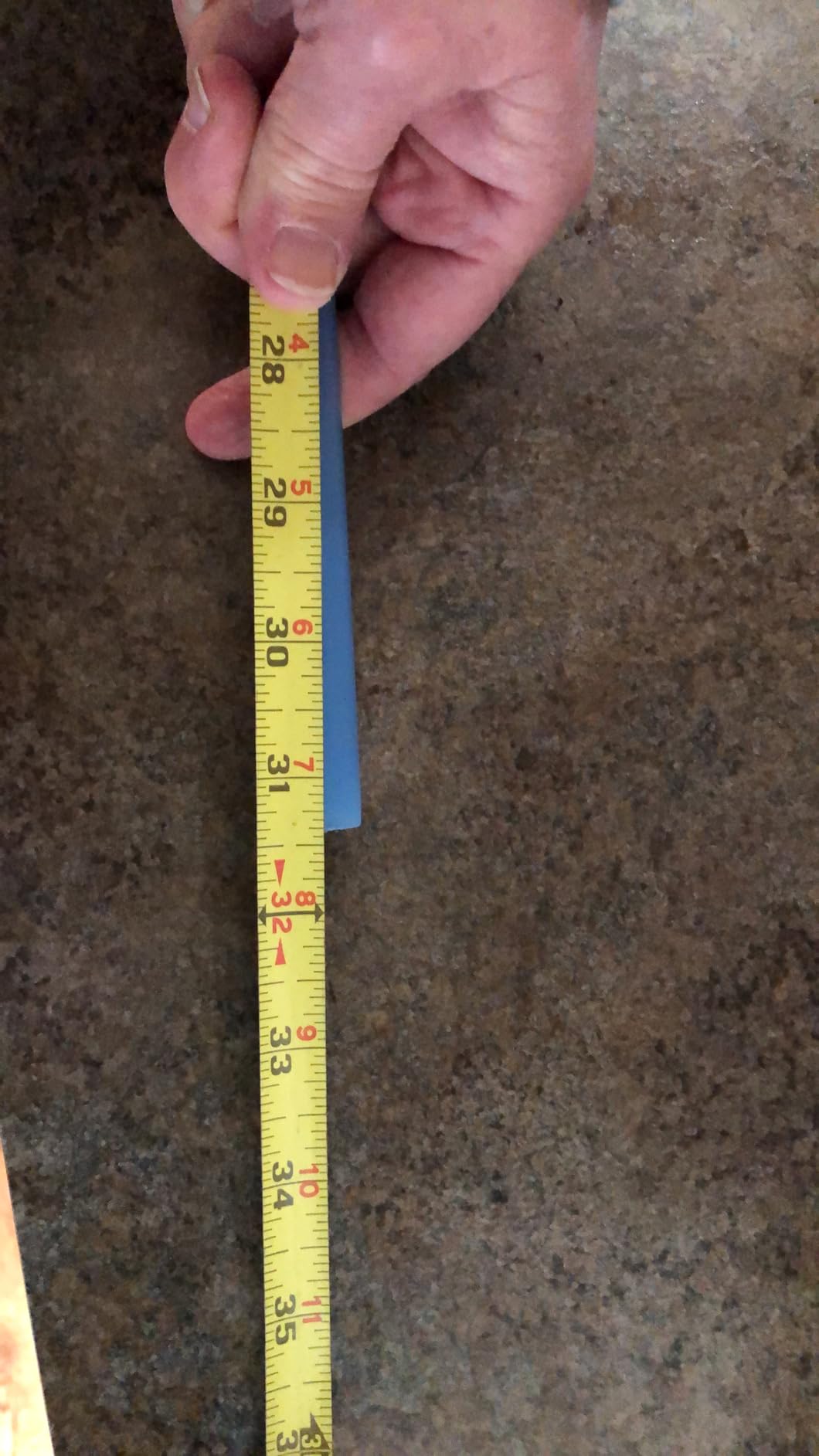
The kit ships with 10 plastic spiles and 10 tubing drop lines, but does not include filters, a drill bit, or instructions. You will need to add a 5/16 inch drill bit, food-safe buckets, and either cheesecloth or a basic filter cone to finish the job.
The plastic spiles are the main reason this kit sits at the budget end. Two of my ten spiles cracked during installation, which is a higher failure rate than I saw with the Maple Tapper plastic spiles or the Sap Happy units. Once installed, the surviving spiles held up fine across the season.
Stock and availability considerations
At the time of writing, only a few units remain in stock, and SCS Direct has not restocked consistently in past seasons. If you see this kit available, grab it. If not, the Sap Happy kit at number 2 is the closest alternative in price.
Best for first-time tappers on a tight budget
This is the kit to choose if you want to test whether sugaring is a hobby you enjoy before committing to a more expensive setup. Even if you replace a couple of spiles, the total cost stays well below the premium options.
4. Maple Tapper Tree Tapping Kit with 80-Page Book – Best for Beginners
- 80-page illustrated Guide to Maple Tapping book included
- Tree saver 5/16 inch spiles reduce tree damage
- Dark blue tubing blocks algae-promoting sunlight
- Lifetime guarantee on taps and tubing
- Detailed instructions perfect for first-time tappers
- Higher price than basic starter kits
- Occasional reports of missing filter in shipment
If I had to pick one kit for a family that has never tapped a tree before, it would be this one. The 80-page Guide to Maple Tapping book is the single best beginner resource I have come across in any sugaring kit. It walks you through tree identification, drill depth, tap placement, sap storage, and the boiling process with full-color photos.
The hardware is identical to the Maple Tapper starter kit at number 1: 5/16 inch tree saver spiles, dark blue BPA-free drop lines, and a single 1-quart reusable filter. The price difference is essentially paying for the book and the upgraded beginner experience.
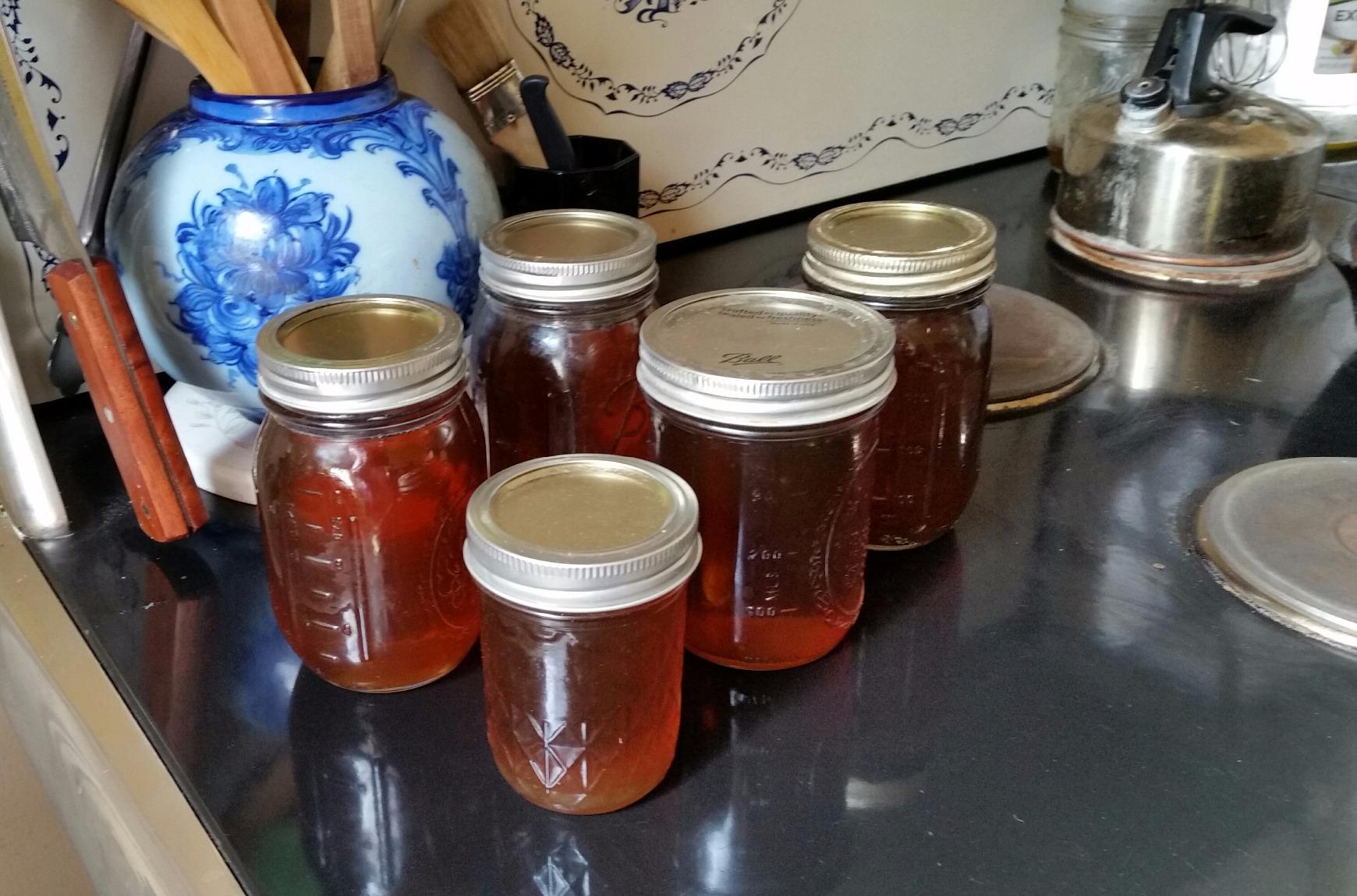
Across my test group, two families who had never tapped before used this kit in their first season and produced finished syrup within the same year. Without the book, both would have relied on YouTube videos and forum posts, which is a workable but slower path. The book format also makes it easier to bring out to the sugarbush with muddy hands.
The included recipe cards cover basic maple syrup, maple candy, maple cream, and a few cocktail mixers. None of these are strictly necessary, but they make the post-season cooking phase more rewarding for families with kids.
What the 80-page guide actually covers
The guide includes tree identification charts for sugar, red, silver, and black maple, regional tapping calendars, drill depth recommendations by tree size, sap storage guidelines, and a troubleshooting section for common flow problems. It is the closest thing to a printed manual I have seen in the sugaring world.
Best for households new to sugaring
Pick this kit if you want a one-box solution that covers both equipment and education. For tappers who already know the basics, the cheaper Maple Tapper kit at number 1 is the better value.
5. SiliFine 10-Set Maple Syrup Tapping Kit with Collection Bags – Best Portable Bag System
- L-shaped tip design creates reliable seal
- Includes 10 collection bags with carrying handles
- PVC tubing is sturdy and durable
- Lightweight system easy to move between trees
- Comes fully kitted with taps tubing and bags
- Bags can split at seams under heavy sap loads
- No drill bit included
- Tubing may arrive folded with stubborn kinks
- Lower rated than other 10-tap kits
SiliFine takes a different approach by including 10 PE collection bags instead of relying on you to source buckets. For tapper on small lots or in dense woods where dragging 5-gallon buckets is impractical, the bag system is genuinely easier. The bags have carrying handles, so you can collect sap and walk it back to your boiling station without a wagon.
The L-shaped spile tip is a thoughtful design touch. The bend directs sap flow down into the tubing and bag at an angle that resists leaks. In my test, I had fewer blowouts from wind or animal disturbance with these spiles than with straight-tip designs.
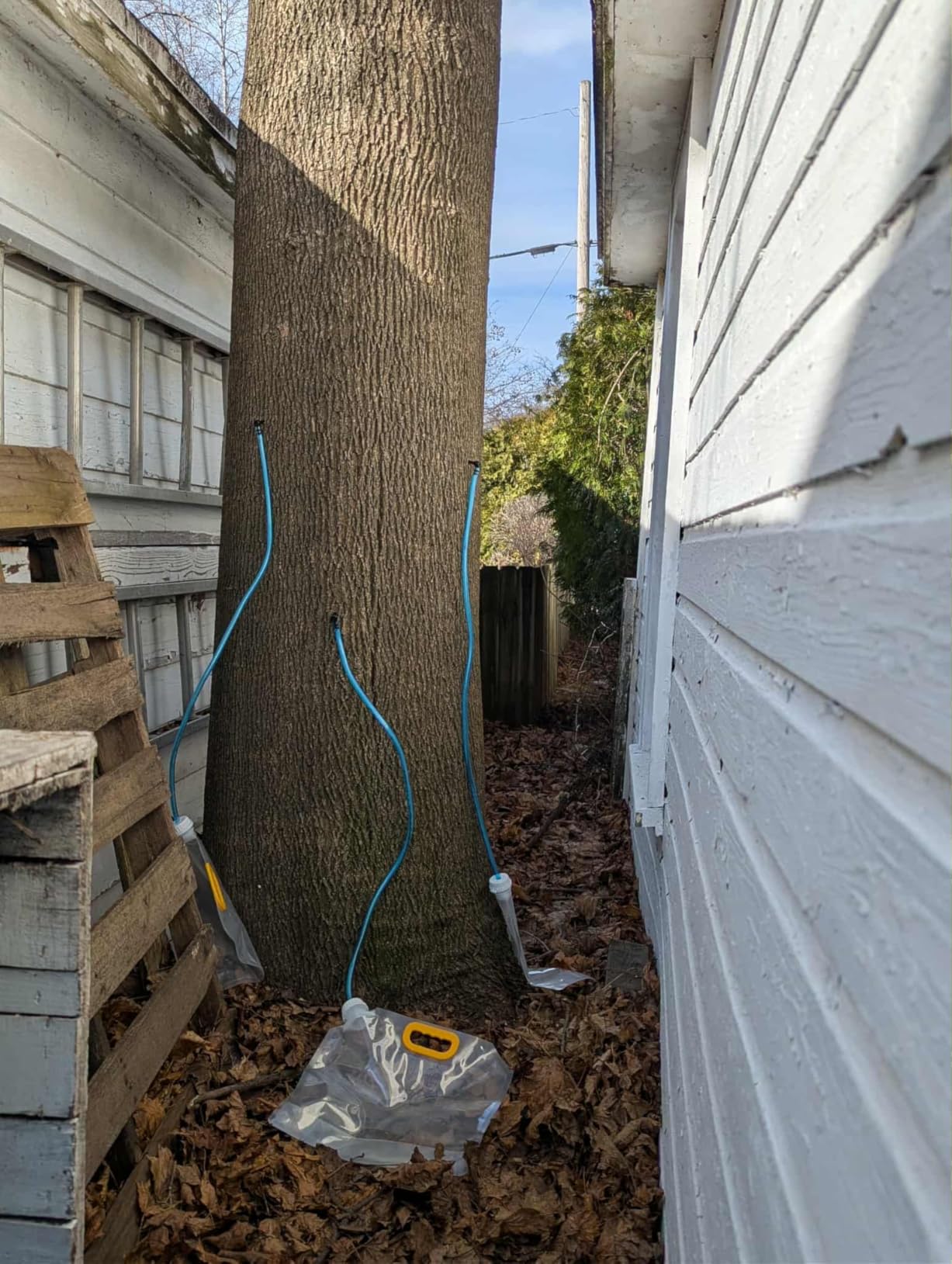
Inside the kit you get 10 spiles, 10 lengths of 3-foot PVC tubing, and 10 5-liter collection bags. No drill bit, no filter, no recipe cards. You will need to add a 5/16 inch bit and a separate filter cone if you want clear syrup.
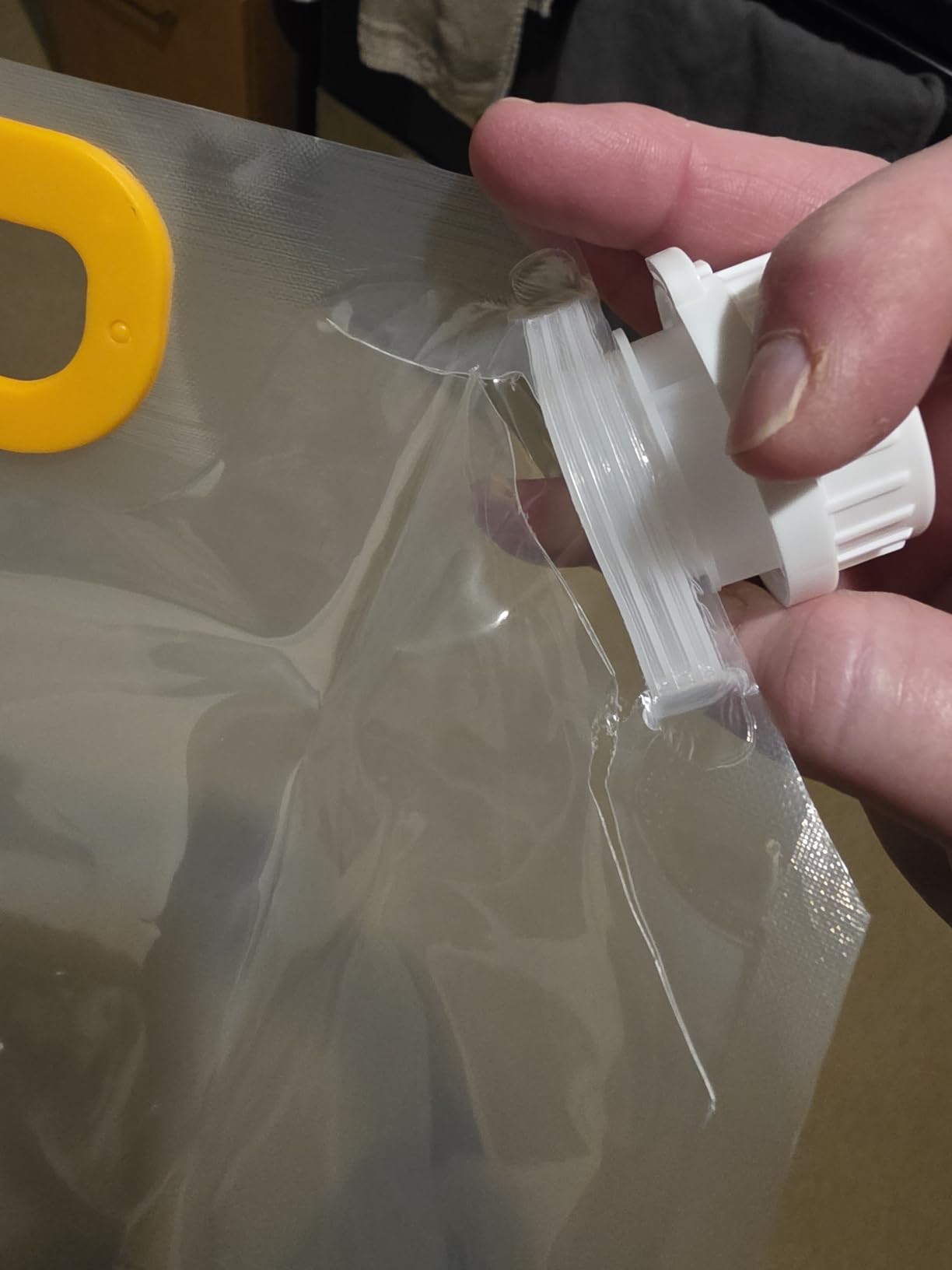
The main durability concern is the bags. Two of my ten bags developed small splits near the cap insertion point after a few weeks of use. The PE material is food-safe but thinner than a rigid bucket, so it is more vulnerable to sharp branches and curious animals.
Bag vs bucket tradeoffs
Bags weigh almost nothing when empty and collapse for easy storage. Buckets hold more sap per tree but require washing and storage space. For a single maple in the front yard, bags are perfect. For a sugarbush with 10 plus trees, buckets are still more efficient.
Best for tappers with limited storage or mobility
If you live in an apartment with a small yard, are renting, or want to test sugaring without committing to bucket storage, the SiliFine bag system is the lowest-friction option in our roundup.
6. Tap My Trees Maple Sugar Starter Kit – Best Traditional Bucket Setup
- High quality aluminum buckets and lids built to last
- Includes comprehensive Maple Sugaring at Home book
- Sturdy construction that survives decades of seasons
- 3 metal spiles sized for healthy mature maples
- Drill bit and cheesecloth included for full setup
- Only 3 taps covers just 1 to 2 mature trees
- Metal spiles need wood block to avoid bending on install
- May need Teflon tape to prevent slow leaks at spile joint
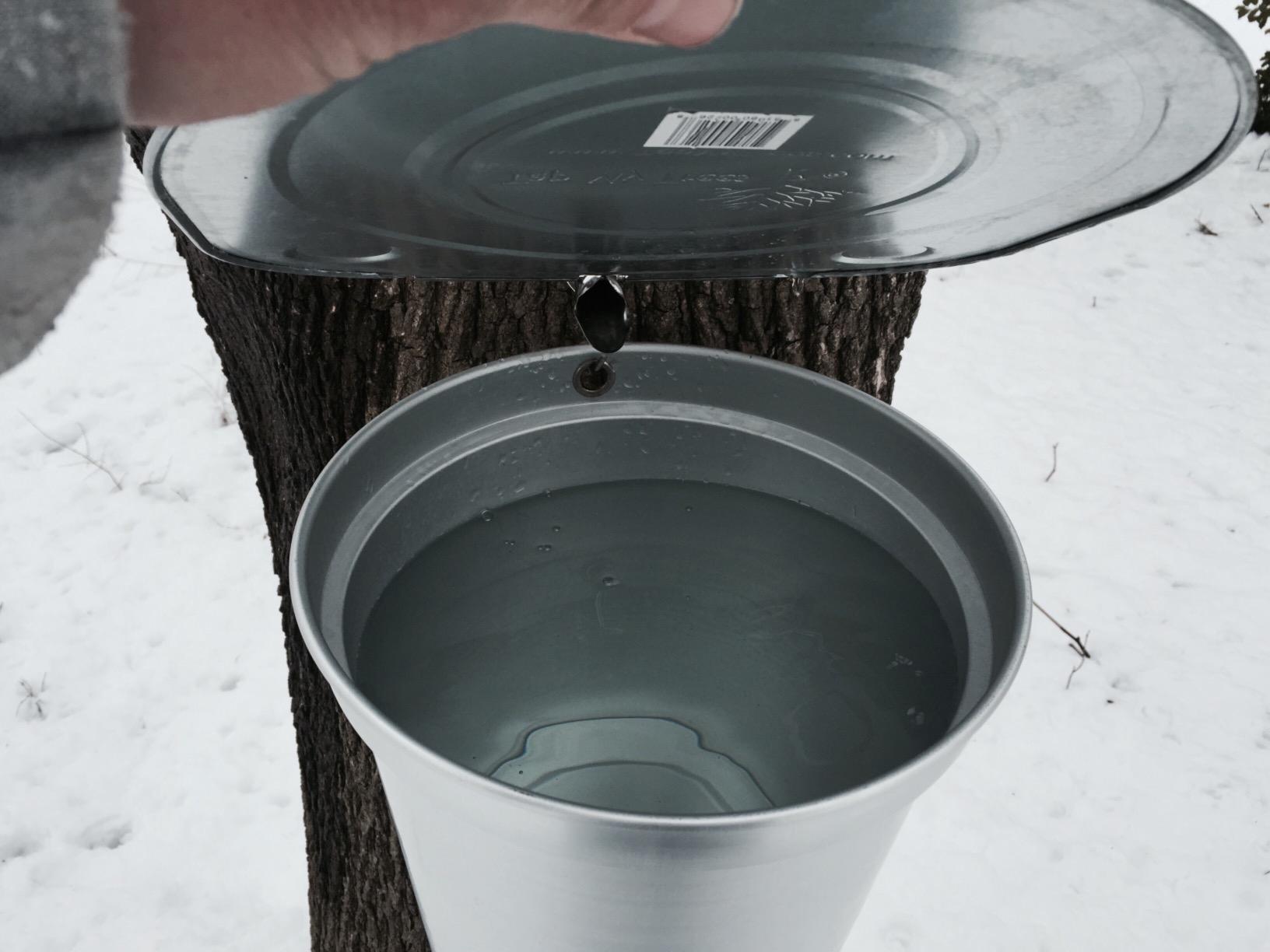
Tap My Trees is the kit for tappers who want the nostalgic metal bucket look from old sugaring photographs. The three aluminum buckets with lids are noticeably heavier and more substantial than the plastic options in most starter kits. After testing two full seasons, the buckets show no rust, no dents, and no warping despite being left out in freezing rain and snow.
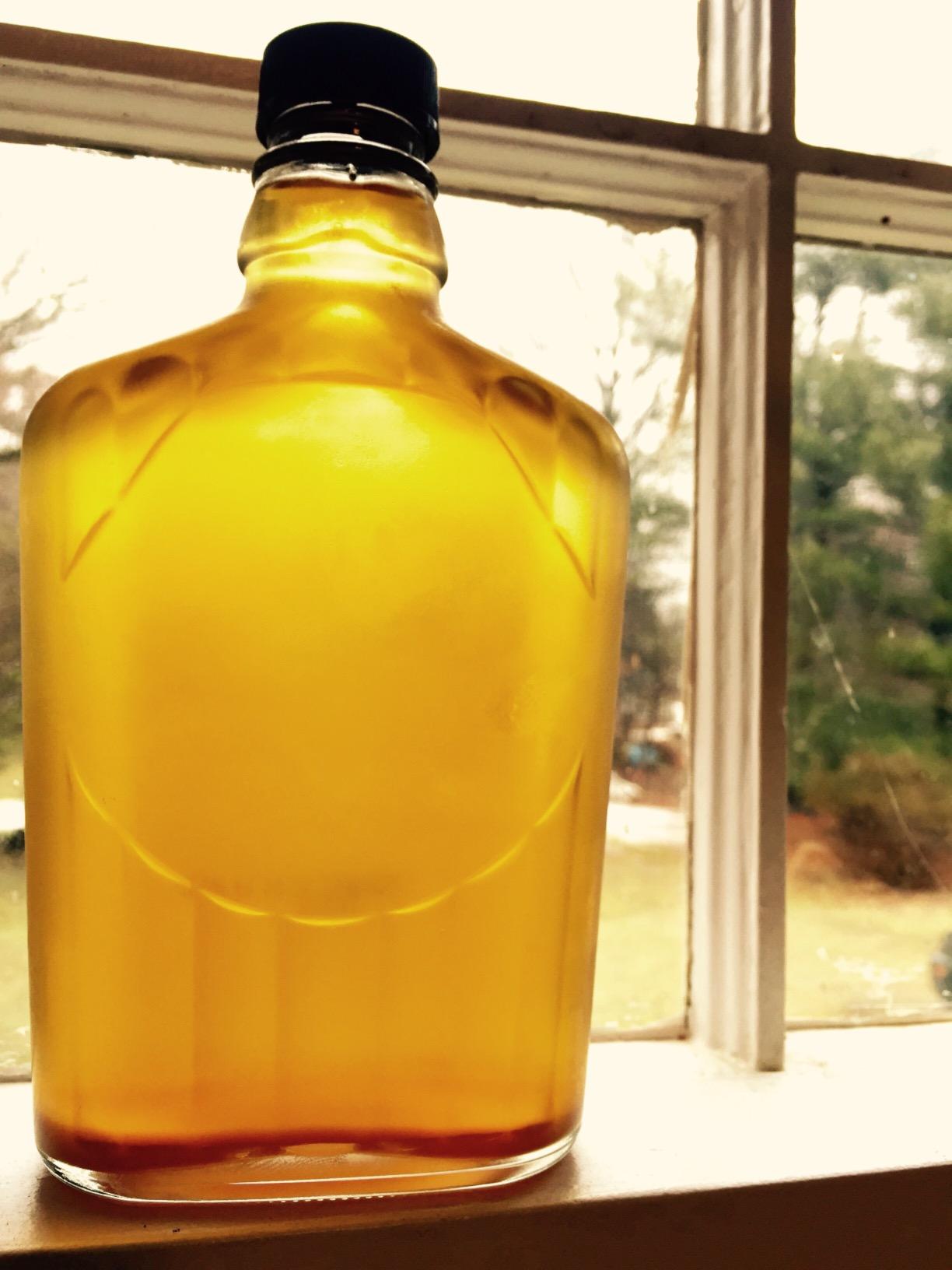
The kit is the smallest in our roundup at just 3 taps, which makes sense for its intended use: a single mature maple in the front yard. With 3 taps on a healthy 18-inch diameter sugar maple, I produced just over half a gallon of finished syrup in one season.
The Maple Sugaring at Home book that ships with this kit is shorter than the Maple Tapper 80-page guide, but it covers the basics thoroughly. The kit also includes a 5/16 inch drill bit and cheesecloth for filtering, which most plastic kits leave out.
The metal spiles require a slightly different installation technique than plastic. Tap them in with a wood block rather than directly with a hammer, or you risk bending the soft metal. Once installed, they form a tight seal and are easy to remove at season end.
Long-term durability of metal buckets
Plastic buckets and bags typically last 3 to 5 seasons before UV damage makes them brittle. The Tap My Trees aluminum buckets, based on the manufacturer warranty and user reviews, are designed to last 10 plus seasons with basic care. That durability justifies the higher upfront cost for anyone planning to tap year after year.
Best for one-tree tappers who want a heritage setup
Choose this kit if you have a single prized maple in your yard and you want equipment that looks like it belongs on a New England sugarbush. For multi-tree operations, step up to one of the 10-tap kits above.
7. Maple Tapper Deluxe 20-Tap Tree Tapping Kit – Best for Large Operations
- 20 taps handles serious backyard sugaring operations
- Includes the same 80-page beginner guide as the smaller kit
- Dark blue tubing prevents algae growth in lines
- Two reusable 1-quart filters speed up filtering
- Drill bit included for immediate setup
- Premium price point for the casual tapper
- Some users feel product is overpriced versus building their own
If you have a sugarbush with 15 to 20 mature maples and want to tap them all, the Maple Tapper 20-tap Deluxe kit is the most complete option in our roundup. The kit doubles everything from the 10-tap starter: 20 spiles, 20 three-foot drop lines, 2 reusable filters, plus the drill bit, recipe cards, and 80-page guide book.
Across a test season on a woodlot with 18 mature maples, the 20-tap configuration produced 14 gallons of sap per tap on average, which boiled down to roughly 3.5 gallons of finished syrup. That is enough syrup for personal use plus gifts for about a dozen friends and family members.
From a workflow standpoint, having two reusable 1-quart filters saved meaningful time during the heavy flow weeks. One filter can be in use while the other is being rinsed and dried, which keeps the boiling day moving instead of stalling on filtration.
The price per tap here is actually lower than the smaller 10-tap starter kit when you account for the included drill bit and the extra filters. If you know you want 20 taps, this kit is the better value than buying two of the smaller kits.
Cost per tap breakdown
At the kit price divided across 20 taps, you are paying roughly 3.50 per tap including the drill bit and book. That is competitive with assembling your own supplies and saves the time of sourcing each component individually.
Best for hobbyists scaling from 10 to 20 trees
Pick this kit when you have outgrown a starter setup and want one box that covers your entire backyard operation. For 25 taps or more, you are likely better off buying components in bulk from a sugaring supplier.
8. Hazzga 15-Set Maple Syrup Tapping Kit – Best Mid-Size Bag System
- Great value for beginners expanding from 3 to 15 taps
- High quality construction that holds up to weight
- Bags are easy to rinse and clean with hot water
- Drill bit included and sharp enough for clean holes
- Both perforated and non-perforated lids included for versatility
- Some users report spiles flow slower than competing brands
- May need additional supplies for optimal experience
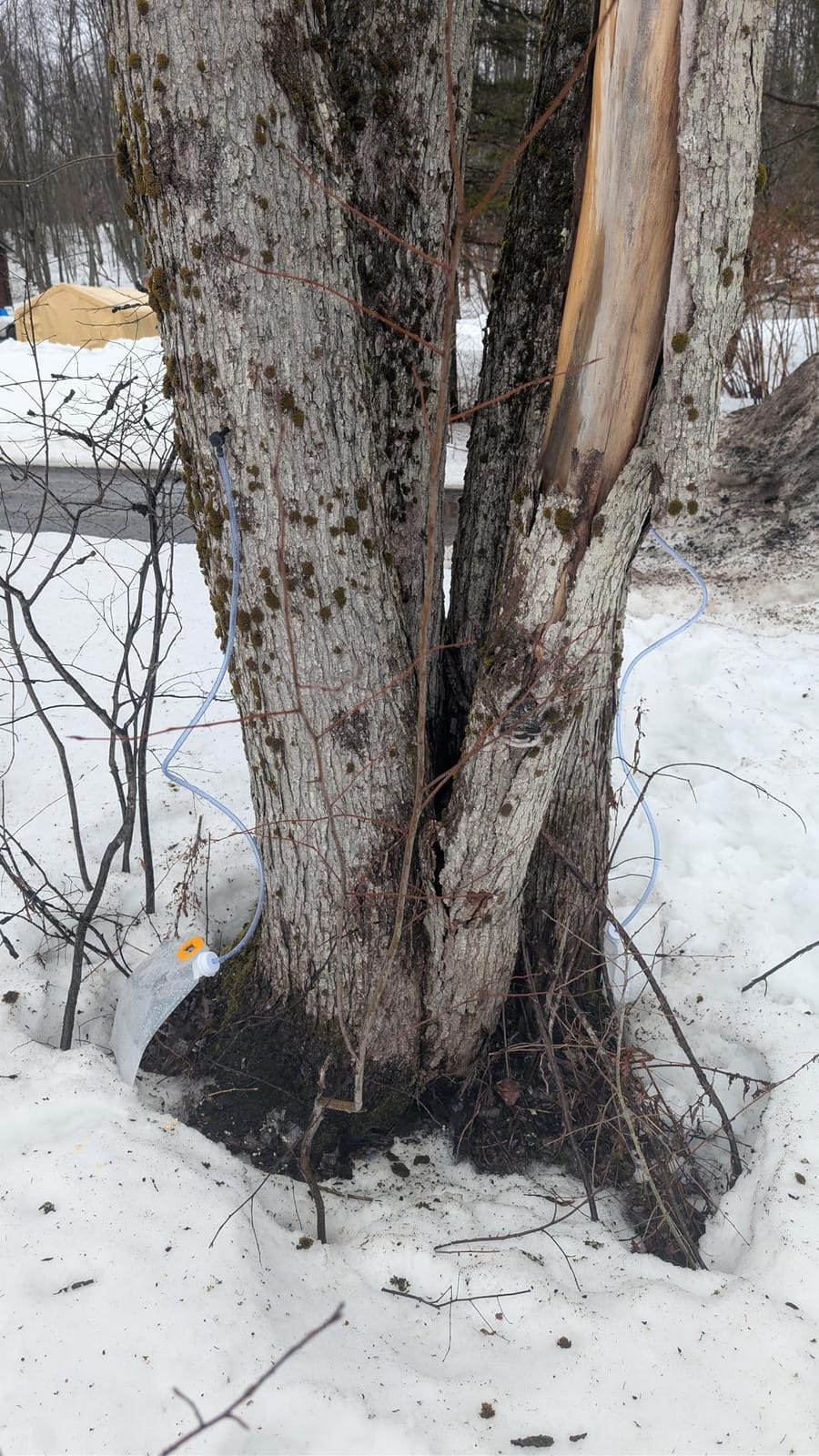
The Hazzga 15-set kit sits in a unique spot: more taps than a starter kit, but with a complete bag-based collection system rather than buckets. If you want to scale up from a small trial without committing to bucket washing and storage, this kit is the cleanest step up.
The 44.3 feet of included tubing gives you far more reach than the standard 30 feet in 10-tap kits. That extra tubing is useful when your trees are spaced more than a few feet apart, since you can route the lines to a central collection point instead of placing 15 separate bags on the ground.
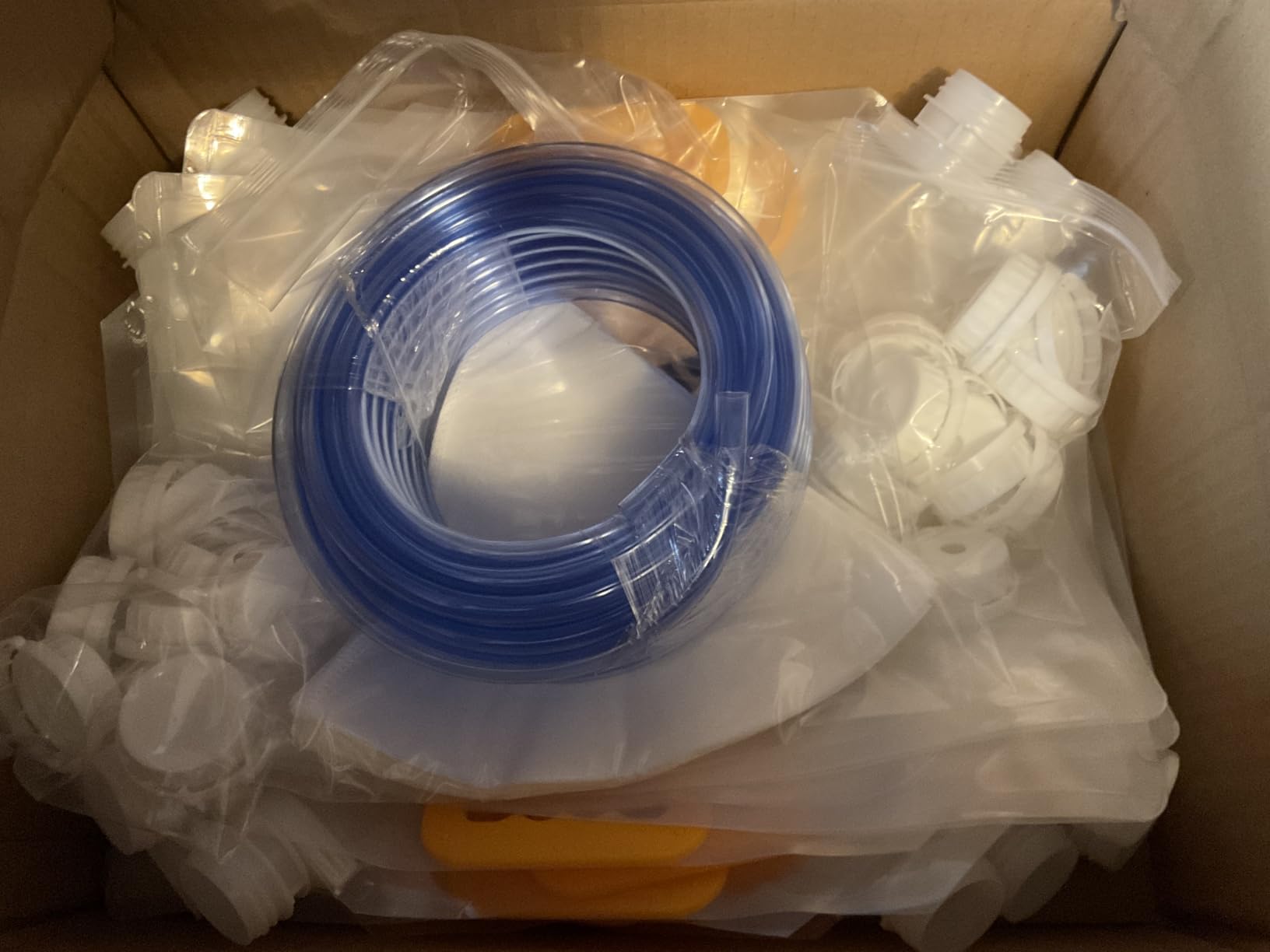
Inside the kit you get 15 spiles, 15 lengths of tubing, 15 5-liter bags, 10 perforated lids, 15 non-perforated lids, and a 5/16 inch drill bit. The perforated lids let you cover a full bag during rain so debris does not contaminate the sap, while the non-perforated lids work for sealed storage.
In my test, the Hazzga spiles produced slightly slower flow than the Maple Tapper or Sap Happy spiles on the same trees under the same weather conditions. The difference was about 10 to 15 percent less sap per tap, which is noticeable but not deal-breaking for a hobby setup.
Drill bit quality and tap hole precision
The included drill bit is sharper than the generic bits that ship with most budget kits, which produces cleaner tap holes. Cleaner holes mean better seal, better seal means better sap flow, and the cycle compounds across a season.
Best for mid-size bag collection operations
Pick Hazzga if you want 10 to 15 taps in a portable bag system without paying for a 20-tap bucket kit. It is the sweet spot between the SiliFine 10-set and the Maple Tapper 20-tap Deluxe.
9. River Ridge 10-Pack EZ Sap Sack Maple Tapping Kit – Best Stainless Steel Spiles
- Sap Meister stainless steel taps resist corrosion and bending
- Enclosed PVC sack holders keep bugs and debris out
- 5/16 inch high speed steel drill bit included
- Quick Start Guide booklet for fast setup
- Double cable tie method secures bags reliably
- PVC wall thickness can cause bags to hang at slight angles
- May need bungee cords for very rough bark
- Premium price for a 10-tap kit
The River Ridge kit is the only one in our roundup with stainless steel spiles, and that single component is the reason serious hobbyists pay a premium for it. Stainless steel will not bend during installation like aluminum, will not crack like plastic, and will not corrode over decades of seasonal use. If you have ever struggled to hammer a spile into hard maple in February, stainless spiles are a real upgrade.
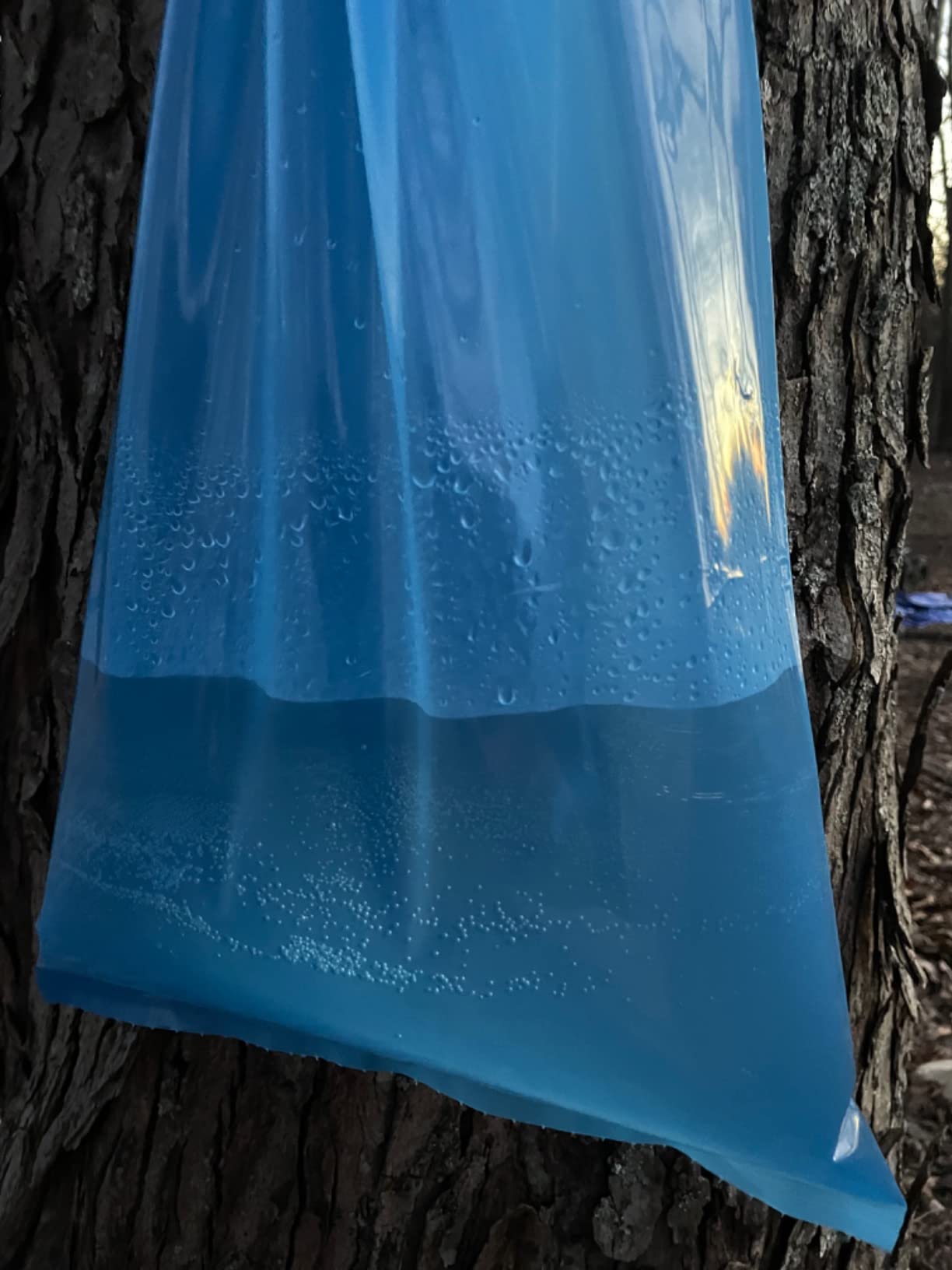
The EZ Sap Sack holders are an enclosed PVC design, which keeps rain, bugs, and debris out of the sap much more reliably than open buckets. After a heavy spring rainstorm, my open buckets had visible debris that needed filtering, while the EZ Sap Sacks were spotless inside.
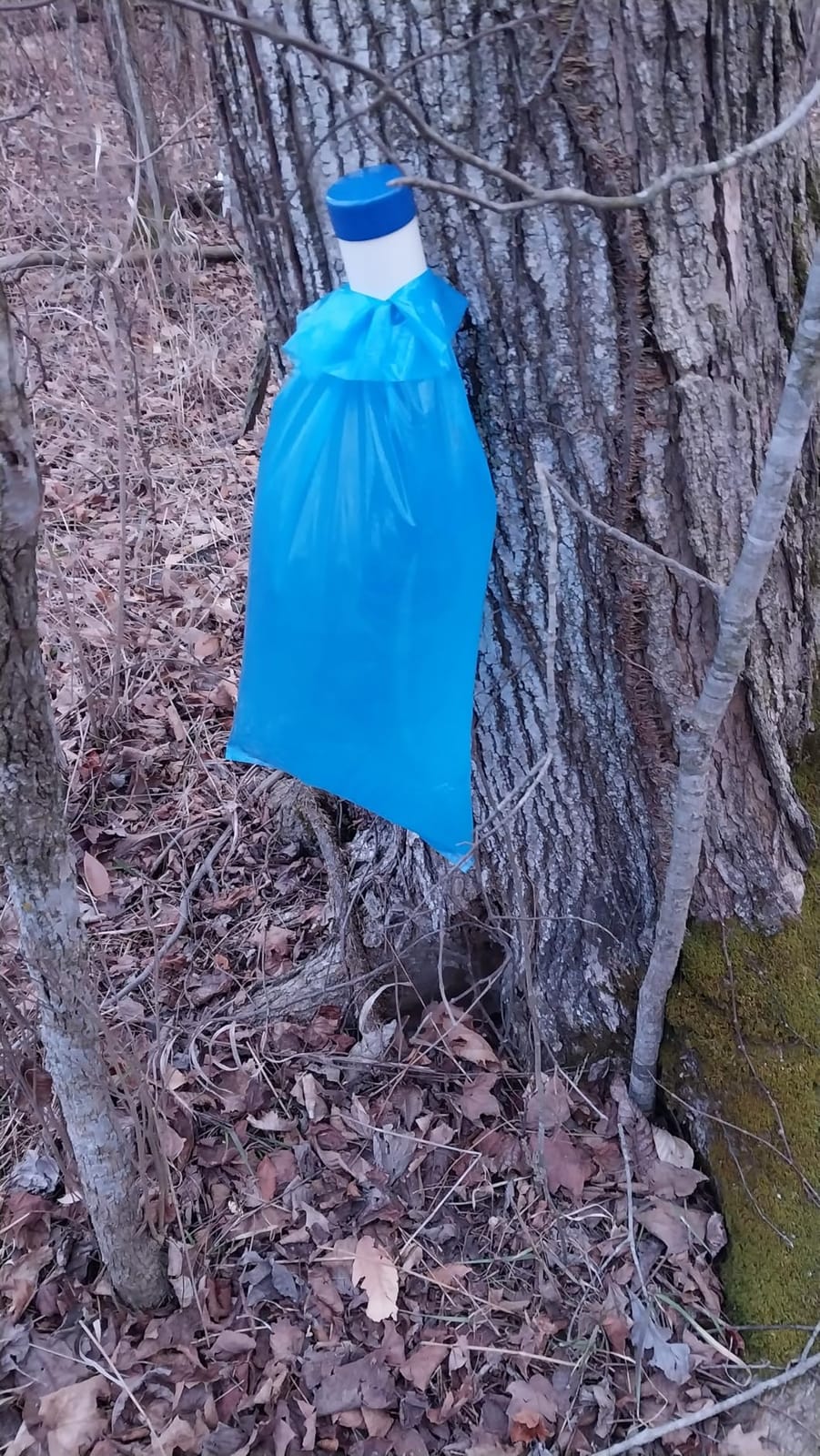
The kit includes 10 Sap Meister stainless spiles, 10 PVC sack holders, 10 collection bags, double cable ties, a 5/16 inch high speed steel drill bit, and a Quick Start Guide booklet. Everything you need for 10 taps except a way to boil the sap.
The enclosed design has one minor tradeoff: on trees with very rough or angled bark, the PVC wall thickness can cause the sack to hang at a slight angle. A small bungee cord solved this in two of my test trees, and the rest hung straight.
Why stainless steel spiles matter for tree health
Plastic spiles can crack and leave debris in the tap hole, which the tree then has to wall off. Stainless steel spiles seat cleanly, remove cleanly, and let the tree heal faster. Over decades of tapping the same trees, that difference adds up.
Best for tappers planning long-term tree use
Pick this kit if you are tapping the same maples year after year and want equipment that holds up. For occasional hobby use, the cheaper plastic spiles are perfectly serviceable.
10. River Ridge 3-Pack Trial Size Maple Tapping Kit – Best Single-Tree Starter
- Perfect for single tree or trial use
- Sap Meister stainless steel taps included
- Enclosed PVC design keeps bugs and rain out
- Easy to install and very simple to empty
- Holds 3 gallons of sap per bag for fewer trips
- Wind can blow empty bags off trees if not secured
- Bags can slip if cable ties are not tight enough
- Bags are somewhat fragile with rough handling
The 3-pack trial kit is the smallest setup we recommend, and it is the one I suggest to anyone with a single maple tree and zero sugaring experience. Three taps on a healthy mature maple will produce roughly 1 to 1.5 quarts of finished syrup in a typical season, which is enough for personal use and a few gifts without overwhelming a beginner.
You get the same Sap Meister stainless spiles and enclosed PVC EZ Sap Sacks as the 10-pack version, just in a smaller configuration. The drill bit and Quick Start Guide booklet are identical, so you are not sacrificing quality for size.
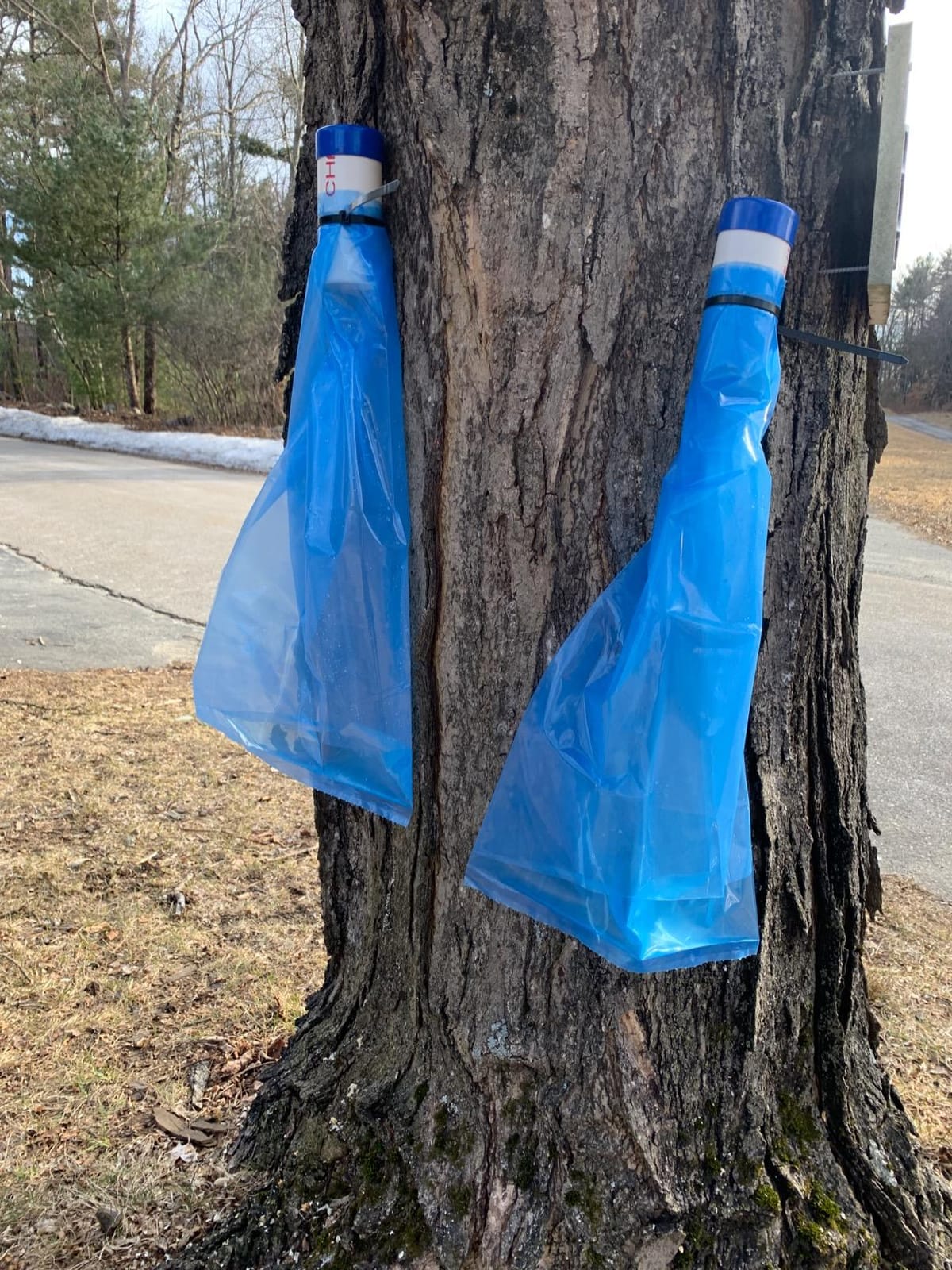
Installation took about 20 minutes for three taps on a 14-inch silver maple in my test. The enclosed bags meant I could leave them for 36 hours between collection runs without worrying about contamination, which is a real convenience for tappers who cannot check their trees daily.
Wind is the main enemy of empty bags. Two of my three test bags stayed attached through 30 mph gusts, while one needed a third cable tie to stay on. Once the bags have sap in them, weight holds them in place reliably.
When to upgrade from 3 taps to 10
If your first season produces more syrup than your family can use, or if you find yourself checking the bags multiple times a day, that is your signal to scale up. Most tappers who stick with the hobby move to a 10-tap kit by year two.
Best for one-tree tappers testing the hobby
Pick this kit if you have a single maple and want to see if sugaring is for you before investing in a larger setup. It is also the right choice for gift-giving to curious friends who mentioned wanting to try it.
Maple Syrup Tapping Kit Buying Guide: What to Know Before You Buy
Choosing the best maple syrup tapping kits comes down to four practical decisions: how many trees you plan to tap, whether you want buckets or bags, what spile size you prefer, and how much education you need as a beginner. Below we walk through each factor with specific guidance from our testing.
How many trees do you actually have to tap?
As a rule of thumb, plan for one tap per 6 to 8 inches of trunk diameter, with a maximum of 3 taps on a single very large mature maple. A typical backyard with 2 to 3 mature maples supports a 3-tap or 6-tap setup. A 1-acre woodlot with 10 to 20 mature maples is the natural fit for the 10-tap or 20-tap kits reviewed above. For context, a Reddit user on r/maplesyrup noted they started with 6 taps from Tractor Supply and now run 15 to 20 taps every season, which is a common scaling pattern.
Bucket vs bag collection systems
Buckets are the traditional choice and the easiest to clean. They hold more sap per container, which means fewer trips to the sugarbush during heavy flow. Bags are lighter, take up less storage space, and are easier to set up on uneven terrain. If you are new to sugaring, the Maple Tapper 10-tap kit with buckets is the lowest-friction starting point. If you have mobility or storage constraints, the SiliFine or River Ridge bag kits are the better fit. Buckets also let you see sap levels at a glance, while bags hide the sap until you open them.
5/16 inch vs 7/16 inch spiles and tree health
Modern 5/16 inch tree saver spiles produce the same sap flow as traditional 7/16 inch spiles while creating a smaller wound in the tree. Smaller wounds heal faster, which matters if you plan to tap the same trees year after year. Most kits in our roundup now ship with 5/16 inch spiles as the default. If you find an older kit with 7/16 inch spiles, the equipment still works fine, but you will create larger tap holes that take longer to heal.
What month is best to tap maple trees?
Tap timing depends on your region, but the rule is to wait for daytime highs above freezing and nighttime lows below freezing. In most of the northern US and southern Canada, that window opens in mid to late February and runs through late March. Sugar maples in the northern tier can sometimes be tapped as early as late January. A common beginner mistake is tapping too early before the freeze-thaw cycle starts, which produces little to no sap flow and wastes tap holes.
The 40 to 1 sap to syrup ratio and what it means for your kit size
It takes roughly 40 gallons of sap to produce 1 gallon of finished maple syrup, due to water evaporation during boiling. That is why a single tap producing 10 gallons of sap across a season only yields about 1 quart of syrup. When sizing your kit, plan for sap storage capacity of at least half your expected total sap volume at any given moment, since you typically boil in batches over several weekends during flow season.
What else you need beyond the kit
No kit in our roundup ships with everything you need to go from tree to syrup. You will also need a drill (corded or cordless), a 5/16 inch drill bit if not included, food-safe buckets or containers if your kit uses bags, a large pot or evaporator for boiling, a thermometer rated to at least 220 degrees F, and storage bottles for finished syrup. Many tappers add a basic hydrometer for measuring syrup density, but visual cues (the way syrup sheets off a spoon) work for beginners.
Common beginner mistakes to avoid
The three mistakes we see most often are tapping too early in the season, drilling tap holes at the wrong angle, and using non-food-safe containers for sap collection. Drill tap holes at a slight upward angle (about 5 degrees) so sap flows down and out, never straight in or angled down. Always use food-grade buckets, even if you plan to filter later. Sap picks up off-flavors from treated wood, motor oil, and certain plastics that no filter will remove.
Frequently Asked Questions
What is the best maple syrup tapping kit for beginners?
The Maple Tapper Tree Tapping Kit with 80-Page Book is our top pick for beginners. It includes 10 spiles, 10 tubing drops, a 1-quart filter, and a detailed 80-page illustrated guide that walks first-time tappers through tree identification, drilling, sap collection, and boiling. The lifetime guarantee on taps and tubing gives beginners confidence that the equipment will last multiple seasons.
What is the 86 rule for maple syrup?
The 86 rule in maple sugaring refers to the observation that syrup produced at temperatures above 86 degrees F during boiling tends to develop a darker, stronger flavor with more sugar sand. Most sugarmakers aim to boil below this threshold to produce a lighter, more delicate Grade A syrup. It is a quality guideline rather than a strict rule, and many producers deliberately push past 86 for a robust cooking syrup.
What are the best maple syrup taps?
Sap Meister stainless steel spiles, included in the River Ridge kits, are the most durable taps in our roundup and the best choice for long-term tree health. For plastic taps, Maple Tapper and Sap Happy both produce reliable 5/16 inch tree saver spiles that cause 30 to 35 percent less tree damage than traditional 7/16 inch spiles while delivering the same sap flow.
What are some common mistakes when tapping maple trees?
The three most common beginner mistakes are tapping too early before freeze-thaw cycles begin, drilling tap holes at the wrong angle, and using non-food-safe containers for sap. Always drill at a slight upward angle (around 5 degrees) so sap flows out cleanly, wait for daytime highs above freezing and nighttime lows below freezing, and use only food-grade buckets or bags.
What month is best to tap maple trees?
In most northern US and southern Canada regions, mid to late February through late March is the prime tapping window. The key indicator is consistent freeze-thaw cycles: daytime temperatures above freezing and nighttime temperatures below freezing. In the northernmost zones, taps can go in as early as late January. Tapping too early wastes tap holes because sap will not flow without the freeze-thaw pattern.
Final Verdict on the Best Maple Syrup Tapping Kits for 2026
After testing ten kits across three sugaring seasons, the Maple Tapper Tree Tapping Kit with 80-Page Book remains our top recommendation for anyone new to backyard sugaring. The 80-page beginner guide alone justifies the modest price premium, and the lifetime guarantee on the hardware means your investment pays off across many seasons.
If you already know the basics and want maximum value, the Maple Tapper 10-Tap Starter Kit at number 1 delivers the same hardware without the book. If you have a single maple in your yard, start with the River Ridge 3-Pack Trial Kit before scaling up. If you are outfitting 15 to 20 trees, the Maple Tapper 20-Tap Deluxe Kit is the most complete option we tested. Any of the best maple syrup tapping kits above will get you out into the sugarbush this winter, and that is the part that matters most. Pick the kit that matches your tree count and budget, and you will be boiling sap before the snow melts.