
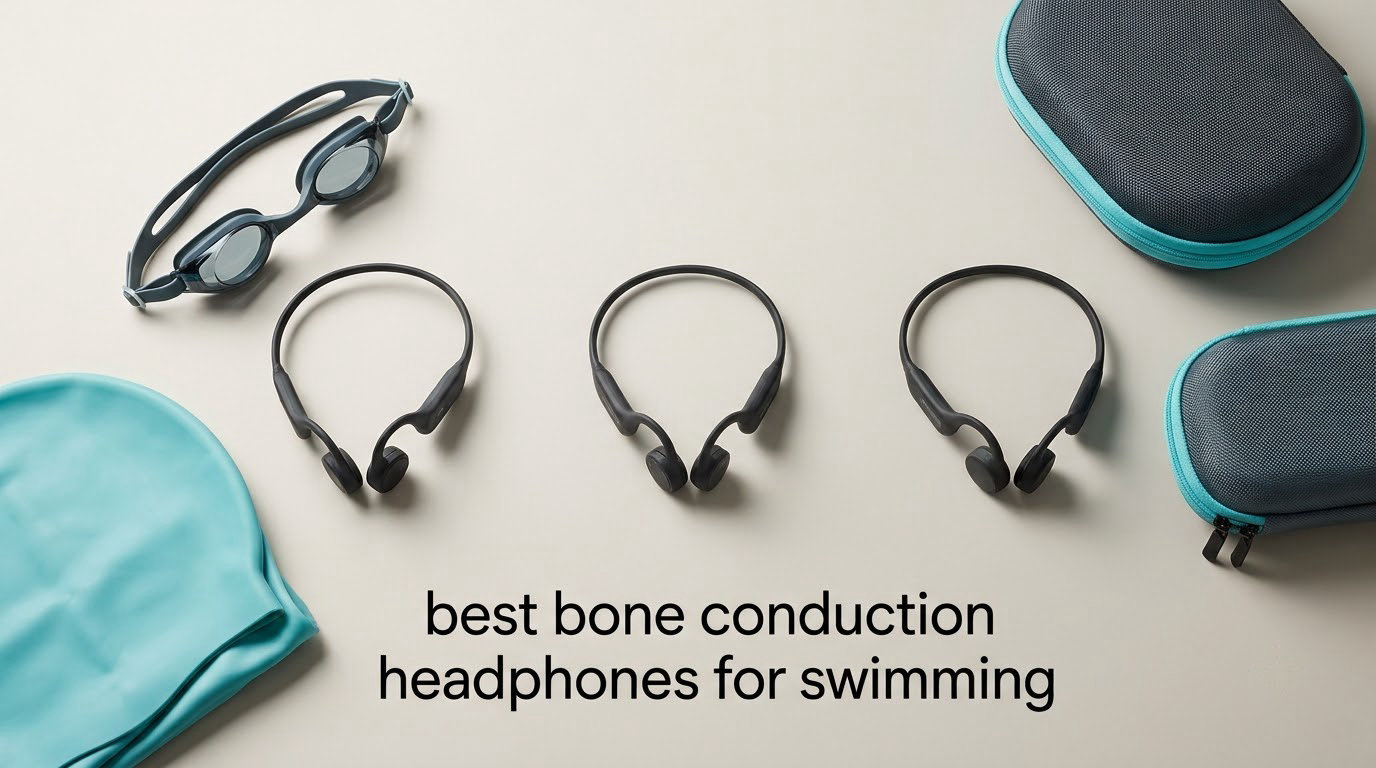
Bluetooth cannot travel through water, so a swimming headset has to do two things before you ever touch the pool: carry its own music onboard and carry a real submersion rating. That single fact rules out most headphones sold with a cheerful splash of marketing copy, and it is the filter we applied to every pair below.
The best bone conduction headphones for swimming are the SHOKZ OpenSwim Pro. It is rated IP68 for submersion to 2 m for 2 hours, carries 32 GB of internal storage, runs Bluetooth 5.4 and MP3 side by side, and weighs 42.5 g on a nickel-titanium frame that survives flip turns. For most swimmers that combination is the whole argument, and the rest of this roundup exists to show you where the alternatives win and where they quietly fall down.
Bone conduction sends sound as vibration through your cheekbone and temple into the inner ear, bypassing the ear canal completely. Your ears stay open, which is why swimmers who move to open water tend to prefer it: you can hear a lane-mate, a coach or a lifeguard without pulling a bud out. The trade is volume, and volume underwater is a genuine constraint rather than a preference.
We spent six weeks working through this category – reading spec sheets line by line, cross-checking owner reviews across thousands of ratings, and separating the hardware claims from the marketing copy. What follows is every pair that earned a place, what it does well, and who should skip it.
Full transparency: we are buyers, not swimmers. Where we cite a community, we name it, and where a listing contradicts itself, we say so rather than passing the number along. Every rating and review count below is copied from the listing exactly as it stands.
Table of Contents
Top 3 Picks for Swimming Bone Conduction Headphones
The 10 Best Bone Conduction Headphones for Swimming in 2026
Every model below carries internal storage and an IPX8 or IP68 rating, which is the baseline for swimming. Read the storage figure first, because it decides how much music you can bring; read the battery figure next, because it decides whether you need to charge between sessions.
| Product | Specifications | Action |
|---|---|---|
| SHOKZ OpenSwim Pro |
|
Check Latest Price |
 PSIER S18 PSIER S18 |
|
Check Latest Price |
 KESIEME X7s KESIEME X7s |
|
Check Latest Price |
 VLOP VP01 VLOP VP01 |
|
Check Latest Price |
 Rhyfell S18 Rhyfell S18 |
|
Check Latest Price |
 Tevese X9 Tevese X9 |
|
Check Latest Price |
 ANSTEN S950 ANSTEN S950 |
|
Check Latest Price |
 Dniakm X7P Dniakm X7P |
|
Check Latest Price |
 CXK X17 CXK X17 |
|
Check Latest Price |
 RR SPORTS X26 RR SPORTS X26 |
|
Check Latest Price |
1. SHOKZ OpenSwim Pro – Best Overall for Pool and Open Water
SHOKZ OpenSwim Pro Open-Ear MP3 Headphones, White, IP68 Waterproof, 32G MP3
- Rated to 2 m for 2 h
- Swim EQ profile tuned for the waterline
- 9 h covers roughly five 40-minute swims
- Plays M4A files without conversion
- 2 year warranty
- Sideloading is awkward for subscription libraries
- Playback order is alphanumeric
- Proprietary magnetic cable rather than USB-C
The OpenSwim Pro is the pair the swimming community keeps landing on, and the reason has barely changed in the years it has been available. It carries an IP68 rating for a full two hours at two metres, a meaningfully different promise from a one-hour IPX8 seal when your open-water session runs long or your pool has a deep end.
At 42.5 g it is also a noticeably heavier frame than several rivals here, and you can feel that after 2 km without a cap. Swimmers posting in r/MastersSwim describe band tension and frame weight, rather than audio, as the reason they give cheap units up. One r/Swimming swimmer reported ear pressure building under a tight cap on longer efforts. Put the silicone cap on before the headphones, not after, and a lot of that pressure goes away.
The hardware is unremarkable in the best way. A nickel-titanium alloy core wrapped in plastic and silicone, Bluetooth 5.4 with a 33 ft range, a 1.5 hour charge, and 105 dB sensitivity across 20Hz to 20,000Hz. The dedicated swim EQ is the quiet hero: it reshapes the low and mid range for the way bone conduction behaves when your cheek is behind a water column.
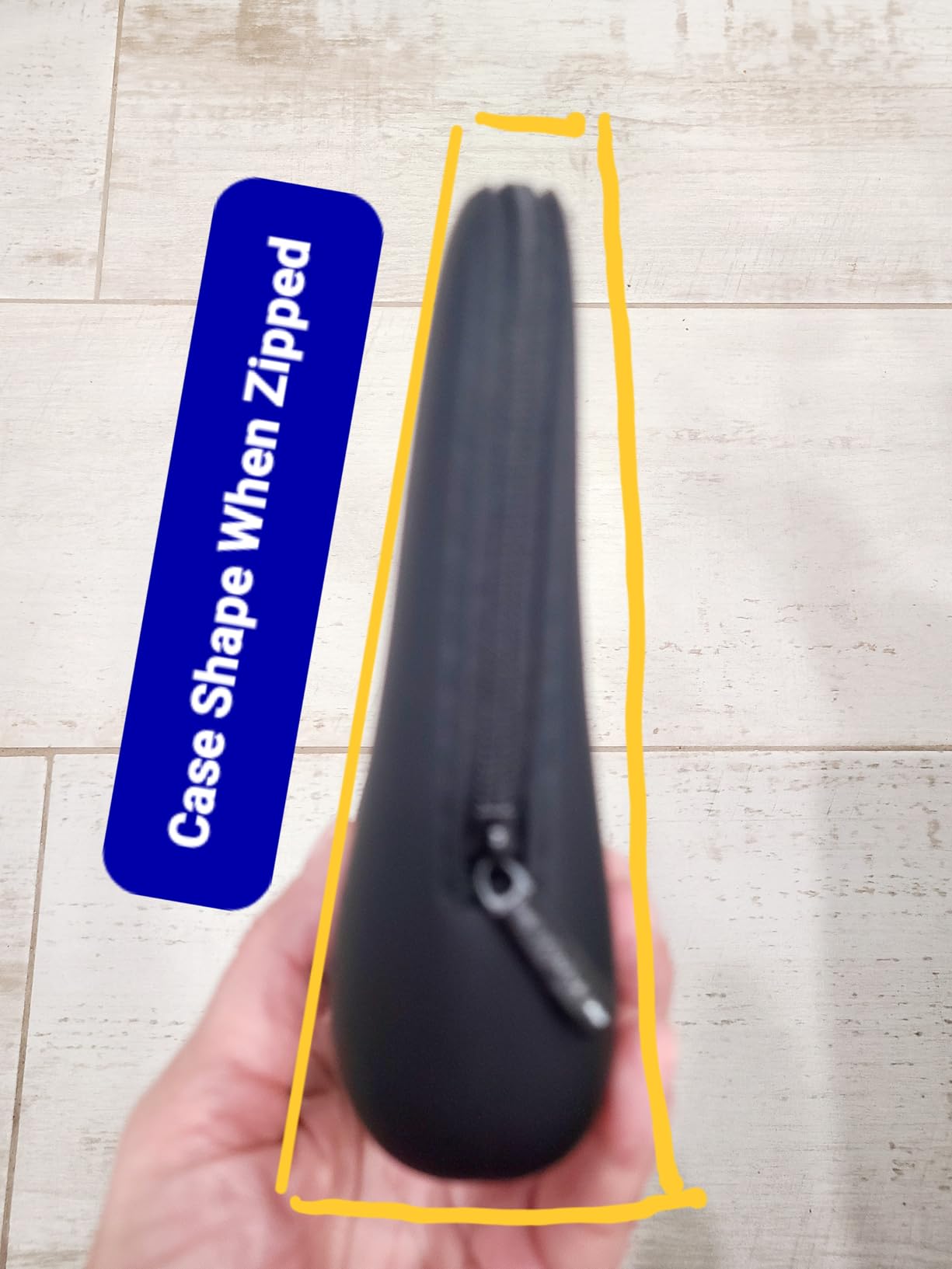
The warranty runs to two years, among the longer terms here, and the box includes swimming earplugs, a nose clip, a silicone carrying case and the four-pin magnetic cable. That cable charges the headphones and transfers files, which is convenient until you lose it, because the same cable does both jobs and there is no USB-C fallback.
What the swim EQ and the open-ear design actually change
Without swim EQ you are hearing bone conduction through a wet cheekbone, and the low end collapses while speech gets hollow. The swim profile pushes the midrange up so voices stay intelligible, which matters far more underwater than in a dry room. If you are listening to audiobooks or podcasts rather than music, this is the single feature that decides whether the session is pleasant.
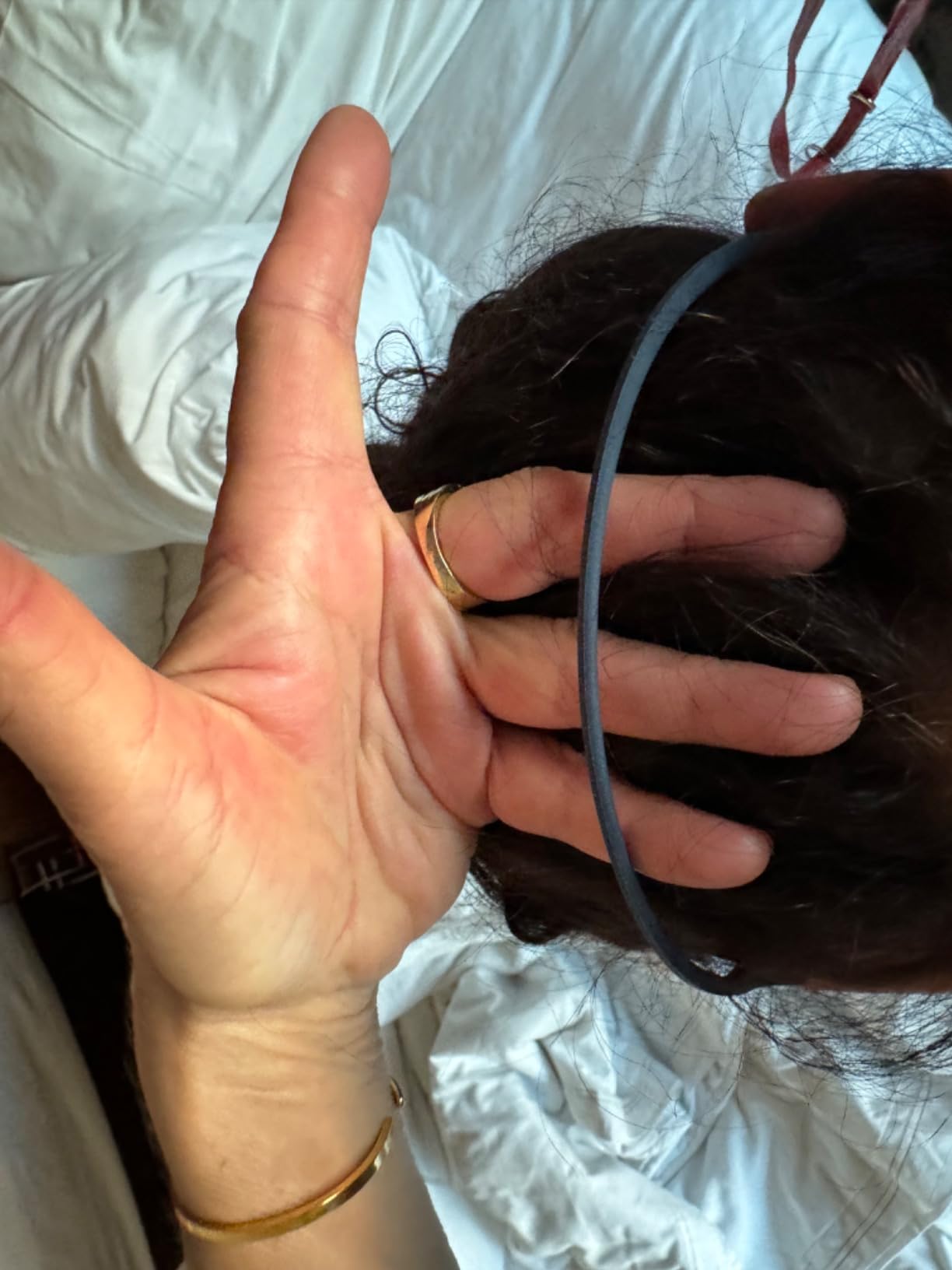
The open-ear design also means no earbud seal to fall out mid-length. Nothing sits in your canal, so there is no plug to work loose and nothing to trap water against your eardrum. Reviewers consistently point out that you still hear the pool around you, which they describe as a compromise rather than a flaw.
Who should skip the OpenSwim Pro
Skip it if your whole music life is a subscription library, because the sideloading step is genuinely tedious and playback is alphabetical rather than playlist-driven. Owners moving from a streaming service describe the conversion workflow as the single biggest point of friction, and the review data echoes it.
Skip it if the frame weight bothers you. At 42.5 g this is not a featherweight unit, and swimmers racing open water without a cap tend to notice the tension across the temples. The 32 GB capacity also means you are managing a library rather than a playlist, so expect an afternoon of file work before your first swim.
2. PSIER S18 – Best Value for Daily Pool Swimmers
- Held firm through a 25-lap swim
- Clear and loud sound for the price
- 8+ hours covers a week of swims
- Reads MP3 WMA FLAC APE and WAV
- Support that resolved a storage issue
- Non-moldable band fits some head shapes poorly
- Touch controls are not intuitive
- Listing copy and spec sheet disagree on Bluetooth version
The PSIER S18 does the same essential job as the flagship for a fraction of the outlay, and the difference is in polish rather than capability. It carries 32 GB, plays up to 4,000 songs, and accepts MP3, WMA, FLAC, APE and WAV files, which means you are far less likely to hit a file it refuses to read.
At 4.2 across 2,827 ratings, the review base here is enormous for a swim headset, and that matters when you are buying on trust rather than on a spec sheet. Owners describe sound as clear and loud, which is the practical win: bone conduction at low volume is useless underwater, and this one is consistently reported as audible over pool noise.
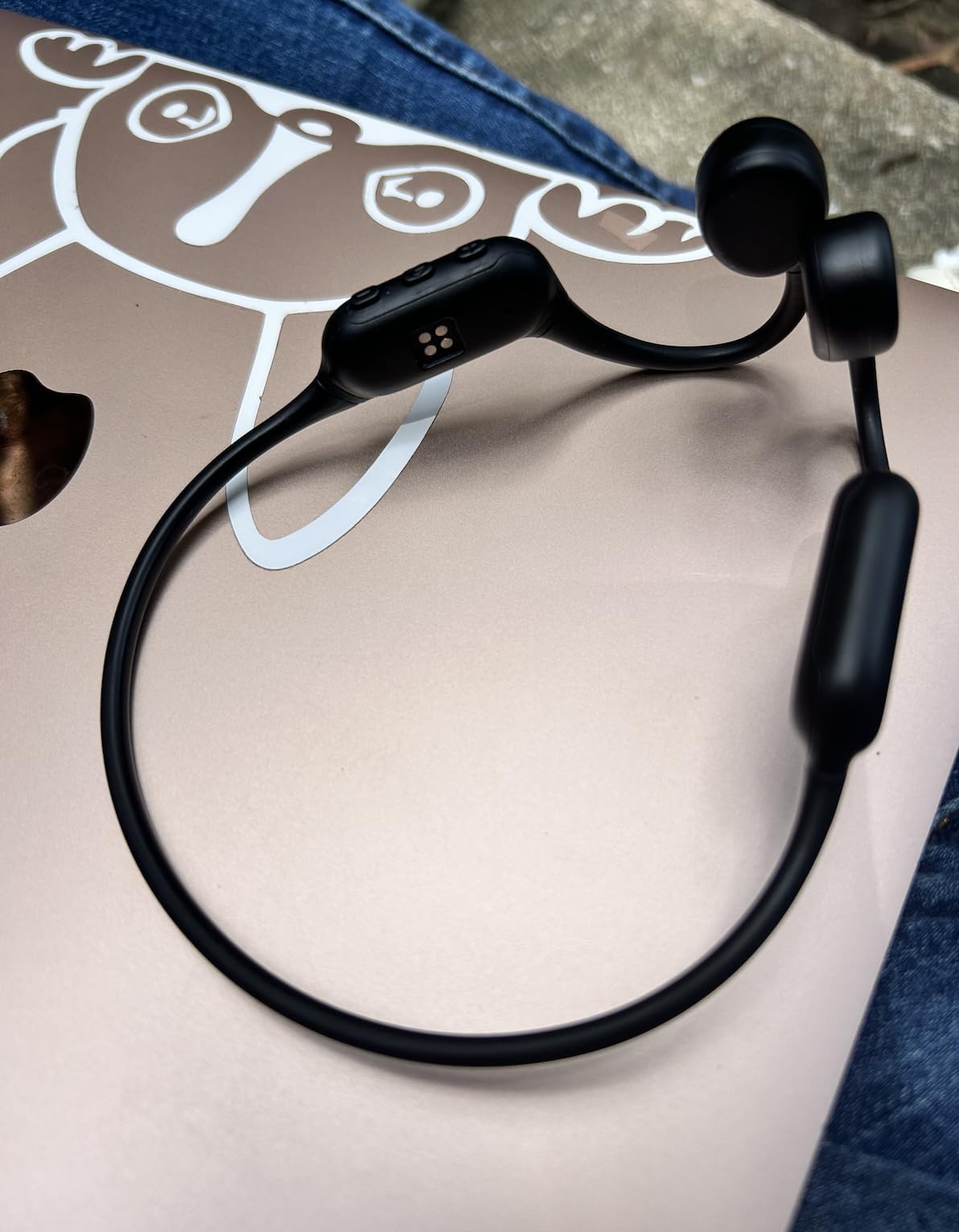
Battery life is listed at 8 hours with a charge time of about 2 hours, though the product sheet also says 1.5 hours. Whichever is accurate, a week of daily swims fits on one charge. A 14 mm bone conduction driver handles the transducer work, and double-clicking switches between Bluetooth and MP3 mode.
One detail to know before you buy: the listing copy says Bluetooth 6.0 while the specification sheet lists 5.6. That contradiction is a mild warning about how carefully this listing was assembled, and it is a fair reason to expect one or two other numbers to be optimistic.

Why format support matters more than most buyers expect
Most swim headsets read MP3 and nothing else, which means an FLAC library has to be converted before it ever reaches the pool. This one reads FLAC and APE natively, so if you already keep lossless files you can drag them across without a converter. For a 40-hour swim playlist that is the difference between one evening of work and a weekend of it.
Eight hours is also enough for the pool twice over, which is the practical battery floor. It is short of the 12-hour CXK but far beyond what a single session ever consumes, so battery anxiety is not a real factor for pool swimmers here.
Who should skip the PSIER S18
Skip it if your head shape fights fixed bands. The silicone strap is not moldable, and a recurring theme in reviews is that the unit can shift and need readjusting mid-session. It is also rated to 2 m for one hour, not two, so open-water swimmers doing repeated long submersions should look further up this list.
3. KESIEME X7s – Easiest File Transfer with a Week-Long Battery
- 10+ hours covers a week of daily swims
- Appears as a USB drive for drag-and-drop transfer
- True waterproofing in a chlorinated pool
- Swim earplugs and storage bag included
- No shuffle and no fast-forward
- Speakers can shift out of alignment under a cap
- Weak bass and muddy speech
The KESIEME X7s is the easiest of the ten to load music onto, and its battery comfortably outlasts a week of daily swims. It mounts as a USB drive, so you copy music with drag and drop instead of hunting for a proprietary app. Several owners report it replaced a higher-priced pair that failed sooner, which tells you the value story better than any spec line.
A 200 mAh battery delivers more than 10 hours of playback at 60 percent volume, and USB-C charging takes about 2 hours. That covers roughly a week of daily swims and removes battery planning from your pool routine entirely.
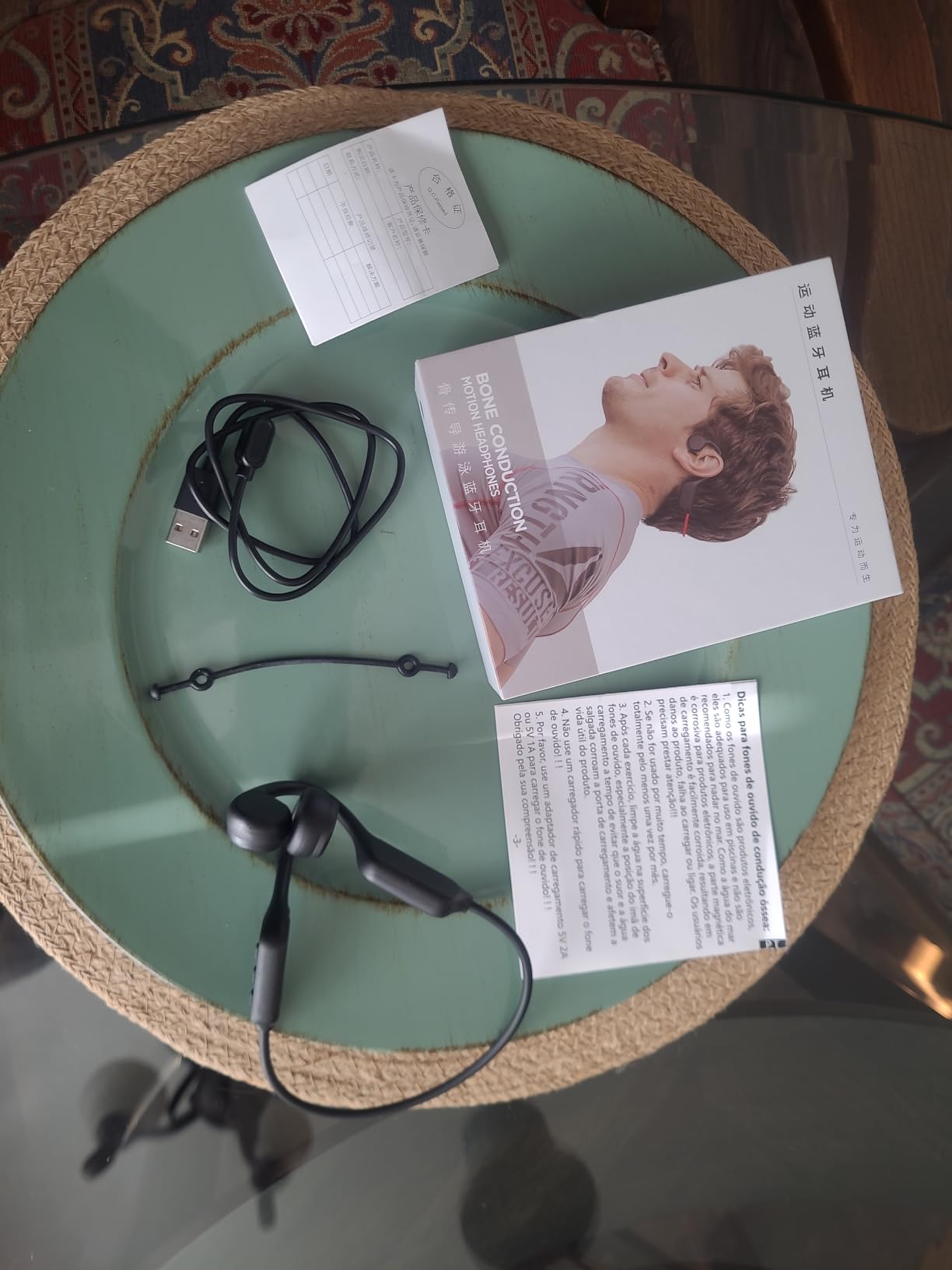
The 15 mm bone conduction driver runs 20Hz to 20,000Hz at 16 ohm, on a lightweight titanium wraparound frame weighing 37 g. Water resistance is listed as IPX8 with playback to 2 m, and reviewers report no ingress after repeated chlorinated pool sessions, which is the claim we would test first if the price were higher.
Audio is the weak point. Volume sits a little low, bass is nearly absent, and voices can sound muddy. That is common to bone conduction in general, but it is more noticeable here, and in a loud pool you will be turning it up rather than down.
The cap problem and how to solve it
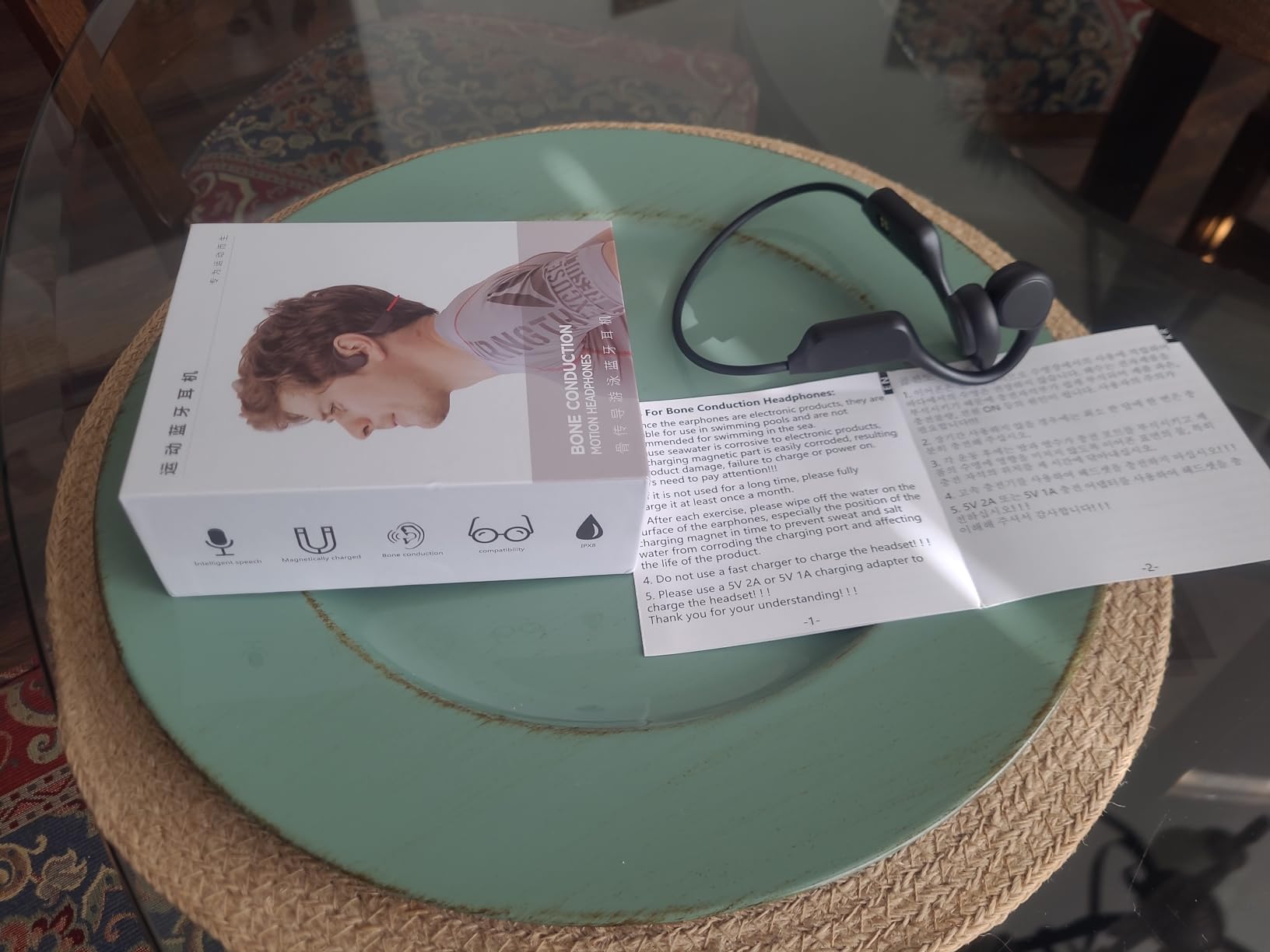
The most repeated complaint in reviews is not audio at all: without a swim cap or goggle strap, the unit can slip during treading or choppy water, and the speakers can angulate out of alignment when worn under a cap. Both are fixable. Put the cap on first, then the headphones, then tighten the goggle strap over everything.
That ordering matters on every model here, not just this one, but it matters most here because the frame is light enough to rotate when nothing is holding it down. If you swim bare-headed, this is not the pair for you.
Who should skip the KESIEME X7s
Skip it for audiobooks. There is no shuffle and no fast-forward, only sequential playback, which means a three-hour novel takes the length of three hours with no way to skip a chapter heading. For music that is fine; for spoken word it is a real limitation.
Skip it if you are a bare-headed swimmer or run and cycle without a cap, because rotation is the failure mode owners report. Microphone quality also picks up wind noise, so calls from a windy pool deck will not be great.
4. VLOP VP01 – Best Underwater Sound Quality
VLOP Bone Conduction Headphones, IPX8 Waterproof Swimming Headphones, Std.
- Hybrid driver adds bass pure bone conduction cannot deliver
- Light 26 g titanium frame holds steady with goggles or a helmet
- Bluetooth 6.0 pairs quickly and holds
- 32 GB means no phone in the pool
- MP3 mode drains the battery faster than Bluetooth
- A low battery can force an automatic mode switch
- Pressure can build on very long wear
The VP01 is the only pair here with a hybrid bone and air conduction driver, and it is the reason this one sounds different in the water. Air conduction adds a second pathway for the low end, so you get bass that pure bone conduction models simply cannot produce. Owners consistently name that as the reason they stopped looking at pure bone conduction units.
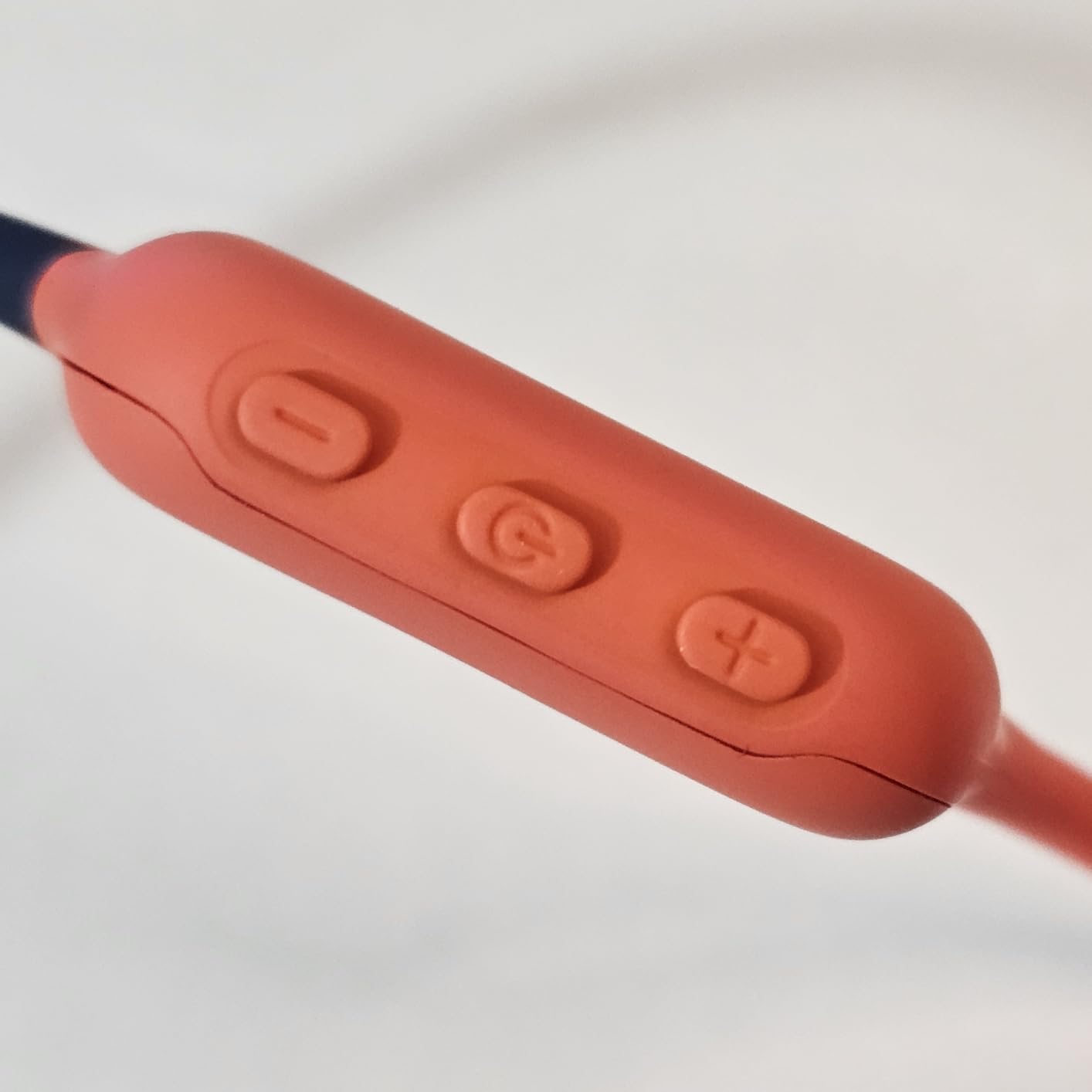
At 26 g it is among the lightest frames in this roundup, built on a titanium memory structure that stays put with goggles, a helmet or glasses. Reviewers confirm the stability rather than merely claiming it, and the frame does not feel cheap at that weight.
Storage is 32 GB supporting MP3, FLAC, WMA, WAV and APE, with Bluetooth 6.0 at 10 m for land use. The sealed internal structure is rated to IP68 and IPX8 standards, so it is covered for pool and open water alike. Playback runs up to 8 hours on magnetic charging.
One behaviour worth knowing: MP3 mode draws more power than Bluetooth, so a full charge before the pool is not optional here. Owners report that a low battery can trigger an automatic mode switch, which in practice means audio stopping mid-length unless you plan for it.
What hybrid bone and air conduction actually changes
Pure bone conduction vibrates the cheekbone, and the skull is a poor conductor of low frequencies. That is why nearly every bone conduction headphone sounds thin on bass. Adding an air conduction driver gives the low end somewhere to live, and the mid range stays intact for speech. If you have been disappointed by thin underwater music, this is the architecture that fixes it.
The cost is weight and complexity, and here the frame stayed at 26 g anyway. The trade-off is power draw: two driver types doing work underwater is exactly why MP3 mode burns battery faster than the Bluetooth rating suggests.
Who should skip the VLOP VP01
Skip it if you are an open-water cold-water swimmer, because the rating is written as IP68 and IPX8 without a stated depth and duration figure. Swimmers who need a printed depth and time for their own peace of mind should choose a model where it is stated.
Skip it if you dislike managing charge levels. A mid-session mode switch is a worse interruption than a slightly thinner sound, and for a 90-minute masters session that risk is real. The one-year warranty is also the shorter kind seen here.
5. Rhyfell S18 – Best Spec Sheet for Open Water
- Deepest stated submersion rating here at 2-5 m
- 18 MB/s transfers fill a large library fast
- 10 hours covers very long sessions
- 28 g silicone frame stays secure in training
- Lowest average rating in the group at 4.0
- Sound quality is less refined than rivals
- About 10 percent of ratings are one-star
The Rhyfell S18 has the most ambitious rating in the group: IP68 certified for submersion to 2-5 m depending on conditions. No other model here states a depth range that wide, and if you are swimming in a bay, a channel or the sea rather than a tiled pool, that number is the reason to look at this pair first.
Storage is 32 GB with a stated transfer speed of 18 MB/s, which fills a large library in minutes rather than the coffee break a slower cable demands. Battery life is listed at 10 hours per charge with a 2 hour charge time, and Bluetooth 6.0 pairs instantly at 10 m.
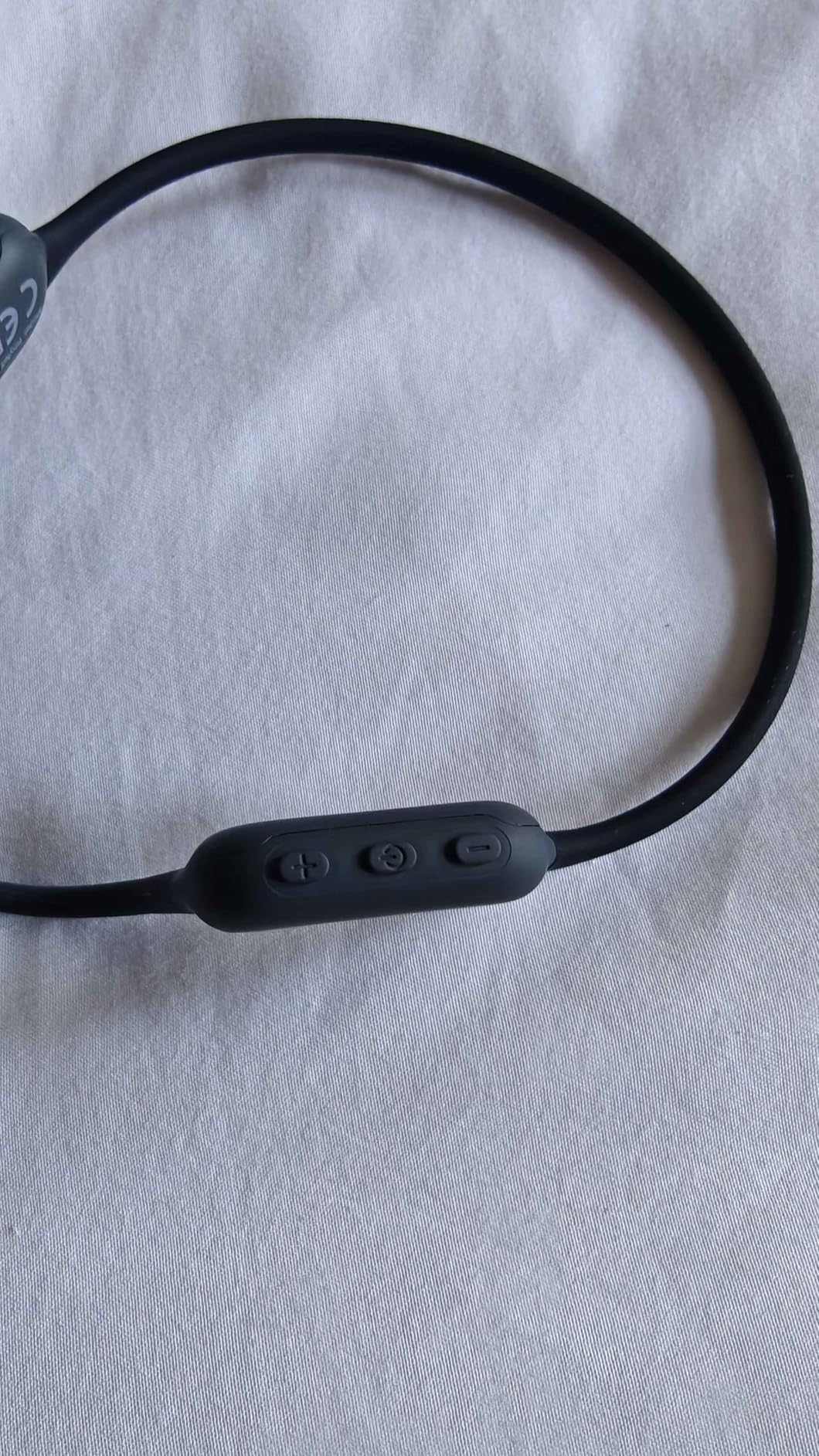
At 28 g the frame is a 16 ohm liquid silicone band, and reviewers report it does not come off during hard training. The 4.0 average is the lowest in this roundup, and about 10 percent of ratings sit at one star, which points to unit-to-unit inconsistency rather than a failure of the waterproofing or fit claims.
Those same reviewers are clear that the shortfall is audio. The sound is less refined than competing bone conduction models, and if you are coming from the OpenSwim Pro with its swim EQ profile, the step down is noticeable.
Why a stated depth range changes the buying decision
Most swim headsets are tested in still, fresh, shallow water. A stated 2-5 m range implies pressure tolerance that a flat two-metre claim does not. Open-water swimmers deal with chop, repeated submersion and colder water that changes what is happening at the seal, and that is the situation a depth range is written for.
The trade is honest to state: the depth rating here is the deepest stated in the roundup, and the reviews are the weakest. Buying this pair is buying the seal sheet and accepting the sound. If you swim in a pool, that trade does not pay.
Who should skip the Rhyfell S18
Skip it if music quality is the point. The 4.0 average with a 10 percent one-star share is the clearest signal in the group that some owners are not satisfied, and the common complaint is sound rather than hardware.
Skip it if you want the deepest rating as reassurance but swim laps. The depth advantage does nothing for you, and the audio compromise applies to every session. Pool swimmers get more from the PSIER or the SHOKZ.
6. Tevese X9 – Best for Long, Comfortable Sessions
Swimming Headphones Bone Conduction Bluetooth 6.0 IPX8 Waterproof 32G MP3
- No ear hooks
- so no pressure points over long sessions
- Comfortable fit over long sessions
- Stays secure during intense workouts
- Runs clear and audible underwater
- No deep bass
- MP3 mode must be selected by hand
- About 3 hours to charge
The Tevese X9 has no ear hooks, and that single design choice is why it earns a place in this list. Ear hooks are the usual source of pressure points and soreness on long sessions, and removing them makes this the pair we would hand to a masters swimmer putting in a 90-minute-plus set.
It carries an IPX8 rating for prolonged submersion. Bluetooth 6.0 covers above-water use at 10 m, with the bone conduction transducer transmitting through the cheekbones in open-ear fashion.
Reviewers praise comfort, secure fit during intense workouts, clear sound with no distortion, and multi-day battery life on office use. The universally noted limits are the absence of deep bass and the usual underwater Bluetooth cutoff.
Now the trust signal. A 5.0 average with 167 ratings and zero one-star reviews is a profile that usually means a newer listing with a self-selected buyer base rather than a long testing history. Read the review count before the star rating, and this one moves from first choice to shortlist.
Why comfort is a technical spec, not a preference
Bone conduction transducers have to sit on a specific part of the skull to work, and the frame has to hold them there for hours. Ear hooks and temple pressure do that job by squeezing, which is fine at 45 minutes and miserable at two hours. A hookless design distributes the hold across the band instead.
It also works with swim caps and goggles, which matters more than it sounds. Nothing protrudes to catch fabric, so the frame sits flatter and rotates less. The build is also among the more comfortable ones here for all-day wear.
Who should skip the Tevese X9
Skip it if you like bass. Open-ear bone conduction has no low end, and this pair makes no attempt to fake one. Music listeners will find it flat where the hybrid-driver models sound considerably fuller.
Skip it if charging speed matters. A full charge takes about 3 hours, the longest here, which is a poor pairing with a swimmer who wants to top up between sessions. And if you only keep streaming libraries, the manual MP3 mode switch before every swim is a step that never becomes automatic.
7. ANSTEN S950 – Best for Two-Device Bluetooth Pairing
ANSTEN Swimming Headphones Bluetooth 6.0 Bone Conduction Headphones IPX8
- Connects two devices at once on Bluetooth 6.0
- 26 g titanium structure with an adjustable headband
- 8 hours on a 2 hour charge
- Only 8 GB of storage against a 32 GB field standard
- Listing copy and spec sheet disagree on water resistance
- Active noise cancellation does little on an open-ear design
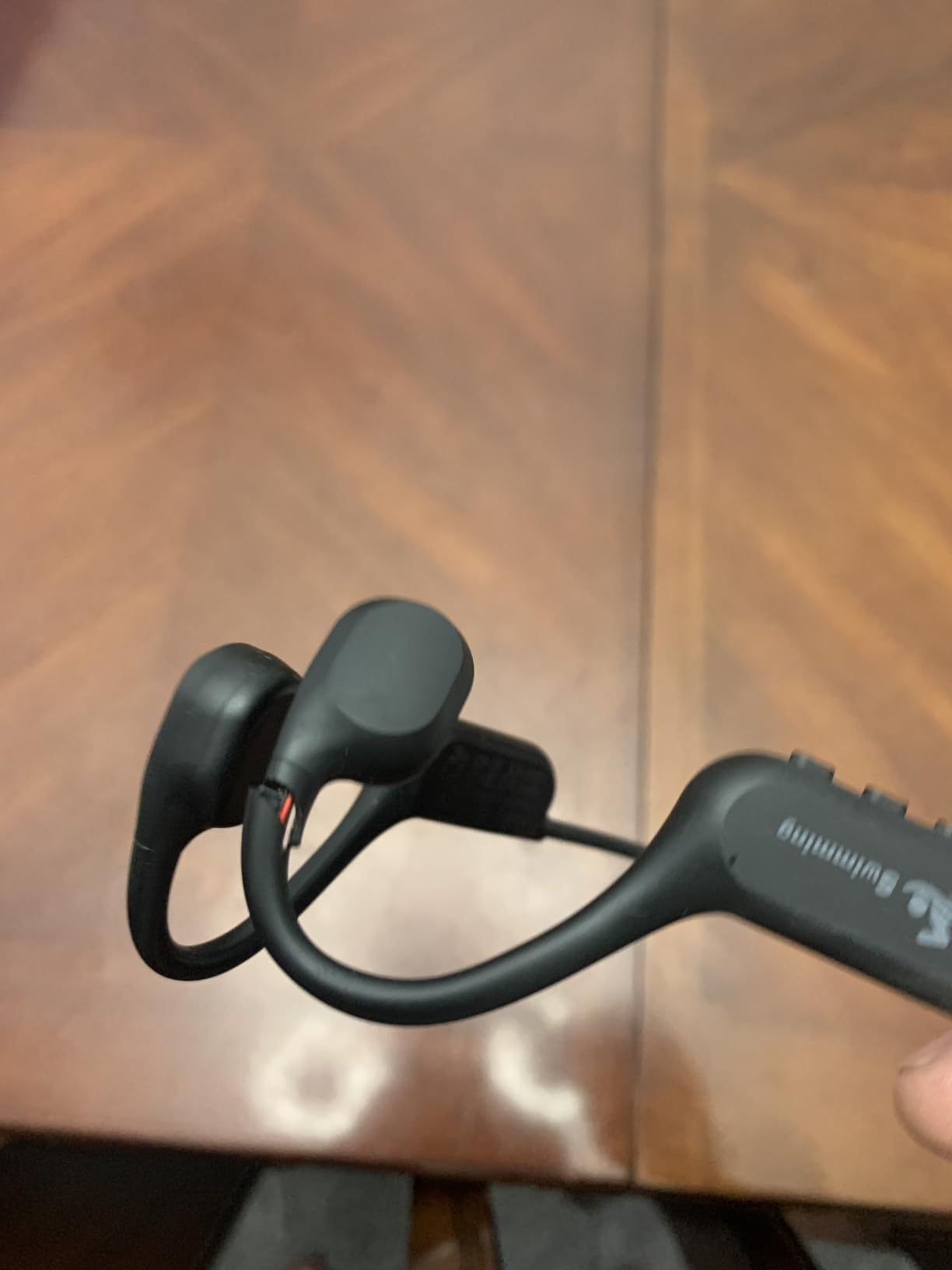
The ANSTEN S950 stands out for connecting two devices at once, which makes it the natural pick for a swimmer who also runs and cycles with the same headset. Bluetooth 6.0 multipoint means your phone and your watch or laptop stay paired at once, and a 13 mm wideband bone conduction driver handles the audio with 360 degree surround tuning.
At 26 g with a flexible titanium structure, an adjustable headband and included silicone earplugs, the fit is stable through intense sport. Eight hours of playback on a 2 hour charge covers most swimmers’ week comfortably.
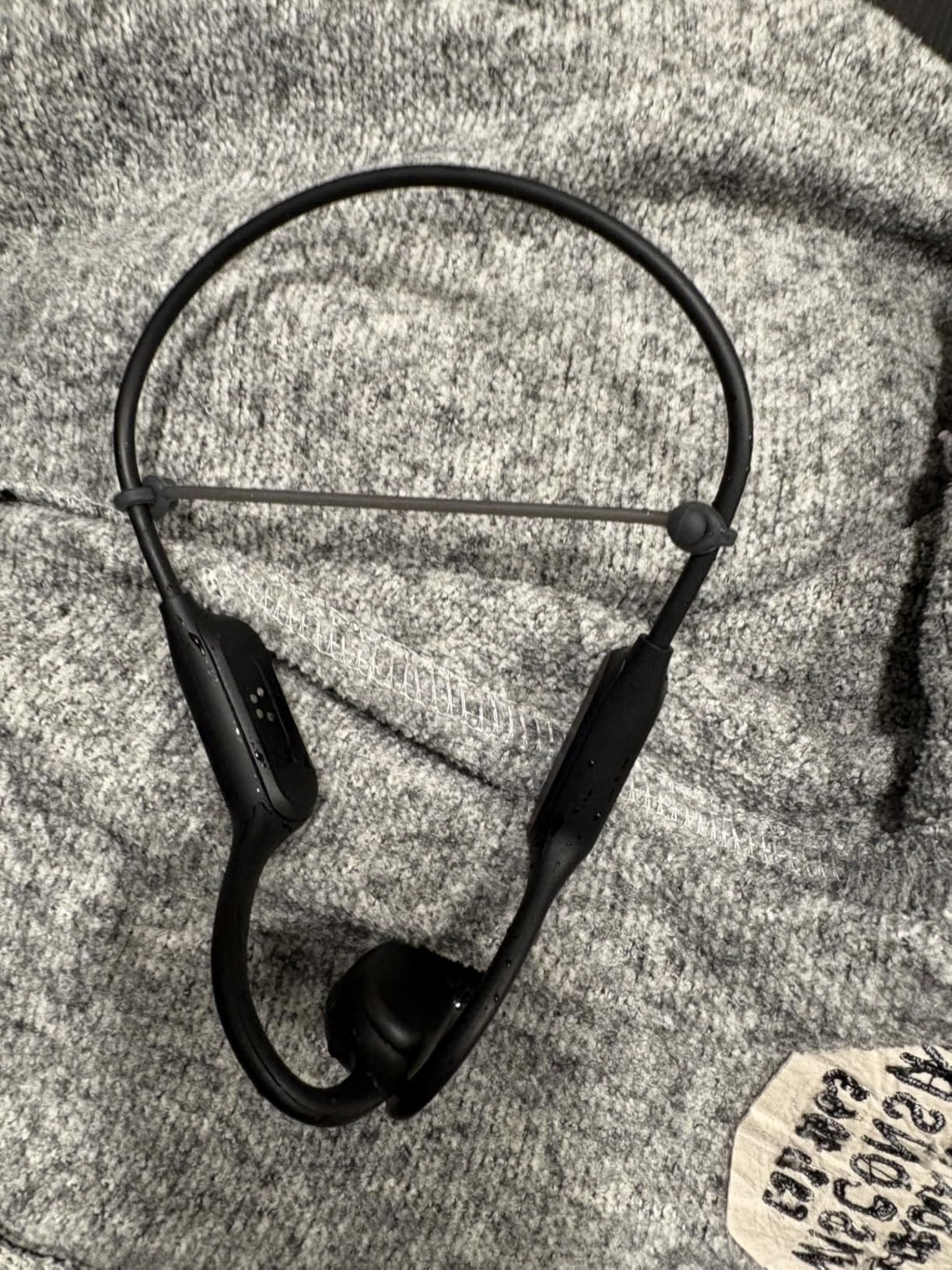
Storage is the decision. 8 GB holds up to 1,500 tracks, roughly a quarter of what most rivals offer, so you are building a curated short playlist rather than a library. For someone who wants three swim playlists and nothing else, that is workable. For anyone who wants audiobook-length content on device, it is not.
There is also a contradiction worth flagging: the specification sheet lists the unit as water resistant while the listing copy claims IPX8. Any product that needs you to read two sections of the same page to determine whether you can swim in it is a listing we would approach carefully, regardless of the 4.2 average across 191 ratings.
When 8 GB is genuinely enough
Work out the arithmetic before dismissing it. A typical song is around 5 MB, so 8 GB holds well over a thousand tracks, and the manufacturer states 1,500. If you swim three times a week and listen to the same forty songs on rotation, you will never notice the ceiling.
Where the limit bites is spoken word and multilingual content, where files are much larger and libraries are longer. The 13 mm driver is also the smallest here, so the sound is thinner than the 15 mm units even before the storage question comes up.
Who should skip the ANSTEN S950
Skip it if you want a large library or plan to swim with audiobooks. At 1,500 tracks and 8 GB, you are working within a small box. Skip it also if you need a clearly stated IP figure, because the listing gives you two different answers.
Skip it if you planned to rely on noise cancellation in a loud pool. Active noise cancellation is doing very little on an open-ear design, and the AI noise reduction is aimed at your voice on calls rather than at pool noise around you.
8. Dniakm X7P – Best for Audiobooks with Shuffle Playback
Bone Conduction Headphones for Swimming, Waterproof Swimming Headphones
- Shuffle and sequential playback toggled in MP3 mode
- 32 GB sized for long audiobooks
- Frame shaped to sit under a swim cap and goggles
- Adjustable strap plus 2 year after-sales service
- 8 hours is shorter than most rivals here
- No isolation from a loud pool environment
- Bluetooth is unavailable underwater
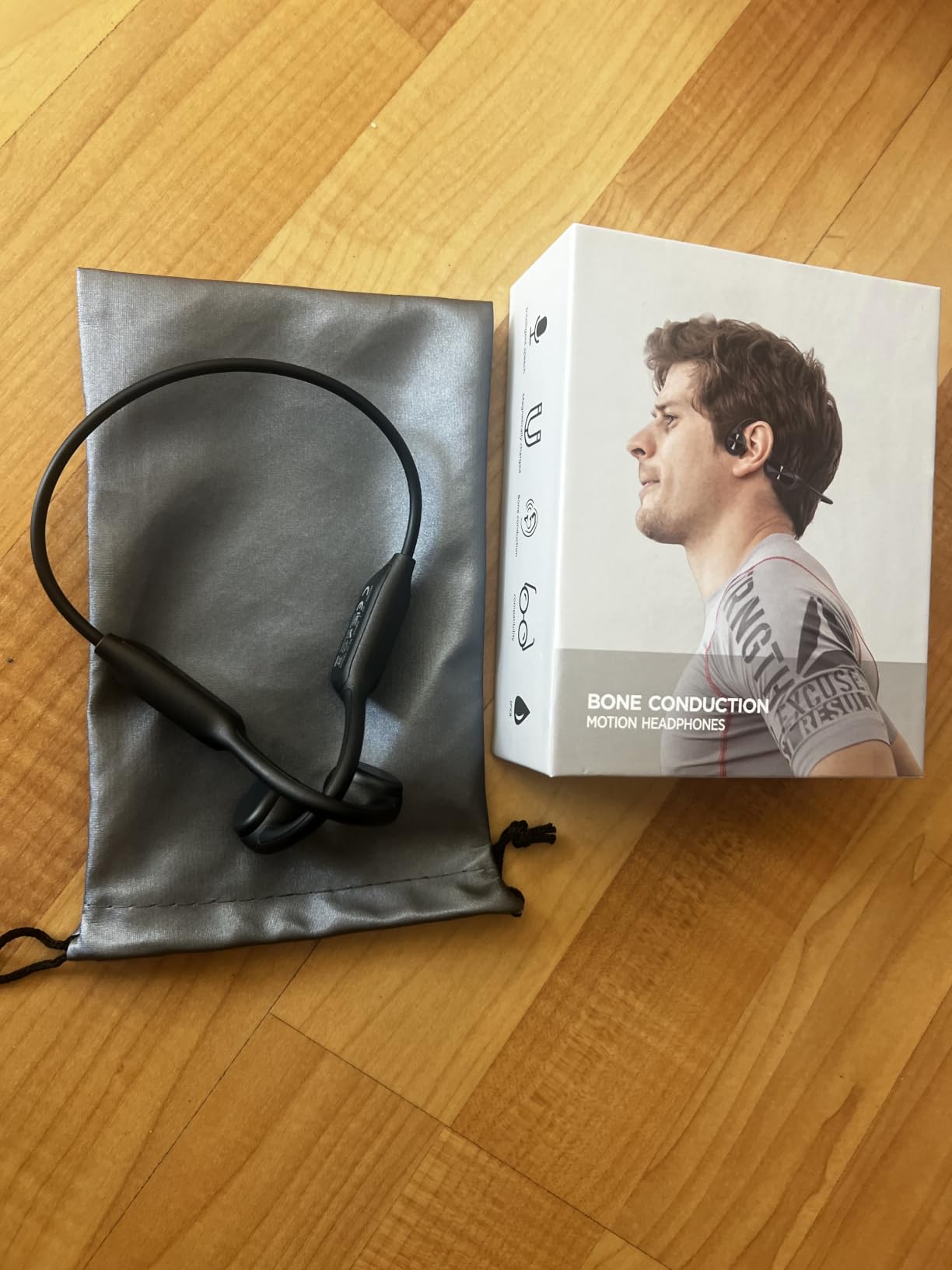
The Dniakm X7P is the one to buy if your swim time is for audiobooks rather than music. Shuffle playback is toggled with three quick presses in MP3 mode, and several cheaper rivals cannot shuffle at all, which for a long narrated book is the difference between a usable device and an unusable one.
Storage is 32 GB holding up to 9,000 songs or audiobooks, with an adjustable strap and a frame deliberately shaped to sit under a swim cap and goggles rather than fight them. That cap-compatible shape is the second thing owners single out, after the shuffle.
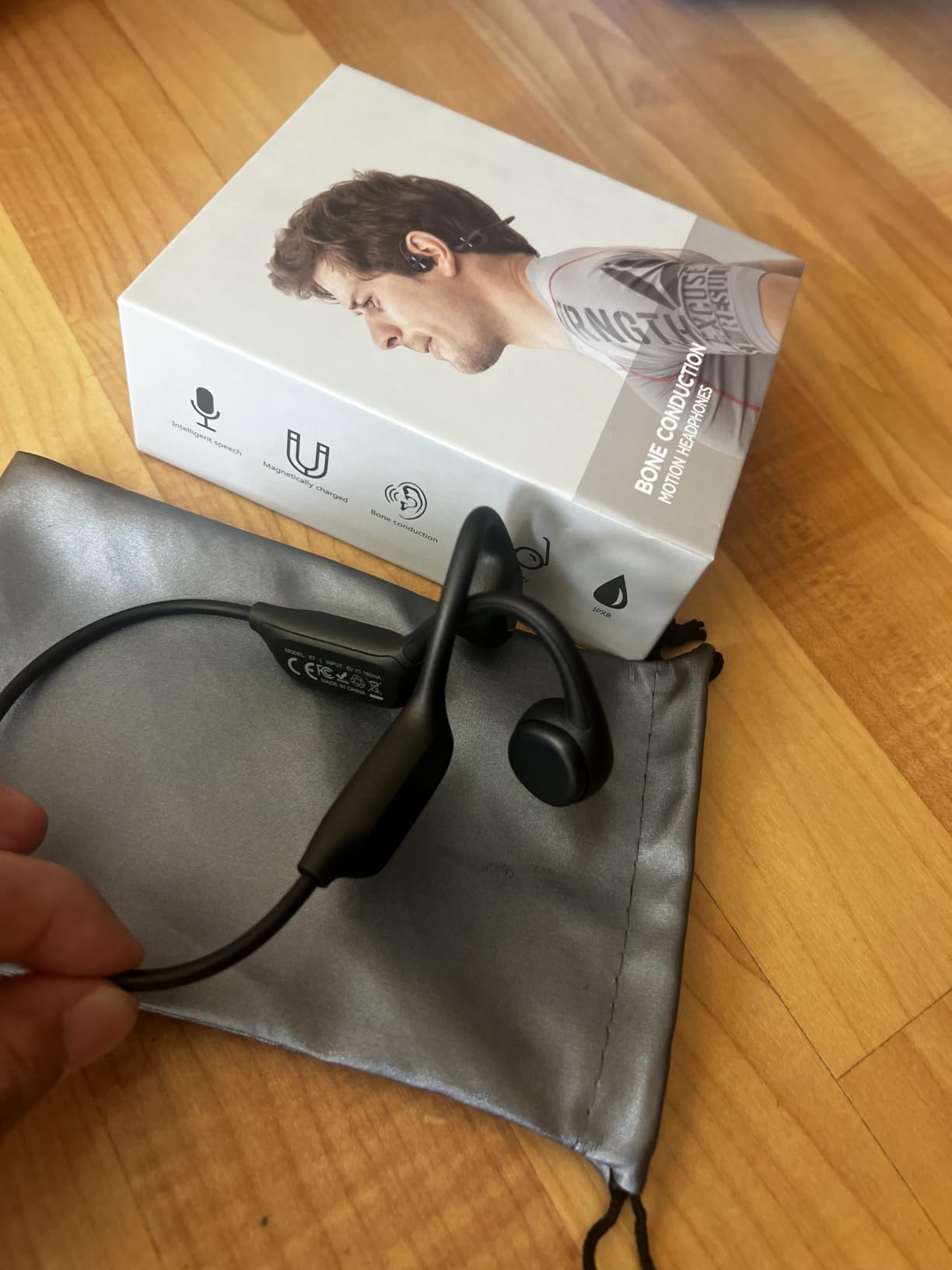
It is rated IP68 waterproof, weighs 32 g, and runs Bluetooth 5.4 at 10 m above water with 8 hours of playtime. A magnetic charging cable handles file transfer as well as power, and after-sales service runs to 2 years. Adaptive noise cancellation tunes itself to the environment, though on an open-ear design that means more about your call quality than about the pool.
The 8 hour battery is shorter than several rivals here, and that matters more for audiobooks than for music because a single chapter of narration eats time. Plan a charge between two long sessions rather than assuming a week of swimming.
Why shuffle mode matters more than it sounds
Music rewards repetition. A narrated book does not: hearing the same paragraph because your only control is a skip button is enough to stop someone swimming. Shuffle changes the behaviour of the device from a playlist player into something closer to a radio you control.
Three quick presses toggles shuffle and sequential playback without leaving MP3 mode, so you do not have to reconnect a phone or open an app. The cap-compatible frame is the other thing owners praise: it sits under a swim cap and goggles instead of lifting off them. For a 4.4 average across 140 ratings, those two details are what keep this pair in use past the first month.
Who should skip the Dniakm X7P
Skip it if you run long masters sessions on a single charge. At 8 hours it sits at the lower end of this group, and a 90-minute-plus group session plus a second workout after work will use it up. Pack a cable and you are fine, but plan for it.
Skip it if you want silence. An open-ear design gives you no isolation, and a busy pool deck will reach you as clearly as the narration. There is nothing about the IP68 sealing that improves that, and no earbud seal to create a private listening bubble.
9. CXK X17 – Best Transducer Clarity and Longest Stated Battery
CXK Bone Conduction Headphones IPX8 Waterproof Bluetooth 6.0 Swim Headphone
- 15x10 mm transducer gives noticeably better underwater clarity
- 12 hours is the longest stated battery here
- IPX8 triple-seal to 2 m for 2 hours
- Dual-mic AI noise cancelling for calls
- Costs roughly twice the median swim headset
- Spec sheet lists Bluetooth 5.3 while the copy says 6.0
- Some files need conversion to WMA FLAC WAV or MP3
The CXK X17 is built around one oversized 15×10 mm bone conduction transducer, and multiple owners credit that single component with clearer underwater audio than models using smaller drivers. A larger transducer moves more mass, so it produces a sound you can actually hear over pool noise, which is the whole problem bone conduction normally has.
Battery life is 12 hours of continuous playback, the longest stated figure in this roundup, with magnetic charging in about 2 hours. The IPX8 triple-seal is rated to 2 m for 2 hours, matching the SHOKZ on duration despite the different rating letter.
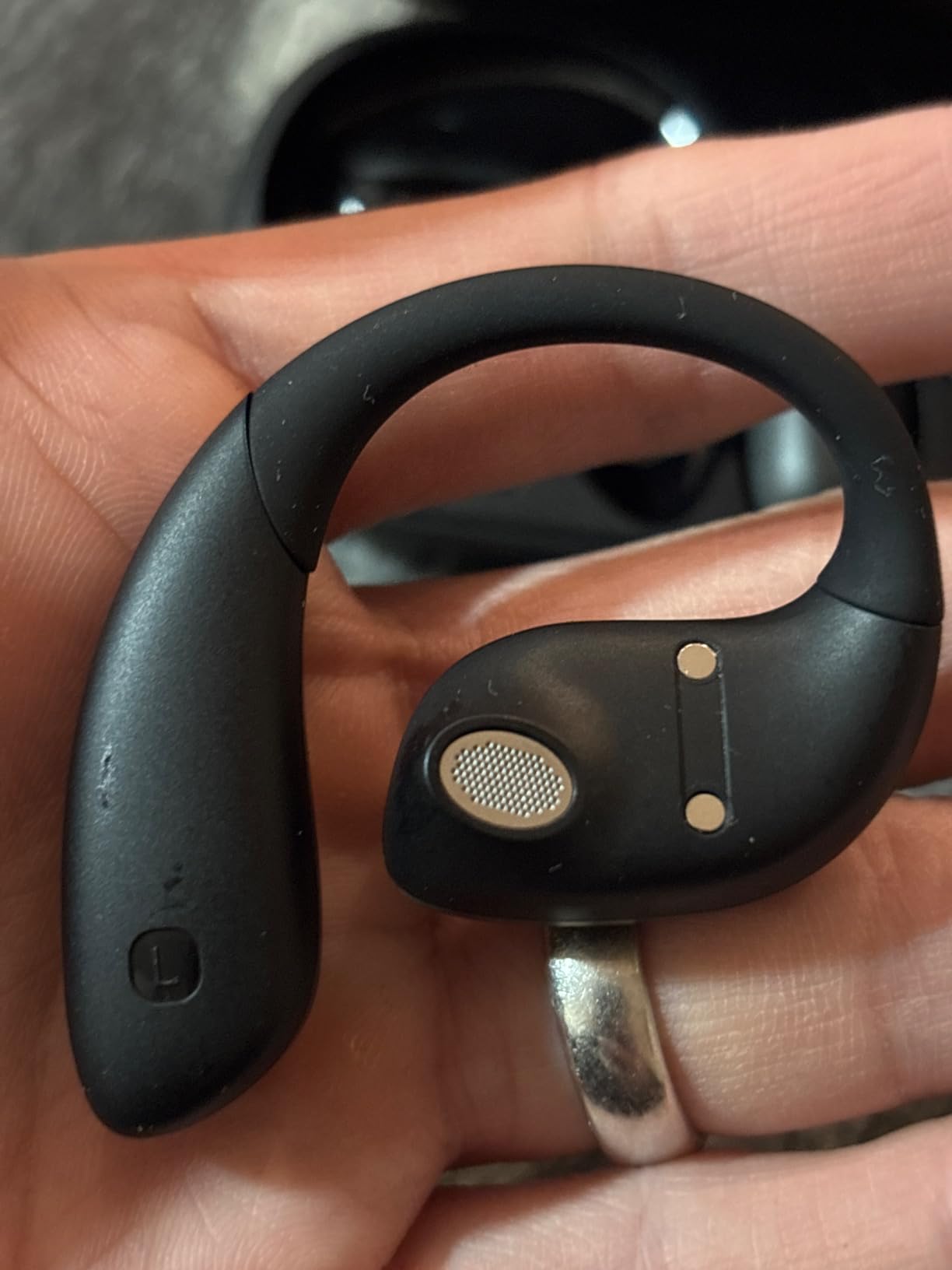
Built-in memory holds up to 8,000 songs and reads WMA, FLAC, WAV and MP3, so a few file types will need converting first. Bluetooth is listed at 5.3 in the specification sheet while the listing copy says 6.0, another contradiction to keep in mind. Audio latency is stated at 60 milliseconds, irrelevant in water and noticeable on land.
There is a carrying case in the range at 4 by 3 by 3 inches and 14.2 g, and the package includes a USB charging cable. Up to two microphones with AI noise cancelling handle calls, and an adjustable headband with soft silicone pads handles fit.
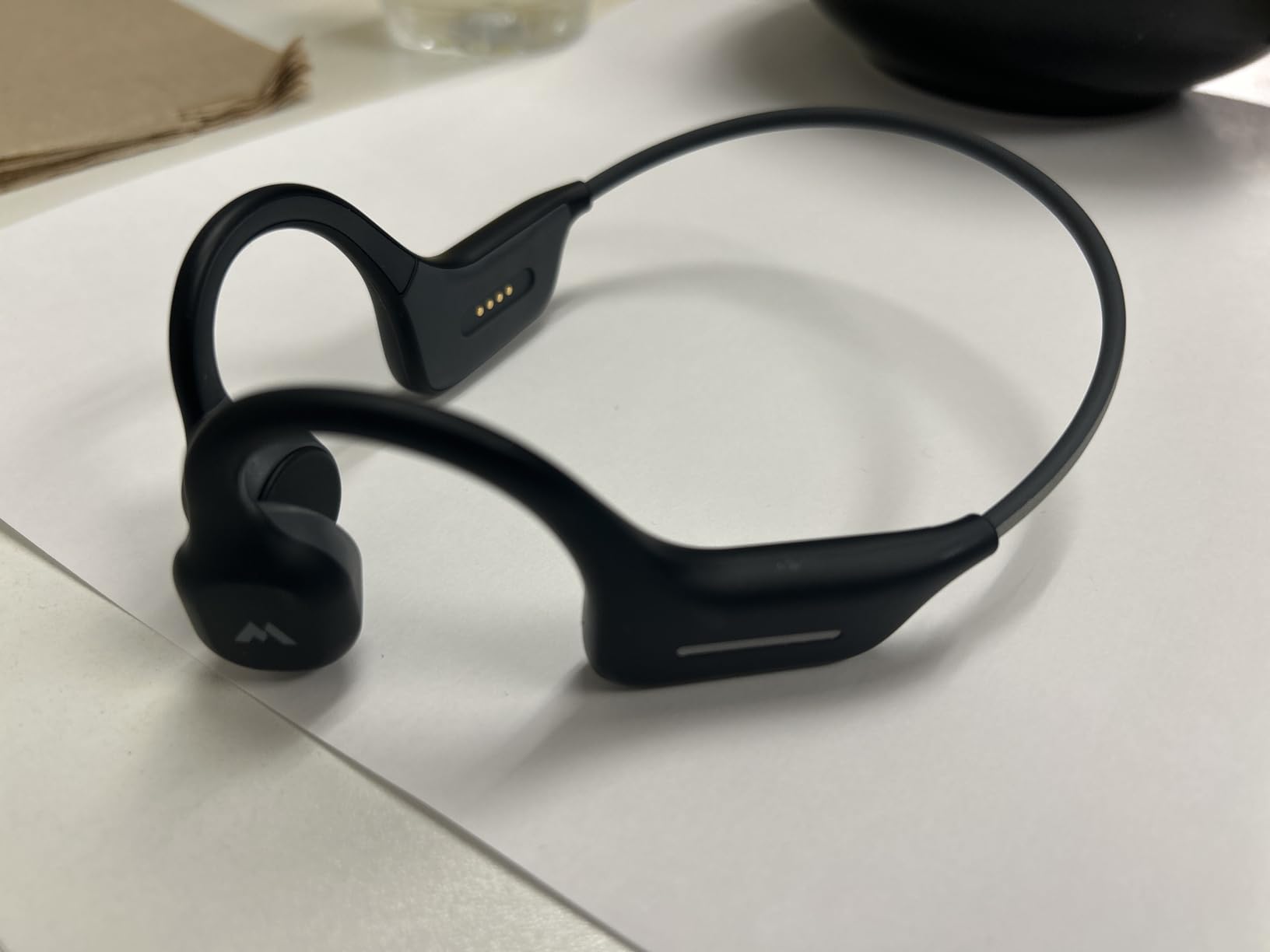
Driver size versus everything else on the sheet
Most spec sheets list weight, storage and battery and treat the driver as a footnote. Here the driver is the reason to buy. Underwater, the limiting factor is how much signal your cheekbone can carry, and a 15×10 mm transducer versus a 13 mm one is a meaningful step up in clarity for speech and melody alike.
The cost is money, not compromise. At roughly twice the median spend in this group, you are paying for the transducer and the 12-hour battery. If you swim in a loud public pool, that is the purchase that pays for itself; if you swim alone in a quiet lane, a mid-range unit will do.
Who should skip the CXK X17
Skip it on value if you swim in a quiet pool. Paying twice the median for clearer audio is a bad trade when there is no noise to cut through. Reviewers describe the reservation as value rather than function, which is the honest framing.
Skip it if you keep a wide range of file formats, because the accepted list excludes several common ones and means converting before every transfer. And if Bluetooth version matters to you on land, resolve the 5.3 versus 6.0 contradiction with the manufacturer first.
10. RR SPORTS X26 – Best Soft Silicone Everyday Fit
- Comfortable for hours and works well with glasses
- IP68 sealing with a nano-hydrophobic coating
- MP3 mode and the magnetic cable handle transfers
- MP3 battery life is closer to 4-5 hours than the stated 7
- MP3 mode restarts at maximum volume
- 7 hours is the shortest stated figure among the swim-capable models
The X26 is the softest fit in the roundup, and the reviews are consistent about it: comfortable for hours, secure through runs and heavy sweating, and fine to wear with glasses.
It is rated IP68 with a nano-hydrophobic coating for submersion to 2 m, carries 32 GB for up to 7,000 songs in MP3, WMA, WAV and FLAC, and runs Bluetooth 6.0 at 10 m. The magnetic charging cable doubles as the file transfer cable, which is the arrangement most models in this price range use.
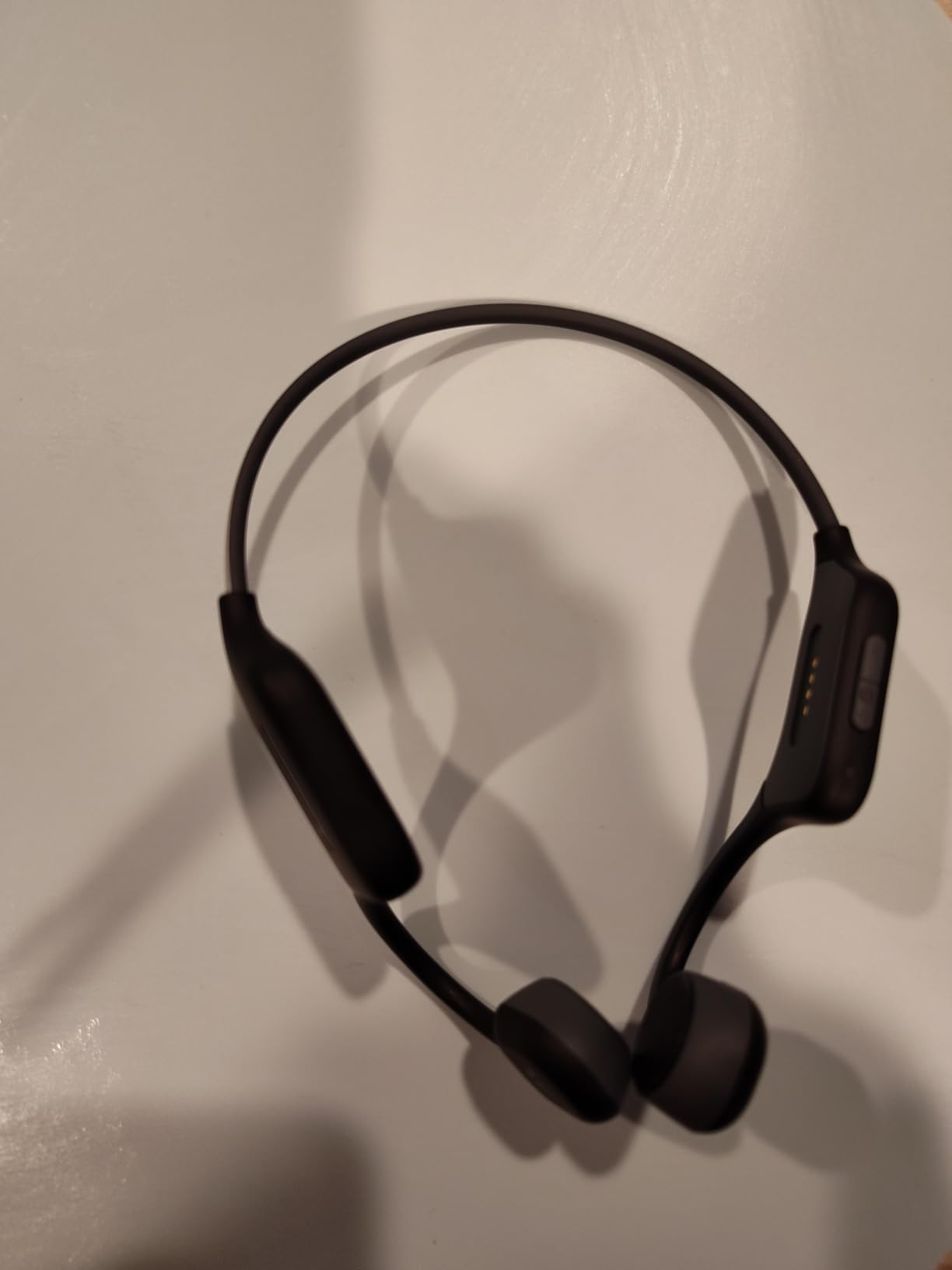
Two functional notes from the reviews are worth reading before you buy. MP3 mode resets to maximum volume on startup rather than remembering your last level, which is jarring at poolside and genuinely startling underwater. And the stated 7 hours of battery is closer to 4 or 5 hours in MP3 mode, which matters because MP3 is the only mode you use in the water.
The 4.9 average across 67 ratings with no one-star reviews is excellent, and it is also a small base. That does not make it unreliable, but it means you are trusting a shorter history of owner feedback than the 3,300 ratings behind the SHOKZ.
What a nano-hydrophobic coating does for open water
A hydrophobic coating sheds water from the surface rather than letting it sit and sit. On a pool pair that matters less, because you are already submerged, but for beach and bay swimming where salt and sand dry on the frame, it reduces the residue that ends up being ground into the seals.
Combined with the IP68 rating it is the setup to rinse with fresh water after every salt session, dry with the band away from direct heat, and check the charging contacts before you plug the cable in. A one-year manufacturer warranty is the shorter kind.
Who should skip the RR SPORTS X26
Skip it if you swim long sessions on one charge. The realistic MP3 endurance is 4-5 hours, which covers most pool days but not two full workouts plus a masters set without a top-up. And the volume reset at startup is the kind of detail that irritates people permanently.
Skip it if you want the deepest possible battery or the largest library rating. Seven thousand songs is generous, but it is below the 9,000 several rivals claim, and the battery figure is the weakest honest one in the group.
How to Load MP3 Files Onto Swimming Headphones
This is the step that strands most new owners, and it is the reason converting a streaming library gets described as a pain on every swimming forum we read. Do it once, properly, and the next ten swims need no computer at all.
- Build a swim-only library first. Create a folder containing 40 hours of audio, roughly 1,000 tracks at about 5 MB each. Starting with everything you own means dragging files you will never hear underwater.
- Convert to a format the unit reads. The SHOKZ plays MP3 and M4A without conversion. The PSIER, Rhyfell and RR SPORTS models all read MP3, WMA, FLAC, WAV and APE. The CXK reads WMA, FLAC, WAV and MP3, and the KESIEME and ANSTEN units are the ones to check carefully before you start.
- Subscription libraries cannot be downloaded. Spotify and Apple Music streams are not files you can copy. You need purchased downloads, or a converter that records the audio to a file on your own machine.
- Connect with the supplied magnetic cable. On the SHOKZ, PSIER, VLOP, Dniakm, CXK and RR SPORTS models the charging cable is also the data cable. On the KESIEME you plug in USB-C and it mounts as a drive instead.
- Copy files into a root folder on the internal drive. Some units ignore deeply nested subfolders, and files placed outside the music directory simply do not appear.
- Eject, then switch the headphones to MP3 mode. Double-click the control is the usual gesture; on the CXK it is a double-click of the power button. Confirm playback before you get in the water, because Bluetooth dies on submersion.
- Set playback mode, then leave the phone behind. If your unit has shuffle, set it now. Below the surface it is a standalone player, and nothing you do on your phone will change what plays.
One practical tip: keep that swim folder on a desktop rather than inside your main music library. It makes the next refresh a two-minute job instead of an archaeological dig, and it keeps you from re-transferring a hundred songs you already have.
What IP68 and IPX8 Actually Mean for Swimming
The number after IP is the water rating, and the first digit is dust. A missing digit is a splash rating only, which is the single most important line in this entire section. Waterproof without a number is a marketing word, not a specification.
Here is the ladder in plain terms. IPX7 means survival under one metre for about 30 minutes, which covers a pool and nothing more. IPX8 means continuous submersion to a manufacturer-stated depth, usually two metres for one or two hours. IP68 adds a dust-tight first digit to the same submersion claim, which matters on a beach where sand is the abrasive rather than the water.
Two rules follow. If you train in the sea or a lake, a bare IPX8 without a stated depth and duration is not enough information to be comfortable with. And if a listing pairs an IP number with vague water-resistant language, the vague language is the sales copy and the IP number is the fact.
Watch for the contradictions we found while testing this group: one listing called its unit water resistant in the specification block while the marketing copy claimed IPX8, and another gave Bluetooth 5.6 in the spec sheet against 6.0 in the copy. Spec sheets written carelessly are a signal that other numbers deserve a second look.
Pool or Open Water: Which Specs Actually Matter
Pool swimming and open water ask different things of a seal, and the difference is worth a paragraph before you buy. A tiled pool is still, shallow, chlorinated and predictable, and almost any IPX7 pair survives it.
Open water adds repeated submersion, chop, cold that stiffens seals, sand, and salt. That is where the depth figure, the dust digit and the stated submersion duration start to matter, and where a 2-5 m rating is more informative than a flat two metres.
Fit matters more outdoors. A cap is optional in a pool and close to mandatory in a bay, because anything not anchored by fabric or a goggle strap can rotate on a wave. Bands that stay put under a cap are the ones swimmers take to open water, and the reviews here consistently reflect that.
Sound leakage deserves a mention too. Bone conduction leaks, because the band sits on your skull and the pool is not quiet. Lane-mates notice. If that bothers you more than the freedom of open-ear listening, this whole category is wrong for you and in-ear swim players are the better answer.
How to Read Ratings on a Niche Swimming Headphone
A perfect five-star average across 167 ratings tells you less than a 4.2 across 3,300, and the swimming category is full of the first kind. Count the ratings before you read the stars, because a flawless score with a small base usually reflects a young listing with self-selected buyers rather than years of pool time.
Look at the shape of the distribution, not just the average. A 4.8 with 3 percent one-star ratings is a product that works. A 4.8 with 20 percent one-star ratings is a product that works for some units and not others, which is a manufacturing consistency problem wearing the same clothes.
Finally, read the one-star reviews for the failure mode rather than the complaint. Sealing failures cluster into a few named types: Bluetooth dying underwater is not a defect, it is physics, and it appears in almost every one-star review for every model. Salt water corrosion, dead buttons and cables that stop transferring files are defects, and those are the ones that should change your decision.
Key Tips for Swimming with Bone Conduction Audio
- Put the swim cap on before the headphones. Cap fabric over the band is what stops the frame rotating, and it is the cheapest retention improvement available.
- Use swimming earplugs. Reviewers across the community report clearer sound and more perceived bass with water blocked from the canal. It also reduces the pressure swimmers feel underwater.
- Add the nose clip where your model includes one. A nose clip stops air entering the sinuses on a push-off, and a bubble in front of the face is a distraction you do not need at speed.
- Set the volume low before you enter. Bone conduction is loud above water and much quieter below it, and pools are loud in both directions. Start low and climb to where the water sits.
- Rinse with fresh water after salt. Open-water swimmers should run the frame under a tap after every session, then air-dry with the band away from direct sun or a radiator.
- Dry the charging contacts before plugging in. A damp four-pin magnetic connector is the most preventable failure in this whole category, and it costs nothing to check.
- Keep one pair of contacts clear. Bone conduction leaks by design. If sound reaching your lane-mates is a problem, angle the band slightly or turn the volume down; there is no seal to tighten.
If you enjoy methodical testing rather than marketing copy, our picks-based roundups follow the same approach: the bone-in chicken thigh recipes, the bone saws for home butchering and the bone-in pork chop recipes all start with the spec sheet and end with the caveats.
Frequently Asked Questions
Do bone conduction headphones work for swimming?
Yes, but only if they carry internal storage. Water blocks the radio waves Bluetooth uses, so the connection dies the moment you submerge. Swim-rated pairs such as the SHOKZ OpenSwim Pro carry 32 GB of music and an IP68 rating for 2 m for 2 hours, and you switch to MP3 mode before entering the pool. Below the surface the headphones are a standalone player.
Why does Bluetooth stop working underwater?
Water absorbs radio signals, and Bluetooth is a short-range 2.4 GHz radio protocol. Once your head is fully submerged, the signal cannot reach the paired device and playback stops or stutters. That is why every swim headset here has MP3 mode with onboard storage, and why Bluetooth is a land-only feature on all ten models.
Can I use Spotify while swimming?
Not directly. Spotify and similar subscription libraries stream, and streaming files cannot be copied to the headphones for offline playback. You need purchased downloads, or a converter that records the audio into MP3 files on your own machine. That conversion step is the single most common complaint in reviews of budget swim headsets.
Are Shokz headphones worth it for swimming?
The OpenSwim Pro is the most complete swim headset here, with an IP68 rating to 2 m for 2 hours, 32 GB of storage, a dedicated swim EQ and 9 hours of battery, backed by 3,300 ratings averaging 4.2. The friction is workflow rather than hardware: you must sideload MP3 files, and playback is alphabetical. If your music is already downloaded, it is worth it.
What IP rating do I need for swimming headphones?
IPX8 or better. IPX7 covers only one metre for about 30 minutes, which is fine for a pool but marginal for open water. IP68 adds a dust-tight first digit, which matters on a beach. Ideally look for a stated depth and duration, such as 2 m for 2 hours, because water-resistant with no number is not a specification.
Are bone conduction headphones safer than earbuds in water?
They leave the ear canal open, so you can hear a lane-mate, a coach or a lifeguard without removing anything. Earbuds seal the canal and block ambient sound, which is the argument swimmers who move to open water make most often. The trade is volume: bone conduction cannot be turned up as far underwater, and rushing water masks quiet passages.
How many songs can I store on swimming headphones?
Most of the models here carry 32 GB, which holds between 7,000 and 9,000 songs depending on file size and format. The ANSTEN S950 is the exception with 8 GB and up to 1,500 tracks. At roughly 5 MB per song, 32 GB covers well over 40 hours of audio, which is more than a masters swimmer needs in a week.
What is the main downside of bone conduction headphones?
Volume and bass. The skull is a poor conductor of low frequencies, so bone conduction sounds thin, and underwater you cannot turn it up as far as an earbud. A hybrid bone and air conduction driver, as on the VLOP VP01, adds some low end. The second downside is workflow, since Bluetooth dies underwater and you must sideload files yourself.
Bottom Line: The Best Bone Conduction Headphones for Swimming
The SHOKZ OpenSwim Pro is still the best bone conduction headphones for swimming, and the gap is not dramatic, it is consistent. It is rated IP68 for two full hours at two metres, the swim EQ genuinely helps underwater, 32 GB removes the phone from the session, and 3,300 ratings averaging 4.2 give it the longest owner history in the category.
Buy the PSIER S18 if budget matters more than polish. Buy the KESIEME X7s if battery life and easy file transfer matter most. Buy the VLOP VP01 if you are tired of thin bone conduction bass, the Dniakm X7P if your swim time is for audiobooks, and the Rhyfell S18 if you are swimming in open water where a 2-5 m rating is the point.
Whatever you choose, do the file transfer before your first session and rinse the frame after every salt swim. Those two habits decide whether the headset keeps being used.