
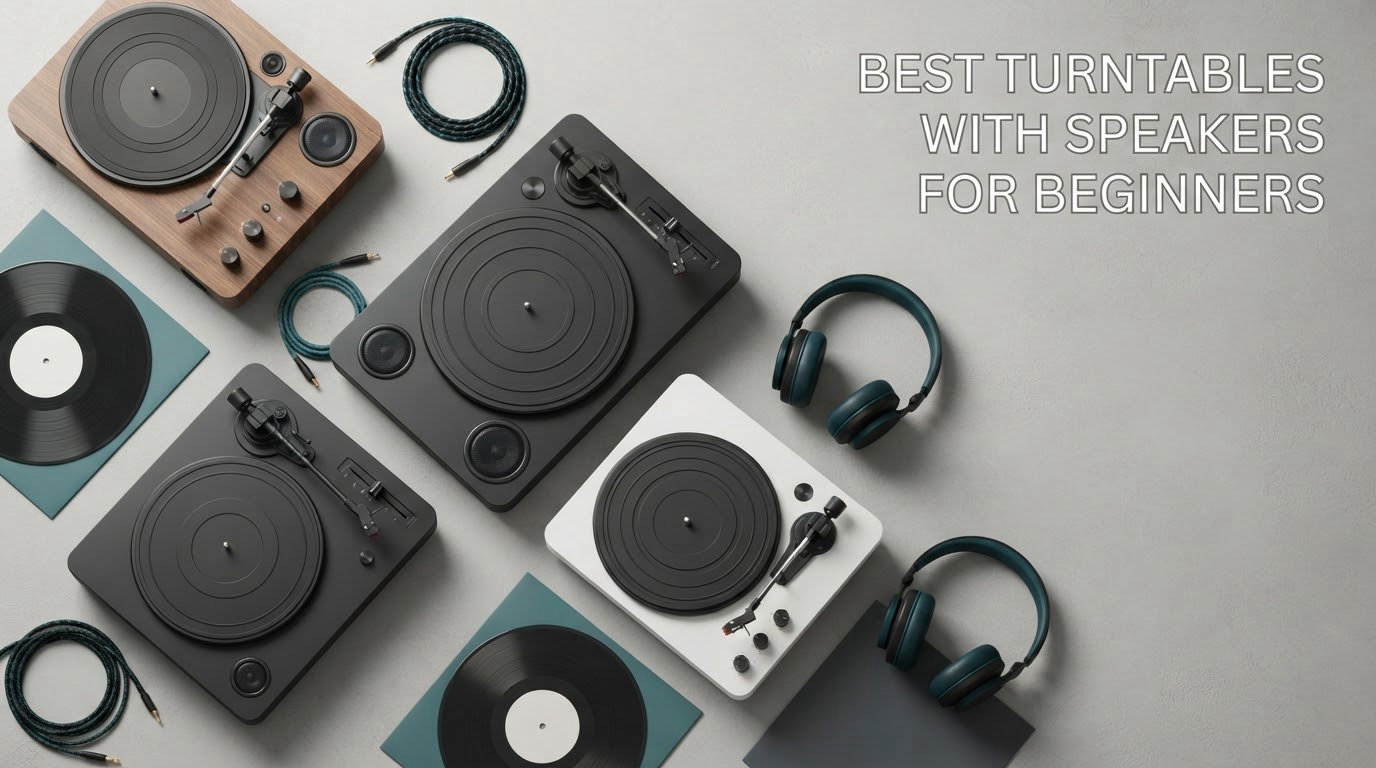
Choosing your first vinyl setup is mostly an audio-components problem, and the most common first mistake is treating it as one. The best turntables with speakers for beginners are sold in two very different shapes, and picking the wrong one leaves you either stuck with thin sound or stuck with a box that plays records and nothing else.
The all-in-one record player puts the turntable and small stereo speakers in a single cabinet. You unbox it, plug it in, and a record plays. The pre-matched bundle gives you a proper turntable plus a pair of real bookshelf speakers, which is a far bigger jump in sound for very little extra effort, as long as you know whether you need an amplifier.
Every system below ships with something that plays music out of the box, so nobody has to research phono preamps before their first record. We grouped them by what they actually are, listed the connection options and the honest drawbacks, and flagged the ones that treat your records with care. If you would rather start with the deck alone, our guide to the best premium turntables is the other direction to go.
Table of Contents
Top 3 Beginner Vinyl Systems in 2026
Twelve systems made the cut, but three stood apart for a first-time buyer. The Victrola Quincy is the box you can hand to anyone. The Victrola Navigator covers every old format in your attic in one cabinet. The SeeYing pair is where a real turntable meets real speakers without a shopping project.

Victrola Quincy 6-in-1
- Vinyl
- CD
- cassette and FM in one cabinet
- Bluetooth and aux input
- RCA line out for later upgrades
- Three playback speeds

Victrola Navigator 8-in-1
- Vinyl CD cassette FM USB and Bluetooth
- Full-function remote control
- Bluetooth out and RCA line out
- Real wood cabinet

SeeYing with 36W Speakers
- Two 18 watt bookshelf speakers
- Iron platter with adjustable counterweight
- USB recording and Bluetooth
- Switchable phono preamp
Best Turntables With Speakers for Beginners in 2026
All twelve systems below include speakers in the box. The single-cabinet models have speakers inside; the two-box systems pair a turntable with separate bookshelf speakers. The connection column is the useful one for beginners, because it tells you what you can plug in later.
| Product | Specifications | Action |
|---|---|---|
| Victrola Quincy 6-in-1 |
|
Check Latest Price |
| Victrola Navigator 8-in-1 |
|
Check Latest Price |
| SeeYing with 36W Speakers |
|
Check Latest Price |
 1byone High Fidelity Belt Drive 1byone High Fidelity Belt Drive |
|
Check Latest Price |
 1byone HiFi System with 36W Speakers 1byone HiFi System with 36W Speakers |
|
Check Latest Price |
 ANGELS HORN Turntable with Speakers ANGELS HORN Turntable with Speakers |
|
Check Latest Price |
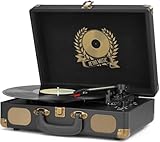
 Retrolife Suitcase Record Player Retrolife Suitcase Record Player |
|
Check Latest Price |
 Victrola Journey Suitcase Player Victrola Journey Suitcase Player |
|
Check Latest Price |
 Mersoco Vintage Suitcase Player Mersoco Vintage Suitcase Player |
|
Check Latest Price |
 cotsoco Wood Cabinet Player cotsoco Wood Cabinet Player |
|
Check Latest Price |
 FEKTIK 10-in-1 Combo System FEKTIK 10-in-1 Combo System |
|
Check Latest Price |
 Seasonlife R608 Vintage Player Seasonlife R608 Vintage Player |
|
Check Latest Price |
1. Victrola Quincy 6-in-1 – our best first system
- Plays vinyl
- CD
- cassette and radio through built-in stereo speakers
- Volume and clarity beat most suitcase players
- Quick and stable Bluetooth pairing
- Furniture-style wood cabinet suits a living room
- Speakers are not hi-fi
- so bass seekers need external gear
- Cassette transport is limited to eject
- play and fast-forward
- Short Bluetooth range of roughly ten feet
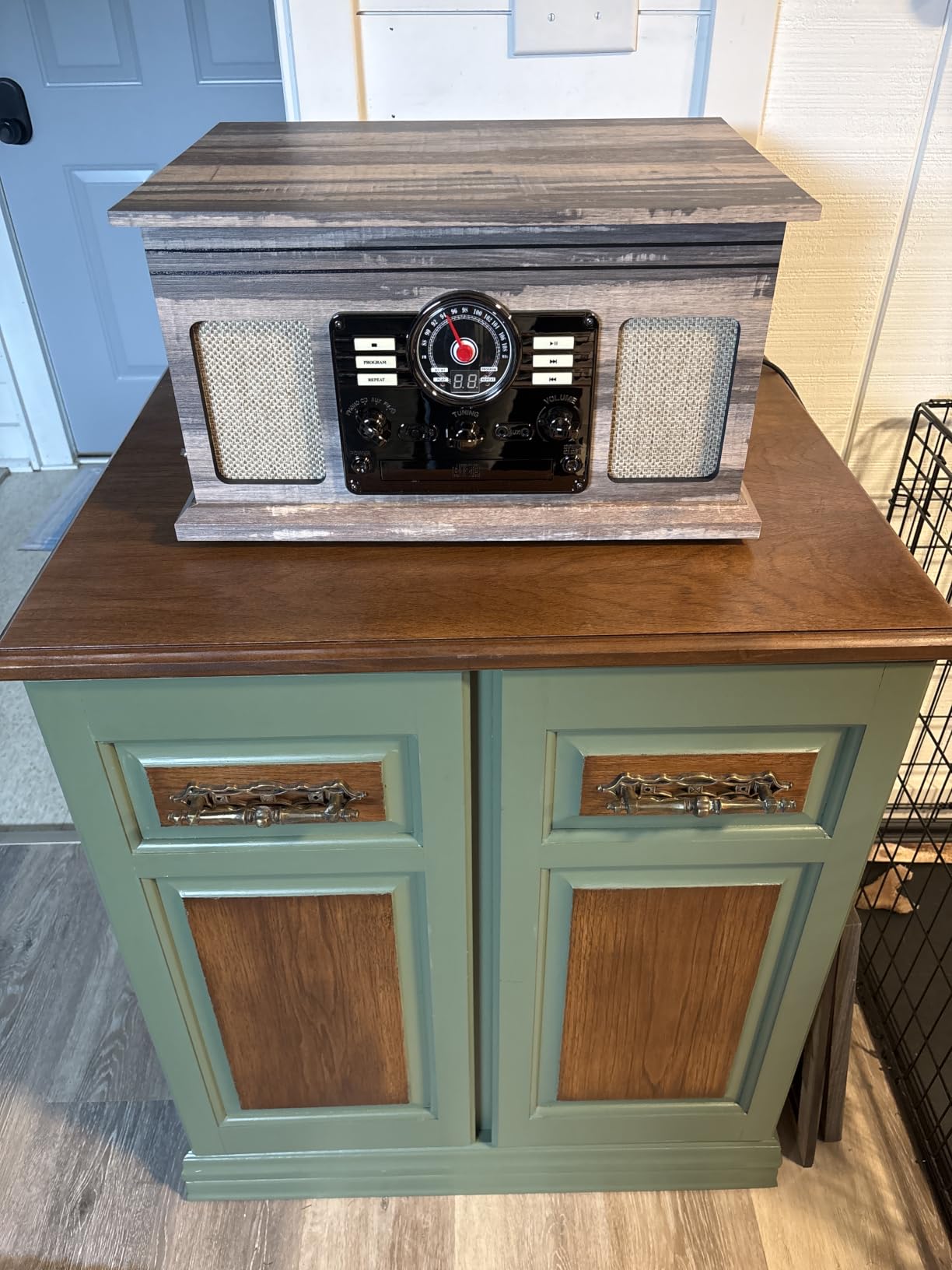
The Quincy is the one I hand to friends who tell me they know nothing about audio. It weighs 14.9 pounds, sits in an engineered wood cabinet, and plays records, CDs, cassettes and AM/FM radio through built-in stereo speakers with a 70 db signal-to-noise ratio.
Owners rate it 4.5 out of 5 across more than 26,000 reviews, and the most common review story is an upgrade: people moving up from a cheap plastic suitcase player describe a jump in volume and clarity they did not expect.
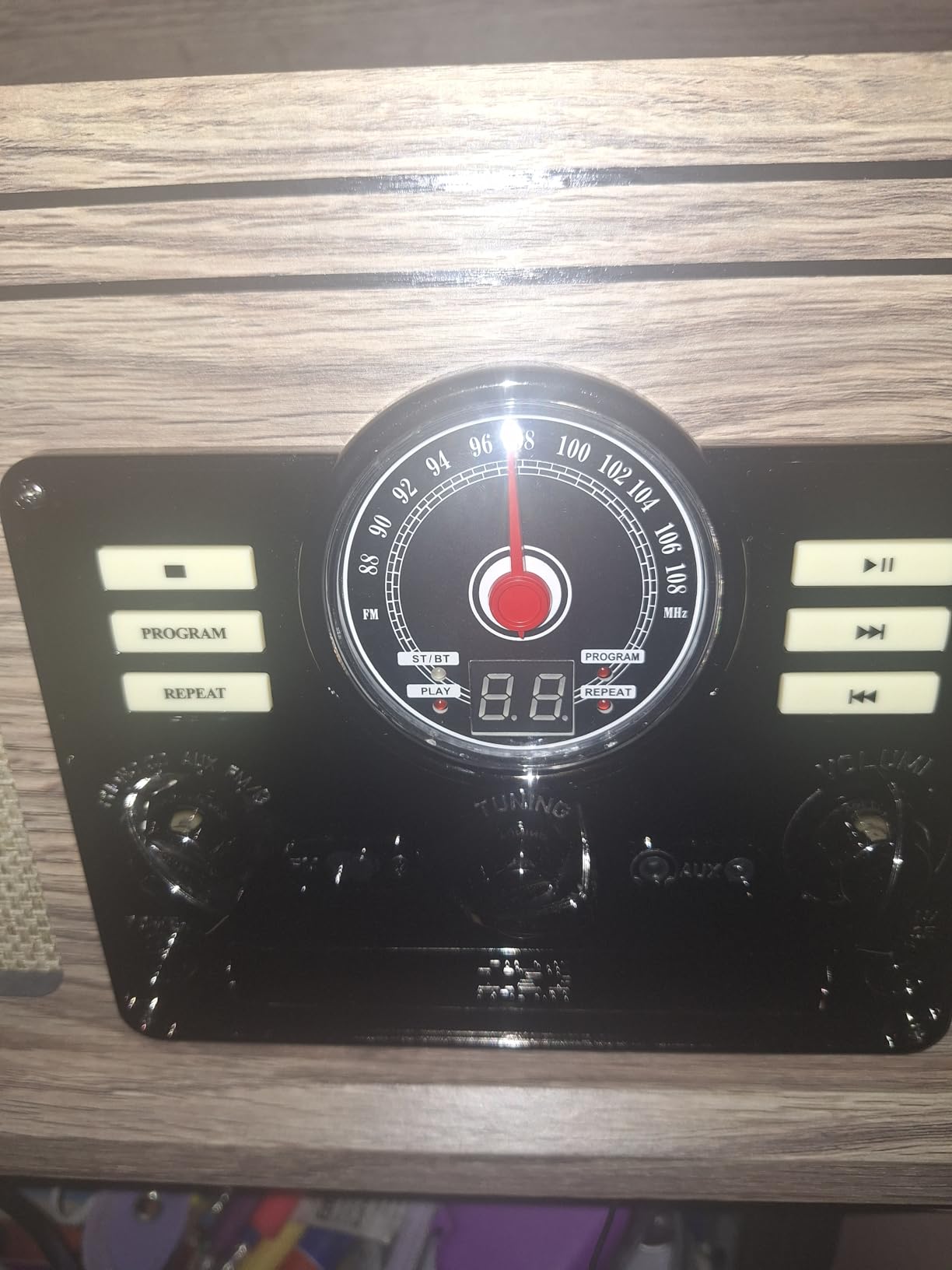
It runs at 33 1/3, 45 and 78 rpm, so old 78s are not a problem. The RCA line output and the aux input are the important details for a first buyer, because they mean this cabinet is not a dead end.
Bluetooth pairing is quick and stable, though most reviews put real-world range at around ten feet. There is a headphone jack for late-night listening, and the whole thing draws 30 watts, which is nothing on a power bill.
What it is good for
This suits anyone moving up from a first plastic player without a plan, and anyone whose household still has a box of cassettes or CDs to get through. A child could operate it without supervision, which is not true of most turntables with a manual tonearm.
Because the RCA outputs carry a line-level signal, you can borrow a pair of real speakers from a friend and hear the difference for yourself. Read our bookshelf speaker guide when you get to that stage.
Where it falls short
The built-in speakers are consumer-grade, and the honest truth is that no single-cabinet player competes with a separate pair of bookshelf speakers on bass or clarity. Buyers chasing heavy low end still end up buying external speakers, so budget for that eventually rather than being surprised.
The cassette deck is basic, with eject, play and fast-forward on one button. The CD tray is clunky, and FM tuning with the analog knob is slow. A small number of reviews report units arriving with a dead turntable or a worn cartridge, both of which were resolved by replacement.
2. 1byone High Fidelity Belt Drive – best step up from a suitcase
1 BY ONE High Fidelity Belt Drive Turntable with Built-in Speakers
- Genuine Audio-Technica diamond-tipped cartridge
- Adjustable counterweight balances both channels
- Four built-in speakers sound warm and crisp
- Built-in amplifier with RCA out for later upgrades
- No 78 rpm support
- Volume knob is hard to reach with the dust cover on
- No automatic tonearm return at the end of a record
- Bluetooth range is only about 10 to 15 feet
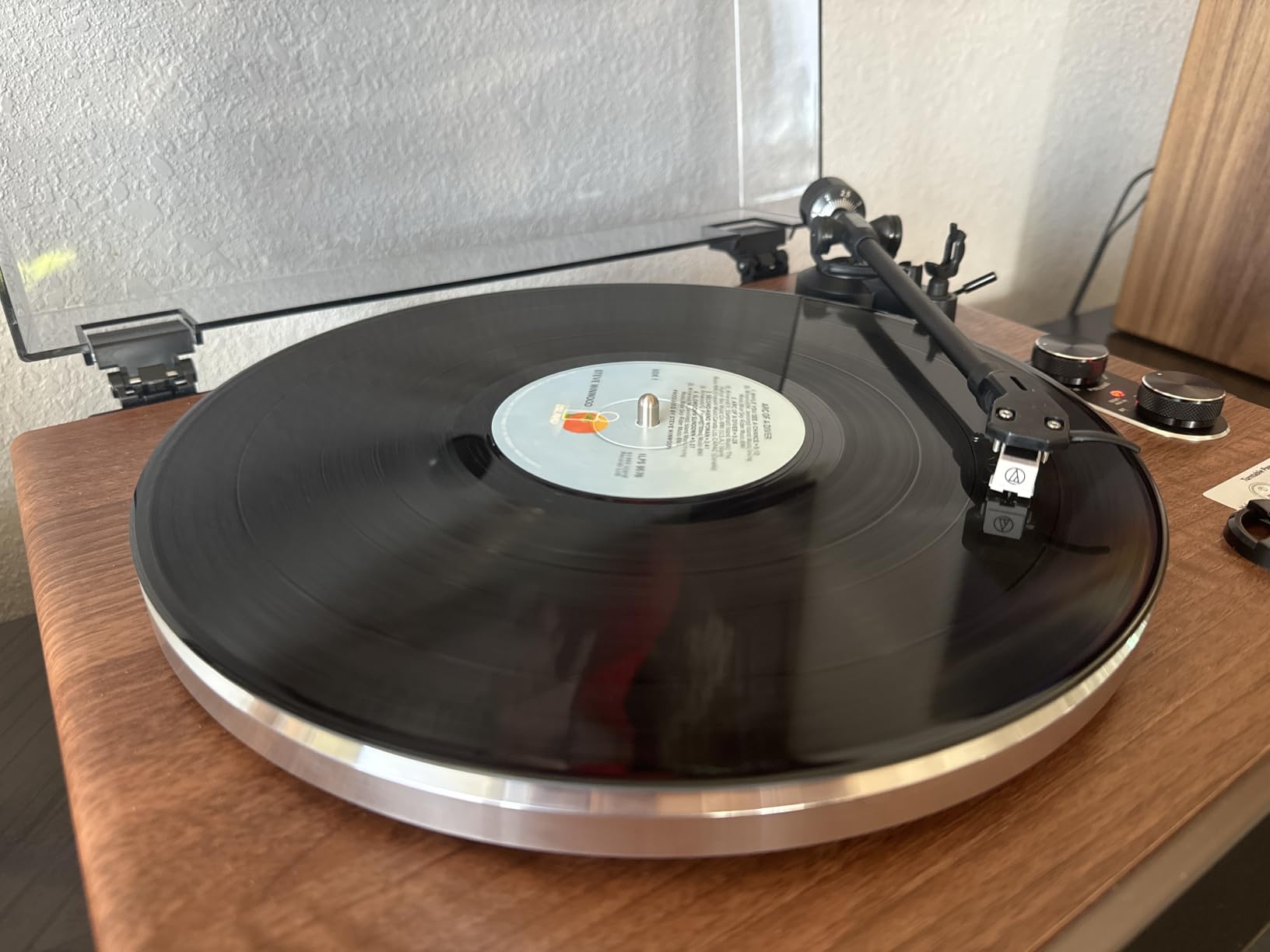
This is the pick for anyone who bought a suitcase player, liked the format and hated the sound. The 1byone uses a real Audio-Technica diamond-tipped cartridge, a magnet-type cartridge with an adjustable counterweight, and four built-in speakers in a wood and metal cabinet.
That stylus is the reason it belongs here. Ceramic needles on cheap players are hard on grooves, while a replaceable diamond cartridge is the part you can swap when it wears out.
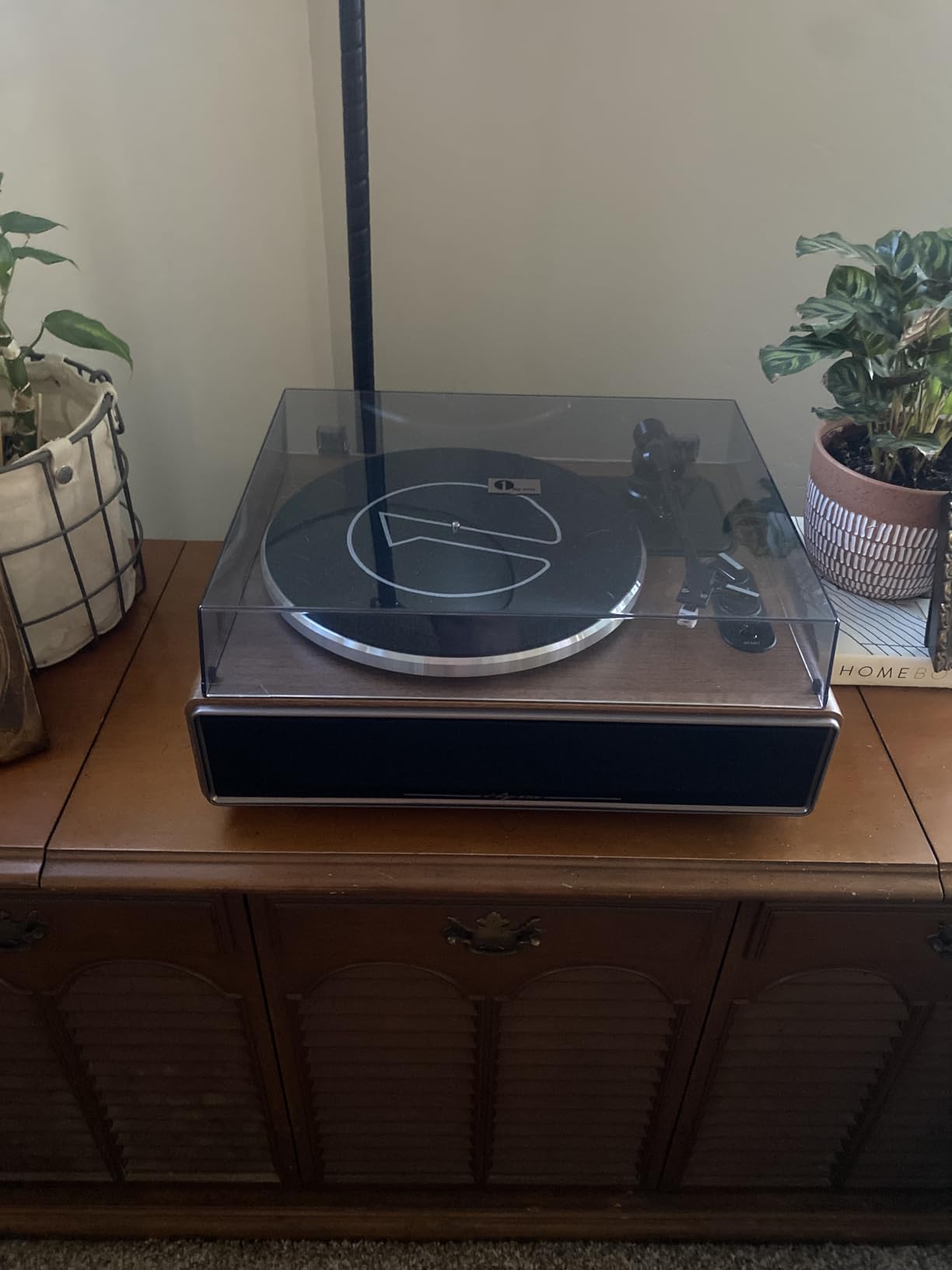
Owners coming from cheap plastic units treat it as a genuine step up, and they single out the damped feet and the cartridge for stable tracking with no skips. The built-in amplifier means you can add external powered speakers through RCA whenever you are ready.
It draws 35 watts, hits a 60 db signal-to-noise ratio, and streams over Bluetooth from phones, tablets and computers. The counterweight balance is the one step that asks something of a first-timer, and reviews put it at roughly half an hour of setup.
What it is good for
This suits a bedroom or office where you listen to a few records at a time and care more about a warm, steady sound than volume. The 13.3-pound cabinet and detachable dust cover make it a natural fit on a side table or a desk.
It also suits anyone who already has a collection and does not want a player that is hard on it. The stylus and counterweight are gentle, and the feet handle motor rumble.
Where it falls short
It runs at 33 and 45 rpm only, so 78 rpm records are out. There is no automatic tonearm return, so you lift the arm yourself when the record ends, and the volume knob sits where the dust cover makes it awkward.
The counterweight balance is genuinely a learning curve, and first-time owners wish it arrived pre-balanced. Bluetooth drops off past about 10 to 15 feet, and a few reviewers found the plastic trim and power button cheaper than the rest of the cabinet.
3. SeeYing with 36W Bookshelf Speakers – best value bundle
- Separate bookshelf speakers give real bass and low distortion
- Iron platter keeps rotation stable and quiet
- Moving magnet cartridge feeds standard phono inputs
- USB output records vinyl to MP3
- Bulky
- the deck and both speakers need a real surface
- Dust cover hinge was stiff on one unit
- No line input on the speakers themselves
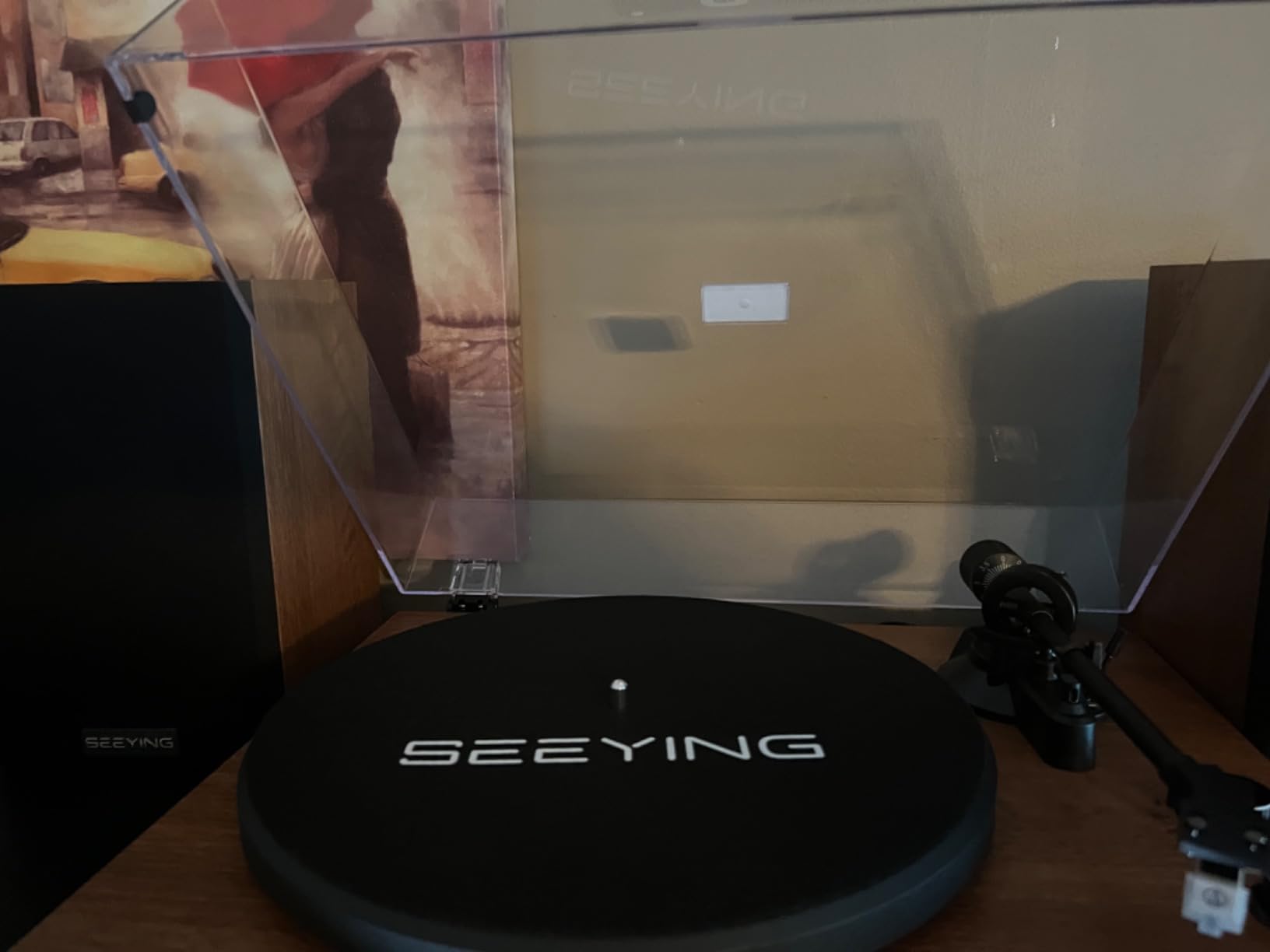
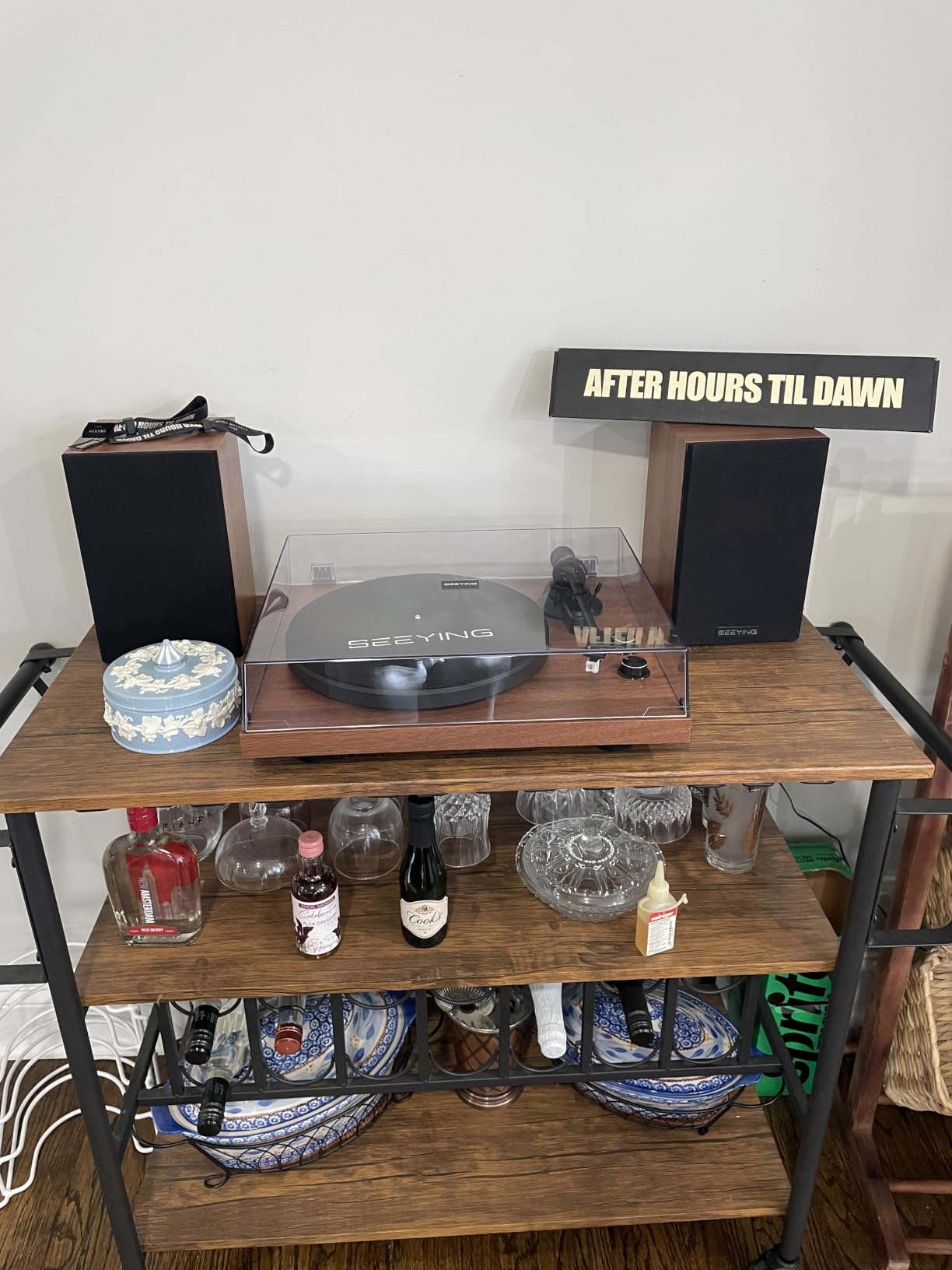
The SeeYing is where a beginner gets real speakers instead of built-in ones without a second research project. You get a belt-drive turntable with a heavy iron platter, a static-balanced aluminum tonearm with an adjustable counterweight, and a pair of 18 watt bookshelf speakers.
That is the mechanical specification list you would look for on a mid-range separate deck, and it is the reason the sound clears the bar. The moving magnet cartridge has a moderate-to-high output, which means it works with a standard phono input if you move up later.
Owners use it as a budget step up from a plastic suitcase player and point at the speakers as the headline benefit. Support is responsive too, with reviewers mentioning replacement parts sent for a dead stylus and a failed component.
Bluetooth streaming and USB-to-PC encoding are both built in, so you can back up records to MP3 without another box in the chain. A switchable phono and line preamp with RCA outputs keeps the door open to a bigger system.
What it is good for
This suits a living room, a bedroom, or a first apartment where the deck and two speakers will sit on a shelf or a sideboard. The full 20.7-pound package is heavy, which is a good sign for a stable platter and a bad sign for a cramped desk.
It also suits anyone who wants to digitize a family record box while they listen. The USB cable and cartridge alignment protractor are both in the box, along with an anti-slip mat and a 45 rpm adapter.
Where it falls short
Size is the main practical limit. The turntable plus two speakers need a dedicated cabinet or surface, and there is no way to shrink that footprint if your space is tight.
A few owners reported a stiff dust cover hinge that made the deck shake and skip, and one reported a visible platter shudder after about a year. Some buyers also received units with a stylus that would not seat in the cartridge.
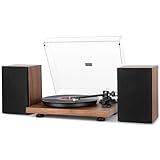
4. 1byone HiFi System with 36W Speakers – best for recording to MP3
1 BY ONE Bluetooth Turntable HiFi System with 36 Watt Bookshelf Speakers
- Separate speakers hold their own against far costlier pairs
- Heavy cast-iron platter for stable rotation
- Anti-skating and counterweight reduce skips
- USB output encodes vinyl to MP3 on a computer
- Assembly needs the belt
- platter and anti-skate weight fitted
- Speakers are passive with no inputs of their own
- Auto power-down after a few minutes of inactivity
- Instructions are hard work for a first-time owner
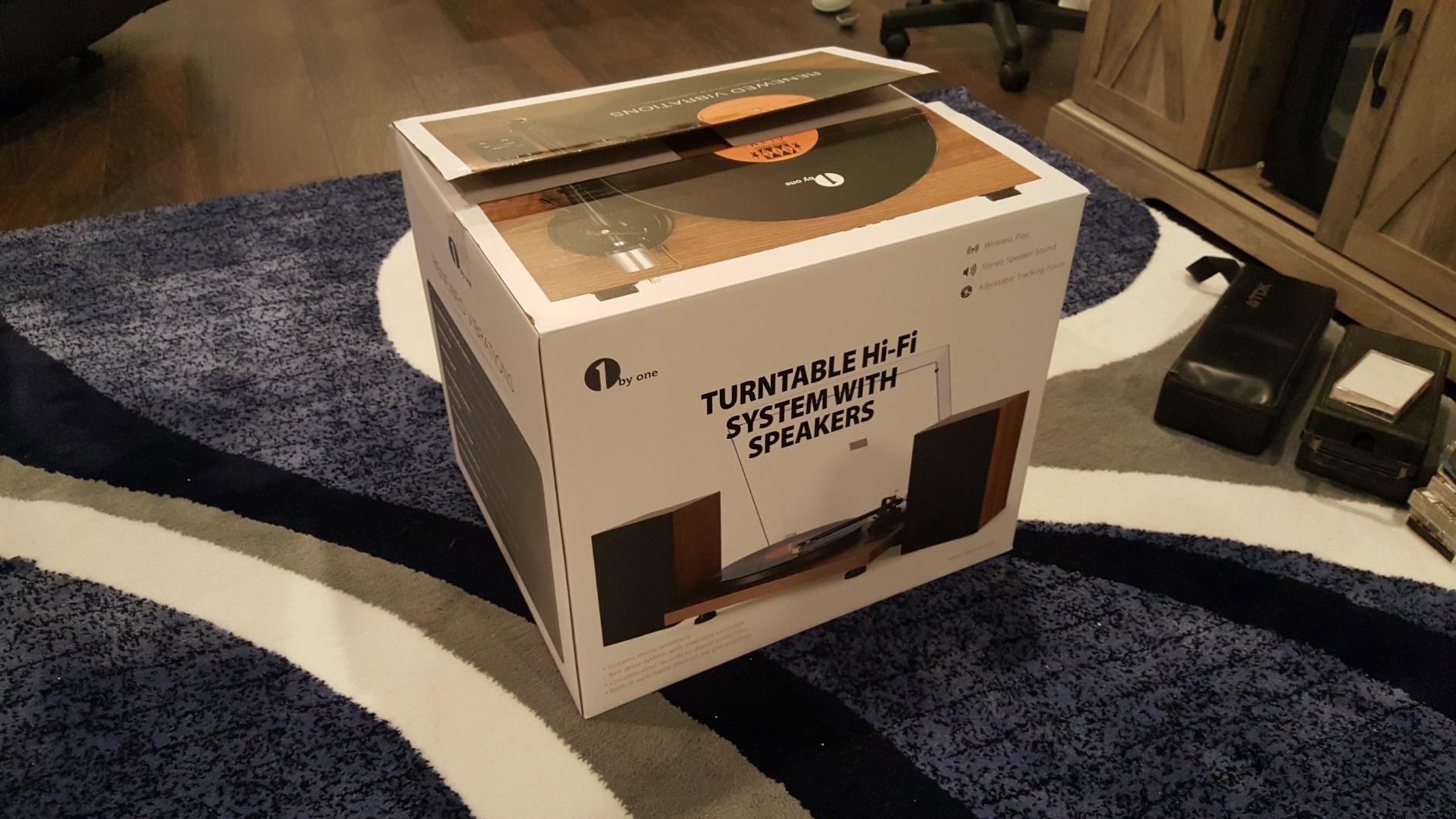
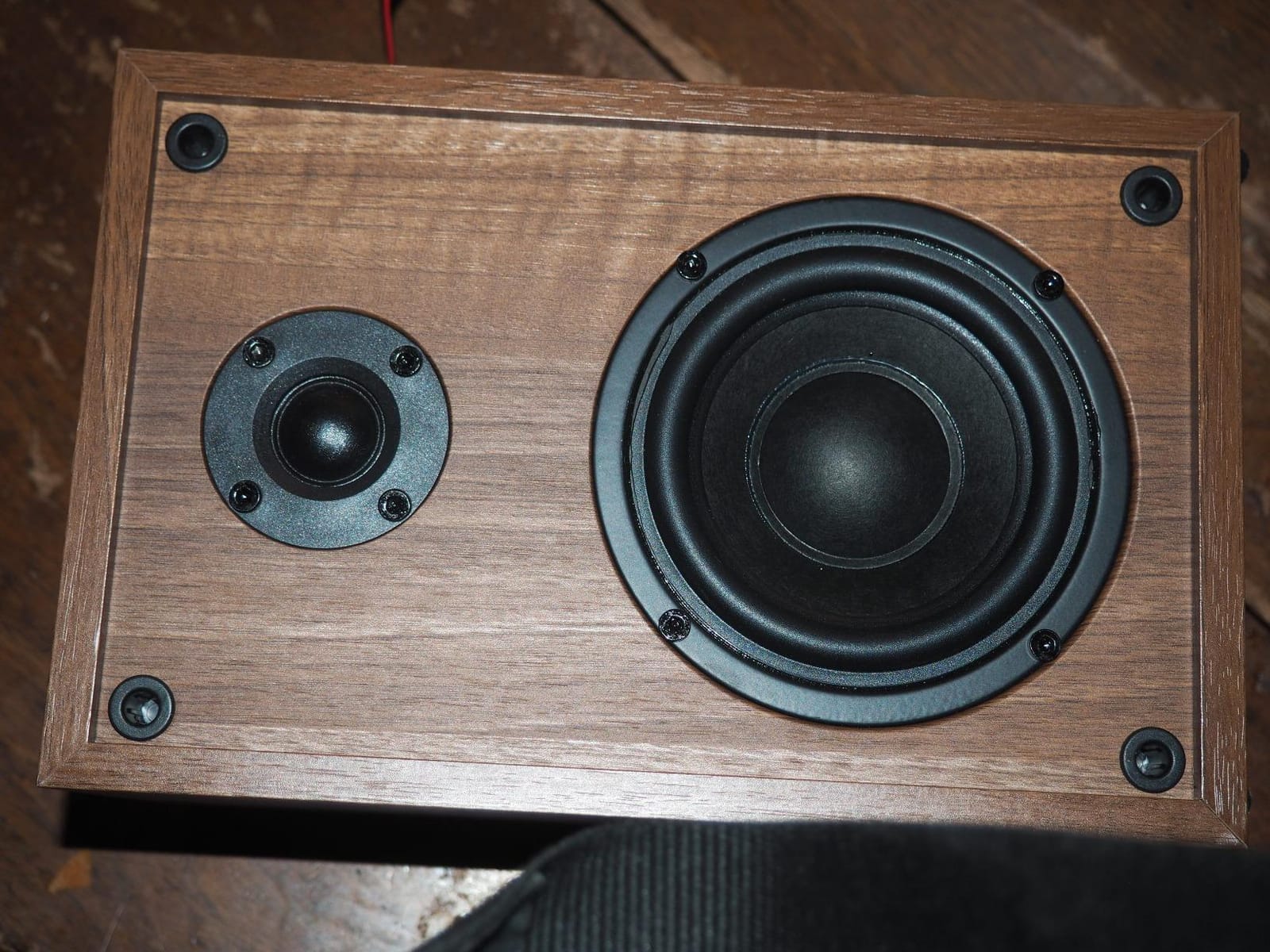
This bundle is the most enthusiast-leaning system in the group, and the 36 watt bookshelf speakers are the reason. Reviewers with real hi-fi backgrounds describe the sound as warm with strong bass, and report near-zero skips across dozens of records after the arm is balanced properly.
The cast-iron platter gives uniform rotational mass, which is the mechanical upgrade most visible in the specification list. An adjustable counterweight and anti-skating weight handle tracking force and groove drift.
Bluetooth streaming runs through the included speakers, and the USB output encodes vinyl into MP3 files on a computer. A 65 db signal-to-noise ratio and a switchable phono and line preamp round out a serious feature list for a first system.
Owners upgrading from a plastic suitcase player describe it as the point where records started sounding like records. Some arrived with a loose cartridge or thin speaker wire that needed fixing on day one.
What it is good for
This suits a listener who wants a turntable they will keep for years rather than a first box to trade in. The counterweight and anti-skate adjustments mean you can dial in tracking force for your collection instead of living with whatever the factory set.
It is also the choice for anyone digitizing a large inherited collection, because the USB path removes the need for a separate capture device.
Where it falls short
Setup is the hurdle. You fit the belt, the platter and the anti-skate weight yourself, and the anti-skate line is fiddly to thread. Instructions can be confusing if you have never set up a turntable.
The system auto-shuts-down after a few minutes of inactivity and needs a power-cycle to wake up. Bluetooth playback is noticeably quieter than vinyl, and the passive speakers have no inputs of their own, so adding a CD player later means adding an amplifier.
5. ANGELS HORN Turntable with Speakers – best fully loaded system
ANGELS HORN Vinyl Record Player with Speakers, Bluetooth Hi-Fi Turntable
- Most enthusiast specification in a beginner-friendly package
- AT-3600L cartridge sounds warm and protects records
- Variable pitch control plus anti-skate weight
- RCA line out and line in for adding other sources
- The most advanced specification here
- which is more than a first system needs
- 33 and 45 rpm only
- Two-box design needs more shelf space than a cabinet model
- Tonearm needs some setup before first use
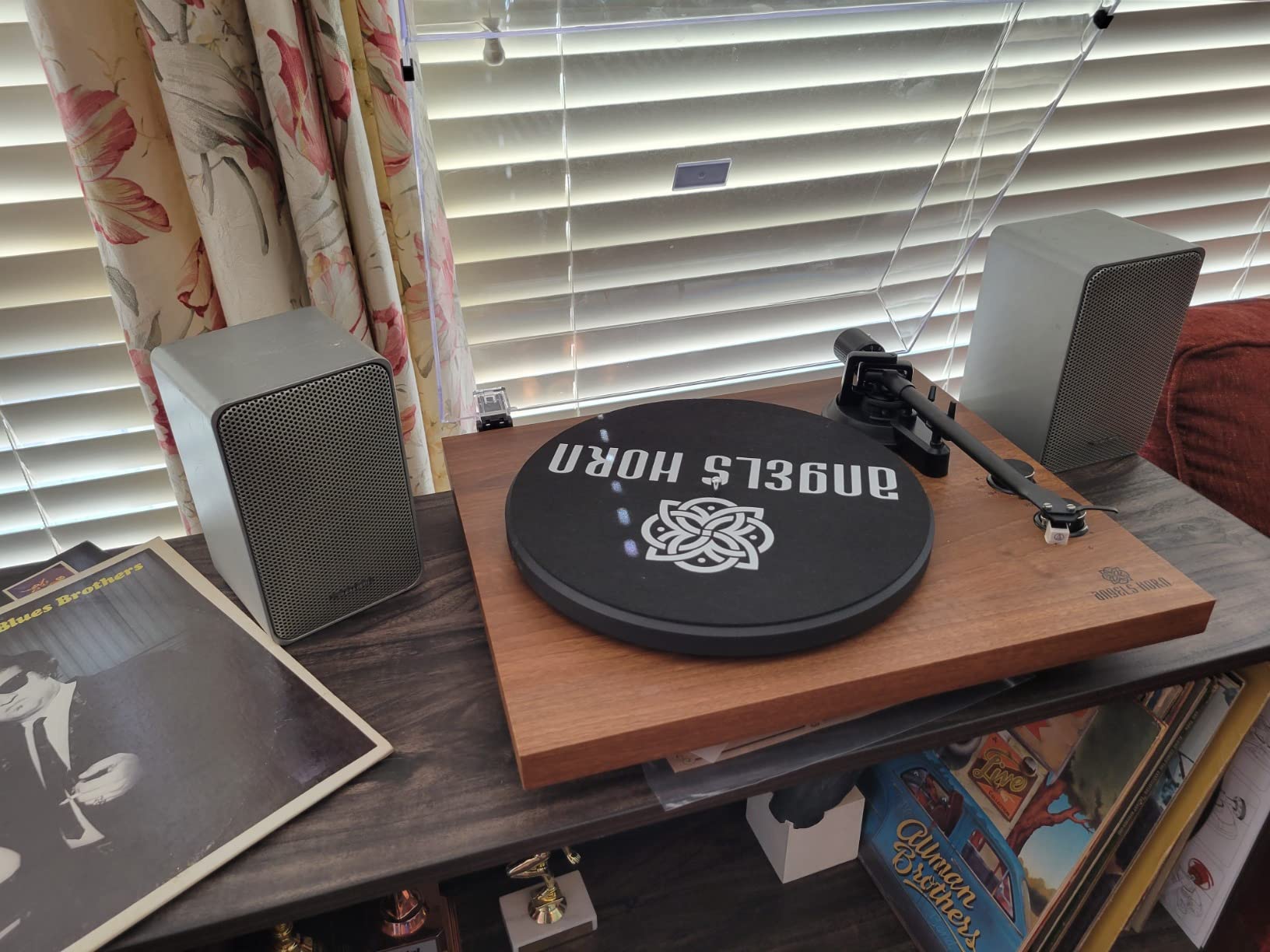
The ANGELS HORN is the most serious specification list you can get without leaving the beginner category. A real AT-3600L moving magnet cartridge, an adjustable counterweight, an anti-skating weight and variable pitch control sit on a belt-drive deck with a built-in phono preamp.
Bluetooth 5.3 streams from a phone, tablet or laptop straight into the included bookshelf speakers. RCA line out and line in let you add an amplifier, powered speakers, a CD player or a cassette deck without replacing anything.
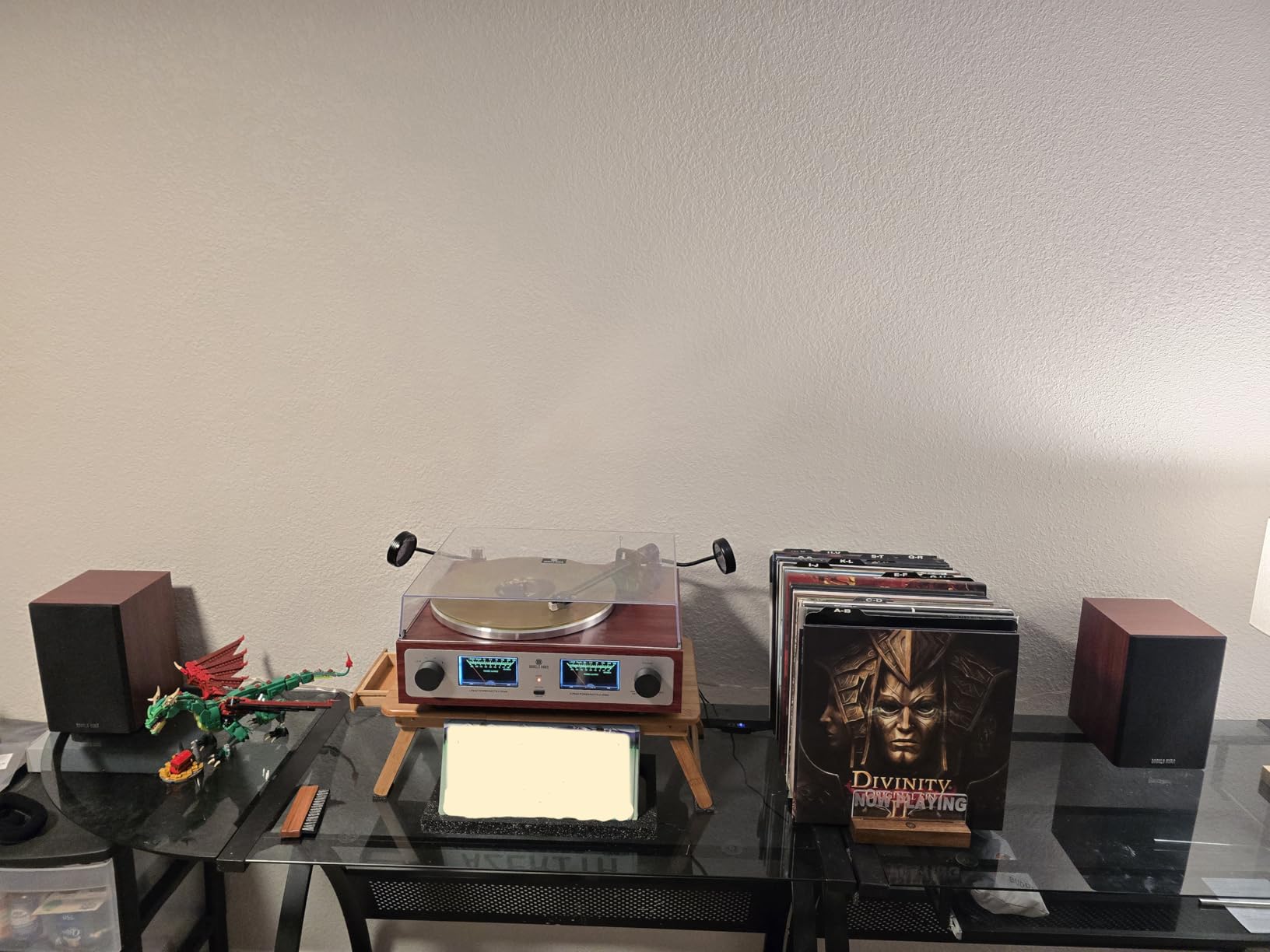
It is the bundle most often described in reviews as the natural first step above the cheap suitcase players, and the cartridge is repeatedly credited with warm, clear sound and gentle handling of records. A two-year warranty is included.
Owners who outgrow the included speakers have a clear path forward, which is the part that matters most for a first purchase. Nothing about this system is a dead end.
What it is good for
This suits a beginner who already knows vinyl appeals to them and wants the best hardware on the first try. The counterweight and anti-skate controls protect the collection, and the pitch control is useful for anything pressed slightly off.
It also suits a listener who wants one package to grow with, since the line in and line out connections cover every later addition.
Where it falls short
It asks for the most from your setup on this list, which makes it a stretch for a strict first-time buyer on a tight budget. It runs at 33 1/3 and 45 rpm, so no 78s.
The two-box layout, a turntable plus separate speakers, needs more shelf space than a single cabinet. And it asks for some tonearm setup before the first record.
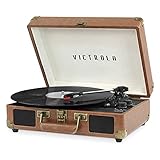
6. Victrola Journey Suitcase – best portable option
- Easiest setup of any system here
- Compact 5.5 pound suitcase with a carry handle
- Built-in speakers plus Bluetooth streaming
- Three speeds with reliable auto-stop
- Sound-isolating feet reduce motor rumble
- Small speakers give basic sound with limited bass
- Light tonearm can flutter and the cartridge may need replacing
- Plastic build does not tolerate rough transport
- Vibration at higher volume
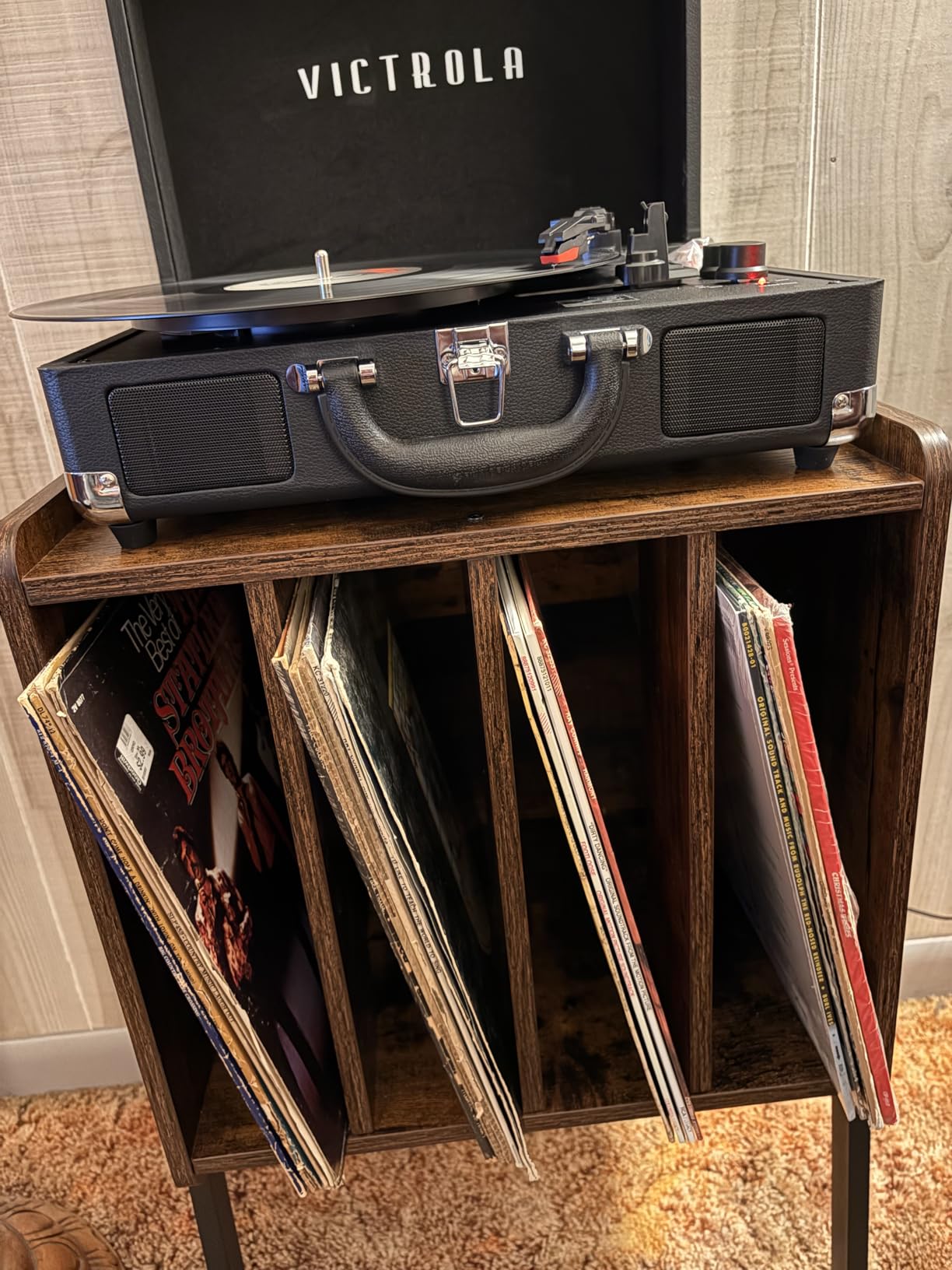
No system in this roundup has more owner history than the Victrola Journey, and at 4.4 stars across more than 55,000 reviews that track record is the reason it sits so high. It is a 5.5 pound suitcase player with a carry handle, built-in stereo speakers and a headphone jack.
It runs at 33 1/3, 45 and 78 rpm, so it covers the widest range of old records, and the auto-stop switch is reliable. A one-year warranty is included and it draws just 10 watts.
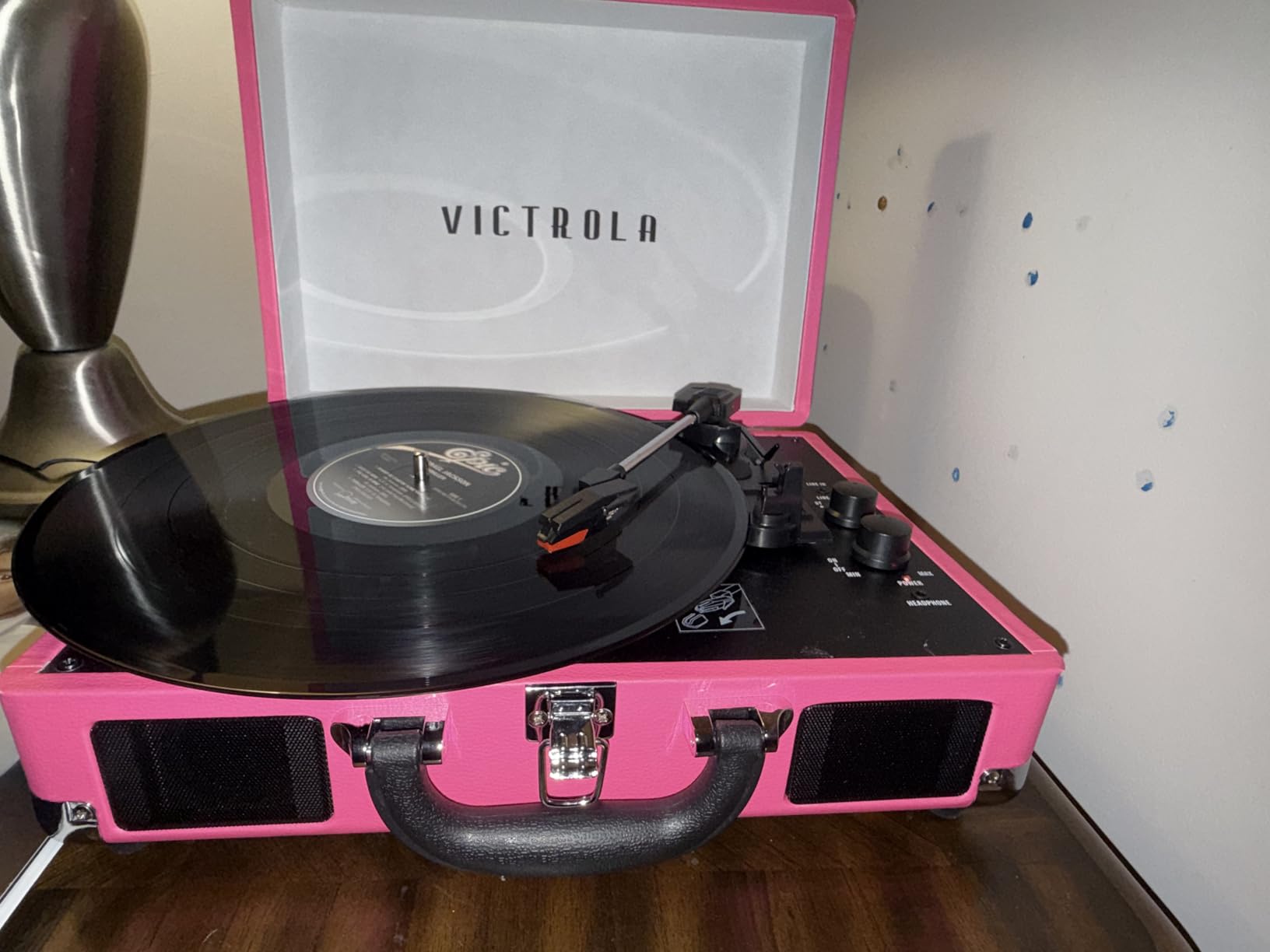
Bluetooth streaming turns it into a phone speaker as well as a record player, and the RCA outputs let you hook up better speakers later. Reviewers call the integrated speakers functional rather than hi-fi, which is the honest description.
Reviewers frequently single it out for older 45s and 60s-era vinyl, and the vibration-isolating feet keep motor rumble off the sound. A minority of one-star reports describe units arriving with echo or damage from third-party sourcing.
What it is good for
This suits a first-timer who wants music playing within minutes of unboxing and has no interest in balancing a tonearm. It also fits a dorm, a kitchen or a teenager’s room, where the carry handle and the low power draw make it easy to move around.
It is a reasonable stop on the way too. The RCA outputs mean you can start here and add real speakers when the records pile up.
Where it falls short
Expect basic, low-fi sound with limited bass from two small drivers. Some reviewers report flutter on certain records, and the cartridge and stylus are likely to need replacing after a few hundred hours of play.
The plastic enclosure feels flimsy and will not survive rough transport in the case, and there is some vibration at higher volume levels.
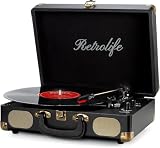
7. Retrolife Suitcase Player – best for dorm rooms
Retrolife® Vinyl Record Player with Speakers, Bluetooth Vinyl Player-Black
- Four connection choices in one box
- Auto-stop plus a quick phono and aux mode switch
- Three speeds and three record sizes
- Belt-driven anti-resonance design
- Compact speakers limit bass and overall volume
- Mains-powered by AC adapter rather than truly portable
- Light tonearm tracking on worn or warped records
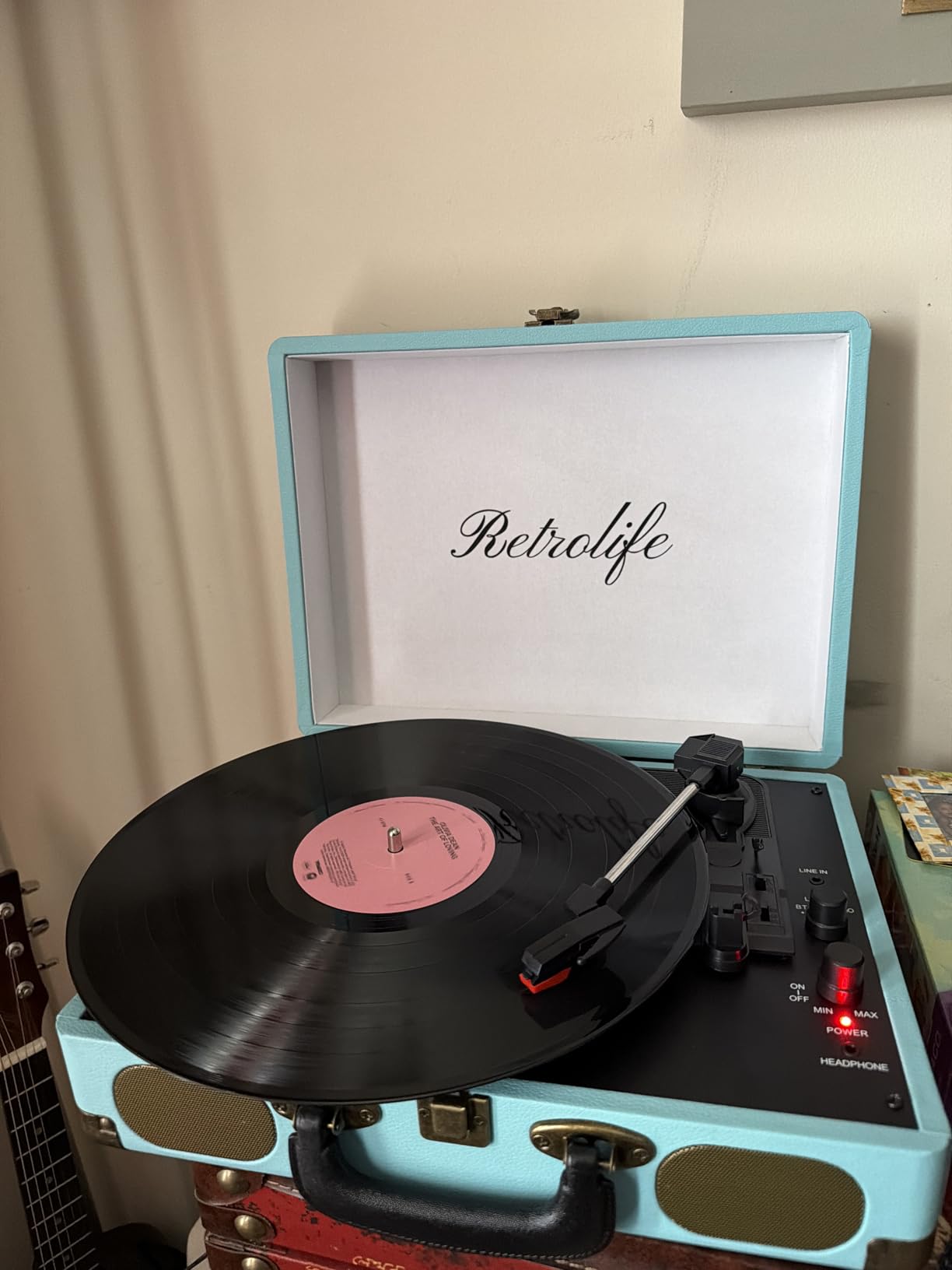
The Retrolife is a suitcase player with a black PU leather finish, retro bronze hardware and a solid handle. It covers 7, 10 and 12 inch records at 33, 45 and 78 rpm on a belt-driven anti-resonance deck, and it carries a one-year warranty.
Four connection choices are built in: Bluetooth streaming, RCA output to external speakers, an aux input and a headphone jack. The most common upgrade path owners describe is adding external speakers through the RCA output.
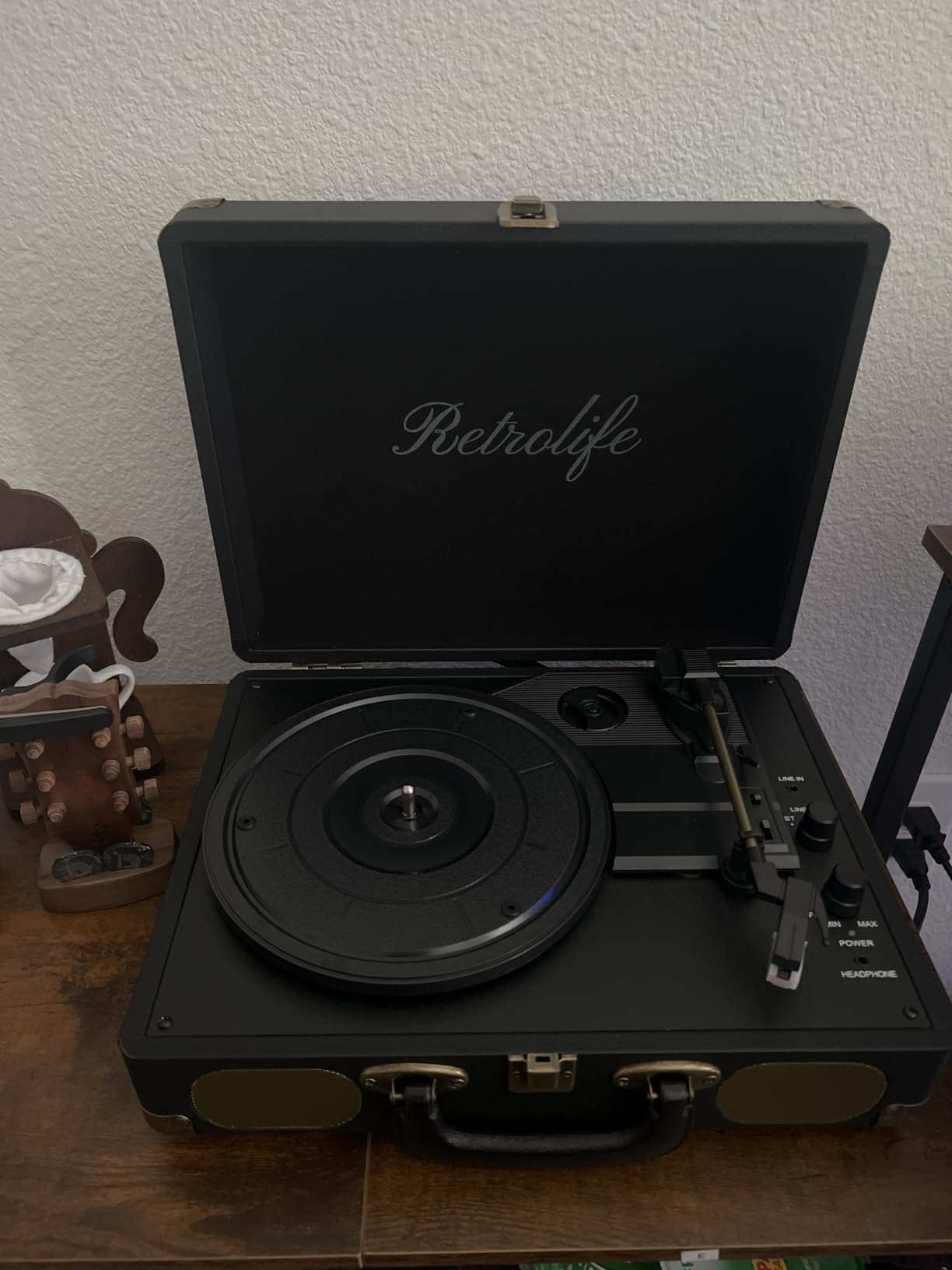
At 4.5 stars from nearly 6,000 reviews, it scores well for a budget machine. The auto-stop switch and the quick mode switch between Bluetooth, aux and phono are the details that make it genuinely beginner-friendly rather than just cheap.
Owners describe it as an easy, attractive first step that suits a bedroom, living room or office, with sound that is perfectly adequate for casual listening at a 55 db signal-to-noise ratio.
What it is good for
This suits a dorm room or a first apartment where shelf space is the deciding factor and volume is not. It takes minutes to set up and needs no extra equipment, which matters when you are furnishing a room from scratch.
It also suits anyone who wants one device for records and phone audio. The mode switch moves between phono and Bluetooth without replugging anything.
Where it falls short
The compact integrated speakers limit bass and overall volume, so it will not fill a larger room. It runs on an AC adapter, so despite the handle it is not a battery-powered portable machine.
Some owners report light tonearm tracking on worn or warped records, which is worth knowing if you are buying used vinyl rather than new pressings.
8. Mersoco Vintage Suitcase Player – best gift pick
- Playing within two minutes of unboxing
- Semi-automatic belt-drive tonearm with smart auto-stop
- Four connection options including a headphone jack
- Tracks well even on non-standard pressings
- Two-year manufacturer warranty
- Integrated speakers are tinny and lack bass at higher volume
- Plastic tonearm and platter need careful handling
- Not loud enough for a party or a large room
- American-style power plug outside North America
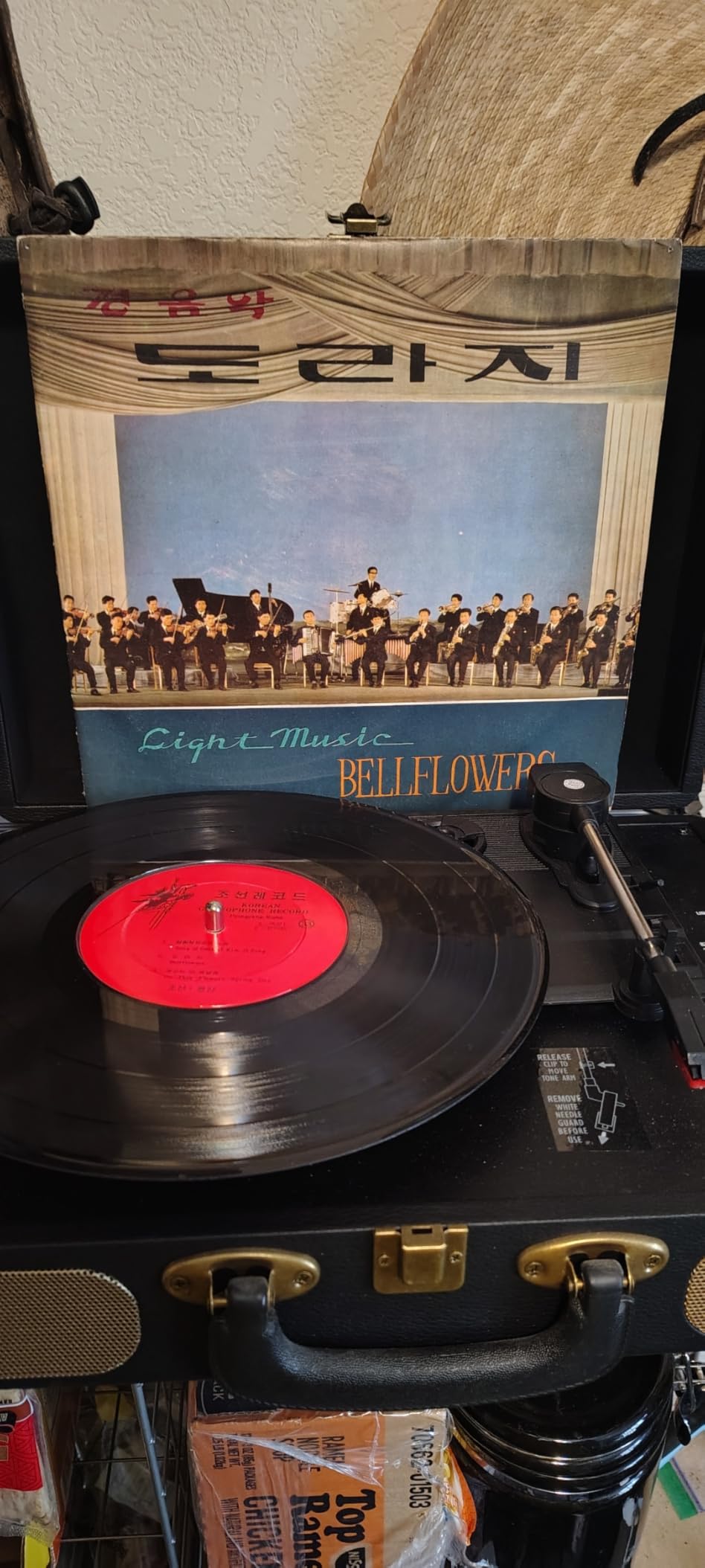
The Mersoco is the easiest gift on this list. Buyers describe it as an attractive, affordable way into vinyl for a teen, a dorm or a small apartment, and several reviewers report more stable speed and tracking than the price suggests.
The semi-automatic belt-drive tonearm and a smart auto-stop switch handle the end-of-record moment for you, and it plays 33, 45 and 78 rpm across all three record sizes.
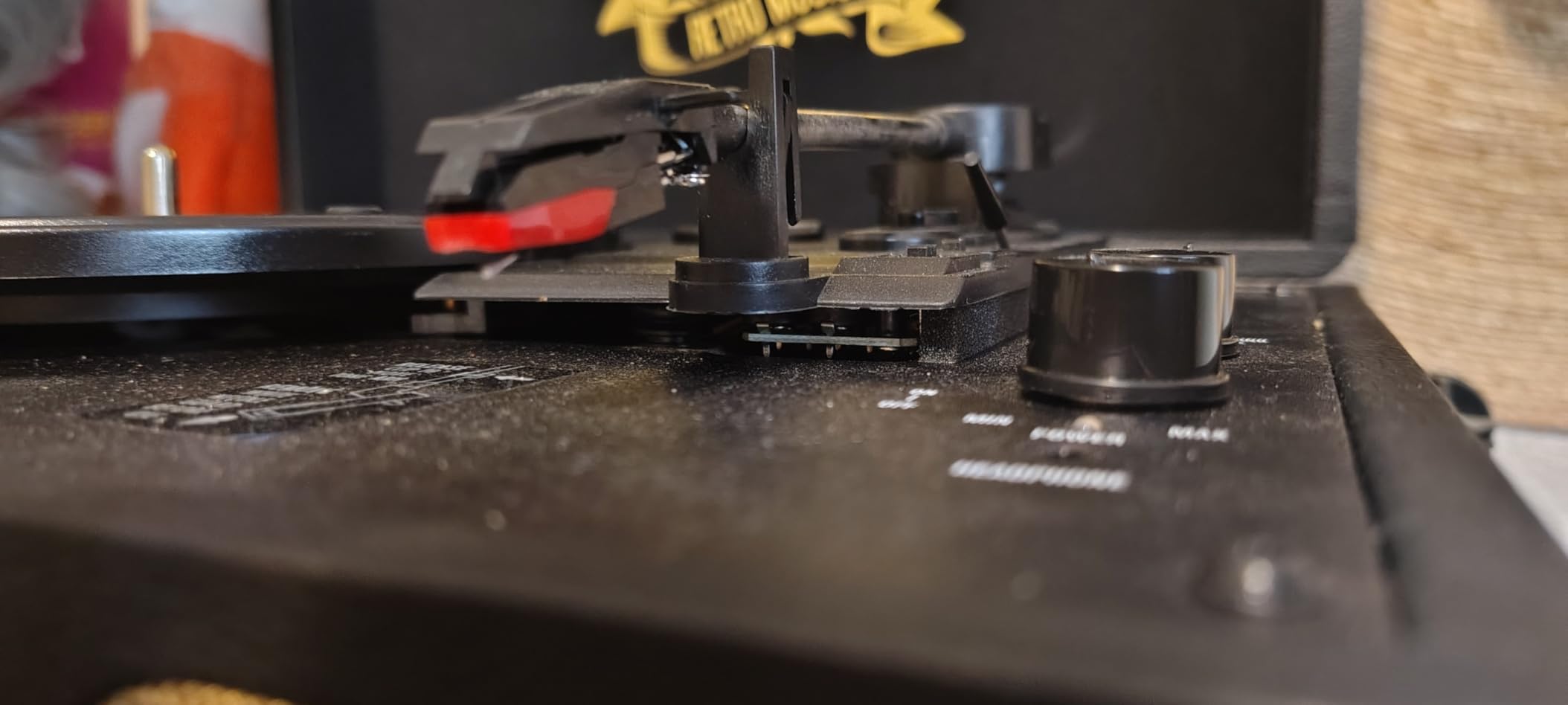
Two front-facing dynamic stereo speakers, Bluetooth, RCA out, aux in and a headphone jack all come in the box, along with a 45 rpm adapter and isolation feet. The signal-to-noise ratio is around 45 db.
Most owners hook up external speakers through the RCA output once they want more sound. The thin built-in audio is the accepted trade-off for a machine this portable and this easy to gift.
What it is good for
This suits a present for someone who has just mentioned wanting to start a record collection. It weighs 5.7 pounds, latches shut, and has a sturdy handle, so it moves between rooms the way a gift-receiver will expect it to.
It also suits a first apartment where the priority is playing records today rather than building a system this month.
Where it falls short
The integrated speakers are slightly tinny and lose bass as you push the volume. Because the tonearm and platter are plastic, extra care is warranted, and it is not loud enough for a large room or a party.
One reviewer reported 45 rpm playback stopping before the record ended. Outside North America and the UK you will need an adapter for the American-style power plug.
9. cotsoco Wood Cabinet Player – best for color choice
- Wood cabinet with two built-in stereo speakers
- Removable dust cover protects records and platter
- Three speeds and three record sizes
- Four connection options including a headphone jack
- Two-year warranty and a low entry cost
- Low-power speakers with modest sound quality
- Lightweight construction and a light tonearm
- 12 inch records need careful tilting onto the platter
- Some units have no auto-stop
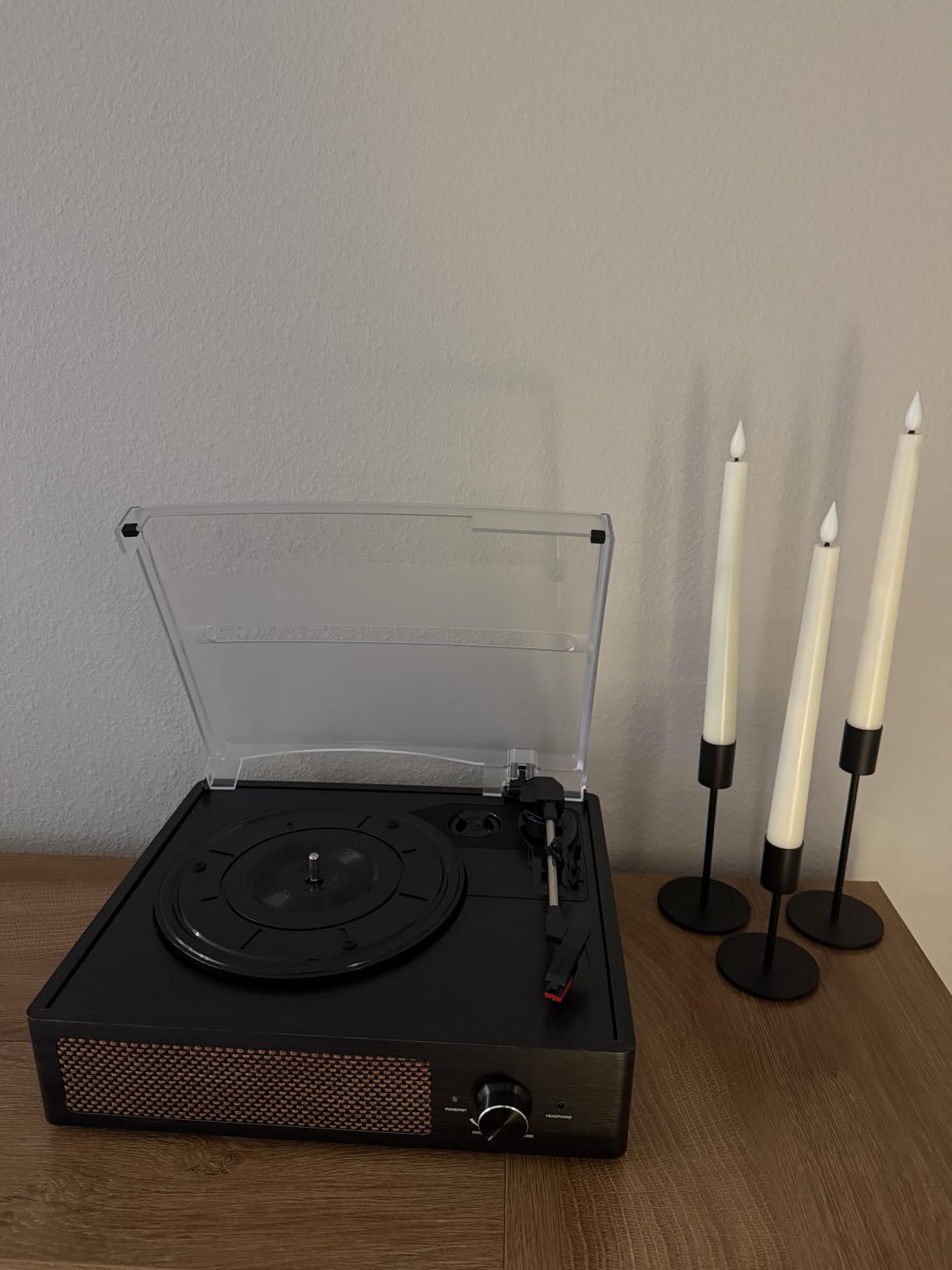
The cotsoco is the decor pick. It sits in a wood cabinet and comes in a very large number of colorways, which is the point of it. It ranks first in Audio and Video Turntables, so you will not struggle to find a second-hand one later.
Under the finish is a straightforward belt-drive deck at 33, 45 and 78 rpm with two built-in stereo speakers, a Bluetooth receiver, an aux input, an RCA line output and a headphone jack. A two-year warranty is the longest here.
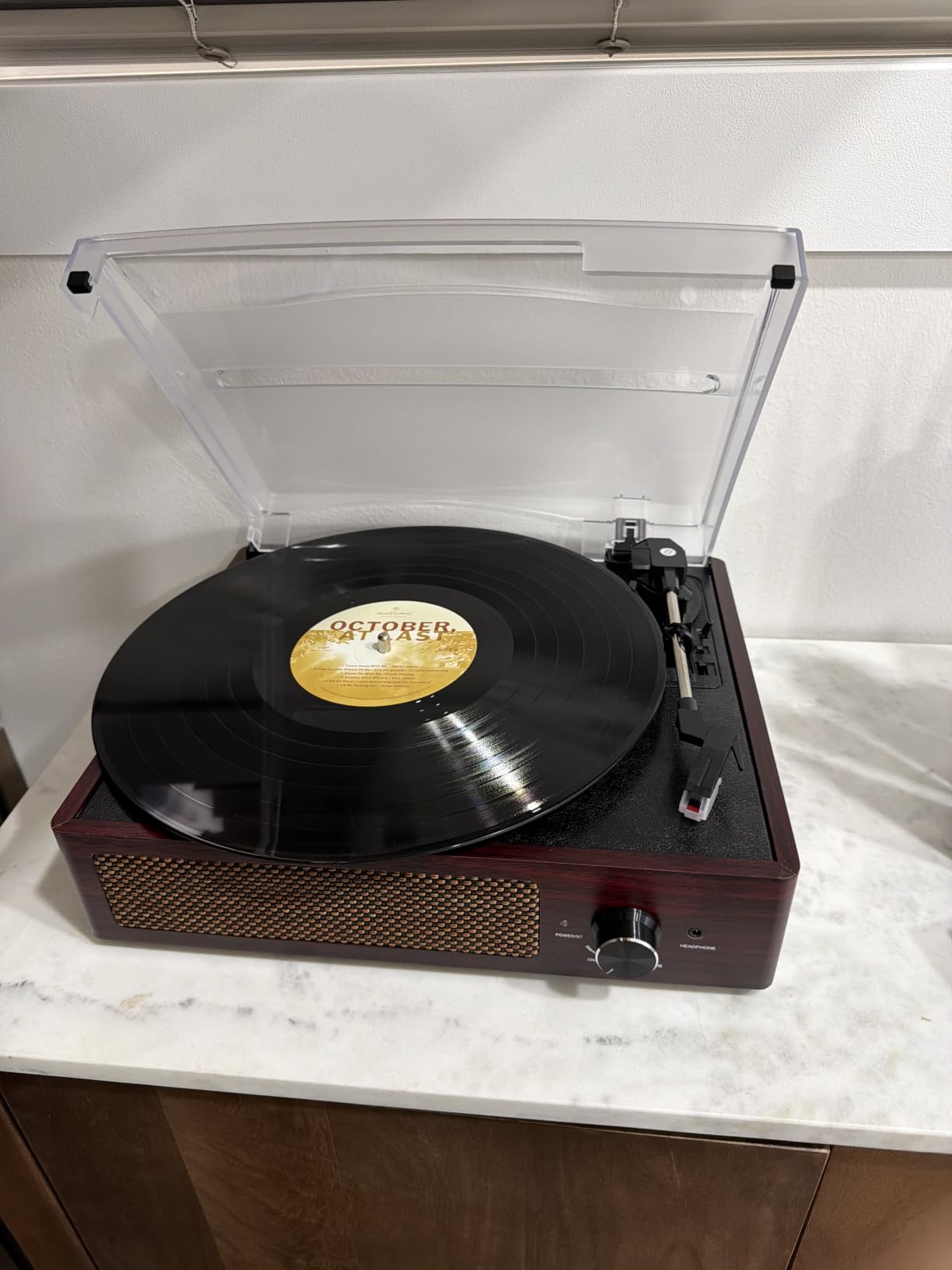
It weighs 4.8 pounds, which makes it the easiest cabinet here to carry between rooms, and the removable top cover keeps dust off the platter and your records. A 45 rpm adapter is included.
Owners treat it as a decorative budget gift or a casual first player for older records. Expectations are set low, and the recurring thread is that it is charming and functional for the money but not built for serious listening.
What it is good for
This suits anyone who wants a record player that matches a room rather than a hi-fi stack. It suits a teenager’s first player, a kitchen shelf, or anyone who wants the object in the room to look right.
The removable dust cover and the range of finishes also make it a good fit for anyone buying their first records and not yet planning what comes next.
Where it falls short
Sound is the honest limitation. The integrated speakers are basic and low-power, with a 45 db signal-to-noise ratio, so expectations should be casual listening rather than critical playback.
Construction is light and the tonearm is light with it, so tracking on damaged records is not reliable. Some models have no auto-stop, and fitting a 12 inch record needs careful tilting onto the platter.
10. FEKTIK 10-in-1 Combo System – best for old record collections
FEKTIK 10-in-1 Bluetooth Turntable with Built-in Speaker, Vinyl Record Player CD Cassette and FM Radio Combo, AUX in USB MP3 Recording Headphone Jack Compact Stereo System for Home
- Ten functions in one compact cabinet
- Vinyl to MP3 recording to USB or SD cards is rare at this level
- Three-speed belt drive with low vibration
- Remote control and 50 record inner sleeves in the box
- Mostly plastic cabinet feels less premium
- CD slot is playback only
- Small built-in speaker limits volume and bass
- Busy control panel with this many features
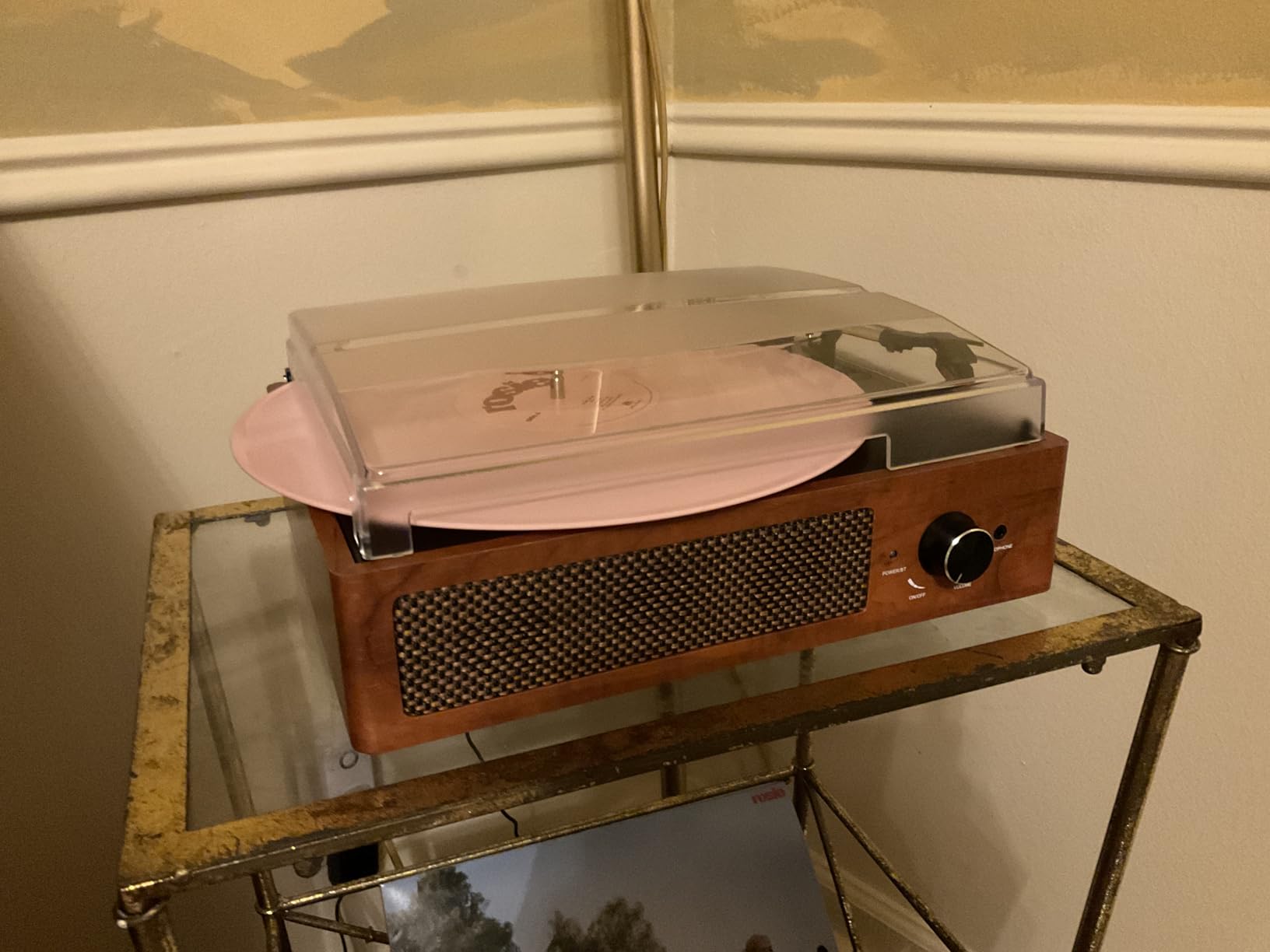
The FEKTIK is for the person who inherited a mixed-format box. One compact cabinet plays vinyl, CDs, cassettes and FM radio, streams over Bluetooth, and offers aux and headphone connections.
The feature that sets it apart is digitizing. A USB and SD card slot encodes vinyl to MP3, and a record button handles the capture, so an inherited collection can be backed up without buying a separate device.
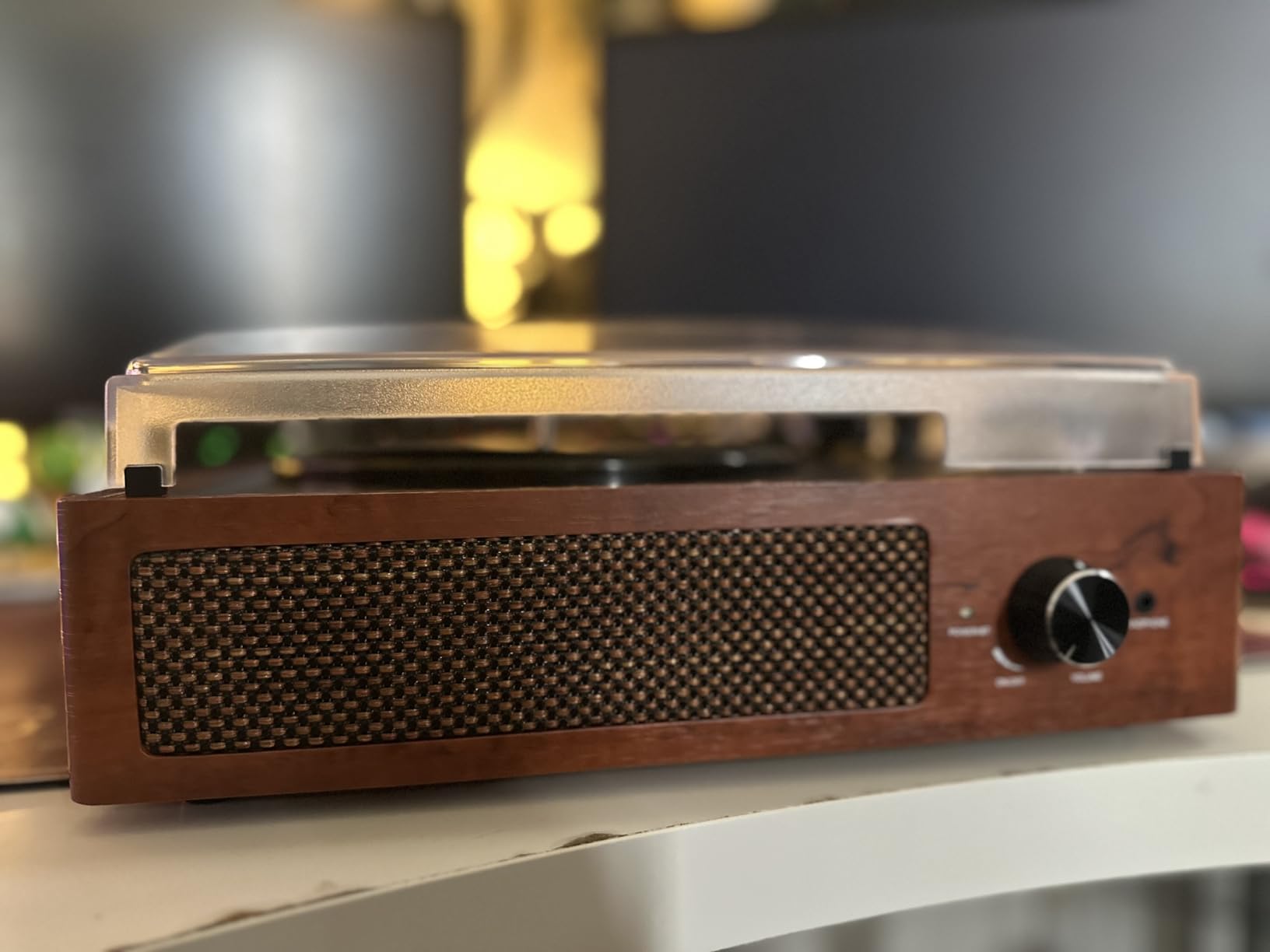
A full-function remote control is included, along with 50 record inner sleeves in the box. The belt-drive turntable runs at 33 1/3, 45 and 78 rpm, which covers the widest range of speeds on this list.
Owners value the versatility and the remote more than the audio, describing the built-in speaker as adequate for casual listening. The plastic cabinet is the other recurring note, and the control panel is busier than simpler models.
What it is good for
This suits a household with more than one format in the house, and anyone who wants a safe copy of fragile records before playing them repeatedly. The recording function is the reason to buy it rather than a simpler cabinet.
It also suits a small room where one box covering every source beats a shelf of separate components.
Where it falls short
Mostly plastic construction makes it feel cheaper than the wood-cabinet models. The small built-in speaker limits both volume and bass, so this is a convenience system rather than a listening system.
The CD slot is playback only. The feature density also makes the control panel busier than most beginners want, and a few buyers would rather have a simple two-control face.
11. Victrola Navigator 8-in-1 – best for every format
- Vinyl
- CD
- cassette
- FM radio
- USB
- aux and Bluetooth in one box
- Real wood cabinet with a furniture-like finish
- Full-function remote control included
- RCA line out and Bluetooth out for later upgrades
- Heavier and bulkier than the smaller all-in-one models
- Integrated speakers are consumer-grade
- Costs more than the entry Victrola models with fewer sources
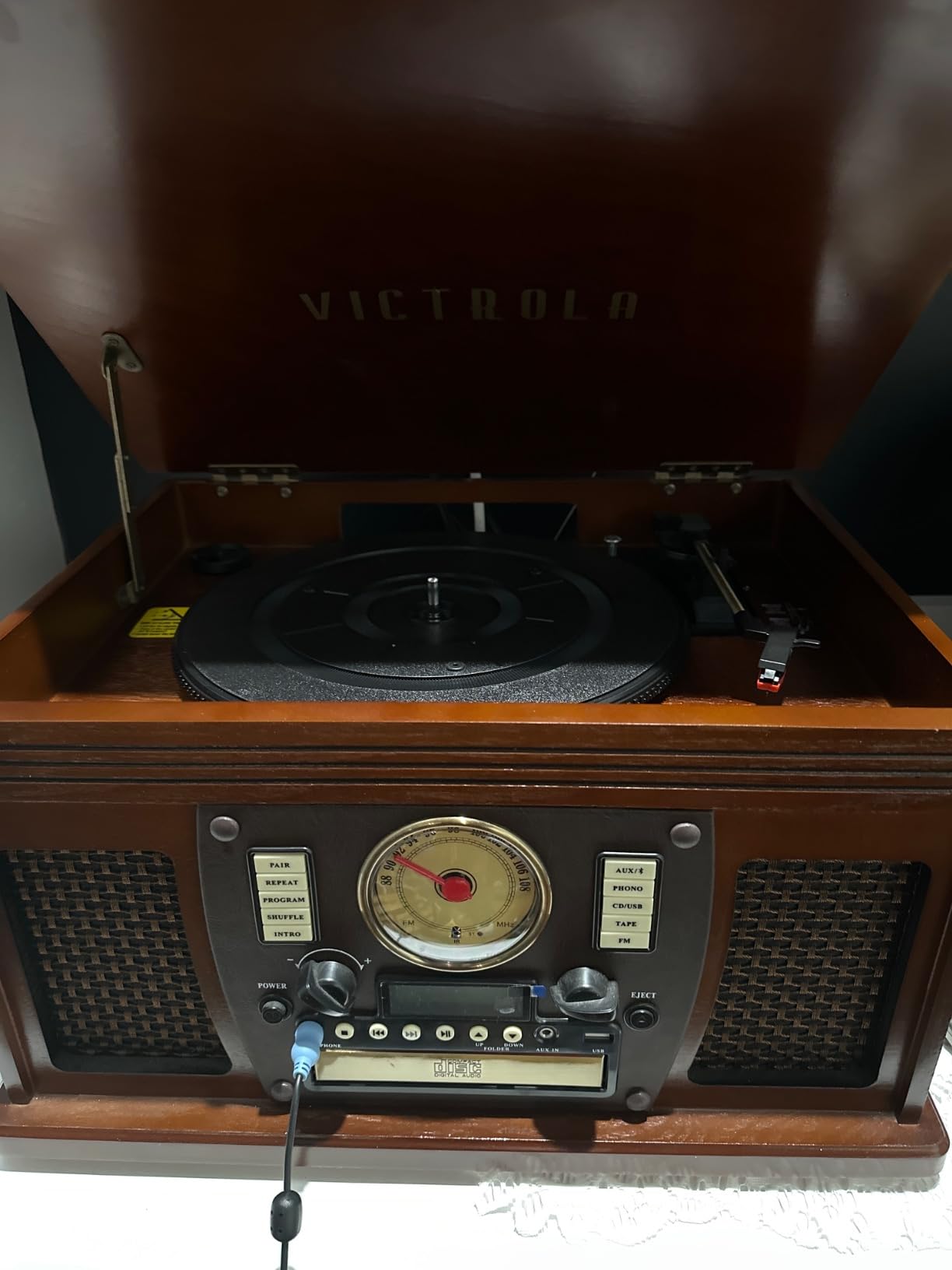
The Navigator is the Quincy’s older sibling with more inputs and a remote. It plays vinyl, CD, cassette and FM radio, streams over Bluetooth, handles aux, and reads USB, all through built-in stereo speakers in a real wood cabinet.
That makes it the pick for a household where the format list runs long. A full-function remote control covers input, transport, shuffle and repeat from across the room.
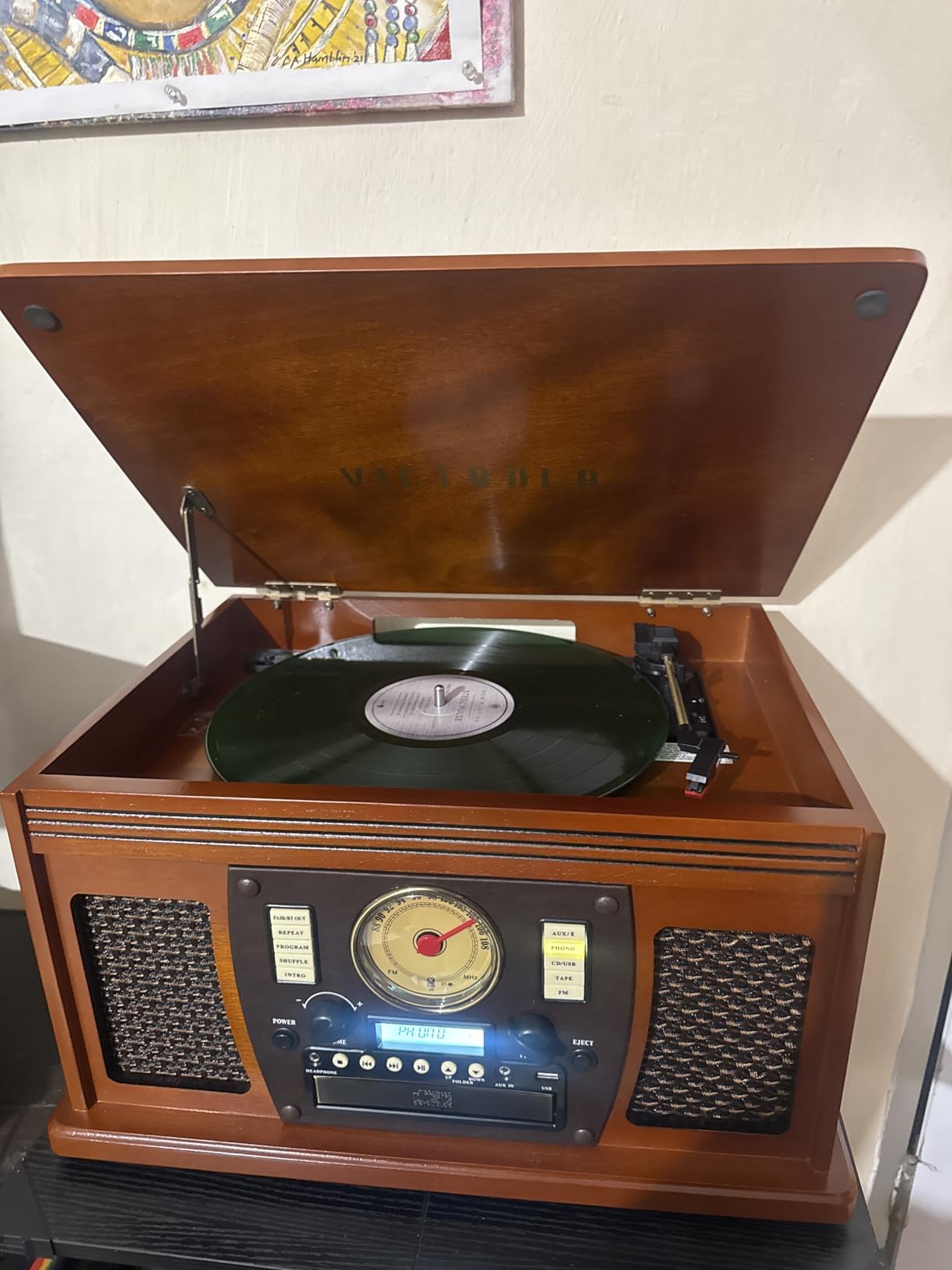
Critique centers on two things: the modest quality of the built-in speakers, and the fact that the unit is big. Owners who want more sound have two clear routes, since RCA line outputs and Bluetooth out both feed external speakers.
It weighs 16.5 pounds and measures 18.11 inches long by 13.19 inches high, so it needs a real surface rather than a shelf. The three-speed belt-driven turntable runs with low vibration, and the warranty is limited rather than a fixed term.
What it is good for
This suits someone who wants a single box as the center of a home music setup, and for anyone who still buys CDs or cassettes alongside records. The remote makes it comfortable for listeners who do not want to get up for every change.
It also suits a first-timer who will not want to research connections. Everything is on the front panel and everything works out of the box.
Where it falls short
It is heavier and bulkier than the compact all-in-one models, and the footprint is large for a turntable. Buyers in small rooms feel this first.
The integrated speakers are consumer-grade, not hi-fi, so bass seekers still end up buying external speakers. It also costs more than the entry Victrola models that cover fewer formats, so the extra inputs are the reason to pay up rather than the sound.
12. Seasonlife R608 – our budget pick
Seasonlife® Vinyl Record Player with Speakers,Wood Black Vintage Turntables
- Lowest entry cost in the roundup and it still has built-in speakers
- Sets up in under two minutes with immediate Bluetooth pairing
- Spring-mounted belt-drive base reduces vibration
- Broadest color selection of any model here
- Compact and light enough to move between rooms
- Shrill with virtually no bass from the small speaker
- Light tonearm skips repeatedly on warped records
- Sound distorts at maximum volume
- Proprietary barrel power plug
The Seasonlife is the cheapest way to start a collection on this list and the lowest-cost way to learn whether you like vinyl. Owners describe it as a stylish, fun entry point for casual listening or a teenager’s first record player, and the vintage wood-look finish looks more expensive in person.
It sets up in under two minutes, Bluetooth pairs immediately, and an auto-stop ends the record. The spring and belt-driven base absorbs shock, and a removable dust cover is in the box.
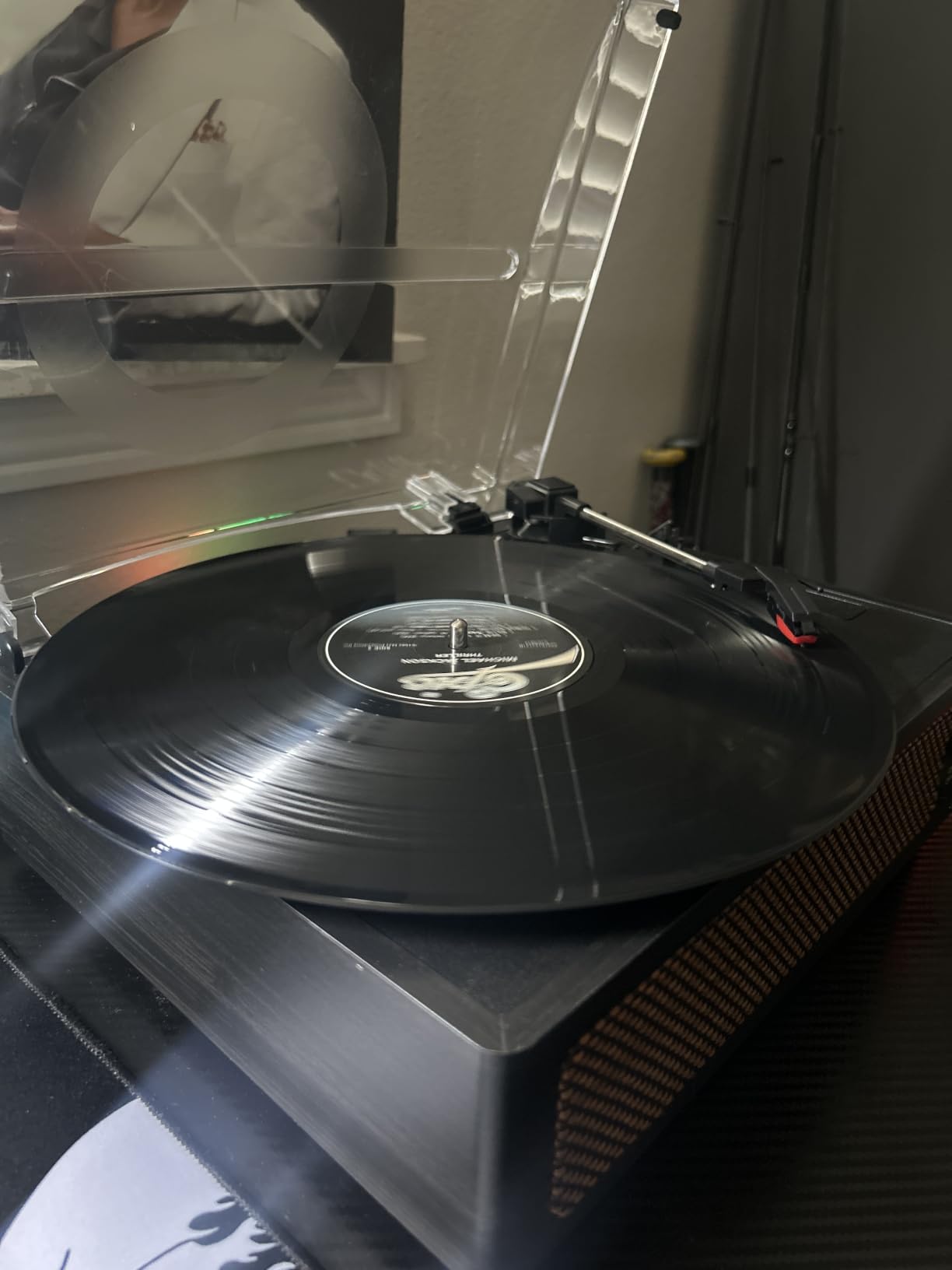
It plays 7, 10 and 12 inch records at 33 1/3, 45 and 78 rpm, and offers Bluetooth, aux in, RCA out and a headphone jack. More than 20 color options mean it can disappear into a bedroom or a study.
The dominant sentiment is that the aesthetic does as much work as the audio. The most common complaint, from otherwise happy buyers, is the thin, bass-free sound, and a few reviewers returned units for exactly that reason.
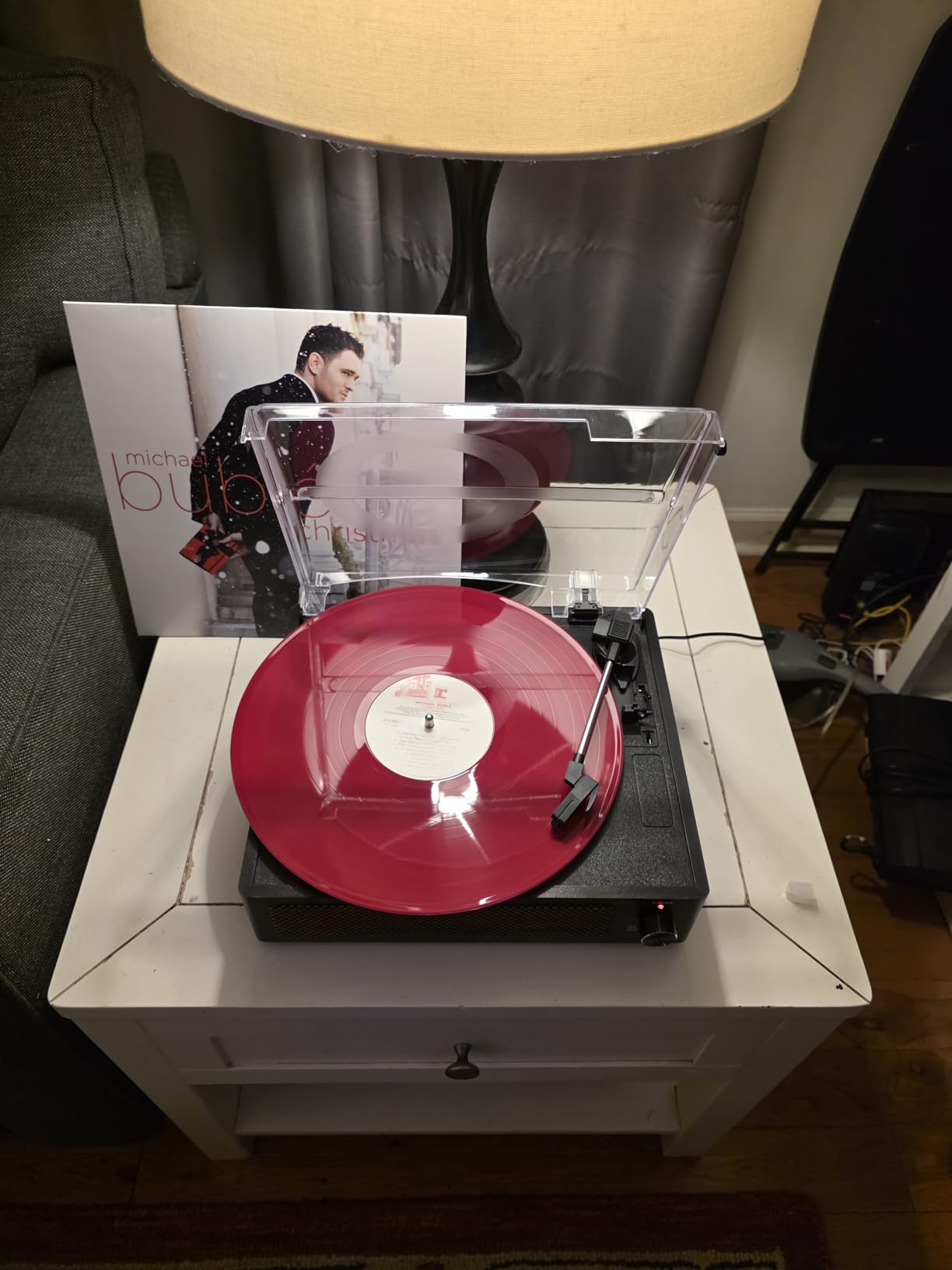
What it is good for
This suits a first record collection bought on a strict budget, or a child or teenager learning whether the format appeals. The auto-stop, dust cover and immediate Bluetooth pairing remove every setup decision from the first evening.
It also suits anyone who wants a second player in a spare room, since it is compact and light enough to move between rooms.
Where it falls short
The single small speaker is shrill with virtually no bass, and sound distorts at maximum volume. The tonearm is light and flimsy, which means it skips repeatedly on warped records, and a small platter makes vinyl wobble unless you add a mat.
It uses a proprietary barrel power plug rather than USB-C, which matters if you travel. Treat it as a gateway to a better player rather than a keeper.
Do You Need an Amplifier With a Turntable and Speakers?
Short answer: with powered speakers, no. A stereo receiver or amplifier only becomes necessary when you buy passive speakers, which have no amplifier of their own and need something to drive them.
An all-in-one record player has its own small amplifier built into the cabinet, so the speakers inside it are already powered. The same is true of bundles that ship with powered bookshelf speakers, where the amplifier lives in one speaker cabinet.
The trap is the bundle that ships with passive bookshelf speakers, like the 1byone 36-watt system above. Those speakers are impressive, and they will not play anything at all without an amplifier between them and the turntable.
Before you buy any speakers separately, check one thing: do they have volume knobs and inputs on the back? If yes, they are powered and they need nothing else. If the back panel has only bare wire terminals, they are passive and they need a receiver or amplifier.
When you outgrow a first setup, our guides to floor standing speakers and bookshelf options will help you match a bigger room later, and most beginners add the amplifier at the same time.
What to Look For in a Beginner Turntable and Speaker System
This is the checklist we use, and it is short on purpose. Each point below is the difference between a player you keep for years and one you replace in a season.
Look for an adjustable counterweight. It lets you set tracking force properly, which is the single biggest factor in how gently a turntable treats your records.
Prefer a real diamond stylus over a ceramic needle. Ceramic styli wear grooves faster and are harder to replace, and replaceable cartridges cost very little.
Skip suitcase players with light, fixed tonearms. They flutter and skip, and the tracking force is not adjustable, so it is a gamble with your vinyl.
Check whether the speakers are powered or passive. Powered speakers remove the amplifier step entirely, which is why they are the beginner default.
Look for a built-in phono preamp with RCA line output. It means the system can grow into a bigger setup without replacing the turntable.
Count the speeds and the connections. Three-speed belt drive covers 33 1/3, 45 and 78 rpm, and Bluetooth plus aux plus RCA covers almost every upgrade path.
Match the size to the room, not the price. A dorm or bedroom rewards a compact cabinet, while a living room needs the separation you get from two separate speakers.
Prefer a dust cover and auto-stop. Both matter more than they sound, because they protect the collection and stop the platter at the end of a side.
One form factor we deliberately left out is the belt-driven deck hidden under a hinged wooden lid. If that appeals more than any of the cabinets above, our guide to the best lazy susan turntables covers that style in full.
How to Set Up Your First Turntable in Five Steps
None of the systems here need more than a coffee break to get playing. The order matters more than the effort, so follow it once and you will not have to redo anything.
1. Put the deck on a level surface. A wobbling cabinet produces skips. A spirit level on the plinth is worth the ten seconds it takes.
2. Fit the belt and platter if they are packed separately. Most budget turntables ship with the belt and iron platter in the box rather than already mounted.
3. Balance the tonearm. Support the arm, let the counterweight drop to the end of its thread, then turn it until the arm floats level. Only models with an adjustable counterweight need this.
4. Set the tracking force and anti-skate. Start at the cartridge maker’s stated force and match the anti-skate to it. The ANGELS HORN and the 1byone systems are two of the three bundles here where this matters.
5. Set the speed, cue the stylus and start playing. Check the speed selector for 33 or 45, lift the arm, move it over the first groove by hand and lower it gently. Never let the stylus drop.
Clean your records with a carbon fiber brush before each side, and keep the dust cover closed while a record plays. A quick habit now protects the collection you are about to build.
Frequently Asked Questions
What is the best turntable and speaker combo for a beginner?
The Victrola Quincy 6-in-1 is the easiest first system because the turntable, amplifier and stereo speakers live in one cabinet, so there is nothing to buy separately. If you want noticeably better sound, the SeeYing bundle pairs a belt-drive turntable with a moving magnet cartridge, an iron platter and two 18 watt bookshelf speakers.
What is the best turntable for a first-time user?
For a first-time user who wants music playing within minutes, a single-cabinet all-in-one such as the Victrola Quincy or the 1byone High Fidelity belt-drive system removes every setup decision. The counterweight on the 1byone is the one task that takes patience, but it also protects your records better than a light fixed tonearm.
Are turntables with built-in speakers good?
Built-in speakers are good for a first system and for small rooms, because they need no amplifier and no extra cables. They are not good for critical listening: two small drivers in a cabinet cannot produce the bass or the separation of a pair of bookshelf speakers. Check for RCA line output so you can upgrade speakers later without replacing the turntable.
Do I need an amplifier or receiver with a turntable and speakers?
Only if the speakers are passive. Powered bookshelf speakers have their own amplifier inside and work directly from the turntable’s RCA line output, and all-in-one players have a built-in amplifier for their internal speakers. If the back of the speakers shows bare wire terminals and no volume knob, they are passive and need a receiver or amplifier.
What is the best entry-level turntable with speakers?
Among the entry-level options, the Mersoco suitcase player scores well for giftability and setup speed, and the Seasonlife is the lowest-cost way to test whether you like vinyl. Both have lightweight tonearms and thin built-in speakers, so keep records in good condition and plan to upgrade to a real turntable with a counterweight once the collection grows.
Where to Start
If you want one box and no decisions, the Victrola Quincy is where we would start. It covers every format a beginner is likely to own, it has RCA line outputs so you are not trapped, and owners rate it 4.5 stars across more than 26,000 reviews.
If you would rather hear real speakers from day one, the SeeYing bundle is the better sound for the same effort. If your space is a dorm or a bedroom, the Retrolife is the compact answer.
Whatever you choose, pick a system with a replaceable stylus and a line output, and it will still be useful in 2026 when you move up to your own amplifier and speakers.