
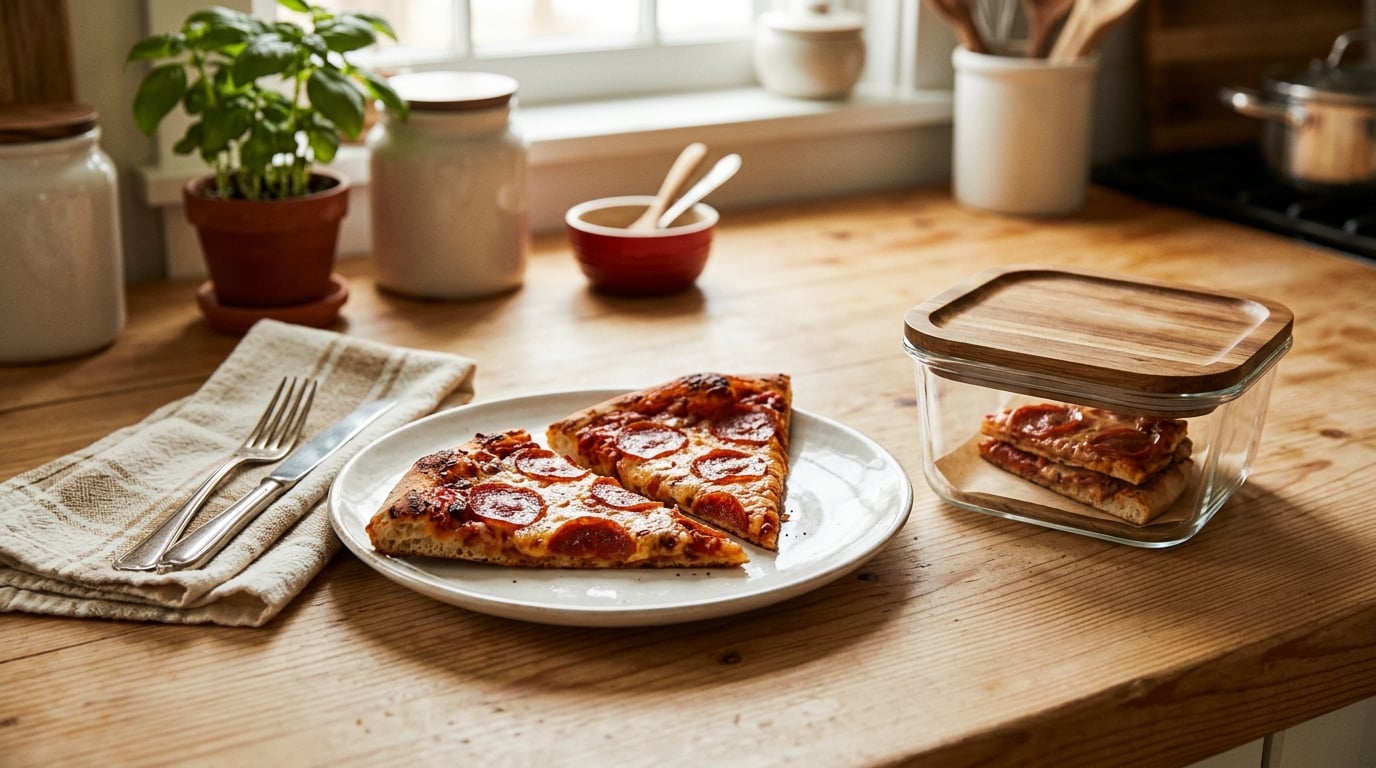
If you want to know how to store leftover pizza properly, the short version is: let the slices cool for about 20 minutes, lay them in a single layer on parchment or wax paper, seal them in an airtight container or freezer bag, and get them into the fridge within two hours of taking them out of the oven. Refrigerated pizza keeps 3 to 4 days. Frozen pizza stays safe indefinitely, and it tastes best within two to three months.
That is genuinely all there is to it. The reason it matters is that the two things that ruin leftover pizza are bacteria and texture, and both are easy to prevent. Food safety comes down to the USDA two-hour rule, and texture comes down to keeping air out.
I have a house full of hungry people, so most weeks there is a box of takeout on the counter. When the box goes into the fridge intact, the crust dries out and the whole fridge smells like garlic for days. Moving the slices into a container first takes about a minute and fixes both problems.
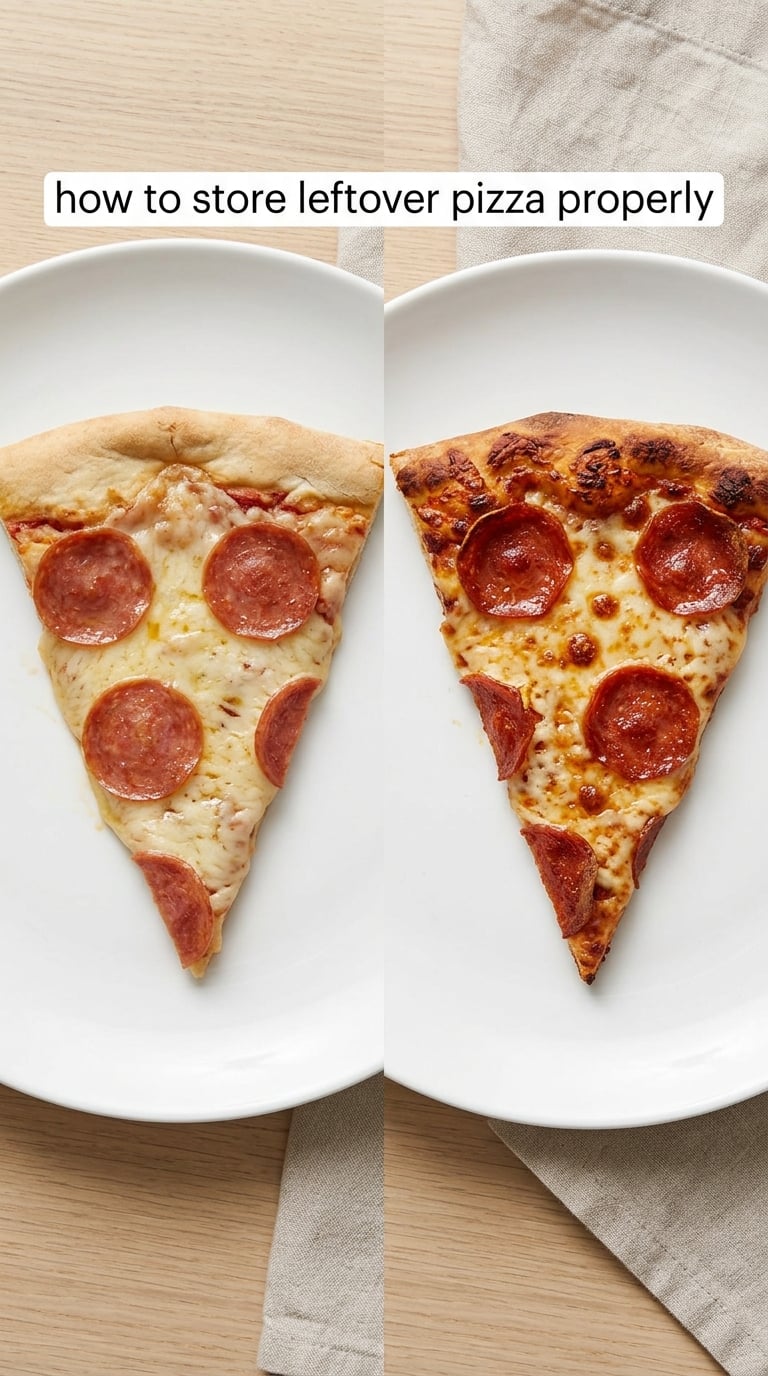
Table of Contents
How Long Does Leftover Pizza Stay Good?
Refrigerated leftover pizza keeps for 3 to 4 days, according to food safety experts cited across the major food sites. Frozen leftover pizza is safe indefinitely as long as it stays frozen, with the best quality in the first 2 to 3 months.
| Storage method | How long it stays safe | Best quality window | Texture you get back |
|---|---|---|---|
| Counter, uncovered | 2 hours at room temperature | Not recommended past 2 hours | Crisp but a bacterial risk |
| Refrigerator (40°F or below) | 3 to 4 days | Days 1 to 3 | Soft crust, needs a reheat to crisp up |
| Freezer (0°F) | Indefinitely while frozen | 2 to 3 months | Firm when frozen, crisp after a skillet reheat |
The two-hour rule is the one to actually memorize. Perishable food, which includes pizza topped with meat, seafood, or eggs, should not sit out longer than two hours at room temperature, or one hour if the room is above 90°F. After that window, bacteria multiply fast. The USDA calls 40°F to 140°F the danger zone, and refrigerators must stay at 40°F or below to keep food safely out of it.
A plain cheese pizza is lower risk than a supreme one, because the cooked pepperoni and sausage have already salted and dried it. Still, refrigerate it. If you want to try the counter habit some families keep, eat it cold within a few hours and do not put it back.
How to Store Leftover Pizza Properly
Flat, sealed, and cool. Those three words are the whole method, and the numbered steps below are just the detail.
- Rest the pizza for 15 to 20 minutes after it comes out of the oven. You are not trying to cool it to room temperature, only to stop the cheese from melting into a puddle when it hits the container.
- Move the slices with a spatula or tongs, not your hands, so the cheese layer stays intact.
- Lay each slice on its own square of parchment paper or wax paper, cheese side up, in a single layer.
- Stack the parchment-lined slices, or fold the paper up around them so the cheese never touches another slice.
- Slide the stack into an airtight container with a locking lid, or into a large zip-top freezer bag with as much air pressed out as you can.
- Label the container with the date using a piece of masking tape and a Sharpie, especially in a shared or office fridge.
- Refrigerate within two hours of the pizza being finished.
Why a single layer matters: pizza releases steam as it cools, and trapped steam turns to condensation inside the box. That water sits on the underside of the crust and makes it soft. Separators and a sealed lid slow the moisture cycle down.
How to Store Leftover Pizza Properly Without a Container
No container? Wrap the slices individually in aluminum foil, press the foil tight so no air pockets remain, then put the foil packets in a large freezer bag or a loose layer on a plate. Foil is the only household wrap that blocks both air and moisture, which is why it beats cling film for fridge storage. Cling film works in a pinch, but it clings to the cheese and peels the top layer off when you try to remove it.
For a whole pie rather than slices, slide the pizza onto a flat sheet pan, cover it tightly with foil, and refrigerate the pan flat on a lower shelf. Never store a whole pie standing on its edge in the original box. The exposed cheese dries out, the crust sags, and grease soaks through the cardboard and onto whatever is next to it in the fridge.
Fridge vs. Freezer: Which Storage Method Is Best?
Refrigerate pizza you will eat within three or four days. Freeze it if it needs to last longer than that, or if you bought too many pies on a deal and want to stretch them across the month.
| Factor | Refrigerator | Freezer |
|---|---|---|
| Best for | Next-day lunches, 2 to 4 slices | Whole pies and bulk buys |
| Maximum time | 3 to 4 days | Safe indefinitely, best in 2 to 3 months |
| Packaging | Airtight container or bag, parchment between slices | Double-wrapped foil or freezer bag, parchment between slices |
| Moisture effect | Condensation softens the crust within hours | Ice crystals dry the crust without a proper seal |
| Result after storage | Soft but flavorful, reheats well | Firm, reheats to a crisp crust |
| Wet toppings | Fresh tomato and spinach release the most water | Freeze these the same day, not after 2 days in the fridge |
Different styles behave differently. Thin crust dries out fastest in the fridge because there is less crumb to hold moisture. Thick and deep dish hold up better cold but take longer to reheat. Very wet pizzas, fresh tomato, white pizza with ricotta, or anything topped with cooked mushrooms, leak liquid into the container, so set them on a double layer of paper towel and store them in something you do not mind staining.
How to Freeze Pizza for the Best Results
Freezing works, and the difference between good frozen pizza and bad frozen pizza is almost always air. Air gets in, ice forms, and the crust comes out tasting like cardboard.
Freezing Leftover Pizza Step by Step
- Cool the pizza on a rack for 20 minutes so it is warm, not steaming.
- Decide your portions. Freezing a whole pie means thawing the whole pie, so individual slices freeze and thaw faster for most people.
- Place the slices on a baking sheet lined with parchment paper, leaving a gap between each one.
- Put the sheet in the freezer for 20 to 30 minutes until the slices are firm enough to handle.
- Stack the frozen slices with a sheet of parchment between each layer.
- Wrap the stack in foil, then slip it into a freezer bag, or double-bag it and press out the air.
- Label the bag with the date and the number of slices inside.
- Freeze. Keep it at 0°F and never thaw it on the counter.
That flash-freeze step is the one people skip. It sets the moisture into ice crystals quickly instead of letting the slices slowly lose water on the counter, and it stops them fusing into one solid block.
| Freezer option | Best portion size | Best for | Watch out for |
|---|---|---|---|
| Double-wrapped aluminum foil | 1 to 2 slices | Whole pies and thick slices | Tear the foil carefully when opening |
| Zip-top freezer bag | 2 to 4 slices | Flat stack, easy to count | Press out the air before sealing |
| Vacuum-sealed bag | Any size | Best quality results | Needs a vacuum sealer |
| Airtight glass container | 4 to 6 slices | Freezer to oven without unpacking | Takes the most shelf space |
| Dedicated pizza slice container | 1 to 2 slices | Lunchboxes and repeated use | Check it fits a freezer bag if freezing |
To thaw, move the frozen slices from the freezer to the refrigerator and let them sit 4 to 6 hours, or overnight on a sheet pan. Thawing in the fridge keeps the food safely cold the whole time. If you need one fast, a microwave on defrost for a few minutes works in a pinch, then reheat immediately.
How to Reheat Leftover Pizza So the Crust Stays Crispy
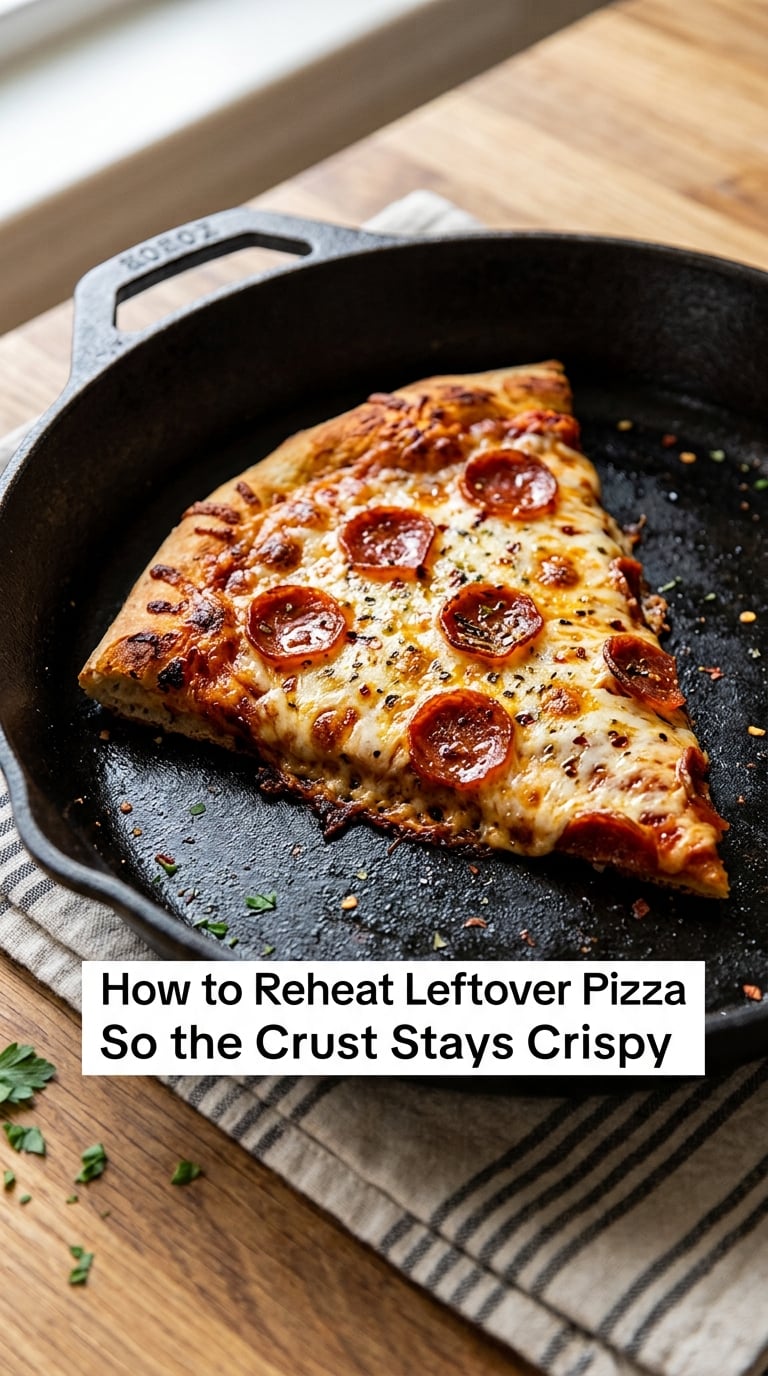
A skillet gives you the crispest crust. Heat a nonstick or cast iron skillet on medium-high for two minutes, add the slice, and cover it. Cook for 4 to 6 minutes, until the underside is browned and the cheese is bubbling. A few drops of water under the lid steam the toppings while the pan crisps the bottom.
The oven is the next best option. Put the pizza directly on the oven rack or a preheated sheet pan at 425°F for 8 to 10 minutes. If you want a softer, more focaccia-style crust, use 350°F for about 6 minutes. A toaster oven takes 350°F for 5 to 6 minutes and preheats in a fraction of the time.
An air fryer needs 350°F for 4 minutes on a single slice. Multiple slices need to go in a single layer, so they may take two rounds.
The microwave is last, and only for a slice you want soft on purpose. Thirty to 45 seconds on a paper plate, covered with a paper towel. The crust will be soft and the toppings unevenly hot, so let it stand a minute before eating. The towel catches steam and keeps the toppings from going rubbery.
Whichever method you pick, heat the food all the way through to 165°F before eating. That is the internal temperature USDA recommends for reheating leftovers, and it matters most for slices with meat or seafood toppings. Because pizza is already fully cooked, these are reheating guidelines only, not cooking temperatures for raw dough or underdone toppings.
A good skillet makes a small batch worth reheating properly, especially after a night of takeout. If you are planning a pizza night from scratch, start with one of these leftover hamburger recipes the next day instead, and keep the pie for later in the week.
What Containers and Materials Work Best?
An airtight container wins on fridge storage. Anything with a locking lid, or a zip-top freezer bag with the air pressed out, keeps the crust from drying and the toppings from picking up refrigerator smells.
| Container or material | Best use | Advantages | Drawbacks |
|---|---|---|---|
| Airtight plastic container | Fridge, 3 to 4 days | Cheap, stacks well, locking lid | Can stain with oil and tomato |
| Glass container with lid | Fridge or freezer | Goes freezer to oven, no staining, no odors | Heavier, takes more shelf space |
| Zip-top freezer bag | Fridge or freezer | Fits flat stacks, cheap, easy to count slices | Cheese can stick to the plastic |
| Aluminum foil wrap | Fridge or freezer | Blocks air and moisture completely | Not reusable, easy to tear |
| Parchment or wax paper | Separator layer only | Stops slices sticking, easy to line a box | Not airtight on its own |
| Dedicated pizza slice container | Lunchboxes, commuting | Built for a slice, vents well | Usually holds only 1 to 2 slices |
On avoiding melted cheese on the container wall: line the bottom with parchment paper or a paper towel first, and keep slices cheese side up. If you are freezing, go straight from the freezer into a 425°F oven and put the paper on top of the slice instead of under it. The pizza then reheats from the bottom up without sticking, and the melted cheese has somewhere to go that is not the glass.
A pizza box is fine for transporting a pie home and bad for anything else. Its corners never seal, it lets in air and odors, and a grease-soaked box is not a clean surface to store other food in afterward. If you have a stack of clean boxes and want to freeze a whole pie, line one with two layers of foil, put the pie on a sheet pan inside, cover it, and get it flat into the freezer before the box can absorb any grease.
Set containers on the lowest fridge shelf. That keeps them below the raw meat drippings nobody wants on a pizza, and it keeps the pizza out of the way when you reach for the milk.
Common Mistakes When Storing Leftover Pizza
- Storing it hot. Sealing a steaming pie traps condensation, which soaks the crust. Rest it 15 to 20 minutes first.
- Leaving it uncovered. An open box or a bare plate lets moisture out and odors in. The crust turns to cardboard by morning.
- Stacking without separators. Cheese fuses to the slice above it and the toppings come off with the paper. Parchment between every layer, always.
- Putting the box in the fridge. It does not seal, it blocks a useful shelf, and grease soaks through to whatever is next to it.
- Leaving pizza out overnight. Past two hours at room temperature, perishable toppings are in the danger zone. This is the mistake worth fixing first.
- Thawing on the counter. Frozen pizza moves into the danger zone while it defrosts. Thaw in the refrigerator, 4 to 6 hours.
- Assuming every style lasts the same. Thin crust dries out faster, and fresh tomato or ricotta pizzas leak water that turns the container into soup. Those get a paper towel layer and a shorter window.
- Over-reheating a frozen slice. Ten extra minutes in a hot oven dries the cheese and hardens the crust. Reheat from fridge-cold or thawed, and watch it.
Frequently Asked Questions
Should I let leftover pizza cool before storing it?
Yes, rest it 15 to 20 minutes so the cheese stops melting. You do not need it to reach room temperature. Sealing a steaming-hot pizza traps condensation that soaks the underside of the crust, and the slice turns soft within hours. Once the cheese is set rather than glossy and running, move the slices into their container and refrigerate within two hours of the pizza being finished.
Can I store leftover pizza in the original cardboard box?
You can refrigerate it briefly, but I would not. A pizza box does not seal, so air and refrigerator odors get in while moisture gets out, and the crust dries. Grease also soaks through the cardboard and can contaminate food stored nearby. Move the slices to an airtight container or a bag for anything longer than a few hours, and keep the box for transporting the pie home.
Is parchment paper safe for storing pizza in the fridge?
Yes, and it is the single most useful thing you can put between slices. Parchment or wax paper keeps the cheese from fusing to the slice above it and stops the crust sticking to the container. It is not airtight on its own, so always place the lined slices inside a sealed container or bag. Ordinary baking parchment is oven-safe, but wax paper is not, so keep wax paper out of any method that goes under the broiler or straight into a hot oven.
How long does frozen pizza stay fresh?
Frozen leftover pizza is safe indefinitely as long as it stays frozen, with 0°F or below. For taste and texture, eat it within two to three months, and it usually still reheats well at four to six months if it was wrapped tightly. Quality fades because ice crystals draw moisture out of the crust, so double wrapping matters more than the date on the bag.
Can I refreeze leftover pizza after thawing it?
You can, but only if the pizza never sat in the danger zone, meaning 40°F to 140°F, for more than two hours. Thaw in the refrigerator rather than on the counter, then refreeze immediately. Refrozen pizza loses more moisture each time, so expect a softer crust. If you know you will not eat the thawed pizza within a day, it is better to skip the thaw and cook it straight from the freezer.
What is the best way to reheat a slice without making it soggy?
Use a skillet. Heat it on medium-high for two minutes, add the slice, cover it, and cook 4 to 6 minutes until the underside is browned and the cheese is bubbling. The pan crisps the crust while the trapped steam re-melts the toppings. An oven at 425°F for 8 to 10 minutes is the next best option. Skip the microwave except when you want a deliberately soft crust.
Conclusion
Start with the slices, not the box. Let the pizza rest 15 to 20 minutes, move each piece onto its own square of parchment, stack them in an airtight container, and refrigerate within two hours. That single change fixes the dried-out crust, the soggy bottom, and the fridge that smells like garlic for three days.
Once you know how to store leftover pizza properly, the fridge becomes a real option for tomorrow’s lunch instead of a gamble, and the freezer turns a sale into six weeks of dinners. Keep the two-hour rule for anything with meat or seafood toppings, and skip the counter overnight no matter how good the pizza was. If you have other leftovers to use up this week, start with these leftover mashed potato recipes or these leftover pork tenderloin recipes.