
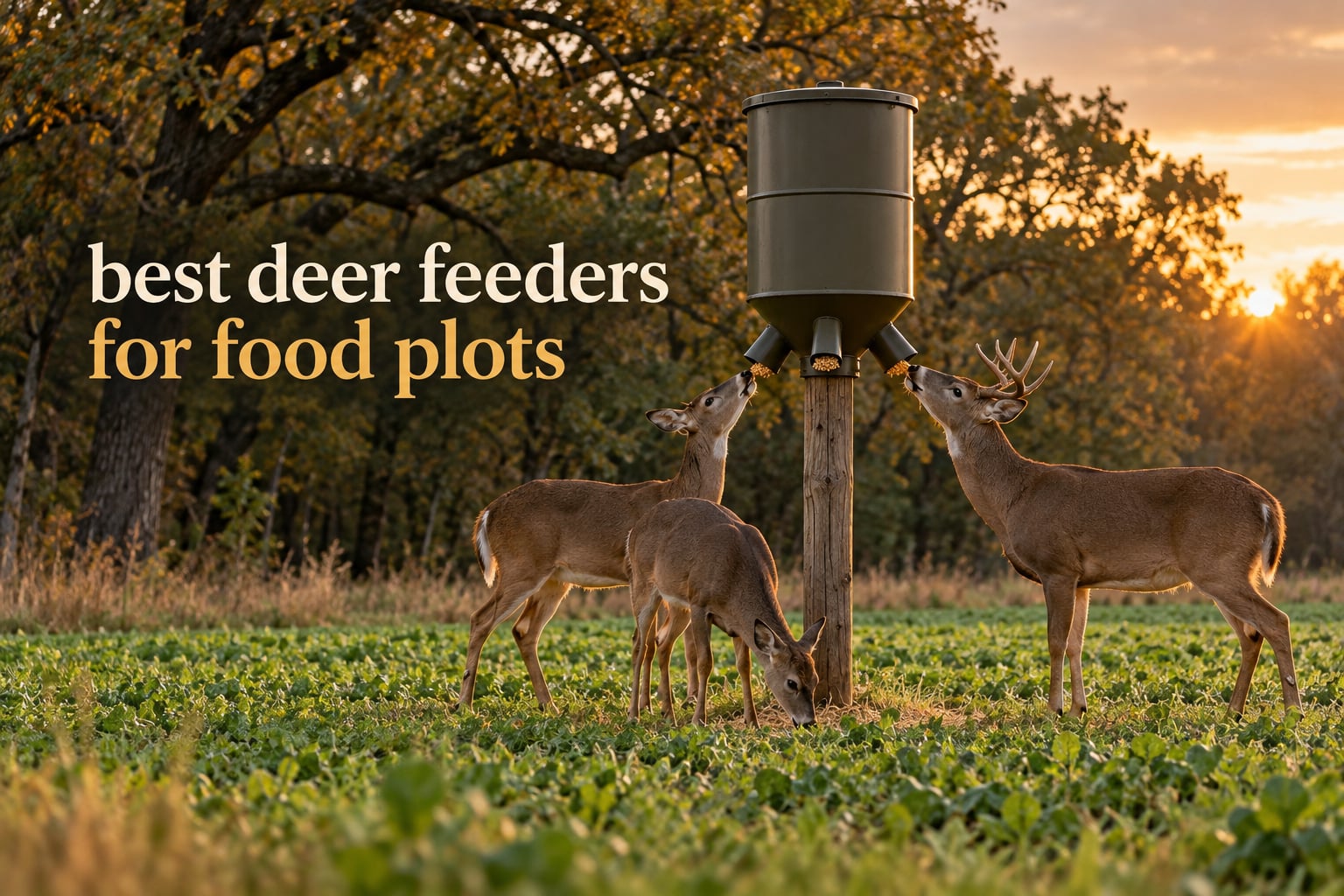
If you run food plots, the best deer feeders for food plots in 2026 are the ones that keep feed dry, keep raccoons off it, and hold enough that you are not driving to the woods three times a week. A deer feeder for food plots is a hopper that supplements what deer already browse on your forage, dispensing corn, protein pellets or mineral at one predictable spot so you can pattern the herd and watch it on a trail camera.
The interesting part is not the hopper. It is the siting. A feeder dropped into the middle of a plot teaches deer to stand in your best forage instead of working across it, and a feeder sited badly will draw every raccoon on the property. Our team walked plots, read several thousand buyer reviews across ten units, and focused on how each one behaves in wet ground and cold weather.
Below you will find ten feeders we would consider for real food plot use, from an 80 lb T-post unit to a 300 lb post-mounted bin. Every pick lists its capacity, how it dispenses, what it takes to keep it working, and where it fits in a plot layout. For most established food plots under 50 acres, the Banks Outdoors Feedbank 300 lb is our overall pick.
Table of Contents
Top 3 Picks for Deer Feeders on Food Plots

Banks Outdoors Feedbank 300 lb
- 300 lb capacity
- 42 inch feed ports
- Mounts on one 4x4 post
- Watertight overlapping lid
Moultrie Quick-Lock Gravity Kit
- Turns any barrel into a gravity feeder
- Locking ring and hose clamp included
- Adjustable flow for corn or pellets

Boss Buck Gravity Feeder 200 lb
- 200 lb capacity
- Three-way flow control
- 75 inch tripod legs
- Weatherproof barrel
Quick Comparison: Best Deer Feeders for Food Plots in 2026
All ten feeders handle corn, and most handle protein pellets too. The differences that matter on a food plot are capacity per refill, how the feed leaves the hopper, and whether anything with sharp teeth can reach it.
| Product | Specifications | Action |
|---|---|---|
| Banks Outdoors Feedbank 300 lb |
|
Check Latest Price |
| Boss Buck Gravity Feeder 200 lb |
|
Check Latest Price |
 Wildgame Innovations Quick-Set 270 lb Wildgame Innovations Quick-Set 270 lb |
|
Check Latest Price |
| Moultrie Quick-Lock Gravity Feeder Kit |
|
Check Latest Price |
 Highwild 12V Digital Deer Feeder Kit Highwild 12V Digital Deer Feeder Kit |
|
Check Latest Price |
 American Hunter 30-Gallon Hopper American Hunter 30-Gallon Hopper |
|
Check Latest Price |
 Wildgame Innovations Treehugger 100 lb Wildgame Innovations Treehugger 100 lb |
|
Check Latest Price |
 Moultrie Feed Bin 6 Gallon Moultrie Feed Bin 6 Gallon |
|
Check Latest Price |
 Moultrie All-in-One II Bluetooth Kit Moultrie All-in-One II Bluetooth Kit |
|
Check Latest Price |
 On Time T-Post Feeder 80 lb On Time T-Post Feeder 80 lb |
|
Check Latest Price |
What Is a Deer Feeder for Food Plots?
A deer feeder for food plots is a hopper that supplements what deer already browse on your forage plots. Feed either falls out by gravity or is metered out by a 12-volt motor on a programmable timer, sometimes with a solar panel. A spinning metal plate throws the feed in a 20 to 30 foot arc so it lands spread out rather than in one pile, and some designs drop it into troughs at fixed points instead.
The point of running one beside a food plot is concentration, not volume. Deer that eat supplemental feed in one known spot are easier to inventory on a camera, easier to hold on your land through the season, and easier to shoot at a place you chose rather than a place you hoped to bump one.
Where to Place a Feeder Relative to Your Food Plot
This is the part most roundups skip, and it matters more than the brand on the barrel. Ten rules we use when we sited feeders on working plots:
Set it 20 to 30 yards off the plot edge. Close enough that deer transitioning between forage and feed use both, far enough that they are not standing in the crop.
Keep it out of the plot center. Deer that fill up on corn lose interest in the brassicas and forbs you planted to draw them in September.
Think about the prevailing wind. Broadcast feeders throw feed downwind. In an open field beside a plot, that can push feed off the edge and waste it.
Point the camera arc at the feeder. A camera 15 to 20 feet off the feed ports gives you clean face shots and buck to doe ratios.
Use the tree line, not the middle of the field. Timber and brush give deer a fast route to the feeder and give you a place to sit without being skylighted.
Never sit it directly over seed. Spilled corn and hoof damage take out seedlings faster than deer browse.
Avoid low spots that hold water. A feeder that floods every spring is a mold problem you will pay for in spoiled feed.
Keep feeders off the plot access road. You do not want the herd standing in the open where passing vehicles spook them.
Spread feeders rather than stacking them. Two feeders 100 yards apart do more than two feeders 20 yards apart, because deer move between them instead of fighting over one port.
Leave a route to safety. If a feeder sits in a hole or a ditch, deer hesitate in daylight and you lose your morning window.
If you enjoy watching feeders work, our guide to the 10 best squirrel proof bird feeders covers the same varmint problem from a much smaller scale, and the mechanics of a spinning plate are identical.
Gravity vs Automatic: Which One Works on a Food Plot?
Gravity feeders have no moving parts, no battery and nothing to program. Feed drops as fast as deer eat it. Automatic feeders run a 12-volt motor on a digital timer and spin a plate to broadcast feed across a set radius, which keeps deer moving through an area instead of standing in one spot.
For a food plot, that broadcast is the real difference. A timed broadcast spreads feed across 20 to 30 feet of ground, so more deer eat the same pound and you get photos of the herd instead of two animals and a pile. Gravity feeders concentrate everything into ports, which is quieter and cheaper but builds a tighter, more predictable pattern.
There is a hunting-quality tradeoff. Deer that establish a gravity feeder quickly shift to feeding at night, one hunter in North Carolina reported after switching from a timer to gravity. If you bow hunt in the morning, that habit change matters more than any spec sheet.
Hunters on r/Hunting are blunt about the electric side. Several users said they stopped running electric feeders entirely and moved to large gravity models with big capacity, because nothing breaks and nothing eats a battery. That is a reasonable read of the failure reports we saw on timer boxes sitting in the dirt.
1. Banks Outdoors Feedbank 300 lb, Best Overall for Food Plots
- Highest satisfaction in the group across multi-year owner reports
- Watertight overlapping lid with drains in each feed port
- Single post mount leaves the tree trunk free
- Adjustable ports plus a varmint baffle make it effectively critter proof
- Feed ports at 42 inches suit mature deer
- Requires an 8 foot 4x4 treated post that is not included
- Heaviest unit here at 48 lb so filling takes two people
- Several seasons of UV can admit a little water at the bin joint
This is the feeder we end up recommending most often, and the reason is unglamorous. It holds 300 lb, the largest working volume in this group, and owners describe multi-year service with the barrel still looking new. It is also the highest rated unit we reviewed, at 4.7 stars across 420 ratings.
Feed stays dry because of the overlapping lid and the drain points built into each feed port. On a plot that gets rained on twice a week, keeping water out of the barrel matters more than any flow adjustment you will make in August.
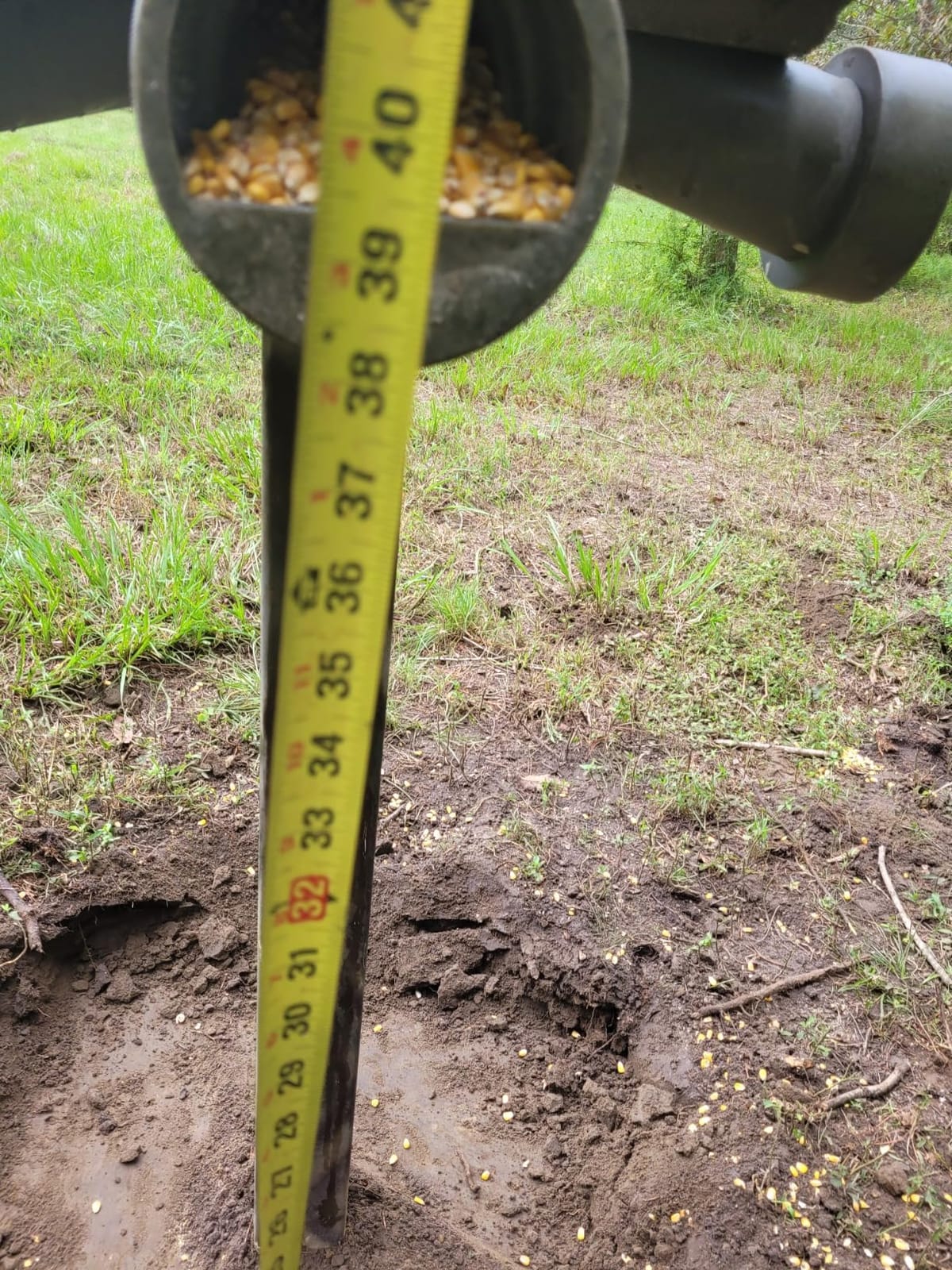
The mount is a single treated 4×4 driven 3 feet into the ground, and that post is not included. Plan for the install the way you would plan for a fence corner: one trip with a driver and a bag of concrete. In exchange, the post-mounted layout leaves the tree trunk clear, which matters if you hang the feeder near a mature oak or a rub tree.
Owners also credit the feed port height. At 42 inches, mature deer hit the ports comfortably, and the ports can be lowered for smaller deer. Pair the post with a Banks sleeve or a 24-inch varmint baffle and owners report it becomes effectively critter proof in areas with coon pressure.
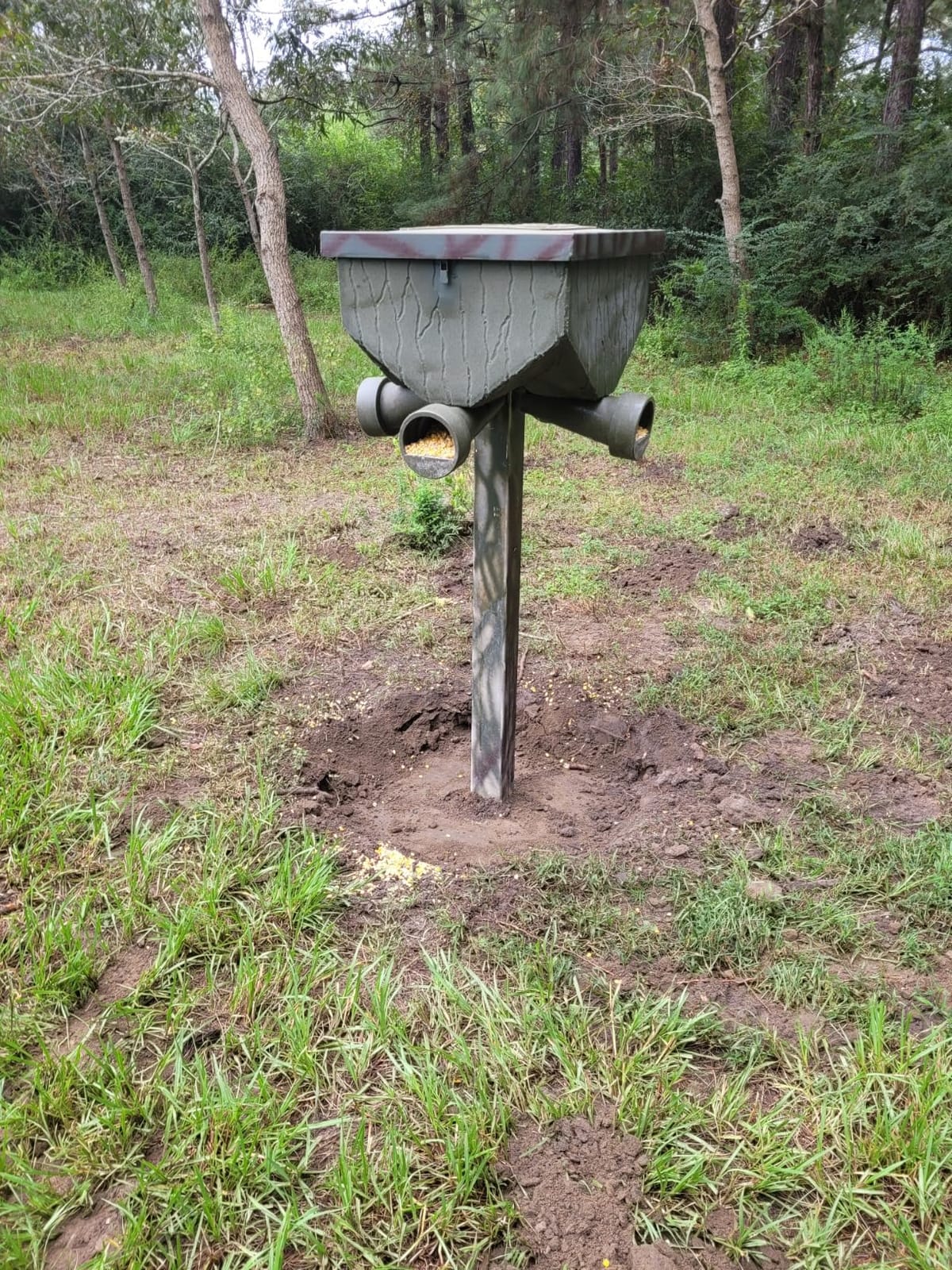
How this feeder handles a working food plot
At 300 lb, one fill covers a long stretch of the season, which is the difference between one drive a week and three. On a plot with heavy deer density, that capacity is the feature you will actually feel every Saturday morning.
Because it is gravity fed, deer learn the pattern fast and hold close to the ports. Plan your camera accordingly, and expect those deer to become night feeders within a couple of weeks of establishing it.
Where it falls short
At 48 lb empty, this is a two-person fill or a ladder job, and it is not a unit you carry between candidate plot edges the night before a scouting trip. If you have several small plots and are still deciding where feeders go, start smaller and add one of these later.
The other real caveat is UV exposure. Owners with several seasons on the barrel report a slow water ingress at the bin to base joint. A bead of silicone along the seam fixes it in about five minutes.
2. Boss Buck Gravity Feeder 200 lb, Best Value
- Holds a large working volume of corn so fewer refill trips
- Weatherproof roto-molded barrel owners report does not leak
- Three-way adjustable sleeve handles different feed sizes
- Slow feed 10 inch ports cut waste
- 75 inch tripod legs give stable deer friendly port height
- Not fully critter or turkey proof
- Recent production runs use thinner bottom hardware than older models
- Heavy at 26 lb bare and much more once filled
This is the long-running workhorse that most people mean when they say deer feeder. The 200 lb barrel feeds corn or protein pellets, and the three-way adjustable inner sleeve lets you widen or narrow the flow when you switch feed types across the season.
Owners who have had one for years say it keeps feed dry in heavy rain and that assembly is straightforward. That combination of capacity and weather resistance is why it shows up on so many properties.
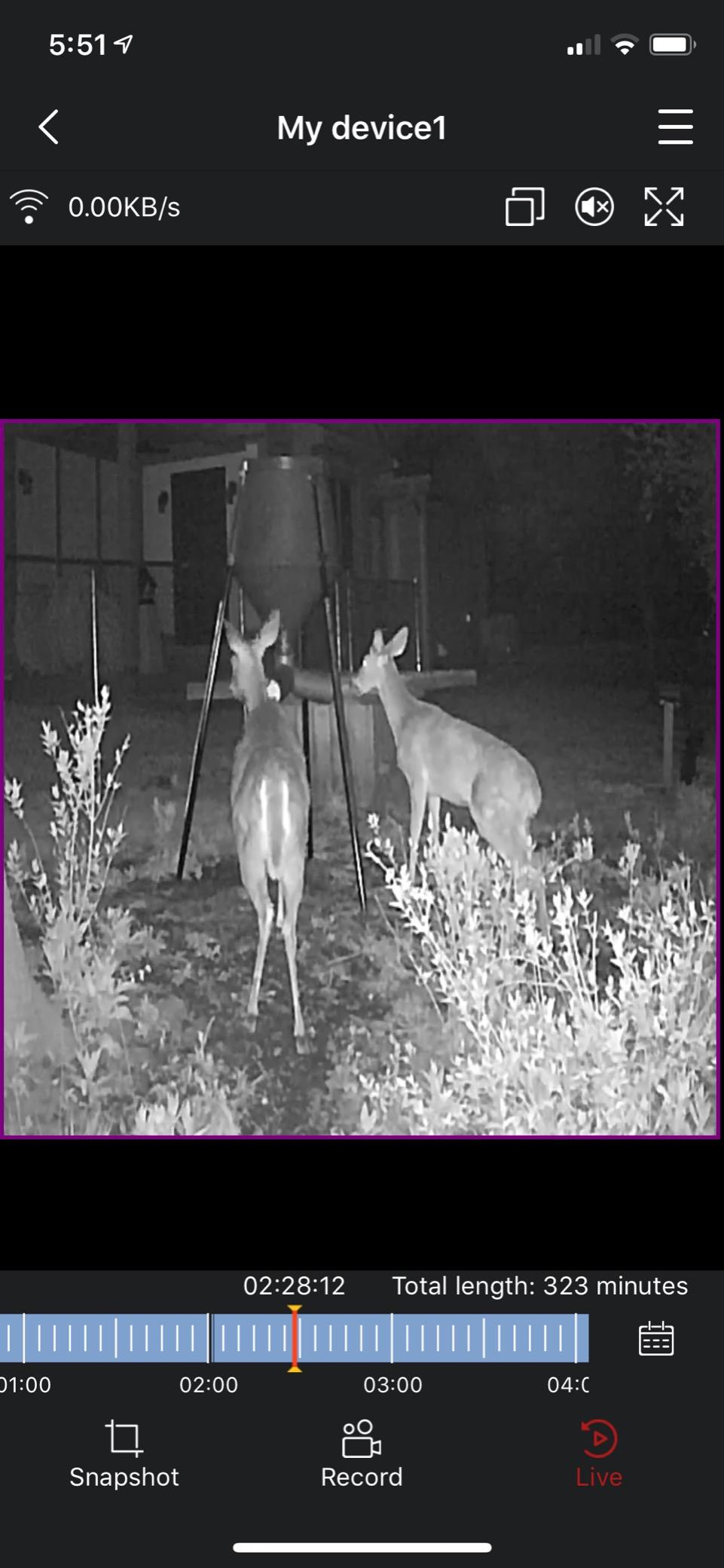
The 10-inch ports are angled with a small overhang, and they meter feed slowly rather than dumping it. On a plot beside open field that matters, because fast-dropping ports are how you end up with a waste pile that feeds the local varmint population instead of your deer.
Tripod legs stand 75 inches tall and put the ports at a height deer like. They also mean no post, no concrete and no install day, which is why this unit stays a favorite for people running several feeders across a spread.
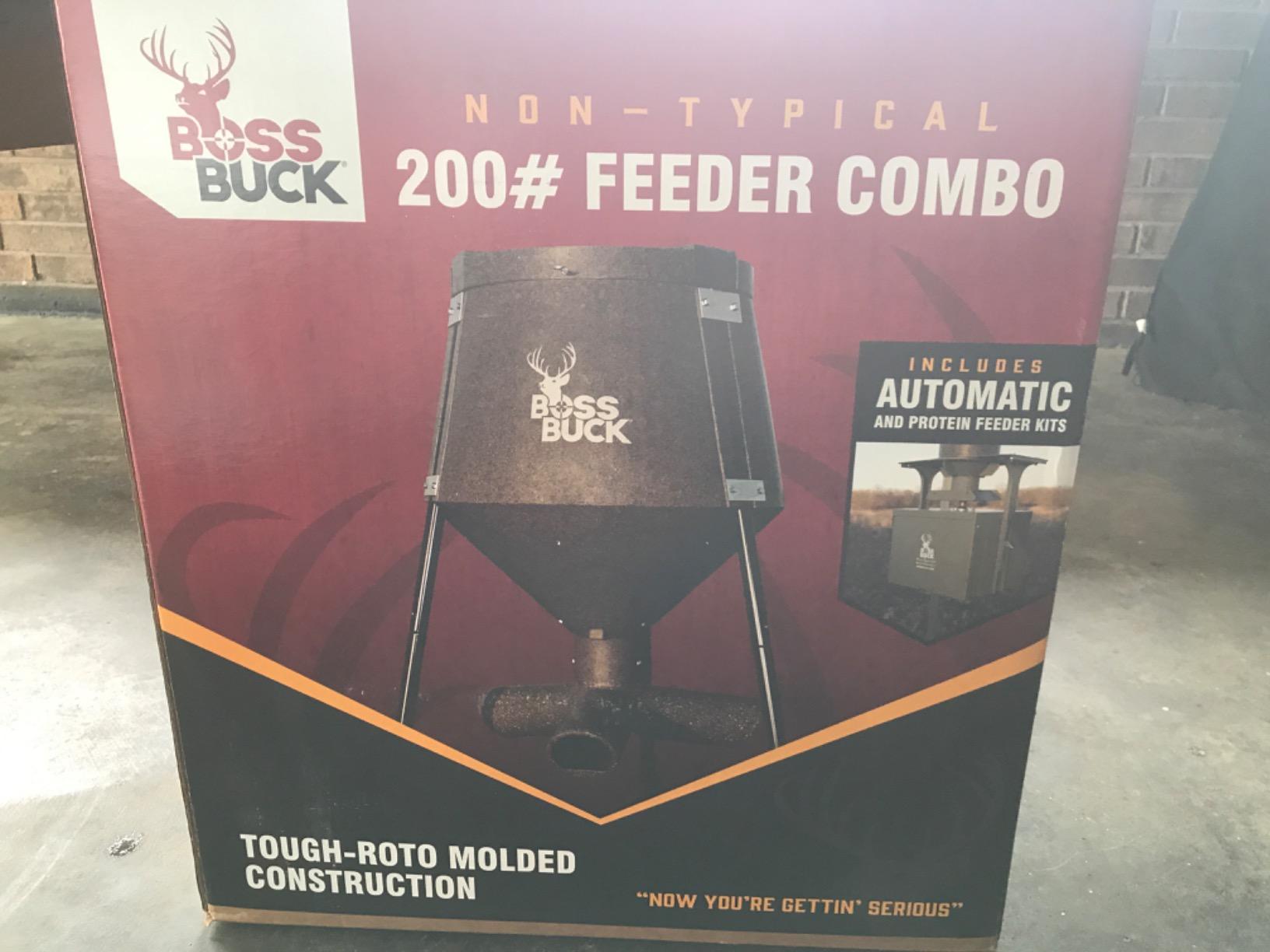
Who this suits
If you want a large gravity feeder that costs less than the post-mounted options and installs in an afternoon, this is the pick. It is also the safest first feeder for a new plot because there is nothing to program and nothing that can fail.
Two to three people running 20 to 200 pounds a day in a well-fenced area will be well served. The 200 lb version, 350 lb and 600 lb variants all use the same design, so the same logic applies as you grow.
What you should know before buying
Owners upgrading from older models report that newer production runs feel thinner at the bottom attachment and leg pipe than the versions they replaced. Inspect the hardware on arrival, and expect the occasional shipment with missing bolts or a damaged box.
It is also not critter proof. Raccoons and turkeys still reach some feed, and bears in hard country will treat it as a target. Add a guard or baffle if you have pressure, or suspend the feeder on a hoist system instead.
3. Wildgame Innovations Quick-Set 270 lb, Best Broadcast Spread
- 270 lb capacity with a roughly 30 foot feed radius
- Programmable digital timer with up to four daily feed times
- Built in funnel and galvanized spinner plate spread feed evenly
- Many owners convert it to gravity feed and run protein pellets
- Plastic rivets legs and brackets crack and loosen
- Lid does not latch tightly so wind can soak feed
- Not suitable where bears are present
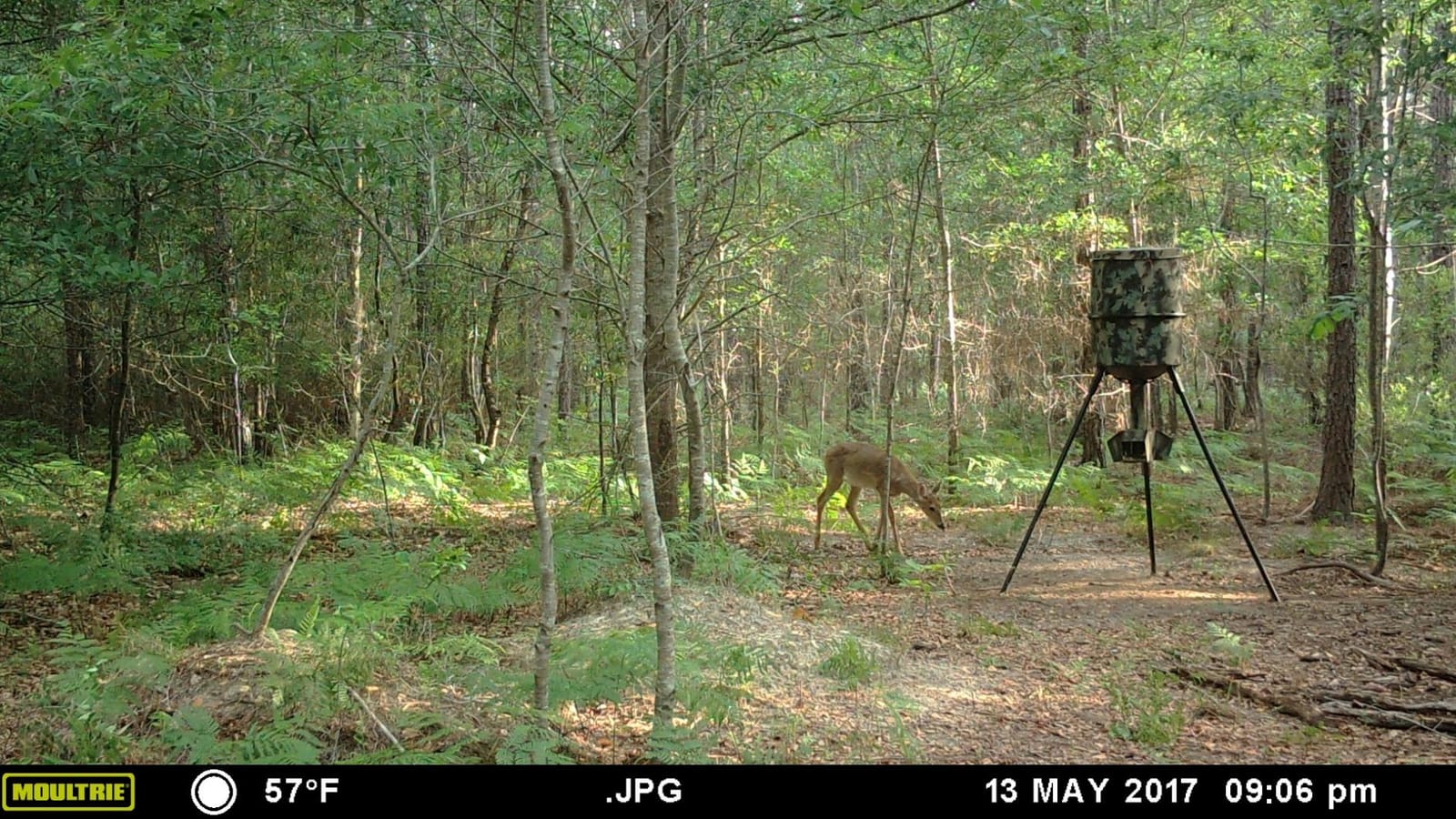
If your goal is to cover a food plot edge rather than draw deer to one tight port, this is the spreader to look at. The built-in funnel and galvanized spinner plate throw feed roughly 30 feet from the tripod, which puts feed across a wide arc of the plot margin.
The digital timer runs up to four feed events a day at 5, 10, 15 or 20 seconds. Owners who run the timer report deer working the area steadily instead of camping at a single hole.
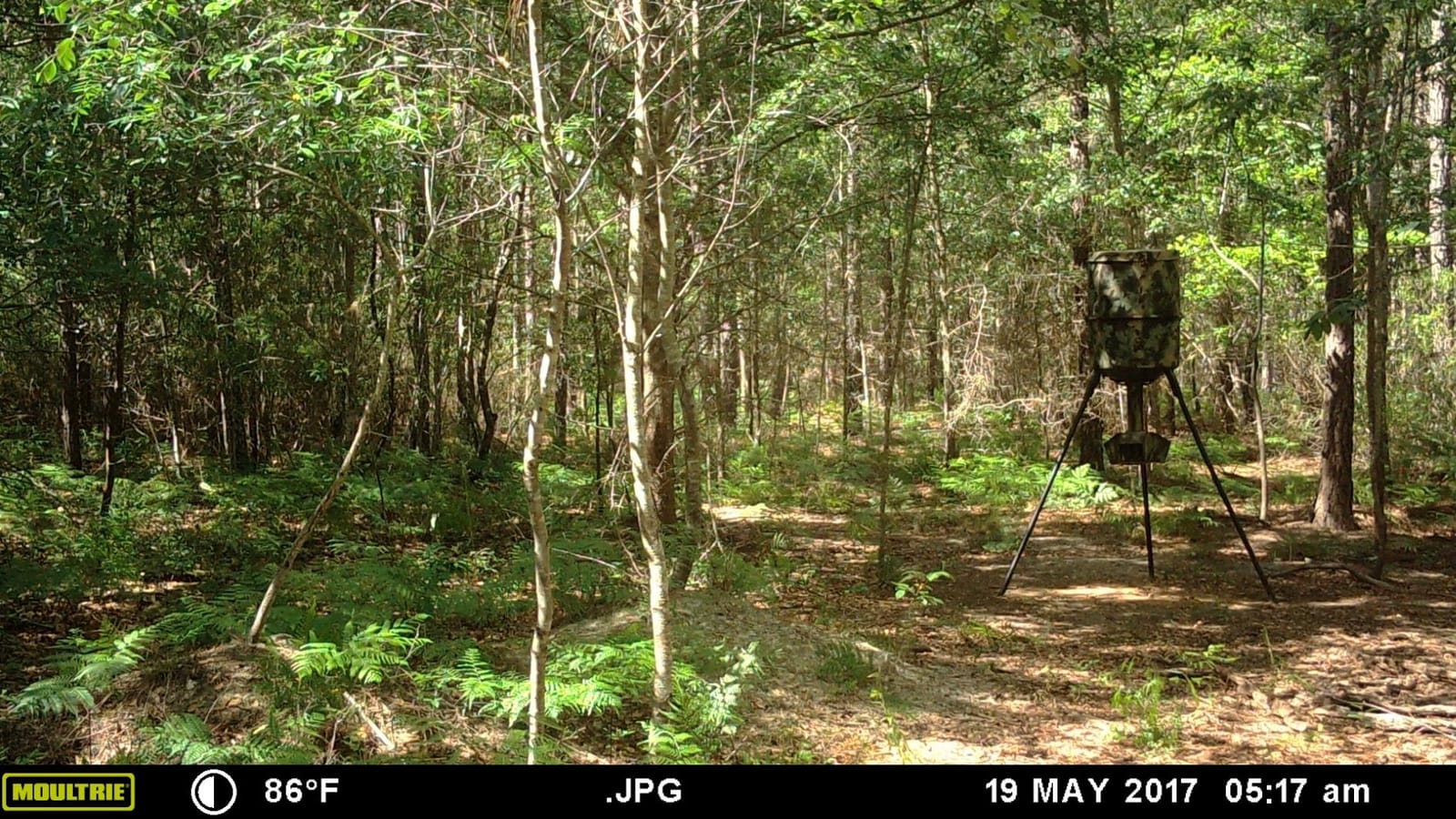
A number of owners convert the unit to gravity feed with a gravity head and run 20 percent protein pellets instead, which removes the battery entirely and takes a lot of the hog pressure off. That is a well travelled mod and it works on this chassis.
Capacity is the headline: 270 lb with about a 30-foot radius is a lot of ground covered from one hopper, which is why it belongs on a food plot list at all.
Deciding between timed and gravity use
Timed broadcast keeps deer moving and gives you a predictable window to shoot or to photograph. Gravity conversion is quieter, cheaper to run and better in country with hogs, at the cost of a tighter pattern and faster night shift habit.
If you hunt mornings, the timed mode is the better fit. If you run cameras and want a big pile of deer at one spot, convert it and accept the tradeoff.
Known weaknesses to plan around
This is the lowest rated unit in our group at 4 stars, and the reviews explain why. Plastic rivets, legs and motor brackets are brittle and commonly crack or loosen. Owners replace the rivets with quarter-inch bolts and nylon locking nuts, and that single fix changes the unit’s durability more than anything else.
The lid does not latch tightly, so a wind event can open it and soak the feed. Expect to add a latch and a metal lid cover. Also note the manufacturer does not recommend it where bears are present.
4. Moultrie Quick-Lock Gravity Feeder Kit, Best Rated
- Turns an existing barrel or container into a gravity feeder
- Twist on twist off install with locking ring and hose clamp
- No timers batteries or electronics to maintain
- Adjustable flow handles both corn and protein pellets
- Adapter only so a compatible barrel must be sourced separately
- Best results require a level barrel mount to feed evenly
This is the highest reviewed item in the selection at 756 ratings, and it earns that with a simple idea. If you already own a Moultrie Quick-Lock barrel, drum or container, this kit turns it into a gravity feeder with a twist of the locking ring.
It is a component, not a complete feeder, and that is the whole proposition. For someone with a stack of containers already on the property, it is the cheapest path to spreading feed across several spots.
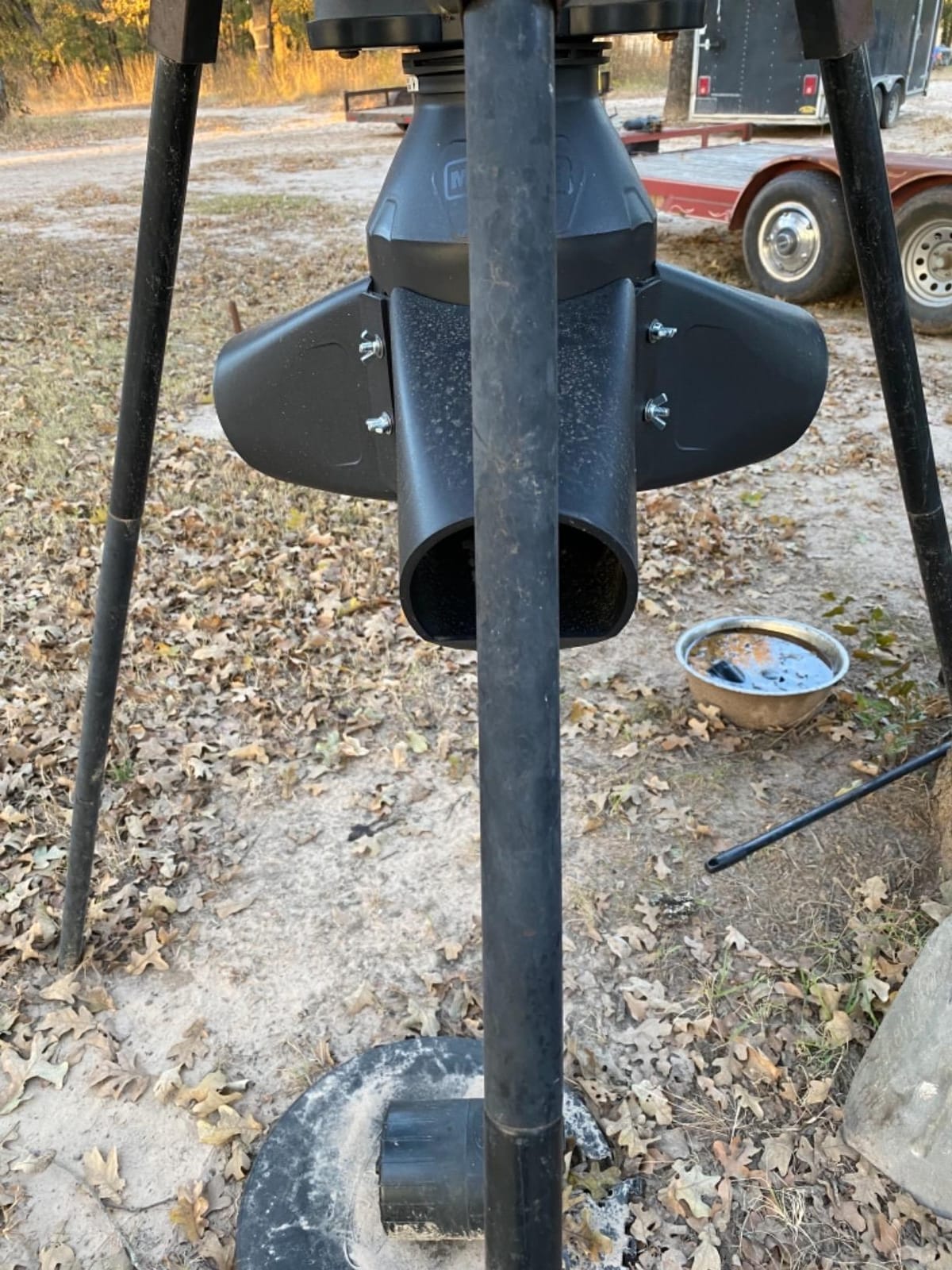
The hardware is genuinely good. A locking ring and hose clamp are in the box, the connection is reinforced against a varmint pulling it loose, and the design spreads feed into three troughs rather than one hole.
There are no timers, batteries or electronics to maintain in the field, which means the failure list is short. The adjustable flow also lets you switch from whole corn in winter to protein pellets in summer without buying a second unit.
Who should buy this
If you own Quick-Lock containers already, this is the pick. You can dedicate a different container to each plot edge and move the whole system in minutes.
It is also the answer for anyone who has been let down by a timer. There is no electronics to fail, no battery to replace and nothing to program at 9pm on a cold walk back to the truck.
What to watch out for
The kit is useless without a compatible barrel, and barrels are not included. Budget for that separately and check that your container has a flat Quick-Lock base.
Second, keep the barrel level. A tilted container feeds unevenly into the three troughs, and uneven feed means one busy port and two ignored ones, which is exactly how you attract varmints to the quiet side.
5. Highwild 12V Digital Deer Feeder Kit, Best for Automated Feeding
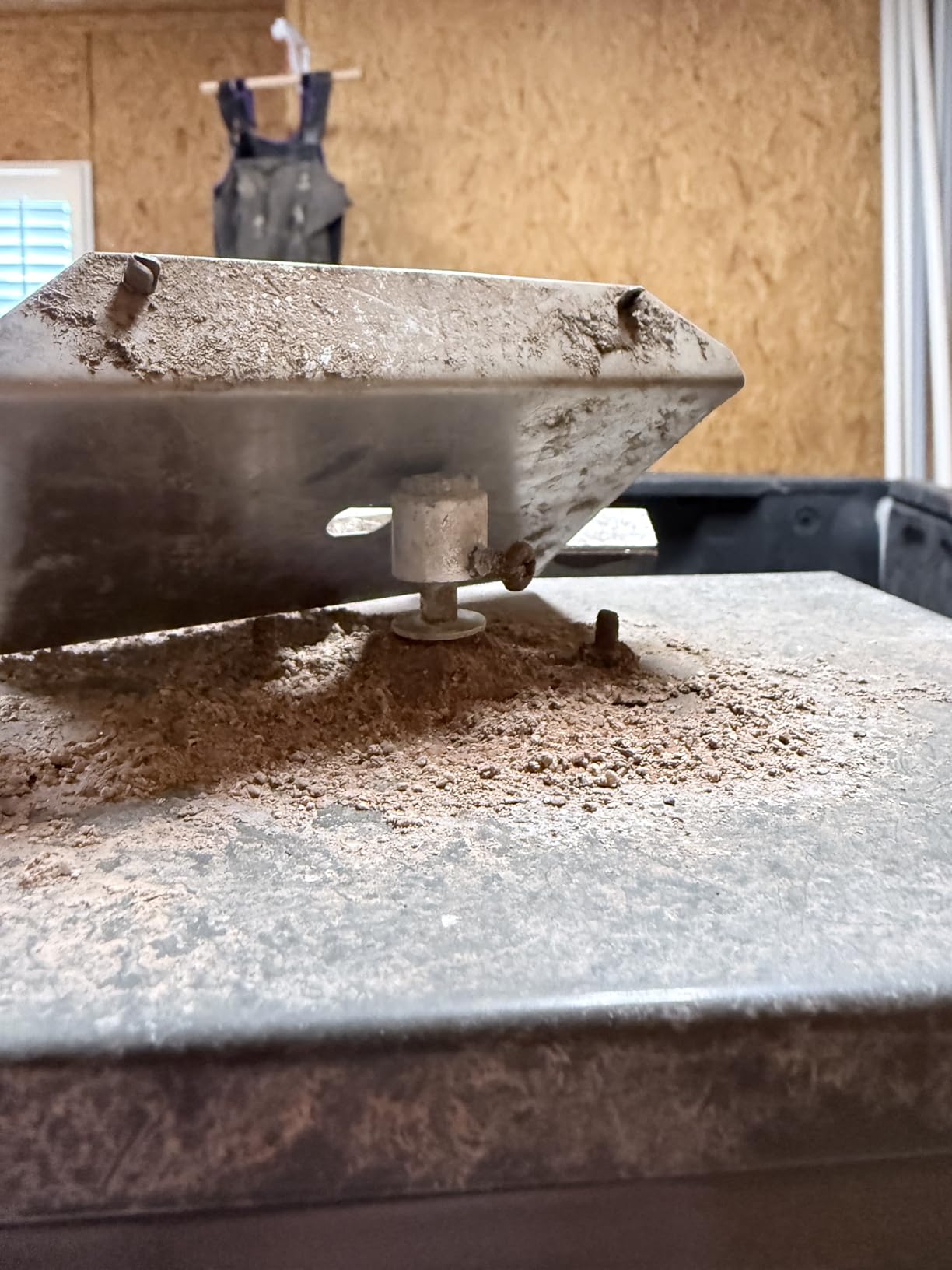
Highwild 12V Digital Deer Feeder Kit for Hunting, up to 8 Feed Times
- Powder-coated steel housing owners say is heavier and stronger than premium units
- Fits most standard barrels with included hardware
- Up to eight daily feed times with 1 to 30 second run times
- Strong 12V motor and shaft with spinner flaps that contain corn
- Housing has no grab bar so a screwdriver may be needed to open it
- Timer is a basic unit that may need replacing eventually
- Some units arrived unable to run with hard to reach support
This 12V kit rates 4.5 stars, and construction is the reason. The Banks Outdoors Feedbank rates higher overall at 4.7, but it is gravity fed. The control housing, spinner plate and drop funnel on this unit are all metal, and owners comparing it to premium brand kits report it is heavier and tougher.
The schedule is the most flexible we saw among the 12V units. Up to eight feed times a day with 1 to 30 second run times gives you control over both frequency and volume, which lets you put out a small trickle in August and a full spin in the rut.
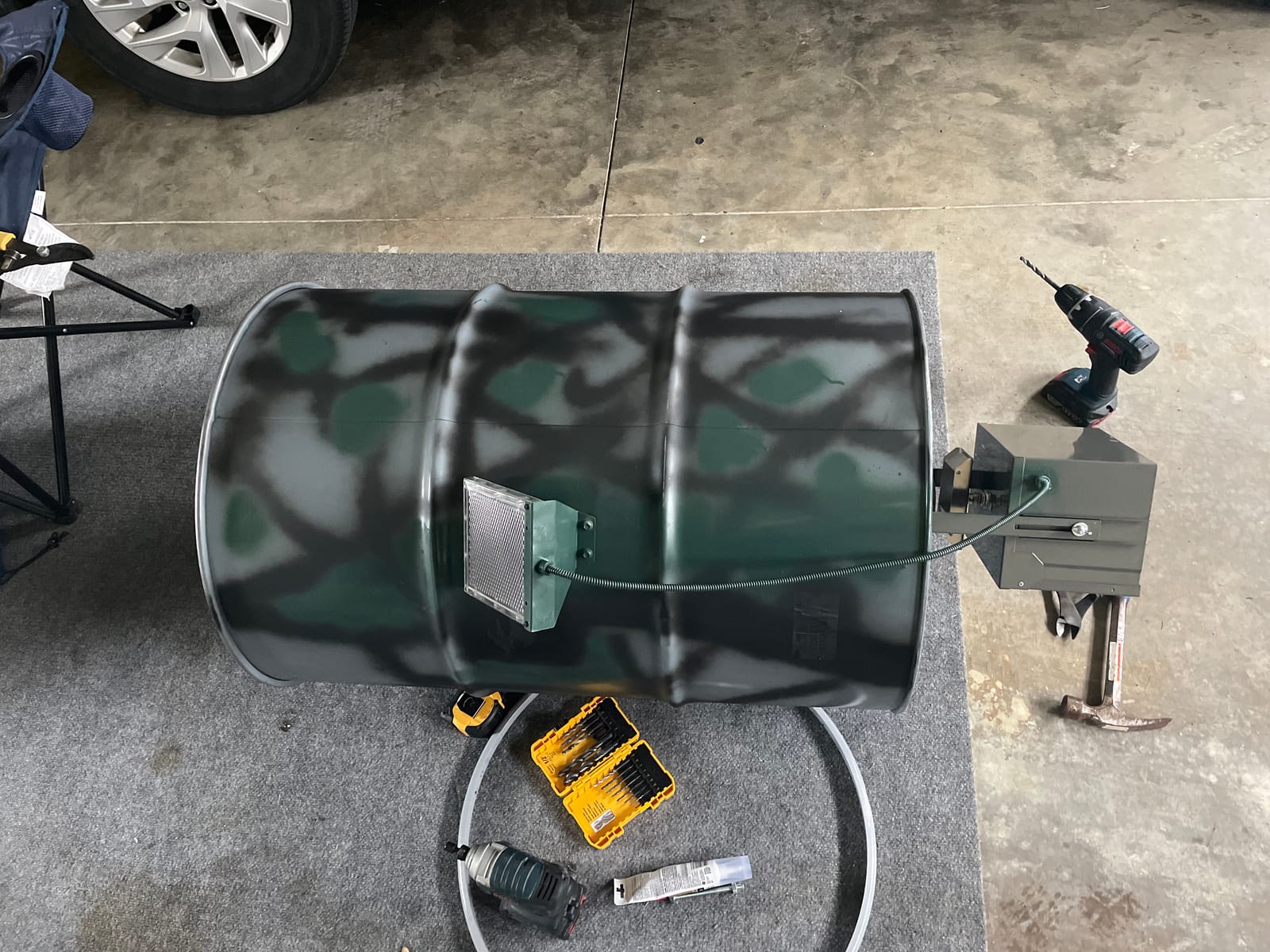
It is a kit, not a barrel. Mounting hardware is included and it fits most standard barrels, which means it works just as well as a retrofit on a feeder you already own as it does in a new build.
One owner reports the unit survived a mild bear encounter that destroyed a competitor kit. That is an anecdote, not a rating, but it aligns with the general picture of thick steel doing well where thin plastic housings do not.
Best fit for a food plot program
Pair it with a large barrel and it becomes a true broadcast station, spreading feed wide enough to cover a plot margin rather than one port. The eight-time schedule is what makes this the pick if you want deer on a plot at two different daylight windows.
It is also the cheapest path to timed feeding if you already own a barrel. Swap the motor and timer into an existing gravity setup and you have an automatic feeder for the cost of a kit.
Where it disappoints
The housing has no grab bar, so after weather exposure you may need a screwdriver to open the timer box. That is annoying in the rain, not dangerous, but plan for it.
The timer itself is a basic unit. Some owners expect to replace it eventually, and a few units arrived unable to run at all with support slow to respond. That is the main reason to buy it from a seller who handles returns easily.
6. American Hunter 30-Gallon Nesting Hopper, Best Gravity Capacity per Fill
American Hunter 30-Gallon Nesting Hopper Gravity Deer Feeder – Maintenance-Free Tripod Game Feeder
- Twist-lock gravity system with no batteries timers or motors
- Large polymer hopper holds roughly 180 to 225 lb
- Three 8 inch feed tubes feed several stations with smooth flow
- Adjustable leg height lets you lower tubes for smaller deer
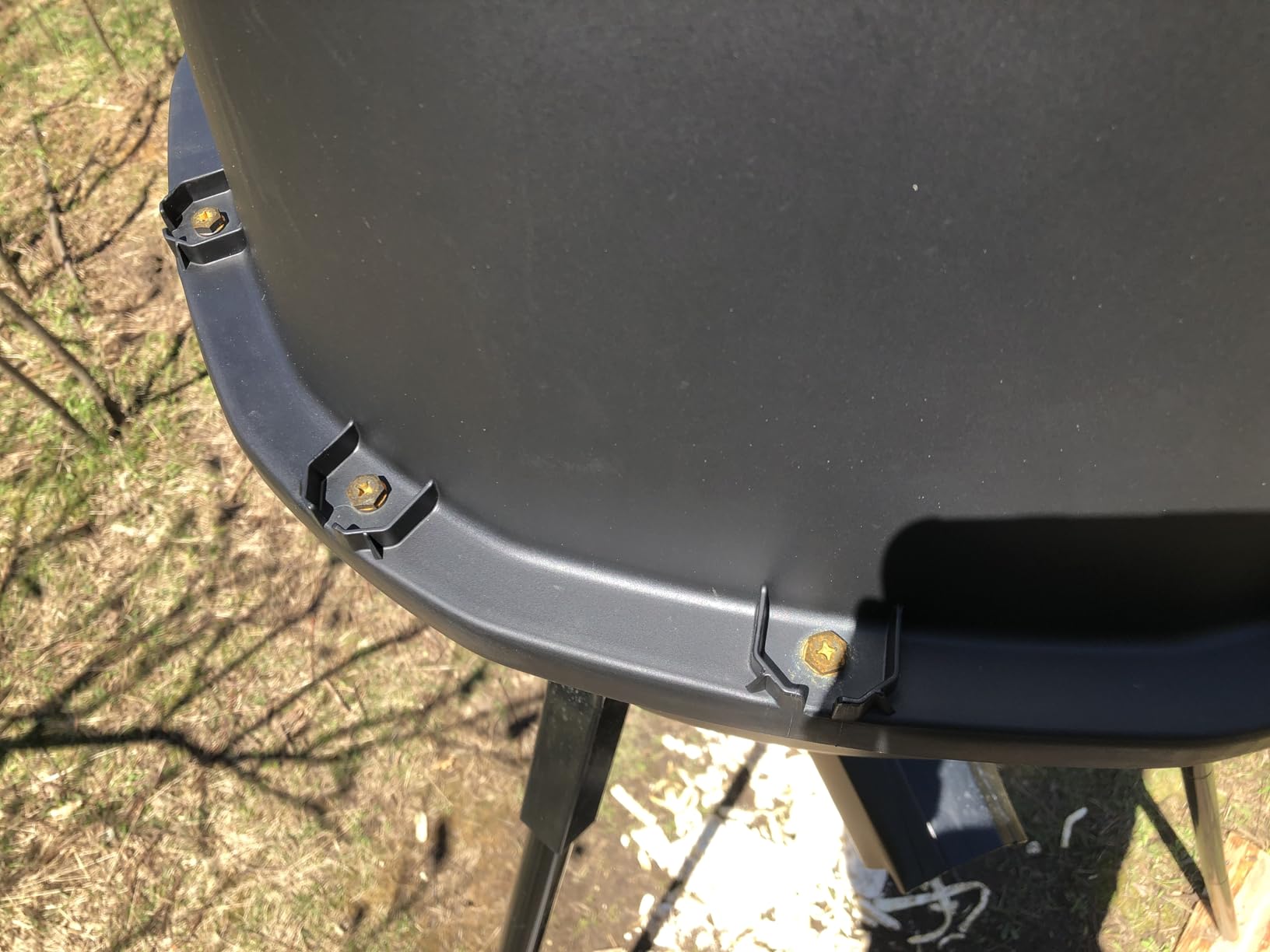
- Feed tubes are friction fit so climbing raccoons can pull them off
- Owners report heavy feed waste falling beneath the tubes
- Changing port height needs two people
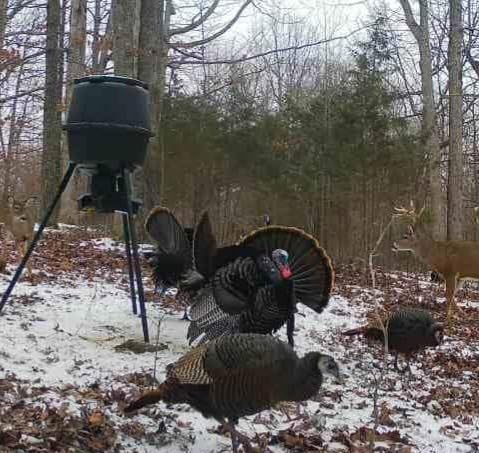
Here is the volume answer if you want one big gravity fill rather than frequent trips. The 30-gallon polymer hopper holds roughly 180 to 225 lb, which is a meaningful jump over most tripod barrels in this price range.
The twist-lock gravity system means there are no batteries, timers, motors or electronics to service. Owners report it holding up well through storms, and the low maintenance profile is the reason most people keep coming back to it.
Three 8-inch feed tubes put feed out at several stations instead of one point. On a plot, that wider footprint spreads the pattern and gives deer more reason to stand in the open bedding area you have chosen.
Leg height is adjustable, so you can drop the tubes for smaller deer. An integrated three-quarter-inch feed lip and hooded overhang cut waste and keep the feed dry as it leaves the hopper.
Why the capacity matters on a plot
Refill frequency is the hidden cost of any feeder. A 30-gallon hopper that covers a full week of use means fewer drives, less engine time and less chance that the feeder runs empty on the one weekend you most wanted it full.
With no electronics, it also keeps working when the batteries do not. For a plot at the back of the property that you visit twice a week, that predictability is worth a lot.
The varmint weakness to plan for
The feed tubes are friction fit. Raccoons climbing the legs can pull them loose and dump the entire load onto the ground in minutes, and several owners report significant waste falling beneath the tubes.
Both problems have a standard fix in the reviews: strap the tubes to the frame and add a baffle. Budget an hour with basic straps before the raccoons find it, not after.
7. Wildgame Innovations Treehugger 100 lb, Best for Trees and Portable Setups
- Simple gravity bag that sets the feeding table on its own
- Lightweight enough to carry into backwoods and swamps
- Accepts corn attractants protein mineral or a mix
- Weatherproof PVC with a roll-top sealed closure
- Strap and buckle mount needs a suitable trunk within reach
- 100 lb capacity refills more often than barrel feeders
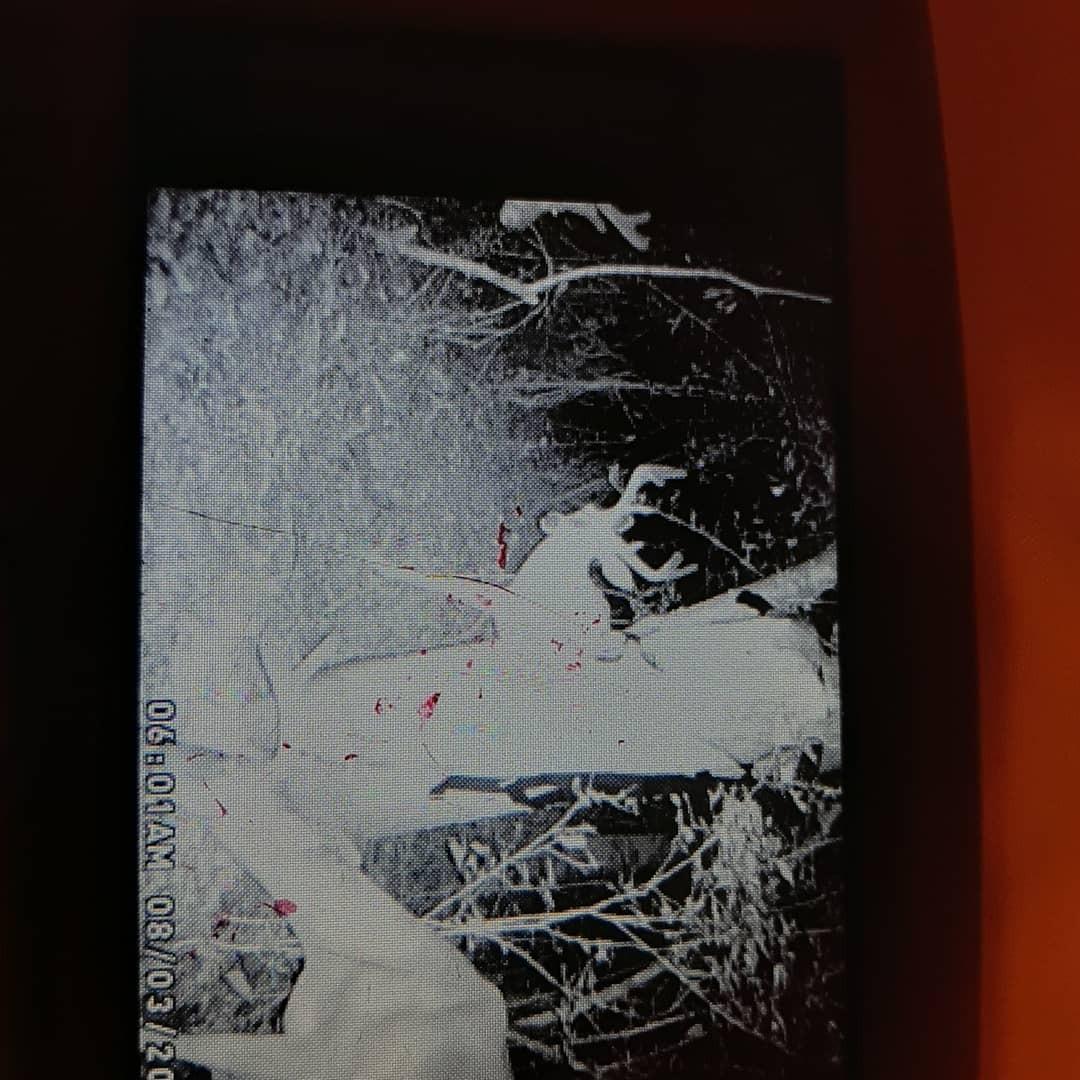
The most reviewed feeder here, with 1171 ratings, and the cheapest way to get feed onto a plot edge you are not sure about yet. At 2.2 lb empty you can carry it a quarter mile and hang it in the woods in a couple of minutes.
It is a gravity bag. Feed drops as deer eat it, no power and no setup, and the roll-top PVC closure keeps rain out. It takes corn, attractants, protein, mineral or a blend without clogging.
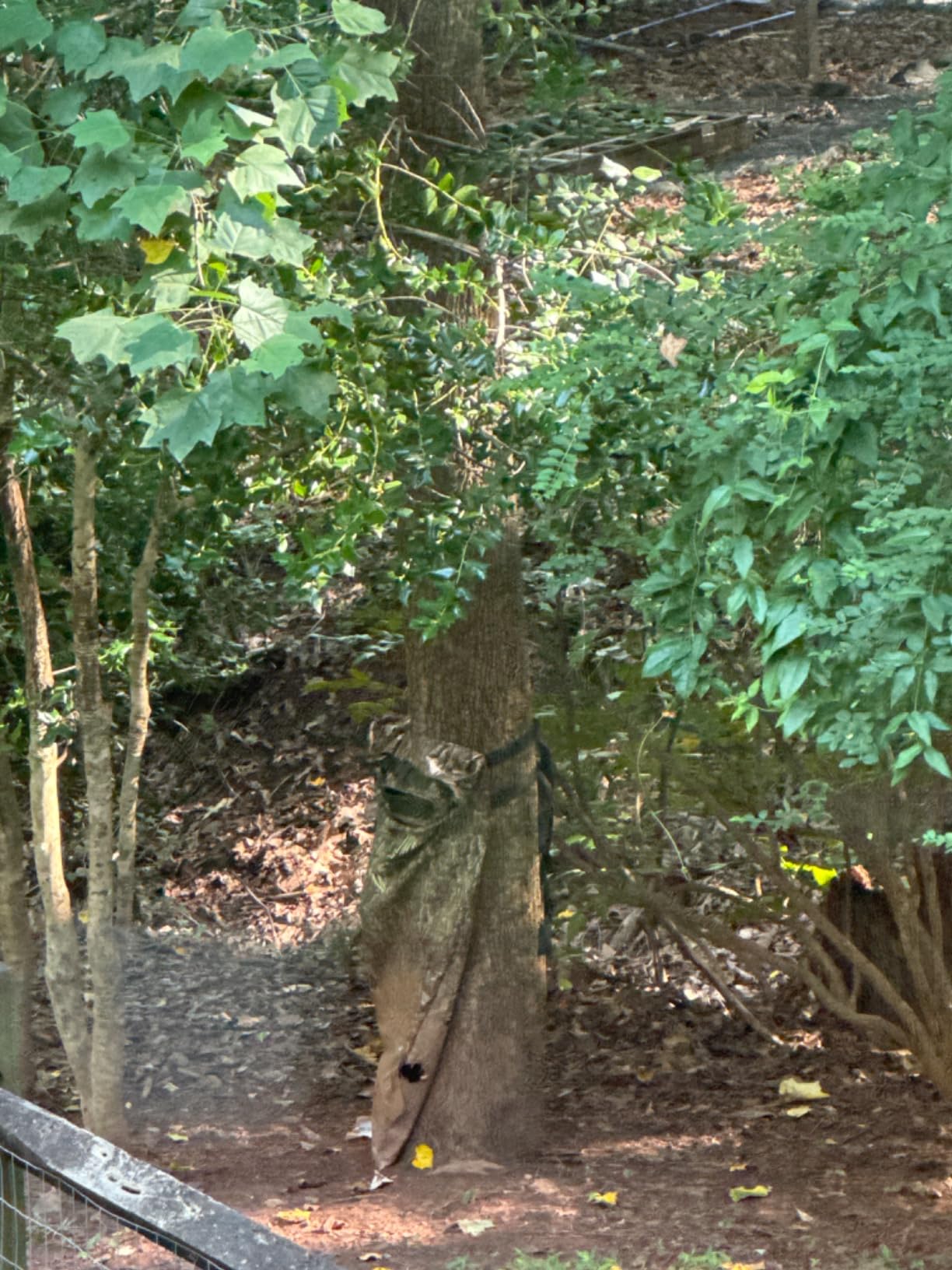
The straps fit most trees and go on in under five minutes, which makes it the cheapest scouting tool in the group. Test two or three plot edges with two of these before you commit to a barrel.
Camo finish blends into a tree line and keeps the rig from standing out against a plot margin at first light.
When a bag feeder is the right call
Small acreages, a single plot, or a first season of figuring out where deer actually move on your land. The feed volume is small enough that a handful of deer can keep it stocked, and the portability means you can move it after a camera check.
It is also a good pairing with a larger feeder. A bag on a back corner pulls animals out of the open and keeps pressure off the main station.
Why it will not scale
At 100 lb, this is not a feeder for a busy plot with heavy deer density. You will refill more often than you would with a 200 or 300 lb barrel, and every refill is another drive.
The mount also depends on a suitable trunk within reach. Open food plot edges with no mature tree nearby are a poor match, and in that situation a post-mounted unit is the better answer.
8. Moultrie Feed Bin 6 Gallon, Most Versatile
- Gravity fed with no batteries or motors
- Up to 40 lb cuts refill frequency versus small bags
- Handles corn protein pellets and similar grains
- Lightweight at 3.5 lb with straps for tree or post mounting
- Small capacity relative to barrel feeders so it refills often
- Feed drops straight to the ground rather than through spreader ports
This is the smallest complete feeder in the group and the least expensive way to add a feeding station to a plot. At 6 gallons, roughly 40 lb, it sits above the tiny bag feeders in capacity while staying light enough to reposition by hand.
Operation is dead simple. You fill it from the top, feed falls out by gravity, and there is nothing else to service. Reviewers like the easy top refill and the weather resistant body.
Mounting straps let it hang from a tree or fix to a post, which means you can place it low near a plot edge for a quick start, or raise it later. It takes corn, protein pellets and similar grains without complaint.
For a small plot, a tight corner or a camera-bait location, that flexibility is genuinely useful and costs very little to add.
Best used for
Small plantings and close range baiting are the sweet spot. Think one or two feeders near a young plot that is still establishing, or a spot you want to check with a camera before committing.
It also works as a mineral or attractant station alongside a bigger feeder, giving you a second feed type without another large purchase.
Where it runs out of road
Forty pounds empties fast on a busy plot. If your herd density is high, this becomes a weekly drive rather than a monthly one, and that is where the trip cost starts to matter.
Feed also lands on the ground rather than through spreader ports, which means wasted feed, mud under the feeder and a varmint magnet in wet conditions. Use it where the ground is firm.
9. Moultrie All-in-One II Bluetooth Kit, Best for App Control
- App based scheduling from up to 300 feet without walking to the feeder
- Quick-Lock adapter turns any flat-bottom drum into a motorized feeder
- Four daily feed events with 360 degree broadcast spread
- Runs on AA batteries with a slide-out tray and no wiring
- Motor and adapter only so a container is required
- Range drops beyond about 300 feet so control depends on camera pairing
For anyone who does not want to walk to the feeder at dawn, this is the most convenient unit here. The Moultrie App lets you schedule feeds from up to 300 feet, and the unit pairs with Moultrie Edge 3 Series cameras for cellular remote control with no subscription.
It is a motor and adapter kit. The Quick-Lock adapter fits 35 or 55 gallon drums, buckets and custom containers, so whatever drum you already own becomes a broadcast feeder.
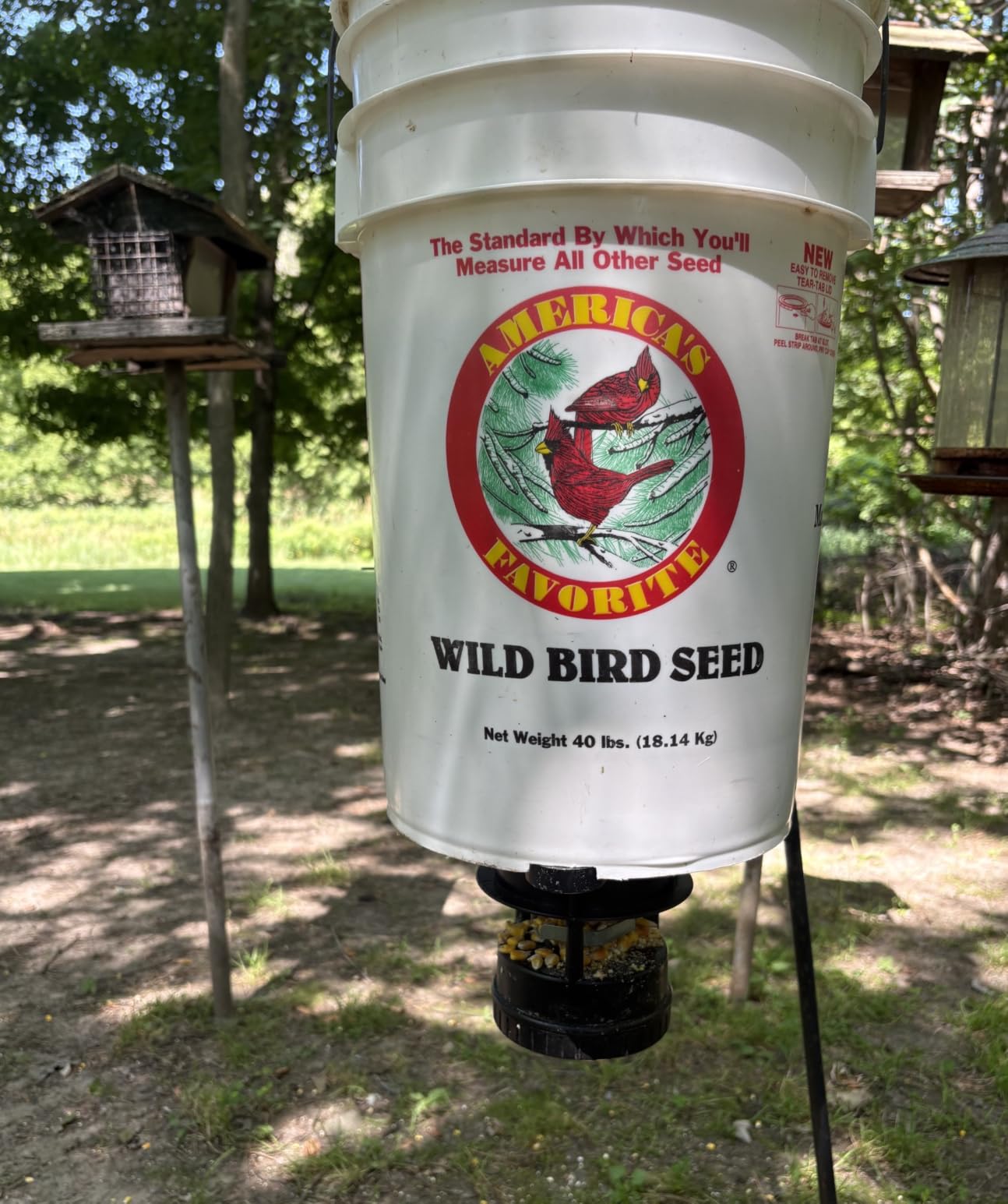
Four daily feed events of 1 to 20 seconds each give you a real schedule, and the 360-degree spin plate spreads feed evenly around the container rather than into one arc.
Power is four AA batteries, or eight for extended runtime, in a slide-out tray. No wiring, no separate battery box, and you can swap cells in the field without tools.
Where app control earns its keep
If your plot is within range of your truck or blind, scheduling from the cab is the whole point. You can fire a feed event when deer show up on the camera, which is how most people get better morning photos.
The camera pairing extends that idea to a plot you cannot reach on foot. Owners using the wider Moultrie ecosystem like that it all runs from one app.
Limitations worth knowing
Bluetooth range drops beyond roughly 300 feet. Past that you are relying on the camera pairing rather than your phone, so treat the range as a soft limit and test it where you plan to stand.
Like the Quick-Lock gravity kit, this is a component. You need a drum, bucket or existing Quick-Lock hopper, and that container is the largest part of the cost. If you want remote control as a concept, our guide to the best smart bird feeders covers the same scheduling approach on a smaller scale.
10. On Time T-Post Feeder 80 lb, Best for Simple Mounting
- No moving parts and no batteries so nothing can fail or leak power
- Works right out of the box
- UV resistant polyethylene body for outdoor durability
- Covered downspout keeps feed protected from weather
- Steel bracket allows multiple mounting configurations
- Smallest capacity in this selection at 80 lb
- Listed item weight of 3.2 ounces does not match the physical feeder
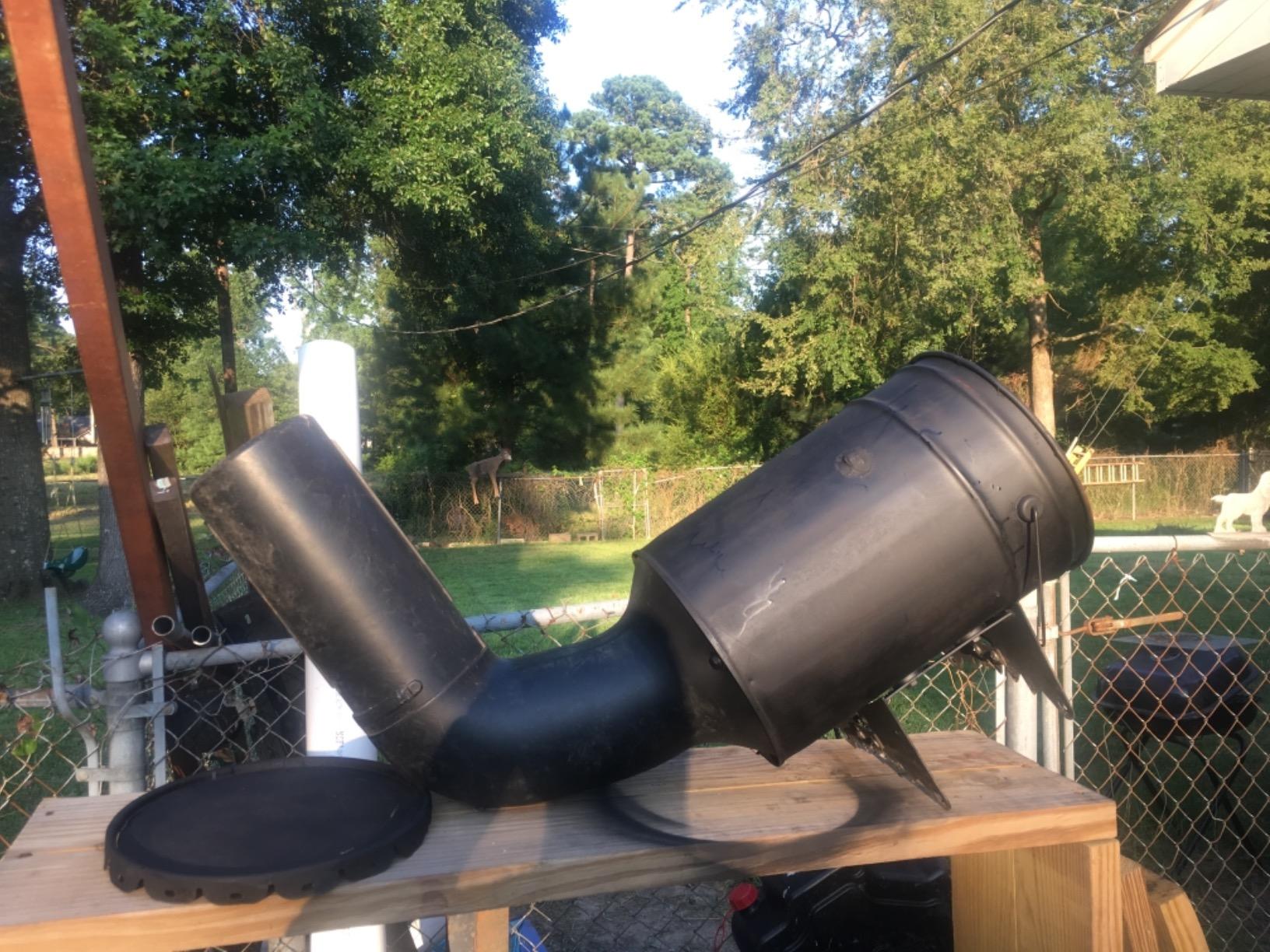
This has the fewest moving parts of anything we reviewed, which is its entire argument. No batteries to replace, no motor, no timer, nothing to leak power in the field and nothing that can stop working while you are not watching.
It works out of the box. The steel bracket lets you mount it on a T-post, a tree or a fence line, and the covered downspout protects the feed from weather as it drops.
UV resistant polyethylene handles full sun exposure without the paint chalking or rusting you get on coated steel, which matters for a unit you leave out from spring through teardown.
It is also the easiest unit here to move. When a plot rotates or you want to shift pressure off a strip you just planted, this comes off the post in a minute.
When this is the right pick
Small acreages, low deer density, and any situation where you refuse to service electronics in the woods. The T-post mount is the fastest install on this list and it works on ground you drive right up to.
It pairs well with a larger feeder as a secondary station near a plot corner, giving you a second draw point without a second large purchase.
Limitations
At 80 lb it is the smallest capacity in the selection, so on a busy plot you are refilling often. Treat it as a satellite station rather than your main feeding point.
One data note: the listed item weight of 3.2 ounces does not match the physical feeder, so do not plan around the weight figure. Pick this one for the mounting, not for the specs sheet.
How to Match Feeder Capacity to Your Acres
Capacity is a function of how many deer you are feeding, not how many acres you own. Work out daily consumption first, then size the hopper so one fill covers several days of use. A feeder that runs empty every other day is a feeder that spends your Saturdays in a truck.
A rough starting point: one mature whitetail eats a surprising amount of shelled corn, and on a well-fenced property with heavy deer density you can burn through 100 lb in a day or two. A 30-acre plot with moderate pressure might use 50 to 100 lb a day across a herd of 20 to 30 deer.
Use this ladder when you size a unit:
Count the acres you actually manage. A three-acre plot inside a 200-acre woods is a three-acre feeding problem, not a 200-acre one.
Estimate herd density. Camera counts on the plot tell you more than any rule of thumb.
Set your refill cadence. Decide how often you are willing to drive out. Weekly means roughly seven days of feed plus a buffer.
Add a 25 percent buffer. Raccoons, hogs, wind and rain all take a cut. Buys you a week of slack.
Pick the hopper above that number. Never size to the lowest figure, because a hopper that empties on day four is worse than one that is full on day nine.
How many deer will a 1 acre food plot support? A single acre of good forage supports several deer for a short window during the growing season, but it does not feed a herd through winter on its own. Treat the plot as the draw and the feeder as the holding pattern. The feeder keeps deer on your land while the plot does the work in the fall.
Keeping Raccoons, Squirrels, Hogs and Bears Out
Varmint pressure is the single most common complaint in the reviews, and it is a ladder problem. Work up these five interventions, cheapest first, until the feed stops disappearing.
Guard plates and port screens. The cheapest fix. A plate that blocks a raccoon from reaching the feed port while a deer can still push through it stops most coon losses.
Elevation and barrels. A barrel on a post with the feed ports above reach keeps squirrels and coons down. Owners of post-mounted designs report this plus a sleeve makes the feeder effectively critter proof.
Strap and secure every friction-fit part. Feed tubes, lids and spin plates that are held by friction alone get pulled off, and the whole load ends up on the ground.
Stake tripod legs or add feet. Hog pressure and wind both start with a feeder that slides. Anchored legs keep the ports at a working height.
Hoist the feeder. For bear country, hunters on hunting forums report suspending the feeder roughly 12 feet up as the only reliable fix. It takes a hoist system and it changes how you fill it, but it works.
If bears are a genuine problem, feeding hardware is the wrong answer. Hunters in one Facebook deer group recommended stepping back from feeders entirely and improving the food plot forage instead, which is worth considering before you spend on a feeder you will lose to a bear.
What to Put in the Feeder
Whole corn is the classic choice and it works, because deer reliably eat it. Protein pellets in summer help antler and body growth in areas where forage is the limiting factor. Mineral is low volume and low risk, and is best used as a supplement rather than the main feed.
Feed type drives feeder choice more than most buyers expect. Pellet-fed feeders need wider flow openings because pellets bridge and clog, especially in humid conditions. A gravity unit set for corn will bridge on pellets, and a spinning unit set for pellets will throw almost nothing.
Feeder capacity also shifts with feed. Pellets are lighter and bulkier per pound than corn, so a hopper quoted in pounds of corn holds a smaller weight of pellets. Check whether the capacity figure on the listing refers to corn, because most of them do.
If you want a deeper look at feed choice itself, our note on automatic feeder scheduling covers the timer and portion control side that carries over directly to a 12V hopper.
How We Picked These Feeders
We treated a feeder as food plot ready if it met four conditions: it keeps feed dry through repeated rain, it holds enough per refill to avoid weekly drives, it flows corn and protein pellets without clogging, and it can be protected from varmints without rebuilding the whole unit.
To test that, we read the full review history on each product and weighted long-term owner reports over first-week impressions. We looked specifically for reports about rain intrusion, feed bridging, port adjustments in real weather, and what happened after a bear or hog encounter.
We also cross-checked specifications against the listing, since published weight and dimension figures are sometimes wrong. Where owners disagreed with the spec sheet, we went with the owners.
Frequently Asked Questions
What is the best deer feeder for the money?
For most food plots the Banks Outdoors Feedbank 300 lb is the strongest overall value: it holds 300 lb, keeps feed dry in a watertight lid, and rated 4.7 stars across 420 reviews. If you want to spend less, the Boss Buck Gravity Feeder 200 lb gives you large capacity and a three-way flow sleeve with no power to maintain. Both are gravity fed, so neither has electronics that can fail in the woods.
Are gravity feeders better than automatic feeders?
It depends on what you want. Gravity feeders are cheaper, silent and have nothing to break, and they draw deer into a tight predictable pattern at fixed ports. Automatic feeders with a 12V motor and digital timer spin a plate to broadcast feed across a 20 to 30 foot radius, which spreads deer out and is easier to photograph. One tradeoff hunters notice: deer that establish a gravity feeder often shift to feeding at night, which can cost you a morning bow window.
How many deer will a 1 acre food plot support?
A single acre of good forage will draw several deer during the growing season, but it cannot feed a herd through winter by itself. Treat the plot as the draw that brings deer onto your land in the fall and the feeder as the holding pattern that keeps them close. A useful sizing rule is to pick a hopper that covers seven days of feed plus a 25 percent buffer for varmints, wind and rain.
What will repel raccoons but not deer?
Start with guard plates and port screens, which block a raccoon’s reach while letting deer push through. Next, elevate the barrel on a post so the feed ports sit above coon height, and add a sleeve or 24-inch baffle on the post. Secure every friction-fit part, since climbing animals pull tubes and lids loose. In bear country, the only reliable fix owners report is hoisting the feeder roughly 12 feet up.
Why should you not feed corn to deer?
Corn is high in energy and low in the nutrients deer actually need, so heavy corn feeding can mean deer crowd a feeder, spend more time in open ground and stop browsing your natural forage. Concentrating deer in one spot also raises the chance of disease transmission. Check your state’s baiting rules before feeding, because several states restrict supplemental feeding or ban baiting during specific seasons.
Conclusion
The best deer feeders for food plots in 2026 are the ones sized to your refill cadence and sited 20 to 30 yards off the plot edge. For most established plots under 50 acres, the Banks Outdoors Feedbank 300 lb is our overall pick on capacity, feed protection and long-term owner satisfaction. The Boss Buck 200 lb is the value alternative, and the American Hunter 30-gallon hopper is the gravity volume option if you want fewer drives more than anything else.
If you want timed broadcast instead of a fixed port, the Highwild 12V kit gives you the most scheduling control, and the Moultrie All-in-One II adds app control from your truck. Start with one feeder placed well, watch it on a camera for two weeks, then add the second one 100 yards away rather than stacking them.