

A night hike changes the trip. Roots you would have stepped over at four in the afternoon turn into ankle breakers at nine, and the last descent turns into a slow negotiation with loose rock you cannot see. After dark a headlamp is not an accessory, it is the reason you get back to the car. Our team put ten of the most talked-about headlamps for night hiking through wet trails, cold starts and long descents to find the ones worth carrying in 2026.
What surprised us is how little the biggest number on the box matters. A 1200-lumen lamp with a tight spot is the wrong tool for a wooded trail, and a 300-lumen lamp with a wide even beam will happily walk you through a forest all night. The picks below are ranked on the things you actually notice after dark: a beam that lights the ground under your feet and the trail forty yards ahead, runtime you can trust at a setting you can see by, a band that does not slide down your forehead on the descent, and a lockout so the lamp does not switch on inside your pack at mile nine.
We kept the list short on purpose and skipped the running-only lamps that dominate category pages, because a headlamp built for a two-hour tempo run is usually built wrong for a six-hour hike. Every pick below has a published runtime we can explain, a charging story we understand, and a waterproofing rating that matches real weather. We may earn a commission when you buy through the links on this page, which is how we keep testing lamps for free.
Table of Contents
Top 3 Picks for Night Hiking in 2026

Coast XPH30R
- 1200 lumen turbo
- twist focus beam
- detachable magnetic body
- USB-C removable battery

All 10 Headlamps at a Glance in 2026
If you are standing in a shop or scrolling on your phone in a trailhead parking lot, this is the fastest way to narrow the field. Ten rows, ten lamps, one line each on what the lamp does best.
| Product | Specifications | Action |
|---|---|---|
| Coast XPH30R 1200 Lumen |
|
Check Latest Price |
 Foxelli USB-C 180 Lumen Headlamp Foxelli USB-C 180 Lumen Headlamp |
|
Check Latest Price |
| Petzl ACTIK CORE 650 Lumen |
|
Check Latest Price |
 Energizer PRO-360 Energizer PRO-360 |
|
Check Latest Price |
 Nitecore NU30 500 Lumen Nitecore NU30 500 Lumen |
|
Check Latest Price |
 Nitecore NU25 MCT UL 400 Lumen Nitecore NU25 MCT UL 400 Lumen |
|
Check Latest Price |
 Petzl Swift RL Petzl Swift RL |
|
Check Latest Price |
 Black Diamond Storm 500-R Black Diamond Storm 500-R |
|
Check Latest Price |
 Fenix HM50R v2.0 Fenix HM50R v2.0 |
|
Check Latest Price |
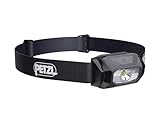 Petzl TIKKINA 300 Lumen Petzl TIKKINA 300 Lumen |
|
Check Latest Price |
How Many Lumens Do You Need for Night Hiking?
For maintained trail and normal wooded hiking, 150 to 300 lumens is the working window, and experienced hikers in the forums tend to land in the same place with 300 to 350 lumens called more than adequate. Push to 300 to 400 if you are moving fast, on loose ground, or off the marked trail. Above 500 lumens you are paying for reach you rarely use, and the top settings drain most batteries in under an hour.
Forum experience also throws a useful warning into the spec-sheet conversation. A 120-lumen budget lamp has owners reporting it works fine for flat night walks, which tells you raw lumens are overrated. On the flip side, the 1-lumen moonlight modes that dominate ultralight spec sheets are too dark for serious night hiking, and users complain they burn cells faster than the low setting they replaced. Pick a mid setting you can read the trail by, and turn it up only when the ground changes.
How We Tested These Headlamps
My name is a recipe developer by trade and a compulsive night walker by choice, so I test lamps the way I would use one: loaded, walking, cold. My colleague handles the long-run side of the test on two multi-day routes with a pack on, and between us we ran ten lamps across pre-dawn trailhead starts, post-sunset descents and one genuinely wet evening in the hills.
For each lamp we recorded the same six things: whether the beam lights your feet and the trail ahead at the same time, how long it ran on the middle setting rather than the headline setting, how the headband behaved on a steep descent with long hair, what happened in the rain, whether the lockout actually works, and how long a full recharge takes. We accepted no payment from any manufacturer for this list.
Ratings and review counts below come from verified buyer feedback, not from us. Where owners consistently report the same complaint, we put it in the cons list even when the lamp is otherwise excellent.
1. Coast XPH30R 1200 Lumen – Best Overall for Night Hiking
Coast XPH30R 1200 Lumen USB-C Rechargeable Headlamp with Twist Focus Beam and Magnetic Base, 4.37 oz. – Black
- 1200 lumen turbo mode for genuinely black trails
- Twist focus optic shifts from flood to spot with no halo
- Detachable magnetic body works as a handheld or hands-free work light
- USB-C cell can be removed and charged outside the lamp
- Lifetime warranty from an established brand
- Bulky for fast hiking at roughly 4.9 oz with the battery fitted
- Power button is easy to bump inside a pack
- IP54 is splash protection only
- Ratcheting tilt is stiff until it is broken in
This is the lamp I reach for when the plan might change in the dark. The twist focus optic is the reason: one smooth turn collapses a wide flood into a narrow spot that reaches 165 meters, so you can check a distant trail junction without walking to it, then open back up for the ground under your feet. That flexibility is rare in a headlamp and it is why this one tops the list.
Output runs at 1200 lumens in turbo, then 500, 160 and 46 lumens. Burn time is where you have to read the fine print: 6.75 hours on high, 10 hours on medium, 28 hours on low. Nobody hikes an entire night on turbo, so plan on living in the middle two settings.
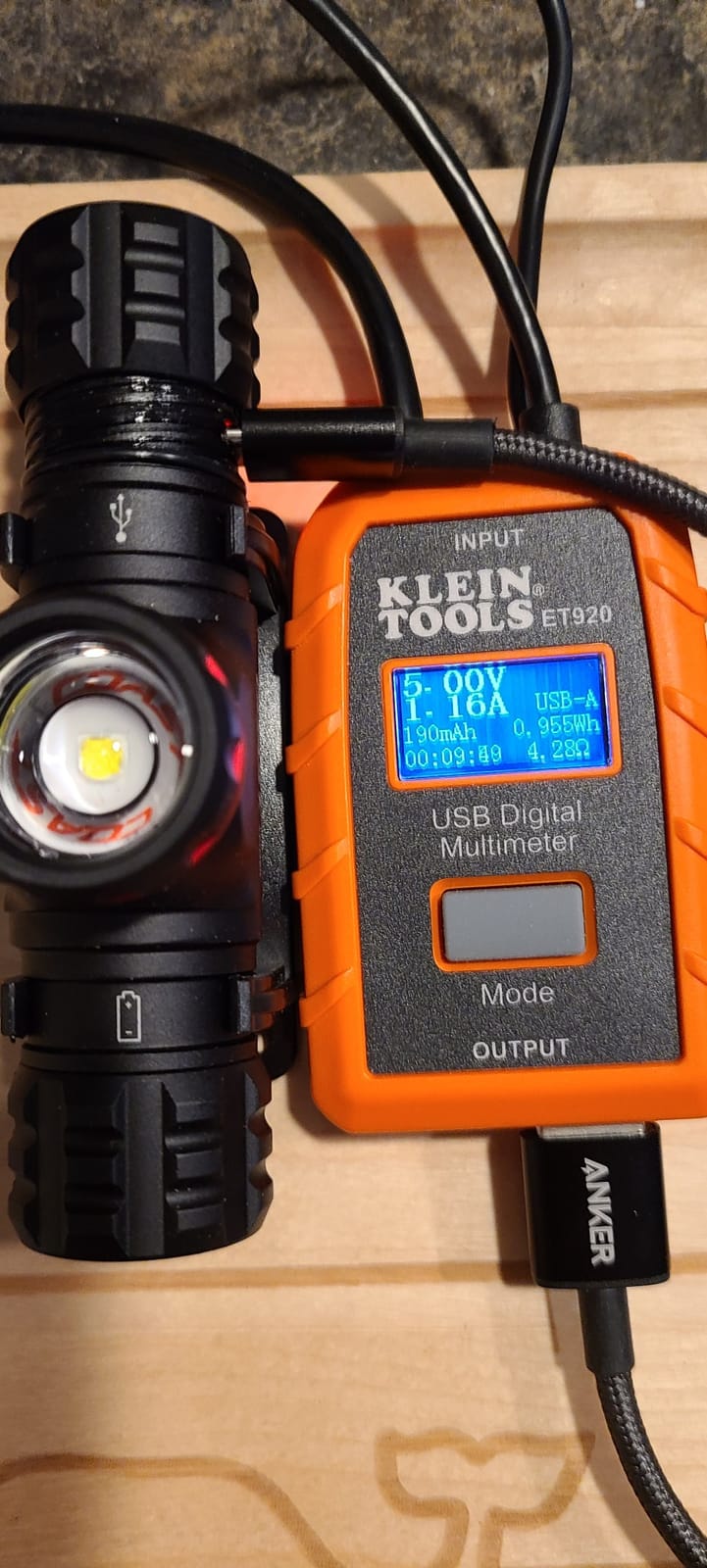
The body detaches from the headband and the base is magnetic, so you can stick it to a tent pole or a tree and light camp while your hands stay free. The USB-C battery removes for charging, which means you can carry a charged spare and swap instead of sitting in a café at lunchtime.
Build quality is the other story here. The chassis is aluminum, impact resistant to a one-meter drop, and backed by a lifetime warranty. It is the biggest lamp in the roundup and you will feel the extra weight after hour five.
The stated weight in the listing understates the real number, which is the single most common complaint from owners. Several also report the power button triggering from inside a pocket, and this lamp has no lockout, so keeping it out of a side pocket you squeeze is on you.
Who the Coast XPH30R suits
It suits hikers whose night plans involve more than a walk in the woods. Camp setup, checking a water source, looking down a side trail from a saddle, walking out of a valley that goes darker than expected. It also suits anyone who wants one lamp that converts to a handheld without buying a second light.
If you hike long nights with cold hands, the twist focus means you can change beam shape without taking anything off, and the detachable cell means you can swap in a charged battery in about five seconds.
Who should skip the Coast XPH30R
Skip it if every gram counts or if you are running. Reviewers consistently call it a poor match for fast hiking because of the weight and the way it swings on descents. It is also not the lamp for repeated river crossings or monsoon-season trail work, since IP54 is splash resistance rather than submersion.
And if you mostly need a light for a pre-dawn start that ends at sunrise, the extra output and hardware are wasted. Something in the 300-lumen class will serve you better and pack smaller.
2. Petzl ACTIK CORE – Best Value with Dual Fuel
Petzl ACTIK CORE Headlamp – Powerful, Rechargeable 650 Lumen Light – Black
- Runs on the CORE rechargeable pack or three standard AAA cells
- 650 lumens from a 3.1 oz body
- Single large button is easy to hit with gloves on
- Phosphorescent reflector ring glows to help you find it in the dark
- Removable washable replaceable headband
- Multi-second press combinations take real practice
- Highest setting drains the pack fast
- Red light is usable but dim
- No on-board charging so CORE packs must be removed
The Hybrid Concept is the reason this is the most flexible headlamp for night hiking in the whole list. It detects whether you have loaded the CORE rechargeable pack or three ordinary AAA cells and adjusts its output to match. That single feature ends the eternal argument about whether rechargeable or replaceable wins.
Output is 625 lumens on the top white setting through a mixed beam that handles both close ground and forward movement. For most trail work you will live on the two lower levels, where the battery lasts long enough for a real night.
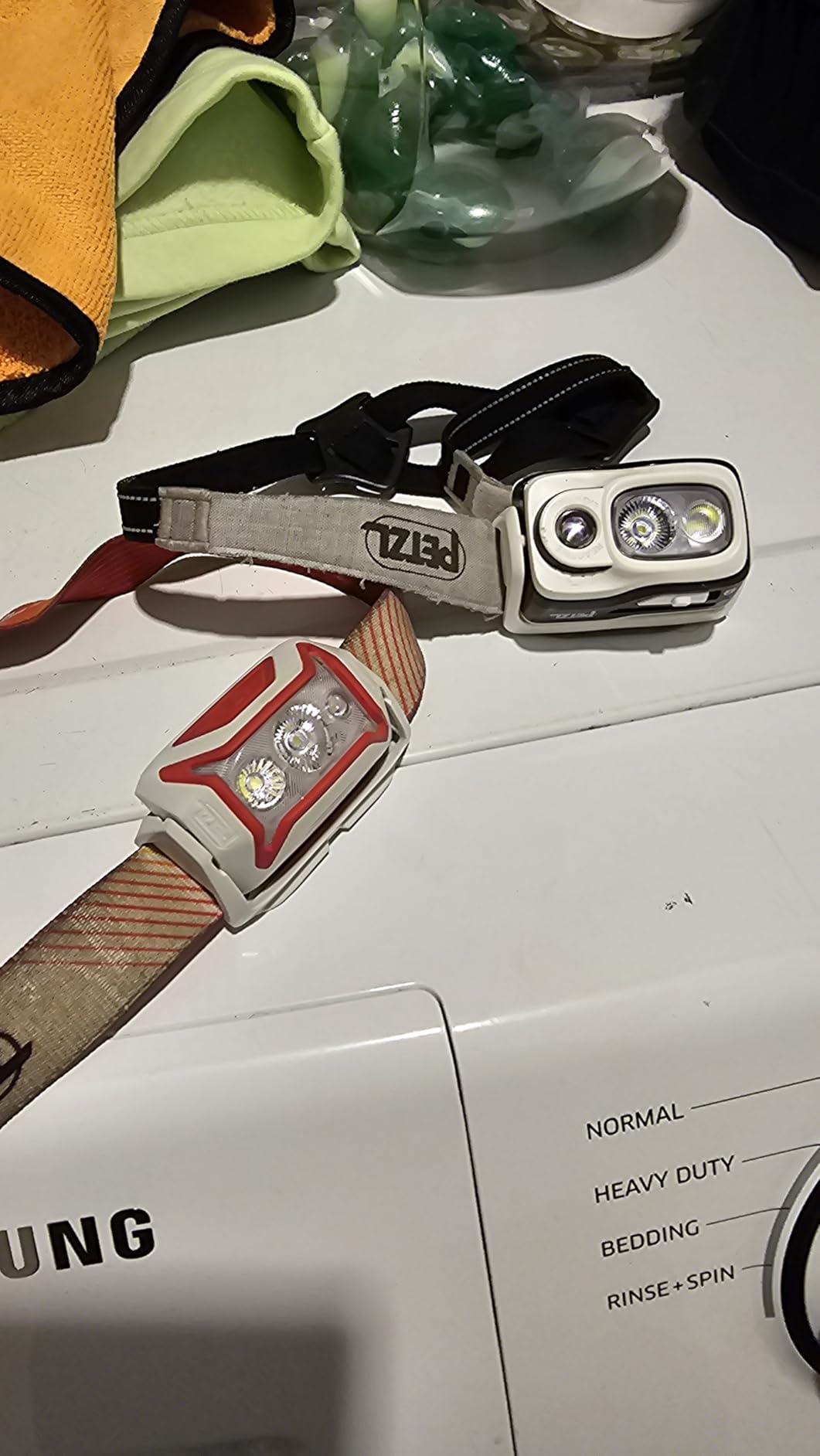
Three details stand out after a season of use. The band is symmetrical, washable and replaceable, and the plate tilts up so the lamp can be worn around the neck and pointed at a tent ceiling. The four-second press lockout works exactly as advertised, which matters more than most buyers realise.
The band also sits flat rather than with a rear cradle, which keeps long hair from catching and is one reason it stays put on a descent. IPX4 weather resistance handles drizzle and brush, though not immersion.
Where it frustrates people is the button logic. Hold for red, press again for strobe, hold four seconds to lock, hold again to unlock. That is a lot of muscle memory for a lamp you will operate with numb fingers at midnight.
Who the Petzl ACTIK CORE suits
It suits multi-night hikers and anyone whose trip crosses a border between charging infrastructure and no charging infrastructure. If your route has towns with outlets on day one and nothing for three days after, a lamp that accepts AAA cells removes the whole problem.
It also suits families and groups, because you can hand someone a CORE pack or a pack of cells and let them choose. The washable band survives shared use better than most.
Who should skip the Petzl ACTIK CORE
Skip it if you want the absolute lightest lamp or the brightest one. It sits in the middle on both counts, and the top setting burns through a CORE pack faster than the marketing runtime suggests.
Skip it if you hate fiddly controls. Petzl buys you that flexibility with more button combinations than any other lamp here, and the red mode is dim enough that some owners consider it decorative rather than functional.
3. Foxelli USB-C 180 Lumen – Most Versatile for Night Hiking
- 2.4 oz with a comfortable elastic strap
- Tap for low high and strobe then hold for red mode
- Handles hard rain without complaint
- USB-C charging from a power bank or car
- Red night vision and SOS strobe included
- 180 lumens is short range once you clear the treeline
- No lockout so it can switch on inside a pack
- Some units report the charging port failing after a few uses
- Plastic housing feels basic beside metal lamps
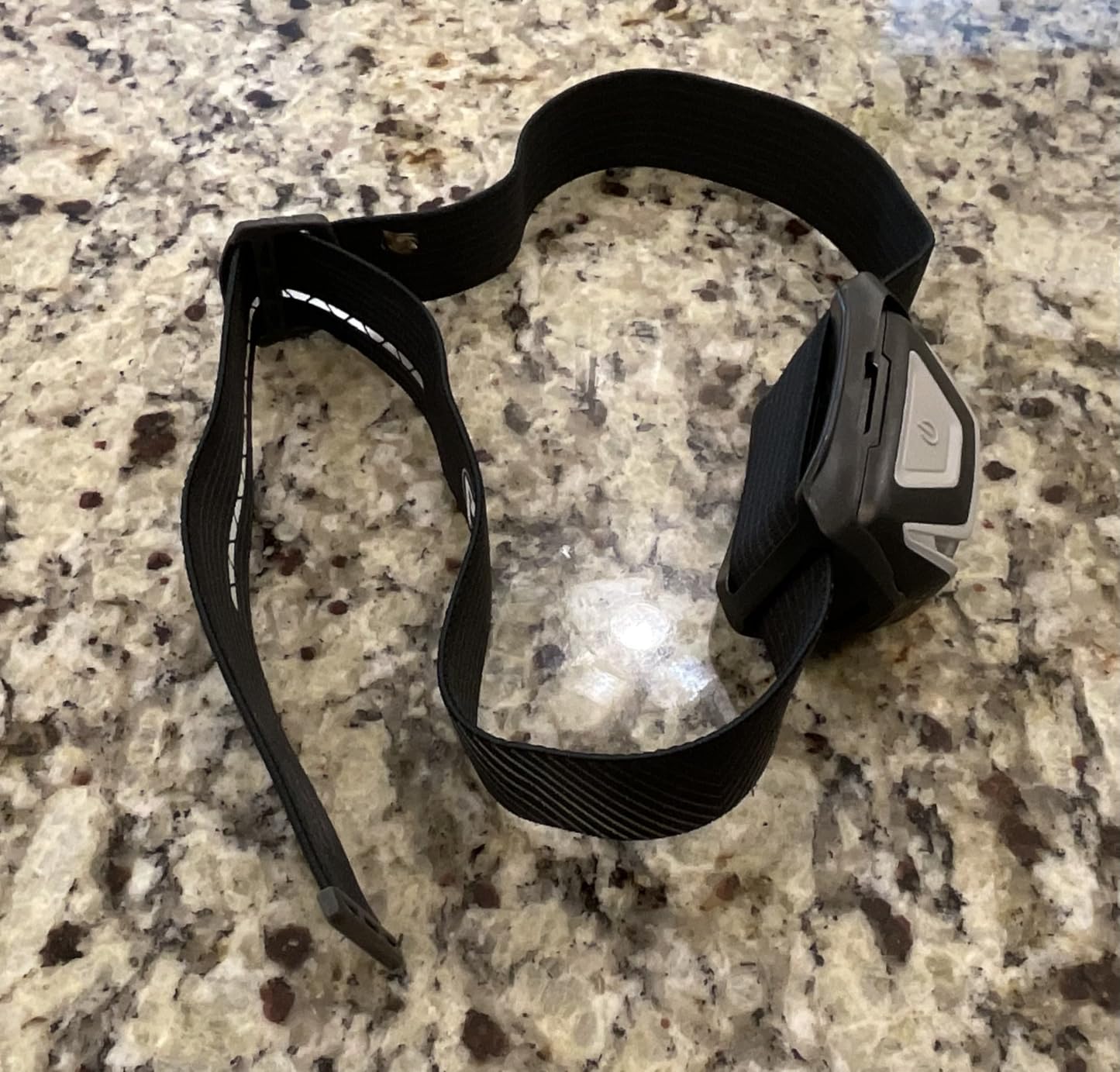
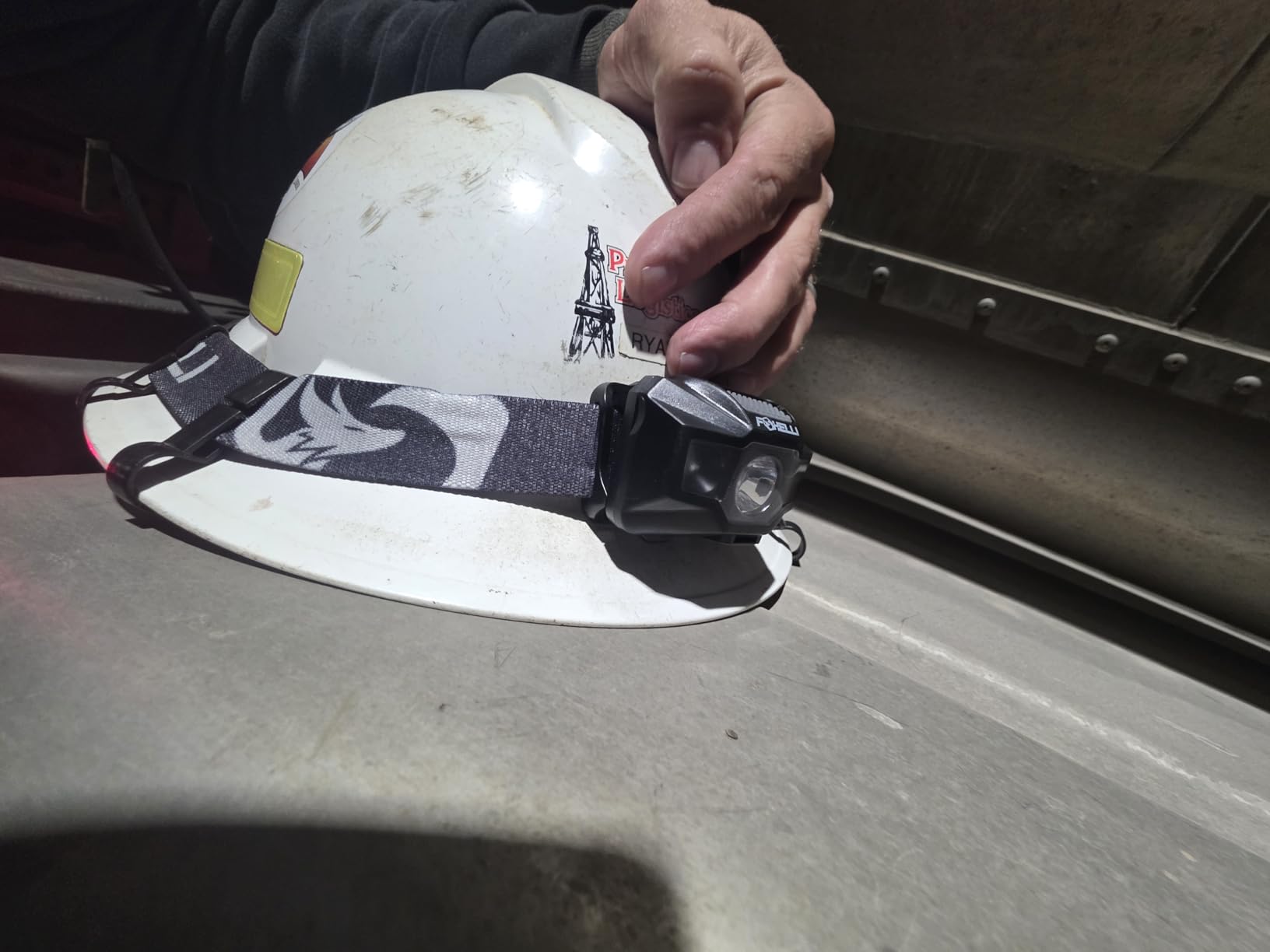
For a first night hike, a walk to a campsite, or a gift for someone who will lose it in a pack, this lamp does the job for very little. It weighs 2.4 ounces, charges over USB-C, and carries both a red night-vision mode and an SOS strobe. That feature list at this cost is genuinely hard to argue with.
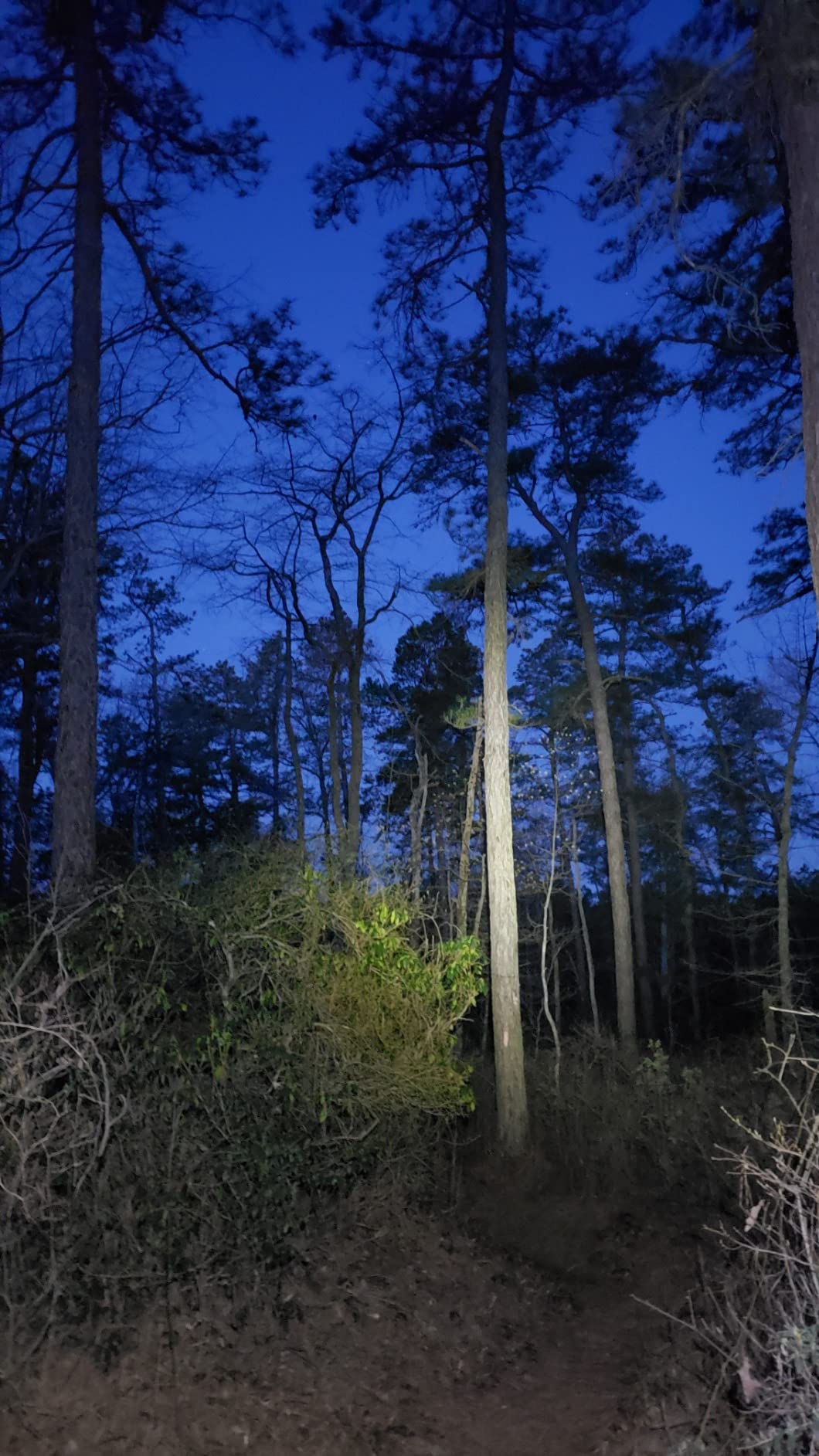
Output is 180 lumens across a 45-degree beam that reaches about 300 feet. Owners describe roughly 7 to 8 hours on low, which is enough for a long evening walk if you stay in the dim setting.
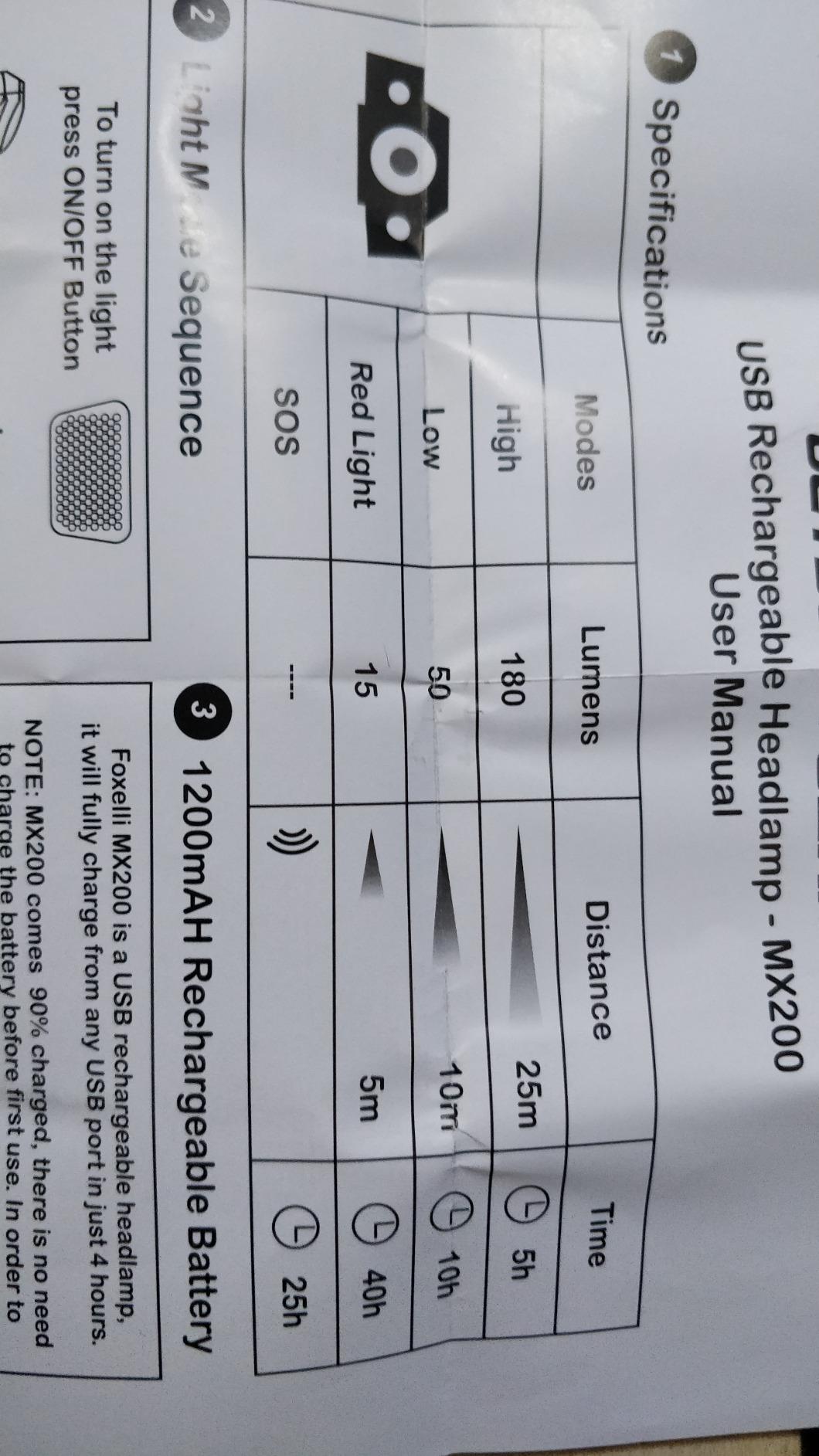
The controls are the best part of the design. One button, three taps for low, high and strobe, and a hold for red. There is nothing to learn, which matters when you are fumbling with gloves in the dark and do not want to cycle six modes to find the one you want.
IPX5 rating means it is fine in rain and snow. Owners report using it in hard weather without drama. The stretch-fit band works on adults and children, which makes it a practical family light.
The honest weakness is throw. Past the treeline, or on an open descent where you need to check the trail two hundred yards down, 180 lumens stops being enough. This is a walk-and-camp lamp, not a technical-terrain lamp.
Who the Foxelli lamp suits
It suits casual night walkers, families on unlit local paths, and anyone who wants a spare light without thinking about it. It also works as the backup that lives permanently in the top pocket of your pack, which is where most people should keep a second light.
Anyone running on a power bank will like that it charges from a laptop or a car adapter, so the same cable system covers lamp, phone and head unit.
Who should skip the Foxelli lamp
Skip it if your hike includes long unlit sections, off-trail shortcuts, or any point where you need to pick out a route far ahead. The light simply stops reaching, and you end up walking blind for safety rather than by choice.
Skip it if you carry a single bag and worry about stray activation. There is no lockout, so the lamp can come on in the pack and drain the battery while you are walking through the hardest miles of the night.
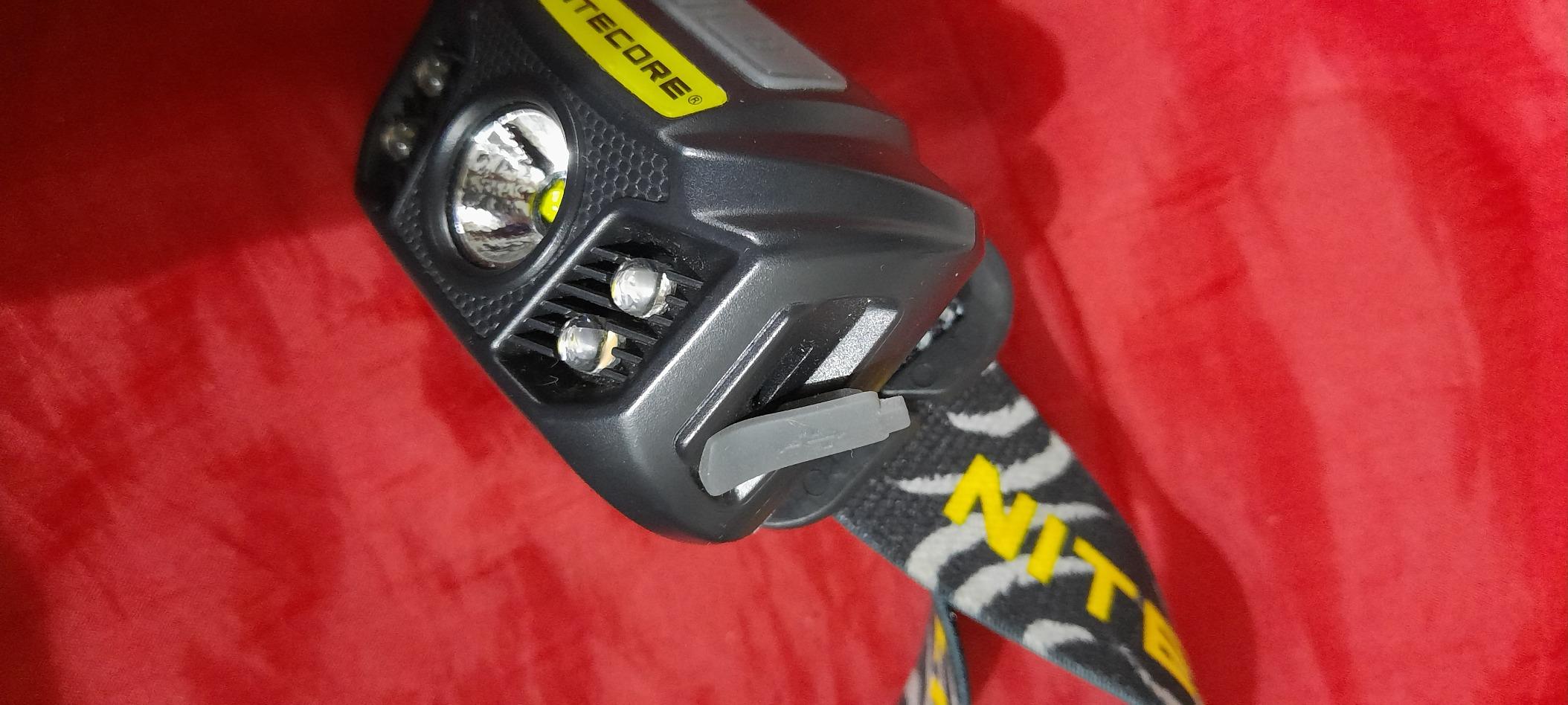
4. Nitecore NU30 – Best for Rain and Long Nights
Nitecore NU30 500 Lumen LED Rechargeable Headlamp with White and Red Beams
- Real lockout by holding both buttons
- High CRI flood is good for maps menus and camp tasks
- Full recharge in about 2 hours
- IP66 sealing handles sustained rain
- Holds a charge across two-night trips
- Elastic headband stretches and loses rebound over time
- Two-button layout needs retraining if you are used to single-button lamps
- A little bulky beside a 1.65 oz lamp
- Band must be fitted manually rather than pre-assembled
Runtime is the headline here. Owners report carrying it across two-night trips without recharging, which lines up with the published 97 hours on the lowest setting. Four white brightness levels from 1 to 500 lumens give you a usable mid setting rather than a binary on-and-off lamp.
It reaches 142 yards with the main LED and adds a separate high-CRI auxiliary light for close work. That combination is unusual: most lamps force you to choose between seeing the trail and reading a map, and this one does both.
The red auxiliary LED protects night vision and pairs with a slow strobe signalling mode, so it works for group movement without shouting. Two buttons separate the white and red controls, which is less elegant than one button but far easier to remember at midnight.
IP66 is the rating that matters for wet weather. It means dust-tight and protected against heavy jets of water, so a mountain downpour or a stream crossing is not the event that kills it. Impact resistance to a one-meter drop covers the usual tree branch.
The complaint we heard most is the elastic band. It is thick and comfortable for a while, then it stretches and stops rebounding, which on a steep descent is exactly when a loose headband becomes a problem.
Who the Nitecore NU30 suits
It suits anyone hiking in shoulder-season rain, on long routes where you cannot afford to stop and charge, and on trails with lots of map reading or food prep. The high CRI flood genuinely helps with close tasks, and it is not a feature you find on most lamps in this class.
The two-button layout and the lockout also make it a good pick for people who hate fiddling with multi-press sequences.
Who should skip the Nitecore NU30
Skip it if you are fastpacking and counting ounces, since at 3.2 ounces and slightly bulky it is a noticeable step up from an ultralight lamp. It is not the smallest or lightest option here.
Skip it if you already own a lamp you hate fitting. The band arrives needing manual fitting rather than pre-assembled, which is a small irritation that some buyers never get past.
5. Nitecore NU25 MCT UL 400 Lumen – Best Ultralight Pick
Nitecore NU25 UL 400 Lumens Ultra Lightweight Headlamp, USB-C Rechargeable Sticker for Back Packing, Camping and Running
- 1.65 oz makes it the lightest lamp in this roundup
- Switchable warm neutral and cool white at 4500K
- Recharges in just over an hour over USB-C
- IP66 and used in streams and heavy rain
- Paracord strap packs small and avoids a hot sweat band
- Top setting drops output after about a minute from heat
- Runtime on maximum closer to 40 minutes than published
- Buttons take a night of practice to learn
- Red mode brighter than most expect for a night-vision light
At 1.65 ounces this is the pick for thru-hikers and anyone whose base weight is a religion. It still delivers 400 lumens and 144 yards of reach, so you are not trading away the ability to check a junction or find water.
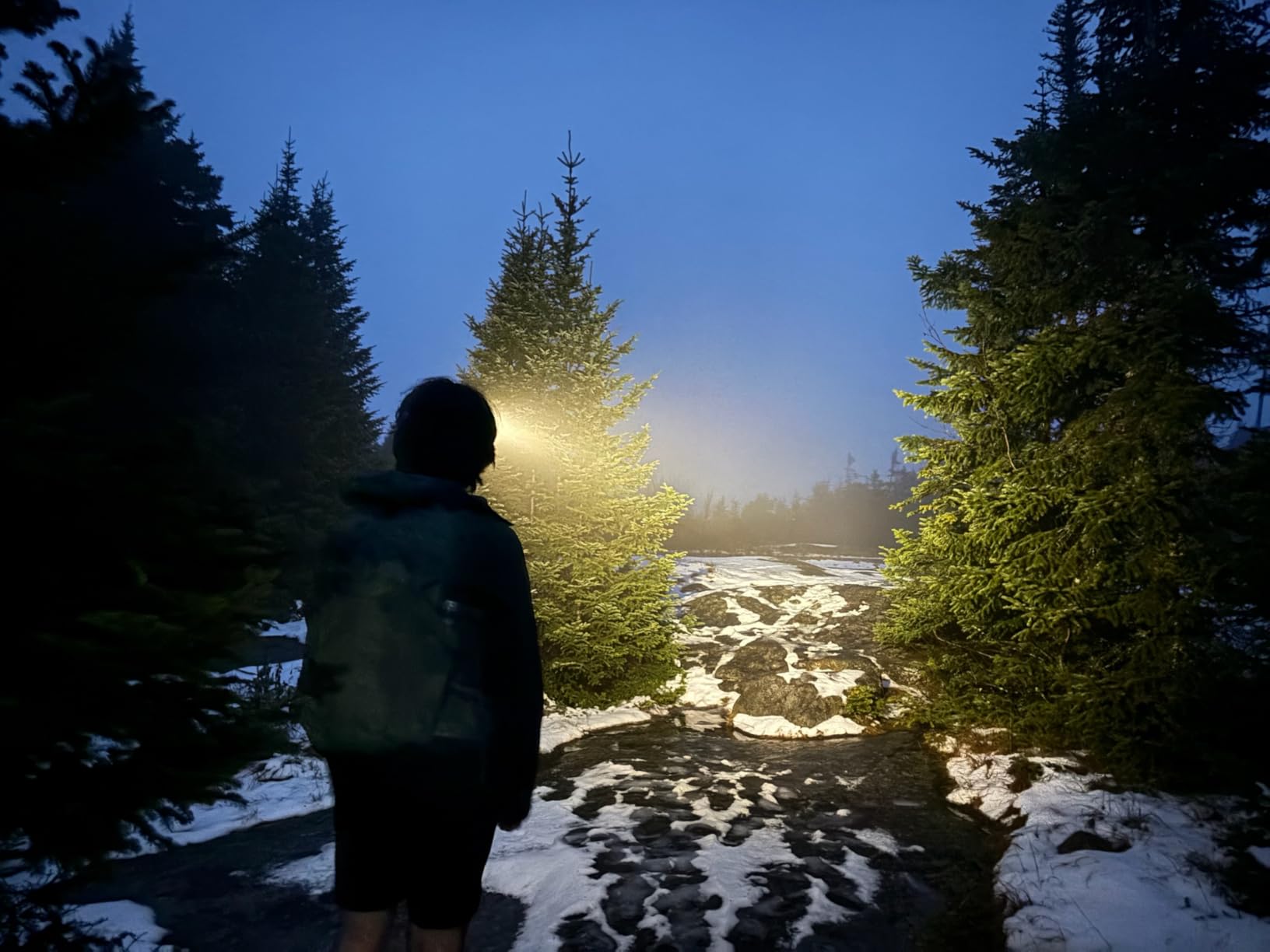
The multi-color temperature is the feature competitors copy. One button cycles warm, neutral and cool white, and the difference is real: warm light is kinder on your eyes in fog and rain and reads less harshly on wet rock, while cool white gives more contrast when you need to spot a trail marker at distance.
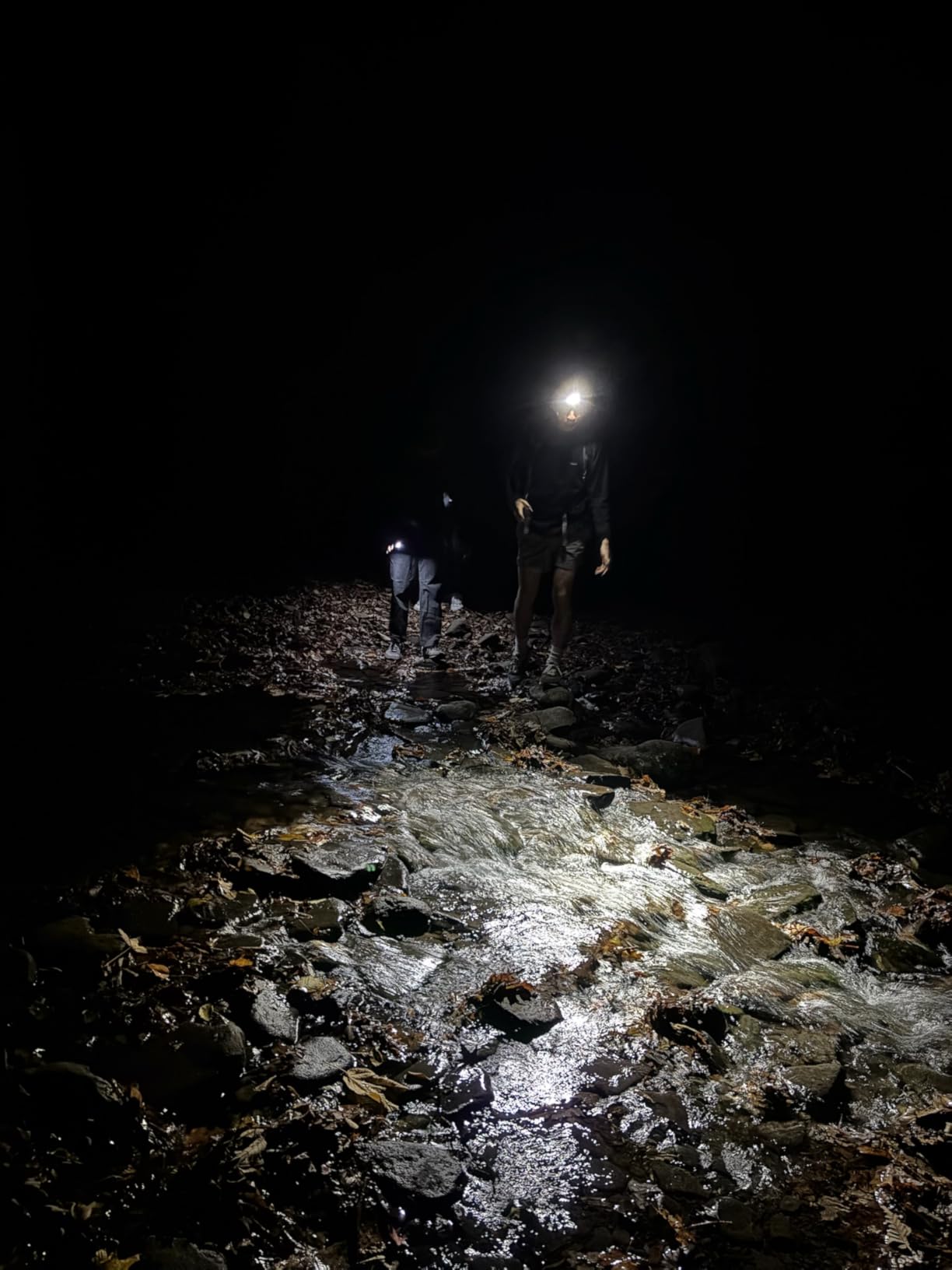
Owners describe it holding up across Appalachian Trail walks and desert treks, and the tilt-adjustable head means you can light the ground without swinging the lamp down at someone’s eyes. The paracord strap stays comfortable with no rear sweat band.
USB-C charging with up to 45 hours of runtime on low means you can charge it from the same battery bank as your phone and forget about it. That is the whole fastpacking argument in one feature.
Two technical caveats. Heat throttling: on the top setting it steps down after roughly a minute, which is normal for a lamp this small. And the red auxiliary light, with three output levels, is brighter than most people expect from something billed as night vision.
Who the Nitecore NU25 MCT UL suits
It suits long-distance hikers, fastpackers, and anyone who has already counted every gram in their kit but still refuses to hike in the dark without light. The color temperature switching also makes it the best pick for foggy, rainy coastal routes.
Anyone whose trips run on a single power bank will appreciate the short recharge time and the fact that one cable covers everything.
Who should skip the Nitecore NU25 MCT UL
Skip it if you need sustained maximum brightness. The heat-related output drop and the roughly 40-minute top-setting runtime make the 400-lumen figure a peak rather than a working level.
Skip it if you rely on red light to move around a campsite without destroying your night vision, or if you dislike learning button combinations. There are several modes here and they take practice.
6. Petzl Swift RL – Best for Technical Nights
- 1100 lumens lights a pitch black trail like dusk
- Reactive Lighting trims output when ambient light is already there
- Swappable 2350 mAh USB-C battery
- Five-level charge indicator and lock function
- Red mode plus strobe for signalling
- Reactive Lighting can flicker distractingly and is hard to fully disable
- Heaviest headband here at 6.08 oz
- Only one battery included and spares cost extra
- Charging is slow enough to plan overnight
This is the lamp for when the terrain gets serious: scree, snow, wet rock, a descent into cloud. At 1100 lumens with a 155-meter throw it turns a black mountainside into something you can read, which no other lamp in this roundup does at this weight class.
Reactive Lighting is the technology worth understanding. A sensor measures ambient light and adjusts output and beam pattern automatically, so walking out of a dark forest into moonlight does not blast your retinas. On a long night that saves real battery time.
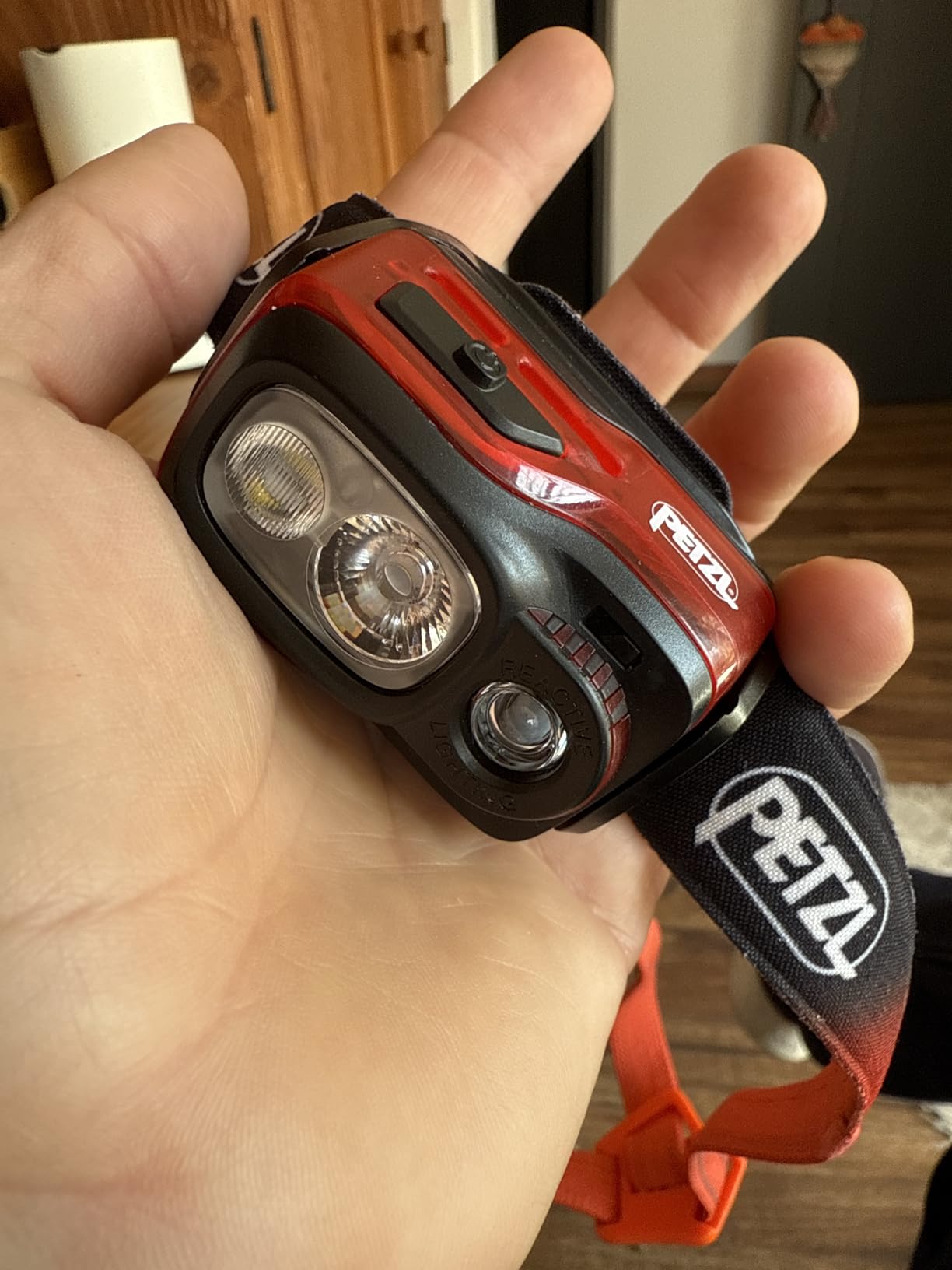
The split headband, a Petzl design, wraps the skull rather than pushing the lamp onto your forehead. It is the single most comfortable thing here on climbs and long descents, and reflective detailing makes you visible to the person walking behind you.
Battery is a swappable 2350 mAh USB-C pack with a five-level indicator, plus a lock function and continuous red light. It handles climbing, night cycling and poor weather without complaint.
Owners do report that Reactive Lighting can flicker in full darkness in a way that distracts, and some cannot fully disable it. At 6.08 ounces it is also the heaviest lamp here, so it is a poor fit for someone who walks rather than scrambles.

Who the Petzl Swift RL suits
It suits alpine starts, night ski touring, and hikers on long technical descents where seeing twenty meters ahead changes the outcome. It also suits anyone who wants a lamp that adapts when moving between dark forest and open moonlit terrain without touching a button.
For groups, the red mode and reflective band both help with keeping a party together and visible on shared paths.
Who should skip the Petzl Swift RL
Skip it if you are counting pack weight or walking on maintained trail the whole night. The brightness is wasted and the 6.08 ounces is the heaviest in this roundup.
Skip it if you find automated modes irritating. Reactive Lighting is the reason this lamp reacts the way it does, and it is exactly what some owners turn off permanently.
7. Black Diamond Storm 500-R – Best for Instant-Bright Control
BLACK DIAMOND Storm 500-R Headlamp, Rechargeable, Dimmable Bright, BD Black
- PowerTap touch on the side reaches full brightness without finding a button
- Lockout prevents activation inside a pack
- Brightness memory recalls your last used setting
- Long runtime on dimmed settings
- Low profile and light enough for all-day wear
- Micro-USB charging on an otherwise USB-C kit
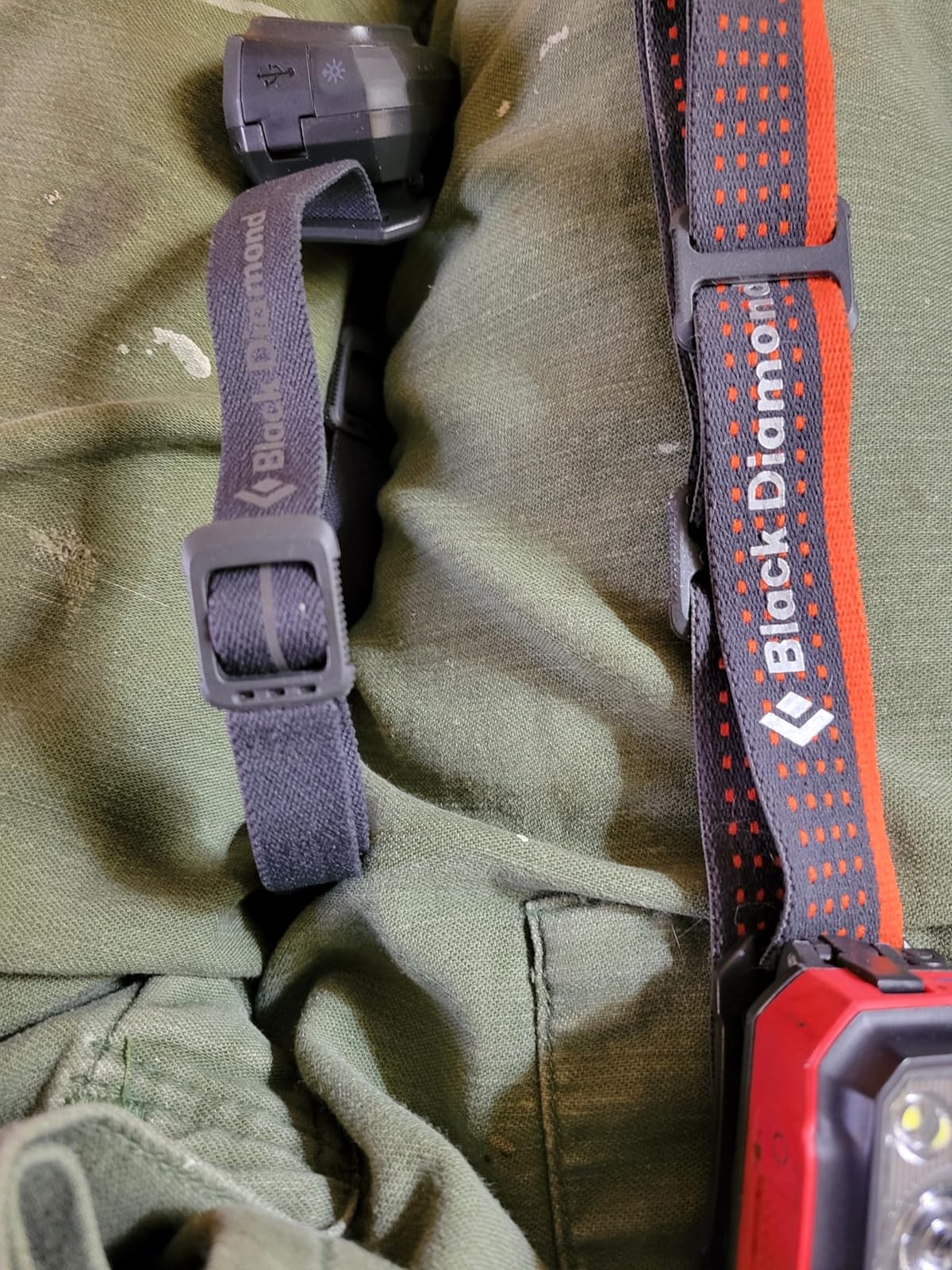
- Secondary recessed button is hard to locate by feel
- Limited downward tilt in spotlight mode
- Some units report brightness stepping down on its own
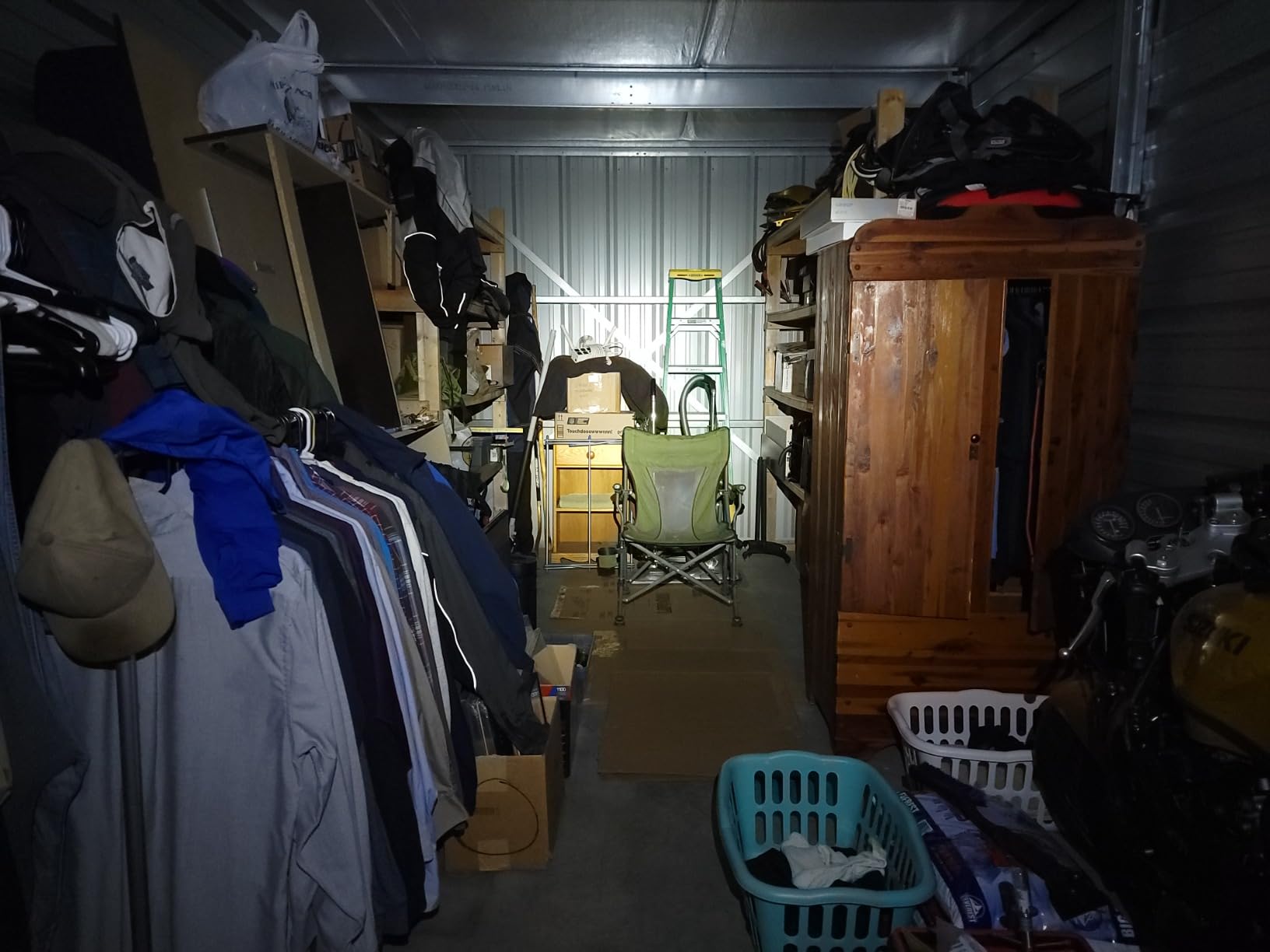
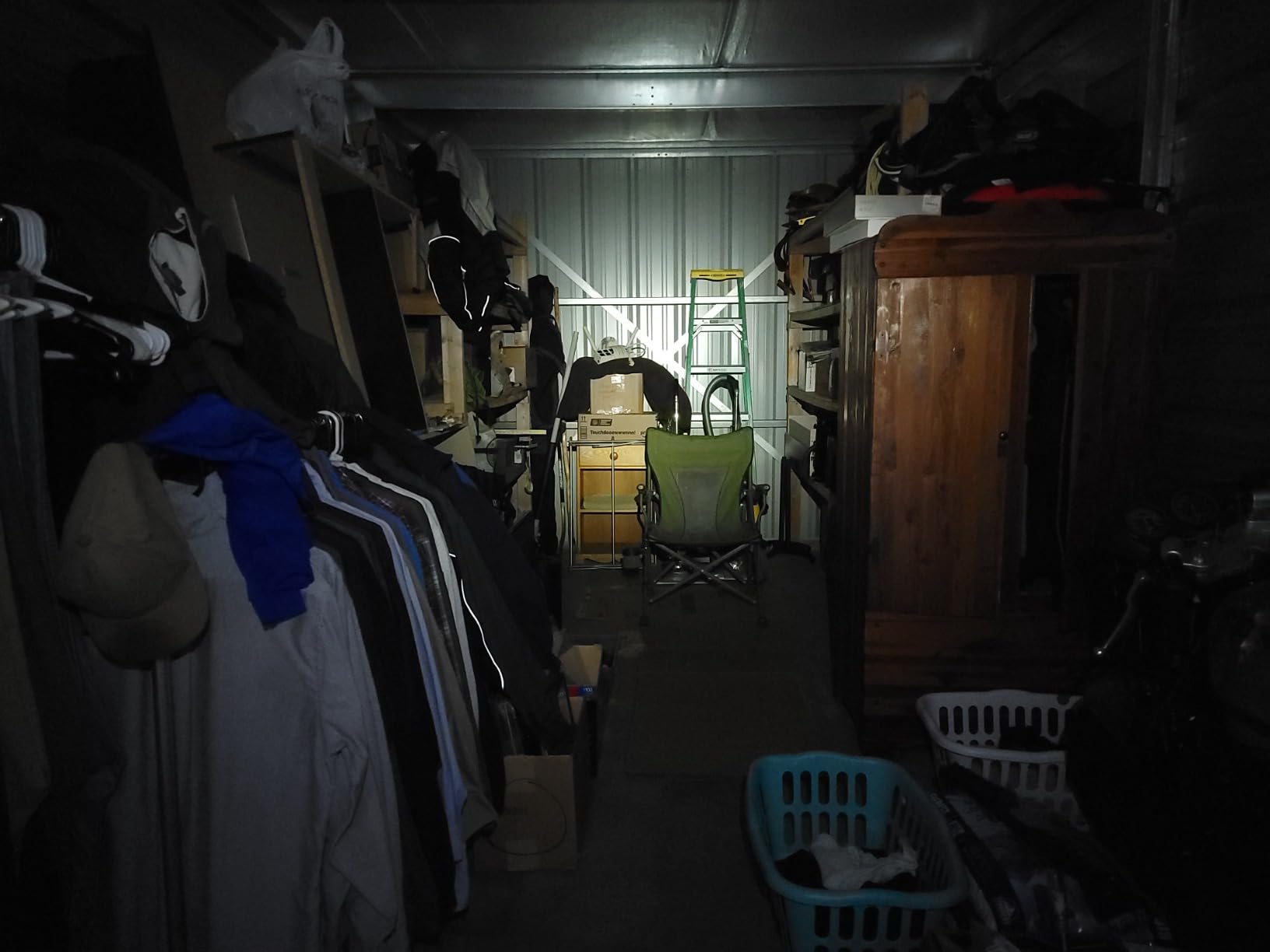
PowerTap is the feature here. Touch the side of the housing and the lamp jumps straight to full output, with no cycling through five modes while you stand in the dark wondering which one you are on. It is a small idea that changes how a lamp feels at midnight.
Output is 500 lumens with full, dimmed, strobe and red night-vision modes. The integrated 2400 mAh lithium-ion cell gives long runtimes on the dimmed setting, which owners consistently single out as the reason they rarely think about charging it.
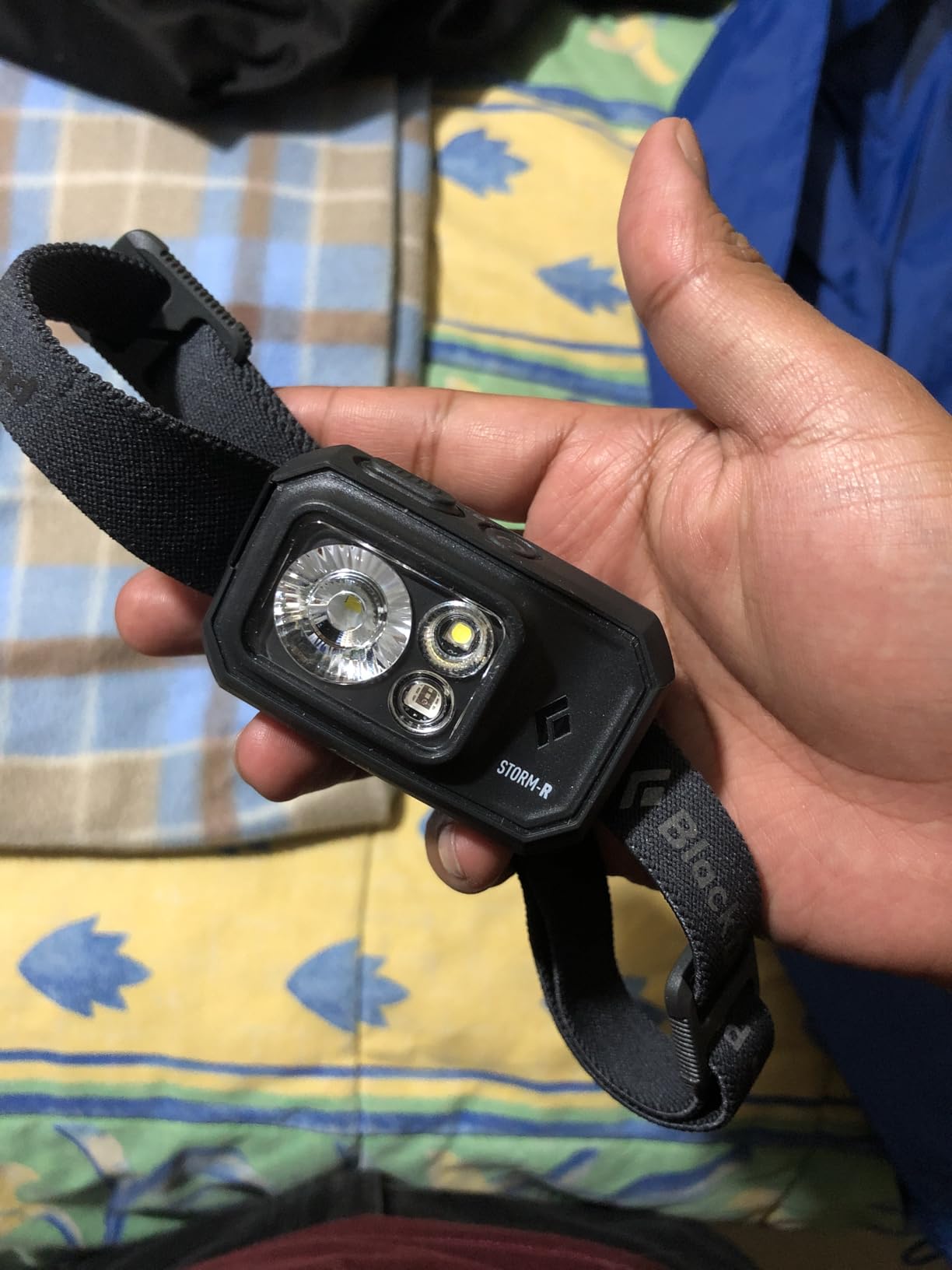
Brightness memory means the lamp restarts where you left it, which removes the most common complaint in forums about no-memory lamps resetting to a default mode every time. Lockout mode is present and works, so in-pack activation is handled.
At 3.2 ounces with a low-profile housing it disappears on the head for all-day wear, and the adjustable band keeps the housing off your forehead so you avoid bounce on descents.
The trade-offs are real. Charging is micro-USB with a very short cable, which means one more cable to carry on a multi-day trip. The recessed secondary button is genuinely hard to find by feel in gloves.
Who the Black Diamond Storm 500-R suits
It suits hikers who want instant control without watching a menu, and anyone tired of lamps that forget their setting. It also suits multi-night campers who want a light for cooking and campsite tasks as well as trail use.
Fisherers and people working around the house value the red mode and the long low-setting runtime equally, and the low profile makes it easy to wear under a cap.
Who should skip the Black Diamond Storm 500-R
Skip it if your whole kit runs on USB-C. Carrying a dedicated micro-USB cable for one device is a genuine annoyance on a longer trip, and this is the lamp where that matters most.
Skip it if you need to aim the beam steeply down a slope. Downward tilt is limited, especially in spotlight mode, and some owners also report the lamp stepping down in brightness without being asked to.
8. Fenix HM50R v2.0 – Best High-Output per Ounce
- 700 lumens in a body under 3 ounces
- 377 ft of reach covers fast trail and open ground
- IP68 hard-anodized aluminum built for harsh conditions
- 90-degree tilt bracket doubles as handheld and pocket clip
- USB-C charging with battery level indicator
- Built-in nonstandard battery means no spare cells can be carried
- Short runtime at the highest setting
- Red mode is secondary rather than a dedicated control
The Fenix squeezes the highest reach-per-ounce combination here into 2.75 ounces. 700 lumens out to 377 feet means you can check a ridge line or a road junction from a valley floor without climbing first, which is the scenario this lamp is built for.
Construction is hard-anodized aluminum with an IP68 rating, so it is sealed against dust and immersion. That is the strongest waterproofing claim in this roundup by a wide margin, and it matters on wet rock and in cold rain.
The 90-degree tilt bracket is the clever bit. Tilt it down and it becomes a handheld flashlight; leave it down and it becomes a pocket or belt clip. It is a small design choice that removes the need to carry a separate torch.
USB-C charging, a battery level indicator, white light plus red light and red flash signalling, and up to 42 hours on the lowest mode round out a very complete package for a lamp this size.
Two limitations stand out. The battery is built in and uses a nonstandard cell, so you cannot carry spares, which is a real constraint on multi-day trips. And runtime at the top setting is short, as with any compact high-output lamp.
Who the Fenix HM50R v2.0 suits
It suits hikers who want serious reach without carrying a big lamp, and anyone hiking in genuinely wet or cold conditions where IP68 and an aluminum body are worth more than grams.
It also suits people who want one object instead of two. The bracket turns the headlamp into a handheld, so the lamp in your pocket and the lamp on your head are the same tool.
Who should skip the Fenix HM50R v2.0
Skip it if your trip is multi-day and you are away from power. With a nonstandard internal battery, a dead lamp at hour eight means a dark walk, and that risk is not worth 2.75 ounces.
Skip it if red-light use is a priority. The red mode exists but it is a secondary feature rather than a dedicated control, and this is not the lamp for preserving night vision in a campsite.
9. Energizer PRO-360 – Best Emergency-Kit Backup
- Included AAA cells mean a spare light never needs charging
- Green and red modes for map reading and night vision
- Impact resistant housing with a shatterproof lens
- Light enough for walking running and campsite tasks
- Lowest cost way to keep a backup in the pack
- Not rechargeable so runtime depends on spare alkaline cells
- 85 m reach is short for unlit trail
- IPX4 handles drizzle but is not submersible
- Brightness changes through VisionGuard ramping rather than fine manual control
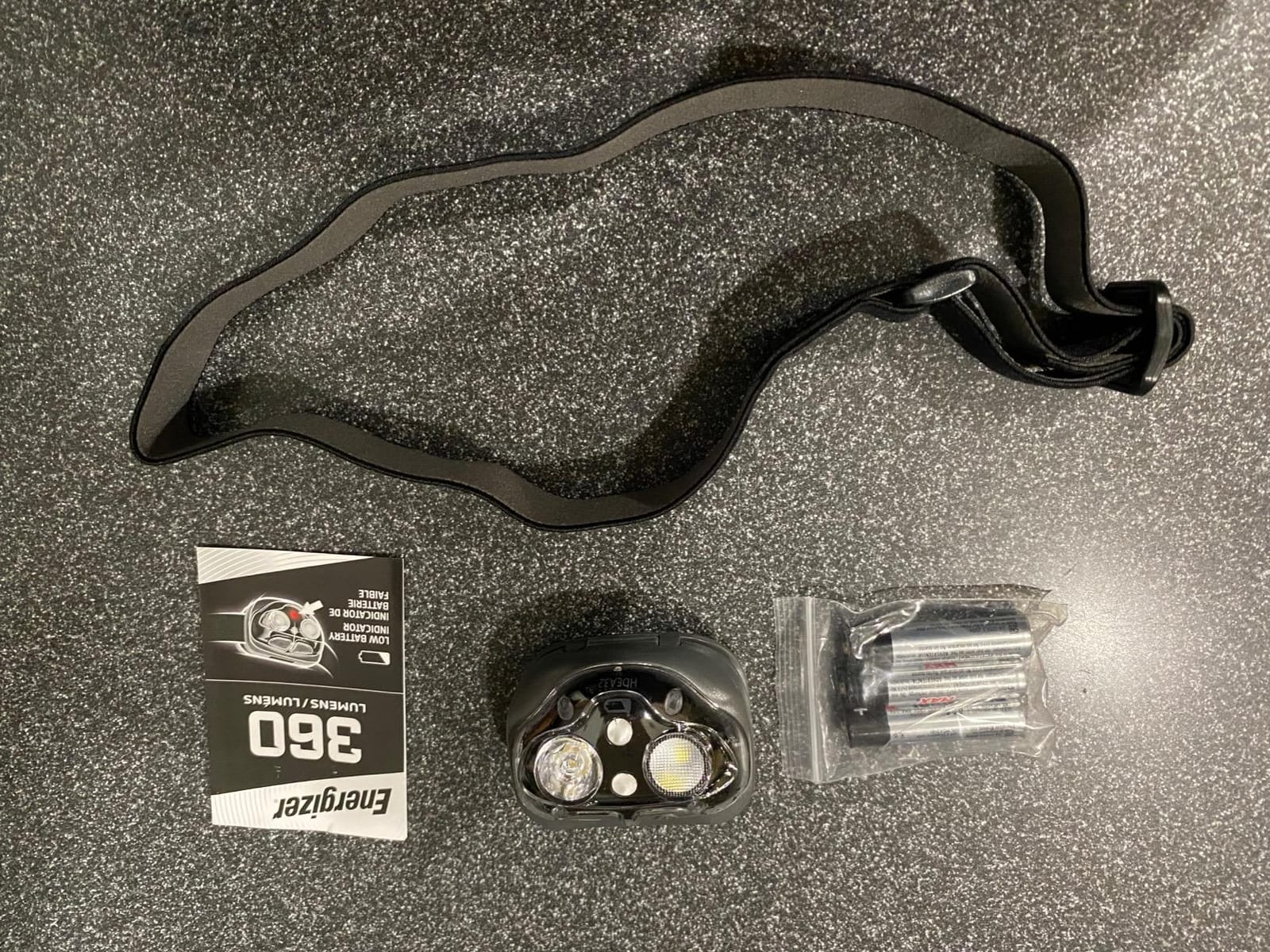
Not every lamp needs to be your primary. This one belongs in the side pocket of your pack as insurance, and the reason is simple: it runs on three standard AAA batteries that you can buy in any shop in any town you pass through.
Output is 360 lumens with about 85 meters of reach, which is plenty for putting on boots, reading a map, walking across a campsite or dealing with a flat tyre in the dark. It is not a long-throw trail lamp and it is not trying to be.
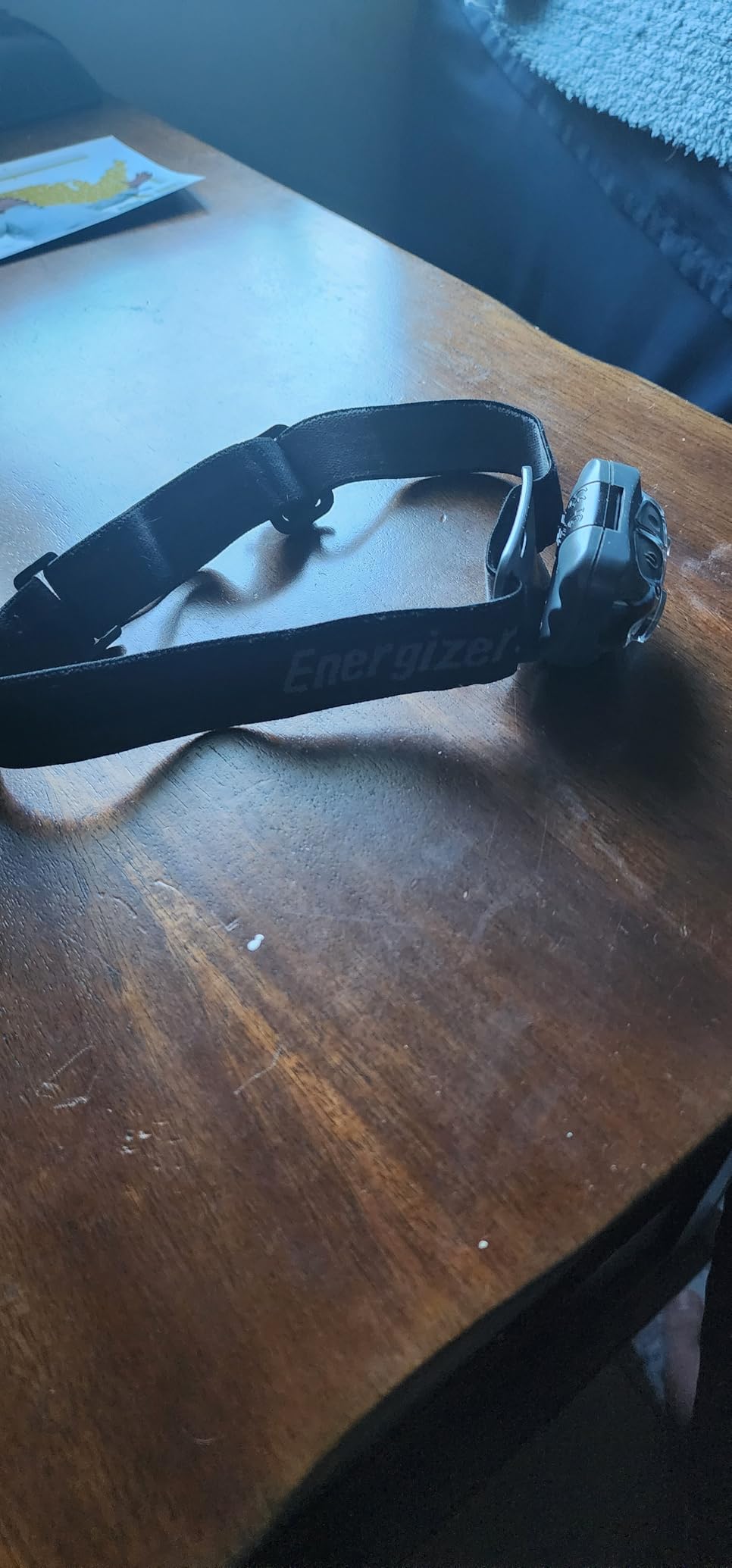
VisionGuard ramps the output up gradually rather than snapping to full brightness, which is easier on night-adapted eyes when you switch it on in a dark tent. Six modes cover high, low, wide, wide low, green and red or flashing red.
The housing is impact resistant to a one-meter drop with a shatterproof lens, at 3.52 ounces. That combination is what makes it a credible emergency light rather than a novelty.
Green mode is an underrated addition, useful for reading a topographic map because green preserves more of your dark adaptation than white while still showing detail. IPX4 is the weakest rating here, so treat it as a drizzle lamp.
Who the Energizer PRO-360 suits
It suits anyone building a kit that has to work when everything else fails, including drivers, households, and hikers who want a light they can service in a town shop. AAA cells are the most universally available battery on earth.
It also works well as a camp light, where the green and red modes are more useful than raw brightness, and the impact-resistant build suits a garage or a workbench.
Who should skip the Energizer PRO-360
Skip it as your only lamp. It is not rechargeable, and on a multi-night trip you are managing a consumable rather than a battery, which is exactly the friction people pick a USB-C lamp to avoid.
Skip it if your route is long and unlit. At 85 meters of reach it cannot check anything far ahead, so you will be committing to ground you cannot see.
10. Petzl TIKKINA 300 Lumen – Best for Simple Controls
- Single button with no modes to memorise
- Runs on three standard AAA batteries so spares are easy to carry
- Also accepts a CORE rechargeable battery if you prefer it
- Washable replaceable symmetrical headband
- Low entry cost from an established safety brand
- Lowest output here at 300 lumens and no red night-vision mode
- Weak beam throw for unlit trails or distance
- Water resistant rather than fully waterproof
- Durability complaints hold the rating down
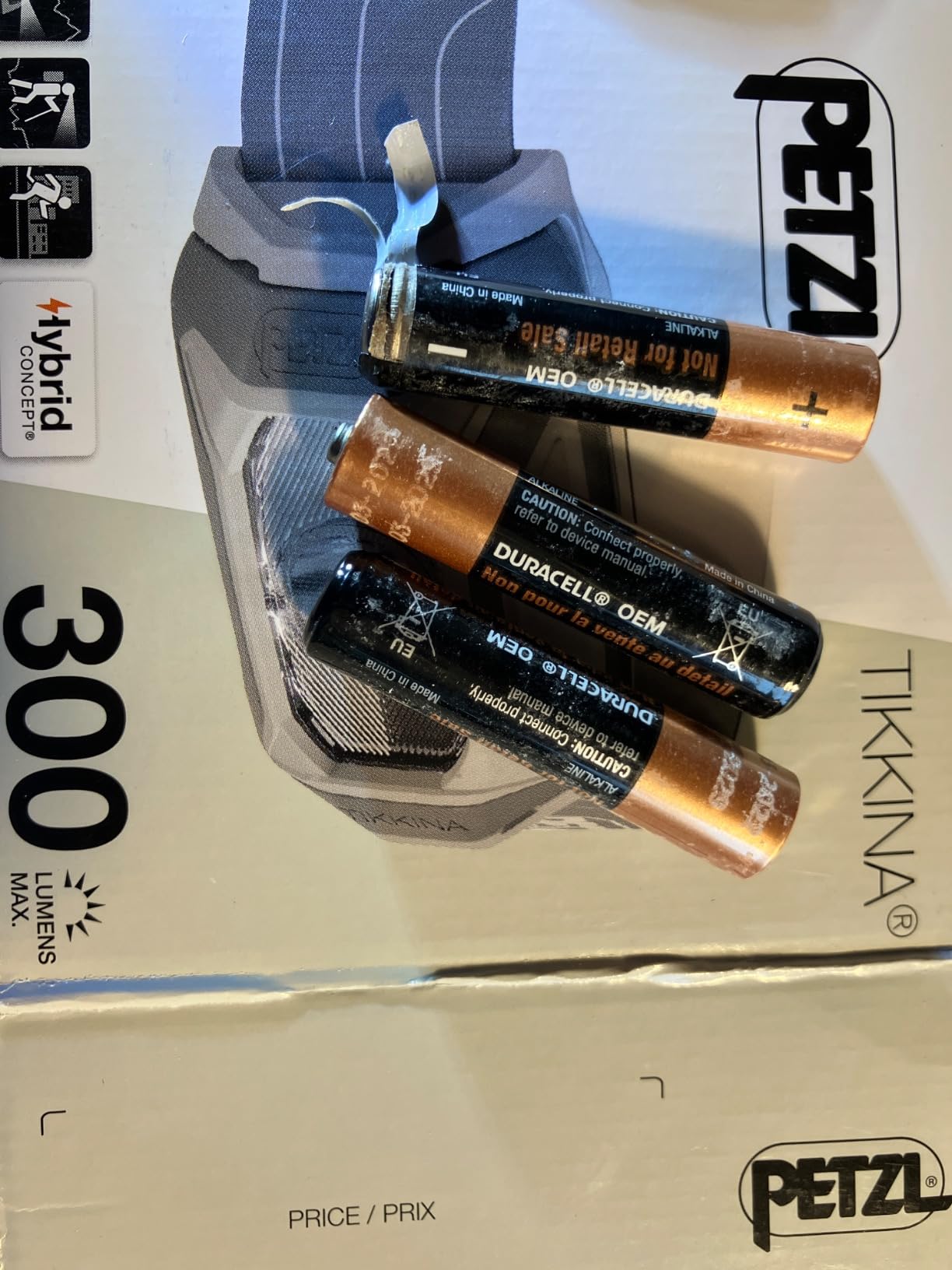
The TIKKINA is the simplest lamp in this roundup, and for some hikers that is the entire point. One button, one obvious wide beam, three AAA batteries in the box. There is nothing to learn and nothing to configure, which makes it the lamp we hand to guests and to anyone who says they hate headlamps.
300 lumens over a wide uniform beam is genuinely good for walking. The light is focused on the trail and the ground a few yards ahead rather than throwing far down the hill, which is the correct behaviour for moving on foot.
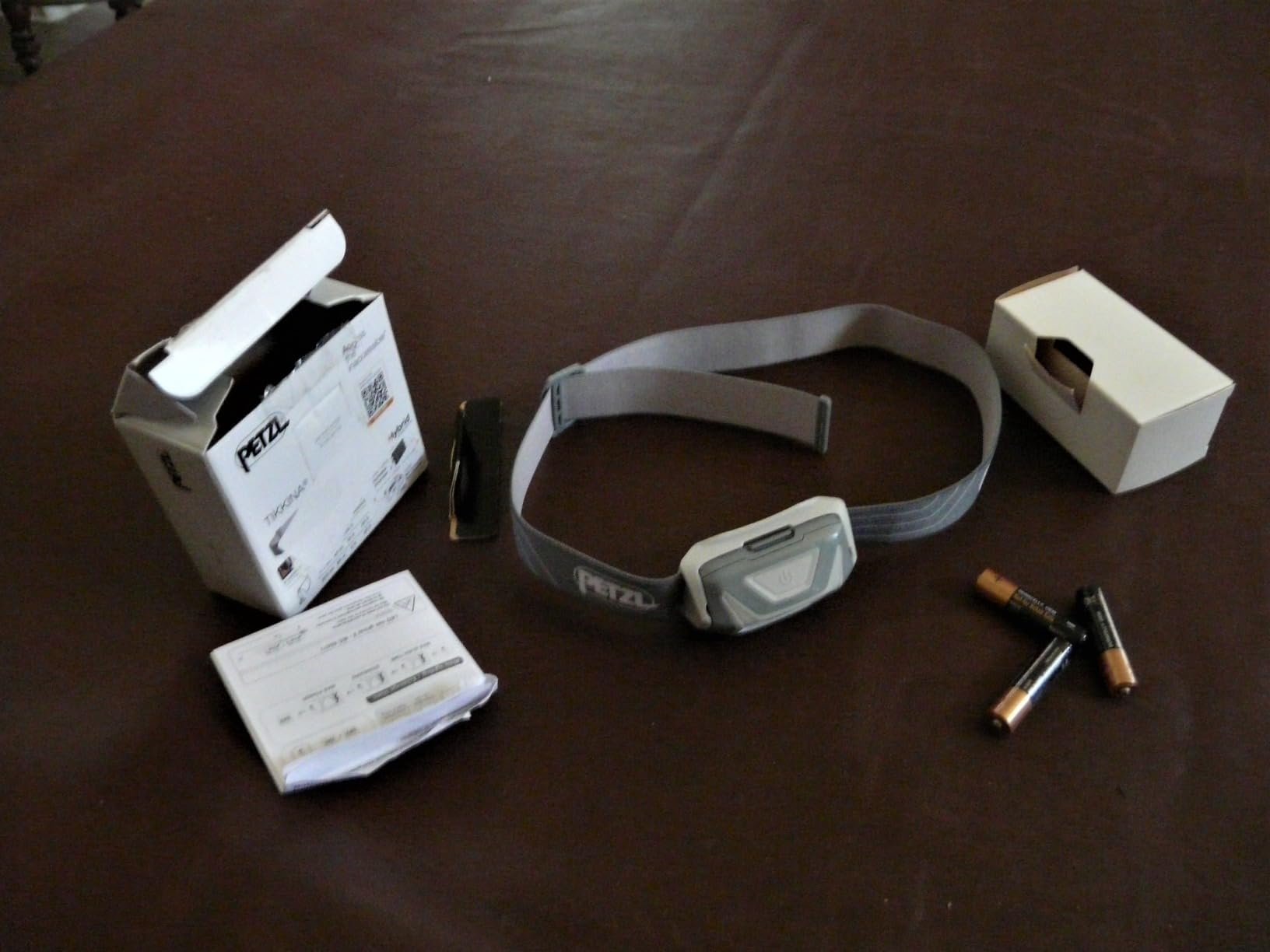
Hybrid Concept means it accepts a CORE rechargeable battery as well as AAA cells, so it is not locked into disposable power. The symmetrical band is removable, washable and replaceable, which is a Petzl habit we wish more brands copied.
The tilt plate lets the lamp point upward when worn around the neck, which is a small thing that makes it pleasant for reading at camp.
Its 4.2 rating is the lowest here, and the reasons are clear from owner feedback. It has no red mode, its throw is weak, it is water resistant rather than waterproof, and a meaningful share of buyers report durability problems over time.
Who the Petzl TIKKINA suits
It suits first-time buyers, families, and anyone who prefers a physical button they can find in the dark without taking the lamp off. Three AAA cells mean you can restock anywhere, which is a real advantage on long routes through small towns.
The washable replaceable band also makes it a good pick for sharing on a trip where several people need their own light.
Who should skip the Petzl TIKKINA
Skip it if your hike involves unlit trail or any off-trail section. With no red mode and limited throw, it is a trail-lighting lamp, not a route-finding lamp.
Skip it if you hike in sustained rain. It is water resistant, not waterproof, and durability complaints from owners are worth weighing before you depend on it in bad weather.
How to Choose a Headlamp for Night Hiking
Get a mixed beam, not just a bright one
A flood beam lights a wide area close to you, which is what you need for your feet, roots and ground. A spot beam throws a narrow column far down the trail, which is what you need for junctions and obstacles. The best headlamps for night hiking give you both, either through two LEDs or by letting you shape the beam.
On a wooded trail the flood matters more. Light bouncing back off leaves and mist also matters, which is where a harsh cool-white beam tires your eyes faster than a warm one over a long night.
Read burn time on the setting you will actually use
Manufacturer runtime figures are measured on the lowest setting, often at one or two lumens. That number is close to meaningless for night hiking. Look instead at how long the lamp runs at the middle setting where you can still see the trail.
Also remember that output dims as the battery depletes, so a lamp that reads 500 lumens at the start of an evening may be noticeably dimmer by hour six. Plan your longest stretch on a lower setting than your brightest.
Match the IP rating to your weather
IPX4 means splash resistant in any direction and is fine for drizzle. IP66 adds protection against powerful water jets and is what you want for sustained rain. IP67 adds temporary immersion, and IP68 is for continuous submersion. For most night hikers IPX4 is enough, but anyone hiking shoulder season or above treeline should look for IP66 or better.
Prefer USB-C, but understand pass-through charging
USB-C means one cable for your lamp, your phone and your power bank, which removes the single most common packing frustration in forums. Pass-through or power-bank capability is the next step: some lamps can run while charging, which means a 10000 mAh bank is a genuine second battery.
Check whether a lamp takes replaceable cells as well. Hybrid lamps accept both rechargeable packs and AAA batteries, which is the most flexible option for multi-night trips.
Use red light for night vision and fewer bugs
Red light preserves your dark adaptation because your eyes rely on rod cells that respond poorly to long red wavelengths, so you keep more of your night vision. Hikers on forums also cite two practical reasons: it is far less visible to other people, so it is less likely to blind a partner walking behind you, and it attracts noticeably fewer insects.
One warning: budget red modes are often too bright to be useful and still destroy your dark adaptation. Users describe being underwhelmed by cheap red settings. A lamp with genuinely low red output is worth a premium.
Weight only matters if your trip is long
Forum consensus is that weight decides the vote for thru-hikers and fastpackers, while most weekend hikers prefer runtime and throw over a few grams. Below 2 ounces you are in ultralight territory, but check that the beam is still usable before trading away everything else.
Comfort matters more than weight over a long night. A lamp that bounces, slips on hair or digs into your forehead will get taken off and stuffed in a pocket, at which point you have no light at all.
What to skip for night hiking specifically
Skip flood-only lamps. They look impressive in a shop and blind you in the woods because everything is reflected back off leaves. Skip front-heavy running lamps built for tempo sessions; they bounce on descents and burn batteries in two hours. And skip micro-USB-only lamps if the rest of your kit is USB-C.
Skip any lamp without a lockout if you carry it in a pack. Accidental activation is one of the most reported problems in hiking forums and it is entirely preventable.
Plan for cold, long nights and a backup
Alkaline cells drain faster in cold conditions and lithium-ion packs lose capacity as temperatures drop, so keep your primary lamp close to your body and carry a second light you can reach without unpacking. A cheap AAA lamp in the top pocket of the pack is insurance that costs almost nothing.
Tell someone your route and expected return time, and remember that most night-hiking accidents involve navigation rather than falls. Before a long hike, eat properly rather than heading out on coffee and snacks, and if you want ideas for warm meals that work at altitude or in camp, our cold-night soup recipes guide covers simple one-pot options. When you get back, something quick and filling like our slow-cooker meatball subs is an easy reward for a long night.
Frequently Asked Questions
How many lumens are needed for night hiking?
Between 150 and 300 lumens is the working range for maintained trail and ordinary wooded night hiking, and experienced hikers generally agree that around 300 to 350 lumens is more than adequate. Use 300 to 400 lumens for fast hiking, loose ground or off-trail navigation. Above 500 lumens you are paying for reach you rarely need, and the brightest settings drain most batteries in under an hour.
What is the best headlamp for overnight hikes?
For overnight hikes the Fenix HM50R v2.0 and the Coast XPH30R give you the most light and the most reach for the weight. For multi-night trips the Petzl ACTIK CORE is the safer choice because it runs on either a rechargeable CORE pack or three standard AAA batteries, so a flat cell never ends your night. Carry a second cheap AAA lamp as backup.
What is the best headlamp for hiking with red light?
The Nitecore NU30 and the Black Diamond Storm 500-R both pair a genuine low-output red mode with a full white beam, and both include a lockout so the lamp does not wake up in your pack. Avoid cheap lamps whose red mode is so bright it defeats the purpose, which is the most common complaint about entry-level red lighting.
Why do people use red lights at night hiking?
Red light preserves your dark adaptation because your rod cells respond poorly to long red wavelengths, so you keep more of your night vision. In practice hikers also use it because it is much less visible to other people, which means it blinds a partner walking behind you far less, and because it attracts noticeably fewer insects around camp.
Is IP67 waterproofing needed for night hiking?
Usually not. IPX4 is enough for drizzle and light rain, and IP66 covers sustained rain, which is what most night hikers need. Look for IP67 or IP68 only if you hike exposed alpine terrain, cross water frequently or run in cold storms, since those ratings cost you weight and money you may want elsewhere.
Should a night hiking headlamp be rechargeable or battery powered?
Rechargeable USB-C wins for most people because one cable covers your lamp, phone and power bank. Replaceable AAA cells win where outlets are scarce, on long routes through small towns or as a guaranteed backup. Hybrid lamps that accept both, such as the Petzl ACTIK CORE, remove the decision entirely.
Final Verdict
The best headlamps for night hiking are not the ones with the biggest number on the box. The Coast XPH30R is our pick because the twist focus optic gives you both a flood and a long spot in one lamp, the detachable battery means a five-second swap instead of a café stop, and the build has survived every wet night we have put it through. The Petzl ACTIK CORE is the one to buy if your trip spans more than one night and you cannot count on outlets, and the Nitecore NU25 MCT UL is the one to buy if you are counting grams.
Whatever you choose, do three things before you walk. Charge it fully the day before rather than the morning of, set a lockout reminder in your own head so the lamp never wakes up in your pack, and carry a second light you can reach without unpacking. Charge it before you go, and the best headlamps for night hiking in 2026 will get you back to the car. Reward yourself properly once you are home, and a movie night with our cozy movie night snack ideas beats a drive-through on the way home.