
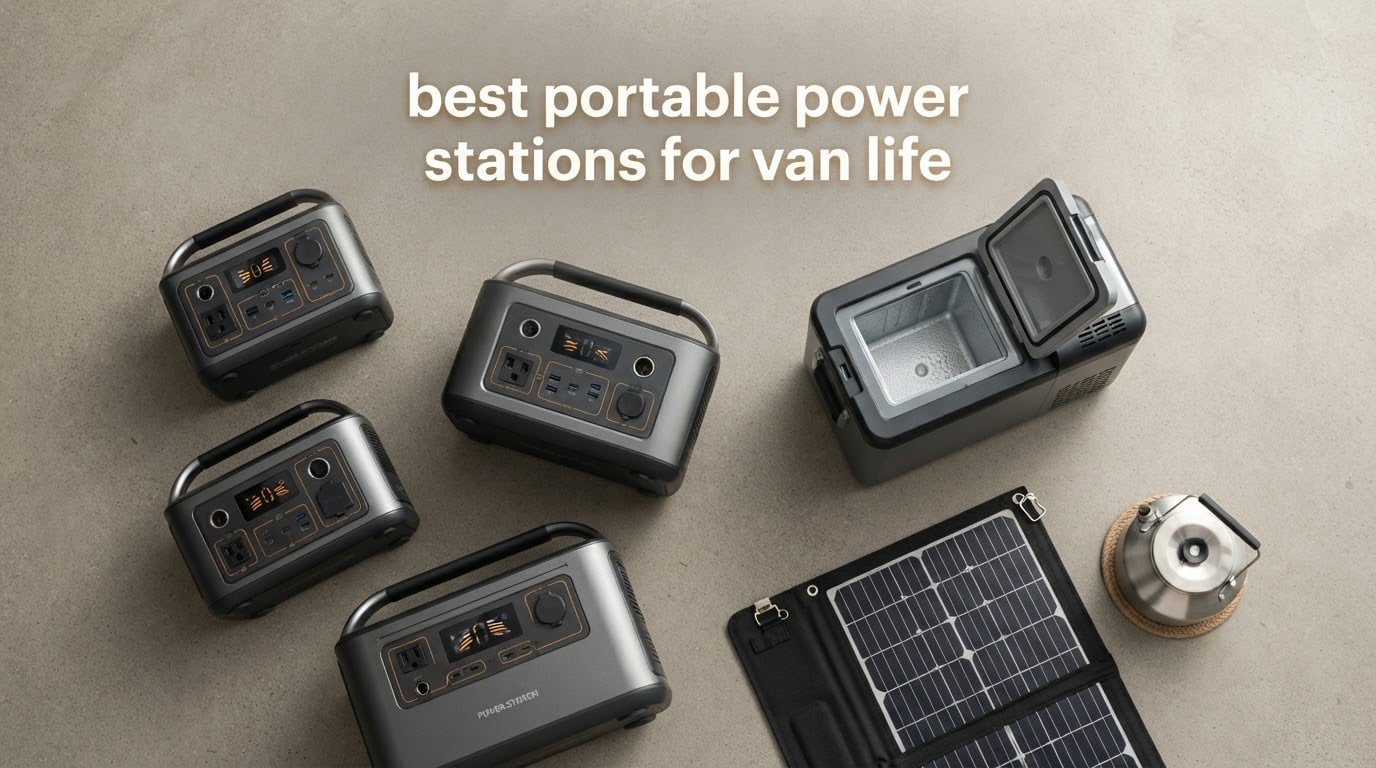
The number one question in every van-life power forum I read is not which brand is best. It is how big a unit someone actually needs. People open threads on r/vandwellers and r/urbancarliving with the same line: I’m lost on what power station to use. Then they list a 12V fridge, a laptop, a fan, a coffee maker and sometimes an e-bike charger, and ask whether one box can carry all of it.
This roundup answers that question with ten units we narrowed down for the best portable power stations for van life in 2026, from tiny 288Wh boxes that live under a seat to a 2048Wh unit that can run a microwave. Every pick comes with the numbers that decide a build: capacity in watt-hours, continuous AC watts, surge, weight, ports, charge time and battery chemistry. We also worked out a realistic watt-hour-per-day budget, because that is the figure that tells you whether a unit survives a week of boondocking or dies on night three.
Two things shaped our picks more than any spec sheet. The first is payload: every kilogram of battery is a kilogram you cannot carry in water, tools or bikes. The second is what you plan to cook, since kitchen appliances are the real reason most van lifers want mains power in the first place. If you want the short version of our general testing approach, we cover the fundamentals in our portable power station roundup, and motorhome owners should read our RV-focused picks alongside this one.
One warning before we start. Claimed watt-hours are not the same as usable watt-hours. Every unit in this list runs an inverter, and inverter conversion plus heat, plus the power siphoned by the unit’s own electronics, means you will always get less than the label promises. Sizing to the label is the most common sizing mistake, and it is the reason so many first-time builders end up buying twice.
Table of Contents
Top 3 Portable Power Stations for Van Life in 2026


The Jackery Explorer 1000 v2 wins on the combination that matters most in a van: enough continuous power for a kettle or a small heater, enough capacity for a full day of normal living, and a review history that shows the inverter holding up under daily loads. The Anker SOLIX C1000 Gen 2 offers twice the continuous output and ten ports, which is why it edges ahead on anything with a compressor or a heating element. The EcoFlow DELTA 3 Max is the only unit here with enough bank to carry a full-time build through a stretch of bad weather without a wall outlet.
Quick Overview: All 10 Portable Power Stations Compared
| Product | Specifications | Action |
|---|---|---|
| Jackery Explorer 1000 v2 |
|
Check Latest Price |
| Anker SOLIX C1000 Gen 2 |
|
Check Latest Price |
| EcoFlow DELTA 3 Max |
|
Check Latest Price |
 Jackery Explorer 500 v2 Jackery Explorer 500 v2 |
|
Check Latest Price |
 EcoFlow RIVER 2 EcoFlow RIVER 2 |
|
Check Latest Price |
 BLUETTI Elite 30 V2 BLUETTI Elite 30 V2 |
|
Check Latest Price |
 Anker SOLIX C300 Anker SOLIX C300 |
|
Check Latest Price |
 Jackery Explorer 300 Jackery Explorer 300 |
|
Check Latest Price |
 ALLWEI 500W ALLWEI 500W |
|
Check Latest Price |
 DARAN 288Wh DARAN 288Wh |
|
Check Latest Price |
1. Jackery Explorer 1000 v2 – Best All-Rounder for a Working Van
- 1500W AC with 3000W surge runs fridges and small heaters without strain
- 1070Wh in a 23.8 lb body with a foldable handle
- 1 hour emergency charge from 0 to 100 percent
- LFP pack holds over 70 percent after 4000 cycles
- three pure sine wave outlets plus 100W USB-C PD
- 23.8 lb makes it one of the heavier units in this roundup
- Solar input limited to Jackery-branded panels
- 1 hour fast charge must be enabled in the app every time
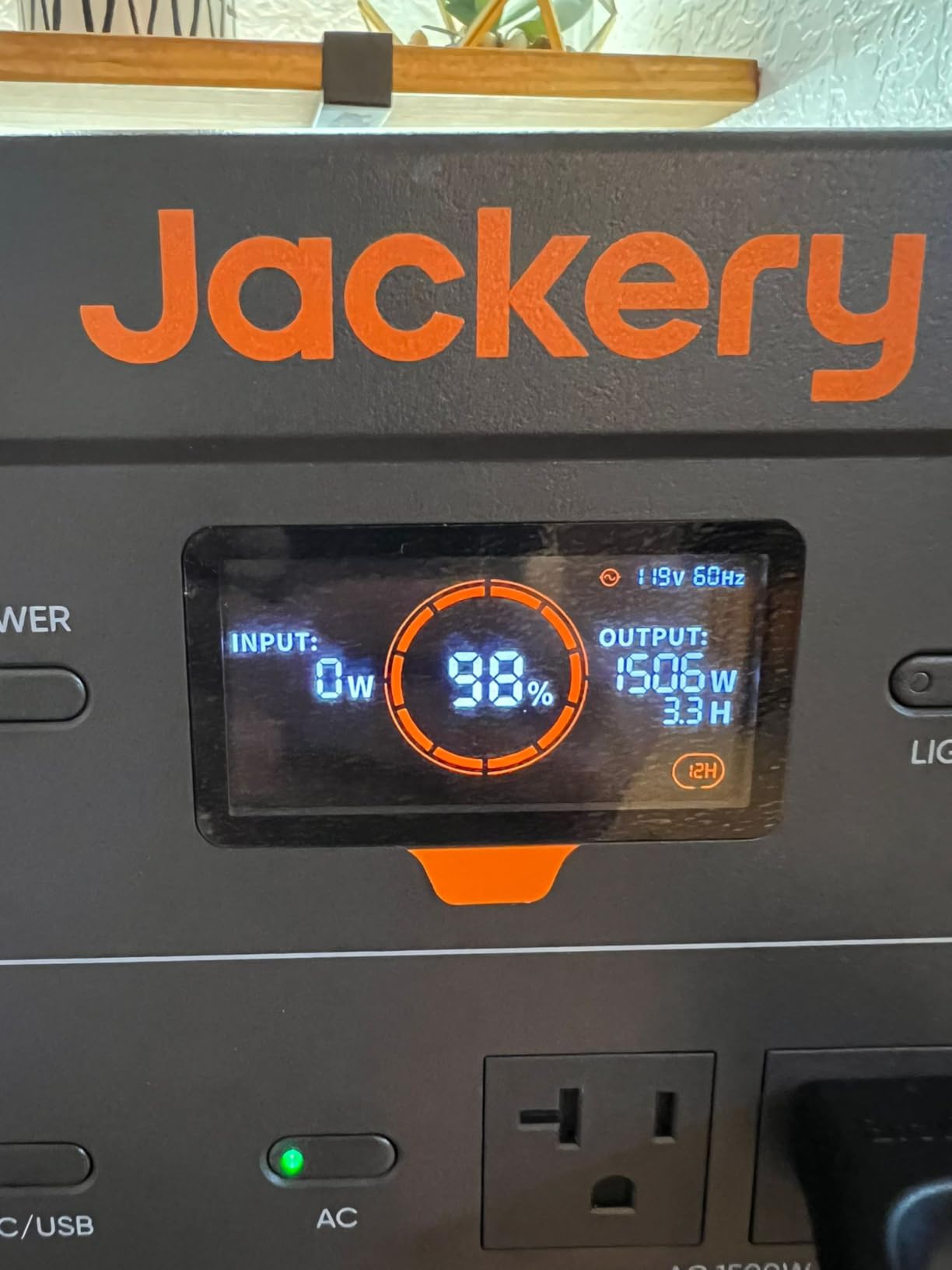
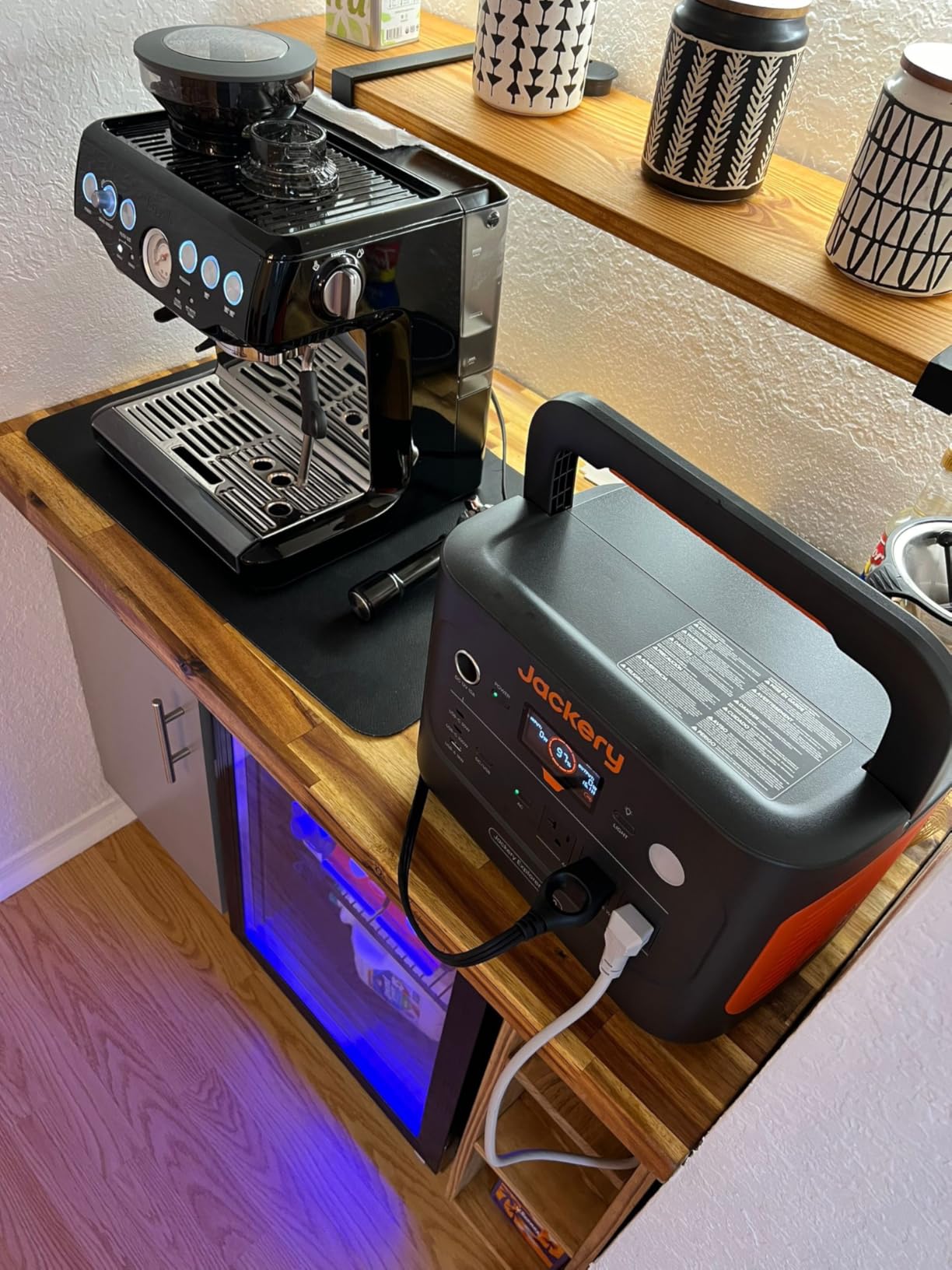
This is the unit we keep coming back to for anyone running a van as a working office. The 1070Wh bank sits in the middle of the roundup and the 1500W inverter sits above everything except the Anker C1000 Gen 2 and the EcoFlow DELTA 3 Max. That combination covers the list that actually comes up in a daily build: a 12V fridge cycling all day, a laptop, a router, string lights, a fan and a coffee maker.
What surprised me most was how little fuss the port layout causes. There are two USB-C ports with 100W power delivery, one USB-A, a DC car socket and three pure sine wave AC outlets. Pure sine wave matters more than most spec sheets admit, because a modified sine wave inverter makes cheap induction motors buzz and can upset sensitive electronics. If you run a CPAP machine or a medical device, this is the class of output you want.
The charging side is where Jackery put the effort. Default wall charging takes 1.7 hours, and enabling emergency charging in the Jackery app takes it to one hour from zero to full. Fifteen minutes of that is enough to cover a night’s CPAP draw before you go to sleep. Battery life is quoted at over 70 percent capacity retained after 4000 charge cycles, which on a ten-year ownership horizon is roughly three times what an NMC pack of the same era would deliver.
The weight is the tax. At 23.8 pounds it is one of the heavier units in this roundup, and on a small van that is a real conversation with your payload budget. On a Sprinter or a Transit with a factory-floored conversion you will not notice it. On a short-wheelbase cargo van with a slider and a bed already fighting for space, it is 11 kg of your remaining allowance gone to one box.
How it handles a real working day
Run it as an office and the numbers are comfortable. A 65W laptop for eight hours, a router and a phone overnight, a fan on low, LED string lights for a few evening hours, and a 40W fridge compressor cycling through the night fits inside 1070Wh without anyone noticing the drain. The 1500W ceiling only matters when you cook or heat, and a 1500W kettle will pull the unit down toward empty in under an hour.
For kitchen work, treat 1500W as the ceiling rather than the target. A 1000W induction hob, an air fryer around 1500W and a space heater all work. They just work for minutes, not hours. This unit is a fridge-and-laptop platform with a strong inverter attached, and that is exactly what most van builds need.
Where it falls short
Two limitations stand out. Solar input is restricted to Jackery’s own panels, which closes off a lot of the flexible folding-panel market and can force you into a different charge strategy. And the one-hour emergency charge is not automatic; you enable it through the app each session, which is a small friction that most people forget within a week.
A longer-term concern for full-time use is that this generation sits in a line without an obvious expansion path in the current range. If your build is a two-year experiment, that matters very little. If you are building for a decade of full-time travel, capacity you cannot grow is capacity you will eventually regret.
2. Anker SOLIX C1000 Gen 2 – Most Ports and Fastest Wall Refill
- Full recharge in about 49 minutes at 1600W input
- 2000W continuous across 10 ports handles tools and appliances
- 10 ms UPS switchover keeps laptops and medical devices running
- 600W solar input refills in about 1.8 hours
- 80 percent capacity after 4000 cycles
- Roughly 25 lb which is heavy for a 1kWh unit
- Gen 2 drops the expansion option the first generation offered
- some engineers report waveform distortion under microwave load
If the Jackery Explorer 1000 v2 is the balanced choice, the Anker SOLIX C1000 Gen 2 is the one with more headroom. It stores 1024Wh, close to the same as the Jackery, but its inverter delivers 2000W continuously with a 3000W peak. That extra 500W is what separates it in a van, because it is the difference between a kettle and an air fryer both starting without the inverter browning out.
The second thing this unit does well is port count. Ten ports cover two laptops, a phone, a camera battery, a CPAP and an AC device simultaneously. Reviewers repeatedly mention using it as an outage backup for a fridge and for overnight CPAP runs, and the 10 ms UPS transfer is quick enough that a desktop or a medical device does not notice the switch.
Charging speed is where Anker pulls decisively ahead. A full refill from a wall outlet takes about 49 minutes at 1600W input once you switch HyperFlash on in the app, and solar input accepts up to 600W with a claimed 0 to 100 percent in 1.8 hours. For a van lifer driving between hookups, a unit that can be full during a lunch stop is a different experience from one that needs an evening of parked charging.
Reviewers describe it as quiet in operation, which matters more in a van than the decibel numbers suggest. The 4000-cycle rating at 80 percent capacity retention puts it in the same long-life class as the Jackery above it.
Where the extra output earns its keep
The difference between 1500W and 2000W shows up in three places. Small induction burners that pull 1400 to 1800W will run here without hesitation. A 1500W space heater in a cold month has headroom instead of pinning the inverter. And a microwave, which pulls unpredictable peaks, runs without tripping the overload protection.
Reviewers also report using it to power small power tools on job sites, which is a good proxy for a van user running something with a motor rather than a heating element. Anything with a compressor or an induction motor is the friendliest load for an inverter of this class.
What you give up for it
At roughly 25 pounds it is also one of the heavier units here despite holding slightly less energy than the Jackery above. That is a packaging penalty, not a chemistry one, and you feel it when lifting the unit into a high cabinet.
More significant for builders: the Gen 2 removes the expansion battery option available on the first generation. That is a deliberate product decision, and it removes the cheapest route to growing a build over a few years. Engineers have also reported visible waveform distortion with roughly 15 to 20 percent harmonic content when driving a microwave. For a CPAP or a laptop you will not notice; for sensitive audio or measurement gear you might.
3. EcoFlow DELTA 3 Max – Largest Capacity for Full-Time Living
EF ECOFLOW DELTA 3 Max Portable Power Station, 2048Wh LFP Battery, 2400W
- Largest capacity here at 2048Wh for full-time van loads
- 3400W in X-Boost mode covers fridges and microwaves
- 0 to 80 percent in about 1.13 hours
- sub 10 ms transfer protects computers and medical devices
- app control for scheduling charge and discharge
- Bulkiest unit at roughly 19.4 inches tall and not grab-and-go
- Manufacturer does not publish a weight figure so measure it against your payload budget
- Smallest review base at 583 ratings so less long-term field data
- Only 3 power outlets listed for its capacity
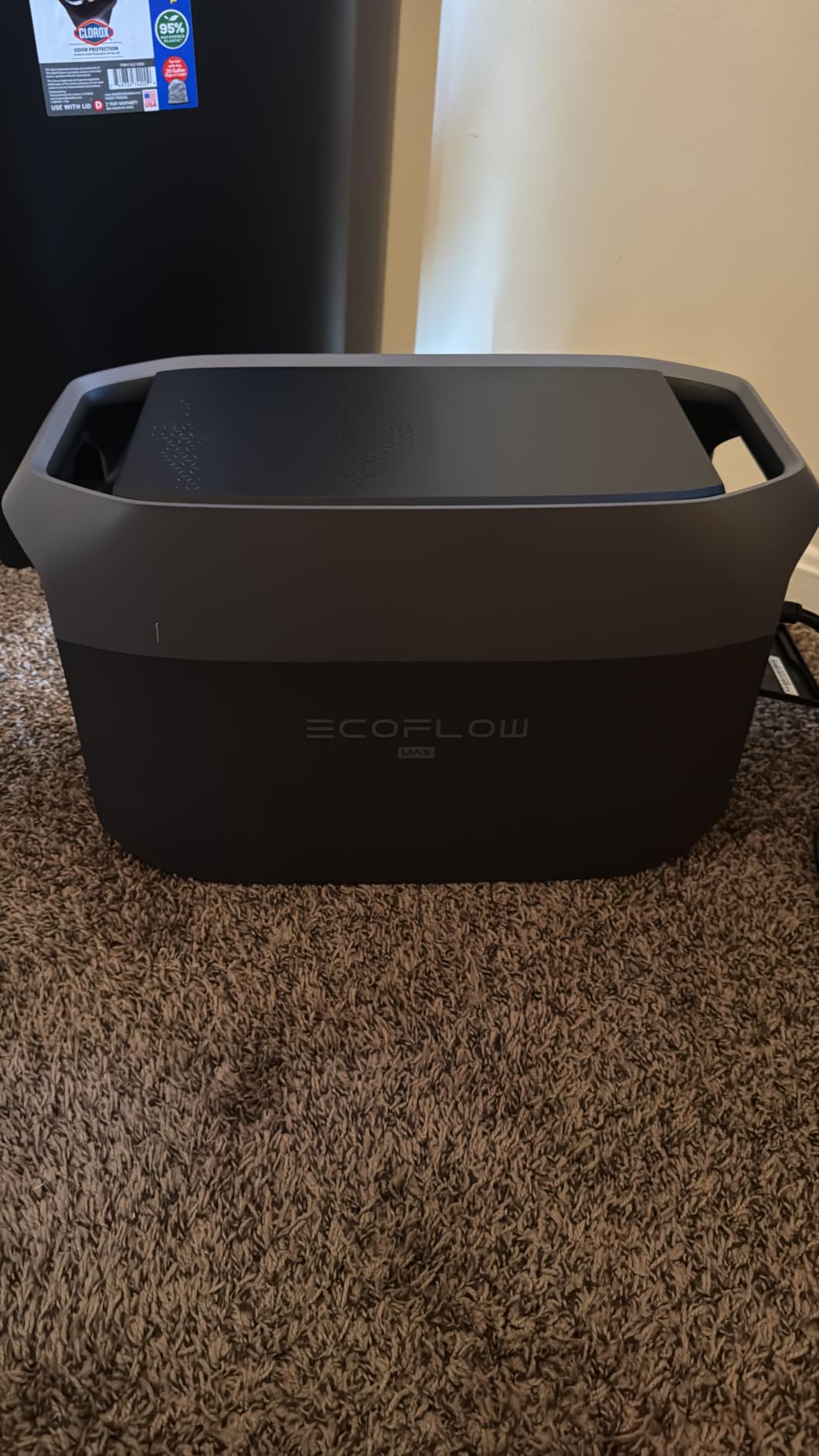
The EcoFlow DELTA 3 Max is the only unit here that changes the conversation about how long you can stay out. At 2048Wh it holds roughly twice the energy of the 1000Wh class, which is the difference between a weekend trip and a fortnight without a hookup. Reviewers cite it for home backup and RV use, and the 88 percent five-star share in its ratings is the highest in this group.
Output is rated at 2400W, and X-Boost pushes continuous delivery up to 3400W. That covers a refrigerator, a microwave and a power tool at the same time, which no sub-1000Wh unit in this roundup can do. The inverter runs an under-10-ms transfer, so a desktop or a CPAP sees no gap during a switchover.
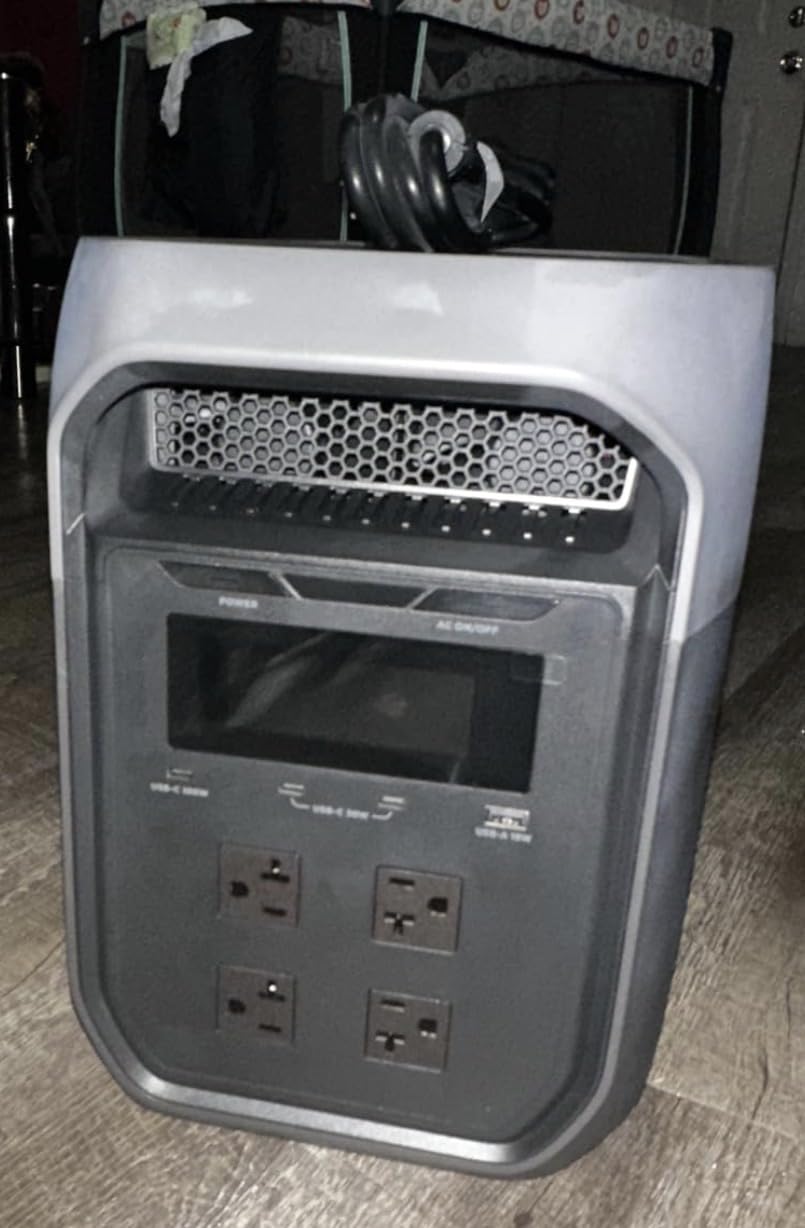
Charging is where EcoFlow’s software approach shows. Zero to 80 percent takes about 1.13 hours from a wall outlet, and the app lets you schedule charging and discharging so the unit tops up overnight while you drive the next day. The LiFePO4 pack is built for a decade of daily use rather than a few seasons of weekends.
The trade is physical and permanent. At roughly 19.4 inches tall this is not a grab-and-go box; you plan where it lives in the van and it stays there. That is fine on a long-wheelbase van with a garage, and wrong for a small van with a galley already packed.
How much extra capability 2000Wh actually buys
Doubling capacity roughly doubles how long you can hold a moderate load, and moderate loads are what dominate a van. A fridge cycling at 40W, a laptop for six hours, Starlink for a working day of calls, LED lights and a fan is comfortably inside 2048Wh with headroom for a few kettle boils. The same day on a 1000Wh unit leaves you planning your evening around the remaining percentage.
It also changes recharge pressure. With twice the bank you can lean more heavily on a single folding panel or a slow alternator charger and still stay ahead overnight, which is where most undersized systems quietly fall behind.
Where it is the wrong choice
Only three power outlets are listed for a unit this size. That is a port layout geared toward high-draw AC loads rather than a wall of USB devices, and if your build is phone-and-laptop shaped you may find yourself wanting more USB-C.
Its review base of 583 ratings is the smallest here, so the long-term durability story is less proven than the 11,000-rating Jackery below. And the physical footprint rules out anyone who needs to pull the battery out for a hike, a picnic or a night in a tent away from the van.
4. Jackery Explorer 500 v2 – Best Value Weekend Unit
- LFP pack rated for 6000 charge cycles with only 5 percent self-discharge after six months
- 0 to 80 percent in 52 minutes from a wall outlet
- quiet at 28 dB with a 10ms UPS and bypass mode
- backlit display shows input and output watts plus remaining percentage
- long-term owners report strong performance after two to six years
- Only one AC outlet on some configurations
- No USB-C input or output ports so modern devices need adapters
- Some appliances with high inrush draw such as countertop ice makers will not start
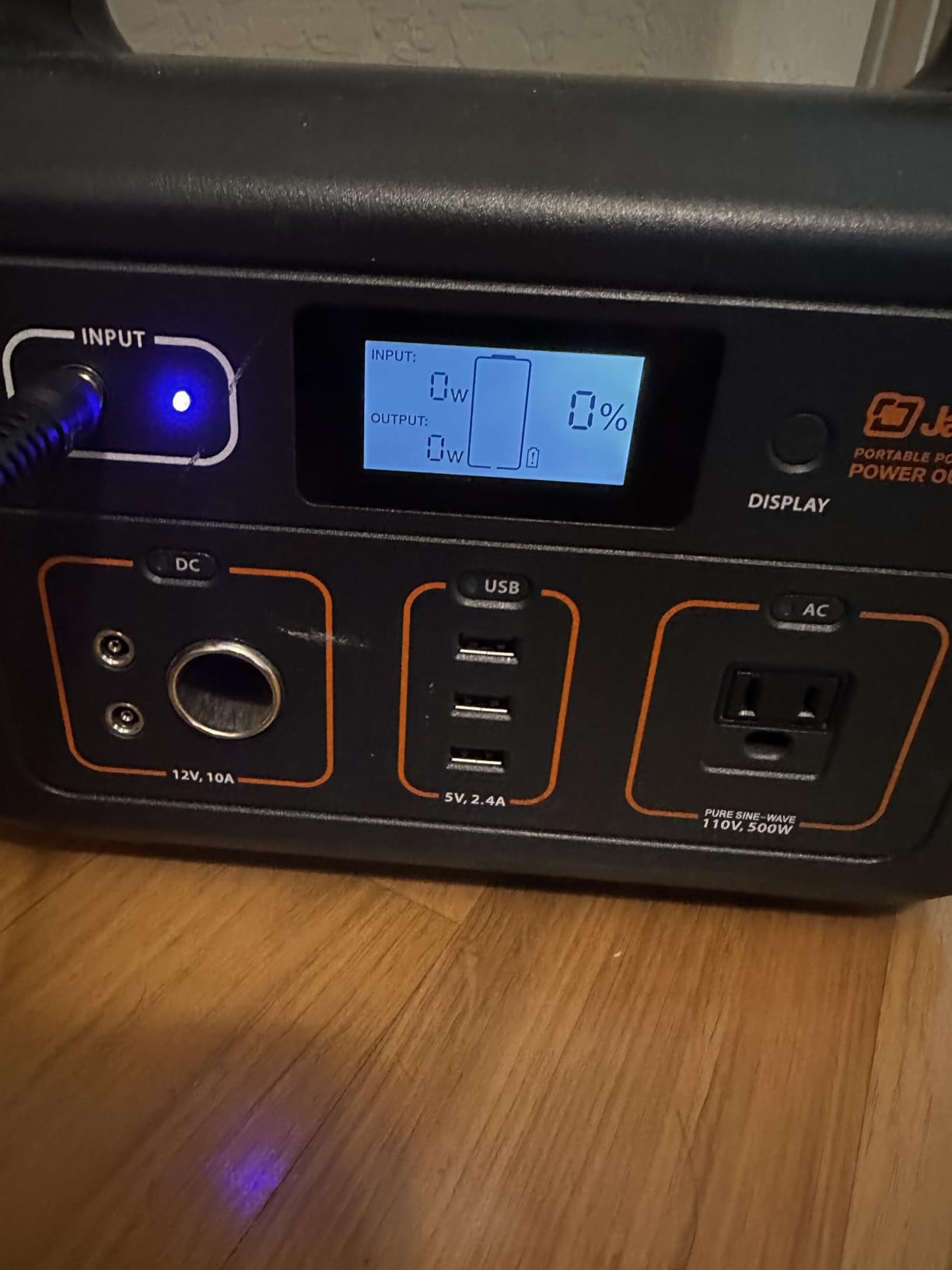
The Jackery Explorer 500 v2 is the most-settled recommendation in this whole category. It carries an 8,844-rating review history, a 4.7 average and a LiFePO4 pack rated at 6000 charge cycles, which is the highest cycle figure in this roundup. Long-term owners describe units that still perform like new after two to six years of use, and the 5 percent self-discharge after six months of storage means you can leave it shut down in a cupboard and find it ready.
For a weekend build this is the right shape. 512Wh handles a 12V fridge for a night or two, a CPAP overnight, a full day of phone and camera charging and an evening of lights. It weighs 13.3 pounds and carries a foldable handle plus a built-in LED light.
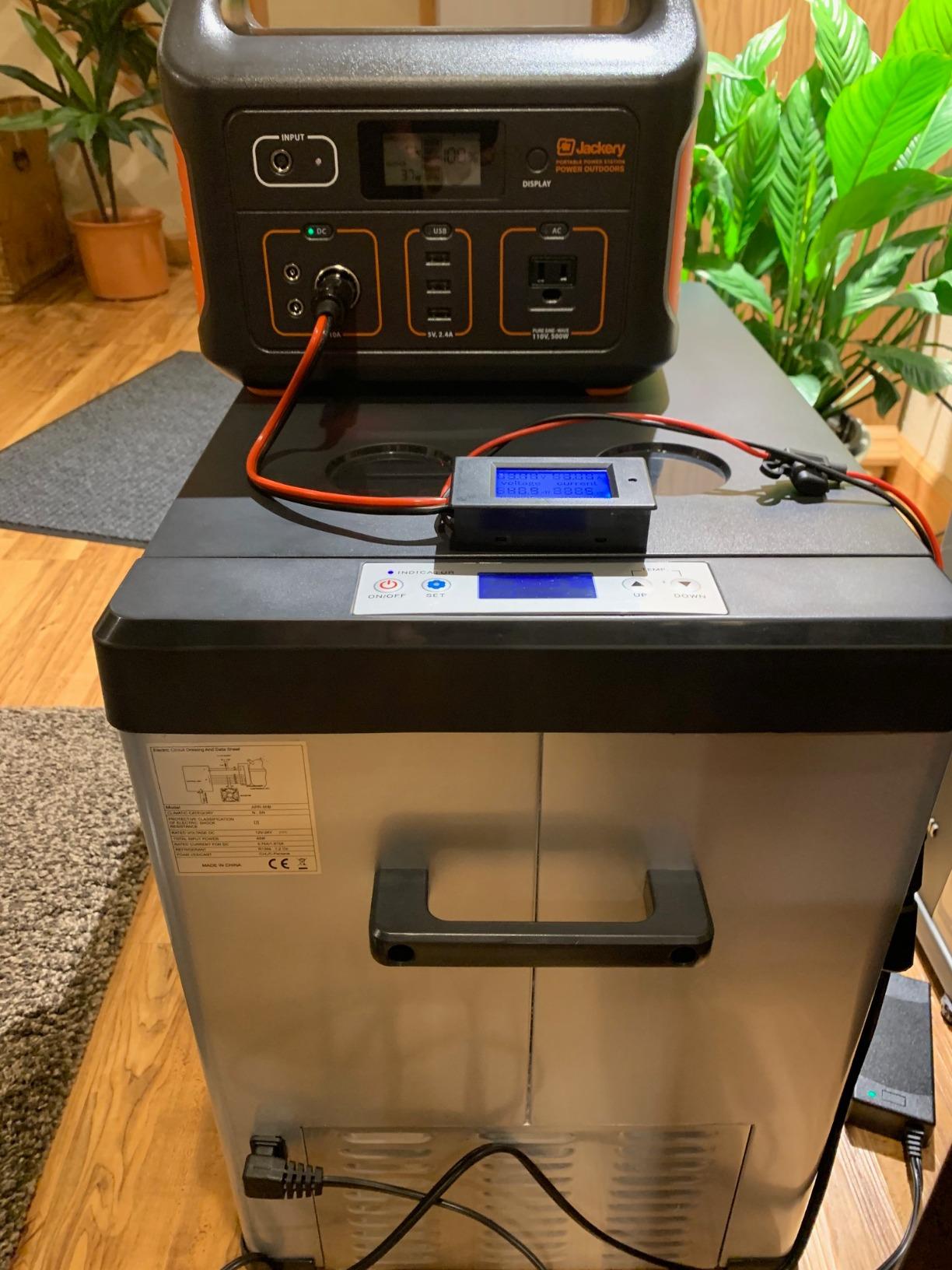
Charging is fast for the class: 0 to 80 percent in 52 minutes from an AC wall outlet, with solar and 12V car charging also supported. The 10ms UPS with bypass charging mode lets you run a router or a desktop through an outage without the unit spinning its inverter up constantly.
That quiet operation figure of 28 dB is one of the more useful numbers in the whole dataset for van life. If the battery lives in the sleeping area, a unit that idles that low does not end your night.
What it comfortably runs
A 40W compressor fridge cycling overnight, a 60W CPAP across the night, a fan, string lights and a phone or two is a realistic night on 512Wh. Add a laptop for a working morning and you are using most of the bank, which is exactly the point at which you want solar or a wall outlet.
The 500W inverter also handles a small kettle, a coffee maker or a griddle for a short boil. It is not a cooking platform, but it covers the two or three hot-drink moments a day that most van builds care about most.
What it will not do
Two limits stand out. There are no USB-C ports at all, so a modern laptop means an adapter and a slower charge, and the port selection is dated against the competition. Some configurations ship with a single AC outlet, which limits what you can run simultaneously.
The inrush issue is worth understanding because it catches people out. An appliance rated under 500W can still have a startup spike that will not start on this unit, and countertop ice makers are the classic example. If your kitchen depends on something with a compressor, test it before you commit.
5. EcoFlow RIVER 2 – Lightest Weekend Unit With Fast Refill
- Fully recharges from an AC outlet in about one hour with X-Stream charging
- Only 7.7 lb with a built-in handle and no wasted space
- LFP cells rated for 3000 plus cycles to 80 percent with BMS protection
- Solar recharge in as little as 2.3 hours with 110W input
- Under 30 ms UPS switchover suits routers and medical devices
- 256Wh and 300W output cannot run an air conditioner microwave or blender
- Only one USB-C port so you pick between laptop and earbuds
- A minority of owners report battery percentage drift or units that no longer hold a full charge
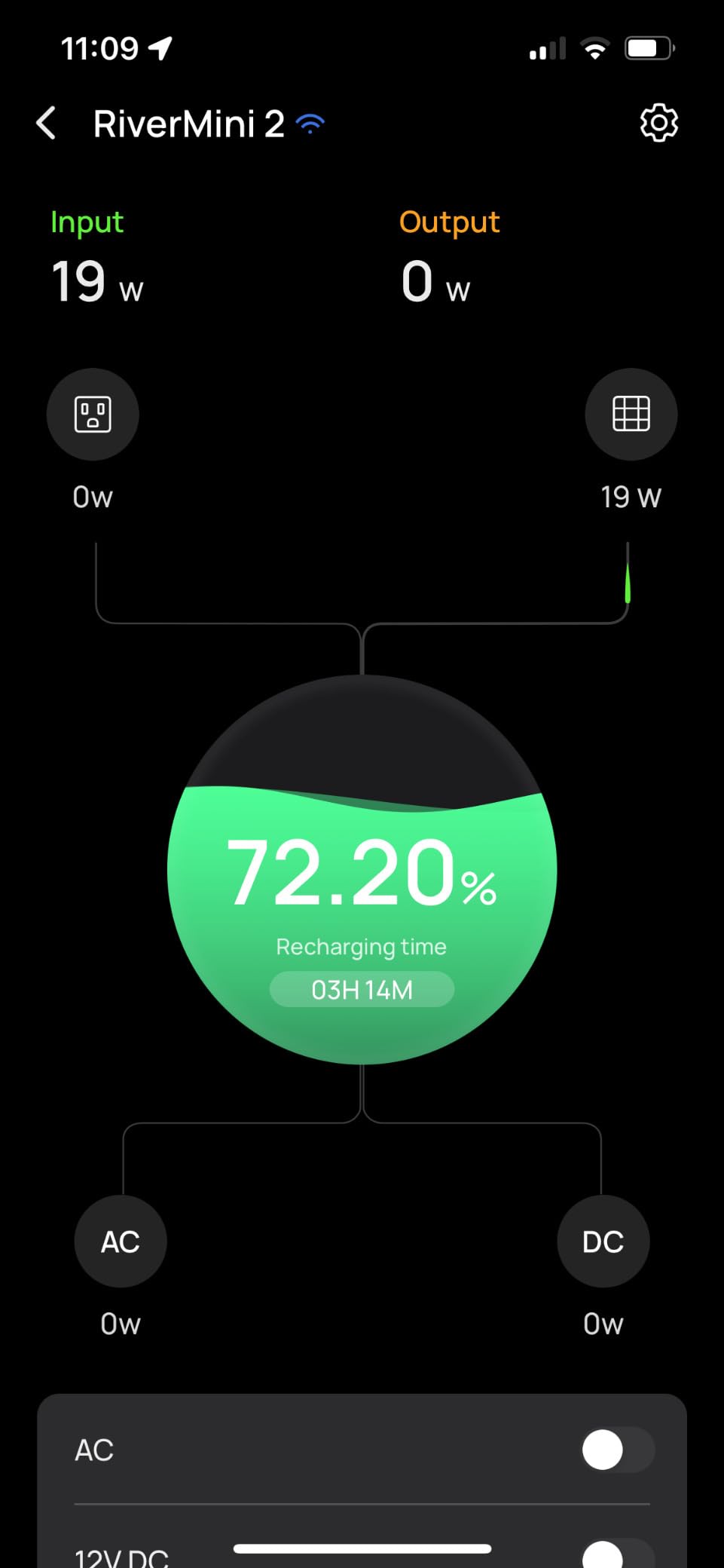
At 7.7 pounds the EcoFlow RIVER 2 is the easiest unit here to move, and its one-hour AC recharge is among the fastest wall refills in the roundup. Reviewers use it as a UPS for routers, network recorders, CPAP machines and portable fridges, which is a sensible pattern for anyone who needs reliability more than capacity.
The LFP pack is rated at 3000 plus cycles to 80 percent with built-in battery management, and solar input accepts up to 110W. Six outlets cover AC, USB-C and USB-A, and the app is one of the clearer ones in the category for watching charge and discharge.
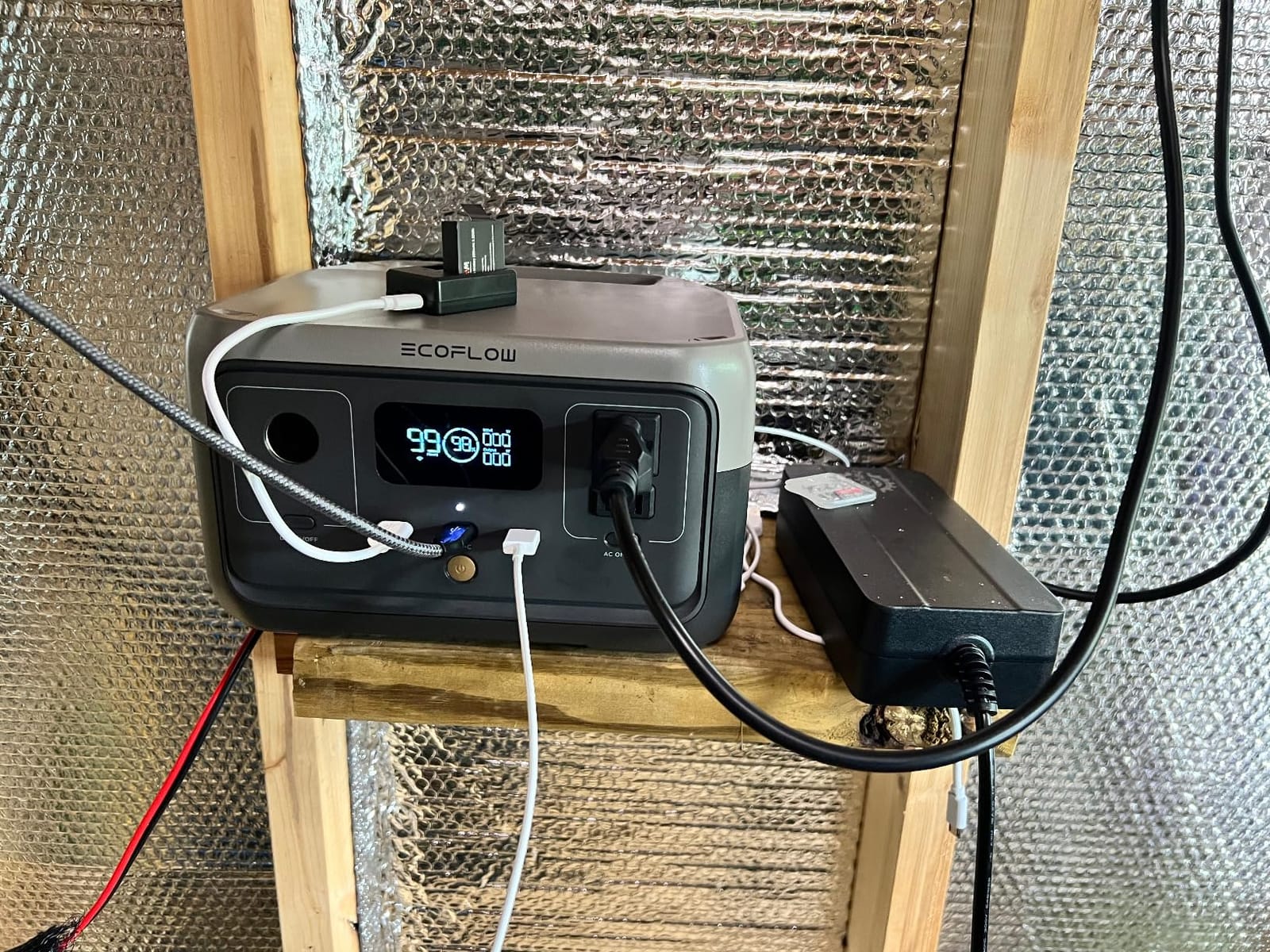
Where it strains is capacity. 256Wh sounds substantial until you divide it by a realistic day, and 300W of AC output will not start a microwave, a blender or an air conditioner. Think of it as a two-day unit for lights, phones, a laptop and a CPAP, not as a power source for a kitchen.
The fan becomes audible during maximum-speed charging, which is the trade for that one-hour refill. It is not a dealbreaker; it just means you charge it while you make coffee rather than while you sleep.
Best used as a second battery
The honest way to think about the RIVER 2 is as a companion unit rather than a primary system. Keep it in a small van where the payload budget is tight, run a fridge on a larger fixed install, and use the RIVER 2 for the electronics that must not be interrupted. Reviewers describe exactly this pattern with routers, laptops and CPAP machines.
It also works well for anyone who mostly camps at sites with hookups and wants a small, fast-recharging box for the hours when they are not plugged in. The one-hour AC refill means it recovers in the time it takes to make breakfast.
Where buyers report trouble
The rating split on this one is the widest in the roundup: 73 percent five-star against a notable 9 percent one-star share. The recurring complaints concern the battery percentage display drifting, units draining while idle, and a minority of owners reporting units that no longer hold a full charge and describing warranty support as tedious.
There is only one USB-C port, so charging a laptop and earbuds at the same time means choosing. None of that makes it a bad unit; it makes it a unit where the small failures are more visible than they would be on a larger box.
6. BLUETTI Elite 30 V2 – Small Box With a 600W Inverter
BLUETTI Elite 30 V2 Portable Power Station 288Wh 600W LFP Solar Generator
- 600W continuous output which is double what most 288Wh units offer
- Clean pure sine wave output that reviewers use for home servers and sensitive electronics
- 0 to 80 percent in 45 minutes and 0 to 100 percent in 70 minutes from a wall outlet
- Only 9.5 lb with a footprint close to a car battery
- Standard solar connector plus Bluetooth and Wi-Fi app control
- Some buyers report it draining faster than the stated 288Wh suggests
- No USB passthrough for automatic PC shutdown like a rack UPS
- 4.5 star average with a 5 percent one-star share reflecting quality variance
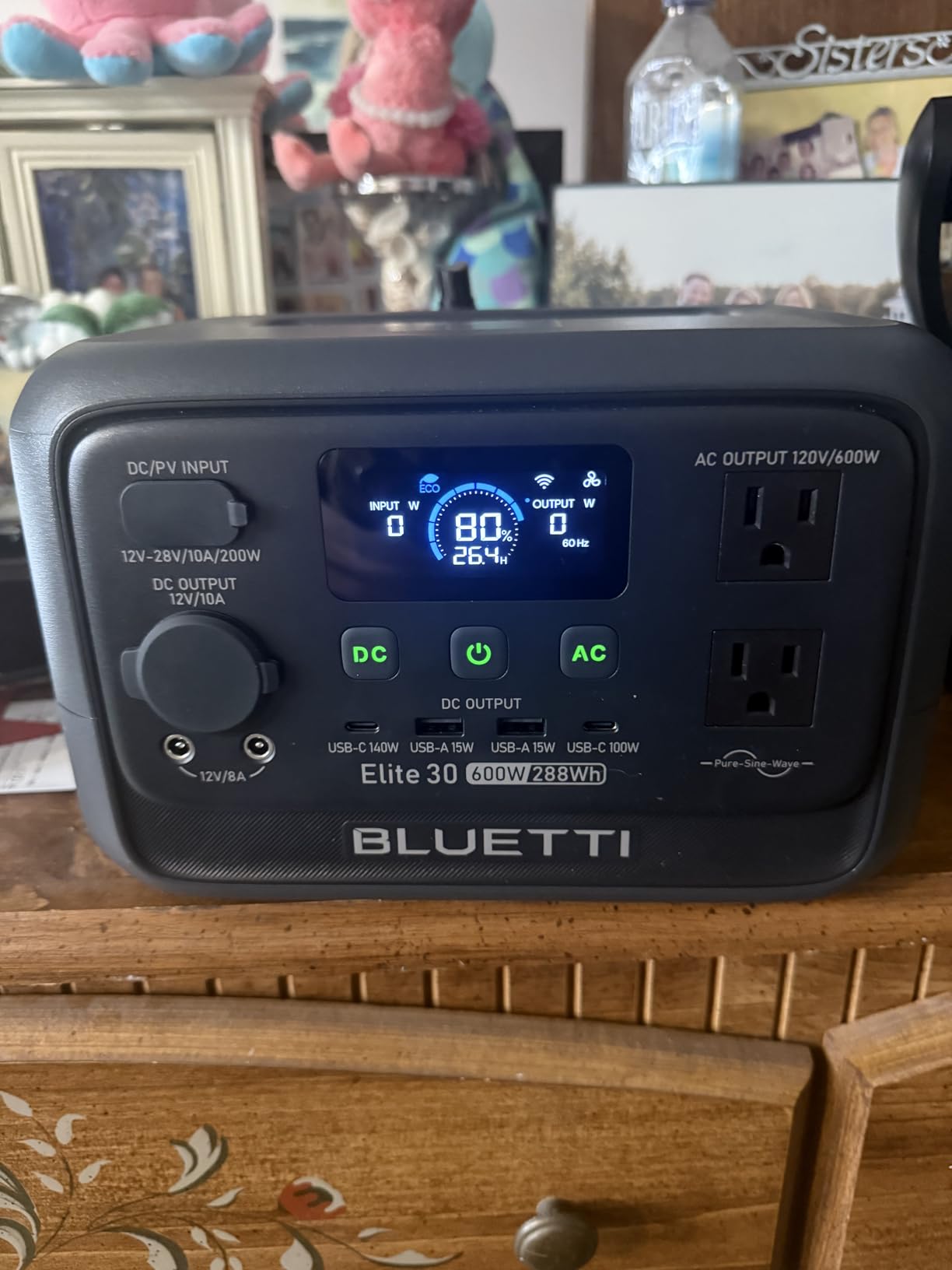
This is the most interesting small unit in the roundup for van life, and the reason is a simple inverter decision. At 288Wh it stores the same energy as three other units here, but its inverter delivers 600W continuously rather than 300W, with a Power Lifting Mode that pushes to 1500W for resistive loads.
That changes what you can cook. A 600W induction ring, a small kettle and a car fridge all become realistic on a unit you can lift with one hand at 9.5 pounds. For a van kitchen built around a single hot plate and a pot, the inverter matters more than the extra watt-hours would have.
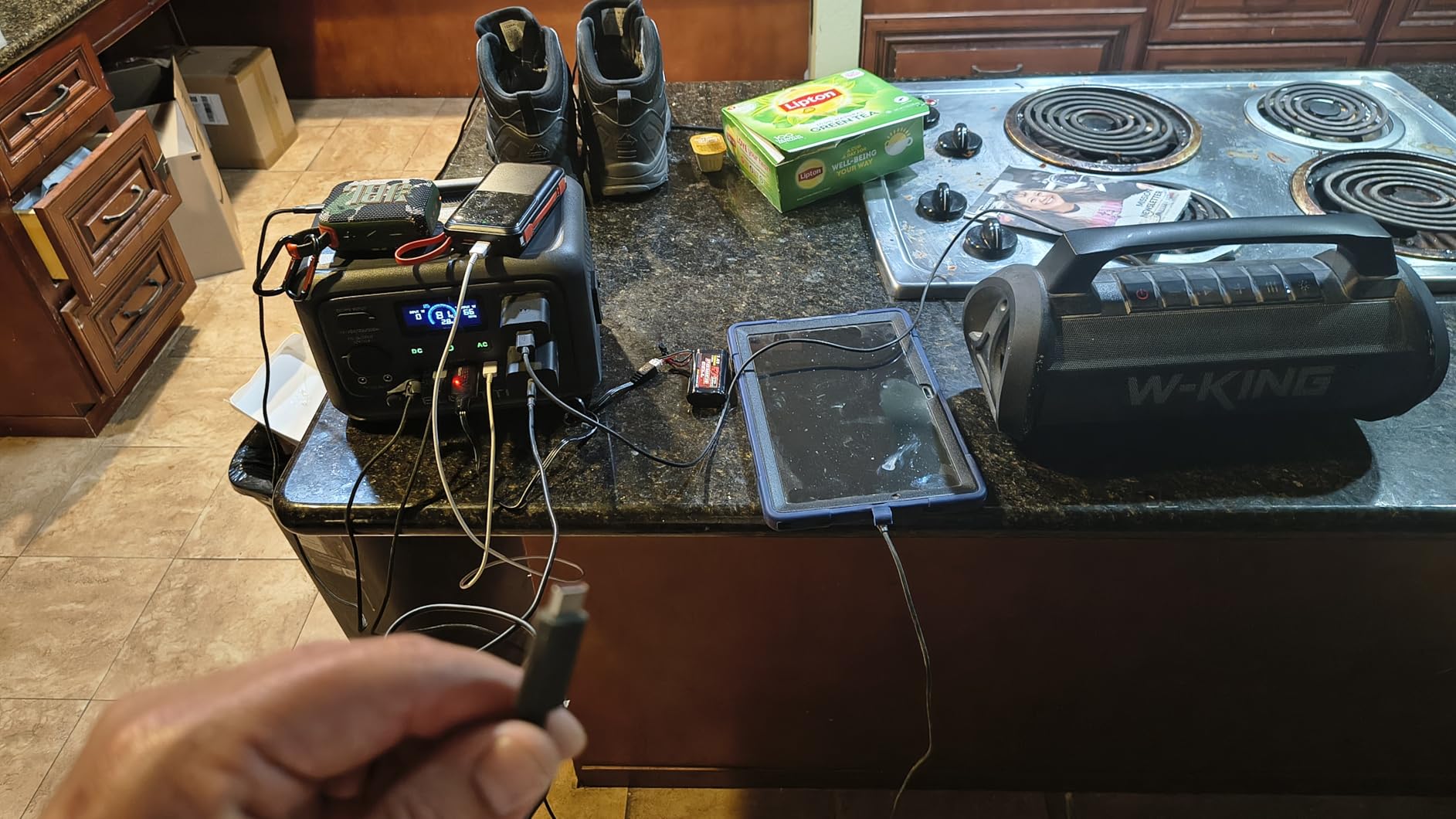
Charging is the fastest in the 288Wh class here: 0 to 80 percent in 45 minutes and 0 to 100 percent in 70 minutes from a wall outlet with adjustable 380W or 200W input. Standby draw is listed at 4.5W with 5W on DC and 8W on AC, which keeps the parasitic loss low for someone who parks for days between drives.
Reviewers who run home servers and networking gear single out the pure sine wave output and the 10 ms UPS switchover. If your van doubles as a remote office with a router and a NAS, that is a meaningful endorsement.
Why a stronger inverter beats a bigger battery here
A mobile kitchen is dominated by heating loads. Water takes roughly 1200W to boil, an induction ring sits in the 1200 to 1800W range, and a grill or griddle pulls 1000 to 1500W. A 300W inverter cannot start those, so on a smaller unit you end up with a kettle on a camping stove anyway.
The 600W inverter with a 1500W lift mode means one or two of those events per day fit inside the budget, especially with the 45-minute fast refill available at any hookup or campsite with a pedestal. Budget the drains: each kettle boil eats a meaningful slice of 288Wh, so this unit rewards planning rather than abundance.
Where it disappoints
A recurring complaint is that some units drain faster than the 288Wh rating implies, which is exactly the derating effect described earlier showing up in practice. There is no USB passthrough port, so it will not talk to a PC for automatic shutdown the way a rack UPS does.
The 4.5-star average with a 5 percent one-star share points to more unit-to-unit variation than the four-star-plus picks here. For a full-time build that depends on this every day, consistency is worth something.
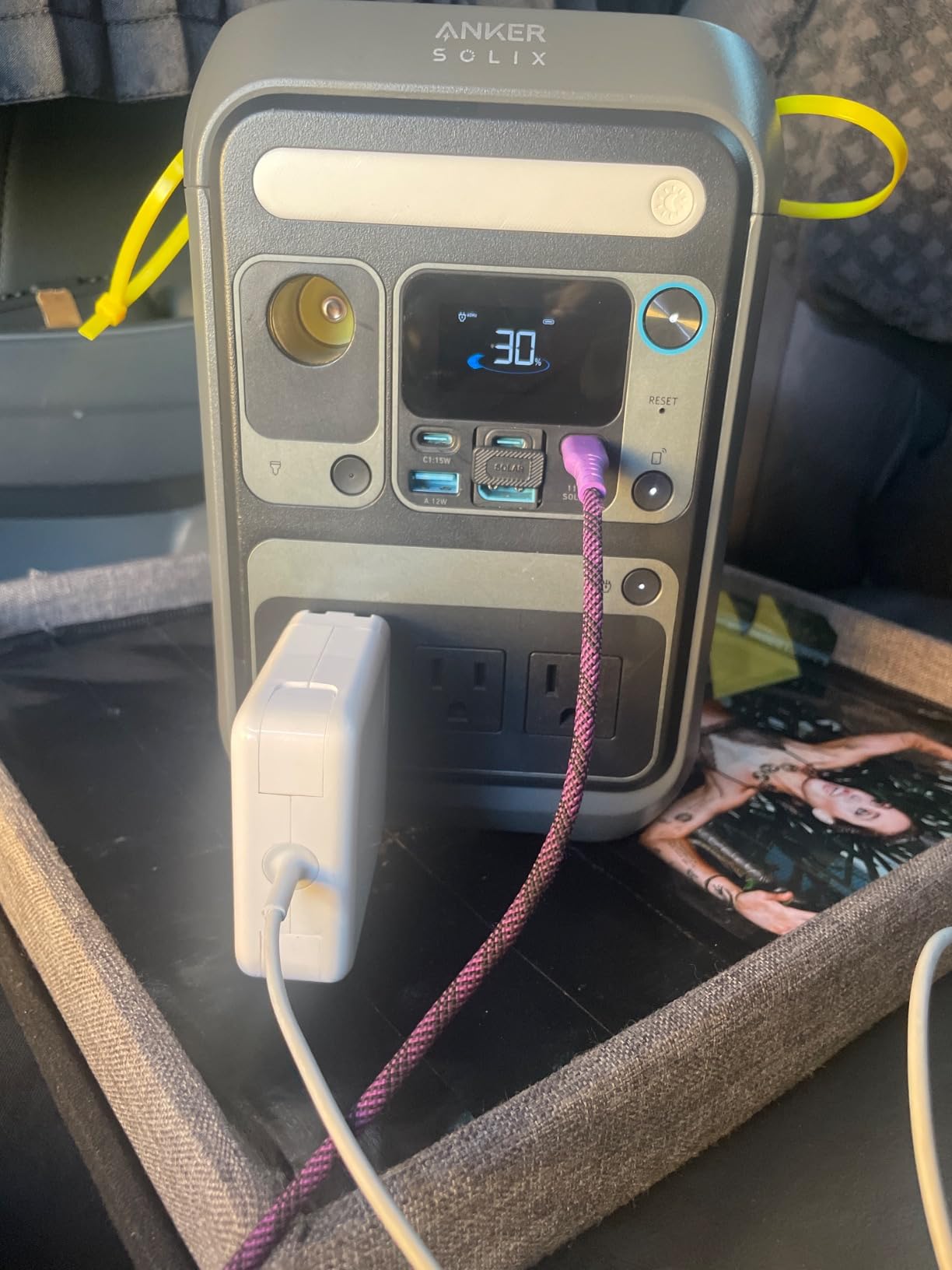
7. Anker SOLIX C300 – Quietest Option for Sleeping in the Van
Anker SOLIX C300 Portable Power Station, 288Wh Solar Generator for Camping
- Two 140W two-way USB-C PD ports that charge a laptop at full speed
- 0 to 80 percent in about 50 minutes from a wall outlet
- Very quiet at 25 dB from 3.3 feet which suits a sleeping van
- LiFePO4 rated for 3000 cycles with a 5-year warranty
- Compact at 15 percent smaller than similar designs
- 288Wh and 300W rated output will not run larger appliances
- Shoulder strap is sold separately and not in the box
- Not compatible with the PS30
- PS200 and PS400 Anker panels
- AC outlets total only 300W even though surge reaches 600W
The Anker SOLIX C300 solves the specific problem forum users complain about most after sizing, which is noise. At 25 dB measured from 3.3 feet it is the lowest published noise figure here, and reviewers specifically call it suitable for sleeping in a van. If the battery lives in the sleeping area rather than behind a bulkhead, that number is worth more than extra watt-hours.
Port selection is unusually good for the size. Three AC outlets share a 300W total, there is a 120W car socket, two USB-C ports at 140W each that are two-way, one more USB-C at 15W and a USB-A at 12W. The 140W two-way ports mean you can charge a laptop from solar or a USB-C bank directly into the unit.

Refill options are broad: 0 to 80 percent in about 50 minutes from a wall outlet, plus solar, car charging or a PD 3.1 USB-C source. That last one is unusual and useful in a van, where you can top up from a laptop-class charger if the unit is nearly flat.
At 9.1 pounds it is a little heavier than the Jackery Explorer 300 but noticeably more capable, and the LiFePO4 pack is backed by a 5-year warranty rather than the 2-year terms common at this size.
Why quiet matters more than most buyers expect
Van sleeping space is a few feet wide. Any continuous fan noise in that volume sits exactly where your head is, and inverter electronics also produce a faint high-pitched whine under load that people describe as a whine rather than a hum. Reviews of other units in this roundup mention that whine directly.
Combined with a 3,000-cycle LiFePO4 pack, that makes the C300 a good match for a build where the battery stays where you sleep: overnight CPAP use, phone charging, a laptop, a small fan. It is not a cooking platform, so pair it with a stove for hot meals.
The panel compatibility trap
The solar list is the notable catch. Anker states compatibility with 100W and 60W Anker panels, and explicitly rules out the PS30, PS200 and PS400. If you already own a larger Anker array, or you plan to buy one, check the model list before committing to the unit.
Also note that the three AC outlets share a 300W total, and the 600W surge figure is for startup spikes only. Split that across two appliances and you can still trip the overload. And the strap you see in photos is a separate purchase.
8. Jackery Explorer 300 – Lightest Unit for Phones and Laptops
- Only 7.1 lb with an integrated handle and a 17 percent lighter design than the class average
- Powers six devices across 2 AC outlets
- 100W USB-C PD
- 2 USB-A and a 120W car port
- LiFePO4 rated for 4000 plus cycles before 70 percent capacity
- 80 percent solar refill in about 2.8 hours with a 100W panel
- 292Wh and 300W output cover only electronics and small appliances
- Warranty is 2 years the shortest of the units here
- Solar refill is slower than the Jackery 500 v2 and 1000 v2
- Requires a physical delivery address rather than a PO Box
With 11,273 ratings the Jackery Explorer 300 is the most reviewed product in this roundup by a wide margin, and that long history is itself useful. It is the entry point most people buy first, and the reviews describe it consistently: the lightest unit that handles phones, laptops, cameras and a CPAP on a weekend trip without any fuss.
At 7.1 pounds it is the lightest unit here, with an integrated handle and a 9.1 by 5.2 by 7.8 inch footprint that disappears into a gap behind a seat. The 100W USB-C PD port means a modern laptop charges at full speed without an adapter, which was the missing feature on the previous generation.
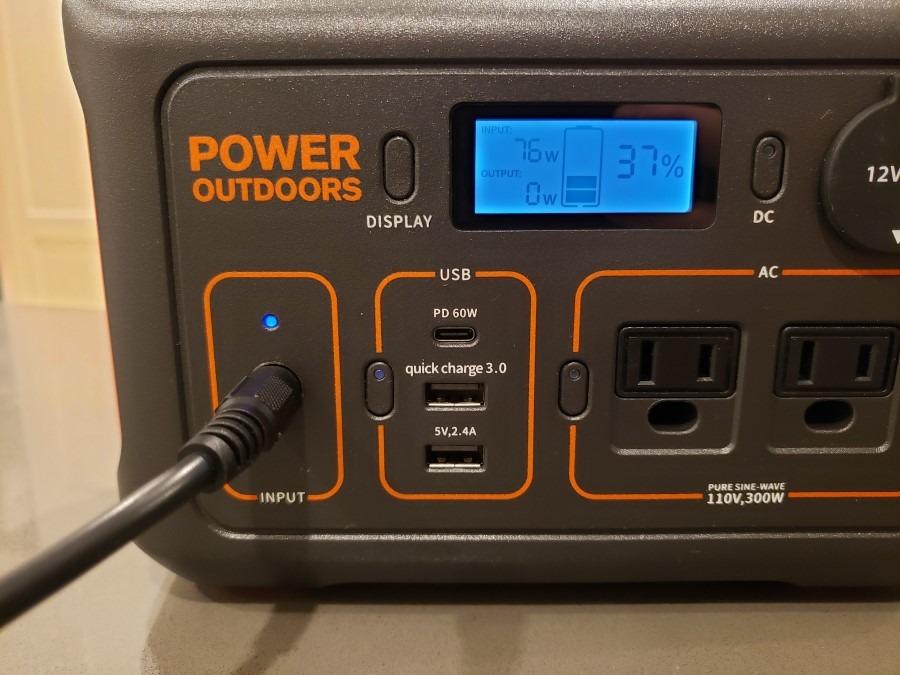
The battery is LiFePO4 rated at 4000 plus cycles before it drops to 70 percent capacity, a claimed service life of more than eleven years. Reviewers note that unlike older NMC Jackery units, this chemistry holds its charge well in storage, which matters for a van that sits parked in winter.
Solar input accepts a 100W panel for 80 percent in about 2.8 hours, or a 40W panel for 80 percent in 7.5 hours. Battery charge time from the wall is listed at four hours, which is the slowest refill of any unit in this list.
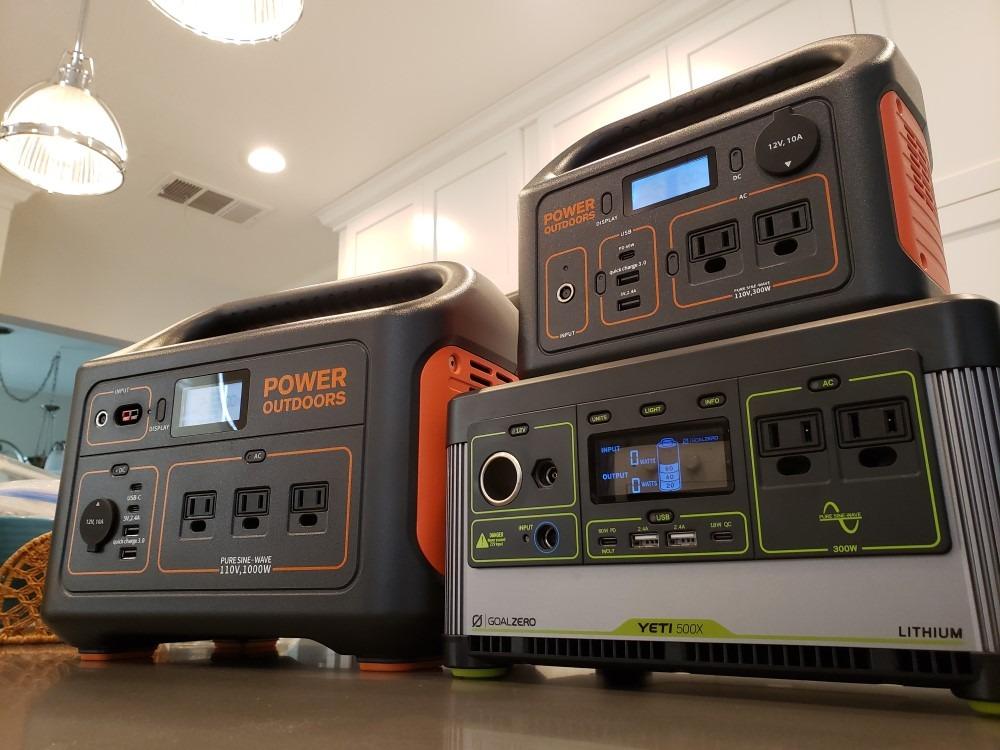
Perfect for the electronics-only build
If your van is a mobile desk rather than a mobile kitchen, this is the honest answer. A laptop for a full working day, a phone, a camera battery, a router and a weekend of lights sits comfortably inside 292Wh with room to spare. The 120W car port is enough for a small 12V fridge if your loads are light.
Reviewers also use it for CPAP machines, which is a demanding use for 292Wh given that a CPAP is one of the few loads that runs all night. Our CPAP-focused picks cover that use case in more depth if you rely on one overnight.
Where the limits bite
At 300W rated and 292Wh, nothing high-draw runs. No kettle, no induction ring, no air fryer, no heater. If you want hot food and hot drinks you will need either a larger unit or a stove, and it is worth deciding that before buying rather than after.
The 2-year warranty is the shortest in this roundup, which is a fair criticism of an otherwise long-lived design. Refill speed is also modest: four hours from a wall, and solar performance sits behind the newer Jackery models. For someone who tops up overnight this hardly registers; for someone who relies on a fast lunch-stop refill it does.
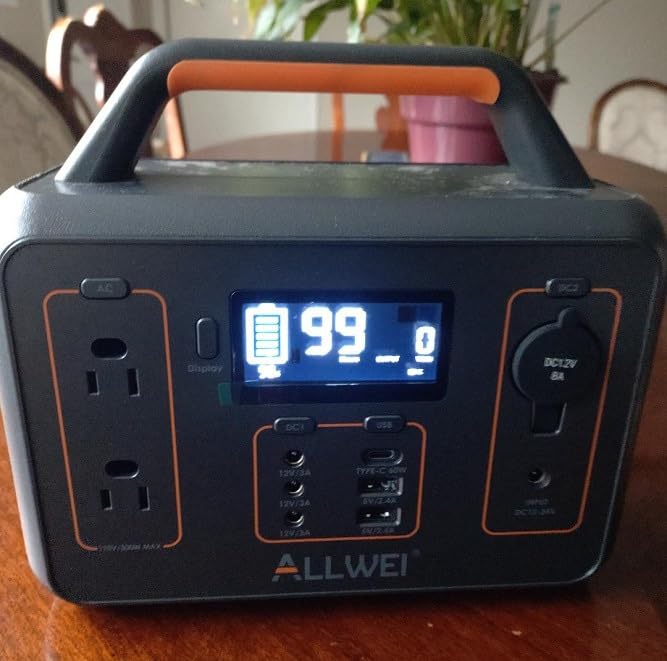
9. ALLWEI 512Wh – Straightforward Power for CPAP and Desktops
ALLWEI Portable Power Station 500W, 512Wh LiFePO4 Battery UPS Backup Power
- 512Wh LiFePO4 rated for 3000 cycles to 70 percent capacity
- Nine ports including 100W USB-C PD and 36W USB-C
- Quiet enough for indoor use with a clear time-remaining display
- Reliable UPS for desktops file servers and CPAP
- Reviewers report 12 to 20 hours of CPAP runtime
- Solar input capped at 120W so a 200W panel cannot be used
- A minority of units report the percentage sticking then dropping abruptly to empty
- Car charging plug tip reportedly gets hot enough to touch uncomfortably
The ALLWEI 512Wh takes the same capacity bracket as the Jackery Explorer 500 v2 and offers a different balance: more ports, a UPS function that reviewers actually depend on for desktops and file servers, and a 13-pound body. If your van is an office first, the nine-port layout including 100W and 36W USB-C is the reason to look here.
Reviewers treat it as a value alternative to the better-known brands, and the quiet operation plus a display showing time remaining and percentage make it pleasant to live with. The BMS includes an MPPT solar controller and three charge modes.
The most concrete user data point in its reviews is CPAP runtime of 12 to 20 hours, which is a realistic figure for a 30 to 60W device on a 512Wh bank after conversion losses. For a van lifer who works remotely and needs the machine overnight, that is a useful anchor.
Wall charging takes 2.5 hours for a full charge in Q mode, or 6.5 hours with a 100W solar panel. The cycle rating is 3000 cycles to 70 percent capacity, described as a 10-year lifespan.
Where it beats the branded equivalent
Two things stand out against the Jackery 500 v2. The port count is much higher, with two AC outlets, a 100W USB-C, a 36W USB-C, two USB-A, two DC 5521 outputs and a car port. And the 12 to 20 hour CPAP reports suggest the practical runtime is competitive with better-known units at this size.
The instant UPS on grid failure is also framed for desktops and file servers, which is a slightly different use case than the 10ms medical-grade claims elsewhere in this list, but it is genuinely useful if you keep a small server or a network box running in the van.
What to watch out for
Solar input is capped at 120W, so a 200W panel is not an option. That matters if your recharge plan is a large folding panel, and it is a hard limit rather than a preference.
A minority of owners report the charge percentage sticking and then dropping abruptly to empty, which is a battery-management quality issue rather than a capacity issue. The car charging plug tip also reportedly runs hot. If you plan to charge from the vehicle socket every drive, budget for a replacement cable.
10. DARAN 288Wh – Compact Storm and Emergency Kit
- One of the lightest bodies here at 8.2 lb with a slim footprint for tight van storage
- Seven-port design with two 350W AC outlets plus 60W USB-C PD and USB-A
- Advanced BMS covering overcharge over-discharge short circuit temperature and cell balancing
- Rear LED with steady strobe and SOS modes
- Storage bag included in the box
- Only a 1-year warranty and 1-year service
- Solar panels and car charging cables are sold separately
- Spec sheet lists 90000 mAh which does not reconcile with 288Wh
- Lower 4.2 star average with a 10 percent one-star share
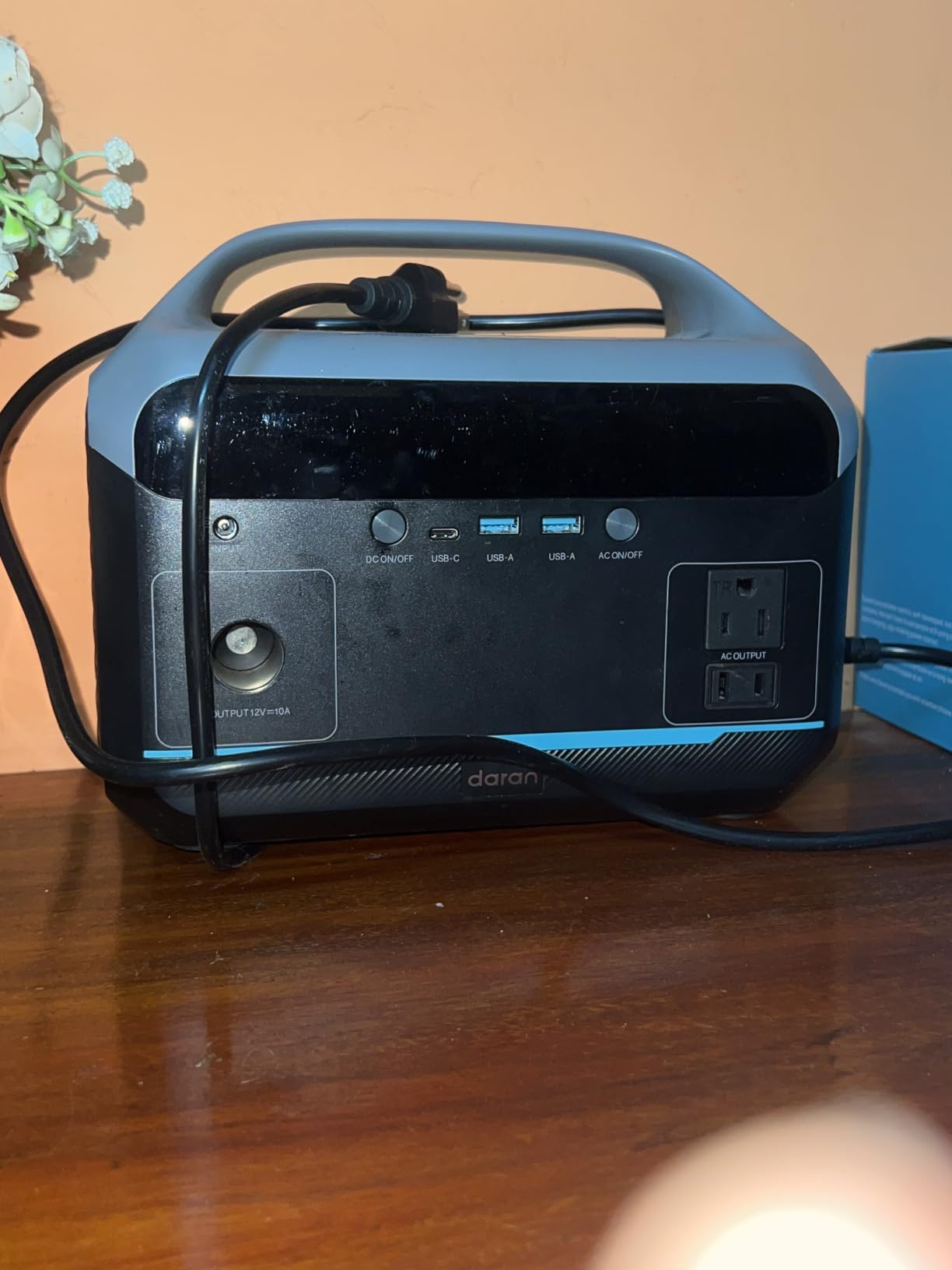
The DARAN NEO350 is the compact storm-response option, and its selling point is that the box includes a storage bag. Buyers who keep one in the cab or in a go-bag report using it for outages, phone charging and small appliances when the power goes out.
At 8.2 pounds with a 10 by 6.6 by 8.2 inch footprint it fits storage spaces nothing else in this roundup will. The seven-port design gives two 350W AC outlets, a 60W USB-C PD port, two 18W USB-A ports and a DC input or output. The listed runtime claims include a 30W CPAP for up to 8.16 hours and a 100W pot for about 2.44 hours.
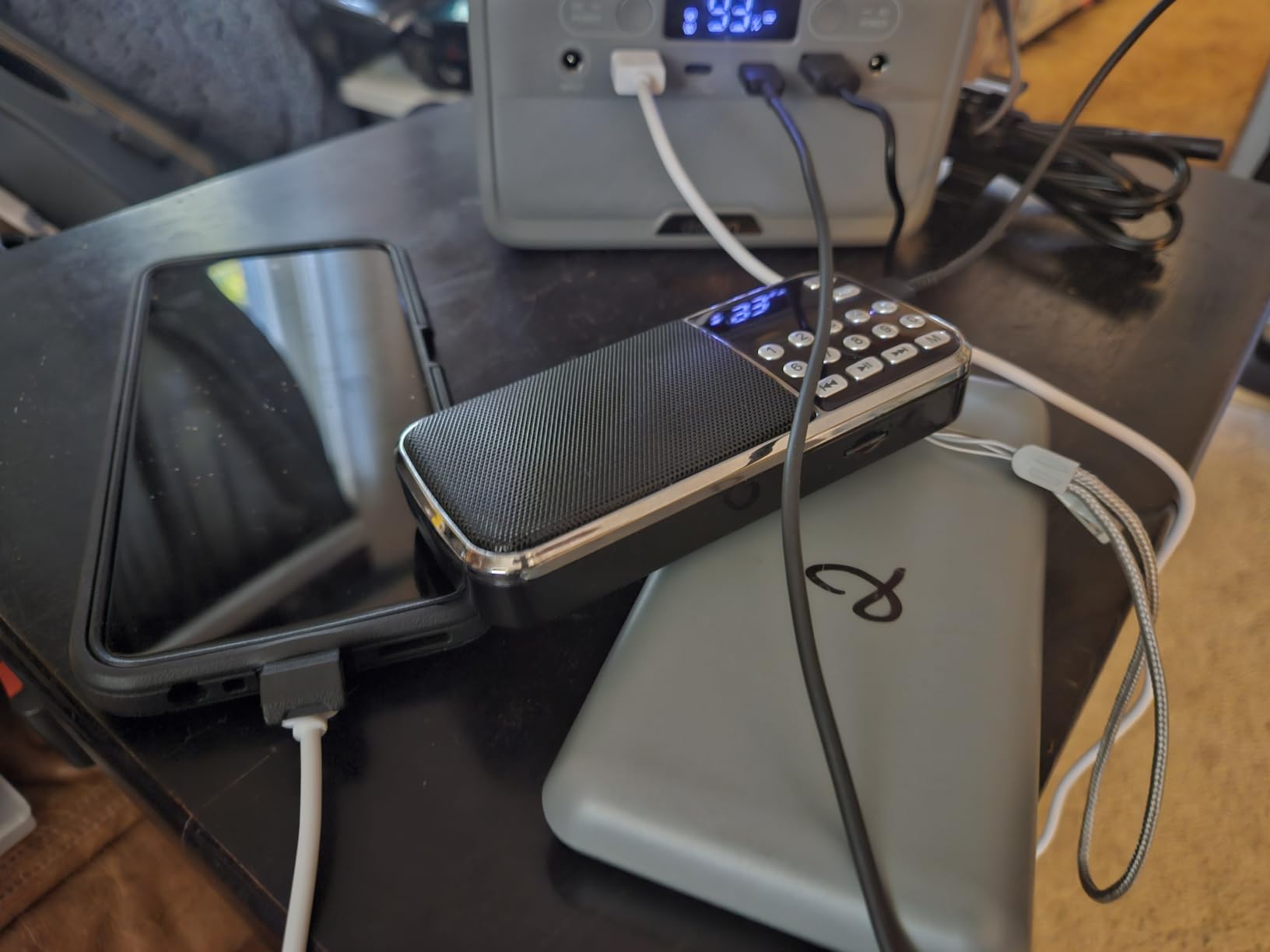
The battery management system covers overcharge, over-discharge, short circuit, temperature and cell balancing, and there is a rear LED with steady, strobe and SOS modes. That combination is what makes it a sensible emergency item rather than merely a small power bank with outlets.
Rating consistency is the weakest in the group at 4.2 stars, with 66 percent five-star and a 10 percent one-star share across 968 ratings. Buyers who keep it generally like it; buyers who need certainty find less to rely on.
A sensible second unit rather than a sole system
Nothing here argues for this as your only source of power in a full-time van. The runtime claims are modest, the inverter is a 350W unit, and it is far less proven than the picks above. What it does well is live in a jacket pocket of a cupboard, stay charged, and be there when the grid goes out or your main unit runs down.
The 288Wh LiFePO4 chemistry and the SOS light make it a reasonable companion to a larger fixed system, particularly for a second vehicle or for keeping charge in reserve during a long storm.
The spec sheet needs a caveat
The listing lists a battery capacity of 90,000 mAh, which does not reconcile with the stated 288Wh. Treat the watt-hour figure as the number to plan around, and if this becomes your primary unit, confirm the capacity with a load test before you rely on it.
Solar panels and car charging cables are sold separately, so the box contains only the unit, a bag and an AC cable. The 1-year warranty and 1-year service are well short of the 5 to 10 year terms from the major brands, and support for a lesser-known brand is typically slower. For a storm kit that runs twice a year, that is an acceptable trade. For daily living, it is not.
How Many Watt-Hours Does Van Life Actually Use?
Before choosing a unit, work out your daily draw. Divide each device’s wattage by its hours of use, add them up, and you have your daily watt-hour budget. Multiply that by the number of days you want without recharging, then add roughly a third for inverter and standby losses.
Weekend lights and phones build: string lights, a phone, a camera battery and a couple of hours of laptop use lands around 40 to 60 watt-hours a day. A 300Wh unit covers a weekend if you refill at a hookup.
Full-time fridge and remote work build: a 12V fridge cycling at roughly 30 to 45 watts averages 35 to 50 watt-hours across a day, a laptop for six hours runs 60 to 90 watt-hours, a router and phone charging adds 15 to 25, LED lights for five evening hours adds about 10, a fan adds 20 to 30, and Starlink during working hours can add 60 to 100. That is 200 to 300 watt-hours a day before you cook anything.
Cooking and e-bike build: add an induction burner or kettle for 15 minutes a day, an air fryer or grill for 20 minutes, a coffee maker for a few short cycles, and an e-bike charge of 400 to 600 watt-hours once or twice a week. This profile runs 300 to 400 watt-hours a day, and the e-bike pulls a single large spike that needs inverter headroom rather than just capacity.
Two practical conclusions follow. First, running 12V appliances from the 12V output rather than cycling them through AC avoids a wasteful conversion round trip, which is why van builders with 12V fridges and coolers see noticeably longer runtimes. Second, the moment you add a heater or a kettle you are planning in minutes per day, not hours, and no battery changes that arithmetic.
How to Choose a Portable Power Station for a Van Build
Capacity: buy for three dark days. Multiply your daily watt-hour budget by the number of days you want to be independent, then add a third again for losses. If your daily budget is 250 watt-hours and you want four days, you are looking at roughly 1300 watt-hours, which pushes you into the larger units. If you top up solar every day, halve that number.
Inverter type: insist on pure sine wave. A modified sine wave inverter is cheaper to build and audibly worse. It makes fan motors and induction motors whine, stresses some sensitive electronics and is a common source of the electrical whine reviewers mention. Every unit in this roundup lists pure sine wave output, but if you shop outside it, this is the single most important line on the spec sheet.
Chemistry: LiFePO4 over NMC. Lithium iron phosphate packs hold more cycles, tolerate heat better and are less likely to suffer capacity loss from partial charge. All ten units here use LFP chemistry, rated from 3000 to 6000 cycles. NMC units still exist at the low end of the market and are fine for occasional use, but for a daily driver LFP is the better long-term buy.
Weight: treat it as a payload decision, not a spec. Weigh your remaining payload allowance first, then subtract water, tools, bikes and insulation before the battery. A 23.8 pound unit is about 11 kg, and on a small van that is often the difference between carrying bikes and carrying a second water tank. If the maths only works at 300Wh, buy the 300Wh unit and plan to refill more often.
Expansion: check before you commit. A unit you can grow with an expansion battery is worth a lot to a full-time builder whose load list will expand in year two. Some current-generation units have dropped the expansion port, so verify before buying rather than after.
Warranty and support: read the length carefully. Terms in this roundup run from 1 year to 5 years. Forum users repeatedly flag warranty support as the deciding factor after a failure, particularly with lesser-known brands. If a unit is your sole power source, a 5-year term is worth more than a small capacity gain.
Our picks under a smaller budget cover the entry end of this market if you are working within a tighter ceiling, and the RV roundup goes deeper on high-draw use if your van carries a full appliance suite.
Recharging on the Road: Wall, Solar, 12V and Alternator
There are four ways to refill a power station in a van, and a real build uses all four.
Wall outlet. The fastest and the one people rely on at home or at a serviced site. Refill times here run from 45 minutes on the BLUETTI Elite 30 V2 to 1.13 hours to 80 percent on the EcoFlow DELTA 3 Max. Note that the fastest modes are often app-enabled and not the default.
Solar. The cleanest off-grid option and the reason most builders buy a station. Panel sizing is about your daily watt-hour budget divided by peak sun hours. A panel sized to roughly double your daily draw gives you margin for clouds. Our solar panel picks cover matching panels to units, but check compatibility first: the Jackery Explorer 1000 v2 restricts solar input to Jackery panels, and the Anker SOLIX C300 explicitly excludes several Anker models.
12V car socket. Slow but always available while you drive. Treat it as a top-up that preserves your main bank rather than a recovery method.
Alternator charger. The van-specific option most guides skip. A DC-DC alternator charger draws from your starter battery and pushes power into the power station while you drive. The community advice on r/VanLife and r/vandwellers favours chargers with an integrated charge controller and car-battery feedback, which prevents the alternator from overcharging the vehicle battery and draining it when you stop. Install it correctly, confirm the fuse rating, and treat it as the method that makes a big battery viable on a long driving day.
Power Station vs a DIY Leisure Battery Build
Every serious van builder eventually asks whether to fit a conventional leisure battery, inverter and wiring instead. The forum debate is genuinely split, so here is the honest split.
The DIY build wins on integration. 12V appliances run directly off it with no conversion losses, the wiring is permanent and sized for the load, and capacity grows as your budget grows. Several long-term van lifers in r/vandwellers describe moving from a factory unit to a custom system as their needs expanded, and that pattern is real.
The portable power station wins on everything else. It arrives as one sealed box with a battery management system, an inverter, AC outlets and safety certification already built in. There is no fusing, no cable routing, no drilling, no risk of a poorly built install, and no guesswork about whether the converter charger matches your battery chemistry.
My decision framework: if your load list is dominated by 12V appliances, you already have a place to fit a battery, and you are staying put long-term, the DIY build is cheaper per watt-hour and more flexible. If you want AC outlets for a laptop, a CPAP and occasional cooking, you want to move the unit between vehicles, or you do not want your build dependent on your own wiring skills, a portable power station is the better first system.
Mobile Kitchen Runtimes and What Each Size Can Cook
Kitchen use is the clearest way to sort these units by tier, because cooking loads are measured in minutes per day rather than hours.
Around 300Wh and 300W output covers boiling water for instant coffee, warming a meal, running a small fan and powering a light kitchen appliance briefly. The Jackery Explorer 300, Anker SOLIX C300, EcoFlow RIVER 2 and DARAN 288Wh all sit here. The Jackery Explorer 300 and EcoFlow RIVER 2 have 300W inverters, which will not start an induction ring; the BLUETTI Elite 30 V2 stores the same energy but its 600W inverter will.
Around 500Wh and 500W output covers a proper kettle or coffee maker, a small induction plate, an air fryer sized for one person and a car fridge running overnight. The Jackery Explorer 500 v2 and ALLWEI 512Wh sit here, and both handle a 12V fridge for a night or two with room left over.
Around 1000Wh and 1500 to 2000W output is where you can cook without planning every boil. The Jackery Explorer 1000 v2 runs a 1500W induction burner or a kettle with room to spare; the Anker SOLIX C1000 Gen 2 adds headroom for a microwave and a heater at the same time.
Around 2000Wh and 2400W output means cooking stops being an event. The EcoFlow DELTA 3 Max runs a fridge, a microwave and a tool simultaneously, and its X-Boost mode covers most of what a household socket would.
One kitchen-specific caveat: some appliances rated under the inverter’s wattage still fail to start because of startup inrush, and countertop ice makers are the usual example. Test your actual appliances before you commit to a unit.
Noise, Sleep and Winter Use
Noise. Published figures in this roundup run from 25 dB for the Anker SOLIX C300 measured at 3.3 feet, to 28 dB for the Jackery Explorer 500 v2, to an audible fan during maximum-speed charging on the EcoFlow RIVER 2. Where the unit physically sits matters more than the number: a battery in the sleeping area should be one of the two quietest options here.
Cold weather. Lithium packs lose charging speed and available capacity in near-freezing conditions, and leaving a partially charged unit in a van through winter accelerates degradation. If you full-time in cold regions, top up before a cold snap, store it around half charge in unheated conditions, and bring it inside when temperatures drop hard.
Battery care. The self-discharge numbers here are good news for intermittent users: the Jackery Explorer 500 v2 loses only 5 percent after six months in storage. Leave units unplugged between trips rather than cycling them daily, and keep them between roughly 20 and 80 percent for long storage.
Frequently Asked Questions
What size portable power station do I need for full-time van life?
For a full-time build running a 12V fridge, lights, a laptop and a fan, budget about 200 to 300 watt-hours a day, then multiply by the days you want to be independent and add a third for inverter losses. A 250 watt-hour daily budget over four days points to roughly 1300 watt-hours of capacity. If you add an e-bike charge or a microwave, move up a tier again.
Is Jackery or EcoFlow better for a van?
Jackery tends to favour simplicity and lighter units, with strong pure sine wave output and long cycle ratings. EcoFlow favours raw output and fast charging, with higher continuous wattage and refill speeds that suit high-draw loads and full-time use. For a kitchen-heavy or tool-heavy build, EcoFlow’s inverter headroom usually wins; for a lighter build where weight matters, Jackery is easier to live with.
Is Jackery or Anker better for van life?
Anker units in this roundup offer more ports, faster wall charging and quieter operation, which suits electronics-heavy builds and sleeping setups. Jackery units carry longer cycle ratings and simpler app control, and the Explorer 500 v2 is rated at 6000 cycles. Anker’s C1000 Gen 2 dropped the expansion battery option, so check that before choosing it for a growing build.
Which brand of portable power station is the most reliable?
Reliability is easier to judge by warranty length and review volume than by brand alone. Anker and EcoFlow both offer 5-year warranties on the units here, BLUETTI offers 60 months and Jackery varies from 2 to 5 years depending on model. Jackery’s Explorer 300 has by far the largest review base at over 11000 ratings, which gives the longest field history. Lesser-known brands in this roundup offer 1-year terms.
Can I plug my RV into a portable power station?
You can run individual appliances from a portable power station, but not connect an RV to one as a substitute for a hookup. Household and RV circuits draw far more than the 500W to 2400W continuous output of these units. A unit like the EcoFlow DELTA 3 Max at 2048Wh and 2400W can power a fridge, a microwave and small appliances at once, but it cannot supply an RV’s air conditioner, electric heat or water heater.
The Verdict: Which Portable Power Station Suits Your Build
The Jackery Explorer 1000 v2 is our pick for the best portable power stations for van life in 2026, because 1070Wh with a 1500W pure sine wave inverter covers the widest range of real daily loads without demanding a permanent install. Its 23.8 pounds are a genuine payload cost, but the runtime and cycle life pay it back over any build longer than a few weekends.
If you need more inverter than that, the Anker SOLIX C1000 Gen 2 doubles continuous output to 2000W across ten ports and refills in under an hour. If you need more capacity than either, the EcoFlow DELTA 3 Max at 2048Wh is the only unit here that supports a full-time load without daily recharging, at the cost of bulk. Below that, the Jackery Explorer 500 v2 is the settled weekend choice, and the BLUETTI Elite 30 V2 is the small box that can still boil a kettle.
Work out your daily watt-hour budget first, subtract the battery from your remaining payload, then pick from that list. Use the button below to check the current details, and start with a realistic two-day test before you commit to a long build.