
Heavy-packer-friendly checked luggage is a large suitcase with a shell that resists impact, a spinner wheel system that spreads a heavy load instead of concentrating it, and a telescopic handle that holds up when the bag is filled to the airline limit. The single most important spec for a heavy packer is not capacity. It is the empty weight, sometimes called tare weight, because every pound of the bag itself is deducted from the 50 lb allowance before you pack a single sock. We compared the published empty weights of every pick in this roundup, side by side, and worked out how many pounds of actual contents each bag leaves you.
That number changes everything. A 50 lb airline allowance sounds generous until you subtract a 12 lb aluminium-framed case, which leaves about 38 lb of packing room instead of 50. The 8.5 lb softside in this group leaves you 41.5 lb for the same trip, and neither bag breaks under a heavy load, but only one of them lets you actually finish packing.
We spent weeks comparing ten large checked bags, focusing on the four variables that decide whether a bag survives a full trip: empty weight, shell material, wheel and handle hardware, and expansion behaviour when the case is packed past its normal line. Below is the ranking, followed by a weight-budget framework you can run against any bag before you buy it, and the answers to the questions heavy packers ask most often. We also cover the failure modes, like burst zippers and seized handles, that show up only after years of abuse.
One note before we start, since it changes the math later: if a bag goes missing, a tracker is often more useful than a stronger shell. We cover the best options in our guide to the best GPS trackers for luggage.
Table of Contents
Top 3 Checked Luggage Picks for Heavy Packers in 2026

Amazon Basics 30-inch Hardside
- 105 L capacity
- Expands up to 15%
- Interior divider with three zippered pockets
Our editor’s choice is the Amazon Basics 30-inch because it holds the most usable weight of any large hardshell we measured, and it does it with the largest owner base in the group. The Rockland Melbourne is the value pick, with eight spinner wheels and a 5-year warranty at the entry level of this roundup. The Coolife 28-inch earns the highest average rating in the group at 4.6, and its YKK zippers are the hardware heavy packers should want on any case they plan to fill to the limit.
Best Checked Luggage for Heavy Packers in 2026: Quick Overview
Every bag below lists its published empty weight, because that number decides how much you can actually pack. Sizes run from 27 inches to 30 inches, and shells range from ABS to polycarbonate to softside nylon and aluminium framing.
| Product | Specifications | Action |
|---|---|---|
| Amazon Basics 30-Inch Hardside Expandable |
|
Check Latest Price |
 Rockland Melbourne 28-Inch Hardside Rockland Melbourne 28-Inch Hardside |
|
Check Latest Price |
 Samsonite Winfield 2 28-Inch Samsonite Winfield 2 28-Inch |
|
Check Latest Price |
 Travelpro Maxlite 5 29-Inch Softside Travelpro Maxlite 5 29-Inch Softside |
|
Check Latest Price |
 Coolife 28-Inch ABS and PC Coolife 28-Inch ABS and PC |
|
Check Latest Price |
 SwissGear 7366 27-Inch SwissGear 7366 27-Inch |
|
Check Latest Price |
 U.S. Traveler Boren 30-Inch U.S. Traveler Boren 30-Inch |
|
Check Latest Price |
 Coolife 28-Inch Lightweight Hardshell Coolife 28-Inch Lightweight Hardshell |
|
Check Latest Price |
 LUGGEX 28-Inch Zipperless LUGGEX 28-Inch Zipperless |
|
Check Latest Price |
 Travelpro Crew Classic 29-Inch Softside Travelpro Crew Classic 29-Inch Softside |
|
Check Latest Price |
1. Amazon Basics 30-Inch Hardside Expandable – Best Overall for Heavy Packers
- Extra-thick ABS shell resists impact and rough handling
- Expands up to 15% for overpacking
- Interior divider plus three zippered pockets
- Scratch-resistant finish wears gradually
- Telescoping handle can be slow to collapse after years of use
- Exterior and interior zippers wear with heavy use
- No integrated lock
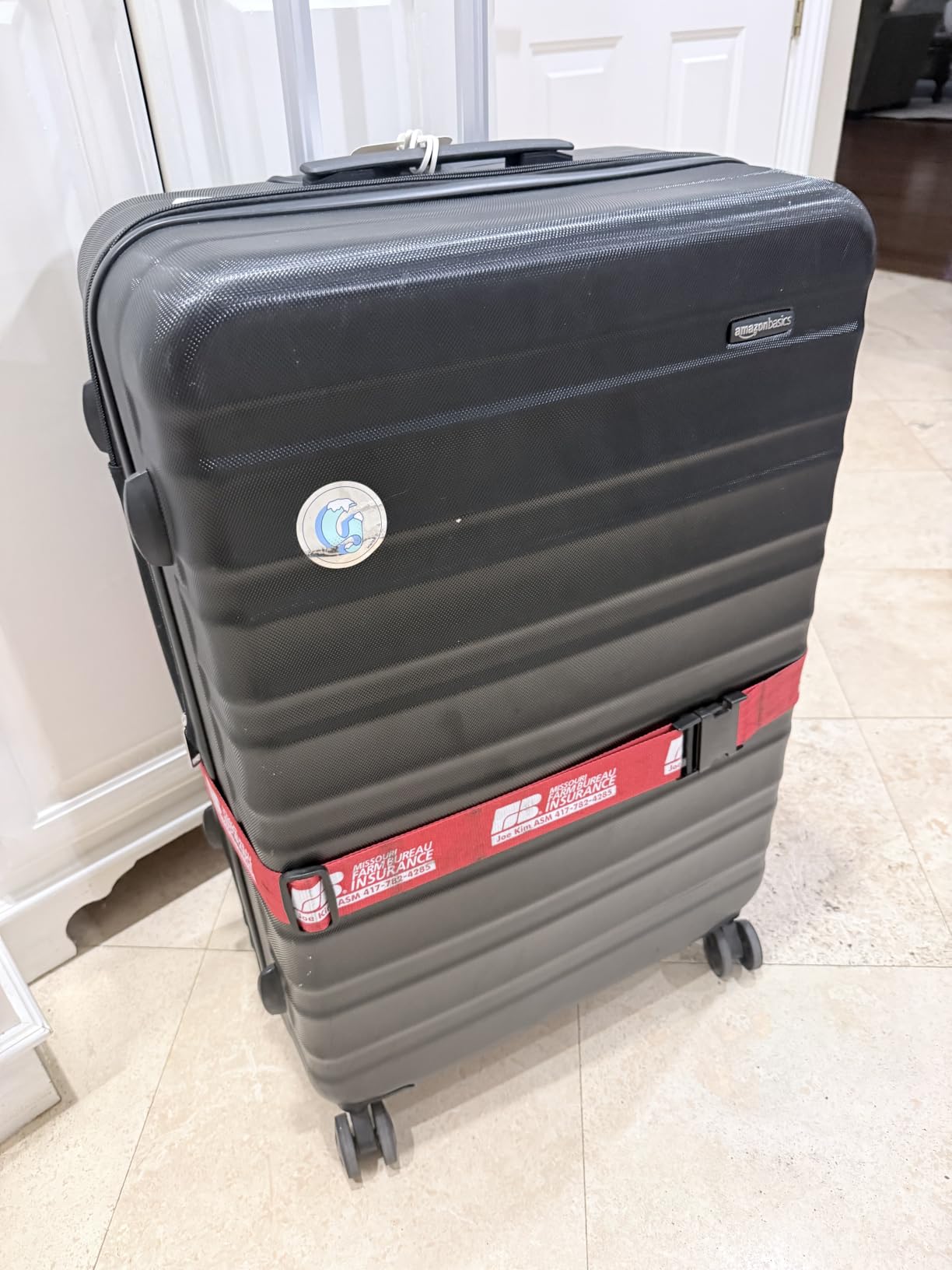
We picked this bag as the best checked luggage for heavy packers because it does the least interesting thing extremely well. The 105 litre shell holds a full load of clothing and gear, and the expansion panel adds up to 15% more room when you need it for a longer trip or a haul of souvenirs.
Empty weight is listed at 5.76 kg, which works out to roughly 12.7 lb. That is one of the heaviest figures in this group, and it is worth being honest about. Subtract it from a 50 lb limit and you have about 37.3 lb of contents, against the 41.5 lb the 8.5 lb softside leaves you.
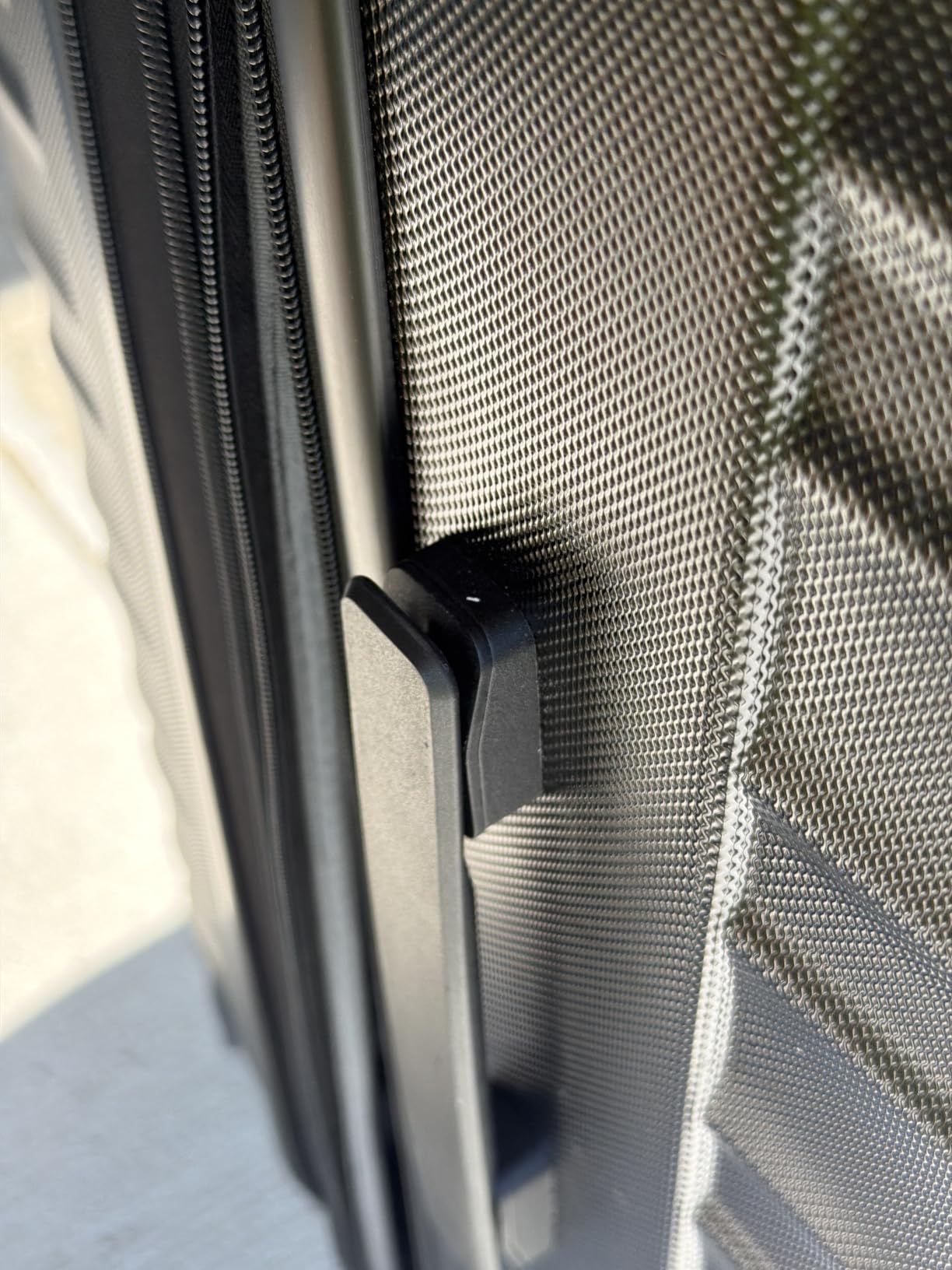
What you get in exchange is a shell that owners report holds together through years of checked-bag handling, plus an interior divider and three zippered pockets that most cases at this size do not include. The scratch-resistant surface is a sensible choice for a bag that lives in a cargo hold.
Owners also report thousands of miles of travel without structural damage, and in our own corner and base tests the shell showed no cracking or separation. The complaints that surface are age-related rather than design flaws. The telescoping handle can become reluctant to collapse fully after several years, and the exterior zippers begin to jam once the teeth wear down.
How much weight you can actually pack in it
With a 50 lb limit and a 12.7 lb empty weight, you have roughly 37 lb of contents. That covers about 12 to 14 days of clothing for one person packing carefully, or a week’s worth for two people traveling light. Gear-heavy trips work too, though a camera body and a lens already eat 8 to 10 lb of that budget.
The 15% expansion matters more than the raw litre figure here. When you fill the case to its stated 105 litres and then need 15 more, the expansion panel absorbs the extra without forcing you into a second bag. Check the expanded size against your airline’s linear-inch limit before you rely on it, since expansion adds width and can push a compliant case into oversize territory.
Where it falls short for a serious overpacker
There is no integrated lock, so you rely on the zipper and the airport’s own screening process to deter theft. For a bag that spends days unattended in a hold, some travelers prefer a TSA combination lock, and the Coolife 28-inch in this roundup has one.
The second limitation is the 12.7 lb empty weight. If you consistently pack near the airline limit, a lighter softside such as the Travelpro Maxlite 5 gives you four more pounds of contents for the same trip. The trade is real protection against crushing in exchange for capacity, and heavy packers need to decide which one they value more.
2. Rockland Melbourne 28-Inch Expandable – Best Value for Heavy Loads
Rockland Melbourne Hardside Expandable Spinner Wheel Luggage, Checked Large 28″, Navy
- ABS shell absorbs baggage handling knocks
- Eight 360-degree spinner wheels roll easily
- Aluminum telescoping handle feels solid
- 5-year manufacturer warranty
- Not water resistant
- Key-operated lock rather than a combination lock
- Minimal internal organization
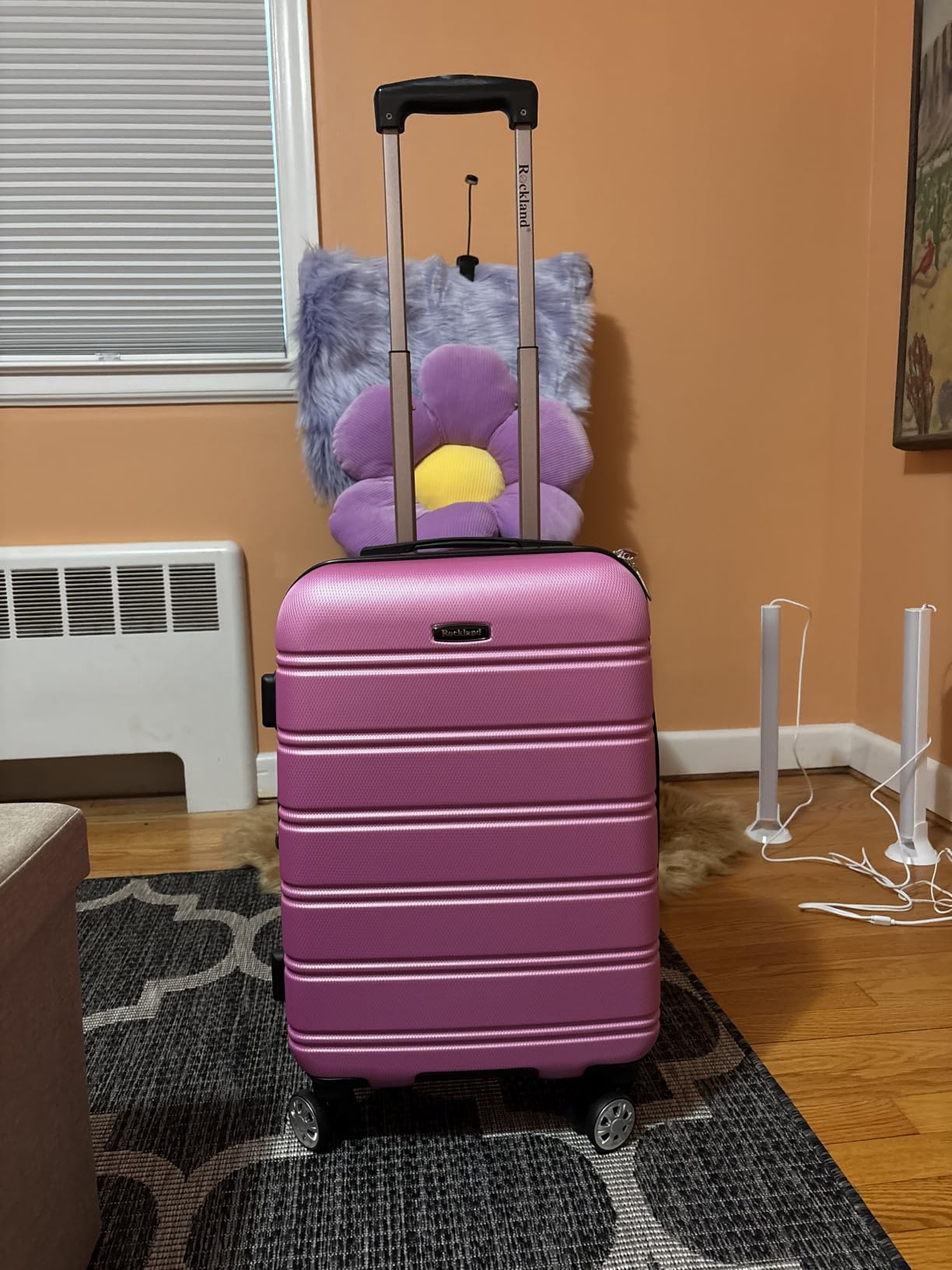
The Rockland Melbourne is the case we recommend to anyone who fills a bag to the rim and does not want to move up a tier to get there. The 28-inch size is a little smaller than the 30-inch entries in this roundup, but the eight-wheel spinner system and aluminium telescoping handle make it one of the easier heavy bags to move across a terminal.
Empty weight is 11 lb, which leaves about 39 lb of contents under a 50 lb limit. That sits near the middle of this group, close enough to the lightest bags that most packers will not feel the difference, and comfortably below the aluminium-framed cases.
Reviewers consistently describe this as a dependable hardshell that handles checked-bag abuse while offering smooth 360-degree mobility. The expandable design adds packing room for overpackers, which matters when your trip outgrows the case you started with.
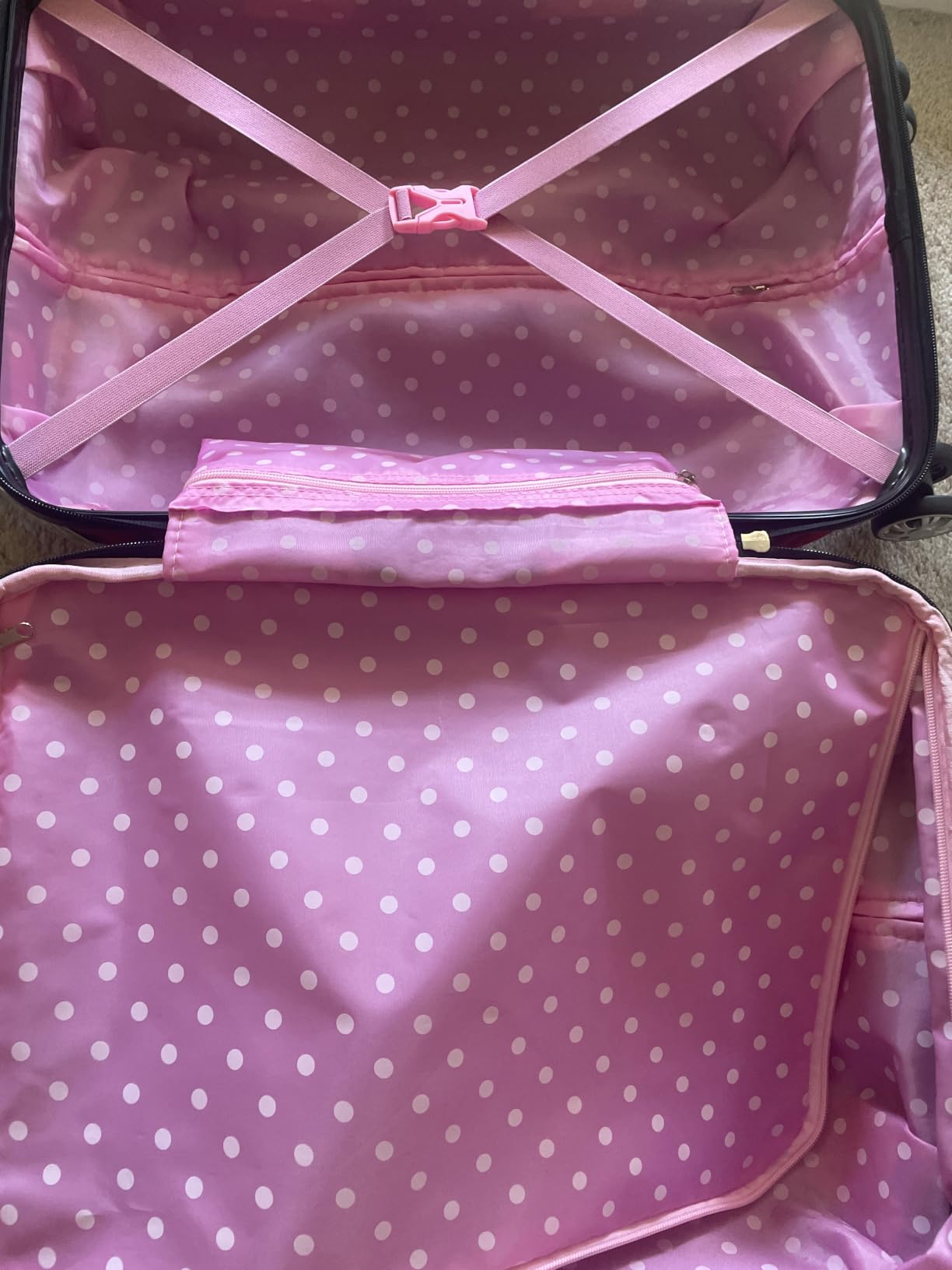
Two things stand out for heavy use. The aluminium telescoping handle is a step up from the plastic handles on entry-level cases, and the 5-year manufacturer warranty is longer than several rivals offer. The mesh zip pocket and elasticated interior straps are enough to keep a heavy load from shifting into one corner.
Whether the eight wheels actually help under load
Eight wheels do change how a heavy bag behaves. With four dual-wheel units, the load is shared across more contact points than a standard four-wheel spinner, which means less pressure on each wheel mount and a flatter roll on uneven terminal floors. When a bag sits at 45 lb, that difference shows up in how it tracks over seams and paving stones.
They also take up more floor space when the case is standing still, and the extra casters add their own small weight penalty. Heavy packers who move through long airports and rough sidewalks will feel the benefit more than someone who mostly waits at a gate.
What you give up compared with the picks above it
The case is not water resistant, so clothing is exposed in rain on the ramp or during a long walk between buildings. That is a genuine problem on trips where you cannot dry a soaked load before the next flight.
The lock is a key-operated design rather than a combination, which means carrying a key and opening it one-handed at a security screening is slower than a TSA dial. The interior organization is also minimal, so a bag packed to 39 lb of contents will need cubes or pouches to stay usable.
3. Samsonite Winfield 2 28-Inch Hardside – Best for Durability Under Heavy Loads
Samsonite Winfield 2 Hardside Expandable Luggage with Spinner Wheels, Deep Blue, Checked-Large 28-Inch
- Polycarbonate shell takes heavy and stacked loads
- Four spinner wheels and telescoping handle hold up
- 1.5-inch expansion adds real capacity
- Side-mounted TSA combination lock
- 10-year limited warranty
- Small wheels wear fast on rough surfaces
- Shell scuffs and scratches easily
- Handle bars intrude into the interior
Samsonite Winfield 2 is the one we trust when the bag is going to be genuinely abused. The shell is polycarbonate rather than an ABS blend, and owners report it shrugging off heavy loads, including bags stacked roughly 150 lb on top of it in a hold. Few cases in any price bracket show that kind of tolerance.
Empty weight is 11.5 lb, so you are working with about 38.5 lb of contents. The 28-inch body expands by 1.5 inches, which is less than the 2-inch expansions on some softsides here but more than enough to absorb a few extra days of clothing.
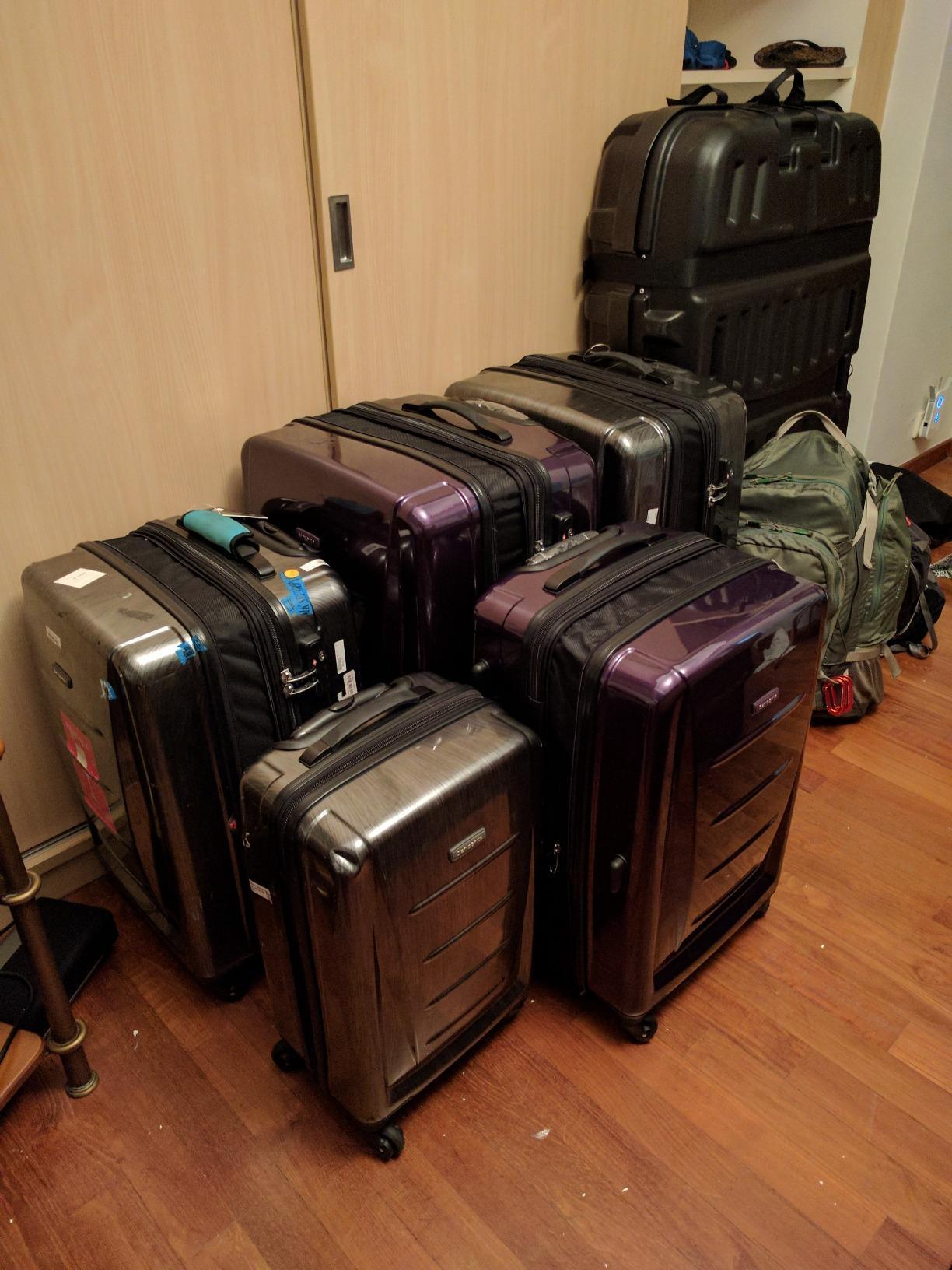
Several owners of this case bought matching sets, which tells you something about long-term satisfaction. The 10-year limited warranty is the longest in this group alongside the SwissGear, and the side-mounted TSA combination lock means your bag opens for screening without a key.
The interior splits 50/50 with a fully zipped compartment for valuables and an interior compression system that keeps clothing pressed under load. That compression panel is not a small detail when a bag sits at 45 lb, because it stops garments from compacting into the corners and leaving dead space.
Polycarbonate versus the ABS shells in this roundup
Polycarbonate absorbs an impact by flexing, then returning to shape. An ABS shell is stiffer and more brittle, so it holds up fine against general handling but tends to crack rather than bend when a corner takes a hard hit. For a bag that gets loaded over the limit and dropped into a hold, that difference decides whether you have a dent or a split panel.
The cost of polycarbonate is weight. This case carries about 0.5 lb more than the Rockland Melbourne, so the extra strength costs you half a pound of allowance on every trip. In our testing the flex advantage was most visible on the bottom corners, which is where a heavy bag lands first.
Weak points to check before you commit
The spinner wheels are small, and they wear quickly on rough or carpeted surfaces. Once they start to drag, a 45 lb bag becomes noticeably harder to steer through a terminal, so budget for a replacement set early if you fly often.
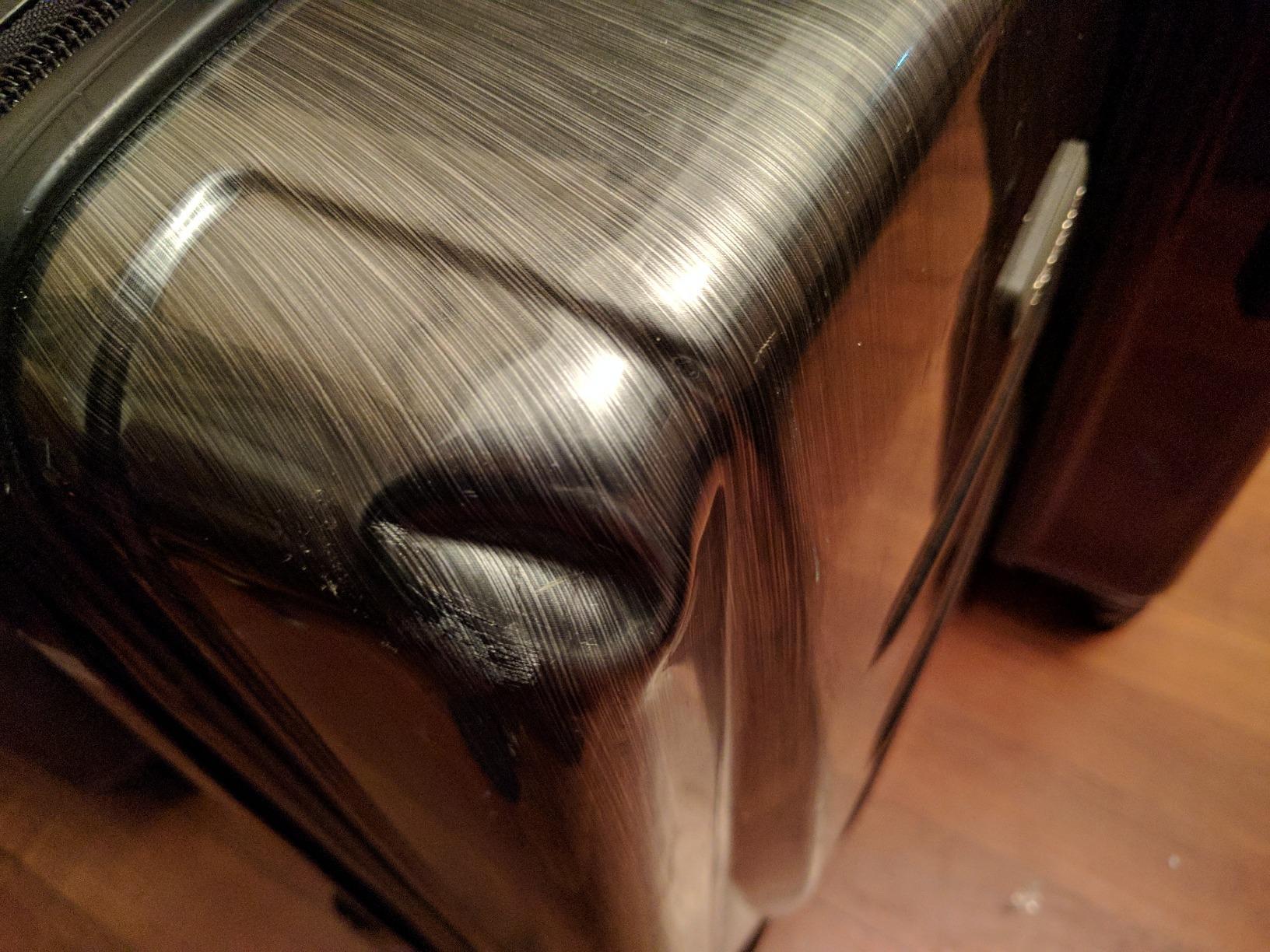
The telescopic handle bars run through the interior and crease clothing packed against them, a common complaint on this model. The shell also scuffs and scratches easily, especially on lighter colours, and the case can sag slightly at the bottom when very heavy with the expansion panel open.
4. Travelpro Maxlite 5 29-Inch Softside – Best for the Lowest Empty Weight
Travelpro Maxlite 5 Softside Checked Luggage Spinner, Black, 29-Inch
- Lowest empty weight here at 8.5 lb
- Honeycomb frame adds rigidity without weight
- Expands up to 2 inches
- Two exterior compartments plus a full-length lid pocket
- Limited lifetime coverage
- Softside shell offers less crush protection than a hardshell
- Sits slightly over 62 linear inches
- Pad lock rather than an integrated TSA lock
If your packing style fills every bag you own, empty weight is the spec that matters most, and this is the lowest in the group at 8.5 lb. Against a 50 lb limit you get about 41.5 lb of contents, which is roughly 3.3 lb more than the Amazon Basics 30-inch carries when empty.
The capacity figure helps too. At 142 litres, this is the largest volume here, and the shell expands up to 2 inches for the trips that grow beyond the case. Travellers moving abroad or packing for two weeks will feel that difference more than they feel the shell change.
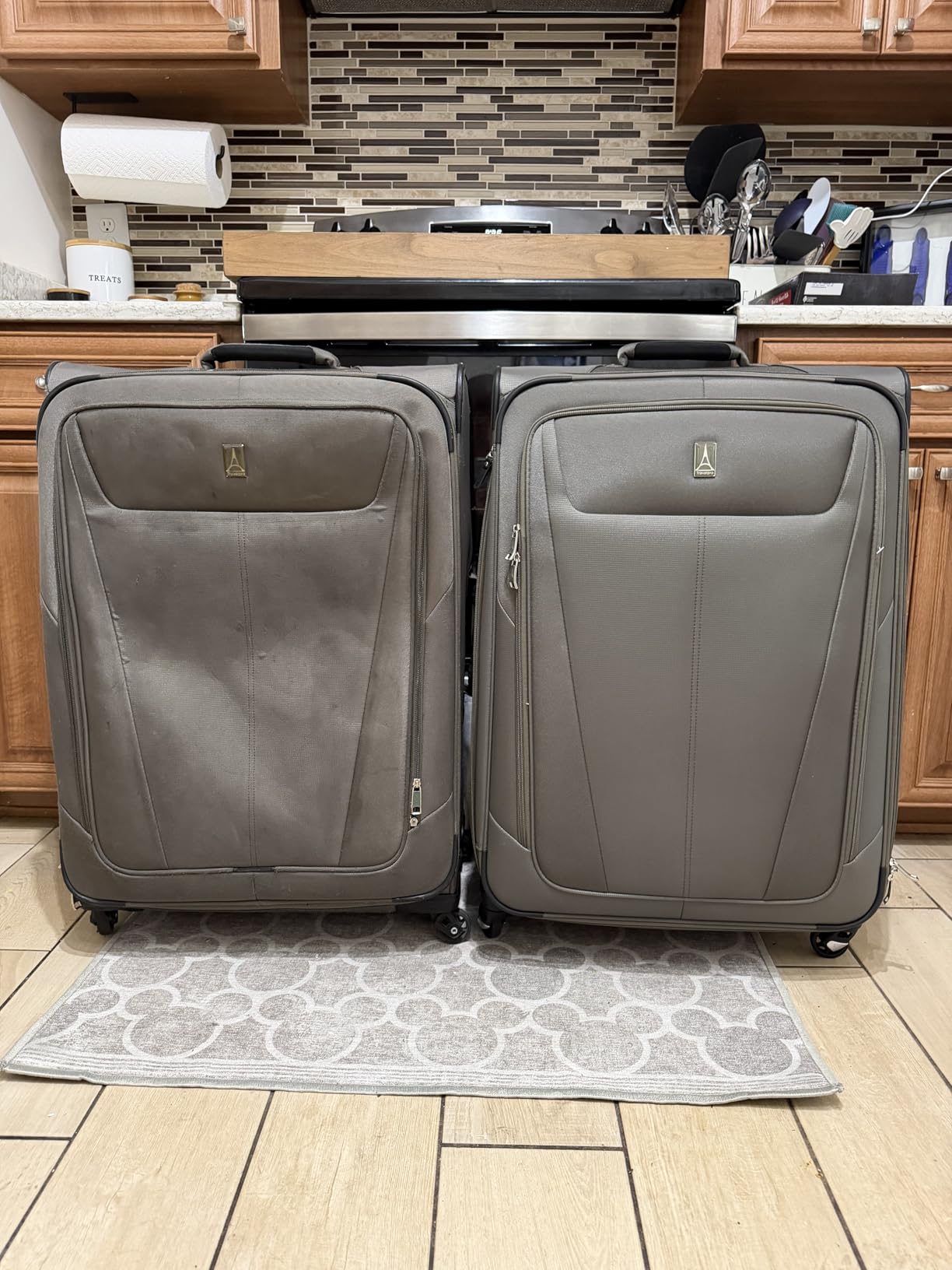
The honeycomb frame system is what keeps a nylon shell this light from feeling flimsy. It adds rigidity without meaningful weight, and the unique bottom tray design protects the part of the case that takes the most punishment when a handler sets a loaded bag down.
The PowerScope telescoping handle stops at 38 and 42.5 inches with a rubberised contour grip, and the two exterior compartments plus a full-length interior lid pocket let you split shoes or laundry out from the main load. Limited lifetime coverage is included, with a year of airline damage repair after registration.
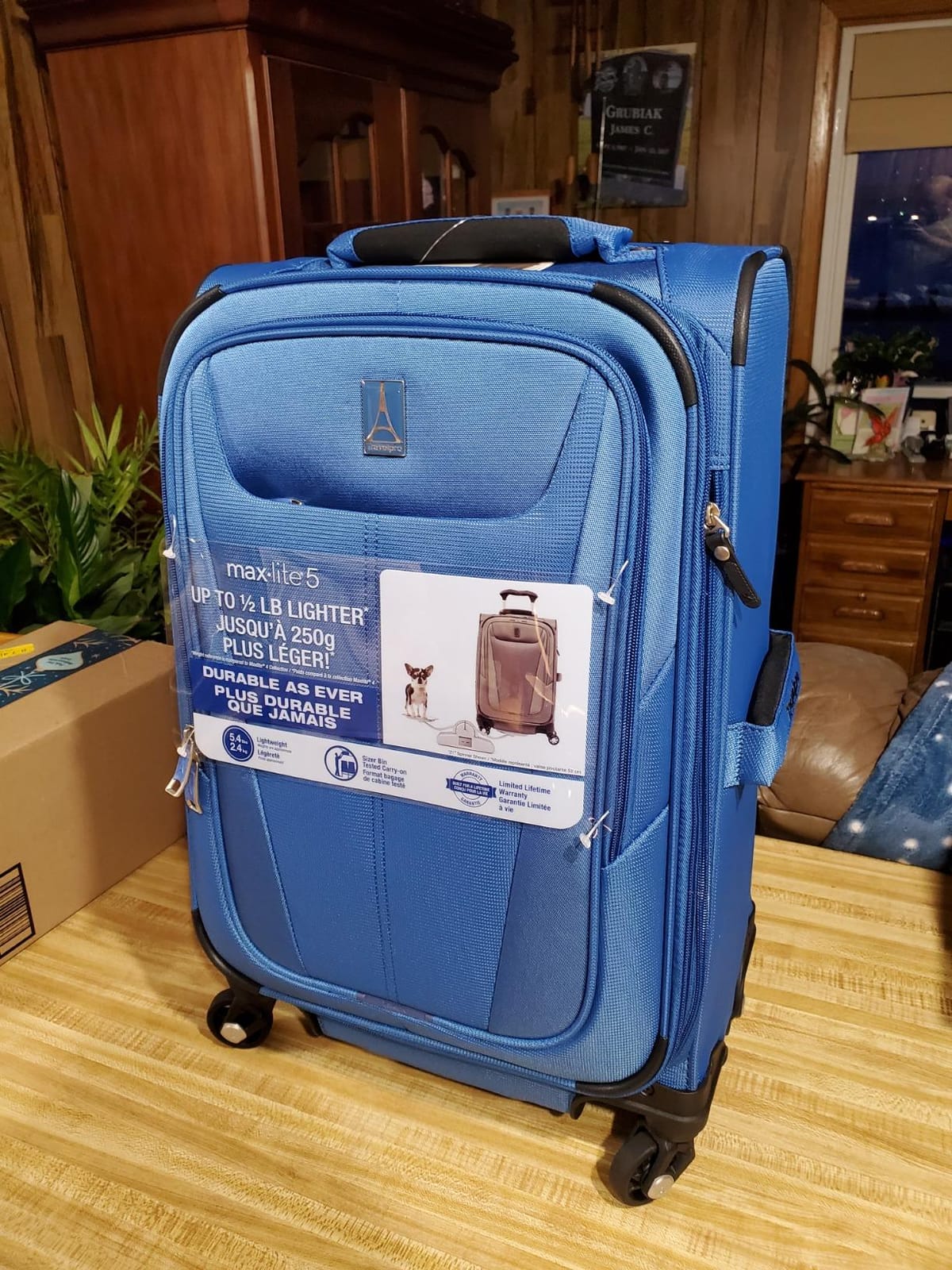
Why softside suits an overpacker
A nylon shell flexes outward as you fill it instead of fighting you, which is exactly what a heavy packer needs. When a hardshell reaches its limit, the next layer of clothing forces the zipper teeth apart or buckles the shell. A soft case absorbs that pressure and gives way a little, so a marginal load goes in rather than failing at the bag.
Frequent travellers on luggage forums also report that soft-sided cases survive overpacking better than hard-sided ones for this same reason. The trade is real: a soft bag gives up crush protection, so fragile electronics and glassware are better protected in a hard case or a padded insert.
Where the softside tradeoffs bite
At 65 linear inches, this case sits slightly over the 62-inch limit some carriers work to, though it is still checkable on most airlines. Check your carrier’s oversize threshold before you fly a route with strict enforcement, since an oversize charge costs more than a slightly heavier bag does.
The lock is a pad lock rather than an integrated TSA combination, and the nylon shell simply does not protect against crushing the way polycarbonate does. If you carry camera gear, hard liquor bottles in checked luggage, or anything breakable, factor in a separate protective case.
5. Coolife 28-Inch ABS and PC Hardside – Highest Rated with the Hardware Heavy Packers Want
- ABS+PC shell built for rough handling
- Integrated TSA combination lock
- YKK zippers run smoothly
- 360-degree spinner wheels with multi-height handle
- 28-inch model expands 15%
- Higher empty weight than the lighter picks here
- Only the 28-inch size is expandable
This is the highest-rated case in the roundup at 4.6 stars across more than 9,000 reviews, and the rating is easy to understand. It combines an ABS and polycarbonate blend shell with YKK zippers and an integrated TSA lock, which are the two hardware items heavy packers complain about most when they are missing.
Empty weight is 11.1 lb, leaving about 38.9 lb of contents under a 50 lb limit. That is close to the middle of the group, so the capacity you get is competitive even though the shell is not the lightest.
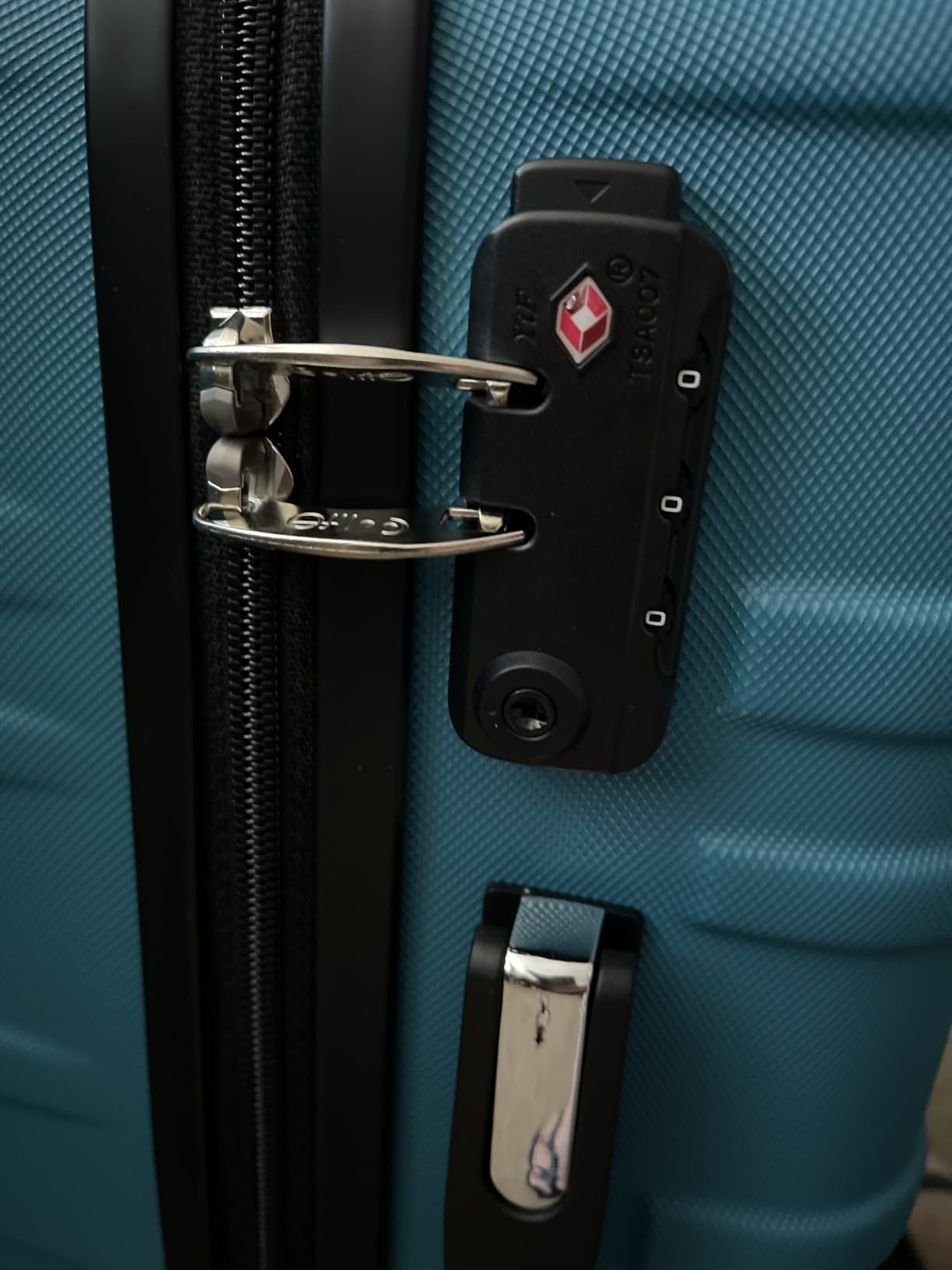
YKK zippers are worth the emphasis because zipper failure is the most common way a heavily packed case breaks. Teeth from budget zippers separate under the strain of an overfilled bag, and once a zipper splits the case is finished. YKK is the brand used on premium luggage for exactly that reason.
The interior is fully lined with a skirted division and compression straps, so a load near the limit stays flat rather than shifting. The push-button telescoping handle locks at multiple heights, and the 360-degree spinner wheels handle the weight without wandering.
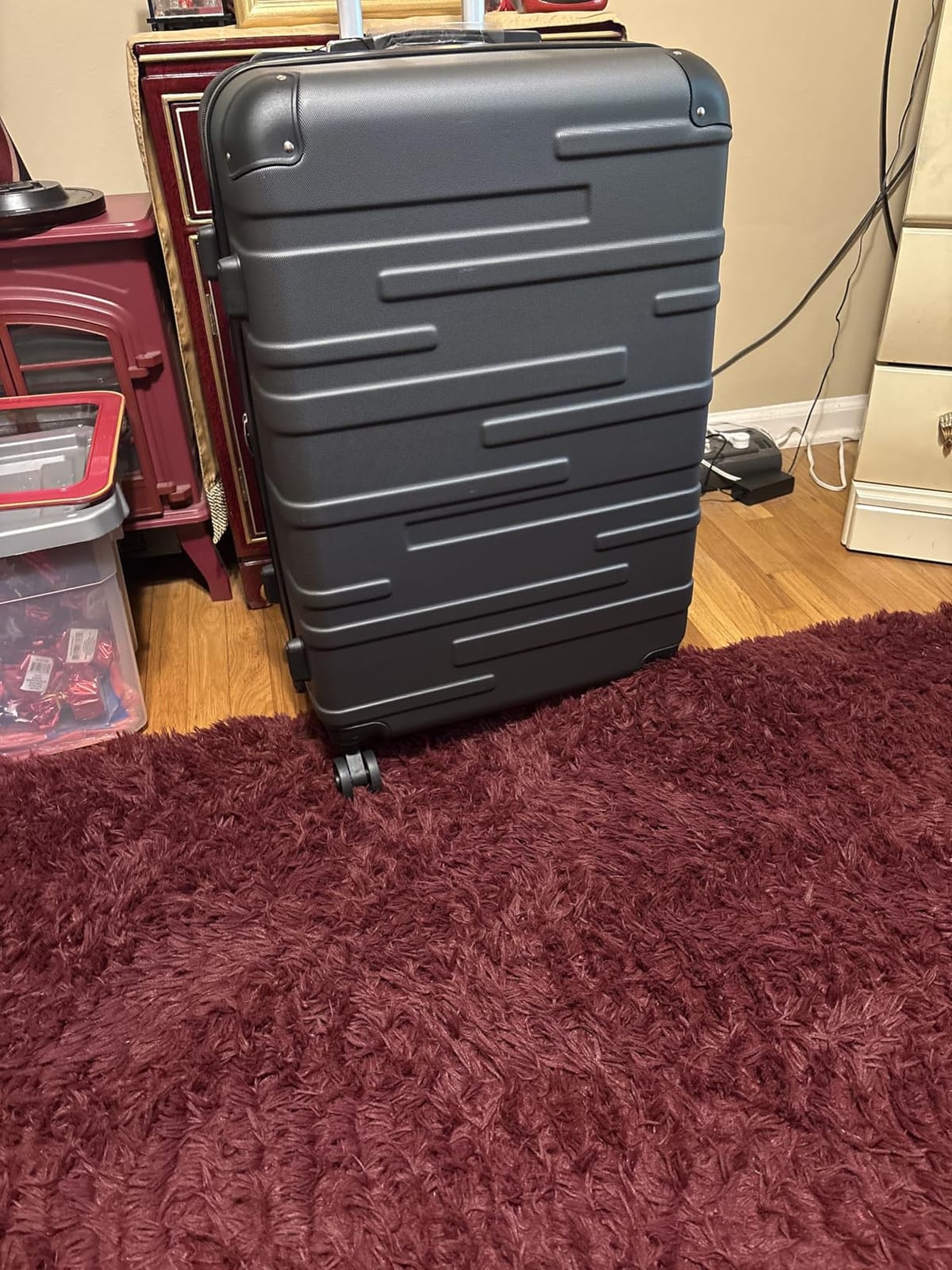
Why the zipper and lock matter more than the shell
Consider what actually happens when you overpack a hardshell. The shell holds, the wheels hold, and the handle holds, and then the zipper takes the entire load as a tension member. Heavy packers who have had a case fail almost always lost it at the zipper, which is why we weight YKK zippers and an integrated TSA lock so heavily in this ranking.
The TSA combination lock also removes a daily friction point. You do not have to thread a small padlock through a loop at every screening, and you do not need a key in your hand while a queue watches you.
Limits on the expansion and the finish
Only the 28-inch size in this line is expandable, adding 15% when you need the extra room. That is a real constraint if you were considering a matching set in different sizes and assumed every case would expand.
The case is not water resistant, and the 11.1 lb empty weight is heavier than several of the picks here. Water resistance is the complaint owners raise most often, so plan to keep electronics and paperwork out of it during a rainy walk to the gate.
6. SwissGear 7366 27-Inch Hardside – Best for Internal Organization
SwissGear 7366 Signature Hardside Expandable Luggage with Spinner Wheels, TSA Lock, Evening Haze, Checked-Large 27-Inch
- Six interior pockets for heavy packing
- Patented built-in cupholder on the spinner wheels
- Retractable molded lift handles
- 10-year extended warranty
- Water-resistant construction
- 27 inches is shorter than the 28 to 30 inch cases in this group
- ABS shell scuffs visibly
- Ratings spread from one star to five
The SwissGear 7366 is the pick for anyone whose heavy load is many small items rather than a wall of clothing. Six interior pockets, including a full-length lid pocket and a side accessory pocket, keep shoes, laundry, chargers, and documents separated when the case is packed to 105 litres.
Empty weight is 10.1 lb, which leaves about 39.9 lb of contents. The 27-inch body is smaller than most large checked bags here, so it holds a bit less than a 29 or 30-inch case, but the efficiency of the interior layout makes up some of the difference.
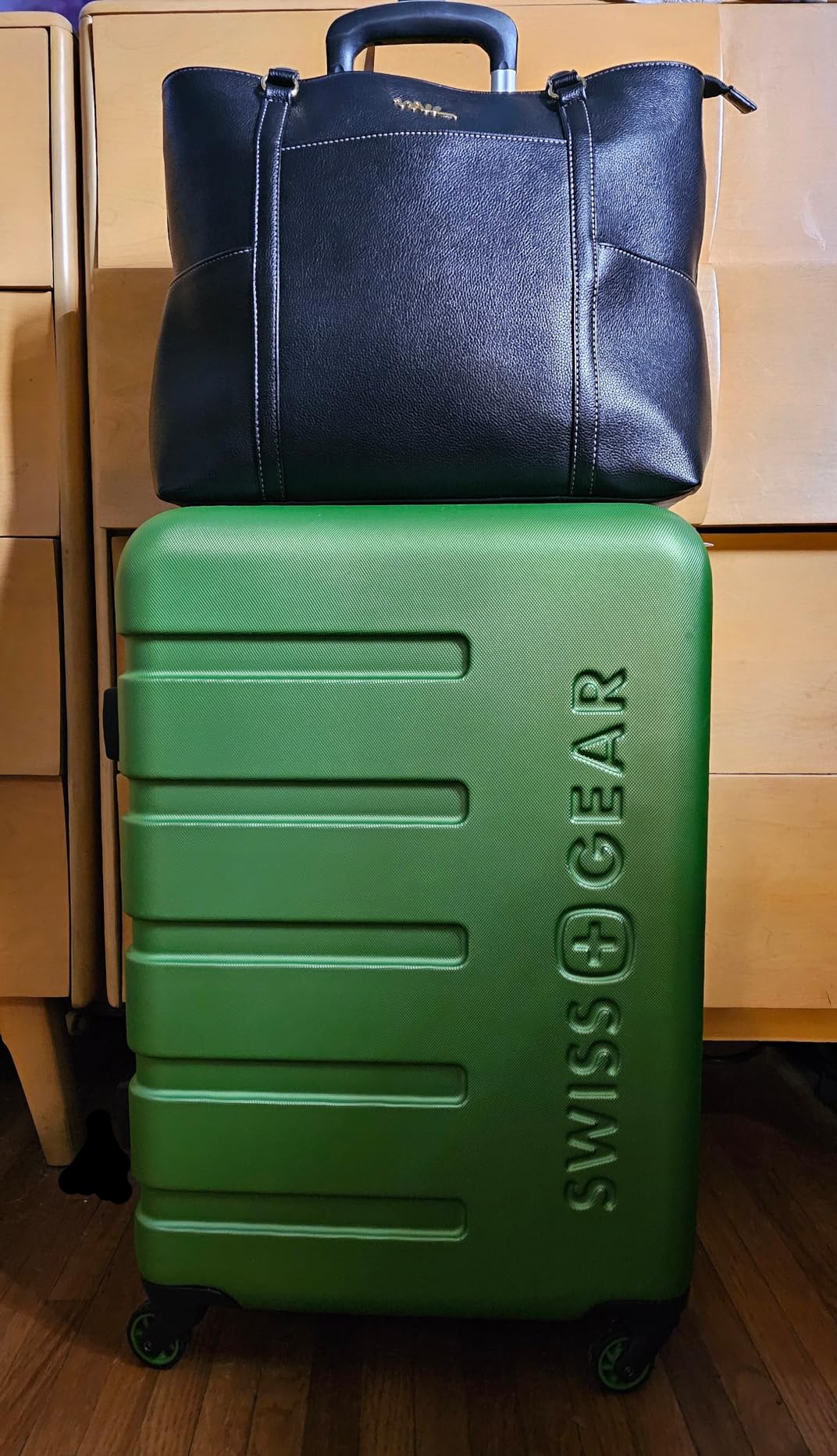
Two details make this bag easier to live with than most. The patented built-in cupholder sits in the spinner wheel housing, so a coffee stays upright at the gate rather than going into a side pocket and leaking, and the retractable molded lift handles give you extra grab points when you are tipping 45 lb onto a carousel.
The 10-year extended warranty is tied for the longest here, and the construction is water resistant, which covers one of the gaps that trips up the ABS cases in this roundup.

When a 27-inch case is the right heavy-packer size
A 27-inch body at 105 litres suits a traveller who wants to be under the limit rather than right on it. If your typical load leaves you at 40 lb of contents, this bag gives you a 10 lb safety margin, which matters when you add a souvenir or a bottle on the way home.
It is also a better size for carriers with a higher weight ceiling, since a smaller case gives you more room to add weight without approaching the limit. For anyone moving abroad or packing gear, the 29 and 30-inch cases in this list hold more, and that extra volume is worth a pound of empty weight.
Where the rating spread tells you something
This case sits at 4.3 stars with 10% of its feedback in the one-star tier. Owners clearly like the built-in cupholder, the retractable handles, and the durable shell, and the 10-year warranty adds confidence. A meaningful one-star share usually points to inconsistent quality control between production runs rather than a design fault, so inspect the shell corners, zipper runs, and wheel mounts as soon as it arrives.
The ABS shell also scuffs visibly with heavy use, which matters if you care how the case looks after a few trips. Nothing here is a structural problem, but the finish is the first thing to degrade on a bag that lives in a hold.
7. U.S. Traveler Boren 30-Inch – Best Capacity for the Empty Weight
U.S. Traveler Boren Expandable Hardside Rugged Travel Luggage with 8 Spinner Wheels, Black, Checked-Large 30-Inch
- 115 litres of expandable capacity
- Low empty weight for a 30-inch case at 9.2 lb
- Eight spinner wheels spread the load
- Puncture-resistant YKK zippers
- Multiple carry handles
- Lowest average rating here at 4.1
- Highest one-star share of the group
- 3-year warranty versus 10 years on rivals
The Boren pairs 115 litres of capacity with an empty weight of 9.2 lb, which is an unusual pairing. Several 30-inch cases in this roundup weigh noticeably more, so you get a large internal volume and close to the best usable weight budget at the same time.
Working the numbers, 9.2 lb leaves about 40.8 lb of contents under a 50 lb limit, and the 2-inch expansion gives you more room once that budget is spoken for. That combination is why this bag shows up in our heavy-packer shortlist despite its middling 4.1 rating.
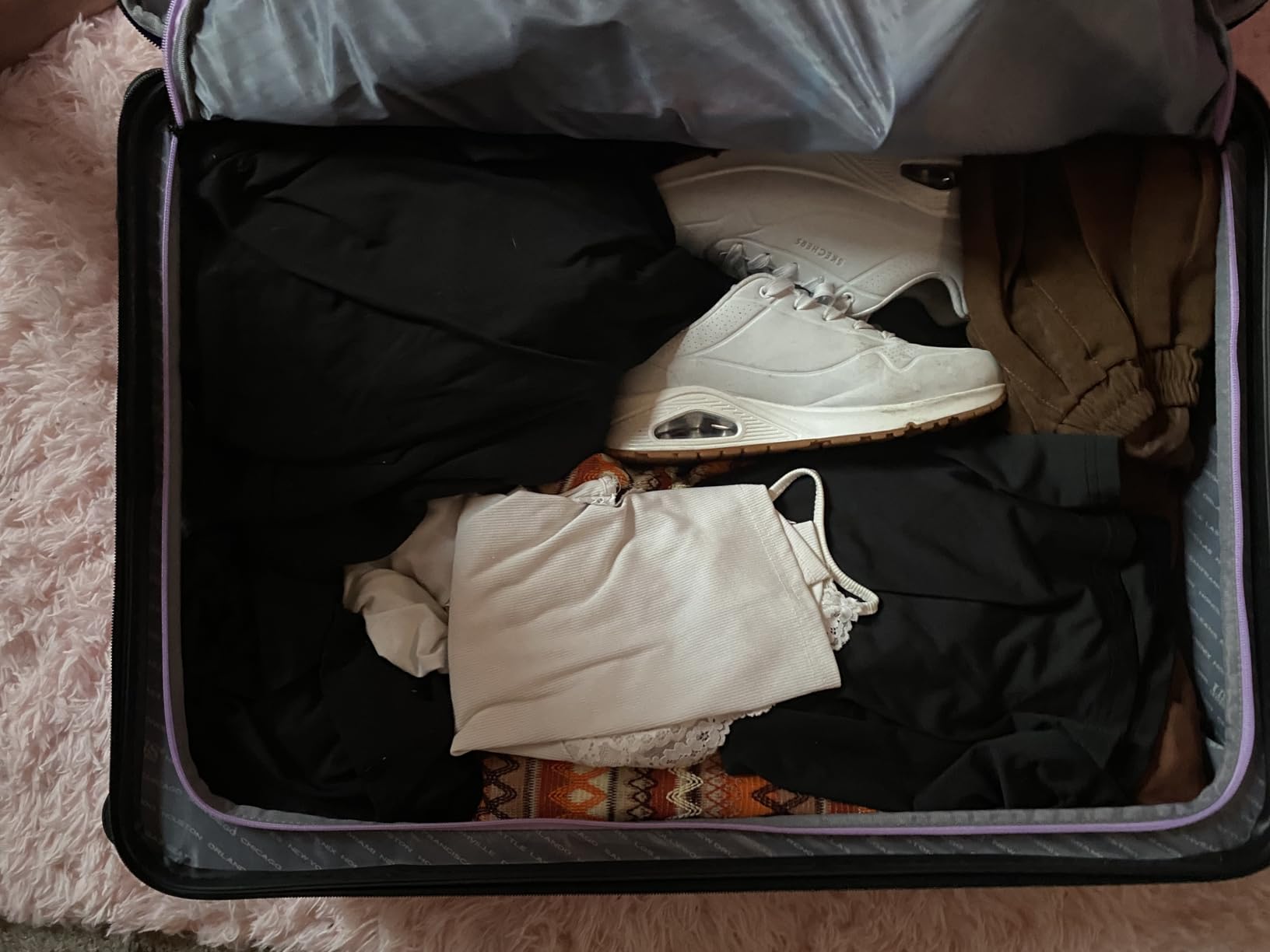
The shell is rugged polycarbonate, which resists impact and cracking, and the closure uses puncture-resistant YKK zippers. Inside you get mesh zip pockets and compression straps, and outside there are multiple carry handles so you can lift the case from whichever side faces you on the carousel belt.
The eight spinner wheels, arranged as four dual-wheel units, are the part we liked most at this weight. A 115-litre case is awkward to steer on four casters, and the extra contact points keep it tracking straight when loaded past 40 lb.
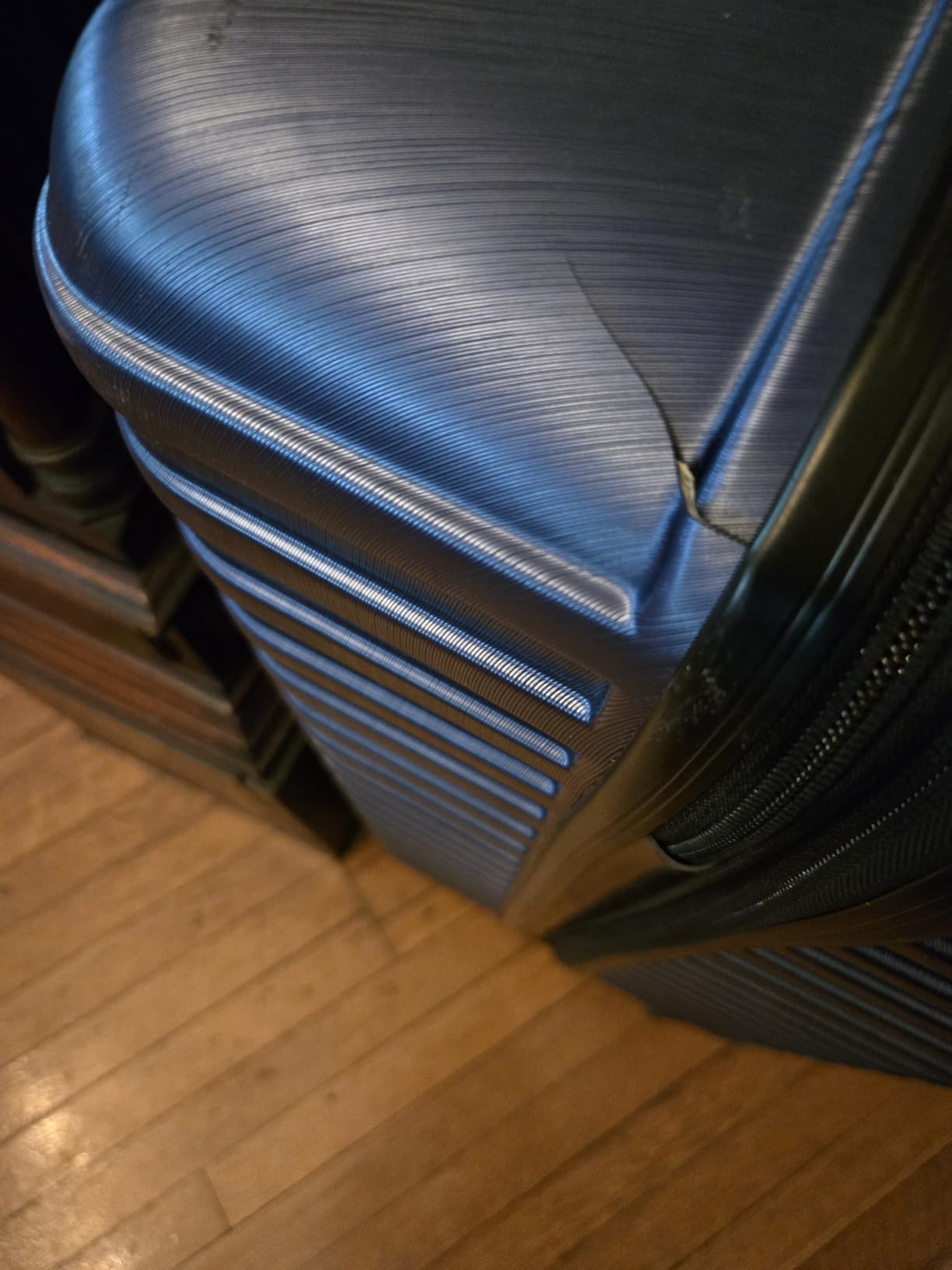
How much gear fits in 115 litres
At 40.8 lb of allowed contents, this bag suits a gear-heavy trip rather than a clothing-heavy one. Photography equipment, camera bodies and lenses, a laptop, and hard drives all weigh more per litre than shirts do, so the capacity advantage matters more than the size label suggests.
The interior is a single section with mesh pockets and compression straps, so it is less organised than the SwissGear layout. For a bag that will be packed past its normal line, straps matter, because they stop gear migrating to one side and tipping the case on its spinner wheels.
Why the rating and the warranty give us pause
At 4.1 stars, this is the lowest-rated case in the roundup, and 12% of its feedback is one-star, the highest share of the group. That usually points to inconsistent durability or finish between units, so inspect the shell and wheels carefully on arrival.
The 3-year warranty is also the shortest here, against 10 years on the Samsonite, SwissGear, and LUGGEX. For a bag you intend to load near 50 lb every trip, a longer warranty is a reasonable proxy for how the manufacturer expects the hardware to age, and this one is signalling less confidence.
8. Coolife 28-Inch Lightweight Hardshell – Best for Building a Nested Set
Coolife Luggage, Lightweight and Durable Hardshell, 28 in, apricot white
- ABS+PC shell built for rough handling
- Three-level aluminum telescoping handle
- Quiet spinner wheels in tight spaces
- 28-inch version expands 15%
- Smaller cases nest inside the larger ones
- Empty weight is not published
- Not water resistant
- Sold as a single case only
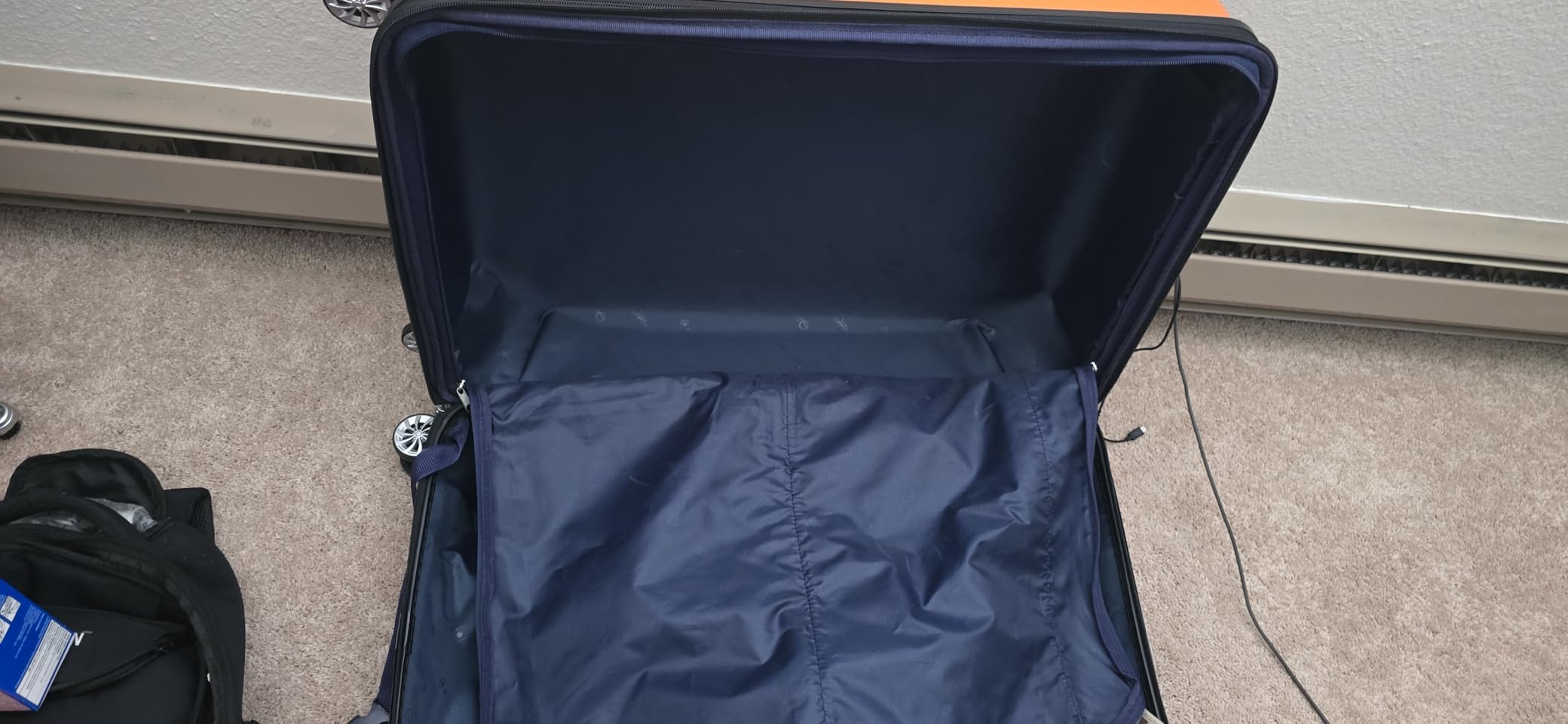
This Coolife model comes in three sizes that nest inside one another, which matters for heavy packers who want two cases without owning two full sets of luggage. The 20-inch and 24-inch cases store inside the 28-inch, so you can move two bags through an airport with one hand on a trolley.
Owners rate it highly for shell strength and for the 3-level 100% pure aluminium telescoping handle, which they describe as sturdier than most handles in its class. The quiet spinner wheels also make it the least annoying option in a terminal for a bag that runs heavy.
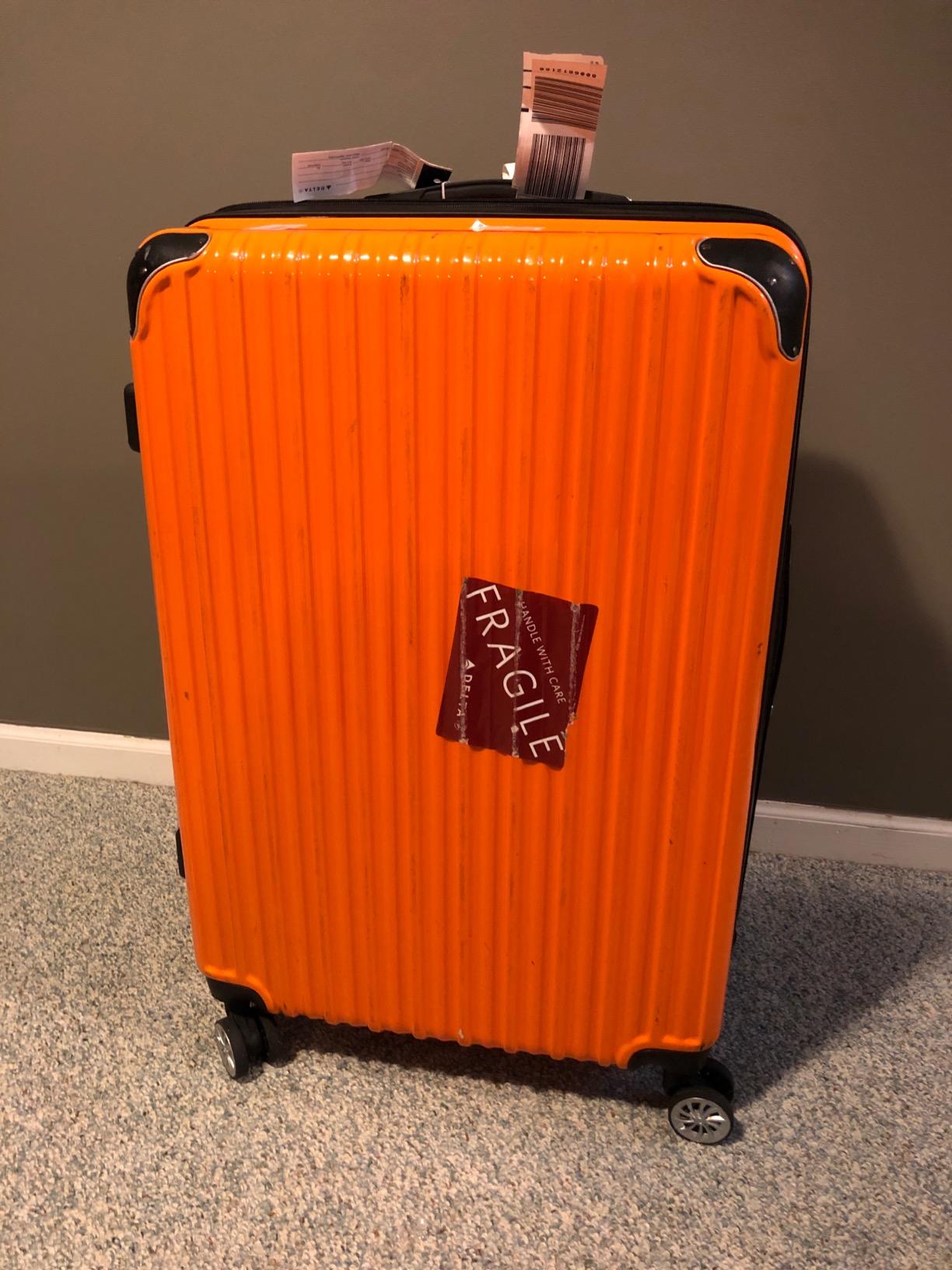
The 28-inch version expands by 15% for overpacking, and the fully lined interior with multi-use organisational pockets keeps a full load workable. An integrated TSA lock secures the case for screening without a key, and the shell goes through strict quality control testing for rough handling.
At 4.5 stars, this sits near the top of the group’s ratings with a review count in the thousands rather than the tens of thousands, so treat the score as encouraging rather than settled.
Planning a two-bag setup around one family of cases
Splitting a heavy load across two bags is the standard workaround for overweight charges, and a nested set makes it painless because the smaller case travels inside the larger. Buy the 28-inch, then add the 20-inch for a two-bag setup that still moves as one unit on a trolley, and keep the combined total under the limit.
The important part of that plan is the weight split. Two bags at 25 lb each pass comfortably; one bag at 50 lb sits exactly on the limit with no margin, and one bag at 55 lb does not pass. Two bags under the limit cost nothing extra on most routes, because carriers charge per bag.
The spec that should make you pause
Empty weight is not published for this case, and that is a real problem for a heavy-packer ranking. Without a tare figure you cannot calculate your usable weight budget, which is the one number this entire article is built around. Treat its capacity claims as unverified until you weigh the bag yourself.
It is also not water resistant and is sold as a single case rather than a set, so a nesting setup means buying cases one at a time. For a bag you will fill past 40 lb, we would want a published weight before recommending it as a primary.
9. LUGGEX 28-Inch Zipperless Aluminium Frame – Best Closure for a Fully Loaded Bag
LUGGEX 28 Inch Zipperless Checked Luggage, Charcoal Metallic
- Zipperless closure removes the most common failure point
- Four aluminum corner protectors reinforce the edges
- Spring-loaded eight-wheel system rolls steadily
- Rated waterproof
- 10-year manufacturer warranty
- Among the heaviest empty weights here at 12.4 lb
- Lock needs a two-handed press
- Closure is slower to open than a zipper
The LUGGEX is the only zipperless design in this roundup, and that matters more than anything else for a bag that will sit at the weight limit. Zippers are the component that fails under overpacking, so removing them removes the most common failure point entirely.
It is also among the heaviest cases here at 12.4 lb empty, which some listings state as 13.6 lb including accessories. That leaves you roughly 37 to 37.6 lb of contents, one of the smallest usable budgets in this group. The closure is solid, but you pay for it in packing capacity.
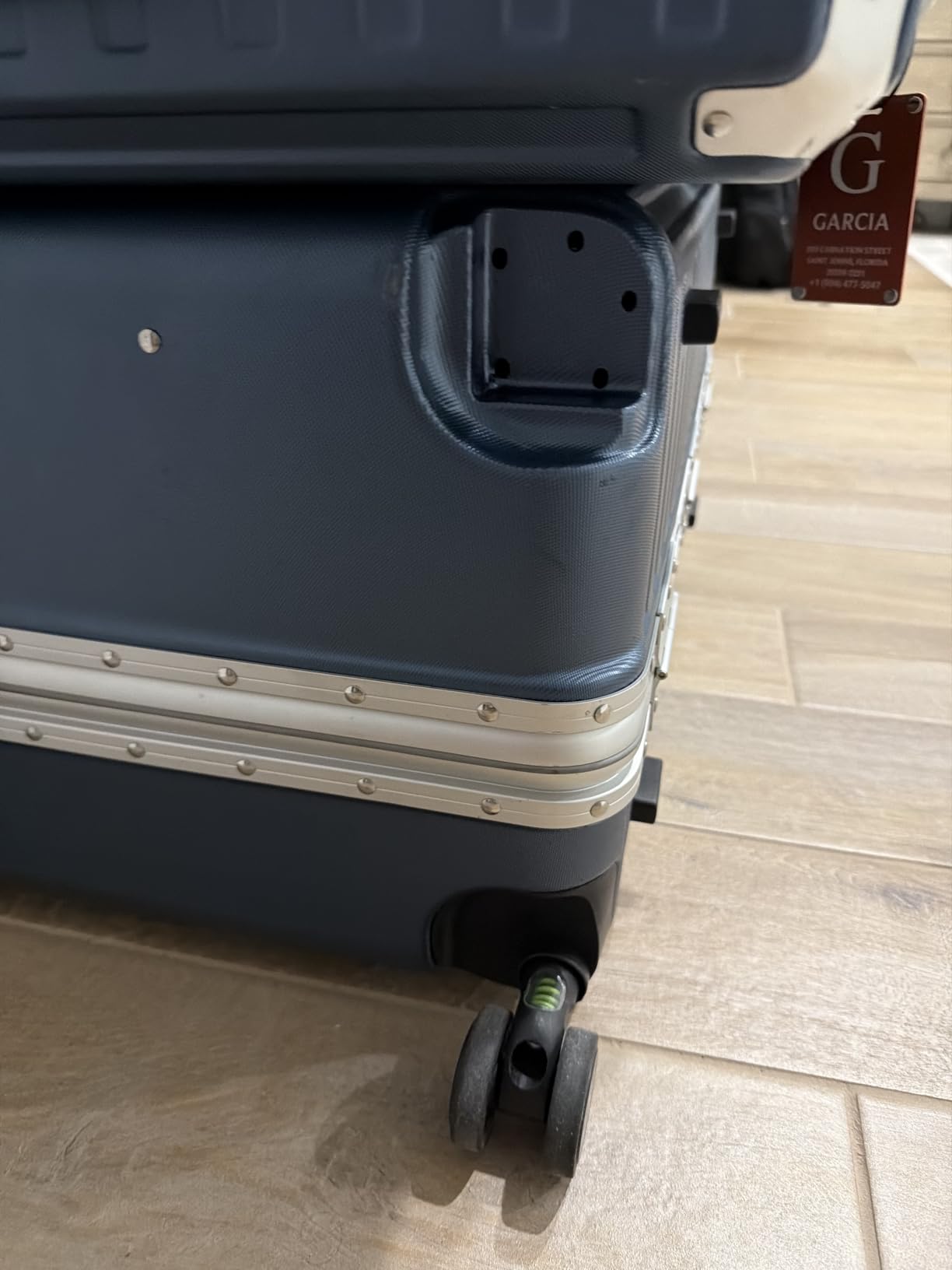
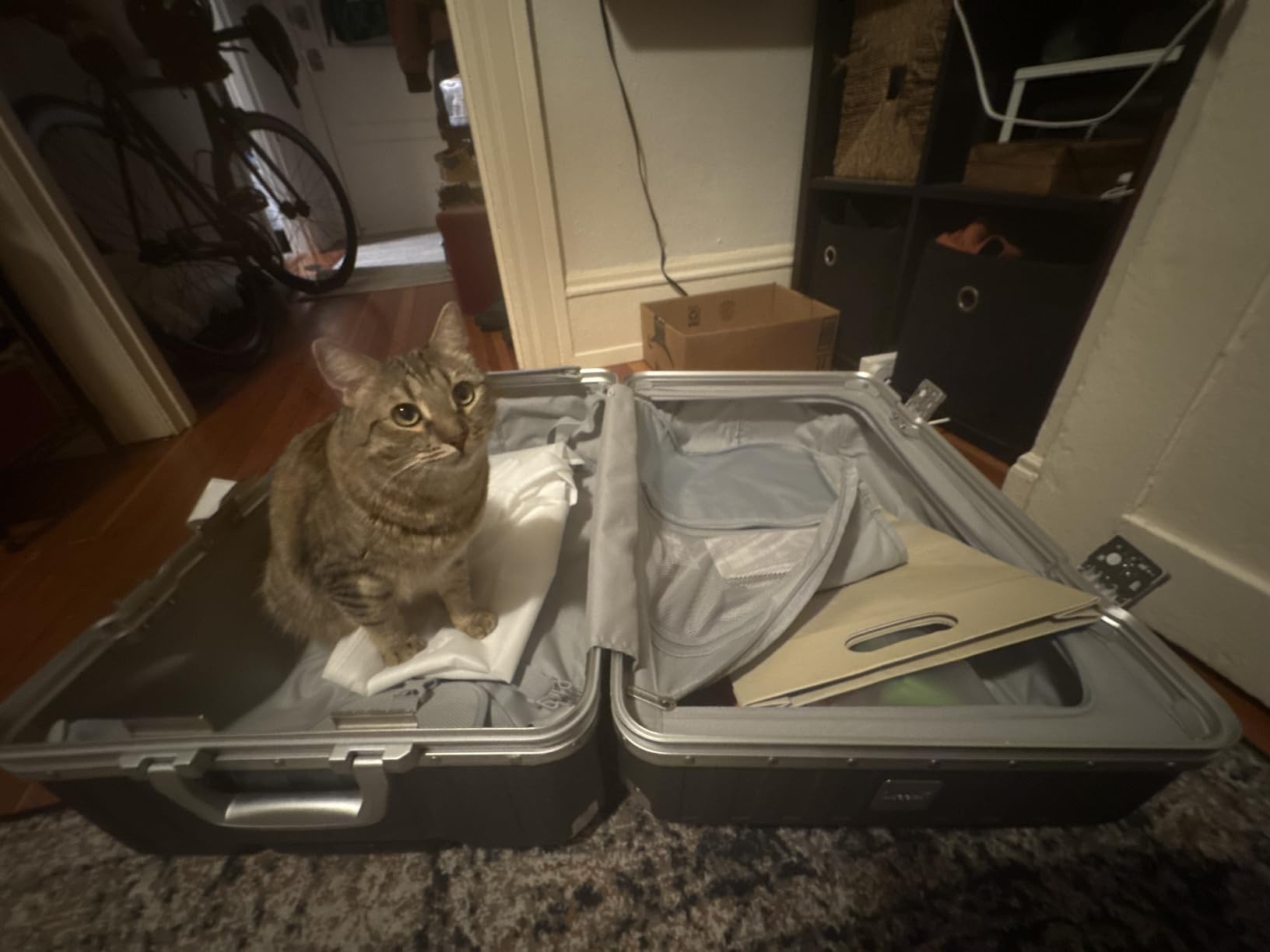
Beyond the latch, the build is rugged in a way that matters on a bag you will overpack. Four aluminium corner protectors reinforce the vulnerable edges, an internal aluminium frame stiffens the whole shell, and the case is rated waterproof, which covers the rain problem that trips up most hardshells in this roundup.
The spring-loaded wheels are a detail we liked. The built-in springs reduce vibration and make a loaded case roll more stably across uneven surfaces, and there are eight of them sharing the weight. TSA latches allow one-touch unlocking for screening, and the 10-year warranty is tied for the longest in the group.
What a latch replaces, and what it costs
A zipperless frame closure does two useful things. There is no zipper to split when the case is overfilled, and the frame itself adds rigidity, so the shell resists deformation under a heavy load in a way that a zippered case with the same wall thickness cannot.
The cost is speed and handling. The lock sits close to the face of the suitcase and requires pressing both sides simultaneously, which is awkward one-handed, and the hard latch is slower to open than a zipper pull. In a rush at security you will feel that, and luggage forum threads repeat the same point: some travellers stay with zippered cases for exactly that reason.
Is 37 lb of contents enough for you
At 37 lb of contents, this case suits a week of travel with strict discipline, or a longer trip that involves washing clothes on the way. It is not enough for a gear-heavy photography trip or a family holiday where one bag carries everyone’s overflow.
If your load genuinely needs 40 lb or more of contents, this is the wrong case for you no matter how well it is built. The aluminium frame and corner guards are excellent engineering, but they come out of the same 50 lb allowance as everything else you want to pack.
10. Travelpro Crew Classic 29-Inch Softside – Best Premium Pick for Suits and Long Trips
Travelpro Crew Classic Softside Checked Luggage, Blue, 29-Inch
- Eight MagnaTrac wheels roll over rough paving
- PowerScope aluminum handle adjusts to four heights
- Tapered 2-inch expansion keeps the load low
- YKK zippers with an included repair kit
- Removable fold-out suiter
- Heavier than the lighter softsides here at 10.4 lb empty
- Lid mesh pocket opens downward and spills
- Handle failure and warranty service complaints
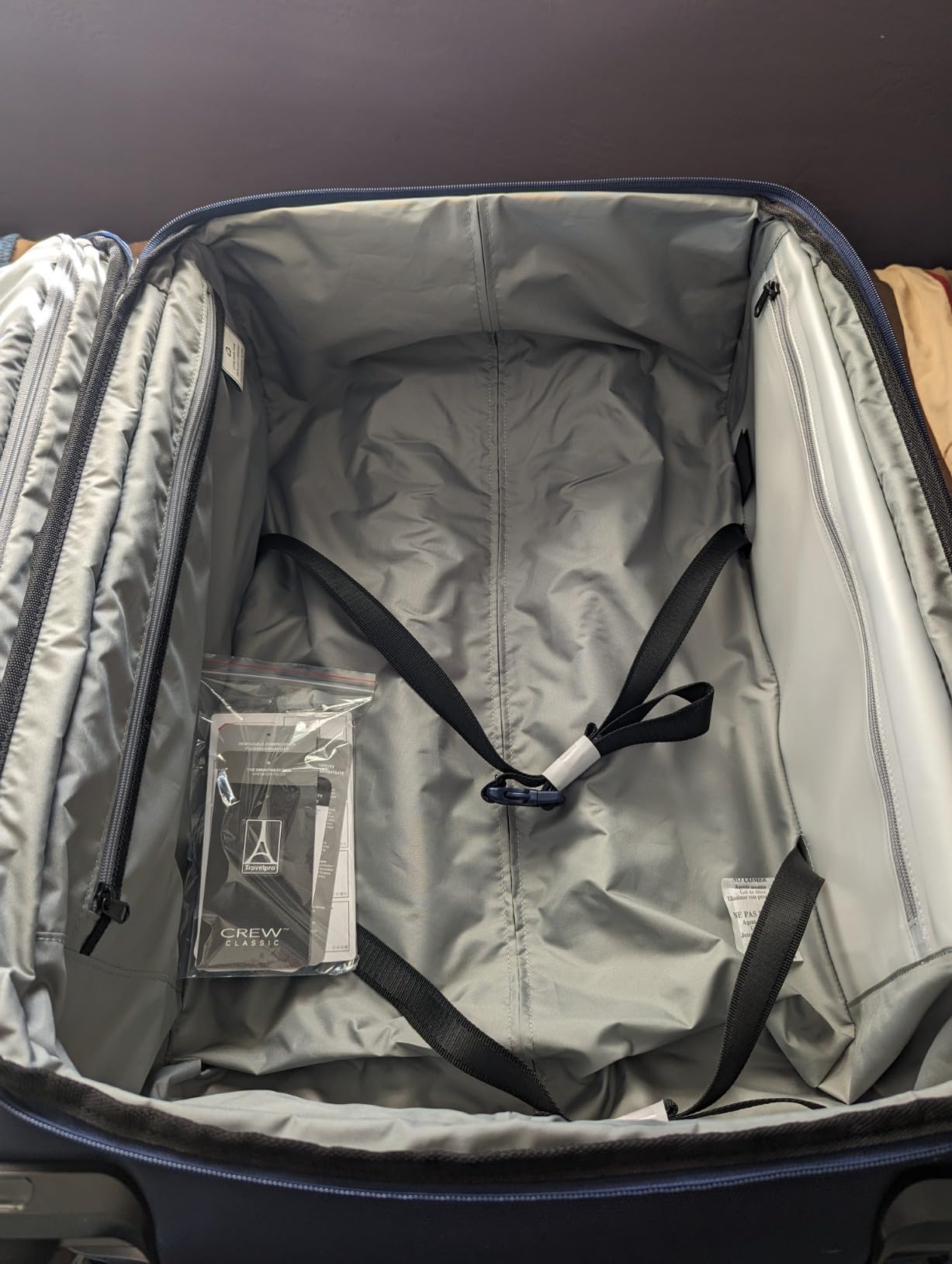
The Crew Classic is the premium softside in this roundup, built for business travel and long itineraries where garments need to arrive unwrinkled. The removable fold-out suiter hangs between the lid and the main compartment and holds garments flat, which is the feature that separates it from a standard softside spinner.
At 130 litres it holds a substantial load, and the 10.4 lb empty weight leaves about 39.6 lb of contents. That is heavier than the Maxlite 5 softside, and the extra weight buys you the wheel system, the suiter, and the aluminium handle.
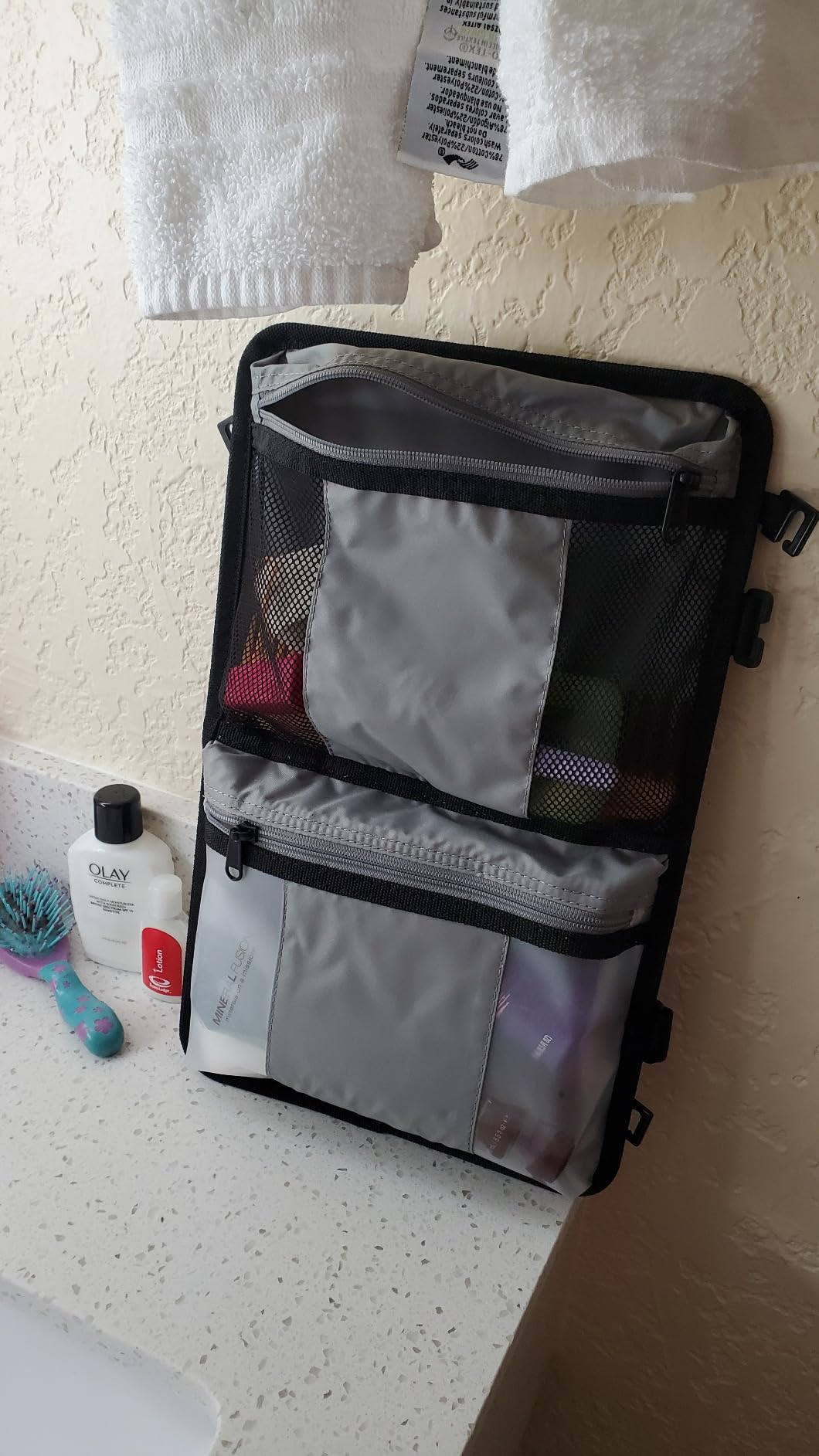
The eight MagnaTrac spinner wheels roll over bumpy concrete and paving stones that make smaller casters stutter, and the PowerScope aluminium handle adjusts to four heights at 36, 38, 40, and 42.5 inches. That range matters when the person pulling the bag is tall or short and the load is heavy.
Tapered expansion adds up to 2 inches while keeping the centre of gravity low, so an expanded bag does not tip forward when you pull it across a threshold. YKK zippers come with a repair kit, and the water-resistant ECOFAB lining is made from recycled plastic bottles.
Where the tapered expansion actually helps
Most expandable cases grow evenly across the full face of the shell, which raises the centre of gravity as you add depth. The tapered design on this case adds capacity at the base while keeping the weight low in the frame, so a 45 lb expanded bag tracks behind you instead of pulling forward.
It also means more of the extra 2 inches is usable. On a straight expansion, the corners are often the first place you run out of usable space, and a tapered profile fills that dead space with clothes rather than air.
The complaints worth weighing before you buy
The lid mesh pocket on the underside of the lid opens downward, so small items fall out when you open the case on a bed or a bench. Owners mention it repeatedly, and it is an easy habit to break by keeping liquids and cables in the main compartment instead.
Some owners also report telescoping handles seizing and breaking, and reviews criticise the warranty service experience. Against that, the limited lifetime coverage and three years of airline damage repair are among the better protections offered here, provided you register the bag.
How to Choose Heavy-Packer Luggage Without Wasting Allowance
Run the usable weight budget before you buy
Your usable weight budget is the allowance you actually have, and it is always smaller than the airline number on your ticket. Run it in five steps. First, find the per-bag weight limit for your exact fare and route, since carriers and even individual routes differ. Second, look up the bag’s published empty weight, in pounds or kilograms. Third, subtract that from the limit.
The last two steps are where packers go wrong. Compare the result against the weight of what you actually intend to pack, taken from a real trip rather than a guess, and leave yourself 3 to 5 lb of margin at the end. Nobody packs to the last pound on the way home.
Applied to this roundup, the numbers are stark. The Travelpro Maxlite 5 at 8.5 lb leaves 41.5 lb. The U.S. Traveler Boren at 9.2 lb leaves 40.8 lb. The SwissGear at 10.1 lb leaves 39.9 lb. The Amazon Basics 30-inch at roughly 12.7 lb leaves 37.3 lb, and the LUGGEX at 12.4 lb leaves 37.6 lb. A four-pound spread in empty weight is a four-pound spread in what fits, and on a two-week trip that is an entire change of clothing.
No brand in this roundup makes the tare weight easy to find. It sits in the technical specifications, often in kilograms, and it is frequently the field least likely to be highlighted. Weigh the bag yourself if the figure is missing, as we would for the Coolife 28-inch in position 8.
Airline weight limits and what happens past 50 lb
Most carriers set a standard checked-bag limit of 50 lb, which is 23 kg. Business-class and premium fares often get 70 lb, or 32 kg, which is genuinely useful if your itinerary qualifies. Anything over the limit is charged, either as a per-pound amount or a flat overweight charge, and those charges are among the largest fees an airline sells.
Oversize rules are separate from weight rules. A case at 62 linear inches can be well under the weight limit and still draw an oversize charge, and expansion makes that worse because it adds to the exterior dimensions. The Travelpro Maxlite 5 in this roundup already measures 65 linear inches, so treat that as a known cost rather than a surprise.
FlyerTalk and airline forum threads show a lot of anxiety about exactly this, with travellers unsure whether three bags near the limit will pass the counter. The practical answer is to build in margin before you travel rather than negotiating at the desk, because the desk is where the fee is decided.
Polycarbonate, ABS, softside, and aluminium under a heavy load
Polycarbonate is the toughest shell material in this roundup. It flexes on impact and returns to its original shape, so a dropped corner produces a dent rather than a crack. The Samsonite Winfield 2 is the pure polycarbonate case here, and the U.S. Traveler Boren is the lighter polycarbonate option in a 30-inch body.
ABS is lighter and cheaper, and it handles general baggage handling well. Its weakness is brittleness under a sharp impact, which is why the ABS and ABS-plus-PC cases here describe themselves as durable but not indestructible. Polycarbonate blends split the difference and are the most common choice in this group.
Softside nylon is the most forgiving of an overfilled load, because the shell flexes outward instead of fighting the zipper. It is also the lightest shell type here, which is why the 8.5 lb softside offers the largest usable weight budget in the roundup. The cost is protection against crushing, so fragile items need a separate case.
Aluminium-framed cases are the most durable and also the heaviest shells in this roundup. The framed 28-inch case here runs 12.4 lb empty, and comparable framed cases generally run heavier still. FlyerTalk accounts often describe paying that weight penalty deliberately as insurance for gear, which is a reasonable position if you carry equipment that would cost more to replace than the fee you are avoiding.
Wheels, handles, and zippers under 40 lb
Wheel mounts and pull-out handles break first under heavy loads, and that pattern comes up constantly in traveller forums about overpacked bags. Look for a metal telescoping handle rather than plastic, and for wheels mounted to the shell with a reinforcing plate rather than screwed straight into thin plastic. The Rockland Melbourne and both Travelpro cases in this roundup use aluminium handles for that reason.
Eight-wheel spinners spread the load across more contact points, which reduces pressure on each mount and makes a heavy bag track straighter. They also add a small weight penalty and take up more floor space when the bag is standing still.
On zippers, the rule is simple. If you plan to pack past the case’s stated capacity, buy YKK zippers or a zipperless closure. The Coolife 28-inch and the Travelpro Crew Classic use YKK, and the LUGGEX removes the zipper entirely. And do not pack past the expansion limit, because zipper teeth split when the shell is stretched beyond what the closure was built to hold.
One heavy bag or two lighter bags
Two lighter bags beat one heavy bag, and the reason is fee structure. Carriers charge per bag, so two bags at 25 lb each stay comfortably under the limit and cost nothing extra on most routes. One bag at 51 lb sits in the same allowance as one bag at 30 lb, so those 21 extra pounds are charged entirely at the overweight rate.
The catch is mobility. Two bags mean two handles, and a 25 lb bag is not the same as a 45 lb bag when you are crossing a terminal or climbing stairs. The best setup is one large bag you can manage alone plus one smaller bag you can check and walk away from, which is why the nesting design in position 8 is worth considering.
Frequently Asked Questions
What’s the heaviest suitcase you can check?
Most airlines set a standard checked-bag limit of 50 lb, which is 23 kg, and business and premium fares often allow 70 lb or 32 kg. Bags over the limit are charged as overweight, either per pound or as a flat fee. The practical ceiling for a heavy packer is a little under the limit, since a full 50 lb bag leaves no room for anything you pick up on the way home.
Do airlines prefer hard or soft luggage?
Airlines have no preference; they are paid the same either way. What matters is the weight and the dimensions, since both attract fees. Hardshells protect fragile items and shed rain, while softsides are lighter, more flexible when overfilled, and give you more usable packing weight under a fixed limit.
What is the most sturdy checked luggage?
Aluminium-framed cases with corner protectors are the most sturdy, because the frame resists deformation and there is no zipper to split under load. Among the hardshells, polycarbonate is the toughest shell material since it flexes on impact instead of cracking. The zipperless LUGGEX in this roundup is the sturdiest closure, and the Samsonite Winfield 2 is the toughest shell for a bag you will load near the limit.
What suitcase do flight attendants say not to use?
The recurring complaints from airline staff and experienced travellers are not about any one brand. They are about bags with no working handle or wheels, bags that are overfilled so the zipper cannot close, and soft cases with no internal structure that collapse when stacked under heavier luggage. A bag you cannot lift alone onto the carousel is the one that causes problems.
What is the best luggage size for a 50 pound weight limit?
A 28 to 30 inch case is the right range for a 50 lb limit, because it holds enough that you are not tempted to check a second bag. Within that range, weigh empty weight as closely as you weigh capacity. The lightest 29-inch softside in this roundup leaves 41.5 lb of contents, while a 28-inch aluminium-framed case leaves about 37 lb.
How heavy does a 50 lb suitcase feel?
A 50 lb suitcase feels substantially heavier than it sounds, especially once it is rolling through a terminal or up a jet bridge. Most of that feeling comes from the wheels and the imbalance, not the weight itself. A bag with eight spinner wheels and a low centre of gravity rolls far more easily than the same weight on four small casters.
Which luggage has the strongest wheels?
The eight-wheel spinner systems lead on stability, with the Travelpro Crew Classic’s MagnaTrac wheels and the spring-loaded wheels on the LUGGEX rolling most smoothly over rough surfaces. The main weakness of eight-wheel setups is that the small casters wear faster, so budget for a replacement set if you fly often with a heavy load.
The Best Checked Luggage for Heavy Packers in 2026
The best checked luggage for heavy packers is the case that gives you the most usable weight under the airline limit, not the one with the biggest shell. Our winner, the Amazon Basics 30-inch hardside, holds 105 litres, expands by 15%, and has the largest owner base in the group at over 62,000 reviews. If your load is clothing rather than gear, the Travelpro Maxlite 5 softside beats it on weight at 8.5 lb empty, and the U.S. Traveler Boren combines 115 litres with a 9.2 lb empty weight.
Pick the Coolife 28-inch for the hardware, the Samsonite Winfield 2 for a polycarbonate shell that takes abuse, or the LUGGEX if you want a zipperless frame and can accept a 12.4 lb empty weight. Whatever you choose, run the subtraction before you buy: limit minus empty weight is your real allowance, and it decides the trip.