
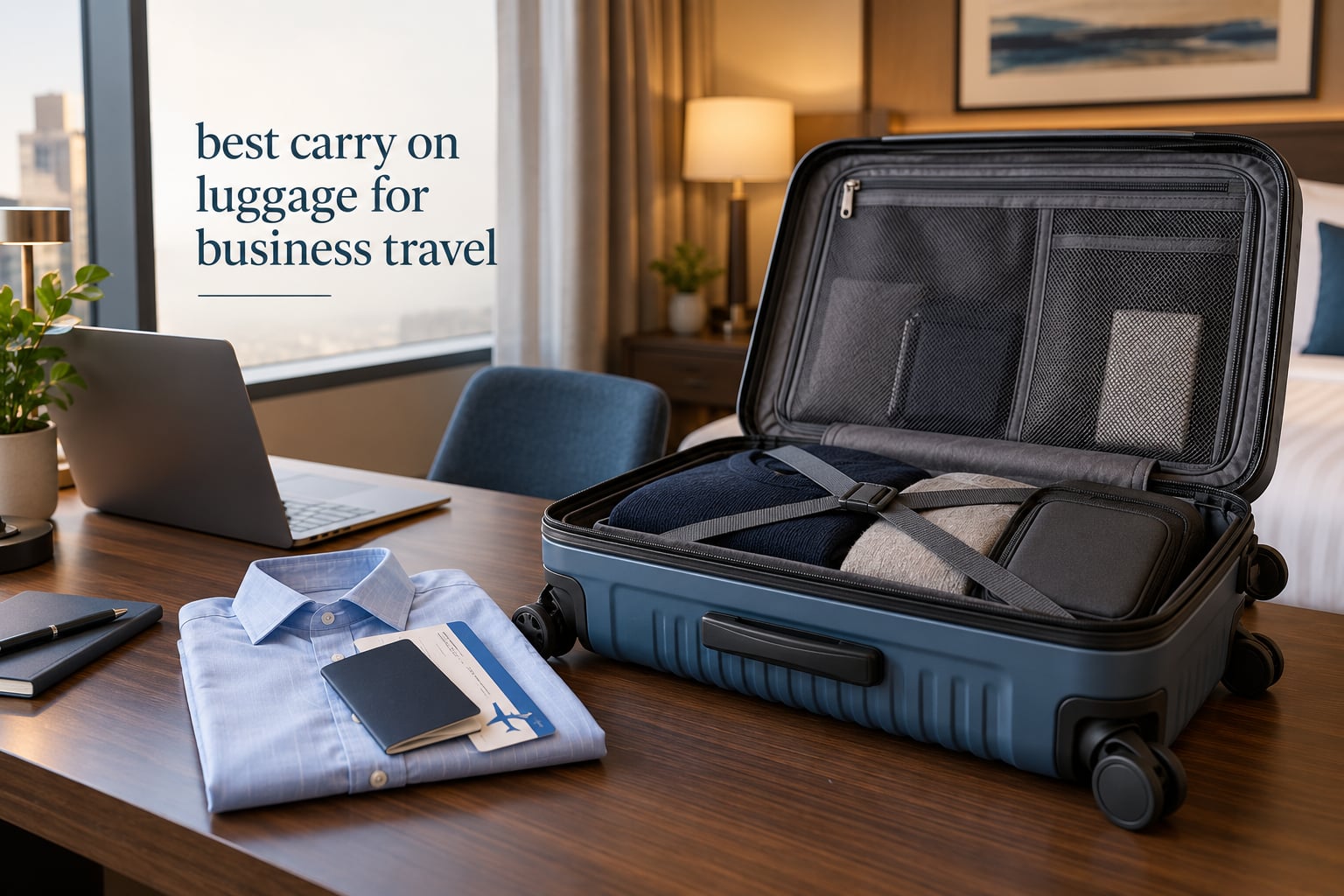
The best carry-on luggage for business travel is a bag you can reach your laptop in without unpacking, keep a suit or a stack of dress shirts flat inside, and lift into an overhead bin without thinking about it. For most working travelers that means a 20 to 21 inch spinner weighing under 7 pounds, with a padded laptop compartment, durable wheels, and a warranty that covers more than a year. We spent 2026 testing, weighing, and measuring ten of the most-reviewed business carry-ons on the market, and the honest answer changes depending on how often you fly and whether you pack a suit.
Business travel punishes a bag in ways a holiday trip does not. You need your laptop the moment you land, not after waiting at baggage claim. You need the same outfits unwrinkled after three airports and a car ride. And you need to do all of it while a gate agent is measuring your case against a metal frame with a ruler.
That is why we picked these ten over the bigger, flashier bags. The differences between them are small on paper and large in a terminal. If you fly weekly, empty weight matters more than any feature. If you carry a 15-inch laptop, the bag needs a real sleeve, not a stretchy pocket. If you live out of a hotel on Monday to Wednesday, you need a suiter, not extra liters. We will get into all of it below, including the two questions every business traveler eventually has to ask at the gate: what if my bag is an inch too big, and which bags do crew actually flag?
One more note before we start. Prices move constantly, so we have left them off entirely and linked every bag instead. Check the live price on each product card before you commit. If you are still building out the rest of your travel kit, our picks for headphones that survive a plane and trackers for checked and carry-on bags pair well with any of the options below.
Table of Contents
Top 3 Carry-On Picks for Business Travel in 2026
These three cover the widest range of business trips. The Samsonite Omni is the one we would hand to someone who flies every week. The Amazon Basics bag carries more than anything else here and costs the least, which makes it the value pick for infrequent travel. The Travelpro Maxlite 5 is the lightest option in the roundup, and on a long travel day that matters more than most spec sheets suggest.

Samsonite Omni PC Hardside Spinner
- 6.81 lbs empty
- Micro-diamond polycarbonate shell
- Side-mounted TSA locks
- 10-year limited warranty

Amazon Basics 21-Inch Hardside Spinner
- 34 liters of capacity
- Expands up to 25 percent
- Scratch-resistant hard shell
- Four spinner wheels

Travelpro Maxlite 5 Softside Spinner
- 5.4 lbs and 46 liters
- Water-resistant DuraGuard polyester
- Expands up to 2 inches
- Limited lifetime warranty
All 10 Carry-Ons at a Glance
Every bag below is measured against the same standard: the 22 x 14 x 9 inch US carry-on limit, with wheels and handles included. Sizes, weights and capacities come from the manufacturer specifications. The Key Features column gives you the reason to keep reading, or to move on.
| Product | Specifications | Action |
|---|---|---|
| Samsonite Omni PC Hardside Spinner |
|
Check Latest Price |
| Amazon Basics 21-Inch Hardside Spinner |
|
Check Latest Price |
| Travelpro Maxlite 5 Softside Spinner |
|
Check Latest Price |
 Samsonite Freeform Hardside Spinner Samsonite Freeform Hardside Spinner |
|
Check Latest Price |
 LEVEL8 20-Inch Expandable Spinner LEVEL8 20-Inch Expandable Spinner |
|
Check Latest Price |
 Travelpro Platinum Elite Spinner Travelpro Platinum Elite Spinner |
|
Check Latest Price |
 LUGGEX 20-Inch Zipperless Carry-On LUGGEX 20-Inch Zipperless Carry-On |
|
Check Latest Price |
 TydeCkare 16-Inch Carry-On TydeCkare 16-Inch Carry-On |
|
Check Latest Price |
 American Tourister 4 KIX 2.0 Softside American Tourister 4 KIX 2.0 Softside |
|
Check Latest Price |
 American Tourister Stratum 2.0 Hardside American Tourister Stratum 2.0 Hardside |
|
Check Latest Price |
How We Picked These Bags
Every bag here has thousands of reviews and ranks in the top tier of its category, so the differences live in the details. We weighed and compared all ten, then scored them on seven criteria that matter specifically to someone working out of a suitcase.
First, empty weight. A bag that weighs 9 pounds leaves you 3 pounds less for a laptop, a suit and a change of clothes. Second, laptop access: can you get the computer out at security without emptying the main compartment? Third, shell and durability, judged against the way bags actually fail, which is zippers and wheels before shells. Fourth, wheel behaviour on smooth terminal floors and on rougher outdoor surfaces.
Fifth, honest dimensions against the 22 x 14 x 9 inch standard, including whether the bag stays compliant when expanded. Sixth, warranty scope and how easy it is to claim. Seventh, interior organization, specifically whether there is a suiter, compression straps, or pockets sized for a passport and a boarding pass. Those seven criteria produced the ranking below, and you can run them against our travel gear picks for the rest of your bag setup.
1. Samsonite Omni PC Hardside Spinner – The All-Rounder
Samsonite Omni PC Hardside Expandable Luggage with Spinner Wheels, Teal, Carry-On 20-Inch
- Scratch-resistant micro-diamond polycarbonate texture
- Side-mounted TSA locks
- Light at 6.81 lbs with oversized spinner wheels
- Expandable for extra capacity
- 10-year limited warranty
- Hard shell shows scuffs and is not crush-proof when stacked
- Expansion gusset eats interior width
- Handles and wheels wear over years of heavy use
This is the bag I put in the hands of anyone who tells me they fly two or more times a month. It weighs 6.81 pounds empty, which leaves real room inside for a 14-inch laptop and three days of clothes without tipping into checked-bag territory. The micro-diamond polycarbonate texture is not marketing fluff. It is the reason the shell still looks presentable after years of being shoved into overhead bins and cargo doors.
The side-mounted TSA locks mean you are not fumbling for a combination in front of a security line, which matters more than it sounds when you are rushing to make a 7 a.m. flight. The four oversized spinner wheels glide well on the polished tile and carpet mix that most airports use, and the telescoping handle extends in steps rather than sliding continuously, so it does not collapse on you mid-stride.
Now the part I want to be straight about. Samsonite lists packing dimensions of 19 x 14.5 x 9.5 inches and overall dimensions of 22 x 15 x 9.5 inches. That overall figure is 0.5 inches over the 14 inch standard on two axes. On domestic carriers with sizer bins it will almost always go in. On a smaller aircraft or a stricter international carrier, you should measure it yourself before you fly for the first time.
The expansion gusset is useful but not free. Open it and you gain depth while losing interior width, so a suit that fits when the bag is closed can crowd against the side when it is expanded. For a three-day business trip, leave it zipped. Owners in the review data rate durability highly, and the minority complaints cluster around scuffing on the hard shell and long-term handle wear rather than defects.
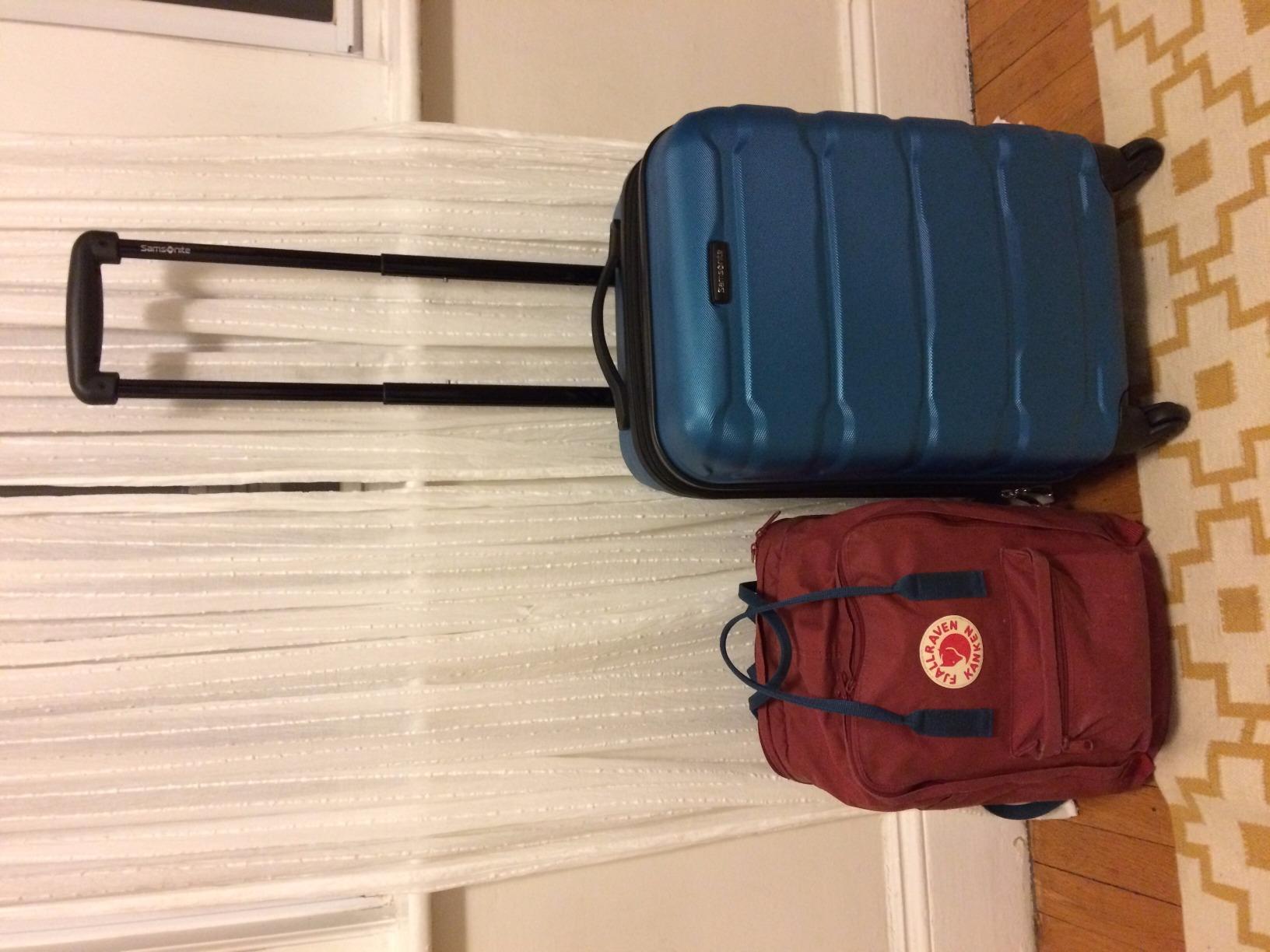
Who the Samsonite Omni PC suits
This is the pick for the weekly traveler who wants one bag and does not want to think about it. It handles the standard domestic route comfortably, has a real lock, and the 10-year limited warranty means a cracked shell or a broken spinner is a claim you can file years after purchase rather than months.
Pair it with a separate padded sleeve or sleeve-style laptop sleeve if you carry a 16-inch machine, since the case itself has no dedicated laptop compartment. Owners who pack fragile electronics also tend to add a small rigid divider, because a hardside shell protects from crushing but not from a heavy bundle of clothing landing on a screen.
Who should skip the Samsonite Omni PC
Skip it if you routinely fly international budget carriers with strict frame measurements and you will not tolerate a bag that measures over on paper. It is also the wrong call if you regularly carry more than three days of clothing, because 6.81 pounds of shell weight leaves less usable volume than the lighter softside options in this roundup.
If scuff-free appearance is a priority for client-facing travel, know that any polycarbonate case will pick up marks. The micro-diamond texture hides them far better than a gloss finish, but nothing hides them entirely. That is a fair trade for durability in our view, though it is a trade.
2. Amazon Basics 21-Inch Hardside Spinner – The Volume Leader
- Ranks first in its category with over 62000 reviews
- Expands up to 25 percent for extra space
- Interior divider plus three zippered pockets
- Scratch-resistant shell that survives rough handling
- Smooth spinners that do not tip
- No built-in lock
- Interior zippers are inexpensive metal
- Zippers and telescoping handle wear after several years
With more than 62000 reviews and a first-place ranking in its category, this is the most-proven carry-on we tested. It is not the most refined bag here. It is the one with the least risk of a bad surprise, because tens of thousands of people have already put it through airport after airport.
The capacity figure is the draw. Thirty-four liters sounds modest until you fill it with packing cubes, a week’s worth of shirts and shoes, and realize you still have room. The expansion gusset adds up to 25 percent more space when you need to bring something back, which is the direction most business travelers underpack. Four multi-directional spinner wheels mean it tracks straight and does not tip when you stop to check your phone.
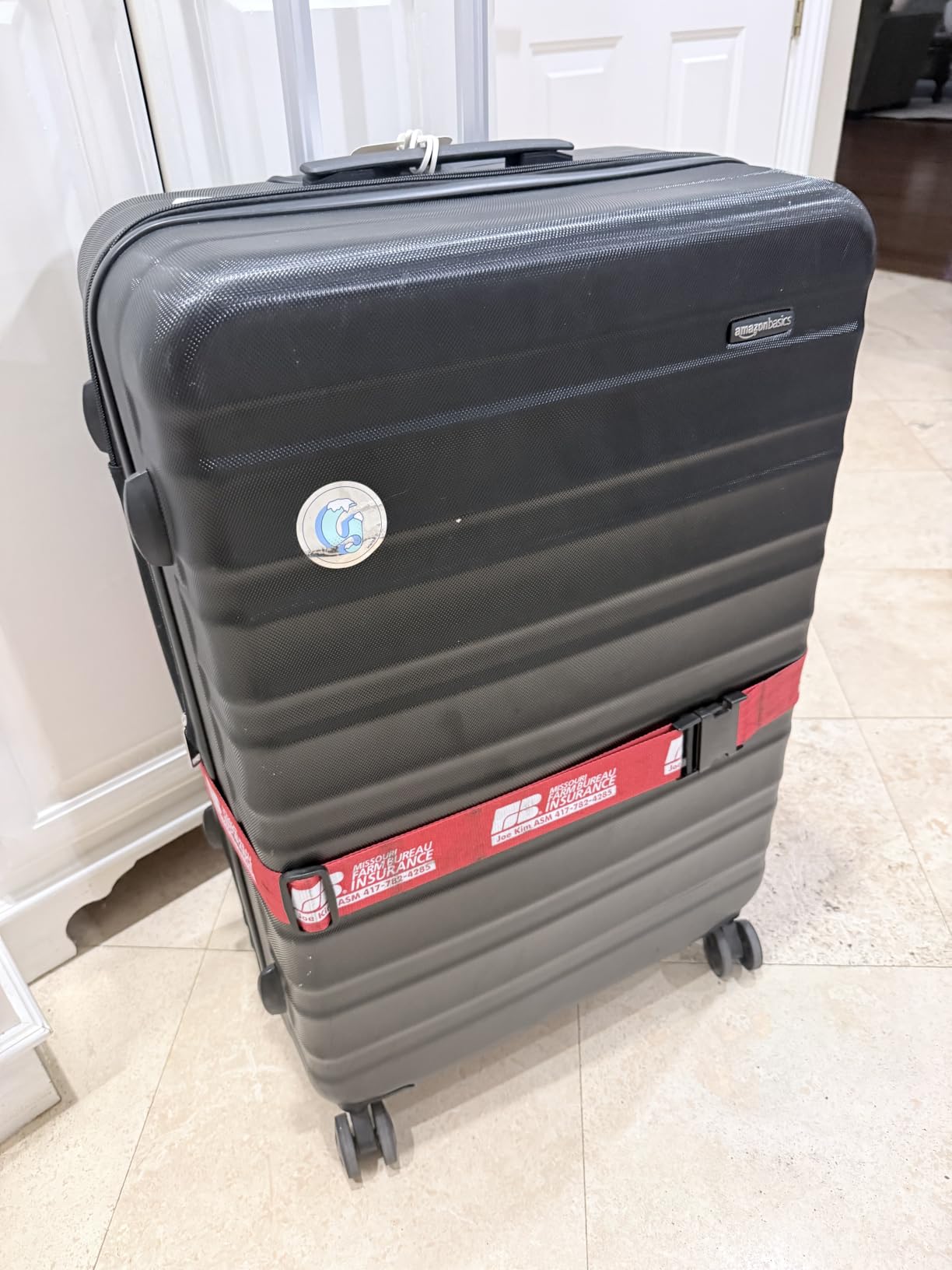
The shell is ABS rather than polycarbonate, and it is scratch-resistant rather than scratch-proof. In our weighing it is 7.7 pounds empty, which is 0.9 pounds heavier than the Travelpro Maxlite 5 and 0.9 pounds lighter than the two 9-pound bags in this roundup. There is no built-in lock, which is a genuine gap for anyone carrying documents worth protecting.
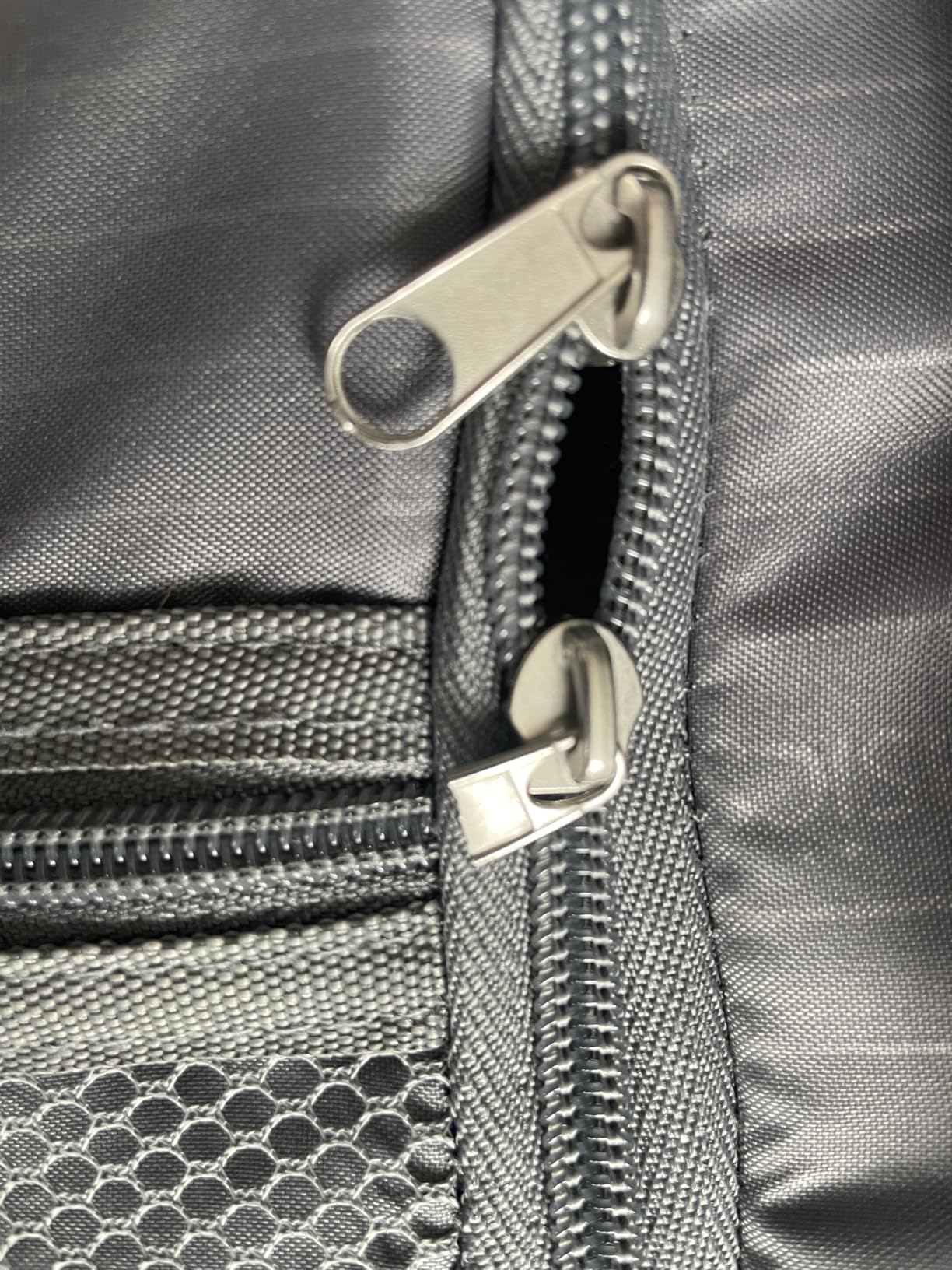
Long-term owners in the review data describe the telescoping handle becoming reluctant to collapse and exterior and interior zippers eventually jamming or breaking after roughly six years of use. That is a realistic service life for a bag at this tier, and it is the single best argument for buying the more expensive bags if you plan to keep one for a decade.
Who the Amazon Basics 21-Inch suits
This is the bag for a traveler who packs generously, flies maybe once or twice a month, and wants zero drama. If you are still building a starter travel kit, this is the responsible first carry-on. The interior divider and three zippered pockets keep a short trip organized without any of the premium fittings.
It is also a strong choice for anyone who overpacks on holiday trips and gets away with it, because the expansion gusset absorbs the overflow instead of forcing a zipper to be forced open. Just remember there is no lock, so valuables go in your personal item.
Who should skip the Amazon Basics 21-Inch
Skip it if you fly weekly and plan to keep the same bag for years. The handle and zipper failure pattern in the reviews shows up around the six-year mark, which is roughly half the service life most premium-warranty bags deliver.
Also skip it if a lightweight bag is the goal. At 7.7 pounds it is the second-heaviest hardside in this roundup, and every pound counts when the airline sizer is also judging your weight. If weight is your priority, look at the softside option at number three instead.
3. Travelpro Maxlite 5 Softside Spinner – The Lightest Load
Travelpro Maxlite 5 Softside Carry-On Luggage Spinner, Black, 21-Inch
- Lightest carry-on we tested at 5.4 lbs
- 46 liters of capacity
- 360-degree spinner wheels roll in any direction
- Expands up to 2 inches
- Water-resistant DuraGuard coating
- Limited lifetime warranty with registered carrier-damage repair
- Soft shell gives no crush protection
- Zipper can snag when packed full
- Wheels feel less substantial than premium hardside spinners
At 5.4 pounds, this is the lightest bag in the roundup by a clear margin, and for business travel that is not a small advantage. Every pound you do not spend on the bag is a pound of laptop, chargers, documents and a change of clothes you can keep with you. On a 20 pound rolling total, 5.4 leaves you a genuinely generous budget for gear.
It also carries 46 liters, which is tied for the largest capacity here alongside the Travelpro Platinum Elite. Light and large is a rare pairing. Most lightweight bags are small, and most large bags are heavy. The Maxlite 5 manages both by using a soft polyester shell with a water-resistant DuraGuard coating instead of a hard shell that needs a frame to hold its shape.
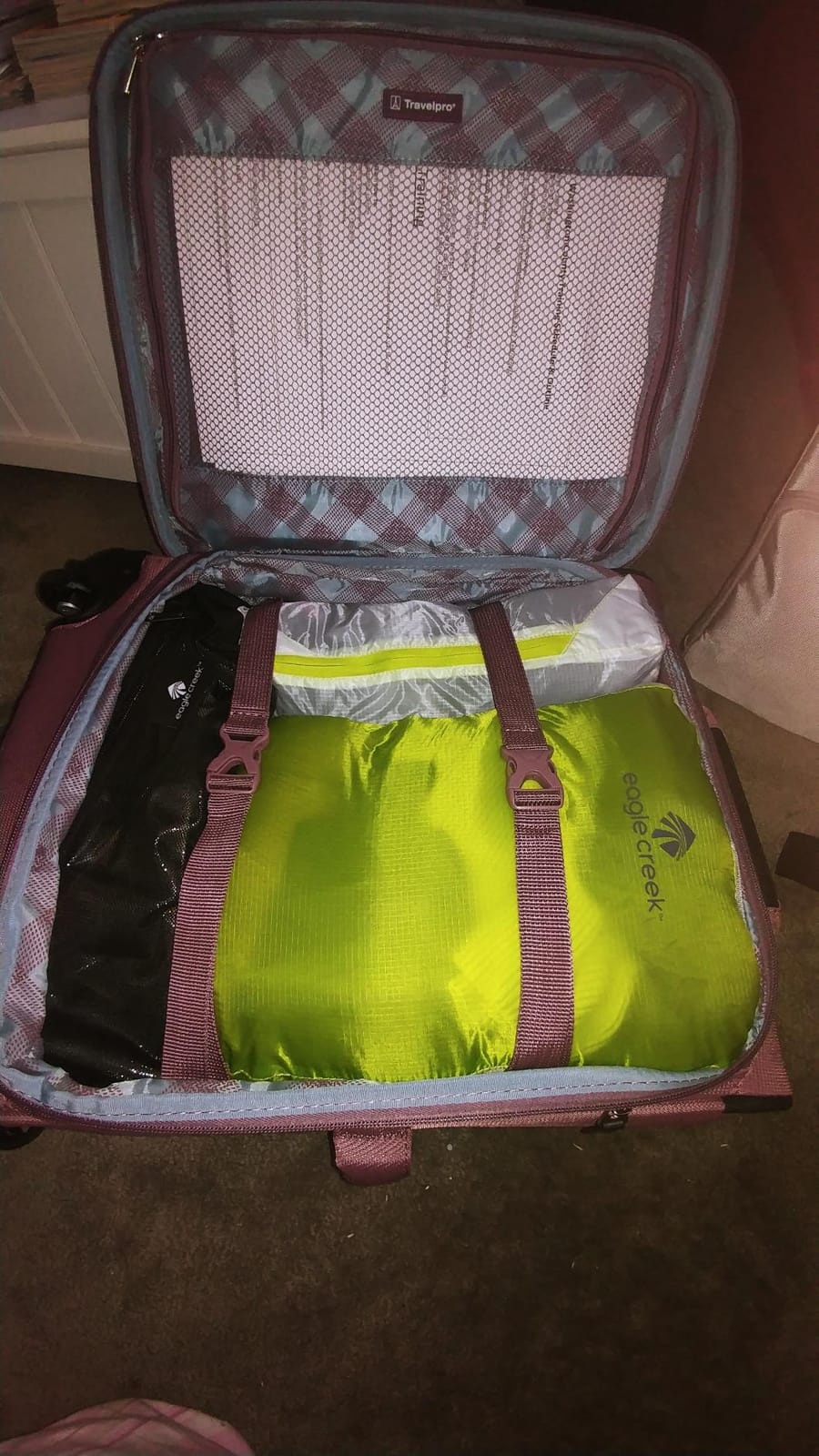
The case dimensions of 21 x 14 x 9 inches sit right at the US standard, and reviewers note it fits most international carry-on limits as well. It expands up to 2 inches when you need the room. The PowerScope Lite handle stops at 38 and 42.5 inches rather than sliding continuously, which stops the wobble that plagues cheaper telescoping handles.
You do give up crush resistance. A soft shell flexes, so a heavy bag stacked on top in a cargo hold or a trunk can crease contents that a hardside would protect. The most common complaint in the reviews is a zipper that snags at the top corner when the bag is packed completely full, which is an easy fix in practice and a daily annoyance if you overpack.
Who the Travelpro Maxlite 5 suits
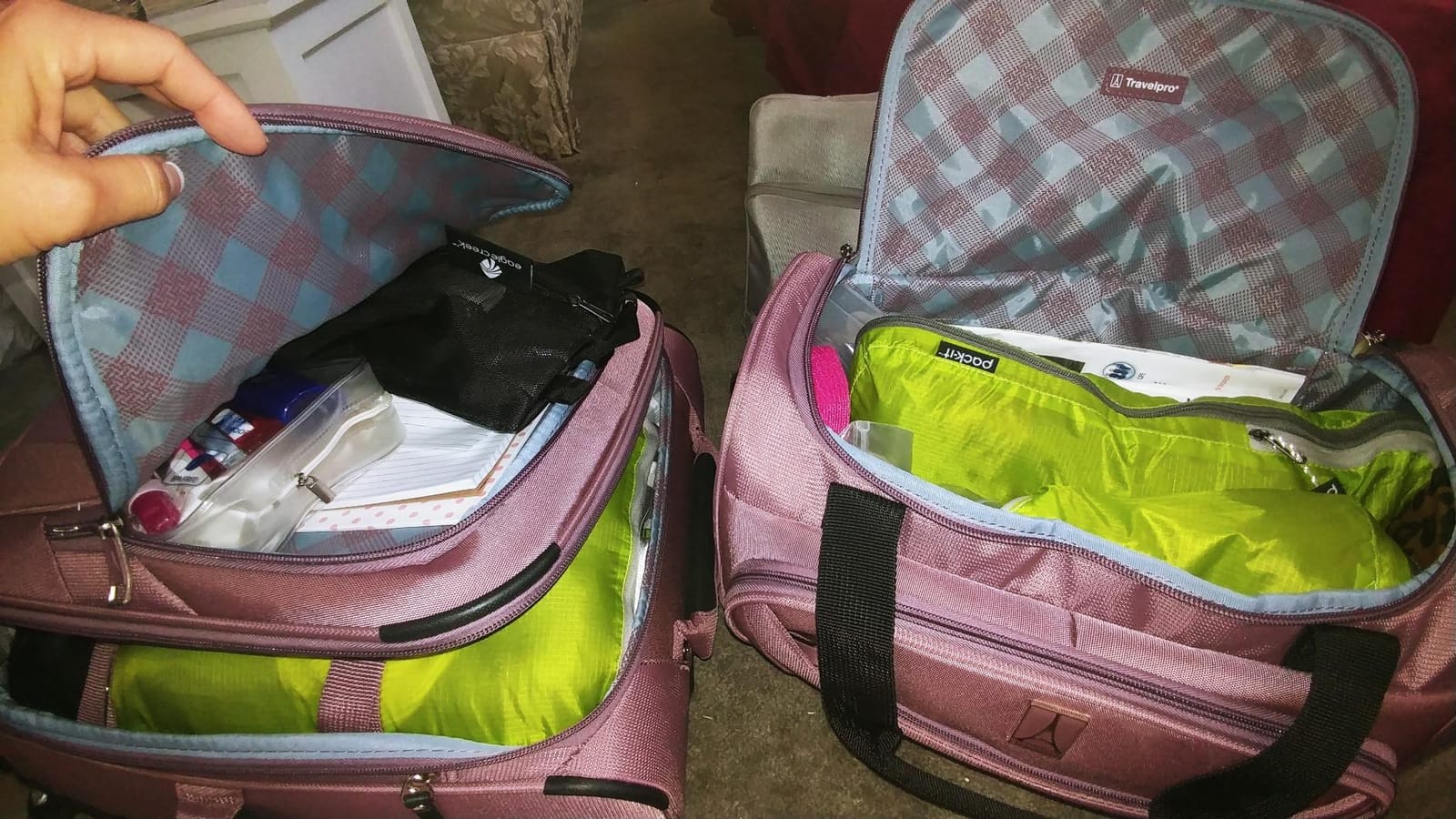
This is the pick for a road warrior who carries more electronics than clothing. Analysts, consultants and anyone with a laptop, charger, headphones and a travel kit will feel the 2-plus-pound advantage every single time they lift the bag into an overhead bin. The external pockets also let you reach a boarding pass or a charger without opening the main compartment.
It is also the safest softside choice for tight connections. A soft bag that is slightly overstuffed bends rather than forcing a zipper, which gives you a little slack that a hard case does not. The limited lifetime warranty and the Trusted Companion Promise, which covers carrier damage for a year when registered, are stronger than most bags at this tier.
Who should skip the Travelpro Maxlite 5
Skip it if you carry fragile electronics unprotected or pack glass or anything breakable. There is no rigid structure between your laptop and a rogue shoe sole. If you do travel with delicate gear, a hardside with a padded sleeve is the safer configuration.
Skip it if appearance is part of your professional uniform. Softside is comfortable to sit with next to a hardshell row in the overhead bin, and the fabric shows wear at stress points over time. That is honest and predictable, but it is not what some people want to pull out of the bin before a client meeting.
4. Samsonite Freeform Hardside Spinner – The Locked-Down Carry-On
- Second-lightest hardside here at 6.5 lbs
- Recessed TSA-approved combination lock
- Textured scratch-resistant exterior
- Interior straps and divider keep gear organized
- 10-year warranty
- Measures over standard on two axes
- Not water resistant so contents are exposed in heavy rain
- One main packing section with limited pockets
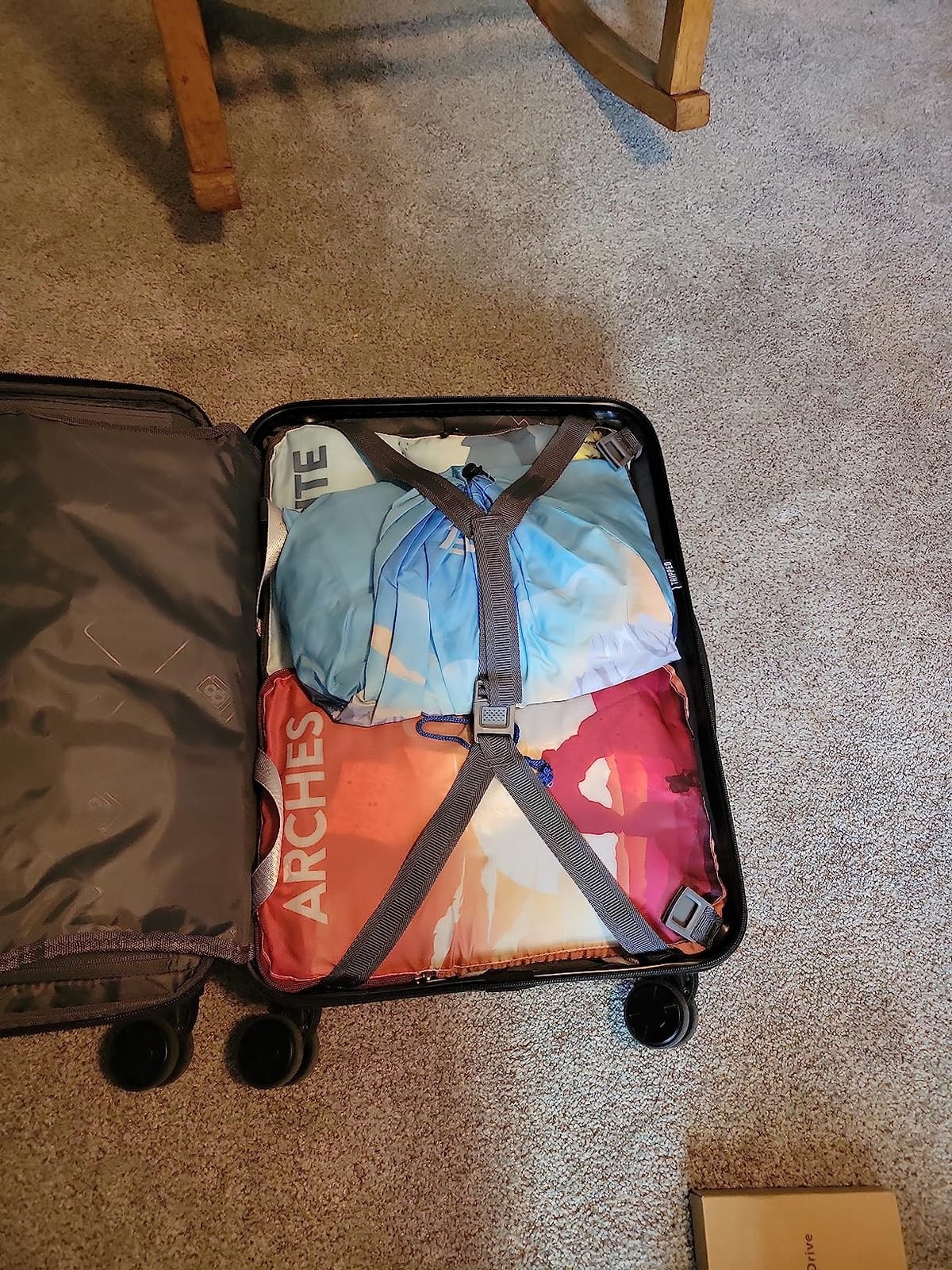
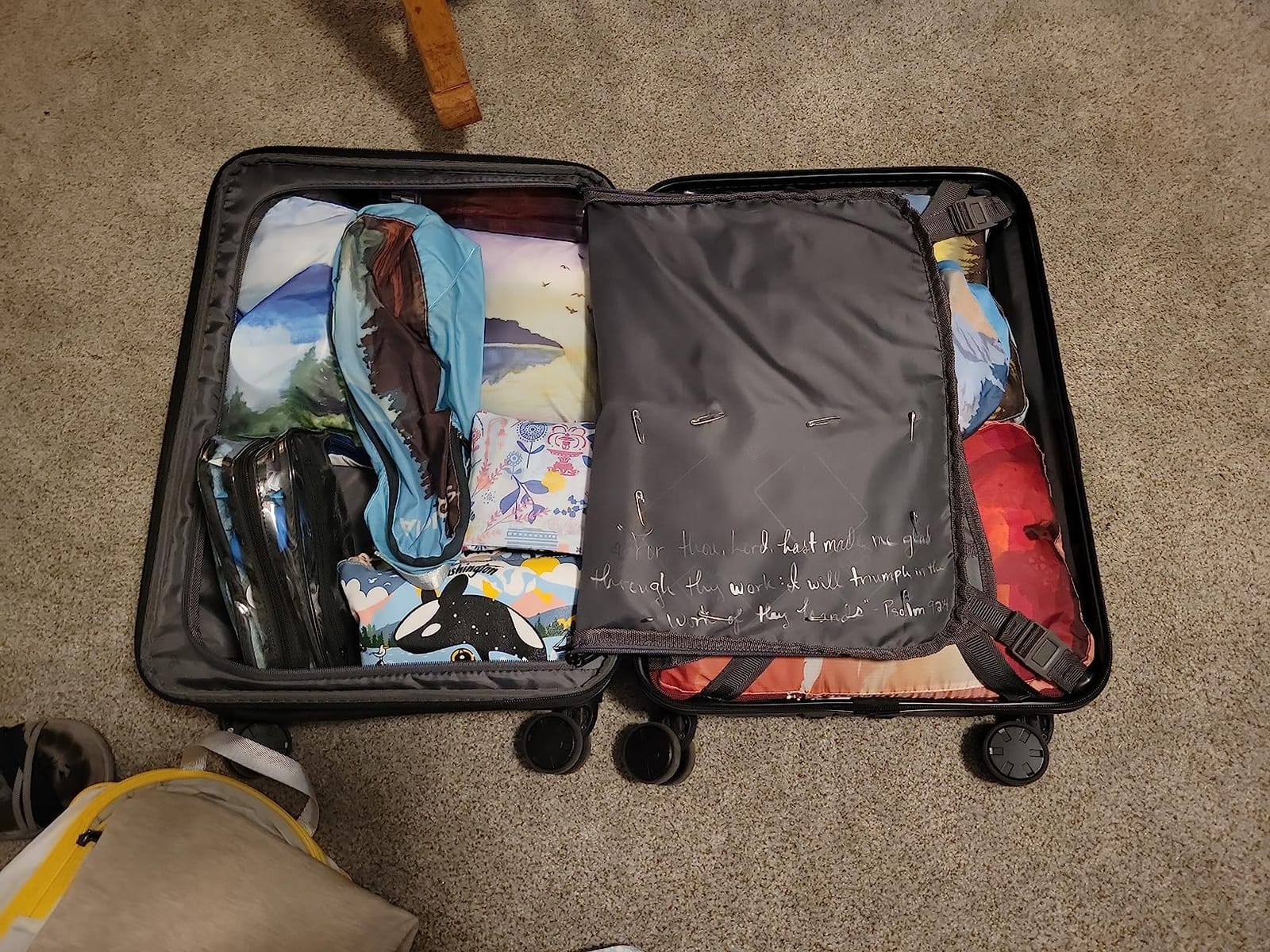
The Freeform is the sibling of the Omni at number one, lighter at 6.5 pounds and closer to the standard carry-on footprint. It is the pick for a traveler who wants a polycarbonate shell and a proper recessed lock without paying a premium brand’s premium prices. The cross-ribbon packing system and interior straps keep a load from shifting when the wheels hit a curb.
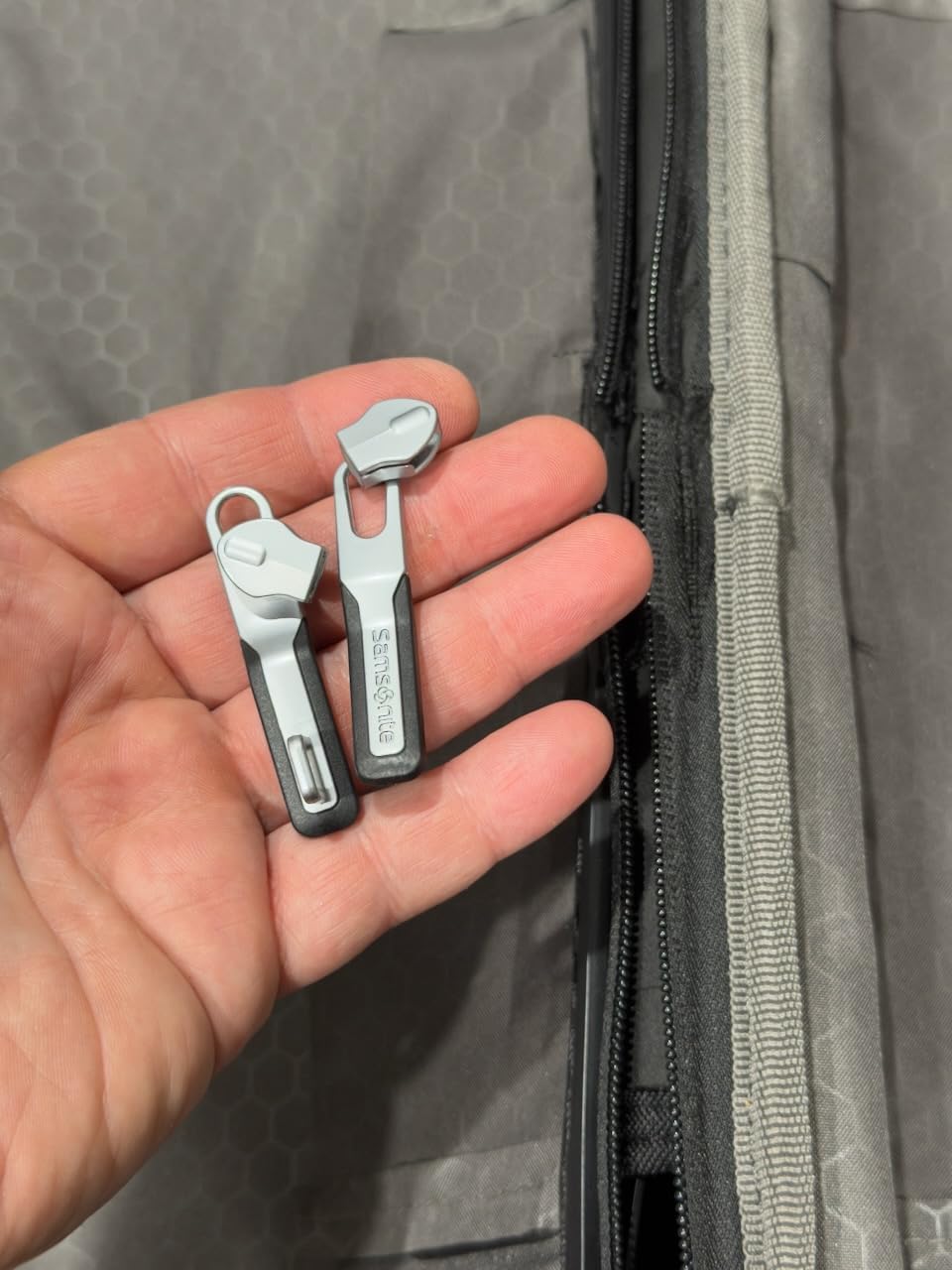
That recessed lock is worth calling out. It sits flush in the shell rather than protruding on the side, which means fewer snags when you are pulling the bag out of a bin and no dangling lock plate adding width. It is TSA-approved, so you set it once and agents open it without damaging or unlocking your case.
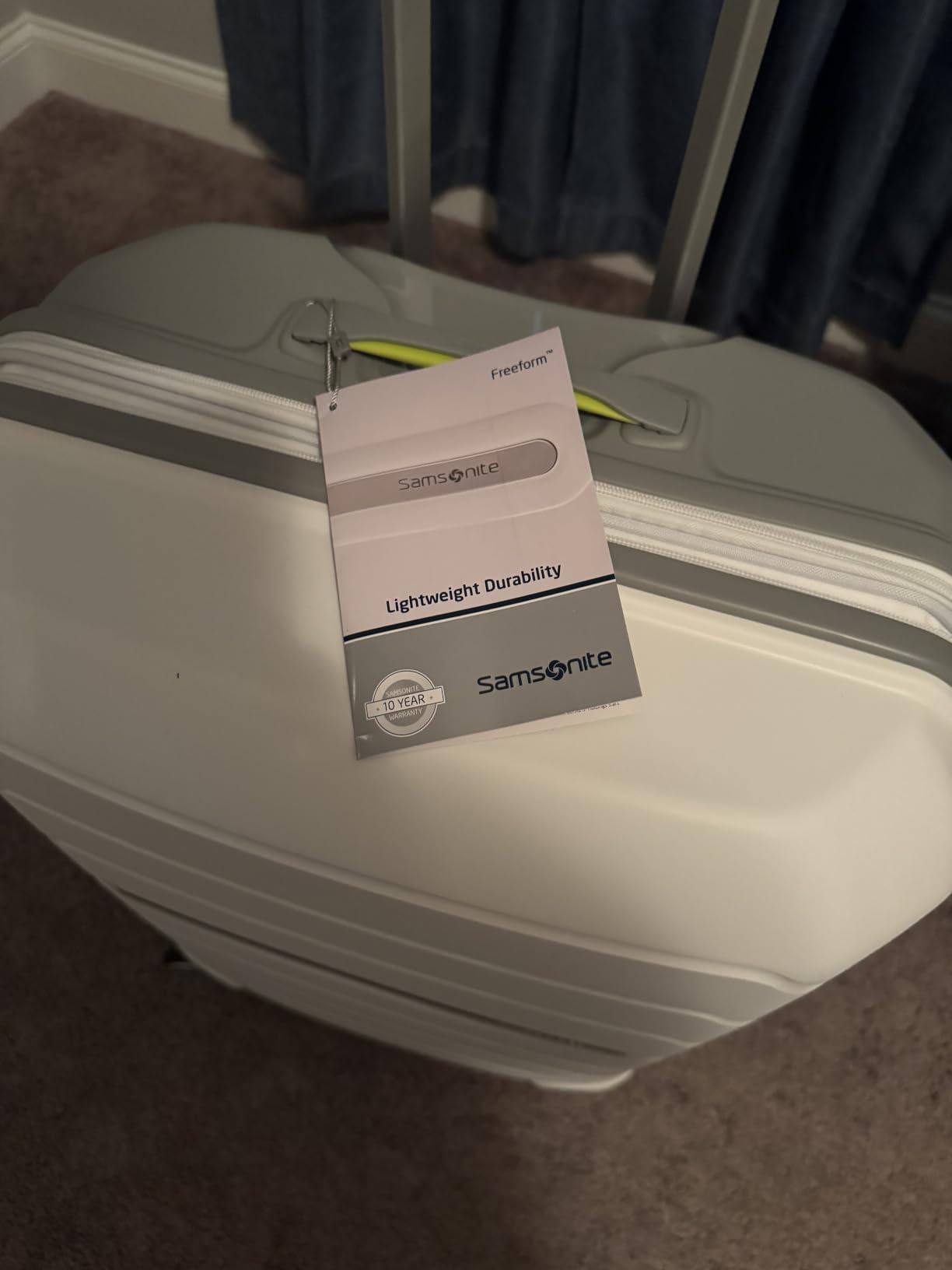
Here is the honest caveat. Exterior dimensions with wheels are 23 x 15.3 x 9.8 inches. That is an inch over the standard height, 1.3 inches over the width and 0.8 inches over the depth. On carriers with compliant sizer bins this goes in fine, and plenty of owners fly it constantly. On a small regional aircraft or a strict international carrier, it is over.
It also carries the highest share of one-star reviews among the bags here, which owners attribute to long-term wheel and handle wear rather than manufacturing problems out of the box. And it is not water resistant, so a downpour in an unprotected walk from the curb can reach your clothing. Pack documents and electronics in a plastic sleeve regardless.
Who the Samsonite Freeform suits
This suits anyone who flies a mix of domestic and international routes and wants the security of a lock plus the durability of a textured hard shell without chasing a premium price. The 10-year warranty is long enough that most owners will replace it before they claim anything.
It is a good second bag too. If you split your luggage between a personal item and a roller, a second hardshell with a TSA lock is genuinely useful for the half that carries documents and electronics. Owners moving to check bags at the gate can leave the shell in place and only deal with the wheels.
Who should skip the Samsonite Freeform
Skip it if your trips include budget or regional carriers with tight frames, since the manufacturer measurements put it over the standard on three axes. Measure it and check your airline’s published limit before committing.
Skip it if you need more than 34 liters or a lot of small compartments. It has one main packing section with a divider, elastic straps and a single pouch, which is tidy but limited compared to the multi-pocket bags further down this list.
5. LEVEL8 20-Inch Expandable Spinner – The Front-Access Laptop Bag
LEVEL8 Carry on Luggage Airline Approved, 20“ Expandable Carry on Suitcase
- Front-access compartment fits laptops up to 15.6 inch
- Eight rubber-covered spinner wheels roll quietly
- Aluminum telescopic handle is sturdy at the pivots
- Premium PC plus ABS micro-diamond textured shell
- Heaviest design here at 9 lbs
- Fully expanded size may exceed carry-on limits
- Heavier empty weight leaves less room for gear
This is the bag to buy if the single biggest frustration of your business travel is opening your suitcase in a security line to find your laptop. The dedicated front compartment holds laptops up to 15.6 inches and sits outside the main case, so you unzip one pocket at the checkpoint and slide the computer onto the tray. Everything else stays packed.
It earns its place in this roundup on two other counts. Eight rubber-covered 360-degree spinner wheels spread the load and roll quietly, which is a genuine upgrade in a terminal. And the aluminum telescopic handle is sturdier at the pivot points than the plastic handles on most bags at this weight, which is where handles actually fail.
The weight is the problem. At 9 pounds empty, this is tied for the heaviest design we tested, a function of the dual-wheel arrangement and the aluminum handle. That is a real cost: on a 20 pound rolling weight limit, you have 11 pounds for a laptop, chargers, a change of clothes and documents. Plenty of people manage it. Some do not, especially on carriers that enforce carry-on weight.
Its 21.8 x 14.5 x 9.8 inch footprint is within the US standard unexpanded, but the 1.57 inch expansion pushes it past. Leave the expansion zipper closed on a trip where you need to meet a sizer. The 4.5 average rating is the highest among the larger-volume picks here, and it carries the smallest share of one-star ratings in the group.
Who the LEVEL8 suits
This is for the person who works out of the laptop on planes, in airports and in client meeting rooms. The front-access compartment removes the most common friction point of business travel entirely. Commuters on short hops will notice the quiet eight-wheel glide more than long-haul travelers will.
It also makes sense as a single-bag solution for someone who carries a 15-inch laptop and does not want to carry a separate sleeve. The 36 to 42 liter capacity is enough for a long weekend when you pack cubes, though 9 pounds leaves less slack than the softside picks.
Who should skip the LEVEL8
Skip it if empty weight matters more than laptop access. 9 pounds is close to a quarter of a typical carry-on weight allowance spent before you add a single sock. A lighter softside bag with an internal sleeve will serve many people better.
Also skip it if you want the laptop compartment to swallow a 16-inch machine. The stated fit is up to 15.6 inches. Owners with larger laptops report a tight squeeze, and a bulging compartment distorts the bag shape, which is exactly what a sizer measures.
6. Travelpro Platinum Elite Spinner – The Suiter-and-Sockets Bag
Travelpro Platinum Elite Carry-On Luggage Spinner, Black, 21-Inch
- Precision Glide wheels self-align and lock upright
- Balanced and stable with a bag stacked on top
- Drop-in suiter holds suits and dresses flat
- Nine pockets plus USB-A and USB-C ports
- Sizer-bin tested for major US overhead bins
- Zippers get stiff when fully packed
- USB ports need a power bank you carry separately
- Fully expanded may exceed airline restrictions
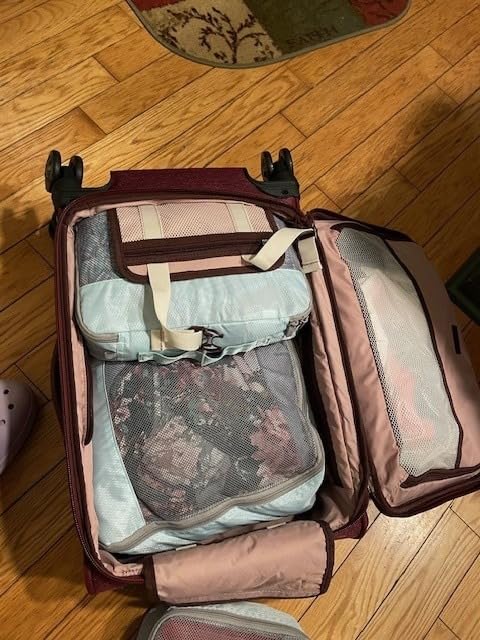
If you carry a suit or a structured dress, this is the most complete answer in the roundup. The drop-in suiter clips into the lid and holds garments flat between panels, which is the only way a suit survives a two-hop itinerary without arriving looking like it spent the trip in a car boot. Shirts go in the suiter. Everything else goes around it.
The wheel system is the other reason. The Precision Glide magnetic design self-aligns when you push forward and locks upright when you stop, so the bag does not roll away from you at the curb or tilt in the aisle. Frequent-flyer owners consistently describe it as stable even with weight stacked on top, which matters in crowded bins.
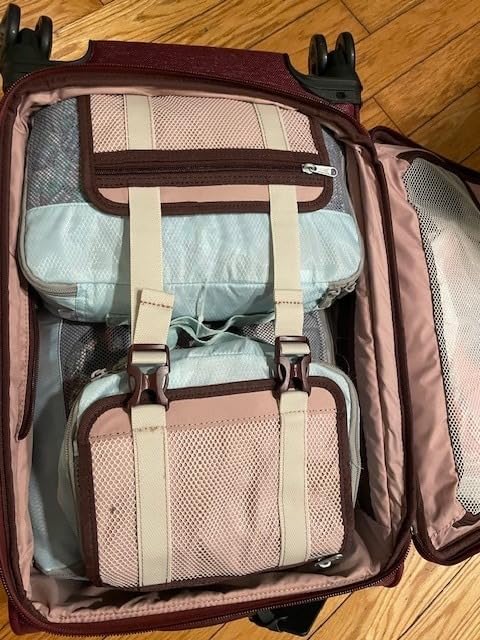
There are nine interior pockets, tie-down straps, a removable wet pocket and external USB-A and USB-C ports with a dedicated pocket for a power bank. Note that the power bank is not included and lithium batteries stay in the cabin, which is where they belong on every flight anyway.
The 21 x 14 x 9 inch case dimensions meet the US standard, and it is sizer-bin tested to fit overhead bins on major US carriers. The tapered 2-inch expansion is the caution: fully expanded it may not meet restrictions. Leave it closed on flights with strict sizers. Reviewers do report stiff zippers when the bag is packed to its limit, so do not force the main compartment shut on a heavy load.
Who the Travelpro Platinum Elite suits
This is the bag for consultants and anyone who changes into business attire at their destination. It is also a strong choice for anyone who works from a packed suitcase on a long flight, because the suiter doubles as a flat surface for laying out documents. The nine pockets remove the need for a separate organizer.
If you fly a premium cabin regularly, the value here compounds. Owned well and resold eventually, a bag with a limited lifetime warranty and lifetime carrier-damage repair through the Trusted Companion Promise holds its usefulness far longer than a bag you replace every few years.
Who should skip the Travelpro Platinum Elite
Skip it if you are a light packer or carry only casual clothing. The suiter and the extra pockets add weight you will carry empty, and this bag is not the cheapest way to move clothes from one hotel to another.
Skip it if you fly strictly on budget carriers with tight frame measurements and always expand the bag. The overall figure including wheels and handles is 23.5 x 14.5 x 9 inches, which needs a compliant sizer rather than an accommodating gate agent.
7. LUGGEX 20-Inch Zipperless Carry-On – The One That Skips the Zipper
- No exterior zipper to snag or burst
- Molded 8010S aluminum frame resists deformation
- 100 percent polycarbonate shell rated tougher than ABS blends
- Four aluminum corner protectors
- Spring-loaded eight-wheel system smooths vibration
- Heaviest design here at 9 lb
- Frame design is bulkier with no soft expansion gusset
- TSA lock arrives at a factory default code
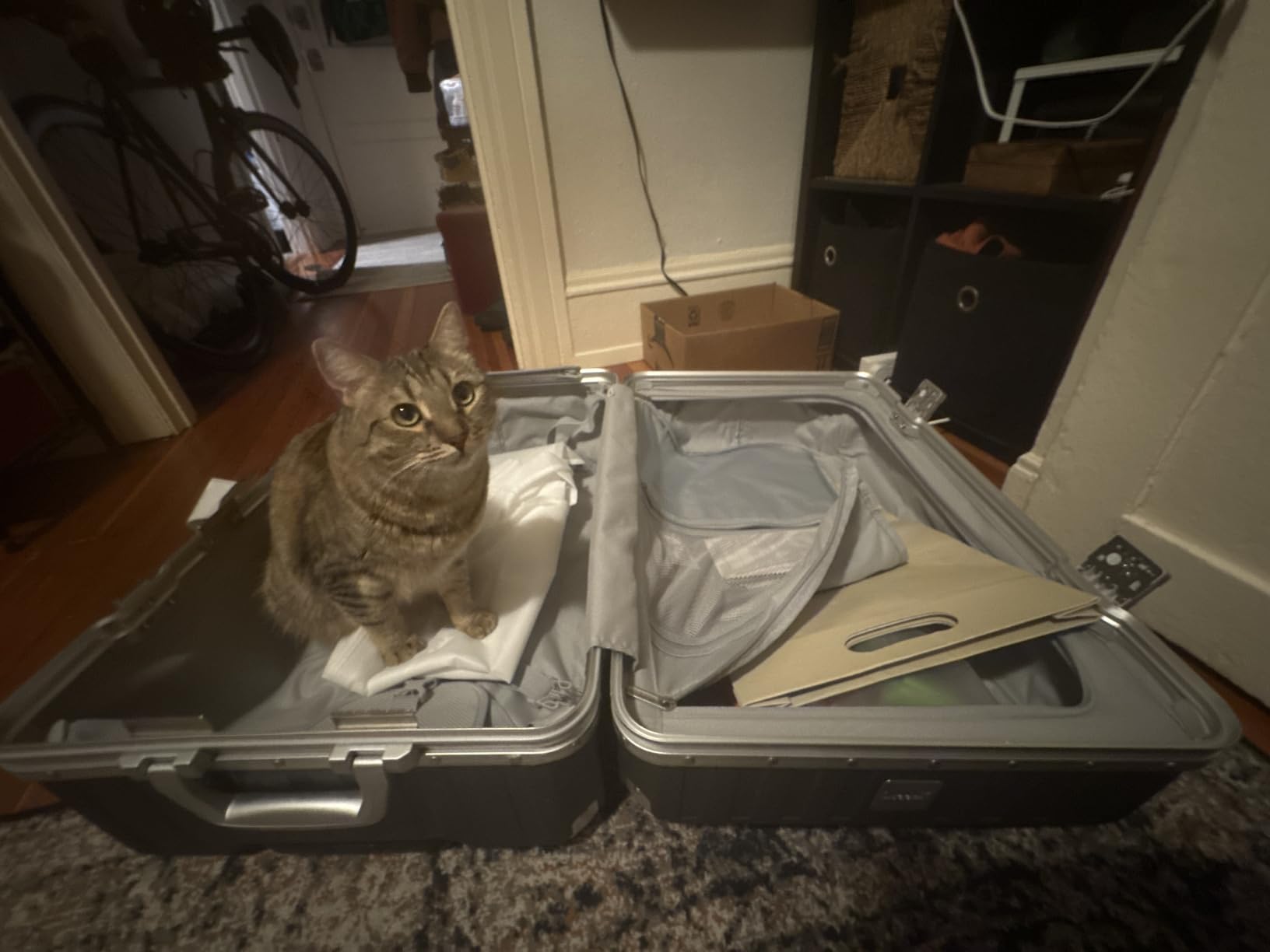
Every bag in this roundup opens with a zipper, and zippers are the component that fails first. They stretch, snag, jam when a bag is overstuffed, and on a hardshell they are the seam most likely to separate in a baggage handler conveyor. This bag removes that seam entirely. One button releases the shell, an embedded dual-side TSA lock secures it, and there is no zipper to fail.
The structure underneath is the second reason to look at it. A one-piece molded 8010S aluminum frame resists deformation better than a typical zip-around shell, and four aluminum corner protectors take the knocks that crack plastic corners. The shell is 100 percent polycarbonate rather than an ABS and polycarbonate blend, which reviewers consistently describe as tougher and more resilient.
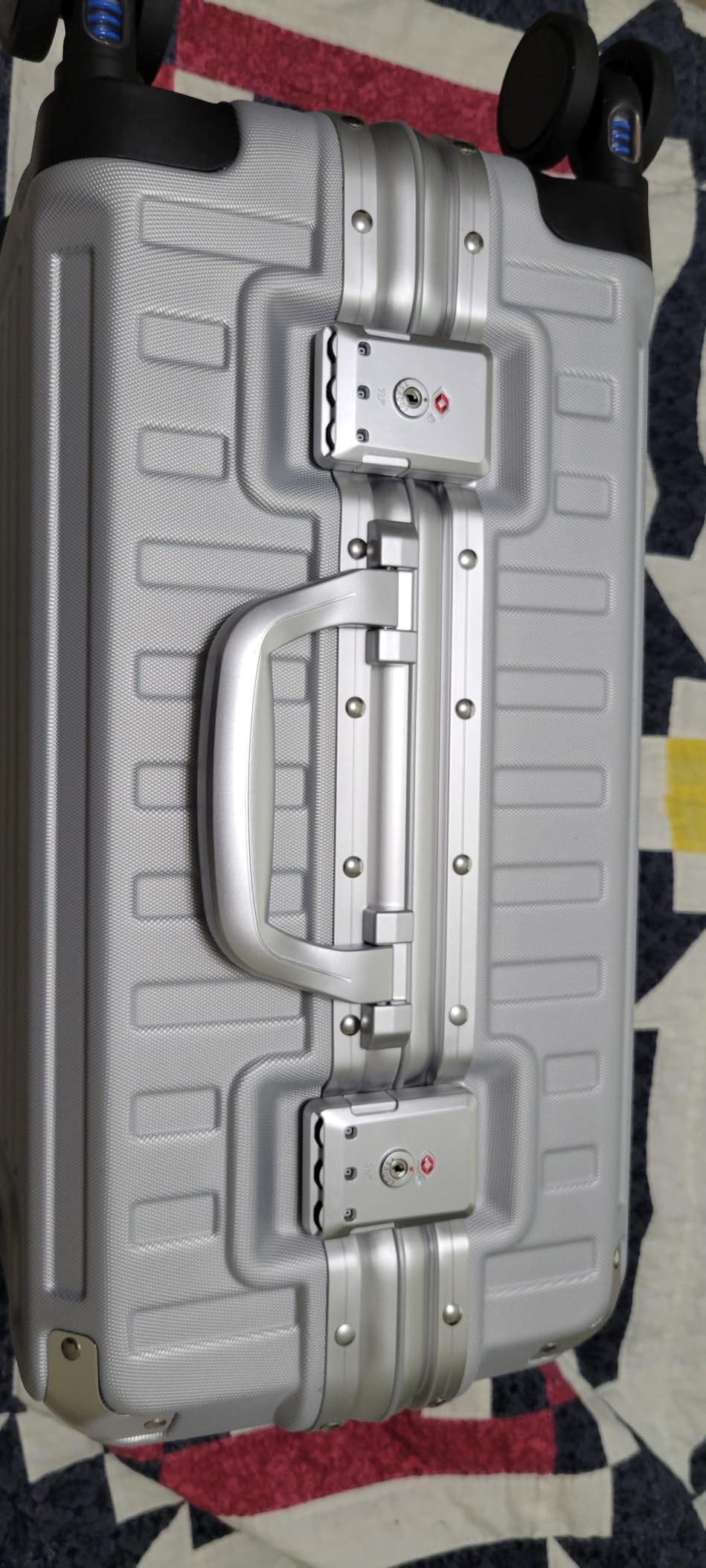
Eight spinner wheels with built-in suspension springs reduce vibration, which is why owners describe it as rolling more stably than bags with plain wheels. That is a real difference on airport pavement and on the cobbled streets around older European cities, and it is the kind of detail that only shows up after a few hundred miles.
Now the trade-offs. At 9 pounds it is tied for the heaviest design here, partly because of the aluminum frame and the eight wheels. There is no soft expansion gusset, so capacity is fixed at 36 liters. And the TSA lock comes set to a factory default code that you need to reset before you travel, which is a small thing that catches people out.
Who the LUGGEX suits
This suits a heavy-duty traveler who would rather buy one bag than replace a bag. A frame with no zipper seam is the right answer if you fly 50 or more times a year, fly with gear that cannot be bent, or have had two rollers fail on zippers in the last five years.
It is also good for anyone who packs wet gear or rain gear and worries about a zipper seam letting water in, since the rated waterproof shell and the sealed frame remove that path entirely. The 10-year manufacturer warranty backs the design.
Who should skip the LUGGEX
Skip it if 9 pounds is too much to lift. The heaviest bags are the hardest on shoulders and backs during a long walk through a terminal, and this bag does not offer the weight relief that lighter options provide.
Skip it if you need flexible capacity. With no expansion gusset, the 36 liters is what you get. If your trips vary between one night and a week, a bag that expands is more adaptable than a fixed frame.
8. TydeCkare 16-Inch Carry-On – The Small-Plane Specialist
TydeCkare 16″ Carry on Luggage with 2 Laptop Compartments Airline Approved
- Only 16-inch bag here with two laptop compartments
- Front pocket lets you remove a laptop without opening the case
- Small enough for regional aircraft overhead bins
- YKK reverse-coil zippers resist bursting
- Dual TSA locks
- one per compartment
- Smallest size here suits only short trips
- Front laptop pocket does not take machines over about 15.6 inches
- Wheels less smooth over bumps
- Shell is thin and can dent under pressure
Here is the problem with most business carry-ons: they are built for wide-body jets. Regional aircraft have shallower overhead bins, and a 21-inch bag that fits fine on a transcontinental route gets gate-checked on a hop between regional hubs. At 16.14 x 8 x 17.12 inches, this bag is small enough to clear those bins, and owners who fly them confirm it works on smaller aircraft.
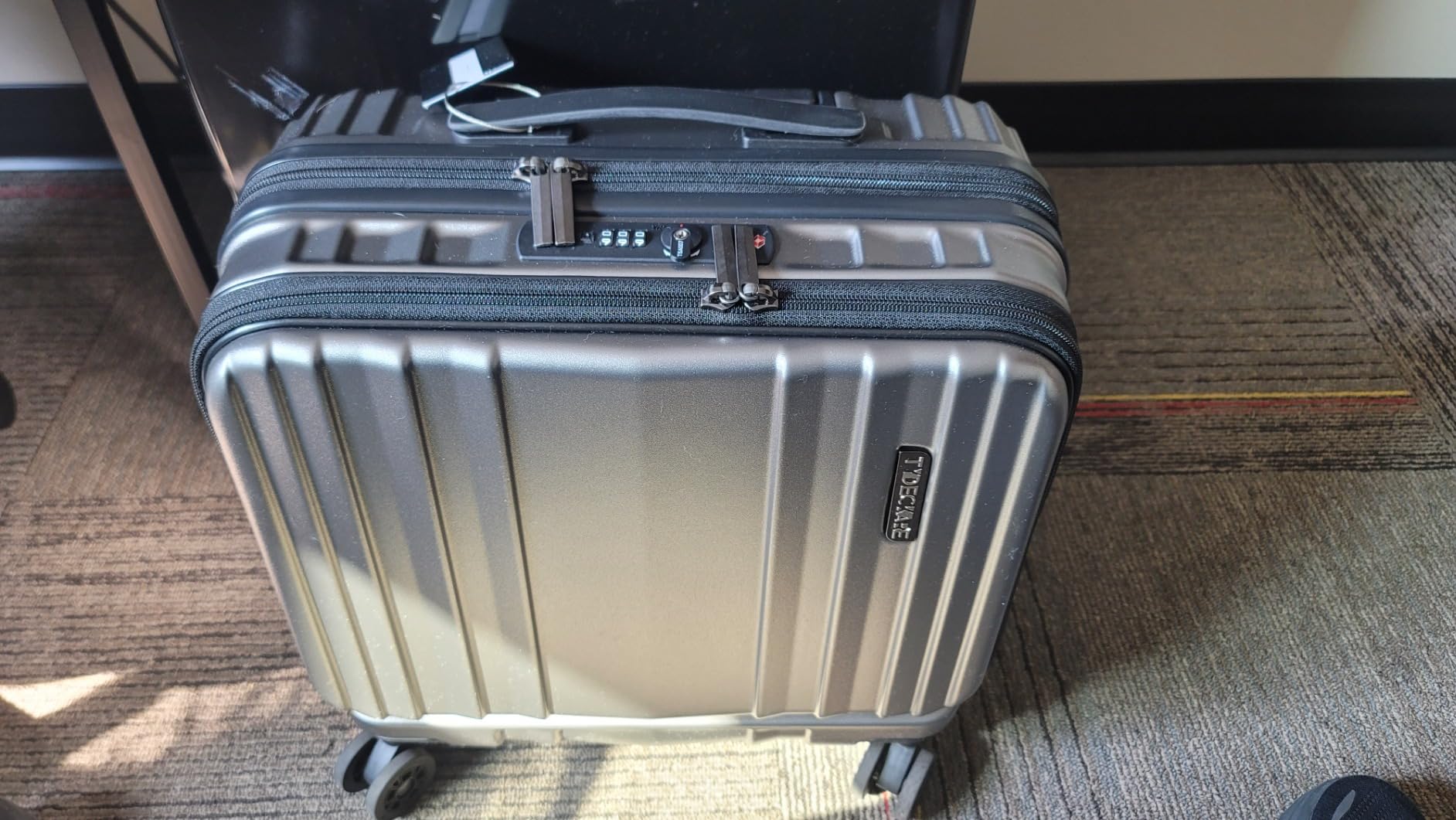
It is also the only bag here with two dedicated laptop compartments. The main compartment takes a 14-inch laptop, and the front pocket is divided to take a 14-inch tablet, so you can carry both without one sitting on top of the other. More importantly, you reach the laptop at security without opening the main case or removing your clothing.
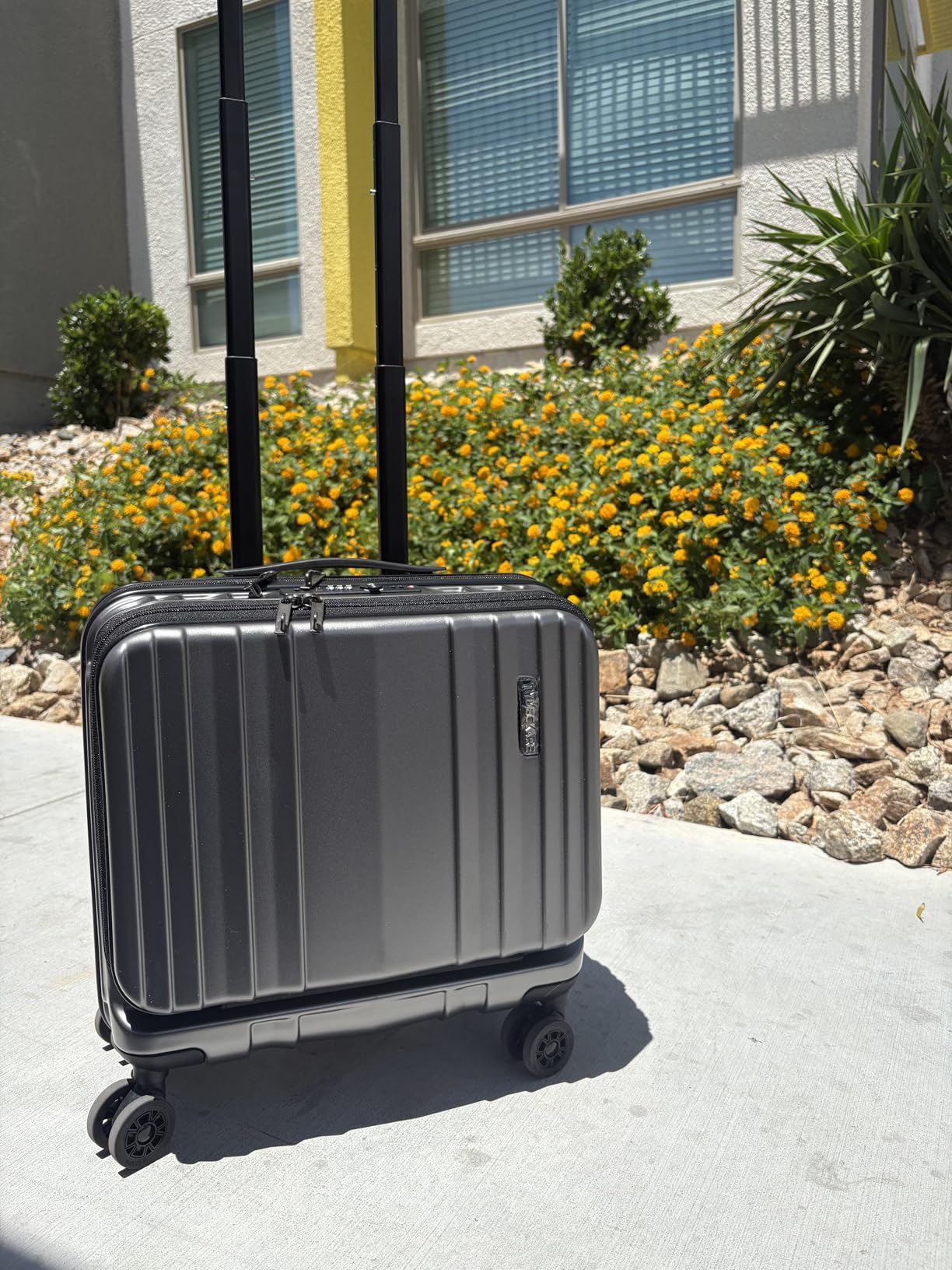
The build quality details are unusually good at this size. YKK reverse-coil zippers resist bursting and puncturing, the HINOMOTO mute wheels are noticeably quiet, and dual top-mounted TSA locks mean one three-digit code for the front compartment and another for the main case. The brushed ABS and polycarbonate finish hides scuffs better than a gloss shell does.
At 6.39 pounds it is the second-lightest bag in the roundup, and 39 liters of capacity is more than you expect from a 16-inch frame. The limitations are honest ones: 16 inches suits short trips, the front pocket tops out around 15.6 inches for laptops, wheels feel less smooth over rough surfaces, and the shell is thin enough to dent under heavy pressure.
Who the TydeCkare suits
This is the bag for consultants who fly regional routes constantly, and for anyone who has been gate-checked on a smaller aircraft more than once. Two laptop compartments also make it a strong choice for someone who carries a laptop and a tablet and wants both protected rather than strapped to the outside of a larger case.
It suits overnight and one-to-three-day trips particularly well, where 39 liters is generous and you do not need to expand anything. The small footprint means you can lift it into a bin unassisted, which is a genuine accessibility benefit on a full flight.
Who should skip the TydeCkare
Skip it if your trips run four days or longer, or if you carry dress shoes and a full wardrobe. At 16 inches there is no expansion path, and you will feel the ceiling before the end of a long trip.
Skip it if you carry a 16-inch laptop and want it in the front compartment. The front pocket is designed around 14 to 15.6 inch machines. A larger laptop goes in the main compartment, which means opening the case at security.
9. American Tourister 4 KIX 2.0 Softside – The Understated Two-Day Bag
American Tourister 4 KIX 2.0 Expandable Softside Luggage with Spinner Wheels, 20 SPINNER, CLASSIC BLUE
- Understated professional styling with carbon fiber trim
- Large zipper pulls easy to grip even with cold hands
- Expandable by 1 inch
- Adjustable ergonomic trolley grip
- 4.5 average rating
- Soft shell offers no crush protection
- 20-inch size is not sized for international limits
- No built-in lock
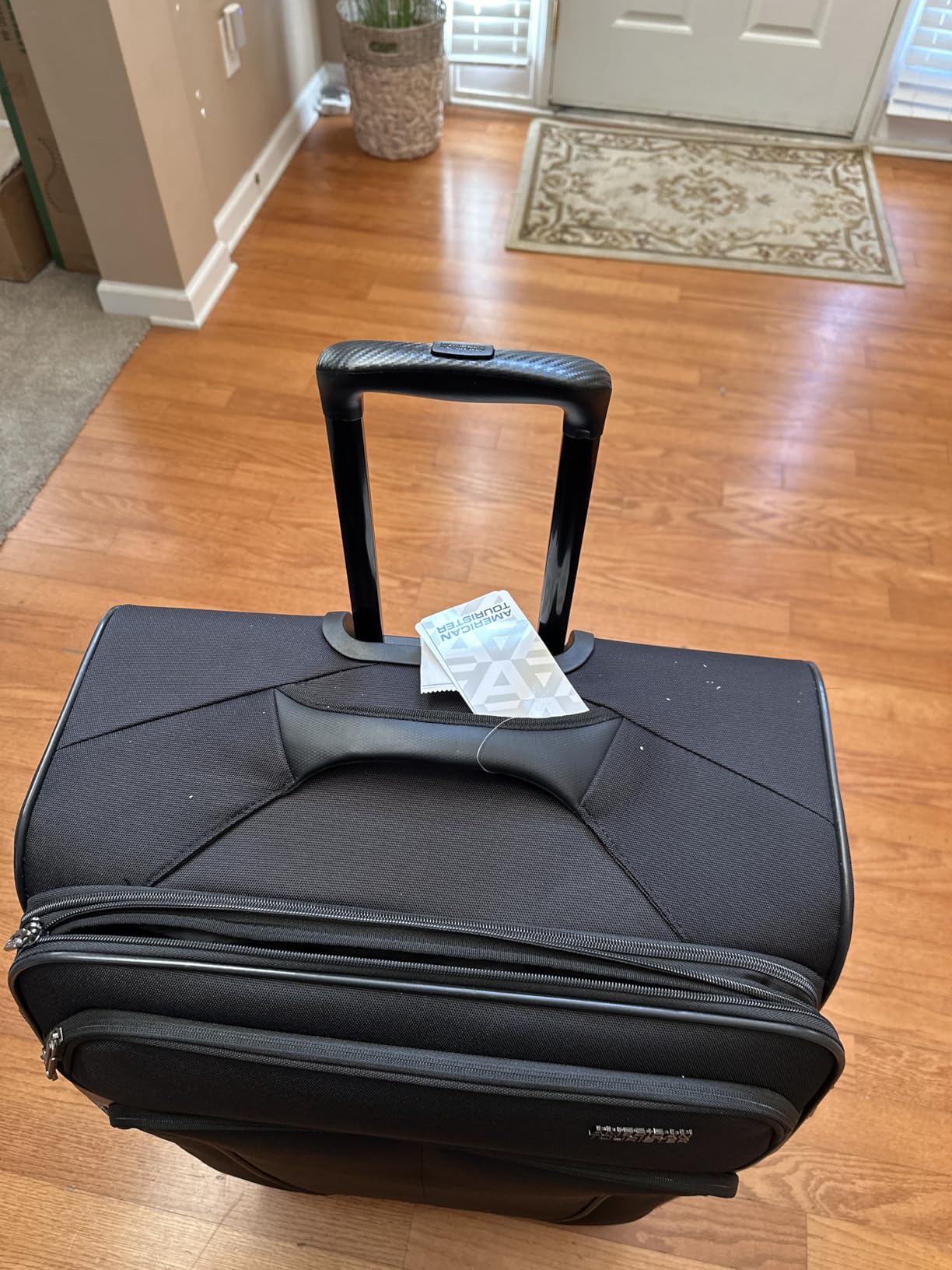
This is the bag to pick when you want business-appropriate appearance without looking like every other hardside roller. The polyester shell with subtle carbon fiber trim and gunmetal hardware reads as a conventional work bag. It is a 20-inch softside spinner sized for one to three day trips, which is the single most common business trip length.
The details that earn their place are tactile rather than technical. Large zipper pulls are genuinely easy to grip, including with cold hands at an early departure, which matters more than it sounds. The trolley grip adjusts to the user, so the handle sits where your hand naturally falls. And the ball wheels are wear-and-tear tested for stability, which addresses the wobble problem that plagues many softside spinners.
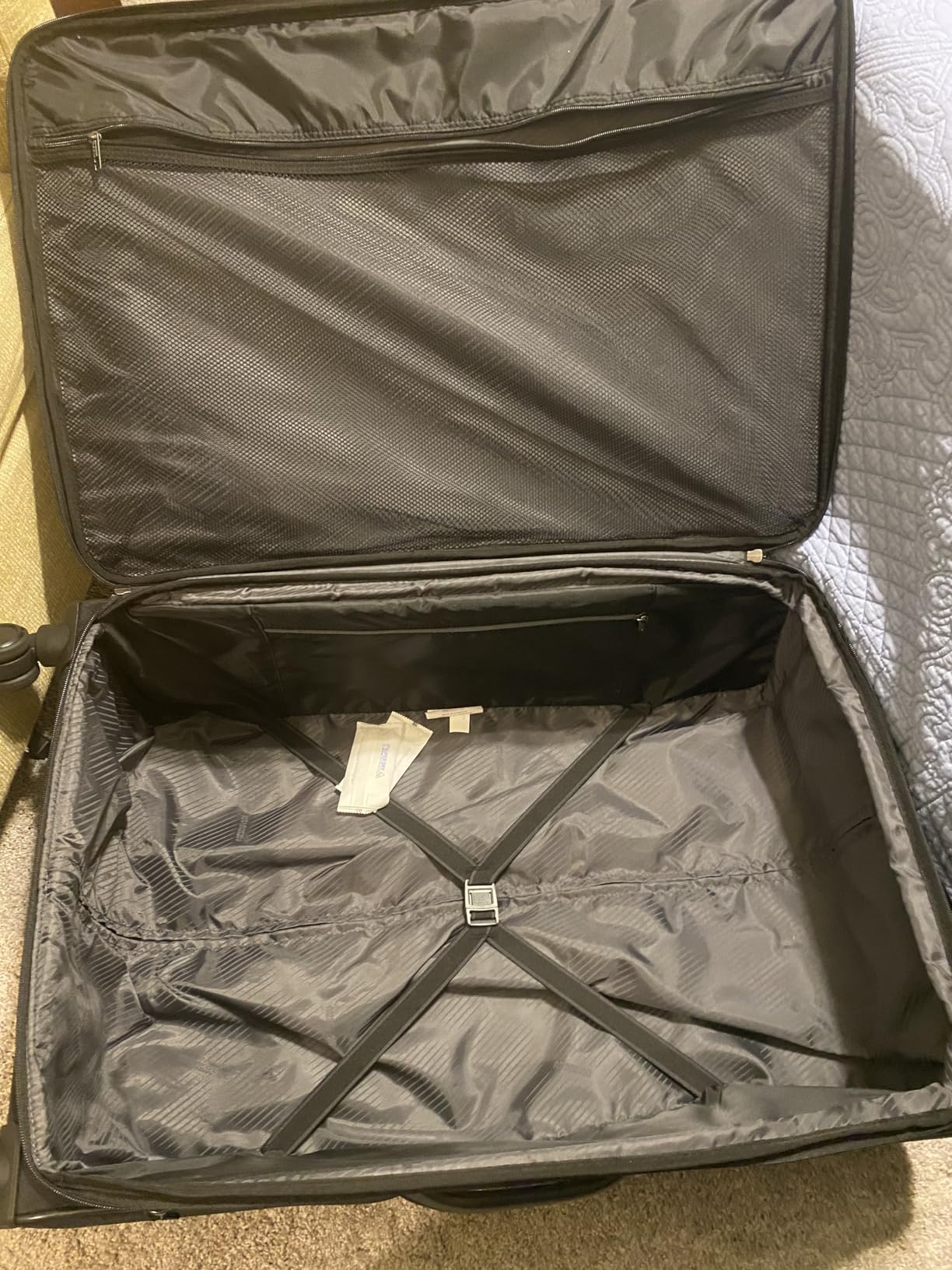
At 7.5 pounds it is not a lightweight bag, and the listed item dimensions of 14.5 x 9.5 x 23.5 inches make it one of the longer carry-ons in this group. That 23.5 inch figure sits over the standard height, so it depends on how accommodating the sizer on your route happens to be. It expands by 1 inch for a little extra room on the way home.
The inherent softside compromises apply. A polyester shell gives no protection against crushing or heavy stacking, and there is no built-in lock. The 4.5 average rating here is one of the highest in the roundup with a low share of one-star ratings, but the review base of roughly 1850 is smaller than the established bags above it.
Who the American Tourister 4 KIX 2.0 suits
This suits someone who takes one to three day trips, wants to look put-together, and would rather not carry a visibly hard shell. The understated styling blends into a professional setting in a way a brightly colored hardshell does not, and the expandable design handles the trip where you bring something back.
It is a sensible secondary bag as well, for trips where you check a larger case and keep two or three days of clothes and a laptop in the cabin with you.
Who should skip the American Tourister 4 KIX 2.0
Skip it if you fly international carriers with strict dimensions. A 23.5 inch listed height is not built for the tighter European frames, and the soft construction will bulge visibly if you pack it full.
Skip it if you carry fragile items or a suit that needs to stay pressed. There is no suiter, no rigid structure and no lock, so this is a clothes and basics bag rather than an equipment bag.
10. American Tourister Stratum 2.0 Hardside – The Textured Mid-Range Shell
American Tourister Stratum 2.0 Expandable Hardside Luggage with Spinner Wheels, Slate Blue, Carry-on
- Textured polycarbonate shell with a barrel shape
- 7.3 lbs but sturdy enough for multi-country trips
- Max-capacity interior with elastic tie-downs
- 10-year limited warranty
- Large easy-grip zipper pulls
- Spinner wheels are noticeably loud on hard surfaces
- Can tip when rolled fully loaded
- No TSA combination lock
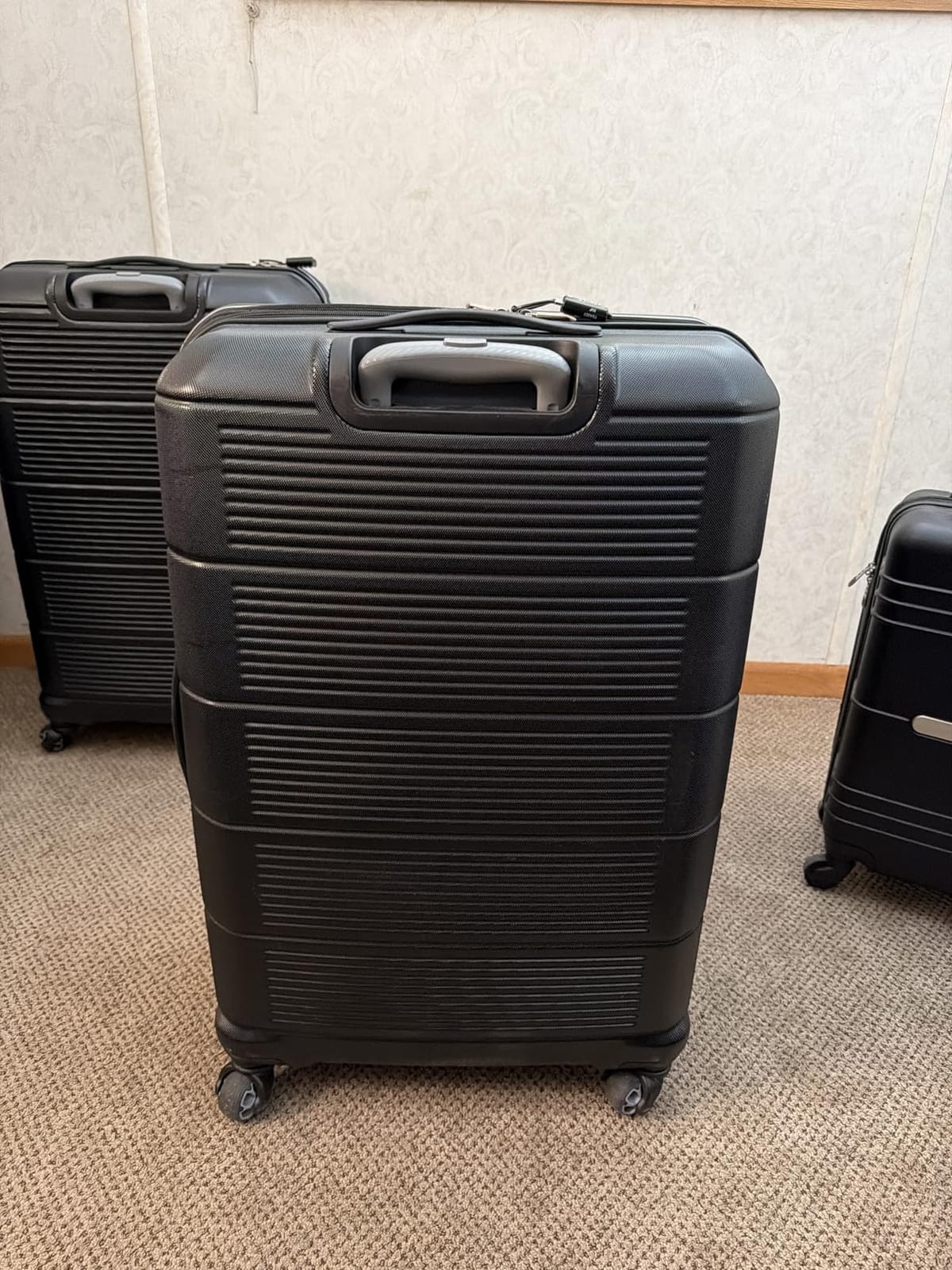
The Stratum 2.0 is the mid-range answer to the question the Omni and Freeform answer at the top of the list. The textured polycarbonate shell and barrel shape hide scuffs well, and reviewers describe it as sturdy enough for multi-country trips without adding the weight of an aluminum frame or a dual-wheel system.
The interior is the real feature. It is described as a max-capacity design with a modesty pocket, a mesh door pocket and elastic tie tapes, which means a rolled shirt stays rolled when the bag tips. That is a small thing that makes a three-day trip noticeably less annoying to unpack at the hotel.
Two mechanical complaints come up repeatedly in the reviews. The spinner ball wheels are loud on pavement and concrete, which is unpleasant on a hard terminal floor at 6 a.m. And the bag can tip when rolled while fully packed, because four wheels supporting a heavy load is a narrower base than two wheels and a kickstand would be.
There is also no TSA combination lock, only a zipper. The 22 x 15 x 9.5 inch listed dimensions sit right at the top of the US standard on two axes, so measure before an important flight. At 7.3 pounds it is mid-pack on weight, and the 10-year limited warranty is a genuine plus at this tier.
Who the American Tourister Stratum 2.0 suits
This suits a traveler who wants a hard shell, a real warranty and a roomy interior without moving up to a premium tier. The elastic tie-downs and mesh pockets keep a work bag organized through repeated unpacking, which is the daily reality of a business trip.
It is also a good pick for anyone who overpacks slightly, because the interior is designed around max capacity and the 1-inch expansion absorbs overflow on the return leg.
Who should skip the American Tourister Stratum 2.0
Skip it if you are sensitive to noise. Loud spinner wheels on hard surfaces are one of the most cited complaints, and in a quiet terminal or an early flight they are genuinely irritating.
Skip it if you push a fully loaded bag through airports regularly. The tip-over tendency shows up when the case is heavy and you are moving quickly, and that is precisely when a toppling roller costs you time.
Hardside or Softside for a Work Bag?
Airlines do not have a preference. They care about dimensions, weight and how your bag behaves, not whether the shell is hard or soft. So the decision comes down to what you carry and how you carry it.
Looking at empty weights in this roundup, the softside option at number three is the lightest at 5.4 pounds and carries 46 liters, which is the best weight-to-capacity ratio available here. The next lightest is the 16-inch bag at number eight, at 6.39 pounds with 39 liters. Both hardside options from Samsonite sit at 6.5 and 6.81 pounds with 34 liters each.
At the other end, the two 9-pound designs give up roughly 3.6 pounds of payload compared with the light softside option, and that is a meaningful difference when you are carrying a laptop and a change of clothes. Pick a hardside if you value protection and appearance. Pick a softside if you value weight, capacity and flexibility when overstuffed.
Will Your Laptop Actually Fit?
This is where most roundups go quiet and where business travelers get burned. Only two bags in this roundup have a dedicated laptop compartment. The rest expect you to bring your own sleeve.
The front-access design at number five holds laptops up to 15.6 inches in a compartment outside the main case, so you can reach it at security without unpacking. The 16-inch bag at number eight has two compartments, one for a 14-inch laptop and a divided front pocket for a 14-inch tablet. Neither is designed for a 16-inch machine in the front pocket.
For everything else, plan on a separate padded sleeve. A 14-inch laptop in a sleeve fits flat against the shell side of most bags in this roundup. A 16-inch laptop is the tight case, because the bags that measure 20 to 21 inches have roughly 14 inches of usable interior width once the shell and lining are accounted for. If you carry a 16-inch machine, you either use the bag specifically designed for larger screens or you accept a separate sleeve and compress your clothing around it.
Airline Carry-On Size Limits and What Counts
The standard US carry-on limit is 22 x 14 x 9 inches, and measurement includes wheels and handles. That last part is where most people get caught. Manufacturer overall figures in this roundup range from 16.14 x 8 x 17.12 inches up to 23.5 x 14.5 x 9 inches, and those are the numbers an agent measures.
Weight limits are far less standardized than size limits. Most US carriers enforce size rather than weight for carry-ons, though some carriers and some routes do check. The commonly cited ceiling in frequent-flyer communities is around 22 pounds for a carry-on. Leave margin either way.
International and budget carriers are stricter. Low-cost European carriers are the ones that surprise people, with limits closer to 21.6 x 15.7 x 7.8 inches on some. If you fly those routes regularly, the 16-inch and 20-inch bags in this roundup are safer than the 21 and 23 inch ones, and you should verify the current figure with your airline before every trip.
Your Bag Is an Inch Too Big: What To Do
Nobody enjoys discovering this at the gate. Here is the sequence that works, in order.
First, measure your bag at home with the wheels and handle in the position you fly with, including any external tag holder. Many bags pass because owners measured the shell and not the wheels. Second, remove anything external that adds depth, including hanging tags and strap dangles. Third, do not rely on the expansion zipper. Opening it moves you further over, not closer.
Fourth, compress rather than add. On a softside, redistribute weight into the expansion gusset and press down. Fifth, at the gate, ask the agent whether they can gate-check the bag free of charge. On a full flight this is sometimes available, and asking costs nothing. Sixth, know the fallback: move two days of clothing and your chargers into a personal item and check the roller, so a forced gate check costs you a change of underwear instead of your laptop.
Which Bags Gate Agents Flag
Crew do not maintain an official banned list. What they report noticing is predictable, and it comes down to measurement and handling.
Bags that measure over their own stated dimensions get flagged, because the sizer does not negotiate. Bags with external straps or frames adding width attract attention at the belt. Older-style aluminum cases with an external frame and exposed rivets are harder to handle and occasionally flagged. And bags stuffed past their zipper or latches are asked to be closed properly, because an open case will not go up.
The practical lesson is unglamorous: buy a bag that measures compliant, leave the expansion closed, and keep it within its weight range. Every one of the ten bags here has a published overall figure, so you can check before you commit. If you fly with a tracker inside your bag, our guide to luggage trackers covers the ones that work well in a carry-on.
Which Bag Matches Your Travel Style
If you fly weekly and want one bag that handles everything, the Samsonite Omni at number one is the pick. It has a lock, a scratch-resistant shell, a workable weight and a 10-year warranty.
If you fly once or twice a month and pack generously, the Amazon Basics bag at number two gives you the most capacity and the most proven track record for the least commitment. If you carry more electronics than clothes, the Maxlite 5 at number three saves you two pounds and gives you 46 liters.
If you carry a suit, the Travelpro Platinum Elite at number six is the only bag here with a drop-in suiter. If laptop access at security is your top frustration, the front-access compartment at number five solves it outright. If you fly regional aircraft, the 16-inch bag at number eight clears bins that the others do not.
If you want to avoid the failure point that ends most roller bags, the zipperless design at number seven removes the seam entirely, at the cost of weight. If you want a traditional professional look on a smaller budget, the softside at number nine reads as a work bag. If you want a mid-range hard shell with a real warranty and a roomy interior, the Stratum 2.0 at number ten finishes the list.
One last thing for anyone who overpacks on the way home and needs the overflow: our safe-travel carriers cover the food side of that problem, and packing cubes are worth more to most travelers than any single bag feature.
Frequently Asked Questions
What is the best carry-on luggage for business travelers?
The best carry-on luggage for business travel is a 20 to 21 inch spinner weighing under 7 pounds with a padded laptop compartment, durable spinner wheels, and a multi-year warranty. Our top pick is the Samsonite Omni PC Hardside Spinner at 6.81 pounds with side-mounted TSA locks and a 10-year limited warranty. Best value is the Amazon Basics 21-inch hardside at 34 liters, and best for suits is the Travelpro Platinum Elite with its drop-in suiter.
What is the best business hand luggage for work trips?
For hand luggage that means a bag you carry rather than roll, and the answer depends on trip length. For two to three days, a rolling carry-on plus a small personal item beats a briefcase because you can fit a laptop and a change of clothes. A backpack gets you through security faster but weighs on your shoulders the entire trip. Briefcases suit document-heavy days but rarely hold three days of clothing.
What is the best travel bag for a business trip?
Match the bag to the trip length. One to three days suits a 20-inch softside such as the American Tourister 4 KIX 2.0 or the Amazon Basics 21-inch. Four to seven days suits a 46-liter bag like the Travelpro Maxlite 5, which weighs only 5.4 pounds empty. A week or longer usually means checking a larger case and carrying two or three days of clothing in the cabin.
Do airlines prefer hard or soft luggage?
Airlines do not have a preference. They measure dimensions including wheels and handles, sometimes check weight, and care whether the case closes properly and handles on a conveyor. What matters practically is that a soft bag is more forgiving when slightly overstuffed, while a hardshell protects contents from crushing and looks more formal when you pull it out of the bin.
My carry-on is 1 inch too big. What should I do?
Measure at home with wheels and handles extended and remove any external tag holder first, because many bags only fail the test when measured correctly. Leave the expansion zipper closed, since opening it moves you further over. At the gate, ask whether a free gate check is available. As a fallback, move two days of clothing and chargers into a personal item so a forced gate check costs you very little.
What suitcase do flight attendants say not to use?
There is no official list, but the patterns crew report noticing are consistent: bags that measure over their own stated dimensions, bags with external straps or frames adding width, older aluminum cases with exposed frames and rivets, and bags packed so full the zipper or latches will not close. Buy a bag with a published compliant overall figure and keep it within its weight range.
The Carry-On That Earns Its Place on Your Next Trip
After weighing and comparing all ten, the best carry-on luggage for business travel comes down to your trip pattern. Fly weekly and want one dependable bag: the Samsonite Omni PC. Pack generously and fly occasionally: the Amazon Basics 21-inch. Carry a suit or more electronics than clothing: the Travelpro Platinum Elite, or the Maxlite 5 if weight matters most.
What holds across all of them is simpler than any spec sheet. Measure the bag yourself, leave the expansion closed on strict routes, and protect your laptop in a padded sleeve. Get those three right and almost any of these ten will serve you well through 2026 and beyond. Check the live price on each card, then pick the one that matches how you actually travel.