
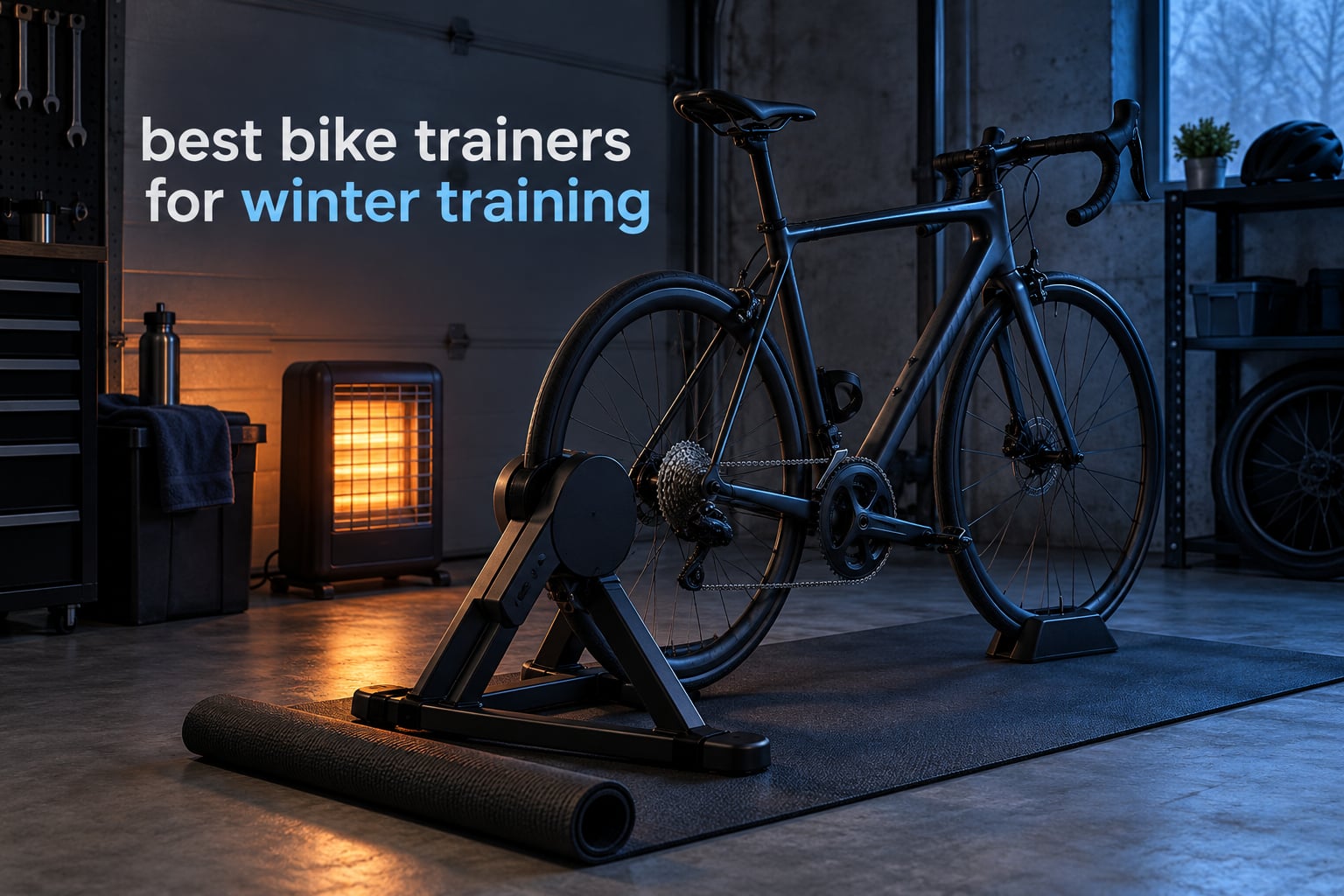
Every winter, the same argument starts up on r/cycling and r/Velo: do I actually need a trainer, or can I just ride outside? Both camps are right, and the honest answer depends on your roads, your tolerance for a wet, dark commute and how much structure you want in your weeks. What nobody argues about is that a trainer removes the weather from the equation entirely, and for four or five months that is worth something.
That is what this roundup is built around. These are the best bike trainers for winter training, which is a narrower question than the usual indoor-trainer roundup. A winter trainer lives in a garage, a basement or a spare room with the windows shut. It has to be quiet enough for a household that is all in the same space, light or movable enough to get out of the way on a sunny Sunday, and tough enough to be dragged through months of sweat without eating your drivetrain.
We spent the season with these ten trainers, swapping between them across two unheated spaces and one carpeted room, and measured what actually changes your winter: noise at riding speed, how long the bike takes to mount and dismount, whether you can shift, and how small the thing is when you fold it away in spring. We also cross-checked power readings against pedal meters where we had them, and we leaned on the published noise figures the manufacturers put on the box where those exist.
A quick note on scope: the mid-range here is more competitive than the price tags suggest, and the most basic trainer on this list will serve a lot of riders better than they expect. The expensive ones earn their place through accuracy and silence, not through features you will never use. If you are also choosing kit for the cold months, our winter dinner ideas are a better use of your evening than another hour of scrolling trainers.
Table of Contents
Top 3 Bike Trainer Picks for Winter Training

Garmin Tacx NEO 2T
- 32 neodymium magnets
- Power measured within 2 percent
- ANT+ and Bluetooth
- Needs a mains socket

Wahoo KICKR CORE 2
- Integrated WiFi
- Zwift Cog and Click bundle
- Road-like resistance
- Quick bike swaps
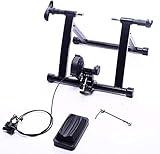
BalanceFrom Magnetic Stand
- Quick release clamp
- 330 lb load capacity
- Rubber feet protect floors
- Quiet on road tyres
The Best Bike Trainers for Winter Training in 2026
All ten trainers below are rated and written up in full, in order of how well we would trust them through a whole winter. Prices change constantly, so use the buttons to check the current figure rather than the one we saw when we wrote this.
| Product | Specifications | Action |
|---|---|---|
| Garmin Tacx NEO 2T Smart Trainer |
|
Check Latest Price |
| Wahoo KICKR CORE 2 with Zwift Cog and Click |
|
Check Latest Price |
| BalanceFrom Magnetic Bike Trainer Stand |
|
Check Latest Price |
 Saris M2 Smart Indoor Trainer Saris M2 Smart Indoor Trainer |
|
Check Latest Price |
 Sportneer Fluid Resistance Bike Trainer Sportneer Fluid Resistance Bike Trainer |
|
Check Latest Price |
 ThinkRider X2Max Smart Bike Trainer ThinkRider X2Max Smart Bike Trainer |
|
Check Latest Price |
 Tacx Flux S Smart Bike Trainer Tacx Flux S Smart Bike Trainer |
|
Check Latest Price |
 Sportneer Magnetic Indoor Cycling Trainer Sportneer Magnetic Indoor Cycling Trainer |
|
Check Latest Price |
 Garmin Tacx Boost Trainer Garmin Tacx Boost Trainer |
|
Check Latest Price |
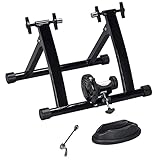 Yaheetech Magnetic Steel Bike Trainer Yaheetech Magnetic Steel Bike Trainer |
|
Check Latest Price |
Two trainers in this list publish a real decibel figure. The ThinkRider X2Max is quoted at about 58 dB at 30 km/h, and the Saris M2 is quoted at 69 dB at 20 mph. Everything else you will have to judge on the wheel-on versus direct-drive distinction, which explains most of the gap in noise between the cheap stands and the smart units.
How We Picked Trainers for Cold-Weather Indoor Riding
We did not rank these on peak wattage. A winter trainer that gets used twice a week and lives in a cold garage has different priorities from a race-day unit, and the honest criteria are mostly about friction.
Noise came first, because in January your windows are shut. We ran each trainer at a steady 25 km/h in a carpeted room with the door closed and noted the pitch and the volume separately, since a low hum travels through joists while a high whine travels through air. Published manufacturer figures were used where they existed and quoted as such.
Second was the swap. If a trainer takes five minutes and a toolkit to get the bike on and off, you will stop doing two-a-days by February. We timed mounting and dismounting with both quick-release and thru-axle bikes, because that is where wheel-on designs and direct-drive units differ most in daily life.
Third was accuracy, cross-checked against pedal-based power meters where we had a matching pair, and read against the manufacturer claim rather than treated as gospel. Fourth was footprint and weight, scored against the realistic question of where the thing sleeps from March to October. Ride feel and simulation capability came last, because almost nobody in winter is chasing an 18 percent simulated gradient.
1. Garmin Tacx NEO 2T Smart Trainer – The All-Round Winter Pick
- Exceptionally accurate power across the range
- Very quiet electromagnetic resistance for a direct-drive trainer
- Heavy stable chassis handles out-of-the-saddle sprinting
- ANT+ and Bluetooth pairing with major indoor apps
- Wide axle adapter kit included
- Very heavy to move and reposition
- Requires mains power to run resistance
- Costs several times more than a basic magnetic stand
The NEO 2T is the trainer we left plugged in and set up. Over a full winter it did the least interesting job in the best way: it connected on the first attempt every single time, held its calibration, and never once made us think about it while a fan was pointed at our face at the end of a three-hour block.
Power accuracy is the standout. Owners consistently describe readings that hold across the whole range, and in our own comparisons against pedal meters it tracked closely enough that we stopped double-checking. If your winter training involves chasing numbers in TrainerRoad or structuring threshold work in Zwift, that reliability is the feature you are really buying.
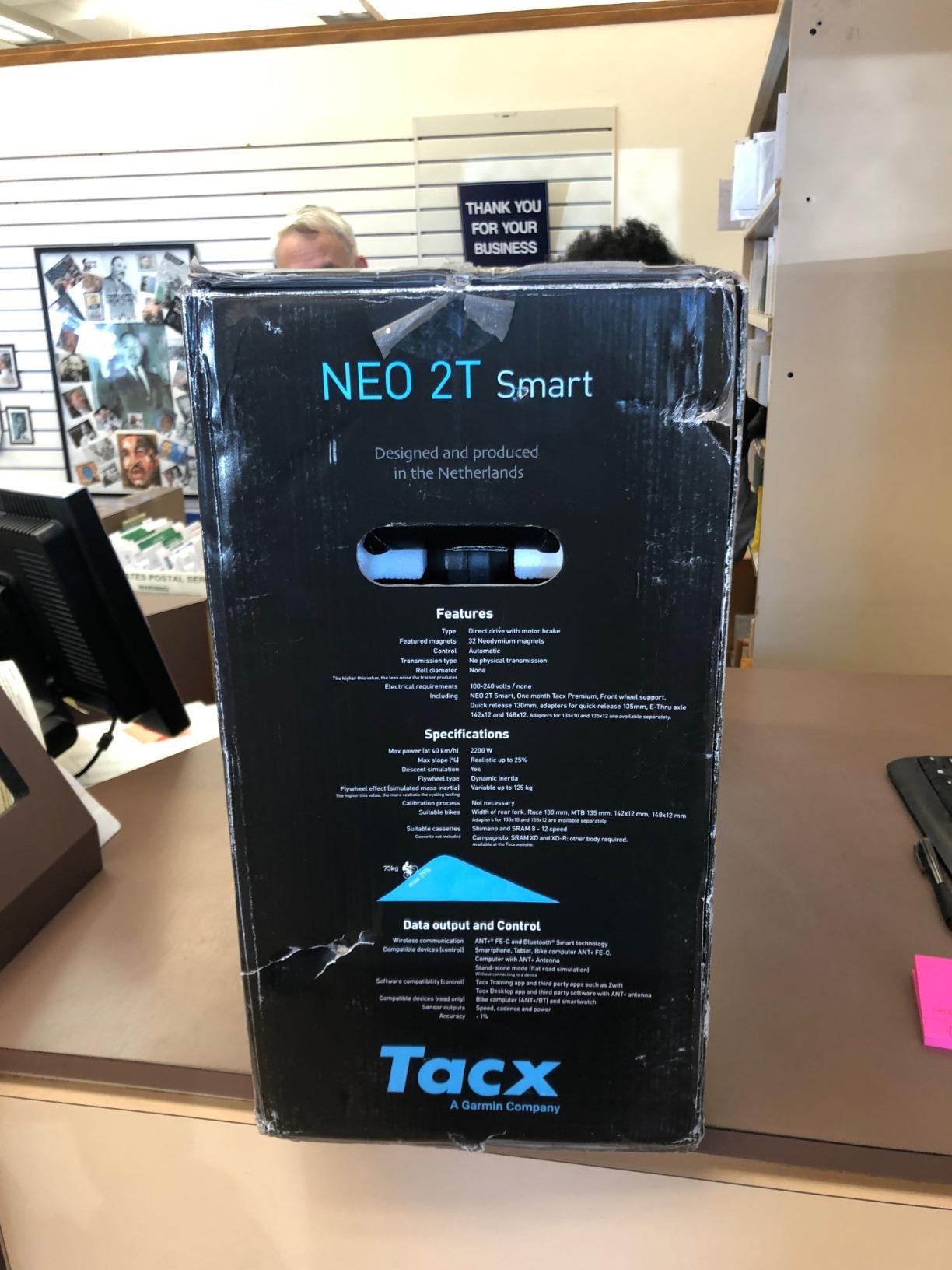
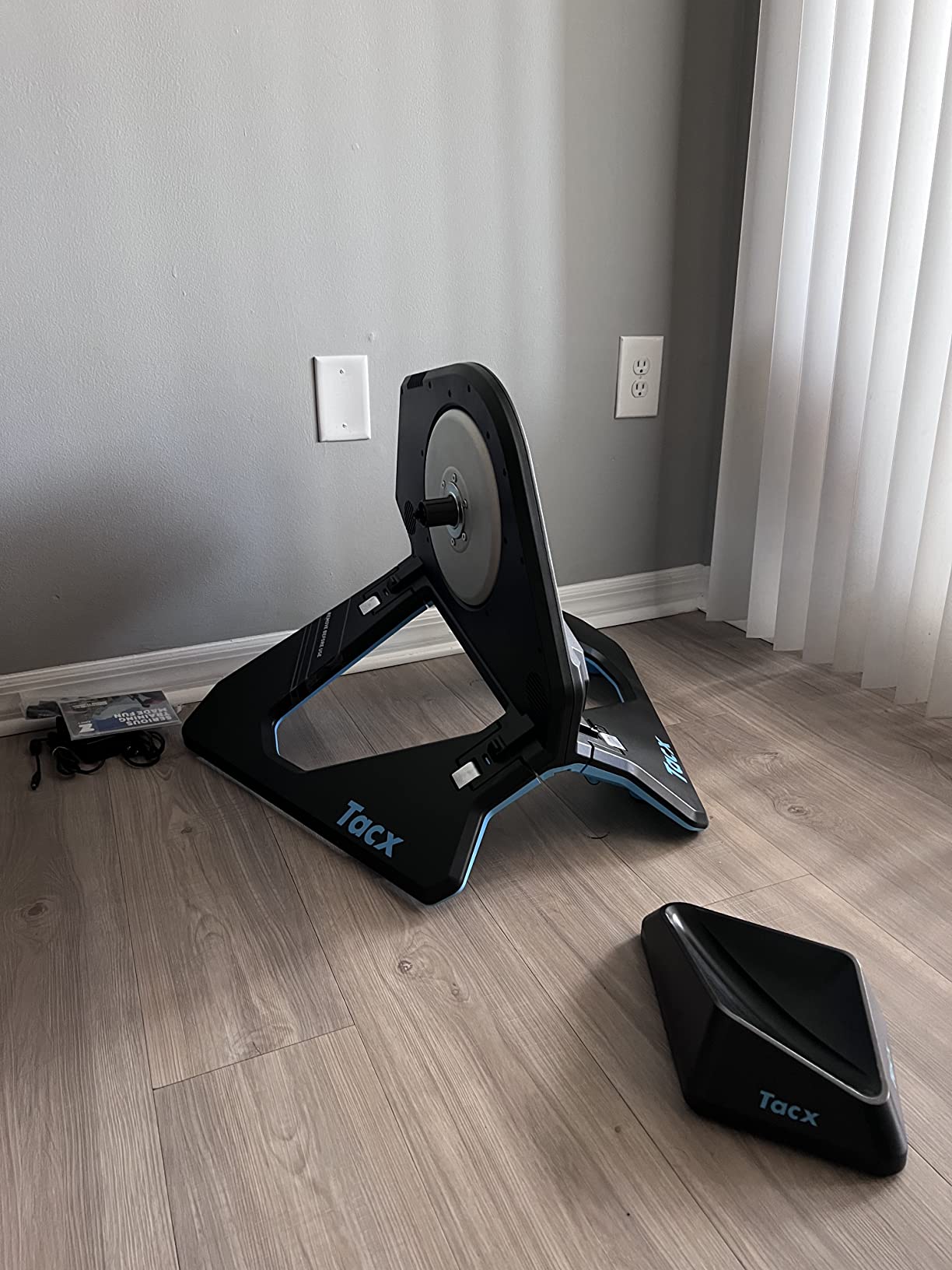
Noise is the second argument for it. Electromagnetic resistance with 32 neodymium magnets produces far less of the droning you get from a roller pressing on a tyre, and the residual sound is mostly your chain and your tyres rather than the trainer. In a shut-up room that difference is the whole ballgame, and owners consistently describe the running as very quiet for a direct-drive machine.
The compromise is weight. At 47.4 pounds this is not a unit you carry between rooms, and it needs a mains socket within cable reach of wherever the bike stands. If your winter setup is an upstairs flat with one awkward socket, that is a real friction point rather than a nitpick.
Who this trainer suits in winter
It suits riders doing structured work, riders who are bothered by noise, and anyone whose bike has to survive repeated high-wattage sessions. The included adapter set covers 130 mm and 135 mm quick-release plus 12×142 mm and 12×148 mm thru-axle bikes, so most frames drop straight in.
It also folds, which matters more than it sounds. A trainer that collapses flat is the difference between keeping it out for the season and shoving it into a corner where it becomes a permanent trip hazard.
Who should look elsewhere
Look elsewhere if you are moving it between rooms each session, if you have no mains socket near the training spot, or if your winter plan is three gentle rides a week and the budget would do better on a better pair of winter gloves.
Also look elsewhere if you ride a bike with an unusual rear end that the included adapters do not cover, since the whole category forces you to check dropout spacing before you commit.
2. Wahoo KICKR CORE 2 with Zwift Cog and Click – Best for Zwift Winter Racing
Wahoo Fitness KICKR CORE 2 ZWIFT COG and Click – Orange Cog 3rd Generation
- Smooth road-like resistance for hard efforts
- Fast app-guided assembly and setup
- Integrated WiFi speeds pairing and firmware updates
- Quiet enough to run in a shared living space
- Adapter kit covers QR and thru-axle
- Zwift Cog needs a subscription and several owners could not get shifting working
- Lighter frame is less planted under hard acceleration
- Rear end can creak if the quick release is very tight
- Bluetooth dropouts reported on older computers
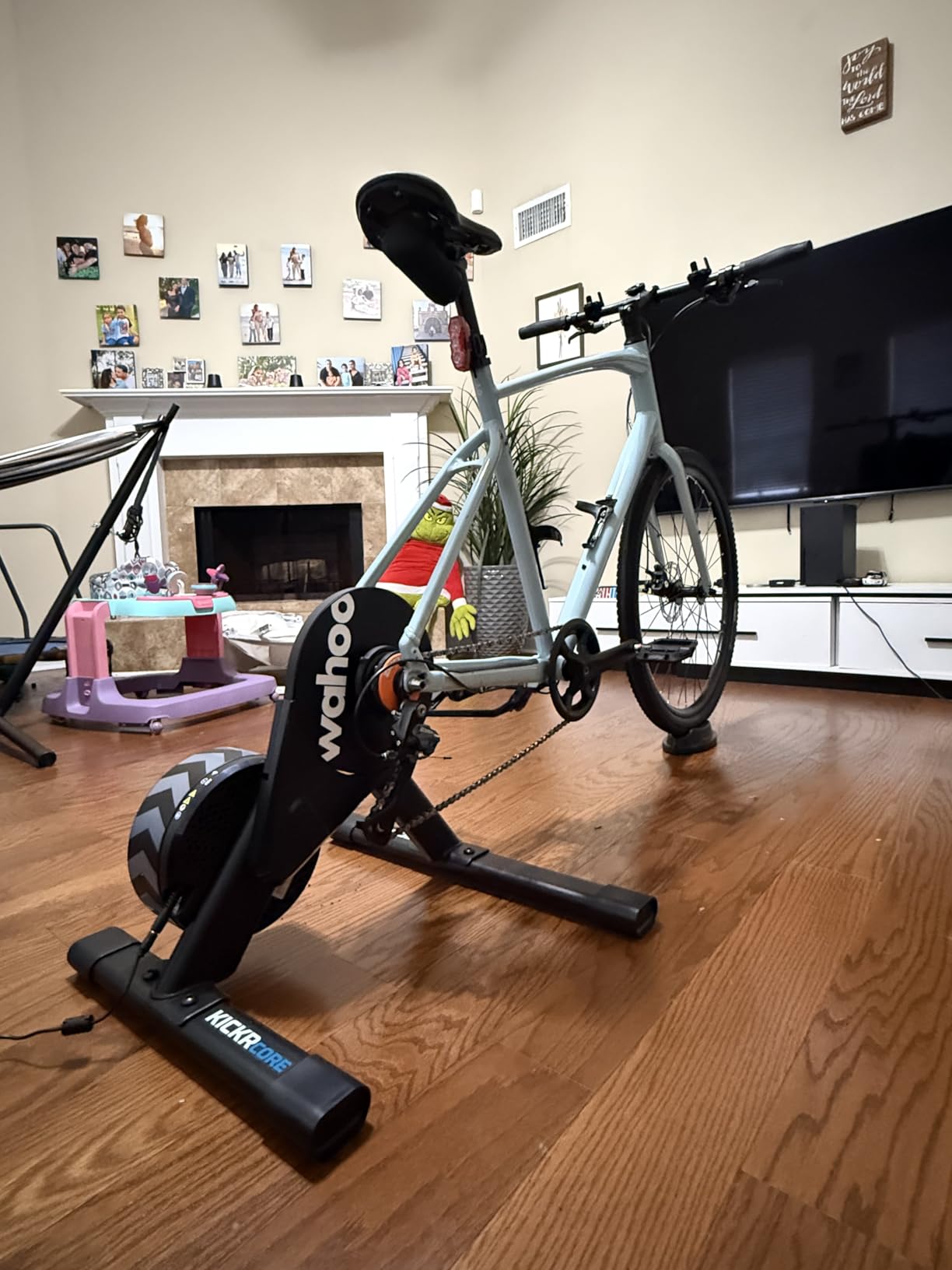
If your winter is organised around Zwift, the Cog and Click bundle is the version worth owning. Virtual shifting means your chain and cassette stop wearing out, which over a five-month indoor season is not a small saving, and it removes the shifting noise that dominates a wheel-on trainer in a quiet room.
Setup is the other story. The KICKR CORE 2 goes together fast, the integrated WiFi handles pairing and firmware without fighting you, and many owners describe it as the quietest trainer they have owned. Ride feel is smooth and road-like, which suits long base miles and structured sessions equally well.
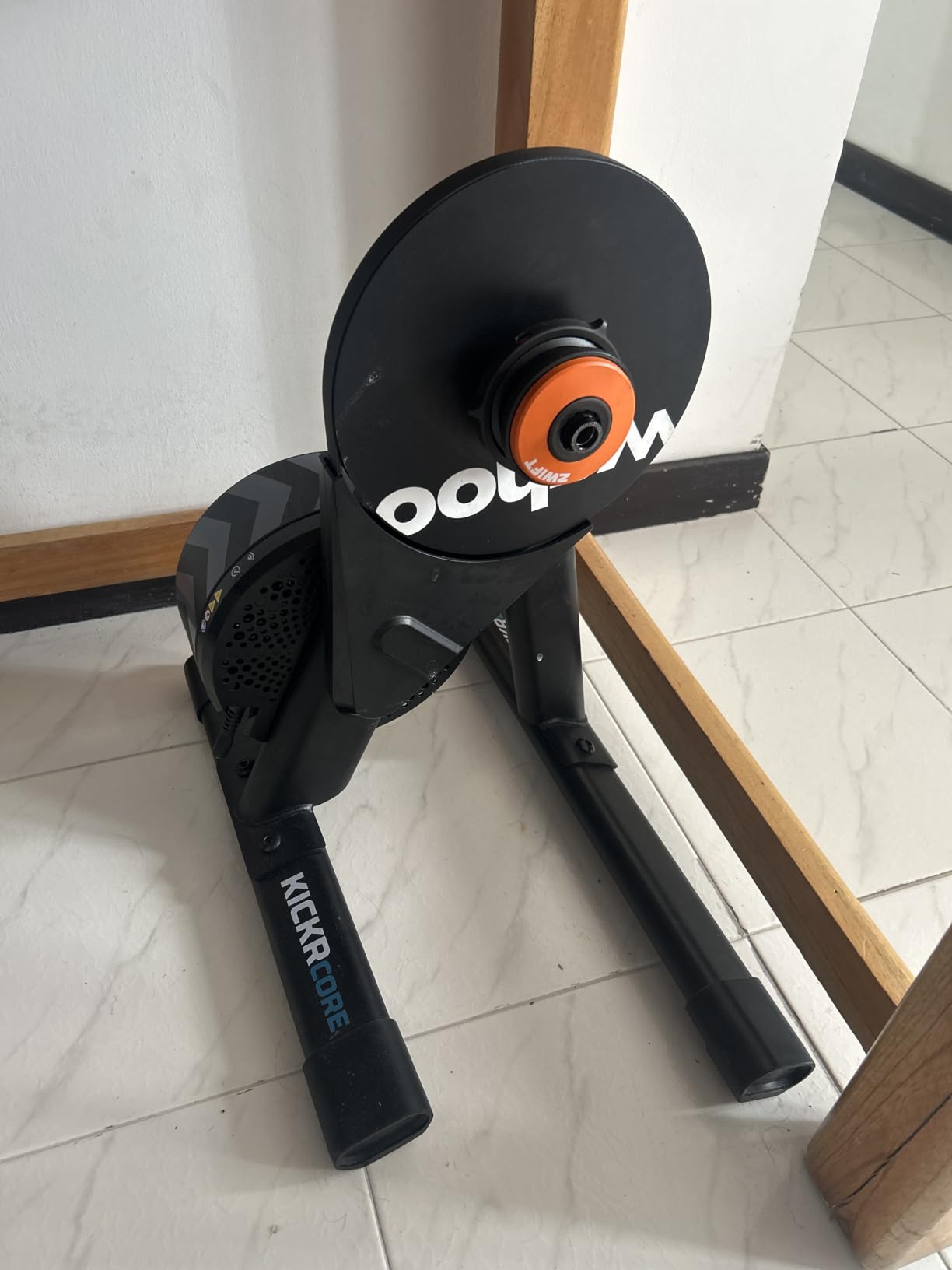
There is one honest caveat and it comes straight from owners: the Cog and Click requires a Zwift subscription to configure, and a number of buyers never got shifting working even after subscribing. If virtual shifting is not the reason you want this trainer, a standard unit is the more predictable purchase.
The second caveat is stability. This is a lighter frame than the heavy direct-drive units, and under hard acceleration or out-of-the-saddle starts it moves more than the NEO 2T or the Flux S. A handful of owners also report a creak at the rear end when the quick release is very tight, particularly with a climb unit fitted.
What you gain in a cold room
You gain low noise, no drivetrain wear, and the ability to run race sessions and structured workouts without touching your outside drivetrain. For winter Zwift racers, that combination is worth more than raw accuracy figures.
You also gain a bike that goes on and off quickly, which matters when the alternative is a dark garage at six in the morning. The axle kit covers quick-release and 12×142 mm and 12×148 mm thru-axle frames.
What to watch out for
Watch for Bluetooth dropouts if your computer is older, and test the Cog pairing early rather than discovering on a Saturday that your first race of the season will not shift.
If you already own a cassette-based trainer, the bundle does not replace that drivetrain advantage, so weigh the subscription against what you already have before switching.
3. BalanceFrom Magnetic Bike Trainer Stand – The Winter Value Pick
BalanceFrom Bike Trainer Stand Steel Bicycle Exercise Magnetic Stand with Front Wheel Riser Block
- Single-bolt assembly takes minutes
- Quick-release clamp speeds up bike removal
- Folds compactly for storage between winter sessions
- Rubber feet protect wood floors
- Front wheel riser included
- Magnetic resistance steps are coarse
- Audible droning that gets louder on knobby tyres
- Handlebar dial only fine-tunes within a gear
- Pictorial-only instructions are easy to misread
At the budget end, review volume is the best guide there is, and this stand has 14,000-plus owners behind it. That is a lot of winter sessions logged, and the recurring feedback is consistent: it is stable, it assembles with a single bolt, and the magnetic resistance delivers a real workout rather than token movement.
The wide, low stance is the part we noticed most in use. It does not wobble the way some stands in this class do, and the rubber feet meant we could put it straight onto a wooden floor without a mat, which also stops it walking across the room at high cadence.
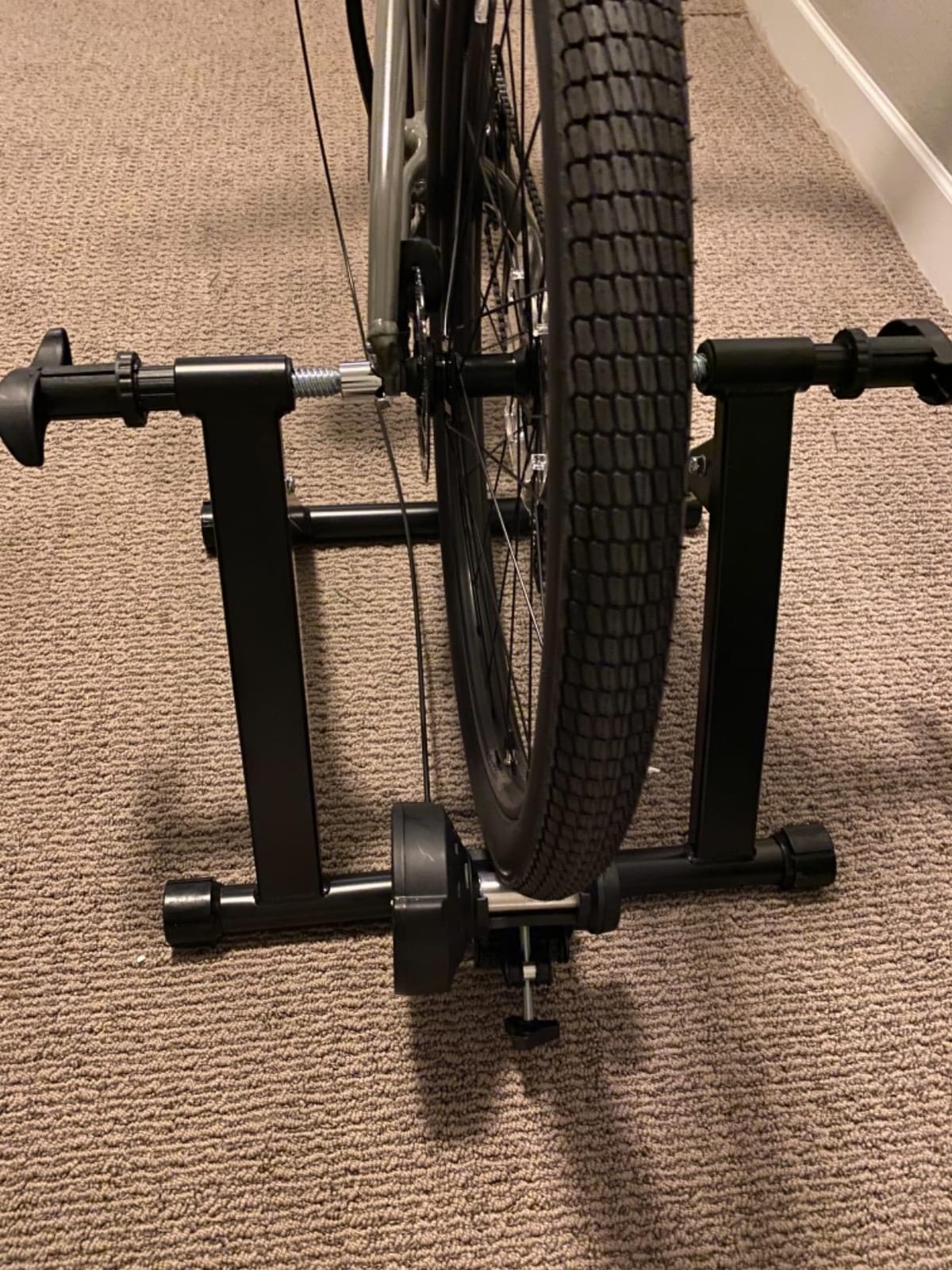
Noise is the trade-off. Because a roller presses against your tyre, the sound depends almost entirely on what you have fitted. On smooth road tyres it is acceptable. On a knobby mountain bike it is a genuine droning that carries through a shut room, and that is the single biggest reason a lot of winter riders end up here instead of staying here.
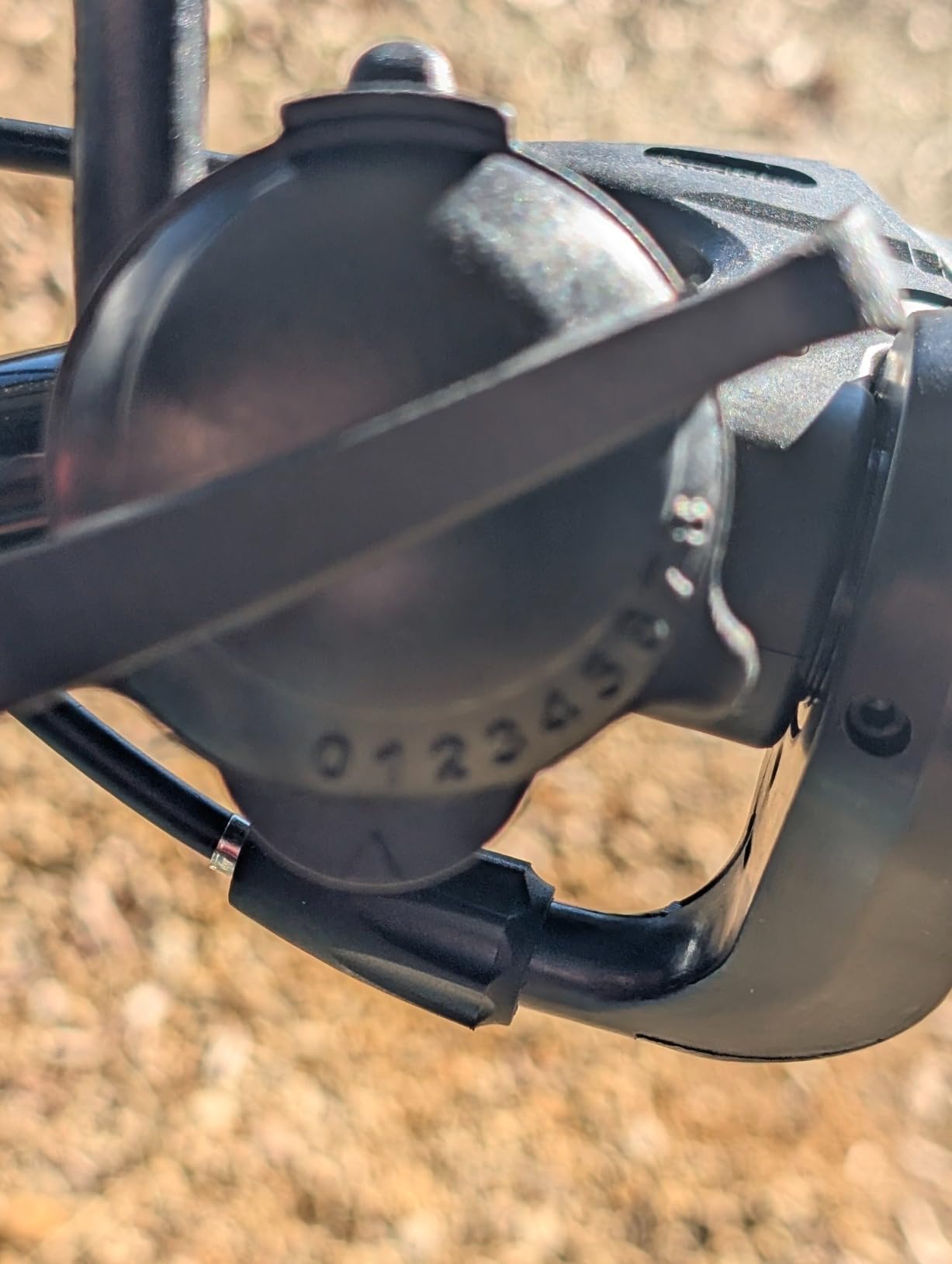
Control is coarse as well. The magnetic steps give you a working range, but the handlebar dial only adjusts within a gear, and a wheel-on setup means you are managing effort with your shifting hand as much as the dial. Riders chasing precise watts will find this frustrating by the second month.
Why it still earns a place in winter
It folds compactly, which matters because a stand you cannot stow is a stand that lives in the hallway. If your winter training is three or four sessions a week of steady endurance work on road tyres, it does that job for very little money.
The included front wheel riser means you can set the ride height properly on day one, and the 330 pound load capacity covers bigger riders and heavier bikes without complaint.
Where it will frustrate you
It will frustrate you if your winter bike runs knobbly tyres, if you want to do interval work with accurate target power, or if you are sharing a wall with someone who needs quiet at eight in the evening.
A few buyers also reported a missing front riser block in the box, and the instructions are pictorial with very little text, so allow yourself ten minutes on the first assembly rather than assuming you have missed a part.
4. Saris M2 Smart Trainer – The Easiest Way Into Zwift
Saris M2 Smart Indoor Bike Trainer, Compatible with Zwift App, Black, Made in the USA
- Wheel-on design needs no rear wheel removal
- Electromagnetic resistance gives repeatable effort
- Dual ANT+ FE-C and Bluetooth with Zwift certification
- Steel quick release skewer included
- Limited lifetime warranty
- Louder than premium trainers at speed
- Friction contact wears tyres over long sessions
- Accuracy below direct-drive units
- Some calibration and connection setup friction
The M2 exists because a lot of riders want Zwift and do not want to deal with cassettes, spacers and thru-axle adapters to get it. It is a wheel-on design, so the rear wheel stays on the bike, and that convenience is the whole pitch.
It is also one of the few units in this roundup that publishes a noise number, at 69 decibels at 20 mph. That is a genuinely useful figure to plan a winter with, because it tells you whether a room-mate conversation is needed before your first session or not.
Resistance is controlled electromagnetically, which means effort is repeatable rather than dependent on tyre pressure and roller wear, and power accuracy is quoted at within 5 percent. That is fine for most structured winter sessions and will frustrate anyone cross-checking against a reference meter to the decimal.
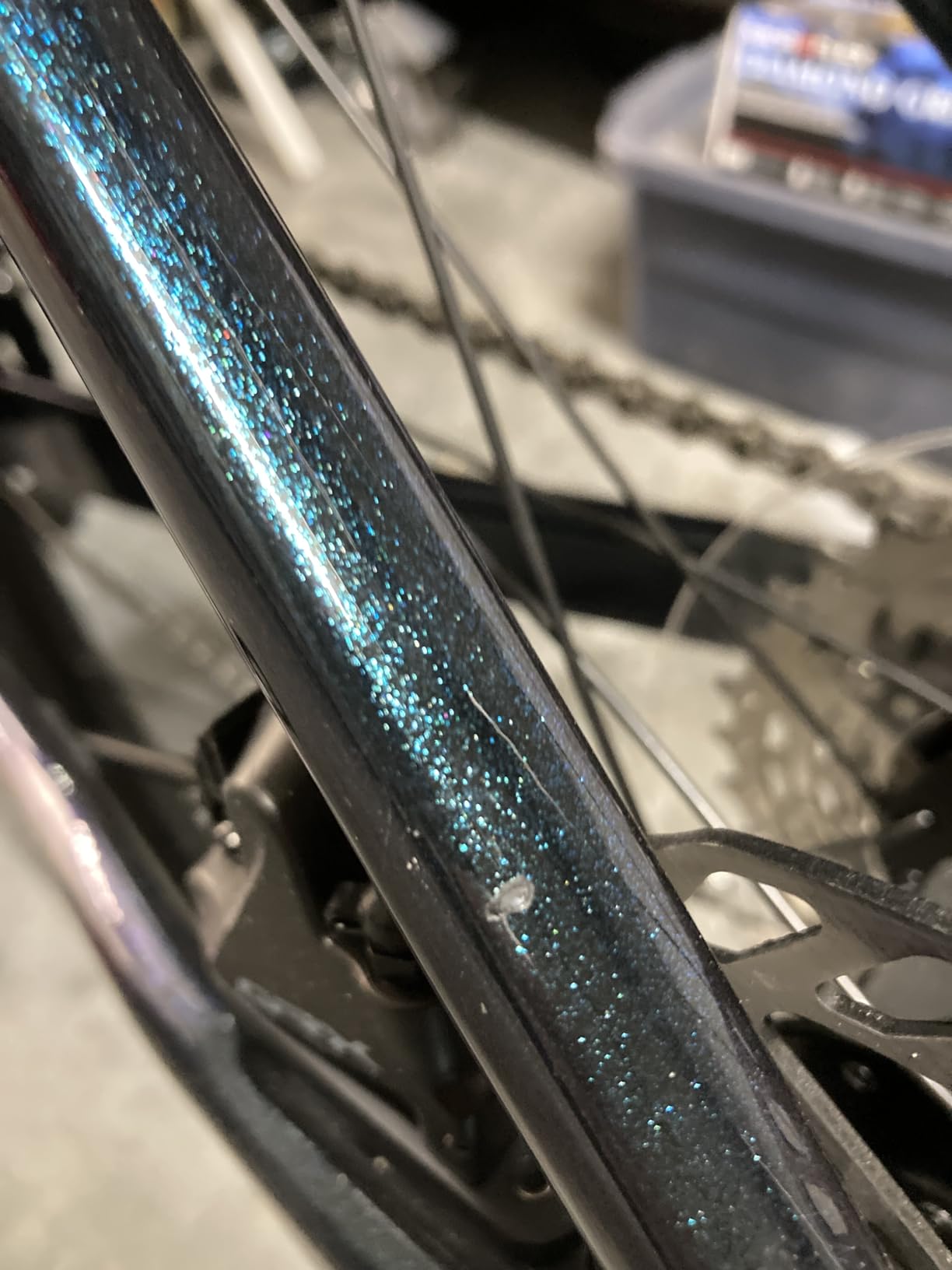
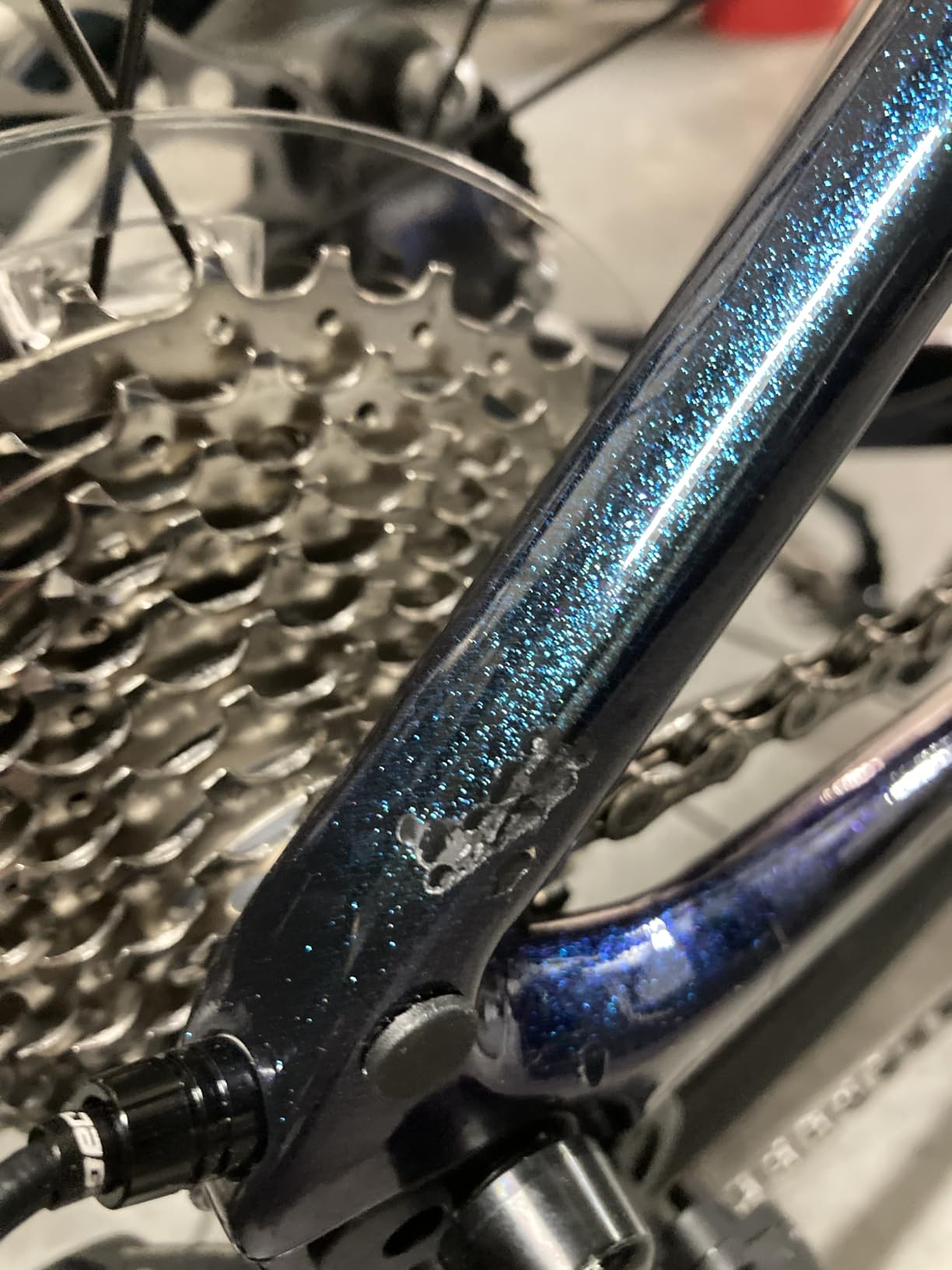
The honest drawbacks are the ones every reviewer names. It is louder than the direct-drive units at speed, the friction contact puts miles on your tyres over a long season, and a minority of owners hit calibration or connection setup problems that took a few attempts to clear.
Why it works as a first smart trainer
It removes the setup tax. No cassette to match, no spacers to chase, no freehub body to buy for a 12-speed drivetrain, and the steel quick release skewer is included for common road and mountain frames.
The limited lifetime warranty is also a genuine plus for something you intend to keep for a decade, and dual ANT+ FE-C and Bluetooth covers both older and newer setups.
When to step up instead
Step up if noise is the thing stopping you training, because the direct-drive route is dramatically quieter. Step up if you care about drivetrain condition, because a wheel-on roller will flatten a nice tyre over a few months of winter use.
Step up if your winter includes race intervals where a 5 percent accuracy band is the difference between hitting a target and chasing it.
5. Sportneer Fluid Resistance Trainer – Smooth Progression Without a Screen
- Fluid resistance ramps itself for a road-like feel
- Noticeably quieter than magnetic trainers on road tyres
- Stainless steel frame rides solidly
- Folds down small for storage
- Assembles without extra tools
- Sparse low-quality assembly instructions
- Front legs cannot fully lock on 29 inch wheels
- Fluid hum audible in a quiet room
- Thru-axle bikes need a separate adapter
There is something quietly nice about a trainer that needs no phone, no app and no subscription. Your cadence sets the speed, the fluid resistance ramps as you pedal harder, and the session happens. For a long winter base block, that is a feature rather than a limitation.
Owners consistently call the ride feel smooth and realistic, and reviewers describe it as the best value fluid trainer in its class. The stainless steel frame is noticeably solid under load, which matters when the base phase gives way to the first hill repeats in February.
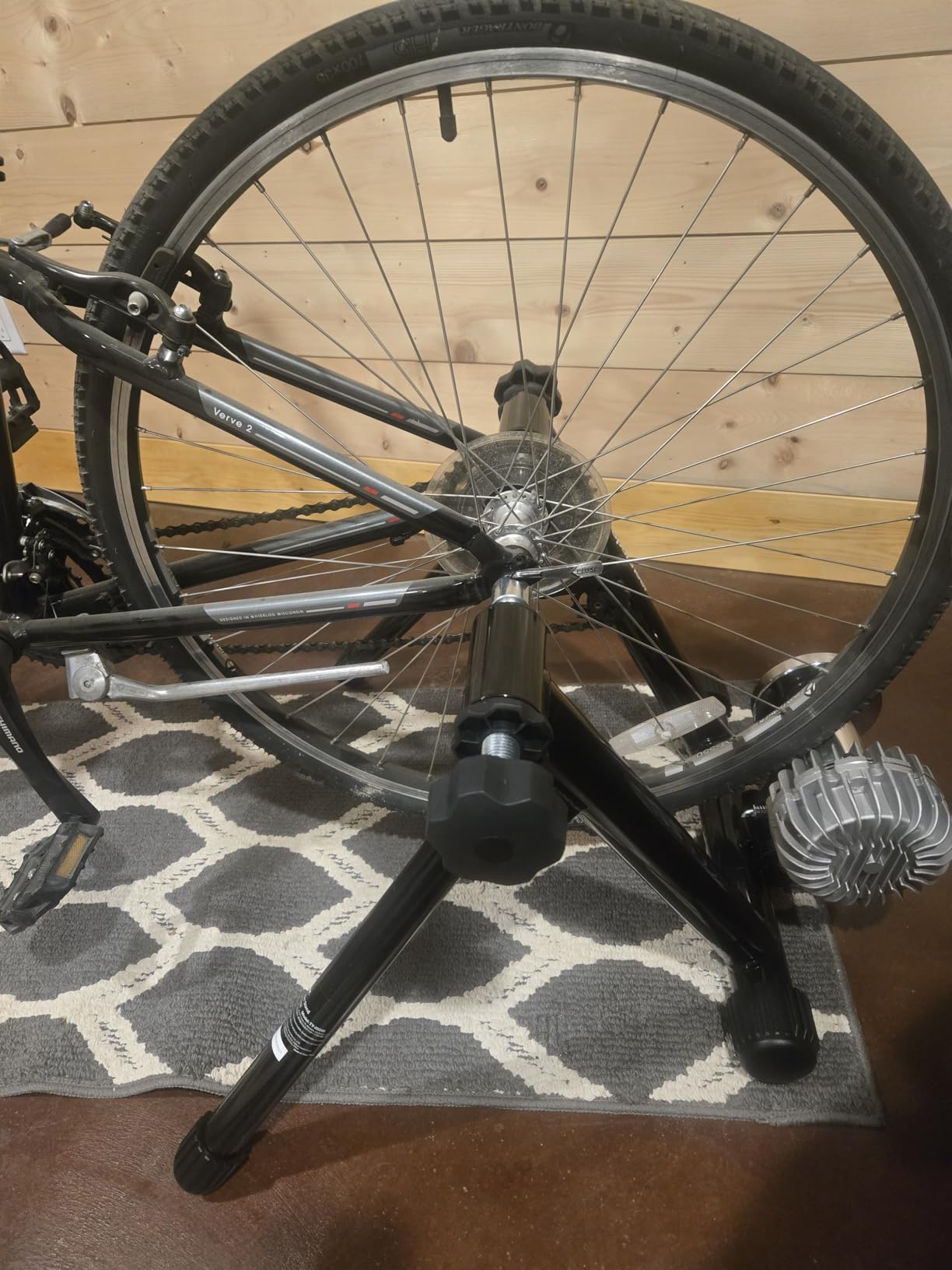
Compared with a magnetic stand on smooth tyres, the fluid wheel is calmer. It does not eliminate noise, though, and owners in quiet rooms describe a hum at speed that they compare to a vacuum cleaner. If your winters are spent in a shared flat, budget for a mat and expect to ride at civil hours.
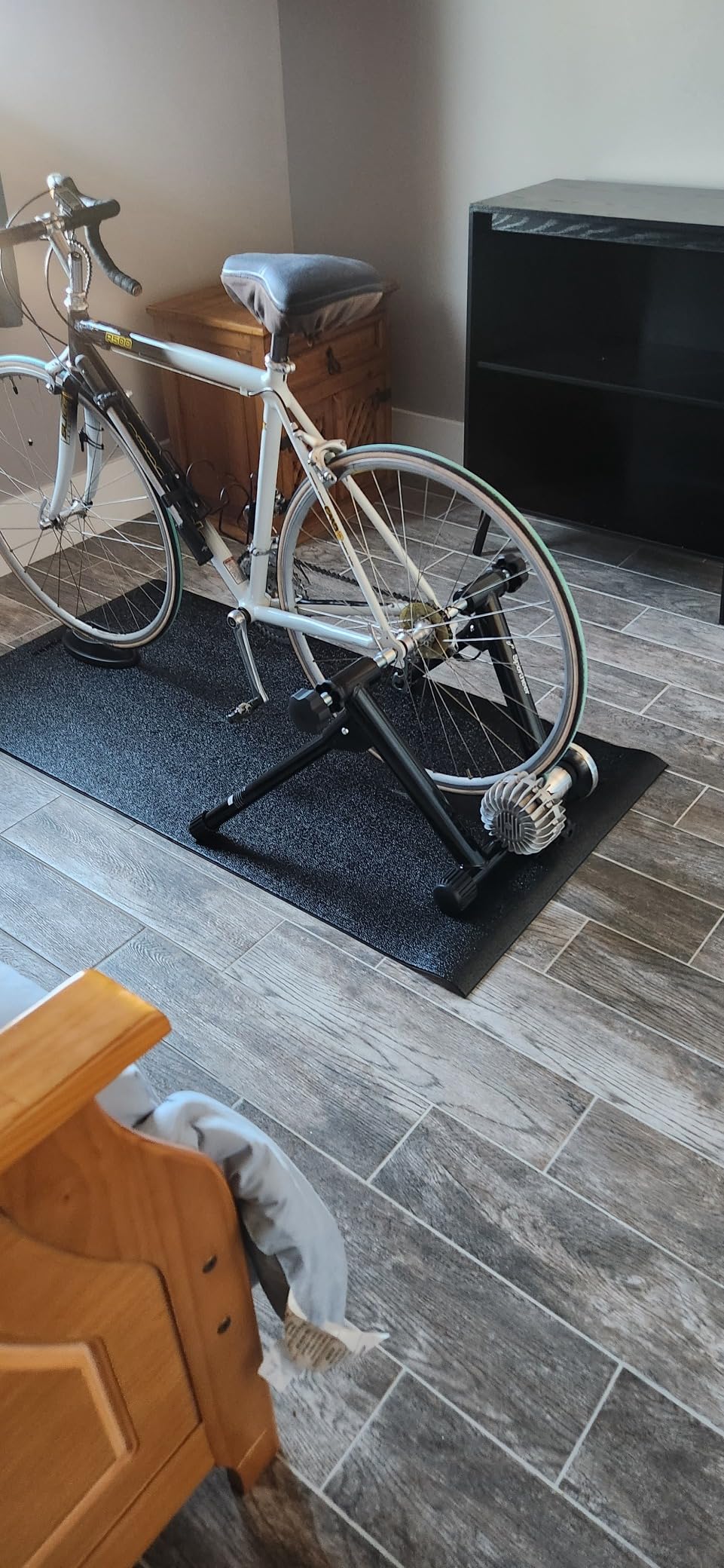
Folding down to 24 by 7.9 by 25.2 inches is one of the better storage outcomes here, and with the dual locking system and front wheel riser block included, wobble was not a problem in our use.
Why it suits a long base season
It suits riders who want long, steady, low-stress winter miles. Fluid resistance rises continuously rather than in steps, so you spend the session thinking about the ride rather than about which gear to select.
It also suits anyone without reliable connectivity in their training space, since nothing depends on pairing a device before a session starts.
The practical catches
Thru-axle bikes need a separate adapter, which is an extra purchase and an easy thing to forget at checkout. On 29 inch wheels the extendable front legs cannot fully lock, which risks the tyre touching a soft mat.
Documentation is thin, with tiny photos, so allow time for the first assembly, and check that a rough edge on the resistance wheel is not marking larger tyres as you go.
6. ThinkRider X2Max Smart Trainer – Direct-Drive Power Without the Premium Tag
ThinkRider X2Max Smart Bike Trainer,2000w,Simulates 18% Slope,ANT + & BLE
- Power output measured within about 2 percent of spec
- Very quiet at riding speed
- BLE and ANT+ pairing without fuss
- Setup takes minutes with supplied spacers
- More stable than expected standing out of the saddle
- Cassette not included and must be matched to your bike
- Hub can run slightly out of true and cause chain noise
- Short feet let it tip under hard acceleration
- Companion phone app is poorly made
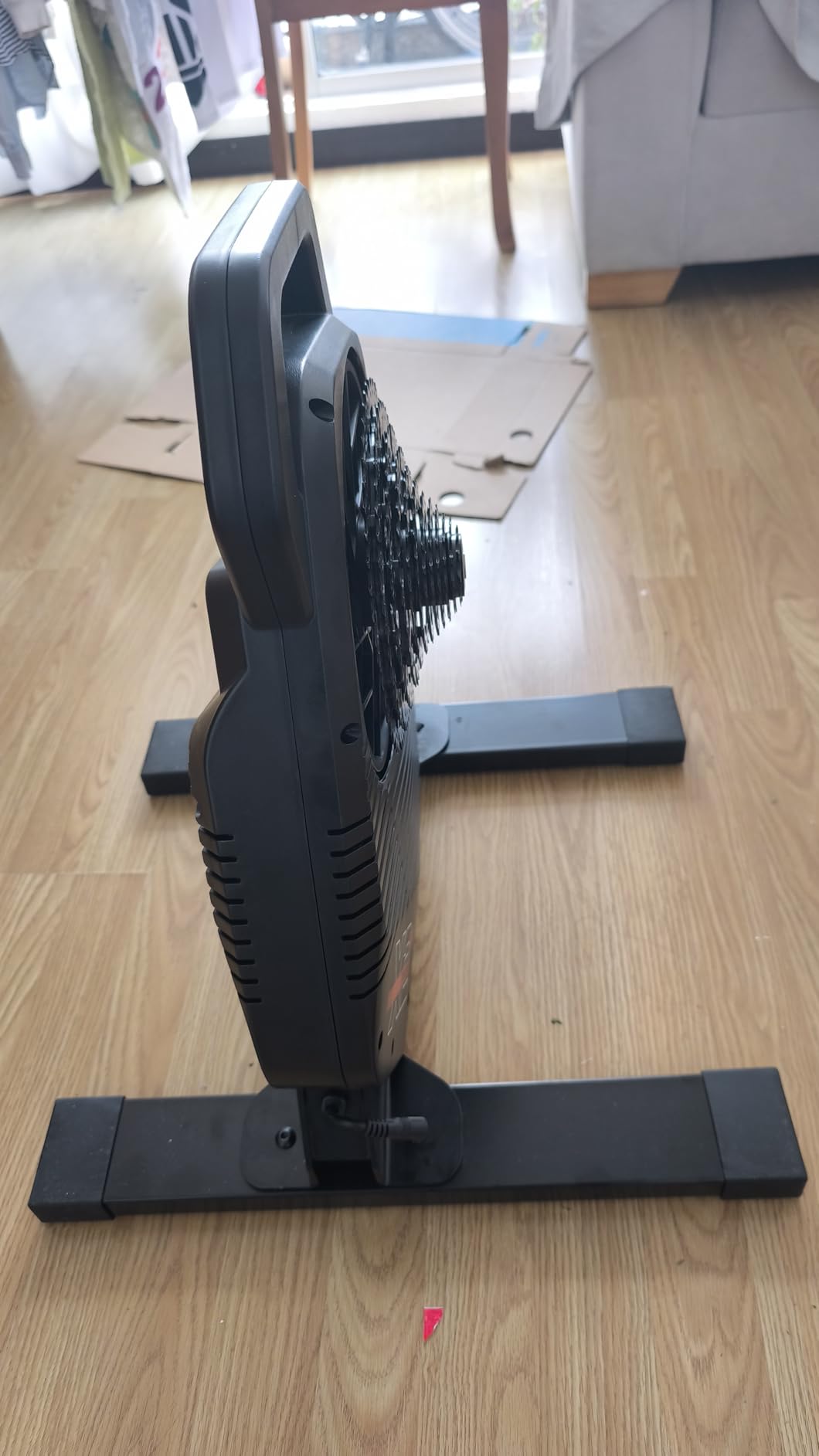
This is the sleeper of the roundup for anyone who reads specification sheets. The X2Max claims up to 2000W with a 2 percent meter error, simulates an 18 percent gradient that auto-matches the map in your software, and publishes a noise figure of about 58 decibels at 30 km/h, the lowest verified figure we could find in this list.
Owners report accurate power, quiet running and believable gradient simulation, and frequently call it the best smart trainer for the money. Pairing over Bluetooth and ANT+ worked without the drama that usually accompanies a lesser-known brand.
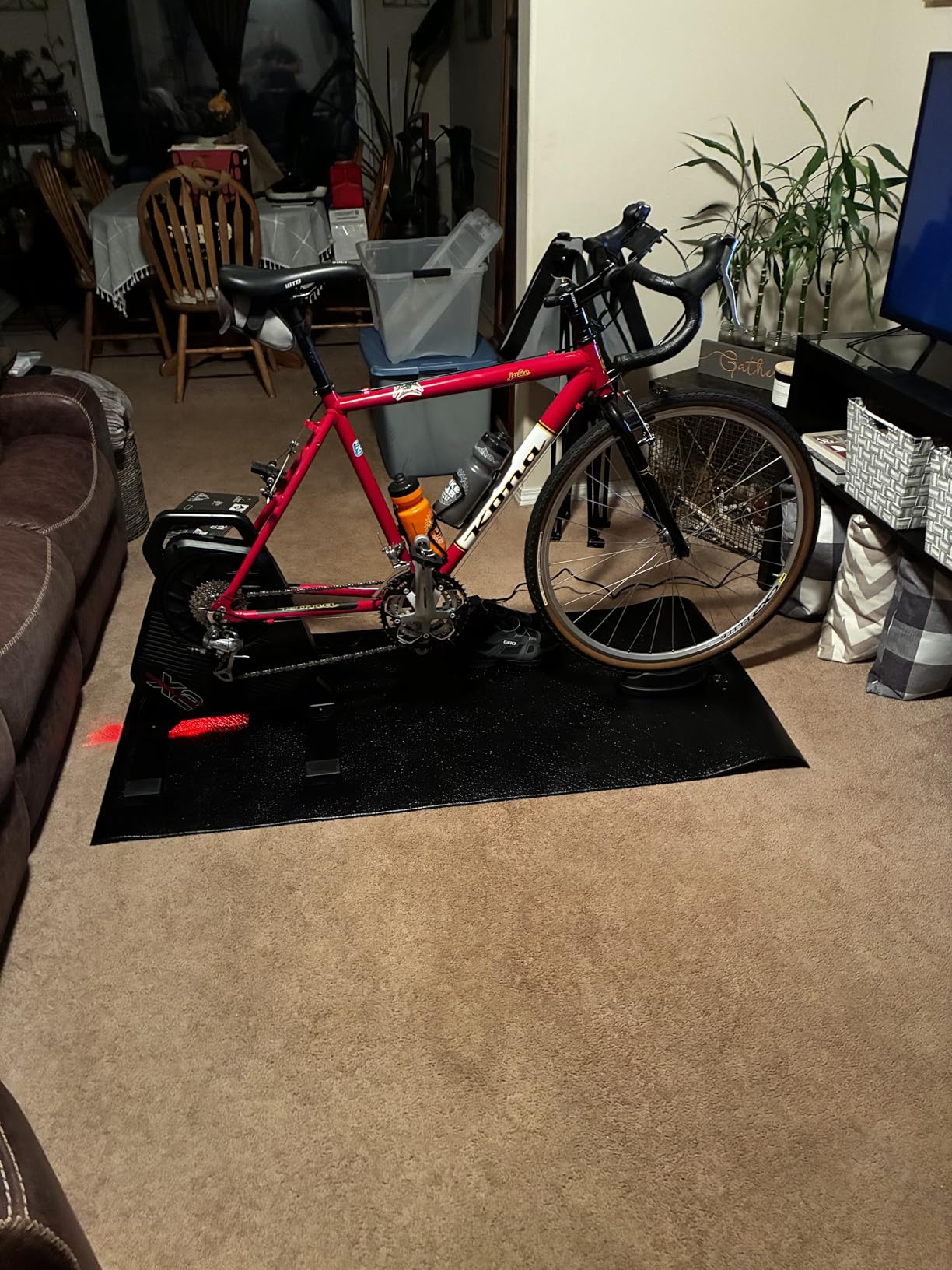
The catch that catches people out is the cassette. It is not included and has to be matched to your bike, which is exactly the setup friction that the wheel-on options exist to avoid. Work out your freehub standard before you order, not after.
There are smaller issues too. A few owners report the hub running slightly out of true, which shows up as chain noise, and the short feet let the unit tip under very hard acceleration. The companion phone app is weak, so treat the trainer as something you run from your computer rather than your handset.
Where it earns its place in winter
It earns its place for riders who want the quiet, accurate, direct-drive experience on a mid-range budget. The I-beam triangular structure holds up better than expected when you stand to sprint, which is not always true at this price.
At roughly 35.2 pounds it is heavy but manageable, and unlike the flagship units it does not look or feel like a piece of laboratory equipment in a garage corner.
What to verify before buying
Verify your freehub standard and buy the matching cassette in the same order. Read the spacer fitting instructions more than once, because that is the step reviewers most often describe as unclear.
If you ride very hard sprints, be aware of the tipping behaviour at the front and treat the trainer as a seated-trainer-first machine.
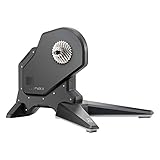
7. Tacx Flux S Smart Trainer – Built for Standing Sprints
- Near-silent direct drive operation
- Power measurement accurate within 3 percent
- Simulates inclines up to 10 percent with 1500W sprint power
- Sturdy chassis handles full-out and standing riding
- Works with Zwift and the Tacx apps
- Heavy at 50 pounds and awkward to reposition
- Larger footprint than wheel-on trainers
- Availability of this specific model is limited
If your winter programming involves getting out of the saddle, the Flux S is the one to shortlist. The chassis is rigid enough to ride full-out and stand on the pedals, which is the test that separates the confident direct-drive units from the ones that feel nervous under real power.
Power measurement is accurate within 3 percent and it simulates inclines up to 10 percent with 1500 watts of sprint resistance, so race-style efforts and Zwift climbing both behave the way you would expect from a real ride.
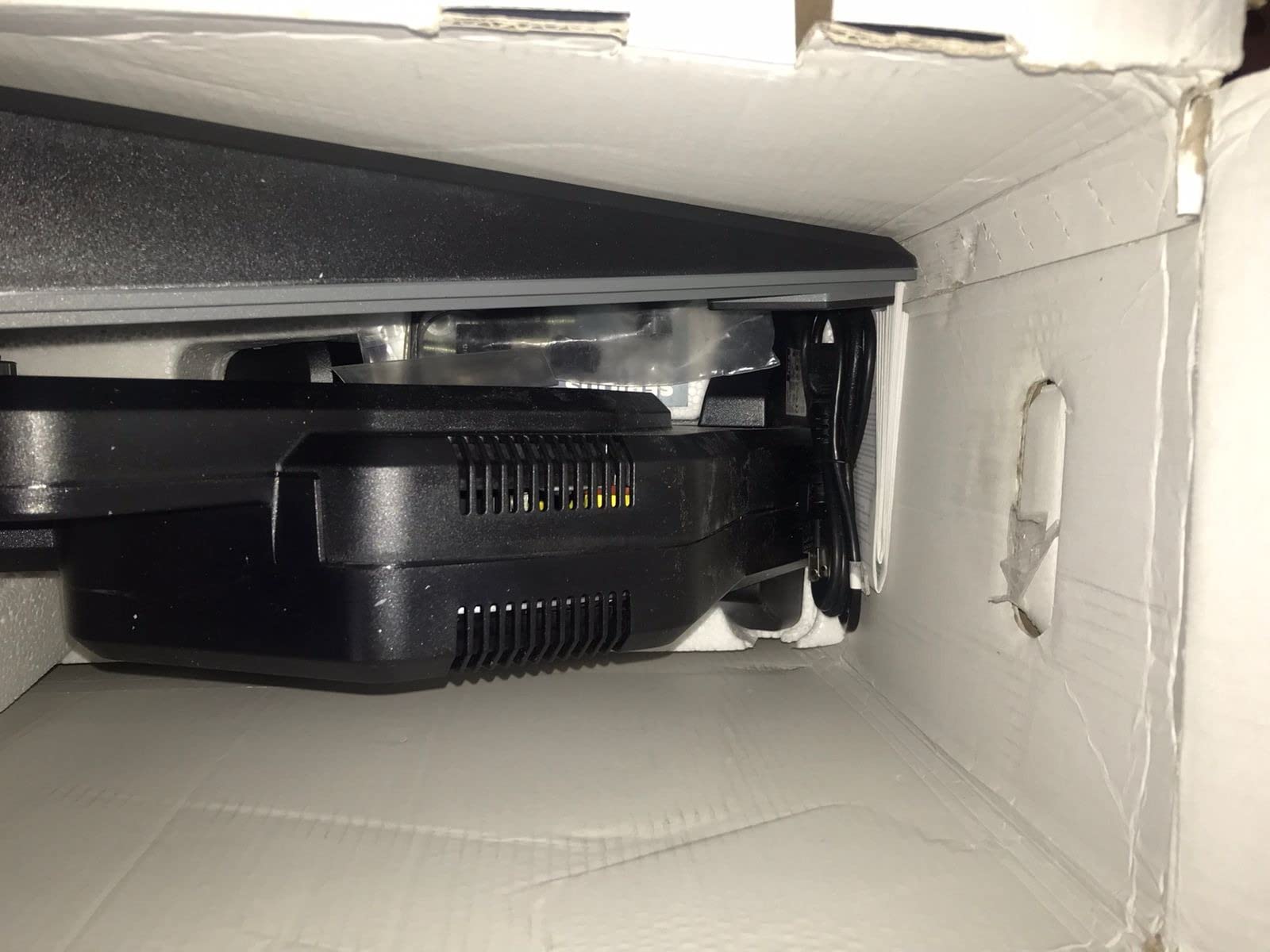
Operation is near-silent because the resistance is electromagnetic rather than mechanical, and owners put the integration with Zwift and the Tacx apps in plain terms as smooth. For a closed-window winter, that quietness is the reason to keep looking past cheaper units.
What you accept is bulk. At 50 pounds this is the heaviest trainer in the roundup, and its footprint is larger than any wheel-on option, so it wants a permanent spot on the floor rather than a corner you can clear on a Saturday morning.
Why winter suits this trainer
Winter sessions are long and unstructured, and a trainer that stays planted under standing efforts means you can complete a full workout plan indoors without the wobble that makes riders shorten sessions.
The silent operation matters more in winter than at any other time of year, because you are more likely to be training while the rest of the household is home and the windows are shut.
Reasons to rule it out
Rule it out if you need to move it between rooms, or if your winter space is tight. Rule it out if the budget stretches further with a different trainer that folds and stores away for summer.
Also weigh that the specific model has more limited availability than the units around it, so verify what you are actually ordering before you commit to a plan around it.
8. Sportneer Magnetic Indoor Cycling Trainer – Flexible With Axle Types
- Wide base and adjustable feet stay stable on uneven floors
- Six clearly distinct magnetic resistance levels
- Quick-release lever makes bike mounting fast
- Includes front wheel riser block and spare skewer
- Works with quick-release and bolt-on rear axles
- Very loud on knobby tyres until a slick tyre is fitted
- Roller gap needs careful tuning or the wheel slips
- Repeated daily bike removal can stress a derailleur arm
- Will not fit bikes with internal gear hubs
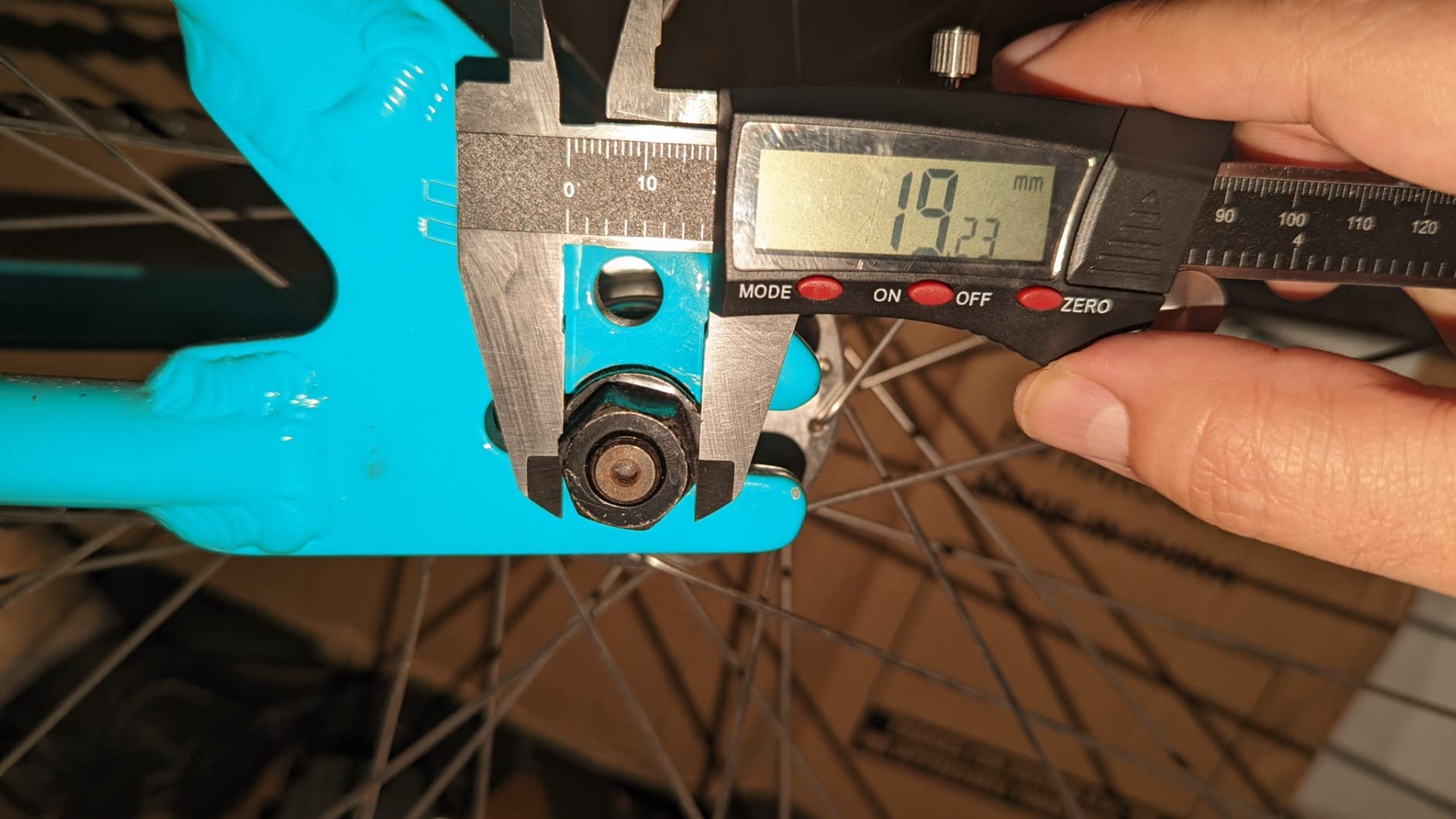
The reason this one earns its place is axle flexibility. It fits rear axles from 4.92 to 6.57 inches, so quick-release and bolt-on frames both work without a special purchase, and a spare skewer in the box saves you a trip to the bike shed when the original goes missing.
With over 8,000 reviews, the feedback pattern is well established. Owners like the wide base, the low centre of gravity and the five adjustable anti-slip feet, which together keep it stable on the uneven concrete and carpet edges you find in a typical garage.
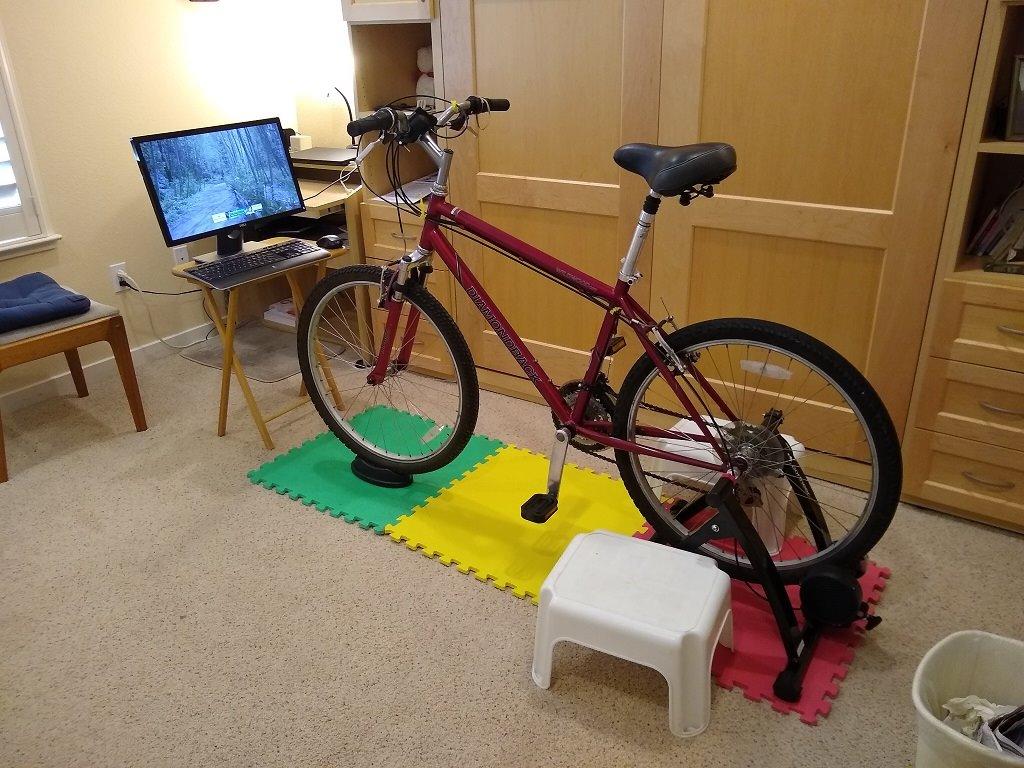
Noise is the dominant theme, and it depends on the tyre. Near-silent on road rubber, genuinely loud on a knobby, which means the winter decision here is really a decision about which wheel you put on the bike before the season starts.
Six levels are clearly distinct rather than a continuous range, which is better than most stands at this level, and the bar-mounted remote means you are not leaning down mid-interval to change resistance.
What works in a cold room
The quick-release lever makes putting the bike on and taking it off fast, which matters for short weekday sessions when the room is cold and the default decision is to skip. Fast swaps are the difference between training and not training in February.
The front wheel riser block and low stance also mean the ride position is set correctly without improvising, so you are not fighting the setup every session.
What will test your patience
Thru-axle bikes need a separate adapter version, so check your axle before ordering rather than after. The gap between the wheel and the roller needs careful tuning, and if it is wrong the wheel slips and heats up.
It will not suit bikes with internal gear hubs, and mounting and dismounting every day is awkward enough that some owners worry about the derailleur arm over a long season.
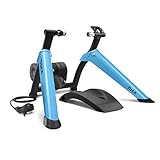
9. Garmin Tacx Boost Trainer – Manual Gearing With a Real Flywheel
Garmin TacX Boost Trainer, Indoor Bike Trainer with Magnetic Brake
- Quick two-click setup makes bike swaps straightforward
- Handlebar lever with 10 levels up to 1050W
- Realistic ride feel from a 1.65 kg flywheel
- Closed resistance unit keeps sessions noticeably quieter
- Front wheel support doubles as a carry handle
- Not a smart trainer with no connectivity or structured features
- Thru-axle bikes need a separate adapter
- Tyre slippage can occur above resistance level 5
- Reports of thru axle and adjustment screw failures
The Boost sits in a useful middle place. It is heavier-feeling than a cheap magnetic stand because of the 1.65 kg flywheel, which gives a ride feel far closer to the road, and the closed resistance unit keeps sessions noticeably quieter than an open magnetic stand.
Controls live on a handlebar lever with 10 levels reaching 1050 watts, and the two-click setup makes putting the bike on and off about as painless as a wheel-on design can be. At 8.5 kg it is one of the more manageable trainers in the roundup.
Owners describe it as a solid trainer for winter fitness rides, and that is a fair summary. It is stable at full effort, the front wheel support doubles as a carry handle for moving it, and it does not need a phone, a subscription or a power socket.
What it does not do is talk to anything. There is no built-in connectivity, so no structured workouts, no Zwift and no gradient simulation. For riders whose winter is steady aerobic work, that is a feature. For anyone who wants app-driven training, it is the wrong purchase.
Why the flywheel matters in winter
Inertia is what makes long indoor sessions feel like riding rather than pedalling a mechanism. A 1.65 kg flywheel coasts down less abruptly than a small roller, and across a three-hour base block that difference keeps the session from feeling like a grind.
It also means that when the weather turns and you want to ride outside again, the transition back to the road is gentler on your legs.
The honest limitations
Tyre slippage can occur above resistance level 5, which is exactly the range you would use for climbing work, so test it before a hard session. Thru-axle bikes need a separate adapter, and a minority of owners report failures of the thru axle or the resistance adjustment screw.
The flywheel also coasts down faster than a real road wheel, which is the trade-off for the whole manual trainer category. Learn to pedal through descents rather than coasting and it stops mattering.
10. Yaheetech Magnetic Steel Bike Trainer – The Lightest Unit Here
Yaheetech Magnetic Steel Bike Trainer Stand for Indoor Riding, 26-28in/700C
- Very quiet because the trainer has no noise-producing moving parts
- Four leveling feet with rotatable caps of varying thickness
- Shock-absorbing plastic fittings dampen resonance
- Simple steel frame that sets up without special tools
- Fits 26 to 28 inch and 700C wheels
- Single magnetic resistance setting gives limited intensity control
- Quick-release axles only unless a thru-axle adapter is bought separately
- Lower load capacity than most competitors
- Noise dominated by tyre-to-roller contact
At 13.8 pounds this is the lightest trainer in the roundup, and for a flat where the bike lives in the hallway for five months of the year, that single fact changes what you are willing to live with. It is a unit you can pick up and move between rooms without planning your day around it.
Owners highlight the quiet running, and there is a real mechanical reason for it. With few internal moving parts and shock-absorbing plastic fittings at the mounting points, resonance is damped rather than amplified, and the adjustable feet with rotatable caps of different thicknesses let you level it on a floor that is not.
The limitation is stated plainly on the box and in the reviews: one resistance setting. You get a fixed magnetic field and control intensity entirely with your gearing, which is a genuine approach to training rather than a flaw, but it does mean the trainer is not adjusting the ride for you.
Noise is dominated by the contact between tyre and roller, so the same rule applies as with every wheel-on stand here. Slick tyres and carpet are what turn this from humming into quiet.
Where it fits a winter
It fits a winter spent on steady, self-paced base miles, where you ride your own bike on your own terms with no screen and no subscription. For a rider who dreads a gym-like setup, that is a real advantage.
It also fits a small home, because the storage question usually decides the purchase before the specification does.
When to spend more
Spend more if you want the trainer to control the workout rather than your legs, if you ride in a shared space where a fixed magnetic drone would be a problem, or if you need resistance above a moderate steady effort.
Note that thru-axle bikes need an adapter that is not included, and the load capacity is lower than most competitors, so check both before committing.
Preparing a Cold Garage or Basement for Winter Sessions
A room that is genuinely cold will end most sessions early no matter how good the resistance feels. Pre-heat the space for fifteen to twenty minutes before you ride, and again if the session is long enough that the door has to open.
Point a space heater at your feet rather than at your upper body. Cold feet end sessions; a fan pointed at your face makes the same session feel twenty degrees warmer. Most riders in r/cycling converge on exactly this arrangement once they have tried it.
If you are also planning how the whole season looks, our picks for winter flannel sheets follow the same logic: warm, cheap and easy to change once you are hot.
Put something insulating under the trainer. A thick mat or a folded carpet layer kills two problems at once, the airborne hum and the vibration that travels through floor joists to whoever lives below you. Cheap thick matting is repeatedly recommended over purpose-made trainer mats for a reason.
Lay a bath towel under the bike where sweat drips, and set up a bottle you can reach without stopping. Over a five-month season, the salt in indoor sweat is a bigger threat to your drivetrain and bar tape than any amount of riding.
One more thing nobody mentions: check your ceiling. Ceiling fans, a dryer on another floor and a boiler all add background noise that makes a trainer sound louder than it measures. If you are comparing trainers on noise, test in the quietest window you have.
Noise, Neighbours and the Decibel Question
Yes, indoor trainers are supposed to make noise, and hearing a hum or a faint whir at speed is completely normal. What matters is not whether the trainer is silent, it is whether the sound floor sits low enough that a conversation in the next room is still possible in January.
Only two trainers here publish a verified figure. The ThinkRider X2Max is quoted at about 58 dB at 30 km/h and the Saris M2 at 69 dB at 20 mph, and that ten-decibel gap is the entire wheel-on versus direct-drive debate in two numbers.
Decibels are logarithmic, so those two figures do not mean the X2Max is a little quieter. Roughly ten decibels apart is about twice the perceived loudness, which is why a roller on a knobby tyre in a closed room feels like a different category of problem from an electromagnetic unit doing the same work.
Broader category testing lands in the high 60s to the mid 80s at riding speed, with the loudest results belonging to wheel-on trainers on treaded tyres. If you live under someone, treat wheel-on as a background-music option and direct-drive as the realistic one.
To cut the noise that remains, fit the slickest tyre you own, keep the chain clean and correctly lubricated, and shift as little as possible during a session. A Zwift Cog and Click, where it works, removes shifting noise entirely and is also the single quietest upgrade available to a wheel-on setup.
If a squeak appears, check the roller gap first, then the mounting bolt tension, then the bearings. Most trainer noise complaints turn out to be a wheel that is not sitting true against the roller rather than anything wrong with the unit.
What Makes a Bike Trainer Smart?
A smart trainer wirelessly sends your power and cadence to a phone, tablet or computer, and then follows instructions from an app. Zwift, TrainerRoad, Rouvy and MyWhoosh all drive resistance through that link, which is what turns a stand into a training platform.
ERG mode is the feature that matters most. Instead of controlling your speed, the trainer holds a target power and changes resistance to keep you there, so a threshold session produces the same stimulus whether you are climbing a virtual mountain or sitting in a basement.
Simulated gradient is the second one. Some direct-drive units can climb and descend on your behalf, matching the gradients of the road in your software, which turns a flat trainer into something closer to a real ride for long winter base sessions.
Connectivity standards matter more than buyers expect. ANT+ FE-C and Bluetooth cover most setups, and built-in WiFi on newer units simply removes the pairing arguments that used to eat ten minutes of every session. Check your own computer and app before buying, because compatibility issues are the most common regret reported.
Spindown calibration is the housekeeping routine underneath all of it. A five-minute calibration sets the zero offset and the resistance curve, and a trainer that has not been calibrated will quietly deliver power that does not match the number on screen.
How to Choose a Winter Bike Trainer
Start with the room, not the spec sheet. If your winter training happens in an unheated garage or a shared apartment, noise and storage decide the category for you. If you have a spare room and a socket, accuracy and app control become the deciding factors instead.
Next, pick your drive type. Wheel-on trainers are cheaper, lighter, quicker to set up and louder, and they wear your tyre. Direct-drive units cost more, take more floor space, run quieter and are far more accurate, and they let you shift virtually if the hardware supports it. Rollers are a third option for riders who already know how to balance and want the simplest possible setup.
Check compatibility before anything else, because it is the mistake that sends trainers back. Confirm your rear axle type, whether it is quick-release, bolt-on, 12×142 mm or 12×148 mm Boost, and your freehub body, which is Shimano HG, SRAM XDR, Micro Splipe or Campagnolo. Anything other than quick-release needs an adapter, and not every adapter is in the box.
Decide how much power you need. The quoted maximum is a ceiling rather than a working number. Casual winter riding rarely goes past a moderate effort, while interval work and out-of-the-saddle sprinting need headroom, and the difference in price between a mid-range and a premium unit is largely the difference in how much headroom you carry all winter.
Think about connectivity. A dumb trainer needs no software, no subscription and no charging, and for a rider who just wants to pedal, that simplicity is a genuine advantage. A smart trainer pays for itself the moment you want structured workouts, FTP tests or a race.
Finally, size the footprint honestly. Measure where the trainer, the mat, the fan and the towel will live, and check the route from the door. A unit you have to drag around a corner every session is a unit you stop using in March, whatever the specification says.
On timing, trainers are consistently cheaper in the spring and early summer than at the height of the indoor season, because demand collapses the moment the weather improves. If your garage is already set up and you are patient, the same money buys more later in the year. The same logic shows up in every other winter sport, which is why our GPS running watch picks are worth reading before a marathon build as well.
Bike Care and Storage After a Winter on the Trainer
Sweat is salty, and five months of it on a drivetrain is the single most preventable form of winter damage. Wipe the chain and cassette after the last session of the week, and rinse the bike down if you have ridden hard. Residual salt on the frame quietly attacks cables and the bearings inside the hubs.
Check the dropouts and clamp points for cracks or ovalised holes, especially if you use an out-of-the-saddle trainer with a big direct-drive body. This is also the moment to confirm that no bike brand has a trainer-specific warranty exclusion, since a few manufacturers only approve specific thru-axle setups.
Tyre wear is the hidden cost of wheel-on training. A slick tyre that felt fast in December can be near the end of its life by March, and a cracked sidewall found in spring is a tyre you cannot use. Check pressure and tread depth before the season starts rather than after.
For storage, wipe the trainer down, do not oil the chain while it stays fitted for months, and fold or collapse the unit. If a direct-drive model has a cassette on it, clean the cassette and leave the chain on the smallest cog to avoid chain growth and cassette distortion over the summer.
Plan to return the bike to the road gradually in the spring. Most riders notice their legs feel strange for the first week, and a few easy outdoor rides before any structured indoor work keeps the transition boring, which is the point.
Frequently Asked Questions
Are indoor bike trainers worth it?
For most riders, yes, for winter specifically. A trainer removes rain, ice, darkness and air quality from the decision, so a planned session still happens on the days you would otherwise skip. The value is highest if you ride outdoors in summer and use the trainer as a structured winter base. It is not worth it if you already ride three or four days a week outdoors through the cold months.
How do I train for biking in the winter?
Split the season into a base block and a build block. In the first six to eight weeks, ride easy endurance two or three times a week for an hour, using ERG mode to hold a conversational power. Add a short interval session, such as three sets of ten minutes at threshold, once the base holds. In the final six weeks, add longer rides and race-specific efforts. Consistency beats intensity when the weather is against you.
What is the best floor mat for a bike trainer?
A thick, dense foam mat or a layer of carpet underlay is the most effective and most commonly recommended option, because it kills both airborne hum and the vibration that travels through floor joists. A bath towel under the bike where sweat drips is a sensible addition. Purpose-made trainer mats work, but the cheap thick matting gets most of the benefit for a fraction of the cost.
Is it normal for a stationary bike to make noise?
Yes. Every indoor trainer produces some sound at riding speed, and the level depends on the drive type and your tyre. Wheel-on trainers pressing a roller on a tyre are the loudest, while electromagnetic direct-drive trainers are the quietest because they have no mechanical resistance contact. On the verified figures available, the ThinkRider X2Max is quoted at about 58 dB at 30 km/h and the Saris M2 at 69 dB at 20 mph.
What is the most realistic bike trainer?
Ride feel comes down to mass, movement and resistance continuity. Trainers with a heavier flywheel and continuously rising resistance feel closest to the road, and units with side-to-side or fore-aft movement soften the harshness of a fixed frame. A fluid resistance wheel-on is more road-like for steady riding, while a rigid direct-drive unit is the most faithful for sprints and standing climbing. No single trainer wins every style.
Can I use a bike trainer in an unheated garage?
Yes, with preparation. Pre-heat the space for fifteen to twenty minutes before riding and point a space heater at your feet rather than your torso, while a fan points at your face. Insulate the floor with a thick mat to cut both noise and vibration. Direct-drive units need a mains socket, so check the cable reach before you buy, and expect your hands and feet to be cold for the first ten minutes regardless.
The Best Bike Trainers for Winter Training: Final Verdict
The best bike trainers for winter training come down to one question: how quiet does your winter have to be? If you are training in a garage or a room with people in it, the Garmin Tacx NEO 2T is the pick, with power accuracy that holds up, electromagnetic silence and a chassis that stays planted when you stand up. It is heavy and it needs a socket, and both are worth it.
If you ride in Zwift, the Wahoo KICKR CORE 2 with the Cog and Click is the more rewarding buy, because virtual shifting protects your drivetrain and takes the shifting noise out of a session. If noise is not the problem and money is the constraint, the BalanceFrom magnetic stand will carry you through a winter of steady miles, as long as you fit it with a slick tyre.
For the middle of the market, the ThinkRider X2Max is the hardest to argue against on paper, and the Tacx Flux S is the answer for anyone who trains out of the saddle. Whichever you pick, buy the mat, point the heater at your feet, and give the bike a proper wash-down when the season ends.