
Most cellular trail cameras fail on remote land for one reason, and it is not image quality. A camera with 40 megapixels and a sub-half-second trigger still does nothing for you if it cannot hold a signal at the exact tree you strapped it to. The honest answer to “what cellular trail camera works where there is no cell service” is this: hardware cannot create coverage, so you test signal at the mount point before you buy, and you only deploy where the bars exist.
That single rule shaped every pick in this roundup of the best cellular trail cameras for remote properties. We leaned on what owners report in the field rather than what the spec sheets claim, because a cabin where your phone shows one bar is a completely different buying problem from a pasture with full LTE. The ten cameras below all send photos to your phone over 4G LTE with no WiFi and no power run to the site, and each one has a different answer to the two questions that actually matter on remote ground: will it hold a signal, and can it run until your next visit.
We also framed this list around property work rather than hunting, since that is where the query intent sits. That means watching a gate, an ATV, a tractor, or a pile of equipment through a long absence, not just following a buck across a treeline. For cameras aimed at the yard and driveway side of a property, our guides to the best security cameras for driveways and the best security cameras without WiFi cover the fixed-installation cases. Everything below is designed to be strapped to a tree, powered by a battery, and left alone for months.
Updated for 2026, all ten picks below were assessed on signal handling, power autonomy, detection range, night flash behavior, app quality, and the real running cost of the data plan. Prices change constantly, so use the buttons to check current listings rather than the numbers we would have quoted yesterday.
Table of Contents
Top 3 Cellular Trail Cameras for Remote Land
The three below are the picks we would actually strap to a tree on land we cannot reach easily. The Moultrie Edge 2 wins overall because it balances 36MP stills, 100-foot detection, and nationwide multi-carrier coverage in a two-pack. The TACTACAM Reveal X 3.0 is the pick for a site you will not visit for a season, and the VOOPEAK 360 is the one that watches the most ground from a single mount point.

Moultrie Edge 2
- Nationwide 4G LTE Auto Connect
- 36MP photos and 1080p video
- 100-foot detection range
- 8GB internal plus unlimited cloud

TACTACAM Reveal X 3.0
- Auto-Connect AT&T or Verizon
- Up to 6+ months per charge
- Sub-0.5s trigger with 3-shot burst
- 32GB onboard storage with GPS

VOOPEAK 360 Live Cam
- 355-degree pan and 100-degree tilt
- 4W solar with 7800mAh battery
- 0.1-second PIR response
- Two camera pack
All 10 Cellular Trail Cameras Compared in 2026
This table puts the whole lineup side by side so you can match a camera to the problem you are actually solving. The Signal column is the one to read first if your land is remote.
| Product | Specifications | Action |
|---|---|---|
| Moultrie Edge 2 |
|
Check Latest Price |
| TACTACAM Reveal X 3.0 |
|
Check Latest Price |
| VOOPEAK 360 Live Streaming |
|
Check Latest Price |
 VOOPEAK Auto-Tracking 2 Pack VOOPEAK Auto-Tracking 2 Pack |
|
Check Latest Price |
 SPYPOINT Flex-M Starter Pack SPYPOINT Flex-M Starter Pack |
|
Check Latest Price |
 MagicEagle Cellular Trail Camera MagicEagle Cellular Trail Camera |
|
Check Latest Price |
 TACTACAM Reveal Ultra TACTACAM Reveal Ultra |
|
Check Latest Price |
 VOOPEAK Dual Lens 2K VOOPEAK Dual Lens 2K |
|
Check Latest Price |
 Oculview 4G LTE 2 Pack Oculview 4G LTE 2 Pack |
|
Check Latest Price |
 Moultrie Edge 2 Pro Moultrie Edge 2 Pro |
|
Check Latest Price |
1. Moultrie Edge 2 Is the Best Overall Cellular Trail Camera for Remote Land
- Nationwide 4G LTE Auto Connect across major US networks
- 36MP photos and 1080p video with audio
- 100-foot detection range with low-glow infrared flash
- 8GB internal memory plus unlimited cloud storage
- Power Mag and solar pack accessories available
- Data plan subscription required
- Modest 50-degree viewing angle
- 1080p video trails newer 2.5K models
I keep coming back to the Edge 2 because it is the one camera in this list that solves the remote-land problem without asking you to compromise on the thing that matters most, which is connection. The Auto Connect system scans major US networks and locks onto the strongest one available, so there is no SIM to swap, no carrier to pick, and no data plan to source from a third party. For someone mounting a camera a two-hour drive from the nearest town, that removes a real layer of setup risk.
The imaging is genuinely good for a fixed-lens trail camera. Thirty-six megapixel stills and 1080p video with audio come off an improved low-light sensor, and the detection range reaches 100 feet with a discreet low-glow infrared flash. Owners report easy app activation and dependable day and night results, and the recurring recommendation in reviews is to add a Power Mag or solar pack if the site is genuinely remote.
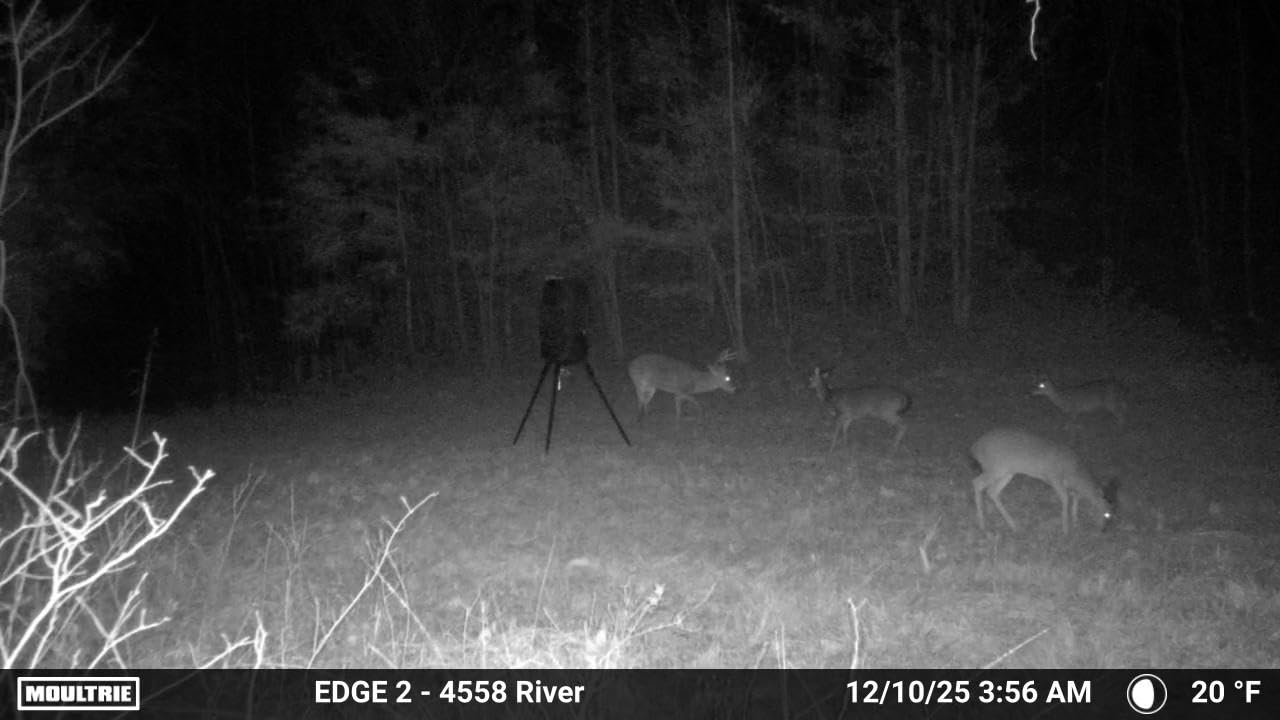
Storage is where this camera quietly simplifies your life. Eight gigabytes of internal memory sits alongside unlimited cloud storage in the Moultrie Mobile app, so there is no SD card to buy, format, or lose to weather. Scouting tools go further than most: Game Plan pattern analysis, activity charting, interactive maps, and AI-driven insights give you a usable picture of what moved through the property while you were away.
A few things to weigh before you commit. The 50-degree viewing angle is narrow compared with a pan-and-tilt unit, so frame this camera on a specific driveway or approach rather than trying to cover open country. A low-glow flash is not the same as true no-glow, which some wary animals notice. And while the data plan is not optional, Moultrie plans start without a contract, so there is no long commitment if you end up moving the camera.
How it holds up on a property you rarely visit
Because it is sold as a two-camera pack with battery trays and straps included, the Edge 2 is easy to split between two points on the same parcel. One camera on the cabin approach and one on the equipment shed gives you two angles under a single app login, and the two-year warranty registered through the app is longer than most rivals offer.
The IP65 rating handles the seasons that matter for property monitoring, including the shoulder months when you are checking on a place in cold rain. Mounting hardware is flexible too, since the 1/4-20 threaded post fits Easy Aim Mount, Flex Mount, Camera Stake, and similar setups.
When it is the wrong choice
Skip this one if you need to cover a wide open area from a single post. The fixed 50-degree lens will need a second camera for full coverage, and at 1080p the video will not match what the 2.5K and 4K models in this roundup produce. For those cases, the Reveal Ultra or one of the pan-and-tilt units is the better spend.
It is also not the right answer if you refuse to pay any data fee. A cellular camera that cannot transmit is an expensive SD card reader, and if you need a zero-cost option, look at the SPYPOINT further down. For everyone else, the Edge 2 is the most complete package we found at this level.
2. TACTACAM Reveal X 3.0 Runs the Longest on a Single Charge
- Auto-Connect locks onto whichever of AT&T or Verizon is stronger
- Up to 6+ months of battery life for unattended deployment
- Pre-installed antenna and pre-activated SIM
- Sub-0.5-second trigger with 3-shot burst
- Built-in GPS and 32GB onboard storage
- Data subscription required for transmission
- No SD card slot for manual recovery
- Tan finish is less concealed in open ground
The Reveal X 3.0 is the camera I would trust most for a site you genuinely cannot reach, and the reason is endurance. TACTACAM rates it at up to six or more months on a charge, which means a single deployment can span a full season without a battery run. For land management where the nearest drive is rough, that number matters more than any resolution figure.
Signal handling is the other headline. The integrated SIM automatically locks onto whichever of AT&T or Verizon is stronger at your exact location, so a cabin that gets one bar of Verizon still has a fighting chance instead of a dead camera. The antenna is pre-installed and the SIM pre-activated, so owners report receiving photos in under ten minutes from unboxing, which removes the visit-to-the-cabin debugging trip almost entirely.
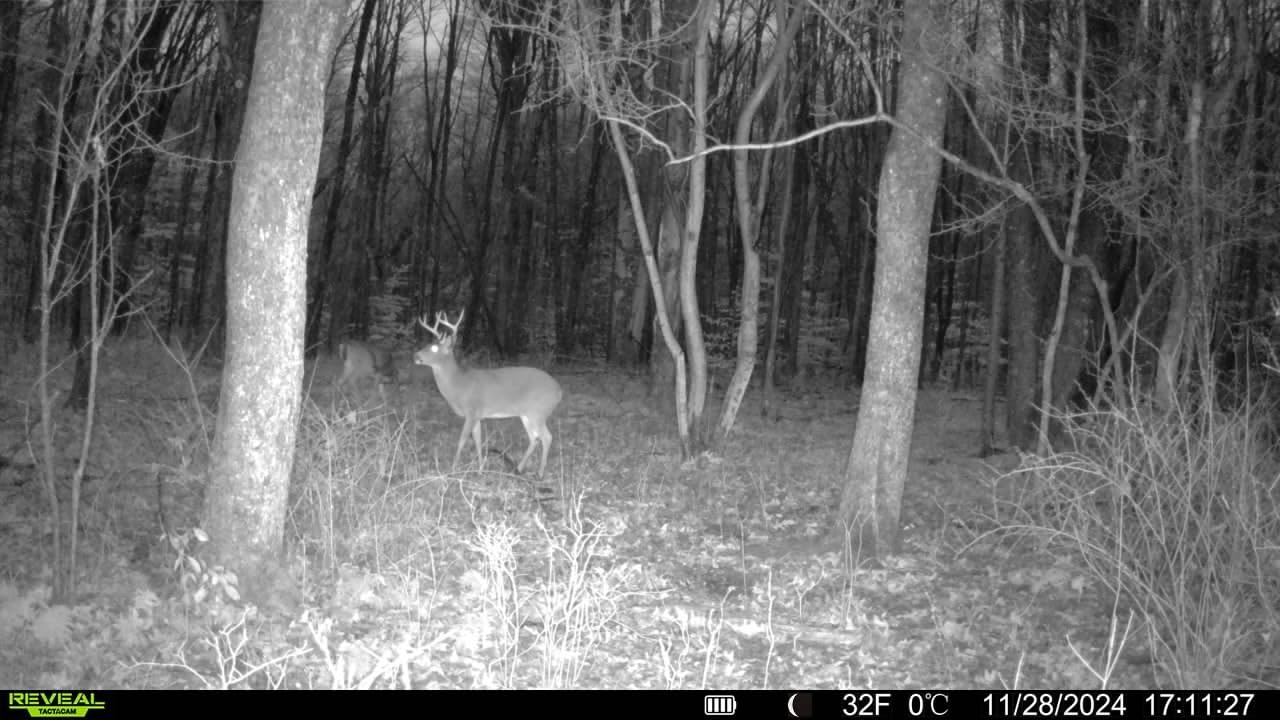
Trigger speed is the other strength. A sub-half-second trigger with a three-shot burst captures fast-moving subjects where slower cameras get a blur, and the 60-degree field of view is wider than the Moultrie Edge 2 without going full fisheye. Night vision reaches 96 feet, and the IP66 rating handles the wet shoulder seasons.
Storage is handled internally with 32GB onboard and built-in GPS that places the camera on your map in the Reveal app. That GPS is more useful than it sounds on remote land, since it tells you exactly where each of your cameras is sitting after a long winter.
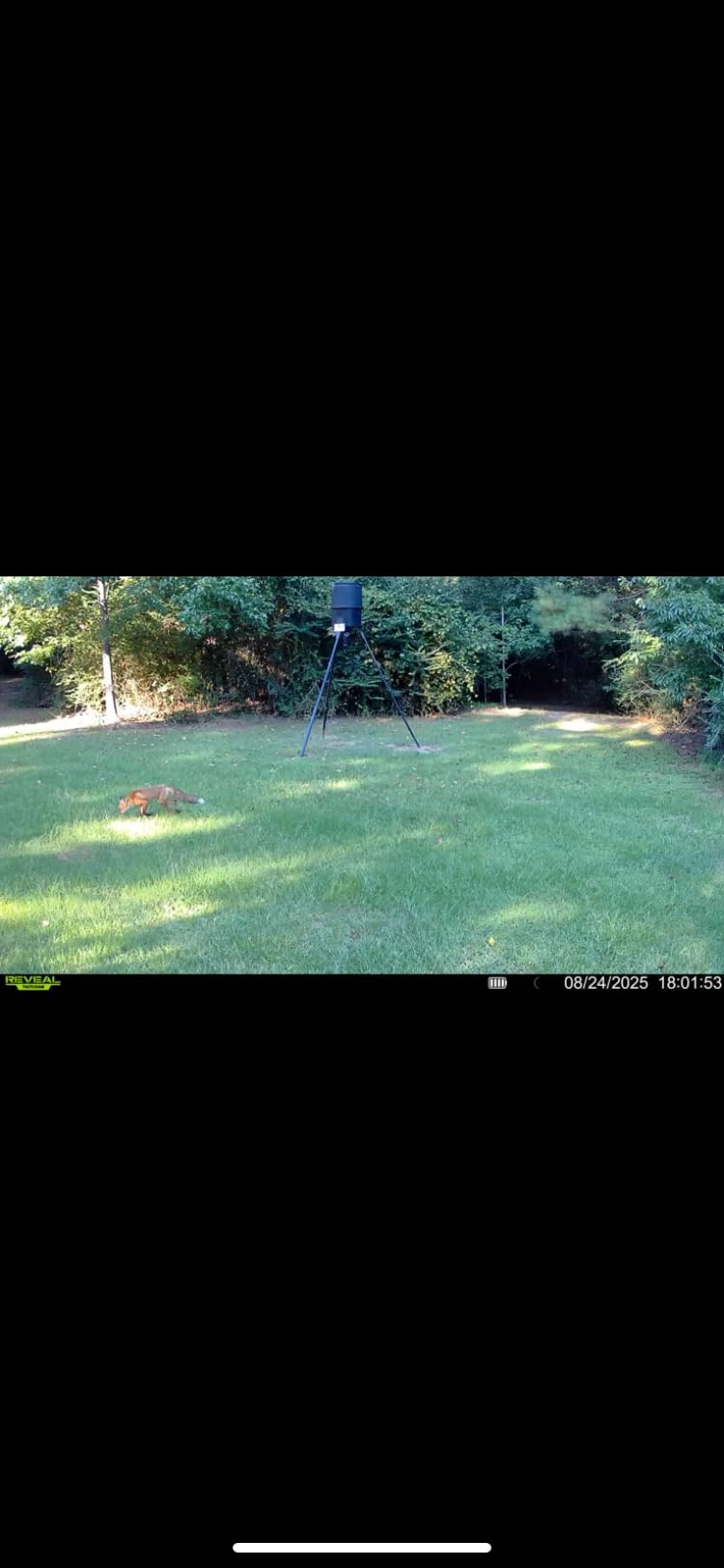
Why the antenna design matters here
The camera ships with an extra-durable antenna already installed, and TACTACAM markets this unit explicitly as a property monitoring system for gates, equipment, and rural acreage rather than as hunting gear alone. That framing shows up in the spec sheet, with a night-color sensor and infrared plus LED illumination. For a gate or a driveway, it behaves more like a small security camera than a buck camera.
Buyers repeatedly single out the multi-carrier auto-connect as the deciding factor, and the general sentiment is that this is the camera that keeps reporting from places where a phone would not. The 32GB of internal memory means the camera still records and holds footage locally if the network drops out mid-transmission.
Where it falls short
There is no SD card slot, so there is no manual recovery path if storage fails or if a tamperer pulls the card. Video is 1080p, which will feel dated next to the 2.5K and 4K units in this roundup, and the tan housing is less concealed in open terrain than a camouflage finish. The recurring complaint across reviews is simply the ongoing data plan cost, which every cellular camera here shares.
3. VOOPEAK 360 Cam Covers the Most Ground from One Mount
VOOPEAK Trail Camera, 4G LTE Cellular Game Cameras with 360° Live Streaming
- 355-degree pan and 100-degree tilt give broad coverage from one post
- 0.1-second PIR response is among the quickest here
- 4W solar panel with 7800mAh battery rated to 12 months per charge
- IP68 waterproofing rated from -40F to 140F
- Two-camera pack at a strong per-unit cost
- SD card not included and cloud playback costs extra
- Night vision limited to about 65 feet and monochrome
- Some units freeze or fail to read the SD card
Where the fixed-lens cameras need three posts to cover a property, this pan-and-tilt unit covers most of it from one. A 355-degree horizontal pan and 100-degree vertical tilt means a single mount at a cabin corner or a driveway entrance can see around two sides of a building, which is exactly the geometry of a property security problem rather than a wildlife problem.
Power is the quiet strength here. A 7800 mAh battery paired with a 4W solar panel is rated to run up to twelve months on a single charge with sufficient sunlight, so a maintenance-free deployment is realistic. The IP68 rating and a -40F to 140F operating range make it one of the more weather-hardened options we looked at, which matters if your cabin sits above tree line.

Motion response is 0.1 seconds through a PIR sensor, with a customizable detection zone and sensitivity, and the camera auto-connects to the strongest of Verizon, AT&T, or T-Mobile from a pre-installed SIM that includes 100MB of free data. Live streaming runs at 2.5K over 4G LTE, and setup in the CloudEye 365 app takes about three minutes.
Owners describe this as the best value in the pan-and-tilt category, with picture quality and signal strength rated highly for the money. The 360 coverage and solar endurance come up repeatedly as the features that decided the purchase, particularly for driveways, gardens, and yard edges.
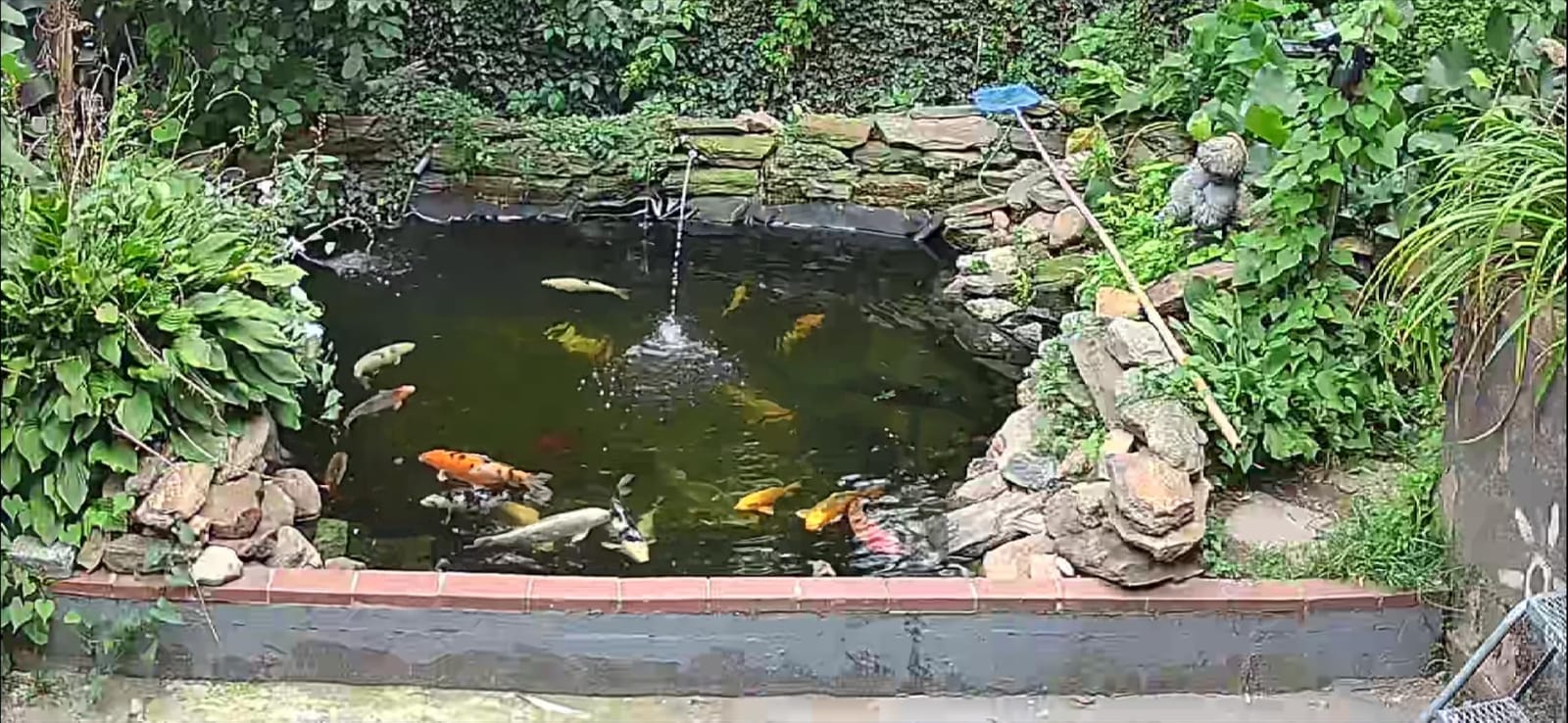
What you gain and what you trade for the wide view
Six infrared LEDs handle night vision to roughly 65 feet, and that is the trade-off. A pan-and-tilt unit spreads its illumination across a much wider field than a fixed-lens camera with a focused flash, so if you need identification detail on a subject 90 feet out, the fixed-lens models will serve you better. The night images are black-and-white rather than color, which also reduces how obvious the camera is at the perimeter.
Storage requires an SD card up to 256GB, and none is included, or you can pay for optional cloud storage. The app is Android-oriented and the on-screen manual is thin, so budget more of your own time for setup if you are on iOS.
When to skip it
Skip this camera if your priority is long-range identification or if you want cloud playback without a second recurring charge. A small number of buyers also report units freezing or failing to read the memory card and requiring a factory reset, so if you cannot reach the camera easily, test the card handling thoroughly on day one. If you need color night footage instead, the dual-lens unit later in this list is the closer fit.
4. VOOPEAK Auto-Tracking Pack Is the Strongest Security Choice for Equipment and Driveways
4G LTE Cellular Trail Camera 2 Pack, Human Auto Tracking with 2,5K HD Live
- Auto-tracking locks onto and follows a moving person or animal
- 355-degree pan and 90-degree tilt with 10x zoom
- Switchable invisible IR or white-light night vision
- 2.5K live view streaming at 30fps
- Each camera includes its own solar panel
- Memory card not included and each camera needs its own data plan
- Non-removable SIM limits carrier flexibility
- White-light mode can disturb nocturnal wildlife
This is the camera in the roundup we would put on an equipment yard rather than a tree line, and the reason is the tracking. The 355-degree pan and 90-degree tilt do not just cover an area, they find a person in it and follow them, which is a fundamentally different behavior from a fixed trigger. If somebody walks into your property and leaves with a tractor, this camera is designed to keep them in frame.
The white-light night mode is the other property-specific feature. Most cellular trail cameras flood a scene with infrared and hope the subject never looks up. This one can switch to a visible light for full-color night imagery, which is far more useful for identifying a vehicle, a face, or the make of equipment. Owners regularly describe the switch between invisible infrared and white light as the standout feature for property monitoring.
It is a two-camera pack, and each unit has its own solar panel, so you can put one at the gate and one at the shed with independent off-grid power. Live view streams at 2.5K through 30fps, and the IP66 rating handles all-season placement. The 10x zoom is digital rather than optical, so treat it as a way to inspect rather than a way to reach distant subjects.
The rating on this one sits at the top of the lineup, and the reason owners give is that the auto-tracking outperforms fixed-lens cameras at the same budget. Buyers upgrading from a traditional trail camera tend to point to the tracking and the dual night modes as the reason the change felt worthwhile.
What the auto-tracking actually does in the field
The camera detects motion, then drives its pan and tilt to keep the moving subject centered while recording. That matters most in open areas like a farmyard or a gravel drive, where a fixed 50-degree lens would either miss the person entirely or capture them at the edge of frame. The 10x digital zoom then lets you pull detail back out of that wide view.
Each camera requires a separate subscription and a memory card, which is not included. The bundled SIM is non-removable, so you cannot swap carriers if your land sits in a weak Verizon or AT&T pocket. Check coverage for all three major networks before you commit to a two-pack.
Where it is the wrong tool
This is not a wildlife camera, despite the category label. The white-light mode is bright enough to push nocturnal animals off the property, and the listed effective still resolution of 4 mp is well below the fixed-lens models here despite the 2.5K video claim. If your goal is deer and not intruders, the Moultrie Edge 2 Pro or the Edge 2 will produce sharper stills at lower running cost.
5. SPYPOINT Flex-M Gives You 100 Free Photos Every Month
- Genuinely free transmission plan of up to 100 photos per month
- Cross-carrier automatic network selection holds signal in remote cover
- 32GB microSD card and two preactivated SIM cards included
- On-camera buttons for formatting and test shots
- Time-Lapse and Constant Capture modes
- 720p video is the lowest resolution here
- Very sensitive PIR triggers constantly at default settings
- Photo quality falls off beyond roughly 20 feet
The reason this camera is on the list is arithmetic, not performance. It is the only cellular trail camera here that transmits up to 100 photos a month with no fee and no commitment, which makes it the cheapest possible way to keep an eye on a remote parcel. Paid tiers start higher, but a property that sees a handful of vehicles a day can run indefinitely on the free allowance.
Signal handling is genuinely clever. The camera continuously monitors network performance and moves between carriers on its own, with two preactivated SIM cards included in the box, so you never choose a network manually. Hunters running these in heavy cover report the Flex-M pulls signal where previous cameras did not, and dual-SIM auto-connect is singled out as the deciding factor in those accounts.
The starter pack also includes a 32GB microSD card, and the camera has on-camera buttons for formatting the card and firing a test shot, which is a small touch that saves a real trip. The app adds BUCK TRACKER AI species filtering, maps, and real-time weather, and Constant Capture lets the camera record and send at the same time.
That is the whole feature set, and it is deliberately modest. Still images run 28 megapixels and video is 720p, the lowest resolution in this roundup, and owners describe picture quality as lacking beyond roughly twenty feet. The IP65 rating is basic compared with the IP68 units here.

Tuning matters more here than on any other camera
Every owner warning on this product points the same direction: the defaults will burn through your free plan and fill your card with photographs of branches. Drop the sensitivity setting, narrow the PIR detection zone, and set longer check-in intervals before you leave the site. Done properly, the 100 free photos cover a property that only sees occasional traffic.
That makes the Flex-M a poor fit for a high-traffic driveway and a good fit for a seldom-used gate, a back road, or a woodlot edge. It is also the right answer if you genuinely refuse to pay a subscription, since the alternative is a non-cellular camera you have to physically service.
What to watch out for
Reliability is the real caveat. A vocal group of owners on r/trailcam reports factory antennas on SpyPoint units stopping working within a season, even after swapping cameras, batteries, and extended-range antennas, which is a specific hardware complaint about this brand rather than this model. Other reviews mention defective units and a mounting strap that degraded outdoors within months. If you cannot easily reach the camera, plan on inspecting the strap and antenna connection on every visit.
6. MagicEagle Packs Solar, Storage and No-Glow Night Vision Into One Box
- 13000mAh battery and included solar panel deliver long unattended runtime
- 5MP sensor is sharper than typical 2MP budget cameras
- 940nm no-glow infrared does not spook wildlife
- SignalSync cloud SIM auto-selects the strongest carrier
- Gravity sensor and A-GPS tamper alerts plus offline location tracking
- Data plan needed after the 30-day free allowance
- Setup needs careful reading of the manual
- Solar panel mount may need different screws when strap-mounting
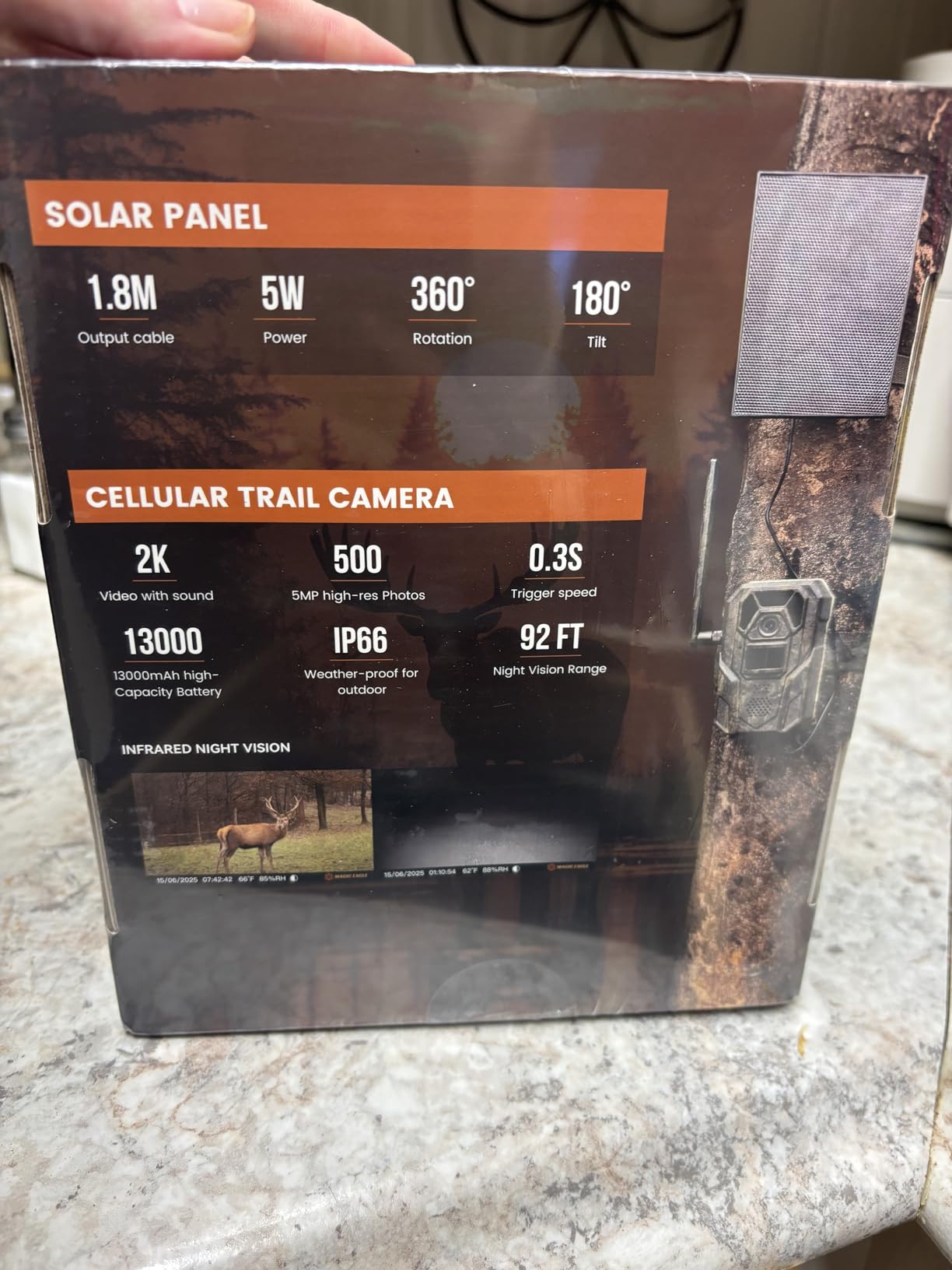
Open the box and everything you need is inside, which is unusual at this level. You get the camera, a solar panel, a 32GB SD card, and the mounting kit, and the 13000 mAh battery is rated for up to three months of continuous standby before the panel has to do anything. For a remote deployment where a forgotten battery means a two-hour drive, that completeness is worth more than another twenty megapixels.
The sensor is the surprise. A 5MP lens with a 0.3-second trigger is sharper than the 2MP sensors typical of budget trail cameras, and reviewers repeatedly report crisp photos and video, including clean night captures of a skunk and an opossum. The 940nm no-glow infrared reaches 90 feet without the visible red spill that spooks wary animals.
Its rating is the highest in this roundup, and the two features owners cite most are the cloud AI species identification and the anti-theft hardware. The cloud AI logs activity frequency, location, temperature, and humidity, so you get weather context alongside wildlife context. The IP66 body is rated from -20C to 50C, and the warranty runs two years plus an extra six months if you register the camera.
SignalSync uses cloud SIM technology that auto-connects to the strongest signal and the optimal network segment of major carriers without a physical SIM installation. In practice that removes the one hardware step that most often goes wrong on a self-installed camera.
Why the tamper gear matters on remote land
The built-in gravity sensor fires a photo when the camera is disturbed, and A-GPS positioning supports offline location tracking if it is removed. That combination does not prevent theft, but it tells you something happened and roughly where the camera went, which turns a silent loss into a reportable one. It is the only unit in this roundup with both functions built in.
Video records in MOV format at 2K with audible sound, so you can capture the sound of an engine starting rather than just a shape at the edge of the frame. Live view runs through the app on demand, which is more useful as a spot check than as a continuous stream on a weak connection.
Where it needs patience
Setup requires reading the manual carefully to avoid missed configuration steps, and if you strap-mount the camera, the solar panel may need different or shorter screws than the ones supplied. Anything above 32GB in the memory card has to be purchased separately. After the 30-day free data allowance ends, a plan is required, and the run rate should be checked against how much traffic your site actually generates.
7. TACTACAM Reveal Ultra Takes 4K Stills and Switches Flash Type
- 4K stills are the sharpest in this roundup
- Switchable 96-ft low-glow and 80-ft no-glow infrared flash
- Active GPS keeps transmitting location and alerts on half-mile movement
- Sub-0.5-second trigger with up to 9-shot burst
- 2-inch LCD makes aiming possible without a phone
- Highest price point in this roundup
- Customer support reported as difficult to reach
- Some units stopped transmitting and needed physical retrieval
- Sensitivity can pick up shadow movement that is not adjustable away
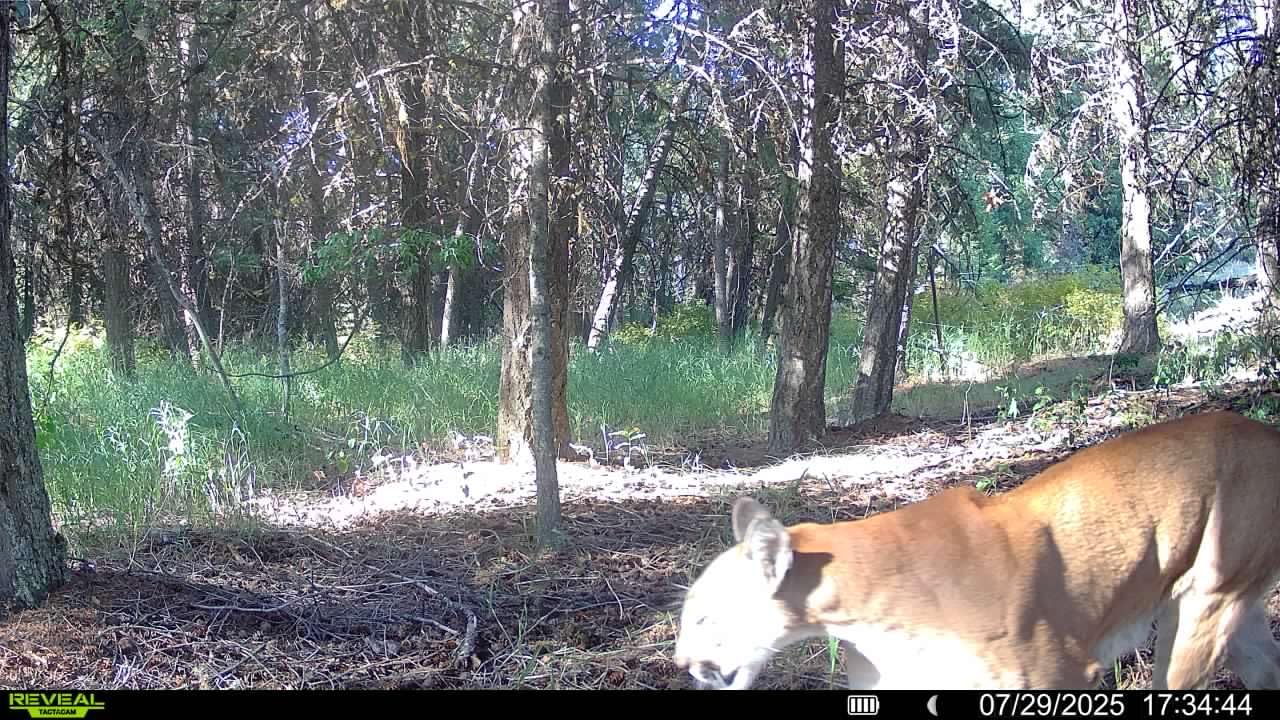
If you need to identify a face, a license plate, or a specific brand of equipment from fifty feet away, this is the camera. Four-kilopixel still images are the sharpest in the group, and 2.5K video with a sub-half-second trigger and up to a nine-shot burst gives you multiple frames of anything moving quickly through a scene.
The switchable flash is the feature that changes how you deploy it. A 96-foot low-glow flash covers more area, while an 80-foot no-glow mode removes the visible red entirely for animals that spook at it. Owners report visibly calmer deer behavior in no-glow mode, which is a real difference on land where you are trying to keep the camera running for weeks without scaring off everything nearby.
For remote properties, the active GPS is the standout. It continues transmitting coordinates even if the camera is powered off or the battery is removed, and it alerts you if the camera moves more than half a mile. On land where a camera is a two-hour drive away, that is the difference between a theft and an insurance claim.
The 2-inch LCD viewfinder also deserves more credit than it usually gets. You can stand at the mount, frame the shot, and adjust sensitivity without hauling out a phone, which matters when the sun is going down and your phone battery is the thing you need for the drive home. Storage is 16GB internal with an SD slot for expansion, and the upgraded antenna holds signal in places where phones fail.
Live view and on-demand requests
Beyond passive triggers, you can stream live footage or request a high-resolution photo on demand, and the app supports both. On a strong connection this is genuinely useful for confirming a vehicle arrived or that a gate was left open. On a marginal connection, the request may simply queue, so treat it as a check-in tool rather than a live feed.
Power is handled by accessories rather than built in. Tactacam Solar Panel, Folding Solar Panel, Battery Belt, and Lithium Cartridge all work, which means you can match a power system to how long you intend to stay away. The connection is automatic to leading 4G LTE networks with no carrier setup.
What other owners are unhappy about
Support is the recurring complaint. Buyers describe having to route after-sales questions through the retailer and speak to an automated system before reaching anyone, and a small number report units that stopped transmitting entirely and had to be physically retrieved. Sensitivity is the other issue: some settings pick up shadow movement check-in photos that cannot be tuned away, which burns plan allowance if you are not watching.
This is also the most expensive camera in the roundup, so it earns its place only if the identification quality or the GPS theft tracking is genuinely solving a problem for you. If you just need to know that something moved, the Edge 2 covers that for less.
8. VOOPEAK Dual Lens Removes Blind Spots With Two Lenses in One Body
Cellular Trail Camera, 4G LTE Dual Lens Game Camera 360° Live Streaming
- Dual-lens design removes blind spots with split or stitched display
- Built-in LED light configurable as motion-triggered
- always on
- or off
- Two-way talk lets you speak to anyone near the camera
- 5W solar panel with 7800mAh battery rated to 12 months
- IP68 waterproofing from -40F to 140F
- Smallest review base here at 43 ratings
- Each camera needs its own subscription
- One-star complaints run notably high
- Listed 4K capture is inconsistent with the 2K marketing claims
The idea here is simple and effective. One housing carries two lenses, and each lens can display independently as a split screen or stitch into a single 360-degree image. A fixed-lens camera mounted at a corner of a building always has a wedge it cannot see, and this is a direct way in this roundup to close that gap without adding another post, another battery, and another plan.
Two-way talk is the feature no other camera in this list offers. For a remote cabin, being able to speak to someone standing near the camera changes it from passive recording into an actual deterrent and communication tool. Reviewers highlight the split-screen view and color night mode as the genuinely useful parts, along with the solar endurance and a three-minute app setup.
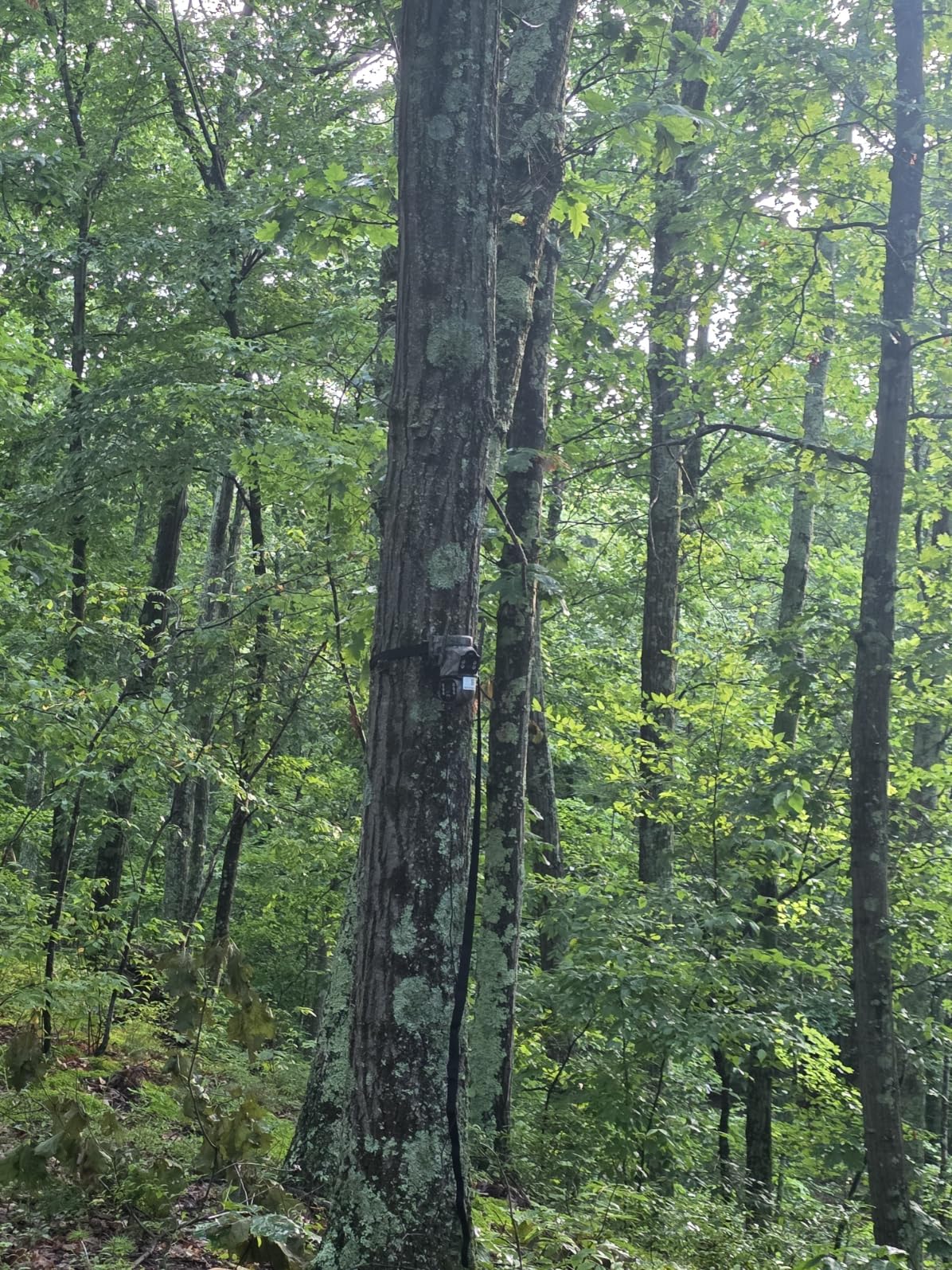
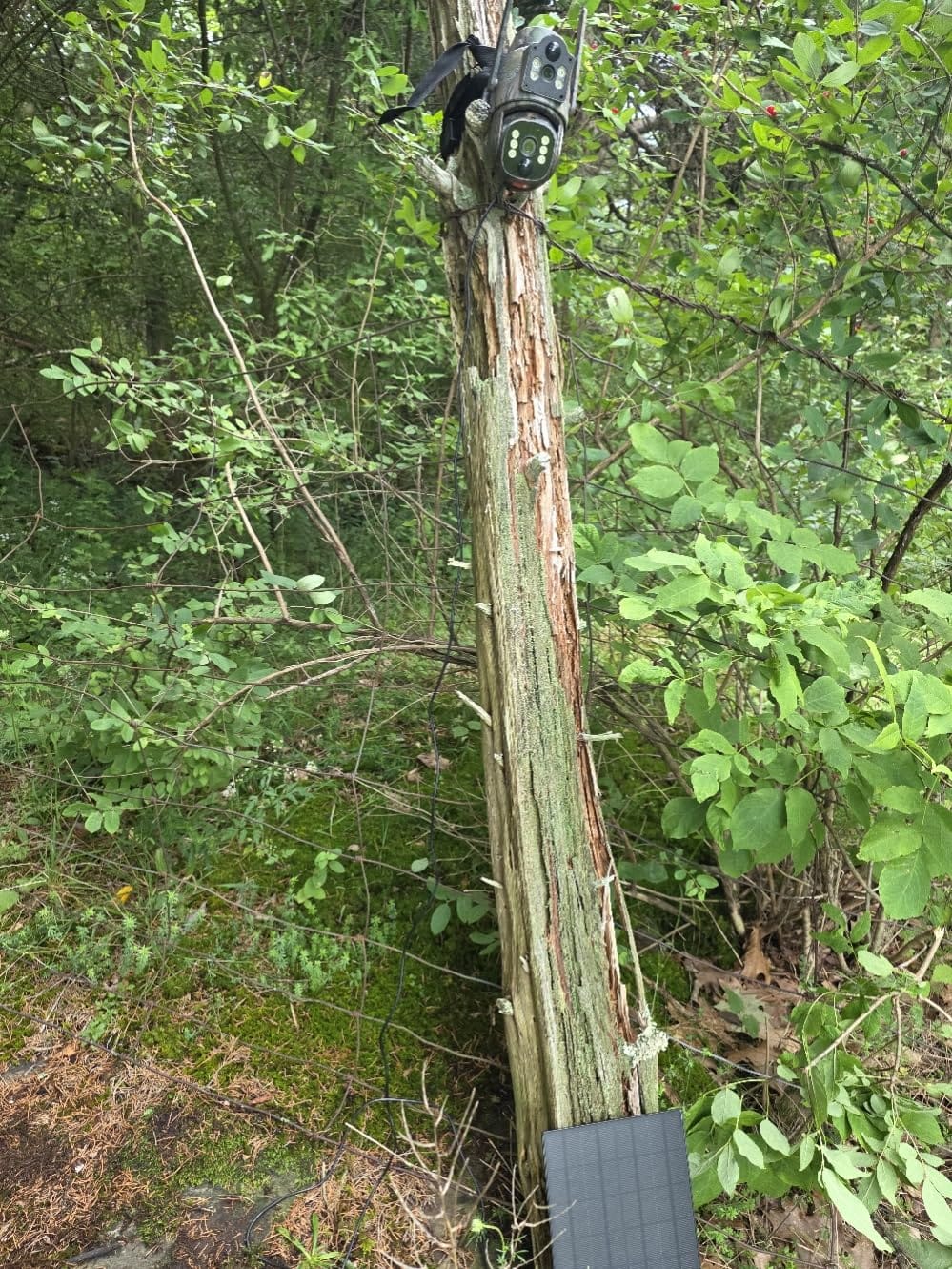
Power is a 5W solar panel with a 7800 mAh battery rated to run up to twelve months on a charge with sufficient sunlight, and the IP68 body handles -40F to 140F. The built-in SIM works across Verizon, AT&T, and T-Mobile and auto-connects to the strongest local signal, with 100MB of free data for the first seven days.
Advanced PIR sensing with AI detection is meant to reduce false alarms, and you get instant alerts, two-way talk, and remote access through the CloudEye 365 app. Storage is a memory card up to 256GB, sold separately, or optional cloud storage.
Reading the two lenses correctly
Spend time with both display modes before you leave the site. The stitched view produces a single wide image that is convenient but has lower effective detail across the whole frame, while the split view gives you two clear panes at roughly half the field each. Most owners who run a property end up on split view, because the two-lens clarity is the entire reason to buy this camera.
The configurable LED is the other setting worth planning. Motion-triggered keeps the property dark until something happens, always-on gives you constant color night coverage at a battery cost, and off leaves you with the infrared-only picture. On a long deployment where you are counting solar days, that choice determines whether the twelve-month figure is realistic.
Why we would not put two of these on a critical site yet
The review base is the smallest in this roundup at 43 ratings, and one-star complaints run notably high as a share of the total. That combination usually means early production or unsettled firmware rather than a bad design, but it is exactly the wrong profile for a camera on a property you cannot reach. The listed 4K capture resolution also conflicts with the 2K claims in the product copy, so judge the real picture quality before you commit to more than one.
9. Oculview Holds Signal at Remote Sites and Covers Large Ground
- Pan
- tilt
- and zoom described as transformative for covering large properties
- Holds signal where phones barely work
- 6W adjustable solar panel sustained charge through rain and snow
- 0.2-second trigger with 120-degree PIR detection angle
- Free 7-day data trial with published unlimited pricing
- Setup and app pairing have many steps for a beginner
- Per-camera cost stack of card
- subscription
- and cloud tiers
- App can lose camera pairing and require resets
- Cameras can drop offline and need an in-person power cycle
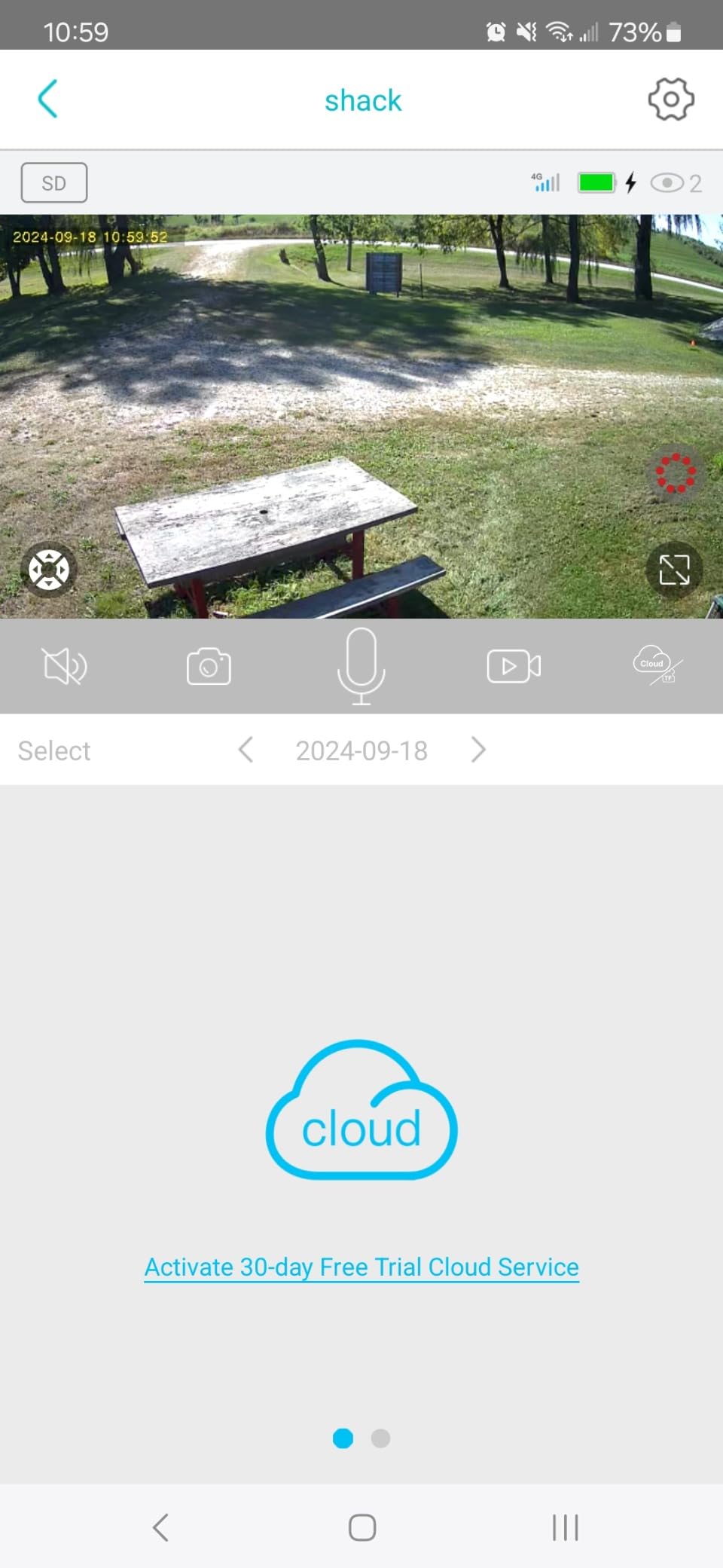
Oculview is the model people describe most favorably when the question is whether a cellular camera can hold a connection at a genuinely remote site. One documented owner reported getting one to two bars from a tower sixteen miles away, and the broader pattern in reviews is that these cameras keep transmitting in places where a phone drops off entirely. That is a differentiator on acreage rather than a subdivision.
Coverage is where the pan-and-tilt design earns its cost. A 336-degree pan, 90-degree tilt, and 4x digital zoom let one mount watch a large property, and the 120-degree PIR detection angle with a 0.2-second trigger is quick enough for a moving vehicle. Property owners with large acreage, cabins, and RV lots are consistently the loudest advocates.
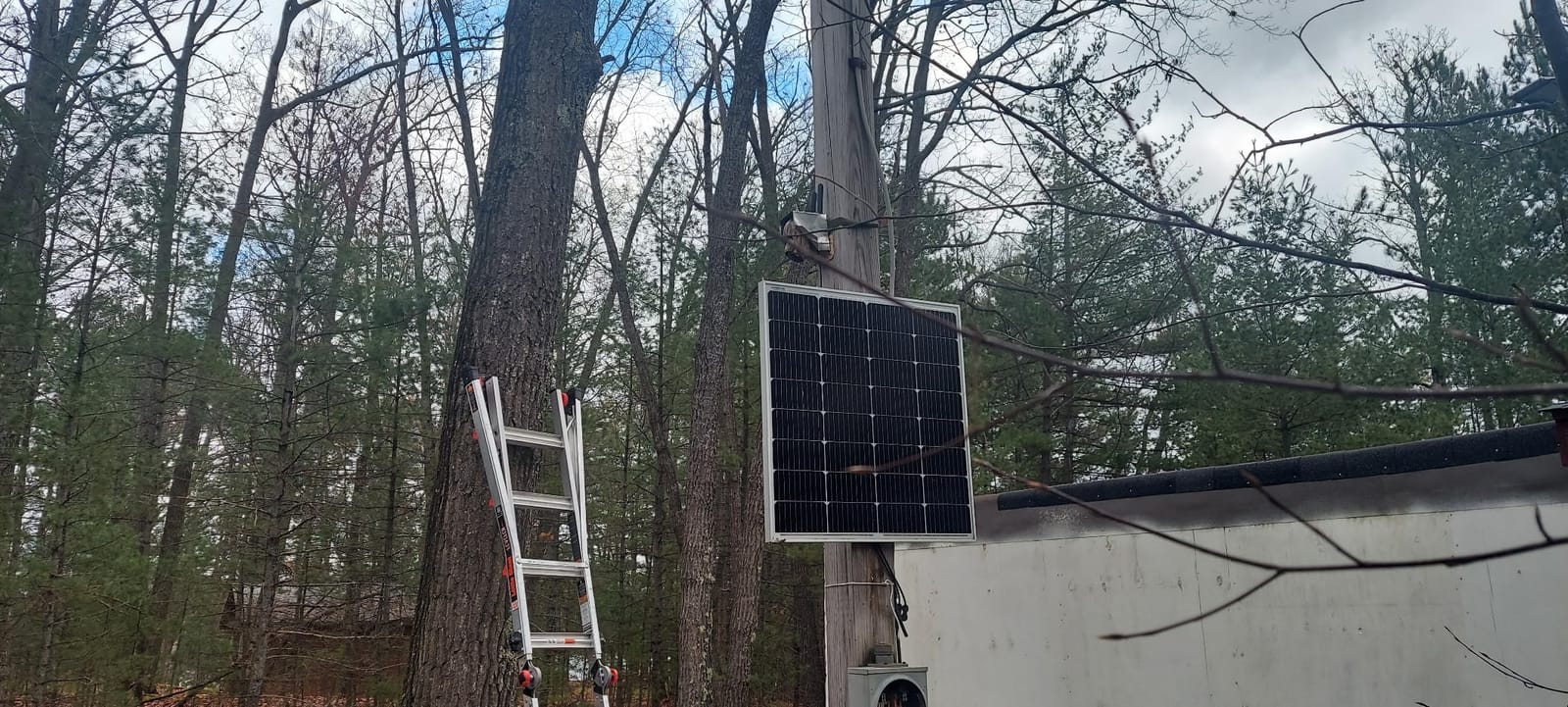
The 6W solar panel is adjustable, and the manufacturer rates roughly ten minutes of direct sun per day as enough for a full day of operation, which is a realistic figure for partial shade under tree cover. A user reported keeping the battery at full charge through rain and snow days, and the camouflage yellow housing blends into brush and field edges.
Night vision uses 850nm low-glow infrared reaching up to 100 feet when the built-in spotlight is enabled, and the SIM card is included with a free seven-day data trial before the unlimited tier applies. Customer service draws unusual praise, with buyers citing fast fixes and proactive replacements.
Plan for the cost stack before you buy
There are three separate charges and people routinely trip over them. You need a memory card up to 128GB, which is not included. You need the per-camera data subscription after the free trial. And if you want cloud playback rather than pulling the card, there is a further cloud storage tier on top. Multiply that by the two cameras in this pack and by the number of sites you are covering, then decide whether a fixed-lens model with a cheaper plan suits you better.
Setup is the second friction point. Instructions and app pairing leave many steps to work out unaided, and the UBox app has been reported to lose account recognition after a few weeks, forcing repeated resets. If the camera is far from your home, set aside real time for the initial setup rather than planning to do it on arrival.
When it drops offline and what to do
Some users report cameras going offline at remote sites and requiring an in-person power cycle, which on a two-hour drive is a real cost. Pair that with the app pairing issue and you should decide in advance whether the property is worth the risk. For a critical gate or a known theft target, a camera with built-in GPS theft tracking gives you a recovery path that this one does not.
Occasional false alerts on animals and windblown vegetation are also reported, so tune the sensitivity and detection zone before you leave. Set the transmission interval to something you can live with rather than leaving it at maximum.
10. Moultrie Edge 2 Pro Adds AI Filtering and Live Aim Setup
- 40MP photos and 1440p video at the lowest cost in this roundup
- AI species identification meaningfully cuts shadow false triggers after training
- Live Aim preview sets the exact field of view from a phone
- On-demand remote triggering for pre-entry and post-entry checks
- 8GB internal storage plus unlimited cloud backup
- Moultrie Mobile subscription required for transmission
- 50-degree viewing angle is narrow for open country
- Motion detection is not perfectly consistent
- Replacement units have been described as refurbished
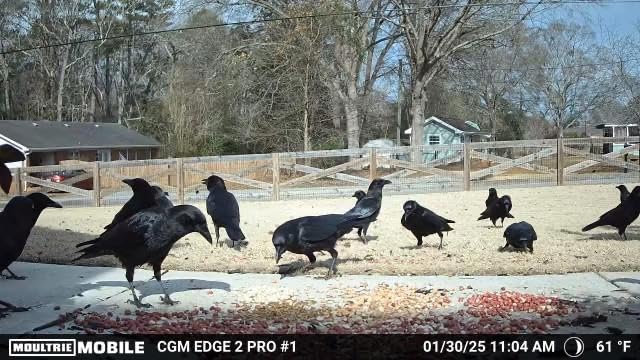
This is the pick if you are covering several points on a budget and want the AI filtering that stops your plan allowance being eaten by shadows. The Moultrie Mobile AI identifies bucks, does, turkey, humans, and others, and once it has trained on your site the reduction in false triggers is dramatic. On a camera pointed at a cabin wall or a gravel drive where moving shadows are constant, that is worth more than resolution.
The imaging is unusually strong for the money. Forty-megapixel stills and 1440p video with audio come off an advanced sensor tuned for low light, with a 100-foot detection range and a no-glow flash for discreet nighttime imaging. Reviewers report it running a full season through heavy rain, extreme cold, and warm days without a failure, and owners running AA batteries report 500 test photos with the battery still reading full.
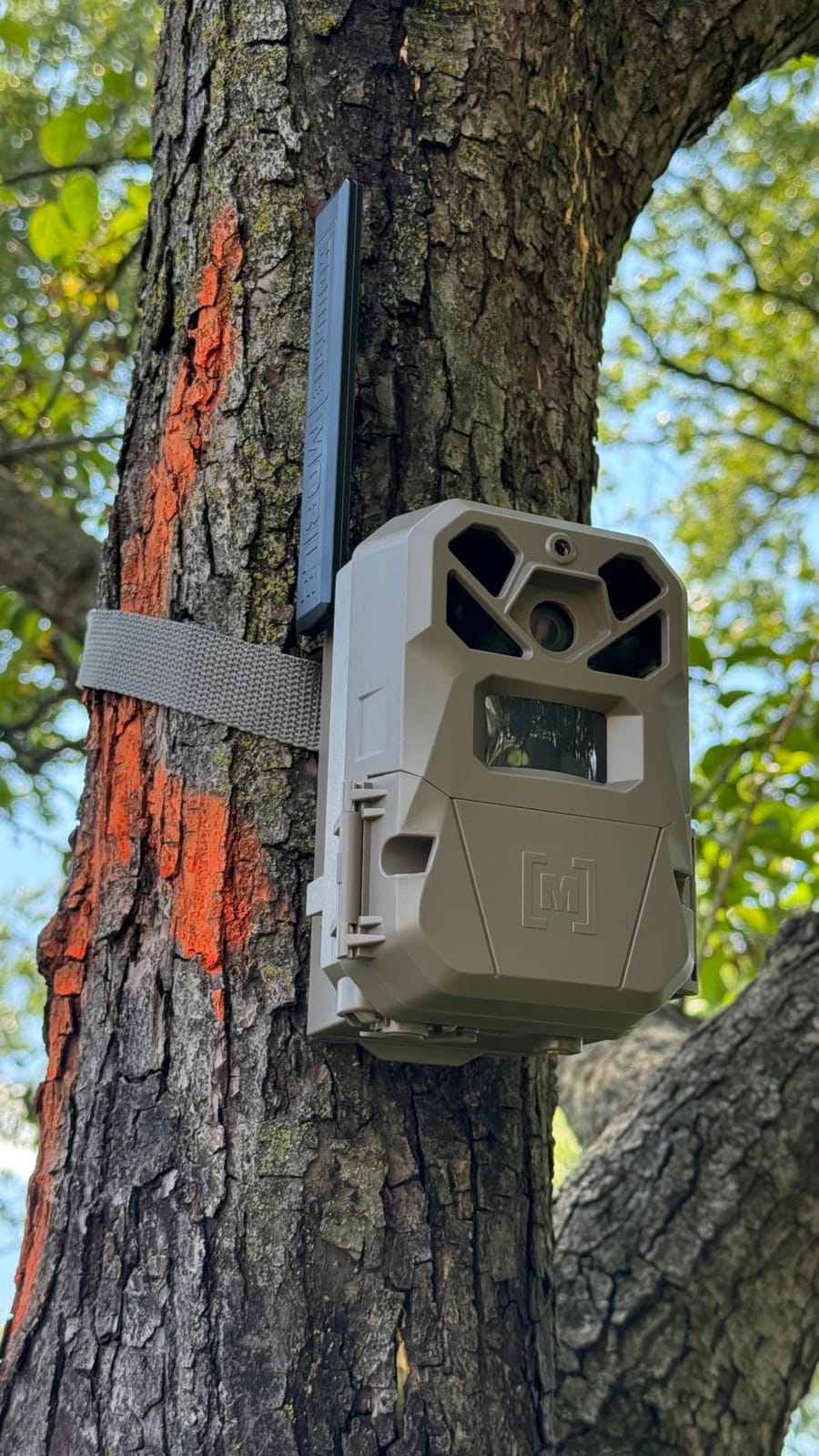
Two setup features make a real difference for remote deployment. Live Aim gives you a live preview of the camera field of view on your phone so you can frame the shot without guessing, and remote on-demand triggering lets you ask for a photo whenever you want, which turns the camera into a pre-entry and post-entry check rather than a passive recorder. The Easy Aim Mount, battery tray, and strap are in the box, with 8GB internal storage and unlimited cloud backup behind the app.
Timelapse, multi-shot, and motion-triggered modes let you set the behavior per camera, and the 1/4-20 post fits the same mounts as the standard Edge 2. The two-year warranty registers from activation through the app.
Where the AI actually pays for itself
Think about how a cellular camera fails financially. It does not fail by missing the thing you care about, it fails by sending two hundred photographs of a swaying branch and burning through your monthly allowance before the season starts. Species filtering attacks that directly, and the Live Aim tool solves the other common problem, which is arriving at a mount and discovering the camera is aimed ten degrees off target.
The on-demand trigger is the sleeper feature for property work. Driving a long road to check a gate and finding out from home that the gate is still closed is a genuine operational saving, and it costs nothing beyond the plan you are already paying for.
What other owners flag
The narrow 50-degree viewing angle is the same limitation as the base Edge 2 and means one camera cannot cover open country. Motion detection is not perfectly consistent and some users report missed triggers, which for a security camera is more serious than a missed deer. One detailed account describes a replacement unit that arrived refurbished, triggered continuously, and drained its battery in a day, so inspect any replacement immediately. The subscription is also required even for basic verification of captured photos.
How to Pick a Cellular Trail Camera for Remote Land
The decision order for a cellular camera on remote land is signal, then power, then everything else. Megapixels are the last thing to optimize. A 4K camera that cannot transmit is a very expensive piece of scenery, and a battery that dies in three weeks on a site you visit twice a year is a worse failure than a slightly softer image. This section is the checklist we would work through before spending anything.
Test the signal at the mount point first
This is the step almost every roundup skips, and it is the one that decides whether a cellular camera is worth buying at all. The forum consensus on remote-land threads is blunt about this: no service is no service, and no antenna in the box creates coverage that the tower network does not have.
Start with your carrier’s coverage map, but treat it as a rough guide rather than a promise, since rural maps are frequently optimistic. Then test the exact spot physically. Stand at the intended mount height, not at ground level, because elevation changes what the tower can see, and hold your phone in the same orientation the camera antenna will sit in. Take a reading at the exact tree, not at the road you drove in on.
Check every carrier that matters, not just the one you use. A camera with automatic multi-carrier selection can fall back to a network you never intended to use, and a phone tied to one carrier can look worse than a camera that scans all of them. Most of the models in this roundup support multi-carrier selection as standard, and the MagicEagle goes further with cloud SIM technology that picks the optimal network segment.
Then test in the worst-case month rather than the month you are standing in. Signal readings in summer with full foliage are not a reliable predictor of a January reading with wet branches and ice. If you cannot return to the site, look for a camera with a high-gain external antenna you can improve later, and be honest with yourself about whether the mount point has any coverage at all.
Power for months without a visit
Ask yourself how long you realistically go without touching the camera, then work backwards. On a property visited weekly, AA alkaline batteries or a rechargeable lithium pack are both workable. On a parcel visited twice a year, only solar or a very large internal battery is realistic, because the cost of one unplanned trip usually exceeds the cost of a panel.
Solar is the practical answer for anyone who does not want to make battery-change trips, and the units in this roundup split into two camps. Purpose-built solar trail cameras with a 4W to 6W panel and an integrated battery claim up to twelve months per charge with sufficient sunlight, while fixed-lens cameras usually take add-on solar accessories instead. Adjustable panels let you angle the panel toward the sun rather than mounting it flush to the tree, which is a meaningful difference in partial shade.
Several owners report that lithium rechargeable packs run roughly 400 to 500 charge cycles, which makes them a better investment than disposable batteries across a multi-season deployment. Reviewers of the Moultrie Edge 2 also report AA batteries producing 500 test photos with the battery still showing a full charge, which is a useful baseline expectation.
WiFi cameras versus cellular cameras versus no connectivity
WiFi trail cameras need power and a router at the site, so they are essentially impossible on remote land unless the property already has a building with internet. Cellular cameras need only a battery and a signal, which is why they are the only realistic option for an outbuilding, a gate, or an empty parcel. Battery-powered non-cellular cameras need no plan and no signal, but you retrieve photos by physically swapping a card, which defeats the purpose when the site is two hours away.
The practical answer is to use cellular wherever a signal exists and fall back to a non-cellular camera only where nothing does. If you need fixed-installation coverage near an actual building with power, our guide to the best floodlight cameras for backyards covers that scenario instead.
Antenna design and mounting
Antenna quality is a real field failure mode and it is discussed far less than it should be. Side-mounted blade antennas are the ones that snap off in transit or in a stiff wind, and owners have reported factory antennas on some brands failing within a single season even after replacing cameras, batteries, and extended-range units. Prefer antennas that are integral or factory-installed over ones that protrude.
Several cameras here ship with the antenna and SIM pre-installed and pre-activated, which removes a whole category of field problems. Mount the camera high enough to clear the surrounding vegetation, tighten the strap on a tree with a diameter between four and eight inches, and check the camera angle on site before you leave. Aiming from the ground is the most common reason people come back with a camera pointed at nothing.
Trigger speed, detection range, and night flash
Trigger speed is the gap between movement and capture, and anything under half a second is fast enough for a person walking and for most vehicles. The 0.1-second and 0.2-second PIR responses on the pan-and-tilt units here are the quickest, but a fixed-lens camera with a sub-half-second trigger will serve you well for most property work.
Detection range is the number that gets inflated in marketing. Compare it against what you actually need to identify, and remember that flash reach and usable identification range are different measurements. Night flash type matters more than most buyers expect: no-glow infrared keeps wary animals from spooking, low-glow reaches further, and switchable flash lets you choose per camera rather than committing once.
Apps, live view, and how fast photos arrive
The app is where you will spend your time, so judge it on three things. Can it organize several cameras without confusion, since some multi-camera setups are reported to struggle to categorize photos across devices. Does it show transmission status, so you can tell the difference between a camera that saw nothing and a camera that could not send. And can it do live view, which only helps if your connection at the camera is strong enough to support streaming.
Transmission delay is the metric nobody publishes and everybody notices. Competitor testing in this category has recorded delays ranging from a few minutes in strong coverage to several hours on budget models in marginal coverage, and in one documented case a full twelve minutes on a premium camera in strong LTE. If a twelve-minute delay defeats your purpose, treat live view and on-demand photo requests as essential features rather than nice-to-haves, and set your expectation accordingly.
A practical tip: on devices that support it, request standard photo size rather than full HD or video for routine triggers, and upgrade only the frames you actually need. That single setting is often the difference between a plan that lasts the month and one that does not.
Subscription plans and the cost of coverage
Every cellular camera here needs a plan to transmit, and the structure varies more than the hardware does. The SPYPOINT Flex-M is the only one with a genuinely free tier of up to 100 photos per month with no commitment. Moultrie plans start at a low monthly rate with no contract, and the Reveal cameras are sold with flexible plans that support on-demand video requests. The pan-and-tilt units are typically per-camera, so a two-pack means two plans, and the VOOPEAK auto-tracking pack explicitly cannot share data across units.
Before you buy, do the multi-camera math rather than the per-camera math. Multiply the monthly plan by the number of cameras you intend to run, and by the number of months you will run them, and compare that against the value of the property you are protecting. A cheap camera with a plan that costs more per year than the camera itself is not value, and for a very low-traffic site a free tier may be all you ever need.
Also check what the higher tiers actually add, usually video and HD photo packs or cloud storage, since a plan that includes unlimited photos but charges extra for every video is expensive for a property where a truck door closing is the biggest event of the week.
Theft and vandalism protection
Remote land attracts equipment theft, and the forum question about cameras that are hard to steal comes up repeatedly on property threads. A trail camera is a metal box full of electronics on a pole in a field where nobody is watching, so treat theft as a probability rather than a possibility.
Start with visibility. A camera strapped to an obvious tree beside a public road advertises itself, and a lock box that encloses the camera and strap makes the removal far slower than a quick cut of the webbing. Route the strap so it is not visible from the approach, and avoid mounting anywhere a vehicle can pull right up to the tree. Mounting higher than eye level also makes opportunistic grabbing harder.
Then layer the recovery features. The Reveal Ultra transmits GPS coordinates even when powered off and alerts you if it moves more than half a mile, and the MagicEagle pairs a gravity sensor that photographs tampering with A-GPS tracking. Neither prevents a theft, but both turn a total loss into a documented event with a location, which matters for insurance and for police reports.
Finally, count your visits. Users report cameras lasting 12 to 18 months in all-weather field conditions before replacement, so plan a maintenance rhythm around that window rather than assuming hardware is permanent.
Frequently Asked Questions
Can you view trail cameras remotely?
Yes. Every camera in this roundup sends photos and video to a smartphone app over 4G LTE with no WiFi, and most also support live streaming or on-demand photo requests from the app. The catch is that remote viewing quality depends on the signal at the camera. In strong coverage you can expect a usable live stream, while in marginal coverage photo delivery is reliable but live view often is not.
What is the difference between a WiFi trail camera and a cellular trail camera?
A WiFi trail camera needs both a power source and a router or internet connection at the location, which makes it impractical on remote land. A cellular trail camera has a built-in 4G LTE radio and SIM that sends photos to your phone over the mobile network, so it needs only a battery and some signal. WiFi cameras usually have no monthly fee, while cellular cameras usually require a data plan.
What trail cameras can you watch live?
The pan-and-tilt and dual-lens models in this roundup offer live streaming, including the VOOPEAK 360 cam, the VOOPEAK auto-tracking pack, the VOOPEAK dual lens, and the Oculview, all of which stream in 2.5K or 2K. The TACTACAM Reveal Ultra adds live view plus HD photo requests, and the MagicEagle offers app live view. Fixed-lens trail cameras such as the Moultrie Edge 2 generally send stills and clips rather than a continuous stream.
Do you have to pay a monthly fee for a cellular trail camera?
Almost always, because transmission is what the plan pays for. The SPYPOINT Flex-M is the exception, offering a genuinely free tier of up to 100 photos per month with no commitment. Other brands charge from a low monthly rate with no contract upward, and pan-and-tilt models typically require a separate plan for each camera. Plans that permit unlimited photos often charge extra for HD photo packs, video, and cloud storage.
How long do cellular trail camera batteries last?
It depends almost entirely on the power setup. AA alkaline batteries typically run a season of moderate activity, with owners of the Moultrie Edge 2 Pro reporting 500 test photos with the battery still reading full. Rechargeable lithium packs are rated at roughly 400 to 500 charge cycles across most brands. Solar units with integrated panels, such as the 7800 mAh VOOPEAK and the 13000 mAh MagicEagle, are rated to run up to three months to a year on a charge depending on model and sunlight.
How do I check cell coverage before buying a cellular trail camera?
Go to the exact mount point in person, stand at the intended camera height rather than at ground level, and check the signal on your phone for every major carrier rather than only your own. Treat carrier coverage maps as a rough guide, and test during the worst season rather than in summer when foliage is full. If you cannot visit the site, choose a camera with multi-carrier automatic selection and a high-gain antenna, and be realistic that hardware cannot create coverage that does not exist.
Will a cellular trail camera work with no signal at all?
No camera can transmit without coverage, and that limitation is worth stating plainly before you buy. A cellular camera with no signal still records to its internal memory or memory card, so it works as a remote recorder, but retrieving the photos means physically visiting it. If a site has genuinely no coverage, the honest options are a non-cellular trail camera you service on a schedule, a directional antenna if a distant tower is in line of sight, or a different mount point entirely.
Why are states banning trail cameras?
A number of states have restricted or banned certain trail camera practices, often relating to baiting or shooting deer over bait, to cameras placed on public land, or to privacy around private property and hunting regulations that vary by state. The rules are specific and they change, so check your state hunting and wildlife agency guidance and your local rules before deploying any camera, particularly on public ground.
Our Final Verdict on Remote Land Cameras
Signal first, power second, everything else third. That is the decision rule that comes out of testing and owner reports across all ten of the best cellular trail cameras for remote properties reviewed here. A camera that cannot reach the network is worthless no matter how many megapixels it produces, and a camera that dies in three weeks on a site you visit twice a year will cost you more in time than a better unit would have cost in money.
With that in mind, the Moultrie Edge 2 is the pick for most people. Its nationwide 4G LTE Auto Connect removes carrier guesswork, 36 megapixel stills and 1080p video handle almost any property scenario, and the two-camera pack lets you cover two points under one account with a two-year warranty. It is the balance point of this entire list, and the most reviewed camera here with the most owner history behind it.
Go further in one of three directions. Choose the TACTACAM Reveal X 3.0 when the site is so remote that a six-month battery life changes the economics, or the VOOPEAK 360 when a single mount has to watch the whole property. When the concern is a person rather than an animal, the VOOPEAK auto-tracking pack with switchable white-light night vision is the more appropriate tool, and the TACTACAM Reveal Ultra earns its cost when you need 4K identification and active GPS theft tracking.
Before you buy anything, stand at the mount point and test the signal for every carrier. If there is nothing there, no purchase order fixes it, and a non-cellular camera on a service schedule is the honest answer. If there is a signal, use the comparison table above to match the camera to the length of your absences and the running cost you are comfortable with, then check current pricing on the product pages before you commit.