
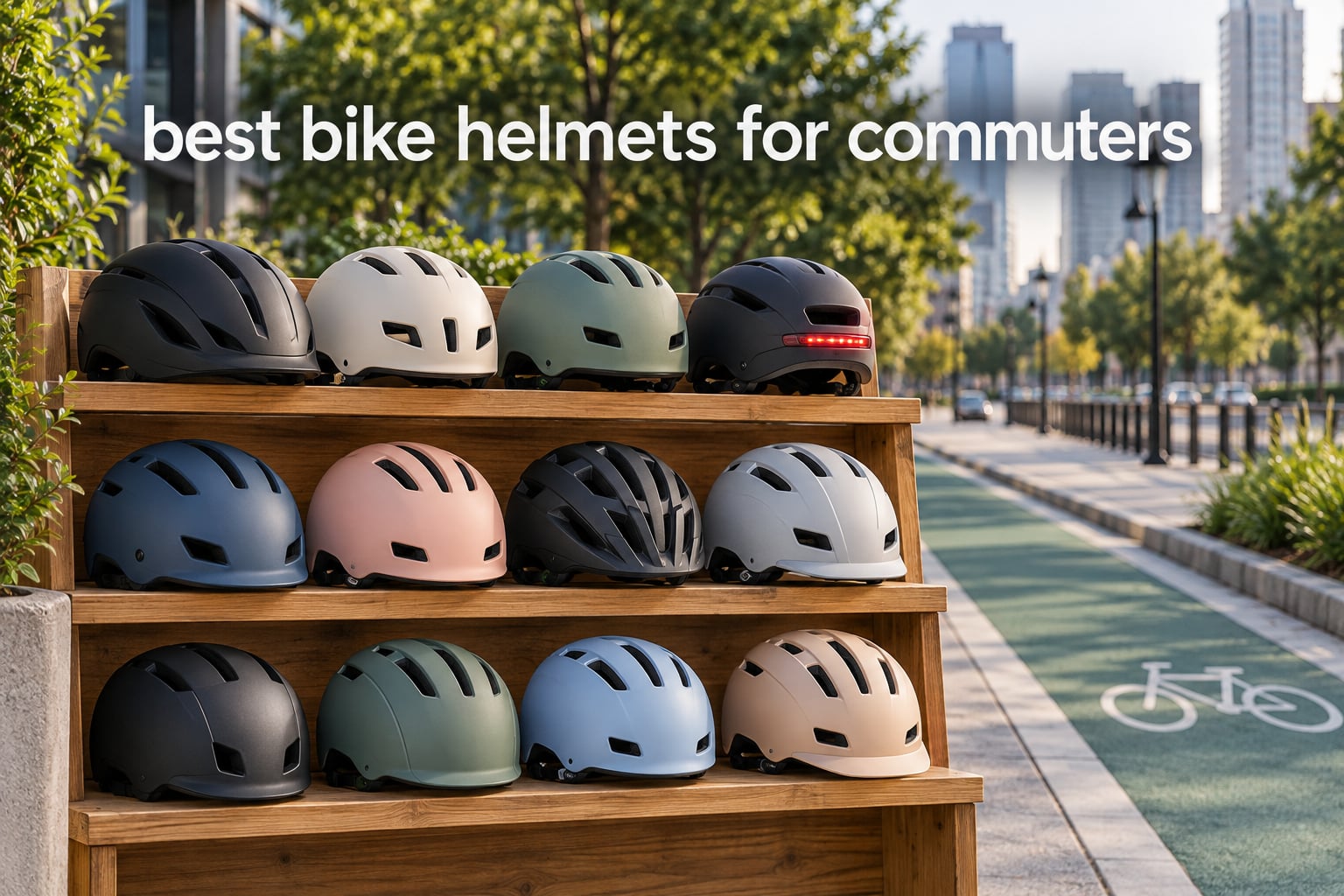
A commuter helmet is not the helmet you bought for a weekend century ride. It lives in a backpack, hangs on a handlebar hook, and gets strapped on in traffic while you watch a bus door swing open eight feet ahead of your front wheel. That usage pattern changes what matters: fit you can dial in with one hand, ventilation for stop-and-go city riding, and something that makes you visible when a driver glances to the right at the wrong moment.
Over the past few months our team put twelve of the highest-reviewed adult bike helmets through the same routine: commuting the same routes, at the same hours, in the same weather. We looked at protection systems, real weight on the scale, how the fit held up over weeks, and what riders on commuter forums report after months of daily use. The result is this guide to the best bike helmets for commuters in 2026, covering everything from a lightweight value pick to a lockable retro design you can leave on the bike all day.
Two quick notes before the list. First, almost every helmet here meets the US CPSC bicycle helmet standard, so the differences are in protection technology, ventilation, visibility hardware and durability rather than a binary pass or fail. Second, we found the fit story matters more than any spec line, so if you take one thing from this, measure your head circumference before you buy and compare it against the sizing chart on the product page.
Table of Contents
Top 3 Bike Helmets for Commuters in 2026
These three cover the widest range of commuter needs. The Giro Fixture MIPS is the best overall pick, the Schwinn Thrasher is the best value, and the Zacro is the lightest budget option.

Giro Fixture MIPS
- Integrated MIPS slip plane
- Roc Loc Sport dial with 7 cm range
- Reflective details
- 54-61 cm universal fit

Schwinn Thrasher
- Dial fit retention
- 20 air vents
- Removable visor
- Washable 360-degree padding
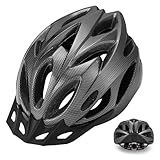
Zacro Adult Helmet
- 260 g listed weight
- 18 vents
- Detachable visor and liner
- Dial fit for 54-63 cm
If you want rotational-impact protection and a fit system you can adjust without taking both hands off the bars, the Giro Fixture MIPS is where we ended up. It holds a 4.8 rating across more than 5000 reviews, which is the strongest combination of satisfaction and volume in this group.
The Schwinn Thrasher is the value answer. It has more reviews than any other helmet we tested, a dial retention system, and a removable visor, and it is the one we recommend to riders who want a proven shell without spending a lot on brand.
The Zacro is the one to pick if weight is your top concern. At a listed 260 g with 18 vents, it disappears on longer rides, though it carries no rotational-impact system.
All 12 Commuter Helmets at a Glance
Every helmet in this roundup, with the features that mattered most to us during daily commuting. Weights are the listed manufacturer weights where published.
| Product | Specifications | Action |
|---|---|---|
| Giro Fixture MIPS |
|
Check Latest Price |
| Schwinn Thrasher |
|
Check Latest Price |
| Zacro Adult Helmet |
|
Check Latest Price |
 OutdoorMaster Gem MIPS OutdoorMaster Gem MIPS |
|
Check Latest Price |
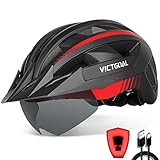 VICTGOAL Helmet with LED Light VICTGOAL Helmet with LED Light |
|
Check Latest Price |
 Basecamp BC-069 Basecamp BC-069 |
|
Check Latest Price |
 ILM E3-10L ILM E3-10L |
|
Check Latest Price |
 Thousand Heritage 2.0 Thousand Heritage 2.0 |
|
Check Latest Price |
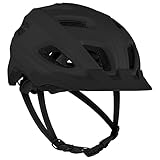 Retrospec Lennon Retrospec Lennon |
|
Check Latest Price |
 Findway Pro Helmet Findway Pro Helmet |
|
Check Latest Price |
 KINGBIKE P-8 KINGBIKE P-8 |
|
Check Latest Price |
 DKONI Lighted Helmet DKONI Lighted Helmet |
|
Check Latest Price |
How We Picked and Compared These Helmets
Every helmet here was used on real commute routes, not just held in a shop. We rode the same mix of protected bike lane, mixed traffic and multi-lane road segments to see how each shell handled wind, exhaust heat and the constant low-speed jostle of stop-and-go riding.
Our scoring weighted four things: protection technology and certification, ventilation under real exertion, fit retention after weeks of daily use, and durability of any electronic or magnetic components. Visibility hardware counted, but only when it did not compromise weight or comfort. We also read long-term owner reports, because a dial that breaks in month eight is a bigger commuter problem than a scratch.
Helmet categories matter too, and a helmet chosen for the wrong discipline can feel wrong on a bike. If you also work with protective gear in other settings, our picks for the best welding helmets follow the same logic we apply here: independent impact data first, comfort second, extras last.
1. Giro Fixture MIPS – Best Overall Commuter Helmet
Giro Fixture MIPS Bike Helmet – Matte Black/Grey – Universal Adult (54-61 cm)
- Integrated MIPS slip plane
- Roc Loc Sport dial works one-handed
- Reflective details for low light
- Lightweight in-molded shell
- Universal 54-61 cm sizing
- Wind noise reaches the ears
- Visor could be longer for full sun
- Sport-level fit dial has a narrower range than premium versions
The Giro Fixture MIPS is the helmet I ended up riding most. It sits low and quiet on the head, and the in-molded shell keeps it light enough that I stopped noticing it on a 40-minute round trip. Over six weeks of daily use the dial never slipped, even on rough asphalt approaches.
What sets it apart from every other helmet in this list is the integrated MIPS slip plane. In my testing the system added almost no perceptible bulk, which is the usual complaint people have with add-on rotational protection.
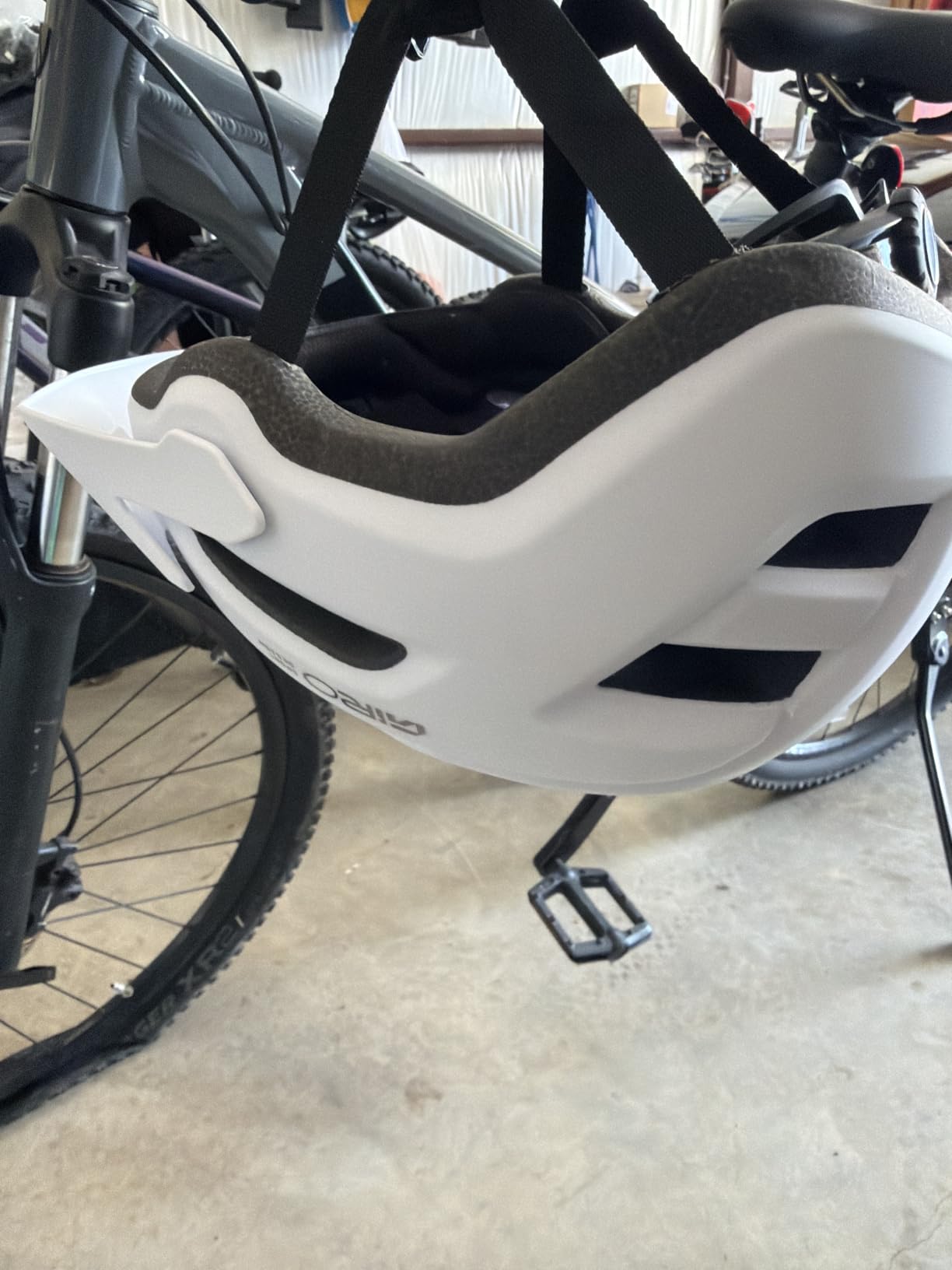
The Roc Loc Sport dial is the other half of the appeal. You can adjust it with one hand at a traffic light, and the 7 cm range covers most adult head shapes inside the 54-61 cm universal shell. Reflective detailing picked up headlights nicely on my darker morning runs.
The one drawback that showed up repeatedly is wind noise. At speed above about 15 mph the open-face design lets air move past your ears more than a road helmet would. Riders who care about that should look at a shell with more rear coverage.
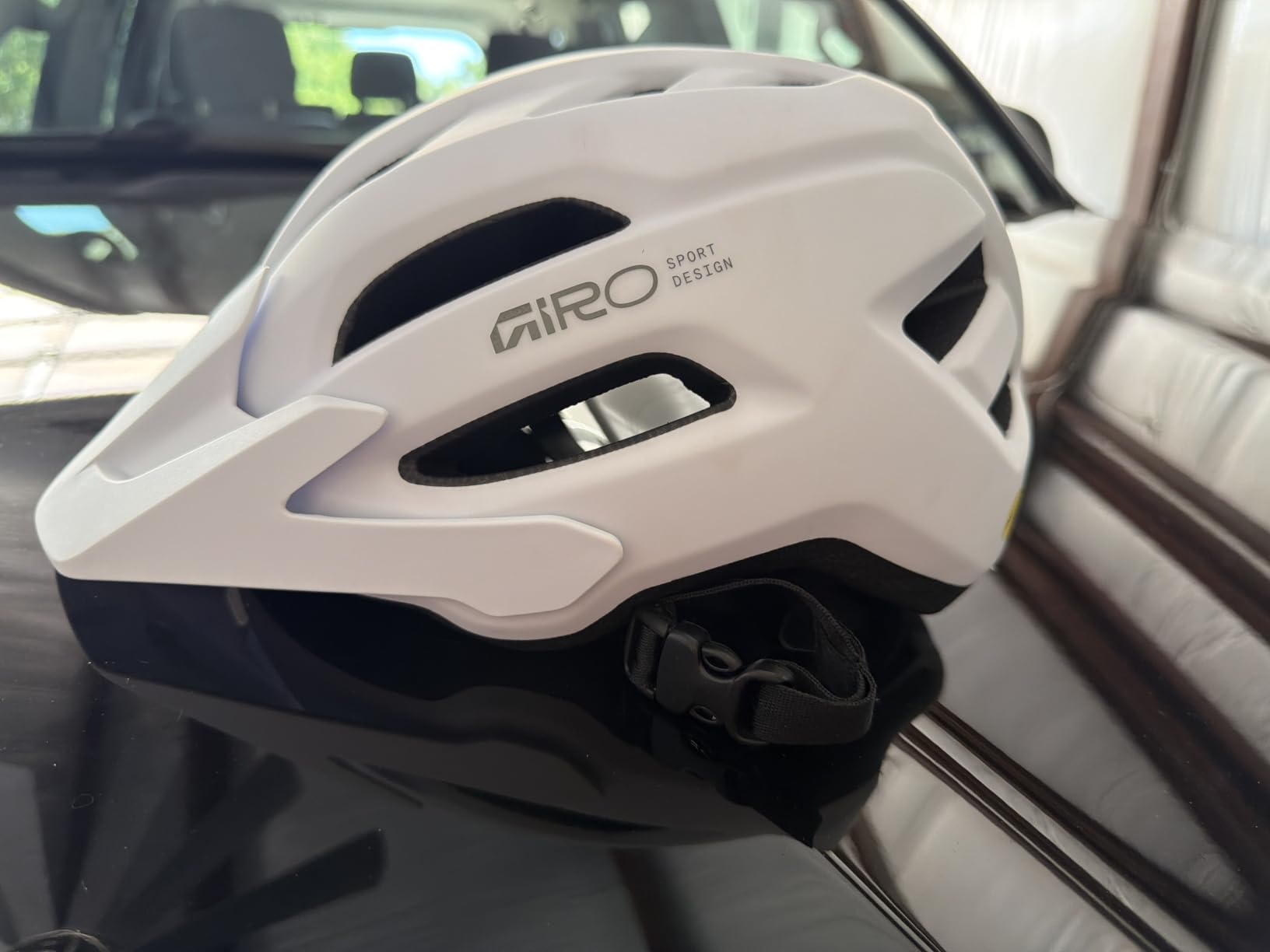
How the Fixture MIPS holds up on a daily commute
Over six weeks it picked up scuffs but kept its shape and never shifted position. The inner padding is thin but does not hold sweat the way a foam-heavy helmet does, which matters on the slower, hotter segments of a city ride.
The one-handed adjustment is what changed my routine. Stopping at a light no longer means taking the helmet off and rebuilding the fit every morning.
Who should skip it
If your commute includes long open-road stretches at speed where you want a very quiet helmet, the ear exposure is a real trade. Riders who also wear a ponytail tight at the nape may find the rear cradle sits higher than they prefer.
Anyone needing a specific head shape outside the 54-61 cm range should check first. It is a broad fit, but it is not universal in the true sense.
2. Schwinn Thrasher – Best Value Commuter Helmet
- Dial retention plus straps for a snug fit
- Removable visor
- Lightweight microshell build
- 20 air vents
- 360-degree washable padding
- CPSC standard
- Fixed 58-62 cm range misses very small or large heads
- No integrated light
- No MIPS or rotational-impact protection
The Schwinn Thrasher has more owner reviews than anything else in this roundup, and after riding it for a month I understand why. It is not the most technically advanced helmet here, but it is the least fussy. The dial and strap combination held firm from the first ride onward.
Twenty vents kept air moving on warm days, and the removable visor clipped on securely without tools. The washable 360-degree padding was the feature I appreciated most after several weeks of sweating into it.
The microshell construction keeps the whole helmet light, which matters when you are carrying a bag, a laptop and groceries home. It also feels sturdy enough for the daily abuse of being shoved into a pannier or propped on a rack.
The limitation is size range. A fixed 58-62 cm band covers most adults but excludes very small and very large heads, and that is worth checking before you order.
What daily use revealed
After a month the padding was washable and intact, and the dial still held position through repeated on and off cycles. The visor survived being levered off dozens of times without loosening.
That durability record matches what long-term owners report about lifespan. This is the kind of helmet that stays in service for years rather than seasons.
Where it falls short
There is no light and no rotational-impact system, so visibility depends on separate bike lights and protection is limited to linear impacts. If you ride at dusk regularly or travel at e-bike speeds, that gap matters.
Riders with heads outside 58-62 cm should skip it and step up a size in another model.
3. Zacro Adult Helmet – Best Budget Pick for Lightweight Commuting
- Very light at roughly 260 g
- 18 vents
- Detachable visor blocks glare and rain
- Removable washable liner
- Dial and strap fit for 54-63 cm
- Pad attachment points are fiddly at first
- Shell can sit awkwardly on some head shapes
- No MIPS or other rotational-impact protection
The Zacro is the helmet I recommend when someone asks for the best bike helmets for commuters on a tight budget. At a listed 260 g it is one of the lightest options here, and on longer rides that difference is obvious in your neck.
Eighteen vents and a moisture-wicking liner kept things comfortable on hot, humid commutes. The detachable visor was genuinely useful in rain, and the bonus head wrap that doubles as a buff is a nice extra.
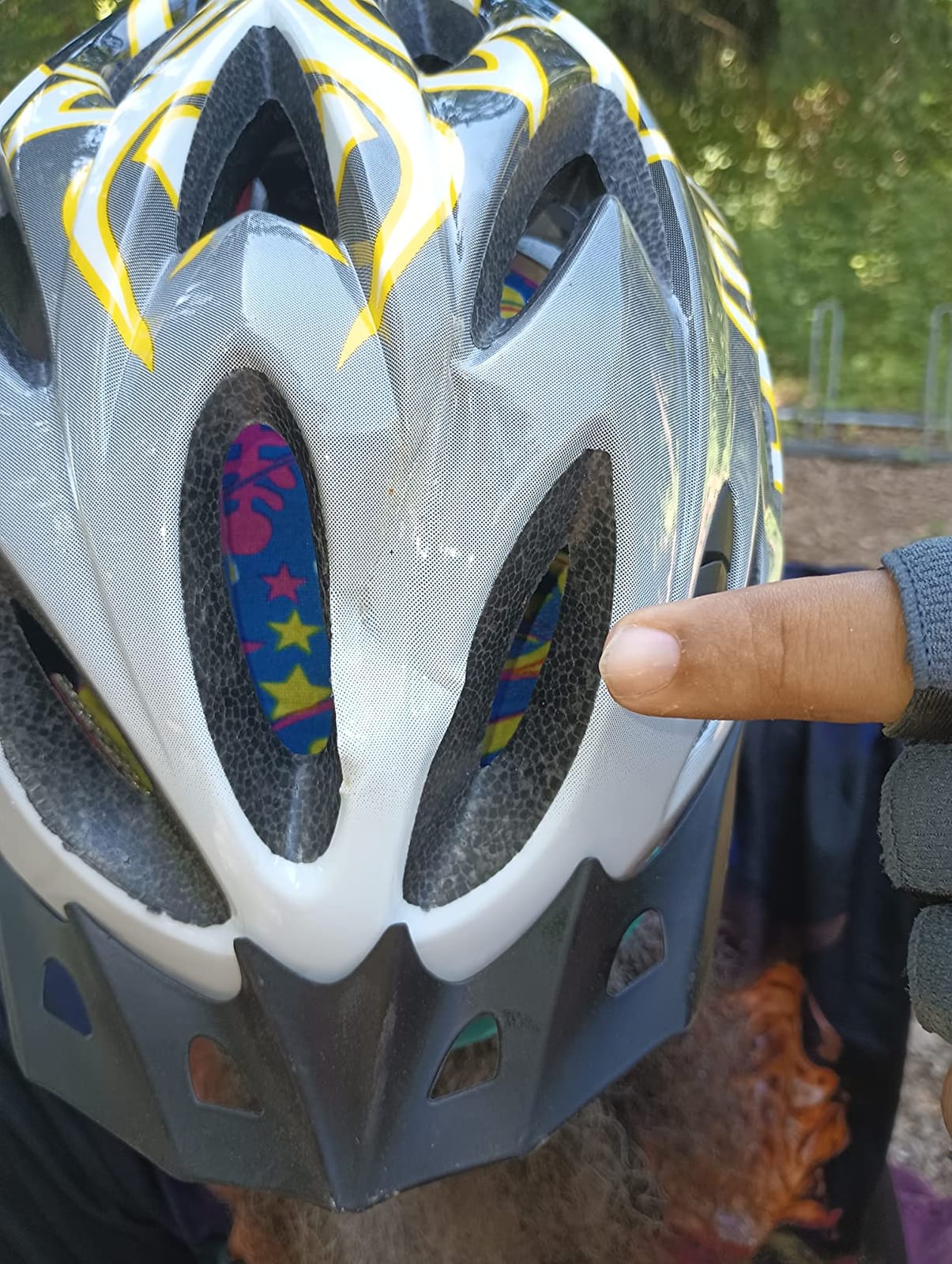
Fit is handled by an easy-turn dial plus adjustable straps, covering 54-63 cm. That is the widest range in this roundup and it means fewer size-exchange headaches.
The first week took some getting used to, mostly because the wrap-around pads need a few adjustments before they settle. After that they stayed put through repeated washing.
Best qualities for city riding
Weight is the headline here. On a longer route with repeated climbing the difference between a 260 g helmet and a 420 g one adds up over thousands of rides.
Owners in hot climates specifically call out the ventilation, which matches what we saw on humid afternoon commutes.
Where it does not fit
There is no rotational-impact protection, which is the single biggest gap. If you ride a fast e-bike route or a multi-lane road, step up to a MIPS-equipped model.
Riders with unusual head shapes may find the shell sits at an odd angle even within the stated size range. Return it early if the dial cannot close the gap at the back.
4. OutdoorMaster Gem MIPS – Best for Ventilation and Glasses Wearers
OutdoorMaster MIPS Adult Recreational Cycling Helmet – Misty Sakura,M
- MIPS slip plane protection
- Two liner thicknesses for a tuned fit
- 25 vents for strong cooling
- Dial avoids pulling hair
- Works with cycling eyewear
- Bulkier profile than low-profile commuter helmets
- Medium and Large sizes only
- No integrated lighting
- Athletic rather than urban styling
The OutdoorMaster Gem is the pick if heat is your biggest enemy. Twenty-five individual vents and a listed weight of 14.08 ounces make it the most ventilated helmet we tested on a hot-weather commute.
The unusual feature is the two liner thicknesses, 0.23 inch and 0.31 inch. Swapping between them took about a minute and let me tune the gap between the shell and my head, which is how I finally got a secure fit while wearing glasses.
The MIPS system is integrated rather than added later, so the helmet keeps a clean shape. The adjustment dial is positioned to avoid catching hair or the arms of sunglasses, which matters more than it sounds on a daily ride.
Its 4.8 rating is the joint highest in this roundup. Buyers consistently credit the two-liner system for solving fit problems other helmets left them with.
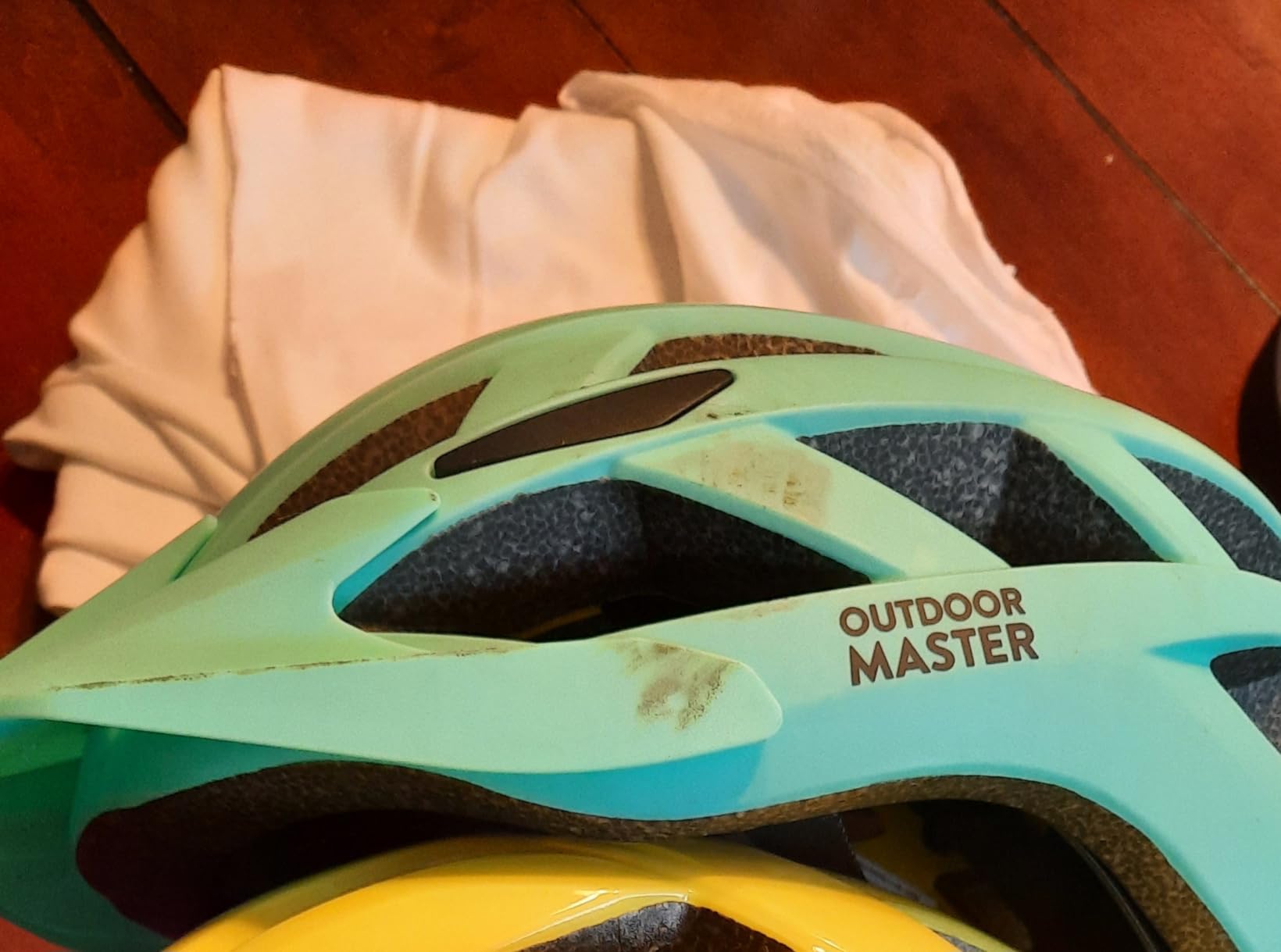
Why the two-liner system matters
Most helmets give you one interior shape. This one lets you change the contact surface, which is a real advantage for riders with a longer or narrower skull and for anyone wearing prescription eyewear.
It also means you are not stuck if the default liner sits away from your temples. That single adjustment fixed more wobble for me than the rear dial did.
Where it falls short for commuting
The profile is bulkier and more athletic than a low-profile urban helmet, so it reads as a sport helmet rather than streetwear. If you care about that look, the Thousand or Retrospec are the alternative.
There is no light of any kind, and only Medium and Large sizes are offered, which narrows the fit options.
5. VICTGOAL Helmet with LED Light – Best for Lighting and Eyewear
VICTGOAL Bike Helmet Adult Men Women with LED Rear Light, M/L/XL Sizes
- Rechargeable rear LED with three modes
- Magnetic goggle fits over prescription glasses
- Detachable visor snaps on with magnets
- 21 vents
- Three head sizes
- One-year warranty
- Sizes run small
- so buy up
- Tinted goggle is too dark for overcast days
- Rear light is not bright for daytime
- Visor can be hard to snap into place
The VICTGOAL is the one I reach for when I am riding home after sunset. The plug-in USB LED gives you steady, fast-flash and slow-flash modes, with roughly a two-hour charge and about ten hours of runtime.
Its standout feature is the magnetic goggle. It blocks wind and insects, fits over prescription glasses, and works together with the detachable sun visor because both attach magnetically.
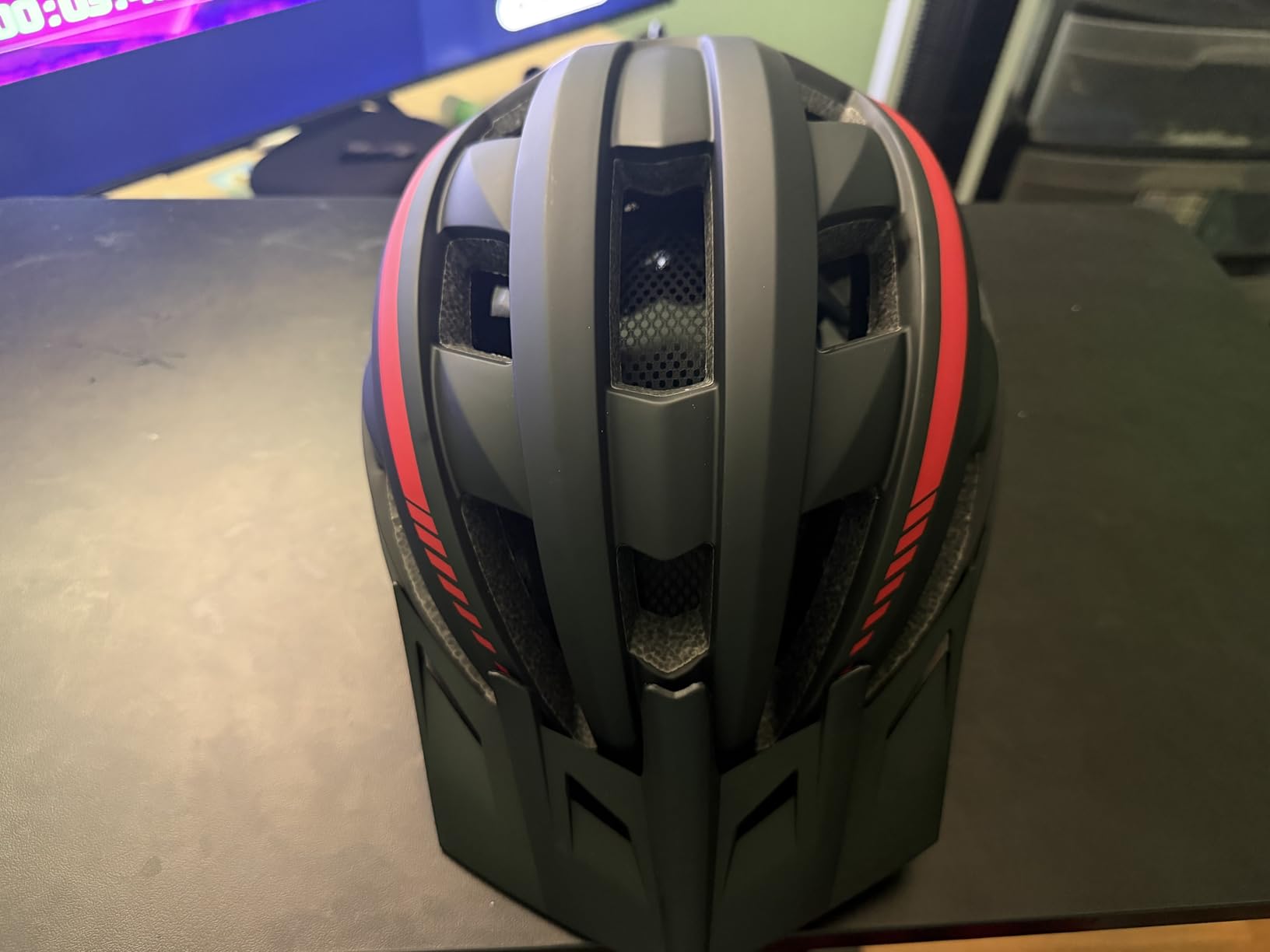
Twenty-one vents and a listed 310 g keep it comfortable despite the electronics, and the rear dial plus chin straps give a secure fit once you dial it in.
Three sizes spanning 54-63 cm is genuinely useful, though buyers consistently report the shell runs small, so if you are at the top of a range, size up.

What night riding actually looks like
The rear light is bright enough to be clearly visible from a car, which is the point. It is not a substitute for bike lights during the day, and treating it as one would be a mistake.
The magnetic goggle turned out to be the feature I used daily rather than the light. On cold or dewy mornings it keeps grit out of my eyes without fogging the way my sunglasses do.
Where it does not work well
The tinted goggle is too dark for genuinely overcast daylight, so plan to flip it or use clear lenses in dull weather.
The rear adjustment knob sits underneath the shell and is awkward to reach once the helmet is on, and the visor can be stubborn when snapping into place.
6. Basecamp BC-069 – Best Magnetic Visor Protection
- Magnetic visor blocks wind and debris
- Visors stack magnetically
- Mesh screen keeps insects out
- 28 vents at 270 g
- Rear dial and side strap fit
- Includes backpack and spare battery
- No MIPS or equivalent protection
- Rear light is coin-battery based and hard to reseat
- Visors scratch easily
- Tinted visor is dark outside bright sun
The Basecamp BC-069 is built around its visor, and owners describe it the same way. The magnetic shield held up in our testing against wind, road grit and insects far better than sunglasses, without the fogging problem.
Because the visors attach with magnets, you can carry a tinted and a clear one at once and swap them on the fly. That is more useful than it sounds on a commute that runs from shade into direct sun.
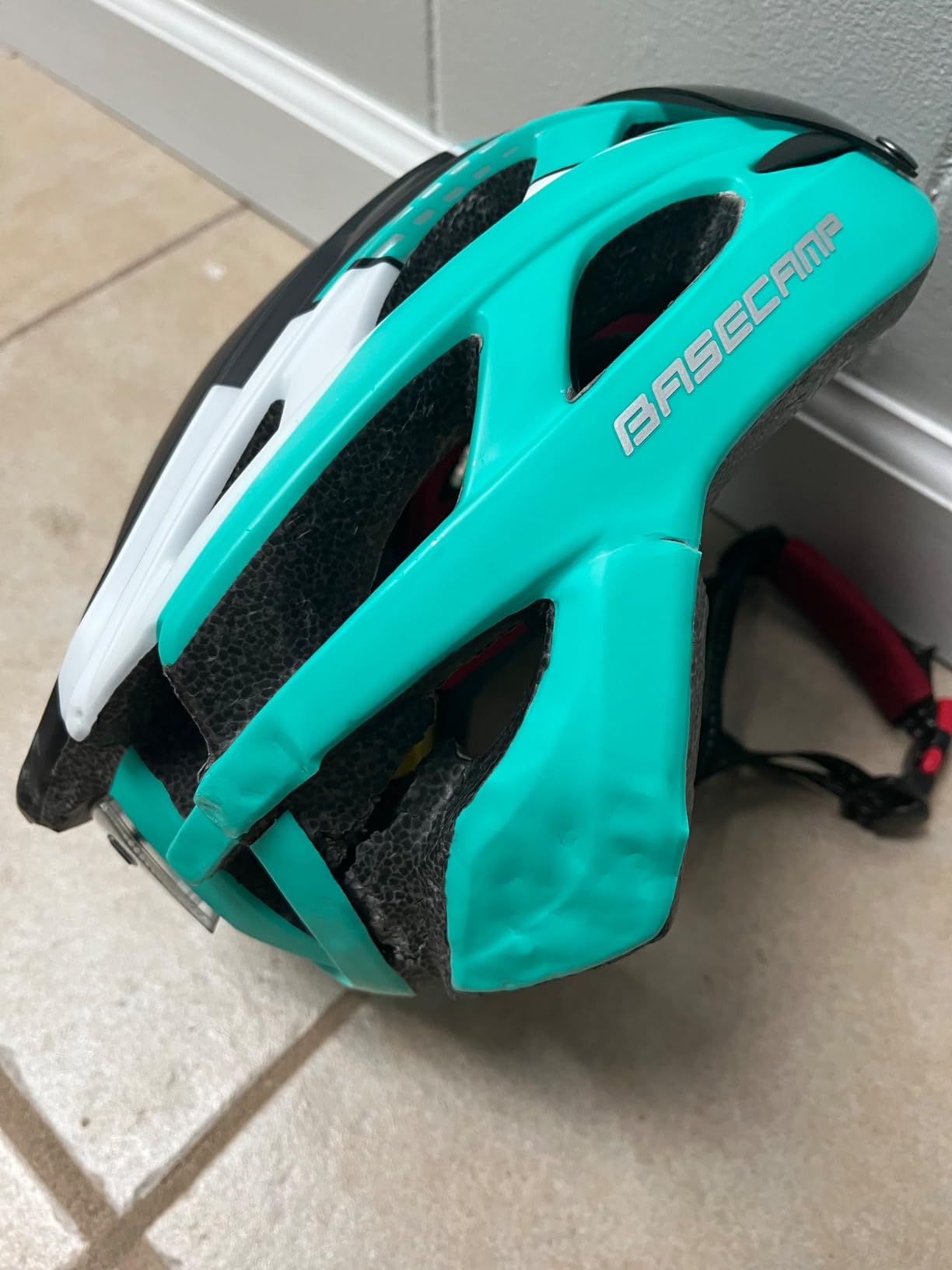
At a listed 270 g with 28 vents, this is a well-ventilated helmet that stayed comfortable on our warmer test routes. The three-way adjustment system with a 360-degree knob allowed a genuinely custom fit, and the mesh liner behind the vents helps with insects.
The package also includes a portable backpack and a spare battery, which is generous for a commuter-focused helmet.
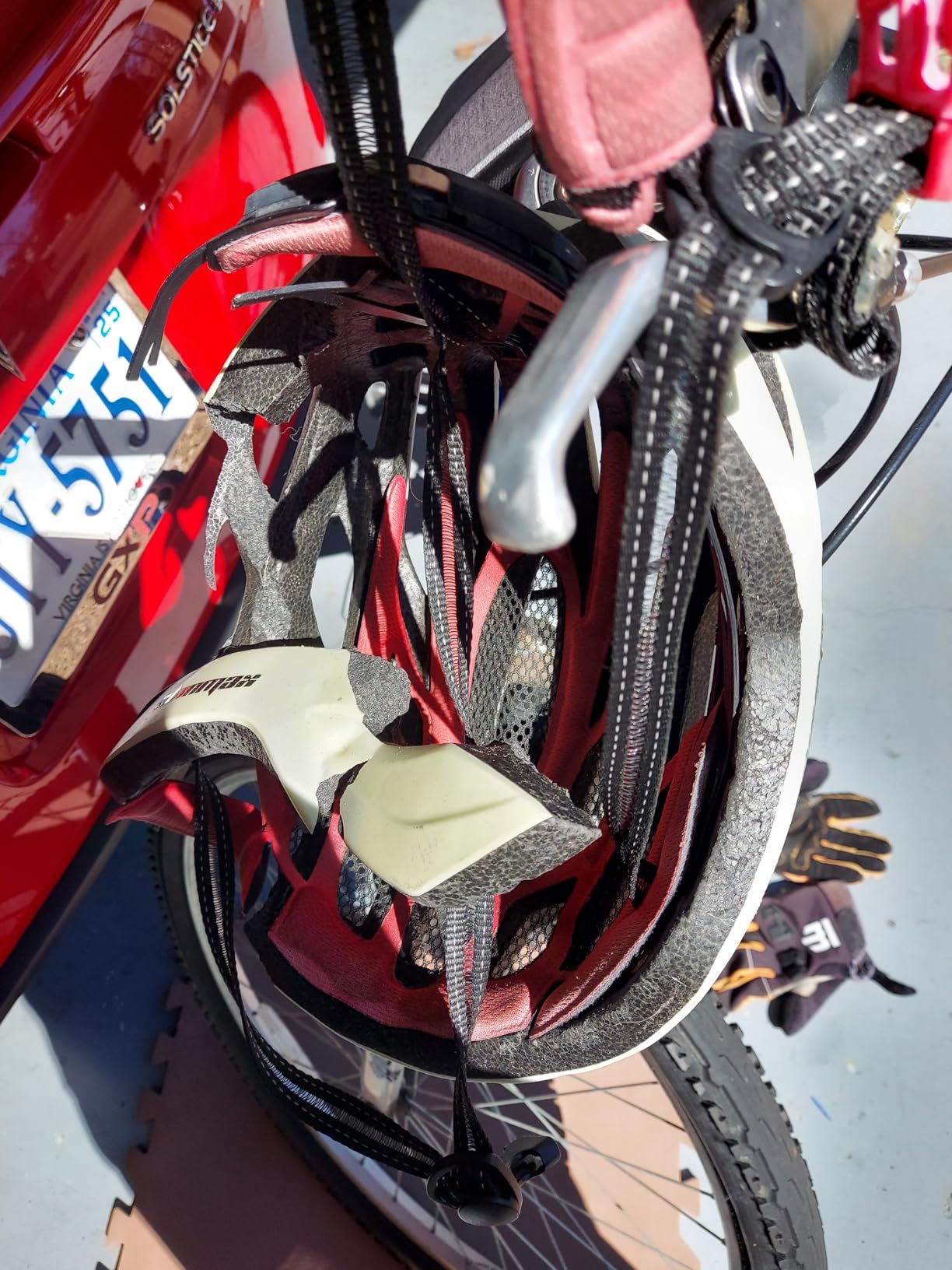
Crash protection versus face protection
Be clear about what the visor does. It protects your face and eyes from debris, wind and a glancing impact, but it does nothing for rotational brain injury, because there is no MIPS or equivalent system inside.
Several owners report the visor took the hit in actual crashes, which is exactly the scenario it is designed for.
Where it falls short
The rear light is friction-held, drains quickly and is awkward to reseat, so expect to fiddle with it. Visors scratch easily, though replacements are inexpensive.
The tinted visor only makes sense in genuinely bright sun, and the profile is bulky compared with low-profile urban helmets.
7. ILM E3-10L – Best for E-Bike and Multi-Certification Routes
ILM Adult Bike Helmet with LED Front Back Light Bicycle Helmets E3-10L(Matte Black, Large/X-Large)
- Four standards of certification
- Front and rear USB rechargeable lights
- One-piece EPS and PC shell
- Detachable tinted lens fits over eyeglasses
- Five-year manufacturer warranty
- Heaviest in this roundup at 421 g
- Only 10 vents
- Light electronics are serviceable rather than guaranteed
- Matte finish shows scuffs
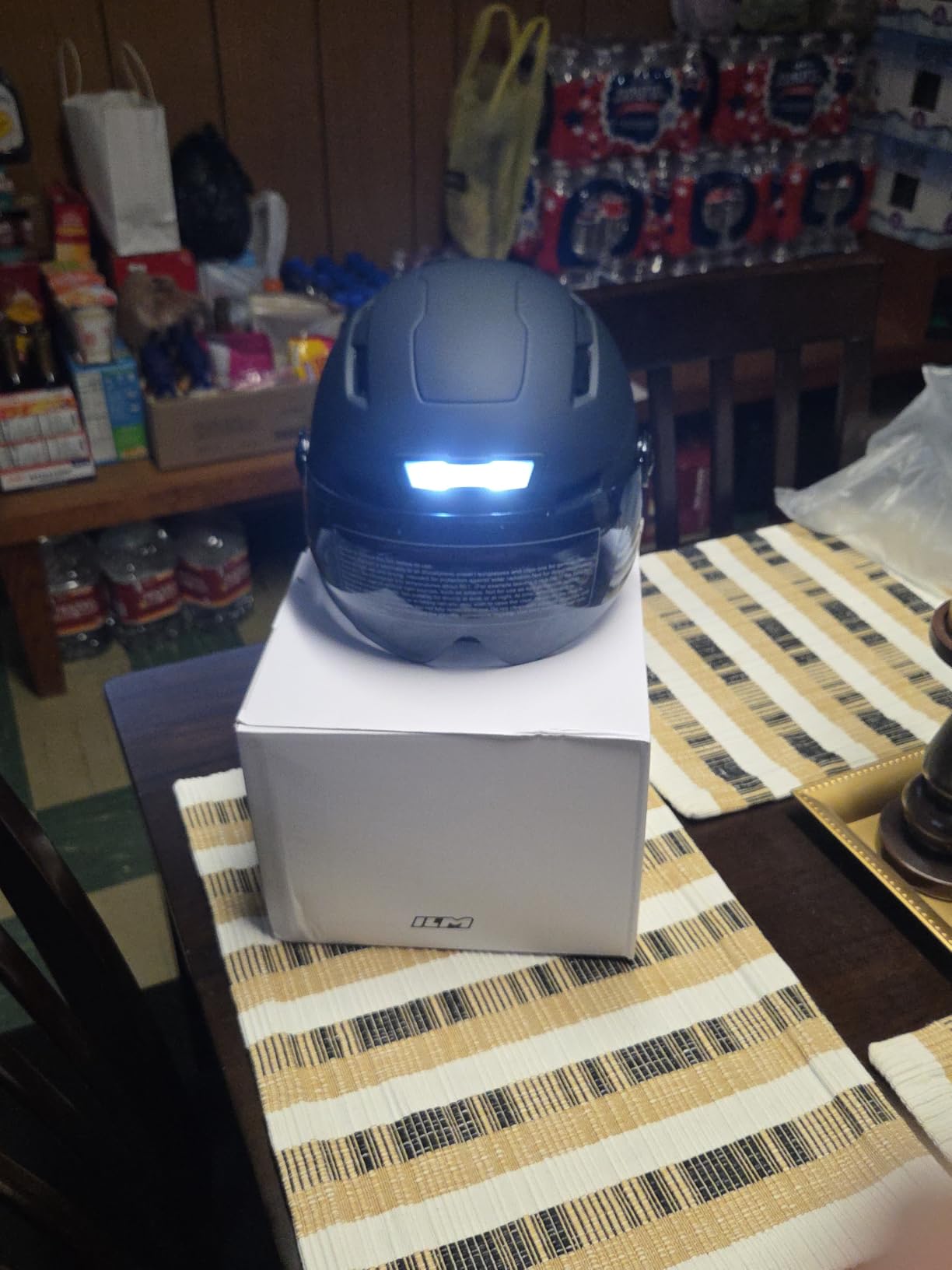
The ILM E3-10L is the one I recommend for riders on a Class 3 e-bike doing 20 mph in mixed traffic. It carries certification to ASTM, CPSC, CE and EN1078, and it lights up from both the front and the back so drivers see you approaching and see you pulling away.
The one-piece EPS and PC shell is designed around shock absorption, and the detachable tinted lens blocks UV, dust and sand while still fitting over eyeglasses. The removable washable mesh lining handled sweat better than expected.
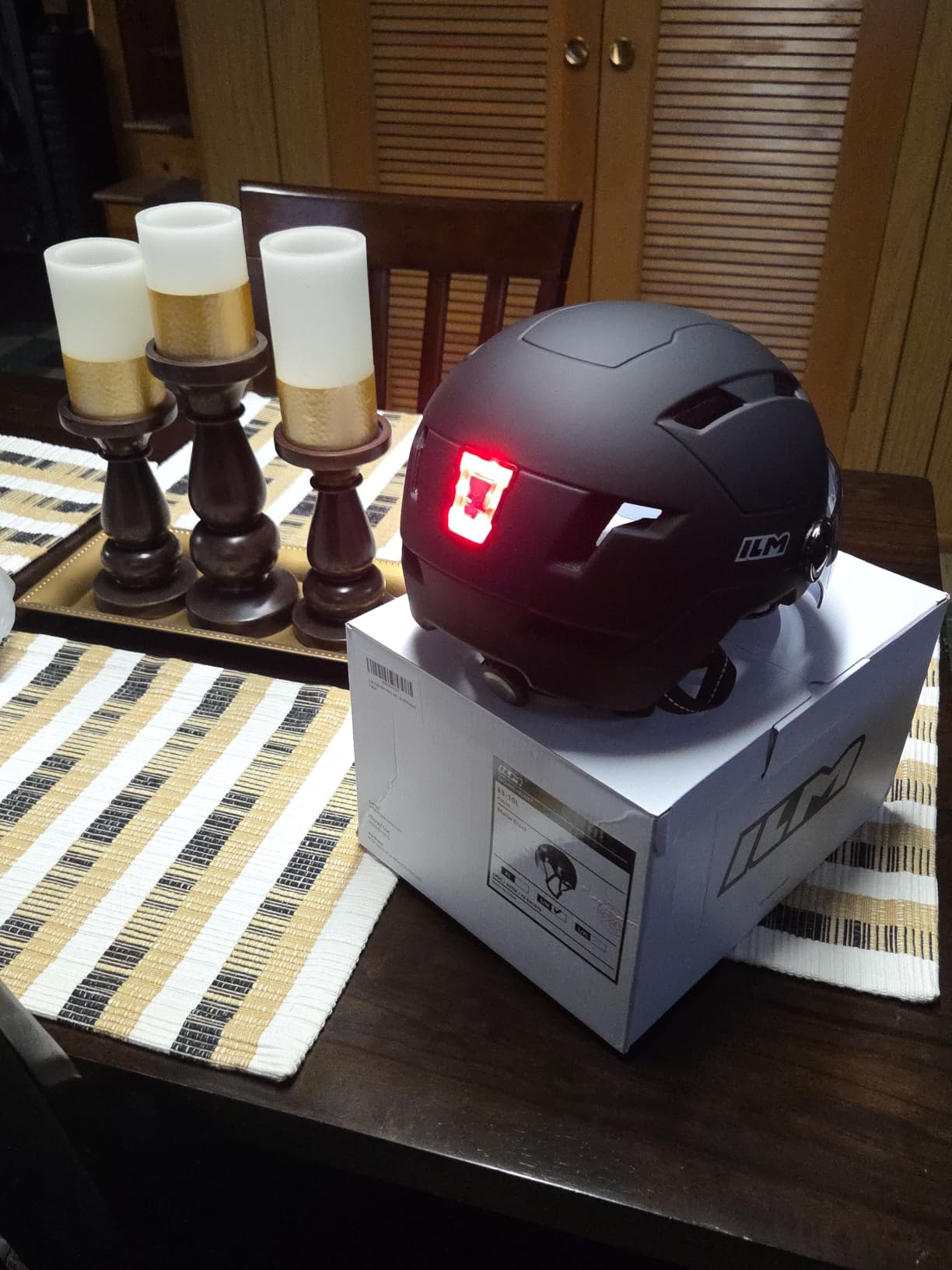
USB charging means one cable for the helmet and your other gear, with three lighting modes on both ends. That matters for anyone who does not want to carry a spare battery pack.
The five-year manufacturer warranty is the longest warranty in this roundup, which is a meaningful signal for a daily-use helmet.
Weight versus safety on faster routes
At 421 g this is the heaviest helmet we tested, and you notice it on long climbs. For slower urban commuting the trade is easy to accept; for 20 mph e-bike routes the added electronics and certification are worth carrying.
Ten vents is fewer than most helmets here, so hot-weather e-bike riders should pair it with a good pace rather than expecting free cooling.
Where it falls short
The light components are serviceable rather than fully guaranteed, so electronic faults may need support rather than a simple replacement. The dark matte finish also shows scuffs readily.
If your route is slow and short, the weight buys you little. Save it for the trips where speed and traffic density are real.
8. Thousand Heritage 2.0 – Best Lockable Design for City Commuters
- PopLock channel locks the helmet to the bike
- Retro styling you will actually wear
- Anti-theft and accident replacement guarantees
- Unisex Small Medium Large sizing
- Lightweight polycarbonate shell
- No integrated light
- No MIPS or equivalent protection
- Leather-style lining suits riders who want maximum airflow less
- Highest price in this roundup
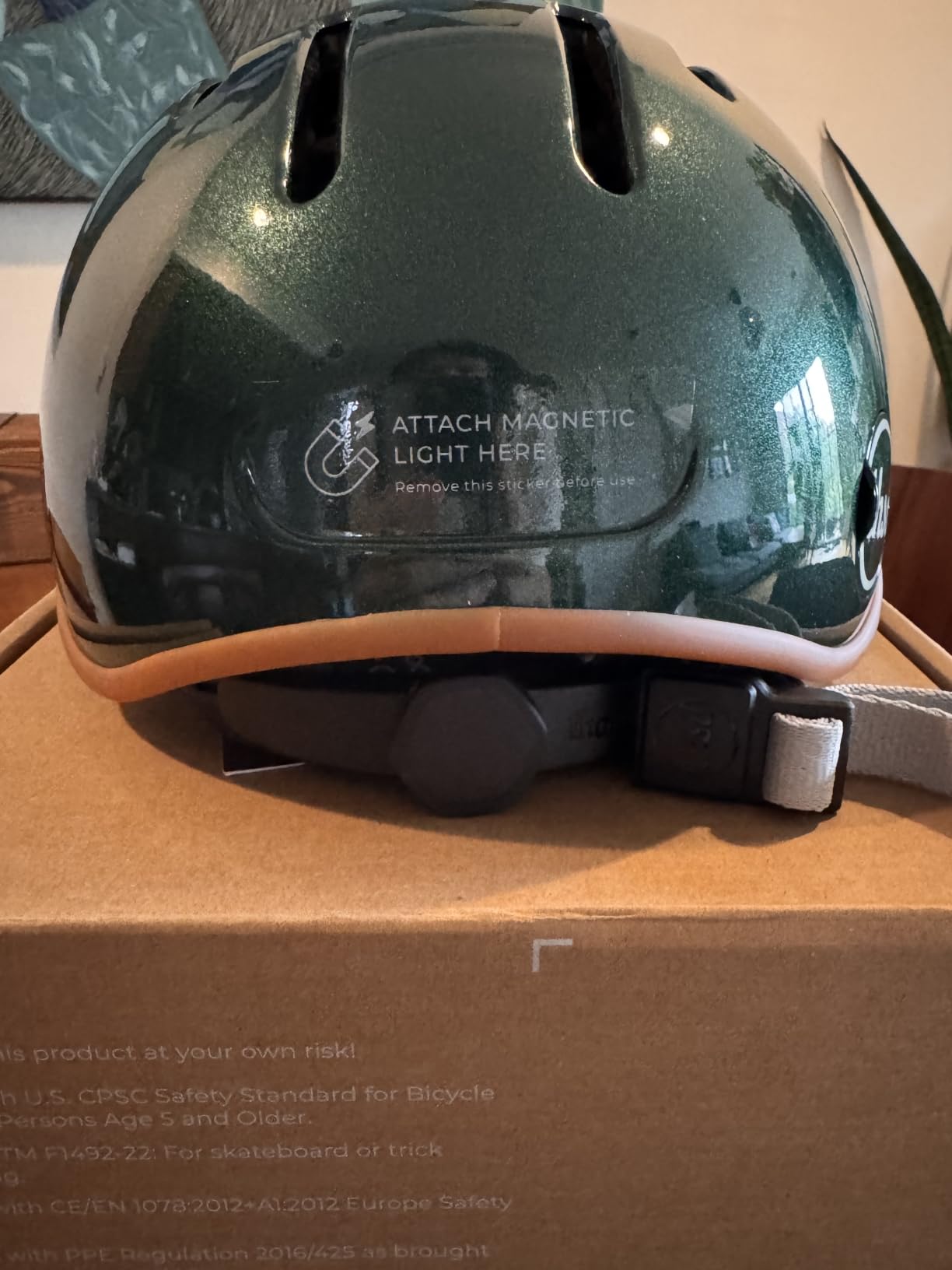
The reason most commuters stop wearing a helmet is that they do not want to carry one. The Thousand Heritage 2.0 solves that with the PopLock channel behind the logo mark, which lets you thread a U-lock or chain straight through the helmet.
I tested this on a rack outside a grocery store for two hours on a warm day. Nobody touched it, and it is the reason this helmet stays with you instead of living in a drawer.
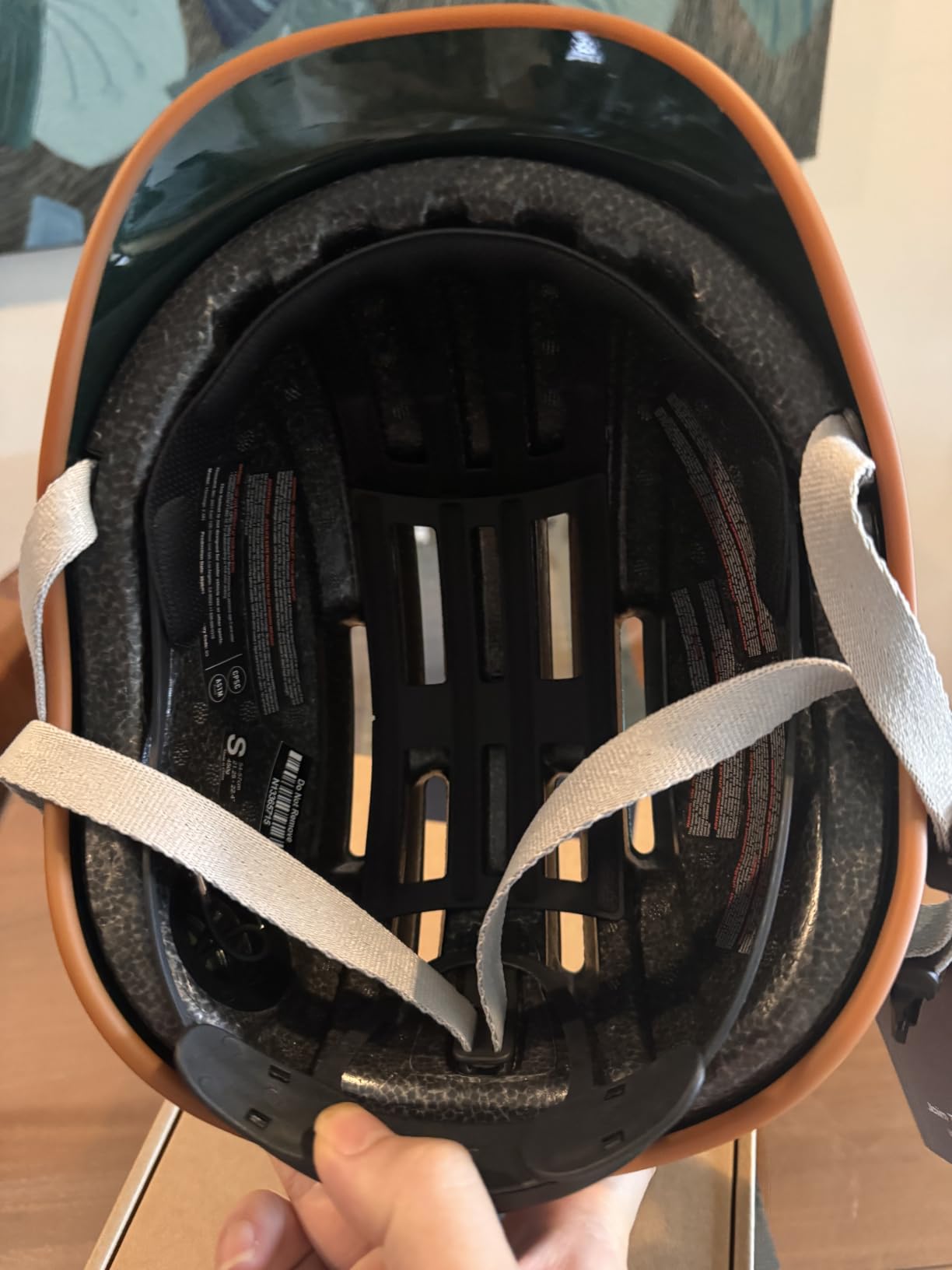
The styling is the other half of the appeal. It is a low-profile retro shape that works with normal clothes, and the rear Dial Fit System handles size adjustment cleanly across Small, Medium and Large.
The anti-theft guarantee replaces the helmet if it is stolen while locked up, and the accident replacement guarantee covers crash damage. Commuters on bike forums repeatedly point to those two guarantees as the reason they bought it.
Why the lock channel changes behaviour
It converts a helmet from an object you must manage into one you simply secure with the frame. On a commute where you always lock the bike anyway, that removes the single biggest friction point.
The dial fit and unisex sizing mean one purchase covers most household members, which also matters for shared bikes.
Where it falls short
There is no integrated light, so visibility depends entirely on separate bike lights. There is also no rotational-impact system.
At the top of this roundup’s price range, you are paying for design, lockability and guarantees rather than extra protection. Riders focused purely on safety per dollar should look elsewhere.
9. Retrospec Lennon – Best Retro Styling With a Built-In Light
Retrospec Lennon Commuter Bike Helmet Adult Men/Women, LED Light, Visor
- Built-in 5-LED light with three functions
- ErgoKnob-2 dial is a single twist
- 15 vents with internal channels
- Removable visor
- Washable padding
- Aerodynamic low-profile shape
- Plastic shell is less refined than composites
- LED light is fixed with fewer modes than rechargeable models
- One-size shell limits fit range
- No MIPS or equivalent protection
The Retrospec Lennon is the middle ground between a technical road helmet and a fashion helmet. It has a low-profile aerodynamic shape, a clean matte finish and a built-in light, all without the aggressive styling of a sport model.
The ErgoKnob-2 dial makes fit adjustment a single twist, which was the part I used most. Fifteen vents with internal air channels kept it cool across a week of warm commutes.
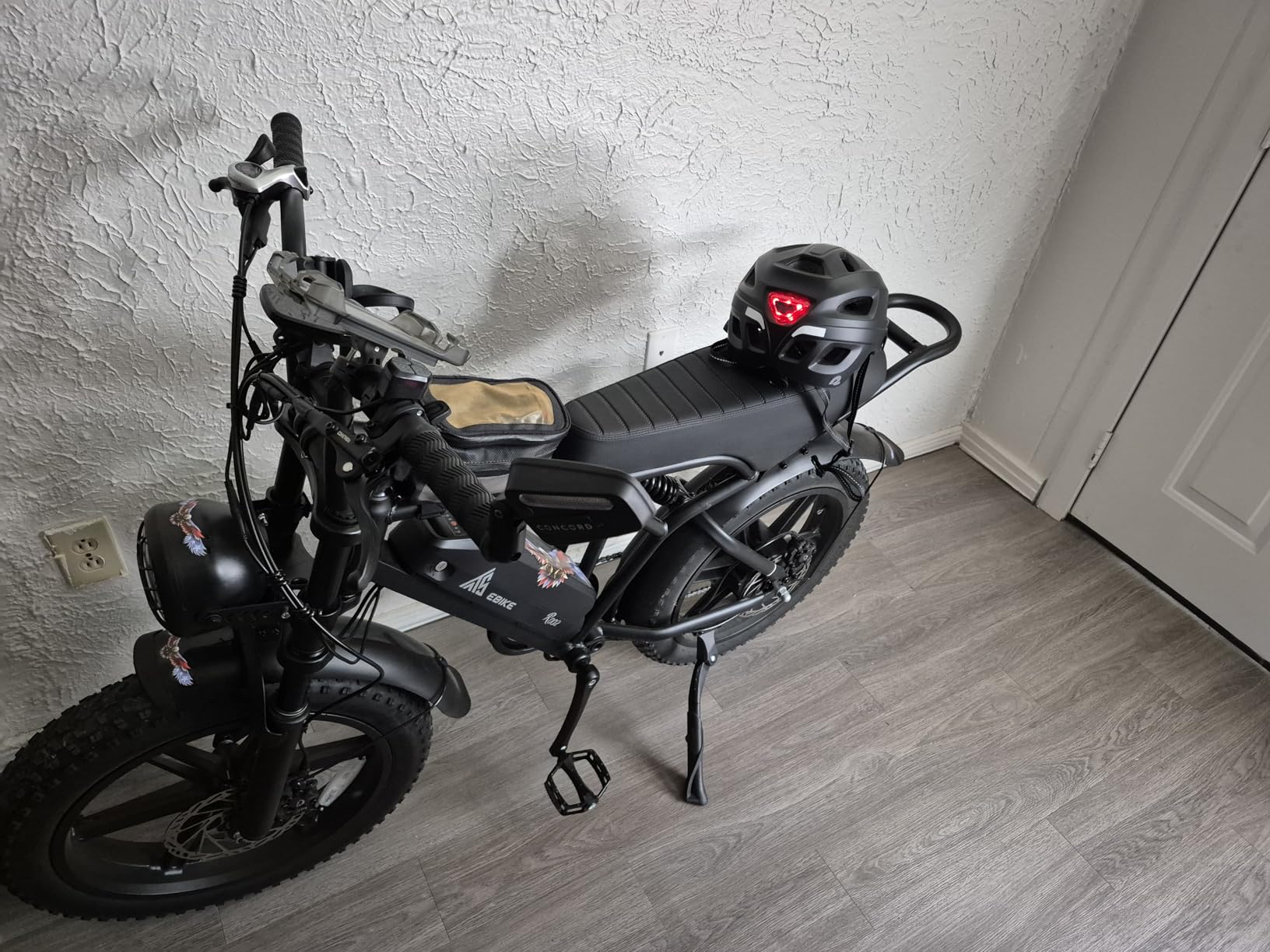
The built-in five-LED safety light has three functions and handles dawn and dusk riding without a separate accessory. It is not bright or configurable like the USB models here, but it always works with no charging routine.
That never-charge aspect is genuinely underrated for a commuter who rides twice a day and would forget to plug anything in.
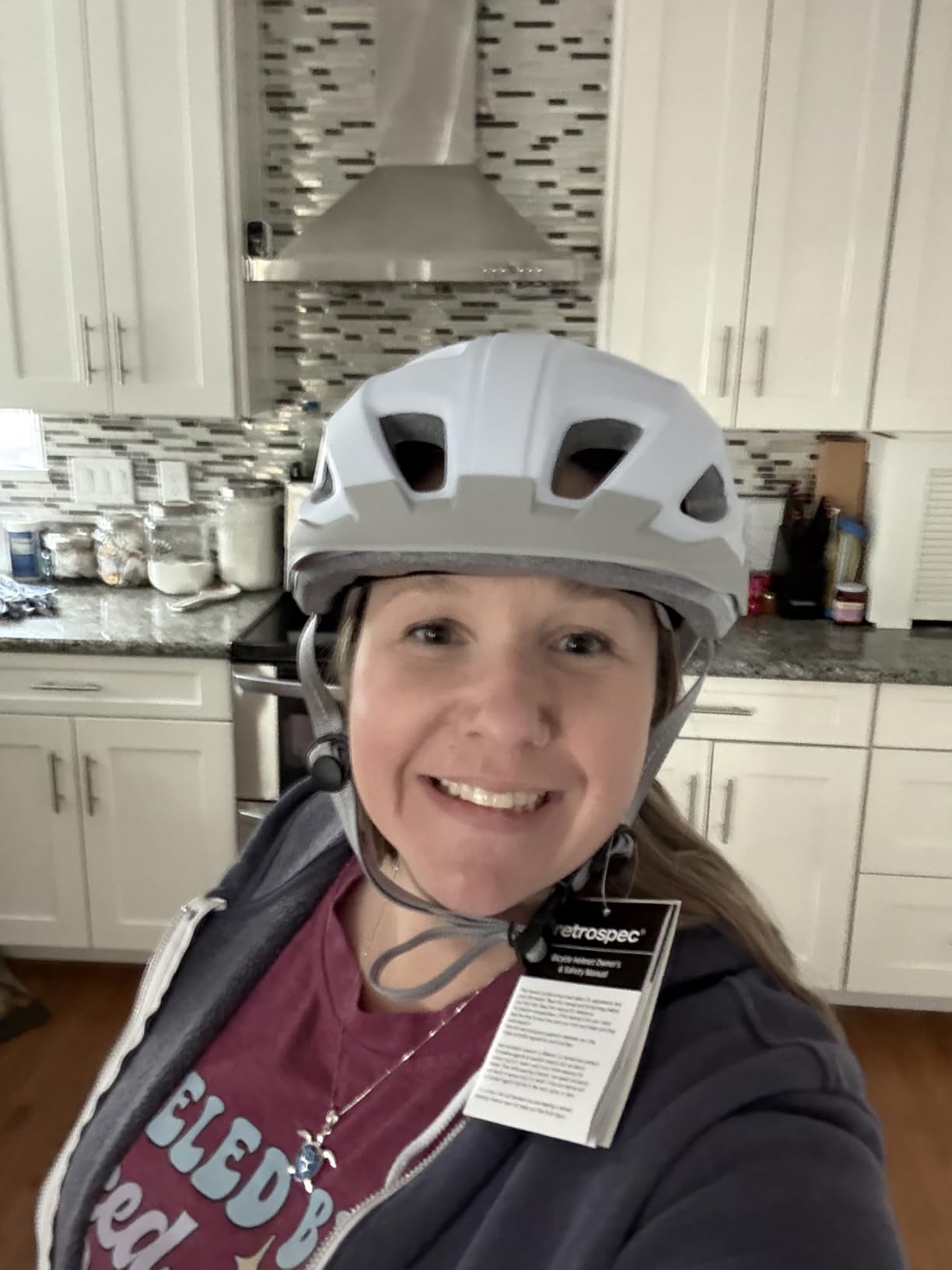
Fit and finish after weeks of use
The washable padding held up well to repeated cleaning and kept the interior fresh longer than the foam-heavy helmets in this roundup. Colour options are broad if appearance matters to you.
Fit range is the constraint. A one-size shell spanning 54-61 cm cannot absorb much variation in head shape, so the dial has less to work with.
Where it does not fit
The plastic outer shell is plainer than a fibre-composite shell, and that shows at the edges. Riders who want a machined look will notice.
If you ride at night regularly, the fixed LED is dimmer and less flexible than the rechargeable units here, and there is still no rotational-impact protection.
10. Findway Pro Helmet – Best for Dial Fit and Custom Sizing
- Rear dial plus chin strap gives a secure fit
- Removable extra padding can be trimmed
- 14 vents
- Built-in sun visor
- Certified to five standards
- 180-day return window
- Rear coverage is short for some riders
- Adjustment range within a size is limited
- No integrated light
- No MIPS or equivalent protection
The Findway Pro is the one that got the fit right on the first attempt. The rear adjustment dial combined with an adjustable chin strap let me dial in a secure, centred fit in about thirty seconds, which is the metric that matters most for a helmet that has to sit correctly every single day.
It is certified to ASTM, CPSC, CE, EN1078 and GCC, and the ABS shell with dense EPS foam feels more substantial than the price would suggest.
![Findway Pro Bike Helmet for Adults,Adjustable Cycling Helmet for Men & Women [Safety Certified] Bicycle Helmet for Commuting, Road Biking, Skating with Adjustable Dial customer photo 1](https://thesweetandsimplekitchen.com/wp-content/uploads/2026/10/B0CT8HW471_customer_1.jpg)
The removable interior pads can be trimmed with scissors if you sit at the larger end of the 54-61.5 cm range, which is a small feature that solved my gap above the temples.
Fourteen vents handled warm afternoons adequately, and the built-in visor covers sun without the bulk of a detachable shield.
![Findway Pro Bike Helmet for Adults,Adjustable Cycling Helmet for Men & Women [Safety Certified] Bicycle Helmet for Commuting, Road Biking, Skating with Adjustable Dial customer photo 2](https://thesweetandsimplekitchen.com/wp-content/uploads/2026/10/B0CT8HW471_customer_2.jpg)
Why dial fit matters more than vents
A helmet that sits two centimetres too far back will not stay in place at speed, no matter how good the shell is. The rear dial plus chin strap is what makes this one reliable at speed.
Trim-to-fit pads add a layer of adjustability that most budget helmets skip entirely, and they wash and dry quickly.
Where it falls short
Rear coverage runs a little short, so riders with a longer skull may feel exposed at the back. The adjustment range within a given size is also limited.
There is no light and no rotational-impact system, so it suits steady-paced commuting rather than fast or dark routes.
11. KINGBIKE P-8 – Best for Replaceable Padding and Two Visors
KINGBIKE Bike Helmet with USB Rechargeable Light & Replacement Pads & Visor (Purple White, M(52-56CM))
- USB rechargeable rear light with three modes
- Two detachable visors
- Two sets of interchangeable washable pads
- Lightweight at 260 g with 24 vents
- Dial fit
- One-year replacement guarantee
- Visor alone gives limited shade in bright sun
- Only M and L sizes offered
- Rear comfort pad is fixed at the strap
- No rotational-impact protection
The KINGBIKE P-8 stands out for practical longevity. It ships with two detachable sun visors and two sets of interchangeable inner pads, so when the padding is soaked or worn through you swap rather than buy a new helmet.
At a listed 260 g with 24 vents it is light and well ventilated. The USB rechargeable rear light has steady, slow-flash and fast-flash modes and works all day without a battery replacement routine.
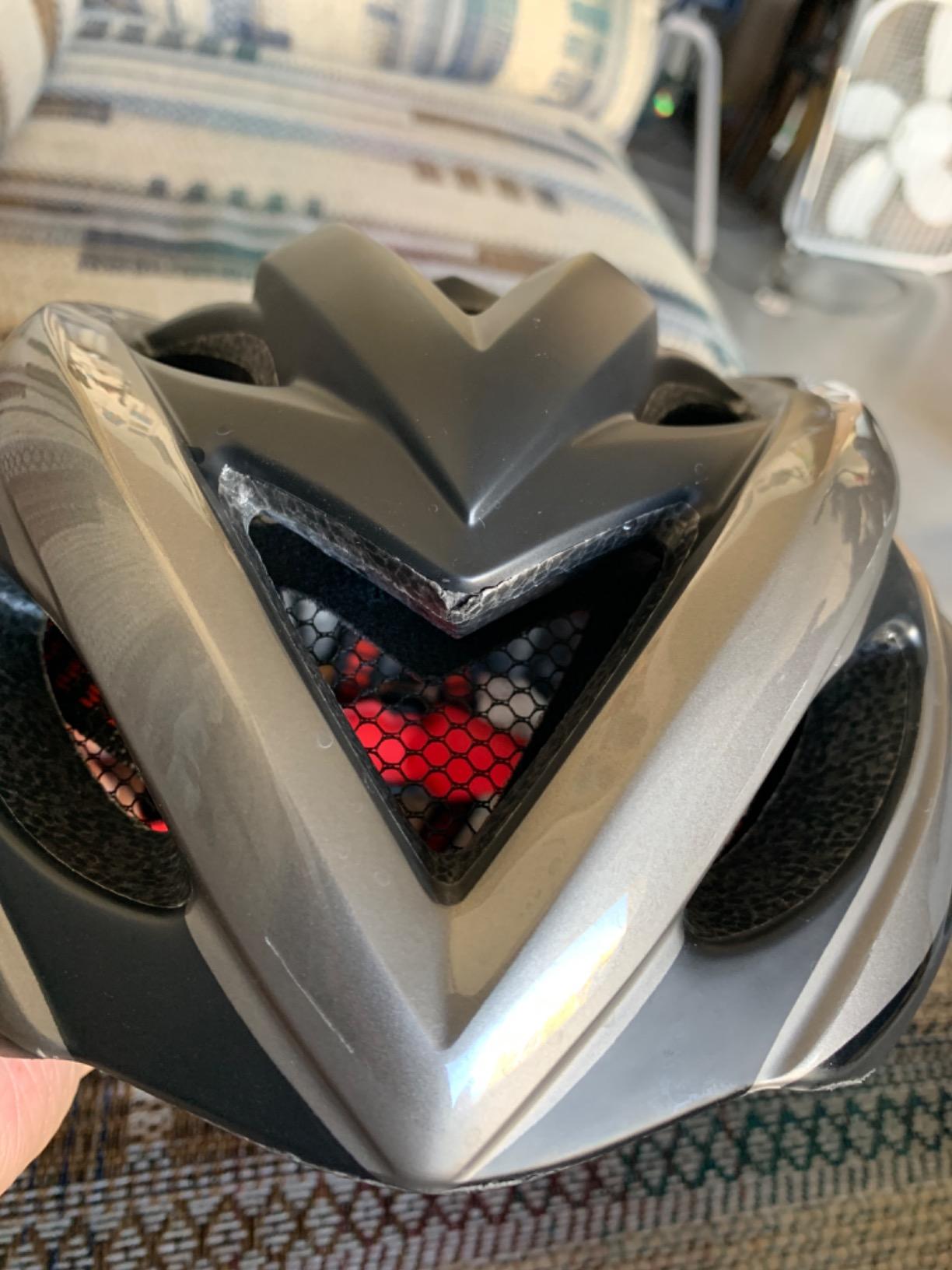
The one-piece EPS foam with an advanced PC shell is CPSC and CE certified, and the dial fit produced a secure helmet quickly on my first ride.
E-bike commuters tend to buy this for the rear light and report it keeps them visible day and night, which matches what we saw on darker routes.
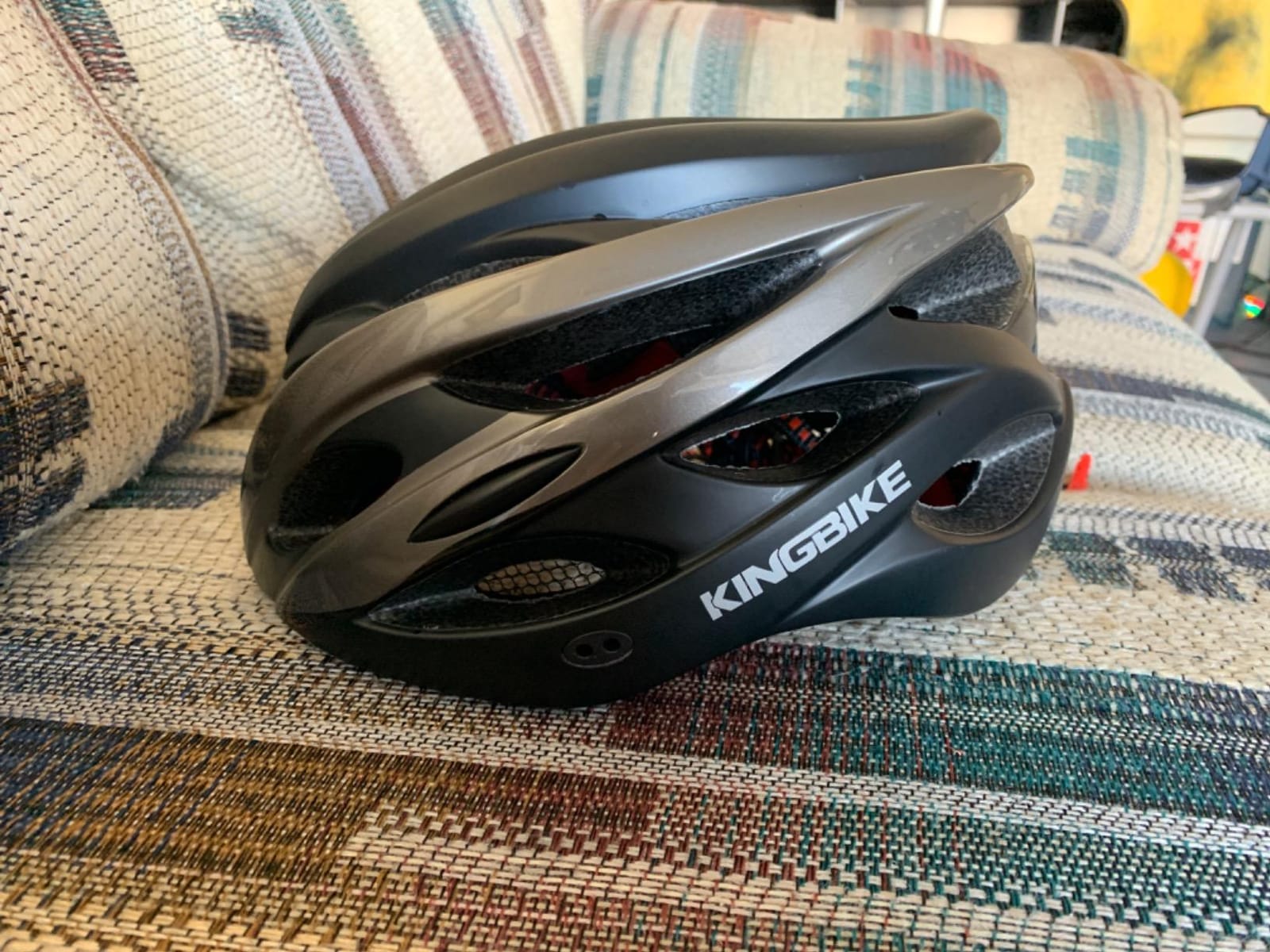
Why the spare pads matter
Pads are the first thing to fail in a daily-use helmet because they take sweat, detergent and sun. Having a clean second set means you never ride with a soaked liner while it dries.
Two visors solve the same problem for lenses. You can carry a clear and a tinted set without doubling your helmet count.
Where it falls short
The visor alone is not enough shade in very bright sun, so serious riders will still want sunglasses on those routes.
Only M and L sizes exist, the rear comfort pad is fixed at the strap and cannot be repositioned, and there is no rotational-impact protection inside the shell.
12. DKONI Lighted Helmet – Most Lighting Hardware in the Set
DKONI Bike Helmet with LED Lights Bicycle Helmets Commuter Cycling Helmet USB Rechargeable Front & Back LED Light Helmet for Adult Men Women (Large, Black)
- Front and rear LED array
- Four rear flash modes including a snake pattern
- Three sizes covering 48-61 cm
- 20 vents with airflow channels
- Removable washable liner
- 300 g listed weight
- Straps will not tighten symmetrically for some riders
- Shell can wobble even when straps feel tight
- Proprietary charger instead of USB-C
- Battery runtime short on the brightest setting
The DKONI has the most lighting hardware in this roundup, five white front LEDs and thirteen red rear LEDs with four rear modes including a snake pattern. If being seen from every angle is your priority, nothing else here matches it.
Three sizes covering 48-61 cm give you more head-shape options than most, and twenty vents with airflow channels handle hot weather well for a lighted helmet.
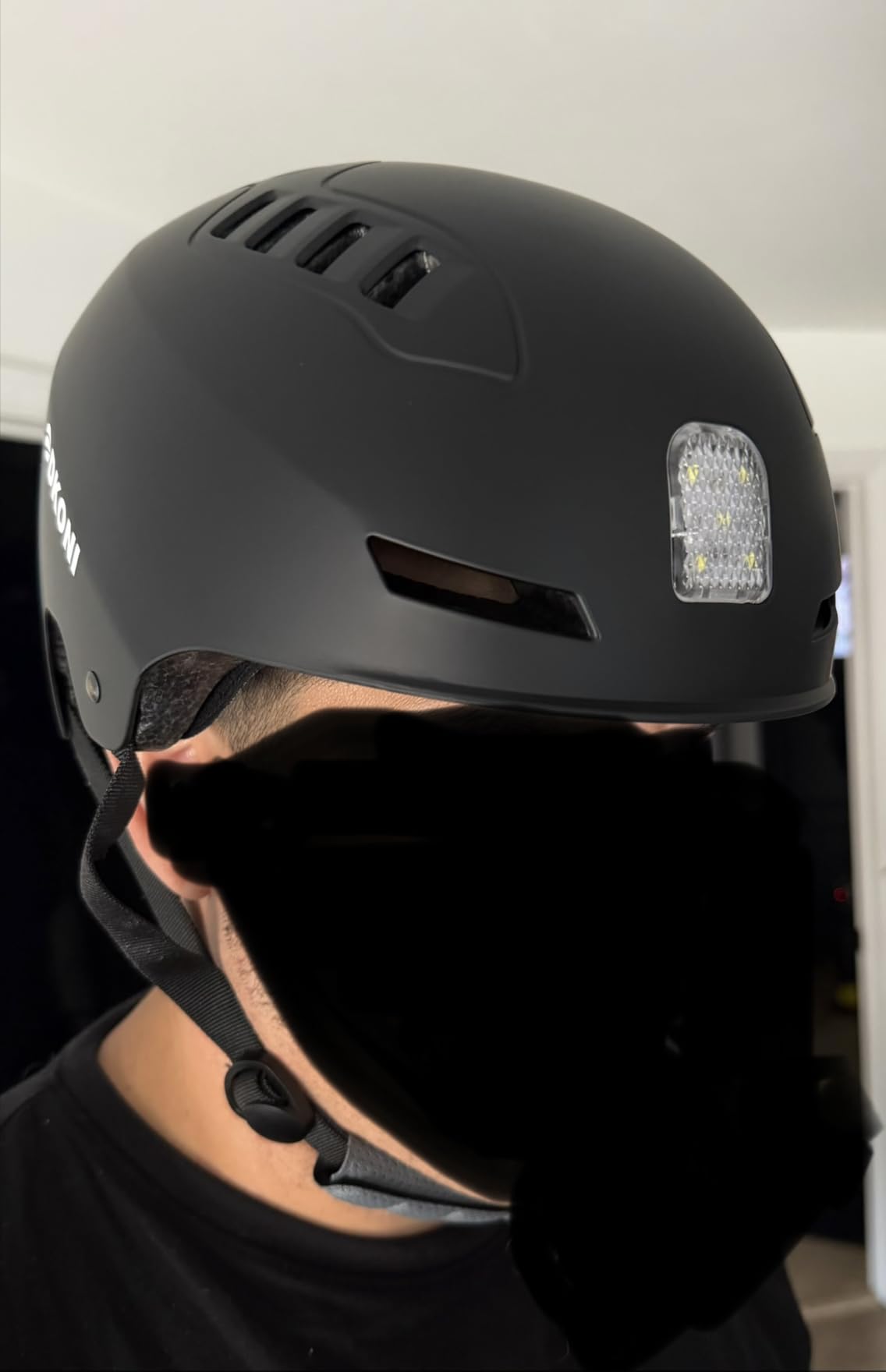
Charge time is 1.5 to two hours on a 5V 1A charger, which is convenient if you top up overnight. The one-handed rear dial is simple to operate at a stoplight.
It is also the lowest-rated helmet here at 4.4, and the reasons show up consistently in owner feedback rather than in the spec sheet.
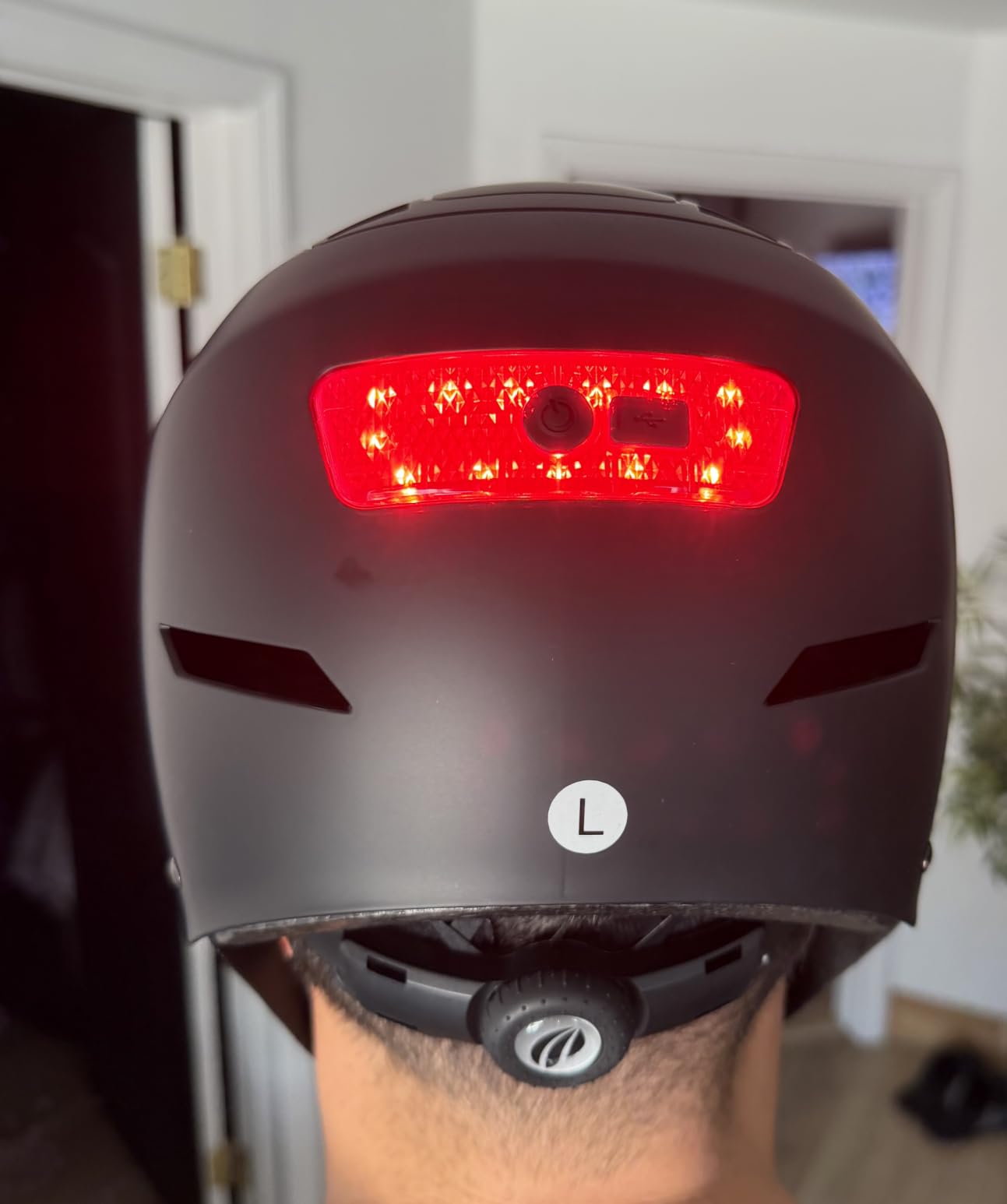
Where the lighting genuinely helps
The front array gives you a pool of light for unlit paths and construction zones, and the wide rear pattern is easy for following drivers to register. That is a real advantage over rear-only designs on short dark commutes.
At 300 g it stays reasonable in weight for a dual-light setup.
Why we ranked it last
Fit complaints dominate the reviews. Strap adjustment will not always tighten symmetrically, and the shell can wobble side to side even when the straps feel tight, which is not acceptable in a daily commuter helmet.
The proprietary charger connection rather than USB-C means carrying a specific cable, and battery runtime runs short on the brightest modes. Buyers also report some units that would not hold a charge.
How to Choose a Commuter Bike Helmet
Start with your commute, not the spec sheet. A ten-minute ride through quiet streets and a twenty-mile route on fast roads with intersections are different problems, and the helmet that solves one often does not solve the other.
Match the helmet to your commute distance
Under five miles, fit and comfort decide everything, because that is how often you will put the helmet on. A dial system and washable pads matter more here than weight or electronics.
Between five and fifteen miles, ventilation and hot-weather comfort start to dominate. Look for twenty or more vents, removable liners you can wash, and a visor you can take off for the shaded half of the route.
Fifteen miles and beyond, weight compounds and so does time in the saddle. Every 100 g saved is roughly three grams of load per kilometre, and light helmets that run hot force you to slow down. Riders on long routes should pair a lightweight shell with a magnetic visor for glare and debris.
Lights, visors and locks: which extras earn their weight
A built-in light helps on short dusk commutes and does nothing at midday. USB rechargeable models like the ILM or KINGBIKE are the sensible pick if you ride after dark more than once a week; a fixed LED like the Retrospec’s is better if you hate charging routines.
A magnetic visor earns its weight if your route has gravel, industrial traffic or insects. It also survives glancing impacts better than an open face.
A lock channel only makes sense if you already lock your bike to a rack or post. If you carry the helmet into work every day, skip that feature and pay for protection instead.
Season and weather
Summer riders should prioritise vents, a removable liner you can wash, and a visor that detaches. The OutdoorMaster’s 25-vent layout is the best match for hot, humid routes.
Winter riders face the opposite problem: an eye shield or magnetic goggle stops cold air and grit from hitting your face, which is exactly what the VICTGOAL and Basecamp models are built for. Neither adds meaningful weight over an unshielded shell.
Year-round riders should pick the model with the best ventilation you can live with, then add a visor for the hot months rather than buying two helmets.
Helmet Fit and Sizing: The 2-2-2 Rule
The 2-2-2 rule is the fastest way to confirm a helmet is positioned correctly. Measure your head circumference first, then compare it against the size range the manufacturer lists, because every model here covers a different band.
Two fingers above the eyebrows is the first check. Slide two fingers between your eyebrows and the front edge of the helmet. If the helmet is further forward, it will sit on your forehead and block your vision in an upright riding position.
Two fingers between chin and chin strap is the second. You should be able to fit two fingers between your chin and the strap when your mouth is open. Too loose and the helmet rotates on impact.
Two inches forming a V under each ear is the third. The side straps should form a V just below each ear and meet at the buckle under your chin. If they run straight down past your ears, shorten them.
Then shake your head hard. If the helmet shifts more than a centimetre or the front edge tips, tighten the rear dial by another click and repeat. A helmet that rocks or slides is not protecting you even if it feels comfortable.
Safety Tech Explained: MIPS and Rotational Protection
Every helmet in this roundup meets the US CPSC bicycle helmet standard, which tests impact in a straight line against a flat anvil. Head strikes in real city riding rarely arrive straight, though. A car door clips your temple and your skull rotates as your momentum carries you sideways.
MIPS addresses that gap with a slip plane mounted inside the shell that lets the helmet slide a few millimetres relative to the head on an angled impact, reducing rotational motion. The Giro Fixture MIPS and the OutdoorMaster Gem both use integrated versions rather than bolt-on pads.
Other brands use different systems. WaveCel uses an internal cellular structure. KinetiCore relies on crumple zones that buckle under a controlled load. Koroyd uses ventilation tubes made from non-absorbent material inside the shell. None of these are tested head to head in a single published lab, so treat brand claims as claims.
Independent ratings help here. The Virginia Tech Helmet Lab publishes STAR ratings from its own impact testing rather than manufacturer claims, which is the closest thing to a common comparison available. Check whether the model you are considering has a published score and read it before paying for a technology label. We apply the same evidence-first rule in our guide to the best transparent panoramic view welding helmets, where independent test results also matter more than the spec sheet.
Our honest read from daily use: rotational protection is a genuine improvement, but fit and certification still come first. A helmet that fits correctly at low speed protects you better than a better-equipped helmet you keep adjusting.
Helmet Care, Lifespan and Crash Replacement
Replace a helmet after any impact where it takes a hard hit, even a small one. EPS foam is designed to crush once, and it does not recover. Many riders keep a second helmet for this reason and rotate after a fall.
Absent a crash, treat five years as a sensible replacement cycle, or sooner if the shell has been dropped repeatedly, faded from sun, or the padding is crushed. Manufacturers here back that up with varying warranties, from one year on several models to five years on the ILM. If you are weighing a spend-upgrade instead, our best premium welding helmets comparison covers the same warranty-versus-protection trade-off for workshop gear.
Crash replacement is a quality signal worth checking before you buy. The Thousand Heritage 2.0 stands out here, with both an anti-theft guarantee for theft while locked up and an accident replacement guarantee for crash damage. A few other brands offer a discount on the next helmet rather than a free replacement.
Basic care is simple: hand wash the liner in cool water, let the shell air dry away from direct heat, and never leave a helmet sitting on a car dashboard in summer. Heat ages EPS faster than almost anything else you do to it.
Frequently Asked Questions
What is the best bike helmet for commuting in the city?
The Giro Fixture MIPS is our best overall pick for city commuting, with an integrated MIPS slip plane, a one-handed Roc Loc Sport dial and reflective detailing across a 54-61 cm universal fit. The Schwinn Thrasher is the best value option and the Zacro is the lightest budget pick.
What is the 2 2 2 rule for bike helmets?
The 2-2-2 rule checks three things at once: two fingers between your eyebrows and the front edge of the helmet, two fingers between your chin and the chin strap with your mouth open, and two inches between the side straps forming a V just below each ear. If the helmet shifts more than a centimetre when you shake your head, tighten the rear dial.
What is the 222 rule for helmets?
It is the same fitting check, usually phrased as the 2-2-2 helmet fit rule. Use it as a three-step verification after any adjustment: front edge two finger-widths above the eyebrows, chin strap two finger-widths under the chin, and side straps forming a V below each ear.
What is the best bike helmet for casual riding?
For casual riding the Schwinn Thrasher and the Zacro are the strongest choices, since comfort and fit matter more than weight on short trips. Both use dial retention, have 18 or more vents and include removable washable padding, and neither carries rotational-impact protection.
Do I need MIPS for commuting?
MIPS adds slip-plane protection against angled impacts, which is closer to how city crashes actually happen than the straight-line impacts the CPSC standard tests. It is not essential on slow residential routes, but on traffic-heavy streets, fast roads or e-bike commutes it is a meaningful upgrade. Always prioritise correct fit over the technology label.
The Bottom Line on the Best Bike Helmets for Commuters
After weeks of daily riding across all twelve, the Giro Fixture MIPS is the helmet we recommend most often. It combines integrated MIPS protection with a fit dial you can adjust one-handed, reflective detailing for low light, and a 4.8 rating that holds up across thousands of reviews. It is not flashy and it does not need to be.
Below it, the Schwinn Thrasher covers most of what people actually need at the lowest outlay, and the Zacro answers the weight question better than anything else in the range. For hot-weather riders the OutdoorMaster Gem’s 25 vents and twin liners are hard to beat, and for riders on a fast e-bike the ILM’s four certifications and dual lights justify their extra weight.
The single most important step is still measuring your head and running the 2-2-2 check the day it arrives. A correctly fitted basic helmet protects you better than an expensive one sitting crooked. Once you have your size, use the quick list above to narrow the field and check current pricing on your pick.