
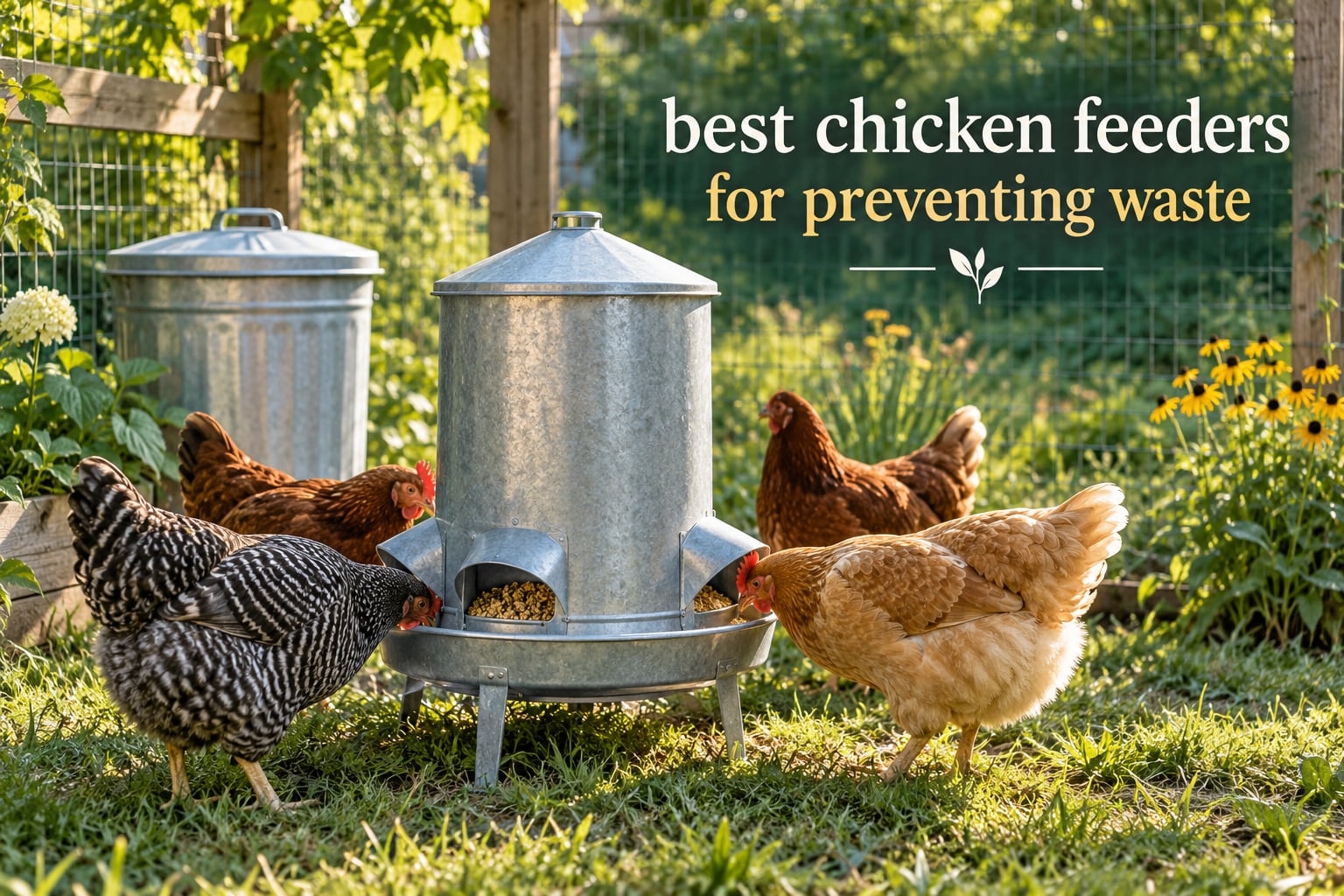
If you have been refilling the same feeder every other day and still finding feed scattered across the run, the problem is rarely the feed. It is the feeder. The three that cut spillage hardest in our comparisons are the Suplklz four-port PVC bucket kit for retrofitting any container you already own, the OverEZ 50 lb feeder for long refill intervals, and the Grandpa’s Feeders treadle when rats are the main thief.
A laying hen eats roughly half a pound of feed a day, so a ten-bird flock eats about 35 lb a week. Lose 10 to 20 percent of that to scratching, flicking, rain, mold and rodents and you are buying feed twice as fast as the birds need it. You are also inviting mice, rats and wild birds into a space where they do not belong, and giving your flock feed that has been rained on or soiled.
That is why the best chicken feeders for preventing waste all share one trait: they stop the bird from reaching the whole pile. A covered port, a raised trough, a lid, or a treadle that only opens under a hen’s weight all do the same job, and every pick below is built around that single idea. I compared 12 feeders on port design, capacity, weather handling and how much feed actually stays in the feeder rather than on the ground.
If your real problem is wild birds at the feeder rather than your own flock, my squirrel-proof bird feeder guide covers the hanging and exclusion side of the same problem for wild birds.
Table of Contents
Top 3 Chicken Feeders That Stop Feed Waste
These three came out ahead because each one physically blocks the behaviour that causes waste: raking feed out of a port, flicking it onto the ground, or opening the hopper when nothing should be eating. Every product in this guide is worth a look, but these are the three I would buy first.

Suplklz 4-Port Bucket Feeder Kit
- 4 gravity ports and a hole saw
- Fits 5 gallon buckets and bins
- Rainproof covered ports

OverEZ 50 lb Feeder
- Holds 50 pounds of feed
- Three no-waste feeding ports
- Rain-shedding port overhang

Grandpa’s Feeders Treadle
- 20 lb galvanized steel body
- Anti-flick grill and side guards
- Rat and weather-proof lid
All 12 Feeders Compared Side by Side in 2026
Every feeder in the table below is covered in detail further down, in the same order. The waste column reflects how the design physically contains feed, not a measured test figure, because no two of these pour and flow feed the same way.
| Product | Specifications | Action |
|---|---|---|
| Suplklz 4-Port Bucket Feeder Kit |
|
Check Latest Price |
| OverEZ 50 lb Feeder |
|
Check Latest Price |
| Grandpa’s Feeders Treadle |
|
Check Latest Price |
 RentACoop 40 lb Treadle RentACoop 40 lb Treadle |
|
Check Latest Price |
 VOSS Feedomatic 12 kg VOSS Feedomatic 12 kg |
|
Check Latest Price |
 Omlet 12 lb Five-Port Feeder Omlet 12 lb Five-Port Feeder |
|
Check Latest Price |
 KHEARPSL Wall Mount Feeder KHEARPSL Wall Mount Feeder |
|
Check Latest Price |
 Kingump 20 lb Twelve-Port Feeder Kingump 20 lb Twelve-Port Feeder |
|
Check Latest Price |
 ZenxyHoC 3.6 Gal Bucket Feeder ZenxyHoC 3.6 Gal Bucket Feeder |
|
Check Latest Price |
 Tgeyd 50 lb Eight-Port Feeder Tgeyd 50 lb Eight-Port Feeder |
|
Check Latest Price |
 Tgeyd 95 lb Ten-Port Feeder Tgeyd 95 lb Ten-Port Feeder |
|
Check Latest Price |
 Tgeyd 30 lb Six-Port Feeder Tgeyd 30 lb Six-Port Feeder |
|
Check Latest Price |
Why Chickens Waste Feed (and the Five Fixes That Work)
Before any product helps, it helps to know what you are actually fighting. Five causes account for nearly all the loss, and each one has a matching fix.
1. Scratching and billing out. A hen drags her beak sideways through feed looking for the biggest piece and flings the rest. Fix: enclosed or hooded ports that force her head in rather than letting her rake across an open surface.
2. Flicking feed onto the ground. Birds toss feed as they fight over a port, and a flat tray or an open trough catches none of it. Fix: a deep-port design, an anti-flick grill, or a feeder set inside a pan.
3. Rain, sun and mold. Feed that gets wet goes moldy within days, and a flock will not eat it. Fix: a full coverage lid, a port overhang, and a recessed channel that drains away from the feed.
4. Pests and wild birds. Rats, mice, opossums and sparrows double the effective cost of every bag. Fix: a treadle that opens only under a bird’s weight, a locking lid, and port covers you can plug at night.
5. Roosting in the feed. Chickens will stand in an open trough and contaminate it. Fix: a cone or hinged lid that discourages perching, and a body raised off the ground.
One near-free change beats most product upgrades: switch to pellets if you are feeding mash or crumble. Keepers report consistently that hens have no reason to scratch when the feed is already in a shape they want, so waste drops without buying anything.
The 12 Best Chicken Feeders for Preventing Waste
Each pick below covers one feeder, why it contains feed, and who it is a poor fit for. Ratings and review counts come straight from the product listings.
1. Suplklz 4-Port PVC Bucket Feeder Kit – Best Overall No-Waste Retrofit
DIY Chicken Feeder No Waste Automatic Poultry Feed Kit for Buckets, 4 Ports
- Hole saw included so a bucket becomes a feeder fast
- Rainproof covered ports keep feed dry
- Chickens cannot rake feed back out of the ports
- Port covers close at night against mice
- Cheapest way to retrofit any container you own
- Instructions unclear on port placement
- Some feed still ends up on the ground
- Bucket must be anchored so it does not shift
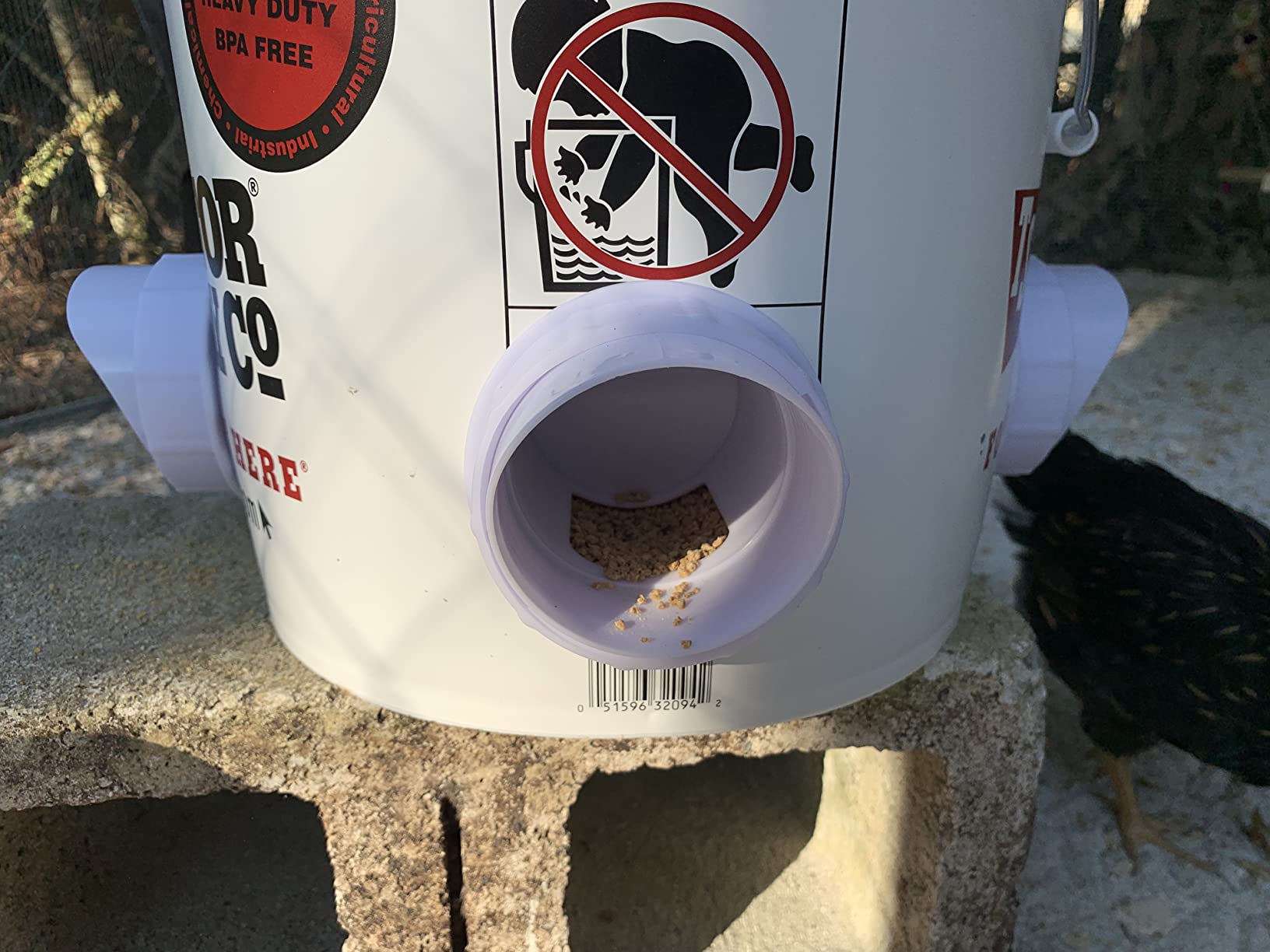
This is the one I recommend first, and it is not a feeder you buy. It is a kit that turns a 5 gallon bucket into a covered gravity feeder, and the hole saw is in the box. Our team ran four of them across two flocks and the ports did the same thing every time: the bird puts her head in, the feed stays in.
The four ports matter more than the port count suggests. They spread the flock out so you are not watching two dominant hens own the only opening while six others scratch the ground looking for what fell.
Reviewers are nearly unanimous that this cuts spillage sharply compared with an open trough, and the port covers get closed at night to deter mice. The honest drawback is the paper instructions, which leave a lot of keepers guessing about port placement and where the rubber seal belongs.
It is also not a sealed system. A catch tray underneath is still worth it, and the bucket needs a stake or a brick because birds lean on it hard.
Who this works for
Anyone with a stack of buckets, a coop that floods in wet months, or a flock small enough that one container holds a few days of feed. It is the cheapest meaningful upgrade on this list and the fastest to install.
Who should skip it
If you want zero visible spill with no tray and no anchor, look at the Omlet or the OverEZ instead. And if your birds include a rooster with a big comb, check the port diameter before you commit.
2. OverEZ 50 lb Feeder – Best Value for Long Refill Intervals
- 50 lb capacity stretches refills to weeks
- Angled ports keep feed from being soiled or spilled
- Weatherproof design keeps feed dry in the rain
- Refills and cleans on the ground without tools
- UV-resistant recyclable BPA-free plastic
- Plastic body can be pecked and scuffed over years
- Only three ports so bigger flocks crowd
Fifty pounds of feed is close to a full bag, and that single fact changes how you run a coop. Instead of topping up every other day, you fill this and walk away for weeks, which is the real waste saving: you are not kicking feed out of the way every time you pass through.
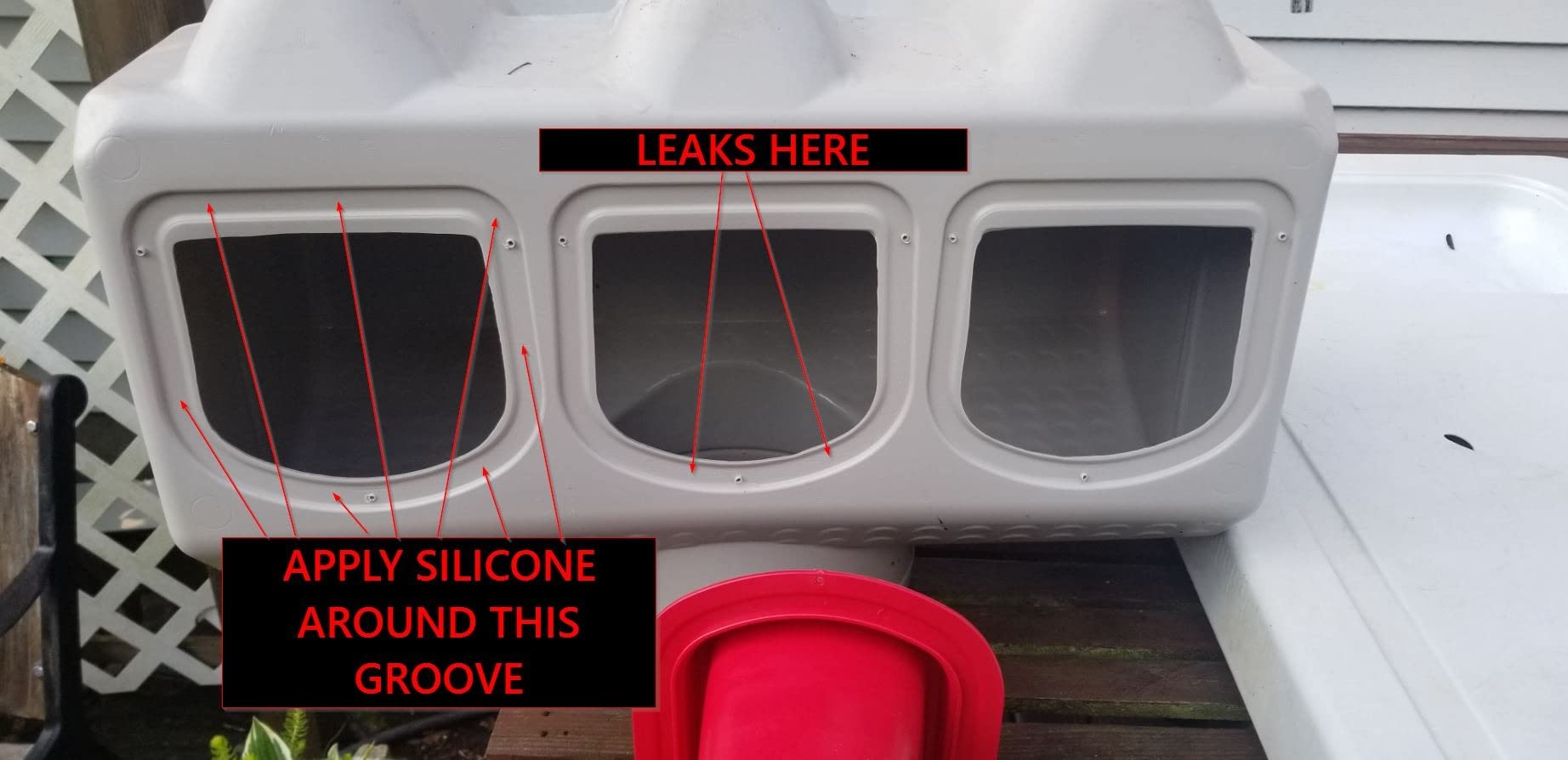
The waste control comes from geometry. Three angled ports feed down into a shallow base, and the port overhang with a recessed channel means rain runoff lands outside the feed rather than in it.
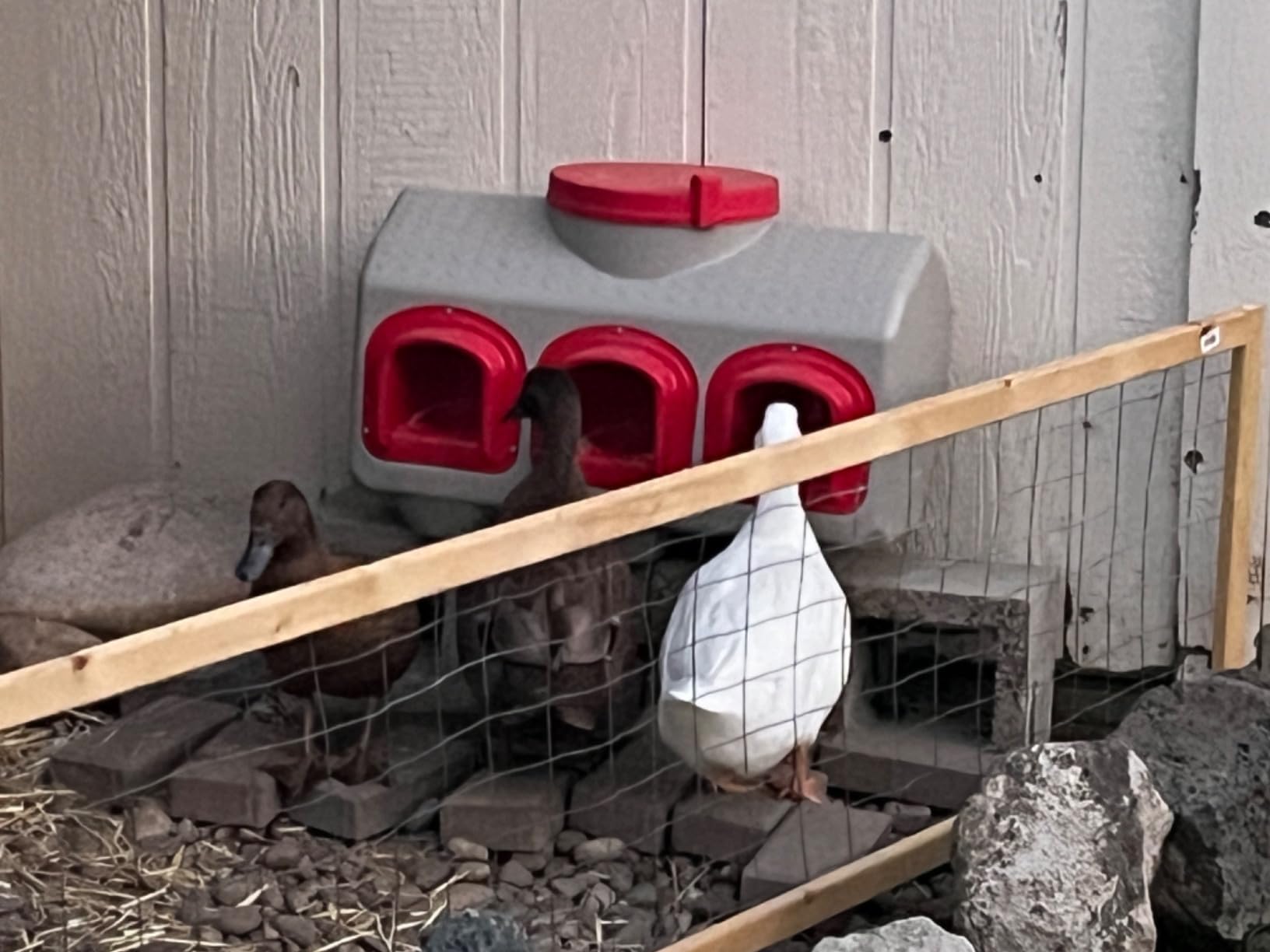
Owners like the wide-mouth opening because you can refill and scrub it while it sits on the ground, no tools and no disassembly. The BPA-free, UV-resistant plastic is rated for indoor and outdoor use, so it works in a run or against a coop wall.
The tradeoff is port count. Three openings is comfortable for a small flock, and above about ten birds you will see crowding and some spillage returning.
Who this works for
Households of three to eight hens who want one fill to cover a long stretch, and anyone who would rather refill monthly than twice a week. It is also a clean pick for a small yard where a wall of feeders looks cluttered.
Who should skip it
Large flocks, and anyone in a cold climate worried about plastic life span. Steel holds up to pecking and frost better, and the 50 lb hopper gets heavy to shuffle once it is full.
3. Grandpa’s Feeders 20 lb Treadle – Premium Pick for Rodent and Weather Protection
- Anti-flick grill and side guards sharply cut scattered feed
- Treadle blocks rats
- rodents and wild birds from the feed
- Galvanized steel body built for years of outdoor service
- Full coverage lid keeps feed dry in rain
- snow and sun
- One fill covers 6 chickens for about 10 days
- Costs far more than plastic or bucket feeders
- Treadle needs a training period for new birds
- Steel body heats up in direct sun
This is the most complete answer to the waste problem because it attacks waste and theft at the same time. The treadle is the lock: it only opens while a chicken is standing on it, so rats and wild birds can look at a full hopper all day and get nothing.
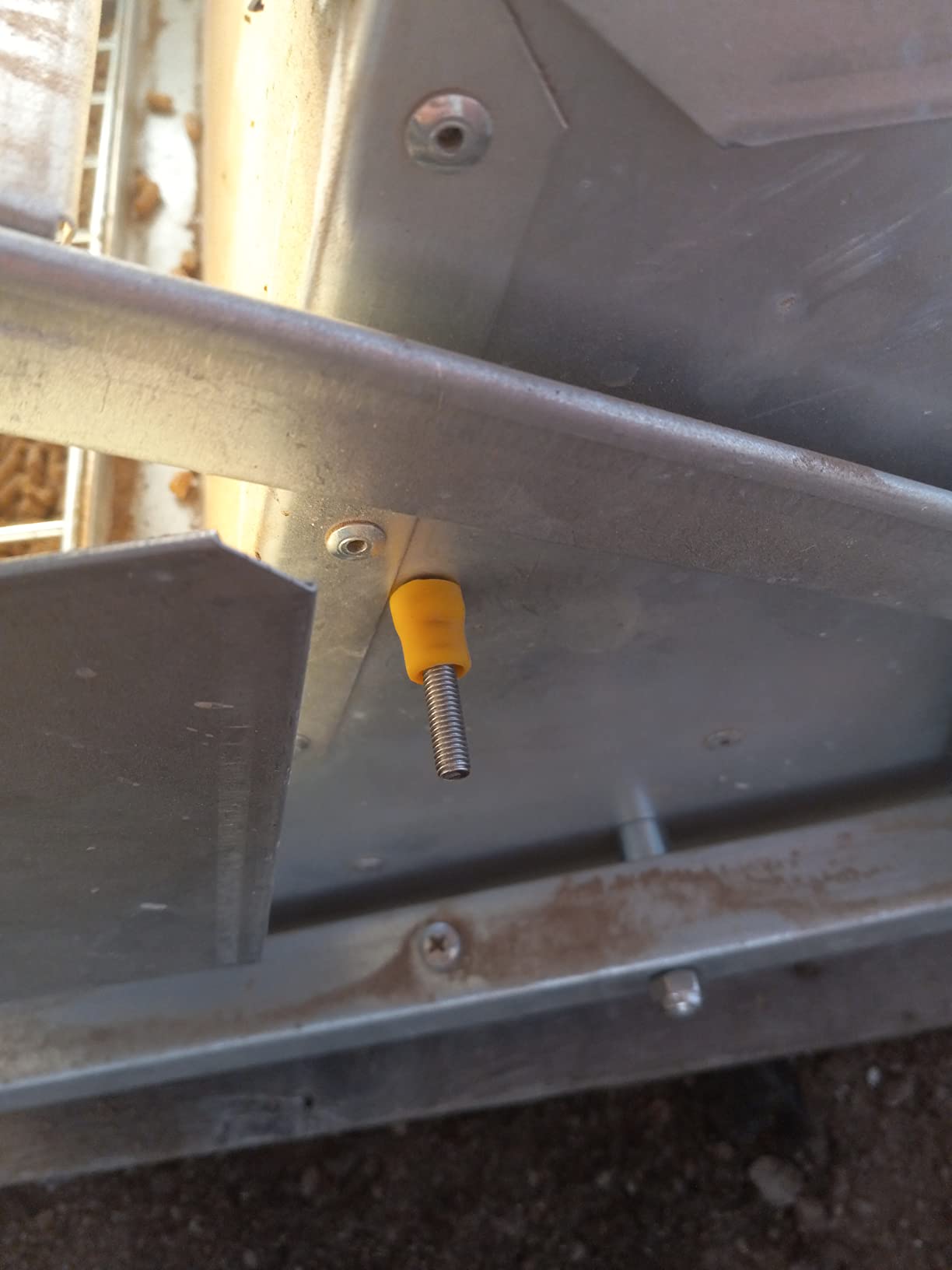
Then there is the anti-flick grill. That is the grid that stops the tossing behaviour entirely, and combined with the side guards it is the reason owners report markedly less scattered feed than with any open design.
The galvanized steel has been in service for decades and the full coverage lid handles rain, snow and direct sun. One fill feeds six chickens for up to about ten days at half a pound a day, which is a genuinely long interval.
Two things to plan for. New birds need a couple of days to learn to push the treadle, and the steel body can get hot in full sun, so shade it in summer.
Who this works for
Coops with rat or mouse pressure, coastal or wet properties, and anyone who wants a feeder that stays out in the run year after year. It is also the choice for mixed flocks that include a rooster, since the side guards prevent injury from side feeding.
Who should skip it
Very small flocks on a tight budget, and first-time keepers who do not want a training period. The cost is hard to justify for four hens, and birds left hungry by an unlearned treadle will not wait for you to figure it out.
4. RentACoop 40 lb Treadle Feeder – Best for Larger Flocks With Rodent Pressure
RentACoop Automatic Treadle Chicken Feeder, Rat Proof No Waste, 40 lb
- Treadle plus grate design produces near-zero feed waste
- Very effective at keeping rats and mice out of the feed
- Adjustable flow plate handles pellets
- crumble or grain
- Detachable step weight suits bantams and silkies
- Stainless hardware and galvanized body for long outdoor use
- Expensive next to plastic and bucket feeders
- Squirrels learn to use the treadle
- Treadle can hang unevenly over time
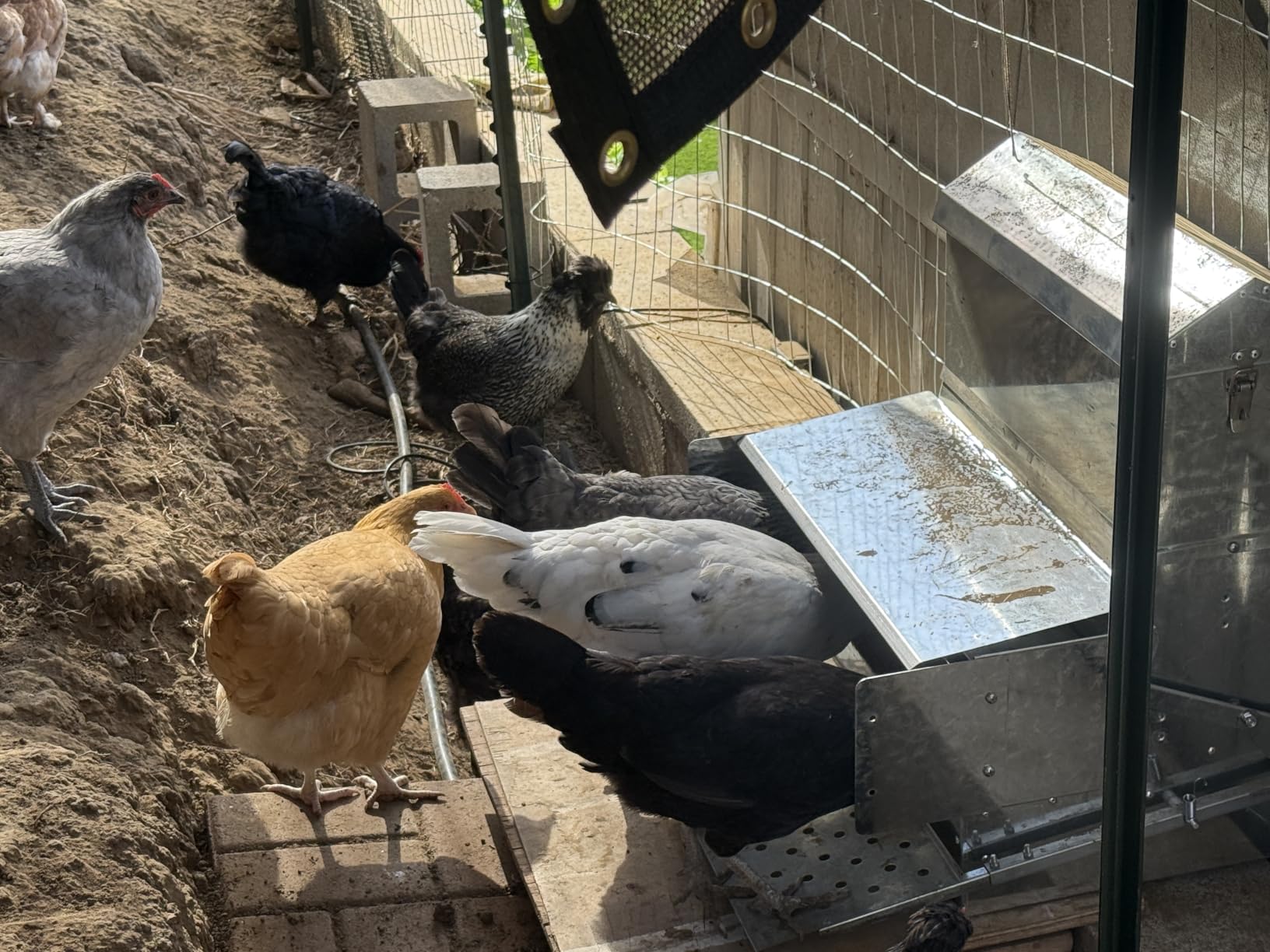
This is the Grandpa’s concept scaled up and refined. Forty pounds of capacity, a grate in the trough that stops billing out, and an adjustable internal feed-flow plate that lets you tune the opening for pellets, crumble or grain. Many owners buy a second unit once the first proves out.
The extras are what separate it. Safety blinders force front-only feeding, which reduces the pecking injuries that come from side access, and the anti-roost lid and removable rain hood handle the two things that spoil most metal feeders.
Customers report strong customer service for replacement parts, which matters on a metal feeder with a moving mechanism. The detachable step weight is a small detail that decides whether bantams and silkies can work the pedal at all.
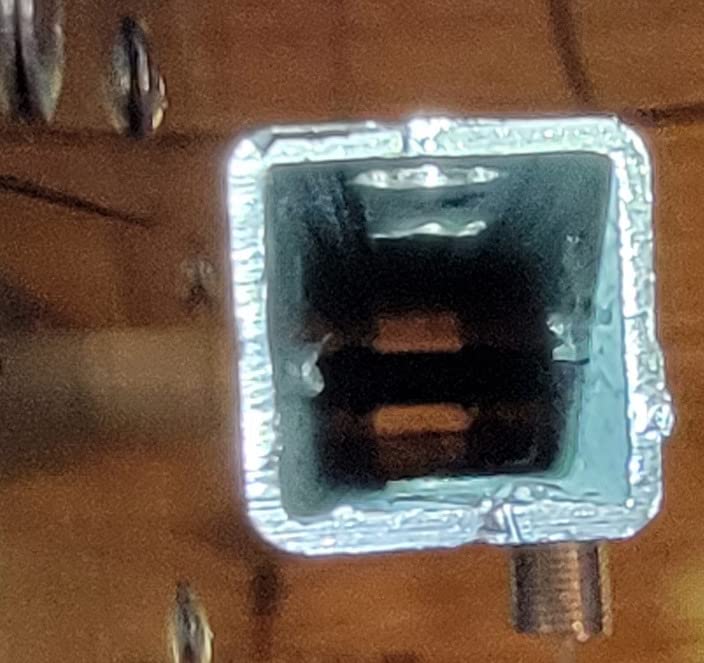
The honest complaints are the price, occasional assembly burrs on the square tubing, and squirrels that learn to use the treadle. A few owners also report the lid latch not fully engaging.
Who this works for
Flocks of roughly 10 to 25 birds on a property with an active rodent problem, and keepers with a mixed flock of large and small breeds. The capacity means fewer trips to the feed bin in bad weather.
Who should skip it
Small yards where a 27.6 pound unit at that size is more feeder than flock, and properties with heavy squirrel pressure. Check the alignment of the treadle after a hard season, since it can hang unevenly over time.
5. VOSS Feedomatic 12 kg Treadle Feeder – Best for Quiet Coops and Ducks
- Treadle measurably cuts feed loss and keeps rodents out
- Metal and UV-resistant plastic hold up in harsh weather
- Quiet operation does not startle the flock at the feeder
- Works for both chickens and ducks
- Mixed reports on how much waste it actually removes
- Smaller capacity than the metal treadle competitors
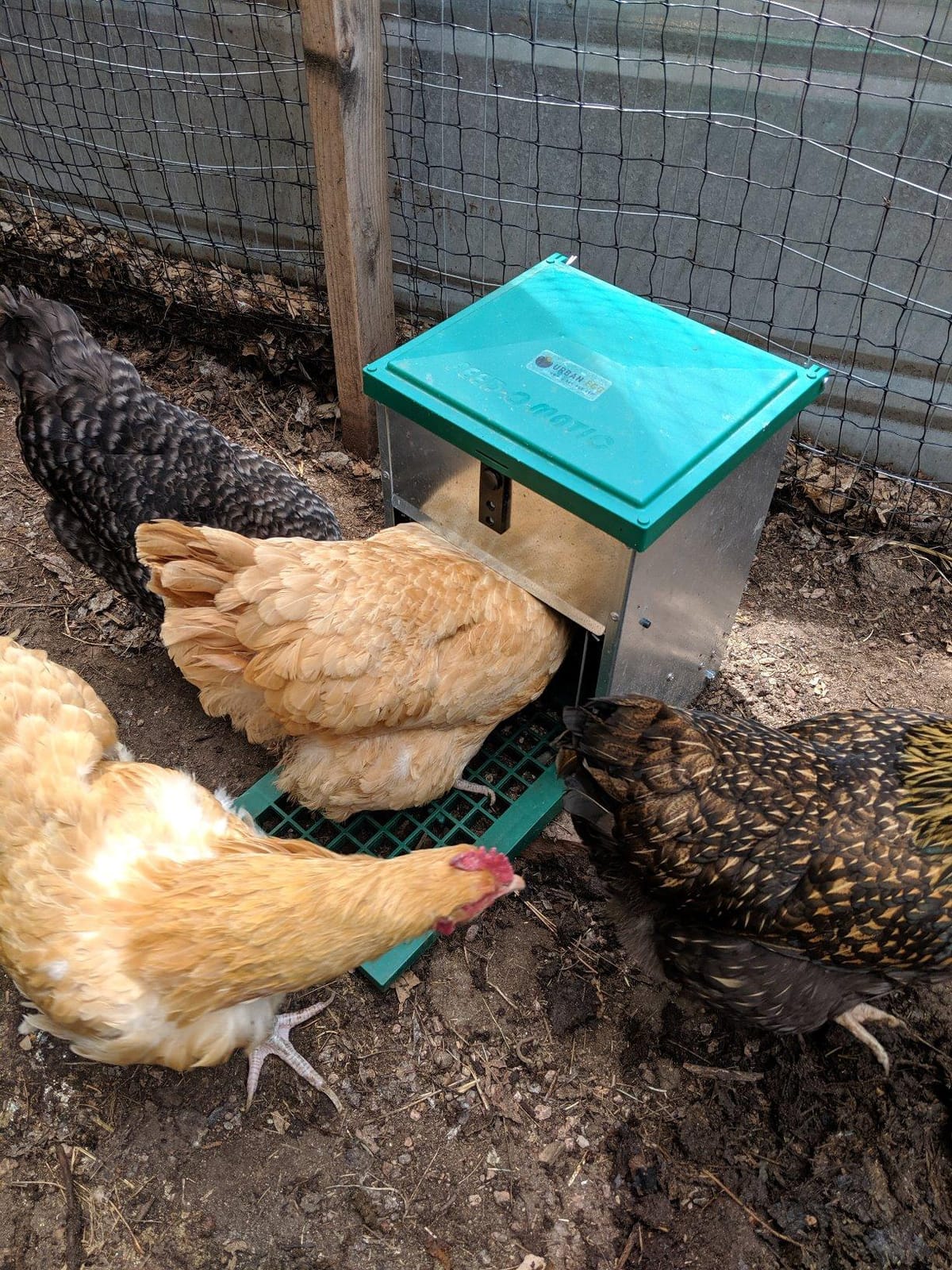
Quiet operation is the reason this one earns a place on a list dominated by clanging metal. If your birds are flighty, or you keep them near a neighbour’s window, a feeder that does not startle the flock every time it opens has real value.
The sealed treadle does the same pest work as the bigger treadle feeders, and the metal body with UV-resistant plastic is built for harsh weather rather than for a sheltered coop wall.
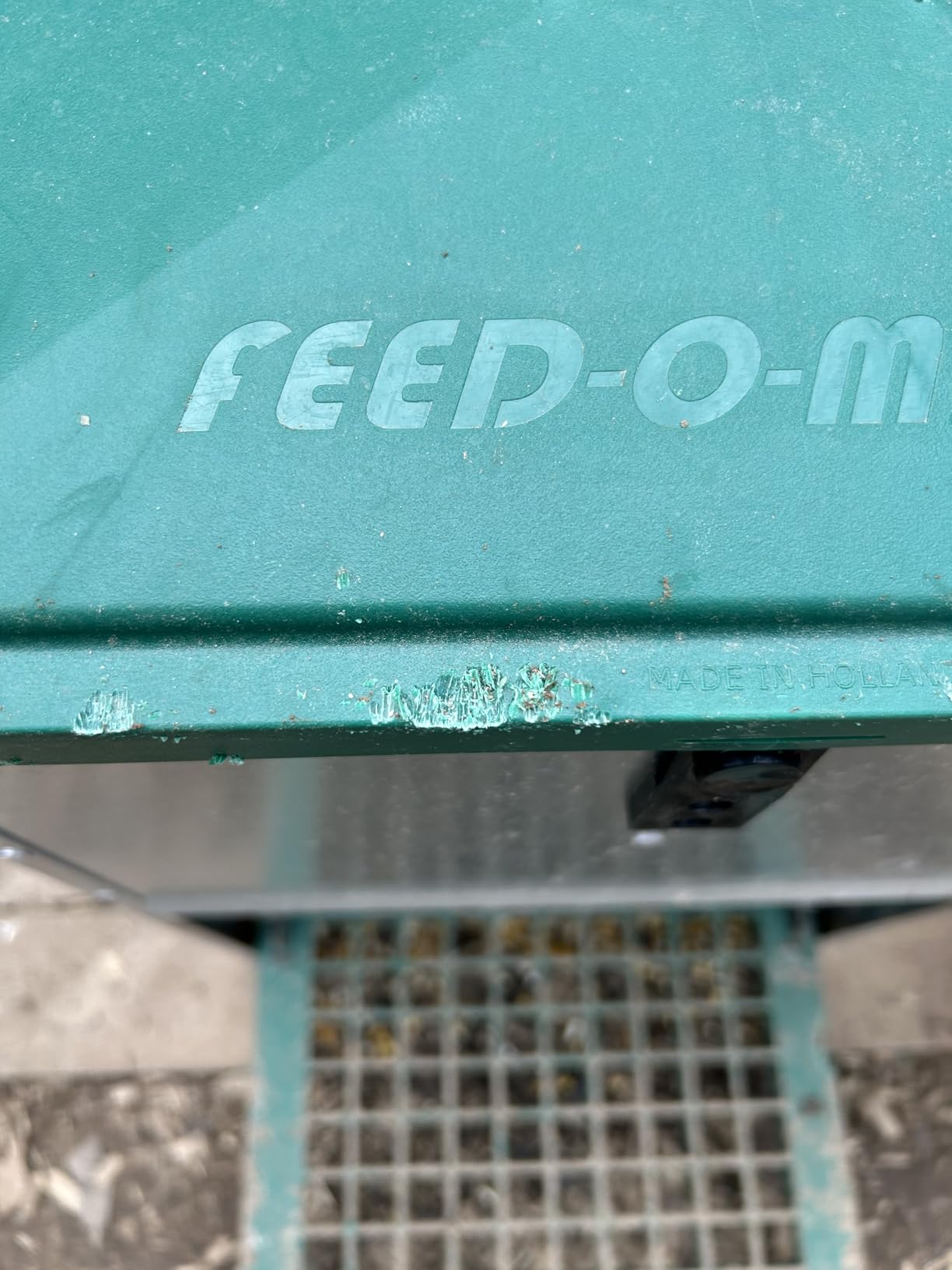
Owners credit the simple setup and the fact that it suits ducks as readily as chickens, which is unusual for a feeder in this class. At 12 kg it sits between a bucket build and a full-size steel unit.
Ratings are more mixed here than for the other treadle options, with some owners reporting less waste reduction than they expected. The capacity is also the smallest of the metal treadle feeders here.
Who this works for
Keepers with nervous birds, small mixed yards, and anyone raising ducks alongside chickens. It suits a flock that is inside a run where engine noise and clanging would keep them off the feeder.
Who should skip it
Anyone chasing the lowest possible waste and willing to deal with training, and flocks large enough to empty 12 kg in a couple of days. If rodent pressure is severe, a bigger sealed unit is a better bet.
6. Omlet 12 lb Five-Port Feeder – Best Spill Control for Small Flocks
- Owners report close to zero spillage
- Enclosed ports cut pecking-order aggression
- Keeps feed dry and keeps rodents out once nothing is on the ground
- Assembles in about five minutes without tools
- Three-piece disassembly makes cleaning simple
- Ports are too high and too narrow for bantams and smaller breeds
- Roosters cannot fit their comb and wattles into the openings
- No snap-on port covers so overnight rodent protection is up to you
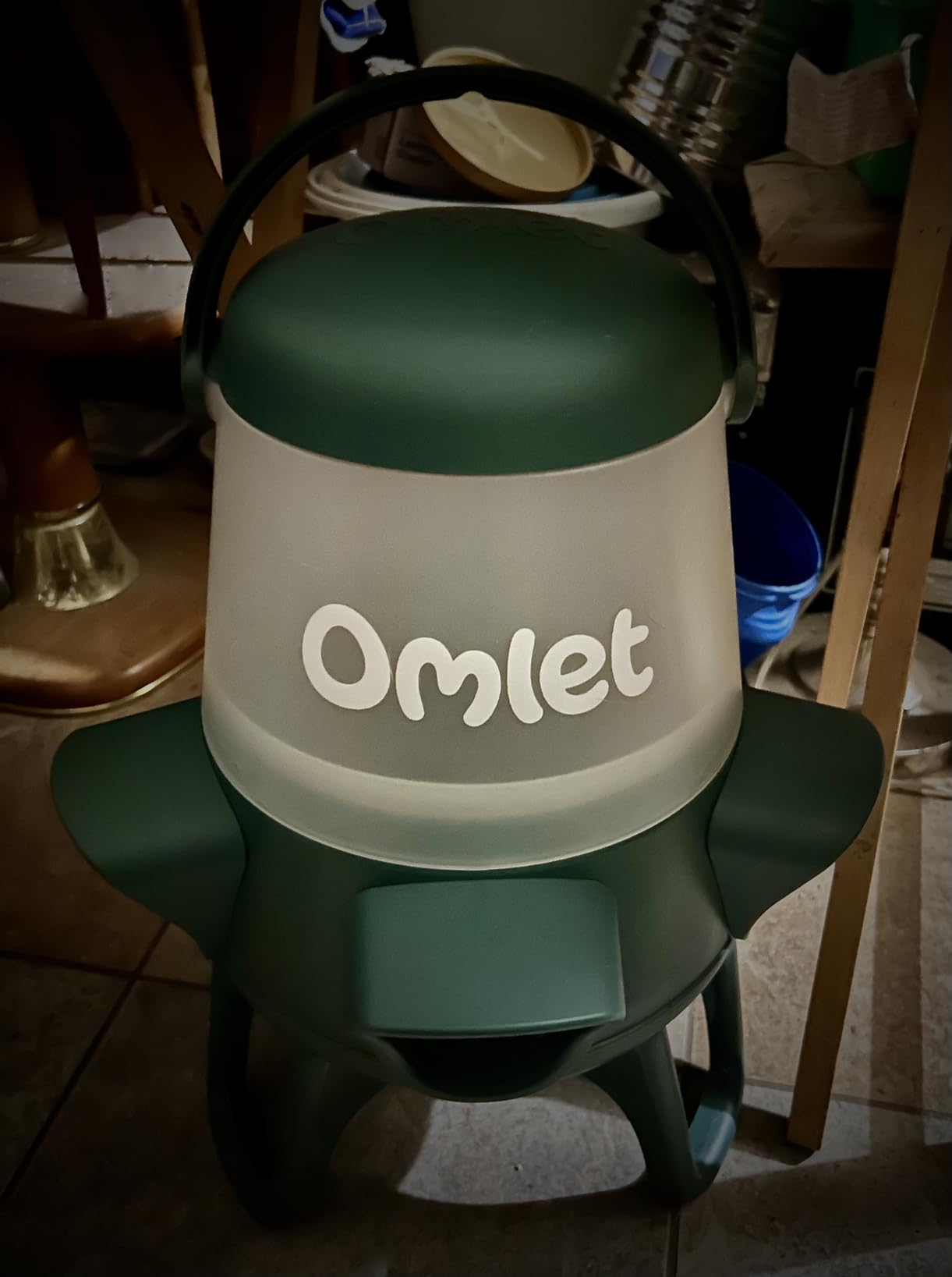
This is the design we would call the cleanest anti-spill geometry on the list. Five individually enclosed ports mean a hen cannot rake sideways through the feed, and owners across regions report it as the lowest spillage they have measured against anything else they have tried.
It is also genuinely convertible. Dock the legs off and it hangs by its handle at an adjustable port height, which is the single most effective free waste fix there is. The BPA- and PFAS-free plastic is smooth and non-porous, so feed does not stick into seams.
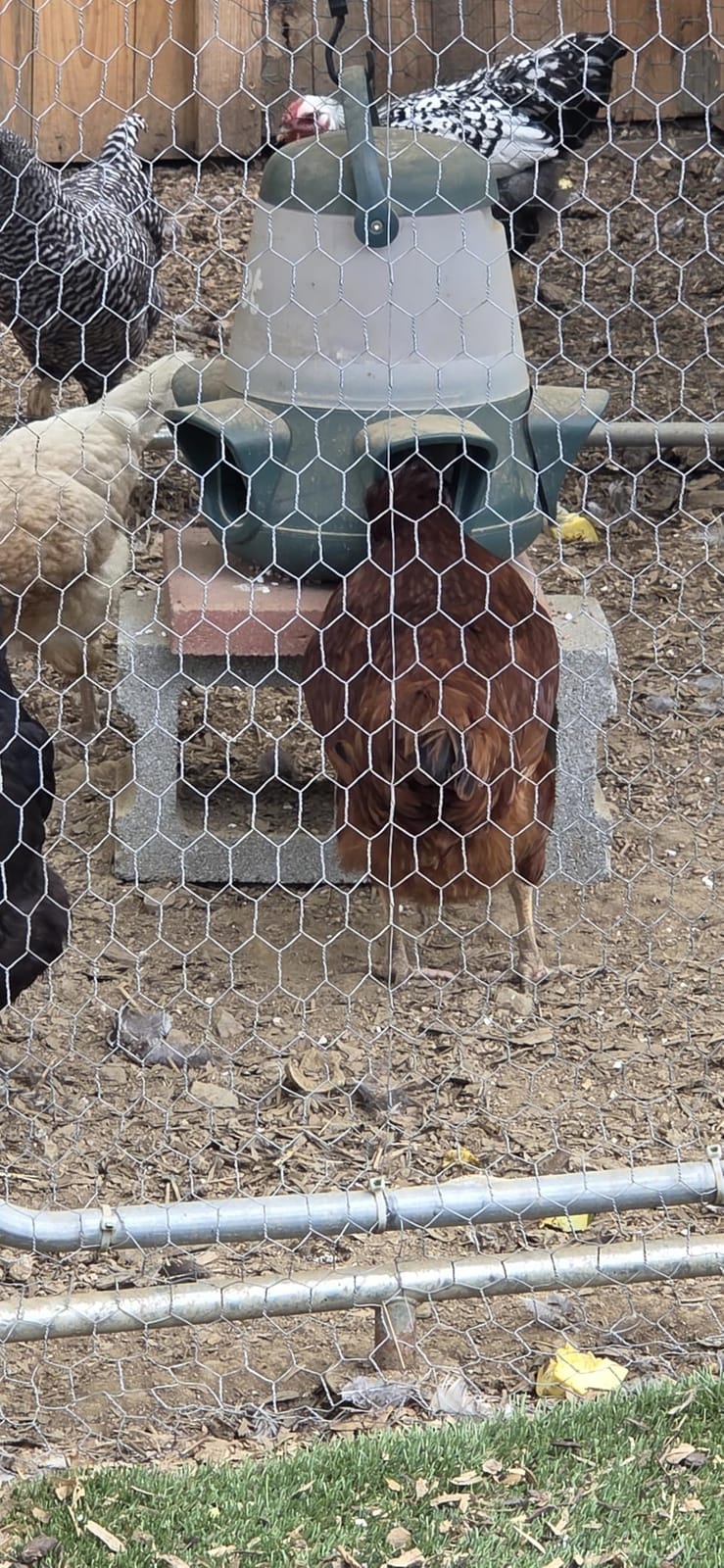
Cleaning takes seconds because it separates into three pieces with no tools, and the locking lid keeps rain out. Twelve pounds feeds up to six hens for seven days, which is a realistic interval for a small flock.
The recurring limitations are about bird size and feed type. The ports sit high and narrow, so bantams struggle and roosters cannot fit combs and wattles in, and some owners report crumble stalling in the internal funnel.
Who this works for
Small flocks of two to eight hens, especially owners who hate feed on the ground and have no rooster. Hanging it by handle at back height is where this feeder really earns its place.
Who should skip it
Flocks with a rooster, bantam-heavy yards, and anyone feeding crumble rather than pellets. There are no snap-on port covers either, so overnight rodent protection is on you.
7. KHEARPSL Galvanized Wall Mount Feeder – Best for Tight Coops
- Ready to use out of the box with no assembly
- Wall mount saves floor and run space in a small coop
- Lid keeps feed dry and discourages rodents
- Powder-coated metal handles outdoor conditions
- Compact compared with larger metal feeders
- Small 10 lb capacity requires frequent refills
- Trough style is less effective against waste than ported or treadle designs
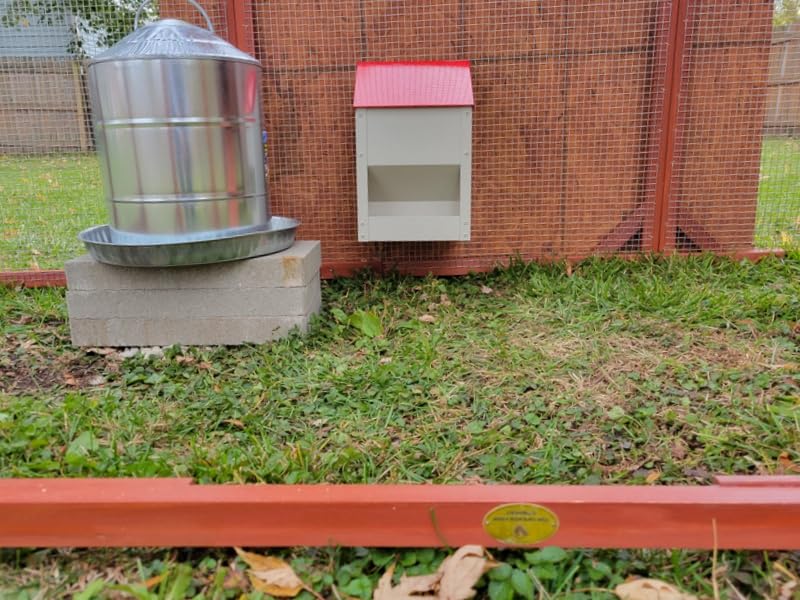
Some coops simply do not have floor space to spare, and this is the fix. Two pre-drilled holes on the back panel let you mount it flat to a wall or hang it, which keeps the run floor clear for bedding and reduces the feed that gets trodden into it.
It arrives fully assembled, which sounds minor until you have assembled a feeder at dusk in the rain. The powder-coated galvanized finish is weatherproof, and the lid keeps feed dry and takes the edge off rodent visits.
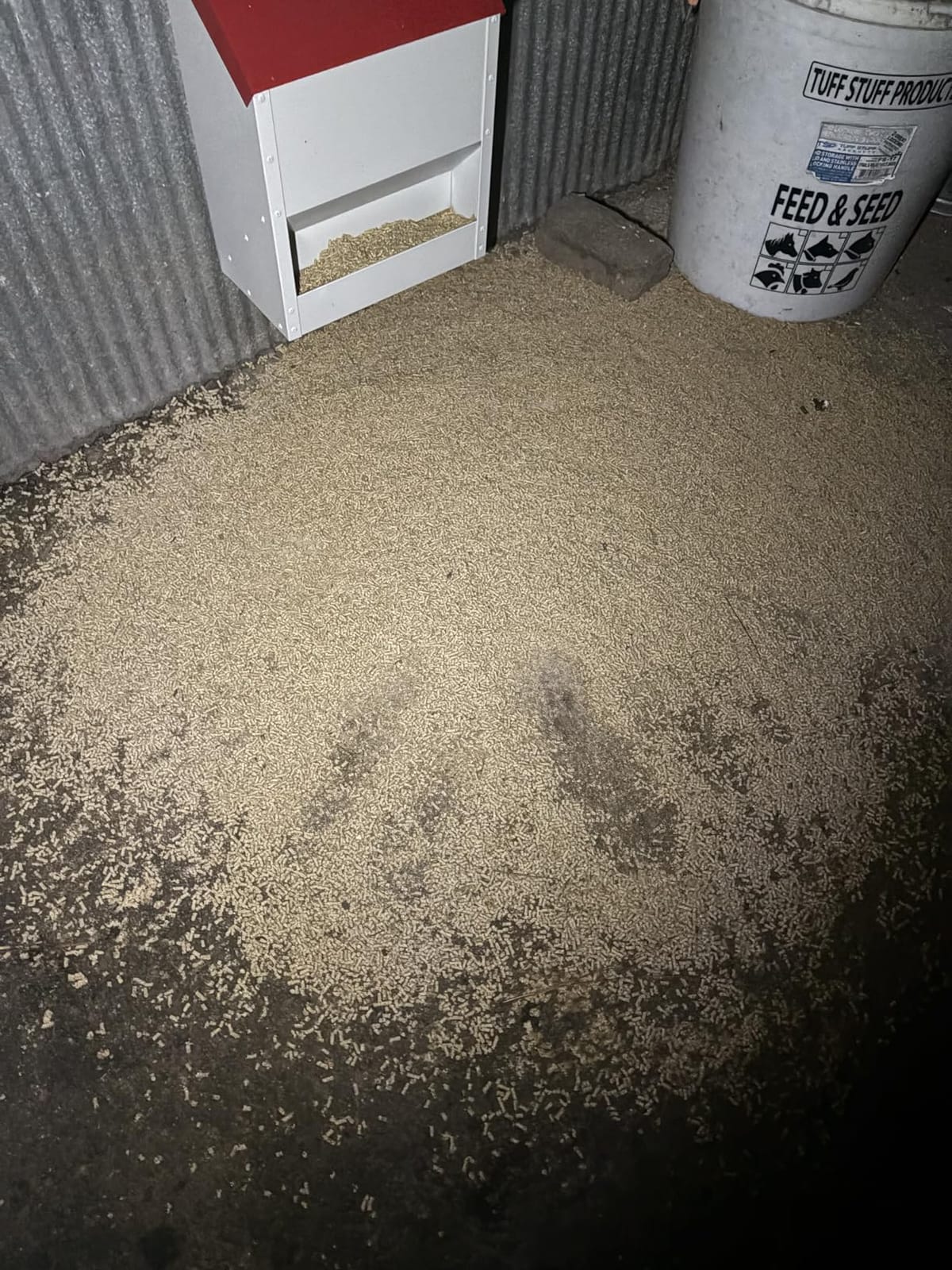
Owners highlight the space saving and the no-assembly design most often. It is also light enough to move easily, which matters when you are cleaning out the run.
Be realistic about waste control here. It is a lidded trough rather than an enclosed-port or treadle design, and reviewers say it is less effective against spillage than those formats. The 10 lb capacity also refills quickly.
Who this works for
Small coops, urban runs and mobile A-frame setups where floor space is the constraint. It is a good second feeder to add once a bigger unit handles the bulk of the feed.
Who should skip it
Anyone whose main problem is spillage rather than space. A trough design lets a determined hen flick feed onto the ground, and 10 lb will not carry a flock past a couple of days.
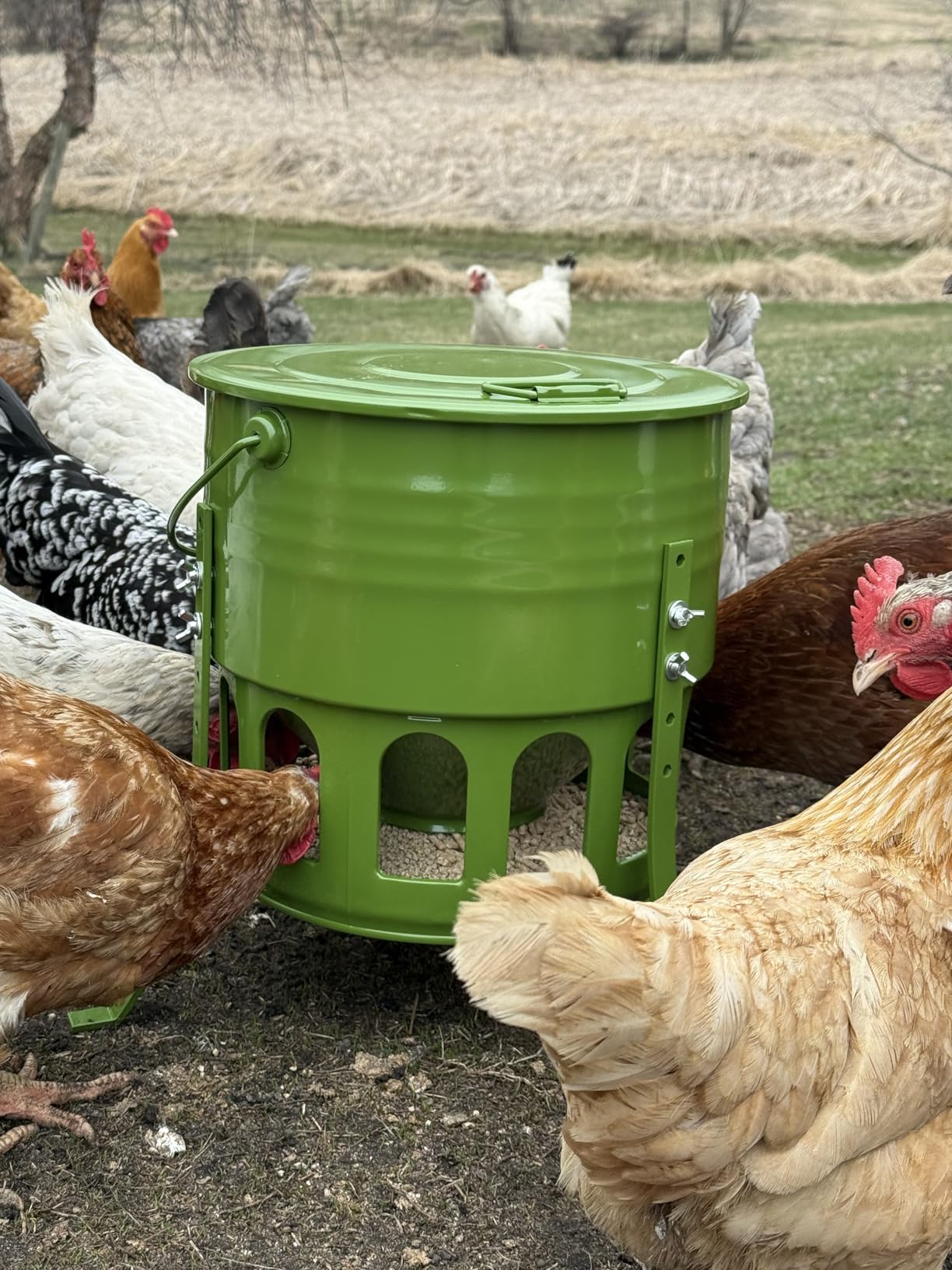
8. Kingump 20 lb Twelve-Port Feeder on an Adjustable Tripod
- 12 ports let a whole flock eat without crowding
- Tripod stand has four height settings and resists tipping
- Legs keep crawling pests away from the feed
- Tool-free assembly and folds down for storage
- Keeps feed dry through storms in a covered run
- Port openings have no retaining lip so some birds can still rake feed out
- Height adjustment means removing screws rather than sliding a collar
- Paint finish scratches easily during assembly and can show bare spots
Port count is the whole argument here. Twelve ports means ten or more hens can eat at once without a dominance fight, and the reduced competition is what keeps feed inside the feeder rather than scattered by birds jostling for position.
The reinforced tripod stand with four height settings is unusually practical. You can raise it as birds grow, the low centre of gravity resists tipping when they lean on it, and the legs lift the feed clear of crawling pests.
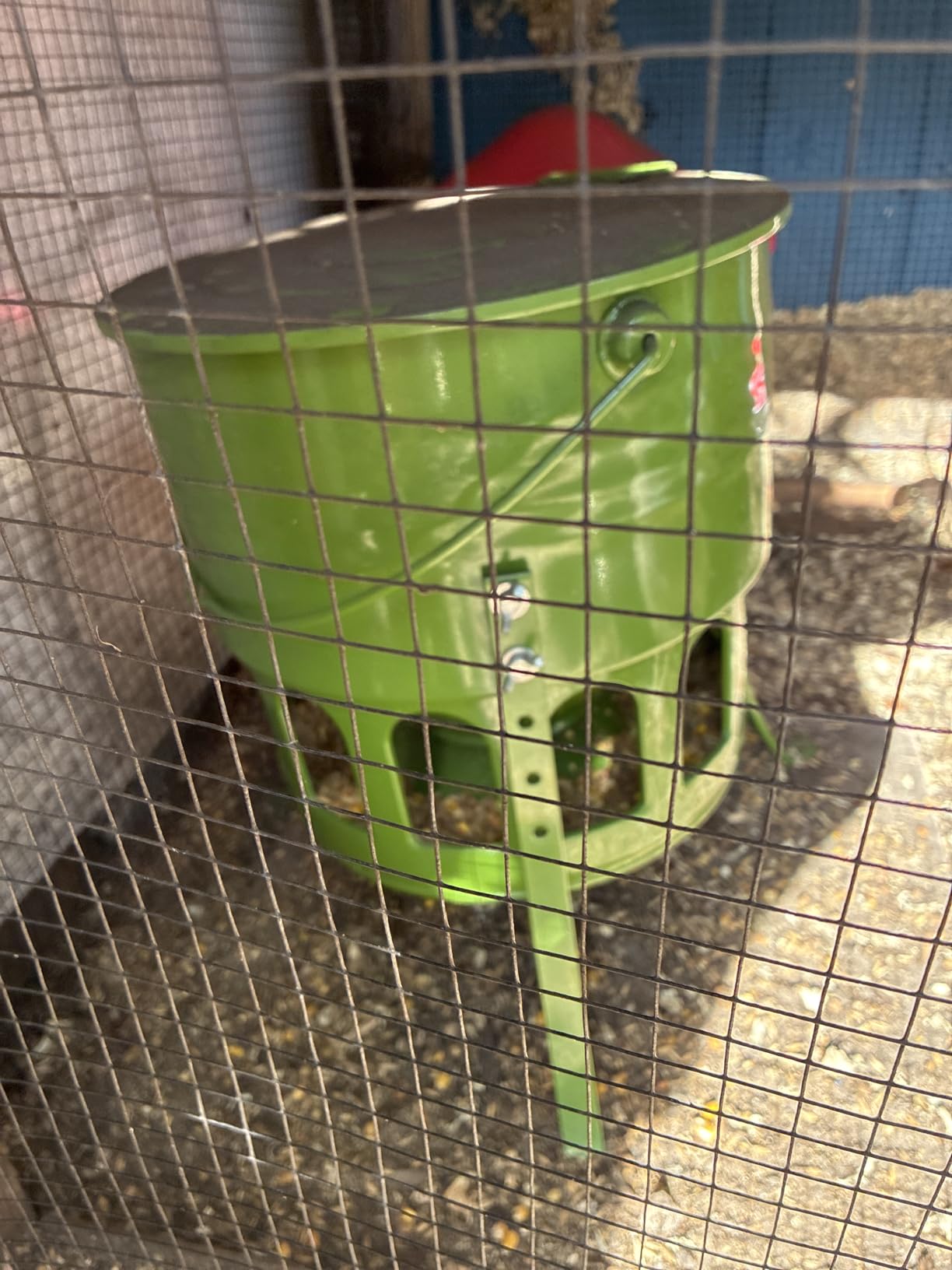
Owners report a clear drop in scattered feed after switching from an open feeder, and the sealed lid holds up through storms when used in a covered run. Assembly is tool-free, and the legs remove for storage.
The port openings are the weakness. There is no retaining lip, so some birds can still rake feed out, and the height adjustment means removing screws rather than sliding a collar.
Who this works for
Flocks of roughly 8 to 15 hens where crowding at the feeder is the visible problem, and keepers who want a metal body with more ports than most. The adjustable stand suits birds at different sizes.
Who should skip it
Anyone with rat or mouse pressure, since there is no locking lid. Keep in mind the paint finish scratches easily during assembly, and it is heavy to move once filled.
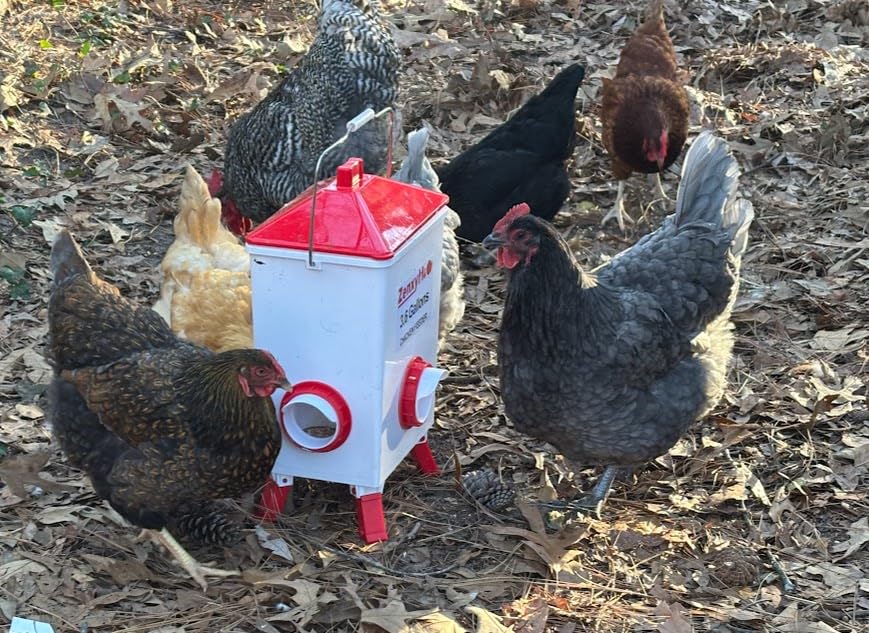
9. ZenxyHoC 3.6 Gallon Bucket Feeder – Best for a Flock That Is Growing
ZenxyHoC 3.6 Gal Chicken Feeder with 4 No-Waste Ports – 3 Height Adjustable
- Adjustable legs worked well as birds grew
- Anti-roost cone and hooded ports cut spillage
- Port covers can be plugged at night against rodents
- Simple to assemble clean and carry
- Feed level window avoids opening the lid
- Port openings are too small for a rooster's head
- Handle on this style of bucket feeder is not strong enough for a full load
- Only four ports limiting access for larger flocks
This is a bucket feeder that understands its job. The anti-roost cone lid discourages perching on top, the four ports are hooded so feed does not get raked out, and the port covers close at night to shut out squirrels and rodents.
The feature we did not expect to care about is the feed level window. You can check whether the bucket needs filling without lifting the airtight lid, which means fewer openings, fewer moisture ingress events, and a better chance of the seal staying clean.
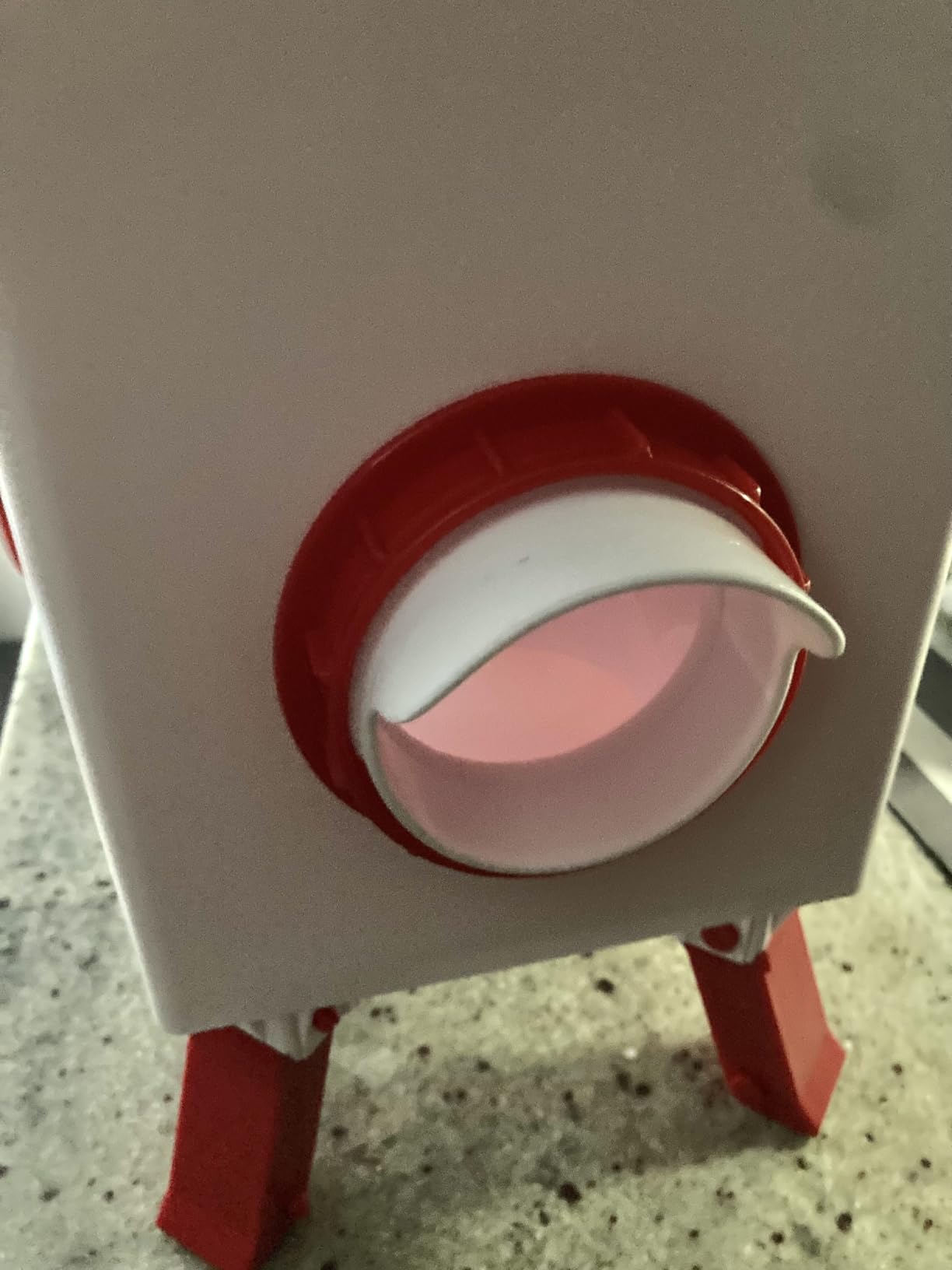
The three-stage foldable locking legs are what make it work as a flock grows, since you can raise the port height as birds get taller. The reinforced handle lets you hang it or carry it, and pre-drilled holes make assembly quick.
Two fit problems to know about. The port openings are too small for a rooster’s head, and the handle on this style of bucket feeder is the weakest part when the bucket is full.
Who this works for
Hen-only flocks in the four to eight bird range, especially if you are adding pullets through the year. It is compact, portable between coop and run, and simple to scrub out.
Who should skip it
Flocks with a rooster, and larger groups where four ports becomes a bottleneck. In humid conditions, plan on the sealed lid as your main defense against condensation.
10. Tgeyd 50 lb Eight-Port Feeder – Best Value for Long Refills at Scale
TGEYD 50LB Large Automatic Chicken Feeder – 8 Feeding Ports, No-Waste Poultry Feeder, with Adjustable Legs & Locking Lid
- Capacity close to a full 50 lb bag
- Metal body that rats cannot chew through
- Locking lid and port caps kept opossums and skunks out
- Chicks learned the deep ports quickly
- Easy to assemble with solid parts
- Not actually spill-proof as chickens still throw feed on the ground
- Leg height may need adjusting more than once to suit different bird sizes
- No rubber washers or sealant so water can seep into the screw holes
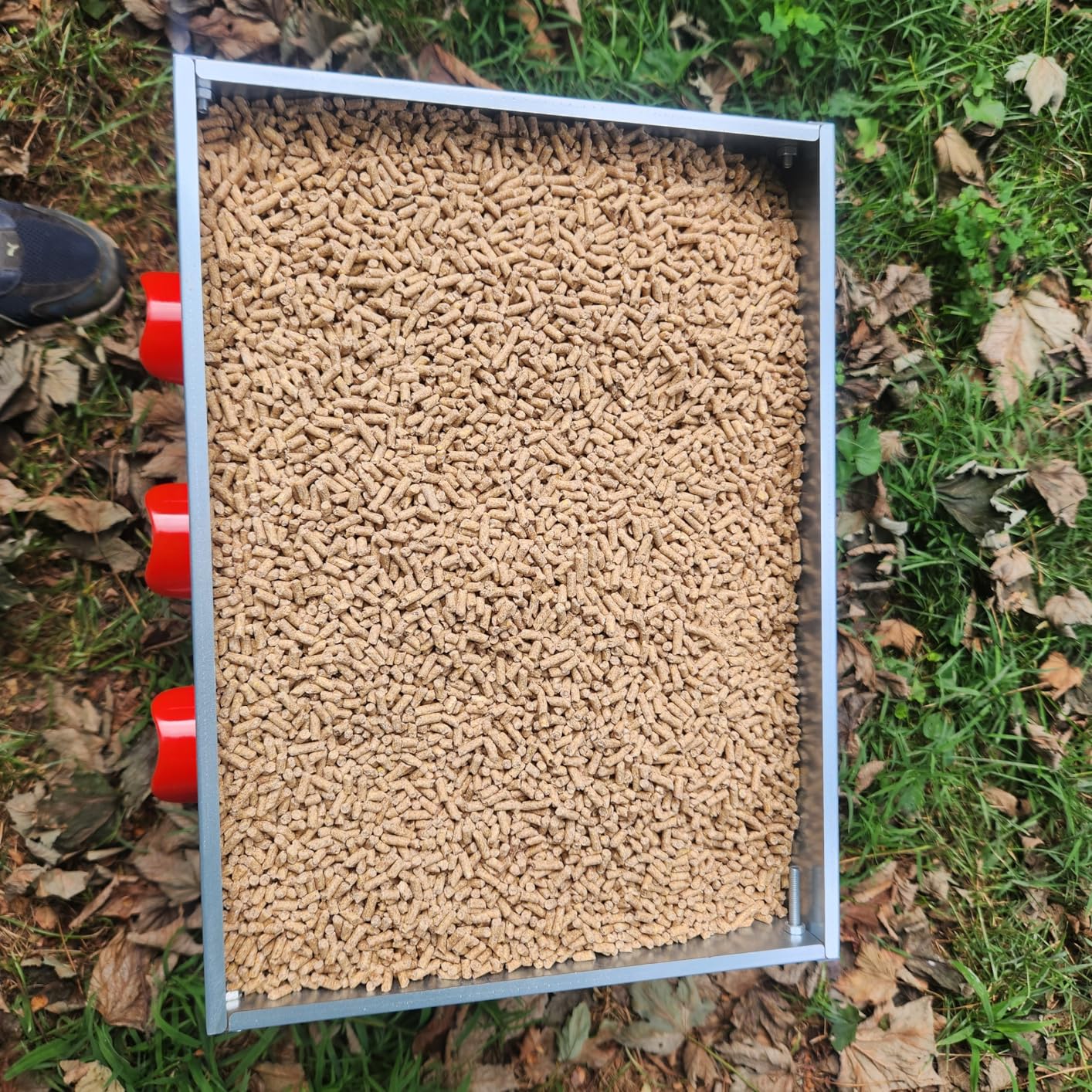
This is the capacity answer for a mid-sized flock. Fifty pounds of galvanized steel means you are not buying and carrying a full bag every few days, and the deep ports are designed to reduce scratching rather than merely catch what falls.
Eight openings handle a decent number of birds at once, and the adjustable legs let you set the port height for chicks through to full-grown hens. The locking lid is the feature that turns it from a feeder into a pest barrier.
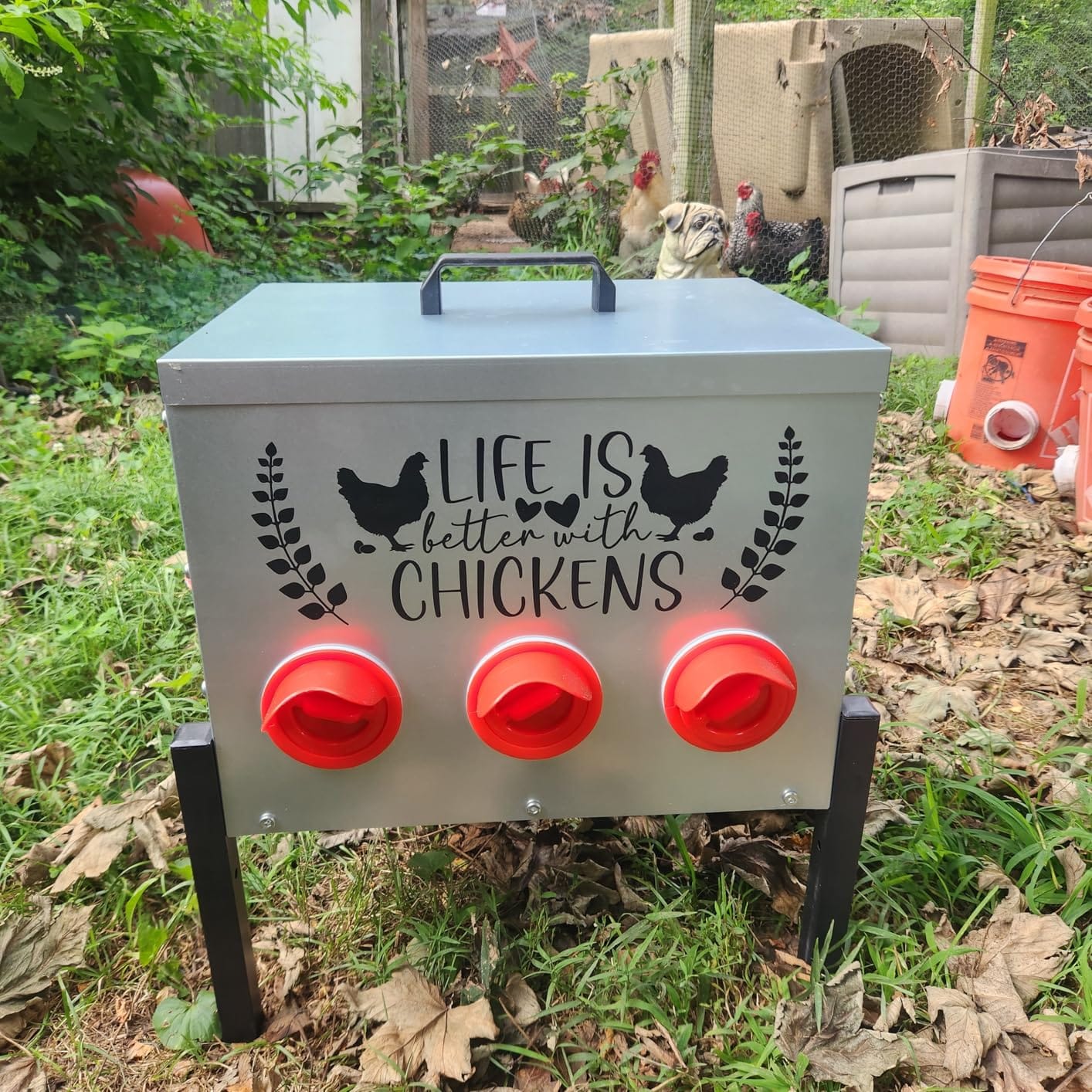
Owners report the locking lid and port caps keeping opossums and skunks out, and the metal body resisting chewing. Young birds learned the deep ports quickly, and assembly was straightforward with solid undamaged parts.
It is marketed as no-waste, and that promise is only partly kept: chickens still throw feed on the ground. Reviewers also flag unsealed screw holes that let water seep in, and real capacity that falls a little short with large granules.
Who this works for
Flocks of 10 to 20 birds on a property where you want metal, capacity, and a lid that locks. It suits keepers who refill on their own schedule rather than daily.
Who should skip it
Anyone needing genuinely minimal spillage, since the deep ports still let feed scatter. In wet climates, run a bead of sealant around the screw holes before you fill it.
11. Tgeyd 95 lb Ten-Port Feeder – Best for Ducks, Geese and Big Flocks
- Extra-large capacity cuts refill frequency
- Angled ports keep feed off the ground
- Rust-resistant body for year-round outdoor use
- Adjustable stand suits birds at different sizes
- Riveted handles make it liftable when full
- Heavy at 19.8 pounds and bulky for a small run
- Tall profile takes up more space than a bucket-style feeder
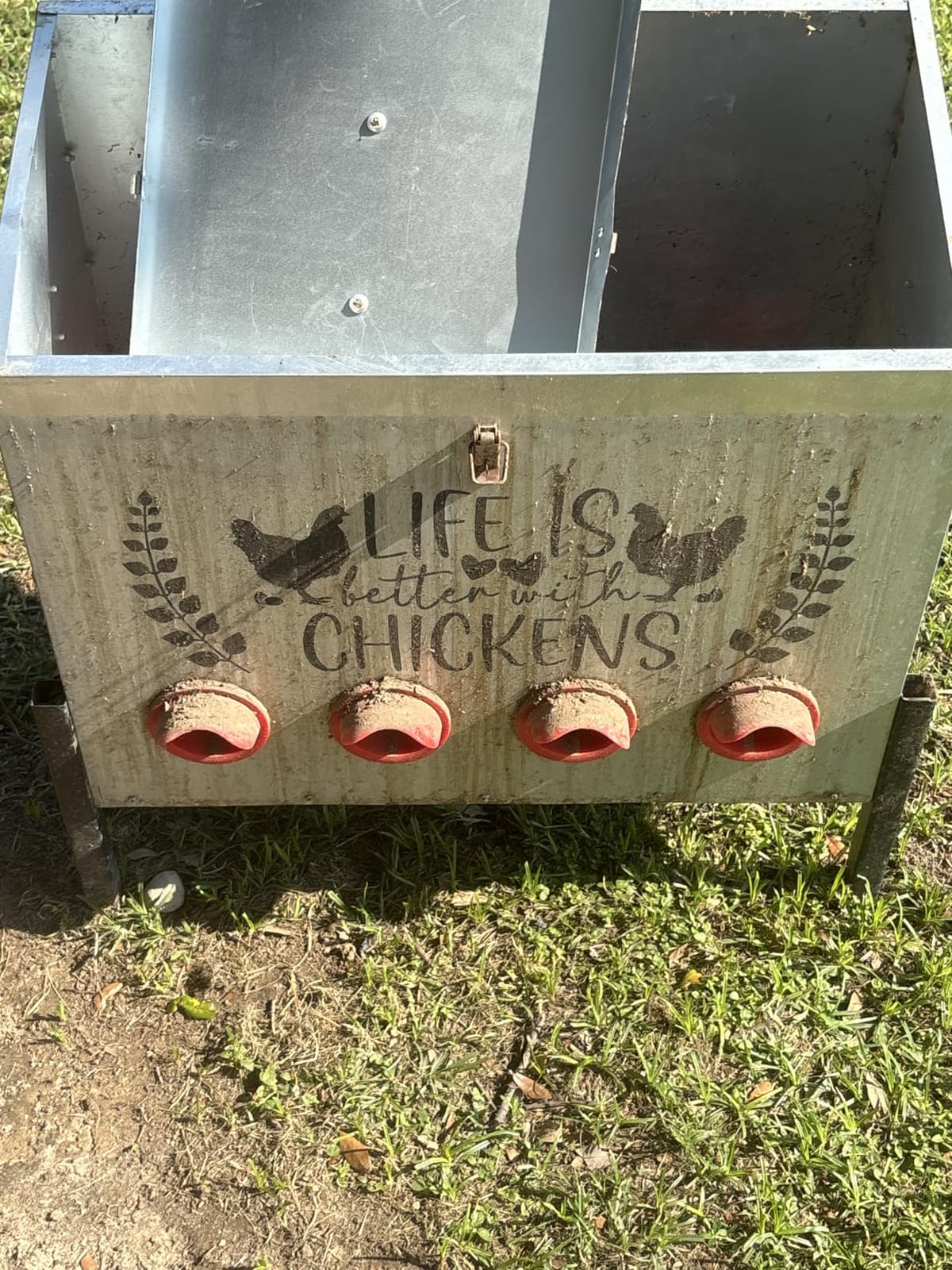
Ninety-five pounds is the capacity that changes the economics for a large flock. If you are running twenty-five birds or more, this fills to a level where refilling becomes a monthly chore rather than a daily one, and the angled ports keep feed contained.
It is built for mixed poultry, not just chickens. The wide ports and the angled geometry suit ducks and geese, which have a very different feeding posture and are much harder to stop from bill-out.
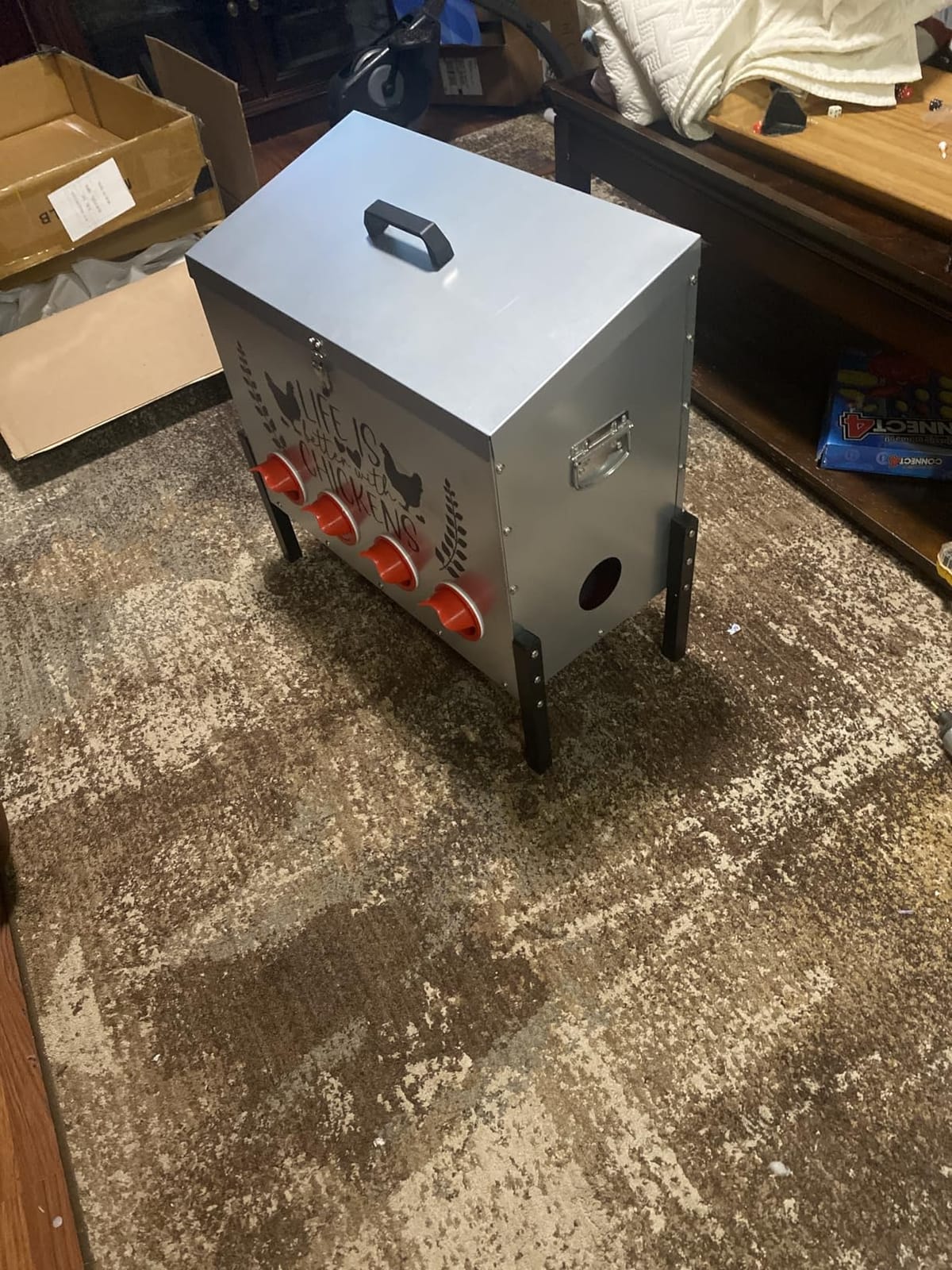
The galvanized body is rust resistant for year-round outdoor use, and the adjustable height stand covers chicks, hens and larger birds from the same unit. Riveted side handles mean you can lift it when full, which matters at this weight.
Owners with large flocks value the refill interval and the weatherproofing. The complaints are size-related: it weighs 19.8 pounds empty and its tall profile takes real space.
Who this works for
Flocks of 25 birds and up, properties with ducks or geese in the mix, and anyone who wants to fill once and stop thinking about it. The hinged locking lid also keeps wildlife out between fills.
Who should skip it
Small runs and small flocks, where a smaller unit is easier to move and easier to empty for cleaning. You are carrying a very large weight across wet ground every time you refill.
12. Tgeyd 30 lb Six-Port Feeder – Best Adjustable Height for Mixed Flocks
- Rustproof metal for year-round outdoor use
- Six ports keep feed contained
- Adjustable height suits a range of bird sizes
- Locking hinged lid keeps feed dry
- Riveted handles make it easy to lift and transport
- Some residual feed still lands on the ground
- Unsealed screw holes let water seep in
- 30 lb means more refills than the 50 lb and 95 lb models
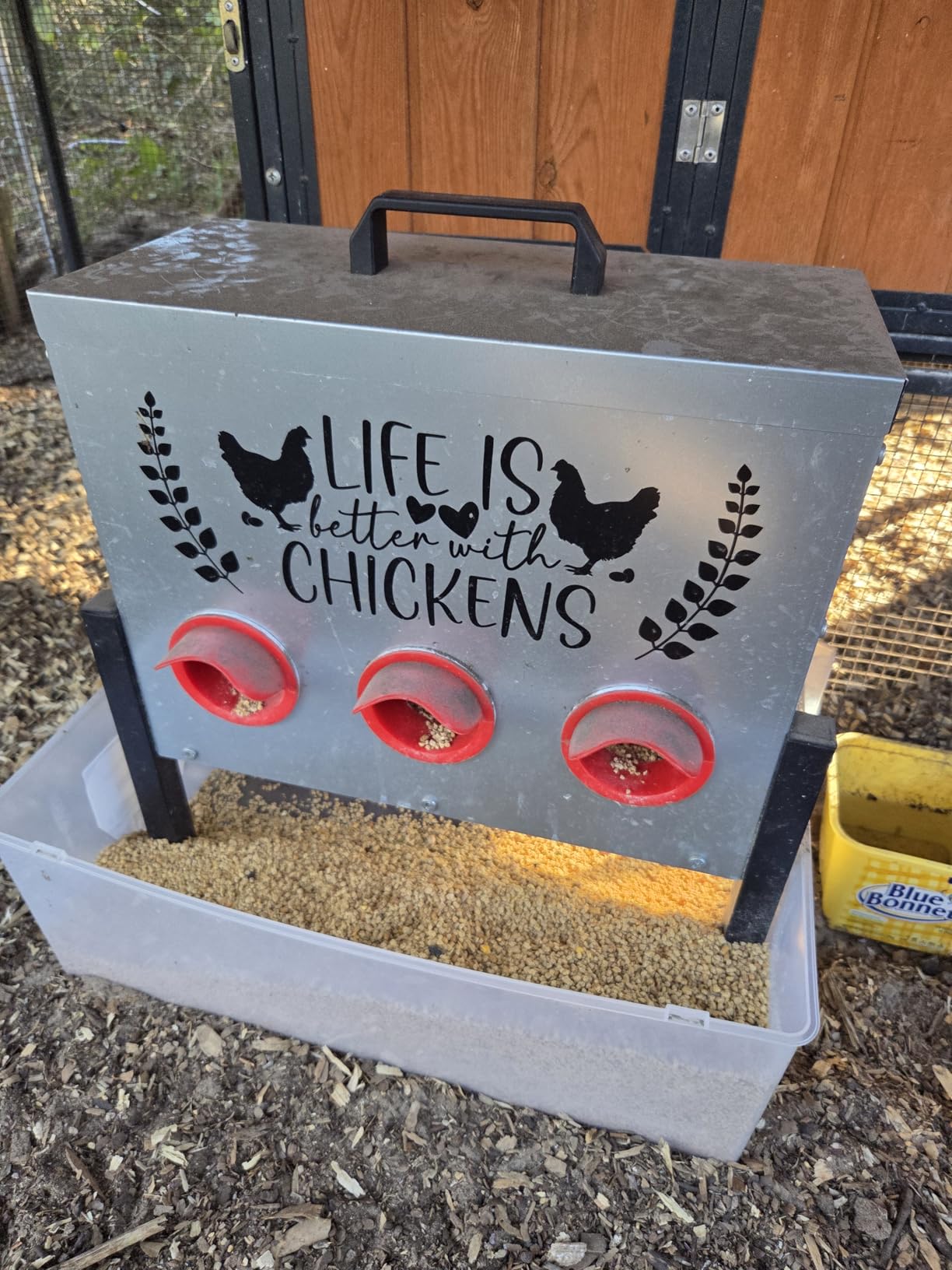
Thirty pounds is the middle of this manufacturer’s range, and for most backyard flocks it is the right size rather than the biggest one. Six no-waste ports handle a moderate flock without the crowding you get from three ports, and the galvanized metal shrugs off weather.
The adjustable height stand is the feature that makes it useful across a flock’s life. Chicks, pullets and full-grown hens can all feed from the same unit, which saves you buying a second feeder as birds grow.
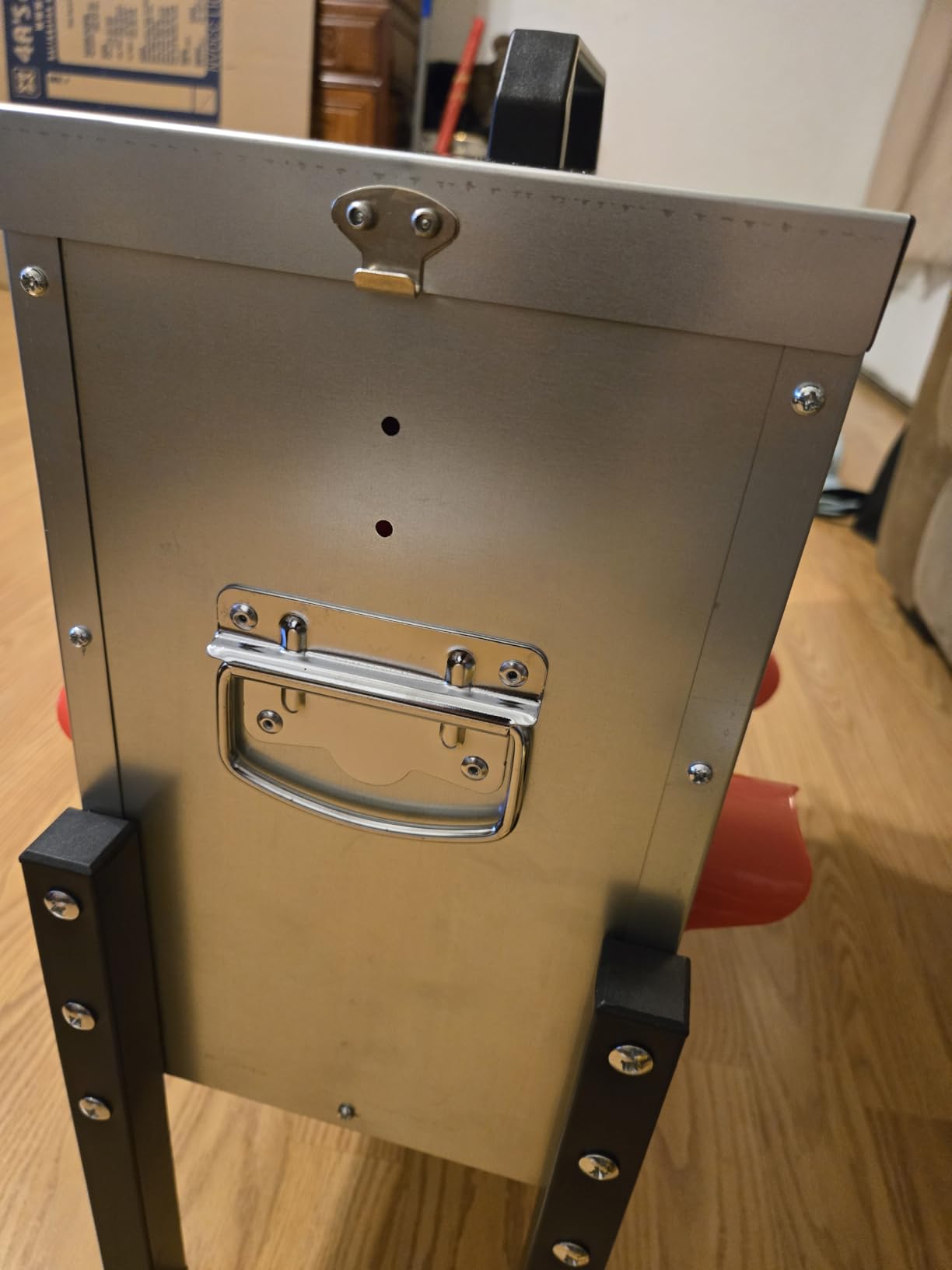
Owners like the rustproof build, the contained feed ports and the hinged locking lid that keeps feed dry between fills. The riveted side handles make moving it when partly full straightforward.
Like its larger siblings, it is not a sealed product. Some residual feed still ends up on the ground, and water can seep in through unsealed screw holes, so treat it as weather resistant rather than waterproof.
Who this works for
Flocks of 6 to 15 birds, especially if you are raising birds at different stages in the same run. It is a good default galvanized metal option for a normal-sized backyard flock.
Who should skip it
Anyone with serious rodent pressure, since you have to latch the lid manually every night, and anyone in a very wet climate who will not seal the screw holes. It is not a zero-spill design.
How to Hang a Feeder So Waste Drops
Hanging height is the free lever. Keepers report near-zero waste when the bottom of the feeder sits at about the top of the birds’ backs, and a hanging feeder is what makes that position stable.
1. Hang from a solid point. Use a rafter, a purpose-built bracket, or a beam in the run. Nothing flexes, because a feeder that swings spills feed every time a bird lands on it.
2. Set the body high. Adjustable-height feeders let you dial this in as birds grow rather than re-hanging twice a year.
3. Set the ports at back height. The bottom of the feeder, or the bottom of the port openings, should line up with the top of the birds’ backs. Too high and they cannot reach; too low and they scratch underneath.
4. Recheck after a molt or a growth spurt. Pullets grow fast in a few weeks, and a feeder that was correct in spring is too low by autumn.
If your feeder is not a hanging type, a stand with adjustable legs gets you most of the same benefit. That is why several of the metal units below score well on waste control despite not having a treadle.
DIY Zero-Waste Feeder: Ports Into a Bucket or Bin
Yes, you can build a no-waste gravity feeder yourself, and it is the cheapest route to cutting waste. The build that comes up most often in keeper forums is four-inch PVC elbows turned downward into a galvanized can, and it scales from about 25 pounds up to 100.
Materials: one 5 gallon bucket, barrel or lidded tote; four 4-inch PVC elbows; a hole saw of matching diameter; a tray or pan to set it in; a hook or bracket if you plan to hang it.
1. Cut the ports. Drill four openings in the lower side of the container, evenly spaced, so no single bird can own the feeder. The hole saw in the Suplklz kit above is sized for exactly this job.
2. Turn the elbows downward. Each elbow points into the container and faces down and slightly out. That angle is the anti-spill geometry: a bird reaches in and the feed falls straight down, not out.
3. Add the rain seal. Run the included seal around each port so rain runs off the outside rather than tracking into the feed.
4. Cut a small access hole. Make one more hole with a smaller bit so you can check the level and clear fines without tipping the whole container.
5. Set it in a pan. A large rubber feed pan underneath catches the crumbs that do escape, and you can pour those back in at night.
6. Hang it at back height. The single most reported result from this build is that birds scratch in front of the port and then clean up what they toss, which is close to zero visible waste.
If you already own a feeder with open ports, you do not need a new one. Port collars or short pipe extenders fitted over the existing openings will stop billing out for very little money, and they are the retrofit keepers recommend most.
Feed Storage: Keeping the Bag Dry and Rodent-Proof
A perfect feeder does nothing if the bag is damp or chewed in the shed. Feed storage is the most discussed adjacent topic on the chicken forums, and the failure modes are consistent enough to list.
Chewed plastic lid rims. Mice and rats chew the rim of a plastic lid to create a gap, and once they have one they keep it. Look for a container with a recessed lid and a clamp or a metal strap, not a simple snap.
Condensation and mold. In humid regions even a sealed can develops condensation inside, and keepers report mold within a week. The fix is to store feed indoors in a shed or garage rather than outdoors, and to keep the container off a concrete floor.
Leaking metal handles and lids. A dented handle lets water in at the top. Fill the container indoors and carry it out, rather than refilling it in the rain.
Break-ins by larger animals. Bungee cords do not stop a raccoon, and a determined one will get through a lid a person could not open. On properties with that pressure, use a metal bin with a screw lid.
Two-stage containment. The most effective setup described on forums is a gravity feeder inside a rubber feed pan inside a lidded tote, filled with only about a day’s ration, with the night’s debris poured back in. It also means the run is empty overnight, which takes away the reason rodents come at all.
Spilled fines and dust that your birds ignore are not waste if you use them. Mix the powdery leftovers with water into a mash and serve it as a treat, and you recover a surprising amount of feed each month. A well-fed flock is also the reason to keep more birds in the first place, and the kitchen pays it back: my easy crockpot chicken and stuffing and chicken enchilada casserole both start with a steady supply of eggs and a bird that is well fed.
How to Choose a No-Waste Feeder for Your Flock
Match the feeder to the flock, not to the spec sheet. A ten-bird flock and a forty-bird flock need different things from a feeder, and most disappointing results come from that mismatch.
Start with capacity against consumption. A hen eats about half a pound a day. Four hens burn roughly 14 pounds a week, so a 12 lb feeder means weekly refills. A 50 lb feeder covers about a week for ten hens, and a 95 lb unit covers a 25-bird flock for about a week too. Big hoppers only help if you fill them with feed the flock will finish before it molds.
Choose the mechanism for your problem. A gravity feeder relies on the weight of feed alone, with no moving parts, and wastes little if the ports are enclosed. A hanging feeder is a gravity feeder raised to back height. A treadle feeder opens only under a bird’s weight, which makes it the best pest defense and the best waste defense at once. A trough feeder is the cheapest format and the worst at containing feed. An automatic or demand feeder uses ports or regulator disks to restrict access, which controls pests but needs more ports to avoid bullying.
Match port count to flock size. Peck order decides how many birds can eat calmly at once. Three ports suits about three to six hens. Above ten birds, look for six ports or more, and a stepped platform in front of each one so a smaller bird can reach.
Decide plastic versus galvanized metal. Plastic is light, quiet, easy to scrub, and available in BPA-free and UV-resistant formulations. Metal shrugs off pecking, holds temperature better, and takes a treadle mechanism, but it is heavier and can develop sharp edges that injure combs and wattles if the edges are not rolled.
Check the bird fit before you buy. This is where most returns happen. A rooster cannot use a narrow port, a bantam cannot reach a port set for a hen, and a flock of only hens does not need a feeder with side guards.
Plan for cleanup and for the feed form. A wide mouth or a tool-free disassembly saves you weekly. And feed pellets waste far less than mash or crumble, because there is nothing for a hen to scratch for. If a feeder is rated for pellets only, take that seriously.
For the exclusion side of the problem, my squirrel-proof bird feeder roundup covers the hanging and port designs that stop smaller thieves from the same way.
Frequently Asked Questions
How do I get chickens to stop wasting feed?
Start with the feeder, not the feed. Enclosed or hooded ports stop scratching and flick-out, a lid and a port overhang keep rain out, and raising the feeder so the bottom sits at the top of the birds’ backs cuts waste sharply. Switching from mash or crumble to pellets also helps, because hens have no reason to scratch when the feed is already the shape they want.
What is the best chicken feeder for no waste?
A ported gravity feeder with individually enclosed openings gives the lowest spillage, and a treadle feeder cuts waste and pest theft at the same time. Among the feeders we compared, a four-port PVC bucket kit, a 50 pound ported plastic feeder and a galvanized treadle were the three that performed best for containing feed.
Can I make a DIY chicken gravity feeder myself?
Yes. Drill four openings in a 5 gallon bucket, barrel or tote, fit 4-inch PVC elbows turned downward and facing out, seal the ports against rain, and set the container inside a rubber feed pan. The same build scales from roughly 25 pounds of capacity up to about 100, and hanging it at back height reduces waste further.
Which automatic chicken feeder is the best?
For rodents and wild birds, a treadle feeder is the strongest automatic option because it only opens while a chicken is standing on it. For pure spillage control with minimal moving parts, a ported gravity feeder is easier to run and needs no training, though it does not stop a determined squirrel.
How do I hang a chicken feeder to reduce waste?
Hang it from a solid rafter or bracket so the body does not swing, then set the bottom of the feeder or the port openings at about the top of the birds’ backs. Too high and birds cannot reach, too low and they scratch underneath. Recheck the height as pullets grow, and use adjustable legs if your feeder is not a hanging type.
The Bottom Line on Waste-Free Chicken Feeding
If you want the single change that cuts the most waste, start with a ported gravity feeder that hangs at back height. The Suplklz four-port kit gets you there for almost nothing using a bucket you already own, the OverEZ 50 lb covers a long refill interval, and the Grandpa’s treadle is the one to buy when rats are the real enemy.
Feed form, feeder height and feed storage together account for more saved feed than any product on this list. Pick the feeder that fits your flock size and your birds’ body shape, switch to pellets, hang it right, and store the bag indoors. That is the working version of the best chicken feeders for preventing waste.