

The short answer: for most home butchering setups, the best machine for plucking chickens is a 20-inch stainless steel drum plucker with a 1 HP motor around 280 RPM and a GFCI-protected switch. Our pick for most flocks is the Kitchener 1HP 20-inch drum unit, with the Yardbird 21833 taking the slot for people processing bigger batches in a single day.
A chicken plucker is a drum or tub machine lined with soft rubber fingers that tumbles a scalded bird and strips the feathers off in seconds. Hand plucking takes several minutes per bird and wrecks your hands before lunch. A machine cuts a 25-bird session down to well under an hour, which is why owners on homesteading forums call it the single biggest time saver of a processing day.
We compared eight drum pluckers side by side for this guide, reading the spec sheets, the failure reports and the owner threads rather than the marketing bullets. The differences that actually matter on a processing day come down to motor output, finger count, drum diameter and whether the electrical hardware is properly protected for a wet machine. We cover all of that below, along with the scalding step that decides whether the machine works at all.
If you are also building out your processing kit, our guide to the best bone saws for home butchering covers the other piece of equipment you will reach for the same afternoon.
Table of Contents
Top 3 Chicken Pluckers for Home Butchering in 2026

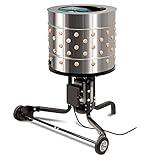
Kitchener 1HP 20-Inch Drum Plucker
- 1HP 800W at 280 RPM
- 92 soft fingers
- 20 in drum
- GFCI with IP54 housing
Yardbird 21833 1.5HP Plucker
- 1.5HP at 300 RPM
- 110 rubber fingers
- 20 in drum
- Integrated irrigation ring

SuperHandy 1HP 20-Inch Plucker
- 55 lb build
- 1HP 800W at 280 RPM
- 92 soft fingers
- 403 stainless steel
All 8 Chicken Pluckers Compared in 2026
| Product | Specifications | Action |
|---|---|---|
| Kitchener 1HP 20-Inch Drum Plucker |
|
Check Latest Price |
| Yardbird 21833 1.5HP Plucker |
|
Check Latest Price |
| SuperHandy 1HP 20-Inch Plucker |
|
Check Latest Price |
 Yardbird 44204 1.2HP Plucker Yardbird 44204 1.2HP Plucker |
|
Check Latest Price |
 VEVOR 20-Inch 750W Plucker VEVOR 20-Inch 750W Plucker |
|
Check Latest Price |
 Garvee 20-Inch Copper-Motor Plucker Garvee 20-Inch Copper-Motor Plucker |
|
Check Latest Price |
 Roots and Harvest 1.2HP Plucker Roots and Harvest 1.2HP Plucker |
|
Check Latest Price |
 GarveeLife 20-Inch 106-Finger Plucker GarveeLife 20-Inch 106-Finger Plucker |
|
Check Latest Price |
1. Kitchener 1HP 20-Inch Drum Plucker – the One Most Flocks Should Buy
- Plucks 2-4 birds in 15-30 seconds
- Pluck quality praised on Cornish Cross birds
- 403 stainless body and base
- Disassembles easily for cleaning
- Built-in GFCI plug and rubber-booted switch
- Drum-sensing magnetic switch sometimes fails to seat
- Legs use weak bolts and can wobble
- Transport wheels and hitch pins detach easily
- A few feathers stay on tail and wing tips
This is the unit we keep coming back to, because the combination of a 4.5 rating across more than a thousand reviews and a spec sheet that holds up under scrutiny is rare in this category. The motor is a 1HP 800W planetary gear transmission unit turning at 280 RPM, which is the sweet spot for backyard meat birds: fast enough to clear a bird in 15 to 30 seconds, slow enough that the fingers rarely grip hard enough to tear skin.
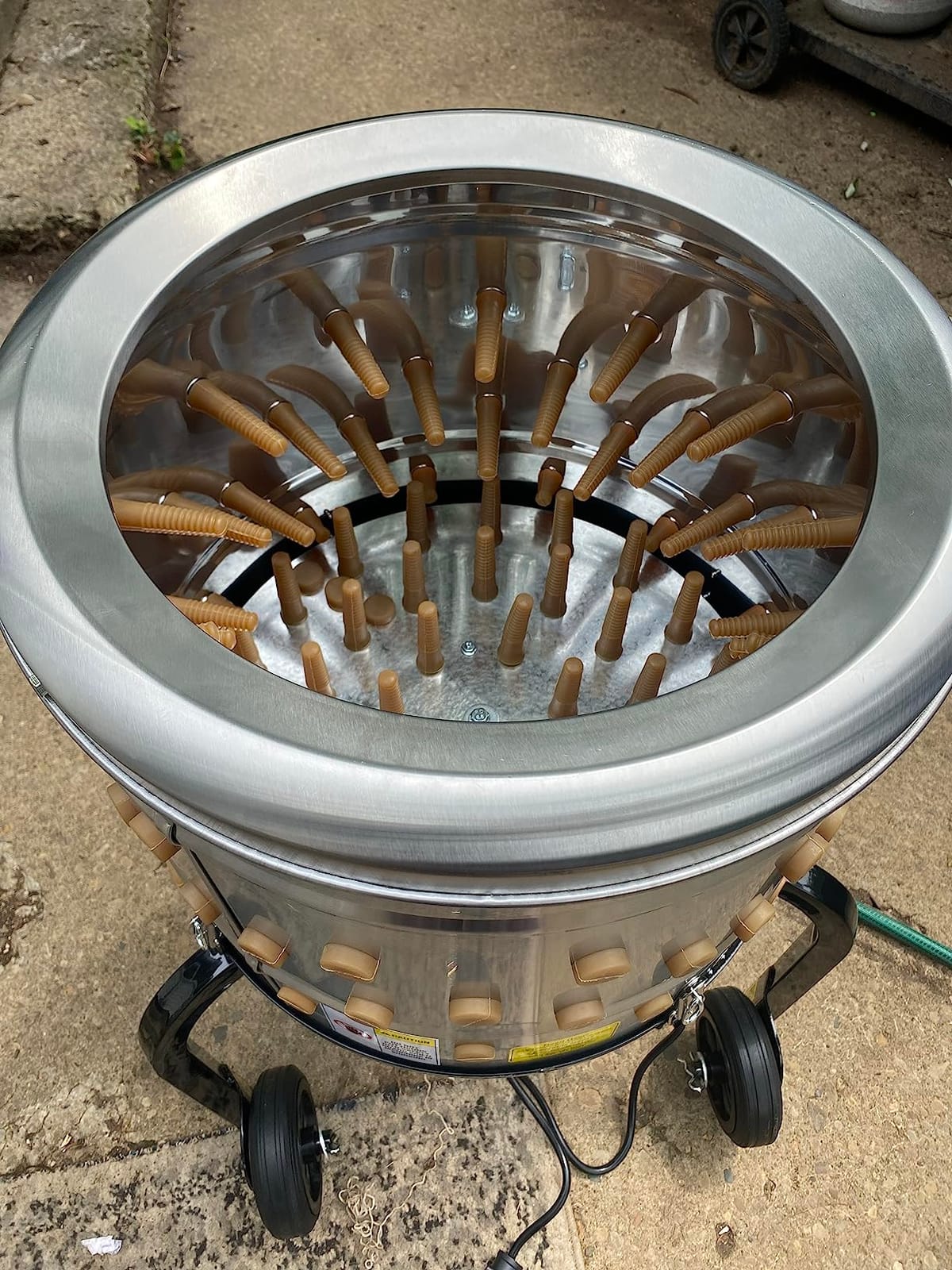
The drum is 20 inches in diameter with 92 soft fingers, and the body and base are 403 brushed stainless steel with 0.6mm barrel walls. Rated capacity is two to four birds at a time, and the whole thing measures 22 inches deep by 23 wide by 22 high, so it fits in a small garage corner without claiming a whole wall.
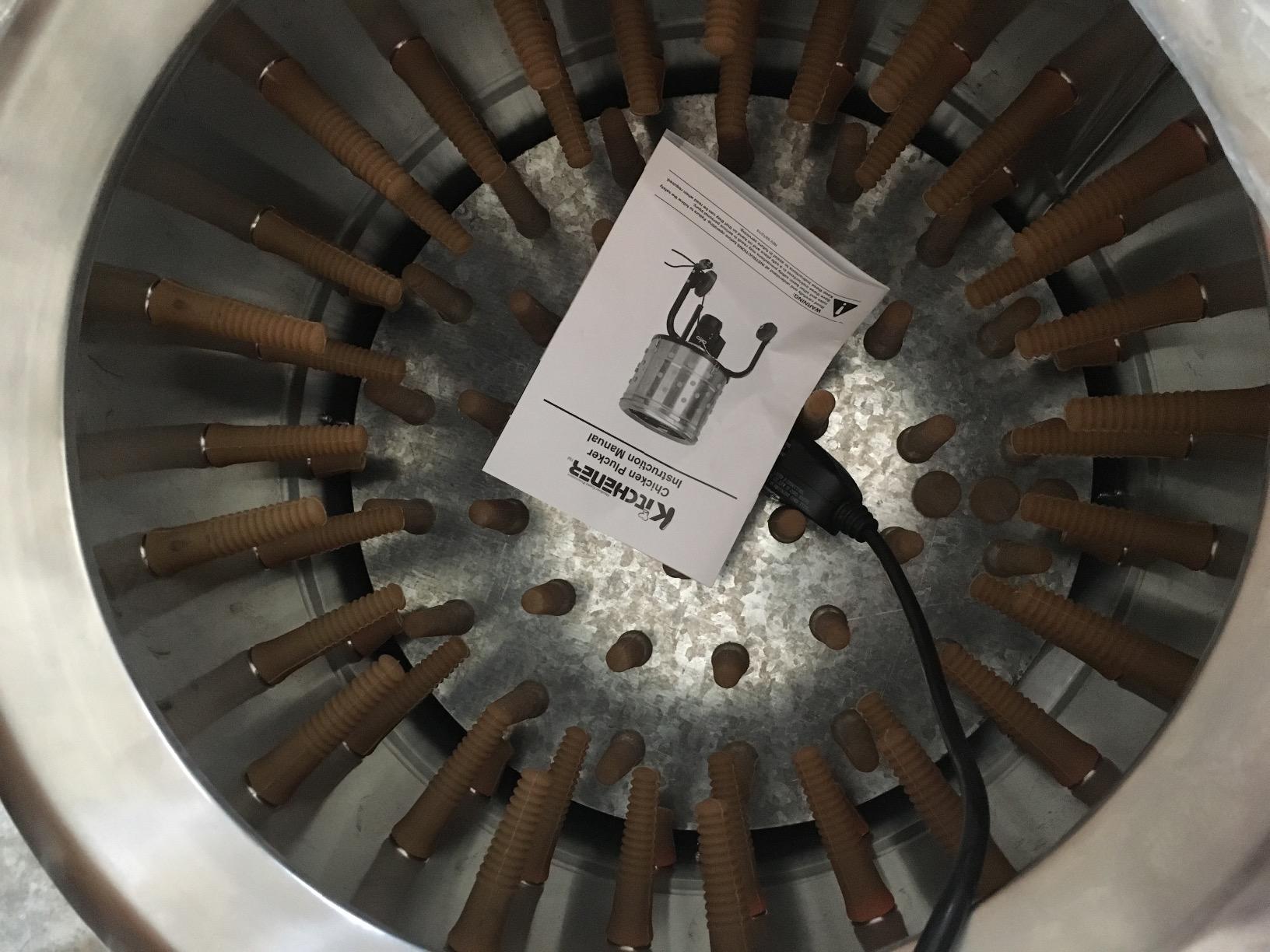
Owners report the rubber fingers leave the meat un-bruised and undamaged when birds are properly scalded, and that the machine disassembles cleanly for washing. The wheels only touch the ground when the machine is tilted, which makes it unusually stable while birds are tumbling. One owner ran 150 chickens through this plucker, which tells you something about the frame.
Buyer reviews do point out that the advertised integrated irrigation ring is missing on some units, so plan to run a garden hose to the drum yourself. Dense, long feathers from slower-growing breeds can also pack the drum if you are not spraying water through the cycle.
Who the Kitchener 1HP suits
This suits a backyard flock of 10 to 20 birds, or a homestead that processes 25 to 50 birds in a session and has somewhere reasonably dry to set up. The 15 to 40 second pluck time owners report is realistic once scalding is right, and that is the number that turns a full afternoon of hand work into an hour.
It also suits anyone who cares about electrical safety. The GFCI overcurrent protector and IP54 weather-resistant housing are real hardware, not a claim, and that matters when you are spraying water into a spinning drum with a wet bird inside it.
Where the Kitchener falls short
The magnetic drum-sensing switch is the most-reported problem on this machine. When it does not seat properly, roughly a 2mm gap keeps the unit from powering on at all, and the fix is usually a nudge and a reseat rather than a repair.
Several owners also flag wobbling legs on weak bolts, which lets the tub walk while birds are inside, and detachable wheels and hitch pins that do not survive being dragged across gravel. If you plan to process outdoors, budget for the garden cart workaround described later in this guide.
2. Yardbird 21833 1.5HP Plucker – Fastest Cycles for Big Processing Days
Yardbird 21833 Chicken Plucker, Stainless Steel, 1.5 HP Motor, 20-inch Drum, 110 Natural Soft Fingers, Integrated Irrigation Ring, Transport Wheels, Simple Debris Collection
- Highest motor output in the group at 1.5HP and 300 RPM
- 110 fingers strip gently without tearing
- Real integrated irrigation ring with garden hose connector
- Removable stainless drum and waterproof motor housing
- US-based service and 1-year warranty
- Heaviest unit here at 82 pounds
- Tub-sensing switch adds a failure point
- Compact design means bending over to load
- Feathers remain on tail and wing tips
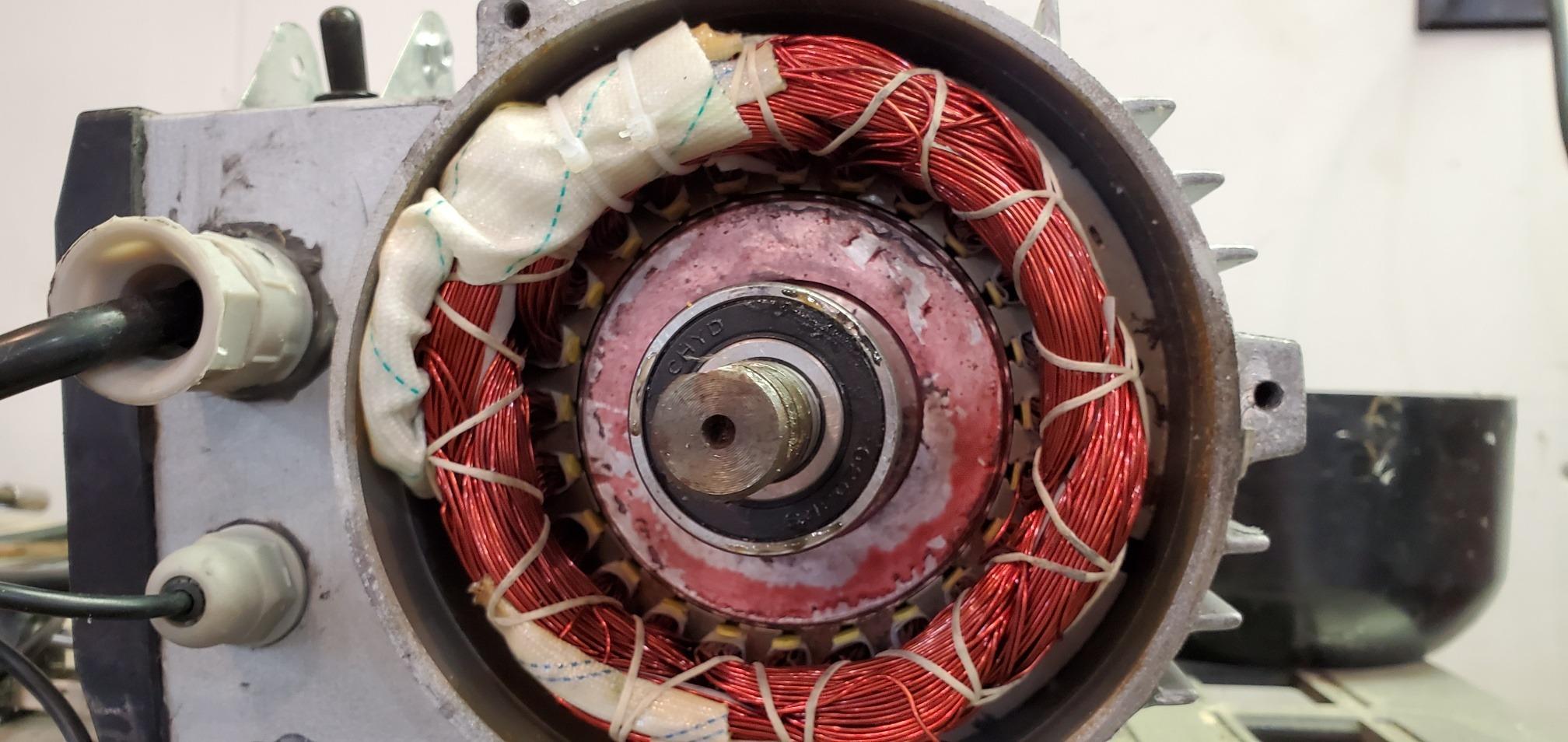
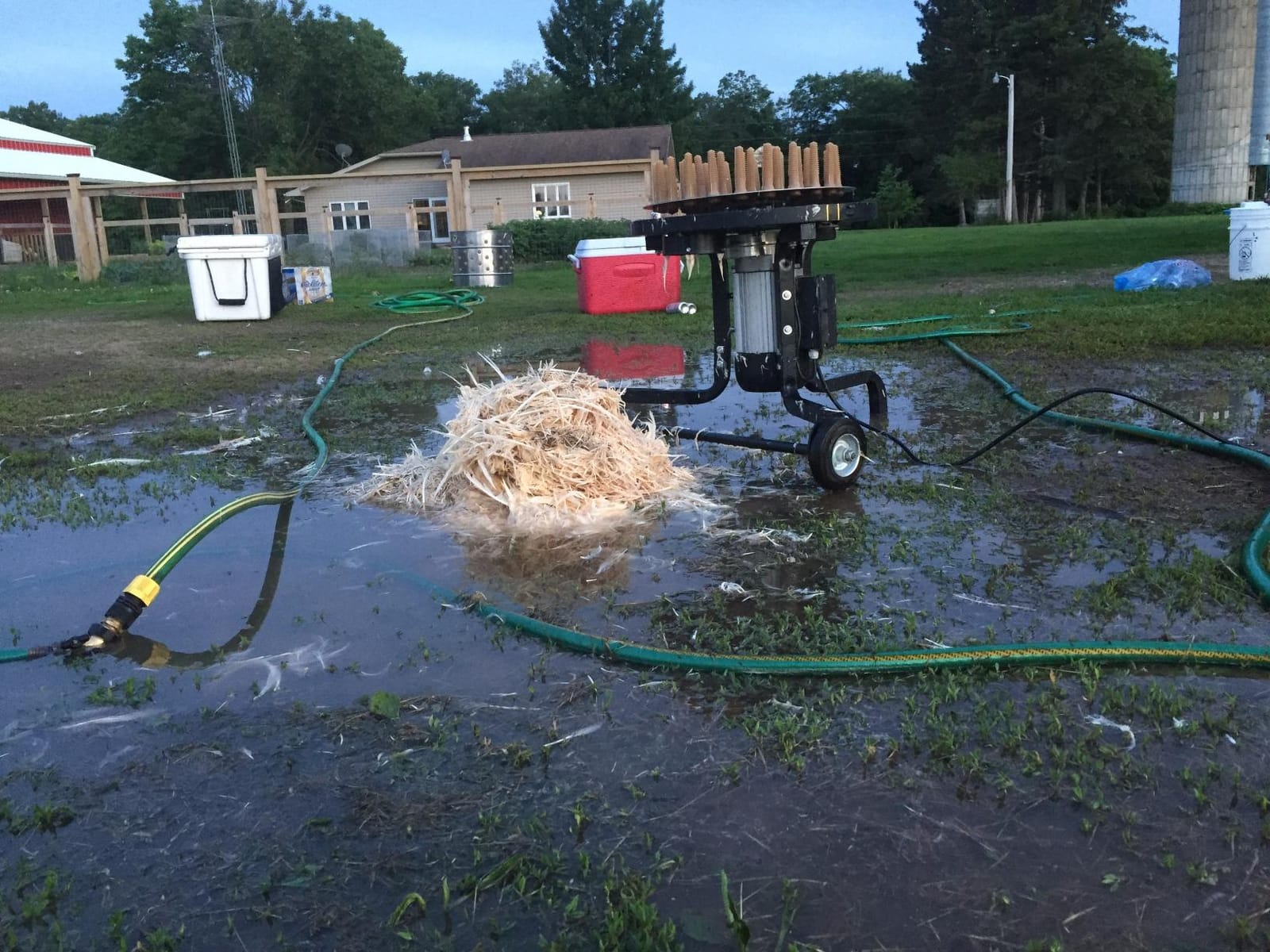
The Yardbird 21833 is the most reviewed machine in this guide and the one owners point to when they describe a processing day. A 1.5HP motor spinning at 300 RPM is the highest output in this group, and the difference shows up on the fourth and fifth bird of the morning. On a 30-bird session, that is a real difference in how long you are standing in the wet.
Around the drum sit 110 individual natural rubber fingers, and the removable drum is food-grade stainless steel with a sealed waterproof motor housing. Water spray during the cycle washes feathers down to a simple debris collection, and a 5-gallon pail under the chute handles the cleanup.
This is also the machine with the most independent owner feedback in the category. The retail review page for the 21833 shows a 4.3 average across more than 1,200 verified buyer reviews, which is the largest owner base of any machine in this guide, and independent reviewers describe it as a genuine step change in processing speed for a home flock.
One detail separates this from machines that merely claim an irrigation ring. The 21833 has a real integrated ring with a standard garden hose connector, so you can flush the drum hands-free instead of holding a hose over an open tub while it spins.
Who the Yardbird 21833 suits
This is the right call for anyone processing 25 to 50 birds in a single day, or running one or two large processing days a year with more than a couple of helpers. If throughput is the number you care about, 300 RPM and 1.5HP is the spec that delivers it.
It also suits buyers who want support. There is a 1-year warranty backed by a US-based customer service team, and the machine has been in production since 2016, so replacement parts and field knowledge exist.
Where the Yardbird 21833 falls short
At 82 pounds this is the heaviest machine we compared, and that weight is the single most common complaint. Moving it from a garage to a gravel drive takes two people or a hand truck, and the compact tub means you bend over the drum to load each bird.
Like the Kitchener, it carries a safety interlock that can refuse to start if the tub is not seated correctly, and results depend heavily on scalding temperature and soak time. Expect to hand-finish the tail and wing tips on every bird regardless.
3. SuperHandy 1HP 20-Inch Plucker – the Lightest Machine to Move
- Lighter than the Yardbird at 55 pounds
- Plucks 2-4 birds in 15-30 seconds
- GFCI switch plus IP54 weather-resistant housing
- Compact footprint stores easily between days
- US-based support with 1-year warranty
- 1HP is slower than higher-horsepower units
- Only 92 fingers against 106-111 on rivals
- Feathers can wrap around finger bases
- Some tail and wingtip feathers remain
The SuperHandy runs the same core spec as the Kitchener, a 1HP 800W motor at 280 RPM driving 92 soft fingers in a 20-inch drum, but weighs 55 pounds instead of the Yardbird’s 82. For anyone who sets up outdoors or moves the machine between a barn and a garage, that difference is the whole buying decision.
Construction is 403 brushed stainless steel, and the electrical package is a GFCI connector inside an IP54 weather-resistant housing. Rated output is two to four birds simultaneously in 15 to 30 seconds, and the 25 by 25 by 33.46 inch footprint tucks into a corner when the season ends.
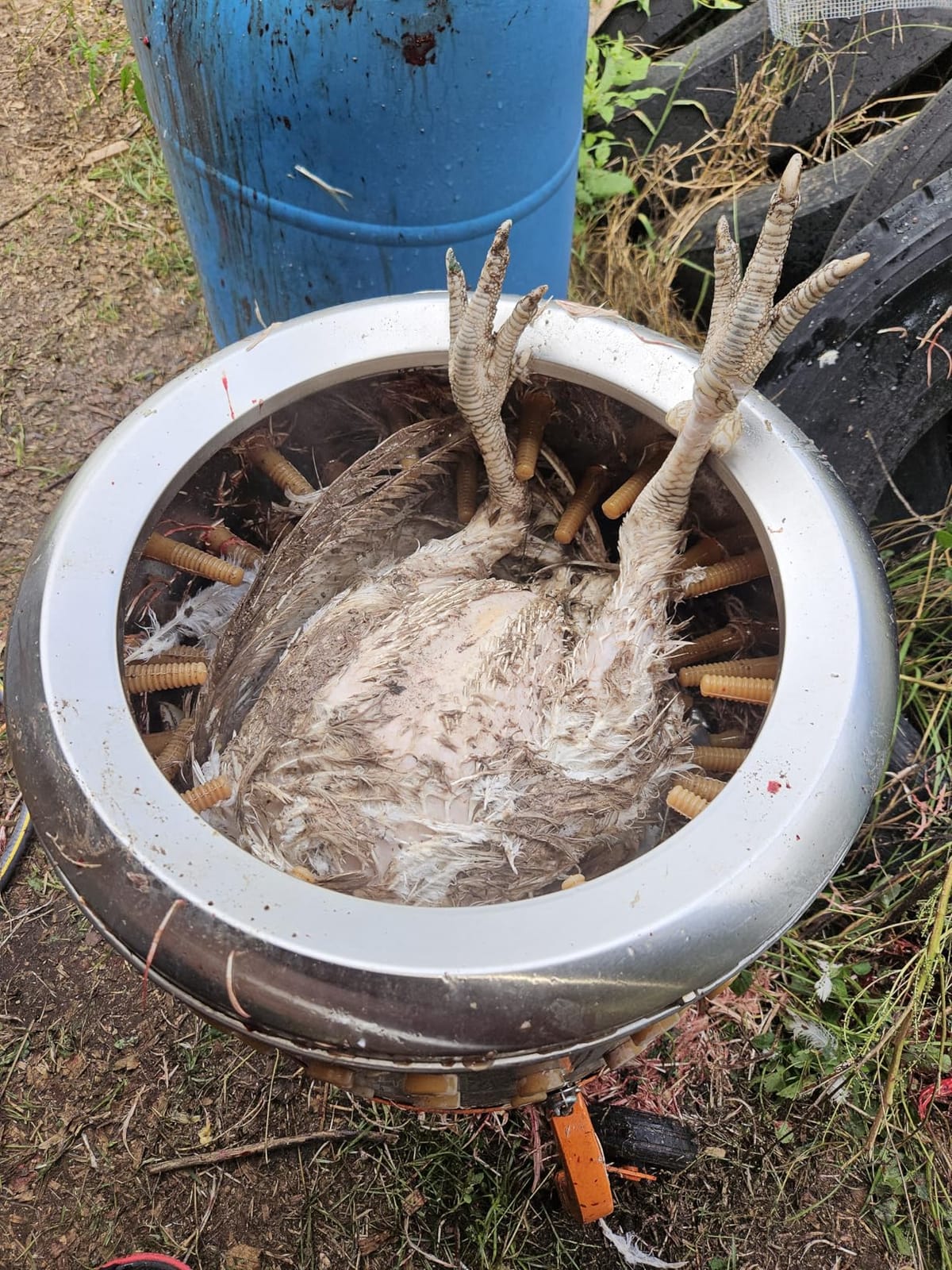
Reviewers treat this as a solid middle-of-the-road workhorse. Enough power and enough fingers to strip a bird clean in seconds, real stainless steel, and genuine GFCI and IP54 safety hardware rather than a badge printed on a box. The service team is US-based and the warranty runs one year.
The overriding theme in owner feedback is that scalding quality drives results far more than the machine does. Get the water temperature and soak time right and the output is excellent. Get them wrong and the same machine leaves feathers behind or damages skin.
Who the SuperHandy suits
This fits a small homestead that processes a moderate number of birds and does not want to wrestle an 80-pound machine across a yard. The transport wheels and the low weight make a one-person setup realistic, which matters if you are working alone.
It is a good fit for a first machine too, because the spec sheet matches what experienced owners recommend for home flocks: 20-inch drum, roughly 1HP, rubber fingers, and protected electrical hardware.
Where the SuperHandy falls short
The 1HP motor is slower than higher-horsepower machines once you are processing many birds in one session. Ninety-two fingers is also the lowest count alongside the Kitchener, against 106 to 111 on the newer designs, and feathers can wrap around the base of the fingers and are harder to clean out.
Over-scalding is the other risk. Owners who push the soak time report damaged skin, and no amount of motor power fixes a bird that sat in the water too long.
4. Yardbird 44204 1.2HP Plucker – Most Finger Density and the Best Controls
- Highest finger count in this group at 111
- On/off switch mounted above the tub so you do not bend over
- Tub-sensing switch stops the motor if the tub lifts
- Included Y-valve splits the hose feed
- 2-year warranty
- Heaviest build here at 79 pounds
- Tallest profile at 43.1 inches
- Small review base means limited durability data
- Still needs scalding skill to avoid tearing
The 44204 is a different machine from the 21833, and it is worth knowing that before you buy. Where the older Yardbird optimizes for power, this one optimizes for control. The 1.2HP motor turns the feather plate at 275 RPM, and the illuminated on/off switch is mounted above the tub so you never have to bend over a spinning drum to stop it.
Finger count is 111 natural rubber fingers in a removable 304 stainless steel food-grade tub, the highest count in this comparison. A tub-sensing safety switch stops the motor instantly if the tub is lifted or loosened mid-cycle, which is a genuine improvement on a switch you have to remember to engage.
The details owners notice most are setup details. An integrated irrigation ring comes with a Y-valve so you can split the hose feed instead of hunting for a second connection, and integrated hose and cord hooks make teardown faster at the end of a long day. The warranty runs two years, longer than the one-year terms on the Yardbird 21833 and the SuperHandy.
Who the Yardbird 44204 suits
This suits someone who has already done a processing day by hand and knows exactly which parts of the workflow they hated. If the annoyance was bending over the machine, the ergonomic switch solves it. If the annoyance was setup and teardown time, the hose and cord hooks solve it.
The 304 stainless tub with a gasket-sealed motor housing also suits buyers who want to pressure wash down after every session, and the tub-sensing interlock suits anyone processing near water with family or animals around.
Where the Yardbird 44204 falls short
At 79 pounds it is heavy despite the wide handle, and at 43.1 inches it is the tallest machine here, so measure the clearance in your shed before you commit. Measure the door too.
The honest limitation is the review base. This model does not yet have the years of field data behind it that the Kitchener and the Yardbird 21833 have, and long-term durability evidence is exactly what you want in a machine that gets wet and runs hot twice a year. You are buying a slightly more proven design plus a two-year warranty rather than a track record.
5. VEVOR 20-Inch 750W Plucker – the Least Complicated First Machine
- Two 5-6 lb birds in about 30 seconds
- Detachable drum with smooth walls is easy to rinse
- Three bottom fingers scrape the floor to reduce clogs
- Overload protection for long processing days
- Reinforced legs and larger rubber wheels
- Smallest review base with a wide 1-star share
- 750W is the least powerful motor here
- 17 in drum plate is smaller than rivals
- 430 stainless is a lower grade than 403 or 304
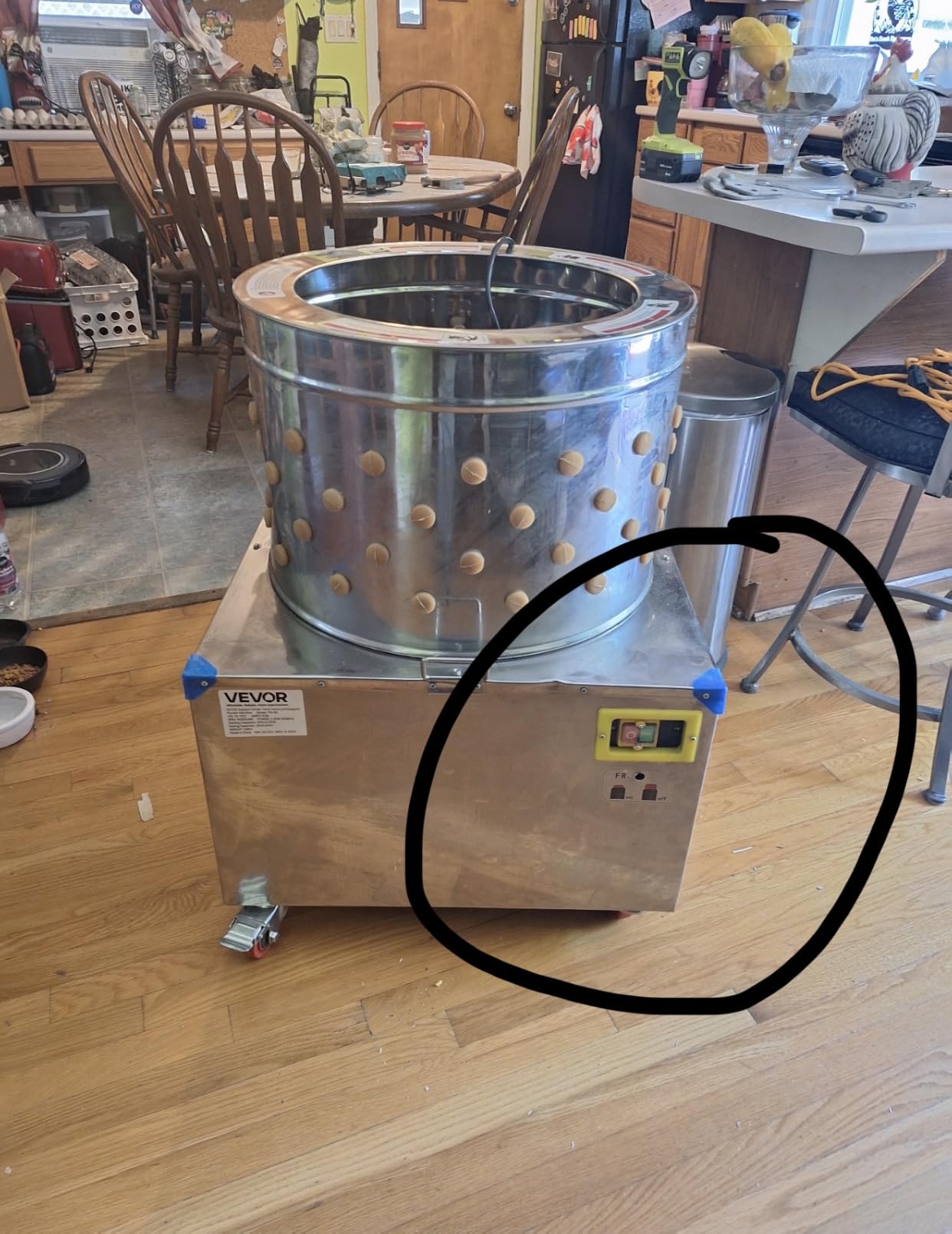
The VEVOR sits at the value end of the stainless drum range and has the strongest category sales ranking of anything in this guide, which usually means high sales volume and an active owner base. The motor is 750W at 120V and 60Hz drawing 6.6 amps, turning the drum at 275 RPM with 98 rubber fingers.
Two things set it apart from generic budget drums. The drum detaches completely, with smooth inner walls that brush out or pressure wash easily, and three soft fingers mounted on the drum floor scrape feathers toward the chute, which is the most direct fix for the clogging problem that plagues cheaper tubs.
Overload protection is built in, which matters if you are tempted to push through a long session, and the IP54 weather-resistant electrical enclosure pairs with food-grade 430 stainless steel for outdoor setups.
Owner sentiment is that it delivers a clean, complete pluck on two average birds in roughly half a minute, and that buyers who outgrow it point to the 17-inch drum plate and modest 750W motor as the ceiling rather than to any quality failure.
Who the VEVOR suits
This suits a backyard flock processing smaller birds, or anyone who wants a simple machine with fewer features that can go wrong. The 61.1 pound weight and larger rubber wheels are genuinely easier to move than the 70 to 85 pound machines, and the reinforced legs help on uneven ground.
It is a good first purchase if your birds are in the 5 to 6 pound range. The 17-inch drum plate handles two at a time, and most backyard meat birds fall right into that window.
Where the VEVOR falls short
It has the smallest review base of the stainless units and the widest share of one-star ratings, so the long-term record is thinner than the Kitchener or the Yardbird. Owners also report missing or unclear warranty information on the listing, which is worth checking before you buy.
The 430 stainless steel is a lower grade than the 403 and 304 used by rivals. It will not be the last machine you own if you scale up, and the 17-inch drum plate means large birds and turkeys are out of reach.
6. Garvee 20-Inch Copper-Motor Plucker – a Full-Size Drum Without the Premium Tag
- Pure copper motor handles three roosters or two meat birds
- 108 fingers strip fine down as well as feathers
- Owners report ducks roosters and turkeys in one session
- Removable food-grade stainless parts rinse clean easily
- GFCI-certified system with IP54 enclosure
- Drum clogs after each bird
- Top basket does not seal so water spills toward the switch
- Gears can need greasing out of the box
- Some one-star durability reports
The Garvee pairs a 20-inch drum with 108 individually positioned rubber fingers and a pure copper motor, which is more hardware than most machines at this level of the market. The 180-degree drum surface is designed for 360-degree feather removal, and the rated output is two 3-pound chickens in 10 to 30 seconds.
Owners report plucking performance that is genuinely not the weak point. One reviewer describes a session covering 15 ducks, 4 roosters and 3 turkeys, and the electrical package is a GFCI-certified system with overcurrent protection and an IP54 waterproof enclosure, which is the correct hardware for a wet job.
Who the Garvee suits
This suits a homestead processing mixed poultry, including waterfowl, where finger count and drum surface coverage matter more than raw horsepower. Non-porous stainless components and removable parts make rinse cleaning straightforward, and a reinforced handle with two heavy-duty rubber wheels helps on the move.
At 65.3 pounds it sits in the middle of the weight range, easier to handle than the 79 and 82 pound Yardbirds and heavier than the 55 pound SuperHandy.
Where the Garvee falls short
Water management is the recurring problem. Multiple reviewers report the top basket not sealing properly, which lets water run out through the seams and toward the switch area, and that is both a mess and an electrical concern you should not ignore on a wet machine.
Several owners also report the drum clogging after every bird, which drops throughput to one bird at a time with manual clearing between cycles, and one reviewer explicitly recommends pulling the gear case apart and greasing the gears before first use. Read the assembly notes before day one.
7. Roots and Harvest 1.2HP Plucker – Stainless Build, Thin Documentation
- 1.2HP at 280 RPM is strong for the home class
- Planetary gear transmission for torque
- Full stainless steel body for washdown use
- Large 20 in drum with 92 soft fingers
- Smallest review base in this group
- Highest 1-star share alongside the VEVOR
- Listing publishes almost no specification detail
- Only one generic feature bullet
On paper this is a well-specified machine. A 1.2HP 120VAC motor running at 280 RPM through a planetary gear transmission, driving 92 soft fingers in a 20-inch stainless drum, at 69 pounds. On paper, that is a serious home-butcher machine with torque to spare on heavier birds.
Owner sentiment is positive on power and on the stainless construction. The problem is that there is very little of it, and the listing itself makes comparison difficult, with a single generic feature bullet and almost no dimension, weight or safety detail published.
Who the Roots and Harvest suits
This suits a buyer who values the planetary gear motor and the all-stainless body, and who is comfortable doing their own homework on a thin listing. The 1.2HP figure puts it above the 1HP machines on raw torque, which should help with larger birds.
It also suits anyone whose processing area is outdoors or washable, since the full stainless body takes water and pressure cleaning without the paint maintenance that framed steel requires.
Where the Roots and Harvest falls short
Reliability evidence is thin. The review base is the smallest in this comparison and carries a high share of one-star ratings, which is not reassuring for a machine you may only run twice a year but expect to work every time.
There is also no published warranty detail, no drum dimension breakdown beyond the headline figure, and a very low sales rank compared with the rest of the field. If you want a machine with a track record you can read about, the Kitchener and the Yardbird 21833 have far more owners writing about their seasons with them.
8. GarveeLife 20-Inch 106-Finger Plucker – Entry Motor, High Finger Count
- 106 rubber fingers on a 20 in drum for the money
- 500W pure copper motor dehairs two 3 lb birds fast
- 360-degree coverage removes down as well as feathers
- Removable food-grade stainless rollers
- GFCI connector with IP54 enclosure and inductive switch
- Lowest average rating in this group at 3.9
- 500W is the smallest motor here
- Narrow 19.68 in footprint limits tub access
- No published warranty detail
The GarveeLife is an unusual combination: the lowest-wattage motor in this guide paired with one of the higher finger counts. A 500W pure copper motor turns the drum at 280 RPM, and 106 ox-banded rubber fingers line a 20-inch diameter barrel. The rated output is two 3-pound chickens in 10 to 30 seconds with 360-degree coverage that includes down feathers.
The safety hardware is appropriate. An overcurrent protector with a GFCI connector, an IP54 weatherproof electrical enclosure, and a fully inductive waterproof switch, with removable food-grade stainless rollers over a commercial-grade motor in a waterproof housing. A portable handle and two solid rubber wheels handle the move to the processing site.
Who the GarveeLife suits
This suits a small backyard flock rather than a full processing day. Two 3-pound birds per cycle at 280 RPM is a sensible pace when you are processing a handful of birds, and the finger count means the pluck is still thorough rather than patchy.
It is also worth a look if you are planning to add a machine to an existing setup and want a second unit that is compact, washable and protected against the water you are inevitably throwing at it.
Where the GarveeLife falls short
It carries the lowest average rating in this comparison at 3.9, with the smallest share of five-star ratings. Owners point to modest 500W power, a narrower tub that is awkward with larger birds, and on/off switch placement that can need adapting.
At 19.68 inches wide the tub opening is the tightest here, and the narrow footprint limits access when you are loading anything bigger than a broiler. There is no published warranty detail, so you are relying on general consumer protection rather than a manufacturer commitment.
How to Scald a Chicken Before Machine Plucking
Scalding is not a suggestion. It is the step that loosens the feather follicles so the rubber fingers can pull feathers instead of scraping them, and community consensus among experienced butchers is consistent: the plucker is the biggest time saver of the day, but the scalder decides whether the pluck actually works.
Bring water to around 150 degrees Fahrenheit and soak the bird until the feathers loosen at the base, typically 30 to 90 seconds for a broiler. Test by pulling a feather from the breast area. If it releases easily, you are ready. If it resists, the bird needs more time in the water, not more time in the drum.
There are only two ways to get this wrong, and they pull in opposite directions. Under-scalding leaves feathers that stay put, clog the drum, and produce the leftover pin feathers that owners complain about on every machine in this guide. Over-scalding scalds the skin, and the drum then tears that weakened skin as it tumbles, which is the single most common cause of damaged birds.
Run water through the drum during the cycle. Several of these machines have an integrated irrigation ring and a Y-valve, and using them means feathers wash away instead of packing into the fingers. A machine working with dry feathers is a machine that clogs, and clogging is what wears bearings, breaks fingers and overheats motors.
Troubleshooting: What Actually Breaks on a Chicken Plucker
Most failures on these machines trace back to four things: water temperature, drum loading, cleaning habits and electrical connections. Here is what owner reports point to, in rough order of how often it comes up.
Torn or damaged skin. Almost always over-scalding. Cool the water, shorten the soak, and run a gentler cycle. If your machine has no speed control, the fix is scalding, not the machine.
Pin feathers that stay behind. Under-scalding, or a bird that was still wet-cold when it went in. Extend the soak a few seconds and test again. Hand-finishing the tail and wing tips is normal on every machine here, including the ones that leave nothing else behind.
A clogged drum or chute. Stop the motor before you reach in, and never reach into a spinning drum. Running water through the cycle, and clearing feathers out of the finger bases between birds, prevents most of this. Machines with dedicated floor fingers, like the VEVOR, resist it better.
Motor overheating. Overloading the drum with too many birds at once, running back-to-back sessions without a break, or a blocked chute forcing the motor to work harder. Machines with overload protection, again like the VEVOR, will cut out rather than cook themselves.
Noisy bearings. A dry or worn drum bearing gets louder over time. Grease the bearing per the manual and keep the shaft clear of feather dust. On units that arrived with dry gears, greasing before first use is worth the ten minutes.
Power switch or interlock that will not stay on. The most common electrical complaint across this group is the drum-sensing or tub-sensing magnetic switch failing to seat, leaving a small gap that stops the machine from powering up. Reseat the drum and inspect the switch. Persistent faults on a wet machine deserve a repair, not a workaround.
Rust on painted frames. Painted steel frames need repainting every few seasons. Stainless units skip this entirely, which is a quieter but real cost difference over a decade of ownership.
Feathers wrapped around the finger bases. Common on lower finger counts. Run water through the drum and rotate it by hand between birds, and expect to do it more often on 92-finger machines than on 106 to 111 finger drums.
Do You Even Need a Plucker? Flocks Under 10 Birds
If you process fewer than about 10 birds a year, a plucker is usually the wrong purchase. A drill-powered plucker attachment costs a fraction of a drum machine and handles a single bird at a time, and a DIY tub-style setup with a recycled drum and a corded drill does the same job for a small flock. Both work, both need the same scalding step, and neither needs a dedicated circuit.
A drum machine pays for itself when you are processing real volume, because the cost difference is recovered in saved hours of hand work. Above roughly 10 to 15 birds a year the math works, and above 50 birds a year the math works comfortably.
The other consideration is storage and moving. The machines in this guide weigh 55 to 82 pounds, and several are taller than they are wide. If you do not have a dedicated corner and a way to roll the machine to where you are working, that cost is real too. Our bone saw buying guide covers the other half of that same setup problem.
Is It Legal to Butcher Your Own Chickens?
In most places, yes. Processing birds from your own flock for your own household is generally permitted, and it sits outside the commercial licensing and inspection rules that apply to meat you sell. The specifics vary by state, county and municipality, so check with your local agricultural extension office or state department of agriculture before a processing day rather than after it.
Two things change the picture. Selling processed birds or selling meat opens up cottage food and state poultry processing rules that are genuinely different from personal use. And local health or zoning ordinances can restrict processing on residential property regardless of the flock being yours.
If you plan to sell, treat that as a separate research project involving your state agriculture department, because the equipment requirements for licensed poultry processing are well beyond a home drum plucker.
Chicken Plucker Buying Guide: Nine Things That Matter
Drum diameter against flock size. A 20-inch drum is the home standard and handles broilers, roasting birds and most light hens. A 17-inch plate like the VEVOR suits smaller birds and lighter batches. Turkeys and large geese need a bigger barrel than anything in this comparison, and forcing them into a 20-inch drum is how wings and legs get broken.
Motor power. For home butchering, 1HP around 800W is the baseline. 1.2HP to 1.5HP gives you faster cycles and more headroom on heavy birds. Below about 500W you are buying a machine for two birds at a time, which is fine for a small flock and frustrating for anything larger.
Drum speed. Most of these machines run between 275 and 300 RPM. That range is a sweet spot: fast enough to clear a bird in 15 to 30 seconds, slow enough that the fingers do not crush the meat. Owners on BackYard Chickens who have run both fast and slow barrel designs report that faster pluckers break more wings and legs, and that slower units are gentler on the bird even though each cycle takes longer.
Finger count and finger type. More fingers spread the work and reduce clumping. Ninety-two is common and works; 106 to 111 is better, and the Yardbird 44204 tops this group at 111. Look for soft natural rubber rather than hard plastic, and check whether the fingers are replaceable.
Stainless grade. Food-grade 304 and 403 are the grades you want, and both hold up to pressure washing and weather. 430 stainless, used on the VEVOR, is a lower grade that suits a budget setup but will not last as long in wet outdoor conditions. Painted steel frames need periodic repainting.
Electrical protection. Look for a GFCI connector and an IP54 weather-resistant electrical housing. This is a wet machine with a spinning metal drum and a motor, and the safety hardware is the difference between a splash and a shock. Plug into a GFCI-protected outlet and use a dedicated circuit for the largest machines.
Weight and wheels. Units here run from 55 pounds to 82 pounds. Ball-bearing or solid rubber wheels matter more than the listing suggests, because you will move the machine more than once. Owners who set up outdoors report bolting the machine to a garden cart with large tires so it can be pulled across dirt and gravel, which is the most common workaround in owner threads for barrel-style pluckers with small hard wheels.
Cleaning access. A detachable drum with smooth inner walls, or a tub that lifts out, is worth a lot at the end of a long day. Machines with integrated irrigation rings and included Y-valves save setup time; machines that spray nothing leave you brushing feathers out of the finger bases by hand.
Warranty and parts. The spread here runs from a published two-year warranty to listings with no warranty detail at all. For a machine you will run twice a year for a decade, a US-based service team and a real warranty term are worth paying for.
One last practical note on power. A 1.5HP machine on 120V draws significant current, and running it on a shared extension cord is a common way to trip a breaker mid-cycle with a bird in the drum. A dedicated outlet, and a generator if you are processing away from a building, removes that risk entirely.
Frequently Asked Questions
What is the best machine for plucking chickens?
For most home butchering setups, the best chicken plucker is a 20-inch stainless steel drum machine with a 1 HP motor around 280 RPM, soft rubber fingers and a GFCI-protected switch. Our top pick is the Kitchener 1HP 20-inch drum plucker. People processing 25 or more birds in a single day should step up to a 1.5HP unit such as the Yardbird 21833, and flocks under 10 birds a year are better served by a drill-powered attachment.
What size chicken plucker do I need?
Match the drum to your birds and your batch size. A 20-inch drum with 1HP to 1.5HP of motor handles a backyard flock of 10 to 20 birds and two to four birds per cycle. A 17-inch plate with a 750W motor suits smaller birds and lighter batches. Turkeys and geese need a barrel larger than 20 inches, and large birds forced into a small drum are how wings and legs get broken.
What size motor for a chicken plucker?
For home butchering, 1HP around 800W is the practical minimum and the most common spec. 1.2HP to 1.5HP gives faster cycles and more headroom on larger birds, with 300 RPM drum speed. Below roughly 500W you are limited to two small birds per cycle. Run larger motors on a dedicated outlet rather than a shared extension cord to avoid tripping a breaker mid-cycle.
Why is my chicken plucker tearing the skin?
Over-scalding is the usual cause. Water that is too hot or a soak that is too long weakens the skin, and the rotating fingers then tear it as the bird tumbles. Lower the water temperature toward 150 degrees Fahrenheit and shorten the soak, testing by whether a breast feather pulls out freely. Under-scalding causes a different symptom, feathers that stay firmly attached, so adjust temperature and time together rather than guessing.
Do chickens need to be scalded before plucking?
Yes, always. Scalding in water around 150 degrees Fahrenheit for 30 to 90 seconds loosens the feather follicles so the rubber fingers pull feathers instead of scraping them. Without scalding the machine leaves feathers behind, clogs the drum and wears bearings faster. Running water through the drum during the cycle keeps feathers washing away instead of packing into the fingers.
What equipment is needed to butcher chickens at home?
A complete home butchering setup covers five steps: killing and bleeding the bird, scalding it in hot water, plucking it in a machine or by hand, chilling the carcass in ice water, and bagging it for storage or sale. The plucker and a scalder are the two large pieces of equipment, and the rest is cones, a killing cone, an axe or poultry shears, a chill tank, ice and freezer bags.
Is it legal to butcher your own chickens?
In most places, processing birds from your own flock for your own household is permitted and falls outside commercial licensing rules. Rules change once you sell processed birds or meat, and local zoning or health ordinances can restrict processing on residential property. Check with your state department of agriculture or your local agricultural extension office before your first processing day rather than after it.
Final Verdict on the Best Chicken Plucker Machines for Home Butchering
The Kitchener 1HP 20-inch drum plucker is the best chicken plucker machine for home butchering for most people, because it pairs the category-standard spec with the largest body of real owner feedback. Step up to the Yardbird 21833 when you are processing more than 25 birds a day and want faster cycles, and pick the SuperHandy when moving the machine matters more than the last few RPM.
Whichever one you choose, get the scalding right first. That single step decides whether you end the day with clean birds or with a clogged drum and torn skin, and it costs nothing but a thermometer. Use the price buttons below to check the current listing, and read our best bone saws for home butchering guide to finish out the rest of your processing kit.