
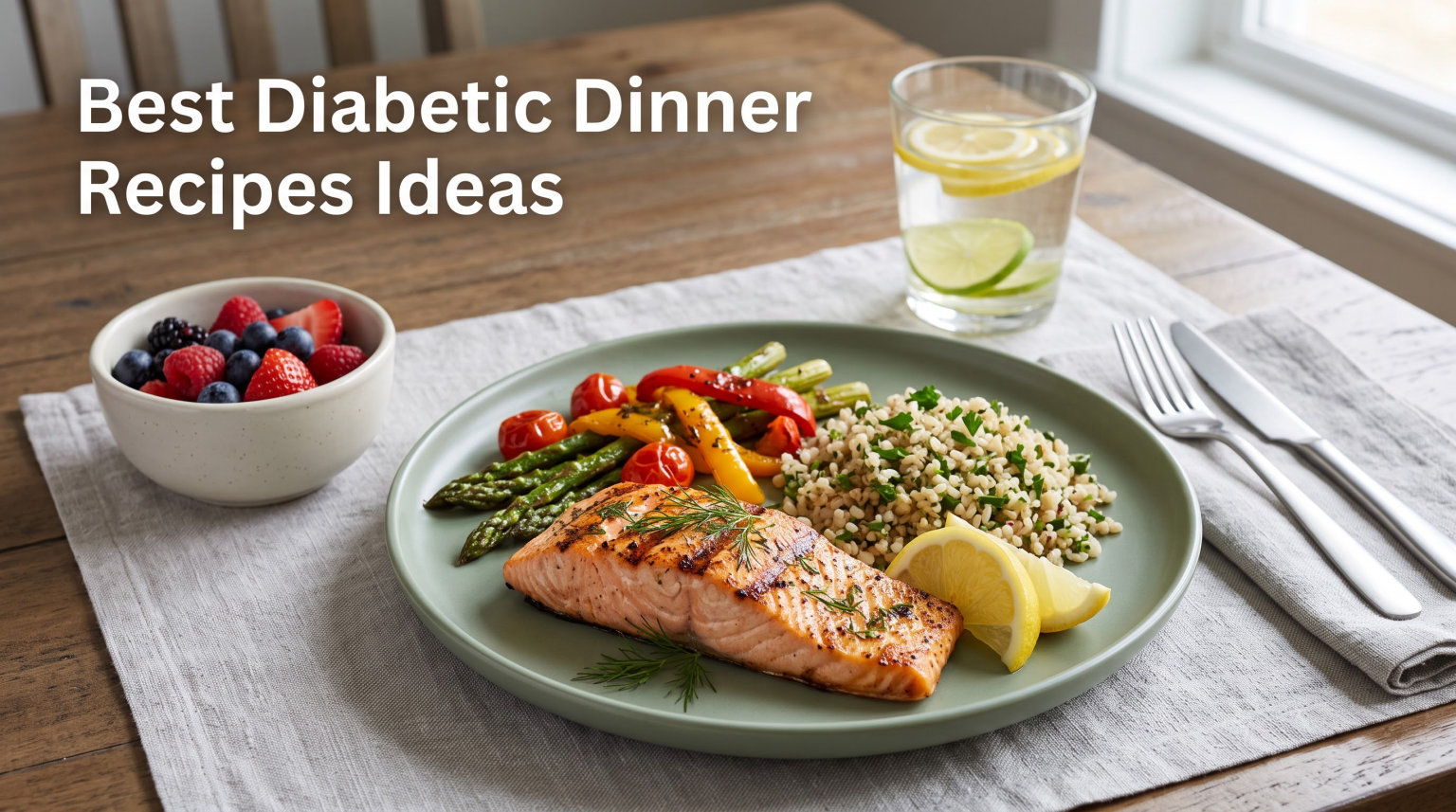
This complete collection provides measured portions, complete methods, and flexible serving ideas. The diabetes-conscious dinner ideas and balanced weeknight meals are general food guidance, not an individual medical plan; match portions and ingredients to advice from your clinician or registered dietitian.
The guide also notes realistic swaps and likely failure points. For related planning, see complete diabetic fish recipes, diabetic-friendly side dishes, diabetic-friendly comfort food recipes. Factual safety and health context follows American Diabetes Association healthy-eating guidance.
Table of Contents
Diabetic Dinner Recipes
Use this page when you want the exact quantities and checkpoints visible before cooking. These diabetes-conscious dinner ideas and balanced weeknight meals keep substitutions specific instead of leaving you to guess how a swap changes time or texture.
Complete Recipes and Methods
1. Lemon Herb Baked Salmon with Asparagus
Salmon is rich in omega-3 fats, which support heart health – something every diabetic should care about.
Serves: 4 | Time: 15 minutes | Method: Oven
Ingredients
-
4 salmon fillets (6 oz each)
-
1 bunch asparagus, trimmed
-
2 tablespoons olive oil
-
1 lemon, sliced
-
1 teaspoon dried dill
-
2 cloves garlic, minced
-
Salt and pepper to taste
Instructions
-
Preheat oven to 400 degrees F. Line a sheet pan with parchment.
-
Arrange salmon and asparagus in a single layer on the pan.
-
Drizzle with olive oil, sprinkle garlic, dill, salt, and pepper.
-
Top each fillet with lemon slices. Bake 12 to 15 minutes, until salmon flakes easily.
-
Serve immediately, with extra lemon wedges.
Substitutions: For recipe 1, swap vegetables for others with a similar density and moisture level; cut firm vegetables smaller so everything finishes together.
Storage: For recipe 1, cool within two hours and refrigerate in a shallow airtight container. Reheat covered until steaming; dishes containing cooked leftovers should reach 165°F.
Tip: For recipe 1, rest the finished dish for 10 minutes before cutting so the sauce settles and the portions hold together.
2. Sheet-Pan Chicken and Rainbow Veggies
One pan means one pan to wash.
Serves: 4 | Time: 25 minutes | Method: Sheet pan
Ingredients
-
1.5 lbs boneless skinless chicken breasts, cut into chunks
-
2 cups broccoli florets
-
1 red bell pepper, sliced
-
1 yellow bell pepper, sliced
-
1 small red onion, wedged
-
2 cups sweet potato cubes (1/2 inch)
-
3 tablespoons olive oil
-
1 teaspoon smoked paprika
-
1 teaspoon garlic powder
-
Salt and pepper
Instructions
-
Preheat oven to 425 degrees F.
-
Toss chicken and all vegetables with olive oil and seasonings in a large bowl.
-
Spread in a single layer on a sheet pan.
-
Roast 22 to 25 minutes, stirring once halfway, until chicken reaches 165 degrees F internally and veggies are caramelized.
-
For recipe 2, heat the oven to 375°F. Line a rimmed sheet pan with parchment and spread the ingredients in one layer.
Substitutions: For recipe 2, boneless thighs can replace breasts; allow extra cooking time and verify 165°F at the thickest point.
Storage: For recipe 2, cool within two hours and refrigerate in a shallow airtight container. Reheat covered until steaming; dishes containing cooked leftovers should reach 165°F.
Tip: For recipe 2, spread everything in one layer and leave space between pieces so the food roasts instead of steaming.
3. Turkey Stuffed Bell Peppers
Stuffed peppers feel like a real meal.
Serves: 6 | Time: 35 minutes | Method: Oven
Ingredients
-
6 large bell peppers, tops removed and seeded
-
1 lb lean ground turkey (93%)
-
1 cup cooked quinoa
-
1 can (14.5 oz) diced tomatoes, drained
-
1/2 cup onion, finely chopped
-
2 cloves garlic, minced
-
1 teaspoon Italian seasoning
-
1 cup low-sodium chicken broth
-
1/2 cup shredded part-skim mozzarella
Instructions
-
Preheat oven to 375 degrees F.
-
In a skillet, brown the turkey with onion and garlic until no pink remains.
-
Stir in quinoa, tomatoes, Italian seasoning, and half the broth. Simmer 3 minutes.
-
Stuff peppers and place upright in a baking dish. Pour remaining broth in the bottom of the dish.
-
Cover with foil and bake 30 minutes. Uncover, top with mozzarella, bake 5 more minutes.
Substitutions: For recipe 3, swap vegetables for others with a similar density and moisture level; cut firm vegetables smaller so everything finishes together.
Storage: For recipe 3, cool within two hours and refrigerate in a shallow airtight container. Reheat covered until steaming; dishes containing cooked leftovers should reach 165°F.
Tip: For recipe 3, prepare and measure every ingredient before heating the pan so the short cooking stages do not overrun.
4. Garlic Butter Shrimp with Zucchini Noodles
Serves: 4 | Time: 10 minutes | Method: Oven
Ingredients
-
1.5 lb large raw shrimp, peeled and deveined
-
4 medium zucchini, spiralized
-
3 tablespoons butter or ghee
-
1 tablespoon olive oil
-
5 cloves garlic, minced
-
1/2 cup cherry tomatoes, halved
-
1/4 teaspoon red pepper flakes
-
2 tablespoons fresh parsley, chopped
Instructions
-
Heat olive oil and 1 tablespoon butter in a large skillet over medium-high heat.
-
Add shrimp and cook 2 minutes per side until pink. Remove and set aside.
-
In the same pan, add remaining butter and garlic. Cook 30 seconds.
-
Add zucchini noodles and tomatoes. Toss 2 to 3 minutes – do not overcook or they get watery.
-
Return shrimp to the pan, add lemon juice, red pepper flakes, and parsley. Toss and serve.
Substitutions: For recipe 4, swap vegetables for others with a similar density and moisture level; cut firm vegetables smaller so everything finishes together.
Storage: For recipe 4, cool within two hours and refrigerate in a shallow airtight container. Reheat covered until steaming; dishes containing cooked leftovers should reach 165°F.
Tip: For recipe 4, prepare and measure every ingredient before heating the pan so the short cooking stages do not overrun.
5. Slow-Cooker Pork Tenderloin with Apples
Serves: 6 | Time: 4 hours | Method: Slow cooker
Ingredients
-
2 lb pork tenderloin, trimmed
-
2 apples (Honeycrisp or Fuji), cored and sliced
-
1 large yellow onion, sliced
-
3 cloves garlic, minced
-
1/2 cup low-sodium chicken broth
-
2 tablespoons Dijon mustard
-
1 tablespoon fresh rosemary, chopped
-
1 teaspoon smoked paprika
-
Salt and pepper
Instructions
-
Season pork with salt, pepper, and paprika. Sear in a hot skillet 2 minutes per side, then transfer to slow cooker.
-
Whisk broth with Dijon and pour over the top.
-
Cook on low 4 hours or until pork reaches 145 degrees F internally.
-
Top with apples, onions, garlic, and rosemary.
-
Rest 5 minutes, slice, and serve with the apple-onion mixture spooned over.
Substitutions: For recipe 5, swap vegetables for others with a similar density and moisture level; cut firm vegetables smaller so everything finishes together.
Storage: For recipe 5, cool within two hours and refrigerate in a shallow airtight container. Reheat covered until steaming; dishes containing cooked leftovers should reach 165°F.
Tip: For recipe 5, keep the lid closed during the main cooking time; each unnecessary lift releases heat and lengthens the cook.
6. Mediterranean Chickpea Bowl
Chickpeas are technically a starchy carb, but they are loaded with fiber and protein, which keeps the glycemic impact low.
Serves: 4 | Time: 45 minutes | Method: Oven
Ingredients
-
2 cups cooked chickpeas (1 can, rinsed well)
-
1 small eggplant, cubed and roasted with olive oil
-
1 cucumber, diced
-
1 cup cherry tomatoes, halved
-
1/2 cup kalamata olives, pitted
-
1/4 cup crumbled feta
-
2 tablespoons red wine vinegar
-
2 tablespoons olive oil
-
1 teaspoon dried oregano
-
1/4 cup fresh parsley
Instructions
-
If roasting eggplant: toss with olive oil, roast at 400 degrees F for 15 minutes.
-
Whisk vinegar, olive oil, and oregano for the dressing.
-
Divide chickpeas and vegetables among 4 bowls.
-
Drizzle with dressing, top with feta and parsley.
-
For recipe 6, heat the oven to 375°F. Line a rimmed sheet pan with parchment and spread the ingredients in one layer.
Substitutions: For recipe 6, swap vegetables for others with a similar density and moisture level; cut firm vegetables smaller so everything finishes together.
Storage: For recipe 6, cool within two hours and refrigerate in a shallow airtight container. Reheat covered until steaming; dishes containing cooked leftovers should reach 165°F.
Tip: For recipe 6, prepare and measure every ingredient before heating the pan so the short cooking stages do not overrun.
7. Cauliflower Fried Rice with Tofu
Takeout replacement.
Serves: 4 | Time: 10 minutes | Method: Oven
Ingredients
-
1 block (14 oz) extra-firm tofu, pressed and cubed
-
2 bags (12 oz each) frozen cauliflower rice
-
1 tablespoon sesame oil
-
1 tablespoon avocado oil
-
3 cloves garlic, minced
-
1 tablespoon fresh ginger, grated
-
1/2 cup frozen peas and carrots mix
-
2 large eggs, lightly beaten
-
3 tablespoons low-sodium soy sauce or tamari
-
2 scallions, sliced
Instructions
-
Heat avocado oil in a large wok or skillet over medium-high heat. Brown tofu cubes 3 to 4 minutes. Remove.
-
Add sesame oil, garlic, and ginger. Stir 30 seconds.
-
Add cauliflower rice and peas-and-carrots. Cook 5 minutes, stirring often.
-
Push rice to one side, pour in eggs, and scramble quickly on the empty side.
-
Toss everything together with soy sauce and tofu. Top with scallions.
Substitutions: For recipe 7, swap vegetables for others with a similar density and moisture level; cut firm vegetables smaller so everything finishes together.
Storage: For recipe 7, cool within two hours and refrigerate in a shallow airtight container. Reheat covered until steaming; dishes containing cooked leftovers should reach 165°F.
Tip: For recipe 7, prepare and measure every ingredient before heating the pan so the short cooking stages do not overrun.
8. Baked Cod with Hearty Tomato Sauce
White fish is one of the most underused proteins in diabetic kitchens. It is cheap, lean, fast-cooking, and almost zero impact on blood sugar.
Serves: 4 | Time: 20 minutes | Method: Oven
Ingredients
-
4 cod fillets (6 oz each)
-
1 can (28 oz) crushed tomatoes
-
1/2 yellow onion, finely diced
-
3 cloves garlic, minced
-
1/4 cup fresh basil, chopped
-
2 tablespoons capers, drained
-
2 tablespoons olive oil
-
1/2 teaspoon red pepper flakes
-
Salt and pepper
Instructions
-
Preheat oven to 400 degrees F.
-
In a skillet, saute onion and garlic in olive oil 4 minutes. Add crushed tomatoes, capers, and red pepper flakes. Simmer 8 minutes.
-
Pour half the sauce into a baking dish. Place cod fillets on top. Spoon remaining sauce over the fish.
-
Bake 15 to 18 minutes, until cod flakes easily with a fork.
-
Sprinkle with fresh basil before serving.
Substitutions: For recipe 8, swap vegetables for others with a similar density and moisture level; cut firm vegetables smaller so everything finishes together.
Storage: For recipe 8, cool within two hours and refrigerate in a shallow airtight container. Reheat covered until steaming; dishes containing cooked leftovers should reach 165°F.
Tip: For recipe 8, rest the finished dish for 10 minutes before cutting so the sauce settles and the portions hold together.
9. Steak Fajita Lettuce Wraps
Taco Tuesday, reinvented.
Serves: 4 | Time: 15 minutes | Method: Skillet
Ingredients
-
1 lb flank steak, thinly sliced against the grain
-
2 bell peppers (any color), sliced
-
1 large onion, sliced
-
8 large butter lettuce leaves
-
2 tablespoons olive oil
-
1 lime, juiced
-
2 tablespoons low-sodium taco seasoning
-
1 avocado, sliced
-
1/2 cup pico de gallo
Instructions
-
Toss steak slices with taco seasoning.
-
Heat 1 tablespoon olive oil in a large skillet over high heat. Sear steak 2 to 3 minutes until browned. Remove.
-
Add remaining oil, peppers, and onion. Cook 5 to 6 minutes until just softened.
-
Return steak to pan, squeeze lime over, toss 1 minute.
-
Serve with lettuce leaves, avocado, pico de gallo, cilantro, and sour cream.
Substitutions: For recipe 9, swap vegetables for others with a similar density and moisture level; cut firm vegetables smaller so everything finishes together.
Storage: For recipe 9, cool within two hours and refrigerate in a shallow airtight container. Reheat covered until steaming; dishes containing cooked leftovers should reach 165°F.
Tip: For recipe 9, prepare and measure every ingredient before heating the pan so the short cooking stages do not overrun.
10. Creamy Tuscan Chicken (Low-Carb)
Yes, you can still have creamy comfort food. This uses a touch of heavy cream and parmesan instead of a flour-thickened sauce, which keeps carbs very low without sacrificing richness.
Serves: 4 | Time: 20 minutes | Method: Oven
Ingredients
-
1.5 lb boneless skinless chicken thighs, cut into pieces
-
1 tablespoon olive oil
-
3 cloves garlic, minced
-
1/3 cup sun-dried tomatoes in oil, drained and chopped
-
2 cups fresh baby spinach
-
1/2 cup heavy cream
-
1/2 cup grated parmesan
-
1 teaspoon Italian seasoning
-
Salt and pepper
-
1/4 cup chicken broth
Instructions
-
Season chicken with salt, pepper, and Italian seasoning.
-
Heat olive oil in a large skillet over medium-high heat. Brown chicken 5 to 6 minutes until cooked through. Remove.
-
Lower heat to medium. Add garlic and sun-dried tomatoes, cook 1 minute.
-
Pour in broth, scraping the pan. Stir in cream and parmesan until smooth.
-
Add spinach and let wilt 1 minute. Return chicken to pan, toss to coat, simmer 2 minutes.
Substitutions: For recipe 10, boneless thighs can replace breasts; allow extra cooking time and verify 165°F at the thickest point.
Storage: For recipe 10, cool within two hours and refrigerate in a shallow airtight container. Reheat covered until steaming; dishes containing cooked leftovers should reach 165°F.
Tip: For recipe 10, prepare and measure every ingredient before heating the pan so the short cooking stages do not overrun.
The most useful cooking guides explain both the main method and the recovery plan when texture, moisture, or timing goes wrong. These diabetes-conscious dinner ideas and balanced weeknight meals focus on those practical decisions rather than name-only inspiration.
Before starting, read the full method once, prepare every ingredient in the form listed, and choose a pan that leaves enough room for even heating. Keep raw protein and ready-to-eat ingredients on separate boards, wash hands and tools between tasks, and use an instant-read thermometer when a safe temperature is given. If the center needs more time but the top is already browned, cover the dish loosely with foil and continue in short intervals. If the mixture looks dry before cooking, add only a tablespoon or two of the stated liquid at a time; excess liquid is much harder to correct. Let hot baked dishes rest before serving because the temperature continues to equalize and sauces thicken as steam settles. Label leftovers with the date so storage guidance is easy to follow.
Quick Picks: Recommended this guide Ideas
-
Lemon Herb Baked Salmon with Asparagus – my most-cooked dinner, ready in 25 minutes.
-
Sheet-Pan Chicken and Rainbow Veggies – one pan, minimal cleanup, meal-prep friendly.
-
Turkey Stuffed Bell Peppers – freezer-friendly and kid-approved.
-
Garlic Butter Shrimp with Zucchini Noodles – 20 minutes, very low carb.
-
Slow-Cooker Pork Tenderloin with Apples – dump-and-go comfort food.
-
Mediterranean Chickpea Bowl – my go-to plant-based dinner.
-
Steak Fajita Lettuce Wraps – Tex-Mex night without the blood sugar rollercoaster.
What Makes a Dinner Diabetic-Friendly?
A diabetic-friendly dinner is built around three things: controlled carbohydrates, adequate lean protein, and plenty of fiber from non-starchy vegetables. The goal is steady glucose, not zero carbs. Most adults with type 2 diabetes do well with 30 to 60 grams of total carbohydrate per dinner, but your personal target should come from your doctor or dietitian.
It shouldn’t. Carbs are fuel. The trick is choosing the ones that release slowly – beans, lentils, berries, sweet potatoes, farro, brown rice – instead of the ones that hit your bloodstream like a freight train.
The Diabetes Plate Method, Explained Simply
Fill half your plate with non-starchy vegetables (broccoli, greens, peppers, asparagus, zucchini). Fill one quarter with lean protein (chicken, fish, turkey, tofu, beans). Fill the last quarter with a high-fiber complex carb (quinoa, brown rice, roasted sweet potato, whole-wheat pasta in a small portion).
Add a small serving of healthy fat – olive oil, avocado, nuts – and you have a complete plate. No counting required if you build meals this way consistently.
Glycemic Index: Why It Matters at Dinner
The glycemic index (GI) ranks foods from 0 to 100 based on how fast they raise blood sugar. Low-GI foods (55 or below) digest slowly and are the backbone of every good diabetic dinner recipe. White rice comes in around 73; cauliflower rice is essentially zero. That swap alone, made a few nights a week, makes a measurable difference.
10 Best this guide I Cook on Repeat
Here is the full collection.
Cooking Tips for Blood Sugar Control
The recipes above work because of the cooking choices behind them.
Carb Counting, Simplified
Smart Ingredient Substitutions
Small swaps add up fast.
-
White rice becomes cauliflower rice: saves about 35g carbs per cup.
-
Pasta becomes zucchini noodles or lentil pasta: lentil pasta adds protein and fiber.
-
Sugar becomes mashed banana, applesauce, or monk fruit: works in most dinner sauces and marinades.
-
Heavy flour thickeners become cornstarch slurries or cream reductions: keeps gravies and sauces low in refined carbs.
-
White potatoes become roasted radishes or turnips: surprisingly close in texture with a fraction of the carbs.
Meal Prep Strategies for Busy Diabetics
Cook a double batch of a lean protein, roast two large sheet pans of vegetables, and wash and chop three different vegetables for quick salads and stir-fries. Store everything in glass containers with a paper towel to absorb moisture.
Budget-Friendly Diabetic Dinners
Family-Friendly Adaptations
The fix: cook one base recipe and let each family member customize. Make the stir-fry. Serve it to your spouse over rice, to your teenager over ramen, and to yourself over cauliflower rice. Same flavor, different carbs.
Quick Reference: Diabetic Dinner Carb Targets
Always confirm your personal targets with your care team.
-
Type 1 diabetes: base insulin-to-carb ratio from your endocrinologist.
-
Prediabetes or maintenance: 45 to 60g total carbs per dinner.
Frequently Asked Questions
How should a recipe be chosen from this guide?
Start with the cooking time and main ingredient you have, then compare the method, doneness cue, and make-ahead notes.
Can I assemble these recipes ahead?
Most can be prepped in stages. Keep raw protein separate, cover and refrigerate promptly, and add crisp toppings just before baking.
How do I prevent a watery result?
Drain canned and thawed ingredients well, avoid crowding the pan, and rest baked dishes before cutting.
What is the safest way to store leftovers?
Refrigerate within two hours in shallow covered containers and reheat only the portion you plan to eat until steaming hot.
Conclusion
Choose a recipe by matching the method to your available time and ingredients. Because the diabetes-conscious dinner ideas and balanced weeknight meals include complete quantities, doneness cues, substitutions, storage, and troubleshooting, you can finish the meal confidently from this page.