
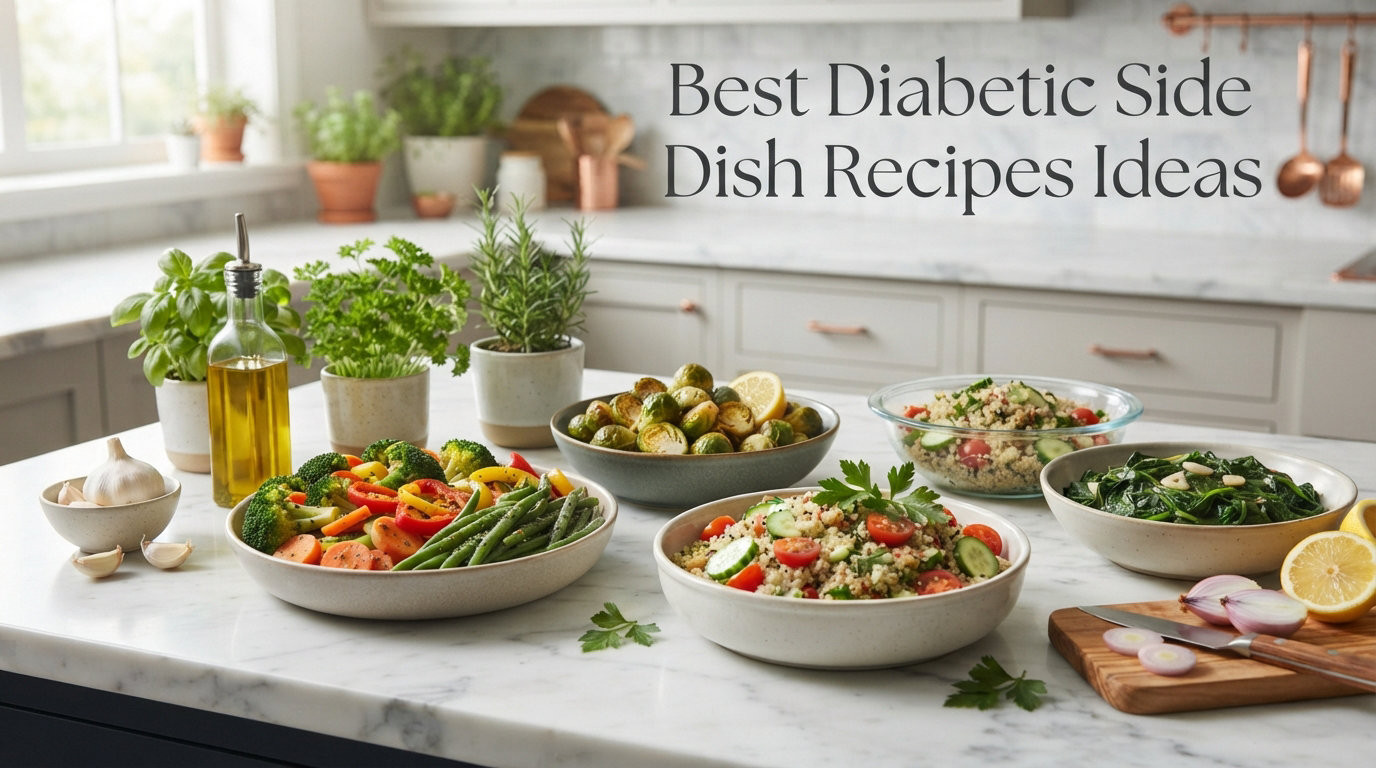
Best diabetic side dish recipes ideas should help you complete a meal, not leave you with a plate of plain vegetables or a list of foods to avoid. These ten recipes use measured ingredients and familiar methods to turn green beans, Brussels sprouts, cucumbers, beans, whole grains, cauliflower, and squash into sides people will actually look forward to eating.
The collection includes quick stovetop vegetables, make-ahead salads, carefully portioned grain and bean dishes, and two comforting potato or pasta alternatives. Every option has complete directions, realistic servings, and a pairing note. No recipe can promise a particular glucose response, so treat these as adaptable building blocks rather than medical prescriptions.
The CDC’s diabetes meal-planning guide explains that carbohydrates raise blood glucose and that individual targets vary. Its plate method is a practical starting point: use half the plate for nonstarchy vegetables, one quarter for lean protein, and one quarter for a carbohydrate food. That distinction matters here because beans, quinoa, brown rice, and winter squash count differently from green beans, cucumbers, or leafy greens.
Table of Contents
How to Pick a Side That Fits the Whole Meal
Choose the side after you know the main dish. If dinner already includes breading, rice, beans, pasta, or potatoes, a nonstarchy vegetable side is often the cleanest fit. If the main is simply grilled fish or chicken with no carbohydrate component, a measured grain or bean side can help complete the plate.
-
Start with the plate: Decide whether the side needs to fill the vegetable quarter or the carbohydrate quarter.
-
Measure oils and toppings: Olive oil, nuts, feta, and Parmesan add flavor, but pouring freely can change the dish quickly.
-
Compare labels: Broth, canned beans, feta, condiments, and packaged slaw ingredients vary in sodium and added sugar.
-
Build flavor deliberately: Citrus, vinegar, garlic, herbs, pepper, toasted spices, and browned edges reduce the need for heavy sauces.
-
Keep personal needs personal: Portions may need adjustment for medicines, activity, kidney health, allergies, and the rest of the meal.
The American Diabetes Association’s vegetable-cooking guide notes that fresh, frozen, and canned vegetables can all be useful. Buy the form you will actually cook, select no-salt-added canned options when possible, and avoid assuming “fresh” is the only good choice.
Best Diabetic Side Dish Recipes Ideas for Easy Meals
Each recipe makes four to six side servings. Pair the vegetable-forward choices with a lean protein and an individualized carbohydrate serving. When you choose a grain or bean recipe, keep the other sides mostly nonstarchy. For main-dish inspiration, these sides work especially well with our diabetic chicken thigh recipes and diabetic fish recipes.
Quick Nonstarchy Vegetable Sides
1. Lemon Garlic Green Beans
Brief blanching keeps the beans crisp and bright, while a fast garlic sauté adds the flavor that plain steaming lacks. Lemon zest and juice go in at the end so they stay fresh rather than bitter.
Serves: 6 | Time: 15 minutes | Method: Blanch and sauté
Ingredients
-
1 1/2 pounds fresh green beans, trimmed
-
1 tablespoon olive oil
-
3 garlic cloves, thinly sliced
-
1 teaspoon finely grated lemon zest
-
1 tablespoon fresh lemon juice
-
1/4 teaspoon black pepper
-
2 tablespoons chopped parsley
Instructions
-
Bring a wide pot of water to a boil and prepare a bowl of ice water.
-
Add the green beans and cook for 3 minutes, until bright green and crisp-tender. Drain and transfer them to the ice water.
-
Heat the olive oil in a large skillet over medium heat. Add the garlic and cook for about 30 seconds, just until fragrant.
-
Drain and dry the beans, then add them to the skillet. Toss for 3 to 4 minutes, until hot.
-
Remove from the heat and add the lemon zest, lemon juice, black pepper, and parsley. Divide into six servings.
Pair with: Roast chicken, baked fish, pork tenderloin, or a bean-based main. To prep ahead, blanch the beans up to two days early and complete the skillet step before serving.
2. Balsamic Roasted Brussels Sprouts
High heat gives Brussels sprouts browned edges and a tender center. Instead of a sugary bottled glaze, this version uses regular balsamic vinegar and adds toasted walnuts after roasting.
Serves: 6 | Time: 35 minutes | Method: Oven-roasted
Ingredients
-
1 1/2 pounds Brussels sprouts, trimmed and halved
-
1 1/2 tablespoons olive oil
-
1/2 teaspoon garlic powder
-
1/4 teaspoon black pepper
-
1 tablespoon balsamic vinegar
-
1 teaspoon Dijon mustard
-
1/3 cup chopped walnuts, toasted
-
1 tablespoon chopped parsley
Instructions
-
Heat the oven to 425°F and line a large sheet pan with parchment paper.
-
Toss the Brussels sprouts with the olive oil, garlic powder, and black pepper.
-
Arrange them cut-side down in one layer and roast for 20 to 25 minutes, turning once if the pan browns unevenly.
-
Whisk the balsamic vinegar and Dijon mustard in a large bowl.
-
Add the hot sprouts and toss to coat. Finish with walnuts and parsley, then divide into six servings.
Pair with: Turkey, salmon, or a lentil loaf. Use two sheet pans rather than crowding one if you double the recipe; space is what creates caramelized edges.
3. Paprika Cauliflower Steaks
Thick cauliflower slices make a dramatic side without requiring a complicated sauce. Loose florets roast alongside the steaks, so nothing is wasted.
Serves: 4 | Time: 40 minutes | Method: Oven-roasted
Ingredients
-
1 large head cauliflower
-
2 tablespoons olive oil
-
1 teaspoon smoked paprika
-
1/2 teaspoon garlic powder
-
1/4 teaspoon ground cumin
-
1/4 teaspoon black pepper
-
1 tablespoon fresh lemon juice
-
2 tablespoons chopped cilantro or parsley
Instructions
-
Heat the oven to 425°F and line a rimmed sheet pan.
-
Remove the outer leaves but keep the cauliflower core intact. Cut four thick slices through the center; place them and any loose florets on the pan.
-
Mix the olive oil, paprika, garlic powder, cumin, and black pepper. Brush both sides of the cauliflower.
-
Roast for 15 minutes, carefully turn the steaks, and roast for 12 to 15 minutes more, until tender and browned.
-
Drizzle with lemon juice and sprinkle with herbs before serving.
Pair with: Grilled chicken, baked cod, or a small serving of beans. A wide spatula helps keep the steaks intact when turning.
Fresh and Make-Ahead Salad Sides
4. Cucumber Tomato Feta Salad
Crunchy cucumbers, juicy tomatoes, herbs, and a sharp vinaigrette make this ten-minute salad useful for cookouts and busy weeknights. Feta is measured rather than used as the base.
Serves: 6 | Time: 10 minutes | Method: No-cook
Ingredients
-
2 large cucumbers, halved and sliced
-
2 cups cherry tomatoes, halved
-
1/3 cup thinly sliced red onion
-
1/3 cup crumbled feta cheese
-
2 tablespoons red wine vinegar
-
1 tablespoon olive oil
-
1 teaspoon dried oregano
-
1/4 teaspoon black pepper
-
2 tablespoons chopped parsley
Instructions
-
Place the cucumbers, tomatoes, red onion, feta, and parsley in a serving bowl.
-
Whisk the vinegar, olive oil, oregano, and black pepper in a small bowl.
-
Pour the dressing over the vegetables and toss gently.
-
Rest for 10 minutes before serving, or refrigerate for up to four hours and toss again.
Pair with: Chicken kebabs, fish, burgers without a bun, or a measured grain serving. For a lower-sodium version, use less feta or compare brands.
5. Creamy Yogurt Broccoli Slaw
A yogurt-mustard dressing coats crisp broccoli slaw without the sweetness common in deli versions. Sunflower seeds bring crunch, while apple adds a small amount of natural sweetness across six servings.
Serves: 6 | Time: 15 minutes plus chilling | Method: No-cook
Ingredients
-
1 bag (12 ounces) broccoli slaw
-
1 small tart apple, cored and cut into thin matchsticks
-
3 green onions, thinly sliced
-
1/3 cup plain Greek yogurt
-
1 tablespoon mayonnaise
-
2 tablespoons apple cider vinegar
-
1 teaspoon Dijon mustard
-
1/4 teaspoon black pepper
-
1/4 cup unsalted sunflower seeds
Instructions
-
Combine the broccoli slaw, apple, and green onions in a large bowl.
-
Whisk the yogurt, mayonnaise, vinegar, Dijon mustard, and black pepper until smooth.
-
Pour the dressing over the slaw and toss until evenly coated.
-
Cover and chill for 30 minutes. Add the sunflower seeds just before dividing into six servings.
Pair with: Smoky pulled chicken, grilled pork, or bean burgers. Keep the seeds separate if making the slaw a day ahead so they stay crisp.
Measured Whole-Grain and Bean Sides
6. Confetti Quinoa Salad
Quinoa is a carbohydrate food, so portioning matters even though it is a whole grain. Diced vegetables and herbs make a modest amount of cooked quinoa feel generous and colorful.
Serves: 6 | Time: 30 minutes | Method: Stovetop and chill
Ingredients
-
1 cup dry quinoa, rinsed thoroughly
-
2 cups water
-
1 red bell pepper, finely diced
-
1 small cucumber, finely diced
-
1/3 cup finely diced red onion
-
1/2 cup chopped parsley
-
2 tablespoons fresh lemon juice
-
1 tablespoon olive oil
-
1/2 teaspoon ground cumin
-
1/4 teaspoon black pepper
Instructions
-
Combine the rinsed quinoa and water in a saucepan. Bring to a boil, reduce to low, cover, and cook for about 15 minutes.
-
Remove from the heat and let stand, covered, for 5 minutes. Fluff with a fork and spread on a tray to cool.
-
Whisk the lemon juice, olive oil, cumin, and black pepper in a serving bowl.
-
Add the cooled quinoa, bell pepper, cucumber, onion, and parsley. Toss thoroughly and divide into six equal servings.
Pair with: Grilled fish or chicken plus an extra nonstarchy vegetable. Cool the quinoa before adding cucumber so the salad stays crisp.
7. Chickpea and Spinach Sauté
Chickpeas supply both carbohydrate and plant protein. Garlic, tomato, lemon, and warm spices turn a rinsed can into a satisfying side in less than twenty minutes.
Serves: 6 | Time: 18 minutes | Method: Stovetop
Ingredients
-
2 cans (15 ounces each) no-salt-added chickpeas, rinsed and drained
-
1 tablespoon olive oil
-
3 garlic cloves, minced
-
1 cup cherry tomatoes, halved
-
1 teaspoon ground cumin
-
1/2 teaspoon smoked paprika
-
5 ounces baby spinach
-
2 tablespoons fresh lemon juice
-
1/4 teaspoon black pepper
Instructions
-
Heat the olive oil in a large skillet over medium heat. Add the garlic and cook for 30 seconds.
-
Add the chickpeas, tomatoes, cumin, and smoked paprika. Cook for 6 to 8 minutes, stirring occasionally.
-
Add the spinach by handfuls and stir until wilted.
-
Remove from the heat, add the lemon juice and black pepper, and divide evenly into six servings.
Pair with: Baked chicken or fish and another nonstarchy vegetable. Because this dish already contains beans, skip an additional rice or bread side unless it fits your plan.
8. Vegetable Brown Rice Pilaf
Brown rice remains a carbohydrate food; using plenty of mushrooms, celery, and peppers helps a smaller serving look and taste complete. Toasting the rice briefly adds a nutty note.
Serves: 6 | Time: 55 minutes | Method: Stovetop
Ingredients
-
1 tablespoon olive oil
-
1 small onion, finely chopped
-
2 celery stalks, finely chopped
-
8 ounces mushrooms, chopped
-
1 red bell pepper, finely diced
-
1 cup dry long-grain brown rice
-
2 1/4 cups reduced-sodium vegetable broth
-
1/2 teaspoon dried thyme
-
1/4 teaspoon black pepper
-
1/4 cup sliced almonds, toasted
Instructions
-
Heat the olive oil in a medium saucepan over medium heat. Cook the onion, celery, mushrooms, and bell pepper for 6 minutes.
-
Stir in the brown rice and cook for 1 minute, until lightly toasted.
-
Add the broth, thyme, and black pepper. Bring to a boil, reduce the heat to low, and cover.
-
Cook according to the rice package timing, usually 40 to 45 minutes, until the liquid is absorbed.
-
Rest off the heat for 10 minutes, fluff with a fork, fold in the almonds, and divide into six equal servings.
Pair with: A simple lean protein and a generous nonstarchy vegetable. Pack leftovers into measured portions instead of storing the pilaf in one large container.
Comforting Potato and Pasta Alternatives
9. Roasted Garlic Mashed Cauliflower
This mash will not taste exactly like potatoes, and it does not need to. Roasted garlic, Greek yogurt, and Parmesan make cauliflower creamy and savory in its own right.
Serves: 6 | Time: 40 minutes | Method: Roast, steam, and blend
Ingredients
-
1 large head cauliflower, cut into florets
-
1 small head garlic
-
1 teaspoon olive oil
-
1/3 cup plain Greek yogurt
-
2 tablespoons grated Parmesan cheese
-
1/4 teaspoon black pepper
-
2 tablespoons chopped chives
Instructions
-
Heat the oven to 400°F. Slice the top from the garlic head, drizzle with the olive oil, wrap in foil, and roast for 30 to 35 minutes.
-
Meanwhile, steam the cauliflower for 10 to 12 minutes, until very tender. Drain it thoroughly and let excess steam escape for 2 minutes.
-
Squeeze four to six roasted garlic cloves into a food processor. Add the cauliflower, yogurt, Parmesan, and black pepper.
-
Process until smooth, scraping down the bowl as needed. Add one spoonful of warm water only if necessary.
-
Transfer to a serving bowl, garnish with chives, and divide into six portions.
Pair with: Roast turkey, chicken, pork, or mushroom gravy. Drying the cauliflower after steaming prevents a watery mash.
10. Parmesan Herb Spaghetti Squash
Spaghetti squash creates forkable strands that work beside meatballs, chicken, or fish. Parmesan and herbs add flavor without burying the squash under a heavy cream sauce.
Serves: 6 | Time: 50 minutes | Method: Oven-roasted
Ingredients
-
1 medium spaghetti squash, about 3 pounds
-
1 tablespoon olive oil
-
2 garlic cloves, minced
-
1/3 cup grated Parmesan cheese
-
1 tablespoon fresh lemon juice
-
1/4 teaspoon black pepper
-
1/4 cup chopped parsley
Instructions
-
Heat the oven to 400°F and line a rimmed sheet pan.
-
Carefully halve the squash lengthwise and scoop out the seeds. Brush the cut sides with half the olive oil.
-
Place the squash cut-side down and roast for 35 to 40 minutes, until a fork pierces the shell easily but the strands are not mushy.
-
Heat the remaining oil in a large skillet and cook the garlic for 30 seconds.
-
Scrape the squash into strands, add them to the skillet, and toss with Parmesan, lemon juice, black pepper, and parsley. Divide into six servings.
Pair with: Chicken cacciatore, baked fish, or turkey meatballs. Roast just until tender; overcooking makes the strands watery.
Make-Ahead and Storage Guide
-
Prepare early: Blanch green beans, cook quinoa, roast garlic, and mix vinaigrettes one or two days ahead.
-
Keep components separate: Store nuts, seeds, feta, and fresh herbs apart until serving for better texture.
-
Cool promptly: Move cooked foods into shallow containers and refrigerate within two hours.
-
Portion grains and beans: Divide quinoa, chickpeas, and brown rice into individual servings before refrigerating.
-
Reheat gently: Use the microwave or a skillet; add a spoonful of water to grains or mash if they have dried.
-
Refresh before serving: Lemon juice, vinegar, herbs, or black pepper can revive leftovers without a sugary sauce.
Easy Pairing Map
Use this shortcut when dinner decisions feel crowded. For a main with beans or grains, choose green beans, Brussels sprouts, cauliflower steaks, cucumber salad, broccoli slaw, cauliflower mash, or spaghetti squash. For a plain lean protein, quinoa salad, chickpea sauté, or brown rice pilaf can fill the carbohydrate quarter while another vegetable fills half the plate.
-
Chicken: Lemon green beans, broccoli slaw, cauliflower mash, or quinoa salad
-
Fish: Cucumber tomato salad, cauliflower steaks, chickpea spinach, or spaghetti squash
-
Pork: Brussels sprouts, vegetable brown rice, green beans, or cauliflower mash
-
Vegetarian mains: Add a vegetable side to a bean-based entrée, or use quinoa or chickpeas beside eggs or tofu
For more cold vegetable options, our diabetic salad recipes include complete dressings and meal-prep notes.
Frequently Asked Questions
What can a person with diabetes serve instead of potatoes?
Mashed cauliflower, cauliflower rice, turnips, and spaghetti squash are common alternatives, but regular potatoes are not automatically forbidden. The appropriate choice and portion depend on the complete meal and an individual plan. This collection offers cauliflower mash and spaghetti squash when you want a nonstarchy option.
Are beans and whole grains diabetes-friendly side dishes?
They can fit many eating plans, but both contain carbohydrate. Measure the serving, pair it with nonstarchy vegetables and protein, and account for it within your personal target. Beans also provide fiber and protein, while whole grains offer a different texture and flavor from refined grains.
Are carrots okay for people with diabetes?
Carrots can fit. They are not “too sugary” simply because they taste sweet. Portion and preparation still matter, and a clinician or dietitian can help with individual targets. Avoid turning a vegetable side into a dessert-like dish with a heavy sugar glaze.
Can people with diabetes eat rice?
Rice can fit some individualized meal plans. Use a measured serving, consider a whole-grain option such as brown rice, and build the rest of the plate with lean protein and nonstarchy vegetables. Cauliflower rice is a different, vegetable-based alternative when the meal already contains another carbohydrate food.
What is the easiest diabetes-friendly side dish?
A plainly prepared nonstarchy vegetable is the simplest starting point, but it need not be boring. Lemon garlic green beans take about 15 minutes, while cucumber tomato feta salad needs no cooking. Both use acid, herbs, and measured fat to make the vegetables satisfying.
How many side dishes should be on a diabetes plate?
The number is less important than the proportions. One large vegetable side and one measured carbohydrate side can work, or two different nonstarchy vegetables can fill half the plate. Use a nine-inch plate as a visual guide and adjust to your clinician’s recommendations.
Conclusion: Best Diabetic Side Dish Recipes Ideas
The best diabetic side dish recipes ideas make vegetables, beans, and whole grains easier to use in a balanced meal. Lemon green beans and cucumber salad solve rushed nights; roasted Brussels sprouts and cauliflower steaks suit a special dinner; quinoa, chickpeas, and brown rice add carefully portioned substance; and cauliflower mash or spaghetti squash brings comfort without pretending to be an exact copy of potatoes or pasta.
Choose the side that complements the main dish, measure the ingredients that are easy to overpour, and build the complete plate before judging any recipe in isolation. That practical approach creates more variety than a rigid list of “good” and “bad” foods ever could.