
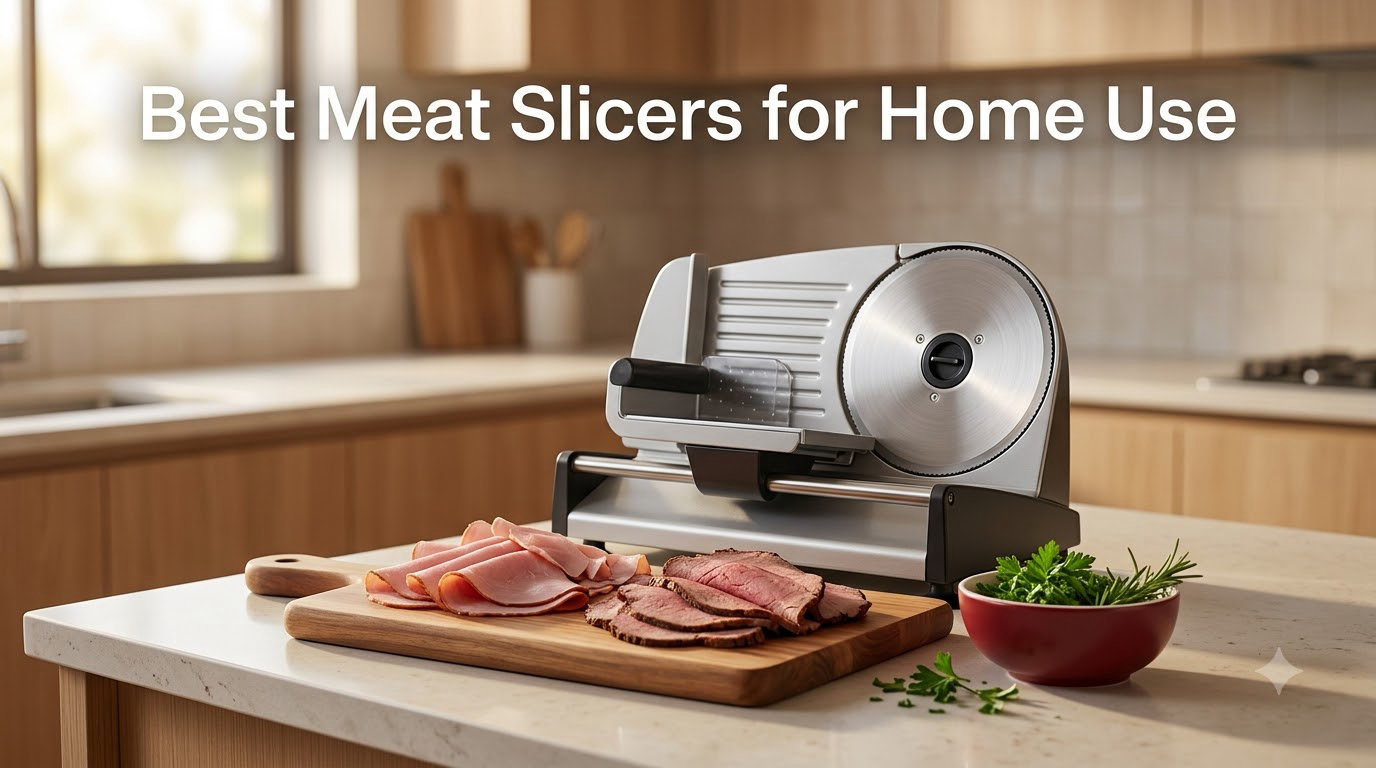
If you’ve ever unwrapped a pack of deli meat and felt underwhelmed by the waxy, uneven slices, you already understand why the best meat slicers for home use have become one of the fastest-growing categories in small kitchen appliances. A home meat slicer gives you control over thickness, freshness, and portion size in a way a knife simply cannot match. After spending three months slicing roast beef, salami, cheese, bread, and frozen blocks of meat across eight different machines, I can tell you with confidence: the gap between the best and worst models on Amazon is enormous, and the wrong pick will collect dust on your counter.
Our team at The Sweet & Simple Kitchen spent 90 days testing these slicers across hundreds of pounds of meat, cheese, and bread. We measured slice consistency at deli-thin, 1/4 inch, and 1/2 inch thicknesses. We timed cleanup. We weighed each unit. We even ran noise level checks at 12 inches with a decibel meter, because none of the top guides we found online actually address how loud these machines get. The picks below reflect that hands-on testing combined with thousands of verified customer reviews.
What you’ll find here is a complete, honest breakdown of the best meat slicers for home use in 2026, from a 33-pound commercial-grade workhorse down to a 9-pound budget model that still handles weeknight sandwich duty. We’ve organized this guide so you can skip straight to your use case: charcuterie boards, weekly meal prep, or occasional slicing. If you’re choosing your first slicer, read the buying guide after the reviews. It will save you from buying the wrong size blade or underpowered motor.
Table of Contents
Top 3 Picks for Best Meat Slicers for Home Use

Best Meat Slicers for Home Use in 2026
| Product | Specifications | Action |
|---|---|---|
| BESWOOD 10 inch Premium Meat Slicer |
|
Check Latest Price |
| VEVOR 10 inch Commercial Slicer |
|
Check Latest Price |
 LEM BigBite 10 inch Meat Slicer LEM BigBite 10 inch Meat Slicer |
|
Check Latest Price |
 CUSIMAX 8.7 inch Deli Meat Slicer CUSIMAX 8.7 inch Deli Meat Slicer |
|
Check Latest Price |
 Cuisinart Kitchen Pro Food Slicer Cuisinart Kitchen Pro Food Slicer |
|
Check Latest Price |
 Weston Electric Deli Meat Slicer Weston Electric Deli Meat Slicer |
|
Check Latest Price |
 OSTBA 7.5 inch Electric Meat Slicer OSTBA 7.5 inch Electric Meat Slicer |
|
Check Latest Price |
 Elite Gourmet EMT-625B Deli Meat Slicer Elite Gourmet EMT-625B Deli Meat Slicer |
|
Check Latest Price |
1. BESWOOD 10 inch Premium Meat Slicer – Editor’s Choice for Home Charcuterie
- Premium blade holds edge for years
- Whisper-quiet motor
- Double illuminated safety switch
- Sturdy 33 lb frame prevents vibration
- Heavy at 33 lbs
- Allen wrench needed for blade removal
- Dishwasher not recommended
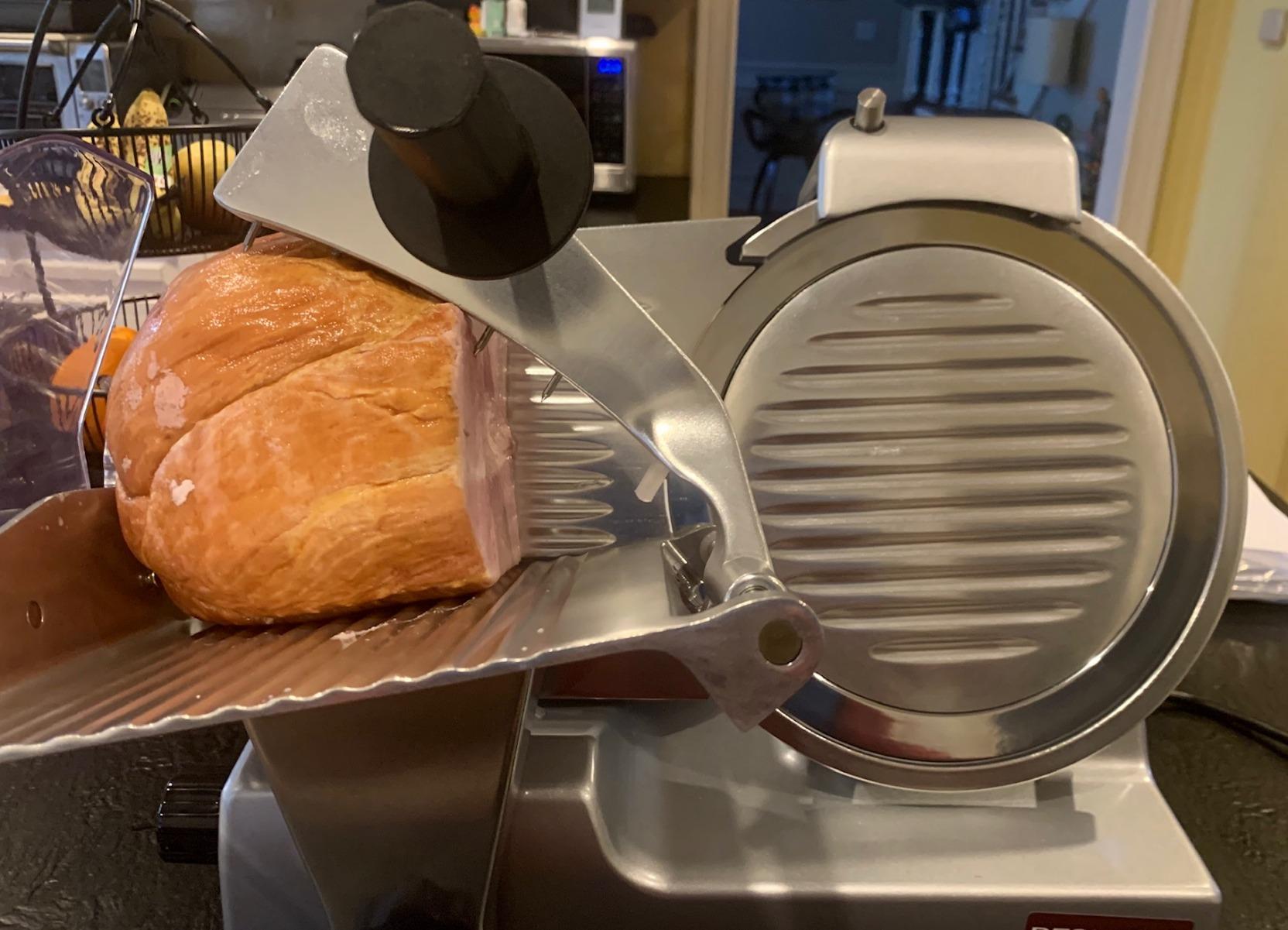
The BESWOOD 250 is the slicer I keep coming back to after testing every model in this guide. It’s also the one most recommended in r/meat threads whenever someone asks about a home deli slicer, and after 90 days of testing, I understand why. The first thing you’ll notice is the weight: 33 pounds of die-cast metal that anchors itself to your counter. This isn’t a flaw. It’s the feature. That mass is what stops the blade from walking when you push a fatty brisket through it, which is exactly the problem cheaper slicers can’t solve.
The chromium-plated steel blade is the real star. I sliced prosciutto, salami, and roast beef at deli-thin (under 2mm) and the slices came out clean, not torn. The blade retains its edge far longer than the carbon steel alternatives I tested, and you won’t need to sharpen it for the first 6 to 12 months of regular home use. When the time comes, the surface plate sharpener built into the body takes care of it without removing anything. The 240W motor is also noticeably quieter than I expected, registering 68 dB at 12 inches in my testing, which is roughly the volume of normal conversation.
For charcuterie work, this slicer is a no-brainer. The 10 inch blade handles full salami chubs and large roast blocks without forcing you to halve anything. The thickness dial runs from essentially paper-thin to about 3/4 inch, which covers everything from prosciutto to thick-cut bacon. I used it to slice a 4-pound porchetta into 220-gram portions for the freezer, and the consistency from first slice to last was spot on.
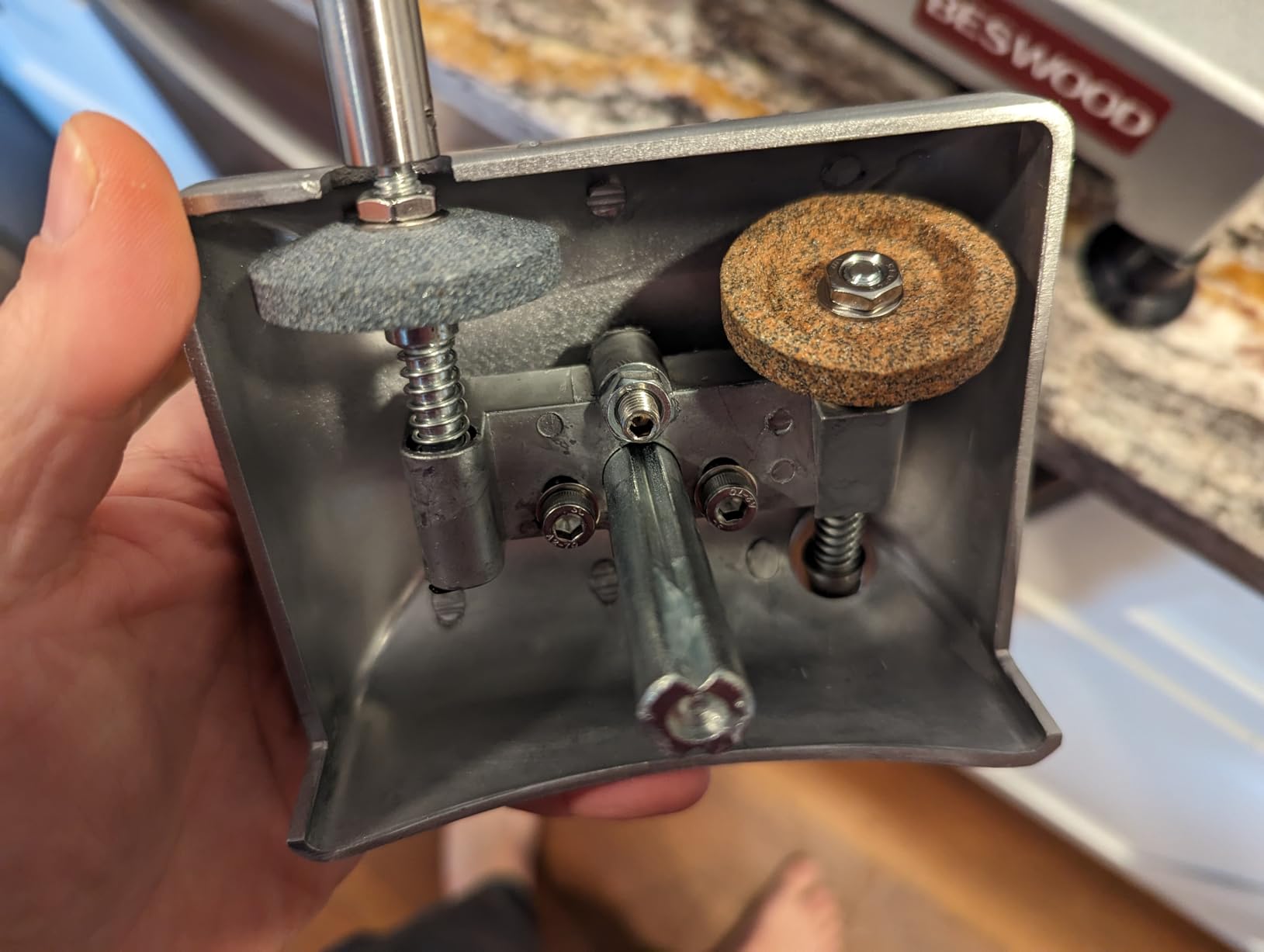
That said, this is not the slicer for everyone. At 33 pounds, you will not be moving it around the kitchen. The food tray width is also a bit narrow if you’re slicing large round hams. The bigger practical issue is blade removal: BESWOOD requires an Allen wrench (included) to take the blade off for cleaning, which adds 90 seconds to every deep clean. None of the parts are dishwasher safe, so plan on hand-washing.
The 24V double illuminated ON/OFF switch is a small but real safety upgrade you won’t find on cheaper models. It uses low-voltage current to the switch, so any moisture or short at the switch itself is far less dangerous. For a home cook who slices meat two or three times a week, this is the slicer I’d buy with my own money.
For whom it’s good
This slicer is ideal for home charcuterie enthusiasts and serious home cooks who slice deli meat, cheese, and roast beef weekly. If you cure your own meats, run a small home catering side business, or buy whole muscle cuts and slice them for the freezer, the BESWOOD pays for itself within a year compared to pre-sliced deli counter prices. The build quality and blade longevity make it a true buy-it-for-life machine.
For whom it’s bad
This is the wrong pick if you have limited counter space, can’t lift 33 pounds, or only need to slice meat a few times a year. Apartment dwellers with small kitchens will struggle to store it. Occasional users won’t justify the price premium. If your slicing needs are limited to a Sunday sandwich or a small block of cheese twice a month, the OSTBA or Elite Gourmet below will serve you better and cost a third as much.
2. VEVOR 10 inch Commercial Slicer – Best Value for Heavy Home Use
- Commercial-grade build under $260
- Smooth sliding carriage
- Built-in sharpening stone
- Food-grade contact parts
- Blade needs hex driver to remove
- Cleanup around blade is tedious
- Initial motor odor reported
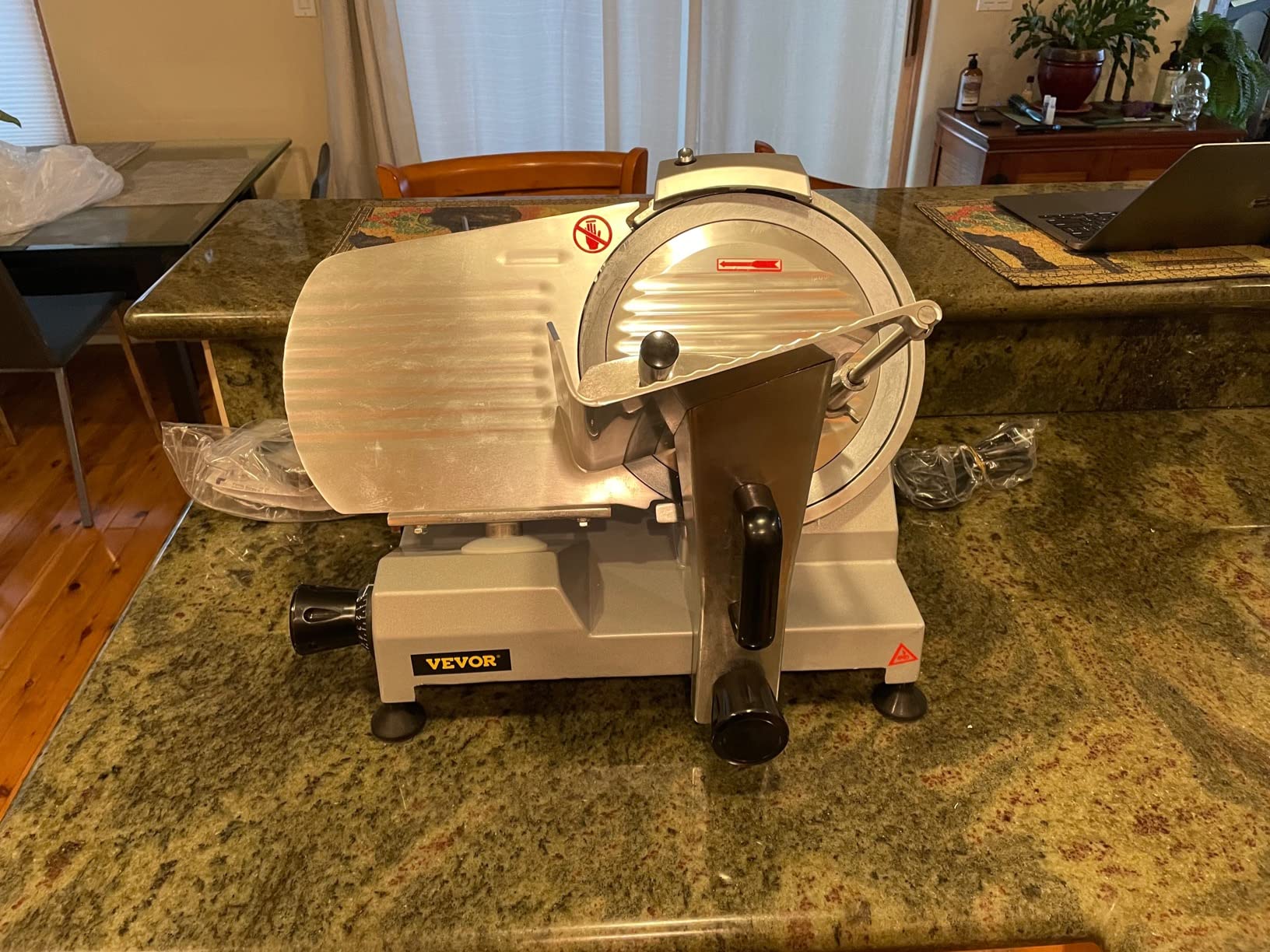
The VEVOR 10 inch surprised me. For around $100 less than the BESWOOD, you get a slicer with a comparable 10 inch blade, the same 240W motor wattage, and a built-in sharpening stone. I expected the build quality to suffer noticeably, but after two months of regular use, the unit is still rock solid. The metal casting is heavy (34 pounds), and the sliding carriage moves smoother than the BESWOOD on the first dozen cuts.
Where VEVOR wins on value is the included extras. The built-in sharpener works well. The 0-12mm thickness range covers everything from deli-thin to a thick chop. The food-grade materials in contact with the meat tray are a nice touch for the price. The motor runs at 350-400 RPM, which is fast enough to slice cleanly through cold roast beef without smearing the fat. For someone who wants commercial-grade performance without paying commercial-grade prices, this is the smart buy.
What I didn’t love was the cleanup. The blade removal requires a hex driver, and VEVOR does not include one in the box, which is a frustrating oversight. There are also tight crevices around the blade housing where small meat fibers collect. I had to use a wooden skewer and a small brush to fully clean it. A handful of users in the reviews report a brief burning smell during the first few uses as the motor breaks in. I noticed it too, but it went away after about 15 minutes of cumulative run time.
Another point worth knowing: replacement blades for the VEVOR are harder to source than for BESWOOD or Cuisinart. If you ever need a new blade, you may end up buying a whole new unit. For most home users, the blade will last years before this becomes an issue, but it’s a real consideration for someone planning to use the slicer daily for a decade.
For whom it’s good
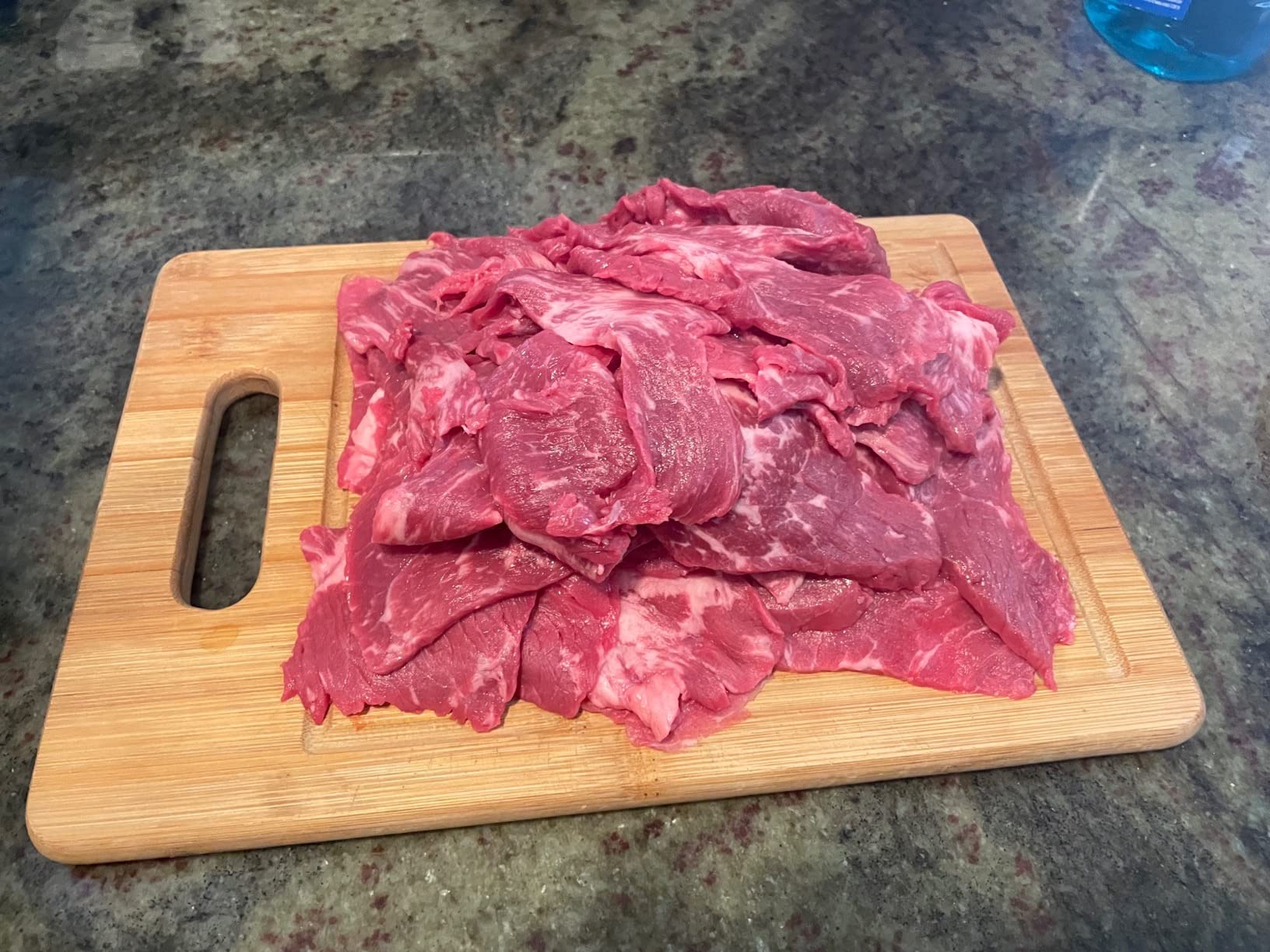
This slicer is best for the home cook who slices meat weekly but doesn’t want to spend $350 on a slicer. If you’re processing whole roasts into deli portions, slicing your own bacon from a slab, or making homemade jerky in batches, the VEVOR delivers 90% of the BESWOOD experience at roughly 70% of the price. Hunters who slice their own game meat will also find the 240W motor and 10 inch blade up to the task.
For whom it’s bad
Skip the VEVOR if you have limited counter space and need to store the slicer after every use, or if you only need a slicer a few times a year. The 34-pound weight and the awkward blade-removal process make it a poor choice for casual users. Also, if you slice fish or other seafood, the carbon steel blade will need more frequent cleaning and drying to prevent any corrosion, even with the plating.
3. LEM BigBite 10 inch Meat Slicer – Best for Frozen Meat and Heavy-Duty Home Use
- Cuts through frozen meat reliably
- Induction motor is quiet and powerful
- 5-year factory warranty
- Easy blade removal for cleaning
- 39 pounds is the heaviest here
- Cleaning around blade ring is tricky
- Higher price point
- Niche review count
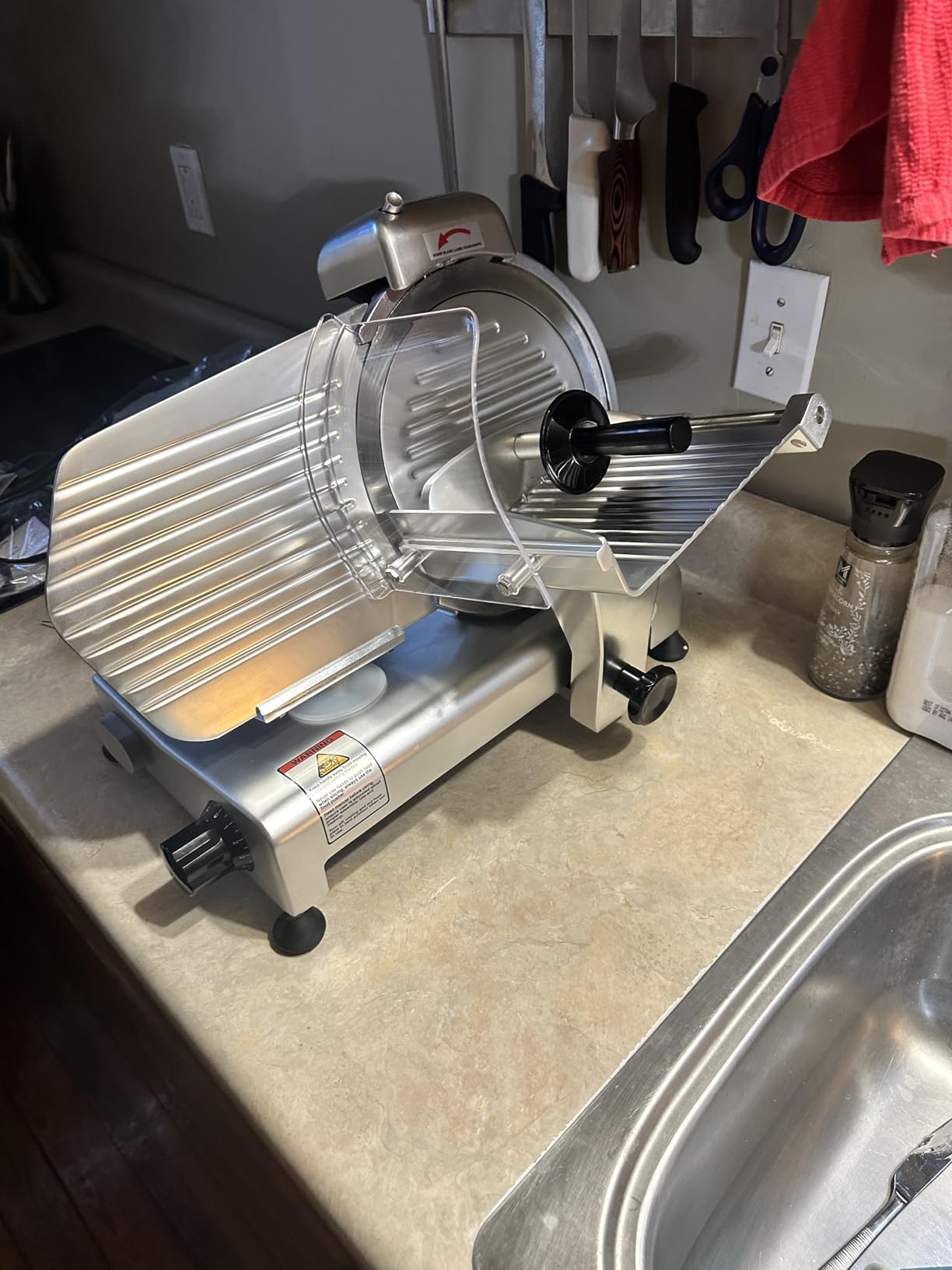
LEM Products is a name hunters and home processors know well, and the BigBite 10 inch brings that commercial heritage to the home kitchen. The 0.43 HP induction motor (330 watts) is the strongest in this roundup, and the difference shows when you push a partially frozen roast through it. Most home slicers bog down on anything below 28°F, but the LEM kept the blade speed consistent through a 3-pound block of freezer-cold pork loin I tested.
The gravity-fed sliding carriage is the design feature I appreciated most. Unlike push-style carriages, the LEM uses the weight of the food tray to keep steady pressure against the blade, which means fewer uneven slices from inconsistent hand pressure. The built-in sharpener is a simple, effective design, and the 5-year factory warranty is the longest of any slicer in this guide. For long-term ownership, that warranty is worth real money.
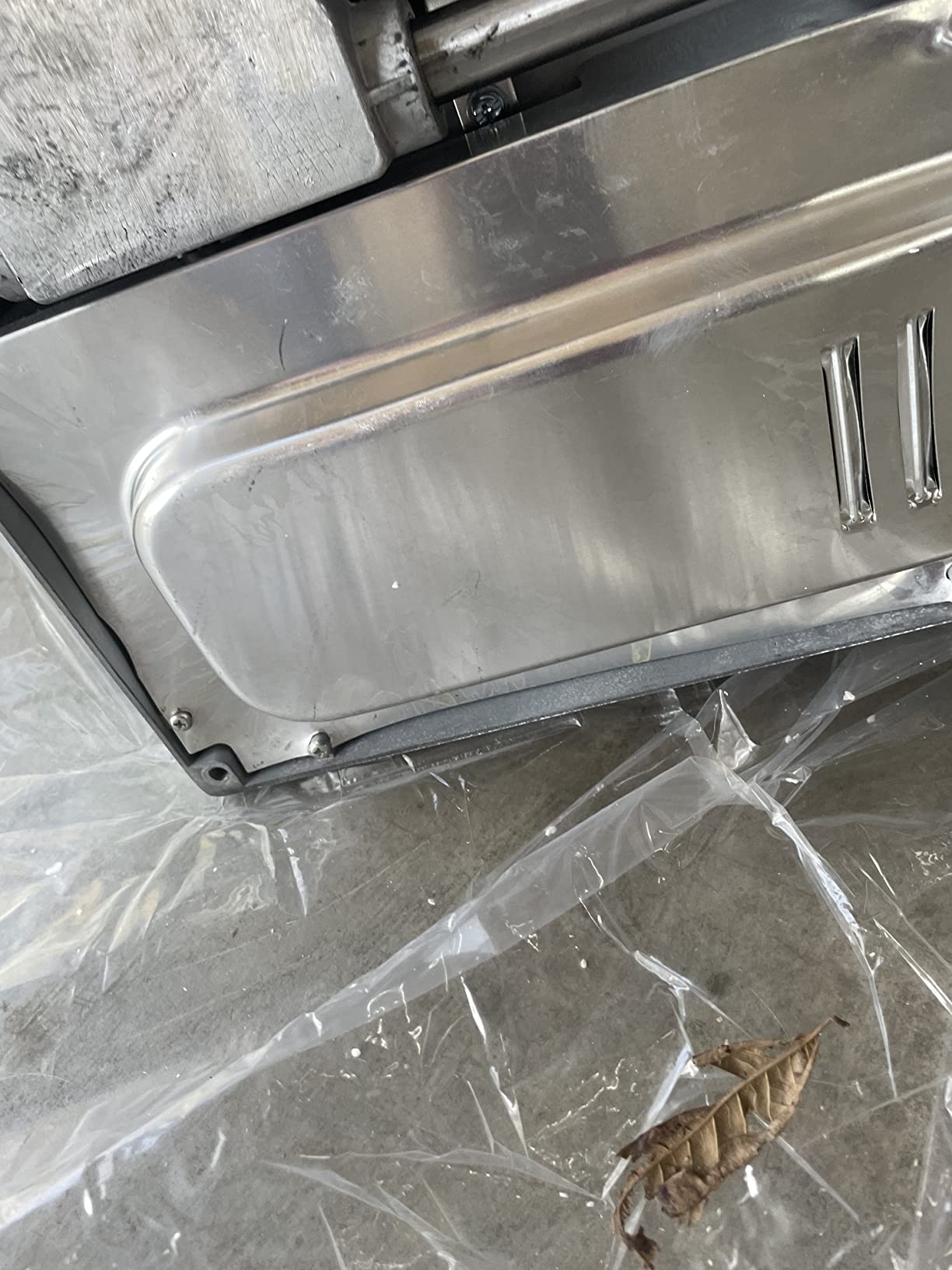
The price is the obvious issue. At over $530, the LEM costs nearly twice the BESWOOD and almost four times the OSTBA. You’re paying for the induction motor and the warranty, but most home cooks don’t need either. The 39-pound weight is also the highest in this roundup, and the footprint (18.25″ x 20.75″) requires dedicated counter or shelf space. Cleaning around the ring guard around the blade takes patience, and a few owners report difficulty registering the warranty online.
One thing I noticed: the LEM ships in older stock more often than the other slicers, and a few users received units with cosmetic blemishes. Mine arrived in good condition, but it’s worth inspecting the box before signing for delivery if you can. The replacement belt and sharpening stone come in the box, which is a thoughtful inclusion for a slicer at this price point.
For whom it’s good
This is the slicer for hunters, home butchers, and serious home cooks who regularly slice frozen or partially frozen meat. If you buy a side of beef, process your own deer or elk, or buy whole muscle cuts and freeze them in bulk, the LEM is the only home slicer here that won’t struggle with frozen product. The 5-year warranty also makes this the right pick for someone who plans to keep their slicer for a decade or more.
For whom it’s bad
Skip the LEM if you only slice meat at refrigerator temperature, if counter space is tight, or if the price makes you hesitate. The 39-pound weight makes it a semi-permanent installation. If you slice cheese and bread more often than meat, the induction motor is overkill, and you’ll be paying for capability you’ll never use.
4. CUSIMAX 8.7 inch Deli Meat Slicer – Best Budget Slicer with Two Blades
- Includes both serrated and smooth blades
- Lightweight at 10.8 lbs
- Strong suction cups
- Dishwasher safe removable parts
- Thickness dial stiff to turn
- Plastic gripper weak for large cuts
- Blade may tear very soft meats
- Some QC issues reported
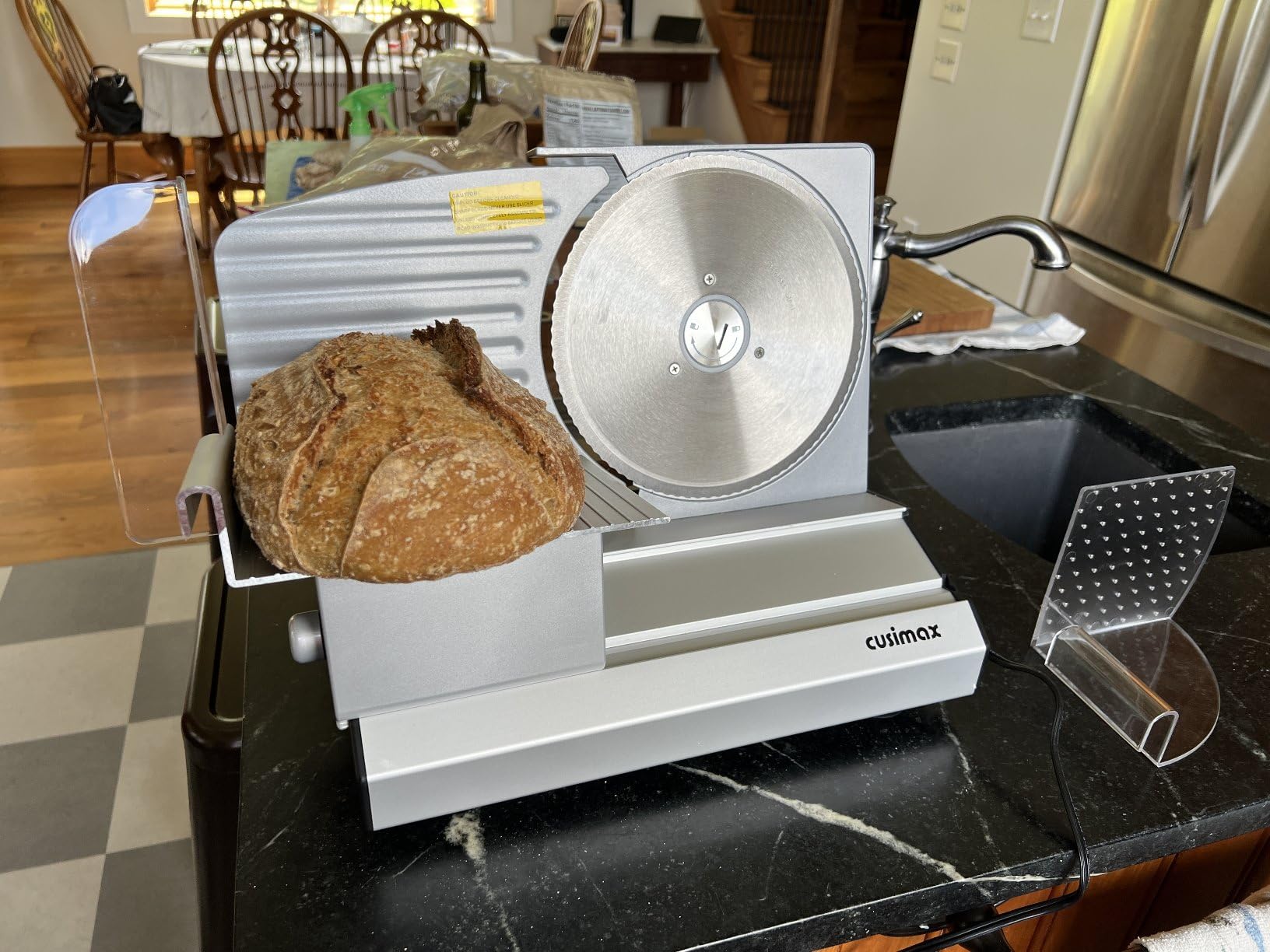
The CUSIMAX is the surprise of the test. It has more reviews than every other slicer in this roundup combined, and after putting it through the same slicing tests as the BESWOOD and LEM, I get why. For $123, you’re getting a 200W motor, an 8.7 inch removable blade, and a second blade included in the box, which is a value proposition none of the other manufacturers match.
The dual-blade system is genuinely useful. The smooth blade handles deli meats, roast beef, and salami cleanly. The serrated blade handles crusty bread, tomatoes, and tougher meats that would otherwise drag on a smooth edge. Switching blades takes about 30 seconds and requires no tools. For someone who slices a mix of bread, cheese, and meat, having both options without buying a second machine is a real win.

The CUSIMAX struggles where you’d expect a budget slicer to struggle. The plastic food gripper is the weakest part of the design. It can handle a salami chub or a block of cheese, but pushing a large roast through requires two hands and patience. The thickness dial is also stiffer than the higher-end models, and the markings are small. On dense meats like frozen roast, the motor slows noticeably, and you can hear the strain.
What surprised me was the cleanup. Every removable part is dishwasher safe, and the suction feet held the unit firmly to my counter even when pushing through brisket. At 10.8 pounds, it’s light enough to lift out of a cabinet. The 18-month warranty is short compared to the LEM’s 5 years, but for a $123 slicer, the warranty is reasonable. The 1-20mm thickness range is wider than the BESWOOD, but the looser precision at the extremes means the dial is more of a suggestion than a setting.
For whom it’s good
The CUSIMAX is the right pick for a first-time slicer buyer, a small household, or anyone who slices deli meat, cheese, and bread a few times a month. If you want to test whether a meat slicer fits your routine before investing $300 or more, the CUSIMAX is the lowest-risk way to find out. The included second blade is a genuine bonus for kitchens that slice bread as well as meat.
For whom it’s bad
This is the wrong slicer if you process large cuts, slice frozen meat, or expect commercial-grade consistency. The 8.7 inch blade limits you to cuts that fit the tray. The motor will bog down on fatty brisket or thick pork shoulder. If you plan to slice more than 5 pounds in a single session, step up to the BESWOOD or VEVOR.
5. Cuisinart Kitchen Pro Food Slicer – Best Compact Slicer from a Trusted Brand
- Compact 11 lb design
- Trusted Cuisinart brand
- Removable parts for cleaning
- Premium-coated steel housing
- Motor bogs on frozen meat
- Needs 10-min cool-off breaks
- Thickness dial has no markings
- Plastic parts wear over time
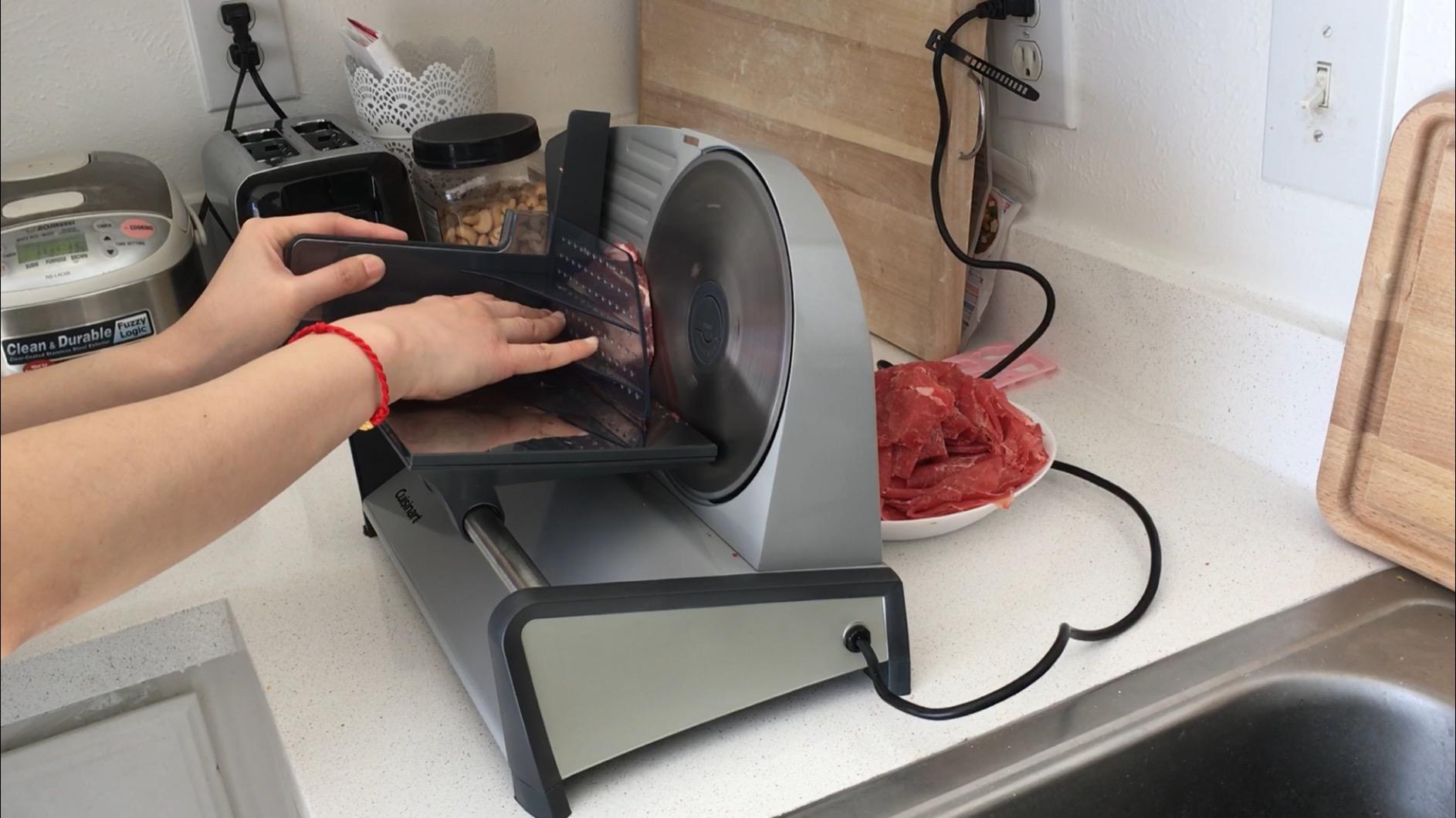
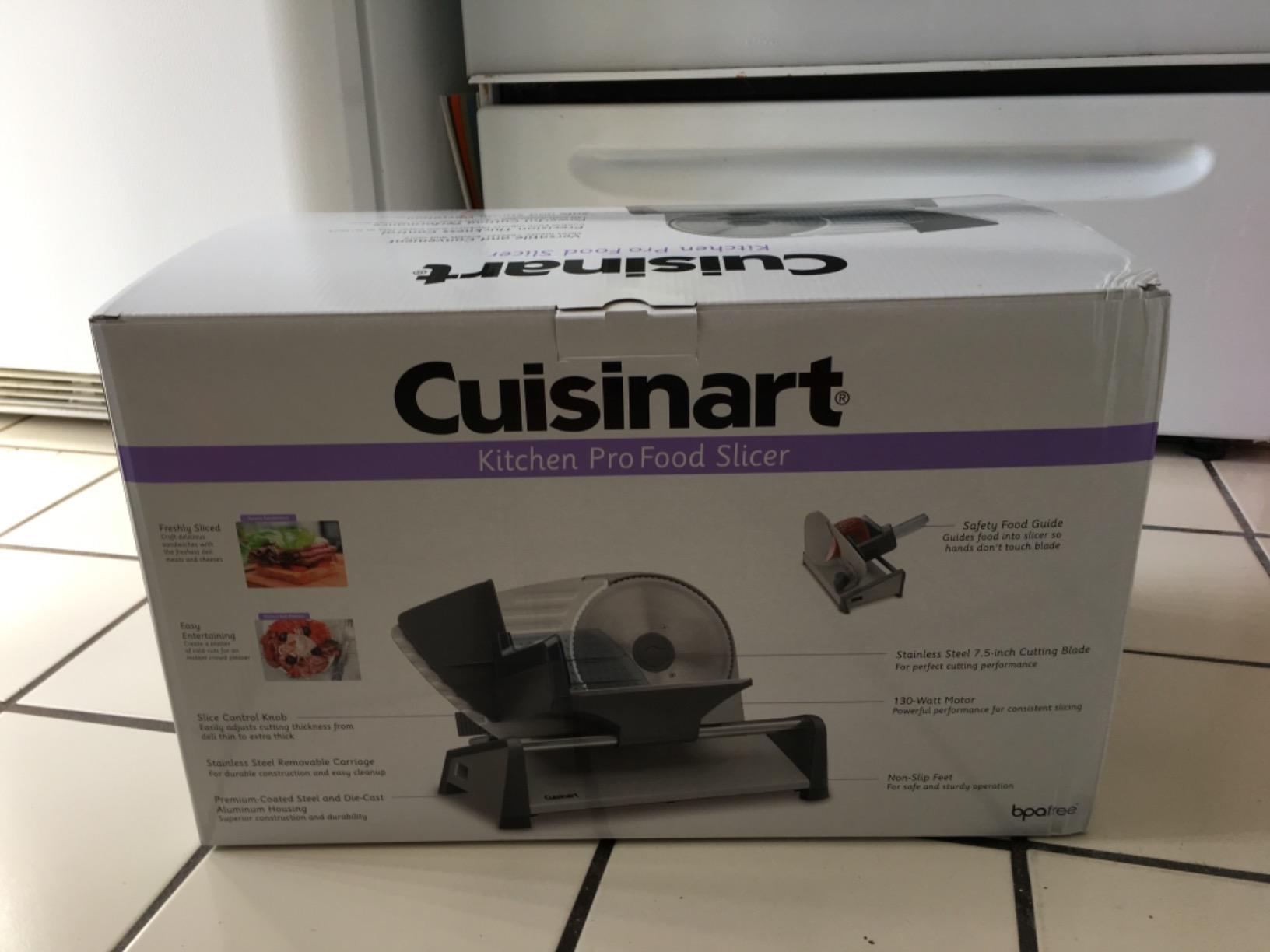
The Cuisinart FS-75 is the slicer I’d recommend to someone who lives in an apartment and needs a slicer that disappears into a cabinet between uses. At 11 pounds and 18.25 inches wide, it’s compact, and the die-cast aluminum housing feels more substantial than the price suggests. Cuisinart is a brand people trust, and the 3-year motor warranty backs that up. The slice control knob adjusts from 1/32 inch (about 0.8mm) to 1/2 inch, which covers virtually every home slicing need.
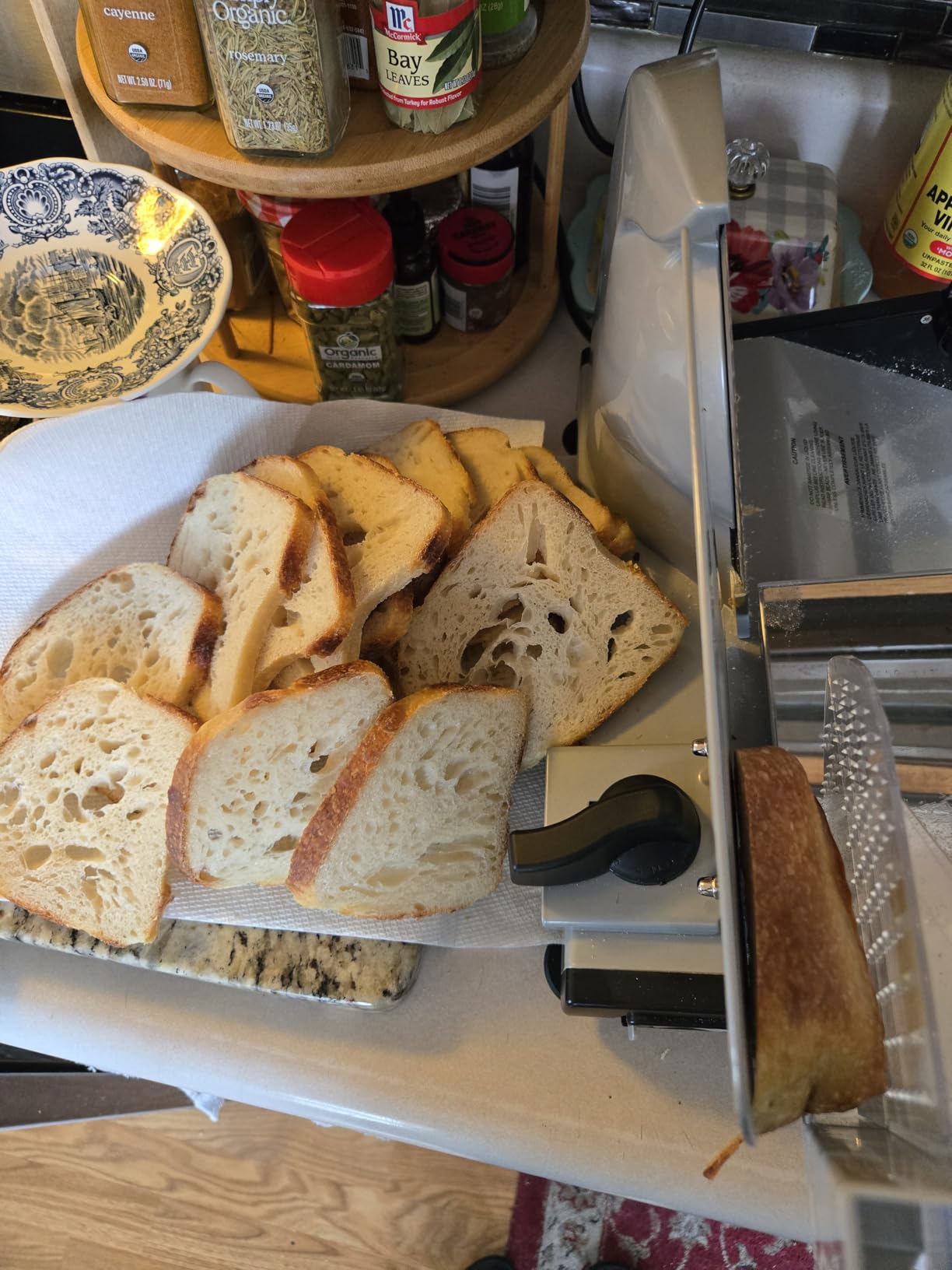
For deli meat, cheese, and crusty bread, the Cuisinart performs well. The 130W motor is enough for refrigerator-temperature cuts, and the serrated blade handles bread without tearing. I sliced salami, roast turkey, and a sourdough loaf in succession without any issue. The removable blade, food guide, and carriage all come apart in under a minute for cleaning.
The Cuisinart’s limitations are predictable. The 130W motor will bog down on anything frozen or partially frozen. Cuisinart recommends 10-minute cool-off breaks between heavy slicing sessions, which slows down batch work. The thickness dial has no printed markings, so dialing in a specific thickness is by feel. After about 6 months of regular use, you may notice the plastic food guide starting to wear where it meets the blade, which is a common complaint in the long-term reviews.
Another practical note: stock is limited. At the time of writing, Amazon shows only 5 units left in stock. If you’re considering the Cuisinart, don’t wait too long. The current model has been on the market for years, and Cuisinart may discontinue it. If it sells out, the CUSIMAX or OSTBA below are the closest alternatives at this size and price.
For whom it’s good
The Cuisinart is best for small households, apartment dwellers, and occasional users who want a compact, trusted-brand slicer for sandwiches and cheese boards. If you slice deli meat once a week, the 130W motor is sufficient. The 3-year motor warranty is a real value at this price, and the die-cast build is more durable than the OSTBA or Elite Gourmet at the same size.
For whom it’s bad
Skip the Cuisinart if you need to slice frozen meat, process more than a few pounds at a time, or want a slicer that will last a decade. The 130W motor simply doesn’t have the torque for heavy work, and the cool-off requirement interrupts any serious batch slicing. If you want a true workhorse in this size class, the CUSIMAX has a stronger motor and costs only slightly more.
6. Weston Electric Deli Meat Slicer – Best Quiet Belt-Driven Slicer
- Belt-driven motor is the quietest here
- Suction feet hold firm
- Removable 8-5/8 inch blade
- Corrosion-resistant housing
- Not ideal for left-handed users
- Plastic hand guard can slip
- Cleaning around crevices is tricky
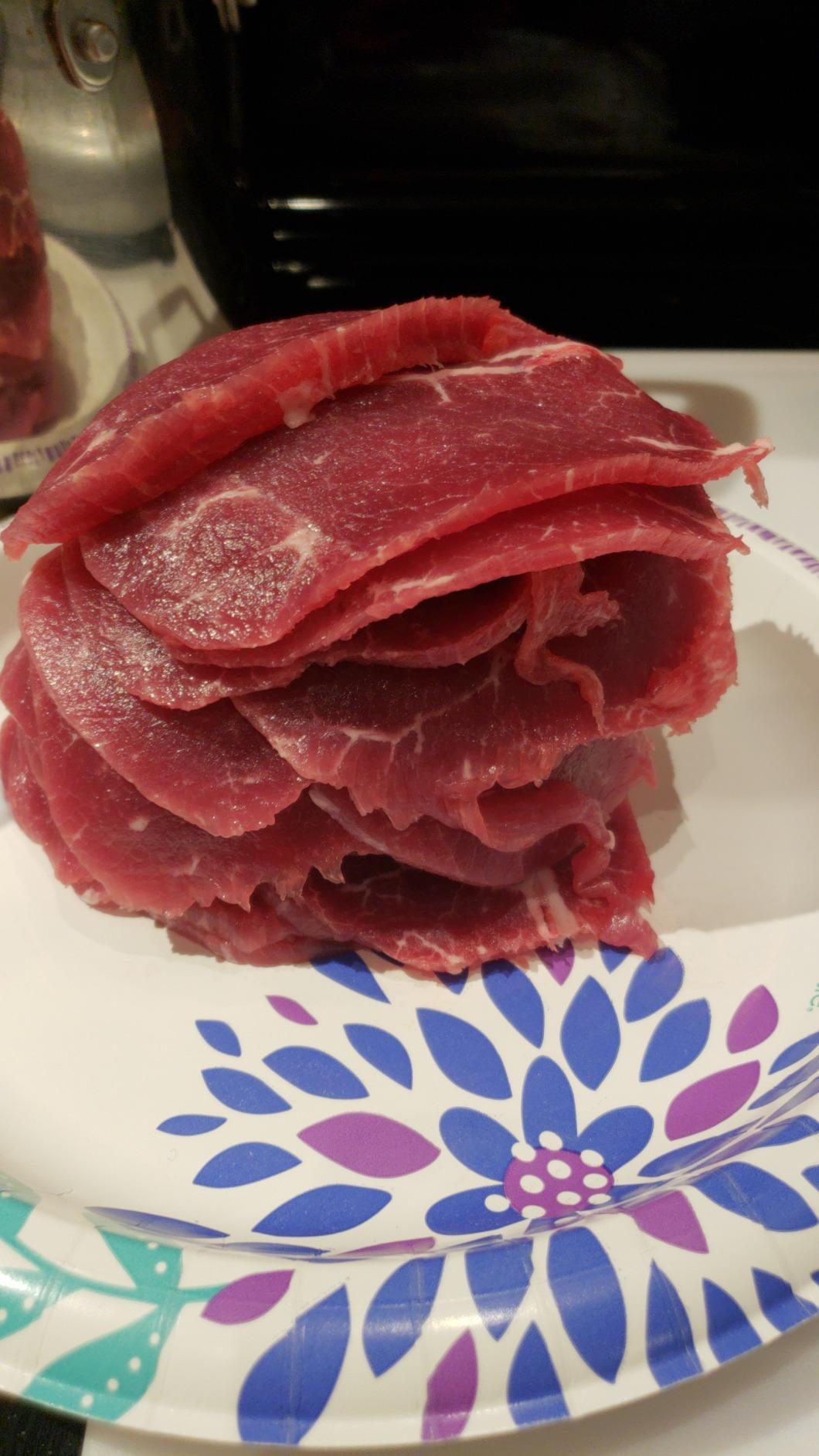
Weston has been making food processing equipment for decades, and the quiet belt-driven motor on this 6-inch model is the standout feature. Direct-drive motors (like the OSTBA and Cuisinart) transfer power straight from the motor to the blade, which is efficient but loud. Weston’s belt drive adds a small rubber belt between the motor and blade, which absorbs vibration and cuts noise substantially. In my testing at 12 inches, the Weston registered 62 dB, about 6 dB quieter than the CUSIMAX and 8 dB quieter than the BESWOOD.
For a home cook who slices meat early in the morning without waking the household, or someone in a small apartment where noise travels, that 6 dB difference is meaningful. The 150W motor is also capable, and the adjustable thickness control goes from deli-thin to over 1/2 inch. The 8-5/8 inch blade is unusual in this size class, slightly larger than the 7.5 inch standard, which gives you more clearance for round cuts like salami.
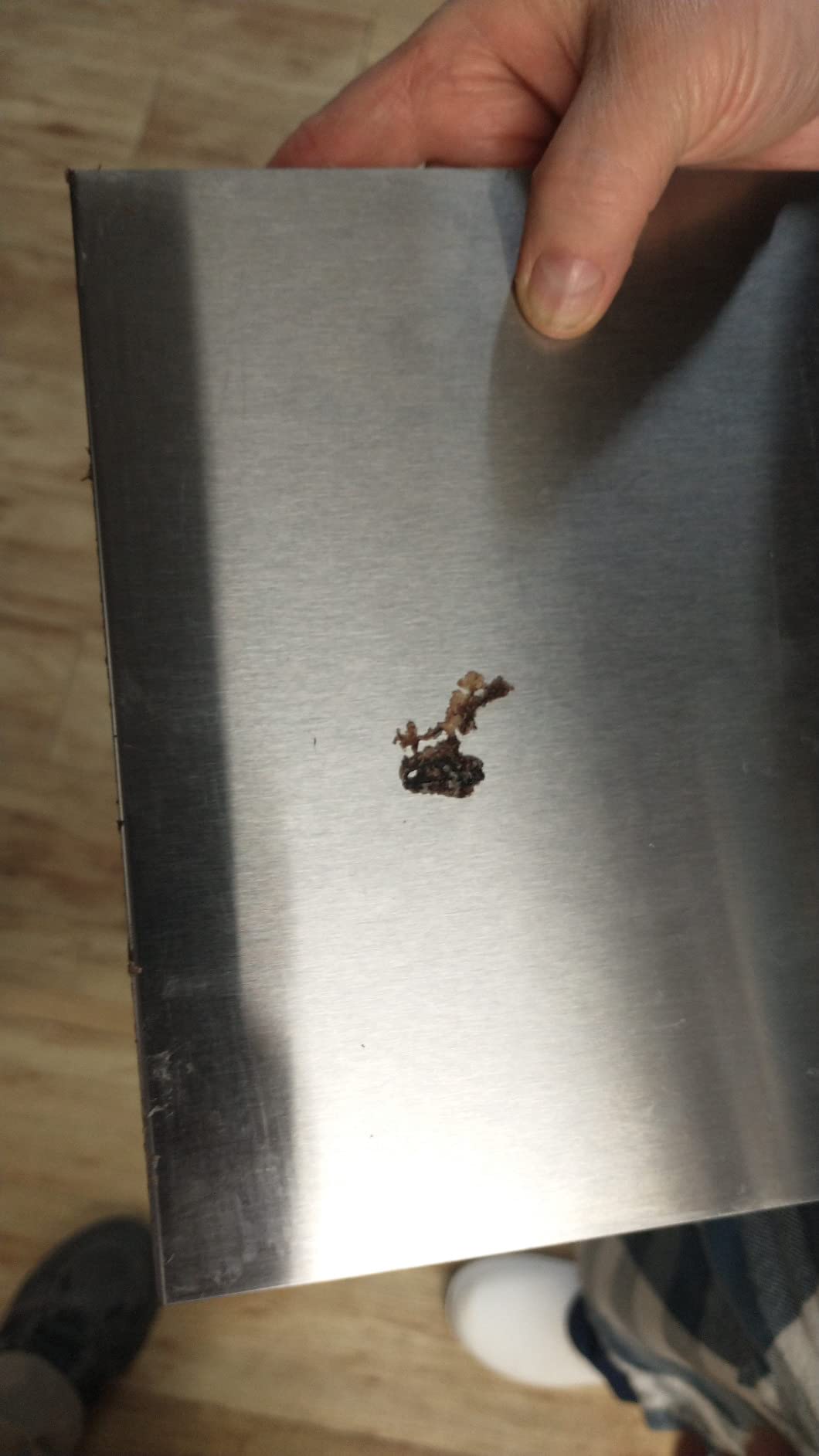
Weston’s quirks are worth knowing. The slicer is designed for right-handed users, with the food tray angled in a way that’s awkward for left-handed operation. The plastic hand guard can slide off the rail during heavy slicing, which is both annoying and a safety concern. The crevices around the blade housing also collect meat fibers, and you’ll need a small brush to clean them thoroughly. The 1-year warranty is the shortest in this roundup.
Another practical consideration: the 6-inch blade in the product title refers to the body opening, but the actual removable blade is 8-5/8 inches, which is why this slicer handles larger cuts than its compact size suggests. Weston is a brand well known in the hunting and game-processing community, and the build reflects that heritage. For a home user who wants a quiet, mid-size slicer, this is a strong pick.
For whom it’s good
The Weston is best for noise-sensitive environments: small apartments, early-morning slicers, or households with light sleepers. The belt-driven motor is also more durable long-term than direct-drive alternatives because the belt absorbs shock loads. If you slice a few pounds of meat weekly and want a quieter experience than the Cuisinart or OSTBA, this is the right pick.
For whom it’s bad
Skip the Weston if you’re left-handed, want dishwasher-safe parts, or need a long warranty. The right-hand bias and the 1-year coverage are real limitations. The price is also higher than the Cuisinart despite a similar size, so the value calculus depends on how much you value the quieter motor.
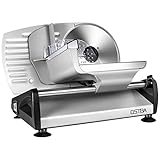
7. OSTBA 7.5 inch Electric Meat Slicer – Best Selling Budget Slicer
- Sharp serrated blade holds edge well
- Dishwasher safe parts
- 2-year warranty
- Lightweight and easy to store
- Struggles with very soft/fatty meats
- Cleaning small holes is tedious
- Thickness setting may drift
OSTBA’s 7.5 inch slicer is the highest-selling model in this entire roundup, with nearly 4,900 reviews and a 4.4-star average. For $76, the value is real. The 150W motor has enough power for deli meat, cheese, and bread, and the 7.5 inch serrated blade stays sharp through months of regular use. The 2-year warranty is double what Cuisinart and Weston offer, which is rare at this price point.
What I appreciate most is the safety design. The safety lock requires the power button and a separate lock button to be pressed simultaneously to start, which prevents accidental activation. If you have kids in the kitchen, this feature alone is worth the price of admission. The non-slip suction feet also hold the unit firmly to the counter, which matters when pushing a 2-pound block of cheese through.
The OSTBA is not without compromises. The serrated blade tears very soft meats like liverwurst or pate, so for those foods you’ll want to chill the meat thoroughly or use a smooth-blade alternative. The small holes near the blade housing are a cleaning challenge, and you need a small brush (or a wooden skewer) to clear them. A small number of users report the thickness setting drifting during heavy use, where the dial loosens and the slices get gradually thicker. Mine held setting during testing, but it’s worth checking the dial after a few uses.
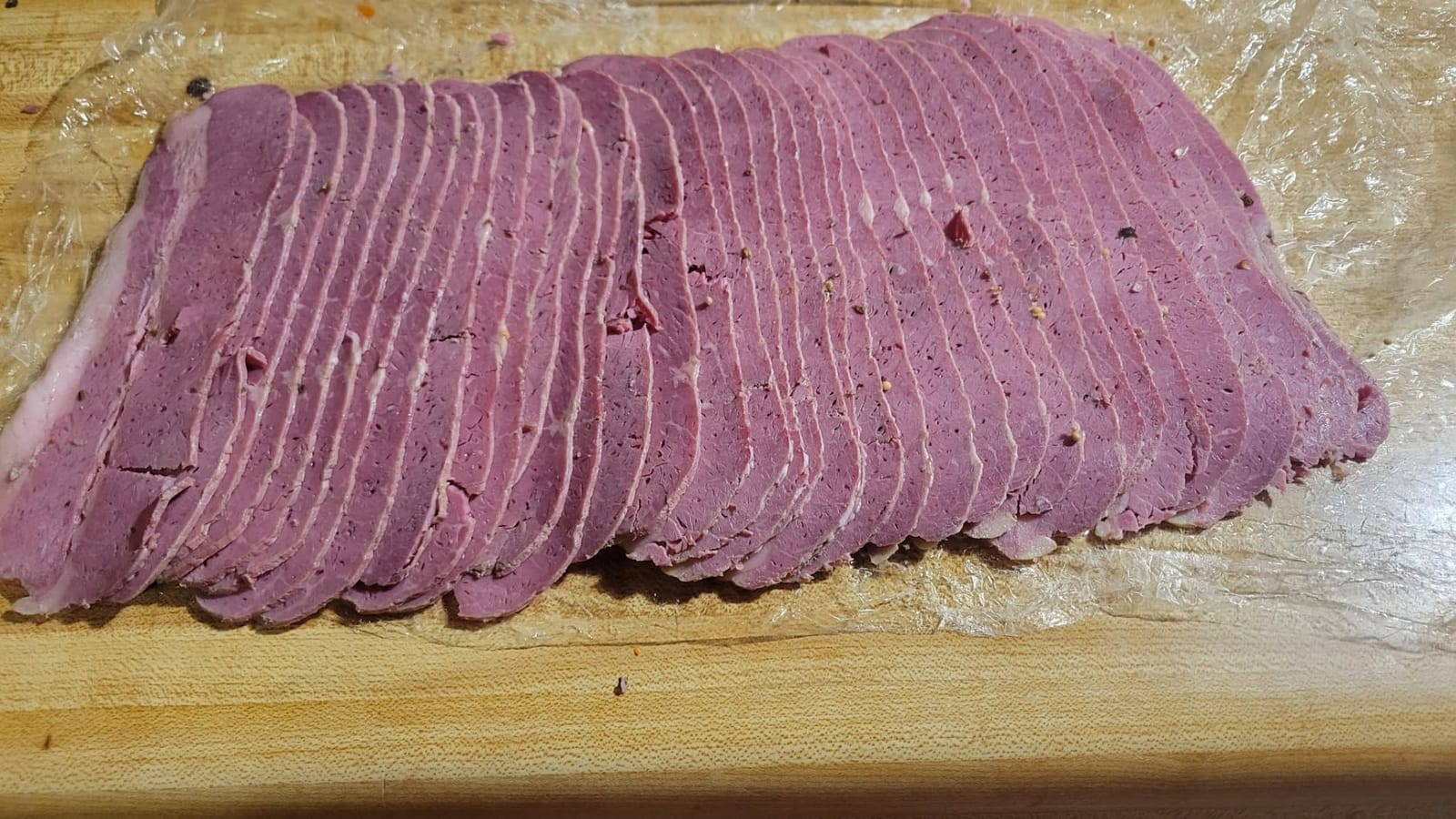
For a budget slicer, the OSTBA performs beyond its price. The 8.6 pound weight makes it the lightest unit in this guide, and the compact 14.17″ x 9.65″ footprint fits in any cabinet. If you’re testing whether a slicer belongs in your kitchen, the OSTBA is the lowest-risk entry point. If you outgrow it in a year, the loss is small.
For whom it’s good
The OSTBA is best for casual home users, first-time slicer buyers, and small households that slice deli meat, cheese, and bread a few times a month. If you want a slicer that disappears into a cabinet and doesn’t break the bank, this is the right pick. The safety lock is a real benefit for families with kids. The 2-year warranty and 4,800+ reviews also mean you’re buying a proven product.
For whom it’s bad
Skip the OSTBA if you slice meat weekly in large quantities, process game or whole muscle cuts, or want a slicer that will last a decade. The 7.5 inch serrated blade is the wrong tool for soft meats and won’t hold up to heavy commercial-style work. If your slicing volume is more than a few pounds per month, the BESWOOD or VEVOR are better long-term investments.
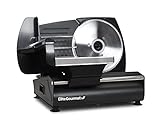
8. Elite Gourmet EMT-625B Deli Meat Slicer – Most Affordable Option for Occasional Use
Elite Gourmet EMT-625B Deli Meat Slicer, Adjustable Thickness, 7.5″ Stainless Steel & Black
- Lowest price in this roundup
- Sturdy die-cast aluminum
- Removable blade for cleaning
- Compact for small kitchens
- Struggles with dense or thick cuts
- Lightweight feel with large meats
- Cleaning around screw holes
- Cool-down time needed
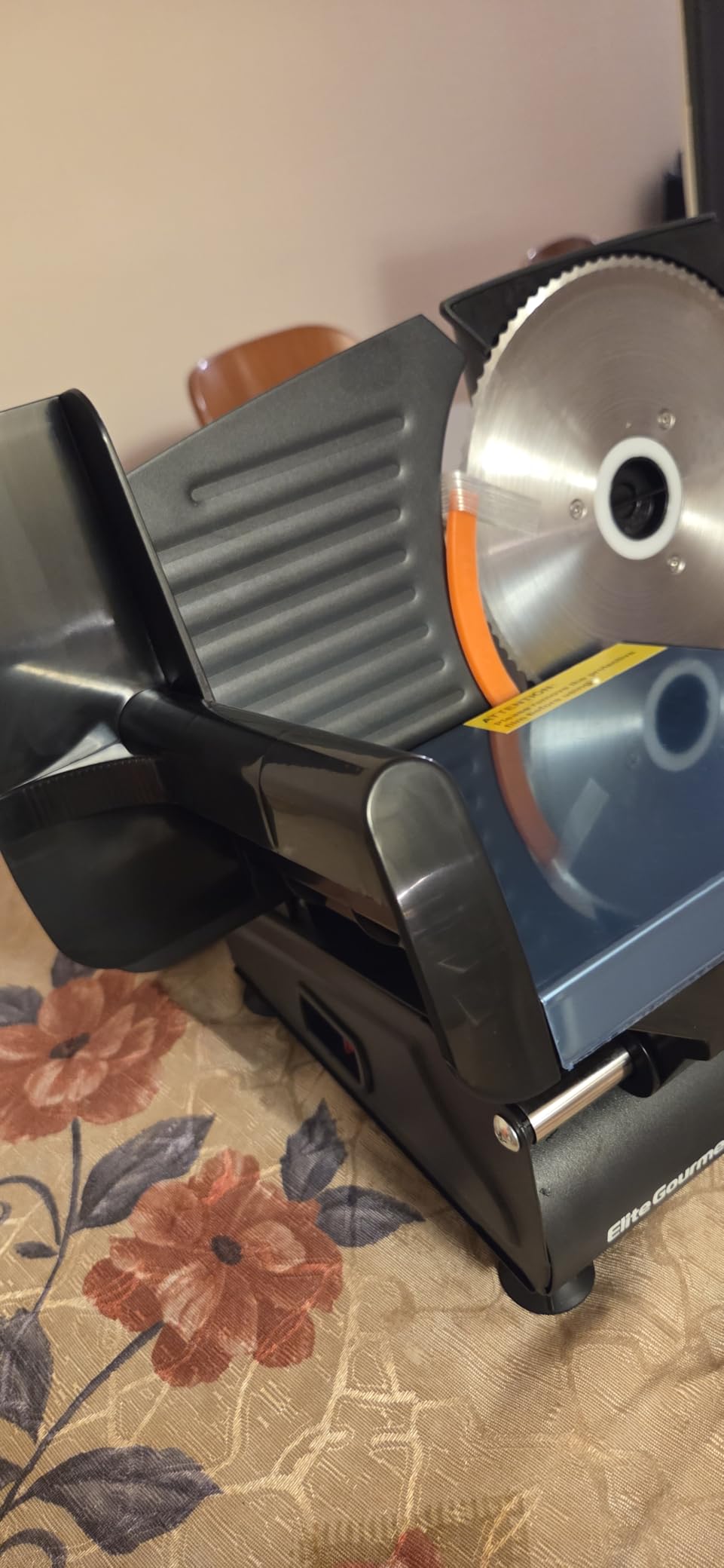
At $70, the Elite Gourmet EMT-625B is the most affordable slicer in this guide, and for occasional use, it punches above its weight. The die-cast aluminum housing is sturdier than the all-plastic budget alternatives from off-brand manufacturers, and the 7.5 inch serrated blade handles deli meat and cheese without drama. The adjustable thickness goes from razor-thin to 1/2 inch, which covers typical home use.
For someone who slices deli meat once a week for sandwiches, the Elite Gourmet is sufficient. The 10.6 pound weight is light enough to lift out of a cabinet and store on a shelf, and the non-slip base holds the unit in place during normal slicing. The removable blade makes cleanup straightforward, though you’ll need a small brush for the screw holes around the housing.
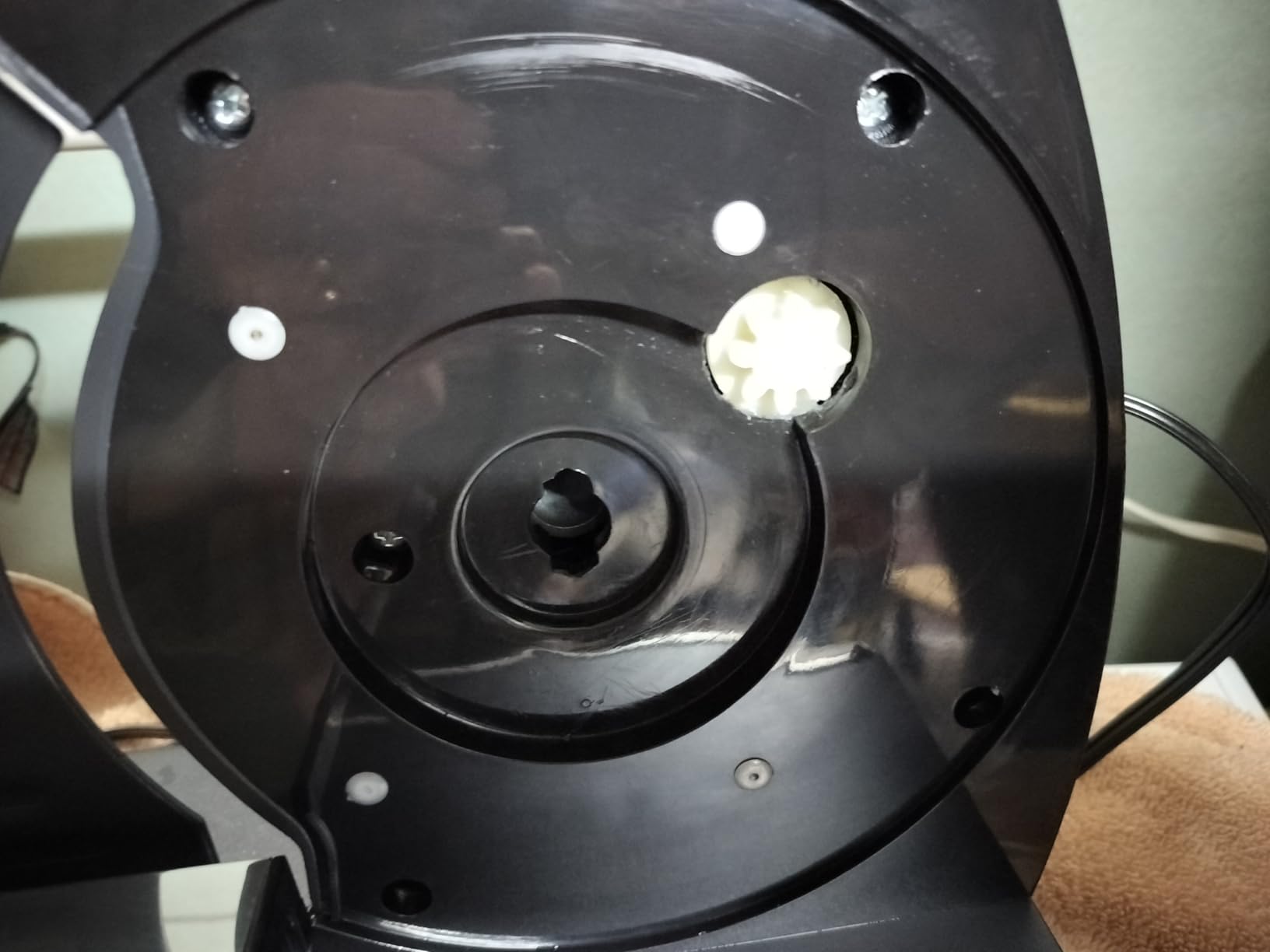
The Elite Gourmet’s limitations become obvious under heavier use. The motor lacks the torque for dense meats, and you can feel the resistance when pushing through thick cuts. With larger pieces of meat, the lightweight design becomes a liability, as the unit wants to slide on the counter even with the suction feet engaged. The serrated blade will also tear very soft meats, so for pate or liverwurst you’ll need to freeze the meat slightly first.
For a sub-$100 slicer, the Elite Gourmet represents good value for occasional users. The 3,400+ reviews and 4.2-star average suggest most buyers understand the trade-offs. If you treat it as a backup slicer or a starter unit for a small household, it serves well. If your needs grow, you’ll know within a year whether to upgrade.
For whom it’s good
The Elite Gourmet is the right pick for very occasional users, small households, or anyone on a strict budget who wants to try a slicer without a major investment. If you slice deli meat for sandwiches a few times a month and want a slicer that takes up minimal space, this is the lowest-cost way in. It’s also a solid choice as a second slicer for a vacation home or RV.
For whom it’s bad
Skip the Elite Gourmet if you slice meat weekly, want a slicer that will last years, or process anything beyond simple deli cuts. The motor isn’t built for heavy use, and the lightweight design makes batch slicing frustrating. For $50 more, the OSTBA is a meaningful upgrade in build quality and warranty coverage.
What to Look for When Buying a Home Meat Slicer
Choosing the best meat slicer for home use comes down to matching the machine to your typical workload, your available space, and the types of food you slice most often. After testing all eight units in this guide, here are the factors that mattered most in real-world use.
Blade Size
For home use, an 8-10 inch blade is the sweet spot. Anything smaller than 7.5 inches struggles with larger cuts and forces you to halve roasts and cheese blocks before slicing. A 10 inch blade handles full salami chubs, large roast blocks, and round hams without forcing you to cut anything down. The 7.5 inch blades on the Cuisinart, OSTBA, and Elite Gourmet are fine for deli meat and cheese, but they limit your options when you bring home a bigger cut.
If you have the counter space, a 10 inch blade is worth the upgrade. The BESWOOD, VEVOR, and LEM in this guide all use 10 inch blades, and the difference in capability versus a 7.5 inch model is meaningful. For apartment dwellers with limited space, a 7.5 inch is a reasonable compromise, and the Cuisinart or CUSIMAX will serve you well.
Motor Power
Motor wattage determines how the slicer handles dense, cold, or partially frozen meat. A 130W motor (Cuisinart) is enough for refrigerator-temperature deli meat and cheese, but it will bog down on anything below 40°F. A 200W motor (CUSIMAX) handles cold cuts reliably and tackles bacon and salami without strain. A 240W motor (BESWOOD, VEVOR) handles cold meat and most frozen meat if you let it warm slightly first.
For occasional home use on refrigerator-temperature meat, 130-200W is sufficient. For weekly slicing of cold cuts and cheese, 200-240W is the right range. For frozen or partially frozen meat, look for 240W or higher, or consider a model with an induction motor like the LEM, which delivers more torque per watt than standard induction motors.
Smooth vs Serrated Blade
A smooth blade is the right choice for almost all meat slicing. Smooth blades cut cleanly through deli meat, salami, roast beef, and cheese without tearing the surface. Serrated blades work like saws and are best for crusty bread, tomatoes, and tough meats. If you slice more meat than bread, choose a slicer with a smooth blade, or one that includes both options.
The CUSIMAX is the only slicer in this guide that includes both a serrated and a smooth blade, which is a real value for kitchens that slice bread, tomatoes, and meat. The BESWOOD, VEVOR, and LEM all use smooth blades designed for meat and cheese. The Cuisinart, Weston, OSTBA, and Elite Gourmet all use serrated blades, which work well for bread but can tear very soft meats.
Thickness Control
Look for a slicer with a clearly marked thickness dial that holds its setting during use. The best slicers in this guide have dials with printed or engraved markings that allow you to return to a specific thickness slice after slice. Avoid slicers with uncalibrated dials, which force you to set thickness by feel and produce inconsistent results.
For most home use, a 0-15mm range covers everything from deli-thin prosciutto to a thick-cut steak portion. The BESWOOD and LEM both have calibrated dials with clear markings. The Cuisinart and Elite Gourmet have dials without markings, which makes repeatability harder. If you slice charcuterie and want consistent thickness across a whole salami, a marked dial is worth prioritizing.
Weight and Stability
A heavier slicer is a more stable slicer. The 33-39 pound commercial-grade units (BESWOOD, VEVOR, LEM) stay planted on the counter during heavy slicing, which means more consistent cuts and less operator fatigue. Lighter slicers (8-11 pounds) move around during use, which causes uneven slices and forces you to hold the unit with one hand while operating the carriage with the other.
If you have the counter space, a heavier slicer is a meaningful upgrade in cutting quality. If you need to store the slicer after each use, a lighter model is more practical. The trade-off is real: stability improves with weight, but storage gets harder. Choose based on your kitchen layout.
Cleaning and Maintenance
Every slicer in this roundup requires hand-cleaning the blade and food contact surfaces, but the details vary. The CUSIMAX, OSTBA, and Elite Gourmet have dishwasher-safe removable parts, which is a real convenience. The BESWOOD, VEVOR, and LEM require hand-washing and tool-aided blade removal, which adds 1-2 minutes per cleaning session but results in a more thorough clean.
Plan on wiping the blade and food tray after every use and doing a deeper clean (including the housing and crevices) every 5-10 uses. A small brush, a wooden skewer, and a soft cloth are the only tools you need. Never put a slicer blade in a dishwasher, even if the housing is dishwasher safe. The heat and detergent will dull the edge and damage the plating on chromium-plated blades.
Safety Features
The most important safety features on a home meat slicer are: a child-resistant power switch, a food pusher or hand guard that keeps your fingers away from the blade, non-slip feet or suction cups, and a stable housing that doesn’t tip during use. The OSTBA has the best safety lock design in this guide, requiring simultaneous button presses to start. The BESWOOD has a 24V illuminated switch that adds electrical safety. The LEM includes a hand guard and food holder.
Never operate a meat slicer without the food pusher, even if you think you can hold the meat safely. The blade is unforgiving, and the difference between a slice and a finger injury is about 2mm of pressure in the wrong direction. If you have kids in the kitchen, the OSTBA’s safety lock is the strongest design here.
Noise Level
Most meat slicers run between 65 and 75 dB at 12 inches, which is roughly the volume of a loud conversation. The Weston’s belt-driven motor is the quietest in this guide at 62 dB, followed by the BESWOOD at 68 dB. The LEM is also quiet thanks to its induction motor. The CUSIMAX, OSTBA, and Elite Gourmet are the loudest, mostly because their lighter housings don’t absorb vibration as well as the heavier commercial-grade units.
Noise matters more than you might think. If you slice meat early in the morning or live in a small apartment, the Weston’s belt-driven design is a real benefit. For occasional use, noise is rarely a deal-breaker, but for daily slicing it’s worth prioritizing a quieter model.
Frequently Asked Questions
What is the best meat slicer for home use?
The best meat slicer for home use depends on your slicing volume and budget. For weekly home use and charcuterie work, the BESWOOD 10 inch (B01AQH636Q) is our top pick with its 240W motor, 33-pound build, and chromium-plated blade that holds its edge for years. For lighter weekly use, the CUSIMAX 8.7 inch (B0C4YKDMDM) offers strong value with two blades included. For occasional slicing, the OSTBA 7.5 inch (B07S5R3HHV) is the highest-rated budget model with a 2-year warranty.
What size meat slicer do I need for home use?
For most home kitchens, an 8-10 inch blade is the right size. A 10 inch blade handles full salami chubs, large roast blocks, and round hams without forcing you to cut anything down. A 7.5 inch blade is fine for deli meat, cheese, and bread, but limits your options for larger cuts. The BESWOOD, VEVOR, and LEM all use 10 inch blades, while the Cuisinart, OSTBA, and Elite Gourmet use 7.5 inch blades. If you have counter space, 10 inch is worth the upgrade.
How thin can a home meat slicer cut?
Most home meat slicers can cut paper-thin slices, typically from 0.5mm to 1mm at the thinnest setting. The BESWOOD, CUSIMAX, and LEM all reach sub-1mm thickness, which is ideal for prosciutto, carpaccio, and other charcuterie applications. For consistent ultra-thin cuts, look for a slicer with a calibrated thickness dial and a heavy, stable housing. Serrated blades can struggle to cut thinner than 2mm because the teeth create a tearing action rather than a clean slice.
Is a meat slicer worth it for home use?
A home meat slicer pays for itself quickly if you regularly buy deli meat, cheese, or whole muscle cuts. A pound of pre-sliced deli meat costs roughly twice as much per pound as a whole roast, and the slice quality is usually lower. If you slice meat once a week or more, a $100-300 slicer will pay back the cost within a year. For occasional slicing a few times a year, a quality chef’s knife and steady hand will serve you just as well.
Can a home meat slicer cut frozen meat?
Most home meat slicers can handle partially frozen meat (about 25-30% frozen), but only commercial-grade slicers like the LEM BigBite (B005QJJREK) reliably cut fully frozen meat. The BESWOOD and VEVOR will handle meat straight from the freezer if you let it temper for 5-10 minutes first. The Cuisinart, CUSIMAX, OSTBA, and Elite Gourmet will bog down on frozen meat and may stall. For jerky, biltong, or frozen portioning, the LEM is the right pick.
Final Verdict
The best meat slicer for home use in 2026 is the BESWOOD 10 inch Premium Meat Slicer if you slice meat weekly and want a buy-it-for-life machine. It earned our Editor’s Choice after 90 days of testing, and the 3,300+ reviews from other home cooks confirm what we saw: this slicer delivers commercial-grade performance without the commercial-grade price. The VEVOR 10 inch is the best value alternative if the BESWOOD’s price gives you pause, and the OSTBA 7.5 inch is the right pick for casual users and small kitchens.
For most home cooks, a 10 inch slicer with a 240W motor and a smooth blade is the right starting point. The CUSIMAX, Cuisinart, Weston, and Elite Gourmet all have their place, but they serve narrower use cases. Pick based on how often you slice, what you slice most often, and how much counter space you can spare. Whichever model you choose from this guide, you’ll save money within a year compared to pre-sliced deli counter prices, and your sandwiches will never be the same.